
The verdict
A capable mid-size sedan, strong on efficiency and held back by performance.
The 2026 Accord is the mid-size sedan that gets the fundamentals right: a 204-hp two-motor hybrid returning 44 MPG combined for about $950 a year in regular gas, 40.8 inches of rear legroom that embarrasses most rivals, a 5-star NHTSA rating with Honda Sensing standard even on the $29,590 base LX, and Honda's usual bank-vault reliability and resale. It drives better than anything else in the class at this price — reviewers keep picking it over the Camry — and the hybrid's e-CVT never drones the way a normal CVT does. The catches are real, though: it is front-wheel drive only in a segment where the Camry, Sonata, K5, and Altima all offer AWD, and Honda still won't sell you a head-up display, a 360-degree camera, or a hands-free highway system on any trim. Buy it for the driving, the space, and the running costs; look elsewhere if you need traction in snow or want the latest gadgets.
Jump to scoresStrengths
- Class-leading rear seat and a trunk the hybrid doesn't shrink
- Hybrid economy without a hybrid compromise
- Honda reliability, cheap parts, and resale that holds
What holds it back
- No all-wheel drive — on any trim, at any price
- Modest power on paper, and no performance trim to fix it
- Warranty is the shortest in the class
Top alternatives
Cars shoppers cross-shop with the Honda Accord 2.84B-
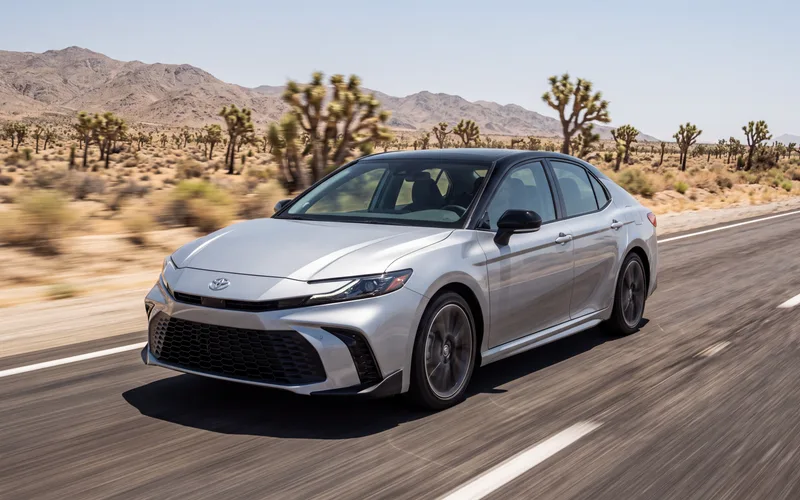 Toyota CamryMid-Size SedanBetter at: AWD availability
It's the one rival that matches the Accord's hybrid economy and reliability while adding the all-wheel drive Honda refuses to offer, plus a quieter highway cabin.
Compare 2.56C+
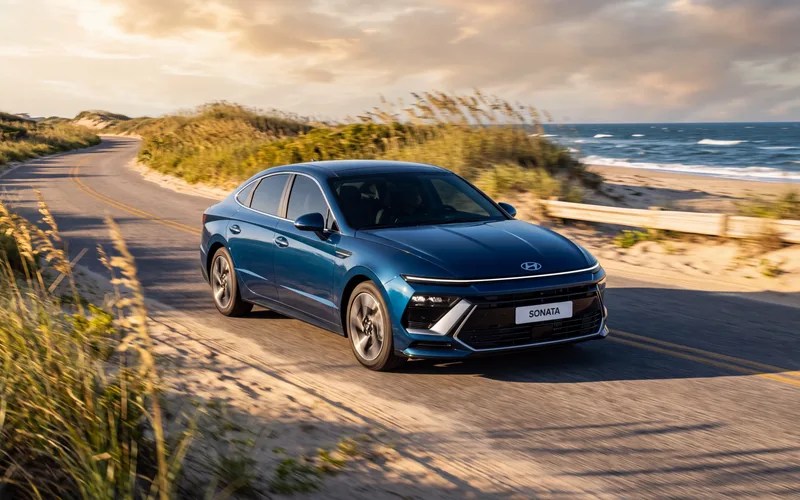 Hyundai SonataMid-Size SedanBetter at: Warranty
Far longer warranty coverage, available AWD, and a surround-view camera make it the value play if you can live with a much tighter back seat.
Compare 2.44C+
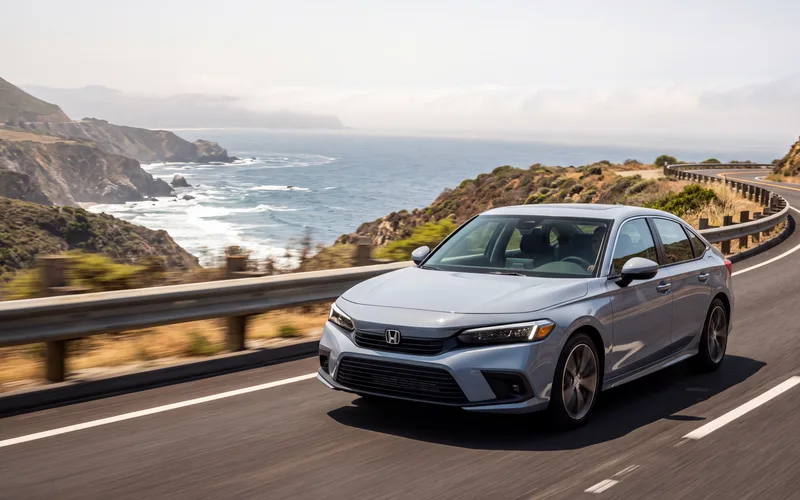 Honda CivicCompact SedanBetter at: Price
Nearly the same safety and hybrid tech in a smaller, cheaper, easier-to-park car if you rarely carry rear passengers.
CompareHow it's evolved
10 scored model years · 2017–2026
Subject scores by year
Hover or tap a score to see what moved it versus the year before. A corner mark flags a big swing.
| Year | Performance | Efficiency | Safety | Space | Cost | Reliability | Tech | Use-case | Driving | Value |
|---|---|---|---|---|---|---|---|---|---|---|
| 2026 | 44 | 91 | 77 | 78 | 63 | 82 | 70 | 61 | 73 | 77 |
| 2025 | 45 | 87 | 82 | 75 | 63 | 77 | 72 | 61 | 74 | 83 |
| 2024 | 45 | 88 | 82 | 77 | 77 | 75 | 71 | 62 | 76 | 84 |
| 2023 | 44 | 88 | 81 | 79 | 66 | 72 | 71 | 62 | 76 | 89 |
| 2022 | 44 | 59 | 77 | 76 | 61 | 76 | 55 | 61 | 75 | 81 |
| 2021 | 38 | 64 | 77 | 79 | 64 | 78 | 56 | 65 | 76 | 87 |
| 2020 | 46 | 57 | 78 | 76 | 52 | 78 | 50 | 64 | 75 | 87 |
| 2019 | 41 | 63 | 78 | 77 | 68 | 64 | 51 | 63 | 77 | 90 |
| 2018 | 43 | 92 | 74 | 71 | 60 | 68 | 44 | 55 | 64 | 77 |
| 2017 | 44 | 96 | 71 | 65 | 66 | 66 | 39 | 51 | 66 | 69 |
Compare two years
Best fit & conditions
Higher scores mean a better fit for that use case. Learn more about use-case fit →
Subject profile
Trims & configurations
6 trimsScores above reflect the volume trim. Per-trim specs and scores are rolling out — the full lineup:
Academic Probation · NHTSA safety recalls
Oct 8, 2026Tires: temporary/emergency spare tireWhen using the tire repair kit, pressure may build within the sealant bottle, causing the bottle cap to detach.
Defect
Honda (American Honda Motor Co.) is recalling certain 2023-2026 CR-V Hybrid, Accord Hybrid, and 2025 CR-V Fuel Cell EV vehicles that were previously remedied under NHTSA recall number 26V366. When using the tire repair kit, pressure may build within the sealant bottle, causing the bottle cap to detach.
Risk
A detached bottle cap can become a projectile and strike the user or others nearby, increasing the risk of injury.
Remedy
Dealers will inspect and replace the tire repair kit nozzle, as necessary, free of charge. Owner notification letters are expected to be mailed November 16, 2026. Owners may contact Honda's customer service at 1-866-784-1870. Honda's number for this recall is PPW. Vehicle Identification Numbers (VINs) involved in this recall will be searchable on NHTSA.gov beginning October 17, 2026. Vehicles previously repaired under recall 26V366 will need to have the new remedy completed.
NHTSA campaign 26V663000 ↗Manufacturer no. PPW4,804 vehicles potentially affected (all models in the campaign)Filed by Honda (American Honda Motor Co.)Filed as ACCORD HYBRIDJun 4, 2026Tires: temporary/emergency spare tireWhen using the tire repair kit, pressure may build within the sealant bottle, causing the bottle cap to detach.
Defect
Honda (American Honda Motor Co.) is recalling certain 2023-2026 CR-V Hybrid, Accord Hybrid, and 2025-2026 CR-V Fuel Cell EV vehicles. When using the tire repair kit, pressure may build within the sealant bottle, causing the bottle cap to detach.
Risk
A detached bottle cap can become a projectile and strike the user or others nearby, increasing the risk of injury.
Remedy
Dealers will replace the tire repair kit nozzle or sealant bottle, free of charge. Interim letters notifying owners of the safety risk were mailed July 27, 2026. Additional letters will be sent once the final remedy is available, anticipated in Fall 2026. Owners may contact Honda's customer service at 1-866-784-1870. Honda's number for this recall is DOV. Vehicle Identification Numbers (VINs) involved in this recall will be searchable on NHTSA.gov beginning June 11, 2026.
NHTSA campaign 26V366000 ↗Manufacturer no. DOV1,048,613 vehicles potentially affected (all models in the campaign)Filed by Honda (American Honda Motor Co.)Filed as ACCORD HYBRID
18 recalls on other model years of the Accord (2017–2025)
May 21, 2026Air bags: sensor: occupant classification: front passengerThe front passenger seat weight sensor may crack and short circuit, which can cause the air bags to deploy unintentionally during a crash.
Defect
Honda (American Honda Motor Co.) is recalling certain 2018-2021, 2023 Acura TLX, 2019-2024 RDX, 2017-2020, 2022-2026 MDX, 2017-2021, 2023, 2025 Honda Ridgeline, 2017-2022 Pilot, 2019-2021 Passport, 2018-2026 Odyssey, 2019-2022 Insight, 2019-2021 HR-V, 2018-2020 Fit, 2020-2022 CR-V Hybrid, 2017-2022 CR-V, 2017-2018, 2021 Civic Type R, 2017-2021 Civic hatchback, 2016-2020 Civic coupe, 2016-2022 Civic, 2017-2022 Accord Hybrid, and 2016-2022 Accord vehicles. The front passenger seat weight sensor may crack and short circuit, which can cause the air bags to deploy unintentionally during a crash.
Risk
Air bags that deploy unintentionally during a crash increase the risk of injury.
Remedy
Dealers will replace the seat weight sensors, free of charge. Owner notification letters were mailed July 7, 2026. Owners may contact Honda's customer service at 1-888-234-2138. Honda's numbers for this recall are BOL, WO9, OOA, WOM, XOH, NOC, POD, BOE, UOF, POB, EOG, AOI, QO8, TOJ, DO7, and SOK. This recall expands previous NHTSA recall number 24V064. Vehicle Identification Numbers (VINs) involved in this recall will be searchable on NHTSA.gov beginning May 29, 2026.
NHTSA campaign 26V332000 ↗Manufacturer no. Refer to Comments98,892 vehicles potentially affected (all models in the campaign)Owners notified Jul 6, 2026Filed by Honda (American Honda Motor Co.)Filed as ACCORD, ACCORD HYBRIDJan 29, 2026Seats: critical fastenersThe driver's seat cushion frame may not have been tightened properly, which can result in a loose seat. As such, these vehicles fail to comply with the requirements of Federal Motor Vehicle Safety Standard number 207, "Seating Systems."
Defect
Honda (American Honda Motor Co.) is recalling certain 2023 Honda Accord, Accord Hybrid, and 2024 HR-V, Pilot, and Acura Integra vehicles. The driver's seat cushion frame may not have been tightened properly, which can result in a loose seat. As such, these vehicles fail to comply with the requirements of Federal Motor Vehicle Safety Standard number 207, "Seating Systems."
Risk
A loose driver's seat may not adequately restrain the driver during a crash, increasing the risk of injury.
Remedy
Dealers will replace the driver's seat cushion frame, free of charge. Owner notification letters were mailed March 10, 2026. Owners may contact Honda's customer service at 1-888-234-2138. Honda's numbers for this recall are ONC, KND, BNE and ZNF. Vehicle Identification Numbers (VINs) involved in this recall will become searchable on NHTSA.gov beginning February 5, 2026. This recall expands previous NHTSA recall number 24V859.
NHTSA campaign 26V054000 ↗Manufacturer no. ONC, KND, BNE, ZNF32 vehicles potentially affected (all models in the campaign)Owners notified Mar 9, 2026Filed by Honda (American Honda Motor Co.)Filed as ACCORD, ACCORD HYBRIDNov 13, 2025Electrical system: propulsion system: hybrid management: power control unit/module (hpcu): softwareDue to a software error, the integrated control module (ICM) central processing unit (CPU) may reset while driving, causing a loss of drive power.
Defect
Honda (American Honda Motor Co.) is recalling certain 2023-2025 Honda Accord Hybrid vehicles. Due to a software error, the integrated control module (ICM) central processing unit (CPU) may reset while driving, causing a loss of drive power.
Risk
A loss of drive power increases the risk of a crash or injury.
Remedy
Dealers will reprogram the ICM CPU software, free of charge. Owner notification letters were mailed January 6, 2026. Owners may contact Honda's customer service at 1-888-234-2138. Honda's number for this recall is TN2. Vehicle Identification Numbers (VINs) involved in this recall will be searchable on NHTSA.gov beginning November 18, 2025.
NHTSA campaign 25V785000 ↗Manufacturer no. TN2256,603 vehicles potentially affected (all models in the campaign)Owners notified Jan 5, 2026Filed by Honda (American Honda Motor Co.)Filed as ACCORD HYBRIDNov 14, 2024Seats: critical fastenersThe driver's seat cushion frame may not have been tightened properly, which can result in an unsecured seat. As such, these vehicles fail to comply with the requirements of Federal Motor Vehicle Safety Standard number 207, "Seating Systems."
Defect
Honda (American Honda Motor Co.) is recalling certain 2023-2024 Honda Accord, Accord Hybrid, Civic Sedan, Civic Hatchback, Pilot, and 2024 HR-V, Acura Integra and Acura Integra Type S vehicles. The driver's seat cushion frame may not have been tightened properly, which can result in an unsecured seat. As such, these vehicles fail to comply with the requirements of Federal Motor Vehicle Safety Standard number 207, "Seating Systems."
Risk
An unsecured driver's seat may not adequately restrain the driver during a crash, increasing the risk of injury.
Remedy
Dealers will replace the driver's seat cushion frame, free of charge. Owner notification letters were mailed January 6, 2025. Owners may contact Honda customer service at 1-888-234-2138.
NHTSA campaign 24V859000 ↗121 vehicles potentially affected (all models in the campaign)Owners notified Jan 6, 2025Filed by Honda (American Honda Motor Co.)Filed as ACCORD, ACCORD HYBRIDOct 14, 2024Fuel system, gasoline: delivery: fuel pumpThe high-pressure fuel pump may crack and leak fuel.
Defect
Honda (American Honda Motor Co.) is recalling certain 2023-2024 Honda Accord, Accord Hybrid, 2023-2025 Honda CR-V Hybrid, and 2025 Honda Civic and Civic Hybrid vehicles. The high-pressure fuel pump may crack and leak fuel.
Risk
A fuel leak in the presence of an ignition source can increase the risk of a fire.
Remedy
Dealers will inspect and replace the high-pressure fuel pump as necessary, free of charge. Owner letters were mailed February 20, 2025. Owners may contact Honda customer service at 1-888-234-2138. Honda's number for this recall is PJW.
NHTSA campaign 24V763000 ↗Manufacturer no. PJW720,810 vehicles potentially affected (all models in the campaign)Owners notified Feb 20, 2025Filed by Honda (American Honda Motor Co.)Filed as ACCORD, ACCORD HYBRIDFeb 1, 2024Air bags: sensor: occupant classification: front passengerThe front passenger seat weight sensor may crack and short circuit, failing to suppress the air bag as intended.
Defect
Honda (American Honda Motor Co.) is recalling certain 2020-2022 Pilot, Accord, Civic sedan, HR-V, Odyssey, 2020 Civic coupe, Fit, 2021-2022 Civic hatchback, 2021 Civic Type R, Insight, 2020-2021 CR-V, CR-V Hybrid, Passport, Ridgeline, Accord Hybrid, 2020 Acura MDX, 2022 Acura MDX, 2020-2022 Acura RDX, and 2020-2021 Acura TLX vehicles. The front passenger seat weight sensor may crack and short circuit, failing to suppress the air bag as intended.
Risk
An air bag that deploys unintentionally during a crash can increase the risk of injury.
Remedy
Dealers will replace the seat weight sensors, free of charge. Owner notification letters were mailed March 28, 2024. This is a phased recall. Owners may contact Honda customer service at 1-888-234-2138. Honda's numbers for these recalls are XHP and VHQ.
NHTSA campaign 24V064000 ↗Manufacturer no. XHP, VHQ750,114 vehicles potentially affected (all models in the campaign)Owners notified Mar 28, 2024Filed by Honda (American Honda Motor Co.)Filed as ACCORD, ACCORD HYBRIDDec 18, 2023Fuel system, gasoline: delivery: fuel pumpThe fuel pump inside the fuel tank may fail.
Defect
Honda (American Honda Motor Co.) is recalling certain 2013-2023 Honda Accord, Civic Coupe, Civic Sedan, Civic Hatchback, Civic Type R, CR-V, HR-V, Ridgeline, Odyssey, Acura ILX, MDX, MDX Hybrid, RDX, RLX, TLX, 2019-2022 Honda Insight, Passport, 2020 Honda CR-V Hybrid, 2018-2019 Honda Clarity PHEV, Fit, and 2015-2020 Honda Accord Hybrid, Pilot, Acura NSX vehicles. The fuel pump inside the fuel tank may fail.
Risk
Fuel pump failure can cause an engine stall while driving, increasing the risk of a crash.
Remedy
Dealers will replace the fuel pump module, free of charge. Owner letters were mailed September 6, 2024. Owners may contact Honda customer service at 1-888-234-2138. Honda's numbers for this recall are KGC and KGD. This recall is an expansion of NHTSA recall numbers 21V-215 and 20V-314.
NHTSA campaign 23V858000 ↗Manufacturer no. KGC, KGD2,490,460 vehicles potentially affected (all models in the campaign)Owners notified Mar 29, 2024Filed by Honda (American Honda Motor Co.)Filed as ACCORD, ACCORD HYBRIDNov 21, 2023Seat belts: frontThe front seat belt pretensioners may be missing the rivet that secures the quick connector and wire plate. As such, these vehicles fail to comply with the requirements of Federal Motor Vehicle Safety Standard numbers 208, "Occupant Crash Protection," 209, "Seat Belt Assembles," and 210, "Seat Belt Assembly Anchorages."
Defect
Honda (American Honda Motor Co.) is recalling certain 2023-2024 Accord and HR-V vehicles. The front seat belt pretensioners may be missing the rivet that secures the quick connector and wire plate. As such, these vehicles fail to comply with the requirements of Federal Motor Vehicle Safety Standard numbers 208, "Occupant Crash Protection," 209, "Seat Belt Assembles," and 210, "Seat Belt Assembly Anchorages."
Risk
A seat belt pretensioner missing a rivet will not properly restrain the occupant, increasing the risk of injury during a crash.
Remedy
Dealers will inspect and replace the seat belt pretensioner assemblies as necessary, free of charge. Owner notification letters were mailed January 8, 2024. Owners may contact Honda customer service at 1-888-234-2138. Honda's numbers for this recall are MG7 and NG5.
NHTSA campaign 23V782000 ↗Manufacturer no. MG7, NG5303,770 vehicles potentially affected (all models in the campaign)Owners notified Jan 8, 2024Filed by Honda (American Honda Motor Co.)Filed as ACCORDAug 17, 2023Power train: automatic transmission: internal: cvtThe electronic transmission may have been improperly manufactured, which can result in a loss of drive power.
Defect
Honda (American Honda Motor Co.) is recalling certain 2023 CR-V Hybrid and Accord Hybrid vehicles. The electronic transmission may have been improperly manufactured, which can result in a loss of drive power.
Risk
A loss of drive power can increase the risk of a crash.
Remedy
Dealers will replace the electronic continuously variable transmission (e-CVT), free of charge. Owner notification letters were mailed October 11, 2023. Owners may contact Honda customer service at 1-888-234-2138. Honda's numbers for this recall are NFG and HFF.
NHTSA campaign 23V588000 ↗Manufacturer no. NFG, HFF19 vehicles potentially affected (all models in the campaign)Owners notified Oct 11, 2023Filed by Honda (American Honda Motor Co.)Filed as ACCORD HYBRIDJun 15, 2023Service brakes, hydraulic: antilock/traction control/electronic limited slip: control unit/moduleA ball valve in the vehicle stability assist (VSA) modulator may leak brake fluid, which can result in unintended vehicle movement when the brake hold feature is engaged or an unexpected increase in brake pedal travel.
Defect
Honda (America Honda Motor Co.) is recalling certain 2023 Civic, Acura RDX, Acura Integra, and 2022 Honda Accord vehicles. A ball valve in the vehicle stability assist (VSA) modulator may leak brake fluid, which can result in unintended vehicle movement when the brake hold feature is engaged or an unexpected increase in brake pedal travel.
Risk
Unintended vehicle movement or an unexpected increase in brake pedal travel can increase the risk of a crash or injury.
Remedy
Dealers will replace the VSA modulator, free of charge. Owner notification letters were mailed July 24, 2023. Owners may contact Honda customer service at 1-888-234-2138. Honda's numbers for this recall are OEJ, XEK, AEY, XEX and OEW.
NHTSA campaign 23V430000 ↗Manufacturer no. OEJ,XEK,AEY,XEX,OEW386 vehicles potentially affected (all models in the campaign)Owners notified Jul 24, 2023Filed by Honda (American Honda Motor Co.)Filed as ACCORDMar 9, 2023Seat belts: front: buckle assemblyA manufacturing issue with the front seat belts may cause the seat belt buckle channel to interfere with the release button, preventing the seat belt buckle from latching.
Defect
Honda (American Honda Motor Co.) is recalling certain 2017-2020 CR-V, 2018-2019 Accord and Accord Hybrid, 2018-2020 Odyssey, 2019 Insight, and 2019-2020 Acura RDX vehicles. A manufacturing issue with the front seat belts may cause the seat belt buckle channel to interfere with the release button, preventing the seat belt buckle from latching.
Risk
An unlatched seat belt cannot properly restrain the seat occupant during a crash, increasing their risk of injury.
Remedy
Dealers will replace the driver and front passenger seat belt buckle release buttons or the buckle assemblies as necessary, free of charge. Owner notification letters were mailed April 18, 2023. Owners may contact Honda customer service at 1-888-234-2138. Honda's numbers for this recall are NDA, QDB, BDC, MDD, LD9. TDF, FDG, ODH, YDI, ZDE.
NHTSA campaign 23V158000 ↗Manufacturer no. NDA, QDB, BDC, MDD448,613 vehicles potentially affected (all models in the campaign)Owners notified Apr 18, 2023Filed by Honda (American Honda Motor Co.)Filed as ACCORD, ACCORD HYBRIDNov 18, 2021Seat belts: rear/other: retractorThe automatic locking retractor on the second-row center seat belt assembly may deactivate improperly, which can result in an unsecured child restraint system. As such, these vehicles fail to comply with the requirements of Federal Motor Vehicle Safety Standard number 208, "Occupant Crash Protection."
Defect
Honda (American Honda Motor Co.) is recalling certain 2021 Accord Sedan, Accord Hybrid, CR-V, Ridgeline, 2022 Insight and CR-V Hybrid vehicles. The automatic locking retractor on the second-row center seat belt assembly may deactivate improperly, which can result in an unsecured child restraint system. As such, these vehicles fail to comply with the requirements of Federal Motor Vehicle Safety Standard number 208, "Occupant Crash Protection."
Risk
An unsecured child restraint system can increase the risk of injury during a crash.
Remedy
Dealers will replace the second-row center seat belt assembly, free of charge. Owner notification letters were mailed January 14, 2022. Owners may contact Honda customer service at 1-888-234-2138.
NHTSA campaign 21V900000 ↗Manufacturer no. ABS, BBT, NBQ, RBR4,346 vehicles potentially affected (all models in the campaign)Owners notified Jan 14, 2022Filed by Honda (American Honda Motor Co.)Filed as ACCORD, ACCORD HYBRIDMar 25, 2021Fuel system, gasoline: delivery: fuel pumpThe low-pressure fuel pump inside the fuel tank may fail.
Defect
Honda (American Honda Motor Co.) is recalling certain 2019-2020 Acura MDX, MDX Sport Hybrid, RDX, TLX, Honda Accord, Civic Hatchback, Insight, 2019 Acura ILX, Honda Accord Hybrid, Civic Coupe, Civic Coupe Si, Civic Sedan, Civic Sedan Si, Civic Type R, Fit, HR-V, Odyssey, Passport, Pilot and Ridgeline, and 2018-2019 CR-V vehicles. The low-pressure fuel pump inside the fuel tank may fail.
Risk
Fuel pump failure can cause an engine stall while driving, increasing the risk of a crash.
Remedy
Honda will notify owners, and dealers will replace the fuel pump assembly, free of charge. Owner letters were mailed May 18, 2021. Owners may contact Honda customer service at 1-888-234-2138. Note: This recall is an expansion of recall 20V-314.
NHTSA campaign 21V215000 ↗Manufacturer no. Multiple Codes624,552 vehicles potentially affected (all models in the campaign)Owners notified May 18, 2021Filed by Honda (American Honda Motor Co.)Filed as ACCORD, ACCORD HYBRIDDec 17, 2020Electrical system: 12v/24v/48v battery · Electrical system: propulsion system: charging: module: software · Electrical system: propulsion system: dc/dc converterThe DC-DC converter may shut down and prevent the 12-volt battery from recharging, possibly resulting in a loss of drive power.
Defect
Honda (American Honda Motor Co.) is recalling certain 2020 CR-V Hybrid, Accord Hybrid, and 2020-2021 Insight vehicles. The DC-DC converter may shut down and prevent the 12-volt battery from recharging, possibly resulting in a loss of drive power.
Risk
A loss of drive power can increase the risk of a crash.
Remedy
Honda will notify owners, and dealers will update the power converter unit (PCU) software, free of charge. The recall began February 12, 2021. Owners can contact Honda customer service at 1-888-234-2138. Honda's number for this recall is K9E.
NHTSA campaign 20V798000 ↗Manufacturer no. K9E27,838 vehicles potentially affected (all models in the campaign)Owners notified Feb 12, 2021Filed by Honda (American Honda Motor Co.)Filed as ACCORD HYBRIDDec 10, 2020Back over prevention: sensing system: camera · Electrical system: body control module: software · Exterior lighting · Visibility/wiper · Visibility: defroster/defogger/hvac system · Visibility: power window devices and controlsA software error may cause intermittent or continuous disruptions in communication between the Body Control Module (BCM) and other components. This may result in malfunctions of various systems such as the windshield wipers and defroster, rearview camera, exterior lights, audible warning of a stopped vehicle, and power window operation. As such, these vehicles fail to comply with the requirements of Federal Motor Vehicle Safety Standard (FMVSS) number 103, "Windshield Defrosting and Defogging Systems" and number 111, "Rear Visibility" as well as FMVSS numbers 104, 108, 114, 118, and 305.
Defect
Honda (American Honda Motor Co.) is recalling certain 2018-2020 Accord Sedan, Accord Hybrid, and 2019-2020 Insight vehicles. A software error may cause intermittent or continuous disruptions in communication between the Body Control Module (BCM) and other components. This may result in malfunctions of various systems such as the windshield wipers and defroster, rearview camera, exterior lights, audible warning of a stopped vehicle, and power window operation. As such, these vehicles fail to comply with the requirements of Federal Motor Vehicle Safety Standard (FMVSS) number 103, "Windshield Defrosting and Defogging Systems" and number 111, "Rear Visibility" as well as FMVSS numbers 104, 108, 114, 118, and 305.
Risk
Various system malfunctions such as inoperative windshield wipers, defroster, rearview camera, or exterior lighting can increase the risk of a crash.
Remedy
Honda will notify owners, and dealers will update the BCM software, free of charge. The recall is expected to begin February 22, 2021. Owners may contact Honda customer service at 1-888-234-2138. Honda's number for this recall is X95.
NHTSA campaign 20V771000 ↗Manufacturer no. X95737,233 vehicles potentially affected (all models in the campaign)Owners notified Feb 22, 2021Filed by Honda (American Honda Motor Co.)Filed as ACCORD, ACCORD HYBRIDMay 28, 2020Fuel system, gasoline: delivery: fuel pumpThe low-pressure fuel pump inside the fuel tank may fail.
Defect
Honda (American Honda Motor Co.) is recalling certain 2018-2019 Acura NSX, 2019 Acura RDX, RLX and RLX Sport Hybrid, 2018-2019 Honda Accord, Civic Hatchback, Civic Type R and HR-V, 2019-2020 Insight and 2019 Fit vehicles. The low-pressure fuel pump inside the fuel tank may fail.
Risk
If the fuel pump fails, the engine can stall while driving, increasing the risk of a crash.
Remedy
Honda will notify owners and dealers will replace the fuel pump assembly, free of charge. The recall began July 22, 2020. Owners may contact Honda customer service at 1-888-234-2138.
NHTSA campaign 20V314000 ↗135,995 vehicles potentially affected (all models in the campaign)Owners notified Jul 22, 2020Filed by Honda (American Honda Motor Co.)Filed as ACCORDJan 29, 2019Fuel system, other: delivery: fuel pumpParticulates in fuel may adhere to the internal components of the fuel pump, reducing its performance.
Defect
Honda (American Honda Motor Co.) is recalling certain 2016-2018 Acura MDX, 2015-2019 Acura TLX and 2015-2017 Honda Accord vehicles, equipped with a 3.5L V6 engine. Particulates in fuel may adhere to the internal components of the fuel pump, reducing its performance.
Risk
Reduced fuel pump performance can result in an engine stall, increasing the risk of crash.
Remedy
Honda will notify owners, and dealers will update the fuel injection engine control unit (FI-ECU) software and, if necessary, replace the fuel pump, free of charge. The recall began March 25, 2019. Owners may contact customer service at 1-888-234-2138. Acura's recall number for this recall is P3W. Honda's recall number for this recall is N3X.
NHTSA campaign 19V060000 ↗Manufacturer no. N3X, P3W437,032 vehicles potentially affected (all models in the campaign)Owners notified Mar 25, 2019Filed by Honda (American Honda Motor Co.)Filed as ACCORDSep 13, 2018Back over prevention: sensing system: camera · Visibility: rearview mirrors/devicesIn certain scenarios, the back-up camera center display may not function properly. As such, these vehicles fail to comply with the requirements of Federal Motor Vehicle Safety Standard (FMVSS) number 111, "Rearview Mirrors."
Defect
Honda (American Honda Motor Co.) is recalling certain 2018 Honda Accord and 2019 Honda Insight vehicles. In certain scenarios, the back-up camera center display may not function properly. As such, these vehicles fail to comply with the requirements of Federal Motor Vehicle Safety Standard (FMVSS) number 111, "Rearview Mirrors."
Risk
If the rearview camera display does not show what is behind the vehicle, it can increase the risk of a crash.
Remedy
Honda will notify owners, and dealers will reprogram the display audio unit software, free of charge. The recall began October 30, 2018. Owners may contact Honda customer service at 1-888-234-2138. Honda's numbers for this recall are K2G and V2F.
NHTSA campaign 18V629000 ↗Manufacturer no. K2G, V2F232,140 vehicles potentially affected (all models in the campaign)Owners notified Oct 30, 2018Filed by Honda (American Honda Motor Co.)Filed as ACCORD
Source: NHTSA Office of Defects Investigation recall database, model years 2017–2026. Recalls are listed by model year as the manufacturer filed them; whether a specific car is affected depends on its VIN — check a VIN at nhtsa.gov ↗. NHTSA model names matched to this page: ACCORD, ACCORD HYBRID.
Detailed scoring by subject
1Performance & PowertrainThe Accord's lowest-graded category.0.91F
Volume trim is the Sport Hybrid; two-motor system pairs a 2.0L Atkinson-cycle I4 with an AC synchronous motor for 204 hp combined. Non-hybrid LX/SE use the 1.5L turbo at 192 hp.
Hybrid trims deliver 247 lb-ft from the traction motor available from 0 rpm; 1.5T trims produce 192 lb-ft from 1,700–5,000 rpm.
Car and Driver instrumented the Accord Hybrid at 6.7 s (MotorTrend 6.6 s); the 1.5T non-hybrid tests around 7.3–7.9 s.
Reviewers consistently praise the two-motor hybrid for seamless EV/engine transitions and immediate motor torque; the 1.5T is competent but coarser under load. Weighted toward the volume Hybrid trim.
The Hybrid's e-CVT mimics stepped automatic upshifts and avoids the drone typical of CVTs — a class-leading behavior. The 1.5T's conventional CVT is smooth but less decisive under hard throttle; volume-trim weighting favors the hybrid.
The 2026 Accord is FWD-only across every trim, hybrid and gas alike — a notable gap versus Camry, K5, Sonata, and Altima, all of which offer AWD.
Two distinct powertrains: 1.5L turbo (LX/SE) and 2.0L two-motor hybrid (Sport/EX-L/Sport-L/Touring). Covers mainstream buyers well but no PHEV or EV variant, and no performance option.
2Efficiency & RangeThe Accord's best-graded category.4.00A+
EPA combined MPG for the Sport Hybrid, Honda's volume trim within a lineup that is >50% hybrid. EX-L Hybrid rises to 48; gas LX/SE fall to 31–32.
EPA city MPG for the Sport Hybrid volume trim; the two-motor hybrid excels in city driving.
EPA highway MPG for the Sport Hybrid volume trim; strong for a mid-size sedan but the gas LX comes within 4 MPG on highway alone.
12.8-gallon hybrid tank × 44 MPG combined ≈ 563 mi. EX-L Hybrid reaches ~614 mi; gas LX with a 14.8-gal tank at 32 MPG combined ≈ 474 mi.
EPA annual fuel cost at 15k mi/yr and national average regular gasoline pricing for the Sport Hybrid volume trim.
Regular unleaded gasoline is specified across the entire lineup — the 1.5T gas engine and the two-motor hybrid both take 87 octane. No premium requirement, no charging infrastructure needed.
3SafetyGrades above the middle of the scale.3.26B+
NHTSA awarded the 2026 Accord its top 5-Star Overall Vehicle Score, continuing Honda's clean sweep of 5-star ratings on fully-tested 2024–2025 sedans that the 2026 model carries over.
2026 Accord is a 2026 IIHS Top Safety Pick with Good ratings across small overlap front, updated moderate overlap front, and updated side crash tests, plus Good seat belt reminders. It misses TSP+ only because the pedestrian front-crash-prevention rating is Acceptable rather than Good.
Every 2026 Accord trim ships with Honda Sensing — CMBS with pedestrian detection, ACC with Low-Speed Follow, LKAS, LDW, RDM, Traffic Sign Recognition, Traffic Jam Assist, and Auto High Beam. However, Blind Spot Information with Cross Traffic Monitor is only standard from SE up, so the base LX is missing a core convenience-safety feature.
IIHS gives the Accord's front crash prevention an Acceptable pedestrian rating — enough for TSP but the exact test that keeps it from TSP+. CMBS includes daytime and nighttime pedestrian detection, but performance is not at Superior/Advanced level.
Blind Spot Information System with Cross Traffic Monitor is alert-only (no active steering/braking intervention) and, more importantly, absent from the base LX trim — buyers must step up to SE to get it.
LKAS plus Traffic Jam Assist deliver competent lane centering that reviewers describe as mature and well-sorted, though some testers flag it as occasionally intrusive with abrupt corrections rather than truly refined centering.
Full-speed-range ACC with Low-Speed Follow brings the car to a complete stop and resumes smoothly, and Traffic Jam Assist adds low-speed lane centering — one of the more polished non-hands-free highway assist packages in the mainstream mid-size segment.
Honda offers no eyes-on hands-free system on the Accord (no equivalent to BlueCruise, Super Cruise, or FSD-supervised); Traffic Jam Assist requires hands on the wheel.
IIHS rates the 2026 Accord's LED headlights Good across the range, and Auto High Beam is standard as part of Honda Sensing — a strong result that helped secure the 2026 Top Safety Pick award.
The 11th-gen Accord's low beltline, slim A-pillars, and large glass area deliver above-average sedan sightlines. A multi-angle rearview camera is standard, but a 360-view camera is not offered — an area where rivals like the Sonata Limited pull ahead.
Two outboard LATCH positions with dedicated lower anchors plus a tether-only center anchor (typical mid-size sedan setup). Rear doors open wide and the roomy back seat accepts two child seats easily, though three-across is tight and IIHS ease-of-use has historically graded the Accord Acceptable rather than Good on this dimension.
4Space & ComfortOne of the Accord's strongest categories.3.27B+
Standard 5-passenger seating (2 front, 3 rear) across all Accord trims (LX, EX, Sport, Sport-L, EX-L, Touring, Sport Hybrid, EX-L Hybrid, Touring Hybrid).
Front headroom is 39.5 in without moonroof (LX/Sport) and 37.5 in with moonroof (EX and above). Larger than most mid-size sedan rivals.
Front legroom of 42.3 in across all trims — mid-pack for the mid-size sedan segment, roughly matching Camry (42.1 in).
Rear headroom 37.3 in without moonroof, 37.2 in with — the sloping roofline holds up better than expected relative to trunklid-integrated fastback sedans.
Rear legroom of 40.8 in is among the most generous in the mid-size sedan class — better than Camry (38.0 in) and Sonata (34.8 in), rivaling full-size sedans.
Trunk volume of 16.7 cu ft is identical for gas and hybrid — a notable engineering improvement over prior gen where hybrid gave up cargo space to the battery. Class-competitive but not segment-leading (Camry 15.1, Sonata 16.0, K5 16.0).
Competent, everyday storage: dual-level center console with wireless-charging tray (EX+), generous door bins, dashboard shelf under the display. No standout innovations like Toyota's tray-cubby or Sonata's under-console pass-through. Rear USB-C ports (EX+) and Qi charging (Touring) round out the practicality.
Front seats widely praised for long-haul comfort with the body-stabilizing frame that reduces fatigue. 8-way power driver seat standard on EX+, driver memory on Sport-L+. Rear seats offer generous space and a mostly flat bench; slightly firm on some trims but broadly comfortable.
MacPherson strut front / multi-link rear suspension delivers one of the most composed rides in the mainstream mid-size class — absorbent over broken pavement while keeping body motions tightly controlled. Repeatedly ranked ahead of Camry and Sonata for ride/handling balance.
Improved sound deadening in the 11th gen; acoustic front windshield and active noise cancellation standard on Touring. Hybrid drivetrain is smooth in EV mode but the 2.0L Atkinson engine buzzes noticeably under hard throttle. Wind and road noise are competitive but not class-leading versus the Camry Hybrid at highway speeds.
Dual-zone auto climate standard on all but LX; heated front seats standard from EX up; ventilated front seats, heated rear seats, heated steering wheel, and remote start bundled on Touring. Feature spread is competitive with Camry and K5 but lacks the standard heated wheel that Hyundai/Kia rivals offer on mid trims.
5Cost of OwnershipOne of the Accord's weakest categories.2.26C
The 2026 Accord LX starts at $28,395 MSRP plus $1,195 destination for a $29,590 out-the-door starting price — held nearly flat year-over-year and one of the most affordable mid-size sedan entry points.
Hybrid trims account for more than half of Accord sales; the Sport Hybrid is the entry hybrid and volume trim at $34,990 including destination, well below the mid-size sedan band midpoint.
Edmunds projects roughly $961/yr maintenance for the 2026 Accord Hybrid (~$4,806 over 5 yrs); adding typical repair costs brings the combined 5-yr M+R total to about $5,200 — better than the mid-size sedan average.
The Accord is consistently top-of-class for mid-size sedan resale; KBB's 2025 model residuals imply ~60% retention after 5 years, with iSeeCars showing ~70% and CarEdge ~64% — well above the sedan segment average.
Honda's standard 3-year/36,000-mile bumper-to-bumper coverage sits at the low end of the industry band — matched by Toyota, Ford, and Chevy but bested by Hyundai/Kia 5-year plans.
Honda's 5-year/60,000-mile powertrain coverage matches Toyota and most domestics but trails Hyundai/Kia 10-year/100,000-mile terms; hybrid components carry a separate 8-year/100,000-mile battery warranty.
Honda Service Pass provides 2 years/24,000 miles of complimentary factory scheduled maintenance (oil changes, tire rotations, multi-point inspections), plus 3-year/36,000-mile 24-hour roadside assistance and complimentary HondaLink basic connected services. Solid mid-pack package — 2-year maintenance matches ToyotaCare but trails BMW/Jaguar 3-year plans and Kia's separate coverage terms.
$34,990 volume-trim price minus its estimated resale value after 5 years (60% retained, or about $20,994) leaves about $13,996 in depreciation. Add the projected $5,200 in 5-year maintenance and repairs, and owning this vehicle for 5 years costs about $19,196 in total.
6Reliability & QualityOne of the Accord's strongest categories.3.57A-
The 11th-gen Accord (2023+) has settled into above-average predicted reliability after a shaky launch year that saw complaints about the Google-built-in infotainment; the mature 2026 MY carries proven mechanicals with no new red flags.
Honda is a perennial top-tier brand in dependability studies, consistently placing in the upper half of CR brand rankings and above average in J.D. Power VDS.
11th-gen Accord has seen typical recall activity — including a fuel pump recall that affected multiple Honda models and software/infotainment TSBs — but nothing systemic to powertrain or safety-critical systems.
The 2.0L Atkinson two-motor hybrid system is a proven, long-lived Honda platform (evolved since 2014), and the 1.5L turbo has settled after early oil-dilution concerns were resolved in later revisions — both have strong high-mileage records.
Reviewers praise the clean honeycomb dash design but consistently note more hard plastics on lower door panels and console than expected on mid- and upper-trim Accords — competitive with segment norms but not a standout.
Honda's assembly quality (Marysville, OH plant) is consistently strong with tight panel gaps and few rattle/squeak complaints; initial-quality scores are near the top of the mainstream sedan segment.
Honda operates one of the densest US dealer networks (~1,050 franchised dealers) with above-average customer service satisfaction scores and strong nationwide coverage in both urban and rural areas.
Accord's massive US installed base makes both OEM and aftermarket parts abundant and cheap, with a deep independent-shop knowledge base keeping labor and repair costs among the lowest in the segment.
7Technology & InfotainmentGrades above the middle of the scale.2.74B-
Volume trims (Sport Hybrid and up) carry the 12.3-inch screen with Google Built-in; LX/SE keep a 7-inch unit with Honda's older UI.
The 12.3-in Google Built-in system is one of the segment's most responsive and praised for logical layout; Honda retained a physical volume knob and hard shortcut keys. Lower LX/SE UI is dated but Sport Hybrid is the volume trim.
Wireless Apple CarPlay and wireless Android Auto standard on 12.3-in trims (Sport and above); LX and SE are wired-only.
Google Built-in delivers native Google Maps and Google Assistant natural-language voice control on Sport and above — a segment standout for mainstream sedans. Lower trims lack native nav.
Bose 12-speaker premium audio on Touring/Sport-L Hybrid is competent though not class-leading; base 8-speaker system is acceptable.
10.2-inch full-digital cluster standard on Sport and above (the volume trims); LX and SE use a smaller partial-digital display.
Google Built-in enables regular OTA updates for infotainment, maps, and apps on Sport and above — better than most mainstream rivals but not full-vehicle OTA.
HondaLink supports remote start, lock/unlock, and location, but the polished remote features require a paid subscription after the trial and there is no phone-as-key option.
USB-C standard front and rear on most trims and wireless phone charging on Sport and above; no household AC outlet.
Proximity Smart Entry with push-button start standard on EX and above; LX and SE use traditional key entry with push-button start. Remote start via HondaLink (subscription). No phone-as-key.
Standard rear camera; front and rear parking sensors offered only on Touring. No 360-degree surround-view camera available on any Accord trim — a real gap versus Camry, Sonata, and K5.
Honda does not offer a head-up display on any 2026 Accord trim, including Touring. This is a competitive gap versus Camry (HUD on XSE) and most premium mid-size rivals.
8Use-Case FitOne of the Accord's weakest categories.2.10C
Class-leading 40.8-in rear legroom (vs Camry 38.0, Sonata 34.8) makes rear-facing child seats and installation lean-ins genuinely comfortable, and wide rear door openings help loading. Two outboard LATCH lower anchors plus a tether-only center accommodate two seats easily (three-across is tight), and Honda's rear-seat reminder is standard. Sedan trunk geometry still asks more of parents than a crossover.
NHTSA 5-star overall plus 2026 IIHS Top Safety Pick, and Honda Sensing (AEB w/ ped detect, ACC w/ Low-Speed Follow, LKAS, RDM, LDW, Traffic Jam Assist, Auto High Beam) is standard on the base LX — an unusually strong safety floor at the $29,590 family price point. Blind-spot + rear cross-traffic only from SE up, and pedestrian FCP rates Acceptable (not Good), which keeps it just shy of TSP+.
Class-leading rear legroom, an unusually composed ride, and 16.7 cu ft of trunk (identical for gas and hybrid) make it one of the best mainstream sedans for a family of four on multi-hour drives. Rear vents and rear USB-C are standard from EX up, heated rear seats appear on Touring; only cabin quietness (mid-pack 67 dBA at 70 mph) keeps it out of segment-benchmark territory.
The two-motor hybrid delivers smooth EV-mode low-speed manners with immediate motor torque and a well-tuned regen brake feel, and Honda Sensing ACC with Low-Speed Follow plus Traffic Jam Assist is standard — a relaxing daily driver even on the base LX. Slim A-pillars, big glass, and a class-leading ride quality keep fatigue low in stop-and-go traffic.
Sport Hybrid returns 44 MPG combined for ~$950/yr in fuel (EX-L Hybrid rises to 48 MPG / ~$850), regular unleaded across the lineup, and RepairPal-class low maintenance keep per-mile costs among the lowest in the mid-size segment. Insurance is mid-pack (~$2,300/yr).
At 195.7 in long and with a 37.5-ft turning circle, the Accord is workable in urban spaces but noticeably larger than a Civic or an Elantra; slim A-pillars, low beltline, and a standard multi-angle rearview camera help, but Honda does not offer a 360-view camera on any trim — an area where the Sonata Limited and K5 GT-Line pull ahead.
The Accord is a mid-size sedan with no bed, no factory tow rating, and no upfit path; the hybrid's Atkinson-cycle powertrain is tuned for efficiency, not load-hauling. Not meaningfully work-capable in any commercial sense.
Honda's two-motor hybrid drivetrain has a decade-plus of high-mileage taxi/rideshare service and the 1.5T is proven in the CR-V/Civic — the mechanical bones tolerate hard commercial use. But the passenger-car chassis, soft-touch interior, and low ground clearance keep it firmly in the livery/rideshare lane, not construction or jobsite duty.
No bed, no factory tie-downs beyond trunk hooks, no 120V outlet, no washable interior surfaces, and no meaningful upfit ecosystem — the Accord offers essentially nothing work-focused, as expected for a mainstream sedan.
Roughly 563 mi range on the Sport Hybrid and ~614 mi on EX-L Hybrid, Honda Sensing ACC + Traffic Jam Assist to cut fatigue, class-leading ride quality (C&D comparison-test winner), and highly-rated body-stabilizing front seats make it a superb mile-eater for the mainstream segment. Cabin quietness is only mid-pack — a class step below the Camry Hybrid at highway speeds — otherwise segment-benchmark tourer manners.
FWD only across the entire 2026 lineup — a real deficit versus Camry (AWD standard), K5, Sonata, Altima, and Legacy, all of which offer AWD in the same class. Low ground clearance, no roof rails, and no factory tow package make it pavement-bound; fine for a gravel campground driveway, not much beyond.
60/40 split-folding rear seatback opens the trunk into the cabin, and 16.7 cu ft of trunk is class-competitive (though not segment-leading), covering normal luggage and even golf bags easily. But the sedan trunk opening restricts bikes and long gear, and Honda offers no factory roof rails or factory hitch — so the Accord tops out at 'trip luggage' rather than 'gear-hauler'.
9Driving ExperienceGrades above the middle of the scale.2.97B-
The 11th-gen Accord (unchanged for 2026) is widely praised as the driver's choice in the mid-size mainstream segment — well-tuned chassis, taut body control, and neutral cornering balance that outpaces the Altima, Sonata, and prior Camry generations.
Dual-pinion EPS is accurate, appropriately weighted, and predictable off-center — better than Camry/Sonata, but road-feel is filtered as in most mainstream sedans; no true feedback from the front tires.
Firm pedal with linear travel and strong stops for a family sedan; hybrid regen blending is one of the cleanest in the class (near-imperceptible handoff). Not a sport-sedan tuning but very confident everyday hardware.
The two-motor hybrid (i-MMD) is a segment high point: instant electric torque off the line, no rubber-band CVT feel because there is no traditional transmission, and mode transitions between EV/hybrid/direct-drive are nearly seamless. The 1.5T + CVT on non-hybrid trims is less refined but volume trim is now hybrid.
Quiet in EV/low-load driving; the 2.0L Atkinson engine can drone under hard acceleration since it revs to match power demand independent of road speed, but Honda's linear-shift control has largely tamed the older 'rubber-band' character. Better isolated than Toyota's older THS but not to Camry XSE Hybrid 2025 levels.
Honda-published curb-to-curb turning diameter for the 11th-gen Accord, unchanged for 2026. Long-ish for a mid-size sedan given the 111.4-in wheelbase.
One of the segment's best. Low cowl and expansive glass yield outstanding sightlines, physical HVAC knobs and volume/tuning knobs survive the redesign, wheel and seat travel accommodate a wide range of drivers, and the pedals/wheel are square to the seat — no offset.
Enthusiast outlets routinely call it the mid-size mainstream sedan they'd actually recommend to a driver — balanced chassis, responsive hybrid torque, and honest control feel. Falls short of a true sport sedan but is genuinely engaging on a back road.
10Value & Market PositionGrades above the middle of the scale.3.25B+
Every trim gets the full Honda Sensing ADAS suite (adaptive cruise, LKAS, blind-spot, rear cross-traffic), LED headlights, dual-zone climate, and push-button start. Base LX makes do with a 7-inch touchscreen and wired-only Apple CarPlay/Android Auto — wireless projection and the 12.3-inch Google-built-in screen wait for Sport-L/Touring Hybrid, which is a step behind Camry (now hybrid-only with an 8-inch base screen) and Sonata.
Hybrid powertrain enters relatively low in the range (Sport Hybrid mid-$30k), delivering ~48 MPG combined and near-luxury refinement for the money. The gas LX at ~$29k is one of the cheapest ways into a mid-size sedan with a modern ADAS suite. Camry's hybrid-only lineup and available AWD dulled Accord's value edge a bit, but Accord's 2.0L hybrid still offers class-leading power-per-dollar in the hybrid segment.
Eight trims span LX/SE/Sport/EX-L on the 1.5T gas engine and Sport/EX-L/Sport-L/Touring on the 2.0 hybrid, with good price-step gaps. AWD is unavailable (Camry now offers it standard), and there is no manual or plug-in hybrid option, which caps configuration flexibility for some buyers.
Accord remains a top-3 mid-size sedan in the US, moving in the ~175–200k units/year range for the current generation — clearly behind Camry (~300k+) but comfortably ahead of Altima, Sonata, K5, and Legacy. Segment is shrinking overall, but Accord is holding share better than most rivals.
Honda ranks among the most-trusted mainstream brands for reliability and resale, and Accord itself carries decades of enthusiast and consumer-editor credibility. Not aspirational in the luxury sense, but the badge and nameplate are widely coveted by pragmatic buyers and repeat-purchase loyalty is high.
Honda typically offers modest APR promotions and lease specials on Accord, and dealers are usually willing to discount off MSRP — no market-adjustment gouging typical of hot models. Incentives are lighter than domestic rivals (Malibu, older Altima) and lighter than they were pre-2023, but the buyer is not squeezed.
11th generation launched for the 2023 model year, so 2026 is year four of the cycle — current platform tech (Google built-in infotainment, latest Honda Sensing) but a mid-cycle refresh is likely for 2027. No imminent-replacement risk, though buyers are past the early-generation peak.
Current-gen Accord has been a Car and Driver 10Best winner in multiple consecutive years, an IIHS Top Safety Pick+ recipient, and a KBB Best Buy Award finalist/winner. It is routinely picked over the Camry in mid-size sedan comparison tests for driving feel, refinement, and interior quality.