

The verdict
A struggling compact sedan, strong on ownership and held back by performance.
The 2022 Hyundai Elantra is a value play in the compact-sedan class: a $19,850 base price, a 10-year/100,000-mile powertrain warranty, and standard driver-assist tech (forward collision avoidance, blind-spot monitoring, lane keeping) that rivals gate behind higher trims. It earns a 5-star NHTSA rating and an IIHS Top Safety Pick, and the base 2.0L returns a solid 35 MPG combined. The tradeoff is a slow, unremarkable 147-hp engine (0-60 in roughly 8.9 seconds), no AWD option at any trim, and safety/tech extras like adaptive cruise, hands-free driving, and LED headlights reserved for the pricier Limited. It's a smart pick for buyers prioritizing low cost of ownership and standard safety equipment over performance or all-weather capability.
Jump to scoresStrengths
- Best-in-class warranty and rock-bottom ownership costs
- Genuinely good fuel economy on regular gas
- Standard safety tech most rivals charge extra for
What holds it back
- Slow off the line
- No all-wheel-drive option, ever
- Poor headlights on every trim that matters
Top alternatives
Cars shoppers cross-shop with the Hyundai Elantra 2.44C+
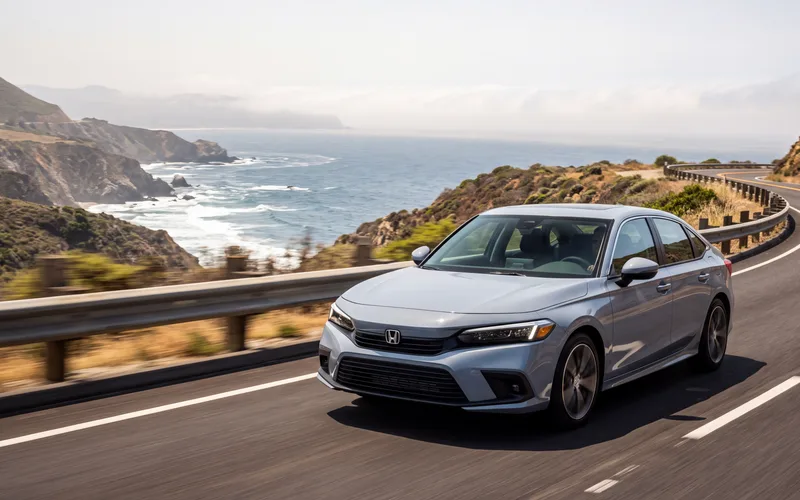 Honda CivicCompact SedanBetter at: Refinement & resale
Costs more but returns it in a quieter, better-built cabin, a Top Safety Pick award and roughly nine more points of five-year resale value.
Compare 2.40C+
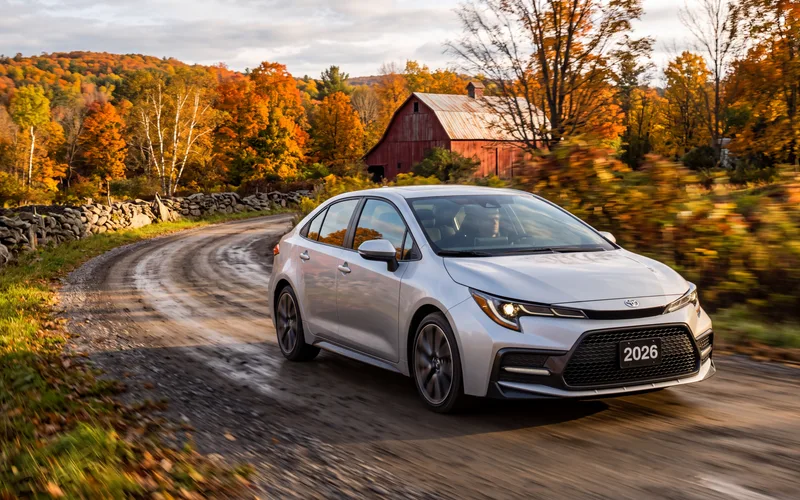 Toyota CorollaCompact SedanBetter at: Reliability & AWD
The safer, more reliable pick with 5-star crash results and the only AWD option in this cross-shop, if you can live with far less rear legroom.
Compare 2.19C
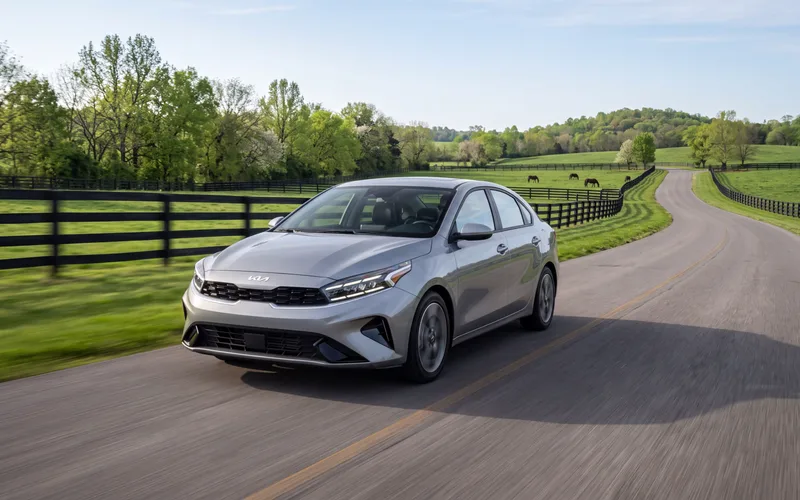 Kia K4Compact SedanBetter at: Fresher design
Same underlying engineering with a newer design and cabin, worth a look if the deal is better — but it has no hybrid to counter the Elantra's 54 MPG.
CompareHow it's evolved
10 scored model years · 2017–2026
Subject scores by year
Hover or tap a score to see what moved it versus the year before. A corner mark flags a big swing.
| Year | Performance | Efficiency | Safety | Space | Cost | Reliability | Tech | Use-case | Driving | Value |
|---|---|---|---|---|---|---|---|---|---|---|
| 2026 | 29 | 66 | 63 | 65 | 87 | 71 | 62 | 53 | 63 | 77 |
| 2025 | 29 | 59 | 77 | 63 | 87 | 68 | 53 | 51 | 63 | 75 |
| 2024 | 29 | 60 | 76 | 63 | 88 | 73 | 56 | 51 | 63 | 75 |
| 2023 | 28 | 60 | 67 | 63 | 88 | 69 | 51 | 46 | 62 | 74 |
| 2022 | 26 | 63 | 66 | 62 | 87 | 69 | 52 | 48 | 60 | 72 |
| 2021 | 28 | 69 | 72 | 64 | 98 | 68 | 52 | 48 | 63 | 82 |
| 2020 | 20 | 64 | 54 | 59 | 92 | 65 | 40 | 46 | 57 | 70 |
| 2019 | 27 | 60 | 54 | 60 | 91 | 69 | 35 | 47 | 57 | 63 |
| 2018 | 22 | 61 | 49 | 59 | 91 | 66 | 33 | 45 | 57 | 67 |
| 2017 | 24 | 60 | 53 | 59 | 81 | 65 | 32 | 45 | 58 | 69 |
Compare two years
Best fit & conditions
Higher scores mean a better fit for that use case. Learn more about use-case fit →
Subject profile
Trims & configurations
6 trimsScores above reflect the volume trim. Per-trim specs and scores are rolling out — the full lineup:
Academic Probation · NHTSA safety recalls
Nov 21, 2024Back over prevention: sensing system: cameraDue to a damaged printed circuit board, the rearview camera image may fail to display. As such, these vehicles fail to comply with the requirements of Federal Motor Vehicle Safety Standard number 111, "Rear Visibility."
Defect
Hyundai Motor America (Hyundai) is recalling certain 2021-2022 Santa Fe, Santa Fe HEV, Elantra, Elantra HEV and 2022 Elantra N and Santa Fe PHEV vehicles. Due to a damaged printed circuit board, the rearview camera image may fail to display. As such, these vehicles fail to comply with the requirements of Federal Motor Vehicle Safety Standard number 111, "Rear Visibility."
Risk
A rearview image that does not display reduces the driver's visibility and increases the risk of a crash.
Remedy
Dealers will replace the rearview camera, free of charge. Owner notification letters were mailed January 14, 2025. Owners may contact Hyundai customer service at 1-855-371-9460. Hyundai's number for this recall is 271.
NHTSA campaign 24V879000 ↗Manufacturer no. 271226,118 vehicles potentially affected (all models in the campaign)Owners notified Jan 14, 2025Filed by Hyundai Motor AmericaFiled as ELANTRA, ELANTRA HYBRID, ELANTRA NJul 11, 2024Fuel system, gasoline: delivery: fuel pump: control/drive moduleThe fuel pump may fail, which can result in a loss of drive power.
Defect
Hyundai Motor America (Hyundai) is recalling certain 2019-2022 Veloster N, 2019-2023 Genesis G70, 2022-2023 Elantra N, and Kona N vehicles. The fuel pump may fail, which can result in a loss of drive power.
Risk
A loss of drive power can increase the risk of a crash.
Remedy
Dealers will update engine control module software. In addition, dealers will inspect and replace the fuel pump assembly, as necessary. All repairs will be performed free of charge. Owner notification letters were mailed beginning September 9, 2024. Some interim notification letters, notifying owners of the safety risk, were mailed September 3, 2024. Owners may contact Hyundai customer service at 1-855-371-9460. Hyundai's numbers for this recall are 262 and 023G.
NHTSA campaign 24V528000 ↗Manufacturer no. 262-023G54,647 vehicles potentially affected (all models in the campaign)Owners notified Sep 9, 2024Filed by Hyundai Motor AmericaFiled as ELANTRA NAug 18, 2023Electrical system · Vehicle speed controlA software error in the motor control unit may cause unintended vehicle acceleration after the brake pedal is released.
Defect
Hyundai Motor America (Hyundai) is recalling certain 2021-2023 Elantra HEV vehicles. A software error in the motor control unit may cause unintended vehicle acceleration after the brake pedal is released.
Risk
Unintended vehicle acceleration can increase the risk of a crash.
Remedy
Dealers will update the motor control unit software, free of charge. Owner notification letters were mailed September 29, 2023. Owners may contact Hyundai customer service at 1-855-371-9460. Hyundai's number for this recall is 248.
NHTSA campaign 23V589000 ↗Manufacturer no. 24837,997 vehicles potentially affected (all models in the campaign)Owners notified Sep 26, 2023Filed by Hyundai Motor AmericaFiled as ELANTRA HYBRIDOct 6, 2022Power train: automatic transmissionThe vehicle's "fail-safe" limited-mobility drive mode may be impaired, when prompted by a transmission oil pump malfunction, which can result in a complete loss of drive power.
Defect
Hyundai Motor Company (Hyundai) is recalling certain 2021-2022 Santa Fe, Sonata, Veloster N, 2022 Santa Cruz, Elantra N, and Kona N vehicles. The vehicle's "fail-safe" limited-mobility drive mode may be impaired, when prompted by a transmission oil pump malfunction, which can result in a complete loss of drive power.
Risk
Loss of drive power increases the risk of a crash.
Remedy
Dealers will inspect and replace the transmission, as necessary. Dealers will also update the transmission control unit software. All repairs will be performed free of charge. Owner notification letters were mailed January 10, 2023. Owners may contact Hyundai customer service at 1-855-371-9460. Hyundai's number for this recall is 236.
NHTSA campaign 22V746000 ↗Manufacturer no. 23656,148 vehicles potentially affected (all models in the campaign)Owners notified Jan 10, 2023Filed by Hyundai Motor AmericaFiled as ELANTRA NAug 18, 2022Air bags: frontalThe emblem on the cover of the driver's front air bag may not have been welded properly, which can result in the emblem detaching upon deployment.
Defect
Hyundai Motor America (Hyundai) is recalling certain 2022 Elantra N and 2022-2023 Elantra vehicles. The emblem on the cover of the driver's front air bag may not have been welded properly, which can result in the emblem detaching upon deployment.
Risk
A detached air bag cover emblem may strike a vehicle occupant, which can increase the risk of injury.
Remedy
Dealers will replace the air bag, free of charge. Owner notification letters were mailed October 14, 2022. Owners may contact Hyundai customer service at 1-855-371-9460. Hyundai's number for this recall is 234.
NHTSA campaign 22V632000 ↗Manufacturer no. 234247 vehicles potentially affected (all models in the campaign)Owners notified Oct 14, 2022Filed by Hyundai Motor AmericaFiled as ELANTRA, ELANTRA NMay 19, 2022Seat belts: front · Seat belts: pretensionerIn the event of a crash, the front driver-side and/or passenger-side seat belt pretensioners may explode upon deployment.
Defect
Hyundai Motor America (Hyundai) is recalling certain 2020-2022 Accent, 2021-2022 Elantra, and 2021-2022 Elantra HEV vehicles. In the event of a crash, the front driver-side and/or passenger-side seat belt pretensioners may explode upon deployment.
Risk
An exploding seat belt pretensioner can project metal fragments into the vehicle, strike vehicle occupants, and result in injury.
Remedy
Dealers will secure the seat belt pretensioner(s) with a cap, free of charge. Owner notification letters were mailed August 28, 2022. Owners may contact Hyundai customer service at 1-855-371-9460. Hyundai's number for this recall is 229. This recall expands and replaces NHTSA recall numbers 21V-796, 22V-069, 22V-218, and 22V-123 for Accent, Elantra, and Elantra HEV vehicles. All Accent, Elantra, and Elantra HEV vehicles already repaired under the previous recalls will need to have the new remedy completed.
NHTSA campaign 22V354000 ↗Manufacturer no. 229230,233 vehicles potentially affected (all models in the campaign)Owners notified Aug 29, 2022Filed by Hyundai Motor AmericaFiled as ELANTRA, ELANTRA HYBRIDApr 1, 2022Seat belts: front · Seat belts: pretensionerIn the event of a crash, the front driver and passenger-side seat belt pretensioners may explode upon deployment.
Defect
Hyundai Motor America (Hyundai) is recalling certain 2021-2022 Elantra and 2020 Accent vehicles. In the event of a crash, the front driver and passenger-side seat belt pretensioners may explode upon deployment.
Risk
Exploding seat belt pretensioners can project metal fragments into the vehicle, strike vehicle occupants, and result in injury.
Remedy
Dealers will replace the seat belt pretensioners, free of charge. Interim notification letters, notifying owners of the safety risk, were mailed on May 31, 2022. A second notice will be sent once remedy parts become available. Owners may contact Hyundai customer service at 1-855-371-9460. Hyundai's number for this recall is 223. This recall is replaced by NHTSA recall number 22V-354. Vehicles already repaired under this recall will need to have the new remedy completed.
NHTSA campaign 22V218000 ↗Manufacturer no. 2236,240 vehicles potentially affected (all models in the campaign)Owners notified May 19, 2022Filed by Hyundai Motor AmericaFiled as ELANTRAMar 3, 2022Seat belts: front · Seat belts: pretensionerIn the event of a crash, the front passenger-side seat belt pretensioner may explode upon deployment.
Defect
Hyundai Motor America (Hyundai) is recalling certain 2022 Elantra and Elantra HEV vehicles. In the event of a crash, the front passenger-side seat belt pretensioner may explode upon deployment.
Risk
An exploding seat belt pretensioner can project metal fragments into the vehicle, striking vehicle occupants and resulting in injury.
Remedy
Dealers will replace the seat belt pretensioners, free of charge. Owner notification letters were mailed May 19, 2022. Owners may contact Hyundai customer service at 1-855-371-9460. Hyundai's number for this recall is 220. This recall is an expansion of NHTSA recall numbers 21V-796 and 22V-069. This recall is replaced by NHTSA recall number 22V-354. Vehicles already repaired under this recall will need to have the new remedy completed.
NHTSA campaign 22V123000 ↗Manufacturer no. 220140 vehicles potentially affected (all models in the campaign)Owners notified May 19, 2022Filed by Hyundai Motor AmericaFiled as ELANTRA, ELANTRA HYBRID
15 recalls on other model years of the Elantra (2017–2021, 2023–2026)
May 14, 2026Electrical system: propulsion system: hybrid management: power control unit/module (hpcu)The hybrid power control unit (HPCU) assembly may overheat.
Defect
Hyundai Motor America (Hyundai) is recalling certain 2024-2026 Elantra Hybrid vehicles. The hybrid power control unit (HPCU) assembly may overheat.
Risk
Overheating in the HPCU increases the risk of a fire.
Remedy
Dealers will update the HPCU software, free of charge. Owner notification letters were mailed July 3, 2026. Owners may contact Hyundai customer service at 1-855-371-9460. Hyundai's number for this recall is 301. Vehicle Identification Numbers (VINs) involved in this recall became searchable on NHTSA.gov on May 16, 2026.
NHTSA campaign 26V308000 ↗Manufacturer no. 30154,337 vehicles potentially affected (all models in the campaign)Owners notified Jul 3, 2026Filed by Hyundai Motor AmericaFiled as ELANTRA HYBRIDApr 20, 2026Air bags: sensor: side impactThe B-pillar impact sensors may have been misassembled, which can delay air bag deployment.
Defect
Hyundai Motor America (Hyundai) is recalling certain 2025 Elantra N, 2026 Tucson, Tucson Hybrid, Tucson Plug-In Hybrid Electric (PHEV), and Elantra vehicles. The B-pillar impact sensors may have been misassembled, which can delay air bag deployment.
Risk
Air bags that do not deploy as intended increase the risk of injury in a crash.
Remedy
Dealers will inspect and replace the impact sensor(s), as necessary, free of charge. Owner notification letters were mailed June 11, 2026. Owners may contact Hyundai's customer service at 855-371-9460. Hyundai's number for this recall is 299. Vehicle Identification Numbers (VINs) involved in this recall became searchable on NHTSA.gov on April 22, 2026.
NHTSA campaign 26V254000 ↗Manufacturer no. 2992,931 vehicles potentially affected (all models in the campaign)Owners notified Jun 11, 2026Filed by Hyundai Motor AmericaFiled as ELANTRA, ELANTRA NMay 1, 2024Engine and engine cooling: exhaust system: emission control: gas recirculation valve (egr valve)An electrical short circuit may occur in the exhaust gas recirculation (EGR) valve assembly, which can result in a loss of drive power.
Defect
Hyundai Motor America (Hyundai) is recalling certain 2024 Elantra, Venue, and Kona vehicles. An electrical short circuit may occur in the exhaust gas recirculation (EGR) valve assembly, which can result in a loss of drive power.
Risk
A loss of drive power increases the risk of a crash.
Remedy
Dealers will replace the exhaust gas recirculation valve assembly, free of charge. Owner notification letters were mailed June 28, 2024. Owners may contact Hyundai customer service at 1-855-371-9460. Hyundai's number for this recall is 260.
NHTSA campaign 24V308000 ↗Manufacturer no. 26013,511 vehicles potentially affected (all models in the campaign)Owners notified Jun 28, 2024Filed by Hyundai Motor AmericaFiled as ELANTRAJul 27, 2023Power train: automatic transmission: fluid/lubricant: pumpThe electronic controller for the Idle Stop & Go oil pump assembly may contain damaged electrical components that can cause the pump controller to overheat.
Defect
Hyundai Motor America (Hyundai) is recalling certain 2023-2024 Palisade Tucson, 2023 Sonata, Elantra, and Kona vehicles. The electronic controller for the Idle Stop & Go oil pump assembly may contain damaged electrical components that can cause the pump controller to overheat.
Risk
An electric oil pump assembly that overheats increases the risk of a vehicle fire.
Remedy
Owners are advised to park outside and away from structures until the recall repair is complete. Dealers will inspect and replace the electric oil pump controller, as necessary, free of charge. Owner notification letters were mailed starting September 7, 2023. Owners may contact Hyundai customer service at 1-855-371-9460. Hyundai's number for this recall is 246.
NHTSA campaign 23V526000 ↗Manufacturer no. 24652,109 vehicles potentially affected (all models in the campaign)Owners notified Sep 7, 2023Filed by Hyundai Motor AmericaFiled as ELANTRADec 28, 2021Visibility: windshieldDuring manufacturing, the windshield may not have been properly bonded to the vehicle, allowing it to detach in a crash.
Defect
Hyundai Motor America (Hyundai) is recalling certain 2020-2021 Santa Fe, 2021 Sonata, and Elantra vehicles. During manufacturing, the windshield may not have been properly bonded to the vehicle, allowing it to detach in a crash.
Risk
A windshield that detaches from a vehicle during a crash can increase the risk of injury.
Remedy
Dealers will remove and reinstall the front windshield panel, free of charge. Owner notification letters were mailed June 20, 2022. Owners may contact Hyundai customer service at 1-855-371-9460. Hyundai's number for this recall is 216.
NHTSA campaign 21V00M000 ↗Manufacturer no. 21626,413 vehicles potentially affected (all models in the campaign)Owners notified Jun 20, 2022Filed by Hyundai Motor AmericaFiled as ELANTRAOct 13, 2021Seat belts: front · Seat belts: pretensionerIn the event of a crash, the front driver-side and/or passenger-side seat belt pretensioner(s) may explode upon deployment.
Defect
Hyundai Motor America (Hyundai) is recalling certain 2021 Elantra, Elantra HEV, Venue, Genesis GV80 and 2022 Genesis GV70 vehicles. In the event of a crash, the front driver-side and/or passenger-side seat belt pretensioner(s) may explode upon deployment.
Risk
An exploding seat belt pretensioner could project metal fragments into the vehicle, striking vehicle occupants and resulting in injury.
Remedy
Dealers will replace the seat belt pretensioners, free of charge. Owner notification letters were mailed February 10, 2022. Owners may contact Hyundai customer service at 1-855-371-9460. Hyundai's numbers for this recall are 211 and 009G. This recall is replaced by NHTSA recall numbers 22V-354 for Elantra and Elantra HEV vehicles, 22V-458 for Venue vehicles, and 23V-094 for Genesis vehicles. Elantra, Elantra HEV, Venue, and Genesis vehicles already repaired under this recall will need to have the new remedies completed.
NHTSA campaign 21V796000 ↗Manufacturer no. 211/009G978 vehicles potentially affected (all models in the campaign)Owners notified Feb 10, 2022Filed by Hyundai Motor AmericaFiled as ELANTRA, ELANTRA HYBRIDApr 28, 2021Seats: front assembly: reclinerThe driver and front passenger seat back recliners may have been improperly welded.
Defect
Hyundai Motor America (Hyundai) is recalling certain 2021 Elantra vehicles. The driver and front passenger seat back recliners may have been improperly welded.
Risk
An improperly welded seat back recliner could separate from the seat back frame during a crash, increasing the risk of injury.
Remedy
Dealers will inspect and if necessary, replace the seat back frame assembly, free of charge. Owner notification letters were mailed on June 21, 2021. Owners may contact Hyundai customer service at 1-888-371-9460. Hyundai's number for this recall is 204.
NHTSA campaign 21V302000 ↗Manufacturer no. 2041,464 vehicles potentially affected (all models in the campaign)Owners notified Jun 21, 2021Filed by Hyundai Motor AmericaFiled as ELANTRAApr 28, 2021EngineThe piston oil rings may not have been properly heat-treated, which could result in engine damage.
Defect
Hyundai Motor America (Hyundai) is recalling certain 2019-2020 Elantra, 2019-2021 Kona and Veloster vehicles equipped with 2.0L Nu MPI engines. The piston oil rings may not have been properly heat-treated, which could result in engine damage.
Risk
A damaged engine may stall, increasing the risk of a crash. In addition, oil may leak onto hot exhaust components, increasing the risk of a fire.
Remedy
Dealers will inspect and, if necessary, replace the engine, free of charge. In addition, Hyundai will deploy Piston Ring Noise Sensing System (PNSS) software. Owner notification letters were mailed August 24, 2021. Owners may contact Hyundai customer service at 1-855-371-9460.
NHTSA campaign 21V301000 ↗Manufacturer no. 203158,493 vehicles potentially affected (all models in the campaign)Owners notified Aug 24, 2021Filed by Hyundai Motor AmericaFiled as ELANTRAOct 9, 2019Suspension: front: control arm: lower ball jointThe lower control arm ball joint fasteners may have been insufficiently tightened allowing the ball joint to detach from the lower control arm.
Defect
Hyundai Motor America (Hyundai) is recalling certain 2020 Elantra vehicles. The lower control arm ball joint fasteners may have been insufficiently tightened allowing the ball joint to detach from the lower control arm.
Risk
A detached ball joint can cause a loss of vehicle control, increasing the risk of a crash.
Remedy
Hyundai will notify owners, and dealers will inspect and, as necessary, tighten the ball joint fasteners, free of charge. The recall began November 20, 2019. Owners may contact Hyundai customer service at 1-855-371-9460. Hyundai's number for this recall is 185.
NHTSA campaign 19V721000 ↗Manufacturer no. 185744 vehicles potentially affected (all models in the campaign)Owners notified Nov 20, 2019Filed by Hyundai Motor AmericaFiled as ELANTRAOct 9, 2019Wheels: lugs/nuts/bolts/studsThe right-side rear wheel lug nuts may have been insufficiently tightened, allowing the wheel to detach from the vehicle.
Defect
Hyundai Motor America (Hyundai) is recalling certain 2019 Ioniq Hybrid and 2020 Elantra vehicles. The right-side rear wheel lug nuts may have been insufficiently tightened, allowing the wheel to detach from the vehicle.
Risk
A wheel detaching from the vehicle increases the risk of a crash.
Remedy
Hyundai will notify owners, and dealers will inspect and, if necessary, tighten the lug nuts, free of charge. The recall began November 15, 2019. Owners may contact Hyundai customer service at 1-800-251-0871. Hyundai's number for this recall is 184.
NHTSA campaign 19V720000 ↗Manufacturer no. 18448 vehicles potentially affected (all models in the campaign)Owners notified Nov 15, 2019Filed by Hyundai Motor AmericaFiled as ELANTRADec 14, 2018Electrical system · Visibility: sun/moon roof assemblyThe panoramic sunroof motor may be incorrectly programmed, preventing the sunroof from detecting an obstacle while closing.
Defect
Hyundai Motor America (Hyundai) is recalling certain 2018 Hyundai Elantra GT vehicles. The panoramic sunroof motor may be incorrectly programmed, preventing the sunroof from detecting an obstacle while closing.
Risk
If the sunroof does not detect an obstacle while closing and then retract, there could be an increased risk of injury.
Remedy
Hyundai will notify owners, and dealers will inspect the panoramic sunroof, replacing it as necessary, free of charge. The recall began February 5, 2019. Owners may contact Hyundai customer service at 1-855-371-9460. Hyundai's number for this recall is 179.
NHTSA campaign 18V891000 ↗Manufacturer no. 17986 vehicles potentially affected (all models in the campaign)Owners notified Feb 5, 2019Filed by Hyundai Motor AmericaFiled as ELANTRA GTMar 28, 2017Steering: electric power assist systemThe affected vehicles may have a damaged Electronic Power Steering (MDPS) connector resulting in a loss of electric power steering assistance.
Defect
Hyundai Motor America (Hyundai) is recalling certain 2017 Elantra vehicles. The affected vehicles may have a damaged Electronic Power Steering (MDPS) connector resulting in a loss of electric power steering assistance.
Risk
Loss of power steering assist would require higher steering effort, especially at lower speeds, which may increase the risk of a crash.
Remedy
Hyundai will notify owners, and dealers will replace the EPS motor, free of charge. The recall is expected to begin April 28, 2017. Owners may contact Hyundai customer service at 1-800-243-7766. Hyundai's number for this recall 161.
NHTSA campaign 17V213000 ↗Manufacturer no. 16199 vehicles potentially affected (all models in the campaign)Owners notified May 1, 2017Filed by Hyundai Motor AmericaFiled as ELANTRAJan 26, 2017Service brakes, hydraulic: power assist: hydraulicIn the affected vehicles, the brake booster may fail, resulting in a loss of power brake assist.
Defect
Hyundai Motor Company (Hyundai) is recalling certain 2017 Elantra vehicles. In the affected vehicles, the brake booster may fail, resulting in a loss of power brake assist.
Risk
A loss of power brake assist can lengthen the distance needed to stop the vehicle, increasing the risk of a crash.
Remedy
Hyundai has notified owners, and dealers will replace the brake system booster assembly, free of charge. The recall began on February 6, 2017. Owners may contact Hyundai customer service at 1-800-633-5151. Hyundai's number for this recall is 157.
NHTSA campaign 17V063000 ↗Manufacturer no. 15733,803 vehicles potentially affected (all models in the campaign)Owners notified Feb 6, 2017Filed by Hyundai Motor AmericaFiled as ELANTRADec 30, 2016Air bags: frontal: driver side: inflator moduleIn these vehicles, the end seal for the driver's frontal air bag inflator may not have been properly installed, possibly resulting in reduced inflation of the frontal air bag in the event of a crash.
Defect
Hyundai Motor Company (Hyundai) is recalling certain model year 2017 Hyundai Elantra vehicles manufactured April 15, 2016, to September 13, 2016, and Sonata vehicles manufactured May 27, 2016 to September 16, 2016. In these vehicles, the end seal for the driver's frontal air bag inflator may not have been properly installed, possibly resulting in reduced inflation of the frontal air bag in the event of a crash.
Risk
In the event of a crash, an air bag that does not inflate fully increases the risk of injury.
Remedy
Hyundai will notify owners, and dealers will replace the driver's frontal air bag module, free of charge. The recall began February 13, 2017. Owners may contact Hyundai customer service at 1-855-371-9460. Hyundai's number for this recall is 156.
NHTSA campaign 16V956000 ↗Manufacturer no. 156110 vehicles potentially affected (all models in the campaign)Owners notified Feb 13, 2017Filed by Hyundai Motor AmericaFiled as ELANTRAApr 21, 2016Air bags: frontalIn these vehicles, the driver's frontal air bag may be missing a chemical enhancer required for the second stage air bag deployment, resulting in the second stage not deploying in certain crashes. The primary stage will deploy as intended.
Defect
Hyundai Motor Company (Hyundai) is recalling certain model year 2015-2016 Sonata vehicles manufactured May 29, 2014 to February 11, 2016, 2017 Elantra vehicles manufactured January 12, 2016 to February 22, 2016, and one 2016 Sonata Hybrid vehicle manufactured October 15, 2015. In these vehicles, the driver's frontal air bag may be missing a chemical enhancer required for the second stage air bag deployment, resulting in the second stage not deploying in certain crashes. The primary stage will deploy as intended.
Risk
An air bag that does not inflate increases the risk of injury.
Remedy
Hyundai will notify owners, and dealers will replace the driver's frontal air bag module, free of charge. The recall began on May 5,2016. Owners may contact Hyundai customer service at 1-855-371-9460. Hyundai's number for this recall is 144.
NHTSA campaign 16V232000 ↗Manufacturer no. 14433 vehicles potentially affected (all models in the campaign)Owners notified Jun 15, 2016Filed by Hyundai Motor AmericaFiled as ELANTRA
Source: NHTSA Office of Defects Investigation recall database, model years 2017–2026. Recalls are listed by model year as the manufacturer filed them; whether a specific car is affected depends on its VIN — check a VIN at nhtsa.gov ↗. NHTSA model names matched to this page: ELANTRA, ELANTRA GT, ELANTRA HYBRID, ELANTRA N.
Detailed scoring by subject
1Performance & PowertrainThe Elantra's lowest-graded category.0.00F
Standard naturally-aspirated 2.0L four for the volume SE/SEL/Limited trims; unchanged from 2021, the carry-over year of this generation (launched MY2021).
Matches the 147-hp 2.0L Smartstream MPI engine spec, unchanged for 2022.
No single authoritative instrumented test found for MY2022 specifically; averaged across multiple third-party test figures for the unchanged 147-hp 2.0L/IVT powertrain.
Reviewers consistently describe the base 2.0L as adequate but unremarkable — noticeable hesitation off the line, more willing once past 4,000 rpm, generally smooth otherwise with no coarse or harsh behavior.
Hyundai's IVT (belt-type CVT) doesn't hunt for gears and shifts smoothly around town, but exhibits typical CVT drone/engine flare under harder acceleration — a middling but inoffensive experience.
The Elantra has never offered all-wheel drive on any trim in any generation, including 2022 — FWD only across the entire lineup (base, N Line, Hybrid, N).
For 2022 the lineup spans four distinct powertrains: the base 147-hp 2.0L (SE/SEL/Limited), the 201-hp 1.6L turbo N Line (7-speed DCT), the 139-hp combined Hybrid (Blue/Limited, 1.6L + electric motor), and the newly-launched 276-hp Elantra N performance variant — unusually broad for the compact-sedan segment.
2Efficiency & RangeMid-pack among this car's ten categories.2.26C
EPA-rated combined figure for the 2.0L/IVT powertrain on SEL/Limited, the higher-volume feature trims.
EPA city figure for the 2.0L/IVT powertrain.
EPA highway figure for the 2.0L/IVT powertrain.
Derived from the 12.4-gallon fuel tank and EPA combined rating; matches fueleconomy.gov's published range figure directly.
EPA's published annual fuel cost estimate for the 2.0L/IVT powertrain at standard 15,000 mi/yr assumptions.
The base 2.0L (and Hybrid, N Line) all run on regular unleaded; only the high-performance Elantra N variant requires premium, and that is not the scored gas-class volume trim.
3SafetyMid-pack among this car's ten categories.2.46C+
NHTSA's full 2022 Elantra test carries a 5-star overall rating, the ceiling of the sedan band.
All six IIHS crashworthiness tests (both small-overlap front, moderate-overlap front, side, roof strength, head restraints) scored Good, earning a Top Safety Pick — but not TSP+ — because the award applies only with the Limited trim's LED headlights; the SE/SEL/N-Line volume trims' halogen projectors rated Poor.
Hyundai SmartSense standardizes forward-collision avoidance with pedestrian detection, blind-spot collision-avoidance, rear cross-traffic collision-avoidance, lane-keeping/lane-following assist and driver attention warning across every trim including base SE — but adaptive cruise control, the other core item this criterion weighs, is optional on the volume SEL trim and standard only on Limited.
IIHS front crash prevention testing rated the standard system Superior for vehicle-to-vehicle avoidance and Advanced for daytime pedestrian detection (the optional system reached Superior on pedestrian scenarios too); nighttime pedestrian performance for the standard system specifically was not separately confirmed.
Blind-spot collision-avoidance assist and rear cross-traffic collision-avoidance assist, both with active braking intervention (not alert-only), are standard across every 2022 Elantra trim including base SE.
Lane Following Assist is standard fleet-wide and keeps the car centered when lane markings are clear, but owner-forum reports of the system tracking too far to one side indicate it isn't as polished as class leaders.
On the volume SEL trim, adaptive (Smart) cruise control is an optional add-on rather than standard equipment, and Highway Driving Assist is reserved for the Limited/N trims — so as configured the representative Elantra ships with basic cruise control only.
The Elantra has no hands-free highway driving system at any trim level — Highway Driving Assist is a hands-on lane-centering/adaptive-cruise combination, not a supervised hands-free feature like BlueCruise or Super Cruise.
IIHS rated the halogen projector headlights on the SE/SEL/N-Line volume trims Poor for visibility on curves; only the Limited's LED headlights rated Good, and Limited is not the volume configuration.
Owners and forum reports cite reduced left-turn visibility from thicker A-pillars (a byproduct of roof-strength requirements) and a lack of side-mirror turn-signal repeaters on base trims — average sightlines with some acknowledged blind zones, not compensated by any surround-view camera at this trim level.
IIHS rates the Elantra's LATCH system Acceptable (second-highest tier) — two full sets of lower anchors plus a rear-center tether are present and usable, but the lower anchors sit deep in the seat cushions nearest the doors, requiring some digging to connect.
4Space & ComfortMid-pack among this car's ten categories.2.18C
Standard 5-passenger seating on all 2022 Elantra trims (SE/SEL/N Line/Limited gas volume configuration).
Front headroom without sunroof; sunroof-equipped trims (N Line/Limited) lose roughly 2 in.
Front legroom for the CN7-generation Elantra, unchanged for 2022.
Second-row headroom on the volume trim without a panoramic sunroof.
Second-row legroom, unchanged from the 2021 redesign; reviewers note class-competitive rear space.
Trunk volume for the sedan body style (SE through Limited); Hybrid variants lose some space to the battery pack but the gas volume trim carries the full 14.2 cu ft.
Console, door bins and a covered center bin are competitive for the class but nothing stands out as class-leading; no wireless-charging bin or unusual configurability on the volume trim.
Well-bolstered front seats fit most body types, but reviewers flag a flat cushion and limited long-trip support versus segment leaders.
Composed, absorbent ride over most surfaces with quick settling after bumps; sharp impacts still come through noticeably on the standard suspension tune.
Average noise isolation for a mainstream compact sedan — no acoustic glass or active noise cancellation on the volume trim, with noticeable wind/road noise at highway speed.
Heated front seats, heated steering wheel and wireless charging are bundled in an optional Convenience Package on SEL rather than standard; no rear climate vents or seat heating on any trim.
5Cost of OwnershipThe Elantra's best-graded category.3.92A+
2022 Elantra SE base MSRP is well under the compact-sedan norm, reflecting Hyundai's value-first pricing for the entry trim.
SEL is the best-selling Elantra trim, adding dual-zone climate and hands-free trunk over SE while staying near the bottom of the segment's price range.
Edmunds' True Cost to Own projection for the 2022 Elantra puts combined 5-year maintenance and repair cost in the middle of the compact-sedan band — not class-leading but unremarkable for a mainstream Hyundai.
Independent residual trackers show the Elantra holding value better than the broader compact-sedan norm, helped by strong post-pandemic used-car pricing for the redesigned 7th-generation model.
Hyundai's bumper-to-bumper coverage is at the top of the mainstream-brand range, well above the 3-year norm from most rivals.
Hyundai's 10-year/100,000-mile powertrain warranty for the original owner is best-in-class among mainstream brands, roughly double the industry standard.
Hyundai includes 3 years/36,000 miles of complimentary scheduled maintenance (oil changes, tire rotations) plus 24/7 roadside assistance for the life of the new-vehicle warranty and a Bluelink connected-services trial — a solid but not class-topping package.
$21,100 volume-trim price minus its estimated resale value after 5 years (60% retained, or about $12,660) leaves about $8,440 in depreciation. Add the projected $6,561 in 5-year maintenance and repairs, and owning this vehicle for 5 years costs about $15,001 in total.
6Reliability & QualityOne of the Elantra's strongest categories.2.66C+
The 7th-gen (2021+) Elantra moved to the Smartstream 2.0L MPI engine (G4NJ/G4NL), a clean break from the prior generation's Nu MPI engine that triggered a piston-ring oil-consumption recall — early ownership data on the newer engine shows no comparable pattern. Consumer Reports rates recent Elantra model years around average predicted reliability rather than top-tier.
Hyundai brand placed 3rd overall (of 32 brands) in the 2022 J.D. Power U.S. Vehicle Dependability Study at 148 problems per 100 vehicles, 44 points better than the industry average and the brand's best-ever VDS finish — putting it in the top tier among mass-market brands alongside sibling Kia and Genesis.
The 2022 Elantra carries an above-average recall count for its generation (roughly a dozen campaigns per NHTSA), including a safety-critical passenger seat-belt pretensioner recall (2022 model year, ~140 units) where the device could explode and project metal fragments, with injuries reported, plus a rearview-camera display fault and a driver airbag emblem defect. None of these are the systemic powertrain/fire defects that plagued the prior Theta/Nu GDI generation, but the volume and severity of the pretensioner campaign keep this off the clean-record tier.
The Smartstream 2.0L MPI four-cylinder (G4NJ/G4NL) paired with either the Smartstream IVT (base) or 6-speed automatic is a newer design for this generation with no red-flag failure pattern reported to date, but it lacks the long, high-mileage track record of a proven family — owner reports through 2026 show normal wear rather than the oil-consumption/knock issues tied to the previous-generation Nu engine.
Reviewers found the cabin appropriate for the price on upper trims (the Limited's leather and low-gloss textured plastics were praised) but criticized lower trims for a surprising amount of hard, cheap-feeling plastic and thin seat padding — squarely in the 'competitive with expected hard plastics in low-touch zones' band rather than class-leading.
Assembly is generally solid with no widespread rattle/squeak complaints in owner forums, but reviewers flagged scattered rough-edge finishing details (an interior grab handle noted as roughly finished with sharp edges) and rated overall cabin finish a step behind class benchmark Toyota Corolla.
Hyundai's US network numbered more than 800 dealerships as of early 2022, giving nationwide coverage comparable to other high-volume mass-market brands — adequate to dense coverage, though Hyundai's dealer service-satisfaction scores have historically trailed the top Japanese brands.
As one of the best-selling compact sedans in the US, the Elantra has a huge aftermarket and abundant dealer parts supply; RepairPal pegs the average annual repair cost at $452 (well below the compact-car average) with owners visiting a shop for unscheduled repairs only 0.3 times a year on average.
7Technology & InfotainmentOne of the Elantra's weakest categories.1.45D
SE/SEL volume trims carry the standard 8-inch touchscreen; the 10.25-inch unit is trim-gated to N Line and Limited.
Hyundai's infotainment software is generally praised for quick response and logical menus even on the base 8-inch unit, with physical shortcut buttons retained alongside the touchscreen.
Wireless Apple CarPlay and Android Auto are standard on the 8-inch screen across SE/SEL/N Line; only the larger 10.25-inch Limited screen requires a wired connection.
Base Bluelink voice recognition handles simple commands but most owners default to phone-projected navigation rather than the native system; no standalone premium nav suite on the volume trim.
Standard 6-speaker system is adequate but unremarkable; the Bose premium audio upgrade is reserved for the Limited trim, above the volume SE/SEL configuration.
Volume trims retain analog gauges with a small 4.2-inch color TFT driver info display; the full 10.25-inch configurable digital cluster is limited to the Limited trim.
Bluelink delivers over-the-air map and multimedia software updates (3 years included, subscription after) but there is no whole-vehicle feature OTA in the way EV-native brands offer.
Bluelink app offers remote start, lock/unlock and vehicle locate, but full remote functionality requires an active Bluelink Remote Package subscription beyond any trial period.
Standard USB-A ports front and rear cover basic device charging, but wireless phone charging is bundled only in the optional SEL Convenience Package (standard on Limited) rather than offered broadly.
SEL and above get proximity smart-key entry with push-button start; remote start is available via Bluelink subscription. SE retains a traditional key, but SEL is the higher-volume mainstream trim.
A standard rearview camera covers basic parking, and Blind-Spot View Monitor is available on the Limited trim, but the Elantra does not offer a full 360-degree surround-view system in this generation.
No head-up display is offered on any 2022 Elantra trim, gas or hybrid.
8Use-Case FitOne of the Elantra's weakest categories.1.21D
Standard LATCH anchors and a 38-inch rear legroom figure make car-seat installation and loading manageable, but the compact sedan's rear door opening and low trunk pass-through are more limiting than a crossover.
Hyundai SmartSense (Forward Collision-Avoidance w/ pedestrian detection, Lane Keeping Assist, Driver Attention Warning, Blind-Spot Warning) is standard across every 2022 Elantra trim including the base SE, and the model earned an IIHS Top Safety Pick — strong for a mainstream compact's affordable trims, though it fell short of Top Safety Pick+ due to standard headlight performance.
Rear seat space is class-competitive but there are no rear climate vents or rear USB charging on the volume trim, and the 14.2 cu ft trunk fills quickly with family gear for a multi-day trip.
Light, predictable steering, a smooth CVT and good outward visibility make the Elantra an easy, low-fatigue daily driver in traffic.
EPA-rated 33/43/37 mpg city/highway/combined on the base 2.0L/IVT powertrain gives genuinely cheap per-mile running costs for a gas-only compact sedan, plus inexpensive routine maintenance.
Compact sedan footprint and a roughly 35-foot curb-to-curb turning circle make it easy to park and thread through city traffic; a standard backup camera helps but there is no 360-degree camera on the volume trim.
No tow rating and a modest 14.2 cu ft trunk make the Elantra unsuited to any real work duty — it is a passenger sedan with no cargo-hauling provisions.
The naturally aspirated 2.0L engine and CVT have a reputation for reliability, but the vehicle is not designed, marketed, or used in fleet/work contexts, so there is little relevant durability data under abuse.
A sedan trunk offers no tie-downs, onboard power outlets, or upfit ecosystem — essentially no jobsite-relevant provisions.
37 combined mpg and a roughly 12.4-gallon tank give solid range between fuel stops (~450 miles), and standard SmartSense ADAS (lane keeping, adaptive elements on some trims) eases highway fatigue, though seat comfort was flagged as a limiter on long stints.
FWD-only with sedan ride height, the Elantra has no AWD option, no meaningful ground clearance, and no roof rack provisions — it is pavement-bound.
60/40 split-folding rear seats extend the 14.2 cu ft trunk for longer items, but there are no roof rails, hitch option, or under-floor storage to handle bulky gear.
9Driving ExperienceMid-pack among this car's ten categories.2.01C
The base 2.0L Elantra handles corners predictably and isn't easily upset by bumps, but it is secure rather than engaging — the sportier chassis tuning is reserved for the turbocharged N Line/N, which are not the scored gas volume-trim powertrain.
Electric power steering is accurate enough for daily use but numb, typical of Hyundai's mainstream tuning versus the more deliberately weighted N Line setup.
Standard front disc/rear drum or disc setup provides adequate, unremarkable stopping power with no reported fade issues, but nothing distinguishes it from segment norms.
The naturally aspirated 2.0L four paired with the IVT (CVT) delivers smooth, if unhurried, power delivery without the shift-shock of a conventional automatic.
The 2.0L engine is reasonably quiet at cruise but drones audibly under hard acceleration, a common CVT characteristic.
Curb-to-curb turning diameter for the standard-wheel SE/SEL configuration; N Line/N with larger wheels/summer tires may vary slightly.
Good seat/wheel adjustment range and a clean, logically laid-out dash with retained physical controls make for comfortable, easy ingress/egress and sightlines typical of a compact sedan.
The base gas Elantra is competent but appliance-like; enthusiast attention in this generation goes to the turbocharged N Line and N variants, which sit outside the scored gas volume-trim powertrain.
10Value & Market PositionOne of the Elantra's strongest categories.2.85B-
Even the base SE trim comes standard with an 8-inch touchscreen, Apple CarPlay/Android Auto, and the full Hyundai SmartSense suite (forward collision-avoidance assist, lane-keep assist, driver attention warning, high-beam assist) — safety tech that Civic and Corolla partially gate behind higher trims.
Across SE through Limited, N Line and Hybrid, the Elantra pairs low entry pricing with generous standard content and a genuinely broad range of powertrains, giving it a reputation as one of the segment's better bang-for-buck picks.
The 2022 lineup spans budget SE, family-oriented SEL/Limited, sport-styled N Line, efficiency-focused Hybrid, and — new for 2022 — the high-performance Elantra N, an unusually wide spread for a compact sedan.
2022 US sales of 117,177 units were a recovery from the pandemic-low 2020 figure but still well behind segment leaders like Civic and Corolla, placing the Elantra as a steady mid-pack seller during a chip-shortage-constrained year for the whole industry.
Hyundai's brand image had climbed steadily through the early 2020s on the strength of design and warranty reputation, but it remains a mainstream value brand rather than an aspirational one.
2022 fell in the middle of the industry-wide chip shortage, when compact-sedan inventory was tight and Elantras commonly sold at or near sticker with minimal factory incentives, sometimes with dealer market adjustments.
The 7th-generation Elantra (CN7) launched for MY2021 with a fully new platform and design language, so 2022 — its second model year, with the N Line and new Elantra N variants added — is squarely within its freshest window.
The 7th-generation Elantra earned Car and Driver 10Best and North American Car of the Year honors at its 2021 launch; the carryover 2022 model continued to be well-reviewed for value and standard safety tech but didn't repeat those top-line awards, landing as a strong-but-not-table-topping comparison-test entry.