

The verdict
A struggling compact sedan, strong on ownership and held back by performance.
The 2019 Elantra is a budget-minded compact sedan whose real strength is what it costs to own, not what it feels like to drive: an industry-leading 10-year/100,000-mile powertrain warranty, a $20,420 volume SEL trim, and an estimated $11,377 total 5-year ownership cost anchor a Cost of Ownership score of 91.4, the best subject on this scorecard by a wide margin. The 2.0L four is unhurried (147 hp, 8.1 seconds to 60 mph) and the tech suite feels a generation behind — a 5-inch non-smartphone screen on base SE, no wireless CarPlay anywhere, and adaptive cruise locked to the top Limited trim. It's a sound pick for a shopper who wants a cheap-to-run, cheap-to-fix daily commuter and doesn't mind an appliance-like drive; buyers chasing quick acceleration, cutting-edge tech, or maximum interior space should look elsewhere in the class.
Jump to scoresStrengths
- Among the cheapest cars in America to own
- Strong highway efficiency without paying a hybrid premium
- Reliable and cheap to fix when something does go wrong
What holds it back
- Sluggish, unremarkable powertrain
- Infotainment tech feels a generation behind
- Key driver-assist features are locked to upper trims — or missing entirely
Top alternatives
Cars shoppers cross-shop with the Hyundai Elantra 2.44C+
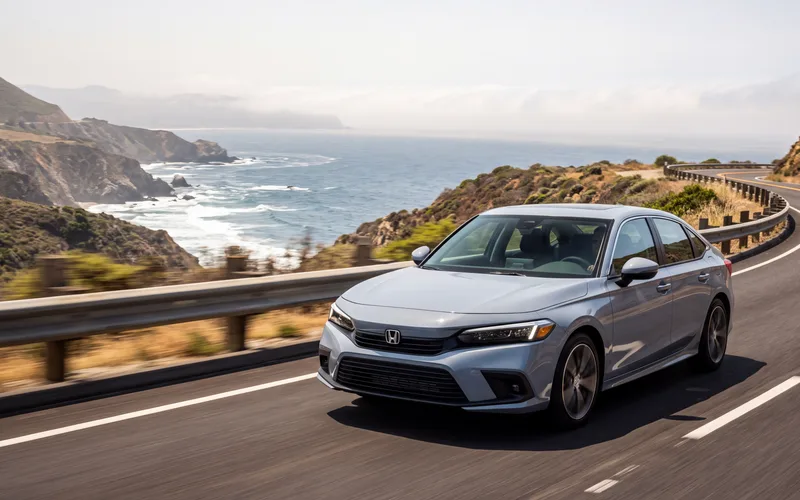 Honda CivicCompact SedanBetter at: Refinement & resale
Costs more but returns it in a quieter, better-built cabin, a Top Safety Pick award and roughly nine more points of five-year resale value.
Compare 2.40C+
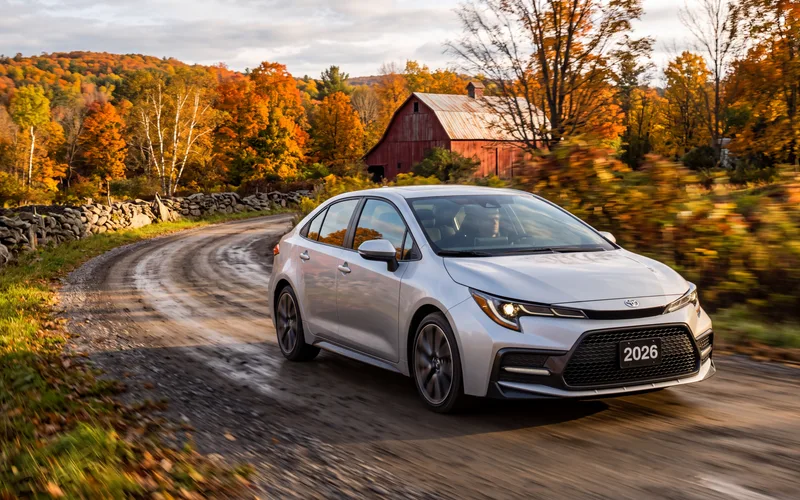 Toyota CorollaCompact SedanBetter at: Reliability & AWD
The safer, more reliable pick with 5-star crash results and the only AWD option in this cross-shop, if you can live with far less rear legroom.
Compare 2.19C
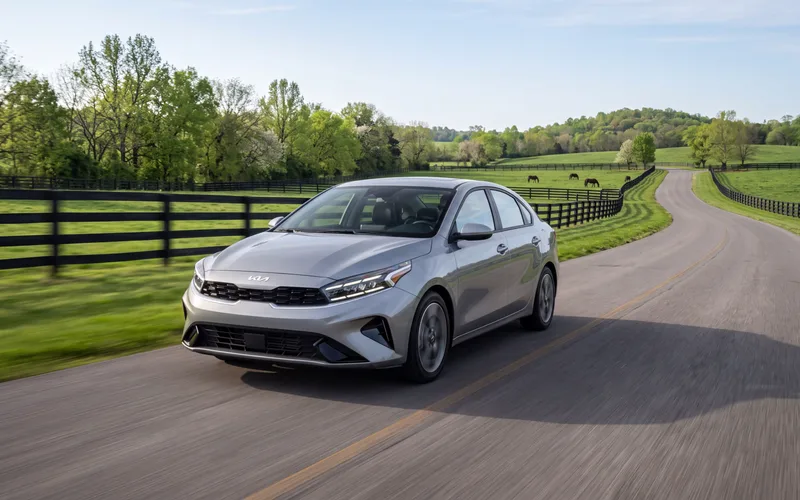 Kia K4Compact SedanBetter at: Fresher design
Same underlying engineering with a newer design and cabin, worth a look if the deal is better — but it has no hybrid to counter the Elantra's 54 MPG.
CompareHow it's evolved
10 scored model years · 2017–2026
Subject scores by year
Hover or tap a score to see what moved it versus the year before. A corner mark flags a big swing.
| Year | Performance | Efficiency | Safety | Space | Cost | Reliability | Tech | Use-case | Driving | Value |
|---|---|---|---|---|---|---|---|---|---|---|
| 2026 | 29 | 66 | 63 | 65 | 87 | 71 | 62 | 53 | 63 | 77 |
| 2025 | 29 | 59 | 77 | 63 | 87 | 68 | 53 | 51 | 63 | 75 |
| 2024 | 29 | 60 | 76 | 63 | 88 | 73 | 56 | 51 | 63 | 75 |
| 2023 | 28 | 60 | 67 | 63 | 88 | 69 | 51 | 46 | 62 | 74 |
| 2022 | 26 | 63 | 66 | 62 | 87 | 69 | 52 | 48 | 60 | 72 |
| 2021 | 28 | 69 | 72 | 64 | 98 | 68 | 52 | 48 | 63 | 82 |
| 2020 | 20 | 64 | 54 | 59 | 92 | 65 | 40 | 46 | 57 | 70 |
| 2019 | 27 | 60 | 54 | 60 | 91 | 69 | 35 | 47 | 57 | 63 |
| 2018 | 22 | 61 | 49 | 59 | 91 | 66 | 33 | 45 | 57 | 67 |
| 2017 | 24 | 60 | 53 | 59 | 81 | 65 | 32 | 45 | 58 | 69 |
Compare two years
Best fit & conditions
Higher scores mean a better fit for that use case. Learn more about use-case fit →
Subject profile
Trims & configurations
6 trimsScores above reflect the volume trim. Per-trim specs and scores are rolling out — the full lineup:
Academic Probation · NHTSA safety recalls
Apr 28, 2021EngineThe piston oil rings may not have been properly heat-treated, which could result in engine damage.
Defect
Hyundai Motor America (Hyundai) is recalling certain 2019-2020 Elantra, 2019-2021 Kona and Veloster vehicles equipped with 2.0L Nu MPI engines. The piston oil rings may not have been properly heat-treated, which could result in engine damage.
Risk
A damaged engine may stall, increasing the risk of a crash. In addition, oil may leak onto hot exhaust components, increasing the risk of a fire.
Remedy
Dealers will inspect and, if necessary, replace the engine, free of charge. In addition, Hyundai will deploy Piston Ring Noise Sensing System (PNSS) software. Owner notification letters were mailed August 24, 2021. Owners may contact Hyundai customer service at 1-855-371-9460.
NHTSA campaign 21V301000 ↗Manufacturer no. 203158,493 vehicles potentially affected (all models in the campaign)Owners notified Aug 24, 2021Filed by Hyundai Motor AmericaFiled as ELANTRA
22 recalls on other model years of the Elantra (2017–2018, 2020–2026)
May 14, 2026Electrical system: propulsion system: hybrid management: power control unit/module (hpcu)The hybrid power control unit (HPCU) assembly may overheat.
Defect
Hyundai Motor America (Hyundai) is recalling certain 2024-2026 Elantra Hybrid vehicles. The hybrid power control unit (HPCU) assembly may overheat.
Risk
Overheating in the HPCU increases the risk of a fire.
Remedy
Dealers will update the HPCU software, free of charge. Owner notification letters were mailed July 3, 2026. Owners may contact Hyundai customer service at 1-855-371-9460. Hyundai's number for this recall is 301. Vehicle Identification Numbers (VINs) involved in this recall became searchable on NHTSA.gov on May 16, 2026.
NHTSA campaign 26V308000 ↗Manufacturer no. 30154,337 vehicles potentially affected (all models in the campaign)Owners notified Jul 3, 2026Filed by Hyundai Motor AmericaFiled as ELANTRA HYBRIDApr 20, 2026Air bags: sensor: side impactThe B-pillar impact sensors may have been misassembled, which can delay air bag deployment.
Defect
Hyundai Motor America (Hyundai) is recalling certain 2025 Elantra N, 2026 Tucson, Tucson Hybrid, Tucson Plug-In Hybrid Electric (PHEV), and Elantra vehicles. The B-pillar impact sensors may have been misassembled, which can delay air bag deployment.
Risk
Air bags that do not deploy as intended increase the risk of injury in a crash.
Remedy
Dealers will inspect and replace the impact sensor(s), as necessary, free of charge. Owner notification letters were mailed June 11, 2026. Owners may contact Hyundai's customer service at 855-371-9460. Hyundai's number for this recall is 299. Vehicle Identification Numbers (VINs) involved in this recall became searchable on NHTSA.gov on April 22, 2026.
NHTSA campaign 26V254000 ↗Manufacturer no. 2992,931 vehicles potentially affected (all models in the campaign)Owners notified Jun 11, 2026Filed by Hyundai Motor AmericaFiled as ELANTRA, ELANTRA NNov 21, 2024Back over prevention: sensing system: cameraDue to a damaged printed circuit board, the rearview camera image may fail to display. As such, these vehicles fail to comply with the requirements of Federal Motor Vehicle Safety Standard number 111, "Rear Visibility."
Defect
Hyundai Motor America (Hyundai) is recalling certain 2021-2022 Santa Fe, Santa Fe HEV, Elantra, Elantra HEV and 2022 Elantra N and Santa Fe PHEV vehicles. Due to a damaged printed circuit board, the rearview camera image may fail to display. As such, these vehicles fail to comply with the requirements of Federal Motor Vehicle Safety Standard number 111, "Rear Visibility."
Risk
A rearview image that does not display reduces the driver's visibility and increases the risk of a crash.
Remedy
Dealers will replace the rearview camera, free of charge. Owner notification letters were mailed January 14, 2025. Owners may contact Hyundai customer service at 1-855-371-9460. Hyundai's number for this recall is 271.
NHTSA campaign 24V879000 ↗Manufacturer no. 271226,118 vehicles potentially affected (all models in the campaign)Owners notified Jan 14, 2025Filed by Hyundai Motor AmericaFiled as ELANTRA, ELANTRA HYBRID, ELANTRA NJul 11, 2024Fuel system, gasoline: delivery: fuel pump: control/drive moduleThe fuel pump may fail, which can result in a loss of drive power.
Defect
Hyundai Motor America (Hyundai) is recalling certain 2019-2022 Veloster N, 2019-2023 Genesis G70, 2022-2023 Elantra N, and Kona N vehicles. The fuel pump may fail, which can result in a loss of drive power.
Risk
A loss of drive power can increase the risk of a crash.
Remedy
Dealers will update engine control module software. In addition, dealers will inspect and replace the fuel pump assembly, as necessary. All repairs will be performed free of charge. Owner notification letters were mailed beginning September 9, 2024. Some interim notification letters, notifying owners of the safety risk, were mailed September 3, 2024. Owners may contact Hyundai customer service at 1-855-371-9460. Hyundai's numbers for this recall are 262 and 023G.
NHTSA campaign 24V528000 ↗Manufacturer no. 262-023G54,647 vehicles potentially affected (all models in the campaign)Owners notified Sep 9, 2024Filed by Hyundai Motor AmericaFiled as ELANTRA NMay 1, 2024Engine and engine cooling: exhaust system: emission control: gas recirculation valve (egr valve)An electrical short circuit may occur in the exhaust gas recirculation (EGR) valve assembly, which can result in a loss of drive power.
Defect
Hyundai Motor America (Hyundai) is recalling certain 2024 Elantra, Venue, and Kona vehicles. An electrical short circuit may occur in the exhaust gas recirculation (EGR) valve assembly, which can result in a loss of drive power.
Risk
A loss of drive power increases the risk of a crash.
Remedy
Dealers will replace the exhaust gas recirculation valve assembly, free of charge. Owner notification letters were mailed June 28, 2024. Owners may contact Hyundai customer service at 1-855-371-9460. Hyundai's number for this recall is 260.
NHTSA campaign 24V308000 ↗Manufacturer no. 26013,511 vehicles potentially affected (all models in the campaign)Owners notified Jun 28, 2024Filed by Hyundai Motor AmericaFiled as ELANTRAAug 18, 2023Electrical system · Vehicle speed controlA software error in the motor control unit may cause unintended vehicle acceleration after the brake pedal is released.
Defect
Hyundai Motor America (Hyundai) is recalling certain 2021-2023 Elantra HEV vehicles. A software error in the motor control unit may cause unintended vehicle acceleration after the brake pedal is released.
Risk
Unintended vehicle acceleration can increase the risk of a crash.
Remedy
Dealers will update the motor control unit software, free of charge. Owner notification letters were mailed September 29, 2023. Owners may contact Hyundai customer service at 1-855-371-9460. Hyundai's number for this recall is 248.
NHTSA campaign 23V589000 ↗Manufacturer no. 24837,997 vehicles potentially affected (all models in the campaign)Owners notified Sep 26, 2023Filed by Hyundai Motor AmericaFiled as ELANTRA HYBRIDJul 27, 2023Power train: automatic transmission: fluid/lubricant: pumpThe electronic controller for the Idle Stop & Go oil pump assembly may contain damaged electrical components that can cause the pump controller to overheat.
Defect
Hyundai Motor America (Hyundai) is recalling certain 2023-2024 Palisade Tucson, 2023 Sonata, Elantra, and Kona vehicles. The electronic controller for the Idle Stop & Go oil pump assembly may contain damaged electrical components that can cause the pump controller to overheat.
Risk
An electric oil pump assembly that overheats increases the risk of a vehicle fire.
Remedy
Owners are advised to park outside and away from structures until the recall repair is complete. Dealers will inspect and replace the electric oil pump controller, as necessary, free of charge. Owner notification letters were mailed starting September 7, 2023. Owners may contact Hyundai customer service at 1-855-371-9460. Hyundai's number for this recall is 246.
NHTSA campaign 23V526000 ↗Manufacturer no. 24652,109 vehicles potentially affected (all models in the campaign)Owners notified Sep 7, 2023Filed by Hyundai Motor AmericaFiled as ELANTRAOct 6, 2022Power train: automatic transmissionThe vehicle's "fail-safe" limited-mobility drive mode may be impaired, when prompted by a transmission oil pump malfunction, which can result in a complete loss of drive power.
Defect
Hyundai Motor Company (Hyundai) is recalling certain 2021-2022 Santa Fe, Sonata, Veloster N, 2022 Santa Cruz, Elantra N, and Kona N vehicles. The vehicle's "fail-safe" limited-mobility drive mode may be impaired, when prompted by a transmission oil pump malfunction, which can result in a complete loss of drive power.
Risk
Loss of drive power increases the risk of a crash.
Remedy
Dealers will inspect and replace the transmission, as necessary. Dealers will also update the transmission control unit software. All repairs will be performed free of charge. Owner notification letters were mailed January 10, 2023. Owners may contact Hyundai customer service at 1-855-371-9460. Hyundai's number for this recall is 236.
NHTSA campaign 22V746000 ↗Manufacturer no. 23656,148 vehicles potentially affected (all models in the campaign)Owners notified Jan 10, 2023Filed by Hyundai Motor AmericaFiled as ELANTRA NAug 18, 2022Air bags: frontalThe emblem on the cover of the driver's front air bag may not have been welded properly, which can result in the emblem detaching upon deployment.
Defect
Hyundai Motor America (Hyundai) is recalling certain 2022 Elantra N and 2022-2023 Elantra vehicles. The emblem on the cover of the driver's front air bag may not have been welded properly, which can result in the emblem detaching upon deployment.
Risk
A detached air bag cover emblem may strike a vehicle occupant, which can increase the risk of injury.
Remedy
Dealers will replace the air bag, free of charge. Owner notification letters were mailed October 14, 2022. Owners may contact Hyundai customer service at 1-855-371-9460. Hyundai's number for this recall is 234.
NHTSA campaign 22V632000 ↗Manufacturer no. 234247 vehicles potentially affected (all models in the campaign)Owners notified Oct 14, 2022Filed by Hyundai Motor AmericaFiled as ELANTRA, ELANTRA NMay 19, 2022Seat belts: front · Seat belts: pretensionerIn the event of a crash, the front driver-side and/or passenger-side seat belt pretensioners may explode upon deployment.
Defect
Hyundai Motor America (Hyundai) is recalling certain 2020-2022 Accent, 2021-2022 Elantra, and 2021-2022 Elantra HEV vehicles. In the event of a crash, the front driver-side and/or passenger-side seat belt pretensioners may explode upon deployment.
Risk
An exploding seat belt pretensioner can project metal fragments into the vehicle, strike vehicle occupants, and result in injury.
Remedy
Dealers will secure the seat belt pretensioner(s) with a cap, free of charge. Owner notification letters were mailed August 28, 2022. Owners may contact Hyundai customer service at 1-855-371-9460. Hyundai's number for this recall is 229. This recall expands and replaces NHTSA recall numbers 21V-796, 22V-069, 22V-218, and 22V-123 for Accent, Elantra, and Elantra HEV vehicles. All Accent, Elantra, and Elantra HEV vehicles already repaired under the previous recalls will need to have the new remedy completed.
NHTSA campaign 22V354000 ↗Manufacturer no. 229230,233 vehicles potentially affected (all models in the campaign)Owners notified Aug 29, 2022Filed by Hyundai Motor AmericaFiled as ELANTRA, ELANTRA HYBRIDApr 1, 2022Seat belts: front · Seat belts: pretensionerIn the event of a crash, the front driver and passenger-side seat belt pretensioners may explode upon deployment.
Defect
Hyundai Motor America (Hyundai) is recalling certain 2021-2022 Elantra and 2020 Accent vehicles. In the event of a crash, the front driver and passenger-side seat belt pretensioners may explode upon deployment.
Risk
Exploding seat belt pretensioners can project metal fragments into the vehicle, strike vehicle occupants, and result in injury.
Remedy
Dealers will replace the seat belt pretensioners, free of charge. Interim notification letters, notifying owners of the safety risk, were mailed on May 31, 2022. A second notice will be sent once remedy parts become available. Owners may contact Hyundai customer service at 1-855-371-9460. Hyundai's number for this recall is 223. This recall is replaced by NHTSA recall number 22V-354. Vehicles already repaired under this recall will need to have the new remedy completed.
NHTSA campaign 22V218000 ↗Manufacturer no. 2236,240 vehicles potentially affected (all models in the campaign)Owners notified May 19, 2022Filed by Hyundai Motor AmericaFiled as ELANTRAMar 3, 2022Seat belts: front · Seat belts: pretensionerIn the event of a crash, the front passenger-side seat belt pretensioner may explode upon deployment.
Defect
Hyundai Motor America (Hyundai) is recalling certain 2022 Elantra and Elantra HEV vehicles. In the event of a crash, the front passenger-side seat belt pretensioner may explode upon deployment.
Risk
An exploding seat belt pretensioner can project metal fragments into the vehicle, striking vehicle occupants and resulting in injury.
Remedy
Dealers will replace the seat belt pretensioners, free of charge. Owner notification letters were mailed May 19, 2022. Owners may contact Hyundai customer service at 1-855-371-9460. Hyundai's number for this recall is 220. This recall is an expansion of NHTSA recall numbers 21V-796 and 22V-069. This recall is replaced by NHTSA recall number 22V-354. Vehicles already repaired under this recall will need to have the new remedy completed.
NHTSA campaign 22V123000 ↗Manufacturer no. 220140 vehicles potentially affected (all models in the campaign)Owners notified May 19, 2022Filed by Hyundai Motor AmericaFiled as ELANTRA, ELANTRA HYBRIDDec 28, 2021Visibility: windshieldDuring manufacturing, the windshield may not have been properly bonded to the vehicle, allowing it to detach in a crash.
Defect
Hyundai Motor America (Hyundai) is recalling certain 2020-2021 Santa Fe, 2021 Sonata, and Elantra vehicles. During manufacturing, the windshield may not have been properly bonded to the vehicle, allowing it to detach in a crash.
Risk
A windshield that detaches from a vehicle during a crash can increase the risk of injury.
Remedy
Dealers will remove and reinstall the front windshield panel, free of charge. Owner notification letters were mailed June 20, 2022. Owners may contact Hyundai customer service at 1-855-371-9460. Hyundai's number for this recall is 216.
NHTSA campaign 21V00M000 ↗Manufacturer no. 21626,413 vehicles potentially affected (all models in the campaign)Owners notified Jun 20, 2022Filed by Hyundai Motor AmericaFiled as ELANTRAOct 13, 2021Seat belts: front · Seat belts: pretensionerIn the event of a crash, the front driver-side and/or passenger-side seat belt pretensioner(s) may explode upon deployment.
Defect
Hyundai Motor America (Hyundai) is recalling certain 2021 Elantra, Elantra HEV, Venue, Genesis GV80 and 2022 Genesis GV70 vehicles. In the event of a crash, the front driver-side and/or passenger-side seat belt pretensioner(s) may explode upon deployment.
Risk
An exploding seat belt pretensioner could project metal fragments into the vehicle, striking vehicle occupants and resulting in injury.
Remedy
Dealers will replace the seat belt pretensioners, free of charge. Owner notification letters were mailed February 10, 2022. Owners may contact Hyundai customer service at 1-855-371-9460. Hyundai's numbers for this recall are 211 and 009G. This recall is replaced by NHTSA recall numbers 22V-354 for Elantra and Elantra HEV vehicles, 22V-458 for Venue vehicles, and 23V-094 for Genesis vehicles. Elantra, Elantra HEV, Venue, and Genesis vehicles already repaired under this recall will need to have the new remedies completed.
NHTSA campaign 21V796000 ↗Manufacturer no. 211/009G978 vehicles potentially affected (all models in the campaign)Owners notified Feb 10, 2022Filed by Hyundai Motor AmericaFiled as ELANTRA, ELANTRA HYBRIDApr 28, 2021Seats: front assembly: reclinerThe driver and front passenger seat back recliners may have been improperly welded.
Defect
Hyundai Motor America (Hyundai) is recalling certain 2021 Elantra vehicles. The driver and front passenger seat back recliners may have been improperly welded.
Risk
An improperly welded seat back recliner could separate from the seat back frame during a crash, increasing the risk of injury.
Remedy
Dealers will inspect and if necessary, replace the seat back frame assembly, free of charge. Owner notification letters were mailed on June 21, 2021. Owners may contact Hyundai customer service at 1-888-371-9460. Hyundai's number for this recall is 204.
NHTSA campaign 21V302000 ↗Manufacturer no. 2041,464 vehicles potentially affected (all models in the campaign)Owners notified Jun 21, 2021Filed by Hyundai Motor AmericaFiled as ELANTRAOct 9, 2019Suspension: front: control arm: lower ball jointThe lower control arm ball joint fasteners may have been insufficiently tightened allowing the ball joint to detach from the lower control arm.
Defect
Hyundai Motor America (Hyundai) is recalling certain 2020 Elantra vehicles. The lower control arm ball joint fasteners may have been insufficiently tightened allowing the ball joint to detach from the lower control arm.
Risk
A detached ball joint can cause a loss of vehicle control, increasing the risk of a crash.
Remedy
Hyundai will notify owners, and dealers will inspect and, as necessary, tighten the ball joint fasteners, free of charge. The recall began November 20, 2019. Owners may contact Hyundai customer service at 1-855-371-9460. Hyundai's number for this recall is 185.
NHTSA campaign 19V721000 ↗Manufacturer no. 185744 vehicles potentially affected (all models in the campaign)Owners notified Nov 20, 2019Filed by Hyundai Motor AmericaFiled as ELANTRAOct 9, 2019Wheels: lugs/nuts/bolts/studsThe right-side rear wheel lug nuts may have been insufficiently tightened, allowing the wheel to detach from the vehicle.
Defect
Hyundai Motor America (Hyundai) is recalling certain 2019 Ioniq Hybrid and 2020 Elantra vehicles. The right-side rear wheel lug nuts may have been insufficiently tightened, allowing the wheel to detach from the vehicle.
Risk
A wheel detaching from the vehicle increases the risk of a crash.
Remedy
Hyundai will notify owners, and dealers will inspect and, if necessary, tighten the lug nuts, free of charge. The recall began November 15, 2019. Owners may contact Hyundai customer service at 1-800-251-0871. Hyundai's number for this recall is 184.
NHTSA campaign 19V720000 ↗Manufacturer no. 18448 vehicles potentially affected (all models in the campaign)Owners notified Nov 15, 2019Filed by Hyundai Motor AmericaFiled as ELANTRADec 14, 2018Electrical system · Visibility: sun/moon roof assemblyThe panoramic sunroof motor may be incorrectly programmed, preventing the sunroof from detecting an obstacle while closing.
Defect
Hyundai Motor America (Hyundai) is recalling certain 2018 Hyundai Elantra GT vehicles. The panoramic sunroof motor may be incorrectly programmed, preventing the sunroof from detecting an obstacle while closing.
Risk
If the sunroof does not detect an obstacle while closing and then retract, there could be an increased risk of injury.
Remedy
Hyundai will notify owners, and dealers will inspect the panoramic sunroof, replacing it as necessary, free of charge. The recall began February 5, 2019. Owners may contact Hyundai customer service at 1-855-371-9460. Hyundai's number for this recall is 179.
NHTSA campaign 18V891000 ↗Manufacturer no. 17986 vehicles potentially affected (all models in the campaign)Owners notified Feb 5, 2019Filed by Hyundai Motor AmericaFiled as ELANTRA GTMar 28, 2017Steering: electric power assist systemThe affected vehicles may have a damaged Electronic Power Steering (MDPS) connector resulting in a loss of electric power steering assistance.
Defect
Hyundai Motor America (Hyundai) is recalling certain 2017 Elantra vehicles. The affected vehicles may have a damaged Electronic Power Steering (MDPS) connector resulting in a loss of electric power steering assistance.
Risk
Loss of power steering assist would require higher steering effort, especially at lower speeds, which may increase the risk of a crash.
Remedy
Hyundai will notify owners, and dealers will replace the EPS motor, free of charge. The recall is expected to begin April 28, 2017. Owners may contact Hyundai customer service at 1-800-243-7766. Hyundai's number for this recall 161.
NHTSA campaign 17V213000 ↗Manufacturer no. 16199 vehicles potentially affected (all models in the campaign)Owners notified May 1, 2017Filed by Hyundai Motor AmericaFiled as ELANTRAJan 26, 2017Service brakes, hydraulic: power assist: hydraulicIn the affected vehicles, the brake booster may fail, resulting in a loss of power brake assist.
Defect
Hyundai Motor Company (Hyundai) is recalling certain 2017 Elantra vehicles. In the affected vehicles, the brake booster may fail, resulting in a loss of power brake assist.
Risk
A loss of power brake assist can lengthen the distance needed to stop the vehicle, increasing the risk of a crash.
Remedy
Hyundai has notified owners, and dealers will replace the brake system booster assembly, free of charge. The recall began on February 6, 2017. Owners may contact Hyundai customer service at 1-800-633-5151. Hyundai's number for this recall is 157.
NHTSA campaign 17V063000 ↗Manufacturer no. 15733,803 vehicles potentially affected (all models in the campaign)Owners notified Feb 6, 2017Filed by Hyundai Motor AmericaFiled as ELANTRADec 30, 2016Air bags: frontal: driver side: inflator moduleIn these vehicles, the end seal for the driver's frontal air bag inflator may not have been properly installed, possibly resulting in reduced inflation of the frontal air bag in the event of a crash.
Defect
Hyundai Motor Company (Hyundai) is recalling certain model year 2017 Hyundai Elantra vehicles manufactured April 15, 2016, to September 13, 2016, and Sonata vehicles manufactured May 27, 2016 to September 16, 2016. In these vehicles, the end seal for the driver's frontal air bag inflator may not have been properly installed, possibly resulting in reduced inflation of the frontal air bag in the event of a crash.
Risk
In the event of a crash, an air bag that does not inflate fully increases the risk of injury.
Remedy
Hyundai will notify owners, and dealers will replace the driver's frontal air bag module, free of charge. The recall began February 13, 2017. Owners may contact Hyundai customer service at 1-855-371-9460. Hyundai's number for this recall is 156.
NHTSA campaign 16V956000 ↗Manufacturer no. 156110 vehicles potentially affected (all models in the campaign)Owners notified Feb 13, 2017Filed by Hyundai Motor AmericaFiled as ELANTRAApr 21, 2016Air bags: frontalIn these vehicles, the driver's frontal air bag may be missing a chemical enhancer required for the second stage air bag deployment, resulting in the second stage not deploying in certain crashes. The primary stage will deploy as intended.
Defect
Hyundai Motor Company (Hyundai) is recalling certain model year 2015-2016 Sonata vehicles manufactured May 29, 2014 to February 11, 2016, 2017 Elantra vehicles manufactured January 12, 2016 to February 22, 2016, and one 2016 Sonata Hybrid vehicle manufactured October 15, 2015. In these vehicles, the driver's frontal air bag may be missing a chemical enhancer required for the second stage air bag deployment, resulting in the second stage not deploying in certain crashes. The primary stage will deploy as intended.
Risk
An air bag that does not inflate increases the risk of injury.
Remedy
Hyundai will notify owners, and dealers will replace the driver's frontal air bag module, free of charge. The recall began on May 5,2016. Owners may contact Hyundai customer service at 1-855-371-9460. Hyundai's number for this recall is 144.
NHTSA campaign 16V232000 ↗Manufacturer no. 14433 vehicles potentially affected (all models in the campaign)Owners notified Jun 15, 2016Filed by Hyundai Motor AmericaFiled as ELANTRA
Source: NHTSA Office of Defects Investigation recall database, model years 2017–2026. Recalls are listed by model year as the manufacturer filed them; whether a specific car is affected depends on its VIN — check a VIN at nhtsa.gov ↗. NHTSA model names matched to this page: ELANTRA, ELANTRA GT, ELANTRA HYBRID, ELANTRA N.
Detailed scoring by subject
1Performance & PowertrainThe Elantra's lowest-graded category.0.00F
The 2019 Elantra facelift kept the outgoing generation's naturally aspirated 2.0L Nu MPI four as the mainstream engine across SE, SEL, Value Edition and Limited — the Smartstream 2.0L/IVT combination that replaced it didn't arrive until the 2020 model year. It is a modest output for the sedan band, which stretches up to 520 hp performance and luxury sedans.
132 lb-ft at 4,500 rpm from the 2.0L four is unremarkable even for a compact sedan and sits near the bottom of the sedan band, which is calibrated against everything up to twin-turbo luxury sixes.
The 2.0L/6-speed-automatic combination that most 2019 Elantra buyers chose is unhurried; the manual-only figure is even slower, and only the turbocharged Sport trim gets meaningfully quicker.
The naturally aspirated 2.0L is inherently free of turbo lag and delivers power predictably, but contemporary reviews described it as adequate rather than eager — it runs out of breath for highway passing and gets coarse when revved, well short of the segment's better fours.
The conventional 6-speed torque-converter automatic (the CVT-like IVT was still a model year away for 2019) shifts smoothly and predictably with no CVT drone, but it is a basic, unremarkable unit with no manual mode of consequence on mainstream trims.
No 2019 Elantra sedan trim offers all-wheel drive — the whole lineup, SE through Sport and Limited, is front-wheel drive only. AWD on this nameplate didn't arrive until the unrelated Elantra N Line/later generations.
Three distinct gasoline engines — the 2.0L MPI mainstream unit, the 1.4L turbo Eco tune for economy, and the 1.6L turbo Sport tune for performance — cover the mainstream range, but there is no hybrid, plug-in, or electric Elantra sedan in 2019; Hyundai reserved electrification for the separate Ioniq line.
2Efficiency & RangeMid-pack among this car's ten categories.2.07C
The volume SE with the 2.0L four and 6-speed automatic is EPA-rated at 33 MPG combined, a solid figure that lands well above the sedan-band midpoint — the dedicated Eco trim does better still on its turbo-1.4/DCT combo.
City economy of 29 MPG is competitive for a non-hybrid compact sedan running a conventional torque-converter automatic.
38 MPG highway is the SE's strongest EPA figure and among the better numbers in the compact-sedan class for a non-hybrid, non-turbo-Eco configuration.
fueleconomy.gov's own range figure for the SE automatic is 462 miles on a full 14.0-gallon tank — solidly mid-pack for the sedan band, held back more by tank size than by the car's genuinely good fuel economy.
EPA's standard-assumption annual fuel cost for the volume SE automatic is $1,950 — below the sedan-band midpoint, reflecting both the car's efficiency and its regular-unleaded requirement.
Every 2019 Elantra engine — the base 2.0L, the Eco 1.4L turbo, and even the performance-oriented Sport 1.6L turbo — runs on regular 87-octane unleaded, with no premium recommendation on any trim.
3SafetyGrades below the middle of the scale.1.63D
NHTSA's full 2019 Elantra 4-door sedan test carried a 4-star overall rating, held down by a 4-star side-passenger result versus 5-star driver-side/pole scores.
Every IIHS crashworthiness test (small overlap driver/passenger, moderate overlap, side, roof strength, head restraints) came back Good, but the Top Safety Pick+ award applies only to sedans built after September 2018 with the optional Forward Collision-Avoidance Assist package and Good-rated LED headlights — both confined to the Limited trim, not the SEL volume trim this scorecard describes.
Forward Collision-Avoidance Assist, Lane Keep Assist and Driver Attention Warning are standard from SEL up (the volume trim), plus blind-spot collision warning with rear cross-traffic alert — a real core suite — but adaptive cruise and pedestrian AEB stay locked to the Limited trim's optional Ultimate Package, and the base SE gets none of it.
IIHS rated the front crash prevention system Superior for vehicle-to-vehicle and Advanced for daytime pedestrian detection — strong ratings, but the pedestrian-detection variant tested was the optional Limited-trim system, so the SEL volume trim's standard AEB covers vehicle-to-vehicle only.
Blind-Spot Collision Warning and rear cross-traffic alert are standard from SEL up, and the Limited adds Safe Exit Assist, but coverage across the lineup is alert-only with no active steering/braking intervention.
Lane Keep Assist is standard from SEL up and provides departure warning with corrective steering intervention, but this generation's system is warning-and-nudge rather than continuous lane centering, and contemporary reviews noted it as functional but unrefined.
Adaptive cruise control is confined to the Limited trim's optional Ultimate Package; the SEL volume trim this scorecard describes has conventional cruise control only, with no highway-assist integration at any trim.
No hands-free highway driving system was offered on the 2019 Elantra at any trim — the ADAS suite tops out at driver-assist lane keeping and optional adaptive cruise.
IIHS rated the halogen projector headlights standard on SE, SEL, Value Edition and Eco as Poor; only the Limited's optional LED projector units with high-beam assist rated Good, so the volume SEL trim carries the Poor-rated lamps.
The redesigned 2019 Elantra's compact sedan proportions and slim-for-the-era pillars gave average-to-good sightlines by contemporary reviewer accounts, with a standard rearview camera and (from SEL up) blind-spot warning compensating for typical rear-quarter blind zones; no instrumented visibility test was found.
IIHS rated LATCH ease-of-use Acceptable overall: both outboard rear seating positions have complete, accessible lower anchors and tether, but the center position offers a tether anchor only, limiting 3-across car-seat installs.
4Space & ComfortMid-pack among this car's ten categories.2.04C
Standard 5-passenger compact sedan seating across all 2019 Elantra trims (SE, SEL, Value Edition, Eco, Limited, Sport).
Front headroom for the 2019 Elantra sedan, unchanged by the 2019 front/rear fascia refresh.
Front legroom on the 106.3 in wheelbase 6th-generation (AD facelift) platform.
Rear headroom benefits from the compact sedan's tall greenhouse for the class.
Rear legroom is competitive but not class-leading for a compact sedan.
Trunk volume unchanged from the pre-facelift 6th-generation Elantra.
Conventional center console, door pockets and glovebox with no standout storage innovation; reviewers described storage as adequate but unremarkable for the class.
Front seats were generally regarded as supportive enough for the class; rear seat is flatter and better suited to shorter trips, with cloth seats standard and leather only on Limited.
Firm but composed ride that absorbs most road imperfections in city driving; can get slightly unsettled on rougher pavement per Edmunds.
No acoustic glass or active noise cancellation on this generation; reviewers noted average wind/road noise for a mainstream compact sedan.
Heated front seats and dual-zone automatic climate control arrive at Value Edition and up; heated steering wheel and leather are Limited-only; no rear vents or ventilated seats offered on any 2019 trim.
5Cost of OwnershipThe Elantra's best-graded category.4.00A+
Entry SE trim starting price for the facelifted 2019 lineup, a modest increase over 2018 that came with the mid-cycle refresh's new tech and safety content.
SEL is the best-selling mid-trim, adding alloy wheels, larger touchscreen and driver-assist options over SE at a moderate premium.
Edmunds' True Cost to Own estimate for the 2019 Elantra's 5-year maintenance is well below the sedan-segment band, consistent with Hyundai's simple naturally-aspirated 2.0L powertrain and long service intervals.
iSeeCars places 5-year depreciation for the Elantra around 37%, slightly worse than the compact-class average (~30%) as budget-sedan resale continues to lag crossovers.
Standard Hyundai new-vehicle limited warranty for the model year, longer than the typical 3yr/36k industry norm.
Hyundai's signature 10-year/100,000-mile powertrain warranty (original owner) tops the segment and the normalization band.
The 2019 Elantra predates Hyundai's complimentary scheduled-maintenance program (introduced for MY2020 vehicles purchased from Feb 2020), so buyers got no free service visits — but the warranty bundled 5-year/unlimited-mile roadside assistance, a genuine basic perk.
$20,420 volume-trim price minus its estimated resale value after 5 years (63% retained, or about $12,865) leaves about $7,555 in depreciation. Add the projected $3,822 in 5-year maintenance and repairs, and owning this vehicle for 5 years costs about $11,377 in total.
6Reliability & QualityOne of the Elantra's strongest categories.2.67C+
CR gave the 2019 Elantra an above-average predicted reliability rating, and JD Power's 2022 Vehicle Dependability Study (which measures 3-year-old, MY2019 vehicles) put Hyundai among the top brands with Kia and Genesis, but owner complaint volume on the 2.0L Nu engine (stalling, oil consumption, knocking) tempers the picture.
Hyundai's JD Power VDS standing was uneven across this period — a below-average showing in the 2020 study, a large PP100 improvement in 2021, then a top-tier showing in the 2022 study covering MY2019 cars — netting out to solid but not consistently top-5.
One safety recall for this model year (2.0L Nu MPI piston oil rings, engine stall/fire risk, remedy via inspection/software or engine replacement) is a real but singular issue, not a pattern; the TSB record otherwise is routine (steering-column noise, exhaust weld, ECM misfire-logic update, transmission diagnosis, thermostat, mirror whistle, wireless-charging pad).
The 2.0L Nu MPI four-cylinder is a long-running, generally proven Hyundai engine family, but this specific application drew a real defect (piston oil ring heat-treatment) tied to owner-reported stalling, excessive oil consumption and knocking at low mileage, which is a mixed-history red flag rather than a clean track record.
Reviewers found a competent mix of soft-touch and matte plastics with an upscale-looking touchscreen and metal-effect door handles, but called the overall material quality 'acceptably average' next to newly redesigned rivals, with a few visibly cheap touchpoints like the mirror switches.
No pattern of assembly complaints (panel gaps, rattles) surfaced in owner or press reviews for the 2019 model year beyond the isolated mirror-whistle TSB, consistent with a generally solid, unremarkable build.
Hyundai runs a dense, nationwide US dealer network backed by an industry-leading 10-year/100,000-mile powertrain warranty and 5-year/60,000-mile bumper-to-bumper coverage, both strong ownership-support signals even without segment-topping service-satisfaction scores.
As one of the best-selling compact sedans in the US, the Elantra has abundant OEM and aftermarket parts support and repair costs that run notably below the compact-car segment average.
7Technology & InfotainmentOne of the Elantra's weakest categories.0.28F
SEL, the volume trim, carries the 7-inch touchscreen with Android Auto/Apple CarPlay; base SE has only a 5-inch non-smartphone screen and the top Limited + Ultimate Package steps up to an 8-inch navigation screen.
Hyundai's touchscreen interface of this era was consistently praised by reviewers for simple menus and quick response, offsetting its modest screen size.
Only wired Apple CarPlay/Android Auto were offered in the 2019 model year, and only from SEL trim up — the base SE's 5-inch screen has no smartphone integration at all.
Basic voice command system for phone/audio functions; native navigation was gated behind the Limited + Ultimate Package rather than being broadly available, so most owners relied on phone projection.
Standard audio is adequate but unremarkable; the Infinity premium system on Limited is a modest step up rather than a standout.
The 2019 Elantra uses analog gauges with only a small monochrome trip-computer LCD between them; a fully configurable digital cluster was not offered on this generation (it arrived with the 7th-gen redesign for 2021).
No over-the-air update capability of any kind on the 2019 Elantra's infotainment or vehicle software.
Hyundai Blue Link (available on upper trims) offers remote start, lock/unlock and vehicle locate via a subscription app, but it is a basic feature set compared to segment-leading digital-key systems.
Standard USB-A ports for front occupants with no rear USB; Qi wireless charging is available only on the Limited trim.
Proximity smart key with push-button start arrives at Value Edition and up; base SE retains a traditional key, so keyless access is not universal across the lineup.
Standard rearview camera across the lineup, but no surround-view camera or front/rear parking sensors were offered on the 2019 Elantra sedan.
No head-up display was offered on any 2019 Elantra trim; HUD did not appear on the Elantra lineup until later generations.
8Use-Case FitOne of the Elantra's weakest categories.1.14D
Rear door openings and LATCH anchors are accessible for a compact sedan, but 35.7 in rear legroom and a modest trunk make fitting two child seats plus a stroller a tighter squeeze than in larger sedans.
2019 brought Hyundai SmartSense (forward collision warning w/ automatic emergency braking, lane-keep assist, driver attention warning) to affordable trims, and the sedan earned an IIHS Top Safety Pick — a strong, family-relevant safety story for the price, though blind-spot/rear cross-traffic and the Superior-rated AEB variant require moving up from base SE.
Composed highway ride and decent front-seat comfort suit medium trips, but thin rear amenities (no rear vents, heated seats only from Value Edition up) and a compact trunk cap its appeal for full family road trips.
Light controls, a tight turning circle (34.8 ft) and a smooth-shifting 6-speed automatic make the Elantra an easy, low-fatigue daily driver, per contemporary reviews.
The 2.0L/6-speed-automatic volume powertrain returns an EPA-rated 32 mpg combined (28 city/37 highway), among the cheaper-to-run gas compact sedans, with Hyundai's low-cost maintenance reputation reinforcing it.
Compact 181.9 in length and a tight 34.8 ft curb-to-curb turning circle make it easy to park and thread through city traffic, though it lacks front sensors or a surround-view camera to aid tight spaces.
A compact sedan with a 14.4 cu ft trunk and no tow rating; not a meaningfully work-capable vehicle in any towing/hauling sense.
Hyundai's 2.0L Nu engine and conventional automatic have a reasonably proven reliability record for light-duty commercial/fleet use, but the Elantra is not marketed or optioned for hard work-duty use.
No onboard power outlets beyond USB, no tie-downs, no upfit ecosystem — a passenger sedan with essentially no jobsite provisions.
A composed highway ride and 37 mpg highway rating support long stints between fuel stops, but seats and NVH are merely adequate rather than exceptional, and only base-level driver-assist (FCW/AEB) is standard.
Front-wheel-drive only with no AWD option, modest ground clearance and no roof-rail/tow provisions — minimal genuine adventure capability.
60/40 split-folding rear seats extend the 14.4 cu ft trunk for longer items, but the fixed trunk opening and modest volume restrict bulkier gear compared to hatchbacks or SUVs.
9Driving ExperienceMid-pack among this car's ten categories.1.82C-
Reviewers found the 2019 Elantra secure but unremarkable in corners — U.S. News called it 'playful enough' but well short of sportier rivals like the Mazda3, and Edmunds noted it can get unsettled on imperfect pavement.
Precise enough for everyday use but numb, with little feedback communicated to the driver — a common complaint in period reviews.
No major braking complaints in contemporary reviews; adequate stopping power and pedal feel typical of the class, without standout praise.
The naturally aspirated 2.0L four paired with the 6-speed automatic shifts smoothly and predictably, if unremarkably, with no notable driveline roughness reported.
The 2.0L four is audible under hard acceleration but inoffensive at cruise, typical of the segment; no acoustic glass or extra sound-deadening to elevate refinement.
Curb-to-curb turning diameter from Hyundai's official 2019 Elantra specification sheet.
Straightforward control layout and a reasonable seat/wheel adjustment range for the class; no power driver's seat below Limited limits fine-tuning on lower trims.
Competent and pleasant but appliance-like; reviewers consistently placed it behind more engaging compact-sedan rivals on driving enjoyment.
10Value & Market PositionOne of the Elantra's strongest categories.2.24C
The 2019 mid-cycle refresh made a 5-inch touchscreen with standard Apple CarPlay/Android Auto, a rearview camera, and Forward Collision-Avoidance Assist standard fleet-wide from the base SE, ahead of several rivals that charged extra for smartphone integration or gated automatic emergency braking to upper trims that year.
Fair-to-good value for a mainstream compact sedan — generous tech and safety kit for the price — but the base 2.0L/6-speed powertrain and CVT-like feel are unremarkable next to segment leaders, keeping it out of standout territory.
Six trims spanning a stripped manual SE through Value Edition, SEL, turbocharged Sport (1.6T, manual or dual-clutch) and leather-lined Limited gives buyers a wide, well-spaced range from budget to near-luxury, though there is no hybrid or AWD option that year.
175,094 US units in 2019 kept the Elantra a top-5 compact seller and one of Hyundai's best-selling nameplates, but volume was down sharply from its ~240k-unit peak earlier in the decade as compact-sedan demand kept shifting to crossovers — a steady mid-pack seller, not a leader or a fast riser.
By 2019 Hyundai's reputation had climbed well past its budget-brand origins on the strength of its warranty and improving quality scores, but it still carried a value-mainstream image rather than an aspirational one — neutral, not a drag and not a halo.
As compact-sedan demand cooled through 2019, Hyundai commonly ran cash-back offers (roughly $1,000-1,500) and low-APR financing on Elantra to keep it moving — meaningful, regularly available incentives without the vehicle being a distress sale.
2019 is a substantial mid-cycle refresh of the sixth generation (launched 2017) — new front/rear styling, a larger available touchscreen, and expanded SmartSense safety tech — current and meaningfully updated, but not an all-new platform.
Well-reviewed for value, space and standard tech, and it earned an IIHS Top Safety Pick+ that year, but it landed in the bottom half of most compact-sedan comparison tests and rankings (e.g. U.S. News #8 of 14) and did not make Car and Driver's 10Best or win a NACTOY that model year — solidly reviewed, rarely the class pick.