

The verdict
A struggling mid-size sedan, strong on ownership and held back by performance.
The 2017 Hyundai Sonata is a comfortable, well-warrantied mainstream sedan that undercuts rivals on price while backing every SE trim with a 10-year/100,000-mile powertrain warranty. Its 185-hp 2.4L engine and 6-speed automatic are unremarkable in a straight line (0-60 in roughly 8.2 seconds) and the volume trims skip the AEB, blind-spot monitoring and lane-keeping gear that were becoming standard elsewhere, but the ride is genuinely composed and the 16.3 cu ft trunk plus 45.5 in of front legroom make it a roomy, low-drama daily driver. Buyers should budget for the outgoing Theta II engine's connecting-rod-bearing recall history and know every 2017 Sonata configuration scored Poor for headlights in IIHS testing.
Jump to scoresStrengths
- Segment-topping warranty coverage
- Roomy front seats for a mainstream sedan
- Strong crash-test results
What holds it back
- Every configuration rated Poor for headlights
- Driver-assist features locked behind Limited trim or optional packages
- Theta II engine's known reliability issue
Top alternatives
Cars shoppers cross-shop with the Hyundai Sonata 2.84B-
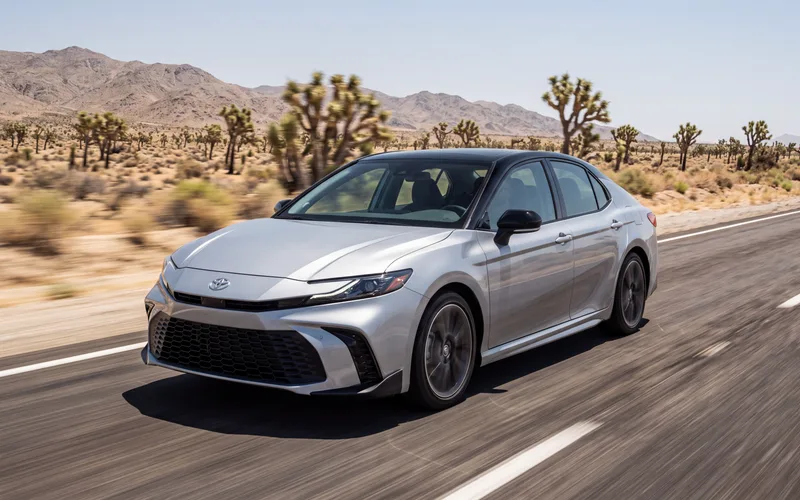 Toyota CamryMid-Size SedanBetter at: Efficiency and resale
Standard hybrid power at 46+ MPG combined and roughly nine points better five-year value retention make it the cheaper car to own despite the higher sticker.
Compare 2.89B-
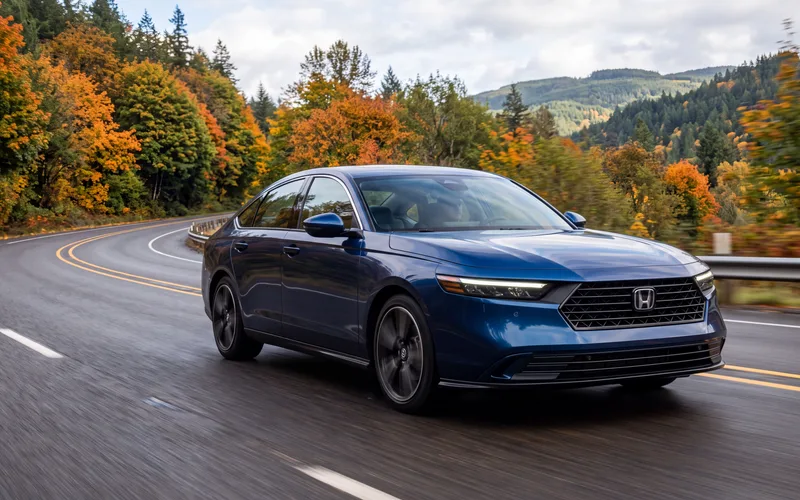 Honda AccordMid-Size SedanBetter at: Rear space
40.8 inches of rear legroom, a 16.7 cu ft trunk and the segment's best ride-and-handling balance fix the Sonata's two biggest weaknesses at once.
Compare 2.44C+
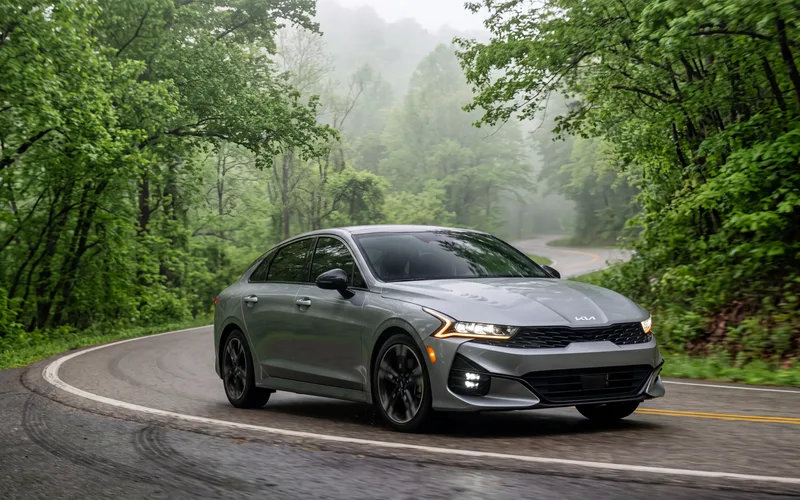 Kia K5Mid-Size SedanBetter at: Deal shopping
The same drivetrain, trunk and Kia/Hyundai warranty in different sheetmetal — worth cross-shopping purely on which one your local dealers discount harder.
CompareHow it's evolved
10 scored model years · 2017–2026
Subject scores by year
Hover or tap a score to see what moved it versus the year before. A corner mark flags a big swing.
| Year | Performance | Efficiency | Safety | Space | Cost | Reliability | Tech | Use-case | Driving | Value |
|---|---|---|---|---|---|---|---|---|---|---|
| 2026 | 42 | 58 | 74 | 72 | 79 | 72 | 72 | 55 | 67 | 72 |
| 2025 | 40 | 50 | 79 | 71 | 82 | 76 | 70 | 55 | 67 | 72 |
| 2024 | 39 | 50 | 76 | 72 | 82 | 74 | 69 | 55 | 67 | 73 |
| 2023 | 34 | 58 | 73 | 67 | 81 | 71 | 52 | 48 | 60 | 64 |
| 2022 | 34 | 55 | 73 | 67 | 83 | 71 | 46 | 48 | 60 | 62 |
| 2021 | 37 | 57 | 71 | 68 | 84 | 62 | 53 | 50 | 63 | 72 |
| 2020 | 39 | 61 | 72 | 67 | 86 | 67 | 52 | 47 | 61 | 71 |
| 2019 | 33 | 56 | 61 | 70 | 88 | 54 | 43 | 47 | 61 | 61 |
| 2018 | 33 | 56 | 64 | 67 | 85 | 47 | 47 | 46 | 63 | 62 |
| 2017 | 33 | 56 | 58 | 70 | 85 | 57 | 41 | 45 | 62 | 66 |
Compare two years
Best fit & conditions
Higher scores mean a better fit for that use case. Learn more about use-case fit →
Subject profile
Academic Probation · NHTSA safety recalls
Sep 24, 2021Electrical system: software · Exterior lighting: turn signalThe Smart Junction Box (SJB) software logic may not properly interpret the signals received from the multifunction switch, which could cause the turn signal to activate in the opposite direction of what the driver intended.
Defect
Hyundai Motor America (Hyundai) is recalling certain 2015-2017 Sonata, 2016-2017 Sonata Hybrid, and Sonata Plug-In Hybrid vehicles. The Smart Junction Box (SJB) software logic may not properly interpret the signals received from the multifunction switch, which could cause the turn signal to activate in the opposite direction of what the driver intended.
Risk
A turn signal that activates in the opposite direction of what was intended by the driver increases the risk of a crash.
Remedy
Dealers will update the SJB software, free of charge. Owner notification letters were mailed November 19, 2021. Owners may contact Hyundai customer service at 1-855-371-9460. Hyundai's number for this recall is 210.
NHTSA campaign 21V749000 ↗Manufacturer no. 210469,377 vehicles potentially affected (all models in the campaign)Owners notified Nov 19, 2021Filed by Hyundai Motor AmericaFiled as SONATA, SONATA HYBRID, SONATA PLUG-IN HYBRIDSep 17, 2021EngineThe connecting rod bearings inside the engine may wear prematurely, which can result in engine damage.
Defect
Hyundai Motor America (Hyundai) is recalling certain 2017 Tucson and Sonata Hybrid vehicles. The connecting rod bearings inside the engine may wear prematurely, which can result in engine damage.
Risk
A damaged engine can increase the risk of a fire or it can cause an engine stall, increasing the risk of a crash.
Remedy
Dealers will inspect the engine. If bearing damage is found, the engine will be replaced. Dealers will also install a software update containing a new Knock Sensor Detection System (KSDS). Repairs will be performed free of charge. Owners were notified of the defect on November 16, 2021. Owner notification letters were mailed January 15, 2022. Owners may contact Hyundai customer service at 1-855-371-9460. Hyundai's number for this recall is 209.
NHTSA campaign 21V727000 ↗Manufacturer no. 20995,515 vehicles potentially affected (all models in the campaign)Owners notified Jan 15, 2022Filed by Hyundai Motor AmericaFiled as SONATA HYBRIDAug 6, 2021Latches/locks/linkages: trunk lid: latchThe trunk latch may become damaged, preventing the opening of the trunk from the inside. As such, these vehicles fail to comply with the requirements of Federal Motor Vehicle Safety Standard number 401, "Internal Trunk Release."
Defect
Hyundai Motor America (Hyundai) is recalling certain 2017-2018 Sonata, 2016-2018 Sonata Hybrid, 2018-2020 Accent, and 2016-2017 Azera vehicles. The trunk latch may become damaged, preventing the opening of the trunk from the inside. As such, these vehicles fail to comply with the requirements of Federal Motor Vehicle Safety Standard number 401, "Internal Trunk Release."
Risk
A person inside the trunk compartment may become trapped, increasing their risk of injury.
Remedy
Dealers will replace the trunk latch base, free of charge. Owner notification letters were mailed December 4, 2021. Owners may contact Hyundai customer service at 1-855-371-9460. Hyundai's number for this recall is 208.
NHTSA campaign 21V619000 ↗Manufacturer no. 208348,158 vehicles potentially affected (all models in the campaign)Owners notified Dec 4, 2021Filed by Hyundai Motor AmericaFiled as SONATA, SONATA HYBRIDMar 12, 2018Hybrid propulsion systemThese vehicles are equipped with a Voltage Protection Device (VPD), designed to protect the high voltage battery module, that may activate inadvertently.
Defect
Hyundai Motor America (Hyundai) is recalling certain 2016-2018 Hyundai Sonata Plug-In Hybrid vehicles. These vehicles are equipped with a Voltage Protection Device (VPD), designed to protect the high voltage battery module, that may activate inadvertently.
Risk
If the VPD activates while the vehicle is being operated in Electric Vehicle (EV) mode, there may be a loss of power, increasing the risk of a crash.
Remedy
Hyundai will notify owners, and dealers will remove the VPD switch and install a new Battery Management System (BMS) that contains an Overvoltage Protection Device (OPD). The recall is expected to begin May 2018. Owners may contact Hyundai customer service at 1-855-371-9460. Hyundai's number for this recall is 175.
NHTSA campaign 18V166000 ↗Manufacturer no. 1752,840 vehicles potentially affected (all models in the campaign)Owners notified May 2, 2018Filed by Hyundai Motor AmericaFiled as SONATA PLUG-IN HYBRIDDec 30, 2016Air bags: frontal: driver side: inflator moduleIn these vehicles, the end seal for the driver's frontal air bag inflator may not have been properly installed, possibly resulting in reduced inflation of the frontal air bag in the event of a crash.
Defect
Hyundai Motor Company (Hyundai) is recalling certain model year 2017 Hyundai Elantra vehicles manufactured April 15, 2016, to September 13, 2016, and Sonata vehicles manufactured May 27, 2016 to September 16, 2016. In these vehicles, the end seal for the driver's frontal air bag inflator may not have been properly installed, possibly resulting in reduced inflation of the frontal air bag in the event of a crash.
Risk
In the event of a crash, an air bag that does not inflate fully increases the risk of injury.
Remedy
Hyundai will notify owners, and dealers will replace the driver's frontal air bag module, free of charge. The recall began February 13, 2017. Owners may contact Hyundai customer service at 1-855-371-9460. Hyundai's number for this recall is 156.
NHTSA campaign 16V956000 ↗Manufacturer no. 156110 vehicles potentially affected (all models in the campaign)Owners notified Feb 13, 2017Filed by Hyundai Motor AmericaFiled as SONATA
10 recalls on other model years of the Sonata (2020–2024, 2026)
Jan 26, 2026Electrical system: instrument cluster/panelDue to a software error, the instrument panel display may fail. As such, these vehicles fail to comply with the requirements of Federal Motor Vehicle Safety Standard (FMVSS) number 101, "Controls and Displays."
Defect
Hyundai Motor America (Hyundai) is recalling certain 2025-2026 Tucson Hybrid, Tucson Plug-In Hybrid Electric (PHEV), 2026 IONIQ 5, Santa Cruz, Kona, Palisade, Palisade Hybrid, Santa Fe, Santa Fe Hybrid, Sonata, Sonata Hybrid, and Tucson vehicles. Due to a software error, the instrument panel display may fail. As such, these vehicles fail to comply with the requirements of Federal Motor Vehicle Safety Standard (FMVSS) number 101, "Controls and Displays."
Risk
An instrument panel display that fails to show critical safety information, such as the speedometer or warning lights, increases the risk of a crash.
Remedy
The instrument panel display software will be updated over-the-air (OTA) or by a dealer, free of charge. Owner notification letters were mailed March 24, 2026. Owners may contact Hyundai's customer service at 855-371-9460. Hyundai's number for this recall is 293. Vehicle Identification Numbers (VINs) involved in this recall became searchable on NHTSA.gov on January 28, 2026.
NHTSA campaign 26V047000 ↗Manufacturer no. 29341,651 vehicles potentially affected (all models in the campaign)Owners notified Mar 24, 2026Filed by Hyundai Motor AmericaFiled as SONATA, SONATA HYBRIDNov 17, 2025Fuel system, gasolineA damaged check valve can allow air to enter the fuel tank, causing it to expand and contact hot exhaust components, melting the tank.
Defect
Hyundai Motor America (Hyundai) is recalling certain 2020-2023 Sonata vehicles. A damaged check valve can allow air to enter the fuel tank, causing it to expand and contact hot exhaust components, melting the tank.
Risk
A melted fuel tank can leak, increasing the risk of a fire.
Remedy
Dealers will inspect and replace the check valve. The fuel tank assembly will be inspected for damage and replaced if necessary. Additionally, dealers will inspect and update the engine control unit software. All repairs will be performed as necessary, free of charge. Owner notification letters were mailed beginning March 13, 2026. Owners may contact Hyundai customer service at 1-855-371-9460. Hyundai's number for this recall is 286. Vehicle Identification Numbers (VINs) involved in this recall became searchable on NHTSA.gov on November 19, 2025.
NHTSA campaign 25V796000 ↗Manufacturer no. 28685,043 vehicles potentially affected (all models in the campaign)Owners notified Mar 9, 2026Filed by Hyundai Motor AmericaFiled as SONATAAug 7, 2024Exterior lighting: brake lightsThe software for the brake lights may cause the brake lights to flash and not illuminate properly. As such, these vehicles fail to comply with the requirements of Federal Motor Vehicle Safety Standard (FMVSS) number 108, "Lamps, Reflective Devices, and Associated Equipment."
Defect
Hyundai Motor America (Hyundai) is recalling certain 2024 Hyundai Sonata vehicles. The software for the brake lights may cause the brake lights to flash and not illuminate properly. As such, these vehicles fail to comply with the requirements of Federal Motor Vehicle Safety Standard (FMVSS) number 108, "Lamps, Reflective Devices, and Associated Equipment."
Risk
Flashing brake lights may cause confusion for other drivers on the road, increasing the risk of a crash.
Remedy
Dealers will update the rear brake light software, free of charge. Additionally, Hyundai will release the software update over-the-air (OTA). Owner notification letters were mailed September 12, 2024. Owners may contact Hyundai customer service at 1-855-371-9460. Hyundai's number for this recall is 267.
NHTSA campaign 24V583000 ↗Manufacturer no. 26738,331 vehicles potentially affected (all models in the campaign)Owners notified Sep 12, 2024Filed by Hyundai Motor AmericaFiled as SONATAJul 27, 2023Power train: automatic transmission: fluid/lubricant: pumpThe electronic controller for the Idle Stop & Go oil pump assembly may contain damaged electrical components that can cause the pump controller to overheat.
Defect
Hyundai Motor America (Hyundai) is recalling certain 2023-2024 Palisade Tucson, 2023 Sonata, Elantra, and Kona vehicles. The electronic controller for the Idle Stop & Go oil pump assembly may contain damaged electrical components that can cause the pump controller to overheat.
Risk
An electric oil pump assembly that overheats increases the risk of a vehicle fire.
Remedy
Owners are advised to park outside and away from structures until the recall repair is complete. Dealers will inspect and replace the electric oil pump controller, as necessary, free of charge. Owner notification letters were mailed starting September 7, 2023. Owners may contact Hyundai customer service at 1-855-371-9460. Hyundai's number for this recall is 246.
NHTSA campaign 23V526000 ↗Manufacturer no. 24652,109 vehicles potentially affected (all models in the campaign)Owners notified Sep 7, 2023Filed by Hyundai Motor AmericaFiled as SONATAOct 6, 2022Power train: automatic transmissionThe vehicle's "fail-safe" limited-mobility drive mode may be impaired, when prompted by a transmission oil pump malfunction, which can result in a complete loss of drive power.
Defect
Hyundai Motor Company (Hyundai) is recalling certain 2021-2022 Santa Fe, Sonata, Veloster N, 2022 Santa Cruz, Elantra N, and Kona N vehicles. The vehicle's "fail-safe" limited-mobility drive mode may be impaired, when prompted by a transmission oil pump malfunction, which can result in a complete loss of drive power.
Risk
Loss of drive power increases the risk of a crash.
Remedy
Dealers will inspect and replace the transmission, as necessary. Dealers will also update the transmission control unit software. All repairs will be performed free of charge. Owner notification letters were mailed January 10, 2023. Owners may contact Hyundai customer service at 1-855-371-9460. Hyundai's number for this recall is 236.
NHTSA campaign 22V746000 ↗Manufacturer no. 23656,148 vehicles potentially affected (all models in the campaign)Owners notified Jan 10, 2023Filed by Hyundai Motor AmericaFiled as SONATAMar 28, 2022Latches/locks/linkages: trunk lid: latchThe trunk latch may become damaged, preventing the opening of the trunk from the inside. As such, these vehicles fail to comply with the requirements of Federal Motor Vehicle Safety Standard number 401, "Internal Trunk Release."
Defect
Hyundai Motor America (Hyundai) is recalling certain 2020 Sonata and Sonata Hybrid, and 2019 Genesis G70 vehicles. The trunk latch may become damaged, preventing the opening of the trunk from the inside. As such, these vehicles fail to comply with the requirements of Federal Motor Vehicle Safety Standard number 401, "Internal Trunk Release."
Risk
A person inside the trunk compartment may become trapped, increasing their risk of injury.
Remedy
Dealers will inspect the trunk latch and replace the trunk latch base, as necessary, free of charge. Owner notification letters were mailed May 26, 2022. Owners may contact Hyundai customer service at 1-855-371-9460. Hyundai's number for this recall is 221/010G.
NHTSA campaign 22V196000 ↗Manufacturer no. 221/010G63,461 vehicles potentially affected (all models in the campaign)Owners notified May 26, 2022Filed by Hyundai Motor AmericaFiled as SONATA, SONATA HYBRIDDec 28, 2021Visibility: windshieldDuring manufacturing, the windshield may not have been properly bonded to the vehicle, allowing it to detach in a crash.
Defect
Hyundai Motor America (Hyundai) is recalling certain 2020-2021 Santa Fe, 2021 Sonata, and Elantra vehicles. During manufacturing, the windshield may not have been properly bonded to the vehicle, allowing it to detach in a crash.
Risk
A windshield that detaches from a vehicle during a crash can increase the risk of injury.
Remedy
Dealers will remove and reinstall the front windshield panel, free of charge. Owner notification letters were mailed June 20, 2022. Owners may contact Hyundai customer service at 1-855-371-9460. Hyundai's number for this recall is 216.
NHTSA campaign 21V00M000 ↗Manufacturer no. 21626,413 vehicles potentially affected (all models in the campaign)Owners notified Jun 20, 2022Filed by Hyundai Motor AmericaFiled as SONATAJul 9, 2021Fuel system, gasoline: delivery: hoses, lines/piping, and fittingsFuel may leak at the pipe connection between the high-pressure fuel pump and fuel rail.
Defect
Hyundai Motor America (Hyundai) is recalling certain 2021-2022 Santa Fe and Sonata vehicles equipped with 2.5L turbocharged engines. Fuel may leak at the pipe connection between the high-pressure fuel pump and fuel rail.
Risk
A fuel leak increases the risk of a fire.
Remedy
Dealers will inspect and tighten, or replace the fuel pipe as necessary, free of charge. Owner notification letters were mailed on September 3, 2021. Owners may contact Hyundai customer service at 1-855-371-9460. Hyundai's number for this recall is 207.
NHTSA campaign 21V524000 ↗Manufacturer no. 20715,752 vehicles potentially affected (all models in the campaign)Owners notified Sep 3, 2021Filed by Hyundai Motor AmericaFiled as SONATAApr 9, 2020Electrical system: softwareThe Remote Smart Parking Assist (RSPA) software may fail to prevent vehicle movement upon detection of an RSPA system malfunction.
Defect
Hyundai Motor America (Hyundai) is recalling certain 2020 Nexo and Sonata vehicles. The Remote Smart Parking Assist (RSPA) software may fail to prevent vehicle movement upon detection of an RSPA system malfunction.
Risk
Unintended vehicle movement increases the risk of a crash.
Remedy
Hyundai will notify owners, and dealers will reprogram the RSPA software, free of charge. The recall began June 3, 2020. Owners may contact Hyundai customer service at 1-855-371-9460. Hyundai's number for this recall is 191.
NHTSA campaign 20V213000 ↗Manufacturer no. 19111,870 vehicles potentially affected (all models in the campaign)Owners notified Jun 3, 2020Filed by Hyundai Motor AmericaFiled as SONATAFeb 28, 2020Equipment: other: labelsThe tire pressure label inside the driver's door and the owner's manual state an incorrect tire size. As such, these vehicles fail to comply with the requirements of Federal Motor Vehicle Safety Standard (FMVSS) number 110, "Tire Selection and Rims."
Defect
Hyundai Motor America (Hyundai) is recalling certain 2020 Sonata vehicles produced between October 22, 2019 and February 13, 2020. The tire pressure label inside the driver's door and the owner's manual state an incorrect tire size. As such, these vehicles fail to comply with the requirements of Federal Motor Vehicle Safety Standard (FMVSS) number 110, "Tire Selection and Rims."
Risk
The incorrect tire information may mislead the vehicle owner to install the wrong tire size, potentially affecting vehicle handling, increasing the risk of a crash.
Remedy
Hyundai will notify owners, and dealers will install new label stickers over the tire pressure label and in the owner's manual, free of charge. The recall began April 22, 2020. Owners may contact Hyundai customer service at 1-855-371-9460. Hyundai's number for this recall is 190.
NHTSA campaign 20V122000 ↗Manufacturer no. 1905,044 vehicles potentially affected (all models in the campaign)Owners notified Apr 22, 2020Filed by Hyundai Motor AmericaFiled as SONATA
Source: NHTSA Office of Defects Investigation recall database, model years 2017–2026. Recalls are listed by model year as the manufacturer filed them; whether a specific car is affected depends on its VIN — check a VIN at nhtsa.gov ↗. NHTSA model names matched to this page: SONATA, SONATA HYBRID, SONATA PLUG-IN HYBRID.
Detailed scoring by subject
1Performance & PowertrainThe Sonata's lowest-graded category.0.18F
185 hp is the volume 2.4L SE trim's rating, the best-selling configuration for MY2017.
178 lb-ft is the volume 2.4L SE trim's peak torque rating.
No 2017-specific instrumented test was found, but the 2.4L powertrain and 6-speed automatic are unchanged across the LF-generation model years (2015-2019 pre-facelift for 2017), and multiple outlets report ~8.2-8.3s for the same 2.4L Sonata Sport/SE.
The 2.4L GDI four-cylinder is adequate but unremarkable in this segment: smooth at cruise, with audible coarseness and some hesitation under hard throttle as the 6-speed automatic hunts for the right gear; the optional 2.0T is markedly more responsive but is not the volume engine.
The conventional 6-speed automatic (no CVT) shifts smoothly and predictably in normal driving with no notable hunting, though it is not especially quick to respond to sudden throttle inputs.
The Sonata was FWD-only for its entire LF generation (2015-2019); Hyundai did not introduce AWD (HTRAC) on the Sonata in the US until the 2024 model year.
For 2017 the Sonata spanned five distinct powertrains: naturally-aspirated 2.4L GDI (SE/Sport/Limited), a fuel-economy-tuned 1.6L turbo (Eco), a performance 2.0L turbo (Sport 2.0T/Limited 2.0T), a full hybrid (SE/Limited Hybrid), and a plug-in hybrid — one of the broadest lineups in the mid-size sedan segment that year.
2Efficiency & RangeMid-pack among this car's ten categories.1.78C-
29 MPG combined is the EPA-certified figure for the volume 2.4L SE 6-speed-automatic configuration.
EPA city figure for the volume 2.4L configuration.
EPA highway figure for the volume 2.4L configuration.
EPA-published total range figure for the volume 2.4L configuration with its 18.5-gallon tank.
EPA's published annual fuel cost estimate for the volume 2.4L configuration.
The 2.4L GDI engine runs on regular unleaded across all non-turbo trims, with no premium requirement or complicated energy needs.
3SafetyMid-pack among this car's ten categories.1.89C-
NHTSA gave the 2017 Sonata a 5-star overall rating, with 5 stars frontal, 5 stars side, and 4 stars rollover.
IIHS rated the 2017 Sonata Good across all six crashworthiness tests (small overlap front driver and passenger, moderate overlap front, side, roof strength, head restraints) and it earned Top Safety Pick when equipped with the optional front crash prevention system — but not TSP+, since its headlights scored Poor.
On the volume SE/Eco/Sport trims none of AEB, adaptive cruise, blind-spot monitoring, or rear cross-traffic alert are standard; AEB, blind-spot monitoring and RCTA are standard only on Limited/Limited 2.0T, and full AEB requires the optional Ultimate Package even there.
IIHS rated the optional AEB system Superior in vehicle-to-vehicle front crash prevention testing (avoided collision at both 12 mph and 25 mph); pedestrian AEB was not yet part of IIHS's test protocol for this model year, so nighttime/pedestrian performance is unverified.
Blind-spot monitoring and rear cross-traffic alert are standard only on Limited and Limited 2.0T and available as an option on lower trims; coverage is alert-only with no active steering or braking intervention.
The 2017 Sonata offers lane departure warning (visual/audible alert only) bundled in the optional Ultimate Package on Limited trims; it does not have a lane-centering or corrective steering system this model year.
Smart Cruise Control (radar adaptive cruise) is optional on upper gas trims via the Ultimate Package but lacks full stop-and-go capability on the non-hybrid Sonata, and there is no combined highway-assist/lane-centering pairing.
No hands-free highway driving system (BlueCruise/Super Cruise-equivalent) existed on the Sonata or in Hyundai's lineup for MY2017.
IIHS tested all three headlight configurations offered on the 2017 Sonata and rated every one Poor, citing inadequate visibility on curves and excessive low-beam glare.
The 2017 Sonata's midsize-sedan greenhouse gives average-for-class sightlines with moderately sized pillars; a rearview camera was not yet federally mandated for this model year and was standard on most but not the base trim.
Sonata seats 5, so LATCH applies; the midsize sedan's rear doors and seat cushions give workable but unremarkable LATCH access typical of the segment, with no specific reviewer complaints or praise found.
4Space & ComfortOne of the Sonata's strongest categories.2.76B-
The 2017 Sonata is a standard 5-passenger midsize sedan across all trims (SE through Limited 2.0T); no bench-seat or reduced-capacity configuration is offered.
Front headroom of 40.4 in sits at the top of the sedan band, reflecting the LF-generation Sonata's relatively tall greenhouse (sunroof-equipped trims lose roughly half an inch).
45.5 in of front legroom exceeds the sedan normalization band's ceiling, among the roomiest front seats in the midsize class on the 110.4 in wheelbase.
38.0 in of rear headroom is comfortably above the sedan band midpoint; the sloping roofline costs a little on Limited trims with the panoramic sunroof.
35.6 in of rear legroom is on the tighter side of the segment band — competitive but behind class leaders like the Altima and Accord of this era.
16.3 cu ft of trunk space sits above the midpoint of the sedan band and is competitive for the midsize class.
Console bin, door pockets and a covered center tray are all present and sensibly sized, but nothing distinguishes the Sonata's storage from segment norms — no standout feature like a giga-console or dual-level tray.
Base cloth seats on the volume SE trim are supportive for daily use but lack the cushioning praised on Limited's leather with ventilation; reviewers call them comfortable without singling them out as class-leading.
Multiple period road tests single out the 2017 Sonata's ride as a class strength — well-damped over broken pavement and composed regardless of trim, without the firmness tradeoff some rivals accept for handling.
Wind and road noise are reasonably well controlled at highway speed for a mainstream sedan, but the 2.4L four-cylinder is audible under hard acceleration and the base trims lack the extra sound insulation of the Limited.
Heated front seats are available starting on Eco/Sport trims, but ventilated front seats, heated rear seats and a heated steering wheel are gated to Limited (heated wheel further gated to Limited 2.0T) — rich for the segment at the top, sparse on the volume SE.
5Cost of OwnershipThe Sonata's best-graded category.3.80A
Entry trim MSRP including destination for the 2017 model year, corroborated across TrueCar and Car Connection listings.
SE was the Sonata's volume trim for 2017, pricing in the low-$24,000 range as-equipped with destination.
RepairPal's average annual repair cost for the Sonata ($458/yr, below the $526 midsize-class average) plus typical scheduled-maintenance spend over 5 years, with much of the window covered by Hyundai's long warranty.
Industry residual estimates put Sonata 5-year depreciation around 45-46%, roughly in line with or slightly worse than the midsize-sedan class average.
Hyundai's standard 2017 new-vehicle limited warranty, at the top of the segment band and well ahead of the 3yr/36k typical of mainstream rivals.
Hyundai's signature 10-year/100,000-mile powertrain coverage for the original owner, at the top of the segment band and a genuine differentiator versus Japanese/domestic rivals.
2017 predates Hyundai's complimentary-scheduled-maintenance program (introduced for MY2020+), so there is no included maintenance, but the Assurance package bundles 5 years of unlimited-mileage 24/7 roadside assistance with trip-interruption coverage, above the basic 3yr/36k roadside typical of rivals.
$23,750 volume-trim price minus its estimated resale value after 5 years (54% retained, or about $12,825) leaves about $10,925 in depreciation. Add the projected $4,200 in 5-year maintenance and repairs, and owning this vehicle for 5 years costs about $15,125 in total.
6Reliability & QualityMid-pack among this car's ten categories.1.82C-
Sources disagree sharply for this exact model year: J.D. Power rated the 2017 Sonata's predicted reliability 4/5 ("excellent") and it placed 2nd in Vehicle Dependability among midsize cars in J.D. Power's 2017 VDS, while Consumer Reports' predicted reliability for the 2017 Sonata ran below average, driven by the 2.4L Theta II engine's connecting-rod-bearing wear issue that was under active recall/extended-warranty action during this generation.
Hyundai was mid-pack but rapidly improving in this era: the brand ranked 6th among all car companies in J.D. Power's 2017 U.S. Vehicle Dependability Study (its best ranking to that point, problems-per-100 down 16% year over year), just short of the top-5 tier the highest-scoring bucket calls for.
The 2017 model year sits inside Hyundai's Theta II engine campaign (Knock Sensor Detection System software, recall/service campaigns 953/965/966 and later 20V-053/21V-433 actions) for connecting-rod-bearing wear that could cause stalling or engine fire — serious enough that Hyundai extended the powertrain warranty to 10 years/120,000 miles for 2011-2018 Sonatas. NHTSA also logged separate 2017 Sonata campaigns for driver airbag inflator end-seal, trunk latch, and Smart Junction Box turn-signal logic — a heavier and more powertrain-safety-relevant recall load than a typical carry-over year.
The volume-trim 2.4L Theta II GDI four-cylinder in the 2017 Sonata is the same engine family at the center of Hyundai/Kia's widely reported connecting-rod-bearing failures and engine-fire class-action litigation spanning 2011-2019 models; by 2017 the defect was well documented (NHTSA investigations, extended warranty coverage) rather than a mixed-history unknown, which places it in the known-problem-powertrain band despite the underlying architecture otherwise being long-lived.
Reviewer opinion split for this generation: some outlets praised soft-touch coverage and a well-laid-out cabin, others called material quality "only fair" with notable hard plastic on lower touch points; owner surveys flagged interior material quality as the Sonata's relative weak point next to strong comfort and styling scores, consistent with a competitive-but-not-class-leading mainstream-sedan cabin.
Assembly consistency drew more praise than criticism: reviewers described panel fit and finish as excellent with a quiet, rattle-free cabin, though scattered owner complaints about seat-fabric quality keep it out of the top tier.
Hyundai ran a dense, established nationwide dealer network (mid-800s dealer count range through this era) with adequate-to-good service satisfaction; not a top-tier luxury-brand service experience, but coverage was broad and the Sonata was one of Hyundai's flagship-volume nameplates carried by essentially every store.
RepairPal rates the Sonata 4.0/5 for reliability with an average annual repair cost of $458 (well below the midsize-segment and all-vehicle averages) and unscheduled-repair frequency at or below segment norms; as a long-running, high-volume nameplate, parts are widely stocked with strong independent/aftermarket support.
7Technology & InfotainmentOne of the Sonata's weakest categories.0.69F
The standard touchscreen across SE through Sport trims is 7 inches; only the Limited's optional navigation system steps up to an 8-inch display, both at the low end of the segment band.
Hyundai's Display Audio system of this generation pairs the touchscreen with real physical knobs and buttons, which reviewers praised as easy to use, though the graphics and menu structure feel dated next to newer systems.
Hyundai added Apple CarPlay and Android Auto to the 2017 Sonata via a mid-cycle update, standard on every 7-inch touchscreen trim — but only through a wired USB connection; wireless projection did not exist on this generation.
Built-in voice commands cover basic phone/audio functions adequately, and the optional Limited navigation system is functional with Siri Eyes Free support, but most owners bypass both in favor of phone-projected navigation and voice assistants.
Base audio is adequate for daily listening; the optional Infinity premium system bundled in the Limited's Tech Package is a genuine step up but is not available below that trim.
The volume trims use analog gauges with a small monochrome trip computer; only the Limited gets a color supervision LCD between the dials, and even that is not a full reconfigurable digital cluster.
The 2017 Sonata predates Hyundai's over-the-air software update capability entirely; Blue Link of this era is a subscription telematics service, not an update mechanism for vehicle or infotainment software.
The Blue Link/MyHyundai app supports remote start with climate preconditioning, remote lock/unlock, vehicle locator and health reports, but the full feature set requires a paid subscription (about $99/year) after the initial trial.
The Sonata offers a single USB port plus a 12V outlet up front and no rear USB or 12V provision on the volume trim; no USB-C existed yet in this era, and factory wireless charging was not confirmed as a regular-production option for MY2017.
Keyless entry and push-button ignition are standard even on the base SE trim, ahead of many rivals that reserve proximity access for upper trims — a genuine convenience win for the volume buyer, though no phone-as-key existed yet.
A rearview camera is standard across the entire lineup including the base SE, ahead of the segment norm for the era, but rear parking sensors are Limited-only and no 360-degree camera was offered.
No head-up display was offered on any 2017 Sonata trim; Hyundai did not bring HUD to the Sonata until a later generation.
8Use-Case FitOne of the Sonata's weakest categories.1.02D
Wide rear door openings and a 16.3 cu ft trunk make loading kids and gear workable, and LATCH anchors are present and accessible, but the sedan's lower roofline and 35.6 in rear legroom are unremarkable next to family-favorite rivals.
The Sonata earns 5-star NHTSA ratings and an IIHS Top Safety Pick, but none of AEB, blind-spot monitoring or rear cross-traffic alert are standard on the SE/Eco/Sport trims families are most likely to buy — they're gated to Limited or the optional Ultimate Package, and headlights on every configuration rated Poor.
The Sonata's praised ride quality and generous front-seat space help on long trips, and the trunk swallows luggage for a family of four reasonably well, but rear-seat amenities (no rear vents/USB on volume trims) are thin.
Reviewers consistently describe the 2017 Sonata as a relaxed, easy daily driver — light steering effort, a smooth 6-speed automatic, and a well-controlled ride that reduces fatigue in traffic.
EPA-rated 25 city/36 highway mpg for the volume 2.4L SE is average for a non-hybrid midsize sedan of this era — respectable but not a standout versus segment leaders, and well behind the Sonata's own hybrid variant.
A midsize footprint with a competitive 35.8 ft turning diameter and a standard rearview camera on every trim make the Sonata easy to place in city parking, though it lacks front sensors or a 360-degree camera.
The Sonata carries no manufacturer towing rating and is not marketed or equipped for hauling or towing duty; its trunk is fixed-volume with no bed or flatbed capability.
Hyundai's mainstream reliability reputation was solid by 2017, but the Sonata is a commuter sedan with cloth/leather trim not suited to fleet or work abuse, and it has no history as a work vehicle.
As a sedan, the Sonata has no bed, no onboard power outlets for tools, no tie-downs, and no upfit ecosystem — essentially none of the provisions this item measures.
The praised ride and roomy front seats support highway comfort, and the 18.5-gal tank at 36 highway mpg gives roughly 490 miles of range, but adaptive cruise and other fatigue-reducing driver aids are optional at best (Ultimate Package, Limited only).
The Sonata is FWD-only with no all-wheel-drive option and standard-car ground clearance, offering no meaningful off-pavement capability or accessory ecosystem for outdoor gear.
A 60/40 split-folding rear seat is standard and the 16.3 cu ft trunk handles normal luggage well, but the fixed trunk opening and lack of a hatch limit it for bulky gear compared with hatchbacks or SUVs.
9Driving ExperienceMid-pack among this car's ten categories.2.19C
Period road tests praised the Sonata's chassis balance and body control, with at least one reviewer comparing it favorably to the more sport-oriented Mazda6, though it remains secure rather than genuinely engaging.
The electric power steering is accurate and reasonably well weighted for daily use but offers little genuine road feedback, typical of mainstream Hyundai tuning of this era.
Reviewers note good, confident braking with a firm pedal, and IIHS rated the optional forward-collision system Superior in front-crash-prevention testing, indicating a well-tuned underlying brake system.
The naturally aspirated 2.4L four-cylinder paired with a conventional 6-speed automatic shifts smoothly and predictably, though throttle response is unhurried rather than eager.
The 2.4L engine is reasonably quiet at cruise but becomes audibly coarse under hard acceleration, a common characteristic of the segment's base naturally aspirated four-cylinders.
A 35.8 ft turning diameter is toward the tighter end of the sedan band, giving the Sonata competitive maneuverability for its midsize footprint.
A logical dashboard layout with real climate and audio buttons, good outward sightlines, and a wide range of seat/wheel adjustment make the Sonata easy to get comfortable in for drivers of varying sizes.
The Sonata is a pleasant, competent daily companion but does not court driving enthusiasts — numb steering and a leisurely base powertrain keep it firmly in appliance territory rather than genuinely engaging.
10Value & Market PositionOne of the Sonata's strongest categories.2.45C+
Even the base 2017 Sonata SE carried a 7-inch touchscreen with Apple CarPlay/Android Auto (newly added for 2017), a rearview camera, 17-inch alloys and Bluetooth as standard — content that rivals like base Camry/Accord/Altima often charged extra for.
Strong content-per-dollar across the 7-trim range, backed by the segment-best warranty, though the naturally-aspirated 2.4L doesn't stand out on performance-per-dollar the way the optional 2.0T does.
Seven distinct trims (Base/SE/Eco/Sport/Limited plus turbocharged Sport 2.0T/Limited 2.0T) spanning $21,600-$34,350, plus a separate Hybrid/Plug-in Hybrid lineup, gave buyers a wide, well-spaced range from value-focused to loaded/performance.
Sonata sales were sliding sharply through 2017 — under 150,000 units for the year (107,718 through Q3), down roughly a third from the 200,000+ annual pace of 2012-2015 — as the midsize sedan market shifted to crossovers and Hyundai itself acknowledged the design 'didn't turn heads.'
Hyundai's mainstream image in 2017 was solidly neutral-to-positive — well regarded for value and warranty coverage, with Genesis having just split off in 2016 to carry the aspirational end — but it carried no premium halo of its own.
Soft demand translated into real buyer upside: Hyundai ran $6,000 retail bonus cash on Limited/2.0T models in mid-2017, stackable with financing, Uber-driver, military and other rebates.
The 2017 Sonata is year three of the generation that began for 2015, and Hyundai unveiled the facelifted 'New Rise' redesign in March 2017 for MY2018 — meaning the 2017 model is the outgoing pre-facelift design on its way out just as it's sold.
Well-reviewed and safety-decorated — IIHS 2017 Top Safety Pick with Superior front crash prevention, and U.S. News named it 2017 Best Midsize Car for the Money (also a Best Midsize Car for Families finalist) — but it was not typically the pick of the class over the Camry, Accord or Mazda6 in head-to-head comparison tests.