

The verdict
A struggling mid-size sedan, strong on ownership and held back by performance.
The 2018 Sonata's mid-cycle refresh brings a bigger touchscreen, standard CarPlay/Android Auto, and a fresh face to a mainstream mid-size sedan that undercuts the Camry and Accord on price while backing it with Hyundai's 10-year/100,000-mile powertrain warranty. But the 185-hp 2.4L base engine is slow (8.2s to 60) and this is the same generation whose Theta II GDI engine triggered a $210 million NHTSA penalty for delayed defect reporting and thousands of stalling/fire reports. It's a strong value pick for buyers who prioritize price, warranty coverage, and front-seat room over outright reliability confidence or driving excitement.
Jump to scoresStrengths
- Industry-leading warranty coverage
- Aggressive pricing for the segment
- Roomy front seats and a big trunk
What holds it back
- This generation's engine has a serious, well-documented defect history
- The base engine is slow
- No all-wheel-drive option, anywhere in the lineup
Top alternatives
Cars shoppers cross-shop with the Hyundai Sonata 2.84B-
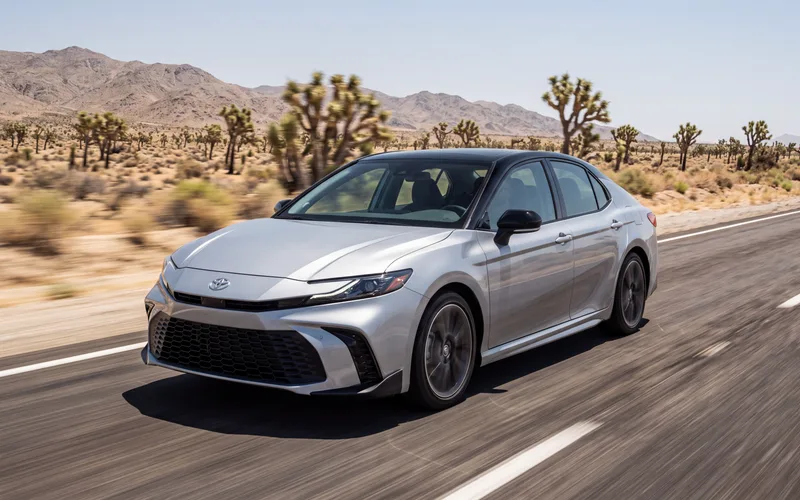 Toyota CamryMid-Size SedanBetter at: Efficiency and resale
Standard hybrid power at 46+ MPG combined and roughly nine points better five-year value retention make it the cheaper car to own despite the higher sticker.
Compare 2.89B-
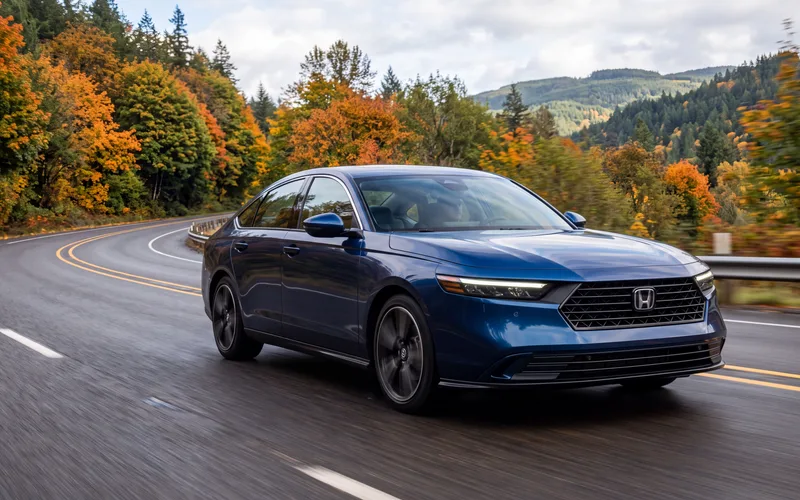 Honda AccordMid-Size SedanBetter at: Rear space
40.8 inches of rear legroom, a 16.7 cu ft trunk and the segment's best ride-and-handling balance fix the Sonata's two biggest weaknesses at once.
Compare 2.44C+
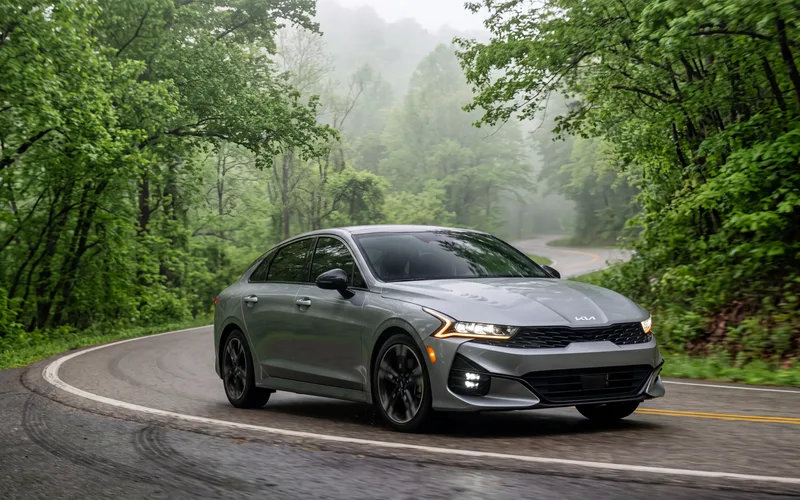 Kia K5Mid-Size SedanBetter at: Deal shopping
The same drivetrain, trunk and Kia/Hyundai warranty in different sheetmetal — worth cross-shopping purely on which one your local dealers discount harder.
CompareHow it's evolved
10 scored model years · 2017–2026
Subject scores by year
Hover or tap a score to see what moved it versus the year before. A corner mark flags a big swing.
| Year | Performance | Efficiency | Safety | Space | Cost | Reliability | Tech | Use-case | Driving | Value |
|---|---|---|---|---|---|---|---|---|---|---|
| 2026 | 42 | 58 | 74 | 72 | 79 | 72 | 72 | 55 | 67 | 72 |
| 2025 | 40 | 50 | 79 | 71 | 82 | 76 | 70 | 55 | 67 | 72 |
| 2024 | 39 | 50 | 76 | 72 | 82 | 74 | 69 | 55 | 67 | 73 |
| 2023 | 34 | 58 | 73 | 67 | 81 | 71 | 52 | 48 | 60 | 64 |
| 2022 | 34 | 55 | 73 | 67 | 83 | 71 | 46 | 48 | 60 | 62 |
| 2021 | 37 | 57 | 71 | 68 | 84 | 62 | 53 | 50 | 63 | 72 |
| 2020 | 39 | 61 | 72 | 67 | 86 | 67 | 52 | 47 | 61 | 71 |
| 2019 | 33 | 56 | 61 | 70 | 88 | 54 | 43 | 47 | 61 | 61 |
| 2018 | 33 | 56 | 64 | 67 | 85 | 47 | 47 | 46 | 63 | 62 |
| 2017 | 33 | 56 | 58 | 70 | 85 | 57 | 41 | 45 | 62 | 66 |
Compare two years
Best fit & conditions
Higher scores mean a better fit for that use case. Learn more about use-case fit →
Subject profile
Academic Probation · NHTSA safety recalls
Aug 6, 2021Latches/locks/linkages: trunk lid: latchThe trunk latch may become damaged, preventing the opening of the trunk from the inside. As such, these vehicles fail to comply with the requirements of Federal Motor Vehicle Safety Standard number 401, "Internal Trunk Release."
Defect
Hyundai Motor America (Hyundai) is recalling certain 2017-2018 Sonata, 2016-2018 Sonata Hybrid, 2018-2020 Accent, and 2016-2017 Azera vehicles. The trunk latch may become damaged, preventing the opening of the trunk from the inside. As such, these vehicles fail to comply with the requirements of Federal Motor Vehicle Safety Standard number 401, "Internal Trunk Release."
Risk
A person inside the trunk compartment may become trapped, increasing their risk of injury.
Remedy
Dealers will replace the trunk latch base, free of charge. Owner notification letters were mailed December 4, 2021. Owners may contact Hyundai customer service at 1-855-371-9460. Hyundai's number for this recall is 208.
NHTSA campaign 21V619000 ↗Manufacturer no. 208348,158 vehicles potentially affected (all models in the campaign)Owners notified Dec 4, 2021Filed by Hyundai Motor AmericaFiled as SONATA, SONATA HYBRIDMar 12, 2018Hybrid propulsion systemThese vehicles are equipped with a Voltage Protection Device (VPD), designed to protect the high voltage battery module, that may activate inadvertently.
Defect
Hyundai Motor America (Hyundai) is recalling certain 2016-2018 Hyundai Sonata Plug-In Hybrid vehicles. These vehicles are equipped with a Voltage Protection Device (VPD), designed to protect the high voltage battery module, that may activate inadvertently.
Risk
If the VPD activates while the vehicle is being operated in Electric Vehicle (EV) mode, there may be a loss of power, increasing the risk of a crash.
Remedy
Hyundai will notify owners, and dealers will remove the VPD switch and install a new Battery Management System (BMS) that contains an Overvoltage Protection Device (OPD). The recall is expected to begin May 2018. Owners may contact Hyundai customer service at 1-855-371-9460. Hyundai's number for this recall is 175.
NHTSA campaign 18V166000 ↗Manufacturer no. 1752,840 vehicles potentially affected (all models in the campaign)Owners notified May 2, 2018Filed by Hyundai Motor AmericaFiled as SONATA PLUG-IN HYBRID
13 recalls on other model years of the Sonata (2017, 2020–2024, 2026)
Jan 26, 2026Electrical system: instrument cluster/panelDue to a software error, the instrument panel display may fail. As such, these vehicles fail to comply with the requirements of Federal Motor Vehicle Safety Standard (FMVSS) number 101, "Controls and Displays."
Defect
Hyundai Motor America (Hyundai) is recalling certain 2025-2026 Tucson Hybrid, Tucson Plug-In Hybrid Electric (PHEV), 2026 IONIQ 5, Santa Cruz, Kona, Palisade, Palisade Hybrid, Santa Fe, Santa Fe Hybrid, Sonata, Sonata Hybrid, and Tucson vehicles. Due to a software error, the instrument panel display may fail. As such, these vehicles fail to comply with the requirements of Federal Motor Vehicle Safety Standard (FMVSS) number 101, "Controls and Displays."
Risk
An instrument panel display that fails to show critical safety information, such as the speedometer or warning lights, increases the risk of a crash.
Remedy
The instrument panel display software will be updated over-the-air (OTA) or by a dealer, free of charge. Owner notification letters were mailed March 24, 2026. Owners may contact Hyundai's customer service at 855-371-9460. Hyundai's number for this recall is 293. Vehicle Identification Numbers (VINs) involved in this recall became searchable on NHTSA.gov on January 28, 2026.
NHTSA campaign 26V047000 ↗Manufacturer no. 29341,651 vehicles potentially affected (all models in the campaign)Owners notified Mar 24, 2026Filed by Hyundai Motor AmericaFiled as SONATA, SONATA HYBRIDNov 17, 2025Fuel system, gasolineA damaged check valve can allow air to enter the fuel tank, causing it to expand and contact hot exhaust components, melting the tank.
Defect
Hyundai Motor America (Hyundai) is recalling certain 2020-2023 Sonata vehicles. A damaged check valve can allow air to enter the fuel tank, causing it to expand and contact hot exhaust components, melting the tank.
Risk
A melted fuel tank can leak, increasing the risk of a fire.
Remedy
Dealers will inspect and replace the check valve. The fuel tank assembly will be inspected for damage and replaced if necessary. Additionally, dealers will inspect and update the engine control unit software. All repairs will be performed as necessary, free of charge. Owner notification letters were mailed beginning March 13, 2026. Owners may contact Hyundai customer service at 1-855-371-9460. Hyundai's number for this recall is 286. Vehicle Identification Numbers (VINs) involved in this recall became searchable on NHTSA.gov on November 19, 2025.
NHTSA campaign 25V796000 ↗Manufacturer no. 28685,043 vehicles potentially affected (all models in the campaign)Owners notified Mar 9, 2026Filed by Hyundai Motor AmericaFiled as SONATAAug 7, 2024Exterior lighting: brake lightsThe software for the brake lights may cause the brake lights to flash and not illuminate properly. As such, these vehicles fail to comply with the requirements of Federal Motor Vehicle Safety Standard (FMVSS) number 108, "Lamps, Reflective Devices, and Associated Equipment."
Defect
Hyundai Motor America (Hyundai) is recalling certain 2024 Hyundai Sonata vehicles. The software for the brake lights may cause the brake lights to flash and not illuminate properly. As such, these vehicles fail to comply with the requirements of Federal Motor Vehicle Safety Standard (FMVSS) number 108, "Lamps, Reflective Devices, and Associated Equipment."
Risk
Flashing brake lights may cause confusion for other drivers on the road, increasing the risk of a crash.
Remedy
Dealers will update the rear brake light software, free of charge. Additionally, Hyundai will release the software update over-the-air (OTA). Owner notification letters were mailed September 12, 2024. Owners may contact Hyundai customer service at 1-855-371-9460. Hyundai's number for this recall is 267.
NHTSA campaign 24V583000 ↗Manufacturer no. 26738,331 vehicles potentially affected (all models in the campaign)Owners notified Sep 12, 2024Filed by Hyundai Motor AmericaFiled as SONATAJul 27, 2023Power train: automatic transmission: fluid/lubricant: pumpThe electronic controller for the Idle Stop & Go oil pump assembly may contain damaged electrical components that can cause the pump controller to overheat.
Defect
Hyundai Motor America (Hyundai) is recalling certain 2023-2024 Palisade Tucson, 2023 Sonata, Elantra, and Kona vehicles. The electronic controller for the Idle Stop & Go oil pump assembly may contain damaged electrical components that can cause the pump controller to overheat.
Risk
An electric oil pump assembly that overheats increases the risk of a vehicle fire.
Remedy
Owners are advised to park outside and away from structures until the recall repair is complete. Dealers will inspect and replace the electric oil pump controller, as necessary, free of charge. Owner notification letters were mailed starting September 7, 2023. Owners may contact Hyundai customer service at 1-855-371-9460. Hyundai's number for this recall is 246.
NHTSA campaign 23V526000 ↗Manufacturer no. 24652,109 vehicles potentially affected (all models in the campaign)Owners notified Sep 7, 2023Filed by Hyundai Motor AmericaFiled as SONATAOct 6, 2022Power train: automatic transmissionThe vehicle's "fail-safe" limited-mobility drive mode may be impaired, when prompted by a transmission oil pump malfunction, which can result in a complete loss of drive power.
Defect
Hyundai Motor Company (Hyundai) is recalling certain 2021-2022 Santa Fe, Sonata, Veloster N, 2022 Santa Cruz, Elantra N, and Kona N vehicles. The vehicle's "fail-safe" limited-mobility drive mode may be impaired, when prompted by a transmission oil pump malfunction, which can result in a complete loss of drive power.
Risk
Loss of drive power increases the risk of a crash.
Remedy
Dealers will inspect and replace the transmission, as necessary. Dealers will also update the transmission control unit software. All repairs will be performed free of charge. Owner notification letters were mailed January 10, 2023. Owners may contact Hyundai customer service at 1-855-371-9460. Hyundai's number for this recall is 236.
NHTSA campaign 22V746000 ↗Manufacturer no. 23656,148 vehicles potentially affected (all models in the campaign)Owners notified Jan 10, 2023Filed by Hyundai Motor AmericaFiled as SONATAMar 28, 2022Latches/locks/linkages: trunk lid: latchThe trunk latch may become damaged, preventing the opening of the trunk from the inside. As such, these vehicles fail to comply with the requirements of Federal Motor Vehicle Safety Standard number 401, "Internal Trunk Release."
Defect
Hyundai Motor America (Hyundai) is recalling certain 2020 Sonata and Sonata Hybrid, and 2019 Genesis G70 vehicles. The trunk latch may become damaged, preventing the opening of the trunk from the inside. As such, these vehicles fail to comply with the requirements of Federal Motor Vehicle Safety Standard number 401, "Internal Trunk Release."
Risk
A person inside the trunk compartment may become trapped, increasing their risk of injury.
Remedy
Dealers will inspect the trunk latch and replace the trunk latch base, as necessary, free of charge. Owner notification letters were mailed May 26, 2022. Owners may contact Hyundai customer service at 1-855-371-9460. Hyundai's number for this recall is 221/010G.
NHTSA campaign 22V196000 ↗Manufacturer no. 221/010G63,461 vehicles potentially affected (all models in the campaign)Owners notified May 26, 2022Filed by Hyundai Motor AmericaFiled as SONATA, SONATA HYBRIDDec 28, 2021Visibility: windshieldDuring manufacturing, the windshield may not have been properly bonded to the vehicle, allowing it to detach in a crash.
Defect
Hyundai Motor America (Hyundai) is recalling certain 2020-2021 Santa Fe, 2021 Sonata, and Elantra vehicles. During manufacturing, the windshield may not have been properly bonded to the vehicle, allowing it to detach in a crash.
Risk
A windshield that detaches from a vehicle during a crash can increase the risk of injury.
Remedy
Dealers will remove and reinstall the front windshield panel, free of charge. Owner notification letters were mailed June 20, 2022. Owners may contact Hyundai customer service at 1-855-371-9460. Hyundai's number for this recall is 216.
NHTSA campaign 21V00M000 ↗Manufacturer no. 21626,413 vehicles potentially affected (all models in the campaign)Owners notified Jun 20, 2022Filed by Hyundai Motor AmericaFiled as SONATASep 24, 2021Electrical system: software · Exterior lighting: turn signalThe Smart Junction Box (SJB) software logic may not properly interpret the signals received from the multifunction switch, which could cause the turn signal to activate in the opposite direction of what the driver intended.
Defect
Hyundai Motor America (Hyundai) is recalling certain 2015-2017 Sonata, 2016-2017 Sonata Hybrid, and Sonata Plug-In Hybrid vehicles. The Smart Junction Box (SJB) software logic may not properly interpret the signals received from the multifunction switch, which could cause the turn signal to activate in the opposite direction of what the driver intended.
Risk
A turn signal that activates in the opposite direction of what was intended by the driver increases the risk of a crash.
Remedy
Dealers will update the SJB software, free of charge. Owner notification letters were mailed November 19, 2021. Owners may contact Hyundai customer service at 1-855-371-9460. Hyundai's number for this recall is 210.
NHTSA campaign 21V749000 ↗Manufacturer no. 210469,377 vehicles potentially affected (all models in the campaign)Owners notified Nov 19, 2021Filed by Hyundai Motor AmericaFiled as SONATA, SONATA HYBRID, SONATA PLUG-IN HYBRIDSep 17, 2021EngineThe connecting rod bearings inside the engine may wear prematurely, which can result in engine damage.
Defect
Hyundai Motor America (Hyundai) is recalling certain 2017 Tucson and Sonata Hybrid vehicles. The connecting rod bearings inside the engine may wear prematurely, which can result in engine damage.
Risk
A damaged engine can increase the risk of a fire or it can cause an engine stall, increasing the risk of a crash.
Remedy
Dealers will inspect the engine. If bearing damage is found, the engine will be replaced. Dealers will also install a software update containing a new Knock Sensor Detection System (KSDS). Repairs will be performed free of charge. Owners were notified of the defect on November 16, 2021. Owner notification letters were mailed January 15, 2022. Owners may contact Hyundai customer service at 1-855-371-9460. Hyundai's number for this recall is 209.
NHTSA campaign 21V727000 ↗Manufacturer no. 20995,515 vehicles potentially affected (all models in the campaign)Owners notified Jan 15, 2022Filed by Hyundai Motor AmericaFiled as SONATA HYBRIDJul 9, 2021Fuel system, gasoline: delivery: hoses, lines/piping, and fittingsFuel may leak at the pipe connection between the high-pressure fuel pump and fuel rail.
Defect
Hyundai Motor America (Hyundai) is recalling certain 2021-2022 Santa Fe and Sonata vehicles equipped with 2.5L turbocharged engines. Fuel may leak at the pipe connection between the high-pressure fuel pump and fuel rail.
Risk
A fuel leak increases the risk of a fire.
Remedy
Dealers will inspect and tighten, or replace the fuel pipe as necessary, free of charge. Owner notification letters were mailed on September 3, 2021. Owners may contact Hyundai customer service at 1-855-371-9460. Hyundai's number for this recall is 207.
NHTSA campaign 21V524000 ↗Manufacturer no. 20715,752 vehicles potentially affected (all models in the campaign)Owners notified Sep 3, 2021Filed by Hyundai Motor AmericaFiled as SONATAApr 9, 2020Electrical system: softwareThe Remote Smart Parking Assist (RSPA) software may fail to prevent vehicle movement upon detection of an RSPA system malfunction.
Defect
Hyundai Motor America (Hyundai) is recalling certain 2020 Nexo and Sonata vehicles. The Remote Smart Parking Assist (RSPA) software may fail to prevent vehicle movement upon detection of an RSPA system malfunction.
Risk
Unintended vehicle movement increases the risk of a crash.
Remedy
Hyundai will notify owners, and dealers will reprogram the RSPA software, free of charge. The recall began June 3, 2020. Owners may contact Hyundai customer service at 1-855-371-9460. Hyundai's number for this recall is 191.
NHTSA campaign 20V213000 ↗Manufacturer no. 19111,870 vehicles potentially affected (all models in the campaign)Owners notified Jun 3, 2020Filed by Hyundai Motor AmericaFiled as SONATAFeb 28, 2020Equipment: other: labelsThe tire pressure label inside the driver's door and the owner's manual state an incorrect tire size. As such, these vehicles fail to comply with the requirements of Federal Motor Vehicle Safety Standard (FMVSS) number 110, "Tire Selection and Rims."
Defect
Hyundai Motor America (Hyundai) is recalling certain 2020 Sonata vehicles produced between October 22, 2019 and February 13, 2020. The tire pressure label inside the driver's door and the owner's manual state an incorrect tire size. As such, these vehicles fail to comply with the requirements of Federal Motor Vehicle Safety Standard (FMVSS) number 110, "Tire Selection and Rims."
Risk
The incorrect tire information may mislead the vehicle owner to install the wrong tire size, potentially affecting vehicle handling, increasing the risk of a crash.
Remedy
Hyundai will notify owners, and dealers will install new label stickers over the tire pressure label and in the owner's manual, free of charge. The recall began April 22, 2020. Owners may contact Hyundai customer service at 1-855-371-9460. Hyundai's number for this recall is 190.
NHTSA campaign 20V122000 ↗Manufacturer no. 1905,044 vehicles potentially affected (all models in the campaign)Owners notified Apr 22, 2020Filed by Hyundai Motor AmericaFiled as SONATADec 30, 2016Air bags: frontal: driver side: inflator moduleIn these vehicles, the end seal for the driver's frontal air bag inflator may not have been properly installed, possibly resulting in reduced inflation of the frontal air bag in the event of a crash.
Defect
Hyundai Motor Company (Hyundai) is recalling certain model year 2017 Hyundai Elantra vehicles manufactured April 15, 2016, to September 13, 2016, and Sonata vehicles manufactured May 27, 2016 to September 16, 2016. In these vehicles, the end seal for the driver's frontal air bag inflator may not have been properly installed, possibly resulting in reduced inflation of the frontal air bag in the event of a crash.
Risk
In the event of a crash, an air bag that does not inflate fully increases the risk of injury.
Remedy
Hyundai will notify owners, and dealers will replace the driver's frontal air bag module, free of charge. The recall began February 13, 2017. Owners may contact Hyundai customer service at 1-855-371-9460. Hyundai's number for this recall is 156.
NHTSA campaign 16V956000 ↗Manufacturer no. 156110 vehicles potentially affected (all models in the campaign)Owners notified Feb 13, 2017Filed by Hyundai Motor AmericaFiled as SONATA
Source: NHTSA Office of Defects Investigation recall database, model years 2017–2026. Recalls are listed by model year as the manufacturer filed them; whether a specific car is affected depends on its VIN — check a VIN at nhtsa.gov ↗. NHTSA model names matched to this page: SONATA, SONATA HYBRID, SONATA PLUG-IN HYBRID.
Detailed scoring by subject
1Performance & PowertrainThe Sonata's lowest-graded category.0.16F
The 2018 Sonata is a mid-cycle facelift of the LF generation (styling, tech and interior updates only); the volume SE trim keeps the naturally aspirated 2.4L Theta II GDI four at 185 hp @ 6,000 rpm, unchanged from prior model years. It normalizes low against the sedan band, which is stretched by turbo and performance sedans in the same segment.
178 lb-ft at 4,000 rpm from the base 2.4L is modest for the mid-size class, typical of a naturally aspirated four with no forced induction or electrification.
Hyundai does not publish a 0-60 claim. Instrumented tests of the same 185-hp 2.4L/6-speed-automatic combination on this unchanged LF-generation powertrain cluster around 8 seconds (Edmunds 8.2s, MotorWeek 9.3s for the closely related 2015 SE/Sport); a separately-aggregated 7.4s figure attributed to the 2018 SE/SEL appears to conflate the 2.0T-equipped Sport/Limited (which Edmunds separately tested at 7.4s), so 8.2s is used as the representative volume-trim figure. Mid-pack to slow for the segment.
Reviewers describe the 2018 2.4L as smooth and quiet in normal driving with no turbo lag or coarseness, but consistently short on thrust — it gets around competently with no fuss but also without much satisfaction, per Cars.com's first-drive verdict. Solidly mid-band.
The conventional 6-speed torque-converter automatic paired with the 2.4L delivers well-timed, hiccup-free shifts throughout the range — a genuine strength even though the engine behind it is unremarkable. The redesigned 2.0T's new 8-speed (replacing the prior 6-speed) is smoother still, but that isn't the volume trim's gearbox.
The 2018 Sonata (LF generation) is FWD-only across every trim in the US market — no AWD or 4WD was offered on any Sonata variant this generation, unlike segment rivals such as the Camry or Altima that offered AWD on some trims. AWD did not arrive on the Sonata until the later DN8 generation.
The 2018 lineup spans three distinct gas engines (2.4L base, 1.6L turbo Eco, newly 8-speed-equipped 2.0L turbo Sport 2.0T/Limited 2.0T) plus a separate Hybrid and Plug-in Hybrid model — genuinely broad for a mainstream mid-size sedan in this era. Held below 80 because the PHEV and Hybrid are low-volume niche trims rather than mainstream availability, and there is no EV variant.
2Efficiency & RangeMid-pack among this car's ten categories.1.76C-
The SE 2.4L volume trim is EPA-rated at 29 MPG combined — a middling figure for a mainstream mid-size sedan of this era, behind the Eco's 1.6L turbo, but ahead of the more powerful 2.0T Limited.
25 MPG city for the volume 2.4L SE trim, typical for a naturally aspirated four in stop-and-go driving with no electrification to help.
36 MPG highway is a solid, competitive figure for the segment and the best part of the gas Sonata's label.
An 18.5-gallon tank paired with 29 MPG combined gives 536 miles of range between fill-ups — a genuinely strong figure for the segment despite the middling combined MPG, thanks to the Sonata's generous tank capacity.
EPA's standard-assumption annual fuel cost of $2,250 for the volume 2.4L SE trim is a mid-pack figure for the class — a real running-cost gap versus the Hybrid ($1,550-1,600/yr) and Plug-in Hybrid ($1,150/yr) but better than thirstier turbo/performance mid-size sedans.
The entire 2018 gas lineup, including the turbocharged 1.6T and 2.0T engines, runs on 87-octane regular unleaded with no premium recommendation, and the Hybrid/Plug-in Hybrid likewise need no premium and no home-charging investment to use productively (the plug-in benefits from one but doesn't require it). A genuine ownership-cost strength.
3SafetyOne of the Sonata's strongest categories.2.35C+
NHTSA's overall vehicle score for the 2018 Sonata is the maximum 5 stars, matching the segment norm for a well-tested mid-size sedan.
IIHS rated the 2018 Sonata Good in all six crashworthiness tests (small overlap front driver/passenger, moderate overlap, side, roof strength, head restraints) and Superior for optional front crash prevention, earning Top Safety Pick+ — but only for vehicles built after September 2017 with the optional AEB and LED/dynamic-bending headlight combination, so the award does not cover every configuration.
For 2018 Hyundai made blind-spot monitoring, rear cross-traffic alert and lane-change assist standard across every trim (SE through Limited 2.0T) — a genuine upgrade over the prior year — but forward collision warning/automatic emergency braking, lane keep assist and adaptive cruise control remain bundled into optional Tech/Ultimate packages on SEL+, Sport+ and Limited, so the core crash-avoidance items are not available on the volume trim without an added package.
IIHS rated the optional front crash prevention system Superior for vehicle-to-vehicle collision avoidance, the top tier — but the system is not available on lower trims without the Ultimate/Tech package, and no pedestrian or nighttime AEB test result was published for this model year, so the strong rating only applies to an optioned car.
Blind-spot monitoring, rear cross-traffic alert and lane-change assist are standard equipment on every 2018 Sonata trim — unusually broad availability for the segment — but the system is alert-only with no active steering or braking intervention and no trailer-aware mode.
Lane departure warning is broadly available and lane keep assist was added for 2018, but only as part of the optional Tech/Ultimate packages on upper trims; period reviews describe it as a corrective nudge-back system rather than continuous lane centering.
Smart Cruise Control with Stop & Go is available when optioned and can bring the car to a full stop and resume, but it is not offered below SEL+/Sport+/Limited with the Tech/Ultimate package, and owner reports describe rough edges — inconsistent deceleration behind slowing traffic and abrupt speed changes after a cut-in.
No hands-free highway driving system was offered on the 2018 Sonata; Hyundai's Highway Driving Assist did not reach the Sonata lineup until later model years, and the 2018 car's most advanced offering is hands-on adaptive cruise plus lane keep assist.
IIHS rated the base halogen projector headlights fitted to SE/SEL trims Poor, and only the LED headlights standard on Limited/Limited 2.0T reached Acceptable — the volume SE/SEL trims carry the weaker halogen units, and the TSP+ award only applies to the LED-equipped configuration.
Reviewer opinion is mixed but lands around average for the segment: some note relatively slim A-pillars and no major rear blind spots, others describe steeply raked, thicker windshield pillars that take adjustment; standard blind-spot monitoring compensates for the rear quarter but is a separate system rather than improved sightlines.
IIHS rated the Sonata's child-seat anchors Marginal overall: only two rear positions carry full lower-anchor-plus-tether hardware (the third is tether-only), and evaluators found the lower anchors awkward to maneuver around, making multiple car-seat installs harder than in class leaders.
4Space & ComfortOne of the Sonata's strongest categories.2.55C+
Standard 5-passenger mid-size sedan seating across all 2018 Sonata trims.
Front headroom is at the top of the mid-size sedan band, one of the roomier cabins in the segment.
Front legroom of 45.5 in is segment-leading for a mid-size sedan, exceeding rivals like the Camry and Accord.
Rear headroom sits comfortably mid-band for the sedan segment.
Rear legroom is on the tighter side of the mid-size sedan band despite the generous front legroom.
16.3 cu ft trunk is above the midpoint of the sedan normalization band and considered large for the segment.
Conventional console, door and cupholder storage with a 60/40-split folding rear seat, but no standout storage innovation versus segment rivals.
Reviewers describe the seats as comfortable for daily use and long trips, though not singled out as class-leading.
The 2018 facelift retuned the suspension for sharper handling, which reviewers noted firmed up the ride versus the pre-facelift Sonata; still composed but less plush than before.
Reasonably quiet cruiser for the class with some engine noise under acceleration; not segment-best acoustic isolation.
Heated front seats available from SEL up, ventilated seats and heated steering wheel reserved for Limited/Ultimate package trims; no rear climate vents standard, so comfort equipment is gated to upper trims.
5Cost of OwnershipThe Sonata's best-graded category.3.76A
Entry SE trim MSRP plus destination charge, at the low end of the mid-size sedan band.
The 2018 facelift added the SEL as a value-focused mid trim intended to be the volume seller, priced modestly above the base SE.
RepairPal rates the 2018 Sonata's annual maintenance at $351 and the broader Sonata's average annual repair cost at $458 (below the $652 midsize-car average), implying roughly $3,500-4,300 combined over 5 years — inexpensive for the segment.
Independent depreciation trackers put the Sonata nameplate's 5-year retention in the mid-50s percent, slightly below the midsize-sedan norm, reflecting Hyundai's value-brand resale discount versus Toyota/Honda.
Hyundai's standard 5-year/60,000-mile basic warranty, well above the 3-year segment norm.
Hyundai's signature 10-year/100,000-mile powertrain warranty is at the top of the segment (drops to 5yr/60k on transfer to a subsequent owner).
No complimentary scheduled maintenance is included (unlike Toyota/GM programs), but Hyundai Assurance bundles 5-year/60,000-mile unlimited roadside assistance for the life of the basic warranty plus a Blue Link connected-services trial — solid roadside coverage without a maintenance perk.
$24,585 volume-trim price minus its estimated resale value after 5 years (54% retained, or about $13,276) leaves about $11,309 in depreciation. Add the projected $3,900 in 5-year maintenance and repairs, and owning this vehicle for 5 years costs about $15,209 in total.
6Reliability & QualityGrades below the middle of the scale.1.15D
Consumer Reports' predicted-reliability verdict for the 2018 Sonata was poor (its lowest overall-reliability verdict band), while J.D. Power's dependability score for the model sat only slightly above average (3.5/5) — a real split, but the CR figure is the more damning one and lines up with the well-documented Theta II GDI engine defect (bearing wear, stalling, fire risk) that plagued this generation.
Hyundai ranked 3rd among non-premium brands in J.D. Power's 2018 U.S. Vehicle Dependability Study — a strong, near-top-5 brand-wide showing even as the Sonata/Santa Fe Sport engine campaigns were unfolding within the same window.
This generation's 2.4L/2.0T Theta II GDI engines (used across the 2018 Sonata lineup, including the SE/SEL volume trims) were the subject of a multi-year recall and consent-order saga: metal debris left in oil passages from crankshaft machining caused connecting-rod bearing wear, engine stalling, and over 3,000 reported fires. NHTSA found Hyundai delayed reporting the defect and imposed a $210 million civil penalty, the largest in the agency's history at the time. This is squarely a major, repeated, powertrain/fire-safety recall pattern, not routine campaign activity.
The 2.4L Theta II GDI four-cylinder that powers the 2018 Sonata's volume SE/SEL trims is the specific engine family at the center of Hyundai's connecting-rod-bearing failure defect — a known problem powertrain with a documented high-mileage failure mode (knocking, stalling, and in a smaller number of cases fire) rather than an unproven or merely-new design.
Reviewers found the cabin cohesive and well-organized but called out hard plastics in low-touch areas, and noted the higher-trim Limited's cabin didn't feel meaningfully richer than the Sport's — competitive for a mainstream mid-size sedan but not a standout.
No pattern of panel-gap, rattle, or squeak complaints turned up for the 2018 model in owner or reviewer sources; assembly consistency reads as solid mainstream-sedan execution, distinct from (and not implicated in) the engine durability issues.
Hyundai maintains a dense, nationwide US dealer network typical of a high-volume mainstream brand, giving Sonata owners broad access to warranty and service work — adequate-to-strong coverage, though not associated with standout service-satisfaction scores the way some premium brands are.
RepairPal rates the Sonata's ownership costs as excellent, with a $458 average annual repair cost, 0.3 unscheduled shop visits per year (in line with the mid-size-car average), and an 11% severe-repair probability slightly below segment average — cheap, widely available parts and a strong independent-shop aftermarket for a high-volume mainstream sedan.
7Technology & InfotainmentOne of the Sonata's weakest categories.1.12D
The 2018 refresh made a 7-inch touchscreen standard across the lineup, growing to 8 inches only with the Limited's optional Ultimate/navigation package.
Hyundai's touchscreen interface was well regarded for the era — responsive, logically laid out, with physical volume/tuning knobs retained alongside the screen.
Apple CarPlay and Android Auto came standard on every 2018 Sonata trim including the base S/SE — notably ahead of many rivals that still charged extra for it — but only via wired USB connection; no wireless projection was offered on any trim.
Built-in navigation was only available as part of the Limited 2.0T's optional Ultimate package (8-inch screen); lower and mid trims relied on phone-projected maps, and Hyundai's onboard voice recognition of the era was basic command-based rather than natural-language.
Standard 6-speaker system is adequate; an upgraded premium audio system was available on the Limited's Ultimate package but reviews don't single it out as class-leading.
Volume trims use traditional analog gauges with only a small monochrome trip computer; a 4.2-inch color multi-info display is reserved for upper Limited trims, and no full digital cluster was offered.
Blue Link in 2018 provided telematics/remote services but no over-the-air software or map updates for the vehicle's systems — this generation predates Hyundai's OTA rollout.
Blue Link app supports remote lock/unlock, vehicle locate, and remote start with climate (the latter requiring SEL Plus trim or above with Smart Key); core functions came with a complimentary multi-year trial before requiring a paid subscription.
Rear USB charging ports became standard on most 2018 trims and a Qi wireless charging pad was available on upper trims, but all ports are USB-A — no USB-C, and wireless charging is not standard fleet-wide.
Proximity entry with push-button start is available from SEL trims up, with app-based remote start requiring SEL Plus/Smart Key; the base S/SE trims retain a traditional key, so full keyless convenience is not fleet-wide.
A rearview camera is standard across the lineup and rear parking sensors are added only via the Limited 2.0T's Ultimate package; no 360-degree surround view camera was offered on the Sonata this generation.
A color head-up display was offered only on the range-topping Limited 2.0T with the Ultimate package — not available on any other trim.
8Use-Case FitOne of the Sonata's weakest categories.1.03D
Wide rear door openings and standard LATCH anchors make car-seat installation straightforward, but rear legroom of 35.6 in is tighter than some rivals once a rear-facing seat is installed.
Blind-spot monitoring with rear cross-traffic alert became standard fleet-wide for 2018, but forward-collision warning with automatic emergency braking was only optional on SEL/Limited and standard solely on the pricier Limited 2.0T — a real gap on the family-affordable trims.
16.3 cu ft trunk and standard rear USB ports on most trims support family trips, but there are no rear climate vents or rear seatback screens, so rear-row amenities are modest.
Reviewers describe the 2.4L/6-speed automatic combination as smooth and relaxed around town and in traffic, with light, easy steering for daily commuting.
EPA-rated 28 city/31 combined MPG for the volume 2.4L engine is solidly average-to-good for a mainstream mid-size sedan, though well short of the Sonata Hybrid or class-leading four-cylinder rivals.
A 35.8 ft turning circle and standard backup camera make the Sonata manageable in tight city parking, though it lacks front sensors or a surround-view camera on lower trims.
As a unibody front-drive sedan, Hyundai does not publish a U.S. tow rating for the Sonata, and its 16.3 cu ft trunk offers none of the payload or cargo flexibility of a truck or SUV.
The Sonata's naturally-aspirated 2.4L/6-speed drivetrain has a reasonably proven reliability record, but it is a passenger-car chassis and interior never engineered or marketed for work-duty abuse.
No onboard power outlets, tie-downs, or upfit/rack ecosystem exist for a mid-size sedan; the trunk offers no work-oriented provisions.
A quiet, composed highway cruiser with an EPA-rated ~31 MPG combined giving roughly 470-570 miles of range on its 18.5-gallon tank, but adaptive cruise control is confined to the Limited 2.0T Ultimate package, limiting driver-assist fatigue reduction on lower trims.
The Sonata was offered only in front-wheel drive for the US market in 2018 with no AWD option and standard-sedan ground clearance, leaving little genuine off-pavement or foul-weather capability.
A 60/40-split folding rear seat and a large-for-class 16.3 cu ft trunk handle normal luggage well, but there are no roof rails, factory hitch, or underfloor storage for bulkier adventure gear.
9Driving ExperienceMid-pack among this car's ten categories.2.22C
The 2018 facelift's retuned suspension gave the Sonata tauter, more responsive handling than its predecessor, but reviewers still rank it behind sharper-handling rivals like the Mazda6 and Honda Accord.
The 2018 refresh added notable steering heft and precision versus the prior Sonata, though it remains more numb than feelsome, especially on the base 2.4L.
An instrumented 60-0 mph stop of 118 feet is a solidly good result for the mid-size sedan class, with a firm, confidence-inspiring pedal.
The base 2.4L four-cylinder paired with a conventional 6-speed automatic (not a CVT) shifts smoothly with adequate response for daily driving, without the surging or hesitation some CVT-equipped rivals exhibit.
The naturally-aspirated 2.4L is generally unobtrusive at cruise but becomes audibly coarse under hard acceleration, typical for the segment's base engines.
A 35.8 ft turning circle is toward the tighter end of the mid-size sedan band, aiding low-speed maneuverability.
The redesigned 2018 dashboard reshuffled air vents and controls for a cleaner layout, and the front seats offer generous adjustability and legroom, aiding driving position for a wide range of body types.
The volume-trim 2.4L Sonata drives competently but is described as appliance-like rather than engaging; even the sportier 2.0T is characterized as 'spirited but not sporty.'
10Value & Market PositionMid-pack among this car's ten categories.2.20C
The 2018 refresh made a 7-inch touchscreen with Apple CarPlay/Android Auto, a rearview camera, and a larger instrument display standard even on the base SE, and added Blue Link telematics/SiriusXM standard on the new mid-tier SEL — content rivals often reserve for higher trims.
Sub-$23K base pricing with a generous warranty and CarPlay/Android Auto standard undercuts the Camry/Accord/Altima on content-for-price, though the firmer 2018 ride and last-generation cabin materials keep it short of standout.
Seven gas trims (SE, Eco, SEL, Sport, Limited, Sport 2.0T, Limited 2.0T) span budget to loaded, plus separate Hybrid and Plug-in Hybrid model lines — a wide, well-spaced range with few gaps.
US sales fell to roughly 105,000 units in 2018, down about 20% year-over-year and less than half the 2016 volume, as buyers shifted to crossovers and Hyundai's own Tucson/Santa Fe gained share — a sharply declining seller versus segment leaders Camry and Accord.
Hyundai's image had climbed well past its budget-brand origins by 2018 on the strength of its warranty and improving quality, but it remained a mainstream value brand without the aspirational pull of Toyota/Honda in this segment.
Early in the 2018 model year incentives were modest (around $1,000) with dealers citing tight supply, but as sedan demand cooled through 2018 and inventory built up, Hyundai leaned on its usual mix of rebates and low-APR financing to move Sonatas — occasional, not desperation-level, discounting.
2018 is the third model year of the 7th-generation platform (introduced 2015) but carries a substantial mid-cycle facelift — new exterior styling front and rear, a reshaped dashboard, larger touchscreen, and a new SEL trim — putting it solidly mid-cycle rather than new or stale.
The refreshed 2018 Sonata earned an IIHS Top Safety Pick+ (one of four midsize sedans to do so, alongside Camry, Outback and Legacy) and generally favorable reviews for value and refinement, but it was not a comparison-test winner against the class-leading Camry/Accord/Mazda6.