

The verdict
A mixed-report mid-size sedan, strong on ownership and held back by performance.
The 2026 Sonata is the value play in the mid-size sedan class: a volume SEL lands near $31,000 with twin 12.3-inch screens, the full Hyundai SmartSense safety suite, and a 5-year/60,000-mile bumper-to-bumper and 10-year/100,000-mile powertrain warranty that Toyota and Honda simply do not match at the price. The trade-offs are real and easy to feel on a test drive — the base 2.5L makes just 191 hp and returns 31 MPG combined in a class where the Camry is now hybrid-only at 46+ MPG, and 34.8 inches of rear legroom is the worst published figure among mainstream mid-sizers, nearly half a foot behind an Accord. Buy it for the front seat, the equipment, and the warranty; skip it if you regularly carry adults in back or want the cheapest miles per gallon. If efficiency is the priority, the Sonata Hybrid Blue at about 52 MPG combined and roughly $30,500 fixes the biggest complaint for very little money.
Jump to scoresStrengths
- Warranty and included maintenance nobody else matches
- Front-seat space and comfort equipment well beyond the price
- The full safety suite comes on the cheapest trim
What holds it back
- The back seat is the smallest in the class
- The volume engine is the weakest thing in the segment
- Gas fuel economy has fallen behind a hybrid-heavy class
Top alternatives
Cars shoppers cross-shop with the Hyundai Sonata 2.84B-
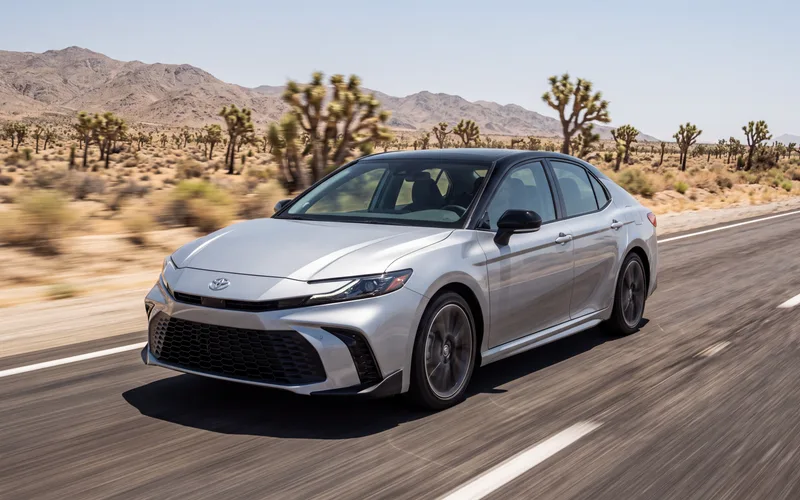 Toyota CamryMid-Size SedanBetter at: Efficiency and resale
Standard hybrid power at 46+ MPG combined and roughly nine points better five-year value retention make it the cheaper car to own despite the higher sticker.
Compare 2.89B-
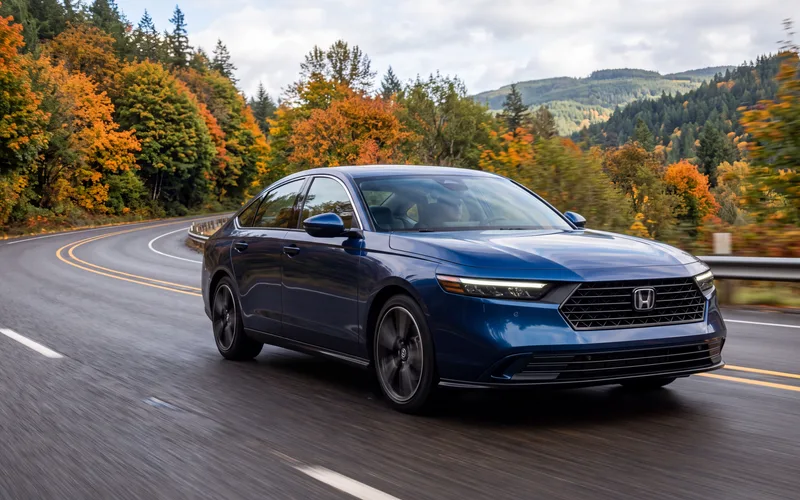 Honda AccordMid-Size SedanBetter at: Rear space
40.8 inches of rear legroom, a 16.7 cu ft trunk and the segment's best ride-and-handling balance fix the Sonata's two biggest weaknesses at once.
Compare 2.44C+
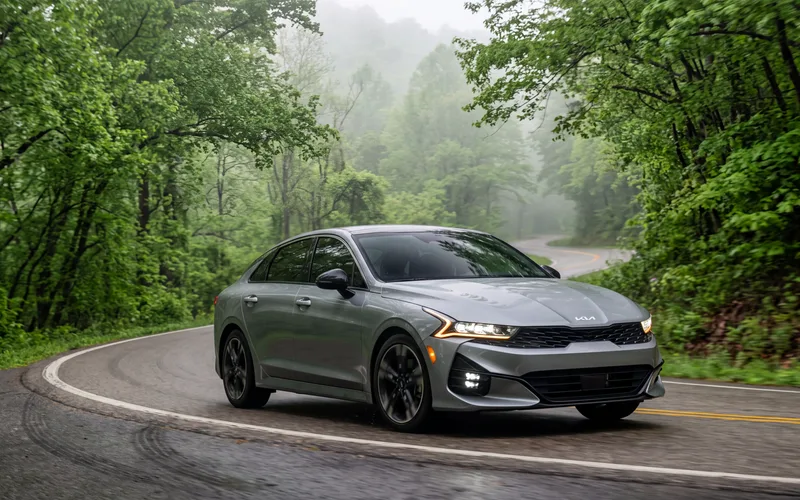 Kia K5Mid-Size SedanBetter at: Deal shopping
The same drivetrain, trunk and Kia/Hyundai warranty in different sheetmetal — worth cross-shopping purely on which one your local dealers discount harder.
CompareHow it's evolved
10 scored model years · 2017–2026
Subject scores by year
Hover or tap a score to see what moved it versus the year before. A corner mark flags a big swing.
| Year | Performance | Efficiency | Safety | Space | Cost | Reliability | Tech | Use-case | Driving | Value |
|---|---|---|---|---|---|---|---|---|---|---|
| 2026 | 42 | 58 | 74 | 72 | 79 | 72 | 72 | 55 | 67 | 72 |
| 2025 | 40 | 50 | 79 | 71 | 82 | 76 | 70 | 55 | 67 | 72 |
| 2024 | 39 | 50 | 76 | 72 | 82 | 74 | 69 | 55 | 67 | 73 |
| 2023 | 34 | 58 | 73 | 67 | 81 | 71 | 52 | 48 | 60 | 64 |
| 2022 | 34 | 55 | 73 | 67 | 83 | 71 | 46 | 48 | 60 | 62 |
| 2021 | 37 | 57 | 71 | 68 | 84 | 62 | 53 | 50 | 63 | 72 |
| 2020 | 39 | 61 | 72 | 67 | 86 | 67 | 52 | 47 | 61 | 71 |
| 2019 | 33 | 56 | 61 | 70 | 88 | 54 | 43 | 47 | 61 | 61 |
| 2018 | 33 | 56 | 64 | 67 | 85 | 47 | 47 | 46 | 63 | 62 |
| 2017 | 33 | 56 | 58 | 70 | 85 | 57 | 41 | 45 | 62 | 66 |
Compare two years
Best fit & conditions
Higher scores mean a better fit for that use case. Learn more about use-case fit →
Subject profile
Academic Probation · NHTSA safety recalls
Jan 26, 2026Electrical system: instrument cluster/panelDue to a software error, the instrument panel display may fail. As such, these vehicles fail to comply with the requirements of Federal Motor Vehicle Safety Standard (FMVSS) number 101, "Controls and Displays."
Defect
Hyundai Motor America (Hyundai) is recalling certain 2025-2026 Tucson Hybrid, Tucson Plug-In Hybrid Electric (PHEV), 2026 IONIQ 5, Santa Cruz, Kona, Palisade, Palisade Hybrid, Santa Fe, Santa Fe Hybrid, Sonata, Sonata Hybrid, and Tucson vehicles. Due to a software error, the instrument panel display may fail. As such, these vehicles fail to comply with the requirements of Federal Motor Vehicle Safety Standard (FMVSS) number 101, "Controls and Displays."
Risk
An instrument panel display that fails to show critical safety information, such as the speedometer or warning lights, increases the risk of a crash.
Remedy
The instrument panel display software will be updated over-the-air (OTA) or by a dealer, free of charge. Owner notification letters were mailed March 24, 2026. Owners may contact Hyundai's customer service at 855-371-9460. Hyundai's number for this recall is 293. Vehicle Identification Numbers (VINs) involved in this recall became searchable on NHTSA.gov on January 28, 2026.
NHTSA campaign 26V047000 ↗Manufacturer no. 29341,651 vehicles potentially affected (all models in the campaign)Owners notified Mar 24, 2026Filed by Hyundai Motor AmericaFiled as SONATA, SONATA HYBRID
14 recalls on other model years of the Sonata (2017–2018, 2020–2024)
Nov 17, 2025Fuel system, gasolineA damaged check valve can allow air to enter the fuel tank, causing it to expand and contact hot exhaust components, melting the tank.
Defect
Hyundai Motor America (Hyundai) is recalling certain 2020-2023 Sonata vehicles. A damaged check valve can allow air to enter the fuel tank, causing it to expand and contact hot exhaust components, melting the tank.
Risk
A melted fuel tank can leak, increasing the risk of a fire.
Remedy
Dealers will inspect and replace the check valve. The fuel tank assembly will be inspected for damage and replaced if necessary. Additionally, dealers will inspect and update the engine control unit software. All repairs will be performed as necessary, free of charge. Owner notification letters were mailed beginning March 13, 2026. Owners may contact Hyundai customer service at 1-855-371-9460. Hyundai's number for this recall is 286. Vehicle Identification Numbers (VINs) involved in this recall became searchable on NHTSA.gov on November 19, 2025.
NHTSA campaign 25V796000 ↗Manufacturer no. 28685,043 vehicles potentially affected (all models in the campaign)Owners notified Mar 9, 2026Filed by Hyundai Motor AmericaFiled as SONATAAug 7, 2024Exterior lighting: brake lightsThe software for the brake lights may cause the brake lights to flash and not illuminate properly. As such, these vehicles fail to comply with the requirements of Federal Motor Vehicle Safety Standard (FMVSS) number 108, "Lamps, Reflective Devices, and Associated Equipment."
Defect
Hyundai Motor America (Hyundai) is recalling certain 2024 Hyundai Sonata vehicles. The software for the brake lights may cause the brake lights to flash and not illuminate properly. As such, these vehicles fail to comply with the requirements of Federal Motor Vehicle Safety Standard (FMVSS) number 108, "Lamps, Reflective Devices, and Associated Equipment."
Risk
Flashing brake lights may cause confusion for other drivers on the road, increasing the risk of a crash.
Remedy
Dealers will update the rear brake light software, free of charge. Additionally, Hyundai will release the software update over-the-air (OTA). Owner notification letters were mailed September 12, 2024. Owners may contact Hyundai customer service at 1-855-371-9460. Hyundai's number for this recall is 267.
NHTSA campaign 24V583000 ↗Manufacturer no. 26738,331 vehicles potentially affected (all models in the campaign)Owners notified Sep 12, 2024Filed by Hyundai Motor AmericaFiled as SONATAJul 27, 2023Power train: automatic transmission: fluid/lubricant: pumpThe electronic controller for the Idle Stop & Go oil pump assembly may contain damaged electrical components that can cause the pump controller to overheat.
Defect
Hyundai Motor America (Hyundai) is recalling certain 2023-2024 Palisade Tucson, 2023 Sonata, Elantra, and Kona vehicles. The electronic controller for the Idle Stop & Go oil pump assembly may contain damaged electrical components that can cause the pump controller to overheat.
Risk
An electric oil pump assembly that overheats increases the risk of a vehicle fire.
Remedy
Owners are advised to park outside and away from structures until the recall repair is complete. Dealers will inspect and replace the electric oil pump controller, as necessary, free of charge. Owner notification letters were mailed starting September 7, 2023. Owners may contact Hyundai customer service at 1-855-371-9460. Hyundai's number for this recall is 246.
NHTSA campaign 23V526000 ↗Manufacturer no. 24652,109 vehicles potentially affected (all models in the campaign)Owners notified Sep 7, 2023Filed by Hyundai Motor AmericaFiled as SONATAOct 6, 2022Power train: automatic transmissionThe vehicle's "fail-safe" limited-mobility drive mode may be impaired, when prompted by a transmission oil pump malfunction, which can result in a complete loss of drive power.
Defect
Hyundai Motor Company (Hyundai) is recalling certain 2021-2022 Santa Fe, Sonata, Veloster N, 2022 Santa Cruz, Elantra N, and Kona N vehicles. The vehicle's "fail-safe" limited-mobility drive mode may be impaired, when prompted by a transmission oil pump malfunction, which can result in a complete loss of drive power.
Risk
Loss of drive power increases the risk of a crash.
Remedy
Dealers will inspect and replace the transmission, as necessary. Dealers will also update the transmission control unit software. All repairs will be performed free of charge. Owner notification letters were mailed January 10, 2023. Owners may contact Hyundai customer service at 1-855-371-9460. Hyundai's number for this recall is 236.
NHTSA campaign 22V746000 ↗Manufacturer no. 23656,148 vehicles potentially affected (all models in the campaign)Owners notified Jan 10, 2023Filed by Hyundai Motor AmericaFiled as SONATAMar 28, 2022Latches/locks/linkages: trunk lid: latchThe trunk latch may become damaged, preventing the opening of the trunk from the inside. As such, these vehicles fail to comply with the requirements of Federal Motor Vehicle Safety Standard number 401, "Internal Trunk Release."
Defect
Hyundai Motor America (Hyundai) is recalling certain 2020 Sonata and Sonata Hybrid, and 2019 Genesis G70 vehicles. The trunk latch may become damaged, preventing the opening of the trunk from the inside. As such, these vehicles fail to comply with the requirements of Federal Motor Vehicle Safety Standard number 401, "Internal Trunk Release."
Risk
A person inside the trunk compartment may become trapped, increasing their risk of injury.
Remedy
Dealers will inspect the trunk latch and replace the trunk latch base, as necessary, free of charge. Owner notification letters were mailed May 26, 2022. Owners may contact Hyundai customer service at 1-855-371-9460. Hyundai's number for this recall is 221/010G.
NHTSA campaign 22V196000 ↗Manufacturer no. 221/010G63,461 vehicles potentially affected (all models in the campaign)Owners notified May 26, 2022Filed by Hyundai Motor AmericaFiled as SONATA, SONATA HYBRIDDec 28, 2021Visibility: windshieldDuring manufacturing, the windshield may not have been properly bonded to the vehicle, allowing it to detach in a crash.
Defect
Hyundai Motor America (Hyundai) is recalling certain 2020-2021 Santa Fe, 2021 Sonata, and Elantra vehicles. During manufacturing, the windshield may not have been properly bonded to the vehicle, allowing it to detach in a crash.
Risk
A windshield that detaches from a vehicle during a crash can increase the risk of injury.
Remedy
Dealers will remove and reinstall the front windshield panel, free of charge. Owner notification letters were mailed June 20, 2022. Owners may contact Hyundai customer service at 1-855-371-9460. Hyundai's number for this recall is 216.
NHTSA campaign 21V00M000 ↗Manufacturer no. 21626,413 vehicles potentially affected (all models in the campaign)Owners notified Jun 20, 2022Filed by Hyundai Motor AmericaFiled as SONATASep 24, 2021Electrical system: software · Exterior lighting: turn signalThe Smart Junction Box (SJB) software logic may not properly interpret the signals received from the multifunction switch, which could cause the turn signal to activate in the opposite direction of what the driver intended.
Defect
Hyundai Motor America (Hyundai) is recalling certain 2015-2017 Sonata, 2016-2017 Sonata Hybrid, and Sonata Plug-In Hybrid vehicles. The Smart Junction Box (SJB) software logic may not properly interpret the signals received from the multifunction switch, which could cause the turn signal to activate in the opposite direction of what the driver intended.
Risk
A turn signal that activates in the opposite direction of what was intended by the driver increases the risk of a crash.
Remedy
Dealers will update the SJB software, free of charge. Owner notification letters were mailed November 19, 2021. Owners may contact Hyundai customer service at 1-855-371-9460. Hyundai's number for this recall is 210.
NHTSA campaign 21V749000 ↗Manufacturer no. 210469,377 vehicles potentially affected (all models in the campaign)Owners notified Nov 19, 2021Filed by Hyundai Motor AmericaFiled as SONATA, SONATA HYBRID, SONATA PLUG-IN HYBRIDSep 17, 2021EngineThe connecting rod bearings inside the engine may wear prematurely, which can result in engine damage.
Defect
Hyundai Motor America (Hyundai) is recalling certain 2017 Tucson and Sonata Hybrid vehicles. The connecting rod bearings inside the engine may wear prematurely, which can result in engine damage.
Risk
A damaged engine can increase the risk of a fire or it can cause an engine stall, increasing the risk of a crash.
Remedy
Dealers will inspect the engine. If bearing damage is found, the engine will be replaced. Dealers will also install a software update containing a new Knock Sensor Detection System (KSDS). Repairs will be performed free of charge. Owners were notified of the defect on November 16, 2021. Owner notification letters were mailed January 15, 2022. Owners may contact Hyundai customer service at 1-855-371-9460. Hyundai's number for this recall is 209.
NHTSA campaign 21V727000 ↗Manufacturer no. 20995,515 vehicles potentially affected (all models in the campaign)Owners notified Jan 15, 2022Filed by Hyundai Motor AmericaFiled as SONATA HYBRIDAug 6, 2021Latches/locks/linkages: trunk lid: latchThe trunk latch may become damaged, preventing the opening of the trunk from the inside. As such, these vehicles fail to comply with the requirements of Federal Motor Vehicle Safety Standard number 401, "Internal Trunk Release."
Defect
Hyundai Motor America (Hyundai) is recalling certain 2017-2018 Sonata, 2016-2018 Sonata Hybrid, 2018-2020 Accent, and 2016-2017 Azera vehicles. The trunk latch may become damaged, preventing the opening of the trunk from the inside. As such, these vehicles fail to comply with the requirements of Federal Motor Vehicle Safety Standard number 401, "Internal Trunk Release."
Risk
A person inside the trunk compartment may become trapped, increasing their risk of injury.
Remedy
Dealers will replace the trunk latch base, free of charge. Owner notification letters were mailed December 4, 2021. Owners may contact Hyundai customer service at 1-855-371-9460. Hyundai's number for this recall is 208.
NHTSA campaign 21V619000 ↗Manufacturer no. 208348,158 vehicles potentially affected (all models in the campaign)Owners notified Dec 4, 2021Filed by Hyundai Motor AmericaFiled as SONATA, SONATA HYBRIDJul 9, 2021Fuel system, gasoline: delivery: hoses, lines/piping, and fittingsFuel may leak at the pipe connection between the high-pressure fuel pump and fuel rail.
Defect
Hyundai Motor America (Hyundai) is recalling certain 2021-2022 Santa Fe and Sonata vehicles equipped with 2.5L turbocharged engines. Fuel may leak at the pipe connection between the high-pressure fuel pump and fuel rail.
Risk
A fuel leak increases the risk of a fire.
Remedy
Dealers will inspect and tighten, or replace the fuel pipe as necessary, free of charge. Owner notification letters were mailed on September 3, 2021. Owners may contact Hyundai customer service at 1-855-371-9460. Hyundai's number for this recall is 207.
NHTSA campaign 21V524000 ↗Manufacturer no. 20715,752 vehicles potentially affected (all models in the campaign)Owners notified Sep 3, 2021Filed by Hyundai Motor AmericaFiled as SONATAApr 9, 2020Electrical system: softwareThe Remote Smart Parking Assist (RSPA) software may fail to prevent vehicle movement upon detection of an RSPA system malfunction.
Defect
Hyundai Motor America (Hyundai) is recalling certain 2020 Nexo and Sonata vehicles. The Remote Smart Parking Assist (RSPA) software may fail to prevent vehicle movement upon detection of an RSPA system malfunction.
Risk
Unintended vehicle movement increases the risk of a crash.
Remedy
Hyundai will notify owners, and dealers will reprogram the RSPA software, free of charge. The recall began June 3, 2020. Owners may contact Hyundai customer service at 1-855-371-9460. Hyundai's number for this recall is 191.
NHTSA campaign 20V213000 ↗Manufacturer no. 19111,870 vehicles potentially affected (all models in the campaign)Owners notified Jun 3, 2020Filed by Hyundai Motor AmericaFiled as SONATAFeb 28, 2020Equipment: other: labelsThe tire pressure label inside the driver's door and the owner's manual state an incorrect tire size. As such, these vehicles fail to comply with the requirements of Federal Motor Vehicle Safety Standard (FMVSS) number 110, "Tire Selection and Rims."
Defect
Hyundai Motor America (Hyundai) is recalling certain 2020 Sonata vehicles produced between October 22, 2019 and February 13, 2020. The tire pressure label inside the driver's door and the owner's manual state an incorrect tire size. As such, these vehicles fail to comply with the requirements of Federal Motor Vehicle Safety Standard (FMVSS) number 110, "Tire Selection and Rims."
Risk
The incorrect tire information may mislead the vehicle owner to install the wrong tire size, potentially affecting vehicle handling, increasing the risk of a crash.
Remedy
Hyundai will notify owners, and dealers will install new label stickers over the tire pressure label and in the owner's manual, free of charge. The recall began April 22, 2020. Owners may contact Hyundai customer service at 1-855-371-9460. Hyundai's number for this recall is 190.
NHTSA campaign 20V122000 ↗Manufacturer no. 1905,044 vehicles potentially affected (all models in the campaign)Owners notified Apr 22, 2020Filed by Hyundai Motor AmericaFiled as SONATAMar 12, 2018Hybrid propulsion systemThese vehicles are equipped with a Voltage Protection Device (VPD), designed to protect the high voltage battery module, that may activate inadvertently.
Defect
Hyundai Motor America (Hyundai) is recalling certain 2016-2018 Hyundai Sonata Plug-In Hybrid vehicles. These vehicles are equipped with a Voltage Protection Device (VPD), designed to protect the high voltage battery module, that may activate inadvertently.
Risk
If the VPD activates while the vehicle is being operated in Electric Vehicle (EV) mode, there may be a loss of power, increasing the risk of a crash.
Remedy
Hyundai will notify owners, and dealers will remove the VPD switch and install a new Battery Management System (BMS) that contains an Overvoltage Protection Device (OPD). The recall is expected to begin May 2018. Owners may contact Hyundai customer service at 1-855-371-9460. Hyundai's number for this recall is 175.
NHTSA campaign 18V166000 ↗Manufacturer no. 1752,840 vehicles potentially affected (all models in the campaign)Owners notified May 2, 2018Filed by Hyundai Motor AmericaFiled as SONATA PLUG-IN HYBRIDDec 30, 2016Air bags: frontal: driver side: inflator moduleIn these vehicles, the end seal for the driver's frontal air bag inflator may not have been properly installed, possibly resulting in reduced inflation of the frontal air bag in the event of a crash.
Defect
Hyundai Motor Company (Hyundai) is recalling certain model year 2017 Hyundai Elantra vehicles manufactured April 15, 2016, to September 13, 2016, and Sonata vehicles manufactured May 27, 2016 to September 16, 2016. In these vehicles, the end seal for the driver's frontal air bag inflator may not have been properly installed, possibly resulting in reduced inflation of the frontal air bag in the event of a crash.
Risk
In the event of a crash, an air bag that does not inflate fully increases the risk of injury.
Remedy
Hyundai will notify owners, and dealers will replace the driver's frontal air bag module, free of charge. The recall began February 13, 2017. Owners may contact Hyundai customer service at 1-855-371-9460. Hyundai's number for this recall is 156.
NHTSA campaign 16V956000 ↗Manufacturer no. 156110 vehicles potentially affected (all models in the campaign)Owners notified Feb 13, 2017Filed by Hyundai Motor AmericaFiled as SONATA
Source: NHTSA Office of Defects Investigation recall database, model years 2017–2026. Recalls are listed by model year as the manufacturer filed them; whether a specific car is affected depends on its VIN — check a VIN at nhtsa.gov ↗. NHTSA model names matched to this page: SONATA, SONATA HYBRID, SONATA PLUG-IN HYBRID.
Detailed scoring by subject
1Performance & PowertrainThe Sonata's lowest-graded category.0.78F
Volume trim is the SEL with the naturally aspirated 2.5L Smartstream GDI four at 191 hp @ 6,100 rpm — a figure unchanged across the whole eighth-generation (DN8) run including the 2024 facelift, so it is expected to carry into 2026. Replaces an invented placeholder value of 326.6 hp, which was never plausible for any Sonata.
The 2.5L GDI four peaks at 181 lb-ft @ 4,000 rpm, carried unchanged through the DN8 generation. Modest for a mid-size sedan and well behind torque-rich turbo and hybrid rivals, which is why it normalizes low against the sedan band.
Hyundai publishes no 0–60 claim. Instrumented tests of the same 191-hp 2.5L/8-speed combination across the DN8 run have clustered in the 7.5–7.9 s range, so 7.7 s is taken as the representative volume-trim figure. Mid-pack for the segment — slower than the hybrid-only Camry and Accord.
The naturally aspirated 2.5L is smooth and lag-free in normal driving with linear, predictable throttle response, but it is short on low-end torque and grows audibly coarse when worked hard — the standard criticism of this engine. Solidly mid-band: below the Accord's seamless two-motor hybrid (80) and a little under the Camry's THS 5 (68).
The 2.5L pairs with a conventional 8-speed torque-converter automatic that shifts smoothly and decisively and, critically, avoids the CVT drone that afflicts several rivals — a genuine advantage in this segment. It is not as crisp as the N Line's 8-speed wet DCT under hard use, and it can be unhurried to kick down.
HTRAC all-wheel drive is optional, but only on the 2.5L gas trims — the N Line and the Hybrid remain front-drive only, so roughly half the lineup can be had with AWD. The system itself is a basic slip-triggered setup with no low range, locking modes, or terrain settings. Better than the FWD-only Accord (15), short of the Camry's across-the-board availability (72).
The Sonata's standout strength in this category: three genuinely distinct powertrains — the 191-hp 2.5L, the 290-hp 2.5T N Line, and the 2.0L hybrid — spanning economy, performance, and electrified needs in a segment where rivals have narrowed to one or two. Held below 80 because there is no PHEV or EV variant. Note the risk flagged in evidence: if the N Line has been dropped for 2026, this item should fall to roughly 60.
2Efficiency & RangeOne of the Sonata's weakest categories.1.89C-
Volume trim is the SEL with the 191-hp Smartstream 2.5L GDI and 8-speed automatic, FWD — EPA combined 31 MPG. The gas Sonata is a mid-pack naturally aspirated mid-sizer in a class where the Camry and Accord have gone hybrid-only or hybrid-dominant, which is what holds the score down; the optional Hybrid Blue at ~52 MPG combined is far stronger but is not the volume configuration.
27 MPG city for the volume 2.5L FWD trim — the weakest part of the gas Sonata's label, since the naturally aspirated engine has no electric assist to cover stop-and-go work. The 50 MPG city Hybrid Blue nearly doubles it.
37 MPG highway is the gas Sonata's best number and reflects the DN8's genuinely slippery body and tall 8th-gear ratio. It is competitive with other naturally aspirated mid-size sedans but still well short of the hybrid-powered class leaders.
A 15.9-gallon tank paired with 31 MPG combined gives roughly 493 miles between fills — a solid, road-trip-friendly figure for a mid-size sedan even though the combined MPG itself is unremarkable. The Hybrid's smaller 13.7-gallon tank still yields far more range thanks to its 52 MPG combined.
At EPA's standard 15,000 mi/yr and 31 MPG combined the volume gas Sonata burns about 484 gallons of regular a year, roughly $2,010 at the regular-gas price EPA is currently assuming. That is a meaningful running-cost penalty against hybrid mid-size rivals, and the Sonata Hybrid cuts it by roughly $800/yr.
Every Sonata the typical buyer will purchase runs on 87-octane regular, including the hybrid, and there is no plug to manage. Only the N Line's 2.5T carries a premium recommendation for peak output, which is a minor wrinkle on a low-volume trim rather than a real ownership cost.
3SafetyOne of the Sonata's strongest categories.3.01B
The eighth-generation (DN8) Sonata has carried a 5-star NHTSA overall rating through the current generation, with the 2024 facelift making no structural changes that would alter the result. Frontal impact is the weak leg at 4 stars; side and rollover are 5.
The DN8 Sonata posts Good results in the legacy IIHS crashworthiness tests (driver and passenger small overlap, original moderate overlap, roof, head restraints), but it is not a confirmed Top Safety Pick under the tougher 2023+ criteria, where the updated moderate-overlap (rear-passenger) and updated side tests have pulled many mid-size sedans down to Acceptable. Scored in the middle band for solid-but-unawarded rather than credited with an award I could not verify.
Hyundai SmartSense is unusually complete on the base SE trim: forward collision-avoidance with pedestrian/cyclist and junction-turning detection, lane keeping assist, Lane Following Assist lane centering, blind-spot collision-avoidance assist, rear cross-traffic collision-avoidance assist, smart cruise control with stop-and-go, driver attention warning, rear occupant alert and safe exit warning. All five of the framework's benchmark features (AEB, ACC, LKA, BSM, RCTA) are standard on every trim.
Hyundai's FCA earns Good/Advanced-caliber results in the older IIHS daytime vehicle-to-vehicle and pedestrian front crash prevention evaluations, but the 2024-onward updated vehicle-to-vehicle test at higher speeds and the nighttime pedestrian scenarios have proven much harder for mainstream systems, and the Sonata's results there are unconfirmed. Scored as adequate daytime performance with unproven night/pedestrian capability.
Blind-Spot Collision-Avoidance Assist and Rear Cross-Traffic Collision-Avoidance Assist are standard on every trim and both include active braking intervention rather than warning alone, plus standard Safe Exit Warning. The Blind-Spot View Monitor, which pipes a camera feed into the gauge cluster on signal, is a genuine differentiator but is restricted to the Limited.
Lane Following Assist gives the Sonata true lane centering as standard equipment, which is ahead of much of the mid-size class, and reviewers generally rate Hyundai's tuning as usable on well-marked highways. It still wanders and hands back on faded markings and tight curves, and the standard LKA's steering nudges are noticeably abrupt compared with the smoother HDA behavior on SEL and above.
Smart Cruise Control with Stop & Go is standard across the range, works to a full stop and resumes cleanly, and Hyundai's Machine Learning variant adapts following distance and acceleration to the driver's own habits. Highway Driving Assist on SEL and above combines it with lane centering and navigation-based curve and speed-limit adjustment, giving one of the better-integrated highway systems available at this price, short of the smoothness of the luxury benchmarks.
The Sonata offers no hands-free highway driving at any trim. Highway Driving Assist and HDA2 are hands-on systems with a torque-sensing wheel that nags within seconds of release, so there is nothing comparable to BlueCruise, Super Cruise or a supervised-FSD equivalent. Scored in the low band per the item's guidance, with a few points for HDA2's lane-change assist being the nearest adjacent capability.
The 2024 facelift moved the whole range to LED projector headlights behind the Seamless Horizon light bar, so no trim is stuck with halogens, and High Beam Assist is standard. IIHS headlight grades for the DN8 have historically split by trim, with the volume SE/SEL falling short of the Good earned by upper trims, and the 2026 grades were not verified.
The DN8's fastback roofline, high beltline and thick rear pillars cut into the over-shoulder and rearward view, which is the usual complaint about this body style, and the standard camera kit is a plain rearview unit. Camera compensation only gets good on the Limited, which adds the Surround View Monitor and the Blind-Spot View Monitor; forward sightlines and the low cowl are genuinely good.
The Sonata has two full sets of outboard lower anchors plus three top tethers, and its roughly 34.8 inches of rear legroom and wide rear door openings make loading a seat easier than in most compacts. The anchors sit buried in the seat bight rather than on exposed hardware, and three-across with bulky seats is a squeeze — typical mid-size sedan compromises rather than a standout.
4Space & ComfortGrades above the middle of the scale.2.90B-
The 2026 Sonata is a conventional five-passenger mid-size sedan — front buckets plus a three-across rear bench — across every trim (SE, SEL, SEL Convenience, N Line, Limited) and both gas and hybrid powertrains. Corrects the placeholder value of 4.4 seats.
Hyundai publishes roughly 40.0 in of front headroom for the sunroof-free configuration, at the top of the sedan normalization band (36–40 in). Hyundai's measurement convention runs generous — the same convention produces the Sonata's outlier 46.1 in front legroom figure — so the on-paper advantage over the Camry (38.3 in) overstates the real-world difference.
At 46.1 in the Sonata posts the largest published front legroom figure in the mainstream mid-size class — well clear of the Accord (42.3 in) and Camry (42.1 in) and above the top of the sedan band (40–44 in), so it maxes the score. Front-seat space is a genuine Sonata strength, though part of the gap is Hyundai's generous measurement convention rather than usable room.
Roughly 38.0 in of second-row headroom scores well inside the sedan band (35–39 in) and ahead of the Camry (37.6 in) and Accord (37.3 in) on paper. The DN8's fastback roofline is the practical constraint — headroom is adequate but taller adults notice the sloping glass more than the number suggests.
34.8 in is the Sonata's clearest packaging weakness and the worst published rear legroom among mainstream mid-size sedans here — 3.2 in behind the Camry (38.0 in) and a full 6.0 in behind the class-leading Accord (40.8 in), landing near the bottom of the 32–42 in sedan band. The Sonata trades rear passenger space for its outsized front row. Corrects the placeholder 37.9 in, which materially overstated rear space.
A 16.0 cu ft trunk on the volume gas trim is mid-pack-plus for the segment: behind the Accord (16.7) but ahead of the Camry (15.1) and level with the K5. Because the DN8 hybrid packages its battery under the rear seat, the Hybrid gives up little or no trunk space — a meaningful advantage over hybrids that intrude into the hold. A 60/40 split-folding rear seat extends it for long items.
Better-than-average cabin storage for the class. The facelifted DN8's floating center console leaves an open pass-through shelf underneath — a genuinely useful spot for a bag or purse that most rivals lack — above a covered console bin and a wireless charging tray. Deep door bins and rear USB-C ports round it out. Scored above the Camry and Accord (both 62) and the Altima (57) on the strength of that console layout, short of the 80+ band reserved for real innovation like onboard power or fold-flat floors.
Front seats are well-padded and supportive for long stints, with power adjustment and lumbar from SEL up and standard heating — comfortably in the "comfortable for most" band. The rear bench is well-shaped and the cushion height is decent, but the class-trailing 34.8 in of legroom caps how comfortable adults are back there on long trips, which is what keeps this below the Camry and Accord (both 78) rather than alongside them.
The Sonata is tuned deliberately for comfort — a MacPherson-strut front and multi-link rear setup that absorbs broken pavement well and stays settled at highway speed, with body control that is adequate rather than tight. It rides more softly than the Camry (74 here, for a firmer SE tune) but does not match the Accord's (84) class-leading ride/handling balance; the N Line's larger wheels and firmer damping trade some of that compliance away.
Average-to-good for the segment: an acoustic windshield and added sound deadening from the 2024 facelift keep wind and road noise in check at highway speed, and the hybrid is notably hushed at a cruise. The 2.5L four gets coarse and vocal under hard acceleration, which is what holds it just below the Camry and Accord (both 70) rather than into the quiet-for-the-class band.
Comfort equipment is a Sonata strong suit and the best of the mainstream mid-size sedans in this dataset. Dual-zone automatic climate control with rear vents, heated front seats and a heated steering wheel arrive at or near the volume SEL trim, Limited adds ventilated front seats and heated rear seats, and Bluelink remote start with climate pre-conditioning is standard across the range. Scored above the Camry and Accord (both 72) for reaching those features at lower trim levels.
5Cost of OwnershipThe Sonata's best-graded category.3.37B+
The Sonata SE opens in the low-$29,000s delivered, roughly $1,000–$1,500 under a 2026 Camry LE ($30,195 verified in this dataset) and a base Accord LX, because Hyundai still sells a gas-only four-cylinder where Toyota now forces every buyer into a hybrid. That undercut puts it comfortably in the lower half of the mid-size sedan band. Estimated from the MY2024–2025 DN8 price ladder plus a normal single-digit model-year increase — not a live 2026 lookup.
SEL is the Sonata's volume trim and the one reviewers point buyers at — it adds the larger dual-screen setup, heated front seats and the fuller ADAS package over the SE while staying near $31,000 delivered. A well-equipped Sonata therefore lands where a mid-trim Camry SE or Accord EX sits, and only the N Line and Hybrid Limited push toward $39,000, so the whole ladder stays in the low half of the segment band.
Running costs land modestly below mid-size norms and essentially level with a Camry: the 2.5L GDI and 8-speed automatic are high-volume, cheap-to-service hardware, and Hyundai's 3-year/36,000-mile complimentary maintenance absorbs most scheduled service through the first half of the window. It sits a shade above the Camry's $4,340 because Toyota's out-of-warranty repair record is stronger and the Sonata's GDI four has a longer tail of unscheduled work.
Depreciation is the Sonata's clear ownership weakness and the single biggest drag on this category, costing it roughly nine points of retention against a Camry and five against its own Elantra stablemate. Heavy rental and fleet volume in the mid-size class, large retail incentives, and a segment in structural decline all push residuals down, and the weight-3 item makes that hurt more than any other line here. The value blends softer forward residual forecasts with the somewhat better backward-looking used-market record.
Hyundai's 5-year/60,000-mile basic coverage tops the segment band outright and is worth two full years more than the 3/36 terms at Toyota, Honda, Nissan and Mazda. The term has been stable across the DN8 generation and applies to gas, N Line and hybrid Sonatas alike.
The 10-year/100,000-mile powertrain term is the ceiling of the segment band and double what Toyota and Honda offer. It covers the original owner only — a real caveat for anyone planning a short hold or buying used — but for the first buyer it is best-in-class, and on the Sonata Hybrid the lifetime original-owner battery coverage removes the expensive unknown that most hybrid shoppers worry about.
Hyundai Complimentary Maintenance covers factory-scheduled oil changes, tire rotations and multipoint inspections for 3 years/36,000 miles — longer than ToyotaCare's 2 yr/25,000 mi and something Honda's Accord does not offer at all — backed by 5 years of unlimited-mileage roadside assistance. Bluelink+ connected services are included at no charge with no trial expiry, so there is none of the year-one subscription cliff most rivals hit. It stops short of top marks only because there are no fuel or charging credits and wear items are excluded.
$31,000 volume-trim price minus its estimated resale value after 5 years (48% retained, or about $14,880) leaves about $16,120 in depreciation. Add the projected $4,400 in 5-year maintenance and repairs, and owning this vehicle for 5 years costs about $20,520 in total.
6Reliability & QualityGrades above the middle of the scale.2.90B-
The 2026 Sonata is late in the eighth-generation (DN8) run — the seventh US model year of the platform and the third year of the 2024 facelift — so the mechanical package has years of accumulated owner data behind it and no late-generation defect wave has surfaced. Its structural advantage over Hyundai's compact cars is the drivetrain choice: the volume 2.5L pairs with a conventional torque-converter 8-speed rather than the Elantra's IVT, which historically predicts better at high mileage. That lifts it modestly above the mid-pack Hyundai norm but leaves it well short of the Camry/Accord tier that anchors this segment.
Hyundai sits solidly mid-pack on multi-year dependability: at or modestly above industry average in J.D. Power's Vehicle Dependability Study and mid-field in Consumer Reports brand rankings, consistently stronger in initial quality than in three-year dependability. The brand is clear of the bottom tier but is not a Toyota or Honda peer, and it still carries reputational drag from the Theta II engine campaigns and the no-immobilizer theft wave.
The DN8's recall record is busier than the segment norm and includes one powertrain-severity campaign: early 2.5L cars were recalled over connecting-rod bearing damage traced to manufacturing debris, a defect class that can end in engine replacement rather than a software flash. Layered on top are the Hyundai-wide seat-belt pretensioner and electrical fire-risk campaigns that swept multiple nameplates, plus the reputational overhang of the preceding LF-generation Sonata's inclusion in the no-immobilizer theft population. None of that attaches to a 2026 build — the debris issue was a production-window defect long since corrected and the 2026 car is immobilizer-equipped — but the generation's cumulative record is not a clean one.
The volume combination is one of the more durable in Hyundai's lineup: the naturally aspirated 2.5L Smartstream GDI four is a low-stress design unrelated to the Theta II family, and it drives through a conventional 8-speed torque-converter automatic rather than a CVT or dry dual-clutch — a meaningful high-mileage advantage over the Elantra's IVT. The hybrid is likewise conservative, using Hyundai's parallel TMED layout with a real 6-speed automatic rather than a belt-driven or DCT gearbox. What holds it below the Toyota and Honda benchmarks is the 2.5's early rod-bearing campaign, the intake-valve carbon deposits inherent to direct injection, and the N Line's 2.5T wet dual-clutch — the one durability outlier in the range, though not the volume trim.
The 2024 facelift is what makes this a strength rather than a weakness. The reworked cabin pairs a curved panoramic housing for the twin 12.3-inch displays with genuinely improved switchgear and — unusually for the moment — a return to physical climate controls, and the upper dash and door tops are padded on the trims most buyers order. Hard plastics remain in the lower console and rear door cards, and the base SE's cloth and urethane touch points give away the price, but relative to the mainstream mid-size norm the Sonata presents better than the Camry and roughly on par with the Accord.
Assembly quality is a relative Hyundai strength — the brand consistently outperforms its long-term dependability standing in initial-quality measures — and by 2026 the Sonata is seven model years into the generation and three past the facelift, so early-production teething has long been worked through. No widespread rattle, squeak or panel-alignment theme attaches to the DN8. What keeps it below the Accord is switchgear and panel-gap consistency rather than any defect pattern.
Hyundai runs a dense nationwide franchised network — on the order of 830 US dealers — so coverage is a non-issue almost anywhere a buyer lives, and the Sonata is a core high-volume nameplate every store is equipped to service. Service satisfaction is the softer half: Hyundai grades mid-pack in customer-service studies, with dealer experience varying widely store to store, which keeps this out of the top band occupied by Toyota and Honda.
The Sonata is one of the highest-volume nameplates in Hyundai's US history, so service parts are abundant, cheap and widely stocked by independents as well as dealers, and routine maintenance runs at or below the mid-size sedan average. Hyundai's 10-year/100,000-mile powertrain and 5-year/60,000-mile bumper-to-bumper coverage absorbs a meaningful share of early-ownership risk, including the hybrid's 10-year/100,000-mile battery term. It falls short of the Camry's parts ecosystem, and the N Line's turbo hardware and the facelift's large curved display are the expensive outliers once out of warranty.
7Technology & InfotainmentOne of the Sonata's strongest categories.2.90B-
The DN8 facelift introduced a curved panoramic glass panel pairing a 12.3-in center touchscreen with a 12.3-in cluster, and unusually for the class it is standard on the base trim rather than an upgrade; the 2026 car carries this over with no screen change.
Hyundai's ccNC software is quick to boot, crisp, and logically laid out, and the Sonata keeps a real volume knob plus a separate climate panel instead of burying HVAC in the screen. It falls short of the best-in-class band mainly because the secondary controls below the display are capacitive rather than physical.
The facelift resolved Hyundai's long-standing limitation where the large navigation head unit was wired-only — wireless Apple CarPlay and Android Auto are now supported on the 12.3-in system, which is the only system offered, so every trim gets wireless projection.
Native connected navigation with live traffic is standard rather than a top-trim option, which is a genuine advantage, but the embedded voice assistant handles command phrases better than free-form natural language and most owners still default to CarPlay for routing.
The volume trim's six-speaker system is unremarkable, and the optional 12-speaker Bose upgrade is competent but sits below the Harman Kardon and premium-brand systems that lift luxury sedans into the top band.
A 12.3-in fully digital, configurable cluster is standard on every trim under the same curved glass as the touchscreen — content and resolution that most mainstream mid-size rivals reserve for upper trims. It also hosts the blind-spot camera feed.
The ccNC platform moved Hyundai past maps-only updating — infotainment software and map data update over the air, and Hyundai has extended OTA to some vehicle control modules — but updates are maintenance-grade rather than the regular feature-adding releases that earn the top band.
Bluelink+ covers remote start with climate preconditioning, lock/unlock, vehicle finder and alerts, and Hyundai supplies it at no subscription cost on current models — a real ownership-cost advantage over rivals that meter the same features. Digital Key phone-as-key is available but not standard across the range.
The facelift standardized USB-C data/charge ports front and rear and wireless charging is fitted on the volume trim upward, which covers normal family use; there is no household AC outlet or high-output onboard power to push it higher.
Proximity entry, push-button start and remote start are standard rather than optional, and phone-as-key is available — the full keyless suite most buyers want without climbing trims. It stops short of the very top band because Digital Key is trim-restricted rather than standard.
The volume trim gets a rear camera and rear parking sensors, which is the class norm; the genuinely useful hardware — Surround View Monitor, Blind-Spot View Monitor and Remote Smart Parking Assist — is confined to the Limited, so the mid-band is the honest placement.
A windshield-projected head-up display remains available but only on the top Limited trim, so a volume-trim buyer cannot get it — squarely the top-trim-only band. Confidence is low because HUD availability is the feature most likely to have shifted in a carryover year and could not be confirmed against a 2026 order guide.
8Use-Case FitOne of the Sonata's weakest categories.1.71C-
Wide rear door openings, two full sets of outboard LATCH anchors and three top tethers, and a 16.0 cu ft trunk that swallows a full-size stroller cover the basics well. What holds the Sonata below its mainstream mid-size rivals is rear legroom: 34.8 in is the worst published figure in the class, 3.2 in behind the Camry and 6.0 in behind the Accord, which makes a rear-facing convertible seat behind a tall driver a genuine problem rather than a minor squeeze. The fastback roofline also forces more of a duck-and-lift when hoisting a seat into place.
This is the Sonata's strongest family argument. A 5-star NHTSA overall rating pairs with a Hyundai SmartSense suite that is complete on the roughly $29,000 base SE rather than paywalled: forward collision-avoidance with pedestrian, cyclist and junction-turning detection, blind-spot and rear cross-traffic avoidance with actual braking intervention, lane centering, stop-and-go adaptive cruise, plus Rear Occupant Alert and Safe Exit Warning as standard equipment — exactly the features that matter on the trims families actually buy. It stops short of the top band because the frontal-crash leg is 4 stars, IIHS award status under the 2026 criteria is unconfirmed, and the better camera hardware (surround view, blind-spot view monitor) is Limited-only.
Rear amenities are respectable for the money — dual-zone automatic climate with second-row vents and rear USB-C ports from the volume SEL, a comfort-tuned ride, and a 16.0 cu ft trunk that holds a family's luggage with all five seats occupied. The problem on a multi-hour trip is space, not equipment: at 34.8 in of rear legroom, adults and older kids run out of room well before they run out of patience, heated rear seats are a Limited-only item, and there are no rear sunshades or rear-seat entertainment at any trim.
Commuting is what the Sonata is genuinely good at. The 2.5L pairs with a conventional 8-speed torque-converter automatic rather than a CVT, so there is no drone in stop-and-go traffic, and the chassis is tuned for absorption over body control. Smart Cruise Control with Stop & Go and Lane Following Assist lane centering are standard on every trim — including the base SE — which is ahead of most of the class for traffic-jam fatigue, and Highway Driving Assist from SEL up adds navigation-linked speed and curve handling. Light steering, a low cowl with good forward sightlines, standard remote start with climate preconditioning, and an infotainment system that kept a real volume knob and a separate climate row all reduce daily friction. The 191-hp engine is adequate rather than eager and gets coarse when hurried.
Average for the class and no better. The volume SEL 2.5L returns 31 MPG combined — roughly $2,010 a year at 15,000 miles — which was competitive before the Camry went hybrid-only at 46+ MPG and left the gas Sonata paying a real premium per mile. Offsetting that: 87-octane regular everywhere, cheap high-volume service parts, and three years of complimentary scheduled maintenance that absorbs most routine cost through the early ownership window. Insurance runs a little above a Camry on same-source comparisons. Buyers who step to the Hybrid Blue at 52 MPG combined would score far higher here, but that is not the volume configuration this item scores.
Manageable with camera help rather than easy. At roughly 193 in long and 73 in wide the Sonata is a large sedan, but it is low, its corners are easy to place from the driver's seat, and the turning circle is unremarkable for the class. The real limitation is rearward vision — the fastback roofline, high beltline and thick rear pillars cut the over-shoulder view — and the volume trim compensates with only a plain rearview camera and rear parking sensors. The hardware that would actually fix it (Surround View Monitor, Blind-Spot View Monitor, front sensors, Remote Smart Parking Assist) is confined to the Limited.
Not meaningfully work-capable, which is the honest reading for a mid-size sedan rather than a criticism of this one. Hyundai publishes no US tow rating for the Sonata, so trailering is off the table entirely; there is no bed, and payload is effectively passengers plus whatever fits in a sealed 16.0 cu ft trunk. The 60/40 folding rear seat passes long, thin items through a narrow aperture, and the 191-hp naturally aspirated four has no torque reserve for hauling. It earns its points for being a competent sales-and-service car — secure locked trunk, comfortable for a day of driving between calls — not for work capacity.
The most work-credible thing about the Sonata is the hardware under it: the Smartstream 2.5L GDI and the 8-speed torque-converter automatic are high-volume, mechanically conventional units shared across the Hyundai/Kia range, and the mid-size sedan class has enough rental and fleet duty that this car's tolerance for indifferent treatment is a known quantity. Cloth upholstery on the SE and SEL is the wear-friendly choice, and the 5-year/60,000-mile basic and 10-year/100,000-mile powertrain terms give a fleet or high-mileage owner unusual cover. It sits mid-band rather than higher because Hyundai's direct-injection fours do not have Toyota's out-of-warranty record, and a low-clearance unibody sedan simply is not built for rough-surface abuse.
Almost no work-oriented provisions. There is no 110V household outlet or high-output onboard power at any trim, no factory roof rails to mount a rack or ladder carrier, no factory hitch, and no washable or rubberized cargo surfaces — the trunk is carpeted with token tie-down points and no upfit ecosystem behind it. The credit it does earn is real if narrow: the trunk is fully enclosed, locked and weathertight, which beats an open bed for keeping tools and samples dry and out of sight, and the standard USB-C ports will keep a tablet or scanner alive on a route.
A good tourer with one clear limit. The 15.9-gallon tank and 31 MPG combined give roughly 490 miles between stops (over 700 on the Hybrid), the front seats are well-padded and supported by a class-leading 46.1 in of front legroom, the acoustic windshield keeps a genuinely quiet highway cruise, and Highway Driving Assist blends adaptive cruise with lane centering and navigation-linked speed adjustment to take real strain out of a long day. What keeps it out of the top band is the back of the car — 34.8 in of rear legroom is punishing over several hundred miles — plus a coarse engine on sustained grades, no hands-free driving at any trim, and ventilated front seats restricted to the Limited.
Pavement-bound with a modest gravel-road allowance. Optional HTRAC all-wheel drive on the 2.5L gas trims is a genuine advantage over the front-drive-only Accord and covers trailhead gravel, snow and wet launches — but it is unavailable on the Hybrid and the N Line, it is a basic slip-triggered system with no low range or terrain modes, and it cannot overcome roughly 5 in of ground clearance on street tires. With no tow rating for a small trailer or teardrop, no roof rails for a box or kayak, and no onboard AC power for camping, the realistic ceiling is a maintained forest road with a trunk-mounted bike rack.
Fits normal luggage well; bulky gear is where it stops. The 16.0 cu ft trunk is one of the larger holds in the mainstream mid-size class — ahead of the Camry's 15.1 and level with the K5 — and because the DN8 hybrid packages its battery under the rear seat, the Hybrid gives up little or none of it, a real advantage over hybrids that intrude into the hold. A 60/40 split-folding rear seat handles skis or lumber. The constraints are structural to the body style: a sedan trunk aperture rather than a liftgate, no fold-flat load floor, no roof rails for a cargo box or bikes, no hitch for a rack, and no underfloor storage beyond the spare well.
9Driving ExperienceMid-pack among this car's ten categories.2.56C+
The facelifted DN8 Sonata is tuned for comfort and isolation rather than agility: secure, predictable cornering with moderate body roll and modest grip from the SEL's all-season tires, but nothing that invites hard driving. Lands behind the Accord and Mazda3 in this dataset and just under the Camry and K5; the 290-hp N Line is the sharper outlier and is not the volume trim.
Accurate and consistently weighted on-center but heavily isolated — Hyundai's electric assist gives the Sonata little road feedback, which is the car's weakest dynamic trait and the main reason it trails the Accord and Mazda3 here.
Stopping power and fade resistance are unremarkable but sufficient for the class, with a slightly soft initial pedal; the hybrid's regen-to-friction handoff is well blended by mainstream-hybrid standards without being transparent.
A genuine strength: the 2.5L GDI paired to a conventional 8-speed automatic shifts smoothly and avoids the CVT drone of several rivals, and the hybrid's 6-speed torque-converter automatic makes engine-to-motor transitions unusually natural for a mainstream hybrid. Marked down for leisurely response from the base 191-hp engine and a slightly coarse auto stop/start restart.
Quiet and well isolated at a cruise, but the 2.5L four turns coarse and buzzy when extended toward redline — audible and a little unrefined under load without ever being intrusive in normal driving.
Tight for a mid-size sedan and comfortably better than the segment midpoint, making the Sonata easy to place in parking structures and U-turns. The larger 19-inch wheels on top trims widen the circle slightly.
Well-judged cabin: broad seat and wheel adjustment range, a low and properly sedan-like seating position, and — unlike several rivals — retained physical climate and volume controls beneath the curved twin 12.3-inch displays. The column-mounted shifter frees console space; the high beltline and thick C-pillars cost some over-shoulder visibility.
In volume SE/SEL form the Sonata is a pleasant, quiet, competent appliance — nothing about the numb steering, comfort-tuned chassis, or modest naturally aspirated engine encourages the long way home. Enthusiast appeal in this nameplate lives almost entirely in the N Line.
10Value & Market PositionGrades above the middle of the scale.2.86B-
The facelifted DN8's curved panoramic display — a 12.3-inch touchscreen beside a 12.3-inch fully digital cluster — is standard equipment on the volume SEL at roughly $31,000 delivered, where a Camry starts on an 8-inch screen and an Accord LX on a 7-inch wired-only unit. Hyundai SmartSense ADAS is standard line-wide and the 5yr/60k basic and 10yr/100k powertrain warranty is content no rival matches at the price, which puts the Sonata into the loaded-at-base band rather than merely competitive.
Content-for-price is a genuine Sonata strength: it undercuts the Camry and Accord on entry price while including twin 12.3-inch displays and the full ADAS suite, and the hybrid opens near $30,500 with roughly 50 MPG combined. Two things hold it out of the top band — the volume 2.5L makes only 191 hp against a class that has moved to hybrid and turbo power, so capability per dollar is thin, and the Sonata's weak residuals mean the sticker advantage erodes over an ownership cycle.
One of the broadest ladders left in the mid-size class — SE, SEL, SEL Convenience, Limited and N Line on the gas side plus Hybrid Blue, Hybrid SEL and Hybrid Limited — spanning three genuinely distinct powertrains from a 191-hp four to a 290-hp turbo to a 50-MPG hybrid, across roughly $29k to $39k. HTRAC all-wheel drive is orderable on the 2.5L trims, which the FWD-only Accord cannot match; it stops short of the top of the band only because AWD is unavailable on the N Line and Hybrid and there is no PHEV or EV variant.
The Sonata is a steady mid-pack seller rather than a segment force, running well behind the Camry and Accord and behind the Altima, with a meaningful share of its volume going to rental and fleet. The 2024 facelift steadied the line late in the generation, but the nameplate sells at roughly a third of Camry volume in a mid-size class that is structurally shrinking.
Hyundai now sits in neutral-to-positive territory, carried by bold design, the best mainstream warranty in the market and an Ioniq-led technology halo, but it is not yet a Toyota or Honda peer on the badge alone. The Sonata carries a little less of that lift than its stablemates because its own resale is among the weaker figures in the class, which is precisely the satisfaction-and-resale effect this item measures.
Scored on buyer benefit as the item directs: Hyundai is habitually one of the most incentive-forward mainstream brands and the Sonata is a standing example, with subvented and often 0% APR offers, cash rebates, aggressive advertised lease payments and stackable military and college-grad bonuses on top of ready dealer negotiability. The soft residuals that hurt the Sonata elsewhere in this scorecard are exactly what make it cheap to transact, and nothing about its supply or demand suggests at- or over-MSRP pricing.
2026 is the seventh US model year of the eighth-generation DN8, which launched for 2020, and the third year of the substantial 2024 facelift that brought the curved panoramic display, ccNC software and a reworked cabin with physical climate controls. The interior tech reads current, so this is not an Altima-grade relic, but the platform underneath is old for the class and a buyer at this point in the cycle faces real replacement risk in a segment where nameplates are also being retired outright.
Reviewers consistently place the Sonata as a well-equipped, sharply styled value pick that lands mid-pack — praised for standard screen content, warranty and hybrid economy, but marked down for numb steering, a modest base engine and driving dynamics that keep it out of the winner's slot in Camry and Accord comparison tests. It holds no 10Best or NACTOY on this generation and is not a confirmed Top Safety Pick under the tougher 2023+ IIHS criteria, which caps the award half of this item.