

The verdict
A mixed-report full-size suv, strong on space and held back by ownership.
The 2024 Wagoneer is the most spacious three-row SUV in America — 42.7 inches of second-row legroom, an adult-sized third row, and 116.7 cubic feet of cargo with the seats down — wrapped in a quiet cabin and backed by a best-in-class 10,000-pound tow rating. This is also the year Jeep dropped the HEMI V8 and made the 420-hp Hurricane twin-turbo six the only engine, which made it quicker and slightly thriftier at 19 MPG combined. What you pay for that is steep: $74,130 for the volume Series II 4x4, roughly $44,500 gone in depreciation and upkeep over five years, a class-minimum 3-year warranty, and Jeep's last-place finish in Consumer Reports' 2024 brand reliability ranking. Buy it for the space and the towing, buy it discounted, and go in clear-eyed about the ownership costs.
Jump to scoresStrengths
- Genuinely enormous interior — all three rows work
- Best-in-class towing at 10,000 pounds
- A quiet, well-finished cabin that won a segment award
What holds it back
- Ownership costs are brutal — about $44,500 over five years
- Reliability is the real gamble
- Expensive to run, with no hybrid escape hatch
Top alternatives
Cars shoppers cross-shop with the Jeep Wagoneer 2.92B-
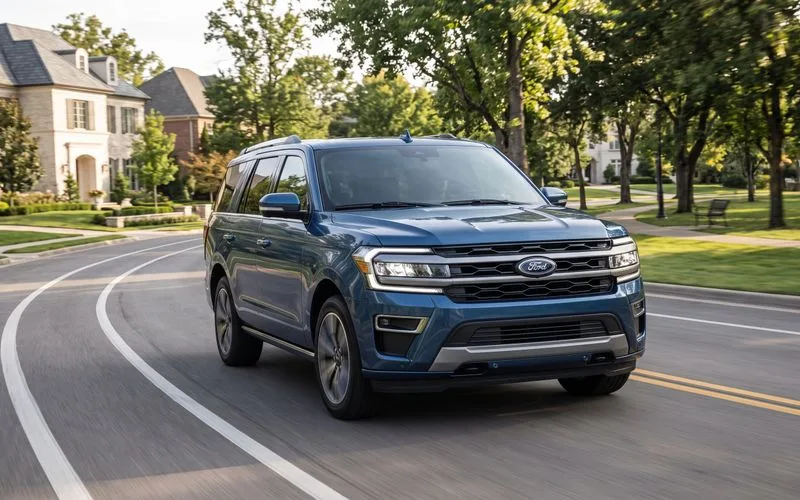 Ford ExpeditionFull-Size SUVBetter at: Overall value
Nearly the same size and mission with better reliability, better value per dollar, and onboard AC power the Wagoneer does not offer.
Compare 2.63C+
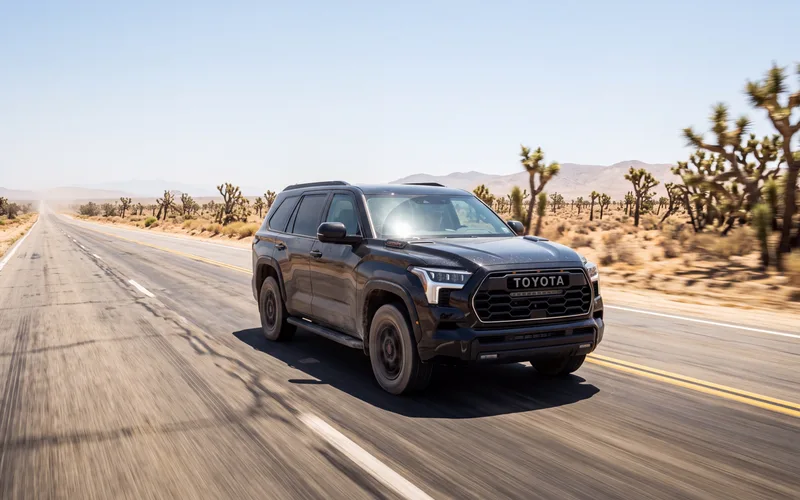 Toyota SequoiaFull-Size SUVBetter at: Reliability
A standard hybrid V6 and Toyota's dependability record fix the Wagoneer's two biggest problems — fuel cost and long-term risk.
Compare 2.79B-
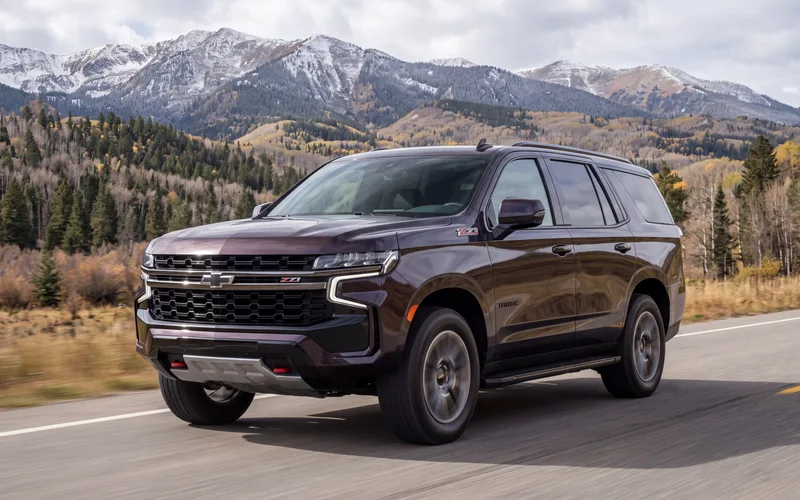 Chevrolet TahoeFull-Size SUVBetter at: Resale value
Costs less up front, holds its value far better, and is the safer financial choice if you plan to sell in five years.
CompareSubject scores by year
Hover or tap a score to see what moved it versus the year before. A corner mark flags a big swing.
| Year | Performance | Efficiency | Safety | Space | Cost | Reliability | Tech | Use-case | Driving | Value |
|---|---|---|---|---|---|---|---|---|---|---|
| 2026 | 77 | 32 | 68 | 85 | 14 | 54 | 79 | 70 | 66 | 64 |
| 2025 | 74 | 36 | 64 | 82 | 32 | 52 | 74 | 68 | 63 | 62 |
| 2024 | 75 | 36 | 69 | 82 | 24 | 48 | 73 | 68 | 61 | 68 |
| 2023 | 77 | 36 | 68 | 83 | 27 | 43 | 74 | 65 | 62 | 67 |
| 2022 | 66 | 22 | 66 | 83 | 23 | 40 | 74 | 63 | 59 | 57 |
Compare two years
Best fit & conditions
Higher scores mean a better fit for that use case. Learn more about use-case fit →
Subject profile
Detailed scoring by subject
1Performance & PowertrainOne of the Wagoneer's strongest categories.3.11B
For 2024 the 5.7L HEMI V8 was dropped entirely and the standard-output 3.0L Hurricane twin-turbo inline-six became the sole Wagoneer engine, at 420 hp — 28 hp more than the V8 it replaced. The 510-hp high-output Hurricane is exclusive to the Grand Wagoneer, a separate nameplate.
468 lb-ft on a broad turbocharged plateau sits near the top of the SUV torque band and is the figure behind the 10,000-lb tow rating. Several secondhand outlets quote 486 lb-ft; the Stellantis SAE J2723 spec sheet says 468 and the manufacturer figure wins.
The 2024 Wagoneer's powertrain is a carry-over of the 2023 standard-output Hurricane/8HP75 combination, for which 5.4 s is the published figure for the Series II 4x4; no major outlet has published an instrumented run of the 420-hp car specifically.
The Hurricane I6 is consistently reported as smooth, strong from low rpm and largely lag-free — reviewers judged it a worthy V8 replacement — but it trades the old HEMI's character for a muted, generic turbo-six note and shows mild off-idle softness under a light throttle.
The ZF-derived TorqueFlite 8HP75 eight-speed is the powertrain's least-criticized element: closely spaced ratios (4.71 first to 0.67 eighth), decisive part-throttle downshifts and no hunting, with a torque-converter clutch damper that keeps lockup shudder out of the cabin.
Properly equipped with the optional 3.92 axle the Wagoneer tows 10,000 lbs, above the SUV band ceiling and best-in-class among full-size SUVs — but the rating is axle-dependent, and a 2WD car left on the standard 3.55 gear tows only 6,120 lbs.
Four-wheel drive is available across the range in two forms — a single-speed full-time active system and a two-speed electronically shifted case with a 2.64 low range — both with a variable front/rear torque split and Selec-Terrain modes, plus a standard limited-slip rear diff and an optional ELSD. That is more drivetrain choice than the Expedition or Yukon offer.
Genuinely more capable than its full-size rivals — Quadra-Lift air suspension lifts ground clearance to 10.0 in and the angles to 25.0/22.0/24.0 approach/breakover/departure, with a 2.64 low range and a Rock terrain mode — but there is no Trailhawk-grade Wagoneer trim, and on standard steel springs it is an 8.3-in, 21.5-degree pavement SUV.
2024 is the year the choice disappeared: the 5.7L HEMI V8 was dropped and the 420-hp Hurricane became the single engine at a single output across every Wagoneer trim, with no hybrid, PHEV or diesel offered. The only remaining variables are 2WD/4WD and axle ratio.
2Efficiency & RangeOne of the Wagoneer's weakest categories.0.37F
Swapping the 5.7L HEMI for the Hurricane six bought the Wagoneer a genuine efficiency gain — 19 MPG combined leads the Expedition (18) and Yukon (17) — but a ~6,000-lb body-on-frame full-size SUV still lands in the bottom fifth of the gas SUV band.
City economy is where the mass tells: 16 MPG sits near the floor of the gas SUV city band, matching the Expedition and only a point above the Yukon's 5.3L V8, with no hybrid assist or engine-off coasting to recover stop-and-go losses.
23 MPG highway is the Wagoneer's best showing — a tall overdrive eighth gear (0.67:1) and a 0.352 drag coefficient help the turbo six cruise, and it beats the Expedition's 22 and the Yukon's 20 — but still lands in the lower quarter of the gas SUV highway band.
A large 26.5-gallon tank turns mediocre economy into genuinely long legs — roughly 500 miles between fills, well clear of the Expedition (≈419 mi) and Yukon (≈408 mi) and the strongest single figure in this category.
EPA puts running costs at $3,250 a year, near the expensive end of the gas SUV band and above both the Expedition ($2,750) and the Yukon ($3,000) — EPA prices the Wagoneer's recommended mid-grade, which is what erases the MPG advantage it holds over both.
The Hurricane's 10.4:1 compression and 22.4 psi of boost mean 89-octane mid-grade is recommended, with 87 regular explicitly acceptable — a real but modest premium over the Expedition's straight regular-unleaded rating, and materially cheaper to feed than a premium-required engine like the Grand Wagoneer's 510 H.O.
3SafetyMid-pack among this car's ten categories.2.64C+
NHTSA rated the 2024 Wagoneer four stars overall in both drive configurations. The frontal and side results are strong (five stars overall in each), but a four-star passenger-side frontal result and a three-star rollover rating — 21.2% rollover risk on 4WD, 22.8% on RWD — pull the combined score below the five stars most of its full-size rivals carry.
The 2024 Wagoneer is an IIHS Top Safety Pick — and notably the only one of the three large SUVs IIHS put through the updated moderate overlap front test that earned any award, with the Tahoe rating Poor and the Expedition Marginal alongside it. Its own updated moderate overlap result is Marginal, however: the second-row dummy showed a fairly high risk of chest injury from high belt forces, and the driver's head contacted the steering wheel through the airbag. Everything else in the crashworthiness set is Good — small overlap front driver and passenger, the original moderate overlap, and the updated side test — so this is not the 'Marginal/Poor in key tests' bottom band, but the Marginal in a core structural test rules out the top band's 'TSP with all Good crash results' and TSP+ was withheld for exactly that reason. Seat belt reminders are Marginal, a further small deduction. It lands above the Grand Cherokee, which holds the same award with a Poor rather than a Marginal in the same test.
The Monroney label for a base 2024 Wagoneer Series II 4x2 prints the complete set this item asks about as standard equipment, not as a package: Adaptive Cruise-Control with Stop and Go, Active Lane-Management System, Full-Speed Forward-Collision Warning Plus, Pedestrian Emergency-Braking, and Blind-Spot and Rear Cross-Path Detection, plus a ParkView rear camera and ParkSense front and rear park assist with stop. Standard stop-and-go ACC and standard BSM on the entry trim of a full-size SUV is top-band breadth. Held below the top of the band because the second tier of the suite is genuinely trim-locked — automatic high beams do not appear until the Series III, and the 360-degree surround-view camera, drowsy driver detection, traffic sign recognition and Intersection Collision Assist are all listed by Jeep as available rather than standard.
Pedestrian front crash prevention rates **Good** — the top result under the 2024 protocol that folds daytime and dark runs into a single evaluation — and Jeep's own account of the test is that the system performed equally well against a nighttime crossing adult and a daytime child emerging from behind an obstruction, which is precisely the nighttime-pedestrian capability the top band asks for. What keeps it just outside that band is the vehicle-to-vehicle side: under the tougher 2.0 protocol, with its higher closing speeds and motorcycle and semi-trailer targets, the Wagoneer manages only Acceptable. Strong where the newer, harder pedestrian test is concerned, mid-pack against other vehicles.
Blind-Spot and Rear Cross-Path Detection is standard on the base Series II rather than bundled into a package, and Consumer Reports records reverse automatic emergency braking as standard too — so backing out of a space gets real intervention, not just a chime. That is the top of the middle band. It stops short of the upper band because the side coverage itself is alert-only, with no steering or braking intervention against a vehicle alongside, and no safe-exit alert for occupants opening a door into traffic; the turn-signal-triggered blind-spot camera view and the 360-degree system that would compensate are optional rather than standard on the volume trim.
The Active Lane-Management System — lane departure warning with lane keep assist — is standard on the base Series II, so every 2024 Wagoneer keeps itself between the lines. True lane centering is the weaker half: Jeep delivers it as Active Driving Assist, the hands-on Level 2 pairing of the lane system with stop-and-go ACC, and on the 2024 Wagoneer that is an available feature rather than standard equipment, absent from the base Series II sticker. Stellantis' own 'What's New for 2025' copy for the Grand Wagoneer L — 'Active Driving Assist (Level-2 Autonomy) now standard' — is the clearest confirmation that it was not standard the year before. Reviewers who have used the Stellantis lane system in the Wagoneer family describe it as smooth and accurate rather than prone to ping-ponging, which keeps this comfortably mid-band, but a volume trim that warns and nudges without centering cannot reach the top band.
Adaptive Cruise-Control with Stop and Go is standard on the base Series II — full-speed-range longitudinal control including a full stop and resume in traffic, which is the substantive half of the top band and better than several full-size rivals that reserve stop-and-go for upper trims. The integration half is where 2024 falls short: the combined highway assist, Active Driving Assist, is an optional feature this model year and only becomes standard for 2025, so the volume trim gets refined cruise control without the lateral half working alongside it as one system. Reviewer accounts of the ACC itself are positive — smooth tracking, with the criticism limited to an occasional over-sharp brake application when a car cuts in.
There is no hands-free option on the 2024 Wagoneer at any price or trim. Stellantis launched Hands-Free Active Driving Assist in February 2024, but the rollout was confined to the Grand Cherokee and Grand Cherokee L in Overland and Summit trims with the Pentastar V6; the Wagoneer and Grand Wagoneer did not get it until the 2025 model year. What the 2024 Wagoneer can be optioned with is the hands-on version — Jeep's own framing is 'hands-on-wheel, eyes-on-road' — which is a different capability from the one this item measures. Scored just above the floor rather than at zero because the underlying camera-and-radar hardware and a mature hands-on Level 2 system are present, so the gap is a software and mapping entitlement rather than a missing sensor set.
IIHS rates the Wagoneer's headlamps Good only in the variant equipped with high-beam assist; without it they are Acceptable. Automatic high beams are not fitted until the Series III, so the volume Series II ships with the Acceptable-rated setup and the Good rating is effectively a top-trim feature. LED headlamps are standard across the range and Acceptable is enough to satisfy the 2024 Top Safety Pick criteria on every trim, which keeps this out of the bottom band — but this is the middle band's description almost word for word: Good on upper trims, Acceptable on the volume trim.
The Wagoneer gives a tall, commanding forward view and good sightlines to the front and sides — the upright glasshouse and high hip point of a body-on-frame full-size SUV — but Consumer Reports flags large roof pillars all around that form big blind spots, and rear visibility past the third-row headrests is the weakest angle. The camera compensation that would offset it is not standard where it matters: the volume Series II gets a ParkView rear camera and front and rear park sensors, while the 360-degree surround-view system, the digital rearview mirror and the turn-signal-triggered blind-spot camera are all optional or reserved for higher trims. Average visibility with real blind zones and only partial compensation on the trim most people buy.
IIHS awards the Wagoneer's LATCH hardware **Good+**, the institute's best ease-of-use rating and one very few vehicles earn — the '+' specifically recognising extra attachment positions beyond the two the standard requires. Three rear seating positions carry complete LATCH hardware (four on the eight-seat configuration) with two further tether-only positions, so multiple seats go in across the second row and the third row is usable for a booster or tethered seat rather than being a dead zone. Physical access is the easy part on a vehicle this size: wide-opening rear doors, a flat second-row bench or captain's chairs at a comfortable loading height, and enough length that a rear-facing seat does not force the front passenger forward. Top band on both the hardware rating and the packaging.
4Space & ComfortThe Wagoneer's best-graded category.3.60A-
Every 2024 Wagoneer trim — base Wagoneer, Series II and Series III — carries a third row as standard equipment, giving eight-passenger capacity in the volume configuration, at the top of the SUV normalization band.
41.3 inches sits near the top of the 37–42 in SUV band — the WS platform's tall body-on-frame greenhouse is carried over unchanged for 2024, which was a powertrain year rather than a body change.
40.9 inches lands near the bottom of the 40–44.5 in SUV band — the Wagoneer spends its 123-inch wheelbase on the second and third rows rather than the driver's footwell, and that trade is unchanged for 2024.
40.0 inches of second-row headroom is at the ceiling of the 36–40 in SUV band, and the third row still holds 39.0 in — the dimension Consumer Reports singles out in calling row three genuinely adult-usable.
42.7 inches of second-row legroom clears the 42-inch top of the SUV band outright and is the single strongest dimension on the vehicle; Jeep markets it as best-in-class for 2024.
36.6 in of legroom and 39.0 in of headroom in row three seat adults rather than children, and the power-sliding, power-reclining second row opens a genuine walk-in path. It stops short of the ceiling because the third-row cushion sits low, leaving a knees-up posture on long stints.
70.8 cu ft behind the folded third row is a strong full-size figure, but the more useful number is the 27.4 cu ft that remains with all eight seats occupied — enough for a stroller without folding anything.
116.7 cu ft is well past the 100 cu ft top of the SUV band, so the item scores at the cap; both rear rows power-fold to a near-flat load floor rather than a stepped one.
One genuinely novel idea — the center touchscreen retracts to expose a wireless charging pad and power ports — but reviewers judge it a wash, because using the screen and reaching the cubby are mutually exclusive and the pad does not retain a phone. Beyond that the console, door bins and underfloor well are competent but ordinary for a full-size SUV.
Wide, well-padded 12-way power front chairs with four-way lumbar, heating and ventilation, plus a second row Consumer Reports credits with excellent legroom and adjustability and a third row it calls among the most comfortable sold. Held out of the top band by the low third-row cushion and by second-row heat and ventilation being reserved for higher trims.
Highway ride is a real strength — independent rear suspension and the available Quadra-Lift air springs give stable, absorbent motorway manners — but the body-on-frame chassis shows itself on broken secondary roads with truck-like harshness, which keeps it mid-pack rather than at the Escalade/GLS end of the class.
Acoustic glass and active noise cancellation give a cabin Consumer Reports calls 'super-quiet' and ranks among the vehicle's strongest attributes — and 2024 is the year it improved, because the twin-turbo Hurricane six that replaced the 5.7L HEMI removed the V8's cruising rumble.
Tri-zone automatic climate, heated and ventilated front seats, a power tilt/telescoping heated steering wheel, remote start and a wireless charging pad make the roster rich for the class on the volume Series II. The deduction is operation rather than availability: those heated/cooled-seat and heated-wheel functions run through small touch-capacitive pads that reviewers repeatedly report failing to register a press.
5Cost of OwnershipThe Wagoneer's lowest-graded category.0.00F
For 2024 the base Wagoneer received the 420-hp Hurricane twin-turbo I6 in place of the 5.7L V8 and its MSRP rose to $62,945 before destination. With the $2,000 Stellantis destination charge the entry 4x2 stickers at $64,945, which sits at the top of the SUV price band.
Series II 4x4 is the volume configuration — Edmunds names Series II 'the best Wagoneer for value' and 4x4 dominates full-size Jeep sales. Cars.com lists Series II at $69,130 (4x2) / $72,130 (4x4) before the $2,000 destination, which matches KBB's $74,130 delivered figure; real dealer stock with the Convenience/Customer Preferred groups ran $78,825–$83,675.
CarEdge projects $744/yr ($3,720 over five years) of scheduled maintenance, but that excludes unscheduled repairs on a first-generation Stellantis WS platform whose brand averages $11,605 in maintenance and repair over ten years. Wagoneer Client Services covers the first 3 years/36,000 miles of scheduled service, which pulls the early years toward zero while heavy 20-/22-inch tires, a twin-turbo I6 and out-of-warranty electronics push years four and five up.
Two independent residual estimates bracket the Wagoneer at 47–49% retained at five years, and it beats its own class: iSeeCars puts the large-SUV average at 43.7% retained. J.D. Power's 2024 ALG Residual Value Awards named the Wagoneer best-in-class for the second straight year — but 48% of a $74,000 sticker is still roughly $38,500 of depreciation in absolute dollars, which is what the effective ownership cost prices in.
Stellantis applies its standard 3-year/36,000-mile Basic Limited Warranty to the Wagoneer with no premium extension despite the sub-brand's luxury positioning — the class minimum, and shorter than the 4-year terms of the German and Korean luxury rivals the Wagoneer is priced against.
The 5-year/60,000-mile powertrain warranty covering the Hurricane I6, eight-speed automatic and axles is the Stellantis standard and the bottom of the segment band — Hyundai/Kia offer 10 yr/100,000 mi and even mainstream full-size rivals match rather than trail it.
Wagoneer Client Services is one of the richest ownership packages in the segment: every retail buyer is auto-enrolled at no cost for three years, with complimentary scheduled maintenance (oil changes, tire rotations) for 3 years/36,000 miles, 24/7 roadside assistance including towing to a certified Wagoneer service center, trip-interruption cover to $1,000 per occurrence, first-day rental, and a dedicated trained Wagoneer Ambassador for sales and service. That is materially more than the Jeep Wave program on a Grand Cherokee and far more than the roadside-only provision of a Tahoe or Expedition; it falls short of a perfect score only because the maintenance window is three years rather than the Grand Wagoneer's five.
$74,130 volume-trim price minus its estimated resale value after 5 years (48% retained, or about $35,582) leaves about $38,548 in depreciation. Add the projected $6,000 in 5-year maintenance and repairs, and owning this vehicle for 5 years costs about $44,548 in total.
6Reliability & QualityOne of the Wagoneer's weakest categories.1.22D
Consumer Reports rates the Wagoneer nameplate as less reliable than the average new car, and 2024 is the first year the standard Wagoneer runs the brand-new Hurricane twin-turbo I6 in place of the long-proven 5.7L Hemi — a powertrain change that resets whatever track record the WS generation had built. J.D. Power's own dependability read on Jeep is only average, and third-party aggregators land in the middling 66/100 range, so this is a below-average-to-mixed prediction rather than a disaster.
Jeep finished dead last in Consumer Reports' 2024 Brand Report Card, with CR stating it could not recommend a single model the brand builds — the clearest bottom-third signal available. The picture is not uniformly bad (Jeep placed 19th in the 2024 J.D. Power IQS, above industry average, and Jeep was rated roughly average in the 2024 VDS), but the multi-year CR standing is what this item measures.
NHTSA lists six safety recalls against the 2024 Wagoneer, including a driver-airbag clockspring weld defect that can prevent deployment, a third-row seat-belt buckle access defect, and two separate FMVSS 111 rearview-camera non-compliances — repeated safety-system campaigns rather than one-offs. Two further campaigns cover door and quarter-window trim detaching, which is both a road hazard and an assembly-quality tell; owner complaints skew to powertrain, engine and electrical.
The 3.0L Hurricane twin-turbo I6 (GME-T6, 420 hp / 468 lb-ft standard output) is standard on the 2024 Wagoneer and has no high-mileage record — it displaced the Hemi V8 for this model year. Early-life reports include thermostat failures serious enough to draw a factory TSB, turbo oil leaks, internally failing catalytic converters and a handful of engine failures between roughly 5,000 and 30,000 miles, plus assembly defects found at delivery. The paired ZF 8-speed automatic is genuinely proven, which keeps this out of the lowest band.
Reviewers consistently call material quality high across the standard Wagoneer lineup, and the model took the top spot in its segment in J.D. Power's 2024 APEAL study — an owner-satisfaction measure heavily weighted toward interior execution. It falls short of a class-leading score because at Wagoneer money critics still find it trails the German and Land Rover benchmarks, and the shiny trim and suede-look pillars draw marks.
Initial quality is respectable on paper — Jeep placed 19th in the 2024 J.D. Power IQS, above the industry average, and the Wagoneer won its APEAL segment. Against that, two federal recalls exist specifically because door and quarter-window trim was not properly installed and can fall off the vehicle, and owners report uneven exterior panel gaps, which is assembly consistency failing in the most literal way.
Coverage is a genuine strength: Chrysler-Dodge-Jeep-Ram runs well over two thousand US dealers, so a Wagoneer owner is rarely far from a franchised service point — far denser than the import luxury brands this SUV is priced against. Service satisfaction is the weak half; Jeep scored below the mass-market average in the 2024 J.D. Power CSI study, and Wagoneer buyers paying luxury prices are landing in mainstream CDJR service lanes.
Mopar's parts distribution and the huge CDJR dealer count mean common wear items are easy to source at normal prices. The offsetting facts are that the Wagoneer is a low-volume premium platform with a young engine family whose specific components have limited aftermarket depth, and cost projections run above segment norm — CarEdge puts five-year maintenance and repair near $3,720 with a materially higher-than-peer chance of a major repair.
7Technology & InfotainmentOne of the Wagoneer's strongest categories.2.97B-
The non-Grand Wagoneer uses the 10.1-inch Uconnect 5 center screen on all 2024 trims, not the 12-inch unit fitted to the Grand Wagoneer — a small centerpiece against full-size rivals such as the Expedition's 13.2-inch display, which is what drags this item.
Uconnect 5 is one of the better mainstream systems — quick, logically laid out, split-screen capable, with crisp graphics across all three displays — but the Wagoneer surrounds it with touch-capacitive climate and seat pads that misfire, and routes climate entirely through touch menus. Good software, compromised hardware layer.
Wireless Apple CarPlay and wireless Android Auto are standard on every 2024 Wagoneer trim including the base car, with wired connection and simultaneous dual Bluetooth also supported — the top band by availability.
Uconnect 5 NAV ships with current 2D/3D mapping plus connected navigation, and 2024 specifically added Adventure Guides and GPS Trail Logs to the Jeep Connect package. Amazon Alexa Built-In handles conversational requests better than the older Uconnect engine, but it is not a natural-language assistant on the level of the best German or Hyundai/Kia systems and most owners still default to phone projection.
The optional McIntosh MX950 — 19 speakers, 950 watts, a 10-inch subwoofer and 3D surround — is one of the best factory systems sold at any price and is routinely called out as a Wagoneer highlight; the standard Alpine setup below it is merely competent, which is the only thing keeping this off the ceiling.
A 12.3-inch full-digital reconfigurable cluster is standard across the 2024 range with no analog fallback on the base car, offering multiple layouts including a full-width map. Docked only because Consumer Reports found it switches views distractingly whenever a steering-wheel control is used.
Uconnect 5 does support genuine over-the-air delivery — automatic over Wi-Fi, with map refreshes under a navigation trial or subscription — but the scope is infotainment and maps rather than whole-vehicle software, and owners report larger firmware packages still route through a dealer. That is squarely the middle band, well behind Ford's and GM's vehicle-wide OTA programs.
The Jeep app covers the core set — remote start, remote lock/unlock, vehicle locator, vehicle health and Drive Alerts — and 2024 added off-road trip planning with a two-year trial. It lands mid-band because for 2024 those remote functions are trial-then-subscription rather than long-term included, there is no phone-as-key, and the app's polish trails Ford's and Hyundai's.
Device power is a Wagoneer strength — USB-A and USB-C outlets spread across all three rows in numbers reviewers call hard to count, a standard wireless charging pad, and a 115V household-style outlet. Docked slightly because the wireless pad does not retain a phone reliably and is hidden behind the retracting screen.
Keyless entry with push-button start, remote start from both fob and app, and a power liftgate are standard equipment on the 2024 Wagoneer, covering the full conventional convenience set on the volume trim. Short of the top band only because Jeep offers no phone-as-key or UWB digital key on the Wagoneer for 2024.
A 360-degree surround-view camera is standard from the volume Series II up — unusual at this price — alongside front and rear parking sensors, ParkSense parallel/perpendicular park assist and trailer camera views. Held a notch below the 2025 car because for 2024 Jeep lists the surround camera as available rather than standard on the base Wagoneer, and image resolution is good rather than the class benchmark set by GM's multi-view systems.
A full-color head-up display projecting speed, navigation prompts and call notifications is offered and reaches the volume Series II as standard equipment per dealer trim material — but Jeep's own 2024 press kit files it under available rather than standard, so on the base Wagoneer it is an extra-cost box. Upper-middle band rather than top.
8Use-Case FitMid-pack among this car's ten categories.2.58C+
Close to segment-benchmark family logistics: wide rear door apertures onto a flat floor, 42.7 in of second-row legroom so a rear-facing seat does not force the front passenger forward, standard power sliding and reclining second-row seats that open a real walk-in path to row three, and 27.4 cu ft still behind the third row for a stroller with all eight seats occupied.
The driver-assist roster is broad and reaches the trims families actually buy — AEB, adaptive cruise, lane keeping, blind-spot monitoring and a 360-degree camera are all standard from Series II. The crash-test record is the weaker half: NHTSA gives four stars overall with only three for rollover, so the credentials do not fully match the price, though the 2024 car's IIHS results are respectable.
This is what the Wagoneer is built for: best-in-class claimed second- and third-row legroom, an adult-usable row three, a cabin Consumer Reports calls super-quiet, tri-zone climate, USB power at every row, available Amazon Fire TV Built-In on the passenger display, and enough luggage room behind row three that a full load of people does not mean a roof box. Held below the top band by second-row heat and ventilation being reserved for higher trims and the third row's low cushion.
Low-effort in the ways that matter for a commute — an eight-speed Consumer Reports says 'shifts with supreme smoothness,' a quiet cabin, a commanding seating position and light controls — but three things keep it mid-band: a noticeable boost delay off the line from throttle mapping tuned for soft take-offs, touch-capacitive climate pads that demand a second glance in traffic, and 215 inches of length to place in a lane.
19 MPG combined in the volume 4x4 configuration and roughly $3,250 a year in fuel at 15,000 miles is expensive commuting by any standard, and there is no hybrid or PHEV anywhere in the 2024 Wagoneer range to soften it. The mitigations are that the Hurricane runs on regular 87-octane and that consumables are shared with high-volume Stellantis trucks.
215 inches long and 84 inches wide is a genuine problem in urban garages and older parking structures, and Consumer Reports notes large roof pillars create considerable blind spots. The 38-foot curb-to-curb circle is respectable for a 123-inch wheelbase and the surround-view camera with park assist does real work, which is why this sits at the top of the low band rather than the bottom.
A best-in-class 10,000-lb tow rating when properly equipped, on a body-on-frame chassis with 468 lb-ft, is serious capability for a trailer, boat or equipment, and payload works out to roughly 1,475 lbs. It is not an 80+ work tool because it has no bed, cargo access is through a liftgate onto a carpeted floor, and the interior is trimmed for a luxury buyer rather than dirty gear — and the headline rating depends on the optional 3.92 axle, without which a 4x2 tows 6,120 lbs.
The hardware is the right kind — a body-on-frame platform engineered alongside Ram trucks, with a TorqueFlite 8HP75 used across high-volume Stellantis products — but there is no fleet track record: the WS generation is only in its third model year, the Hurricane I-6 is in its first year as the Wagoneer's sole engine, and Jeep sits near the bottom of both major dependability surveys.
The work-oriented provisions are real but thin: cargo-area tie-downs, standard roof rails, a trailer hitch with integrated brake controller and trailer camera views, and a 115V outlet for tools. Against that there is no bed, no washable or vinyl floor option, and essentially no commercial upfit ecosystem — Stellantis sells the Wagoneer as a luxury SUV and directs fleet work buyers to Ram.
An excellent mile-eater: wide supportive front seats with ventilation, a super-quiet cabin, stable highway ride on the air suspension, and roughly 500 miles between fills from the 26.5-gallon tank despite the poor MPG. Kept out of the top band because the ADAS stops at conventional lane-centering — there is no hands-free highway system to cut driver load the way Super Cruise or BlueCruise does in this class.
Genuine adventure hardware rather than a trim package: three 4x4 systems topped by Quadra-Drive II with a rear electronic limited-slip diff and a 48:1 crawl ratio, Quadra-Lift air suspension lifting to 10 inches of clearance, 24 inches of water fording, 10,000 lbs of tow for a boat or toy hauler, roof rails and a 115V outlet for camp power — plus 2024's new GPS Trail Logs and Adventure Guides in Jeep Connect. Short of the ceiling because there is no Trailhawk-grade Wagoneer, no front locker, and the length and ~5,800-lb mass rule out tight technical trails.
116.7 cu ft with both rear rows folded, 70.8 cu ft behind row two, and an underfloor well behind the third row swallow bulky gear without a roof box, and the rows power-fold to a near-flat floor. Standard roof rails and an available hitch handle bikes and boxes. Not a 90+ because the load floor sits high off the ground for lifting heavy items and the fold is near-flat rather than perfectly flat.
9Driving ExperienceMid-pack among this car's ten categories.2.10C
Independent rear suspension and the available Quadra-Lift air springs give the Wagoneer more composure than its 5,825-lb body-on-frame construction suggests, and Consumer Reports found the 2024 turbo-six car slightly more nimble than the HEMI version it replaced. But it still protests in aggressive cornering and shows truck-like harshness on rough roads — secure and predictable rather than engaging.
Accurate and consistently weighted enough that the Wagoneer tracks straight on the highway without correction and turns in predictably for its size, but the electric rack passes almost nothing back to the driver — precise without being communicative, which is the middle band.
The clear weak point of the 2024 car and the reason this drops below the segment floor: Consumer Reports' instrumented road test recorded unusually long stopping distances, notably worse in the wet. Hauling nearly three tons rated to tow 10,000 lbs asks a great deal of the brakes, and on this evidence they do not deliver.
2024 is the year this improved: the 420-hp Hurricane twin-turbo six became the sole engine, cutting 0–60 to six seconds in Consumer Reports' test — quicker than the V8 it replaced — behind an eight-speed that 'shifts with supreme smoothness.' Two things hold it in the middle band: a real boost delay off the line that reviewers say is more pronounced here than in the Ram trucks on the same engine, and an eight-speed that reacts less quickly than the 10-speeds in the Expedition and Tahoe.
Dropping the HEMI for an inherently balanced inline-six removed the V8's cruising rumble and any vibration through the controls, and Consumer Reports ranks the resulting quiet among the vehicle's strongest attributes. It falls short of the top band because under hard throttle the Hurricane is merely inoffensive rather than pleasant — buyers who wanted the V8's soundtrack notice its absence.
38.0 feet is mid-band for the SUV class and genuinely good for a 123-inch wheelbase — but the number flatters the car in practice, because the 84-inch width is what actually makes it awkward in tight garages.
The seat itself is excellent — wide, supportive, 12-way power with four-way lumbar, and a commanding sightline over traffic. Everything around it is the problem: heated/cooled-seat and heated-wheel functions on small unresponsive touch-capacitive pads, steering-wheel controls that do not distinguish cruise from adaptive cruise, a cluster that jumps views with each adjustment, and large roof pillars that create considerable blind spots.
The Hurricane's 468 lb-ft makes the Wagoneer effortlessly quick in a straight line — a six-second 0–60 for a three-ton eight-seater is genuinely satisfying. But nothing invites a detour: numb steering, a heavy chassis that protests when pushed, long stopping distances, an engine note reviewers call quiet rather than characterful, and no enthusiast trim, since the high-output Hurricane is exclusive to the Grand Wagoneer.
10Value & Market PositionMid-pack among this car's ten categories.2.63C+
The 2024 base Wagoneer gives you the 420-hp Hurricane I6, a 10,000-lb tow rating, three rows for eight and Uconnect 5 as standard, but at $64,945 delivered it still rides on 18-inch wheels and leaves adaptive cruise control and Active Lane Management on the options sheet — Jeep added both as standard for 2025 precisely because the 2024 car was thin for the money. A Tahoe LS or Expedition XLT costs less and includes its full driver-assist suite.
The Wagoneer delivers a great deal of vehicle — best-in-class interior volume, 420 hp standard and 10,000 lb of towing — but 2024 MSRPs were set above what the market would pay, and Stellantis said so with its own product action: for 2025 it cut Wagoneer prices by $3,000 to $5,685 and the Grand Wagoneer by $7,000 while adding content. Judged at sticker, a comparably equipped Tahoe or Expedition undercuts it; judged at transaction price the picture improves, but that belongs to the incentives item below.
Four trims (Wagoneer, Series II, Series II Carbide, Series III) in 4x2 and 4x4, each also offered in the 12-inch-longer Wagoneer L body, gives eight core configurations plus generous option groups — with the Grand Wagoneer above it for buyers wanting more. The gap is at the bottom: there is no inexpensive fleet/work-grade entry point, so the ladder starts near $65,000 and every rung is a single powertrain.
Wagoneer sales rose 48% to 25,993 units in calendar 2024 — a genuinely strong trajectory, and a rare bright spot in a Stellantis year when FCA US volume fell sharply. It is still a mid-pack player in absolute terms, trailing the Tahoe/Yukon/Expedition trio by a wide margin, so the trend earns more credit here than the volume does.
Jeep is one of the most recognized names in America and the Wagoneer nameplate carries real heritage, which owners reward — verified buyers rated the Wagoneer the most appealing large SUV in the 2024 J.D. Power APEAL study. Working against it: the Wagoneer sub-brand's premium ambitions are not universally accepted at these prices, and Stellantis quality and pricing controversy through 2024 weighed on the badge, showing up in a 2.9/5 KBB owner rating.
Scored as buyer benefit, this is one of the easiest full-size SUVs in the market to buy below sticker: Stellantis' 2024 inventory overhang produced five-figure discounts on ordinary Series II stock plus 0% APR for 36 months and 3.9% for 72. The caveat is that the discounting is a symptom of overpricing and slow turn, and it lands on the resale value of the car you just bought.
2024 is the third model year of the WS generation launched for 2022, so the platform, interior and screens are still current — and 2024 was itself a change year rather than a carry-over: the 5.7L HEMI V8 was dropped and the 420-hp Hurricane twin-turbo I6 became the sole Wagoneer engine. Mid-cycle rather than new, with no redesign imminent, though the 2025 repricing arrived one year later.
The 2024 Wagoneer is one of the more decorated large SUVs of its year: a 9.2/10 U.S. News score, the J.D. Power APEAL large-SUV win, a second consecutive J.D. Power ALG Residual Value Award, and the only one of three large SUVs IIHS tested to earn 2024 Top Safety Pick. It is held back from the top band by soft owner sentiment and unproven reliability — KBB owners rate it 2.9/5 — and by rarely being the outright pick over a Tahoe or Expedition in head-to-head comparison tests.