

The verdict
A mixed-report full-size suv, strong on space and held back by ownership.
Overall 2.50 (C+) across 10 graded subjects. Its strongest is space & comfort at 3.61 (A-), its weakest cost of ownership at 0.06 (F). 7 of 10 subjects grade at C− or better.
Jump to scoresStrengths
- Space & Comfort
- Performance & Powertrain
- Technology & Infotainment
What holds it back
- Cost of Ownership
- Efficiency & Range
- Reliability & Quality
Top alternatives
Cars shoppers cross-shop with the Jeep Wagoneer 2.92B-
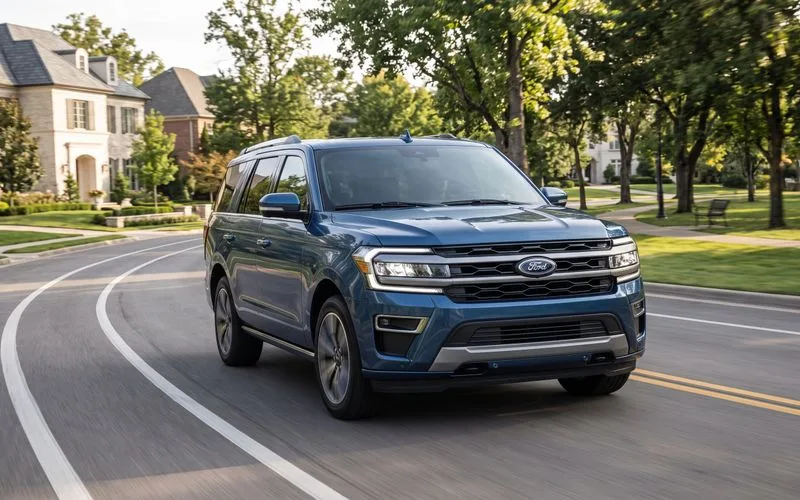 Ford ExpeditionFull-Size SUVBetter at: Overall value
Nearly the same size and mission with better reliability, better value per dollar, and onboard AC power the Wagoneer does not offer.
Compare 2.63C+
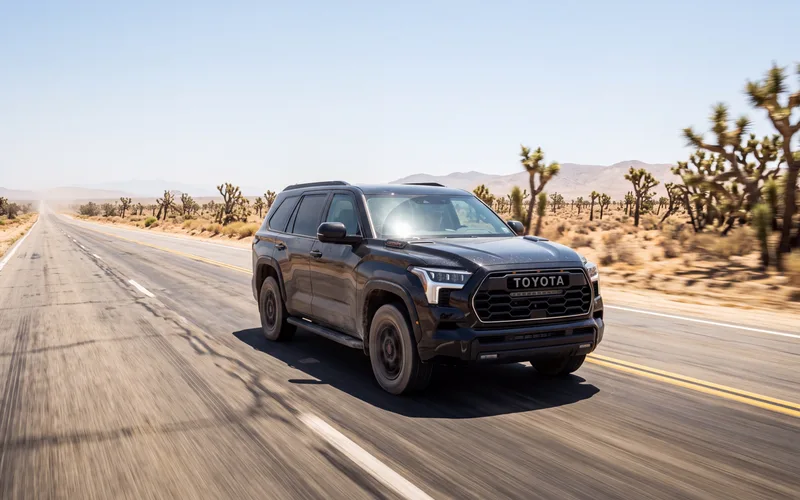 Toyota SequoiaFull-Size SUVBetter at: Reliability
A standard hybrid V6 and Toyota's dependability record fix the Wagoneer's two biggest problems — fuel cost and long-term risk.
Compare 2.79B-
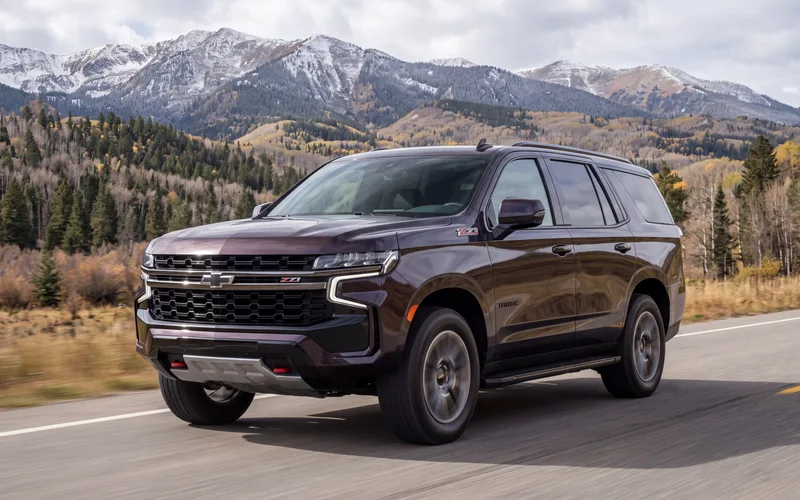 Chevrolet TahoeFull-Size SUVBetter at: Resale value
Costs less up front, holds its value far better, and is the safer financial choice if you plan to sell in five years.
CompareSubject scores by year
Hover or tap a score to see what moved it versus the year before. A corner mark flags a big swing.
| Year | Performance | Efficiency | Safety | Space | Cost | Reliability | Tech | Use-case | Driving | Value |
|---|---|---|---|---|---|---|---|---|---|---|
| 2026 | 77 | 32 | 68 | 85 | 14 | 54 | 79 | 70 | 66 | 64 |
| 2025 | 74 | 36 | 64 | 82 | 32 | 52 | 74 | 68 | 63 | 62 |
Compare two years
Best fit & conditions
Higher scores mean a better fit for that use case. Learn more about use-case fit →
Subject profile
Detailed scoring by subject
1Performance & PowertrainOne of the Wagoneer's strongest categories.3.01B
For 2025 the standard-wheelbase Wagoneer carries the 3.0L Hurricane twin-turbo I-6 in standard-output tune as the sole engine across the Wagoneer, Series II and Series III trims — a carry-over from 2024, when the 5.7L HEMI was dropped. The 510/540 hp high-output Hurricane is exclusive to the separate Grand Wagoneer nameplate and is not offered on this vehicle.
The standard-output Hurricane's 468 lb-ft is near the top of the SUV torque band and is the figure that underwrites the 10,000-lb tow rating; it exceeds the 404 lb-ft of the 5.7L HEMI V8 it replaced.
Consumer Reports' instrumented test of the 420 hp Wagoneer recorded 6.0 seconds to 60 mph; U.S. News estimates 6.1 s and simulation sites claim as low as 5.5 s. Quick for a ~6,000-lb body-on-frame full-size SUV but well short of the 4.7 s Car and Driver measured for the 510 hp Grand Wagoneer L.
Reviewers consistently describe the Hurricane as smoother and markedly quieter than the HEMI V8 it replaced, with effortless highway passing. It falls short of the top band because throttle mapping tuned for soft take-offs combines with a real boost delay off the line — a lag reviewers note is more pronounced here than in the Ram trucks using the same engine.
The TorqueFlite 8HP75 eight-speed is smooth-shifting and never hunts or drones in normal driving, but reviewers judge it less flexible and slower to react than the 10-speed automatics in the Ford Expedition and Chevrolet Tahoe.
Jeep's 10,000-lb rating is the highest in the full-size SUV segment and sits 2,000 lbs above the SUV normalization ceiling, so the item scores at the cap.
Three distinct four-wheel-drive systems are offered — Quadra-Trac I, Quadra-Trac II and Quadra-Drive II with a rear electronic limited-slip differential — every one of them with an active low range and a 48:1 crawl ratio, plus Selec-Terrain modes. Only the base trim's rear-drive configuration keeps this off a perfect score.
Genuine hardware for the class: body-on-frame construction, Quadra-Lift air suspension raising ground clearance to 10 inches, 24 inches of water fording, a 48:1 crawl ratio with active low range, Quadra-Drive II's rear ELSD, and an Advanced All-Terrain Group adding four steel skid plates. It stops short of the top band because there is no dedicated off-road trim (no Trailhawk equivalent), no front locker, and the vehicle's length and ~6,000-lb mass rule out tight technical trails.
The 2025 Wagoneer offers exactly one engine in one tune — the 420 hp Hurricane standard-output I-6 — with no V8, hybrid, PHEV or diesel alternative anywhere in the range. The 2WD/4WD choice is a drivetrain option, not a second powertrain, and the all-electric Wagoneer S is a separate model on a separate platform.
2Efficiency & RangeOne of the Wagoneer's weakest categories.0.39F
EPA combined rating for the 2025 Wagoneer 4WD with the 3.0L Hurricane twin-turbo I-6 and eight-speed automatic; rear-drive versions gain 1 mpg. Low even for a gas full-size SUV, though a modest gain over the 5.7L HEMI the Hurricane replaced.
EPA city rating for the volume 4WD configuration. Roughly 6,000 lbs of body-on-frame SUV with no electrified assist leaves city economy near the bottom of the gas-SUV band.
EPA highway rating for the volume 4WD trim — the Wagoneer's strongest fuel-economy figure, helped by tall gearing and the turbo six's low-rpm cruising, but still only modestly above the floor of the SUV highway band.
A large 26.5-gallon tank offsets the poor economy, giving the standard-wheelbase 4WD Wagoneer a competitive real-world cruising range; the long-wheelbase L carries 30.5 gallons for roughly 580 miles. Range is the one place this powertrain grades well in the category.
EPA's own published annual fuel cost for the 2025 Wagoneer 4WD at standard assumptions. It sits near the top of the SUV cost band — among the most expensive non-luxury-fuel vehicles in the segment to keep running.
The EPA rates the 2025 Wagoneer on regular gasoline and the standard-output Hurricane runs on 87 octane, so there is no premium-fuel penalty — but Stellantis recommends 89-octane mid-grade to realize the advertised 420 hp, which keeps it out of the top band. No E85 or diesel flexibility.
3SafetyMid-pack among this car's ten categories.2.32C+
NHTSA rated the 2025 Wagoneer for the first time in this generation and it came in at 4 stars overall, not the 5 stars its Grand Cherokee sibling earns. Frontal (5) and side (5, including 5 in the pole test) are strong; the overall is pulled down by a 4-star passenger-side frontal result and a 3-star rollover rating at a 21.2% rollover probability — high even for a body-on-frame full-size SUV.
Good in small overlap front for both driver and passenger and Good in the updated side test, but MARGINAL in the updated moderate overlap front test — the rear-passenger protection evaluation — and Marginal seat-belt reminders. No Top Safety Pick award of any kind is listed for the 2025 Wagoneer. Better than the Grand Cherokee's outright Poor moderate-overlap result, but a Marginal in a core crashworthiness test plus no award keeps it in the middle band rather than the upper one.
2025 is the year the suite completed: Jeep made Adaptive Cruise Control with Stop and Go and the Active Lane Management System standard, joining already-standard Blind Spot Monitoring with Rear Cross-Path Detection, Full-Speed Forward Collision Warning with Active Braking, Pedestrian/Cyclist Emergency Braking and front/rear ParkSense. Every element of the item's top band (AEB, ACC, LKA, BSM, RCTA) is now standard on every trim. Held short of the very top because a $60k-plus luxury-class SUV still leaves the 360-degree camera, automatic high beams, Drowsy-Driver Detection, Traffic Sign Recognition and Intersection Collision Assist as extra-cost items, and lane centering is not offered at all.
A genuinely good pedestrian result and a mid-pack vehicle-to-vehicle one. IIHS rates pedestrian front crash prevention Good — the system avoided crossing-child collisions in daylight and crossing-adult collisions at night on both high and low beams, which is exactly the nighttime capability the top band asks for. The newer, harder vehicle-to-vehicle 2.0 test is only Acceptable: passenger-car targets were avoided at all three speeds, but the 43 mph centered motorcycle target was struck with only a 14 mph speed reduction. Motorcycle detection is the specific gap.
Blind Spot Monitoring with Rear Cross-Path Detection is standard on every 2025 Wagoneer trim, and Jeep's implementation extends the monitored zone behind a trailer when the vehicle is trailer-tow equipped — relevant on a 10,000-lb-rated SUV. It sits in the middle band rather than the top because the system is alert-only with no active steering or braking intervention, and Side-Distance Warning is bundled into the extra-cost Convenience Group I rather than being standard (it is standard only on the Grand Wagoneer). There is no rear-occupant safe-exit assist.
The Wagoneer gets the Active Lane Management System standard for 2025 — lane departure warning with a corrective steering nudge — but true lane centering is not on its menu at any price. Jeep's Active Driving Assist, the hands-on-wheel lane-centering system, is listed as Grand Wagoneer content, not Wagoneer content. Functional lane keeping without any centering option puts it in the middle of the band, and it is a conspicuous omission on a full-size SUV priced from $59,945.
Adaptive Cruise Control with Stop and Go became standard across the range for 2025 — full-speed-range with a stop-and-resume function, a real upgrade over 2024 when it was optional. What it cannot do is combine into a highway assist: with no lane centering on this nameplate, the ACC works alone rather than as part of an integrated system. Consumer Reports also flags an ergonomic rough edge, that the wheel-mounted controls don't make clear which button is plain cruise and which is adaptive.
No hands-free driving on the standard-wheelbase Wagoneer at any trim or option level. Stellantis does ship a Hands-Free Active Driving Assist System in this family, but it is Grand Wagoneer equipment — available on Series II Obsidian and Series III of that nameplate — and appears only in the Grand Wagoneer 'adds' column of the manufacturer's own 2025 specification sheet. Scored just above zero rather than at zero because the hardware and the system exist one nameplate up rather than being absent from the brand.
Textbook middle-band split: IIHS rates the Wagoneer's headlights Good on Series III and on base/Series II when the Convenience Group is fitted, but only Acceptable on base and Series II without it. The hardware is the same LED projector low beam and LED reflector high beam in both cases — the difference is purely high-beam assist, which the volume Series II does not get unless the buyer pays $3,845 for Convenience Group I. Consumer Reports singles this out as a packaging failure.
The upside is a tall, commanding driving position behind a big upright glasshouse with a deep rear window. The downside is the structure holding it up: Consumer Reports found 'large roof pillars all around the vehicle which form some big blind spots,' and the camera compensation that would offset them is not standard — the 360-degree Surround View Camera System is Grand Wagoneer standard equipment and a Convenience Group option on the Wagoneer, so the volume configuration relies on a plain reversing camera plus front and rear park sensors. Average visibility with real blind zones, incompletely compensated.
One of the Wagoneer's clearest strengths. IIHS rates its LATCH hardware Good and specifically credits it with extra positions: three rear seating positions carry complete lower-anchor-plus-tether hardware and two more have a tether anchor, so five of the six rear seats can take a tethered seat. All lower-anchor positions passed on anchor depth, attachment force and clearance. Combined with wide-opening rear doors, a flat 40/20/40 second row and third-row space that is genuinely usable, fitting multiple seats — including three across the second row — is straightforward.
4Space & ComfortThe Wagoneer's best-graded category.3.61A-
The 2025 Wagoneer carries a standard third row on every trim, giving eight-passenger capacity in the volume configuration — the top of the SUV normalization band.
41.3 inches sits near the top of the 37–42 in SUV band, reflecting the WS platform's tall body-on-frame greenhouse.
40.9 inches is unremarkable for the class and lands low in the 40–44.5 in SUV band — the Wagoneer's length is spent on the second and third rows rather than on the driver's footwell.
40.0 inches of second-row headroom is at the ceiling of the 36–40 in SUV band; even the third row keeps 39.0 in, which reviewers single out as unusually generous.
42.7 inches of second-row legroom exceeds the 42-inch top of the SUV band outright — Jeep markets it as best-in-class second- and third-row legroom, and it is the single strongest dimension on the car.
36.6 in of legroom and 39.0 in of headroom in row three genuinely seat adults rather than children, and the second row power-slides and reclines on Series II and up to open a wide walk-in path. It stops short of a perfect score because power-folding and reclining third-row seats are a Series III feature and the third-row seat cushion still sits low, leaving a knees-up posture on long stints.
70.8 cu ft behind the folded third row is a strong full-size figure, and the 27.4 cu ft still available with all eight seats occupied is what makes the Wagoneer usable as a family hauler without folding anything.
116.7 cu ft is well past the 100 cu ft top of the SUV band, so the item scores at the cap; the seats fold to a near-flat load floor rather than a stepped one.
There is one genuinely novel idea — the center touchscreen retracts to expose a wireless charging pad and power ports — but reviewers judge it a wash in practice because you must choose between reaching the cubby and using the screen, and the pad does not hold a phone securely. Beyond that the console, door bins and underfloor cargo well are competent-but-ordinary for a full-size SUV, and Edmunds explicitly says rivals offer more clever solutions.
Wide, well-padded front chairs with four-way lumbar plus heating, ventilation and available massage, and a second row reviewers describe as a natural, genuinely comfortable seating position rather than a bench compromise. Held out of the top band by the low third-row cushion and by second-row heat/ventilation being reserved for higher trims.
Highway ride is a real strength — independent rear suspension and the available Quadra-Lift air springs deliver stable, absorbent motorway manners — but the body-on-frame chassis shows itself on broken secondary roads, where Consumer Reports records both excess body movement over bumps and a pickup-like jitteriness. That split keeps it mid-pack rather than at the Escalade/GLS end of the class.
Acoustic glass and active noise cancellation give a cabin reviewers call whisper-quiet at speed, and the change is year-relevant: the twin-turbo Hurricane six that replaced the 5.7L HEMI for 2024 removed the V8's cruising rumble.
Tri-zone automatic climate, heated and ventilated front seats, a heated wheel, remote start included in Jeep Connect One for ten years, and heat and ventilation extending to the second row on higher trims make the comfort roster rich for the class. The deduction is not availability but operation: the heated/cooled-seat and heated-wheel functions run through small touch-capacitive pads that reviewers repeatedly report failing to register a press.
5Cost of OwnershipThe Wagoneer's lowest-graded category.0.06F
Stellantis cut 2025 Wagoneer pricing by $3,000–$5,685 per trim versus 2024 and marketed the $59,945 4x2 as the most affordable full-size SUV, but even after the cut the entry price sits above the SUV normalization band's $65,000 ceiling region and scores near the floor.
Series II 4x4 is the mainstream configuration — it carries the leather, larger displays and second-row comfort content buyers of a $60k+ full-size SUV expect, and 4x4 dominates this segment's mix. At $68,945 it lands past the SUV volume-trim band's $68,000 ceiling, so the item floors.
Unusually low for a full-size body-on-frame SUV, and low relative to other Jeeps in this catalog, because the five-year window sits almost entirely inside the 5-year/60,000-mile powertrain warranty and the Hurricane I-6 has no timing belt or other scheduled big-ticket service. CarEdge's figures for the Wagoneer family are internally consistent ($3,720 Wagoneer / $3,754 Wagoneer L / $4,052 Grand Wagoneer), so this is not a single-model artifact — but it remains a projection for a nameplate with only four model years of real-world repair data.
The two major residual projections disagree by about seven points, so the midpoint is used: iSeeCars puts Wagoneer depreciation at 46.2% over five years (53.8% retained), while CarEdge's dollar figures — $36,916 lost from a $69,719 average transaction price down to a $32,803 residual — work out to about 47% retained. Both agree the Wagoneer holds value better than the large-SUV class average and markedly better than the Grand Wagoneer (55% depreciation), but roughly 50% retention still means half a $69k purchase evaporates.
The industry-minimum 3/36 basic limited warranty, identical across every Stellantis brand and unchanged for a Wagoneer that is priced against Lincoln (4/50), Genesis (5/60) and Volvo (4/50). At near-luxury money that is the weakest coverage in its price bracket.
Segment-floor 5/60 powertrain coverage, at the bottom of the normalization band. It trails Hyundai and Kia (10/100), Mitsubishi (10/100) and Lincoln (6/70), and offers no extra reassurance on a first-generation Hurricane twin-turbo six that is still new to this application.
Wagoneer buyers get Wagoneer Client Services on top of Jeep Wave — a dedicated 24/7 concierge line, complimentary scheduled maintenance (oil changes and tire rotations), no-charge same-day rental for routine service, trip-interruption coverage to $1,000 per occurrence, VIP service pickup and delivery, and roadside assistance running the full 5-year/60,000-mile powertrain term. It sits above the middle band because the perk package is genuinely richer than a roadside-only program, but short of the top band: the included maintenance covers only oil and rotations, and sources disagree on its length — dealer materials describe 3 years/36,000 miles for Wagoneer retail buyers while jeep.com's current Jeep Wave terms describe two oil changes and rotations in the first 24 months for vehicles bought after 1 Aug 2024.
$68,945 volume-trim price minus its estimated resale value after 5 years (50% retained, or about $34,473) leaves about $34,473 in depreciation. Add the projected $3,720 in 5-year maintenance and repairs, and owning this vehicle for 5 years costs about $38,193 in total.
6Reliability & QualityOne of the Wagoneer's weakest categories.1.50D
Consumer Reports predicts the 2025 Wagoneer will be less reliable than the average new car, but explicitly reports "No Detailed Data Available" for the model year — the prediction is carried from Jeep brand scores and the 2022-2024 WS cars rather than MY2025 field data. The MY2025 evidence that does exist is unusually thin and unusually clean (five NHTSA complaints, one minor recall), so this lands below segment average but above the bottom-tier scores the earlier WS years and the Grand Cherokee earn.
Jeep sits near the bottom of both major dependability surveys and has for several years running, which is a structural drag on any Jeep nameplate rather than a one-year blip. Because CR's own Wagoneer prediction is largely derived from these brand scores, the brand standing is doing double duty against this vehicle.
MY2025 is by a wide margin the cleanest year of the WS generation: NHTSA lists a single campaign against it (25V593, improperly installed driver/passenger door trim that can detach), with no park-it or park-outside advisory and no powertrain, airbag or braking involvement. That compares with 9 campaigns for MY2022, 8 for MY2023 and 6 for MY2024, which included third-row seat-belt buckles, driver airbag clockspring and two separate rear-camera display campaigns. The score is held at segment-typical rather than pushed into the top band because the model year is still young — 25V593 itself only landed in September 2025, three years into the generation — and the Stellantis UConnect/electrical TSB pattern behind those camera-display campaigns is not resolved.
The scored configuration is the 420 hp standard-output 3.0L Hurricane twin-turbo I-6 — the sole 2025 Wagoneer engine since it displaced the 5.7L Hemi for 2024 — with the TorqueFlite 8HP75 eight-speed. The transmission half is a strength: the ZF 8HP family is one of the most durable modern automatics in service. The engine half is not yet: the Hurricane has roughly two model years of field data and owners across Wagoneer and Ram 1500 applications report thermostat failures from as little as 10,000 miles (with a months-long replacement-parts backorder through late 2024 and early 2025), cold-start misfire codes, oil consumption and a handful of engine failures under 20,000 miles. A complex boosted six with known teething faults replacing a simple naturally aspirated V8 reads as unproven, not benchmark.
The Wagoneer is priced and trimmed as a full-size luxury SUV and the cabin backs it up — perforated leather with heated and ventilated front seats, real wood and metal trim, and available McIntosh audio — with reviewers rating it as using mostly high-end materials against three-row rivals. It sits a clear step above the Grand Cherokee without matching Escalade or Navigator top trims, which is exactly where its price lands it.
Assembly consistency is the weak half of the build-quality picture and the one place MY2025 has a concrete black mark: the year's only recall is a fit-and-finish failure — door trim installed such that it can detach in service — and Edmunds owner reviews of the 2025 car include complaints of rattling buttons, trim pieces working loose and early leather wear at this price point. Owner sentiment is genuinely split, with others reporting tight assembly, and Jeep's below-average initial-quality standing keeps the score under the segment median rather than at it.
Coverage is the strength — Jeep runs roughly 2,500 US rooftops with metro and rural reach few full-size SUV rivals match — but only a subset carry the dedicated Wagoneer showroom and technician certification, so the practical network for this vehicle is narrower than the brand headline. Service satisfaction is the offset: J.D. Power places Jeep second from last among mass-market SUV/minivan brands.
Measured running repair cost is actually favorable — RepairPal puts the Wagoneer at $691 a year against a $784 full-size SUV average — and routine parts flow through the very large Stellantis network. The deductions are for the tail rather than the average: 15% of Wagoneer repairs are rated severe, Quadra-Lift air suspension and the multi-screen dashboard are expensive dealer-only items out of warranty, and the Hurricane I-6 has already demonstrated a real parts-supply failure, with thermostat replacements on backorder long enough to strand vehicles at dealerships for weeks through late 2024 and early 2025.
7Technology & InfotainmentOne of the Wagoneer's strongest categories.3.00B
The non-Grand Wagoneer uses the 10.1-inch Uconnect 5 center screen on all trims, not the 12-inch unit fitted to the Grand Wagoneer — a genuinely small centerpiece against full-size rivals such as the Expedition's 13.2-inch display, which is what drags this item.
Uconnect 5 itself is one of the better mainstream systems — quick to boot, logically laid out, split-screen capable, with crisp 2D/3D mapping — but the Wagoneer surrounds it with touch-capacitive climate and seat pads that reviewers say misfire, and the retracting-screen cubby forces a choice between using the display and reaching the charger. Good software, compromised hardware layer.
Wireless Apple CarPlay and wireless Android Auto are standard on every 2025 Wagoneer trim including the base car, with wired connection also supported — the top band by availability.
Uconnect 5 NAV is standard rather than an upsell and ships with current 2D/3D mapping plus connected navigation and over-the-air map refreshes, and Amazon Alexa built-in handles conversational requests better than the older Uconnect voice engine. It is not a natural-language assistant on the level of the best German or Hyundai/Kia systems, and most owners still default to phone projection.
The optional McIntosh MX950 — 19 speakers, 950 watts, 10-inch subwoofer, standard on Series III — is one of the best factory systems sold at any price and is routinely called out as a Wagoneer highlight; the standard Alpine setup below it is merely competent, which is the only thing keeping this off the ceiling.
A 12.3-inch full-digital reconfigurable cluster is standard across the range — no analog fallback on the base car — with clear graphics and multiple layouts including a full-width map.
Uconnect 5 does support genuine over-the-air delivery — automatic when connected to Wi-Fi, and map data refreshes with a navigation subscription — but the scope is infotainment and maps rather than whole-vehicle software, and owners report that larger firmware packages still route through a dealer visit. That is squarely the middle band, well behind Ford's and GM's vehicle-wide OTA programs.
The Jeep app covers the core set — remote start, remote lock/unlock, vehicle locator, vehicle health and Drive Alerts — and Jeep Connect One bundles it free for ten years from purchase rather than the more common 1–3 year trial, which is a real cost advantage. It lands mid-band because there is no phone-as-key, the richer remote and hotspot features sit behind the paid Connect Wi-Fi PLUS tier, and the app's polish trails Ford's and Hyundai's.
Device power is a Wagoneer strength — USB-A and USB-C outlets spread across all three rows in numbers reviewers call hard to count, a wireless charging pad, and an available 115V household outlet. Docked slightly because the wireless pad does not retain a phone reliably and is hidden behind the retracting screen.
Proximity entry with push-button start, remote start via both key fob and app, and a hands-free power liftgate cover the full conventional convenience set on the volume trim. It is short of the top band only because Jeep offers no phone-as-key or UWB digital key on the Wagoneer for 2025.
A 360-degree surround-view camera is listed among the Wagoneer's standard driver-assist equipment rather than a top-trim option — unusual at this price point — alongside front and rear parking sensors, ParkSense parallel/perpendicular park assist and trailer-oriented camera views. Image resolution is good but not the class benchmark set by GM's multi-view systems.
A full-color head-up display projecting speed, navigation prompts and call notifications is offered, and it is orderable on the volume Series II as part of an equipment group rather than being locked to the range-topper — but it is an extra-cost option there, standard only higher up, which is mid-band rather than top-band availability.
8Use-Case FitMid-pack among this car's ten categories.2.58C+
Close to segment-benchmark family logistics: wide rear door apertures onto a flat floor, 42.7 in of second-row legroom so a rear-facing seat does not force the front passenger forward, power sliding and reclining second-row seats from Series II that open a real walk-in path to row three, and 27.4 cu ft still behind the third row for a stroller with all eight seats occupied. LATCH hardware itself scored 88 in this vehicle's safety category.
The standard driver-assist roster is broad and reaches the trims families actually buy — AEB, adaptive cruise, Active Lane Management, blind-spot monitoring and a 360-degree camera are all standard equipment. The crash-test record is the weak half: NHTSA gives four stars overall with only three stars for rollover, and the Wagoneer is not an IIHS Top Safety Pick, so the credentials do not match the price.
This is what the Wagoneer is built for: best-in-class claimed second- and third-row legroom, adult-usable row three, a whisper-quiet cabin, tri-zone climate with rear controls, USB power at every row and available Amazon Fire TV rear-seat entertainment, plus enough luggage room behind the third row that a full load of people does not mean a roof box. Held below the top band by second-row heat and ventilation being reserved for higher trims and the third row's low cushion.
Low-effort in the ways that matter for a commute — a smooth 8-speed, a quiet cabin, a commanding seating height and light controls — but three things keep it mid-band: a noticeable boost delay off the line from throttle mapping tuned for soft take-offs, touch-capacitive climate pads that demand a second glance in traffic, and the sheer size to place in a lane.
19 MPG combined in the volume 4WD configuration and roughly $3,250 a year in fuel at 15,000 miles is expensive commuting by any standard, and there is no hybrid or PHEV option anywhere in the 2025 Wagoneer range to soften it. The one mitigation is that the Hurricane is rated on regular 87-octane rather than premium, and consumables are shared with high-volume Stellantis trucks.
214.7 inches long and 83.6 inches wide is a genuine problem in urban garages and older parking structures, and the sight lines over that hood are high. The 38-foot curb-to-curb circle is actually respectable for the wheelbase and the standard 360-degree camera with park assist does real work, which is why this sits in the upper part of the low band rather than the bottom.
A best-in-class 10,000-lb tow rating on a body-on-frame chassis with 468 lb-ft is serious capability for hauling a trailer, boat or equipment, and payload works out to roughly 1,475 lbs on the base 4x2. It is not an 80+ work tool because it has no bed, cargo access is through a liftgate onto a carpeted floor, and the interior is trimmed for a luxury buyer rather than for hauling dirty gear.
The hardware is the right kind — a body-on-frame platform shared with Ram truck engineering, a Hurricane I-6 and TorqueFlite 8HP75 also used in high-volume Stellantis trucks — but there is no fleet track record to lean on: the WS generation is only in its fourth model year, Jeep sits near the bottom of both major dependability surveys, and Consumer Reports predicts below-average reliability for the 2025 car. Capable-on-paper, unproven under abuse.
The work-oriented provisions are real but thin: cargo-area tie-downs, roof rails, a trailer hitch with integrated brake controller and trailer camera views, and an available 115V/400W outlet for tools. Against that there is no bed, no washable or vinyl floor option, and essentially no commercial upfit ecosystem — the Wagoneer is sold as a luxury SUV, and Stellantis directs fleet work buyers to Ram.
An excellent mile-eater: wide supportive front seats with ventilation and available massage, a whisper-quiet cabin, stable highway ride on the air suspension, and roughly 500 miles between fills from the 26.5-gallon tank despite the poor MPG. Kept out of the top band because the ADAS stops at conventional lane-centering — there is no hands-free highway system to cut driver load the way Super Cruise or BlueCruise does in this class.
Genuine adventure hardware rather than a trim package: three selectable 4x4 systems topped by Quadra-Drive II with a rear limited-slip differential, active low range with a 48:1 crawl ratio, Quadra-Lift air suspension lifting to 10 inches of clearance, 24 inches of water fording, 10,000 lbs of tow for a boat or toy hauler, roof rails and an available household outlet for camp power. Short of the ceiling because there is no Trailhawk-grade Wagoneer, no front locker, and the length and ~5,800-lb mass rule out tight technical trails.
116.7 cu ft with both rear rows folded, 70.8 cu ft behind row two, and an underfloor well behind the third row cover bulky gear without a roof box, and the seats power-fold to a near-flat floor. Roof rails and a hitch handle bikes and boxes. It is not a 90+ because the load floor sits high off the ground for lifting heavy items and the flat-fold is near-flat rather than perfectly flat.
9Driving ExperienceMid-pack among this car's ten categories.2.23C
Independent rear suspension and the available Quadra-Lift air springs give the Wagoneer more composure than its 5,800-lb body-on-frame construction suggests, and the six-cylinder car is noticeably lighter over the nose than the outgoing HEMI version. But Consumer Reports records substantial body movement over bumps and truck-like jitteriness on secondary roads, and no reviewer mistakes it for an agile SUV — secure and predictable rather than engaging.
Accurate and consistently weighted enough that the Wagoneer tracks straight on the highway without correction and turns in predictably for its size, but the electric rack passes almost nothing back to the driver — precise without being communicative, which is the middle band.
The weakest of the Wagoneer's dynamic traits. Consumer Reports singles out inconsistent brake feel in its road test, and hauling a near-three-ton SUV rated to tow 10,000 lbs asks a lot of the pedal — stopping power is adequate but the response is not reassuringly linear.
The 420 hp Hurricane twin-turbo six is markedly smoother than the 5.7L HEMI it displaced for 2024, and the TorqueFlite 8HP75 shifts without hunting or droning, delivering effortless highway passing. Two things hold it in the middle band: a real boost delay off the line that reviewers say is more pronounced here than in the Ram trucks using the same engine, and an eight-speed that reacts less quickly than the 10-speeds in the Expedition and Tahoe.
Swapping the HEMI for the inline-six removed the V8's cruising rumble, and reviewers now report little noise from under the hood at speed; an inline-six is inherently balanced, so there is no vibration through the controls. It falls short of the top band because under hard throttle the Hurricane is merely inoffensive rather than pleasant — buyers who wanted the V8's soundtrack do notice its absence.
38.0 feet is mid-band for the SUV class and genuinely good for a 123-inch wheelbase — but the number flatters the car in practice, because the 83.6-inch width is what actually makes it awkward in tight garages.
The seat itself is excellent — wide, supportive, four-way lumbar, a wide power adjustment range, and a commanding sightline over traffic. Ergonomics around it are the problem: the heated/cooled-seat and heated-wheel functions live on small unresponsive touch-capacitive pads, and Consumer Reports flags flimsy steering-wheel stalks, so routine adjustments take eyes off the road.
The Hurricane's 468 lb-ft makes the Wagoneer effortlessly quick in a straight line for a full-size SUV, and there is satisfaction in the sheer competence of it. But nothing about the package invites a detour: numb steering, body movement over bumps, an engine note reviewers call quiet rather than characterful, and no enthusiast trim. Pleasant and forgettable.
10Value & Market PositionMid-pack among this car's ten categories.2.16C
2025 is the year Jeep pushed content down the range: 20-inch aluminum wheels, Active Lane Management and adaptive cruise control with stop-and-go all became standard on the base Wagoneer while prices fell, and every trim carries the 420 hp Hurricane I-6, eight-passenger three-row seating, tri-zone climate, Uconnect 5 NAV and a broad ADAS suite (blind-spot with rear cross-path, full-speed forward collision warning with active braking, pedestrian/cyclist emergency braking, parking sensors). It stops short of the top band because the base car's 10.1-inch touchscreen is small for the money and the signature items — leather, McIntosh audio, air suspension, two-speed transfer case, heated second row, automatic high beams — are all reserved for Series III.
The across-the-board 2025 price cut of $3,000–$5,685 materially improved the equation: $61,945 buys 420 hp, a 10,000-lb tow rating, class-leading passenger volume and a full ADAS suite, which is a lot of hardware per dollar against a Tahoe or Expedition. Above the midpoint but not a standout, because the volume Series II 4x4 at $68,945 is cross-shopped against better-finished rivals, reviewers persistently flag luxury pricing without luxury polish, and roughly half the purchase price is gone to depreciation in five years.
Four trims (Wagoneer, Series II, Series II Carbide, Series III) across two body lengths (standard and Wagoneer L) with 4x2 or 4x4 gives roughly ten distinct configurations spanning $61,945 to $78,945 — a wide, well-spaced ladder for a single nameplate. Held below the top band because there is exactly one powertrain: the standard-output 3.0L Hurricane I-6, with no V8, hybrid, PHEV or diesel alternative, and 4x2 is unavailable above Series II.
A steady mid-pack seller rather than a segment force. GoodCarBadCar records 43,838 Wagoneer-line deliveries in calendar 2025 — a nameplate best, up from 36,221 in 2022 and 29,150 in 2023 — but that is roughly 40% of the Chevrolet Tahoe's volume, and reporting through mid-2025 showed the standard-wheelbase Wagoneer itself down more than 50% year over year (13,616 units versus 29,843). Stellantis retiring the standalone nameplate after this model year is itself a verdict on how far it penetrated the segment.
Jeep remains one of the most recognized and loyally followed badges in America and the Wagoneer name carries genuine 1963–1991 heritage, which is worth something in showrooms. But the modern Wagoneer's premium sub-brand positioning never established itself against Escalade, Navigator and Lexus LX badge equity, Stellantis quality perception weighs on it, and Jeep posted its sixth consecutive year of US sales decline in 2024 — brand-neutral to mildly positive rather than aspirational.
A split picture scored on buyer benefit. Stellantis put no factory money on the 2025 Wagoneer — no rebates, no lease cash, no subvented APR, leaving buyers at roughly 6.29%/72 months while the Grand Cherokee L next to it carried 0% for 60 — but dealers were independently discounting well over $8,000 off sticker, and the 2025 cars became final-year stock once the nameplate was retired. Real savings are available, but only to a buyer willing to negotiate, and the absence of financing support costs thousands over a loan.
2025 is the fourth model year of the WS generation launched for 2022 and, as it turned out, the last: in October 2025 Jeep folded the standalone Wagoneer into a facelifted Grand Wagoneer line for 2026 with a new grille and headlights and an entirely new trim structure. The underlying platform is modern and the Hurricane I-6 was only adopted for 2024, so this is not old hardware — but a 2025 buyer was one model year away from a visual refresh and the disappearance of the nameplate on the window sticker, which is exactly the replacement risk this item measures.
Well-reviewed but rarely the pick of the class: Car and Driver places it fifth among full-size SUVs, MotorTrend scores it 8.4/10, and reviewers reliably praise the towing, the interior space and the smooth Hurricane six while criticising ride composure and value. The award record went backwards for this model year specifically — the Wagoneer was the only one of the three big full-size SUVs to earn a 2024 IIHS Top Safety Pick, but the 2025 car holds no IIHS award (Marginal on the updated moderate overlap front test and on seat belt reminders) and NHTSA rates it four stars overall, not five.