
The verdict
A struggling compact sedan, strong on ownership and held back by performance.
The 2024 Forte is the last of its line and the cheapest way into a new compact sedan — $21,145 with destination for the LX, $21,645 for the volume LXS, backed by a 10-year/100,000-mile powertrain warranty and the biggest trunk in the class at 15.3 cu ft. What that money doesn't buy is safety: the Forte posts Poor results in both of the IIHS tests that currently matter, Poor headlights on every variant, and it can't be ordered with adaptive cruise below the GT-Line. It's a genuinely cheap, genuinely durable, genuinely slow car (8.5 sec to 60 mph, 147 hp) whose 32 MPG combined was fine in 2019 and looks ordinary against compact hybrids in the 50s. Buy it as low-cost transportation with a long warranty; don't buy it as a family car.
Jump to scoresStrengths
- The lowest price of entry in the segment
- Warranty and running costs that stay cheap for years
- A mature, well-sorted final-year car
What holds it back
- Crash-test results that should give a family buyer pause
- Genuinely slow, and the volume trim has no alternative
- The safety and convenience gear you want is two trims up
Top alternatives
Cars shoppers cross-shop with the Kia Forte 2.19C
2.19C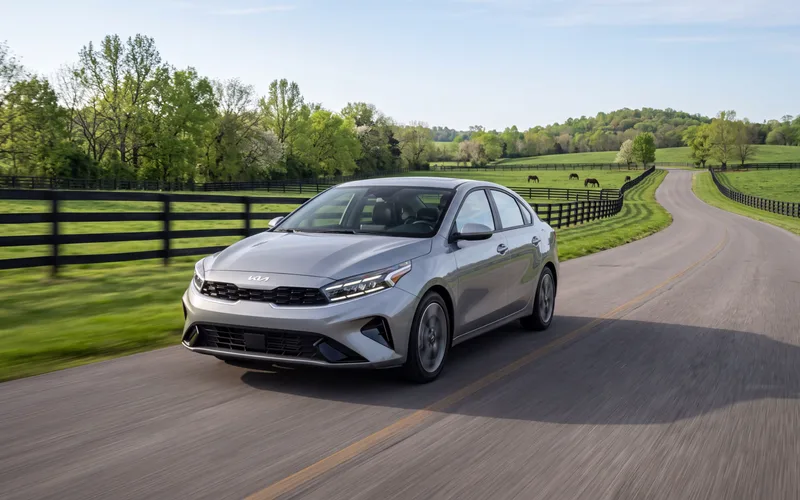 Kia K4Compact SedanBetter at: Interior and tech
Same dealer, same warranty, one model year newer — the K4 replaced the Forte with a far more modern cabin and 2.3 more inches of rear legroom for a modest step up in price.
Compare 2.13C
2.13C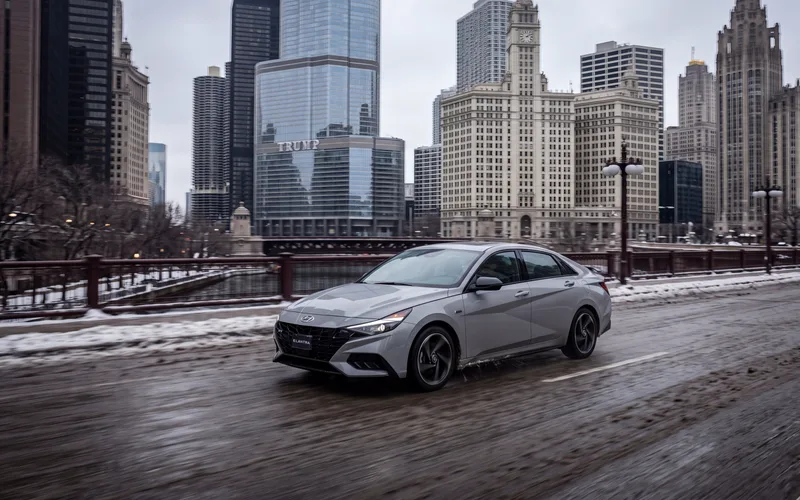 Hyundai ElantraCompact SedanBetter at: Rear space, hybrid
Nearly identical mechanicals and warranty, but with a genuinely roomier back seat and a 54-MPG hybrid version the Forte never offered.
Compare 2.40C+
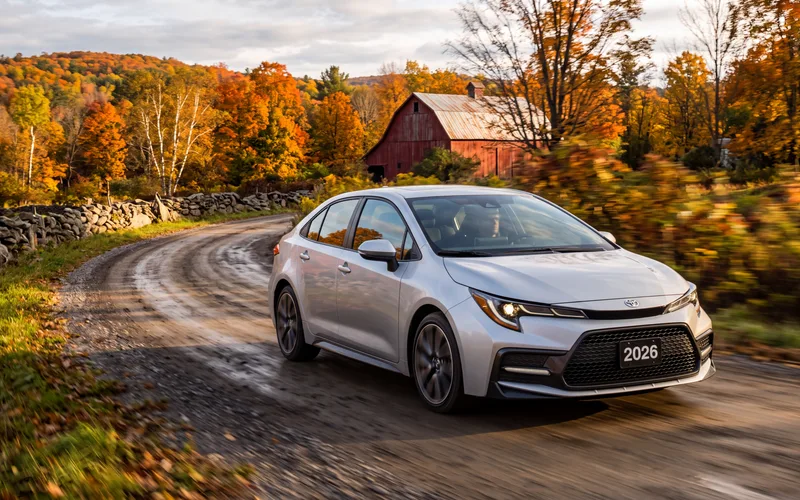 Toyota CorollaCompact SedanBetter at: Safety and efficiency
Costs a few thousand more but delivers Top Safety Pick crash results, an available hybrid and AWD, and the best long-term reliability record in the segment.
CompareHow it's evolved
8 scored model years · 2017–2024
Subject scores by year
Hover or tap a score to see what moved it versus the year before. A corner mark flags a big swing.
| Year | Performance | Efficiency | Safety | Space | Cost | Reliability | Tech | Use-case | Driving | Value |
|---|---|---|---|---|---|---|---|---|---|---|
| 2024 | 22 | 58 | 44 | 62 | 89 | 75 | 45 | 49 | 59 | 68 |
| 2023 | 21 | 56 | 45 | 61 | 90 | 72 | 45 | 49 | 59 | 67 |
| 2022 | 22 | 59 | 47 | 61 | 83 | 75 | 43 | 49 | 59 | 69 |
| 2021 | 24 | 60 | 47 | 59 | 85 | 74 | 35 | 48 | 59 | 68 |
| 2020 | 24 | 60 | 47 | 59 | 84 | 75 | 35 | 48 | 59 | 70 |
| 2019 | 22 | 63 | 47 | 59 | 86 | 69 | 34 | 48 | 61 | 72 |
| 2018 | 21 | 54 | 51 | 60 | 85 | 65 | 32 | 42 | 61 | 63 |
| 2017 | 22 | 54 | 49 | 60 | 85 | 64 | 29 | 42 | 61 | 66 |
Compare two years
Best fit & conditions
Higher scores mean a better fit for that use case. Learn more about use-case fit →
Subject profile
Academic Probation · NHTSA safety recalls
No NHTSA safety recall is on record for the 2024 Kia Forte. Other model years of the Forte have 10 — listed below.
10 recalls on other model years of the Forte (2017–2019, 2021–2023)
Apr 1, 2024Suspension: front: control arm: lower armThe right front lower control arm may have been improperly welded, which can cause it to fail.
Defect
Kia America, Inc. (Kia) is recalling certain 2023 Forte vehicles. The right front lower control arm may have been improperly welded, which can cause it to fail.
Risk
Front lower control arm failure can cause a sudden loss of steering control, increasing the risk of a crash.
Remedy
Owners are advised not to drive their vehicles until the repair has been performed. Dealers will replace the right front lower control arm, free of charge. Owner notification letters were mailed April 17, 2024. Owners may contact Kia customer service at 1-800-333-4542. Kia's number for this recall is SC306. This recall expands previous NHTSA recall number 23V-649.
NHTSA campaign 24V244000 ↗Manufacturer no. SC306215 vehicles potentially affected (all models in the campaign)Owners notified Apr 17, 2024Filed by Kia America, Inc.Filed as FORTESep 22, 2023Suspension: front: control arm: lower armThe right front lower control arm may have been improperly welded, which can cause it to fail.
Defect
Kia America, Inc. (Kia) is recalling certain 2023 Forte vehicles. The right front lower control arm may have been improperly welded, which can cause it to fail.
Risk
Front lower control arm failure can cause a sudden loss of steering control, increasing the risk of a crash.
Remedy
Owners are advised not to drive their vehicles until the repair has been performed. Dealers will replace the right front lower control arm, free of charge. Owner notification letters were mailed September 27, 2023. Owners may contact Kia customer service at 1-800-333-4542. Kia's number for this recall is SC283.
NHTSA campaign 23V649000 ↗Manufacturer no. SC2833,866 vehicles potentially affected (all models in the campaign)Owners notified Sep 27, 2023Filed by Kia America, Inc.Filed as FORTEDec 8, 2022Steering: linkages: knuckle: spindle: armDue to a manufacturing error, the front left steering knuckle may crack, which can result in a loss of steering control.
Defect
Kia America, Inc. (Kia) is recalling certain 2023 Forte vehicles. Due to a manufacturing error, the front left steering knuckle may crack, which can result in a loss of steering control.
Risk
A loss of steering control increases the risk of a crash.
Remedy
Dealers will inspect and replace the front left steering knuckle, as necessary, free of charge. Owner notification letters were mailed January 12, 2023. Owner may contact Kia customer service at 1-800-333-4542. Kia's number for this recall is SC259.
NHTSA campaign 22V906000 ↗Manufacturer no. SC259939 vehicles potentially affected (all models in the campaign)Owners notified Jan 12, 2023Filed by Kia America, Inc.Filed as FORTEMay 5, 2022Steering: columnA bolt in the steering column may not be secured properly, which can cause the steering column to detach from the steering rack and result in a loss of steering control.
Defect
Kia Motors America (Kia) is recalling certain 2021-2022 Rio and Forte vehicles. A bolt in the steering column may not be secured properly, which can cause the steering column to detach from the steering rack and result in a loss of steering control.
Risk
Loss of steering control can increase the risk of a crash.
Remedy
Dealers will tighten the lower steering column u-joint retention bolt, free of charge. Owner notification letters were mailed May 27, 2022. Owners may contact Kia customer service at 1-800-333-4542. Kia's number for this recall SC235.
NHTSA campaign 22V304000 ↗Manufacturer no. SC23530 vehicles potentially affected (all models in the campaign)Owners notified May 27, 2022Filed by Kia Motors AmericaFiled as FORTEJan 25, 2022Air bagsThe Air Bag Control Unit (ACU) cover may contact a memory chip on the printed circuit board and damage the electrical circuit. Circuit damage may result in deactivated air bags that will not deploy in a crash.
Defect
Kia Motors America (Kia) is recalling certain 2017-2019 Sedona, Soul, Soul EV, 2017-2018 Forte, and 2017 Forte Koup vehicles. The Air Bag Control Unit (ACU) cover may contact a memory chip on the printed circuit board and damage the electrical circuit. Circuit damage may result in deactivated air bags that will not deploy in a crash.
Risk
Air bags that do not deploy as intended can increase the risk of injury in a crash.
Remedy
Dealers will inspect the ACU, and either update the software or replace the unit, as necessary. Repairs will be performed free of charge. Owner notification letters were mailed March 21, 2022. Owners may contact Kia customer service at 1-800-333-4542. Kia's number for this recall is SC226.
NHTSA campaign 22V031000 ↗Manufacturer no. SC226410,619 vehicles potentially affected (all models in the campaign)Owners notified Mar 21, 2022Filed by Kia Motors AmericaFiled as FORTEAug 9, 2021Latches/locks/linkages: trunk lid: latchThe trunk latch may become damaged, preventing the opening of the trunk from the inside. As such, these vehicles fail to comply with the requirements of Federal Motor Vehicle Safety Standard number 401, "Internal Trunk Release."
Defect
Kia Motors America (Kia) is recalling certain 2016-2018 Forte 4-door, Forte Koup 2-door, and 2018-2019 Rio 4-door vehicles. The trunk latch may become damaged, preventing the opening of the trunk from the inside. As such, these vehicles fail to comply with the requirements of Federal Motor Vehicle Safety Standard number 401, "Internal Trunk Release."
Risk
A person inside the trunk compartment may become trapped, increasing their risk of injury.
Remedy
Dealers will replace the trunk latch assembly, free of charge. Owner notification letters were mailed on February 10, 2022. Owners may contact Kia customer service at 1-800-333-4542. Kia's number for this recall is SC216.
NHTSA campaign 21V622000 ↗Manufacturer no. SC216253,074 vehicles potentially affected (all models in the campaign)Owners notified Feb 10, 2022Filed by Kia Motors AmericaFiled as FORTEApr 13, 2021Engine and engine cooling: engine: oil/lubrication: pumpForeign particles may stick inside the oil pump, which may cause an oil pump failure and engine damage.
Defect
Kia Motors America (Kia) is recalling certain 2017-2018 Forte vehicles equipped with a 2.0L Nu MPI engine. Foreign particles may stick inside the oil pump, which may cause an oil pump failure and engine damage.
Risk
A damaged engine may stall, increasing the risk of a crash.
Remedy
Kia will notify owners, and dealers will replace the oil pan, free of charge. Owner letters were mailed August 16, 2021. Owners may contact Kia customer service at 1-800-333-4542. Kia's number for this recall is SC210.
NHTSA campaign 21V260000 ↗Manufacturer no. SC2104,069 vehicles potentially affected (all models in the campaign)Owners notified Aug 16, 2021Filed by Kia Motors AmericaFiled as FORTEMar 11, 2021Air bags: air bag/restraint control module · Air bags: sensor: occupant classification: front passengerThe Occupant Classification and Detection System (OCS/ODS) unit may not detect the presence of a child restraint system in the front passenger seat. As such, these vehicles fail to comply with the requirements of Federal Motor Vehicle Safety Standard (FMVSS) number 208, "Occupant Crash Protection."
Defect
Kia Motors America (Kia) is recalling certain 2021 Telluride, K5, and Forte vehicles. The Occupant Classification and Detection System (OCS/ODS) unit may not detect the presence of a child restraint system in the front passenger seat. As such, these vehicles fail to comply with the requirements of Federal Motor Vehicle Safety Standard (FMVSS) number 208, "Occupant Crash Protection."
Risk
In the event of a crash, deployment of the front passenger air bag, with a child in that seat, can increase the risk of injury to the child.
Remedy
Kia will notify owners, and dealers will replace the OCS/ODS unit, free of charge. The recall began March 18, 2021. Owners may contact Kia customer service at 1-800-333-4542. Kia's number for this recall is SC207.
NHTSA campaign 21V164000 ↗Manufacturer no. SC207142 vehicles potentially affected (all models in the campaign)Owners notified Mar 18, 2021Filed by Kia Motors AmericaFiled as FORTEAug 5, 2020Power train: axle assembly: axle shaftThe left front axle driveshaft may not have been heat-treated, which can cause it to break.
Defect
Kia Motors America (Kia) is recalling certain 2019 Forte vehicles. The left front axle driveshaft may not have been heat-treated, which can cause it to break.
Risk
A broken driveshaft can result in a sudden loss of drive power, increasing the risk of a crash.
Remedy
Kia will notify owners, and dealers will inspect the left front axle driveshaft for a heat treatment verification code, and replace it if the code is missing, free of charge. The recall began September 2, 2020. Owners may contact Kia customer service at 1-800-333-4542. Kia's number for this recall is SC195.
NHTSA campaign 20V459000 ↗Manufacturer no. SC195834 vehicles potentially affected (all models in the campaign)Owners notified Sep 2, 2020Filed by Kia Motors AmericaFiled as FORTEOct 31, 2018Exterior lighting: headlightsThe headlights may not have been manufactured with the correct low beam aiming. As such, these vehicles fail to comply with the requirements of Federal Motor Vehicle Safety Standard (FMVSS) number 108, "Lamps, Reflective Devices, and Associated Equipment."
Defect
Kia Motors America (Kia) is recalling certain 2019 Kia Forte vehicles equipped with LED headlights. The headlights may not have been manufactured with the correct low beam aiming. As such, these vehicles fail to comply with the requirements of Federal Motor Vehicle Safety Standard (FMVSS) number 108, "Lamps, Reflective Devices, and Associated Equipment."
Risk
If the headlights are not properly aimed, the driver may have reduced visibility, increasing the risk of a crash.
Remedy
Kia will notify owners, and dealers will inspect the headlight aiming and replace the headlights, as necessary, free of charge. The recall began November 30, 2018. Owners may contact Kia customer service at 1-800-333-4542. Kia's number for this recall is SC171.
NHTSA campaign 18V771000 ↗Manufacturer no. SC1711,754 vehicles potentially affected (all models in the campaign)Owners notified Nov 30, 2018Filed by Kia Motors AmericaFiled as FORTE
Source: NHTSA Office of Defects Investigation recall database, model years 2017–2024. Recalls are listed by model year as the manufacturer filed them; whether a specific car is affected depends on its VIN — check a VIN at nhtsa.gov ↗. NHTSA model names matched to this page: FORTE.
Detailed scoring by subject
1Performance & PowertrainThe Forte's lowest-graded category.0.00F
The volume 2024 Forte trims (LX, LXS, GT-Line) all use the 2.0L Atkinson-cycle MPI four rated at 147 hp @ 6,200 rpm; only the GT steps up to a 201 hp 1.6L turbo. Low for the sedan band, which spans economy compacts to 520 hp performance sedans.
132 lb-ft arriving high in the rev range is typical of a naturally aspirated Atkinson economy four and sits near the bottom of the sedan band. The GT's turbo more than doubles low-end pull but is not the volume configuration.
Instrumented tests of the 2.0L/IVT Forte bracket 8.2 s (Car and Driver) to 8.7 s (Edmunds), so ~8.5 s is the fair representative figure — average for a compact economy sedan and well off the pace of the segment's turbo and hybrid entries.
The 2.0L Atkinson four is smooth enough at light throttle for commuting but goes coarse and vocal when worked, and reviewers consistently describe the power delivery as adequate rather than eager. No lag to complain about, but no reserve either — a mid-pack result against Corolla and Civic, whose base engines are quieter under load.
Kia's IVT uses stepped ratios to mask the usual CVT drone and is better resolved than most belt-drive units, but reviewers flag surging: it drops revs too eagerly on partial lift-off. The GT's 7-speed DCT and the GT's available 6-speed manual are genuinely satisfying, though neither is the volume transmission.
Front-wheel drive only across the entire 2024 Forte range — no all-wheel-drive option was ever offered on any trim, which is normal for the class but scores at the floor of this item.
Two distinct gas engines (147 hp 2.0L NA and 201 hp 1.6L turbo) and three transmissions including a still-available 6-speed manual on the GT — more choice than a single-powertrain economy car, but with no hybrid, PHEV or EV variant in the US lineup for its final model year. Rivals like the Elantra and Corolla both offered hybrids by 2024.
2Efficiency & RangeMid-pack among this car's ten categories.1.87C-
The volume LXS runs the 147-hp 2.0L Atkinson MPI four through Kia's IVT for 32 mpg combined — decent for an unelectrified compact in the Forte's final model year, but the whole segment moved past it, with the Civic, Corolla and Elantra all offering hybrids in the 50s.
28 mpg in town is the Forte's weakest efficiency number and the clearest cost of having no electrified variant — a hybrid Elantra or Corolla roughly doubles it in exactly the stop-start driving where the electric motor does the most work.
Highway is where the Forte flatters itself: the Atkinson-cycle 2.0L and tall IVT ratios return 39 mpg at a cruise, competitive with any non-hybrid compact sedan and the reason its real-world average depends heavily on the kind of miles driven.
A 14.0-gallon tank at 32 mpg combined gives 448 miles between fills — a full day of driving and slightly better than the smaller-tanked Elantra, but nowhere near the 550–650 miles the segment's hybrids manage.
EPA puts the Forte's yearly fuel bill at $1,900 on standard assumptions — cheap next to an SUV or truck, but a couple hundred dollars a year more than a 35-mpg Corolla and roughly $700 more than a compact hybrid, which is real money against a car whose whole pitch is low running cost.
Every 2024 Forte, turbo GT included, is specified for 87-octane regular — no premium penalty on the quick trim, no diesel or E85 complication, nothing to plug in or plan around. Held below the top of the band only because a home-charged EV or plug-in still costs far less per mile.
3SafetyOne of the Forte's weakest categories.0.95F
NHTSA rated the 2024 Forte 4 stars overall, held down by a 4-star frontal result that includes only 3 stars for the front passenger; side impact is a clean 5 stars.
The final-year Forte earns no IIHS award and posts Poor results in both of the Institute's current crashworthiness tests — the updated moderate overlap front (rear-passenger head/neck Poor, chest Marginal) and the updated side test (structure Marginal, driver torso and pelvis Poor, head contacting the window sill through the curtain airbag). The legacy Good ratings in small overlap front, driver and passenger, are the only bright spot.
Core prevention is standard on every trim — Forward Collision-Avoidance Assist with pedestrian detection, Lane Keeping Assist, Lane Following Assist (true lane centering), Lane Departure Warning and Driver Attention Warning — but the volume LXS has to pay $500 for blind-spot and rear cross-traffic, the base LX cannot get them at all, and adaptive cruise is not offered on either lower trim.
IIHS rates the Forte's pedestrian front crash prevention Marginal: it avoids the 12 mph daytime crossing-child target, but nighttime performance collapses, shaving only 1–4 mph off a 12 mph crossing-adult impact. The vehicle-to-vehicle test is no longer rated for this model year.
When equipped the hardware is good for the class — blind-spot collision-avoidance with steering intervention, rear cross-traffic with automatic braking and Safe Exit Assist — but it is a $500 option on the volume LXS and simply unavailable on the base LX, so a meaningful share of Fortes leave the lot without any blind-spot coverage.
Lane Following Assist — genuine lane centering, not just a departure nudge — is standard on all four trims, which is more than most economy compacts gave in 2024. Kia's tuning is competent but reviewers note it wanders on faded markings and hands off assertively rather than smoothly.
The volume LX and LXS trims get conventional cruise control only — adaptive cruise cannot be ordered at any price. Step up to GT-Line or GT and the full-speed Smart Cruise Control with Stop & Go, navigation-based SCC and Highway Driving Assist is standard and works well, though owners report sluggish resume after a lane change.
No hands-free highway system is offered on any 2024 Forte trim; Highway Driving Assist is a hands-on lane-centering aid that requires steering-wheel torque.
Every headlight variant IIHS tested on the 2024 Forte rates Poor, with visibility described as inadequate on curves and no curve-adaptive function or high-beam assist offered anywhere in the range.
Forward and side sightlines are respectable for a compact sedan with a low cowl, but the Stinger-inspired fastback roofline, thick C-pillars and shallow rear glass pinch the over-the-shoulder view, and camera compensation stops at the standard rear-view monitor — no 360-degree camera is offered on any trim.
IIHS rates LATCH ease of use Acceptable — two full sets of lower anchors in the outboard rear seats plus three top tethers — but the lower anchors sit too deep in the seat bight to reach easily, and the Forte's modest rear knee room makes a rear-facing seat behind a tall driver a squeeze.
4Space & ComfortMid-pack among this car's ten categories.2.16C
The third-generation (BD) Forte sedan is a conventional five-passenger compact on every 2024 trim, with a 60/40-split folding rear bench.
Front headroom is a genuine strength for a car with the Forte's low, Stinger-inspired fastback roofline — comfortably above the compact-sedan midpoint, though the optional sunroof takes a meaningful bite out of it.
Front legroom is squarely class-average — a tenth behind the Civic and Elantra (both 42.3 in) and two-tenths ahead of the Corolla, with no trim-to-trim variation.
Rear headroom holds up better than the sloping roofline suggests, edging the Civic (37.1 in) and Elantra (37.3 in) — the Forte's back-seat weakness is legroom, not head clearance.
The clearest space deficit in the car: 35.7 in trails the Civic (37.4 in) and Elantra (38.0 in) by well over an inch, a consequence of the cab-rearward BD packaging that buys trunk and style at the back seat's expense.
A 15.3 cu ft trunk is above the compact-sedan average and one of the practical upsides of the Forte's short-decklid-but-deep-well packaging; the split-folding rear seat extends it for long items.
Everyday storage is competent but conventional — usable console bin, door pockets, front cupholders and a covered tray, with wireless charging only from GT-Line up. Nothing here is a segment innovation, and the low-slung cabin limits bin depth.
Reviewers consistently praise the Forte's seat shaping and unobtrusive headrests for long stints, front and rear. The ceiling is set by adjustability: the volume LXS gets a 6-way manual driver's seat with no lumbar adjustment, and the 10-way power seat is restricted to GT-Line/GT.
The weakest comfort trait. The torsion-beam rear axle and firm tune handle small imperfections acceptably but get shaken up by larger bumps, with reviewers singling out the rear suspension over uneven pavement — noticeably behind the Civic and Elantra for compliance.
Noise isolation is a relative bright spot for an economy compact — road roar is well suppressed and wind and ambient noise stay mild at highway speed, though the 2.0L IVT powertrain drones under hard acceleration and there is no acoustic glass or active noise cancellation.
Sparse where most buyers shop. The volume LX/LXS trims get single-zone manual A/C with no heated seats; dual-zone automatic climate arrives on GT-Line, heated front seats only via GT-Line Premium/Sport Premium packages and GT, and ventilated seats plus rear cooling ducts are top-trim items. No remote pre-conditioning beyond remote start.
5Cost of OwnershipThe Forte's best-graded category.4.00A+
In its final model year the Forte LX was one of the two or three cheapest new cars sold in America and undercut every compact-sedan rival — the Elantra SE, Civic LX, Corolla LE and Sentra S all started higher. At $19,990 before freight it sits well below the floor of the sedan pricing band, so it maxes this item outright.
The LXS is the Forte's best-selling trim and adds the 8-inch touchscreen with wireless CarPlay/Android Auto, alloy wheels and cruise control over the LX for $500. Even loaded, the turbo GT tops out under $27,000 — the entire ladder sits below the bottom of the sedan band, which is the single strongest thing about owning this car.
Running costs are among the lowest in the segment: the volume LXS uses the naturally aspirated 2.0L Nu MPI four with the IVT — a simple, high-volume, non-turbo drivetrain on 16-inch wheels, with cheap parts and a dense dealer network. The figure sits above the raw scheduled-maintenance estimates because it budgets tires, brakes and unscheduled repairs, and because Kia includes no complimentary maintenance in the US, so the owner pays from the first oil change.
Residuals are unusually strong for a value-brand compact — the Forte is one of Kia's best value-holders and the low entry price means it depreciates from a low base, so absolute dollar loss is small. The figure is set a couple of points below the published estimates because 2024 is the nameplate's final model year: the Forte was discontinued and replaced by the K4 for 2025, and orphaned badges typically shed a little residual over a five-year horizon.
Kia's 5-year/60,000-mile basic coverage tops the band outright and is two full years longer than the 3/36 offered by Honda, Toyota, Mazda, Nissan and VW. It is brand-wide and applies across the whole 2024 Forte range.
The 10-year/100,000-mile powertrain warranty is the ceiling of the segment band and double what Honda and Toyota provide. It covers the original purchaser only — subsequent owners drop to 5 yr/60,000 mi — but for a first buyer it is best-in-class, and it matters more than usual on a discontinued nameplate.
This is where Kia hands back part of its warranty lead: unlike Hyundai's 3 yr/36,000 mi plan or ToyotaCare's 2 yr/25,000 mi, Kia includes no complimentary scheduled maintenance in the US, so the Forte owner pays for the first oil change. What is included is decent but conventional — 5 years/60,000 miles of 24/7 roadside assistance, and a 12-month Kia Connect trial on equipped trims (the 3-year trial only arrived with the 2025 model year), which puts it in the 'basic roadside only' band.
$21,645 volume-trim price minus its estimated resale value after 5 years (59% retained, or about $12,771) leaves about $8,874 in depreciation. Add the projected $3,900 in 5-year maintenance and repairs, and owning this vehicle for 5 years costs about $12,774 in total.
6Reliability & QualityOne of the Forte's strongest categories.3.08B
2024 is the sixth and final model year of the third-generation (BD) Forte, and that maturity shows: J.D. Power gives the 2024 car a predicted reliability score of 87/100, which sits in its "Great" 81-90 band, and Consumer Reports both expects about-average reliability and lists the Forte LXS as a recommended best buy scoring just under the Corolla. The two sources disagree in degree rather than direction — J.D. Power is enthusiastic, CR is merely satisfied — so this lands in the upper half of the mixed-signal band rather than in the 80+ top-tier reserved for the Corolla/Civic pair, with the IVT shudder complaint theme carried by this generation the main thing keeping it there.
Kia is the strongest of the mainstream Korean badges on dependability measures and was the top-ranked mass-market brand in J.D. Power's Vehicle Dependability Study three years running (2021-2023) — the window that directly covers a 2024-model-year buyer's expectations. More recent data is good but not exceptional: the 2025 VDS puts Kia 11th of 30 brands at 196 PP100, marginally better than the 202 study average, and Consumer Reports places the brand around 7th-9th of 22 for predicted reliability. That is a consistently above-average, never top-five-across-the-board record, which is exactly the upper-mid band.
The 2024 model year itself is clean — no NHTSA safety recalls have been issued against it, which is unusual and reflects a body-on-its-way-out being built to a fully debugged process in its final year. What holds this out of the 80+ band is the generation-level TSB record rather than the model year's: the 2019-2024 Forte carries a persistent IVT shudder/hesitation service theme, and this car also sits inside the broader Kia population that drew the immobilizer-theft campaigns, though the 2024 car ships with an immobilizer as standard and is not part of the affected build range.
The volume trim's engine is the quiet strength here — the 2.0L Nu/Smartstream MPi four (147 hp) is a low-stress, port-injected Atkinson-cycle unit that sidesteps both the intake-valve carbon buildup that afflicts direct-injected rivals and the Theta II engine family behind Kia's worst durability campaigns, and it has years of high-mileage service across Forte, Elantra, Kona and Seltos. The offset is the transmission: the IVT is a chain-driven CVT that rates below a conventional planetary automatic on long-haul durability reputation, and it earned a real shudder complaint theme early in this generation. The 2022-2024 cars run the most refined version of that IVT, which is why this scores a point above the same drivetrain in its newer K4 and Elantra applications rather than below.
Reviewers consistently rate the Forte's cabin design and layout as among the better efforts in the compact class, but they are equally consistent that the materials do not back the design up: hard black and chrome-painted plastic is common throughout, and the volume LX/LXS trims in particular wear a lot of it, with soft-touch surfaces and metallic trim reserved for higher trims. By 2024 the design is also six years old and was visibly outclassed on materials by the K4 that replaced it, which is why this sits below the segment's mid-band rather than in it.
Assembly quality is where the Forte outperforms its materials. Reviewers describe a well-built, quiet, nicely finished cabin with no rattle or panel-alignment complaint theme, and a final-year car from a plant that had been building this exact body since 2018 benefits from six years of process maturity — the opposite of the early-production variation risk that holds its K4 successor down. Kia's strong showing in initial-quality measures relative to its dependability placement supports the same read.
Kia's roughly 775-800 US franchised dealers cover metro and suburban markets adequately but leave a thinner rural footprint than Toyota, Honda, Ford or Chevrolet, and service satisfaction is the weak spot rather than the coverage: Kia slipped in the 2024 J.D. Power Customer Service Index and sits below the mass-market leaders. The industry-leading 10-year/100,000-mile powertrain warranty materially lowers the cost of using that network, but Kia — unlike Hyundai — includes no complimentary scheduled maintenance in the US, so routine visits are paid from day one.
This is the Forte's strongest showing in the category and it is backed by hard cost data rather than inference: RepairPal puts average annual repair and maintenance at $451 against a $526 compact-car average, with unscheduled shop visits running below segment norms, and ranks the nameplate 6th of 36 compact cars. Six model years of high-volume production plus deep Hyundai-Kia component sharing (the 2.0L MPi and IVT are common to Elantra, Kona and Seltos) mean OEM mechanical parts are cheap and abundant, independent shops know the car, and by 2024 the salvage pool for body and trim pieces is deep — the exact advantage its two-year-old K4 successor does not yet have.
7Technology & InfotainmentOne of the Forte's weakest categories.1.01D
The volume LXS carries the 8-inch touchscreen audio display unit shared with the base LX; the 10.25-inch navigation unit is reserved for GT-Line and GT, two trims and $2,000 above the volume car. Eight inches was competitive when this generation launched for 2019 and is at the bottom of the compact-sedan range by 2024.
This is the Forte's clearest tech strength and the reason it does not simply sink to the bottom of the class: Kia's pre-ccNC software is fast, logically laid out, and — unlike the touch-capacitive systems replacing it — keeps a full set of physical knobs and hard buttons for audio and climate. Reviewers repeatedly call the 10.25-inch version one of the best systems available at this price, and the 8-inch unit on the volume trim runs the same uncluttered menu structure with crisp graphics and no perceptible lag. The screen is small and the graphics are six years old, which is what keeps it out of the 80+ band.
The Forte inverts the usual trim logic in the volume buyer's favor: wireless Apple CarPlay and Android Auto are standard on the 8-inch system fitted to LX and LXS, so the volume trim gets phone projection with no cable at all. The catch is that stepping up to the 10.25-inch navigation unit on GT-Line and GT loses it — that system is wired-only. So the feature is standard where most Fortes are sold but genuinely unavailable at the top of the range, which rules out the 80+ band reserved for wireless across all trims.
The volume LXS has no built-in navigation at all — its 8-inch unit is an audio display, and native maps arrive only with the 10.25-inch AVNT system on GT-Line and GT. Voice control on the volume trim is the older embedded command-word recognizer (steering-wheel button, fixed phrases for phone, radio and media) rather than a natural-language assistant, and without a modem there is no cloud-backed voice or online search. Owners route around both through the wireless phone projection, which is the more capable option here.
The volume LXS is better served than the base car — six speakers including tweeters rather than the LX's four — and delivers unremarkable but inoffensive sound for the money. A real branded premium option exists in the 320-watt Harman Kardon eight-speaker system with subwoofer and Clari-Fi, but it sits on GT-Line and GT only and is bundled in a package rather than offered on the volume trim, so most Forte buyers cannot reach it. Adequate base audio plus a modest, trim-gated upgrade is the middle band.
Every 2024 Forte, LX through GT, uses the same 4.2-inch TFT LCD Supervision cluster flanked by physical analog dials — there is no full-digital cluster anywhere in the lineup and no larger screen to step up to. The display itself is clear and configurable within its small footprint, but 4.2 inches in an analog binnacle is 2018-era hardware, and unlike the Corolla the Forte offers no 7-inch upgrade on upper trims. That absence of any upgrade path is what places it below the partial-digital band rather than inside it.
The Forte's AVNT head unit predates Kia's ccNC platform, which is where the brand's over-the-air update program actually lives, and no whole-vehicle OTA capability reaches this car. Map and firmware updates are distributed as downloads the owner writes to a USB stick from Kia's navigation update site. On the volume LXS the point is moot in a stronger way — with no integrated modem fitted, the car has no data connection at all, so not even map OTA is possible; only GT-Line and GT carry the modem. This is the item where a final-year 2018-generation platform costs the Forte the most.
The Kia Access / Kia Connect app itself is a capable piece of software — remote start with climate preconditioning, remote lock and unlock, find-my-car, vehicle status and stolen-vehicle tracking — but on this car it is gated behind hardware, not just a subscription. Only GT-Line and GT ship the integrated modem, so the volume LXS has no telematics whatsoever and no factory remote start; owners who want it buy a dealer-installed key-start remote-start kit. Where the app does work it comes with a one-year Kia Connect Ultimate trial and then runs $99-149 a year. A polished app the volume buyer cannot use is a low-band outcome.
Port provision on the volume LXS is thin and dated: a front USB multimedia port plus a front center-console charge port, both USB-A rather than USB-C, with the rear center-console charger only an option at this trim level. Wireless phone charging is not available on LX or LXS at all — it arrives with the GT-Line Premium package. There is no household AC outlet. USB-A in 2024, when rivals had moved to USB-C front and rear as standard, is the outdated-ports case the low band describes.
The volume LXS starts with a key you turn. Proximity entry, push-button start and the Smart Trunk hands-free opening are all GT-Line-and-above equipment, so the volume buyer gets a keyless-entry fob for the doors and a conventional ignition cylinder — the exact configuration the low band is written for. There is no phone-as-key on any trim and no factory remote start below GT-Line. That the features exist two trims up keeps this at the top of the low band rather than the bottom.
A rear-view camera is standard across the range because federal rule requires it, and its resolution is ordinary for an economy compact. Beyond that the Forte offers very little: rear Parking Distance Warning appears on GT-Line and GT rather than being standard, no surround-view or 360-degree camera is offered on any 2024 trim, and there is no automated parking of any kind. Rear camera only, with sensors as an upper-trim item and no 360 available anywhere, sits in the low band.
No head-up display was ever offered on the third-generation Forte, on any trim or in any package, and 2024 — the nameplate's final model year — did not add one. This is unremarkable for a $20,000 compact sedan; almost nothing in the segment offers a HUD, which is why the class as a whole clusters in the low teens on this item rather than the Forte being singled out.
8Use-Case FitGrades below the middle of the scale.1.29D
The trunk is the Forte's family trump card — 15.3 cu ft is the largest of any mainstream compact sedan and swallows a full-size stroller with room for groceries — and the LXS adds the 60/40 split-folding rear seatback the base LX does not get. Against that, 35.7 in of rear legroom is well short of the 38.0 in the Elantra and K4 offer, so a rear-facing seat crowds the front passenger, and IIHS rates LATCH only Acceptable because the lower anchors sit too deeply in the seat bight to reach without digging.
The weakest family-safety case among the mainstream compact sedans. Every trim gets forward collision-avoidance with pedestrian detection, lane keeping, lane following and rear occupant alert as standard, but the volume LXS pays $500 for blind-spot and rear cross-traffic (the LX cannot get them at any price) and adaptive cruise is unavailable below GT-Line. Crash credentials are the real problem: Poor in both of the IIHS tests that currently matter, Poor headlights on every variant tested, and a 3-star NHTSA front-passenger result inside a 4-star overall.
Four adults and their luggage travel without negotiation thanks to that 15.3 cu ft trunk, well-shaped seats and better-than-expected noise isolation for an economy compact. The back seat is where it thins out: 35.7 in of legroom under a 37.5 in fastback roofline, single-zone manual A/C with no rear vents on the volume LXS (rear ducts arrive only with the GT-Line Sport Premium package or the GT), rear USB charging likewise optional at best, and a torsion-beam rear axle that gets unsettled by bigger bumps on a long haul.
Commuting is what the Forte is built for and mechanically it delivers — light steering, a 182.7 in footprint, a class-tight 34.8 ft turning circle, an IVT that creeps and shuffles smoothly in stop-and-go, and real physical climate and audio controls rather than touch panels. The ceiling is equipment: the volume LX and LXS cannot be ordered with Smart Cruise Control at any price, so the single feature that most reduces traffic fatigue is off the table, there are no heated seats, and the 2.0L drones when the IVT holds revs on an on-ramp.
Cheap to buy and cheap to run: 32 MPG combined on regular unleaded for roughly $1,900/yr at 15,000 miles, 34 MPG on the base LX, ordinary 16-inch tires, and the lowest entry price in the class at $21,145 — the acquisition cost is itself part of the per-mile math. What holds it back from the top of the class is the absence of any hybrid Forte: the Corolla Hybrid's 53 MPG city and the Elantra Hybrid's 54 combined are in a different cost bracket, and 28 MPG city is only average where commuting miles are actually spent.
One of the easiest cars in the class to place: at 182.7 in it is shorter than the Elantra (184.1) and K4 (185.4), and its 34.8 ft turning circle is tighter than the Corolla's 35.6, the Sentra's 37.3 and the K4's 36.5. A rearview camera is standard on every trim. The limits are the fastback roofline's thick C-pillars and shallow rear glass, and the fact that rear parking sensors and a surround-view camera are absent from the volume trims — the Sentra's available 360-degree monitor has no answer here.
Not a work vehicle in any sense. Kia publishes no US tow rating for the Forte on any trim and explicitly does not recommend it for towing; there is no bed, no payload figure, and hauling is confined to the 15.3 cu ft trunk with the rear seat folded. A 147 hp naturally aspirated four driving the front wheels through an IVT has no load-carrying headroom to give.
The engine side of the case is decent — the Nu 2.0L MPI is a simple, high-volume, port-injected four with a cheap parts supply, backed by 10-year/100,000-mile powertrain coverage for the original owner, and the Forte is a rental-fleet and rideshare staple with wear-friendly cloth interiors on LX and LXS. The IVT is the question mark under sustained abuse (earlier applications drew jerky-operation and premature-wear complaints), oil consumption is a known 2.0L MPI grumble, and nothing about the car is engineered for hard-use duty cycles.
Almost nothing work-oriented. There is no 120V AC inverter, no factory tow package, no washable load floor and no commercial upfit ecosystem — power provision stops at 12V sockets and USB. The genuine-accessory catalog is the only credit: roof rack cross bars rated for 165 lb of evenly distributed load, plus cargo hooks, a net and an all-weather trunk tray, and the 60/40 folding rear seatback passes long items through from the trunk.
Range is fine — roughly 448 miles combined from the 14.0-gallon tank and about 546 at the highway rating, so a full day's driving passes on one cheap fill — and the seats are well shaped with unobtrusive headrests while road and wind noise stay mild for an economy compact. Two things cap it below the class tourers: the volume LXS gets a 6-way manual driver's seat with no lumbar adjustment and cannot be optioned with Smart Cruise Control or Highway Driving Assist at all, so the interstate hours are worked rather than supervised, and the firm torsion-beam rear end plus IVT drone wear on you by hour four.
Pavement-bound. The Forte is front-wheel drive only with no AWD anywhere in the range — a straight deficit against the Corolla, which offers it — and 5.3 in of ground clearance, no tow rating, no skid plates and no off-pavement drive modes rule out anything past a graded fire road. The one thing that lifts it above the Elantra and K4 here is a genuine 165 lb roof crossbar kit, which makes bikes, a box or a kayak an actual factory-supported option.
The best pure trunk in the mainstream compact-sedan class — 15.3 cu ft beats the Civic's 14.8, the K4's 14.6, the Sentra's 14.3 and the Elantra's 14.2 — with a deep well, a 60/40 split-folding rear seatback from LXS up for skis or lumber, and factory crossbars to extend capacity to the roof. What it cannot do is change shape: the Stinger-inspired fastback leaves a short decklid and a narrower trunk aperture than the volume figure implies, there is no hatch, no underfloor bin and no hitch for a cargo carrier.
9Driving ExperienceMid-pack among this car's ten categories.1.95C-
Secure and willing but not a class leader: the volume LX/LXS/GT-Line trims ride on a McPherson-strut front and coupled torsion-beam rear on 16-inch wheels, and only the GT gets the multi-link rear, larger brakes and 18s. Critics split — Consumer Reports found it genuinely agile, Edmunds and U.S. News found it unremarkable — and by 2024 the BD-generation Forte was the oldest design in a class where the Mazda3 and Elantra handle better.
Electric rack-and-pinion at a quick 12.7:1 ratio, so it is precise enough to place the car accurately, but reviewers consistently fault it for numbness and — the specific demerit that pulls it below its Elantra and K4 peers — vague on-center feel at highway speeds.
Adequate hardware for a light compact — 11.0 in ventilated front / 10.3 in solid rear discs on the volume trims — with no reviewer complaints about fade, long stops or pedal tuning, but also no standout instrumented result for the 2.0L car. The GT's larger 12.0/11.2 in setup stops the turbo model in a tested 122 ft from 60 mph, which is not the volume configuration.
The 147 hp 2.0L Atkinson four paired with Kia's IVT is unobjectionable at light throttle, but the calibration has a named flaw: the transmission drops revs too eagerly on partial lift-off, producing surging power delivery. Response is adequate rather than crisp, and there is no reserve when the engine is asked to work.
The weakest part of how this car drives. The naturally aspirated four goes coarse and buzzy when extended — a trait the IVT aggravates by holding revs — and thin sound deadening lets it into the cabin, with Consumer Reports calling the interior extremely loud even against a segment that is not quiet to begin with.
34.8 ft curb-to-curb, identical across every 2024 trim, sits at the tight end of the compact-sedan band and makes the Forte genuinely easy to park and U-turn — the standout everyday-drivability trait of the car.
The control layout is a real strength — logically clustered physical buttons and knobs, an easily reached touchscreen, and a tilt/telescoping column standard — and headroom and legroom are good for the size. What holds it back is the volume trim itself: the LXS gets a manually adjusted seat with no power adjustment or lumbar support, and reviewers single those seats out as uncomfortable.
Pleasant but forgettable in the configuration most buyers took home: 8.2–8.7 sec to 60 mph, numb steering and a droning IVT add up to competent transportation rather than character. The enthusiast case for the Forte lives entirely in the 201 hp GT with its six-speed manual and sport exhaust, a low-volume trim that is not what this scorecard describes.
10Value & Market PositionOne of the Forte's strongest categories.2.60C+
At $19,990 the LX undercuts every compact-sedan rival while still including an 8-inch touchscreen with wireless Apple CarPlay/Android Auto and a full standard ADAS set (FCA with pedestrian detection, LKA, LFA, LDW, driver attention warning). What holds it back is how basic the rest of the base car is: 15-inch steel wheels, a fixed rear bench with no split-fold, manual air conditioning, and blind-spot monitoring not even available on LX.
The Forte was the cheapest compact sedan on sale in 2024 — roughly $2,000–$4,000 under a comparably equipped Civic or Corolla — while delivering class-leading interior room, 41 mpg highway and Kia's 10-year/100,000-mile powertrain warranty. Reviewers consistently framed it as the segment's bargain, and the 201-hp GT at $24,690 is genuine performance-per-dollar.
Five orderable configurations spanning $19,990 to $25,390 across two engines (2.0L IVT and 1.6T DCT) with a six-speed manual still offered on the GT — unusually broad for a 2024 compact sedan. Gaps are the absence of any hybrid or AWD option, both of which rivals used to reach buyers the Forte cannot.
The nameplate posted its strongest years right at the end — 123,953 US units in 2023 and 128,966 in 2024 (the latter including early K4 deliveries) — putting it solidly in the segment's top tier. It still trailed the Corolla and Civic by roughly 100,000 units a year, so it was a strong seller rather than the leader.
Kia's image in 2024 was far stronger than a decade earlier — top-tier initial-quality results, an award-winning design language and resale values now rated better than average — but it remains a value brand rather than an aspirational one, and the wave of publicity around Kia theft vulnerability on immobilizer-less models of this era dented perception for exactly this class of car.
Buyers had real money on the table throughout 2024: $1,000 customer cash or 3.99% APR for 60 months against an average new-car rate near 6.8%, with additional run-out discounting as the K4 replacement arrived. That is meaningful benefit without the vehicle being dumped at desperation pricing.
2024 is the last model year of the third-generation (BD) Forte, a platform launched for 2019 and facelifted for 2022 — six years old and already superseded, since Kia replaced it with the all-new K4 for 2025. A 2024 buyer was knowingly purchasing a run-out car whose successor was public before the year ended.
Reviews were positive but qualified — U.S. News scored it 8.5/10 and KBB ranked it #6 among compact cars, praising space, economy and price while noting a coarse engine, numb steering and cheap cabin materials. It was almost never the winner of a comparison test, and the 2024 car's Poor IIHS results in the updated moderate-overlap and side tests plus Poor headlights kept it off the Top Safety Pick list that rivals earned.