
The verdict
A struggling compact sedan, strong on ownership and held back by performance.
The 2021 Kia Forte is a cheap, well-built way into a new-ish compact sedan. It cost about $20,400 delivered as the volume LXS, gets 40 MPG on the highway, and comes with a 10-year/100,000-mile powertrain warranty that runs to 2031 for original owners. The trade-offs are a slow 147-hp engine, a thin tech and safety kit on the volume trim (Poor-rated halogen headlights and no blind-spot warning), and a tight back seat. It suits buyers who want low running costs, and it will disappoint anyone who wants a quick, quiet or well-equipped car.
Jump to scoresStrengths
- Very low price and cost to own
- Class-leading warranty
- Solid build quality and cheap repairs
What holds it back
- Slow volume powertrain
- Dated tech on the trims most people buy
- Safety gaps outside the top trims
Top alternatives
Cars shoppers cross-shop with the Kia Forte 2.19C
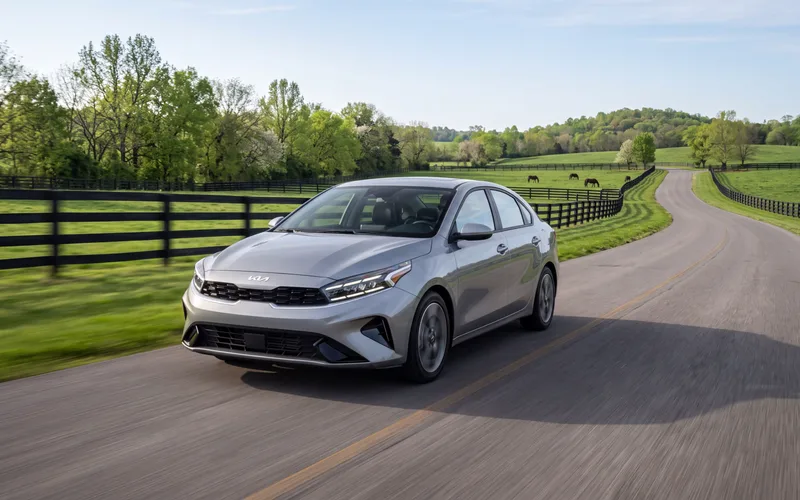 Kia K4Compact SedanBetter at: Interior and tech
Same dealer, same warranty, one model year newer — the K4 replaced the Forte with a far more modern cabin and 2.3 more inches of rear legroom for a modest step up in price.
Compare 2.13C
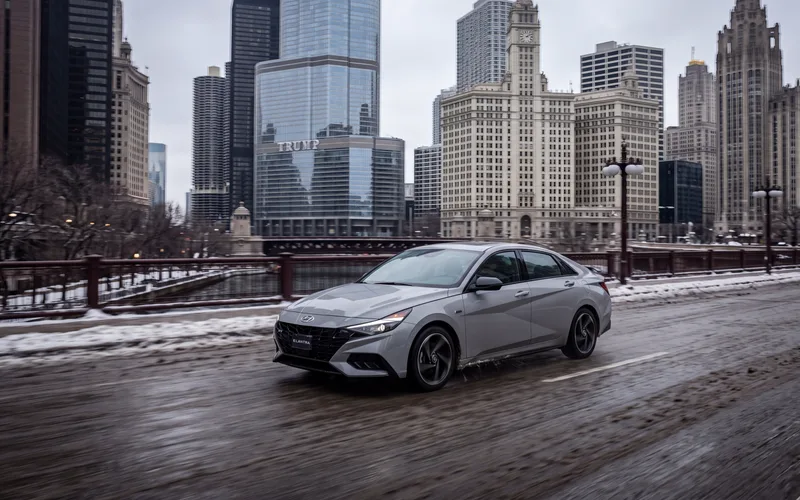 Hyundai ElantraCompact SedanBetter at: Rear space, hybrid
Nearly identical mechanicals and warranty, but with a genuinely roomier back seat and a 54-MPG hybrid version the Forte never offered.
Compare 2.40C+
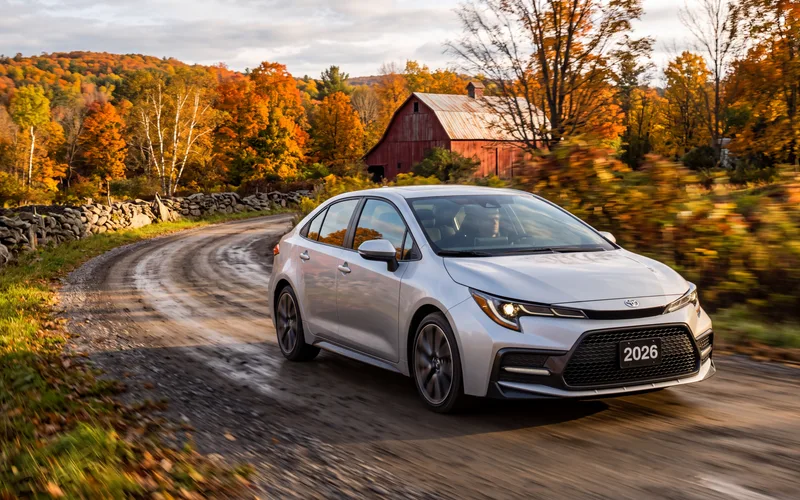 Toyota CorollaCompact SedanBetter at: Safety and efficiency
Costs a few thousand more but delivers Top Safety Pick crash results, an available hybrid and AWD, and the best long-term reliability record in the segment.
CompareHow it's evolved
8 scored model years · 2017–2024
Subject scores by year
Hover or tap a score to see what moved it versus the year before. A corner mark flags a big swing.
| Year | Performance | Efficiency | Safety | Space | Cost | Reliability | Tech | Use-case | Driving | Value |
|---|---|---|---|---|---|---|---|---|---|---|
| 2024 | 22 | 58 | 44 | 62 | 89 | 75 | 45 | 49 | 59 | 68 |
| 2023 | 21 | 56 | 45 | 61 | 90 | 72 | 45 | 49 | 59 | 67 |
| 2022 | 22 | 59 | 47 | 61 | 83 | 75 | 43 | 49 | 59 | 69 |
| 2021 | 24 | 60 | 47 | 59 | 85 | 74 | 35 | 48 | 59 | 68 |
| 2020 | 24 | 60 | 47 | 59 | 84 | 75 | 35 | 48 | 59 | 70 |
| 2019 | 22 | 63 | 47 | 59 | 86 | 69 | 34 | 48 | 61 | 72 |
| 2018 | 21 | 54 | 51 | 60 | 85 | 65 | 32 | 42 | 61 | 63 |
| 2017 | 22 | 54 | 49 | 60 | 85 | 64 | 29 | 42 | 61 | 66 |
Compare two years
Best fit & conditions
Higher scores mean a better fit for that use case. Learn more about use-case fit →
Subject profile
Academic Probation · NHTSA safety recalls
May 5, 2022Steering: columnA bolt in the steering column may not be secured properly, which can cause the steering column to detach from the steering rack and result in a loss of steering control.
Defect
Kia Motors America (Kia) is recalling certain 2021-2022 Rio and Forte vehicles. A bolt in the steering column may not be secured properly, which can cause the steering column to detach from the steering rack and result in a loss of steering control.
Risk
Loss of steering control can increase the risk of a crash.
Remedy
Dealers will tighten the lower steering column u-joint retention bolt, free of charge. Owner notification letters were mailed May 27, 2022. Owners may contact Kia customer service at 1-800-333-4542. Kia's number for this recall SC235.
NHTSA campaign 22V304000 ↗Manufacturer no. SC23530 vehicles potentially affected (all models in the campaign)Owners notified May 27, 2022Filed by Kia Motors AmericaFiled as FORTEMar 11, 2021Air bags: air bag/restraint control module · Air bags: sensor: occupant classification: front passengerThe Occupant Classification and Detection System (OCS/ODS) unit may not detect the presence of a child restraint system in the front passenger seat. As such, these vehicles fail to comply with the requirements of Federal Motor Vehicle Safety Standard (FMVSS) number 208, "Occupant Crash Protection."
Defect
Kia Motors America (Kia) is recalling certain 2021 Telluride, K5, and Forte vehicles. The Occupant Classification and Detection System (OCS/ODS) unit may not detect the presence of a child restraint system in the front passenger seat. As such, these vehicles fail to comply with the requirements of Federal Motor Vehicle Safety Standard (FMVSS) number 208, "Occupant Crash Protection."
Risk
In the event of a crash, deployment of the front passenger air bag, with a child in that seat, can increase the risk of injury to the child.
Remedy
Kia will notify owners, and dealers will replace the OCS/ODS unit, free of charge. The recall began March 18, 2021. Owners may contact Kia customer service at 1-800-333-4542. Kia's number for this recall is SC207.
NHTSA campaign 21V164000 ↗Manufacturer no. SC207142 vehicles potentially affected (all models in the campaign)Owners notified Mar 18, 2021Filed by Kia Motors AmericaFiled as FORTE
8 recalls on other model years of the Forte (2017–2019, 2023)
Apr 1, 2024Suspension: front: control arm: lower armThe right front lower control arm may have been improperly welded, which can cause it to fail.
Defect
Kia America, Inc. (Kia) is recalling certain 2023 Forte vehicles. The right front lower control arm may have been improperly welded, which can cause it to fail.
Risk
Front lower control arm failure can cause a sudden loss of steering control, increasing the risk of a crash.
Remedy
Owners are advised not to drive their vehicles until the repair has been performed. Dealers will replace the right front lower control arm, free of charge. Owner notification letters were mailed April 17, 2024. Owners may contact Kia customer service at 1-800-333-4542. Kia's number for this recall is SC306. This recall expands previous NHTSA recall number 23V-649.
NHTSA campaign 24V244000 ↗Manufacturer no. SC306215 vehicles potentially affected (all models in the campaign)Owners notified Apr 17, 2024Filed by Kia America, Inc.Filed as FORTESep 22, 2023Suspension: front: control arm: lower armThe right front lower control arm may have been improperly welded, which can cause it to fail.
Defect
Kia America, Inc. (Kia) is recalling certain 2023 Forte vehicles. The right front lower control arm may have been improperly welded, which can cause it to fail.
Risk
Front lower control arm failure can cause a sudden loss of steering control, increasing the risk of a crash.
Remedy
Owners are advised not to drive their vehicles until the repair has been performed. Dealers will replace the right front lower control arm, free of charge. Owner notification letters were mailed September 27, 2023. Owners may contact Kia customer service at 1-800-333-4542. Kia's number for this recall is SC283.
NHTSA campaign 23V649000 ↗Manufacturer no. SC2833,866 vehicles potentially affected (all models in the campaign)Owners notified Sep 27, 2023Filed by Kia America, Inc.Filed as FORTEDec 8, 2022Steering: linkages: knuckle: spindle: armDue to a manufacturing error, the front left steering knuckle may crack, which can result in a loss of steering control.
Defect
Kia America, Inc. (Kia) is recalling certain 2023 Forte vehicles. Due to a manufacturing error, the front left steering knuckle may crack, which can result in a loss of steering control.
Risk
A loss of steering control increases the risk of a crash.
Remedy
Dealers will inspect and replace the front left steering knuckle, as necessary, free of charge. Owner notification letters were mailed January 12, 2023. Owner may contact Kia customer service at 1-800-333-4542. Kia's number for this recall is SC259.
NHTSA campaign 22V906000 ↗Manufacturer no. SC259939 vehicles potentially affected (all models in the campaign)Owners notified Jan 12, 2023Filed by Kia America, Inc.Filed as FORTEJan 25, 2022Air bagsThe Air Bag Control Unit (ACU) cover may contact a memory chip on the printed circuit board and damage the electrical circuit. Circuit damage may result in deactivated air bags that will not deploy in a crash.
Defect
Kia Motors America (Kia) is recalling certain 2017-2019 Sedona, Soul, Soul EV, 2017-2018 Forte, and 2017 Forte Koup vehicles. The Air Bag Control Unit (ACU) cover may contact a memory chip on the printed circuit board and damage the electrical circuit. Circuit damage may result in deactivated air bags that will not deploy in a crash.
Risk
Air bags that do not deploy as intended can increase the risk of injury in a crash.
Remedy
Dealers will inspect the ACU, and either update the software or replace the unit, as necessary. Repairs will be performed free of charge. Owner notification letters were mailed March 21, 2022. Owners may contact Kia customer service at 1-800-333-4542. Kia's number for this recall is SC226.
NHTSA campaign 22V031000 ↗Manufacturer no. SC226410,619 vehicles potentially affected (all models in the campaign)Owners notified Mar 21, 2022Filed by Kia Motors AmericaFiled as FORTEAug 9, 2021Latches/locks/linkages: trunk lid: latchThe trunk latch may become damaged, preventing the opening of the trunk from the inside. As such, these vehicles fail to comply with the requirements of Federal Motor Vehicle Safety Standard number 401, "Internal Trunk Release."
Defect
Kia Motors America (Kia) is recalling certain 2016-2018 Forte 4-door, Forte Koup 2-door, and 2018-2019 Rio 4-door vehicles. The trunk latch may become damaged, preventing the opening of the trunk from the inside. As such, these vehicles fail to comply with the requirements of Federal Motor Vehicle Safety Standard number 401, "Internal Trunk Release."
Risk
A person inside the trunk compartment may become trapped, increasing their risk of injury.
Remedy
Dealers will replace the trunk latch assembly, free of charge. Owner notification letters were mailed on February 10, 2022. Owners may contact Kia customer service at 1-800-333-4542. Kia's number for this recall is SC216.
NHTSA campaign 21V622000 ↗Manufacturer no. SC216253,074 vehicles potentially affected (all models in the campaign)Owners notified Feb 10, 2022Filed by Kia Motors AmericaFiled as FORTEApr 13, 2021Engine and engine cooling: engine: oil/lubrication: pumpForeign particles may stick inside the oil pump, which may cause an oil pump failure and engine damage.
Defect
Kia Motors America (Kia) is recalling certain 2017-2018 Forte vehicles equipped with a 2.0L Nu MPI engine. Foreign particles may stick inside the oil pump, which may cause an oil pump failure and engine damage.
Risk
A damaged engine may stall, increasing the risk of a crash.
Remedy
Kia will notify owners, and dealers will replace the oil pan, free of charge. Owner letters were mailed August 16, 2021. Owners may contact Kia customer service at 1-800-333-4542. Kia's number for this recall is SC210.
NHTSA campaign 21V260000 ↗Manufacturer no. SC2104,069 vehicles potentially affected (all models in the campaign)Owners notified Aug 16, 2021Filed by Kia Motors AmericaFiled as FORTEAug 5, 2020Power train: axle assembly: axle shaftThe left front axle driveshaft may not have been heat-treated, which can cause it to break.
Defect
Kia Motors America (Kia) is recalling certain 2019 Forte vehicles. The left front axle driveshaft may not have been heat-treated, which can cause it to break.
Risk
A broken driveshaft can result in a sudden loss of drive power, increasing the risk of a crash.
Remedy
Kia will notify owners, and dealers will inspect the left front axle driveshaft for a heat treatment verification code, and replace it if the code is missing, free of charge. The recall began September 2, 2020. Owners may contact Kia customer service at 1-800-333-4542. Kia's number for this recall is SC195.
NHTSA campaign 20V459000 ↗Manufacturer no. SC195834 vehicles potentially affected (all models in the campaign)Owners notified Sep 2, 2020Filed by Kia Motors AmericaFiled as FORTEOct 31, 2018Exterior lighting: headlightsThe headlights may not have been manufactured with the correct low beam aiming. As such, these vehicles fail to comply with the requirements of Federal Motor Vehicle Safety Standard (FMVSS) number 108, "Lamps, Reflective Devices, and Associated Equipment."
Defect
Kia Motors America (Kia) is recalling certain 2019 Kia Forte vehicles equipped with LED headlights. The headlights may not have been manufactured with the correct low beam aiming. As such, these vehicles fail to comply with the requirements of Federal Motor Vehicle Safety Standard (FMVSS) number 108, "Lamps, Reflective Devices, and Associated Equipment."
Risk
If the headlights are not properly aimed, the driver may have reduced visibility, increasing the risk of a crash.
Remedy
Kia will notify owners, and dealers will inspect the headlight aiming and replace the headlights, as necessary, free of charge. The recall began November 30, 2018. Owners may contact Kia customer service at 1-800-333-4542. Kia's number for this recall is SC171.
NHTSA campaign 18V771000 ↗Manufacturer no. SC1711,754 vehicles potentially affected (all models in the campaign)Owners notified Nov 30, 2018Filed by Kia Motors AmericaFiled as FORTE
Source: NHTSA Office of Defects Investigation recall database, model years 2017–2024. Recalls are listed by model year as the manufacturer filed them; whether a specific car is affected depends on its VIN — check a VIN at nhtsa.gov ↗. NHTSA model names matched to this page: FORTE.
Detailed scoring by subject
1Performance & PowertrainThe Forte's lowest-graded category.0.00F
The volume LXS uses the 147-hp 2.0L Atkinson-cycle four. That is adequate for a compact economy sedan but sits at the bottom of the segment band; the 201-hp GT is the only stronger option.
The engine makes 132 lb-ft, and only high in the rev range, so it is near the floor of the sedan band. The turbo GT's 195 lb-ft arrives from 1,500 rpm but is not the volume configuration.
Instrumented runs for the 2.0L/IVT Forte cluster around 8.1–8.7 seconds, so 8.3 s is the midpoint. That is typical of a non-turbo compact sedan and slow against the sedan band.
The 2.0L MPI is smooth and quiet at a cruise. It feels flat at low revs and gets coarse and loud when pushed toward its 4,500-rpm torque peak for passing or merging, which reviewers routinely note as the Forte's weak spot.
Kia's IVT uses a chain belt and simulated shift points, so it avoids most rubber-band drone in normal driving and is among the better CVTs in the class. It still flares and drones under full throttle. The GT's 7-speed DCT can be hesitant from a stop.
Every 2021 Forte is front-wheel drive and AWD is not offered on any trim, so the car scores at the bottom of the band.
The lineup has two gas engines: the 147-hp 2.0L with an IVT, and the 201-hp 1.6L turbo with a 7-speed DCT or 6-speed manual on the GT. That gives a real performance option, but there is no hybrid or other electrified choice, which rivals such as the Corolla and Elantra offered in 2021.
2Efficiency & RangeMid-pack among this car's ten categories.2.01C
The volume LXS pairs the 147-hp 2.0L Atkinson-cycle four with Kia's IVT for 33 mpg combined. That is solid for a non-hybrid compact sedan in 2021, but there is no electrified Forte to compete with the Corolla Hybrid or Elantra Hybrid.
29 mpg in town is respectable for a gas compact, but it is the Forte's weakest efficiency figure: stop-start driving is exactly where rival hybrids pull far ahead.
Highway cruising is the Forte's strength: the Atkinson-cycle 2.0L and the IVT's tall 0.385:1 top ratio deliver 40 mpg, at the front of the non-hybrid compact sedan class.
A 14.0-gallon tank at 33 mpg combined gives about 462 miles between fills. That is adequate for a gas compact but well short of the 550+ miles the class's hybrids manage.
On EPA standard assumptions the 2.0L/IVT Forte costs about $2,050 a year to fuel. That is cheap next to any SUV, but several hundred dollars a year more than a compact hybrid.
Every 2021 Forte trim, including the turbo GT, is specified for 87-octane regular, so there is no premium penalty or other fuel complication. It sits short of the top of the band only because home-charged plug-ins cost less per mile.
3SafetyOne of the Forte's weakest categories.1.13D
NHTSA rated the 2021 Forte 4 stars overall; the frontal result is 4 stars with only 3 stars for the front passenger, while side impact is a clean 5 stars.
Against the tests in force in 2021 the Forte earned Good in every crashworthiness test and a Top Safety Pick (not TSP+), but the award applies only with the GT's LED headlights and optional pedestrian-detecting AEB, so the volume LXS does not qualify. The later updated side test, which IIHS applies to 2019–24 models, came back Poor.
Every 2021 Forte has camera-based forward collision-avoidance (no pedestrian detection unless optioned), lane keeping assist, lane departure warning and driver attention warning. Blind-spot and rear cross-traffic warning start at GT-Line, so the volume LXS has neither, and adaptive cruise is a package option on the top EX and GT trims only.
The standard camera-based system earns IIHS's top Superior rating vehicle-to-vehicle, avoiding collisions at 12 and 25 mph. Pedestrian detection comes only with the GT's optional GT2 package, where it rates Advanced. There is no nighttime pedestrian result.
Blind-spot collision warning and rear cross-traffic collision warning only warn the driver; they cannot brake or steer. They are standard on GT-Line, EX and GT but unavailable on the FE and the volume LXS, so most Fortes sold have no blind-spot coverage at all.
Lane Keeping Assist and Lane Departure Warning are standard on all trims, but the pre-facelift Forte nudges the car back from the line instead of centering it; full lane centering came with the 2022 refresh. Reviewers describe the system as functional and somewhat abrupt.
The volume FE, LXS and GT-Line trims get conventional cruise control only. Smart Cruise Control with Stop & Go is a package option on the EX and GT, and it is not paired with a highway lane-centering assist.
No 2021 Forte trim offers hands-free highway driving, and the car lacks even hands-on lane centering.
Only the GT's LED projector headlights, which include high-beam assist, rate Good. The halogen-projector lights on the other trims, including the volume LXS, rate Poor.
Forward and side sightlines are reasonable for a compact sedan. The fastback-style roofline and thick C-pillars restrict the over-the-shoulder view, and only a rear-view camera helps compensate; no surround-view camera is offered.
IIHS rates LATCH ease of use Acceptable: there are two full sets of lower anchors in the outboard rear seats plus top tethers, but the anchors sit deep in the seat bight. Rear knee room is adequate but tight for a rear-facing seat behind a tall driver.
4Space & ComfortMid-pack among this car's ten categories.1.96C-
The pre-facelift third-generation (BD) Forte sedan seats five on every 2021 trim, like the rest of the compact-sedan class.
Front headroom is above the compact-sedan midpoint. The volume LXS has no sunroof, so it gets the full figure.
Front legroom is class-average and the same on every trim.
Rear headroom is better than the fastback roofline suggests. The back seat's real shortfall is legroom.
At 35.7 in, rear legroom is the Forte's clearest space deficit. Reviewers flag it against class leaders such as the Civic and the redesigned 2021 Elantra.
A 15.3 cu ft trunk is among the largest in the mainstream compact-sedan class. On the LXS the 60/40 split-folding rear seat extends it.
Everyday storage is conventional: a console bin, door pockets, cupholders and a front tray. The volume LXS lacks the second USB charger and wireless charging, which appear only on upper trims (wireless charging is EX/GT optional). There is no innovation to lift it.
On the volume trims the front seats are basic and short on lower-back support, which makes the firm ride feel worse. The 10-way power seat with power lumbar is reserved for the EX, or GT-Line/GT as an option.
This is the weakest comfort trait. The firm torsion-beam rear suspension lets passengers feel every bump and turns jittery on broken pavement. Reviewers place it behind the class leaders on ride.
Sources disagree. Some reviewers find the interior quiet at a cruise, while others call it loud, especially when the 2.0L is worked through the IVT. There is no acoustic glass or active noise cancellation, so this lands mid-band.
Comfort equipment is sparse where most buyers shop. The FE/LXS/GT-Line get manual single-zone A/C with only rear heater ducts and no heated seats. Dual-zone automatic climate, rear cooling ducts and heated/ventilated front seats are confined to the EX and GT. There is no factory remote start on the volume trim.
5Cost of OwnershipThe Forte's best-graded category.3.80A
The 2021 Forte FE is one of the cheapest new compact sedans of its year, well under the sedan band floor.
The LXS is the volume trim. At about $20.4k delivered it sits well below the sedan band floor.
Edmunds' True Cost to Own projects typical economy-car maintenance with modest repairs, much of it covered in practice by the 5-yr/60k basic warranty. CarEdge's nameplate figure for repairs alone is lower, at about $1,950.
Estimates diverge. Edmunds' original projection of $9,647 depreciation on an LXS implies about 53% retained, but the 2021 cohort rode the post-pandemic used-car spike, and CarEdge now shows it holding about 67%. A blended ~60% sits in line with the nameplate's 61% five-year average.
Kia's 5-year/60,000-mile limited basic warranty is among the longest in the industry.
The 10-year/100,000-mile powertrain warranty is best in class, though it drops to 5 yr/60k for second owners.
Kia included no scheduled maintenance on the 2021 Forte. The perks stop at 5-yr/unlimited-mile roadside assistance plus a UVO trial on equipped trims, which puts it in the basic-roadside band.
$20,385 volume-trim price minus its estimated resale value after 5 years (60% retained, or about $12,231) leaves about $8,154 in depreciation. Add the projected $6,414 in 5-year maintenance and repairs, and owning this vehicle for 5 years costs about $14,568 in total.
6Reliability & QualityOne of the Forte's strongest categories.3.04B
2021 is the third model year of the third-generation (BD) Forte and a carry-over year before the MY2022 facelift, so it benefits from two years of in-service refinement on the 2.0L/IVT drivetrain. J.D. Power rates it 87/100 ("Great") and Consumer Reports says the 2021 Forte is more reliable than other cars of its model year — two sources agreeing on above-average, just short of the Corolla top tier.
Kia was the top-ranked mass-market brand in J.D. Power's U.S. Vehicle Dependability Study in 2021 (and again 2022-2023) and placed strongly in the 2021 Initial Quality Study. Consumer Reports' brand rankings place Kia upper-mid pack, so the record is consistently above average but below the Toyota/Lexus top-five tier.
The 2021 model year carries two NHTSA recalls — one tiny-population steering-column bolt campaign shared with 2022 Rio/Forte, and one front-passenger Occupant Classification System that may fail to detect a child seat (a safety-system recall, remedied by OCS/ODS unit replacement). Neither is systemic, but the airbag item plus the generation's IVT shudder TSB theme keep it a few points below the single-recall 2022.
The volume LXS uses the port-injected 2.0L Nu/Smartstream MPi four (147 hp) with Kia's IVT — a low-stress engine with a long high-mileage record across Forte, Elantra and Soul that avoids DI carbon buildup and the Theta II family behind Kia's engine campaigns. The chain-belt IVT is the weaker half, and 2019-2021 cars are the years that drew the shudder complaints before later calibrations, so a point below 2022.
The pre-facelift 2021 cabin has an attractive, well-laid-out design, but hard plastics are common, especially on the volume FE/LXS trims, with soft-touch and metallic trim reserved for upper grades. Competitive for an economy compact rather than class-leading; a point below the refreshed 2022.
Initial quality is a Forte strength: it ranked first in the Compact Car segment of J.D. Power's 2021 U.S. Initial Quality Study, the third of four consecutive segment wins (2019-2022), which directly measures owner-reported first-90-day problems including fit, rattles and build defects. Reviewers describe solid assembly with no rattle or panel-gap complaint theme.
Kia's roughly 775-800 US dealers give adequate metro and suburban coverage but a thinner rural footprint than Toyota, Honda, Ford or Chevrolet, and Kia sits below the mass-market leaders in J.D. Power's Customer Service Index. The 10-year/100,000-mile powertrain warranty offsets some of that; no complimentary scheduled maintenance in the US.
Running costs are low and well documented: RepairPal puts the Forte's average annual repair and maintenance at $451 against a $526 compact-car average, with fewer unscheduled shop visits than the segment. Heavy Hyundai-Kia sharing of the 2.0L MPi and IVT means cheap, abundant OEM and aftermarket parts.
7Technology & InfotainmentOne of the Forte's weakest categories.0.27F
Every 2021 Forte, LXS included, uses an 8-inch touchscreen. The larger 10.25-inch navigation screen did not appear until the facelifted 2022 model.
Kia's pre-facelift 8-inch system is simple, responsive and logically laid out. It has physical audio and climate knobs. Reviewers rate it easy to use, but the small screen and basic graphics keep it below the best in class.
Apple CarPlay and Android Auto are standard on every 2021 trim, but only over a cable. No 2021 Forte offers wireless projection, which Kia first fitted to the facelifted 2022 8-inch unit. The guidance puts a vehicle without wireless in the low band, and standard wired support keeps it at the top of that band.
The volume LXS has no built-in navigation, only the 8-inch audio unit. Voice control is a basic button-activated command system for phone and media. Native UVO link navigation with an embedded modem exists only on the EX, so most owners navigate through wired phone projection.
The LXS gets six speakers, including two tweeters, against the FE's four. Its sound is adequate. The 320 W, 8-speaker Harman Kardon system exists but is optional only on GT-Line, EX and GT, so volume buyers cannot get it.
The volume LXS has analog gauges around a small 3.5-inch monochrome TFT display. A 4.2-inch color TFT is optional on EX/GT, and no trim offers a full-digital cluster. This sits below the facelifted Forte's standard 4.2-inch color unit.
The 2021 Forte has no over-the-air vehicle updates. The volume LXS has no modem at all, and head-unit and map updates go by USB download from Kia's update site. The embedded modem on the EX supports UVO link services, not vehicle OTA.
The volume LXS has no telematics and no factory remote start, so the app does nothing for it. UVO eServices on GT-Line/GT is phone-tethered and offers only limited functions. Full UVO link remote functions (remote start/climate, lock, find-my-car) require the EX's embedded modem.
The LXS has a single front USB-A media port and a 12V outlet. The dual USB chargers come only on upper trims or as a GT-Line option, and wireless charging is an EX/GT option. There is no USB-C and no rear port on the volume trim.
The volume LXS has remote keyless entry and a conventional turn-key ignition. Smart key, push-button start and Smart Trunk start at GT-Line. No trim offers phone-as-key, and the volume trim has no factory remote start.
The only parking aid on the volume LXS is the federally required rear camera. Rear parking sensors are a GT option, and no trim offers surround view or automated parking.
No 2021 Forte trim or package offers a head-up display. That is typical for an economy compact sedan.
8Use-Case FitGrades below the middle of the scale.1.21D
The 15.3 cu ft trunk easily takes a full-size stroller, and the LXS adds a 60/40 split-folding rear seat. Against that, 35.7 in of rear legroom crowds a rear-facing seat. IIHS rates LATCH only Acceptable.
The 2021 Forte was an IIHS Top Safety Pick and rated Good in every original crash test. However, the award required optional front crash prevention and the GT's LED headlights, and the volume LXS has Poor-rated halogens. Blind-spot and rear cross-traffic warning are unavailable on FE/LXS, and NHTSA rates it 4 stars overall with a 3-star front passenger result.
The large trunk handles a family's luggage, but the rest of the road-trip case is weak. Rear legroom is tight, and the LXS has manual single-zone A/C with only rear heater ducts and no rear USB. Edmunds describes the front seats as short on lumbar support and the ride as stiff and jittery on long hauls over broken roads.
As a commuter it is easy to drive: compact, with light steering, a tight 34.8 ft turning circle, a smooth-in-traffic IVT and simple physical controls. Equipment limits it. Adaptive cruise is unavailable on the volume trim, it uses a turn key, it has no heated seats, and the stiff ride is felt on rough commutes.
It is cheap to buy and run. The car returns 33 MPG combined (35 for the FE) on regular fuel, about $2,050 a year, and the LXS stickered at $19,390. The 10-year powertrain warranty helps too. Without a hybrid version it cannot match the Corolla Hybrid or Elantra Hybrid.
With a 182.7 in length and a 34.8 ft curb-to-curb turning circle, it is easy to place in town. The fastback's thick C-pillars limit rear sightlines, and the volume trim has only the rear camera, with no sensors or surround view.
This is not a work vehicle. Kia publishes no US tow rating, there is no bed, and hauling is limited to the 15.3 cu ft trunk behind a 147 hp front-drive four.
The simple port-injected Nu 2.0L, a 10-year/100,000-mile powertrain warranty and heavy rental-fleet use are points in its favor. Early IVT complaints and reports of 2.0L oil consumption weigh against heavy-duty use.
There are almost no work-oriented provisions: no AC inverter, no tow package, no upfit ecosystem, and only a single USB port and a 12V outlet on the LXS. A folding rear seat for long items is the only credit.
Range is excellent, about 460 miles combined and roughly 560 at highway economy. Comfort on the volume trim is middling: a manual seat without lumbar support, no adaptive cruise, and a stiff ride with an IVT that drones under load.
It is front-drive only, with low ground clearance, no tow rating and no off-road modes, so it stays on pavement. Accessory roof crossbars are its only adventure provision.
The 15.3 cu ft trunk is among the class's biggest, and the LXS 60/40 split-folding seat extends it. The fixed sedan shape and short decklid limit bulky items, and there is no hatch or hitch.
9Driving ExperienceMid-pack among this car's ten categories.1.96C-
The car is responsive and willing in corners, but the volume LXS's McPherson-strut and torsion-beam setup on modest tires is unremarkable. Reviewers say the Forte lags the Mazda3 and Civic on dynamics. Only the GT gets the multi-link rear.
The electric rack is light and accurate enough for commuting. Reviewers consistently call it vague, with little feedback.
The volume trim's 11.0 in ventilated front and 10.3 in solid rear discs are adequate for a light compact. Reviewers raise no complaints about fade or pedal feel, and no standout instrumented result for the 2.0L car is available.
The 147 hp 2.0L with Kia's IVT is smooth in light driving, and simulated shift points help it feel natural. Response is only adequate and the car needs about 8 seconds to reach 60 mph. Under hard throttle it flares and drones.
The naturally aspirated four turns coarse and buzzy when extended, and the IVT holds revs while merging. With thin sound deadening, some reviewers call the car loud.
At 34.8 ft, the same on every trim, the turning circle is at the tight end of the compact-sedan band, which makes the car easy to U-turn and park.
Logically grouped physical controls, a tilt/telescoping wheel and good front headroom are strengths. The volume LXS's 6-way manual seat lacks lumbar support, and reviewers call the base seats short on lower-back support.
The volume car is pleasant but forgettable, with roughly 8-second 0–60 runs, vague steering and a droning IVT. The enthusiast option is the 201 hp GT, with a 7-speed DCT or 6-speed manual and a multi-link rear, but it is not the configuration scored here.
10Value & Market PositionOne of the Forte's strongest categories.2.63C+
For under $20k, the 2021 Forte comes standard with an 8-inch touchscreen with Apple CarPlay/Android Auto, forward collision-avoidance assist and lane-keeping assist. The LXS adds blind-spot and rear cross-traffic alerts. Rivals like the Corolla and Civic cost more for similar content, though LED headlights are reserved for the upper trims.
It undercuts the Civic, Corolla and Mazda3 by thousands at comparable trims, and the 201-hp turbo GT costs about $23.8k delivered. Reviewers consistently rank it among the best values in the class; the main drawback is the unexciting 147-hp base powertrain.
There are five trims (FE, LXS, GT-Line, EX, GT), manual choices on the FE and GT, and GT-Line Premium/GT2 packages. That runs from budget to sporty and near-premium, but there is only one body style in the US, no AWD and no hybrid.
With about 116k US sales in calendar 2021, the Forte was Kia's best-selling car, but it was a steady mid-pack compact seller, well behind the Civic and Corolla.
Kia's 2021 rebrand and the Telluride halo were lifting its image, but in the compact class Kia still read as the value alternative to Honda, Toyota and Mazda.
When the 2021 model year launched, it still carried typical Kia cash and low-APR offers. The semiconductor shortage from mid-2021 dried those up and pushed transaction prices toward MSRP, so the deals were real but short-lived.
The 2021 is the third model year of the BD generation (launched 2019) and carries over the pre-facelift design. The refreshed Forte reached the US in October 2021 as a 2022 model, so 2021 buyers got the outgoing look just before the update.
Reviews were positive, praising value, the warranty and the GT's turbo, and the sedan earned an IIHS 2021 Top Safety Pick. It rarely won comparison tests against the Civic, Mazda3 or Elantra.