

The verdict
A mixed-report mid-size luxury sedan, strong on efficiency and held back by performance.
The 2022 Lexus ES 300h is the luxury sedan you buy to stop thinking about your car. It returns 44 MPG combined on regular gas, costs about $1,400 a year to fuel, holds roughly 60% of its value after five years, and comes from the brand that finished first in J.D. Power's dependability study built on this exact model year. The 2022 facelift fixed its two worst flaws — it added a real touchscreen moved 4.3 inches closer to the driver, and made blind-spot monitoring standard on every trim. What you give up is urgency and gadgetry: 215 total horsepower and 8.1 seconds to 60 mph, front-wheel drive only on the hybrid, a 13.9-cubic-foot trunk with rear seats that don't fold, and infotainment that was already a generation behind the Germans.
Jump to scoresStrengths
- Dependability that is the whole reason this car exists
- 44 MPG on regular gas, in a luxury sedan
- 2022 is the ES's best safety year
What holds it back
- 215 horsepower and 8.1 seconds to 60 mph
- No all-wheel drive on the hybrid, at any price
- A small trunk that doesn't get any bigger
Top alternatives
Cars shoppers cross-shop with the Lexus ES 3.21B+
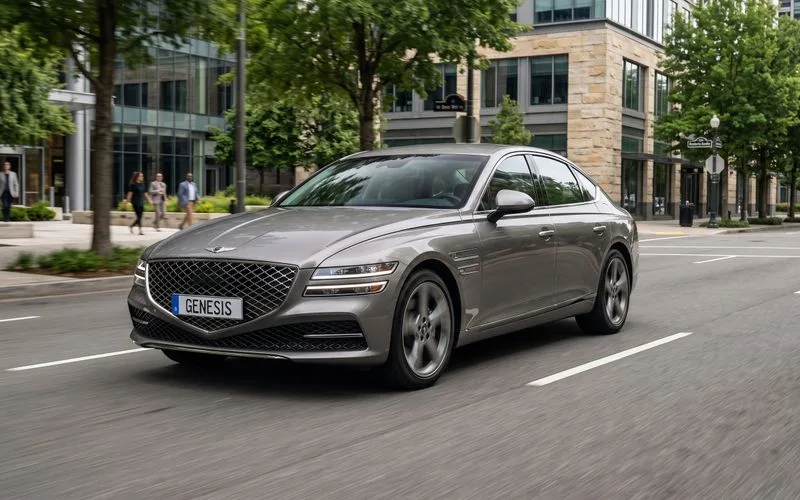 Genesis G80Mid-Size Luxury SedanBetter at: Warranty & power
For roughly $10K more it delivers 300 hp, rear-drive polish and a 10-year/100,000-mile powertrain warranty with three years of included maintenance — the strongest content-per-dollar case against the ES.
Compare 2.80B-
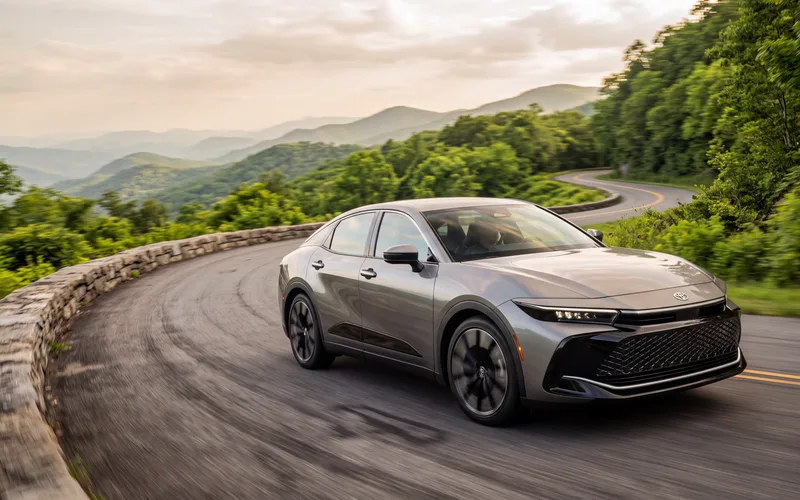 Toyota CrownFull-Size SedanBetter at: Price
Nearly the same hybrid hardware and resale performance for thousands less, if you can live without the Lexus cabin isolation and dealer experience.
Compare 3.27B+
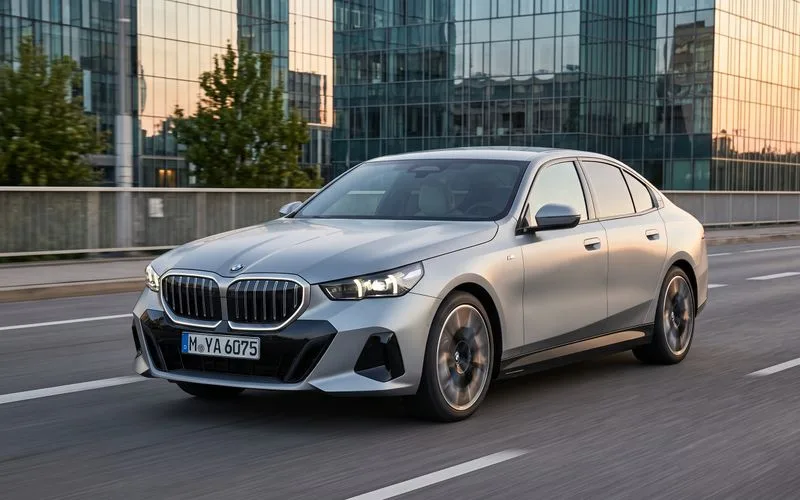 BMW 5 SeriesMid-Size Luxury SedanBetter at: Driving dynamics
The obvious pick if the drive matters — rear-wheel drive, high-5-second 0–60, real steering feel and an optional hands-free highway system the ES doesn't offer.
CompareHow it's evolved
10 scored model years · 2017–2026
Subject scores by year
Hover or tap a score to see what moved it versus the year before. A corner mark flags a big swing.
| Year | Performance | Efficiency | Safety | Space | Cost | Reliability | Tech | Use-case | Driving | Value |
|---|---|---|---|---|---|---|---|---|---|---|
| 2026 | 46 | 88 | 80 | 81 | 48 | 85 | 80 | 64 | 69 | 83 |
| 2025 | 39 | 90 | 76 | 71 | 56 | 89 | 68 | 53 | 65 | 77 |
| 2024 | 37 | 90 | 78 | 71 | 56 | 89 | 67 | 60 | 68 | 80 |
| 2023 | 35 | 90 | 77 | 71 | 58 | 88 | 66 | 53 | 61 | 73 |
| 2022 | 36 | 90 | 81 | 70 | 58 | 89 | 53 | 53 | 61 | 74 |
| 2021 | 39 | 90 | 77 | 75 | 64 | 88 | 54 | 54 | 63 | 73 |
| 2020 | 36 | 90 | 76 | 73 | 62 | 85 | 53 | 55 | 60 | 77 |
| 2019 | 36 | 91 | 75 | 73 | 64 | 81 | 50 | 55 | 60 | 77 |
| 2018 | 34 | 90 | 69 | 68 | 63 | 89 | 33 | 51 | 58 | 68 |
| 2017 | 33 | 90 | 73 | 65 | 63 | 89 | 34 | 50 | 56 | 70 |
Compare two years
Best fit & conditions
Higher scores mean a better fit for that use case. Learn more about use-case fit →
Subject profile
Academic Probation · NHTSA safety recalls
Dec 20, 2023Air bags: sensor: occupant classificationA short circuit may develop in the Occupant Classification System (OCS) sensor, preventing the front passenger air bag from deploying.
Defect
Toyota Motor Engineering & Manufacturing (Toyota) is recalling certain 2020-2021 Avalon, Avalon Hybrid, Corolla, Highlander, Highlander Hybrid, RAV4, RAV4 Hybrid, Lexus ES350, Lexus RX350, Lexus RX450H, 2021 Sienna Hybrid, Lexus ES250, 2020-2022 Camry, Camry Hybrid, and ES300H vehicles. A short circuit may develop in the Occupant Classification System (OCS) sensor, preventing the front passenger air bag from deploying.
Risk
An air bag that does not deploy during a crash increases the risk of injury.
Remedy
Dealers will inspect and replace the sensor as necessary, free of charge. Interim letters notifying owners of the safety risk were mailed in February 2024. Some final remedy owner letters were mailed October 31, 2024. Letters will continue to be mailed in phases through January 2026. Owners may contact Toyota customer service at 1-800-331-4331. Toyota's number for this recall is 23TB15/23TA15 Lexus 23LB03/23LA03.
NHTSA campaign 23V865000 ↗Manufacturer no. 23TA15, 23LA03999,901 vehicles potentially affected (all models in the campaign)Owners notified Oct 31, 2024Filed by Toyota Motor Engineering & ManufacturingFiled as ES, ES HYBRID
8 recalls on other model years of the ES (2017–2020, 2023–2025)
Oct 30, 2025Back over prevention: display functionPlease see the recall report for a complete list of models. A software error may cause the rearview camera to freeze or display a blank screen when the vehicle is in reverse. As such, these vehicles fail to comply with the requirements of Federal Motor Vehicle Safety Standard (FMVSS) number 111, "Rear Visibility."
Defect
Toyota Motor Engineering & Manufacturing (Toyota) is recalling certain 2022-2026 Toyota, Lexus, and Subaru Solterra vehicles equipped with a Panoramic View Monitor (PVM) system. Please see the recall report for a complete list of models. A software error may cause the rearview camera to freeze or display a blank screen when the vehicle is in reverse. As such, these vehicles fail to comply with the requirements of Federal Motor Vehicle Safety Standard (FMVSS) number 111, "Rear Visibility."
Risk
A rearview camera that fails to display an image can reduce the driver's view behind the vehicle, increasing the risk of a crash.
Remedy
Dealers will update the parking assist software, free of charge. Owner letters were mailed January 2, 2026. Owners may contact Toyota's customer service at 1-800-331-4331. Toyota's numbers for this recall are 25TB13 and 25LB06. Subaru's number for this recall is WRE25.
NHTSA campaign 25V744000 ↗Manufacturer no. 25TB13/25LB06/WRE251,024,407 vehicles potentially affected (all models in the campaign)Owners notified Dec 5, 2025Filed by Toyota Motor Engineering & ManufacturingFiled as ES, ES HYBRIDFeb 21, 2024Back over prevention: display functionDue to incorrect programming of the parking-assist electronic control unit (ECU) software, the rearview camera image may not immediately display within a couple of seconds after the shifter is placed into reverse. As such, these vehicles fail to comply with the requirements of Federal Motor Vehicle Safety Standard number 111, "Rear Visibility."
Defect
Toyota Motor Engineering & Manufacturing (Toyota) is recalling certain 2023 Mirai, Lexus LS500, LS500H, 2023-2024 Lexus ES250, ES300H, ES350, 2024 Lexus LC500, and LC500H vehicles equipped with a Panoramic View Monitor (PVM) system. Due to incorrect programming of the parking-assist electronic control unit (ECU) software, the rearview camera image may not immediately display within a couple of seconds after the shifter is placed into reverse. As such, these vehicles fail to comply with the requirements of Federal Motor Vehicle Safety Standard number 111, "Rear Visibility."
Risk
A rearview camera that fails to display an image can reduce the driver's rear view, increasing the risk of a crash.
Remedy
Dealers will update the parking assist ECU software, free of charge. Owner notification letters were mailed April 10, 2024. Owners may contact Toyota customer service at 1-800-331-4331. Toyota's numbers for this recall are 24TA01 and 24LA01.
NHTSA campaign 24V124000 ↗Manufacturer no. 24TA01 / 24LA0118,616 vehicles potentially affected (all models in the campaign)Owners notified Apr 10, 2024Filed by Toyota Motor Engineering & ManufacturingFiled as ES, ES HYBRIDNov 4, 2020Fuel system, gasoline: delivery: fuel pumpThe low-pressure fuel pump inside the fuel tank may fail.
Defect
Toyota Motor Engineering & Manufacturing (Toyota) is recalling certain 2018-2019 4Runner, 2019-2020 Avalon, 2019 Corolla Hatchback, 2017-2019 Highlander, 2018-2020 Camry, 2020 Corolla, 2018-2019 Land Cruiser, 2017-2020 Tacoma, 2019-2020 RAV4, 2019-2020 Sequoia, 2017-2020 Sienna, 2019-2020 Tundra, 2018-2020 Lexus ES350, 2017 Lexus GS200t, 2017-2019 Lexus GS350, 2019 Lexus GS300, 2018-2020 Lexus LC500h, 2019-2020 Lexus LS500, 2018-2019 Lexus GX460, 2017 Lexus IS200t, 2019 Lexus IS300, 2019 Lexus IS350, 2018-2020 Lexus LC500, 2018 Lexus LS500, 2019 Lexus LS500h, 2018-2019 Lexus LX570, 2017 Lexus RC200t, 2019 Lexus RC300, RC350, 2017 and 2019-2020 Lexus RX350, 2018-2020 RX350L, 2019 Lexus UX200, 2018-2019 Lexus NX300 vehicles. The low-pressure fuel pump inside the fuel tank may fail.
Risk
If the fuel pump fails, the engine can stall while driving, increasing the risk of a crash.
Remedy
Toyota will notify owners, and dealers will replace the fuel pump assembly with an improved one, free of charge. Owners of specific models were notified that remedy parts were available starting January 21, 2021. Owners of other models will be notified as remedy parts become available. Remedy parts should be available for all affected vehicles by late March 2021. Owners may contact Toyota customer service at 1-888-270-9371 or Lexus customer service at 1-800-255-3987. Note: This recall is an expansion of recall 20V-012. Toyota's number for this recall is 20TA02. Lexus' number for this recall is 20LA01.
NHTSA campaign 20V682000 ↗Manufacturer no. 20TA02, 20LA011,525,742 vehicles potentially affected (all models in the campaign)Owners notified Jan 21, 2021Filed by Toyota Motor Engineering & ManufacturingFiled as ES350Feb 6, 2020Engine and engine coolingPorosity in the engine castings may result in cracks than can allow coolant to leak internally and/or externally.
Defect
Toyota Motor Engineering & Manufacturing (Toyota) is recalling certain 2020 Toyota Avalon Hybrid, Camry, Camry Hybrid and Lexus ES300h and 2019-2020 RAV4 and RAV4 Hybrid vehicles equipped with 2.5L 4-Cylinder engines. Porosity in the engine castings may result in cracks than can allow coolant to leak internally and/or externally.
Risk
A coolant leak can cause the engine to overheat and cause a vehicle stall in conventional gasoline vehicles, increasing the risk of a crash. Additionally, for all involved vehicles, the engine may get damaged mechanically, possibly resulting in an engine oil leak, increasing the risk of a fire.
Remedy
Toyota will notify owners, and dealers will inspect and replace the engine including the engine block, as necessary, free of charge. The recall began April 3, 2020. Owners may contact Toyota customer service at 1-888-270-9371 or Lexus at 1-800-255-3987. Toyota's number for this recall is 20TA04. Lexus' number for this recall is 20LA02.
NHTSA campaign 20V064000 ↗Manufacturer no. See report44,191 vehicles potentially affected (all models in the campaign)Owners notified Apr 3, 2020Filed by Toyota Motor Engineering & ManufacturingFiled as ES HYBRIDJan 13, 2020Fuel system, gasoline: delivery: fuel pumpToyota Motor Engineering & Manufacturing (Toyota) recalled certain 2018-2019 4Runner, Highlander, Camry, Land Cruiser, Sequoia, Sienna, Tacoma and Tundra, and Lexus RC 300, RC 350, GS 350, GX 460, IS 300, LC 500, LS 500, LX 570, RX 350L, and 2019 Toyota Avalon and Corolla, and certain Lexus NX 300, and ES 350 vehicles on January 13, 2020. On March 4, 2020, Toyota expanded the recall to include certain 2014-2015 Toyota 4Runner and Land Cruiser, 2018 Avalon, Corolla, 2014 FJ Cruiser, 2017 Sienna and Lexus 2018 ES 350, 2018-2019 GS 300, 2013-2014 GS350, 2014-2015 GX 460, IS 350 and LX 570, 2014 IS F, 2018-2019 IS 350, LC 500H and LS 500H, 2013-2015 LS 460, 2015 NX 200T and RC350, 2017 RC 200T and RX 350. Toyota also removed the 2018-2019 Toyota 4Runner and Land Cruiser and 2018-2019 Lexus GX 460 and LX 570 and 2019 NX300 from inclusion in this recall. On March 19, 2020, Toyota expanded the recall to include 2015 Lexus GS350 vehicles. The low-pressure fuel pump inside the fuel tank may fail.
Defect
Toyota Motor Engineering & Manufacturing (Toyota) recalled certain 2018-2019 4Runner, Highlander, Camry, Land Cruiser, Sequoia, Sienna, Tacoma and Tundra, and Lexus RC 300, RC 350, GS 350, GX 460, IS 300, LC 500, LS 500, LX 570, RX 350L, and 2019 Toyota Avalon and Corolla, and certain Lexus NX 300, and ES 350 vehicles on January 13, 2020. On March 4, 2020, Toyota expanded the recall to include certain 2014-2015 Toyota 4Runner and Land Cruiser, 2018 Avalon, Corolla, 2014 FJ Cruiser, 2017 Sienna and Lexus 2018 ES 350, 2018-2019 GS 300, 2013-2014 GS350, 2014-2015 GX 460, IS 350 and LX 570, 2014 IS F, 2018-2019 IS 350, LC 500H and LS 500H, 2013-2015 LS 460, 2015 NX 200T and RC350, 2017 RC 200T and RX 350. Toyota also removed the 2018-2019 Toyota 4Runner and Land Cruiser and 2018-2019 Lexus GX 460 and LX 570 and 2019 NX300 from inclusion in this recall. On March 19, 2020, Toyota expanded the recall to include 2015 Lexus GS350 vehicles. The low-pressure fuel pump inside the fuel tank may fail.
Risk
If the fuel pump fails, the engine can stall while driving, increasing the risk of a crash.
Remedy
Toyota will notify owners, and dealers will replace the fuel pump, free of charge. The recall began May 4, 2020. Owners may contact Toyota customer service at 1-888-270-9371 or Lexus customer service at 1-800-255-3987. Toyota's numbers for this recall are 20TB02 and 20TA02 for Toyota vehicles and 20LB01 and 20LA01 for Lexus vehicles.
NHTSA campaign 20V012000 ↗Manufacturer no. 20TB02/20TA02/20LB011,830,752 vehicles potentially affected (all models in the campaign)Owners notified May 1, 2020Filed by Toyota Motor Engineering & ManufacturingFiled as ES350Jul 24, 2019Electronic stability control (esc) · Service brakesThe brake booster pump may fail causing a deactivation of the Vehicle Stability Control system and a loss of braking assist. As such, these vehicles fail to comply with the requirements of Federal Motor Vehicle Safety Standard (FMVSS) number 126, "Electronic Stability Control Systems."
Defect
Toyota Motor Engineering & Manufacturing (Toyota) is recalling certain 2019 Lexus LS500, LC500, ES300h, UX250h, LS500h, Toyota Prius, RAV4 HV, 2019-2020 Toyota Prius Prime, and 2020 Corolla HV vehicles. The brake booster pump may fail causing a deactivation of the Vehicle Stability Control system and a loss of braking assist. As such, these vehicles fail to comply with the requirements of Federal Motor Vehicle Safety Standard (FMVSS) number 126, "Electronic Stability Control Systems."
Risk
Deactivation of the vehicle stability control system or a loss of braking assist increases the risk of a crash.
Remedy
Toyota will notify owners, and dealers will inspect and, if necessary, replace the brake booster pump, free of charge. The recall began September 20, 2019. Toyota owners may contact Toyota customer service at 1-888-270-9371 and Lexus owners may contact Lexus customer service at 1-800-255-3987. Toyota's numbers for this recall are K1L/K0L. Lexus' numbers for this recall are K2F/KLF.
NHTSA campaign 19V544000 ↗Manufacturer no. K1L/K0L, K2F/KLF6,925 vehicles potentially affected (all models in the campaign)Owners notified Sep 20, 2019Filed by Toyota Motor Engineering & ManufacturingFiled as ES HYBRIDApr 10, 2019Air bags: knee bolsterThese vehicles are equipped with a driver knee air bag assembly mounted to the lower instrument panel (IP) that may have been improperly installed, possibly affecting the deployment of the knee air bag in the event of a crash.
Defect
Toyota Motor Engineering & Manufacturing (Toyota) is recalling certain 2019 Lexus ES vehicles. These vehicles are equipped with a driver knee air bag assembly mounted to the lower instrument panel (IP) that may have been improperly installed, possibly affecting the deployment of the knee air bag in the event of a crash.
Risk
In the event of a crash, there is an increased risk of injury if the knee air bag does not deploy properly.
Remedy
Toyota will notify owners, and dealers will inspect and replace the driver knee air bag assembly, if necessary, free of charge. The recall began May 8, 2019. Owners may contact Toyota customer service at 1-800-255-3987. Toyota's numbers for this recall are KLD and KLE.
NHTSA campaign 19V288000 ↗Manufacturer no. KLD, KLE564 vehicles potentially affected (all models in the campaign)Owners notified May 8, 2019Filed by Toyota Motor Engineering & ManufacturingFiled as ESJun 29, 2017Steering: linkages: tie rod assemblyThe right-hand side tie rod lock nut may loosen over time.
Defect
Toyota Motor Engineering & Manufacturing (Toyota) is recalling certain 2017 Lexus ES350 vehicles. The right-hand side tie rod lock nut may loosen over time.
Risk
If the lock nut loosens, the tie rod may separate causing a loss of steering and increasing the risk of a crash.
Remedy
Toyota will notify owners, and dealers will inspect the lock nut and, if it is found loose, replace the lock nut, steering gear assembly, and tie rod assembly, free of charge. The recall began on July 26, 2017. Owners may contact Toyota customer service at 1-800-331-4331. Toyota's number for this recall is HLC.
NHTSA campaign 17V415000 ↗Manufacturer no. HLC1,761 vehicles potentially affected (all models in the campaign)Owners notified Jul 26, 2017Filed by Toyota Motor Engineering & ManufacturingFiled as ES350
Source: NHTSA Office of Defects Investigation recall database, model years 2017–2026. Recalls are listed by model year as the manufacturer filed them; whether a specific car is affected depends on its VIN — check a VIN at nhtsa.gov ↗. NHTSA model names matched to this page: ES, ES HYBRID, ES350.
Detailed scoring by subject
1Performance & PowertrainThe ES's lowest-graded category.0.39F
The 2022 ES 300h pairs a 176-hp 2.5L Atkinson-cycle four with an electric motor and lithium-ion pack for 215 hp of total system output, unchanged through the 2022 facelift. That is modest for a mid-size luxury sedan, where 250-375 hp is the norm.
Lexus quotes engine torque only for the hybrid — 163 lb-ft, which is low against the turbocharged German rivals in this segment, though instant electric-motor assist makes low-speed response feel stronger than the number implies.
Lexus cites 8.1 seconds to 60 mph for the ES 300h, and independent testing brackets it — Clean Fleet Report recorded roughly 8.2 s in Sport mode on the F SPORT, while MotorTrend logged a quicker 7.3 s. The manufacturer figure is used as the representative one; either way the hybrid trails a segment where high-5s to low-7s is typical.
Gas-to-electric transitions are essentially imperceptible and the car is exceptionally quiet at cruise, but the 2.5L four gets coarse and strained when asked for full throttle, and initial throttle response below 30-40 mph is soft — a contrast made more obvious by how well isolated the cabin is.
The planetary power-split eCVT never hunts or shifts harshly, and for 2022 Lexus programs in simulated step-up ratios in Sport mode to disguise the CVT character; testers still report the powertrain flaring revs ahead of road speed when pushed, which is the classic Toyota hybrid trade-off.
The ES 300h is front-wheel drive only for 2022. All-wheel drive exists in the ES family but is confined to the four-cylinder gas ES 250, so a buyer who wants the hybrid cannot have AWD at any trim or price; the V6 ES 350 is FWD-only as well.
Three genuinely distinct powertrains for 2022 — a 203-hp 2.5L four with standard AWD (ES 250), a 302-hp 3.5L V6 (ES 350) and the 215-hp hybrid (ES 300h) — cover the efficiency, mainstream and V6-performance buyer, and the facelift adds an ES 300h F SPORT grade so the hybrid is no longer excluded from the sporting trim. There is no PHEV or EV variant, and each powertrain is locked to one drive layout.
2Efficiency & RangeThe ES's best-graded category.4.00A+
EPA rates the 2022 ES 300h at 44 MPG combined, and the agency lists a single ES 300h entry for 2022 — so the new F SPORT grade carries the same rating as the base car. Strong in absolute terms for a mid-size luxury sedan, mid-pack among the hybrids it is normalized against.
Low-speed electric running and regenerative braking give the ES 300h 43 MPG in town — roughly double the V6 ES 350's 22 MPG, and the figure that does most of the work in real-world commuting.
At 44 MPG highway the ES 300h matches its own city rating — unusual among hybrids, and a result of the seventh-generation ES's slippery body and Atkinson-cycle engine rather than heavy reliance on regenerative braking.
The ES 300h carries a smaller 13.2-gallon tank than the gas ES models' 15.9 gallons, so its full-tank range works out near 580 miles — still among the longest legs in any mid-size sedan, hybrid or not.
EPA puts annual fuel spend at $1,400 — roughly $1,000/yr less than the V6 ES 350 and among the cheapest running costs in any luxury sedan, helped by the hybrid taking regular rather than premium.
The ES 300h runs on regular 87-octane unleaded — no plug, no charging to arrange, no premium surcharge — which is unusual in a luxury mid-size class where the German rivals recommend or require premium.
3SafetyOne of the ES's strongest categories.3.48B+
NHTSA rated the 2022 ES 300h 4DR FWD 5 stars overall, with a 5-star side score and 4-star frontal and rollover sub-scores.
A 2022 Top Safety Pick+ with Good results in every crashworthiness test IIHS ran on this model year, and the plus earned outright because both redesigned headlight variants rate Good across the range rather than only on an option box. Held just short of the ceiling because the updated moderate-overlap and side tests had not yet been run — the mechanically identical 2023 body went on to rate Marginal and Acceptable in them, so the rear-seat weakness is almost certainly present here untested.
The 2022 refresh made Lexus Safety System+ 2.5 AND Blind Spot Monitor with Rear Cross-Traffic Alert standard on every grade including the base ES 300h — AEB with pedestrian/bicyclist detection, intersection turn assist, all-speed adaptive cruise, lane keeping and centering, BSM and RCTA all arrive at $41,900 with nothing core paywalled upward. This is the year the base-trim blind-spot gap that dogged the 2020 car closed.
IIHS front crash prevention is Superior vehicle-to-vehicle and Advanced for daytime pedestrians, and LSS+ 2.5 adds intersection turning assist and emergency steering assist over the 2.0 system it replaces. IIHS had not yet run its nighttime pedestrian protocol on this model year, so there is no verified dark-conditions result to credit — the same system scored Superior at night when tested on the 2023 car.
Blind Spot Monitor with Rear Cross-Traffic Alert became standard on every grade for 2022 rather than an option on the base car, but coverage is alert-only — there is no rear cross-traffic braking and no safe-exit assist to warn about a cyclist at the door.
Lane Departure Alert with Steering Assist and Lane Tracing Assist are standard on every grade, and LSS+ 2.5 improves LTA's course recognition, but the steering authority is deliberately limited — a backstop for lapses of attention rather than confident hands-on centering, and it wanders on faded markings.
All-Speed Dynamic Radar Cruise Control with full stop-and-go is standard on every grade, and LSS+ 2.5 adds curve speed reduction that sheds speed ahead of a bend plus smoother overtaking assistance; paired with Lane Tracing Assist it is a well-integrated highway pair, stopping short only of a named hands-on highway mode.
No hands-free highway driving is offered on the 2022 ES at any grade or in any package; the suite tops out at hands-on Lane Tracing Assist.
Headlights were redesigned for 2022 and IIHS rates both available bi-LED configurations Good, so every buyer gets top-rated lighting regardless of grade — the step up from 2020, where the volume grade's projectors rated only Acceptable. Intelligent High Beams are standard; neither variant offers curve-adaptive capability, which is what keeps it off the very top.
Forward and side sightlines are good for a low-slung luxury sedan and the driving position is easy to set, but the steeply raked rear glass and thick C-pillars leave a real over-the-shoulder blind zone. Blind-spot monitoring is now standard to cover it, which is a genuine improvement, though the Panoramic View Monitor that would compensate properly is still an option on the volume grades.
IIHS rates the ES LATCH hardware Good for ease of use, with complete anchors at two rear positions and a tether-only third; wide rear doors and generous back-seat legroom make installation straightforward, and three-across is the one thing it cannot do, as with any mid-size sedan.
4Space & ComfortGrades above the middle of the scale.2.77B-
The ES 300h is a conventional two-row five-seater on every grade — base, F SPORT, Luxury and Ultra Luxury — which is the maximum a mid-size sedan is measured against.
37.5 inches is mid-pack for a sedan, and it is the only figure that applies to the ES 300h because the power moonroof is standard equipment on every grade rather than an option that can be deleted.
42.4 inches is generous for the class — the 113-inch wheelbase pays off up front as well as in back — and the standard 10-way power front seats make the space usable across a wide range of drivers.
The figure reads well on paper but the ES's raked roofline is the back seat's real constraint — reviewers consistently describe rear legroom as abundant and rear headroom as the dimension tall passengers run out of first.
39.2 inches is among the roomiest back seats in the mid-size luxury class and is the direct product of the ES's 113-inch wheelbase; it is the single dimension Lexus markets hardest in the 2022 brochure.
13.9 cubic feet is below par for a mid-size sedan and is the ES's clearest packaging weakness. The hybrid gives up nothing to the ES 350 — the battery sits under the rear seat in this generation — but neither car offers folding rear seatbacks, so the trunk is all there is.
Everyday storage is competent and no more: a usable console bin, cupholders, door pockets, a rear fold-down armrest with two USB ports and a 12-volt outlet. There is no standout idea, the Qi charging pad is a Premium Package item rather than standard equipment, the Remote Touch trackpad occupies console real estate that a 2022 rival would give to storage, and fixed rear seatbacks mean nothing long passes through except via the center hatch.
Every ES 300h gets 10-way power front seats that testers describe as firm, supportive and free of aggressive bolstering, with heated and ventilated fronts one package away and a 14-way driver's seat with cushion extender from Luxury up; the back seat is lounge-like for two adults. It stops short of the top band because ventilation is not standard and the rear bench is flat by luxury-flagship standards.
Ride comfort is the ES's headline competence and the 2022 facelift's retuned chassis sharpened it — reviewers report harsh impacts barely registering in the cabin while body control stays better than the plush tune implies, even on the F SPORT's 19-inch wheels. Lateral performance dampers on Luxury and F SPORT and F SPORT-tuned Adaptive Variable Suspension (ES 350 F SPORT's Dynamic Handling Package) sit above the standard setup.
The hybrid is the quietest ES: it moves off on electricity, Lexus fits Hybrid-Acoustics sound dampening and a concealed exhaust unique to the 300h, and noise-reduction wheels are available. Testers call it hushed at highway speed. It misses the top band for the same reason it earns most of it — against that background the 2.5-liter four is conspicuous when it fires up or is worked hard.
Dual-zone automatic climate with interior air filters, a smog sensor and auto recirculation is standard, rear passengers get their own vents, and remote climate start runs through the Lexus app free for the first three years. But heated and ventilated front seats, the heated wheel and the wiper de-icer all sit in the Premium Package rather than standard equipment, the power rear sunshade starts at Luxury, and there is no third climate zone for the back seat.
5Cost of OwnershipMid-pack among this car's ten categories.1.92C-
Entry price of the hybrid configuration this scorecard describes; the refreshed 2022 ES 300h carries a $1,100 premium over the gas ES 350 and ES 250 AWD entry point.
The plain ES 300h is the volume hybrid trim, but retail cars are rarely sold stripped — most add the Premium Package (heated/ventilated front seats with memory, power tilt/telescope column, rain-sensing wipers) and often the 12.3-inch screen, putting a typical transaction a little above $45,000.
Edmunds' True Cost to Own projection for the ES 300h is used because it is the like-for-like basis applied across this catalog — dealer-rate scheduled service plus tires, brakes and unscheduled repairs; owner-reported trackers put the ES far lower, so read this as a conservative ceiling rather than a typical bill.
Resale is the ES's single strongest ownership attribute — it retains roughly 60% after five years against a luxury-midsize class average near 54% — and a 2022 car bought into the inflated pandemic-era market is the one caveat, since the elevated transaction prices of that year compress the real-world retention a buyer experienced.
Standard Lexus basic coverage — a year longer than mainstream 3/36 terms and level with Cadillac and the German luxury brands, but short of Genesis and Jaguar's 5/60.
The 6-year powertrain term is unremarkable and well behind Genesis and Hyundai/Kia's 10/100, but a hybrid buyer gets substantially longer cover on the parts unique to this drivetrain — the battery pack is warranted 10 years / 150,000 miles and transfers to subsequent owners.
Included maintenance is short — two visits inside the first year — but the surrounding ownership package is better than that implies: roadside assistance runs a full four years with no mileage cap, and the Lexus Enform connected-service and app trials on the refreshed 2022 car are long-dated. It lands above Cadillac's single free visit and below the multi-year maintenance programs at Genesis, BMW and Volvo.
$45,200 volume-trim price minus its estimated resale value after 5 years (60.4% retained, or about $27,301) leaves about $17,899 in depreciation. Add the projected $6,858 in 5-year maintenance and repairs, and owning this vehicle for 5 years costs about $24,757 in total.
6Reliability & QualityOne of the ES's strongest categories.4.00A+
Consumer Reports rates the 2022 ES Hybrid as much more reliable than the average 2022 model, with only minor owner-reported trouble spots (in-car electronics, exhaust hardware); J.D. Power scores the 2022 ES 88/100 for Quality & Reliability. Both sources point the same direction with no contradicting signal.
Lexus is the benchmark dependability brand: it ranked #1 overall in the J.D. Power 2025 VDS — a study built specifically on 2022 model-year vehicles at three years — and has led the premium segment four consecutive years through 2026. Consumer Reports keeps it in its top three brands.
A single NHTSA recall covers the 2022 ES 300h — an Occupant Classification System sensor short circuit that could keep the front passenger airbag from deploying (23V865000, Dec 2023), remedied by a free sensor inspection/replacement. Severity is real since it is an airbag defect, but it is one contained campaign with no systemic pattern; notably the 2025 Panoramic View Monitor camera recall that swept 2022–2026 Toyota/Lexus models covers only 2023–2024 ES, not 2022.
The ES 300h pairs the A25A-FXS 2.5L Atkinson four with the fourth-generation Toyota Hybrid System and a planetary e-CVT — no belt, pulleys, clutches or torque converter to wear — and the A25A family is a known 200,000-plus-mile design. This is the most proven hybrid driveline sold in the US, and the ES 300h has carried it since 2019 without a durability pattern emerging.
Reviewers consistently credit the ES with genuine soft-touch coverage, real stitching and damped switchgear for the money, and the 2022 facelift added the moved-forward 8.0-inch touchscreen (12.3-inch optional) in place of the touchpad-only setup. It is strong rather than class-leading: German rivals still present a richer screen-and-switch environment, and owners flag the infotainment and audio as the weak spots in an otherwise rich cabin.
Assembly quality is a signature strength — tight, even panel gaps and a rattle-free structure are the consistent verdict across Edmunds, Consumer Reports and road tests of the 300h — and Lexus's dependability standing at the three-year mark implies few build defects surfacing over time. Held short of the top band only because what initial-quality complaints exist cluster on electronics rather than assembly.
Lexus service satisfaction is elite and durable: it led the premium segment in J.D. Power's Customer Service Index three consecutive years through 2024 and still scores 900 in 2026, and its roughly 240 US stores sit inside the Toyota dealer body for parts and technical support. The ~240-store count is dense for a luxury brand but thinner than a mainstream network in rural areas, which is what keeps this out of the 90s.
Running costs are the lowest in the luxury midsize class by a wide margin — RepairPal puts the ES300h at $524 a year against a $739 class average — helped by a GA-K platform and A25A engine family shared with the Camry and Avalon, so mechanical parts are abundant and inexpensive. Luxury-specific body, trim and electronics parts are still dealer-priced, and an out-of-warranty hybrid battery is a large one-off, so this stops short of the cheap-and-abundant top band.
7Technology & InfotainmentOne of the ES's weakest categories.1.55D
The volume ES 300h ships with the 8.0-inch display; the 12.3-inch unit cannot be ordered on its own — it arrives bundled with the Navigation Package and is standard only on Ultra Luxury.
2022 is the year Lexus finally made the ES display a touchscreen and moved it 4.3 inches closer to the driver — a genuine fix for the car's worst ergonomic flaw — but it is a retrofit onto the old Lexus Enform architecture: the Remote Touch trackpad is still on the console, the graphics are dated and grainy, climate functions live in submenus and response times are sluggish. The 2023 Lexus Interface replacement is what actually modernizes this system.
Apple CarPlay and Android Auto are both standard on the base ES 300h and every trim above it — no paywall — but the 2022 Enform system is wired-only, connected by USB cable; wireless projection does not arrive on the ES until the 2023 Lexus Interface. Standard-everywhere-but-wired is the middle of this item's band.
The base ES 300h has only basic embedded Voice Command and no native navigation at all — maps mean using CarPlay or Android Auto. Real capability costs extra: the Navigation Package brings the embedded Navigation System, Dynamic Voice Command and Destination Assist, and the free periods on those lapse. Alexa compatibility works through the phone app rather than an in-car natural-language assistant; the 'Hey Lexus' Intelligent Assistant does not exist on this model year.
A 10-speaker Lexus Premium Sound System is standard on the base car where rivals fit six, and the optional Mark Levinson 17-speaker, 1,800-watt PurePlay Surround system is one of the better factory upgrades at the price. Reviewers find the standard system clear if not immersive, which is why this sits just inside the top band rather than at the top of it.
The 2022 ES has no full-digital gauge display at any price. The standard cluster is a color LCD multi-information display flanked by conventional instruments, and only the F SPORT grades get the LFA-style meter with its sliding bezel. For a mid-size luxury sedan in 2022 that is behind the class.
There is no meaningful over-the-air updating on the 2022 ES. Enform Dynamic Navigation streams cloud route and map data to cars that have the Navigation Package, but that is a live data service, not software updating — multimedia and vehicle software still require a dealer or USB. Genuine multimedia OTA arrives with the Lexus Interface system in 2023.
The Lexus app covers the core remote set — engine start and climate, lock/unlock, vehicle locate, vehicle health reports, service scheduling — and it works through Alexa and Google Assistant as well as the phone and a smartwatch, with Enform Remote included free for the first three years rather than a short trial. What is missing is phone-as-key: Lexus Digital Key is not offered on the 2022 ES, and the remote features become a paid subscription once the three years are up.
Bluetooth and USB smartphone connectivity is standard, the back seat gets two USB ports and a 12-volt outlet, and onboard Wi-Fi is available — enough for everyday device duty. But the Qi wireless charger is a Premium Package item (standard only from Luxury up), the ports are USB-A rather than high-wattage USB-C, and there is no household AC outlet anywhere in the range.
SmartAccess proximity entry with push-button start is standard on every ES, and remote engine start comes through the Lexus app — free for the first three years — as well as a smartwatch or voice assistant, with a SmartAccess card key available. The gaps are phone-as-key, which the 2022 ES does not offer at all, and hands-free trunk access, which is an option or an Ultra Luxury item.
The base ES 300h leaves the showroom with a backup camera and dynamic gridlines and nothing more. Intuitive Parking Assist with Auto Braking is a Premium Package or option item, and the four-camera Panoramic View Monitor with Rear Cross-Traffic Braking is standard only on Ultra Luxury. The top-trim hardware is genuinely good, but it is absent from the trims most buyers take home.
The 10.2-inch full-color head-up display is large and well regarded, showing speed, gear and rpm with adjustable content — but it is a standalone option, it is not offered on the base ES 300h, and even on Ultra Luxury the brochure flags it as special order only, which makes it harder to get on a 2022 car than the equipment list suggests.
8Use-Case FitOne of the ES's weakest categories.1.56D
The seat-installation half of family duty goes well — the LATCH hardware is easy to reach, the rear doors open wide and 39.2 inches of rear legroom leaves room for a rear-facing seat without pushing the front passenger forward. The logistics half is where a crossover pulls ahead: a 13.9-cu-ft trunk that a stroller plus a week's gear fills, rear seatbacks that do not fold, and a low roofline that means lowering a child into the seat rather than sliding them across.
2022 is the ES's strongest safety year: NHTSA 5 stars overall and an IIHS Top Safety Pick+ — the award that requires Good in all six crashworthiness tests plus advanced-or-superior front crash prevention for both vehicle-to-vehicle and pedestrian — and a family buying the cheapest ES 300h gets the entire story, with Lexus Safety System+ 2.5, Blind Spot Monitor with Rear Cross-Traffic Alert and 10 airbags all standard. It falls short of the very top only for what it lacks rather than what it fails: no rear-occupant reminder and no rear side airbag beyond the standard set.
Four people travel very well in an ES 300h: class-leading rear legroom, rear vents and two USB ports, one of the quietest cabins at the price and roughly 580 miles between fills. Two things cap it — the trunk runs out long before the seats do with no fold-down to borrow from, and rear amenities stop at vents and shades, with no rear climate zone, no rear-seat entertainment, and the power sunshade only from Luxury up.
This is the mission the ES 300h was built for. It pulls away silently on the electric motor, the eCVT never hunts for a gear, the ride smothers city pavement, and the standard all-speed adaptive cruise with Lane Tracing Assist takes the strain out of a jammed commute. The complaints reviewers raise about the 2022 car — the trackpad, the dated menus — are infotainment complaints, not driving ones.
44 MPG combined on regular unleaded and an EPA fuel bill near $1,400 a year make the ES 300h one of the cheapest luxury cars in America to commute in, and the consumables follow: regenerative braking spares the pads, there is no conventional automatic or belt-driven starter to service, and Lexus includes complimentary scheduled maintenance at the start. Lexus dealer labor rates are the main qualifier.
At 195.9 inches on a 113-inch wheelbase with a roughly 38-foot turning circle, the ES is a big car to thread through a city, and the volume trim helps with a backup camera alone — parking sensors are a package away and the surround-view camera is effectively an Ultra Luxury item. Light steering and good low-speed manners keep it manageable rather than awkward.
The ES 300h has no US tow rating, no bed, 13.9 cubic feet of sealed trunk, fixed rear seatbacks and 215 total system horsepower through the front wheels. Nothing about it is intended for work duty, and Lexus publishes no towing or payload figure for any ES grade.
The mechanical package is genuinely tough — the same Toyota Hybrid System architecture that has absorbed a decade of Camry and Prius fleet and taxi abuse, backed by an 8-year/100,000-mile hybrid system and 10-year/150,000-mile hybrid battery warranty. What it is not is a work vehicle: NuLuxe and semi-aniline interiors, a low-slung body and no washable surfaces mean it survives mileage rather than abuse.
There is effectively nothing here: no onboard AC power, no bed or tie-down system, no factory roof rails or hitch, no upfit ecosystem, and a carpeted trunk that does not open into the cabin beyond a pass-through. The closest thing Lexus sells to work-adjacent equipment for the 2022 ES is floor and trunk mats.
As a highway tourer this is close to the ES's best self: roughly 580 miles between fills on regular fuel, seats testers call supremely comfortable on long drives, a cabin that stays hushed at speed, and standard all-speed adaptive cruise with lane centering to cut fatigue. It misses the top band because the eCVT drones on long grades and the highway assist is a hands-on nudge rather than a confident hands-free system.
2022 is the first ES model year to offer all-wheel drive in the US — but only on the four-cylinder ES 250. The hybrid remains front-wheel drive at any price, and it pairs sedan ground clearance with no tow rating, no roof rails, no AC power and 17- to 19-inch low-profile tires. It is a pavement car, and a snowy-driveway one only on winter tires.
13.9 cubic feet is small for the class to begin with, and the ES compounds it by not offering folding rear seatbacks — a center pass-through is the only route for anything long. With no roof rails and no hitch, there is no way to add capacity outside the car either.
9Driving ExperienceMid-pack among this car's ten categories.2.10C
The 2022 facelift's retuned chassis genuinely helped — testers report the floatiness of the earlier car gone and body control staying composed even on the new ES 300h F SPORT's 19-inch wheels — but at roughly 3,700 lb with front drive and a comfort-first calibration it still feels substantial rather than agile, and the F SPORT treatment on the hybrid is a styling and damper package, not the ES 350 F SPORT's adaptive-suspension Dynamic Handling Package.
Accurate and easy to place, but light and short on feedback — the familiar hybrid-sedan complaint. Lexus's revised Driving Signature tuning for this facelift made the response more immediate rather than more communicative, and Sport mode adds weight without adding information.
Stopping power is not in question and the regen-to-friction handoff on the 2022 car is described as seamless in normal driving, which is better than the hybrid ES's historical reputation. It stays mid-band rather than higher because pedal feel is soft and light — tuned for smooth deceleration rather than the firm, linear bite the top band describes — and no instrumented stopping distance for a 2022 ES 300h corroborates the impression.
The power-split hybrid is calibrated about as well as the architecture allows: it moves off instantly and silently on the motor, there is no starter shudder or stop/start jolt, and the handover to the 2.5-liter engine is unobtrusive in normal driving. What it never delivers is urgency — Lexus quotes 8.1 seconds to 60 mph, and passing takes a deliberate stab of throttle.
The ES 300h's weakest dynamic trait, and specifically a noise-character problem rather than a vibration one: the eCVT holds revs ahead of road speed, so the 2.5-liter four drones when worked, and because the rest of the cabin is exceptionally well isolated the contrast is more conspicuous here than it would be in a noisier car. Hybrid-Acoustics dampening and noise-reduction wheels keep it from being intrusive at steady cruise.
A 38-foot curb-to-curb circle on a 113-inch wheelbase is on the wide side for a mid-size sedan and is felt in parking garages and three-point turns; the larger wheels fitted to Luxury, Ultra Luxury and F SPORT widen it further.
Ten-way power front seats and a well-shaped wheel give most drivers an easy position, and moving the display 4.3 inches forward for 2022 finally put the screen within arm's reach. It sits mid-band because the console's Remote Touch trackpad is still the primary controller and remains awkward to use on the move, climate and system functions are buried in submenus, and the power tilt-and-telescopic column, memory and easy-entry functions are all Premium Package items rather than standard.
Nobody buys an ES 300h to take the long way home. It is quiet, smooth and entirely undemanding, and the first-ever ES 300h F SPORT that arrived for 2022 is explicitly a styling grade — unique wheels, mesh grille, spoiler, bolstered seats — rather than a performance one, so the badge promises a character the 8.1-second, numb-steering, droning eCVT car never delivers.
10Value & Market PositionGrades above the middle of the scale.2.99B-
The 2022 refresh made this the ES's strongest year yet on standard content: Lexus Safety System+ 2.5 on every trim, and — new for 2022 — Blind Spot Monitor with Rear Cross-Traffic Alert standard across the whole lineup, at a hybrid price of $42,975. German rivals bundle that content into option packages on cars starting roughly $10,000 higher. The limits are the 8.0-inch standard screen (the 12.3-inch unit costs extra) and heated/ventilated seats still sitting behind the Premium Package.
The ES is the reference point for content-per-dollar in luxury midsize — a genuinely quiet, well-trimmed cabin, low-40s EPA economy in hybrid form and class-leading resale, all for less than a base E-Class or 5 Series. What it does not deliver for the money is performance: 215 system horsepower and a low-8-second 0–60 is the price of the value proposition.
Three powertrains across twelve trims, with four hybrid grades spanning roughly $42,975 to $52,405, give buyers real spread, and 2022 widened it with the first-ever ES 300h F SPORT. The gap is drivetrain choice: all-wheel drive is confined to the four-cylinder ES 250, so a hybrid or V6 buyer cannot get it at any price.
The ES remained the best-selling luxury sedan in the United States through the 2022 calendar year, comfortably ahead of the E-Class and 5 Series. Volume of 41,465 was down from 45,406 in 2021, but 2022 was a supply-constrained year across the industry, so the dip reflects what dealers could get rather than what buyers wanted.
Lexus carries genuine equity in dependability, dealer experience and resale — the qualities that make an ES easy to own and easy to sell — and that shows up directly in the residual data. It is less aspirational than Mercedes or BMW, and the ES in particular reads as the conservative, comfort-first choice rather than an object of desire.
This is the weakest value lever on a 2022 ES, and materially worse than in the years either side of it. Lexus discounts lightly by nature, and 2022 was the peak of the chip-shortage market: factory cash was essentially absent, narrow programs (military rebate, loyalty offer through Lexus Financial) were the only manufacturer money, and buyers frequently faced dealer market adjustments rather than discounts. Lease support remained the one genuine buyer benefit.
2022 is the facelift year — the freshest point of the seventh-generation (XZ10) ES between its 2019 launch and its 2026 replacement. The update was substantive rather than cosmetic: new grille and bi-LED headlamps, the multimedia screen moved 4.3 inches closer with touch capability, LSS+ 2.5 fleet-wide, and a rear suspension member brace. What holds the score short of the top band is that the GA-K platform and the 215-hp hybrid powertrain underneath were already four years old and carried over untouched.
Reviewers reliably rate the ES well and award bodies reward it — KBB's luxury-car Best Buy four years running, IIHS Top Safety Pick+, top-of-class projected ownership costs — but it is a recommendation rather than a comparison-test winner, and enthusiast outlets consistently mark it down for soft, uninvolving dynamics and, in 300h form, a strained four-cylinder.