

The verdict
A strong mid-size luxury sedan, strong on efficiency and held back by performance.
The 2026 Lexus ES is an all-new eighth generation that drops the V6 entirely and sells as a hybrid — about 247 hp, roughly 43 MPG combined on regular 87-octane, and a fuel bill near $1,450 a year against $2,300–$2,900 for a premium-drinking German rival. It is the quietest, smoothest-riding, most dependable way to spend somewhere near $47,000 on a mid-size luxury sedan, with a stretched 116-inch wheelbase that finally gives the back seat real room and Lexus Safety System+ 3.0 standard on every trim. What you give up is any pretense of sport: high-7-second 0–60, numb steering, and an e-CVT that drones under throttle. Buy it if arriving relaxed and cheap matters more than the drive there.
Jump to scoresStrengths
- The most dependable car in its class, by a wide margin
- Serenity is the whole point, and it delivers
- Half the fuel bill of a German rival, on regular gas
What holds it back
- The slowest volume trim in the segment
- Pleasant, but forgettable to drive
- Entry price is up and launch-year discounts are thin
Top alternatives
Cars shoppers cross-shop with the Lexus ES 3.21B+
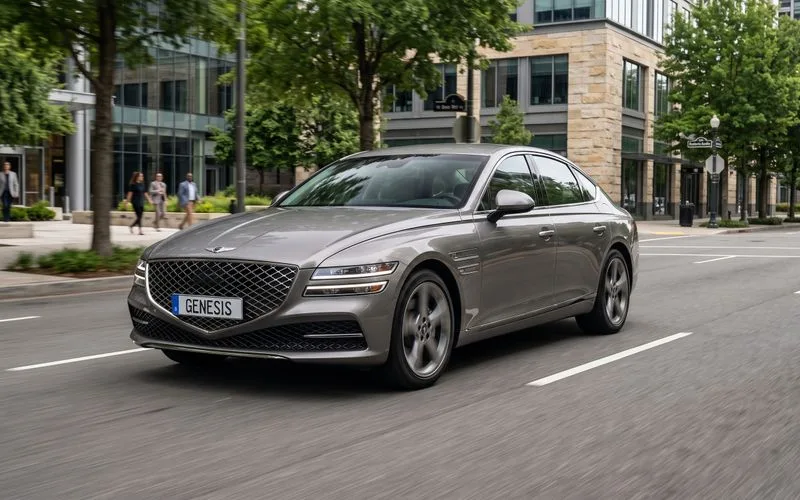 Genesis G80Mid-Size Luxury SedanBetter at: Warranty & power
For roughly $10K more it delivers 300 hp, rear-drive polish and a 10-year/100,000-mile powertrain warranty with three years of included maintenance — the strongest content-per-dollar case against the ES.
Compare 2.80B-
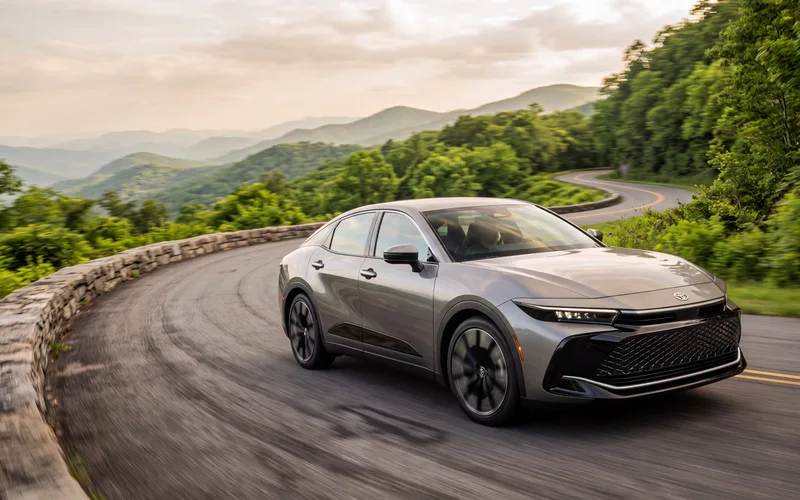 Toyota CrownFull-Size SedanBetter at: Price
Nearly the same hybrid hardware and resale performance for thousands less, if you can live without the Lexus cabin isolation and dealer experience.
Compare 3.27B+
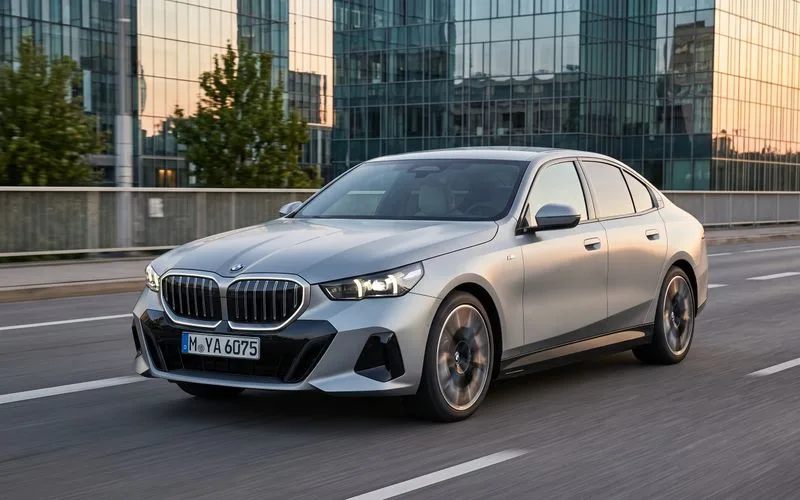 BMW 5 SeriesMid-Size Luxury SedanBetter at: Driving dynamics
The obvious pick if the drive matters — rear-wheel drive, high-5-second 0–60, real steering feel and an optional hands-free highway system the ES doesn't offer.
CompareHow it's evolved
10 scored model years · 2017–2026
Subject scores by year
Hover or tap a score to see what moved it versus the year before. A corner mark flags a big swing.
| Year | Performance | Efficiency | Safety | Space | Cost | Reliability | Tech | Use-case | Driving | Value |
|---|---|---|---|---|---|---|---|---|---|---|
| 2026 | 46 | 88 | 80 | 81 | 48 | 85 | 80 | 64 | 69 | 83 |
| 2025 | 39 | 90 | 76 | 71 | 56 | 89 | 68 | 53 | 65 | 77 |
| 2024 | 37 | 90 | 78 | 71 | 56 | 89 | 67 | 60 | 68 | 80 |
| 2023 | 35 | 90 | 77 | 71 | 58 | 88 | 66 | 53 | 61 | 73 |
| 2022 | 36 | 90 | 81 | 70 | 58 | 89 | 53 | 53 | 61 | 74 |
| 2021 | 39 | 90 | 77 | 75 | 64 | 88 | 54 | 54 | 63 | 73 |
| 2020 | 36 | 90 | 76 | 73 | 62 | 85 | 53 | 55 | 60 | 77 |
| 2019 | 36 | 91 | 75 | 73 | 64 | 81 | 50 | 55 | 60 | 77 |
| 2018 | 34 | 90 | 69 | 68 | 63 | 89 | 33 | 51 | 58 | 68 |
| 2017 | 33 | 90 | 73 | 65 | 63 | 89 | 34 | 50 | 56 | 70 |
Compare two years
Best fit & conditions
Higher scores mean a better fit for that use case. Learn more about use-case fit →
Subject profile
Academic Probation · NHTSA safety recalls
No NHTSA safety recall is on record for the 2026 Lexus ES. Other model years of the ES have 9 — listed below.
9 recalls on other model years of the ES (2017–2025)
Oct 30, 2025Back over prevention: display functionPlease see the recall report for a complete list of models. A software error may cause the rearview camera to freeze or display a blank screen when the vehicle is in reverse. As such, these vehicles fail to comply with the requirements of Federal Motor Vehicle Safety Standard (FMVSS) number 111, "Rear Visibility."
Defect
Toyota Motor Engineering & Manufacturing (Toyota) is recalling certain 2022-2026 Toyota, Lexus, and Subaru Solterra vehicles equipped with a Panoramic View Monitor (PVM) system. Please see the recall report for a complete list of models. A software error may cause the rearview camera to freeze or display a blank screen when the vehicle is in reverse. As such, these vehicles fail to comply with the requirements of Federal Motor Vehicle Safety Standard (FMVSS) number 111, "Rear Visibility."
Risk
A rearview camera that fails to display an image can reduce the driver's view behind the vehicle, increasing the risk of a crash.
Remedy
Dealers will update the parking assist software, free of charge. Owner letters were mailed January 2, 2026. Owners may contact Toyota's customer service at 1-800-331-4331. Toyota's numbers for this recall are 25TB13 and 25LB06. Subaru's number for this recall is WRE25.
NHTSA campaign 25V744000 ↗Manufacturer no. 25TB13/25LB06/WRE251,024,407 vehicles potentially affected (all models in the campaign)Owners notified Dec 5, 2025Filed by Toyota Motor Engineering & ManufacturingFiled as ES, ES HYBRIDFeb 21, 2024Back over prevention: display functionDue to incorrect programming of the parking-assist electronic control unit (ECU) software, the rearview camera image may not immediately display within a couple of seconds after the shifter is placed into reverse. As such, these vehicles fail to comply with the requirements of Federal Motor Vehicle Safety Standard number 111, "Rear Visibility."
Defect
Toyota Motor Engineering & Manufacturing (Toyota) is recalling certain 2023 Mirai, Lexus LS500, LS500H, 2023-2024 Lexus ES250, ES300H, ES350, 2024 Lexus LC500, and LC500H vehicles equipped with a Panoramic View Monitor (PVM) system. Due to incorrect programming of the parking-assist electronic control unit (ECU) software, the rearview camera image may not immediately display within a couple of seconds after the shifter is placed into reverse. As such, these vehicles fail to comply with the requirements of Federal Motor Vehicle Safety Standard number 111, "Rear Visibility."
Risk
A rearview camera that fails to display an image can reduce the driver's rear view, increasing the risk of a crash.
Remedy
Dealers will update the parking assist ECU software, free of charge. Owner notification letters were mailed April 10, 2024. Owners may contact Toyota customer service at 1-800-331-4331. Toyota's numbers for this recall are 24TA01 and 24LA01.
NHTSA campaign 24V124000 ↗Manufacturer no. 24TA01 / 24LA0118,616 vehicles potentially affected (all models in the campaign)Owners notified Apr 10, 2024Filed by Toyota Motor Engineering & ManufacturingFiled as ES, ES HYBRIDDec 20, 2023Air bags: sensor: occupant classificationA short circuit may develop in the Occupant Classification System (OCS) sensor, preventing the front passenger air bag from deploying.
Defect
Toyota Motor Engineering & Manufacturing (Toyota) is recalling certain 2020-2021 Avalon, Avalon Hybrid, Corolla, Highlander, Highlander Hybrid, RAV4, RAV4 Hybrid, Lexus ES350, Lexus RX350, Lexus RX450H, 2021 Sienna Hybrid, Lexus ES250, 2020-2022 Camry, Camry Hybrid, and ES300H vehicles. A short circuit may develop in the Occupant Classification System (OCS) sensor, preventing the front passenger air bag from deploying.
Risk
An air bag that does not deploy during a crash increases the risk of injury.
Remedy
Dealers will inspect and replace the sensor as necessary, free of charge. Interim letters notifying owners of the safety risk were mailed in February 2024. Some final remedy owner letters were mailed October 31, 2024. Letters will continue to be mailed in phases through January 2026. Owners may contact Toyota customer service at 1-800-331-4331. Toyota's number for this recall is 23TB15/23TA15 Lexus 23LB03/23LA03.
NHTSA campaign 23V865000 ↗Manufacturer no. 23TA15, 23LA03999,901 vehicles potentially affected (all models in the campaign)Owners notified Oct 31, 2024Filed by Toyota Motor Engineering & ManufacturingFiled as ES, ES HYBRIDNov 4, 2020Fuel system, gasoline: delivery: fuel pumpThe low-pressure fuel pump inside the fuel tank may fail.
Defect
Toyota Motor Engineering & Manufacturing (Toyota) is recalling certain 2018-2019 4Runner, 2019-2020 Avalon, 2019 Corolla Hatchback, 2017-2019 Highlander, 2018-2020 Camry, 2020 Corolla, 2018-2019 Land Cruiser, 2017-2020 Tacoma, 2019-2020 RAV4, 2019-2020 Sequoia, 2017-2020 Sienna, 2019-2020 Tundra, 2018-2020 Lexus ES350, 2017 Lexus GS200t, 2017-2019 Lexus GS350, 2019 Lexus GS300, 2018-2020 Lexus LC500h, 2019-2020 Lexus LS500, 2018-2019 Lexus GX460, 2017 Lexus IS200t, 2019 Lexus IS300, 2019 Lexus IS350, 2018-2020 Lexus LC500, 2018 Lexus LS500, 2019 Lexus LS500h, 2018-2019 Lexus LX570, 2017 Lexus RC200t, 2019 Lexus RC300, RC350, 2017 and 2019-2020 Lexus RX350, 2018-2020 RX350L, 2019 Lexus UX200, 2018-2019 Lexus NX300 vehicles. The low-pressure fuel pump inside the fuel tank may fail.
Risk
If the fuel pump fails, the engine can stall while driving, increasing the risk of a crash.
Remedy
Toyota will notify owners, and dealers will replace the fuel pump assembly with an improved one, free of charge. Owners of specific models were notified that remedy parts were available starting January 21, 2021. Owners of other models will be notified as remedy parts become available. Remedy parts should be available for all affected vehicles by late March 2021. Owners may contact Toyota customer service at 1-888-270-9371 or Lexus customer service at 1-800-255-3987. Note: This recall is an expansion of recall 20V-012. Toyota's number for this recall is 20TA02. Lexus' number for this recall is 20LA01.
NHTSA campaign 20V682000 ↗Manufacturer no. 20TA02, 20LA011,525,742 vehicles potentially affected (all models in the campaign)Owners notified Jan 21, 2021Filed by Toyota Motor Engineering & ManufacturingFiled as ES350Feb 6, 2020Engine and engine coolingPorosity in the engine castings may result in cracks than can allow coolant to leak internally and/or externally.
Defect
Toyota Motor Engineering & Manufacturing (Toyota) is recalling certain 2020 Toyota Avalon Hybrid, Camry, Camry Hybrid and Lexus ES300h and 2019-2020 RAV4 and RAV4 Hybrid vehicles equipped with 2.5L 4-Cylinder engines. Porosity in the engine castings may result in cracks than can allow coolant to leak internally and/or externally.
Risk
A coolant leak can cause the engine to overheat and cause a vehicle stall in conventional gasoline vehicles, increasing the risk of a crash. Additionally, for all involved vehicles, the engine may get damaged mechanically, possibly resulting in an engine oil leak, increasing the risk of a fire.
Remedy
Toyota will notify owners, and dealers will inspect and replace the engine including the engine block, as necessary, free of charge. The recall began April 3, 2020. Owners may contact Toyota customer service at 1-888-270-9371 or Lexus at 1-800-255-3987. Toyota's number for this recall is 20TA04. Lexus' number for this recall is 20LA02.
NHTSA campaign 20V064000 ↗Manufacturer no. See report44,191 vehicles potentially affected (all models in the campaign)Owners notified Apr 3, 2020Filed by Toyota Motor Engineering & ManufacturingFiled as ES HYBRIDJan 13, 2020Fuel system, gasoline: delivery: fuel pumpToyota Motor Engineering & Manufacturing (Toyota) recalled certain 2018-2019 4Runner, Highlander, Camry, Land Cruiser, Sequoia, Sienna, Tacoma and Tundra, and Lexus RC 300, RC 350, GS 350, GX 460, IS 300, LC 500, LS 500, LX 570, RX 350L, and 2019 Toyota Avalon and Corolla, and certain Lexus NX 300, and ES 350 vehicles on January 13, 2020. On March 4, 2020, Toyota expanded the recall to include certain 2014-2015 Toyota 4Runner and Land Cruiser, 2018 Avalon, Corolla, 2014 FJ Cruiser, 2017 Sienna and Lexus 2018 ES 350, 2018-2019 GS 300, 2013-2014 GS350, 2014-2015 GX 460, IS 350 and LX 570, 2014 IS F, 2018-2019 IS 350, LC 500H and LS 500H, 2013-2015 LS 460, 2015 NX 200T and RC350, 2017 RC 200T and RX 350. Toyota also removed the 2018-2019 Toyota 4Runner and Land Cruiser and 2018-2019 Lexus GX 460 and LX 570 and 2019 NX300 from inclusion in this recall. On March 19, 2020, Toyota expanded the recall to include 2015 Lexus GS350 vehicles. The low-pressure fuel pump inside the fuel tank may fail.
Defect
Toyota Motor Engineering & Manufacturing (Toyota) recalled certain 2018-2019 4Runner, Highlander, Camry, Land Cruiser, Sequoia, Sienna, Tacoma and Tundra, and Lexus RC 300, RC 350, GS 350, GX 460, IS 300, LC 500, LS 500, LX 570, RX 350L, and 2019 Toyota Avalon and Corolla, and certain Lexus NX 300, and ES 350 vehicles on January 13, 2020. On March 4, 2020, Toyota expanded the recall to include certain 2014-2015 Toyota 4Runner and Land Cruiser, 2018 Avalon, Corolla, 2014 FJ Cruiser, 2017 Sienna and Lexus 2018 ES 350, 2018-2019 GS 300, 2013-2014 GS350, 2014-2015 GX 460, IS 350 and LX 570, 2014 IS F, 2018-2019 IS 350, LC 500H and LS 500H, 2013-2015 LS 460, 2015 NX 200T and RC350, 2017 RC 200T and RX 350. Toyota also removed the 2018-2019 Toyota 4Runner and Land Cruiser and 2018-2019 Lexus GX 460 and LX 570 and 2019 NX300 from inclusion in this recall. On March 19, 2020, Toyota expanded the recall to include 2015 Lexus GS350 vehicles. The low-pressure fuel pump inside the fuel tank may fail.
Risk
If the fuel pump fails, the engine can stall while driving, increasing the risk of a crash.
Remedy
Toyota will notify owners, and dealers will replace the fuel pump, free of charge. The recall began May 4, 2020. Owners may contact Toyota customer service at 1-888-270-9371 or Lexus customer service at 1-800-255-3987. Toyota's numbers for this recall are 20TB02 and 20TA02 for Toyota vehicles and 20LB01 and 20LA01 for Lexus vehicles.
NHTSA campaign 20V012000 ↗Manufacturer no. 20TB02/20TA02/20LB011,830,752 vehicles potentially affected (all models in the campaign)Owners notified May 1, 2020Filed by Toyota Motor Engineering & ManufacturingFiled as ES350Jul 24, 2019Electronic stability control (esc) · Service brakesThe brake booster pump may fail causing a deactivation of the Vehicle Stability Control system and a loss of braking assist. As such, these vehicles fail to comply with the requirements of Federal Motor Vehicle Safety Standard (FMVSS) number 126, "Electronic Stability Control Systems."
Defect
Toyota Motor Engineering & Manufacturing (Toyota) is recalling certain 2019 Lexus LS500, LC500, ES300h, UX250h, LS500h, Toyota Prius, RAV4 HV, 2019-2020 Toyota Prius Prime, and 2020 Corolla HV vehicles. The brake booster pump may fail causing a deactivation of the Vehicle Stability Control system and a loss of braking assist. As such, these vehicles fail to comply with the requirements of Federal Motor Vehicle Safety Standard (FMVSS) number 126, "Electronic Stability Control Systems."
Risk
Deactivation of the vehicle stability control system or a loss of braking assist increases the risk of a crash.
Remedy
Toyota will notify owners, and dealers will inspect and, if necessary, replace the brake booster pump, free of charge. The recall began September 20, 2019. Toyota owners may contact Toyota customer service at 1-888-270-9371 and Lexus owners may contact Lexus customer service at 1-800-255-3987. Toyota's numbers for this recall are K1L/K0L. Lexus' numbers for this recall are K2F/KLF.
NHTSA campaign 19V544000 ↗Manufacturer no. K1L/K0L, K2F/KLF6,925 vehicles potentially affected (all models in the campaign)Owners notified Sep 20, 2019Filed by Toyota Motor Engineering & ManufacturingFiled as ES HYBRIDApr 10, 2019Air bags: knee bolsterThese vehicles are equipped with a driver knee air bag assembly mounted to the lower instrument panel (IP) that may have been improperly installed, possibly affecting the deployment of the knee air bag in the event of a crash.
Defect
Toyota Motor Engineering & Manufacturing (Toyota) is recalling certain 2019 Lexus ES vehicles. These vehicles are equipped with a driver knee air bag assembly mounted to the lower instrument panel (IP) that may have been improperly installed, possibly affecting the deployment of the knee air bag in the event of a crash.
Risk
In the event of a crash, there is an increased risk of injury if the knee air bag does not deploy properly.
Remedy
Toyota will notify owners, and dealers will inspect and replace the driver knee air bag assembly, if necessary, free of charge. The recall began May 8, 2019. Owners may contact Toyota customer service at 1-800-255-3987. Toyota's numbers for this recall are KLD and KLE.
NHTSA campaign 19V288000 ↗Manufacturer no. KLD, KLE564 vehicles potentially affected (all models in the campaign)Owners notified May 8, 2019Filed by Toyota Motor Engineering & ManufacturingFiled as ESJun 29, 2017Steering: linkages: tie rod assemblyThe right-hand side tie rod lock nut may loosen over time.
Defect
Toyota Motor Engineering & Manufacturing (Toyota) is recalling certain 2017 Lexus ES350 vehicles. The right-hand side tie rod lock nut may loosen over time.
Risk
If the lock nut loosens, the tie rod may separate causing a loss of steering and increasing the risk of a crash.
Remedy
Toyota will notify owners, and dealers will inspect the lock nut and, if it is found loose, replace the lock nut, steering gear assembly, and tie rod assembly, free of charge. The recall began on July 26, 2017. Owners may contact Toyota customer service at 1-800-331-4331. Toyota's number for this recall is HLC.
NHTSA campaign 17V415000 ↗Manufacturer no. HLC1,761 vehicles potentially affected (all models in the campaign)Owners notified Jul 26, 2017Filed by Toyota Motor Engineering & ManufacturingFiled as ES350
Source: NHTSA Office of Defects Investigation recall database, model years 2017–2026. Recalls are listed by model year as the manufacturer filed them; whether a specific car is affected depends on its VIN — check a VIN at nhtsa.gov ↗. NHTSA model names matched to this page: ES, ES HYBRID, ES350.
Detailed scoring by subject
1Performance & PowertrainThe ES's lowest-graded category.1.09D
The eighth-generation ES drops the 302-hp 3.5L V6 entirely and sells as an electrified-only line, so the volume car is the 2.5L series-parallel hybrid ES 350h at roughly 247 hp combined — up meaningfully from the outgoing ES 300h's 215 hp, but still the weakest opening hand among mid-size luxury sedans, where a BMW 530i starts at 255 hp and a Genesis G80 at 300 hp.
Following the convention used for the Camry's identical 2.5L hybrid, this records the gasoline engine's peak of 163 lb-ft because Toyota/Lexus publish no combined-system torque rating for the power-split hybrid. The figure understates real-world step-off, where the drive motor's instant torque does most of the low-speed work, but it is the only authoritative number available and keeps the ES comparable to other hybrids in the set.
About 247 hp hauling a longer, wider and heavier eighth-generation body puts the volume hybrid in the high-7s — quicker than the outgoing ES 300h's roughly 8.1 s but still the slowest volume trim in the mid-size luxury class, where the E 350 and 530i both claim the high-5s and the G80 2.5T 5.9 s. The dual-motor ES 500e transforms the picture, but it is not the volume configuration.
The ES's defining trait is quiet, seamless hybrid delivery — engine start/stop is nearly imperceptible, EV-mode running at low speed is silent, and there is no turbo lag to manage. It falls short of the 78–80 band held by the E-Class, 5 Series and A6 because the 2.5L four still sounds coarse and thrashy when the power-split system pins revs under hard acceleration, a trait no amount of Lexus sound insulation fully hides.
The planetary eCVT has no gears to hunt between, so in the light-throttle driving that defines the ES it is genuinely seamless, and the newer control software adds simulated ratio steps that mask the worst of the old rubber-band effect. It stays out of the top band because heavy throttle still produces the flared-revs drone that a well-calibrated 8-speed automatic in a 530i (88) or E 350 (82) avoids entirely.
All-wheel drive is optional across the hybrid grades rather than locked to the top of the range, delivered by a rear e-axle that needs no driveshaft, and the ES 500e BEV is dual-motor AWD as standard. It sits below the 84–85 band of the German rivals and the G80 because the system is a traction aid pure and simple — no torque vectoring, no terrain or low-range modes, and rear drive engages only on demand.
The new generation redefines ES as 'Electrified Sedan' and offers two genuinely distinct powertrains — the 2.5L hybrid in front- and all-wheel drive, and a battery-electric variant on the same body — which is broader than the hybrid-only Camry (38) and covers both mainstream and EV buyers. It stops short of the 80-point band because there is no conventional gas engine, no PHEV and no performance derivative, so a buyer wanting a V6 or a plug-in has nothing here.
2Efficiency & RangeThe ES's best-graded category.3.98A+
The 2026 ES opens an all-new generation that drops the gas-only V6 and sells as a hybrid, so the volume ES 300h FWD lands in the low-40s combined — roughly where the outgoing ES 300h sat, with a larger, heavier body offsetting aerodynamic and hybrid-system gains. The AWD variant gives up several mpg.
City is the strong suit of the Toyota/Lexus series-parallel hybrid — the ES 300h should rate at or slightly above its highway figure in town, the usual hybrid inversion, on the order of 44 mpg.
Highway economy is where the hybrid advantage narrows and the bigger body costs most; the low-40s estimate still comfortably clears every gas-powered mid-size luxury sedan in the segment.
EPA publishes no range figure for conventional hybrids, so this is the standard tank × combined-MPG calculation: about 13.2 gallons at roughly 43 mpg gives a little under 600 miles between fills — a genuine long-haul touring range.
At roughly 43 mpg on 87-octane regular over EPA's 15,000-mile year, energy cost lands near $1,450 — far below the premium-fuel German rivals in this segment, whose turbocharged sixes routinely run past $2,200. The prior placeholder of $2,259 was wildly out of step with a hybrid running on regular gas.
The ES hybrid runs its Atkinson-cycle 2.5L four on 87-octane regular with no premium requirement — a real and unusual cost advantage in a segment where nearly every rival specifies premium — and as a conventional hybrid it needs no plug, home charger install, or public-charging account. Short of a top score only because the BEV variants in the same lineup do carry charging-infrastructure requirements.
3SafetyGrades above the middle of the scale.3.43B+
The 2026 model year opens an all-new ES generation (registry production.generations: 1990, 1992, 1997, 2002, 2007, 2013, 2019, 2026), and NHTSA had not published an overall rating for it at the time of scoring. Estimated at 5 stars from the seventh-generation ES, which held 5-star overall, and from TNGA-K platform siblings such as the Camry that rate 5 stars in this dataset.
The redesigned 2026 ES carries no IIHS award of its own — the Institute rates a new generation only after it enters the test queue, so the ES cannot be credited with Top Safety Pick+ status the way the verified 2026 Camry can. Scored in the upper half of the middle band on the strength of the predecessor's award record and a structure engineered against the current small-overlap, updated moderate-overlap and updated side protocols.
Lexus Safety System+ 3.0 is standard on every ES trim — pre-collision with pedestrian/cyclist and intersection-turn detection, full-speed-range dynamic radar cruise, lane departure alert with steering assist, lane tracing assist, road sign assist, proactive driving assist, automatic high beams and emergency driving stop system — and Lexus additionally makes blind-spot monitor with rear cross-traffic alert and safe exit assist standard rather than trim-locked. Nothing safety-relevant is paywalled to an upper trim, which is what separates this from the 50–79 band.
The ES runs the current-generation Toyota/Lexus pre-collision hardware and software, the same family that earns Good vehicle-to-vehicle and Good daytime pedestrian results elsewhere in the lineup, with nighttime pedestrian performance the usual weak spot. Scored at the bottom of the top band because no IIHS front crash prevention result exists for this generation to confirm it.
Blind Spot Monitor with Rear Cross-Traffic Alert is standard, cross-traffic braking intervenes rather than merely warning, and the new generation's electronic door latches tie Safe Exit Assist directly to the door release — it will hold the door shut against approaching traffic or cyclists, which is active intervention rather than a chime.
Lane Tracing Assist plus Proactive Driving Assist is a competent hands-on centering system that holds a lane confidently on well-marked highways, but it comes from the same Toyota lineage that reviewers repeatedly describe as wandering between the lines rather than tracking the centre, and it trails the best German and Genesis systems. Rated above the Camry's implementation for the ES's calmer steering tune and better isolation, not for a different algorithm.
Full-Speed Range Dynamic Radar Cruise Control is standard and works down to a stop and back with curve-speed management and lane-change assistance, and the Lexus calibration is smoother in its braking and gap-closing than the equivalent Toyota system. It stops short of the top of the band because the combined highway assist remains hands-on and is not integrated into a true highway pilot.
Lexus Teammate Advanced Drive, the brand's hands-free highway system, has been a US offering only on the LS and RZ, and hands-free availability on the ES could not be confirmed for the 2026 US range. Scored at the top of the no-hands-free band rather than inside it because a low-speed traffic-jam hands-off function on upper trims is plausible for a new-generation Lexus sedan.
Full-LED headlamps are standard and automatic high beams come with Lexus Safety System+ 3.0, but Lexus's better adaptive high-beam hardware has historically been reserved for upper trims and option packages, which is the classic Good-on-top-trims, Acceptable-on-the-volume-trim pattern. No IIHS headlight rating exists for this generation to settle it.
The eighth-generation ES trades the old three-box shape for a lower, fastback-style roofline with heavier rear pillars and a higher deck, which costs over-the-shoulder and rear sightlines even as the forward view over the low cowl stays good. Camera compensation is real but incomplete on the volume trim, where the multi-camera panoramic view is typically a package rather than standard equipment.
The new generation's stretched wheelbase adds usable rear legroom, so a rear-facing seat fits without forcing the front passenger forward, and the outboard positions have full anchor sets with top tethers. The score sits mid-band because Lexus anchors are typically set deep in the seat bight and need digging, and the middle position is a tether-only, tight-for-three-across proposition as in every car in this segment.
4Space & ComfortGrades near the top of the scale.3.53A-
The eighth-generation ES remains a conventional five-passenger sedan (2+3) across the hybrid and BEV variants; no 4-seat executive package is offered in the US lineup.
Estimated for the all-new 2026 (8th-gen) ES, which grows to roughly 61.4 in tall versus 56.9 in for the 2019-2025 car; that added height should lift front headroom above the outgoing 37.4 in figure.
Front legroom was already generous on the outgoing ES at 42.4 in; the longer 116.1 in wheelbase of the 2026 car should hold or slightly improve it, and front-row room is not where the redesign concentrated its gains.
The taller 2026 body should improve on the outgoing 37.8 in, but the ES keeps a strongly tapered rear roofline, so the gain is modest rather than transformative.
The single biggest packaging change for 2026: wheelbase grows about 3.1 in to roughly 116.1 in, and Lexus positioned rear-seat space as a headline benefit of the redesign, so rear legroom should climb well clear of the outgoing 39.2 in.
The outgoing ES carried a large 16.7 cu ft trunk with no hybrid penalty because the battery sits under the rear seat; the longer 2026 body should preserve or slightly improve that, though the BEV ES 350e/500e packaging is unverified.
Competitive but not innovative: a redesigned center console with wireless charging, usable door bins and a deep glovebox, without the underfloor tricks or frunk-style bonus space that earn scores above 80. Roughly level with the E-Class (68) and 5 Series (72).
Long-haul front-seat comfort is the ES's most consistently praised trait across generations, and the 2026 car adds available reclining rear seats with heating and ventilation on upper trims. Placed level with the E-Class (87) and above the firmer, more sport-oriented 5 Series (84).
Isolation over broken pavement is the ES's defining characteristic, and the longer 2026 wheelbase plus available adaptive variable suspension should extend that lead; the deduction reflects the firmer secondary ride on F Sport trims with larger wheels.
Lexus NVH engineering — acoustic glass, extensive sound deadening, active noise control — combined with hybrid and BEV powertrains that run silently at low load, puts the ES at or near the top of the segment, ahead of the E-Class (88) and 5 Series (86).
Heated and ventilated front seats, heated steering wheel and remote climate pre-conditioning are widely available, and the 2026 redesign adds heated/ventilated reclining rear seats on Luxury trims; held below the 90s because the ES uses dual-zone rather than the four-zone climate of some rivals.
5Cost of OwnershipOne of the ES's weakest categories.1.20D
The ES is all-new for 2026 (eighth generation) and hybrid-only — the four-cylinder ES 250 and V6 ES 350 are gone, so the entry point rises to the ES 300h. Estimated from the outgoing 2025 ES base (~$43.2K + ~$1.15K destination) plus a typical redesign/content increase; this could not be verified against a live Lexus price sheet in this session.
ES buyers overwhelmingly take a mid-grade Premium rather than the stripped base, and a meaningful share add AWD (ES 350h). Estimated from the base figure plus the customary Premium-package and AWD walk; unverified for 2026.
This is the ES's single biggest ownership advantage: Lexus consistently posts the lowest maintenance and repair costs of any luxury brand, and the 2.5L hybrid powertrain is a mature, high-volume Toyota unit whose regenerative braking materially extends brake life. Priced modestly above the mechanically-related Toyota Crown to reflect Lexus dealer labor rates and luxury-grade parts.
Lexus is a perennial residual-value leader and the ES holds value far better than any German mid-size luxury sedan, but two headwinds cap it: the luxury sedan segment as a whole is depreciating hard as buyers migrate to SUVs, and first-year-of-a-new-generation pricing sets a high MSRP denominator. Well below the placeholder's implausible 62.1%.
Lexus's long-standing brand-wide basic coverage, unchanged for 2026. Matches the German luxury standard and beats parent-brand Toyota's 3 yr / 36,000 mi.
Scored on the standard powertrain term for consistency with the rest of the dataset, where hybrid-specific coverage is not substituted (the hybrid-only Camry is recorded at its 5 yr powertrain term, not its battery term). The far longer hybrid-component and battery coverage is real added protection and is noted in displayValue — it just isn't what this item measures.
A mixed package: complimentary scheduled maintenance runs only 1 yr / 10,000 mi (the first two services) — shorter than parent-brand ToyotaCare's 2 yr / 25,000 mi — but roadside assistance is a class-leading 4 years with unlimited mileage, and Lexus bundles multi-year connected-services trials plus loaner and concierge treatment at the dealer. Solidly mid-band: real coverage, but nothing like Genesis's three years of included maintenance with valet pickup.
$52,500 volume-trim price minus its estimated resale value after 5 years (53% retained, or about $27,825) leaves about $24,675 in depreciation. Add the projected $5,300 in 5-year maintenance and repairs, and owning this vehicle for 5 years costs about $29,975 in total.
6Reliability & QualityOne of the ES's strongest categories.3.78A
The ES nameplate is a perennial reliability benchmark — the outgoing seventh generation earned top-tier predicted-reliability marks from Consumer Reports year after year and sat at or near the top of the luxury mid-size class. The 2026 car is an all-new eighth generation on a fresh TNGA-K-based platform with a new cabin electronics architecture, and first-year-of-generation redesigns historically give up ground on predicted reliability until field data accumulates, which is why this lands below the proven Camry (88) rather than beside it.
Lexus is the most consistently top-ranked brand in US dependability research, finishing first or in the top two in Consumer Reports brand reliability rankings and J.D. Power's Vehicle Dependability Study across many consecutive years. That is a stronger multi-year record than any German rival in this segment and edges even Toyota, which scores 90 here.
The seventh-generation ES ran a notably clean NHTSA recall record for a modern luxury sedan, with no systemic powertrain or fire campaigns, and Lexus TSB volume is low by class standards. The 2026 model is a brand-new generation with essentially no field history, so this reflects a strong prior discounted for unavoidable early-production recall and bulletin risk rather than a verified clean sheet.
The volume configuration is the 2.5-liter Dynamic Force four paired with Toyota's hybrid system and a planetary eCVT — the most field-proven electrified powertrain family in the world, with a high-mileage taxi and fleet record and no chronic failure mode. The eCVT has no clutch packs or torque converter to wear, a structural durability advantage over the German rivals' 8-speed automatics.
The eighth-generation cabin is a clear step up from the outgoing car, with a more ambitious dashboard architecture, better upper-surface materials and Lexus's signature switchgear damping. It still trails the segment's material benchmarks — the E-Class (93) and A6 (89) push further on visual richness and metal content — and lower trims lean on more conventional surfaces than the price implies.
Assembly consistency is Lexus's strongest single quality attribute — tight, repeatable panel gaps, near-absent squeak-and-rattle complaints, and consistently strong initial-quality results driven by the brand's takumi inspection process. Scored just above the BMW 5 Series (86) and E-Class (88), with a point held back for normal first-year-of-production variation on an all-new body.
Lexus runs roughly 240 US dealerships — thinner on the ground than BMW or Mercedes-Benz and far thinner than Toyota — but it is the reference point for luxury service satisfaction, regularly leading or placing top-three in J.D. Power's Customer Service Index. Strong satisfaction outweighs the modest density, placing it above BMW and Mercedes (both 80) and well above Audi (72).
The ES shares its platform, engine and hybrid hardware with high-volume Toyota models, so mechanical parts are abundant, cheap by luxury standards and supported by a real independent-shop ecosystem — a structural advantage over the dealer-dependent Germans (E-Class 48, A6 52, 5 Series 64). It sits below the Camry (92) because luxury-specific trim, glass, lighting and body panels still carry premium pricing, and an all-new generation's unique parts take time to reach the aftermarket.
7Technology & InfotainmentGrades above the middle of the scale.3.43B+
The all-new eighth-generation ES (revealed at Auto Shanghai in April 2025, on sale in the US for 2026) moves to a 14-inch Lexus Interface center touchscreen, up from the 8.0/12.3-inch split of the outgoing seventh-gen car. Replaces the prior placeholder value of 12.5 in.
Lexus Interface is quick to boot, logically laid out, and keeps a physical volume knob and climate shortcuts, but the redesigned ES adds capacitive 'Responsive Hidden Switches' on the door and dash surfaces that reviewers have flagged as unintuitive versus real buttons. Good but a notch below iDrive 9 and MBUX in feature depth.
Wireless Apple CarPlay and wireless Android Auto are standard across the Lexus Interface lineup, including the 2026 ES, with no wired-only base trim.
The 'Hey Lexus' natural-language assistant handles climate, navigation, and media commands conversationally and cloud navigation gets live traffic and search, but the best cloud features depend on an active Drive Connect subscription after the trial, which pushes many owners back to phone projection.
Mark Levinson premium surround audio remains one of the stronger branded systems in the mid-size luxury class and is available on upper ES trims; the standard Lexus premium system is competent if unremarkable.
A 12.3-inch fully digital, configurable gauge cluster is standard on the 2026 ES rather than gated to upper trims, with multiple layout modes.
Lexus Interface supports over-the-air updates for multimedia software and maps, plus some vehicle-system modules, but Lexus does not ship the regular feature-adding whole-vehicle OTA campaigns that Tesla, Rivian, or BMW Remote Software Upgrade do.
The Lexus app covers remote start, climate precondition, lock/unlock, vehicle locate and status, and supports Digital Key, but Remote Connect and Drive Connect revert to paid subscriptions after the trial — the standing owner complaint about Toyota/Lexus connected services.
USB-C data and charging ports are provided front and rear and a wireless phone charging pad is standard or near-standard, but there is no household AC outlet in the hybrid ES.
Smart Key proximity entry and push-button start are standard, a power trunk is available, and Lexus Digital Key allows phone-as-key with sharing — a full keyless suite, though the digital key ties back into the connected-services subscription.
Rear camera plus front and rear parking sensors with Parking Support Brake are standard, and a Panoramic View Monitor with Advanced Park automated parking is available, but the 360-degree camera is gated to upper trims rather than standard as on the 5 Series.
A color head-up display is available on the 2026 ES but bundled into upper trims or option packages rather than offered on the volume trim, which is the same pattern as most rivals in the class.
8Use-Case FitOne of the ES's weakest categories.2.34C+
The eighth-generation redesign is a real gain for car-seat duty: the wheelbase stretches roughly 3 in to about 116.1 in and rear legroom climbs toward ~40.5 in (cat4.1.5), so a rear-facing seat fits without pushing the front passenger forward, and the ~16.8 cu ft trunk (cat4.2.1) swallows a full-size stroller with room left — more than the E-Class (12.7) or A6 (14.6) manage. Held to the middle band by the things a sedan cannot fix: trunk lift-over instead of a hatch, no third row, LATCH anchors buried in the seat bight (cat3.3.3 = 74), and a middle position that is tether-only and tight for three across.
Lexus Safety System+ 3.0 is standard on every ES trim — pre-collision with pedestrian, cyclist and intersection-turn detection, full-speed-range radar cruise, lane tracing, proactive driving assist and emergency driving stop — with blind-spot monitor and rear cross-traffic braking also standard rather than optioned (cat3.2.1 = 91, cat3.2.3 = 86), so a family buying the entry trim gets the whole suite. The new generation's electronic door latches tie Safe Exit Assist directly into the door release, holding the door against approaching traffic. Kept out of the high 80s because the redesigned ES carries no IIHS award of its own yet (cat3.1.2 = 70) and the 360-degree camera is gated to upper trims.
Four-up touring is where the ES is strongest: cabin quietness rates 90 and ride quality 88 in cat4 — at or above every real-scored rival in the class — front seats rate 87, the stretched wheelbase gives back-seat passengers genuine stretch-out room, and upper trims add heated, ventilated and reclining rear seats. Trunk space stays intact with all five seats occupied because the hybrid battery lives under the rear cushion rather than in the trunk. The deduction is for amenities rather than comfort: the ES uses dual-zone climate where the A6 and 5 Series offer tri- and four-zone with rear controls, and there is no rear entertainment provision.
Low-effort commuting is the ES's defining mission and the hybrid drivetrain suits it exactly: the planetary eCVT has no shift shock and no torque-converter hesitation, the car pulls away and crawls in traffic on electric power with the engine off, and stop-start is inherent to the system rather than an added-on 48V restart. Add Lexus ride isolation, light steering, standard full-speed-range radar cruise that works to a stop and back (cat3.2.5 = 80) and standard wireless CarPlay/Android Auto on the 14-inch screen. Short of the mid-90s because reviewers have flagged the new generation's capacitive 'Responsive Hidden Switches' on the door and dash as a step backwards from real buttons.
This is the ES's single biggest advantage over the German mid-size luxury sedans and it is not close. The volume ES 300h returns roughly 43 MPG combined on 87-octane regular for about $1,450 a year at 15,000 miles, where the A6 needs premium at ~28 MPG (~$2,350/yr) and the E 350 4MATIC ~26 MPG (~$2,900/yr) — the ES commutes for barely half the fuel bill. Regenerative braking materially extends pad and rotor life, and Lexus posts the lowest maintenance-and-repair costs of any luxury brand with mechanical parts shared with high-volume Toyotas. Held below 90 because insurance runs around $2,600/yr and the car still wears luxury-sized tires.
The redesign grew the ES in every direction — roughly 202 in long and 75.6 in wide on a 116.1 in wheelbase — which makes it the largest of the real-scored mid-size luxury sedans, longer than the 199.2 in 5 Series and well past the ~194 in E-Class, and it is a genuine nuisance in city garages and parallel spots. Visibility went the same way: the fastback roofline, heavier rear pillars and higher deck cost over-the-shoulder and rearward sightlines (cat3.3.2 = 66). Standard rear camera plus front and rear sensors with Parking Support Brake keep it manageable, but the Panoramic View Monitor and Advanced Park that would really solve it are optioned on upper trims rather than standard as on the E-Class.
The ES has no US tow rating, no bed, and no payload provision beyond a trunk — it is a luxury commuter sedan and nothing about the eighth generation changes that. The ~16.8 cu ft trunk is the largest in this peer group and the hybrid system's instant low-end torque is unbothered by a full car, which is worth a couple of points over the E-Class and A6, but the aperture is a decklid rather than a liftgate and long or bulky loads simply will not go in. Squarely in the 'not meaningfully work-capable' band.
Mechanically the ES is the most work-proof car in this peer group by a wide margin: the 2.5L Dynamic Force four with Toyota's hybrid system and planetary eCVT is the most field-proven electrified powertrain in the world, with a high-mileage taxi and fleet record, no chronic failure mode, cheap shared parts and a real independent-shop ecosystem — a structural advantage over the 48V mild-hybrid Germans whose complexity and service pricing sink them into the 20s and 30s. What keeps it near the band floor is everything above the chassis: leather or NuLuxe upholstery, capacitive switch surfaces, a 14-inch glass display and 19-inch wheels are not surfaces you load tools onto, and there is no wear-friendly vinyl or rubber-floor option.
There is essentially nothing here: no factory hitch, no bed, no roof rails, no washable surfaces, and — confirmed in this vehicle's tech scoring — no household AC outlet anywhere in the hybrid ES, only USB-C ports and a 12V socket. Cargo access is a decklid onto a carpeted trunk floor with a few tie-down hooks, and no upfitter ecosystem exists for the nameplate. Bottom of the guidance band alongside the other luxury sedans.
A near-ideal interstate car. Cabin quietness rates 90 and ride quality 88 — the best pairing among the real-scored mid-size luxury sedans — front seats are the ES's most consistently praised feature across generations, and the hybrid's roughly 570-mile tank range beats every premium-fuel German rival in the class and turns a long day into one fuel stop. Standard full-speed radar cruise with curve-speed management cuts fatigue. The deduction is for the assist system's ceiling rather than its presence: lane tracing is a hands-on system reviewers describe as wandering between the lines (cat3.2.4 = 70), and there is no confirmed hands-free highway mode on the ES the way the 5 Series offers Highway Assistant.
Pavement-bound with less outdoor provision than its rivals. AWD exists — the ES 350h adds an electric rear axle — but it is an upgrade rather than standard equipment, where the E-Class ships 4MATIC and the A6 quattro across the range. Beyond that there is roughly 5.5 in of ground clearance, no factory roof rails or crossbar provision, no tow rating for a bike or small trailer, no 110V outlet for camp power, and low-profile all-season tires on 19-inch wheels. Gravel forest roads and a trunk-mounted bike rack are the honest limit.
The trunk itself is a strength — roughly 16.8 cu ft with no hybrid penalty, because the battery sits under the rear seat cushion rather than eating the load floor, which puts the ES well clear of the E-Class (12.7) and A6 (14.6) and within reach of the 5 Series. Flexibility beyond that is thin: it is a fixed-aperture decklid rather than a hatch, ES rear seatbacks have historically been fixed or pass-through-only on some trims rather than a full 40/20/40 fold, no roof rails or hitch are offered for overflow, and in-car storage is competitive but unremarkable (cat4.2.5 = 70). Normal luggage fits easily; skis, flat-pack furniture and long gear do not.
9Driving ExperienceMid-pack among this car's ten categories.2.64C+
The 2026 ES opens an all-new eighth generation on an evolved GA-K front-drive platform with a wheelbase stretched roughly 3 in to about 116 in, a wider track and a stiffer body, so body control and straight-line composure improve over the outgoing car. It remains a comfort-tuned front-wheel-drive luxury sedan that leans on safe understeer rather than adjustability, so it sits below the rear-drive E-Class (75) and 5 Series (80) in this set.
Lexus tunes the ES electric assist for light, low-effort isolation, and the new generation keeps that brief — accurate and consistent on center but with little road feedback reaching the rim. That places it near the E-Class (64) and above the body-on-frame GX (58), well short of the segment's rear-drive benchmarks.
The volume ES 350h uses an electronically controlled brake system blending regenerative and friction braking, which Toyota/Lexus fifth-generation hybrid hardware does with little of the grabbiness that dogs rival regen systems. Stopping power is adequate rather than strong — low-rolling-resistance tires and a comfort-first pedal calibration keep it out of the top band.
This is the ES's strongest dynamic trait: the 2.5L series-parallel hybrid in the ES 350h pulls away on electric torque with no stop/start shudder, no shift steps and seamless engine hand-offs. Only the elastic e-CVT response under hard throttle keeps it from the very top of the band.
At cruise the ES is near-silent — low-speed EV running and heavy acoustic isolation are generation hallmarks — but the four-cylinder hybrid still hangs at high revs under full throttle, the classic e-CVT drone. Refined and inoffensive most of the time, audible and uninspiring when pushed.
No published curb-to-curb figure for the eighth-generation ES could be verified for this scorecard. The estimate carries forward the seventh generation's 37.4 ft and adds for the roughly 3 in of extra wheelbase and wider track, which typically costs about a foot of turning diameter at a comparable steering angle.
Seat comfort, adjustment range and forward sightlines are traditional ES strengths, and the redesign keeps a low, well-supported driving position with a proper instrument cluster ahead of the driver. Points come off for the new cabin's move toward touch-sensitive door and console switchgear and for the fastback roofline's tighter over-shoulder view.
The ES is explicitly engineered as a serene, effortless luxury cruiser, and the volume ES 350h delivers exactly that — pleasant, quiet and completely undemanding, with no soundtrack or throttle response an enthusiast would seek out. Squarely 'pleasant but forgettable' against the E-Class (74) and 5 Series (78).
10Value & Market PositionOne of the ES's strongest categories.3.67A-
The eighth-generation ES continues Lexus's include-it-standard habit: the full Lexus Safety System+ active-safety suite (adaptive cruise, pre-collision with pedestrian detection, lane tracing, road-sign assist), blind-spot monitor with rear cross-traffic alert, wireless Apple CarPlay/Android Auto, dual-zone climate, power front seats and a large central touchscreen are base equipment, where a BMW 530i or Mercedes E350 still bills separately for comparable driver-assist and audio content. It stops short of the Genesis G80's fully-loaded-base approach — heated/ventilated seats, Mark Levinson audio, head-up display and the panoramic roof stay on higher grades and packages.
The ES is the content-per-dollar standout of the mid-size luxury sedan class: it opens in the mid-$40,000s with a hybrid powertrain standard, versus roughly $60K for a BMW 530i, $63K for a Mercedes E350 and about $58K for a Genesis G80, while delivering comparable cabin space, materials and a quieter ride. Buyers trade away rear-drive dynamics and prestige-badge cachet, but no direct rival matches the equipment, refinement and fuel economy it delivers per dollar.
The new generation widens the powertrain menu rather than narrowing it — hybrid four-cylinder grades in front- and all-wheel drive plus a battery-electric variant on the same body, spread across Lexus's usual Premium / Luxury / F Sport Design / F Sport Handling / Ultra Luxury grade ladder. The one real gap is at the bottom: the cheap gas-only ES 250 and the V6 ES 350 are gone, so the entry price steps up and enthusiasts lose the six-cylinder option.
The ES has been the best-selling non-Tesla luxury sedan in the US for most of the past decade, running roughly 40,000–50,000 units a year — comfortably ahead of the BMW 5 Series, Mercedes E-Class and Audi A6 and effectively the volume anchor of a shrinking segment. The all-new generation carries an unproven sales trajectory of its own, and the polarizing new styling plus a higher entry price are genuine risks, but nameplate acceptance is as strong as anything in the class.
Lexus carries exceptional brand equity on dependability, dealer experience and ownership satisfaction — a perennial leader in JD Power dependability studies and KBB brand awards — and enjoys unusually strong repeat-buyer loyalty, which supports resale. It sits a notch below Mercedes-Benz, BMW and Porsche on pure aspirational cachet and enthusiast credibility, which is precisely the gap the more dramatic eighth-generation styling is meant to close.
This is the ES's weakest value dimension in 2026: Lexus is a firm-pricing brand to begin with, and a first-year all-new generation means thin dealer discounting, limited factory cash and, on early allocation, occasional transactions at or above MSRP. Lexus Financial Services subvented leases — historically the ES's strongest buyer incentive — should normalize as inventory builds through the model year, and the electric variant may qualify for lease-based credit pass-through, but a buyer shopping today has far less room to negotiate than on a mid-cycle 5 Series or E-Class.
As fresh as the segment gets — 2026 is year one of an all-new eighth-generation ES, revealed at Auto Shanghai in April 2025, with new sheetmetal on a longer wheelbase, a redesigned interior and tech stack, an electrified-only powertrain lineup and a first-ever battery-electric ES variant. Zero redesign risk for a buyer, and the platform and infotainment are current rather than carried over.
Reviews of the new ES follow the nameplate's long-running pattern — near-universal praise for ride quality, cabin isolation, build quality, hybrid efficiency and value, alongside consistent criticism that it trails the BMW 5 Series and Genesis G80 for driver engagement, and the redesign's dramatic styling has proven genuinely divisive. It reliably lands on best-luxury-sedan buyer lists and dependability awards, but it is rarely the outright winner of an enthusiast comparison test, and the new generation is too recent to have accumulated a major awards record.