

The verdict
A mixed-report luxury coupe, strong on reliability and held back by efficiency.
The 2025 Lexus RC is a beautiful, superbly built grand tourer sold in its eleventh and final year, and it drives exactly like a car designed in 2014 — 241 hp and 7.3 seconds to 60 mph in the volume RC 300, an 8.0-inch screen with wired-only CarPlay, and 27.3 inches of rear legroom. What it offers in exchange is genuinely rare: the quietest cabin and best ride in the compact luxury coupe class, Lexus dependability (the brand is #1 in J.D. Power's Vehicle Dependability Study three years running), about $3,800 in five-year maintenance versus $7,000-plus for a German rival, and roughly 68% resale retention — the best in this dataset. Buy it if you want a quiet, handsome, cheap-to-own two-door for two people and a weekend bag, and you genuinely do not care that it is slow. Cross-shop a BMW 4 Series or Mercedes CLE if speed, screens, or a usable back seat matter at all.
Jump to scoresStrengths
- Lexus dependability, at the end of an eleven-year debugging cycle
- Cheapest luxury coupe to own after you buy it
- The quietest, most comfortable ride in the class
What holds it back
- Slow, and thirsty for a car that is slow
- The back seat and the trunk are close to unusable
- 2014-era technology at a 2025 price
Top alternatives
Cars shoppers cross-shop with the Lexus RC 2.88B-
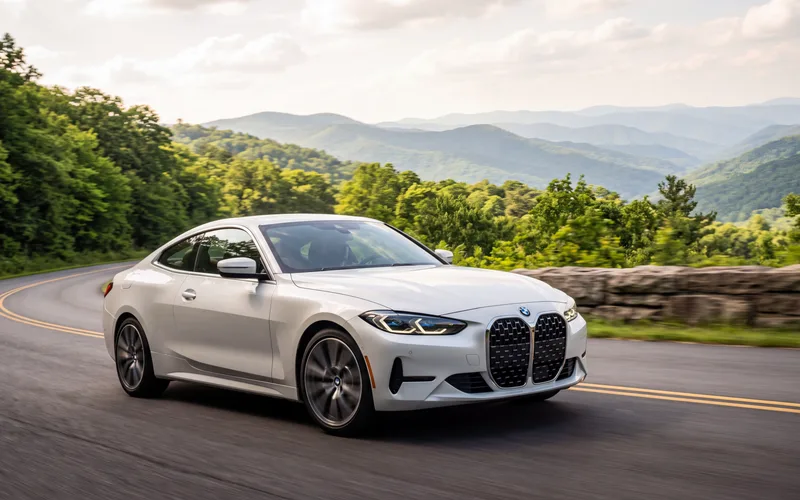 BMW 4 SeriesLuxury CoupeBetter at: Driving dynamics
The default cross-shop: significantly quicker, far better infotainment, a usable back seat and a bigger trunk, for about $4,000 more up front.
Compare 2.74B-
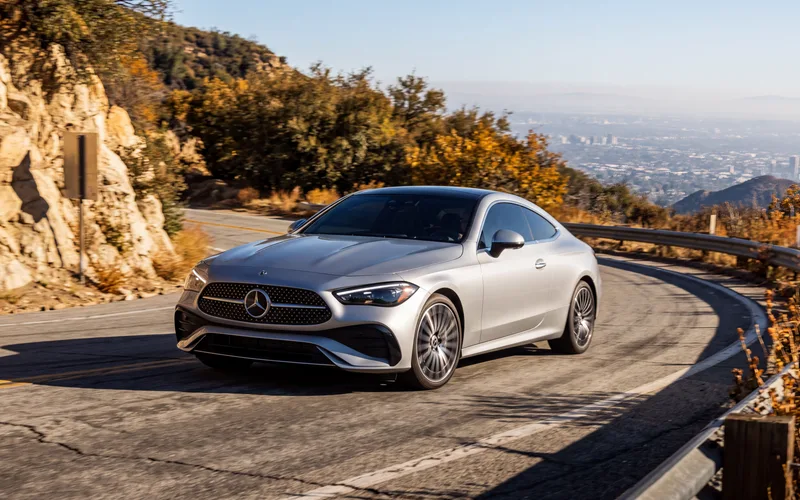 Mercedes-Benz CLE CoupeLuxury CoupeBetter at: Interior tech
A newer, larger, far more modern luxury coupe if you can stretch to roughly $56,500 and accept German running costs.
Compare 2.30C+
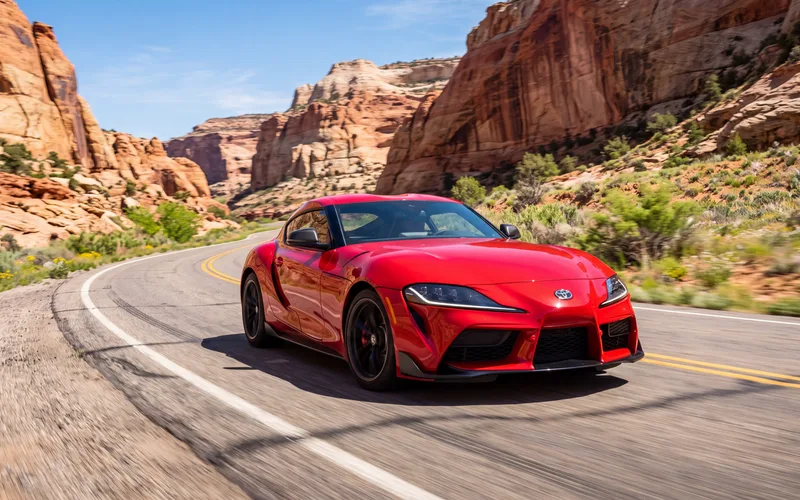 Toyota GR SupraSports CarBetter at: Performance
Delivers the performance the RC's styling promises and does not, with Toyota-family reliability behind it, if you can live without rear seats.
CompareHow it's evolved
9 scored model years · 2017–2025
Subject scores by year
Hover or tap a score to see what moved it versus the year before. A corner mark flags a big swing.
| Year | Performance | Efficiency | Safety | Space | Cost | Reliability | Tech | Use-case | Driving | Value |
|---|---|---|---|---|---|---|---|---|---|---|
| 2025 | 46 | 27 | 61 | 53 | 66 | 85 | 47 | 43 | 66 | 56 |
| 2024 | 46 | 27 | 61 | 52 | 66 | 86 | 41 | 38 | 69 | 57 |
| 2023 | 48 | 27 | 61 | 53 | 71 | 84 | 47 | 44 | 69 | 61 |
| 2022 | 46 | 26 | 58 | 53 | 71 | 82 | 44 | 38 | 67 | 52 |
| 2021 | 46 | 26 | 58 | 53 | 71 | 83 | 41 | 42 | 68 | 54 |
| 2020 | 46 | 23 | 55 | 53 | 72 | 83 | 41 | 41 | 68 | 59 |
| 2019 | 48 | 23 | 57 | 53 | 71 | 79 | 39 | 41 | 68 | 63 |
| 2018 | 48 | 31 | 60 | 52 | 70 | 81 | 33 | 41 | 66 | 59 |
| 2017 | 47 | 31 | 46 | 51 | 70 | 78 | 32 | 36 | 66 | 58 |
Compare two years
Best fit & conditions
Higher scores mean a better fit for that use case. Learn more about use-case fit →
Subject profile
Academic Probation · NHTSA safety recalls
No NHTSA safety recall is on record for the 2025 Lexus RC. Other model years of the RC have 5 — listed below.
5 recalls on other model years of the RC (2017–2022)
Apr 8, 2026Fuel system, gasoline: delivery: fuel pumpThe low-pressure fuel pump inside the fuel tank may fail.
Defect
Toyota Motor Engineering & Manufacturing (Toyota) is recalling certain 2015-2022 Lexus RC, 2016-2020 GS, and 2022 IS vehicles. The low-pressure fuel pump inside the fuel tank may fail.
Risk
Fuel pump failure can cause an engine stall, increasing the risk of a crash.
Remedy
Dealers will replace the fuel pump assembly, free of charge. Owner letters were mailed October 15, 2026. Owners may contact Toyota's customer service at 1-800-331-4331. Toyota's numbers for this recall are 26LB05 and 26LA05.
NHTSA campaign 26V222000 ↗Manufacturer no. 26LB05/26LA059,139 vehicles potentially affected (all models in the campaign)Owners notified Oct 14, 2026Filed by Toyota Motor Engineering & ManufacturingFiled as RCAug 10, 2022Equipment: other: labels · TiresThe tire information label does not list the vehicle's weight capacity. As such, these vehicles fail to comply with the requirements of Federal Motor Vehicle Safety Standard number 110, "Tire Selection and Rims."
Defect
Toyota Motor Engineering & Manufacturing (Lexus) is recalling certain 2020-2022 Lexus RC F vehicles. The tire information label does not list the vehicle's weight capacity. As such, these vehicles fail to comply with the requirements of Federal Motor Vehicle Safety Standard number 110, "Tire Selection and Rims."
Risk
The vehicle can be overloaded without the weight capacity information, increasing the risk of a crash.
Remedy
Dealers will replace the tire information label, free of charge. Owner notification letters are expected to be mailed September 25, 2022. Owners may contact Lexus' customer service at 1-800-331-4331. Lexus' number for this recall is 22LA03.
NHTSA campaign 22V615000 ↗Manufacturer no. 22LB0313 vehicles potentially affected (all models in the campaign)Owners notified Sep 28, 2022Filed by Toyota Motor Engineering & ManufacturingFiled as RC FNov 4, 2020Fuel system, gasoline: delivery: fuel pumpThe low-pressure fuel pump inside the fuel tank may fail.
Defect
Toyota Motor Engineering & Manufacturing (Toyota) is recalling certain 2018-2019 4Runner, 2019-2020 Avalon, 2019 Corolla Hatchback, 2017-2019 Highlander, 2018-2020 Camry, 2020 Corolla, 2018-2019 Land Cruiser, 2017-2020 Tacoma, 2019-2020 RAV4, 2019-2020 Sequoia, 2017-2020 Sienna, 2019-2020 Tundra, 2018-2020 Lexus ES350, 2017 Lexus GS200t, 2017-2019 Lexus GS350, 2019 Lexus GS300, 2018-2020 Lexus LC500h, 2019-2020 Lexus LS500, 2018-2019 Lexus GX460, 2017 Lexus IS200t, 2019 Lexus IS300, 2019 Lexus IS350, 2018-2020 Lexus LC500, 2018 Lexus LS500, 2019 Lexus LS500h, 2018-2019 Lexus LX570, 2017 Lexus RC200t, 2019 Lexus RC300, RC350, 2017 and 2019-2020 Lexus RX350, 2018-2020 RX350L, 2019 Lexus UX200, 2018-2019 Lexus NX300 vehicles. The low-pressure fuel pump inside the fuel tank may fail.
Risk
If the fuel pump fails, the engine can stall while driving, increasing the risk of a crash.
Remedy
Toyota will notify owners, and dealers will replace the fuel pump assembly with an improved one, free of charge. Owners of specific models were notified that remedy parts were available starting January 21, 2021. Owners of other models will be notified as remedy parts become available. Remedy parts should be available for all affected vehicles by late March 2021. Owners may contact Toyota customer service at 1-888-270-9371 or Lexus customer service at 1-800-255-3987. Note: This recall is an expansion of recall 20V-012. Toyota's number for this recall is 20TA02. Lexus' number for this recall is 20LA01.
NHTSA campaign 20V682000 ↗Manufacturer no. 20TA02, 20LA011,525,742 vehicles potentially affected (all models in the campaign)Owners notified Jan 21, 2021Filed by Toyota Motor Engineering & ManufacturingFiled as RC 200T, RC 300, RC 350Jan 13, 2020Fuel system, gasoline: delivery: fuel pumpToyota Motor Engineering & Manufacturing (Toyota) recalled certain 2018-2019 4Runner, Highlander, Camry, Land Cruiser, Sequoia, Sienna, Tacoma and Tundra, and Lexus RC 300, RC 350, GS 350, GX 460, IS 300, LC 500, LS 500, LX 570, RX 350L, and 2019 Toyota Avalon and Corolla, and certain Lexus NX 300, and ES 350 vehicles on January 13, 2020. On March 4, 2020, Toyota expanded the recall to include certain 2014-2015 Toyota 4Runner and Land Cruiser, 2018 Avalon, Corolla, 2014 FJ Cruiser, 2017 Sienna and Lexus 2018 ES 350, 2018-2019 GS 300, 2013-2014 GS350, 2014-2015 GX 460, IS 350 and LX 570, 2014 IS F, 2018-2019 IS 350, LC 500H and LS 500H, 2013-2015 LS 460, 2015 NX 200T and RC350, 2017 RC 200T and RX 350. Toyota also removed the 2018-2019 Toyota 4Runner and Land Cruiser and 2018-2019 Lexus GX 460 and LX 570 and 2019 NX300 from inclusion in this recall. On March 19, 2020, Toyota expanded the recall to include 2015 Lexus GS350 vehicles. The low-pressure fuel pump inside the fuel tank may fail.
Defect
Toyota Motor Engineering & Manufacturing (Toyota) recalled certain 2018-2019 4Runner, Highlander, Camry, Land Cruiser, Sequoia, Sienna, Tacoma and Tundra, and Lexus RC 300, RC 350, GS 350, GX 460, IS 300, LC 500, LS 500, LX 570, RX 350L, and 2019 Toyota Avalon and Corolla, and certain Lexus NX 300, and ES 350 vehicles on January 13, 2020. On March 4, 2020, Toyota expanded the recall to include certain 2014-2015 Toyota 4Runner and Land Cruiser, 2018 Avalon, Corolla, 2014 FJ Cruiser, 2017 Sienna and Lexus 2018 ES 350, 2018-2019 GS 300, 2013-2014 GS350, 2014-2015 GX 460, IS 350 and LX 570, 2014 IS F, 2018-2019 IS 350, LC 500H and LS 500H, 2013-2015 LS 460, 2015 NX 200T and RC350, 2017 RC 200T and RX 350. Toyota also removed the 2018-2019 Toyota 4Runner and Land Cruiser and 2018-2019 Lexus GX 460 and LX 570 and 2019 NX300 from inclusion in this recall. On March 19, 2020, Toyota expanded the recall to include 2015 Lexus GS350 vehicles. The low-pressure fuel pump inside the fuel tank may fail.
Risk
If the fuel pump fails, the engine can stall while driving, increasing the risk of a crash.
Remedy
Toyota will notify owners, and dealers will replace the fuel pump, free of charge. The recall began May 4, 2020. Owners may contact Toyota customer service at 1-888-270-9371 or Lexus customer service at 1-800-255-3987. Toyota's numbers for this recall are 20TB02 and 20TA02 for Toyota vehicles and 20LB01 and 20LA01 for Lexus vehicles.
NHTSA campaign 20V012000 ↗Manufacturer no. 20TB02/20TA02/20LB011,830,752 vehicles potentially affected (all models in the campaign)Owners notified May 1, 2020Filed by Toyota Motor Engineering & ManufacturingFiled as RC 200T, RC 300, RC 350Feb 14, 2018Fuel system, gasoline: delivery: fuel pumpSpecific operating conditions may result in damage to the pulsation damper in one of the high pressure fuel pumps, possibly causing a fatigue crack in the fuel pump cover.
Defect
Toyota Motor Engineering & Manufacturing (Toyota) is recalling certain 2016-2018 Lexus GS F, 2018 LC500, and 2015-2018 Lexus RC F vehicles, equipped with 5.0L V8 2UR-GSE engines with two high pressure fuel pumps. Specific operating conditions may result in damage to the pulsation damper in one of the high pressure fuel pumps, possibly causing a fatigue crack in the fuel pump cover.
Risk
A cracked cover may leak fuel, which, in the presence of an ignition source, can increase the risk of a fire.
Remedy
Toyota will notify owners, and dealers will replace the high pressure fuel pumps, free of charge. The recall is expected to begin April 2, 2018. Owners may contact Lexus customer service 1-800-255-3987. Toyota's numbers for this recall are J2B and JLB.
NHTSA campaign 18V107000 ↗Manufacturer no. J2B/JLB9,905 vehicles potentially affected (all models in the campaign)Owners notified Apr 5, 2018Filed by Toyota Motor Engineering & ManufacturingFiled as RC F
Source: NHTSA Office of Defects Investigation recall database, model years 2017–2025. Recalls are listed by model year as the manufacturer filed them; whether a specific car is affected depends on its VIN — check a VIN at nhtsa.gov ↗. NHTSA model names matched to this page: RC, RC 200T, RC 300, RC 350, RC F.
Detailed scoring by subject
1Performance & PowertrainOne of the RC's weakest categories.1.08D
The volume RC 300 RWD carries the 2.0L twin-scroll turbocharged 8AR-FTS four rated 241 hp — unchanged for 2025, which is a carry-over year mechanically (the only listed change is F SPORT RWD brake calipers going from orange to red). Modest output for a luxury coupe: it trails the BMW 430i and Mercedes CLE 300 and sits far below the range-topping RC F.
The turbo four's 258 lb-ft is the strongest torque figure in the non-F lineup and arrives low and across a wide plateau (1,650–4,400 rpm), so the RC 300 actually out-twists both V6 variants in the mid-range even though it gives up horsepower to them.
Lexus does not publish an RC 300 acceleration claim; instrumented testing of the 2.0T car has landed at 7.3 s repeatedly across this generation, and the figure is unchanged for the carry-over 2025 model. That is slow for the segment — a full second and a half behind a 430i — and reflects a chassis whose curb weight has always blunted the base engine.
Lexus-grade isolation and quietness are present — the four is well muted at cruise — but the delivery itself is the RC 300's weakest trait: reviewers consistently note it "takes a beat" to build boost off the line and that the engine turns coarse and uninspiring when worked, with none of the linearity of the naturally aspirated V6 or V8 alternatives in the same showroom. Scored well below the LC 500's V8 (89) and slightly under the BMW/Mercedes turbo fours it competes with, whose response is sharper.
The RWD car's 8-speed Sport Direct-Shift automatic shifts smoothly and takes paddle inputs, but it is calibrated for economy — reviewers describe it as wanting to upshift at every opportunity, with downshifts occasionally slow to arrive under hard use. A notable structural weakness of the lineup: choosing AWD drops you to an older 6-speed automatic, so the better transmission and the better traction cannot be had together.
All-wheel drive is genuinely available across the mainstream range — RC 300 AWD, RC 350 AWD and RC 350 F SPORT AWD — not confined to a top trim, and the system is a proper full-time setup using a planetary center differential with a multi-disc slip limiter, biased 30:70 front/rear and able to shift to 50:50. Held out of the top band because there are no terrain modes or low range, the RC F remains RWD-only, and taking AWD forces the 6-speed and a different engine.
Three distinct gas engines in the US lineup for 2025 — 2.0L turbo four, 3.5L V6 in two states of tune, and the hand-built 5.0L V8 in the RC F Final Edition — which is real breadth by coupe standards. But it is entirely unelectrified: the RC 300h hybrid was never a US offering, and there is no PHEV or EV, which caps this item in the middle band. 2025 also narrows the range at the top, with the RC F reduced to a single Final Edition spec.
2Efficiency & RangeThe RC's lowest-graded category.0.00F
The volume RC 300 RWD pairs the 2.0L turbo four with an 8-speed automatic for 25 MPG combined — mid-pack for a gas luxury coupe but clearly behind the current turbo-four benchmarks, since the 2025 RC is the final year of a chassis introduced for 2015 and its powertrain never received the efficiency-focused updates its German rivals got.
21 MPG city is unremarkable for a 2.0L turbo coupe — there is no hybrid assist, no cylinder deactivation and no engine stop-start benefit large enough to lift it, so stop-and-go driving is where the RC gives up the most ground to newer rivals.
31 MPG highway is the RC 300's best showing — a tall 8th gear and low-drag coupe body make cruising its strongest efficiency case, and it is the one figure that keeps the car competitive on a long trip.
A 17.5-gallon tank against 25 MPG combined gives roughly 438 miles between fills — respectable rather than exceptional for the class, and enough that range is not a practical complaint even though the fuel economy behind it is ordinary. The economy half is EPA-confirmed; the tank capacity comes from third-party spec databases rather than a Lexus document that could be fetched directly.
The EPA's $3,050 annual estimate is high enough to sit essentially at the bottom of the gas-coupe band, and the reason is the combination the RC cannot escape: only-average economy multiplied by a mandatory premium-fuel price. A regular-fuel car matching 25 MPG combined would run several hundred dollars a year cheaper.
Premium (91 octane) is required, not merely recommended, across the entire 2025 RC line, and no electrified variant was ever offered in the US — the RC 300h hybrid is a Japan/Europe model. There is no flex-fuel, diesel or home-charging path to a cheaper mile, which puts the RC firmly in the bottom band; it avoids the very lowest only because premium gasoline is at least universally available and the tank is a normal size.
3SafetyMid-pack among this car's ten categories.2.11C
NHTSA has never published an NCAP overall star rating for the XC10 RC in any model year, and 2025 — the nameplate's final year — is no exception; low-volume luxury coupes fall outside routine NCAP vehicle selection. Value is a segment-norm estimate, not a tested figure.
The RC earns Good in every IIHS crashworthiness test it has taken — driver and passenger small overlap front, moderate overlap front, original side, roof strength and head restraints — but all of those are retired protocols carried forward from the 2015 launch, and the car has never been run through the updated side test or the updated moderate overlap test. No Top Safety Pick award in any recent year. Solid-but-stale data, so mid-band rather than the 80+ reserved for current TSP+ vehicles.
Every 2025 RC, including the base RC 300 RWD volume trim, ships with Lexus Safety System+ 2.5 — Pre-Collision System with pedestrian detection, full-speed-range Dynamic Radar Cruise Control, Lane Departure Alert with Steering Assist, Lane Tracing Assist, Road Sign Assist and Automatic High Beams — plus standard Blind Spot Monitor and Rear Cross-Traffic Alert. Nothing in the core AEB/ACC/LKA/BSM/RCTA set is trim-locked, which is the definition of the top band; held just under 85 because the suite is a previous-generation Lexus package with no junction/turn-assist refinements and no surround-view or safe-exit layer.
The RC's Pre-Collision System earned IIHS Superior in front crash prevention (vehicle-to-vehicle), avoiding collisions in both the 12 mph and 25 mph runs, and LSS+ 2.5 adds low-light pedestrian and daytime bicyclist detection. But that Superior rating is on the retired track test and IIHS has published no result for the RC under the 2024 vehicle-to-vehicle protocol and no pedestrian front-crash-prevention rating at all — so nighttime pedestrian capability is a manufacturer claim, not a measured result.
Blind Spot Monitor and Rear Cross-Traffic Alert are standard on the base RC 300 rather than optional, which matters in a coupe with thick C-pillars. Alert-only, though: no rear cross-traffic braking intervention, no safe-exit assist, and no surround-view camera to back it up.
Lane Departure Alert with Steering Assist plus Lane Tracing Assist centering are standard, so the function is there on every trim. Toyota/Lexus LTA of this generation is consistently described as usable but not confident — it wants clear markings, hands back to the driver readily and wanders in gentle curves rather than holding a firm line, well short of the best-in-class centering the German coupes offer.
Full-Speed Range Dynamic Radar Cruise Control is standard and does stop-and-go down to a halt, and paired with Lane Tracing Assist it forms a competent highway-assist pairing. Marked down from the top band because it is the older DRCC calibration — no predictive curve-speed reduction, no lane-change assist, and no hands-off tier above it.
No hands-free highway system is offered on the RC at any trim or price. Lexus Teammate Advanced Drive was never fitted to the XC10 platform, which went out of production in November 2025 without it.
Unusually, the volume configuration is the good one: IIHS rated the RC's standard LED headlights Good, while the optional Premium Triple Beam LED units rated Poor, lifting only to Marginal with high-beam assist — reportedly an aim problem. Automatic High Beams are standard across the range. Scored in the upper-middle because a buyer who ticks the pricier lights gets meaningfully worse seeing distance, and IIHS no longer publishes a current-protocol headlight rating for the car.
Classic low-roof coupe compromises: thick rear pillars kill the over-the-shoulder view and the rear window is shallow, so rearward vision is poor by reviewer consensus. Forward sightlines are decent for the class and large door mirrors plus standard BSM/RCTA help, but there is no surround-view camera or head-up display available at any price to compensate.
IIHS rates the RC's LATCH ease of use Good, which is better than most 2+2 coupes manage, so the anchors themselves are easy to find and use. The car is still a two-door with a token rear bench sized for small passengers — every seat installation goes through a folded front seat and a narrow aperture, and three-across is out of the question — so real-world usability lands mid-band despite the rating.
4Space & ComfortGrades below the middle of the scale.1.54D
The RC is a strict 2+2 luxury coupe — two front buckets and two individual rear seats split by a fixed center console/armrest, so there is no fifth belt. That is one seat short of the rivals that fit a rear bench (BMW 4 Series, Mercedes CLE), and it puts the RC at the bottom of the coupe seating band.
39.0 in of front headroom is generous for a low-roofed coupe and one of the RC's genuine packaging wins — front occupants sit in a properly sized cabin even though the roofline is dramatic. The optional moonroof costs roughly two inches, so moonroof cars sit mid-band rather than near the top.
45.4 in of front legroom is above the top of the coupe band and the single best interior dimension the RC has — the long-hood, cab-rearward layout buys the front row limousine-grade stretch-out room, which is exactly why the rear seats give up so much. Reviewers consistently note front occupants have plenty of space.
At 34.8 in the RC falls below the bottom of the coupe rear-headroom band — the fast rear glass drops onto the back seats and any adult sits with their head against the headliner. It trails the BMW 4 Series (36.6 in) by nearly two inches.
27.3 in of rear legroom is far under the coupe band floor and among the tightest back seats sold in the class — nearly seven inches short of the 4 Series' 34.0 in. Reviewers describe the rear as fit for children or occasional short hops only; with the front seats set for average adults the rear is effectively cargo space.
10.4 cu ft sits at the very bottom of the coupe band — smaller than the BMW 4 Series (12.0 cu ft) and barely enough for a weekend's luggage for two. The opening is narrow and the load floor shallow, and the RC does not offer the split-folding rear seatback that lets rivals swallow long items.
Storage is the weakest part of an otherwise well-built cabin: a shallow covered console partly consumed by the touchpad controller, small door pockets, two front cupholders, and a pair of USB ports. The fixed rear seatbacks mean no fold-down passthrough to extend the small trunk, and there is nothing clever — no underfloor bin, no wireless-charging tray on base cars, no onboard power. Scored below the BMW 4 Series (62), which at least has a standard 40/20/40 folding rear seat with ski passthrough.
The front seats are excellent — a 10-way power driver's seat and 8-way passenger seat as standard, and the F SPORT's well-bolstered sport buckets are repeatedly praised for holding you in corners while staying fatigue-free on long drives. The score is pulled down by the rear: two heavily contoured but cramped 2+2 perches that reviewers consider usable only by children, so this cannot earn the top band the way a car comfortable front and rear would.
Ride comfort is what the RC prioritizes over outright sharpness — the heavy, rigid XC10 structure and soft-edged damping absorb broken pavement with a composure that leads the compact luxury coupe class. Even F SPORT cars on 19-in wheels with adaptive variable suspension firm up without turning harsh; that comfort bias, not handling, is the car's defining dynamic trait.
Among the quietest cabins in the segment. Extensive sound insulation, acoustic glass and the RC's coupe-specific body reinforcement keep wind and road noise low at highway speed, and the 2.0-liter turbo four is well muted at cruise — its coarseness only shows under hard throttle. This is the clearest place the Lexus luxury brief beats its German rivals.
Dual-zone automatic climate control, NuLuxe upholstery, a 10-way power driver's seat and proximity key are standard on every 2025 RC. Heated and ventilated front seats come standard on the Premium package and on AWD models and are available elsewhere, with a heated steering wheel and driver's-seat memory bundled alongside. Strong for the class, short of the top band only because the key comfort items sit in packages rather than being standard fleet-wide, and there is no rear climate control or remote preconditioning.
5Cost of OwnershipOne of the RC's strongest categories.2.47C+
The RC opens with the rear-drive RC 300 and its 241-hp 2.0L turbo four — the cheapest way into a Lexus coupe and priced under a BMW 430i. That still lands it in the upper half of the coupe pricing band, since the band spans mainstream coupes as well as luxury ones. 2025 is the final model year for the nameplate and pricing carried over the XC10 structure largely unchanged.
RC volume skews hard toward the F SPORT package — the adaptive-suspension, mesh-grille, sport-seat car is what most buyers order and what dealers stock — and in snow-belt states toward AWD. The RC 300 F SPORT with a Premium or Navigation package is the realistic as-sold configuration, roughly $5,000–$7,000 above the stripped RC 300.
This is the RC's strongest ownership argument by a wide margin. It is a decade-old, fully debugged platform running high-volume Toyota mechanicals — the 8AR-FTS turbo four and 2GR-FKS V6 — through a Lexus service network that posts the lowest maintenance costs of any luxury brand. Scored above the published CarEdge projection to leave room for F SPORT tire and brake wear, which those class estimates understate.
The RC is a genuine depreciation standout and the single best thing about owning one financially. Lexus reliability perception, very low US production volume, an enthusiast-supported naturally aspirated V6 option no German rival still offers, and the 2025 discontinuation all prop up residuals. It clears the top of the coupe retention band outright — the best five-year retention of any luxury coupe in this dataset.
Lexus's long-standing brand-wide basic coverage, unchanged for 2025 and applied to the RC. Matches the German luxury standard and beats parent-brand Toyota's 3 yr / 36,000 mi, but trails Genesis's 5 yr / 60,000 mi.
Lexus's standard 6 yr / 70,000 mi powertrain term — better than BMW and Mercedes, which extend nothing past the 4-year basic, but near the bottom of the 5–10 year band and far behind Genesis's 10 yr / 100,000 mi. The RC has only ever been sold in the US with gas engines, so no hybrid-component or high-voltage battery coverage applies.
The Lexus ownership program is brand-wide, so the RC gets exactly what the IS does: complimentary scheduled maintenance of only 1 yr / 10,000 mi (the first two services) — shorter than ToyotaCare's 2 yr / 25,000 mi and well short of BMW's 3 yr / 36,000 mi — offset by class-leading 4-year unlimited-mileage roadside assistance, Lexus Connected Services trials and standard Lexus Encore dealer treatment. Real coverage, but the thinnest included-maintenance window in the segment. The RC sits below the LC/LS Encore Elite tier, so no complimentary loaners or pickup-and-delivery.
$51,500 volume-trim price minus its estimated resale value after 5 years (68% retained, or about $35,020) leaves about $16,480 in depreciation. Add the projected $3,800 in 5-year maintenance and repairs, and owning this vehicle for 5 years costs about $20,280 in total.
6Reliability & QualityThe RC's best-graded category.3.81A
2025 is the eleventh and final model year of a single XC10 generation launched for 2015 and facelifted for 2019 — no new platform, engine, gearbox or electrical architecture is being introduced, which is the strongest structural prior for this item, and the car is a straight carry-over from 2024 apart from the RC F Final Edition trim. It rides on IS (XE30) mechanicals shared with a much higher-volume Lexus sedan, so the parts in it have a decade of field data behind them. Scored at the top of the coupe field (911 84, GR Supra 77, 8 Series 72) but a shade under the LC (87) and the IS (89) because Consumer Reports rarely gathers a full survey sample on a car selling in the low thousands, and because the volume RC 300 RWD's 2.0-liter turbo four is the weakest link in an otherwise conservative package.
Lexus is the reference point for US dependability research — first overall in the J.D. Power Vehicle Dependability Study three years running and a permanent top-three fixture in Consumer Reports' brand rankings. Scored identically to the 2026 LC, IS and LS since this is a brand-wide attribute, and held at 88 rather than the low 90s because CR's 2025 survey places Lexus third behind Toyota and Subaru rather than sweeping both major studies outright. Comfortably clear of every German brand in this coupe set (BMW 72 on the 8 Series, Porsche 68 on the 911).
One of the cleanest NHTSA records of any car in this coupe set. Across the full eleven-year XC10 run there are only three recall campaigns, and the 2025 model year itself is untouched by any of them: the RC is absent from every 2025 Lexus campaign, including the ones that swept most of the rest of the lineup (rearview camera 25V744, instrument-panel blackout 25V595, V35A engine debris 25V767). Held short of the 90s because the generation is not spotless — early cars were caught in the industry-wide Denso low-pressure fuel-pump action, which was re-noticed as recently as 2026, and 2015–2018 RC F cars had a high-pressure fuel-pump pulsation-damper campaign — and because a decade-old design accumulates a long TSB tail even when nothing is systemic.
The weakest of the reliability items, and the reason the RC does not simply inherit the LC's 90. The volume RC 300 RWD runs the 8AR-FTS 2.0-liter twin-scroll turbo four, which is the one Toyota engine family in this car with a documented pattern of complaint — water-pump leaks (reported from as early as 20k miles and commonly by 85k), a three-thermostat cooling circuit where one failure implies the others, and a closed-deck block that does not survive an overheat, with a water-pump job that pulls the timing-chain cover. The AWD RC 300 and every RC 350 instead use the 2GR-FKS 3.5-liter naturally aspirated V6 with D-4S port-plus-direct injection, which is one of the most proven engines Toyota builds. Transmissions are not a concern in either case: the Aisin 8-speed (RWD) and 6-speed (AWD) are long-serving torque-converter units. Scored below the GR Supra's B58 (87) and the LC's 2UR-GSE V8 (90) but well above the German turbo fours, since even the 8AR-FTS's issues are wear items rather than the block-level failures that plague rivals, and post-2017 builds are materially improved.
The materials themselves are genuinely good for the money — NuLuxe or leather, real stitching, damped switchgear, an F SPORT cabin with heavily bolstered sport seats and LFA-derived instrumentation, and the usual Lexus absence of squeaky low-rent plastic in reach zones. What holds it out of the high 80s is that the design and the hardware around those materials are a decade old: the architecture dates to 2015, the 10.3-inch display sits far back on the dash as a non-touch-first afterthought, and the Remote Touch pad remains one of the most criticized interfaces in the class. Scored above the CLE Coupe's cabin execution and roughly level with the BMW 4 Series, but well below the LC (93), which is the benchmark and costs twice as much.
Assembly is a strength with no meaningful counter-argument. The RC is a low-volume Lexus coupe built on a line that has had eleven model years to converge on a body that has changed only cosmetically since 2015 — the conditions under which panel gaps become repeatable and squeak-and-rattle complaints disappear. Lexus took first place outright in the 2025 J.D. Power Initial Quality Study, and the RC's own complaint record contains no assembly-defect thread. Scored above the IS (90-level Lexus norm) and the 8 Series (86), just under the hand-finished LC (94), which gets Motomachi's takumi regime and deliberate volume restraint.
Coverage is thinner than BMW's or Mercedes-Benz's at roughly 240–245 US stores, but Lexus is the industry benchmark for luxury service satisfaction, with loaners and pickup-and-delivery as standard practice. Being a discontinued nameplate does not degrade this: the RC is serviced by the same network on the same shared IS mechanicals, and Toyota's parts-support obligations run a decade past end of production. Scored identically to the 2026 LC, ES, IS and LS since the network is a brand-wide attribute, and above the 8 Series (78) and 911 (85).
Mechanically the RC is cheap to keep by luxury-coupe standards, because almost nothing under the skin is unique to it — the 2.0T is shared with the IS, NX and RX, the 2GR-FKS V6 with the Camry, Tacoma, Highlander and ES, and the Aisin automatics with half the Lexus range, so independent shops will take the work and parts price at Toyota-family rather than halo-car levels. The drag is body and trim: the RC's panels, glass, lighting and interior pieces are model-unique on a nameplate that sold in the low thousands per year, F SPORT staggered performance tires and larger brakes add running cost, and the discontinuation means no further production supply of body parts — though eleven model years of build gives it far more salvage depth than a true halo car. Scored well above the LC (66), whose body parts have no scale at all, and below the parts-common IS (84).
7Technology & InfotainmentGrades below the middle of the scale.1.11D
The volume RC 300 F SPORT carries the standard Lexus Multimedia System with an 8.0-inch color touchscreen; the 10.3-inch display is bundled with the Lexus Navigation System in the extra-cost Navigation Package, so it is not the volume-trim figure. Eight inches is at the very bottom of the coupe band in an era when the segment's German rivals ship 10–14 inch screens standard.
The single biggest complaint about this car was fixed three model years before the end: from 2023 the display moved forward on the dash and became touch-capable, so the console Remote Touch pad is no longer the only way in. What is left is still an eleven-year-old architecture — small screen, dated graphics, deep menu trees, sluggish responses and over-sensitive climate controls — and it never received Lexus Interface (LIS), the touch-first system the rest of the lineup moved to. Scored mid-band and near the bottom of the luxury-coupe field: comfortably above the pre-2023 arrangement but far behind BMW iDrive 8 in the 4 Series (81.9) or MBUX in the CLE (78.5), and level with the sports-car set rather than the luxury one.
Apple CarPlay integration and Android Auto compatibility are standard on every 2025 RC trim including the base RC 300, which is the good half. The bad half is that both are wired-only on every trim — Lexus's own footnotes require the phone to be 'tethered with an approved data cable' — and the port is USB-A, so there is no wireless projection anywhere in the range at any price. Scored at the floor of the wired-standard band: full trim coverage keeps it out of the 0-49 zone, but a 2025 luxury coupe with no wireless option on even the Final Edition cannot go higher.
The volume trim has no built-in navigation at all — the Lexus Navigation System is the headline content of the optional Navigation Package, so an RC 300 F SPORT as configured relies on projected phone maps for guidance. Voice is the older embedded Voice Command, not a natural-language assistant; the better Dynamic Voice Command, Dynamic Navigation and Destination Assist come only with that same package, run on three-year trials and then require a paid Enform Remote subscription. Scored just below the mid band because the shortfall is availability, not just quality: the car most buyers take home ships without native maps.
The strongest technology item on the car by a wide margin, and the one place the RC's age costs it nothing — speakers do not go stale the way head units do. The optional Mark Levinson system is a serious 17-speaker, 835-watt, 7.1-channel install with Clari-Fi processing and machined-aluminum control knobs, standard on the RC F Final Edition, and the standard 10-speaker Lexus system is a competent baseline rather than an afterthought. Scored in the excellent band alongside the German rivals' Harman Kardon/Burmester tiers, held under the high 80s only because the premium system is gated behind a package that also forces the navigation upgrade.
The volume trim is an F SPORT, so it does get the LFA-derived 'performance-inspired instrumentation with sliding bezel' — a full TFT meter whose center ring physically slides aside to expose the secondary readouts, plus a turbo-boost gauge on RWD. It is one of the most-liked pieces of hardware in the car and the reason the RC and LC are the only Lexus models that ever had it. What holds the score to the upper part of the partial-digital band is scale and function rather than charm: the panel is small, it cannot display maps or the wide reconfigurable layouts a 12.3-inch cluster offers, and non-F SPORT RC 300/RC 350 buyers get conventional analog dials with a modest multi-information display instead.
There is no over-the-air vehicle software update capability. The RC predates the Lexus Interface architecture that brought OTA to the rest of the lineup, and nothing in Lexus's own 2025 RC documentation offers a software update path — head-unit and module software is dealer-flashed. The only cloud-refreshed content is Dynamic Navigation's map and traffic data, and that arrives only if the buyer takes the optional Navigation Package and keeps a subscription after the three-year trial, which the volume configuration does not include. Scored in the no-meaningful-OTA band, a shade above zero solely for that conditional map path.
The Lexus app covers the core set competently — remote engine start/stop, remote lock/unlock, vehicle locate, Vehicle Health Reports and alerts via Service Connect, and service scheduling — and Service Connect runs on an unusually generous up-to-10-year trial. Two things keep it mid-band: remote start and lock/unlock live behind Enform Remote, which is a three-year trial and then a paid subscription, and there is no Digital Key, so phone-as-key is unavailable on any RC. An AT&T Wi-Fi hotspot is standard hardware but ships with only a 3-month/4GB trial.
The weakest connectivity item and pure 2014 hardware: two USB-A ports and a 12V outlet, no USB-C anywhere in the car, no wireless charging pad on any trim including the Final Edition, and no household outlet. There is no second row to serve, so the row-coverage part of this item is moot, but a luxury coupe that cannot fast-charge a modern phone or charge one without the buyer supplying a legacy cable — Lexus sells 'quick-charge cables (mobile)' as a dealer accessory — sits in the few-or-outdated-ports band. Its immediate rivals ship USB-C plus a wireless pad as standard.
The everyday basics are all there and standard: SmartAccess proximity entry with push-button Start/Stop across the line, plus a SmartAccess card key on the Final Edition, and remote engine start through the Lexus app. Two gaps keep it mid-band rather than high: remote start is subscription-gated after the Enform Remote trial rather than a fob function, and there is no Digital Key or phone-as-key on any RC, a feature its 2025 German rivals offer. A hands-free power liftgate is not applicable to a fixed-trunk coupe and is not counted against it.
A backup camera is standard, as required, and Blind Spot Monitor with Rear Cross-Traffic Alert is standard on every 2025 RC, which genuinely helps in a car with this much rear blind spot. But the parking hardware stops there: Intuitive Parking Assist — the front and rear sonar — is a standalone extra-cost option rather than standard equipment, there is no Panoramic View Monitor or surround-view camera available at any price on any RC including the Final Edition, and there is no automated parking. That is below the segment's standard-sensors-plus-360-on-top-trims norm, which is what the 50-79 band describes.
No head-up display is offered on the 2025 RC in any form — not on the RC 300 or RC 350, not in the Premium, Navigation, Premium Audio or All-Weather packages, not as a standalone option, and not on the RC F Final Edition. Lexus fits a 10-inch HUD to the contemporaneous RX and offers one on the IS, so this is a consequence of the RC's 2015-era instrument-panel architecture rather than a brand-level omission. Scored in the not-offered band, above an absolute zero only because the F SPORT's sliding-bezel TFT meter puts drive-mode and boost data in the driver's natural sightline.
8Use-Case FitOne of the RC's weakest categories.0.89F
IIHS rates the RC's LATCH hardware Good for ease of use, which is better than most 2+2 coupes manage — but the hardware is the only easy part. Every seat installation goes through a two-door aperture behind a folded front seat, there are only two rear positions (no center belt), and 27.3 in of rear legroom is the tightest in the class by a wide margin: a rear-facing seat effectively cannot be fitted without moving the front passenger seat forward past a usable position. That is meaningfully worse than the BMW 4 Series (42) at 34.0 in, and the RC is a car families would use for a second child at best.
The standard-equipment story is genuinely strong: every 2025 RC including the base RC 300 ships Lexus Safety System+ 2.5 (Pre-Collision System with pedestrian detection, full-speed-range Dynamic Radar Cruise Control, Lane Departure Alert with Steering Assist, Lane Tracing Assist, Road Sign Assist, Automatic High Beams) plus Blind Spot Monitor and Rear Cross-Traffic Alert — nothing safety-critical is trapped behind a package. What holds it out of the top band is verification and family-specific gear: NHTSA has never published an NCAP rating for the XC10 RC, the IIHS Good crashworthiness results are all on retired protocols carried forward from the 2015 launch, there is no rear-seat occupant reminder, and the optional Triple Beam LED headlights rate Poor while the standard LEDs rate Good.
Four-up for multiple hours is not a proposition this car supports. The rear 2+2 perches give 27.3 in of legroom under a 34.8-in roofline, there are no rear climate vents, no rear USB or 12V power and no rear-seat amenities of any kind, and the 10.4 cu ft trunk cannot carry four people's luggage even before the rear seats are occupied. Folding the rear seatbacks is the only way to fit a real load, which by definition means leaving the kids at home. Scored below the 4 Series (50), which has both more rear legroom and a bigger trunk.
Commuting is where the RC's comfort-first brief pays off. The ride absorbs broken pavement with class-leading composure, the cabin is one of the quietest in the segment, the 8-speed automatic is smooth, and full-speed-range radar cruise with Lane Tracing Assist is standard rather than optional — a genuinely low-fatigue traffic car. Two things keep it out of the top band: the 2.0L turbo four takes a beat to build boost from a standstill and turns coarse when hurried, and the 2014-era cabin fights you daily with an 8.0-in screen, wired-only CarPlay through USB-A, and a low seating position with a difficult step-out. Essentially level with the BMW 4 Series (76) — better isolation, worse interface and throttle response.
Two halves that mostly cancel. The fuel half is poor: 25 MPG combined (21 city) on required premium gives an EPA estimate of $3,050/yr at 15,000 miles, and there is no hybrid or electrified RC in the US to escape to. The service half is the best in the luxury segment — a decade-old, fully debugged platform running high-volume Toyota mechanicals through the cheapest luxury service network, with CarEdge putting maintenance at about $412/yr over five years, and the non-F SPORT car rides on ordinary non-staggered tires. Net per-mile cost lands mid-band: expensive to fuel, unusually cheap to keep.
The footprint is on the RC's side: 185.0 in long and 72.4 in wide makes it shorter and narrower than a 4 Series, and the 34.0 ft curb-to-curb turning circle is notably tight — nearly five feet better than the BMW's, which is what you feel in a parking structure. The offset is what you cannot see and what you have to pay for: thick C-pillars kill the over-the-shoulder view through a shallow rear window, a backup camera is the only standard aid, Intuitive Parking Assist front/rear sonar is a standalone extra-cost option, and there is no surround-view camera or head-up display at any price.
Nothing here. Lexus publishes no towing capacity for the RC in the US market, there is no bed and no payload rating, and the entire cargo proposition is a 10.4 cu ft trunk behind a narrow opening. The 241-hp turbo four is calibrated for economy and the car's chassis is tuned for isolation, neither of which describes a vehicle that works under load. Level with the BMW 4 Series (12), a point lower only because its trunk is two cubic feet smaller.
The mechanical case is unusually good for a luxury coupe and is the reason this scores above the German rivals rather than with them: the 8AR-FTS turbo four and 2GR-FKS V6 are high-volume Toyota engines in a platform that ran essentially unchanged from 2015 to its November 2025 shutdown, so the failure modes are known and the parts are cheap. Everything around them is wrong for work — NuLuxe or leather upholstery, a carpeted trunk with no wash-out surfaces, low-profile tires, 5.3 in of ground clearance and no fleet or commercial variant has ever existed. Above the 4 Series (22) on powertrain provenance, still firmly in the bottom band on context.
There is no work-oriented provision on this car. No 120V household outlet anywhere in the cabin or trunk, no bed or cargo tie-down system, no factory trailer hitch in the US accessory catalog, no roof-rack system for the coupe body, and device power is two USB-A ports and a single 12V socket — a car that cannot fast-charge a phone is not powering a tool. No upfit ecosystem exists for the nameplate.
Two-up touring is what this car is actually for, and it is very good at it. A 17.5-gal tank against 31 MPG highway gives roughly 540 miles of cruising range, the front seats are well-bolstered and fatigue-free over long stints, the cabin is among the quietest in the class, the ride stays composed on interstate expansion joints, and full-speed-range radar cruise plus Lane Tracing Assist are standard. Held level with the 4 Series (78) rather than above it because the driver-assist calibration is the older, wander-prone Toyota/Lexus LTA, there is no head-up display, and the volume trim has no built-in navigation — long-trip guidance comes from a wired phone on an 8.0-in screen.
Pavement-bound. Ground clearance is 5.3 in on low-profile tires, there is no factory roof rack, no hitch and no accessory ecosystem for carrying toys, and no onboard power for camping. All-wheel drive genuinely exists across the mainstream range, but on the RC 300 it is not a $2,690 box you simply tick — it swaps the turbo four for the 3.5L V6 — so the scored RC 300 RWD volume configuration is rear-drive. The All-Weather Package (wiper de-icer, headlamp washers, water-repellent door glass, fast-response heater, rain-sensing wipers) is a real cold-climate provision and is why this sits just under the 4 Series (34) rather than well below it, but a snow-belt commuter is the ceiling of the RC's outdoor claim.
Better than the trunk figure alone suggests, but still restrictive. The non-F RC carries 60/40 split-folding rear seatbacks as standard — U.S. News measured four carry-on cases in the 10.4 cu ft trunk and five with the seats folded — so skis or a long box will go in, which is more than the fixed-back RC F or a strict two-seater manages. Against that: the trunk opening is narrow and the load floor shallow, there are no roof rails, no factory hitch for a bike or cargo rack, and no underfloor storage. The 4 Series' larger 12 cu ft trunk and 40/20/40 seat keep it ahead.
9Driving ExperienceOne of the RC's strongest categories.2.49C+
The RC is secure and composed but not agile: at roughly 3,737 lb the RC 300 carries about 170 kg more than an equivalent BMW 4 Series, and reviewers consistently report a nose-heavy push through hard corners plus body roll that the F SPORT's Adaptive Variable Suspension manages rather than eliminates. 2025 is a carry-over year on the XC10 chassis first sold for MY2015 — the only listed change is F SPORT RWD calipers going from orange to red — and the dynamics read that way against newer rivals. Scored below the BMW 4 Series (77.9) and the Mercedes CLE Coupe (70), above the Charger (63.8), because the RC's composure is real even though its responses are not.
Steering is the best-liked part of how this car drives — reviewers describe it as nicely weighted and unusually communicative for a Lexus, tracking straight on the highway without correction and taking a set cleanly on turn-in. It is held out of the top band because the rack is not quick and the numbness shows up when the pace rises, and because the sharpest hardware (Lexus Dynamic Handling with Dynamic Rear Steering and Variable Gear-Ratio Steering) is an extra-cost option restricted to the RC 350 F SPORT RWD — the volume RC 300 cannot be had with it.
Brakes are a genuine strength: the F SPORT adds two-piece 14-inch front rotors with high-friction pads over the standard setup, and reviewers report firm, progressive pedal feel with no fade in normal use. Kept out of the 80s because there is no published instrumented 70–0 figure for the RC 300 specifically and the car's mass works against it — the Brembo six-piston front / four-piston rear hardware people cite for this nameplate belongs to the RC F Final Edition, not to the volume coupe.
Once moving, the drivetrain is Lexus-smooth — no shudder, no rough stop/start, and the 8-speed Sport Direct-Shift automatic swaps gears cleanly. The problem is response: the 241-hp 2.0-liter turbo four has to wait for boost off the line, so there is a recognized beat of lag before anything happens, and the transmission is calibrated to upshift early, with downshifts occasionally slow to arrive when pushed. Consistent with the 60 given to powertrain refinement in cat1 for the same reason.
At a cruise the powertrain is close to inaudible — cabin quietness is one of this car's leading traits in the segment (scored 84 in cat4). Under load the four turns boomy and thin, with none of the character a luxury coupe buyer expects and none of the sound the V6 or the RC F's V8 deliver in the same showroom. Inoffensive rather than pleasant, which is squarely mid-band: it does not intrude, but the noise it does make is the wrong noise for the car.
At 34.2 ft curb-to-curb the RC sits essentially at the floor of the coupe band — a short 107.5-in wheelbase and a compact rear-drive footprint make it genuinely easy to turn around and park despite the long hood. AWD models give up about half a foot.
The front office itself is very good: 45.4 in of legroom and 39.0 in of headroom, a standard 10-way power driver's seat with F SPORT bolstering that reviewers praise for holding without fatiguing, a power tilt-and-telescopic column in the Premium package, and real physical climate controls rather than menu-buried ones. Two structural problems cap it — you sit low behind a high beltline with thick rear pillars and a small back window, so over-the-shoulder visibility is poor (Blind Spot Monitor is standard for good reason), and getting in and out over the wide sill is a chore reviewers single out. The 8.0-inch screen also sits a long reach forward, a legacy of the console-controller layout it replaced.
The RC 300 is a grand tourer wearing sports-coupe clothes. Reviewers land on the same verdict repeatedly — the styling promises far more than the driving delivers, with a 7.3-second 0–60 mph, a soundtrack that discourages using the revs, and a chassis tuned for calm rather than involvement. It is pleasant and easy to live with rather than something an enthusiast seeks out; the RC 350's V6 and the RC F Final Edition's V8 are where the character lives, and neither is the volume car. Scored below the Mustang (70.7) and the CLE Coupe (70) and near the bottom of the coupe field.
10Value & Market PositionMid-pack among this car's ten categories.1.78C-
The RC 300 opens at $46,695 with a genuinely complete safety and comfort set: Lexus Safety System+ 2.5, Blind Spot Monitor with Rear Cross-Traffic Alert as standard equipment (BMW and Mercedes still bundle those into paid packages), a 10-way power driver's seat with lumbar plus an 8-way passenger seat, 10-speaker audio, NuLuxe upholstery, eight airbags and 18-inch alloys — while undercutting a BMW 430i coupe by roughly $4,000. What holds it out of the top band is what a $46K luxury coupe still does not include: no moonroof, no heated or ventilated seats, no navigation and no premium audio without stepping into the Premium or Navigation packages, and the standard screen is an 8.0-inch unit that dates to the middle of the last decade.
The money argument for an RC is not the window sticker, it is the five years after it: best-in-segment resale (~68% projected retention, scored 100 in cat5), roughly $3,800 in five-year maintenance and repair against $7,000+ for a BMW 4 Series or Mercedes CLE, and a price that undercuts both. What that money does not buy is content or capability — 241 hp and a 7.3-second 0–60 mph, an 8.0-inch screen, a 10.4 cu-ft trunk and a chassis dating to 2015. Fair value rather than a bargain: you are paying a competitive price for a car whose hardware is a generation behind, and recovering the difference on the back end.
Unusually wide for a coupe selling in four figures: two engines (241-hp 2.0T, 311-hp 3.5 V6), two trim tiers (standard and F SPORT) and RWD or AWD on every one — eight ordering combinations from $46,695 to $57,695, plus the RC F Final Edition V8 at $94,100 capping the range. Premium and Navigation packages fill the middle, and Dynamic Rear Steering is available on the RC 350 F SPORT RWD. The gaps are structural rather than pricing: no manual transmission, no hybrid, and no convertible body.
The worst sales trajectory in the coupe field. US volume peaked at 14,784 in the RC's 2015 launch year and has fallen almost every year since — 2,615 in 2022, 1,752 in 2023, 1,854 in 2024, 1,349 in 2025 — a roughly 91% decline over the generation, and Lexus ended production in November 2025 rather than replace it. Even inside a shrinking coupe market this is a car the market stopped buying, not one being squeezed by segment decline.
Lexus is about as strong a badge as this category measures: the most-considered luxury brand in KBB's 2025 Brand Watch, best brand overall in the 2025 J.D. Power Initial Quality Study (166 PP100 — top of the industry, not just of luxury), highest-ranked in the Vehicle Dependability Study, and KBB's Best Resale Value luxury brand. Held below the top of the band only because the halo Lexus carries is one of reliability and long-term value rather than performance-coupe aspiration — in this specific segment a BMW or Porsche roundel does more for a two-door's desirability than an L does.
Modest but real. Lexus does not do desperation pricing and the RC's strong residuals mean the brand rarely needs to subvent it, so transaction data shows only a few percent off sticker — TrueCar records an average of about $532 under MSRP, while Edmunds sees RC 350 buyers paying roughly $2,700 (a little over 5%) below a ~$51,500 sticker. Lease terms are unattractive for the price point at roughly $858/month with $2,000 down. Final-model-year clearance improves the picture at the tail end, but a buyer should expect a negotiation, not a rebate.
The oldest design in the segment by a wide margin and the end of its line. The XC10 RC went on sale in the US in November 2014 for MY2015 and received its only facelift in August 2018 — so a 2025 buyer is purchasing an eleven-year-old architecture whose last significant update is seven years old, with an 8.0-inch screen, a six-speed automatic on AWD models and no electrification. 2025 is a pure carry-over year whose sole listed change is the F SPORT RWD's caliper color, and production ended in November 2025 with no successor. Bottom band on every reading: platform age, tech currency and end-of-life status.
Respectfully reviewed and near the back of its class at the same time. U.S. News scores the 2025 RC 7.2/10 but ranks it #17 in Luxury Small Cars, with the recurring verdict that its styling, cabin quality and refinement remain appealing while its chassis and engines cannot answer newer European rivals — it is not the pick in any comparison against a 4 Series or CLE. Award cabinet is bare for this generation: no 10Best, no NACTOY, no IIHS Top Safety Pick (it holds Good ratings in the tests IIHS did run but was never awarded, and NHTSA has not crash-tested it). Placed at the boundary of the two bands because the reviews themselves are decent even as the standings are not.