

The verdict
A mixed-report luxury coupe, strong on reliability and held back by efficiency.
The 2024 Lexus RC is a beautifully built luxury coupe that looks far quicker than it is: the volume RC 300 costs $45,920 delivered and needs 7.3 seconds to reach 60 mph from its 241-hp turbo four. What it does offer is the best long-term ownership case in the segment — roughly 68% of MSRP retained after five years, about $3,800 in five-year maintenance against $7,000+ for a BMW 4 Series, and a Lexus dependability record with zero recalls and zero owner complaints against the 2024 model year. The cost is a decade-old car: an 8.0-inch screen with a console touchpad, no wireless CarPlay, no head-up display, no surround-view camera, 27.3 inches of rear legroom and a 10.4 cu ft trunk that is the smallest among its rivals. Buy it if you want a quiet, handsome, trouble-free two-door to keep for years; skip it if you want the newest tech or the sharpest drive.
Jump to scoresStrengths
- The best money story in the segment
- Lexus reliability, with a clean record to prove it
- One of the quietest, most comfortable cabins in the class
What holds it back
- Infotainment is a decade behind the price tag
- Slow, and thirsty for premium fuel anyway
- The back seat and trunk are near-useless
Top alternatives
Cars shoppers cross-shop with the Lexus RC 2.88B-
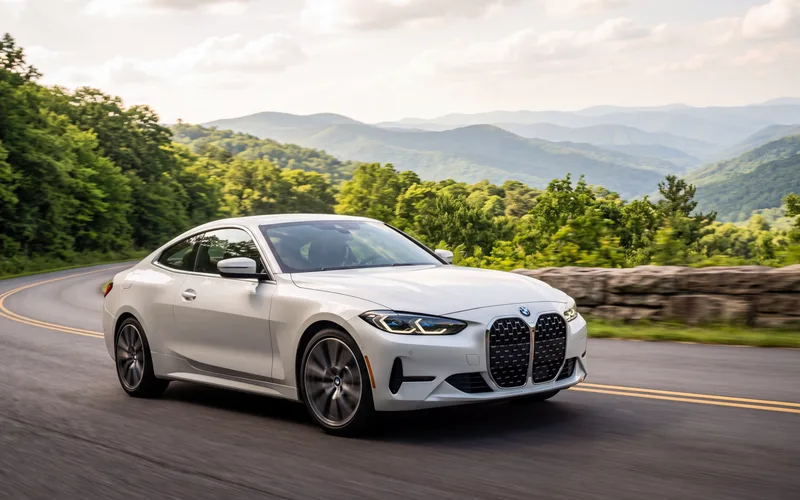 BMW 4 SeriesLuxury CoupeBetter at: Driving dynamics
The default cross-shop: significantly quicker, far better infotainment, a usable back seat and a bigger trunk, for about $4,000 more up front.
Compare 2.74B-
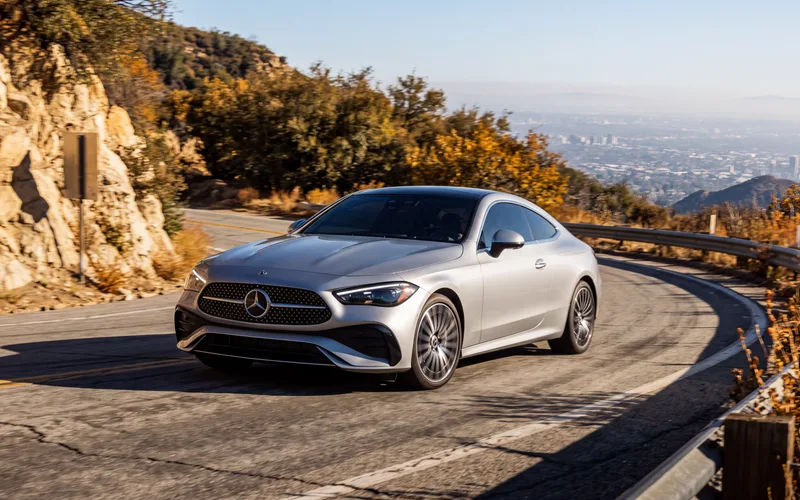 Mercedes-Benz CLE CoupeLuxury CoupeBetter at: Interior tech
A newer, larger, far more modern luxury coupe if you can stretch to roughly $56,500 and accept German running costs.
Compare 2.30C+
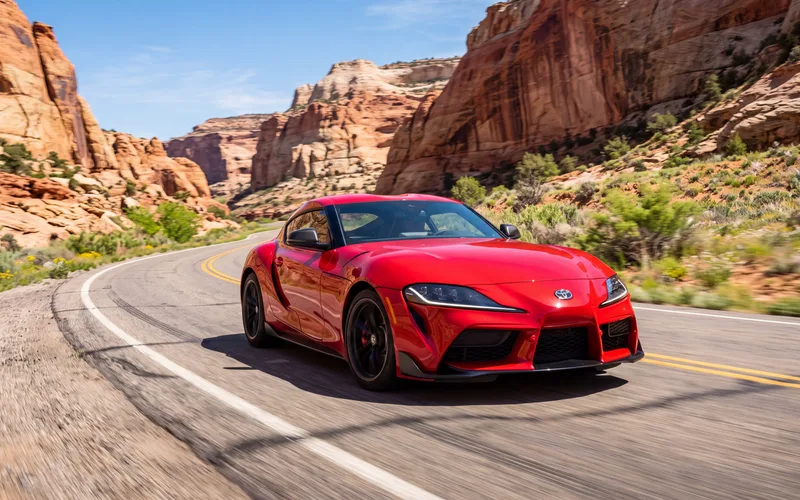 Toyota GR SupraSports CarBetter at: Performance
Delivers the performance the RC's styling promises and does not, with Toyota-family reliability behind it, if you can live without rear seats.
CompareHow it's evolved
9 scored model years · 2017–2025
Subject scores by year
Hover or tap a score to see what moved it versus the year before. A corner mark flags a big swing.
| Year | Performance | Efficiency | Safety | Space | Cost | Reliability | Tech | Use-case | Driving | Value |
|---|---|---|---|---|---|---|---|---|---|---|
| 2025 | 46 | 27 | 61 | 53 | 66 | 85 | 47 | 43 | 66 | 56 |
| 2024 | 46 | 27 | 61 | 52 | 66 | 86 | 41 | 38 | 69 | 57 |
| 2023 | 48 | 27 | 61 | 53 | 71 | 84 | 47 | 44 | 69 | 61 |
| 2022 | 46 | 26 | 58 | 53 | 71 | 82 | 44 | 38 | 67 | 52 |
| 2021 | 46 | 26 | 58 | 53 | 71 | 83 | 41 | 42 | 68 | 54 |
| 2020 | 46 | 23 | 55 | 53 | 72 | 83 | 41 | 41 | 68 | 59 |
| 2019 | 48 | 23 | 57 | 53 | 71 | 79 | 39 | 41 | 68 | 63 |
| 2018 | 48 | 31 | 60 | 52 | 70 | 81 | 33 | 41 | 66 | 59 |
| 2017 | 47 | 31 | 46 | 51 | 70 | 78 | 32 | 36 | 66 | 58 |
Compare two years
Best fit & conditions
Higher scores mean a better fit for that use case. Learn more about use-case fit →
Subject profile
Academic Probation · NHTSA safety recalls
No NHTSA safety recall is on record for the 2024 Lexus RC. Other model years of the RC have 5 — listed below.
5 recalls on other model years of the RC (2017–2022)
Apr 8, 2026Fuel system, gasoline: delivery: fuel pumpThe low-pressure fuel pump inside the fuel tank may fail.
Defect
Toyota Motor Engineering & Manufacturing (Toyota) is recalling certain 2015-2022 Lexus RC, 2016-2020 GS, and 2022 IS vehicles. The low-pressure fuel pump inside the fuel tank may fail.
Risk
Fuel pump failure can cause an engine stall, increasing the risk of a crash.
Remedy
Dealers will replace the fuel pump assembly, free of charge. Owner letters were mailed October 15, 2026. Owners may contact Toyota's customer service at 1-800-331-4331. Toyota's numbers for this recall are 26LB05 and 26LA05.
NHTSA campaign 26V222000 ↗Manufacturer no. 26LB05/26LA059,139 vehicles potentially affected (all models in the campaign)Owners notified Oct 14, 2026Filed by Toyota Motor Engineering & ManufacturingFiled as RCAug 10, 2022Equipment: other: labels · TiresThe tire information label does not list the vehicle's weight capacity. As such, these vehicles fail to comply with the requirements of Federal Motor Vehicle Safety Standard number 110, "Tire Selection and Rims."
Defect
Toyota Motor Engineering & Manufacturing (Lexus) is recalling certain 2020-2022 Lexus RC F vehicles. The tire information label does not list the vehicle's weight capacity. As such, these vehicles fail to comply with the requirements of Federal Motor Vehicle Safety Standard number 110, "Tire Selection and Rims."
Risk
The vehicle can be overloaded without the weight capacity information, increasing the risk of a crash.
Remedy
Dealers will replace the tire information label, free of charge. Owner notification letters are expected to be mailed September 25, 2022. Owners may contact Lexus' customer service at 1-800-331-4331. Lexus' number for this recall is 22LA03.
NHTSA campaign 22V615000 ↗Manufacturer no. 22LB0313 vehicles potentially affected (all models in the campaign)Owners notified Sep 28, 2022Filed by Toyota Motor Engineering & ManufacturingFiled as RC FNov 4, 2020Fuel system, gasoline: delivery: fuel pumpThe low-pressure fuel pump inside the fuel tank may fail.
Defect
Toyota Motor Engineering & Manufacturing (Toyota) is recalling certain 2018-2019 4Runner, 2019-2020 Avalon, 2019 Corolla Hatchback, 2017-2019 Highlander, 2018-2020 Camry, 2020 Corolla, 2018-2019 Land Cruiser, 2017-2020 Tacoma, 2019-2020 RAV4, 2019-2020 Sequoia, 2017-2020 Sienna, 2019-2020 Tundra, 2018-2020 Lexus ES350, 2017 Lexus GS200t, 2017-2019 Lexus GS350, 2019 Lexus GS300, 2018-2020 Lexus LC500h, 2019-2020 Lexus LS500, 2018-2019 Lexus GX460, 2017 Lexus IS200t, 2019 Lexus IS300, 2019 Lexus IS350, 2018-2020 Lexus LC500, 2018 Lexus LS500, 2019 Lexus LS500h, 2018-2019 Lexus LX570, 2017 Lexus RC200t, 2019 Lexus RC300, RC350, 2017 and 2019-2020 Lexus RX350, 2018-2020 RX350L, 2019 Lexus UX200, 2018-2019 Lexus NX300 vehicles. The low-pressure fuel pump inside the fuel tank may fail.
Risk
If the fuel pump fails, the engine can stall while driving, increasing the risk of a crash.
Remedy
Toyota will notify owners, and dealers will replace the fuel pump assembly with an improved one, free of charge. Owners of specific models were notified that remedy parts were available starting January 21, 2021. Owners of other models will be notified as remedy parts become available. Remedy parts should be available for all affected vehicles by late March 2021. Owners may contact Toyota customer service at 1-888-270-9371 or Lexus customer service at 1-800-255-3987. Note: This recall is an expansion of recall 20V-012. Toyota's number for this recall is 20TA02. Lexus' number for this recall is 20LA01.
NHTSA campaign 20V682000 ↗Manufacturer no. 20TA02, 20LA011,525,742 vehicles potentially affected (all models in the campaign)Owners notified Jan 21, 2021Filed by Toyota Motor Engineering & ManufacturingFiled as RC 200T, RC 300, RC 350Jan 13, 2020Fuel system, gasoline: delivery: fuel pumpToyota Motor Engineering & Manufacturing (Toyota) recalled certain 2018-2019 4Runner, Highlander, Camry, Land Cruiser, Sequoia, Sienna, Tacoma and Tundra, and Lexus RC 300, RC 350, GS 350, GX 460, IS 300, LC 500, LS 500, LX 570, RX 350L, and 2019 Toyota Avalon and Corolla, and certain Lexus NX 300, and ES 350 vehicles on January 13, 2020. On March 4, 2020, Toyota expanded the recall to include certain 2014-2015 Toyota 4Runner and Land Cruiser, 2018 Avalon, Corolla, 2014 FJ Cruiser, 2017 Sienna and Lexus 2018 ES 350, 2018-2019 GS 300, 2013-2014 GS350, 2014-2015 GX 460, IS 350 and LX 570, 2014 IS F, 2018-2019 IS 350, LC 500H and LS 500H, 2013-2015 LS 460, 2015 NX 200T and RC350, 2017 RC 200T and RX 350. Toyota also removed the 2018-2019 Toyota 4Runner and Land Cruiser and 2018-2019 Lexus GX 460 and LX 570 and 2019 NX300 from inclusion in this recall. On March 19, 2020, Toyota expanded the recall to include 2015 Lexus GS350 vehicles. The low-pressure fuel pump inside the fuel tank may fail.
Defect
Toyota Motor Engineering & Manufacturing (Toyota) recalled certain 2018-2019 4Runner, Highlander, Camry, Land Cruiser, Sequoia, Sienna, Tacoma and Tundra, and Lexus RC 300, RC 350, GS 350, GX 460, IS 300, LC 500, LS 500, LX 570, RX 350L, and 2019 Toyota Avalon and Corolla, and certain Lexus NX 300, and ES 350 vehicles on January 13, 2020. On March 4, 2020, Toyota expanded the recall to include certain 2014-2015 Toyota 4Runner and Land Cruiser, 2018 Avalon, Corolla, 2014 FJ Cruiser, 2017 Sienna and Lexus 2018 ES 350, 2018-2019 GS 300, 2013-2014 GS350, 2014-2015 GX 460, IS 350 and LX 570, 2014 IS F, 2018-2019 IS 350, LC 500H and LS 500H, 2013-2015 LS 460, 2015 NX 200T and RC350, 2017 RC 200T and RX 350. Toyota also removed the 2018-2019 Toyota 4Runner and Land Cruiser and 2018-2019 Lexus GX 460 and LX 570 and 2019 NX300 from inclusion in this recall. On March 19, 2020, Toyota expanded the recall to include 2015 Lexus GS350 vehicles. The low-pressure fuel pump inside the fuel tank may fail.
Risk
If the fuel pump fails, the engine can stall while driving, increasing the risk of a crash.
Remedy
Toyota will notify owners, and dealers will replace the fuel pump, free of charge. The recall began May 4, 2020. Owners may contact Toyota customer service at 1-888-270-9371 or Lexus customer service at 1-800-255-3987. Toyota's numbers for this recall are 20TB02 and 20TA02 for Toyota vehicles and 20LB01 and 20LA01 for Lexus vehicles.
NHTSA campaign 20V012000 ↗Manufacturer no. 20TB02/20TA02/20LB011,830,752 vehicles potentially affected (all models in the campaign)Owners notified May 1, 2020Filed by Toyota Motor Engineering & ManufacturingFiled as RC 200T, RC 300, RC 350Feb 14, 2018Fuel system, gasoline: delivery: fuel pumpSpecific operating conditions may result in damage to the pulsation damper in one of the high pressure fuel pumps, possibly causing a fatigue crack in the fuel pump cover.
Defect
Toyota Motor Engineering & Manufacturing (Toyota) is recalling certain 2016-2018 Lexus GS F, 2018 LC500, and 2015-2018 Lexus RC F vehicles, equipped with 5.0L V8 2UR-GSE engines with two high pressure fuel pumps. Specific operating conditions may result in damage to the pulsation damper in one of the high pressure fuel pumps, possibly causing a fatigue crack in the fuel pump cover.
Risk
A cracked cover may leak fuel, which, in the presence of an ignition source, can increase the risk of a fire.
Remedy
Toyota will notify owners, and dealers will replace the high pressure fuel pumps, free of charge. The recall is expected to begin April 2, 2018. Owners may contact Lexus customer service 1-800-255-3987. Toyota's numbers for this recall are J2B and JLB.
NHTSA campaign 18V107000 ↗Manufacturer no. J2B/JLB9,905 vehicles potentially affected (all models in the campaign)Owners notified Apr 5, 2018Filed by Toyota Motor Engineering & ManufacturingFiled as RC F
Source: NHTSA Office of Defects Investigation recall database, model years 2017–2025. Recalls are listed by model year as the manufacturer filed them; whether a specific car is affected depends on its VIN — check a VIN at nhtsa.gov ↗. NHTSA model names matched to this page: RC, RC 200T, RC 300, RC 350, RC F.
Detailed scoring by subject
1Performance & PowertrainGrades below the middle of the scale.1.08D
The volume RC 300 RWD runs the 2.0L twin-scroll turbocharged, intercooled, direct-injected four rated 241 hp. 2024 is a carry-over year mechanically — the announced changes are Lexus Safety System+ 2.5 becoming standard, a new Cloudburst Gray paint and 19-inch dark Enkei wheels for F SPORT, with no powertrain revision. 241 hp is modest for a luxury coupe, trailing the BMW 430i and Mercedes CLE 300 and sitting far below the RC F at the top of its own lineup.
258 lb-ft is the strongest torque figure in the non-F lineup and it arrives early across a wide plateau (1,650–4,400 rpm), so the base turbo four actually out-pulls both naturally aspirated V6 variants in the mid-range despite giving up horsepower to them. Mid-band for a luxury coupe rather than a standout.
Lexus publishes no RC 300 acceleration claim, but 7.3 s is the figure consistently recorded and quoted for the 2.0T car through this generation, unchanged for the carry-over 2024 model. That is slow for the class — roughly a second and a half behind a 430i — because a ~3,700–3,900 lb curb weight blunts the base engine.
Lexus isolation and cruising quietness are all present, but delivery is the RC 300's weakest trait: reviewers consistently report that the turbo four takes a beat to build boost off the line and turns coarse and uninspiring when worked, with none of the linearity of the V6 or the V8 sold alongside it in the same showroom. Scored well under the LC 500's V8 (89) and slightly below the German turbo fours it competes with, which respond more sharply.
The RWD car's 8-speed Sport Direct-Shift automatic shifts smoothly and accepts paddle inputs, but it is calibrated for economy and is described as upshifting at every opportunity, with downshifts sometimes slow to arrive under hard use. The structural weakness is the lineup, not the gearbox: choosing AWD drops the car to an older 6-speed automatic, so the better transmission and the better traction cannot be bought together.
All-wheel drive is genuinely available across the mainstream range for 2024 — RC 300 AWD, RC 350 AWD and RC 350 F SPORT AWD — rather than confined to a top trim, and it is a proper full-time system using a planetary center differential with a multi-disc slip limiter, normally biased 30:70 front/rear and able to move toward 50:50. Held out of the top band because there are no terrain modes or low range, the RC F stays rear-drive only, and ordering AWD forces both a different engine and the older 6-speed.
Three distinct gas engines in the 2024 US lineup — 2.0L turbo four, 3.5L V6 in two states of tune, and the hand-built naturally aspirated 5.0L V8 in the RC F (still offered in standard, Premium and Track Edition form this year, before the 2025 Final Edition narrowed it to one spec) — which is real breadth by coupe standards. It is capped mid-band because none of it is electrified: the RC 300h hybrid was never a US offering and there is no PHEV or EV.
2Efficiency & RangeThe RC's lowest-graded category.0.00F
The volume RC 300 RWD pairs the 2.0L turbo four with the 8-speed automatic for 25 MPG combined — mid-pack among gas luxury coupes but behind the current turbo-four benchmarks, because the 2024 RC is a late year of a chassis launched for 2015 whose powertrain never received the efficiency updates its German rivals got.
21 MPG city is unremarkable for a 2.0L turbo coupe — no hybrid assist, no cylinder deactivation and nothing beyond conventional stop-start — so stop-and-go driving is where the RC gives up the most ground to newer rivals.
31 MPG highway is the RC 300's best showing — a tall 8th gear and a low-drag coupe body make steady-state cruising its strongest efficiency case, and it is the single figure that keeps the car competitive on a long trip.
A 17.5-gallon tank against 25 MPG combined gives roughly 438 miles between fills — respectable rather than exceptional for the class, and enough that range is never a practical complaint even though the economy behind it is ordinary. The economy half is EPA-confirmed; the tank capacity comes from third-party spec databases rather than a Lexus document that could be fetched directly.
The EPA's $3,100 annual estimate sits essentially at the bottom of the gas-coupe band, and the cause is a combination the RC cannot escape: only-average economy multiplied by a mandatory premium-fuel price. A regular-fuel car matching 25 MPG combined would run several hundred dollars a year cheaper.
Premium is required, not merely recommended, across the entire 2024 RC line, and no electrified variant was ever offered in the US — the RC 300h hybrid is a Japan/Europe model. There is no flex-fuel, diesel or home-charging path to a cheaper mile, which puts the RC firmly in the bottom band; it escapes the very lowest only because premium gasoline is universally available and the tank is a normal size.
3SafetyMid-pack among this car's ten categories.2.11C
NHTSA has never run the XC10 RC through NCAP, and 2024 is no exception — the agency's own record for the 2024 RC 300 returns "Not Rated" for overall, frontal, side and rollover. Low-volume luxury coupes fall outside routine NCAP vehicle selection. The value is a segment-norm estimate, not a published figure.
The RC earns Good in every IIHS crashworthiness test it has taken — driver- and passenger-side small overlap front, moderate overlap front, original side, roof strength and head restraints & seats — but every one of those is a retired protocol carried forward from the 2015 launch car, and the RC has never been run through the updated side or updated moderate overlap tests. No Top Safety Pick or TSP+ in 2024. Solid but stale data, so mid-band rather than the 80+ reserved for current TSP+ vehicles.
Every 2024 RC, base RC 300 RWD included, ships with Lexus Safety System+ 2.5 — Pre-Collision System with pedestrian detection plus low-light pedestrian and daytime bicyclist detection, Left Turn Vehicle Intersection Support, Enhanced All-Speed Dynamic Radar Cruise Control, Lane Departure Alert with Steering Assist, Enhanced Lane Tracing Assist, Road Sign Assist and Intelligent High Beams — alongside standard Blind Spot Monitor with Rear Cross-Traffic Alert and eight airbags. Nothing in the AEB/ACC/LKA/BSM/RCTA core is trim-locked, which is the top band; held just under 85 because this is the older Lexus package with no surround-view camera, no safe-exit assist and no head-up display at any price.
The RC's Pre-Collision System earned IIHS Superior for vehicle-to-vehicle front crash prevention, avoiding a collision in both the 12 mph and 25 mph runs, and the 2024 car adds low-light pedestrian and daytime bicyclist detection plus left-turn intersection support. But that Superior rating is on the retired track protocol and its published window stops at 2022 model years; IIHS has issued no updated-protocol vehicle-to-vehicle result and no pedestrian front-crash-prevention rating for the RC at all, so nighttime pedestrian capability is a manufacturer claim rather than a measured one.
Blind Spot Monitor with Rear Cross-Traffic Alert is standard on every 2024 RC including the base RC 300 rather than sitting in a package, which matters a great deal in a coupe with pillars this thick. Held out of the 80s because coverage is alert-only: no rear cross-traffic braking intervention, no safe-exit assist, no lane-change assist, and no surround-view camera available to back it up (Intuitive Parking Assist sensors are the only parking aid, newly standard on several 2024 grades).
Lane Departure Alert with Steering Assist and Enhanced Lane Tracing Assist are both standard, so active centering is present on every 2024 trim and engages whenever radar cruise is on. It is usable rather than confident: this generation of Toyota/Lexus LTA wants clear markings, hands the lane back readily and wanders through gentle curves instead of holding a firm line — well short of the centering the German coupes in this segment deliver.
Enhanced All-Speed Dynamic Radar Cruise Control is standard and works down to a stop, and paired with Lane Tracing Assist it makes a competent hands-on highway-assist pairing on every trim. Marked down from the top band because it is the older DRCC calibration — no predictive curve-speed reduction, no lane-change assist and no hands-off tier above it.
No hands-free highway system is offered on the 2024 RC at any trim or price. Lexus Teammate Advanced Drive was reserved for the LS and never fitted to the XC10 platform, which ran to the end of production in November 2025 without it.
Unusually, the volume configuration is the good one: IIHS rated the RC's standard LED headlamps Good, while the optional Premium Triple Beam LED units (fitted to F SPORT grades) rated Poor, lifting only to Marginal with high-beam assist — reportedly an aiming problem rather than a beam-output one. Intelligent High Beams are standard across the 2024 range. Upper-middle rather than higher because a buyer stepping up to an F SPORT gets materially worse seeing distance, and IIHS publishes no current-protocol headlight rating for the car.
Classic low-roof coupe compromises: wide rear pillars kill the over-the-shoulder view and the rear window is shallow, so rearward vision is poor by reviewer consensus. Forward sightlines are acceptable for the class and large door mirrors plus standard BSM/RCTA help, but there is no surround-view camera and no head-up display offered at any 2024 price — rear parking sensors (Intuitive Parking Assist) are the only added compensation, and they are grade-dependent.
IIHS rates the RC's LATCH ease of use Good — better than most 2+2 coupes manage — and there are two complete sets of connectors, so the anchors themselves are easy to find and use. The car is still a two-door with a token rear bench: every installation goes through a folded front seat and a narrow aperture, legroom is minimal, and three-across is out of the question, so real-world usability lands mid-band despite the rating.
4Space & ComfortGrades below the middle of the scale.1.50D
Every 2024 RC grade, RC 300 through RC F, seats four — two front buckets and a two-place rear bench. That is one seat short of the sedans and the BMW 4 Series that share the band, so it sits at the bottom of the coupe normalization range even though the RC's rear bench is more usable than a strict 2+2 sports car's.
39.0 in is a good figure for a low-roof coupe and comfortably above the LC 500's 37.2 in, helped by the RC's relatively upright greenhouse for the class. Ticking the optional power moonroof costs more than an inch and drops it to 37.8 in, so a well-equipped car is noticeably tighter than the published headline number.
45.4 in is exceptional and clears the top of the coupe band outright, beating the BMW 4 Series (41.5 in) and the Lexus LC (42.0 in) by a wide margin. The RC borrows the IS sedan's long-wheelbase front structure, so the front cabin is genuinely roomy — the space compromise in this car is entirely behind the front seats.
34.8 in sits mid-band for a coupe — tight, but well clear of the LC 500's 32.2 in and enough that a child or a short adult is not pressed into the headliner. The fastback rear glass is what limits it, and it is the rear legroom rather than the headroom that makes the back seat unusable for adults.
27.3 in is nearly seven inches short of the BMW 4 Series' 34.0 in and is the figure reviewers point at when they call the RC's back seat a package shelf; with the front seat set for a tall driver the space effectively vanishes. It scores low-mid in the coupe band, above a strict two-seater's zero but below any coupe you would seat adults in.
10.4 cu ft is small — CarBuzz calls it the lowest among the RC's direct rivals, and the BMW 4 Series' 12.0 cu ft is the nearer benchmark — though it is roughly double the LC 500's 5.4 cu ft and Lexus says it will still take two golf bags. The split-folding rear seatback on the non-F grades is what keeps this from being a genuine liability.
The one genuinely useful provision is the 60/40 split-folding rear seatback standard on RC 300 and RC 350 — a real advantage over the RC F's center pass-through and over most 2+2 coupes, the LC 500 included. Everything else is thin for a 2024 luxury car: a shallow console bin, narrow door pockets, two front cupholders, and no wireless charging pad anywhere in the option list. Scored above the LC's 28 for the folding seats but well below the 4 Series' 60.
The front seats are the RC's strongest comfort asset — Edmunds describes firm cushions that produced little fatigue on long drives and bolsters that hold without pinching, and heated and ventilated fronts with memory arrive in the Premium Package (standard on every F SPORT grade). Capped at 70 because the volume RC 300 RWD gets none of that heating or ventilation as standard, adjustment is 8-way power with manual tilt/telescope until the Premium Package adds the power column, and the rear bench offers no comfort to rate at all.
Ride is where the RC earns its keep: reviewers consistently describe a supple, composed gait that is more grand tourer than sports coupe, and the base RC 300 on 18-inch wheels with its lateral performance damper is the softest-riding car in this segment group. The F SPORT's Adaptive Variable Suspension absorbs impacts on 19s and firms without harshness in Sport. Below the LC 500's 86 only because the RC lacks that car's added isolation and runs a shorter wheelbase.
Near the top of the segment. Edmunds rates the RC one of the quietest cars in its class at idle, under acceleration and at a 70 mph cruise, with minimal wind, road and engine intrusion — the coupe bodyshell and Lexus's isolation work more than compensate for the modest turbo four. Held just under the LC 500's 87 because the 2.0T turns coarse when pushed, where the LC's V8 is a deliberate part of the soundtrack.
Dual-zone automatic climate control, heated mirrors and app-based remote engine start (Enform Remote, three-year trial then subscription) are standard, but the comfort equipment a luxury buyer expects is all package-gated on the volume car: the RC 300 RWD has no heated seats standard at $44,770, heated and ventilated fronts arrive only with the Premium Package, the heated steering wheel is a standalone option, and the wiper de-icer and fast-response heater sit in a separate All-Weather Package. No rear climate controls or rear vents at all. Well below the 4 Series' 76 for that reason.
5Cost of OwnershipOne of the RC's strongest categories.2.47C+
The RC opens with the rear-drive RC 300 and its 241-hp 2.0L turbo four — the cheapest way into a Lexus coupe and priced roughly $4,000 under a BMW 430i. That still lands it in the upper half of the coupe pricing band, since the band spans mainstream coupes as well as luxury ones. 2024 is a carry-over year on pricing structure, with the only content changes being Cloudburst Gray paint, optional 19-inch Enkei wheels for F SPORT, and Lexus Safety System+ 2.5 becoming standard.
RC volume skews hard toward the F SPORT package — the adaptive-suspension, mesh-grille, sport-seat car is what most buyers order and what dealers stock — and in snow-belt states toward AWD. The RC 300 F SPORT is the realistic as-sold configuration, roughly $4,600–$6,900 above the stripped RC 300. Note that on the RC 300 the AWD car is not the same powertrain: it swaps the 241-hp turbo four for a 260-hp 3.5L V6.
This is the RC's strongest ownership argument by a wide margin. By 2024 it is a nine-year-old, fully debugged platform running high-volume Toyota mechanicals — the 8AR-FTS turbo four and 2GR-FKS V6 — through a Lexus service network that posts the lowest maintenance costs of any luxury brand. Scored above the published CarEdge projection to leave room for F SPORT tire and brake wear, which those class estimates understate.
The RC is a genuine depreciation standout and the single best thing about owning one financially. Lexus reliability perception, very low US production volume and an enthusiast-supported naturally aspirated V6 option no German rival still offers all prop up residuals. It clears the top of the coupe retention band outright — the best five-year retention of any luxury coupe in this dataset.
Lexus's long-standing brand-wide basic coverage, unchanged for 2024 and applied to the RC. Matches the German luxury standard and beats parent-brand Toyota's 3 yr / 36,000 mi, but trails Genesis's 5 yr / 60,000 mi.
Lexus's standard 6 yr / 70,000 mi powertrain term — better than BMW and Mercedes, which extend nothing past the 4-year basic, but near the bottom of the 5–10 year band and far behind Genesis's 10 yr / 100,000 mi. The RC has only ever been sold in the US with gas engines, so no hybrid-component or high-voltage battery coverage applies.
The Lexus ownership program is brand-wide, so the RC gets exactly what the IS does: complimentary scheduled maintenance covering only the first two services, at 6 mo / 5,000 mi and 12 mo / 10,000 mi — shorter than ToyotaCare's 2 yr / 25,000 mi and well short of BMW's 3 yr / 36,000 mi — offset by class-leading 4-year unlimited-mileage roadside assistance, Lexus Connected Services trials and standard Lexus Encore dealer treatment. Real coverage, but the thinnest included-maintenance window in the segment. The RC sits below the LC/LS Encore Elite tier, so no complimentary loaners or pickup-and-delivery.
$51,700 volume-trim price minus its estimated resale value after 5 years (68% retained, or about $35,156) leaves about $16,544 in depreciation. Add the projected $3,800 in 5-year maintenance and repairs, and owning this vehicle for 5 years costs about $20,344 in total.
6Reliability & QualityThe RC's best-graded category.3.83A
2024 is the tenth model year of a single XC10 generation launched for 2015 and facelifted for 2019, and it is a pure carry-over: the only changes are Cloudburst Gray paint, optional 19-inch dark Enkei wheels for F SPORT, and Lexus Safety System+ 2.5 becoming standard. No new platform, engine, gearbox or electrical architecture is being introduced, which is the strongest structural prior for this item, and the car runs IS (XE30) mechanicals shared with a far higher-volume Lexus sedan — the same IS that J.D. Power has repeatedly singled out at model level. Two full years of US field exposure have since produced zero NHTSA complaints and zero recall campaigns against the 2024 RC. Scored at the top of the coupe field (911 84, GR Supra 77, 8 Series 72) but a shade under the LC (87) and the IS (89) because Consumer Reports gathers no usable survey sample on a car selling in the low thousands, and because the volume RC 300 RWD's 2.0-liter turbo four is the weakest link in an otherwise conservative package.
Lexus is the reference point for US dependability research — first overall in the J.D. Power Vehicle Dependability Study every year since 2023, including the 2024 study contemporary with this model year, and a permanent top-three fixture in Consumer Reports' brand rankings. Scored identically to the Lexus LC, IS and LS entries since this is a brand-wide attribute, and held at 88 rather than the low 90s because CR places Lexus third behind Toyota and Subaru rather than sweeping both major studies outright, and because CR notes Lexus's electrified models pulling its brand score down. Comfortably clear of every German rival in this coupe set (BMW 72 on the 8 Series, Porsche 68 on the 911).
The cleanest NHTSA record of any car in this coupe set, and the 2024 model year is completely untouched. Across the full 2015–2025 XC10 run there are only five recall campaigns — all of them fuel-pump actions or a tire-label noncompliance, none structural, none involving fire, brakes or steering — and not one names model year 2024. Two years of field exposure have also produced zero owner complaints of any kind for the 2024 car. Held short of the 90s rather than higher because the generation is not spotless: the industry-wide Denso low-pressure fuel-pump problem hit 2015–2022 RCs across three separate campaigns, the most recent opened as late as April 2026, and a decade-old design accumulates a long TSB tail even when nothing is systemic.
The weakest of the reliability items, and the reason the RC does not simply inherit the LC's 90. The volume RC 300 RWD runs the 8AR-FTS 2.0-liter twin-scroll turbo four, the one Toyota engine family in this car with a documented pattern of complaint — water-pump leaks reported from as early as 20k miles and commonly by 85k, a three-thermostat cooling circuit where one failure implies the others, and a closed-deck block that does not survive an overheat, with a water-pump job that pulls the timing-chain cover. The AWD RC 300 and every RC 350 instead use the 2GR-FKS 3.5-liter naturally aspirated V6 with D-4S port-plus-direct injection, one of the most proven engines Toyota builds, and the RC F's 2UR-GSE 5.0-liter V8 is equally unproblematic. Transmissions are not a concern in either case: the Aisin 8-speed (RWD) and 6-speed (AWD) are long-serving torque-converter units. Scored below the GR Supra's B58 (87) and the LC's 2UR-GSE (90) but well above the German turbo fours, since even the 8AR-FTS's issues are wear items rather than block-level failures, and 2024 builds are far from the pre-2017 cars where the worst cases cluster.
The materials themselves are genuinely good for the money — perforated NuLuxe upholstery that reviewers describe as convincing and durable, real stitching, damped switchgear, an F SPORT cabin with heavily bolstered sport seats and LFA-derived instrumentation, and the usual Lexus absence of low-rent plastic in reach zones. What holds it out of the high 80s is that the design and the hardware around those materials are a decade old: the architecture dates to 2015, the 10.3-inch display sits far back on the dash as a non-touch-first afterthought, and the Remote Touch pad remains one of the most criticized interfaces in the class. Scored above the CLE Coupe's cabin execution and roughly level with the BMW 4 Series, but well below the LC (93), which is the benchmark and costs twice as much.
Assembly is a strength with no meaningful counter-argument. The RC is a low-volume Lexus coupe built on a line that has had ten model years to converge on a body unchanged but cosmetically since 2015 — the conditions under which panel gaps become repeatable and squeak-and-rattle complaints disappear. Lexus placed second among premium brands in the J.D. Power Initial Quality Study contemporary with this model year, effectively tied with Porsche, and the 2024 RC's own NHTSA complaint record is literally empty. Scored at the Lexus norm (IS 90), above the 8 Series (86), just under the hand-finished LC (94), which gets Motomachi's takumi regime and deliberate volume restraint.
Coverage is thinner than BMW's or Mercedes-Benz's at roughly 240–245 US stores, but Lexus sits in the top tier for luxury service satisfaction, with loaners and pickup-and-delivery as standard practice. The RC is serviced by the same network on the same shared IS mechanicals, and Toyota's parts-support obligations run a decade past end of production, so a 2024 car is well inside the supported window. Scored identically to the Lexus LC, ES, IS and LS entries since the network is a brand-wide attribute, and above the 8 Series (78) and 911 (85).
Mechanically the RC is cheap to keep by luxury-coupe standards, because almost nothing under the skin is unique to it — the 2.0T is shared with the IS, NX and RX, the 2GR-FKS V6 with the Camry, Tacoma, Highlander and ES, and the Aisin automatics with half the Lexus range, so independent shops will take the work and parts price at Toyota-family rather than halo-car levels. The drag is body and trim: the RC's panels, glass, lighting and interior pieces are model-unique on a nameplate selling in the low thousands per year, and F SPORT staggered performance tires and larger brakes add running cost. Ten model years of production give it far more salvage depth than a true halo car, and unlike a 2025 car this one was built well before the line shut down. Scored well above the LC (66), whose body parts have no scale at all, and below the parts-common IS (84).
7Technology & InfotainmentOne of the RC's weakest categories.0.74F
Lexus's own 2024 brochure lists the "Lexus Multimedia System with 8.0-in touchscreen display" as standard on every grade, with the 10.3-inch screen reserved for the Navigation Package. 8.0 inches is near the floor of the band and looks small in a $45k luxury coupe next to the 12.3-inch unit the 2024 LC 500 received and the 10.25-inch display standard on a 430i.
This is the last generation of Lexus's pre-Interface multimedia system, and it never received the overhaul the LC got for 2024. The screen is at least touch-capable now, which was the single biggest fix this architecture ever got, but the console Remote Touchpad is still the primary controller and is the most-criticized control interface Lexus has shipped — imprecise on the move and slow to hit small targets. Menu structure and graphics are dated rather than broken, so it lands mid-40s: usable, and clearly behind the 2024 LC (76) and the 4 Series (76).
Apple CarPlay and Android Auto are standard on every 2024 RC including the base RC 300 — but wired only, over the USB port, with no wireless projection at any trim or price. That is squarely the middle band ('wired standard / wireless on upper trims' minus the upper-trim wireless), and it is the single clearest tech gap against the 2024 LC 500 and the BMW 4 Series, both of which project wirelessly.
Basic embedded Voice Command is standard, but everything beyond it costs money or a subscription: native navigation exists only in the Navigation Package (bundled with the 10.3-inch screen), and Dynamic Voice Command, Dynamic Navigation and Destination Assist run on three-year trials that require an Enform subscription afterward. The legacy voice system is command-word driven rather than natural-language, so most owners fall back to CarPlay/Google Maps — the definition of the middle band, marked down because the volume car has no built-in maps at all.
The strongest part of the RC's tech case. A 10-speaker system is standard rather than a four-speaker penalty box, and the optional Mark Levinson Premium Surround Sound is a serious 17-speaker, 835-watt, 7.1-channel setup with Clari-Fi — the same tier of hardware Lexus fits to far more expensive cars. It is bundled into the Premium Audio Package with navigation rather than sold alone on every grade, which keeps it just under the 4 Series' and LC's 82.
Split outcome by grade, and the volume trim gets the worse half: the RC 300 RWD runs conventional analog dials with a small multi-information display, while F SPORT and RC F grades get the LFA-derived TFT meter with its motorized sliding bezel, turbo-boost gauge (RWD) and, on the RC F, G-force display and lap timer. That is a genuinely full-digital cluster available only on upper trims — the middle band — and even it is a fixed single-dial design rather than the configurable multi-layout screens rivals now fit.
There is no whole-vehicle over-the-air update capability on this platform. The only thing that refreshes remotely is map and traffic data through Dynamic Navigation, and that requires the optional Navigation Package plus an Enform subscription once the three-year trial lapses — so the volume RC 300 as delivered receives nothing OTA at all. Firmware fixes are dealer-flash jobs. Well below the 2024 LC's 62 and the 4 Series' 74.
The Lexus app covers the core set — remote engine start, lock/unlock, vehicle locate, vehicle health reports and service scheduling — and it is standard equipment, which is more than some rivals manage. Two things hold it mid-band: the remote functions run on Enform Remote, a three-year trial that becomes a paid subscription, and there is no digital key or phone-as-key on the RC at any price. Service Connect's up-to-ten-year trial is the generous part of the package.
Thin even by 2015-architecture standards: two front USB ports of the legacy USB-A type, a 12V outlet, nothing at all for the rear seats, no household outlet and — the notable omission for a luxury car at this price — no wireless charging pad offered on any grade, in any package, as any option. The LC 500 was criticized for the same gap and still scores 42 here because its port count and placement are better.
SmartAccess proximity entry with push-button start is standard across the range, illuminated door handles are part of the design, and app-based remote engine start comes with the Enform Remote trial — a complete conventional keyless set on the volume trim. It stays in the middle band because remote start is subscription-dependent rather than fob-based, there is no phone-as-key or NFC card key (the F-logo SmartAccess card key is an RC F Track Edition item), and a coupe has no power liftgate feature to earn credit for.
A rear-view camera is standard because federal rule requires it, and that is close to the whole story: Intuitive Parking Assist ultrasonic sensors are an option (newly standard on several upper 2024 F SPORT grades and in the RC F Premium Package), and there is no surround-view camera and no automated parking available at any price. That is a real deficit in a car whose thick rear pillars reviewers single out, and it puts the RC far below the LC (80, standard surround view) and the 4 Series (78).
No head-up display is offered on the 2024 RC or RC F, on any grade, in any package. Lexus fitted a colour HUD to the IS, LS, LC and most of the SUV range but never to the XC10 RC, and the car reached end of production in November 2025 without one. Bottom of the band by definition.
8Use-Case FitOne of the RC's weakest categories.0.51F
Two doors, 27.3 in of rear legroom and a folded front seat between the parent and the car seat on every single installation. The anchors themselves are genuinely good — IIHS rates the RC's LATCH ease of use Good and there are two complete sets — and the 60/40 folding rear seatback means a stroller can at least be fed through, which is why this sits above the LC 500's 12. It is still a coupe that punishes daily family logistics, well below the 4 Series' 42.
The equipment side is strong and — unusually for this class — costs nothing extra: Lexus Safety System+ 2.5 with pedestrian-detecting AEB, all-speed radar cruise, lane tracing and intelligent high beams is standard on the base RC 300, and so are Blind Spot Monitor with Rear Cross-Traffic Alert and eight airbags. The credentials side is where it loses ground for a family buyer: NHTSA has never rated the RC, IIHS's Good scores all come from retired protocols and there is no 2024 Top Safety Pick, and there is no rear-occupant alert or safe-exit assist. Between the LC's 50 and the 4 Series' 72.
As a two-up tourer the RC is excellent, but this item asks about four-plus occupants and that is the configuration it cannot serve: 27.3 in of rear legroom, no rear vents or rear climate controls, no rear USB or amenities, and a 10.4 cu ft trunk that is already the smallest in its competitive set before four people's bags go in. Above the LC's 14 only because the rear seats fold to extend luggage space and the rear bench is marginally more habitable.
A genuinely relaxing commuter and the RC's best use case after touring: light controls, an unobtrusive 8-speed automatic, a supple ride on the standard 18s, one of the quietest cabins in the class, and standard all-speed radar cruise with lane tracing that takes the edge off stop-and-go. The deductions are real but minor — the 2.0T is slow to build boost off the line, the console touchpad is an irritant on the move, and over-the-shoulder vision is poor. Comparable to the LC's 70, just below the 4 Series' 78.
25 mpg combined is respectable for a 3,737-lb rear-drive luxury coupe and roughly 30% better than the RC F, but it must be fed 91-octane premium to make its rated output, and consumables are luxury-coupe items — the F SPORT's summer tires especially. Mid-band: better than the LC 500's V8 (15) and short of the more efficient 430i (55).
The footprint and the steering are on the RC's side — 185.0 in long on a 107.5 in wheelbase with a 34.2 ft curb-to-curb turning circle, four and a half feet tighter than a BMW 430i's, so it threads city streets and U-turns easily. What drags it down is seeing out: wide rear pillars and a shallow backlight, a rear camera as the only standard aid, Intuitive Parking Assist as an option on the volume grade, and no surround-view camera at any price.
Not a work vehicle in any sense. Lexus publishes no tow rating for the RC and offers no factory hitch, there is no bed or van space, and the cargo proposition is a 10.4 cu ft trunk. The only thing separating it from an outright zero is that the folding rear seatback lets it swallow a 59-inch object, which the RC F and most 2+2 coupes cannot.
The mechanicals are the strong part: the 8AR-FTS turbo four and 2GR-FKS V6 are long-serving, widely deployed Toyota engines paired with conventional torque-converter automatics, and CarBuzz notes zero recalls on the RC over the past five years — a platform that has had a decade to settle. But nothing about the car is built for abuse: NuLuxe or leather trim, low-profile tires on a 5.3 in ground clearance, and a luxury-coupe body with no washable surfaces or fleet history. Sits with the LC (20) and 4 Series (22), marginally above both on powertrain provenance.
There is effectively nothing here: no onboard AC power outlet, no bed or tie-down system, no roof rails or rack provisions, no factory hitch, no washable surfaces, and an accessory catalogue whose most work-adjacent items are a cargo net and a carpet trunk mat. The upfit ecosystem for a two-door Lexus coupe does not exist.
This is what the RC is actually for. Edmunds calls it one of the quietest cars in its class at a 70 mph cruise and reports little fatigue from the firm front seats over long drives, the ride is supple rather than brittle, and every 2024 grade carries all-speed radar cruise plus lane tracing as standard fatigue relief. A 17.4-gallon tank at 31 mpg highway is roughly 500 miles between stops. Just under the LC 500's 84 — the LC is the more isolated, longer-legged GT — and level with the 4 Series' 78.
All-wheel drive is genuinely available across the mainstream range — RC 300 AWD and RC 350 AWD, a full-time planetary-centre-diff system, not a top-trim-only item — and an All-Weather Package with wiper de-icer and headlamp washers exists, which is more winter provision than most coupes offer. Everything else argues against it: 5.3 in of ground clearance, no tow rating for a bike or kayak trailer, no roof rails or rack options, summer tires on the F SPORT RWD, and no camping-friendly power or flat load floor. Well above the rear-drive-only LC (8), below the 4 Series (34).
Better than the coupe floor but still restrictive. The 60/40 split-folding rear seatback is standard on RC 300 and RC 350 and takes objects up to about 59 inches — a real flexibility advantage over the LC 500 and over the RC F, which gets only a centre pass-through — and Lexus says the trunk holds two golf bags. Against that: 10.4 cu ft is the smallest trunk among its rivals, there is no underfloor storage, no roof rails, and no hitch for a rack.
9Driving ExperienceOne of the RC's strongest categories.2.65C+
Composed and secure rather than agile. The RC is stiff-structured and predictable, the F SPORT's Adaptive Variable Suspension controls the body well, and a Torsen limited-slip differential and Dynamic Rear Steering are available on RC 350 F SPORT RWD — but 3,737 lb on a compact-coupe footprint blunts direction changes, and Car and Driver's 0.88 g skidpad for the F Sport trailed the Cadillac ATS coupe it was measured against. Reviewers land on 'more cruiser than sportster', which places it below the 4 Series (84) and the LC (74).
Textbook 'precise but numb'. The rack is accurate and consistently weighted, and Variable Gear-Ratio Steering is available with the Dynamic Handling package on the RC 350 F SPORT RWD, but reviewers agree there is little genuine feedback reaching the driver's hands — the same criticism Lexus's electric assist attracts across the range. Sits below the LC 500 (68) and well below the 4 Series (76).
Adequate rather than reassuring on the volume car. Pedal feel is consistent and easy to modulate in traffic, which suits the RC's brief, but the measured stopping performance is unremarkable for the class — Car and Driver recorded 174 ft from 70 mph in an RC 350 F Sport, eleven feet longer than the ATS coupe it was compared with, and the base RC 300 RWD runs standard single-piece rotors rather than the F SPORT RWD's two-piece front rotors with high-friction pads. The genuinely strong hardware (Brembo six-piston, carbon-ceramics) is confined to the RC F and Track Edition.
Once it is rolling the RC 300 is exactly as smooth as the badge implies — the 8-speed Sport Direct-Shift torque converter automatic shifts almost imperceptibly, there is no stop/start shudder to complain about, and vibration isolation is excellent. The calibration flaw is at the bottom: the 2.0T takes a clear beat to build boost off the line and the gearbox is tuned to upshift early, so tip-in response is the weakest part of the car's driving manners. Consistent with the 60 this run gave 1.1.4 for powertrain refinement, rated higher here because that item weighs outright character while this one weighs drivability.
Well isolated but not rewarding. At a cruise the 2.0T is essentially inaudible — Edmunds puts the RC among the quietest cars in its class for engine noise at 70 mph — and nothing untoward comes through the wheel or pedals. Worked hard, though, the four-cylinder turns coarse and sounds like what it is, a Toyota turbo four in a car sold in the same showroom as a naturally aspirated V8. That gap is the whole distance between this 68 and the LC 500's 92.
34.2 ft is close to the bottom of the coupe band, and lower is better here — the RC's compact 107.5 in wheelbase and modest 72.4 in width make it genuinely easy to U-turn and park despite its luxury-coupe length. It is four and a half feet tighter than the 4 Series and more than a foot tighter than the LC 500. Carry-over figure: this generation's steering geometry has not changed since 2015.
The seating position itself is very good — low, supportive, 8-way power with lumbar on the driver's side, and 45.4 in of front legroom, the most of any coupe in this catalog, so tall drivers fit properly. Three things keep it out of the 80s: the power tilt-and-telescopic steering column is in the Premium Package rather than standard on the volume RC 300, the console Remote Touchpad is a poorly placed primary control, and ingress and egress over a wide sill into a low cabin are awkward. Roughly level with the LC's 78 minus the column and touchpad penalties.
In RC 300 form the car looks far more exciting than it is to drive. It is handsome, beautifully built and pleasant on a good road, but 7.3 seconds to 60 mph from a coarse turbo four, numb steering and a chassis tuned for composure add up to a car enthusiasts admire rather than recommend — the RC F, a different proposition entirely, is not the volume trim. Pleasant but forgettable, which is the middle of the band; below the BRZ (72.7) and Mustang (70.7) and far below the 911.
10Value & Market PositionMid-pack among this car's ten categories.1.84C-
2024 is the year the RC's safety content became genuinely complete: Lexus Safety System+ 2.5 is standard across the whole RC and RC F line, adding Pre-Collision with pedestrian detection plus low-light pedestrian and daytime bicyclist detection, alongside standard Blind Spot Monitor with Rear Cross-Traffic Alert — features BMW and Mercedes still bundle into paid packages at this price. Add a 10-way power driver's seat, 10-speaker audio, NuLuxe upholstery, eight airbags and 18-inch alloys, all while undercutting a BMW 430i coupe by roughly $4,000. What holds it out of the top band is what a $46K luxury coupe still does not include: no moonroof, no heated or ventilated seats, no navigation and no premium audio without stepping into the Premium or Navigation packages, and the standard screen is an 8.0-inch unit that dates to the middle of the last decade.
The money argument for an RC is not the window sticker, it is the five years after it: best-in-segment resale (~68.8% projected retention, scored 100 in cat5), roughly $3,800 in five-year maintenance and repair against $7,000+ for a BMW 4 Series or Mercedes CLE, and a powertrain warranty two years longer than BMW's. What that money does not buy is content or capability — 241 hp and a 7.3-second 0–60 mph, an 8.0-inch screen, a cramped rear seat and small trunk, and a chassis dating to 2015. Reviewers price that honestly: U.S. News gives the 2024 RC a below-average value rating for the small luxury car class. Fair value rather than a bargain — you pay a competitive price for hardware a generation behind and recover the difference on the back end.
Unusually wide for a coupe selling in four figures, and 2024 is the broadest the lineup ever got: three engines (241-hp 2.0T, 311-hp 3.5 V6, 472-hp 5.0 V8 — plus a 260-hp V6 unique to the RC 300 AWD), standard and F SPORT tiers on both RC 300 and RC 350, RWD or AWD on each, and the RC F topped by the RC F Track Edition in its final year. That is roughly ten ordering combinations spanning $45,920 to $102,320 delivered. Premium and Navigation packages fill the middle and Dynamic Rear Steering is available on the RC 350 F SPORT RWD. The gaps are structural rather than pricing: no manual transmission, no hybrid, and no convertible body.
One of the worst sales records in the coupe field. US volume peaked at 14,784 in the RC's 2015 launch year and fell almost every year since; 2024's 1,854 units is roughly an 87% decline over the generation and put the RC among the worst-selling Toyota and Lexus models of the year. Scored a few points above the 2025 RC only because 2024 was one of the rare up-years — volume rose 5.8% from 2023's 1,752 — and because discontinuation had not yet been announced, so a 2024 buyer was not knowingly buying a dead nameplate.
Lexus is about as strong a badge as this category measures — consistently the most-considered luxury brand in KBB's Brand Watch, a perennial leader in J.D. Power's Initial Quality and Vehicle Dependability studies, and KBB's Best Resale Value luxury brand, with the RC itself topping the brand's own retention table. Held below the top of the band only because the halo Lexus carries is one of reliability and long-term value rather than performance-coupe aspiration: in this specific segment a BMW or Porsche roundel does more for a two-door's desirability than an L does.
Modest and thinner than the final-year 2025 car. Lexus does not do desperation pricing and the RC's strong residuals mean the brand rarely needs to subvent it, so transaction data shows only about 2% off sticker — roughly $900 on a $45,920 base car, before the end-of-line clearance that softened 2025 pricing. Leases are unattractive for the price point at roughly $858/month with $2,000 down. A buyer should expect a negotiation, not a rebate.
The oldest design in the segment by a wide margin. The XC10 RC went on sale in the US in November 2014 for MY2015 and received its only facelift in August 2018, so a 2024 buyer is purchasing a decade-old architecture whose last significant update is six years old, with an 8.0-inch screen, a six-speed automatic on AWD models and no electrification anywhere in the range. The 2024 change list is a paint color, an optional wheel and a driver-assist software tier. Scored marginally above the 2025 car, which carried confirmed end-of-life status on top of the same platform age, but this is still bottom-band on platform age and tech currency.
Respectfully reviewed and near the back of its class at the same time. The recurring verdict is that the styling, build quality and cabin craftsmanship remain genuinely appealing while the chassis, powertrains and infotainment cannot answer newer European rivals — it is not the pick in any comparison against a 4 Series or CLE. The award cabinet is bare for this generation: no 10Best, no NACTOY, no IIHS Top Safety Pick (it holds Good ratings in the tests IIHS ran but was never awarded, and NHTSA has not crash-tested it). Placed at the boundary of the two bands because the reviews themselves are decent even as the standings are not.