

The verdict
A struggling luxury coupe, strong on reliability and held back by efficiency.
The 2022 Lexus RC is a beautifully built, quiet, unusually dependable luxury coupe that looks far quicker than it is — the volume RC 300 needs 7.3 seconds to reach 60 mph and its steering tells you almost nothing about the road. What it does better than any rival is cost you nothing to own: roughly $412 a year in maintenance, about 69% of its price still in the car after five years, and a Lexus service network that was rated best in the premium field. The catches are a trackpad-only infotainment system with no touchscreen at all, a 27.3-inch rear seat, and a 10.4 cu ft trunk. Buy it if you want a handsome, hassle-free two-door to cruise in; look elsewhere if you actually want to drive hard.
Jump to scoresStrengths
- Ownership costs are the lowest in the luxury-coupe class
- Lexus dependability, with the build quality to match
- Rides and hushes like a much more expensive car
What holds it back
- There is no touchscreen — at any price
- The base engine can't back up the styling
- Expensive to fuel for what it delivers
Top alternatives
Cars shoppers cross-shop with the Lexus RC 2.88B-
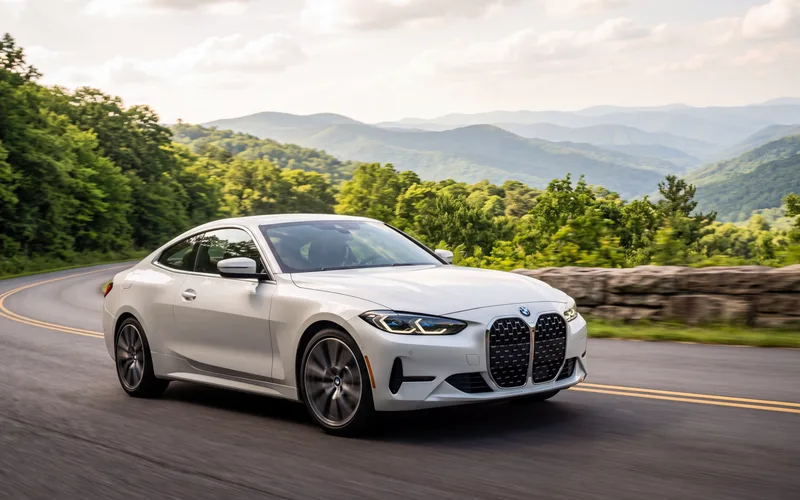 BMW 4 SeriesLuxury CoupeBetter at: Driving dynamics
The default cross-shop: significantly quicker, far better infotainment, a usable back seat and a bigger trunk, for about $4,000 more up front.
Compare 2.74B-
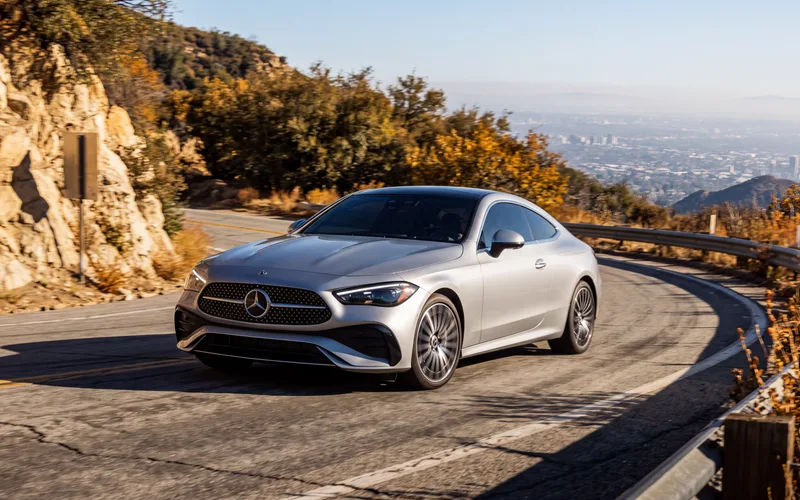 Mercedes-Benz CLE CoupeLuxury CoupeBetter at: Interior tech
A newer, larger, far more modern luxury coupe if you can stretch to roughly $56,500 and accept German running costs.
Compare 2.30C+
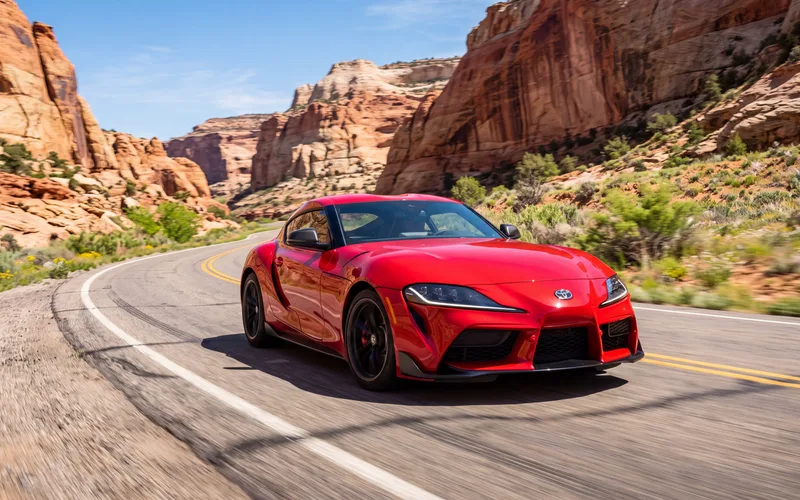 Toyota GR SupraSports CarBetter at: Performance
Delivers the performance the RC's styling promises and does not, with Toyota-family reliability behind it, if you can live without rear seats.
CompareHow it's evolved
9 scored model years · 2017–2025
Subject scores by year
Hover or tap a score to see what moved it versus the year before. A corner mark flags a big swing.
| Year | Performance | Efficiency | Safety | Space | Cost | Reliability | Tech | Use-case | Driving | Value |
|---|---|---|---|---|---|---|---|---|---|---|
| 2025 | 46 | 27 | 61 | 53 | 66 | 85 | 47 | 43 | 66 | 56 |
| 2024 | 46 | 27 | 61 | 52 | 66 | 86 | 41 | 38 | 69 | 57 |
| 2023 | 48 | 27 | 61 | 53 | 71 | 84 | 47 | 44 | 69 | 61 |
| 2022 | 46 | 26 | 58 | 53 | 71 | 82 | 44 | 38 | 67 | 52 |
| 2021 | 46 | 26 | 58 | 53 | 71 | 83 | 41 | 42 | 68 | 54 |
| 2020 | 46 | 23 | 55 | 53 | 72 | 83 | 41 | 41 | 68 | 59 |
| 2019 | 48 | 23 | 57 | 53 | 71 | 79 | 39 | 41 | 68 | 63 |
| 2018 | 48 | 31 | 60 | 52 | 70 | 81 | 33 | 41 | 66 | 59 |
| 2017 | 47 | 31 | 46 | 51 | 70 | 78 | 32 | 36 | 66 | 58 |
Compare two years
Best fit & conditions
Higher scores mean a better fit for that use case. Learn more about use-case fit →
Subject profile
Academic Probation · NHTSA safety recalls
Apr 8, 2026Fuel system, gasoline: delivery: fuel pumpThe low-pressure fuel pump inside the fuel tank may fail.
Defect
Toyota Motor Engineering & Manufacturing (Toyota) is recalling certain 2015-2022 Lexus RC, 2016-2020 GS, and 2022 IS vehicles. The low-pressure fuel pump inside the fuel tank may fail.
Risk
Fuel pump failure can cause an engine stall, increasing the risk of a crash.
Remedy
Dealers will replace the fuel pump assembly, free of charge. Owner letters were mailed October 15, 2026. Owners may contact Toyota's customer service at 1-800-331-4331. Toyota's numbers for this recall are 26LB05 and 26LA05.
NHTSA campaign 26V222000 ↗Manufacturer no. 26LB05/26LA059,139 vehicles potentially affected (all models in the campaign)Owners notified Oct 14, 2026Filed by Toyota Motor Engineering & ManufacturingFiled as RCAug 10, 2022Equipment: other: labels · TiresThe tire information label does not list the vehicle's weight capacity. As such, these vehicles fail to comply with the requirements of Federal Motor Vehicle Safety Standard number 110, "Tire Selection and Rims."
Defect
Toyota Motor Engineering & Manufacturing (Lexus) is recalling certain 2020-2022 Lexus RC F vehicles. The tire information label does not list the vehicle's weight capacity. As such, these vehicles fail to comply with the requirements of Federal Motor Vehicle Safety Standard number 110, "Tire Selection and Rims."
Risk
The vehicle can be overloaded without the weight capacity information, increasing the risk of a crash.
Remedy
Dealers will replace the tire information label, free of charge. Owner notification letters are expected to be mailed September 25, 2022. Owners may contact Lexus' customer service at 1-800-331-4331. Lexus' number for this recall is 22LA03.
NHTSA campaign 22V615000 ↗Manufacturer no. 22LB0313 vehicles potentially affected (all models in the campaign)Owners notified Sep 28, 2022Filed by Toyota Motor Engineering & ManufacturingFiled as RC F
3 recalls on other model years of the RC (2017–2019)
Nov 4, 2020Fuel system, gasoline: delivery: fuel pumpThe low-pressure fuel pump inside the fuel tank may fail.
Defect
Toyota Motor Engineering & Manufacturing (Toyota) is recalling certain 2018-2019 4Runner, 2019-2020 Avalon, 2019 Corolla Hatchback, 2017-2019 Highlander, 2018-2020 Camry, 2020 Corolla, 2018-2019 Land Cruiser, 2017-2020 Tacoma, 2019-2020 RAV4, 2019-2020 Sequoia, 2017-2020 Sienna, 2019-2020 Tundra, 2018-2020 Lexus ES350, 2017 Lexus GS200t, 2017-2019 Lexus GS350, 2019 Lexus GS300, 2018-2020 Lexus LC500h, 2019-2020 Lexus LS500, 2018-2019 Lexus GX460, 2017 Lexus IS200t, 2019 Lexus IS300, 2019 Lexus IS350, 2018-2020 Lexus LC500, 2018 Lexus LS500, 2019 Lexus LS500h, 2018-2019 Lexus LX570, 2017 Lexus RC200t, 2019 Lexus RC300, RC350, 2017 and 2019-2020 Lexus RX350, 2018-2020 RX350L, 2019 Lexus UX200, 2018-2019 Lexus NX300 vehicles. The low-pressure fuel pump inside the fuel tank may fail.
Risk
If the fuel pump fails, the engine can stall while driving, increasing the risk of a crash.
Remedy
Toyota will notify owners, and dealers will replace the fuel pump assembly with an improved one, free of charge. Owners of specific models were notified that remedy parts were available starting January 21, 2021. Owners of other models will be notified as remedy parts become available. Remedy parts should be available for all affected vehicles by late March 2021. Owners may contact Toyota customer service at 1-888-270-9371 or Lexus customer service at 1-800-255-3987. Note: This recall is an expansion of recall 20V-012. Toyota's number for this recall is 20TA02. Lexus' number for this recall is 20LA01.
NHTSA campaign 20V682000 ↗Manufacturer no. 20TA02, 20LA011,525,742 vehicles potentially affected (all models in the campaign)Owners notified Jan 21, 2021Filed by Toyota Motor Engineering & ManufacturingFiled as RC 200T, RC 300, RC 350Jan 13, 2020Fuel system, gasoline: delivery: fuel pumpToyota Motor Engineering & Manufacturing (Toyota) recalled certain 2018-2019 4Runner, Highlander, Camry, Land Cruiser, Sequoia, Sienna, Tacoma and Tundra, and Lexus RC 300, RC 350, GS 350, GX 460, IS 300, LC 500, LS 500, LX 570, RX 350L, and 2019 Toyota Avalon and Corolla, and certain Lexus NX 300, and ES 350 vehicles on January 13, 2020. On March 4, 2020, Toyota expanded the recall to include certain 2014-2015 Toyota 4Runner and Land Cruiser, 2018 Avalon, Corolla, 2014 FJ Cruiser, 2017 Sienna and Lexus 2018 ES 350, 2018-2019 GS 300, 2013-2014 GS350, 2014-2015 GX 460, IS 350 and LX 570, 2014 IS F, 2018-2019 IS 350, LC 500H and LS 500H, 2013-2015 LS 460, 2015 NX 200T and RC350, 2017 RC 200T and RX 350. Toyota also removed the 2018-2019 Toyota 4Runner and Land Cruiser and 2018-2019 Lexus GX 460 and LX 570 and 2019 NX300 from inclusion in this recall. On March 19, 2020, Toyota expanded the recall to include 2015 Lexus GS350 vehicles. The low-pressure fuel pump inside the fuel tank may fail.
Defect
Toyota Motor Engineering & Manufacturing (Toyota) recalled certain 2018-2019 4Runner, Highlander, Camry, Land Cruiser, Sequoia, Sienna, Tacoma and Tundra, and Lexus RC 300, RC 350, GS 350, GX 460, IS 300, LC 500, LS 500, LX 570, RX 350L, and 2019 Toyota Avalon and Corolla, and certain Lexus NX 300, and ES 350 vehicles on January 13, 2020. On March 4, 2020, Toyota expanded the recall to include certain 2014-2015 Toyota 4Runner and Land Cruiser, 2018 Avalon, Corolla, 2014 FJ Cruiser, 2017 Sienna and Lexus 2018 ES 350, 2018-2019 GS 300, 2013-2014 GS350, 2014-2015 GX 460, IS 350 and LX 570, 2014 IS F, 2018-2019 IS 350, LC 500H and LS 500H, 2013-2015 LS 460, 2015 NX 200T and RC350, 2017 RC 200T and RX 350. Toyota also removed the 2018-2019 Toyota 4Runner and Land Cruiser and 2018-2019 Lexus GX 460 and LX 570 and 2019 NX300 from inclusion in this recall. On March 19, 2020, Toyota expanded the recall to include 2015 Lexus GS350 vehicles. The low-pressure fuel pump inside the fuel tank may fail.
Risk
If the fuel pump fails, the engine can stall while driving, increasing the risk of a crash.
Remedy
Toyota will notify owners, and dealers will replace the fuel pump, free of charge. The recall began May 4, 2020. Owners may contact Toyota customer service at 1-888-270-9371 or Lexus customer service at 1-800-255-3987. Toyota's numbers for this recall are 20TB02 and 20TA02 for Toyota vehicles and 20LB01 and 20LA01 for Lexus vehicles.
NHTSA campaign 20V012000 ↗Manufacturer no. 20TB02/20TA02/20LB011,830,752 vehicles potentially affected (all models in the campaign)Owners notified May 1, 2020Filed by Toyota Motor Engineering & ManufacturingFiled as RC 200T, RC 300, RC 350Feb 14, 2018Fuel system, gasoline: delivery: fuel pumpSpecific operating conditions may result in damage to the pulsation damper in one of the high pressure fuel pumps, possibly causing a fatigue crack in the fuel pump cover.
Defect
Toyota Motor Engineering & Manufacturing (Toyota) is recalling certain 2016-2018 Lexus GS F, 2018 LC500, and 2015-2018 Lexus RC F vehicles, equipped with 5.0L V8 2UR-GSE engines with two high pressure fuel pumps. Specific operating conditions may result in damage to the pulsation damper in one of the high pressure fuel pumps, possibly causing a fatigue crack in the fuel pump cover.
Risk
A cracked cover may leak fuel, which, in the presence of an ignition source, can increase the risk of a fire.
Remedy
Toyota will notify owners, and dealers will replace the high pressure fuel pumps, free of charge. The recall is expected to begin April 2, 2018. Owners may contact Lexus customer service 1-800-255-3987. Toyota's numbers for this recall are J2B and JLB.
NHTSA campaign 18V107000 ↗Manufacturer no. J2B/JLB9,905 vehicles potentially affected (all models in the campaign)Owners notified Apr 5, 2018Filed by Toyota Motor Engineering & ManufacturingFiled as RC F
Source: NHTSA Office of Defects Investigation recall database, model years 2017–2025. Recalls are listed by model year as the manufacturer filed them; whether a specific car is affected depends on its VIN — check a VIN at nhtsa.gov ↗. NHTSA model names matched to this page: RC, RC 200T, RC 300, RC 350, RC F.
Detailed scoring by subject
1Performance & PowertrainGrades below the middle of the scale.1.08D
The volume RC 300 RWD runs the 2.0L twin-scroll turbocharged four rated 241 hp. 2022 is a pure carry-over year mechanically — the only changes were new 19-inch wheel designs and another limited run of the RC F Fuji Speedway Edition — so output is unchanged from the 2019 facelift. That is modest for a luxury coupe and trails the BMW 430i and Mercedes C-Class coupe equivalents.
The turbo four's 258 lb-ft is the strongest torque figure in the non-F lineup and arrives from 1,650 rpm, so the RC 300 out-twists both V6 variants low in the rev range despite giving up horsepower to them.
Lexus publishes no RC 300 acceleration claim; instrumented and published testing of the 2.0T car lands at 7.3 s and is quoted consistently for the 2022 model year. That is slow for a luxury sport coupe — roughly a second and a half behind a 430i — and reflects a 3,737 lb curb weight working against the base engine.
Lexus isolation and quietness are there — the four is well muted at a cruise — but delivery is the RC 300's weakest trait: reviewers of the 2022 car describe the engine as lethargic and not up to pulling the coupe around with any urgency, turning coarse when worked. Scored well below the LC 500's V8 and a little under the German turbo fours it competes with, whose response is sharper.
The RWD car's 8-speed automatic with dual shift mode passes power smoothly and takes paddle inputs, but it is calibrated hard for economy — reviewers of the 2022 RC note quick upshifts and deliberately delayed downshifts that make the base engine feel slower than its numbers. The structural weakness is the lineup, not the gearbox: choosing AWD drops you to an older 6-speed automatic, so the better transmission and the better traction cannot be had together.
All-wheel drive is genuinely available across the mainstream 2022 range — RC 300 AWD, RC 350 AWD and RC 350 F SPORT AWD — rather than confined to a top trim, and the system is a proper full-time setup with a planetary center differential and multi-disc slip limiter, biased 30:70 front/rear and able to shift toward 50:50. Held out of the top band because there are no terrain modes or low range, the RC F is RWD-only, and taking AWD forces both the 6-speed and a different engine.
Three distinct gas engines in the 2022 US lineup — 2.0L turbo four, 3.5L V6 in two states of tune, and the hand-built 5.0L V8 in the RC F and its Fuji Speedway Edition — which is real breadth by coupe standards, and 2022 still offers the RC 350 in both RWD and AWD. But the range is entirely unelectrified: the RC 300h hybrid was never sold in the US and there is no PHEV or EV, which caps this item mid-band.
2Efficiency & RangeThe RC's lowest-graded category.0.00F
The volume RC 300 RWD pairs the 2.0L turbo four with the 8-speed automatic for an EPA-rated 25 MPG combined — mid-pack among gas luxury coupes and behind the current turbo-four benchmarks, since the 2022 car is a carry-over of a chassis introduced for 2015 whose powertrain never received the efficiency updates its German rivals got.
21 MPG city is unremarkable for a 2.0L turbo coupe — no hybrid assist, no cylinder deactivation — so stop-and-go driving is where the RC gives up the most ground to newer rivals.
31 MPG highway is the RC 300's best showing — a tall top gear and a low-drag coupe body make cruising its strongest efficiency case, and it is the one figure that keeps the car competitive on a long trip.
A 17.0-gallon tank against 25 MPG combined gives roughly 425 miles between fills — respectable rather than exceptional for the class, and enough that range is not a practical complaint even though the economy behind it is ordinary. The economy half is EPA-confirmed; the tank figure comes from third-party spec databases, which list 17.0 gal for the 2021–2022 model years against 17.4 gal either side of them, so treat the exact capacity as approximate.
The EPA's $3,100 annual estimate sits essentially at the bottom of the gas-coupe band, and the reason is the combination the RC cannot escape: only-average economy multiplied by a mandatory premium-fuel price. A regular-fuel car matching 25 MPG combined would run several hundred dollars a year cheaper.
Premium is required, not merely recommended, across the entire 2022 RC line, and no electrified variant was ever offered in the US — the RC 300h hybrid is a Japan/Europe model. There is no flex-fuel, diesel or home-charging path to a cheaper mile, which puts the RC firmly in the bottom band; it avoids the very lowest only because premium gasoline is universally available and the tank is a normal size.
3SafetyMid-pack among this car's ten categories.1.88C-
NHTSA never crash-tested the XC10 RC. The 2022 RC 350 is listed in the NCAP database but every rating field returns "Not Rated" — low-volume luxury coupes fall outside routine NCAP vehicle selection. Value is a segment-norm estimate, not a tested figure.
The RC earns Good in all six IIHS crashworthiness evaluations — driver and passenger small overlap front, moderate overlap front, original side, roof strength and head restraints — which in the 2022 award year was the full crashworthiness requirement. It still took no Top Safety Pick, because IIHS published no pedestrian front-crash-prevention result for the car and the optional Premium Triple-Beam headlamps rate Poor. Scored above mid-band on the strength of a clean crash sheet, held short of 80 by the missing award and by ratings that trace back to a single 2015 test car.
Every 2022 RC, base RC 300 RWD included, ships with Lexus Safety System+ — Pre-Collision System with Pedestrian Detection, High-Speed Dynamic Radar Cruise Control, Lane Departure Alert with Steering Assist and Intelligent High Beams — plus Blind Spot Monitor with Rear Cross-Traffic Alert, made standard across the lineup for 2021 and carried into 2022. All five of AEB/ACC/LKA/BSM/RCTA are therefore standard on every trim. Held below 80 because this is LSS+ 1.0, not the 2.5 suite the RC received a year later: no Lane Tracing Assist, no Road Sign Assist, no intersection turn assist, no low-light pedestrian detection, and no surround-view or safe-exit layer at any price.
The RC's Pre-Collision System earned IIHS Superior in vehicle-to-vehicle front crash prevention, avoiding a collision outright in both the 12 mph and 25 mph runs — genuinely good measured performance. But the 2022 car's PCS is the LSS+ 1.0 calibration with daytime pedestrian detection only; the low-light pedestrian and daytime bicyclist coverage arrived with LSS+ 2.5 for 2023, and IIHS published no pedestrian front-crash-prevention rating for the RC in any year. Strong daytime vehicle result, unmeasured and hardware-limited at night.
Blind Spot Monitor with Rear Cross-Traffic Alert is standard on every 2022 RC rather than option-boxed, which matters more than usual in a coupe with thick C-pillars and a shallow backlight. Alert-only, though: no rear cross-traffic braking intervention, no safe-exit assist, and no surround-view camera available at any price to back it up.
The 2022 RC has Lane Departure Alert with Steering Assist standard — a corrective nudge back toward the line — but no lane centering at all: Lane Tracing Assist is absent from this LSS+ 1.0 fitment and did not reach the RC until the 2023 LSS+ 2.5 update. Functional departure prevention, zero sustained centering, which puts it at the bottom of the middle band and well behind German coupe rivals that centre confidently.
Standard radar cruise on every trim, but it is the High-Speed Dynamic Radar Cruise Control calibration — it engages only above roughly 25 mph and will not follow to a stop, so it is useless in the stop-and-go traffic where ACC earns its keep. With no lane centering to pair it with there is no highway-assist function at all, just adaptive following. The full-speed-range DRCC that lifts the later RC arrived for 2023.
No hands-free highway system is offered on the 2022 RC at any trim or price. Lexus Teammate Advanced Drive was confined to the LS 500h that year and was never fitted to the XC10 platform in any model year.
Unusually, the volume configuration is the good one: IIHS rated the facelifted RC's standard LED headlamps Good, while the optional Premium Triple-Beam LED units rated Poor, lifting only to Marginal with high-beam assist — reportedly an aim problem rather than a hardware deficit. Intelligent High Beams are standard across the range. Upper-middle because a buyer who pays for the better-looking lights demonstrably sees less.
Classic low-roof coupe compromises: thick rear pillars kill the over-the-shoulder view and the rear window is shallow, so rearward vision is poor by reviewer consensus. Forward sightlines are acceptable for the class and large door mirrors plus standard BSM/RCTA help, but there is no surround-view camera and no head-up display on the RC 300/350 to compensate — only the standard back-up camera.
IIHS rates the RC's LATCH ease of use Good, better than most 2+2 coupes manage, so the anchors themselves are easy to find and use. The car is still a two-door with a token rear bench: every installation goes through a folded front seat and a narrow aperture, the rear is sized for small passengers, and three-across is impossible. Mid-band despite the rating.
4Space & ComfortGrades below the middle of the scale.1.57D
Every 2022 RC is a strict four-seater with a fixed two-place rear bench — the floor of the 4–5 seat coupe band, which is a formality since no two-door in the class carries five.
39.0 inches is genuinely good for a low-roof coupe and one of the RC's quiet strengths — well clear of the 37.2 in its own LC sibling manages and near the top of the 36–40 in coupe band.
45.4 inches clears the top of the 40–44 in coupe band outright; the RC borrows the IS sedan's front-cabin architecture and gives the driver more stretch-out room than most sports sedans, let alone coupes.
34.8 inches lands mid-band for a coupe — tight but not the token space the LC's 32.2 in offers, and the limiting dimension back there is legroom rather than height.
27.3 inches sits in the lower third of the 22–37 in coupe band and is the single biggest limit on the RC's usefulness: reviewers uniformly treat the rear bench as a parcel shelf with seatbelts rather than seating.
10.4 cubic feet is below the midpoint of the 4–26 cu ft coupe band and small even by two-door standards, though it is roughly double what the LC coupe offers and will take two carry-ons plus a soft bag.
A conventionally sparse 2+2 interior: a shallow console bin largely occupied by the Remote Touch pad and USB-A ports, thin door pockets, a small glovebox, and — unlike the German coupes — no folding rear seatbacks to extend the trunk. There is no wireless charging pad, no underfloor tray and no household outlet anywhere in the range.
The front seats are a consistent point of praise — well-bolstered, wide-ranging power adjustment, with heated and ventilated cushions and driver memory once the Premium Package is fitted — but the score is capped by the rear bench, which the same reviewers describe as unusable for adults on anything but a short hop.
Ride comfort is what the RC is actually good at. Reviewers repeatedly describe the suspension as tuned for a soft, luxurious ride that still keeps the body in check, and the F SPORT's optional Adaptive Variable Suspension widens the range without making the base car harsh. Below the LC only because that car rides on a costlier multi-link setup with more travel.
A hallmark Lexus strength: the fixed-roof coupe body, acoustic glass and thorough sound deadening keep wind and road noise low at highway speed, and the turbo four is inaudible at a cruise. It falls short of the LC's near-silence because there is less insulation mass in a car costing half as much.
Dual-zone automatic climate control with the Lexus Climate Concierge is standard, and heated plus ventilated front seats, driver memory, a power steering column and rain-sensing wipers are all available — but in the US they arrive via the Premium Package rather than as base equipment, the heated steering wheel is a separate extra, and a 2+2 coupe has no rear climate provision at all.
5Cost of OwnershipOne of the RC's strongest categories.2.83B-
The 2022 RC opens at $42,820 for the rear-drive RC 300 with the 2.0-liter turbo four, $43,895 once the $1,075 delivery, processing and handling fee is added. That sits mid-band for the coupe segment — cheaper than a BMW 430i and roughly level with an Audi A5, but well above the mainstream sport coupes the band also has to cover.
F Sport is the configuration the RC sells in — it is the grade Edmunds tests and recommends, and it is what carries the adaptive suspension, upgraded brakes, heated seats and the exterior treatment buyers come to this car for — so the RC 300 F Sport at $48,365 delivered is the representative price rather than the $43,895 base. CarEdge's modeled average new transaction for the nameplate is $50,839, which sits between the RC 300 F Sport and the RC 350 F Sport and corroborates the choice; confidence is MEDIUM because Lexus does not publish trim mix.
CarEdge projects roughly $412 a year in maintenance and repairs across the first five years of new ownership, comfortably the cheapest end of the luxury-coupe field and low enough to fall below the floor of the coupe normalization band. The mechanicals are shared with the IS sedan and are Toyota-derived, four of those five years sit inside the bumper-to-bumper warranty, and Lexus's repair-frequency record is the best in the class. MEDIUM because CarEdge publishes at nameplate level rather than by model year and methodologies diverge widely.
Resale is the RC's single strongest ownership argument. CarEdge models 31.2% five-year depreciation and iSeeCars just 24.6% — against 44.7% for the luxury compact car category — driven by Lexus's reliability reputation, low production volume and a used market that treats the RC as a safe buy. Both figures clear the top of the coupe band; the more conservative CarEdge number is used here. MEDIUM because these are nameplate-level projections rather than a settled result for a specific 2022 car.
Lexus's standard 4-year/50,000-mile basic coverage applies to the 2022 RC. It matches what BMW, Mercedes and Audi offered on the 4 Series, C-Class coupe and A5 that year, so it is par for the segment — mid-band, better than the mainstream 3/36 but short of the 5-year outliers the band tops out at.
Lexus covers the engine, transmission and drive system for 6 years/70,000 miles — two years and 20,000 miles past the 4/50 the German rivals stopped at in 2022, and a genuine advantage over them. It still lands low in absolute terms because the band runs to the 10-year coverage Hyundai, Genesis and Kia use, which no German or Japanese luxury brand matches.
Lexus Complimentary Maintenance covers only the first two scheduled visits — 6 months/5,000 miles and 12 months/10,000 miles — which is a thin included-maintenance period beside BMW's multi-year Ultimate Care, though better than the nothing Mercedes and Audi bundled in 2022. What lifts it to mid-band is the surrounding coverage: 4 years of unlimited-mileage roadside assistance, and a 2022 RC that ships with Lexus Enform Safety Connect, Service Connect and a Wi-Fi hotspot standard across every grade rather than as a paid add-on.
$48,365 volume-trim price minus its estimated resale value after 5 years (68.8% retained, or about $33,275) leaves about $15,090 in depreciation. Add the projected $2,061 in 5-year maintenance and repairs, and owning this vehicle for 5 years costs about $17,151 in total.
6Reliability & QualityThe RC's best-graded category.3.58A-
2022 is the eighth model year of the single XC10 generation launched for 2015 and facelifted for 2019, and the Lexus newsroom lists the RC flatly as a "Carry over model from 2021" — the only 2022 changes are RC F-specific (new 19-inch wheel designs, F-logo scuff plate, standard Blind Spot Monitor, expanded Carbon Package) plus a second 50-unit run of the Fuji Speedway Edition. No new platform, engine, gearbox or electrical architecture means no first-year fault surface, and the car runs IS (XE30) mechanicals shared with a far higher-volume Lexus sedan. Four years of field exposure have produced a single NHTSA complaint of any kind. Scored below the same car's 2024 and 2025 entries (both 87) for two year-specific reasons: the brand evidence behind the prediction is weaker for this year — Lexus placed only second among premium brands in the J.D. Power 2022 VDS (159 PP100, behind Genesis at 155) where by 2024 it led all brands — and unlike those years, model year 2022 is directly named in an open low-pressure fuel-pump stall-risk recall. Consumer Reports publishes no predicted-reliability rating for the 2022 RC at all, and the volume RC 300 RWD's 2.0-liter turbo four remains the weakest link in an otherwise conservative package.
For this model year Lexus split the two major US dependability studies rather than sweeping them: first in Consumer Reports' brand reliability ranking, but second among premium brands in the J.D. Power 2022 VDS at 159 PP100, behind Genesis, in a year Kia led all brands at 145. That is still far clear of every German rival in this coupe set and reflects a sustained multi-year pattern of top-tier standing, but a step below the outright sweep the brand posted from 2023 onward. Scored identically to the Lexus LC 2022 entry, since this is a brand-wide attribute for a given model year.
The weakest reliability item for this specific year, and the main reason the 2022 car scores below the 2024 and 2025 RCs (89 and 88), whose model years no campaign names. Two NHTSA actions list model year 2022. One is trivial — 13 RC F units with a tire information label missing the weight capacity. The other is not: the Denso low-pressure fuel-pump campaign reached the RC for a third time in April 2026, now sweeping 2015–2022 cars, with engine stall as the stated consequence, and as of mid-2026 Lexus had only mailed interim letters because the final remedy was not yet available — a 2022 owner filed a complaint describing the car sitting at a dealer for nearly four months for exactly that reason. Held in the "typical recall activity, nothing systemic" band rather than lower because nothing structural, fire-related or brake/steering-related has ever been filed against this generation, the whole eleven-year run has only five campaigns, and this year's own complaint record is otherwise empty; held well out of the 80s because an unremedied stall-risk campaign against this exact model year is a live defect, not a historical one.
The volume RC 300 RWD runs the 8AR-FTS 2.0-liter twin-scroll turbo four, the one Toyota engine family in this car with a documented pattern of complaint — water-pump leaks reported from as little as 20k miles, a three-thermostat cooling circuit, a water-pump job that pulls the timing-chain cover, and a closed non-rebuildable deck that does not survive an overheat, with average longevity cited around 140k miles rather than the usual Toyota figure. The AWD RC 300 and every RC 350 instead use the 2GR-FKS 3.5-liter naturally aspirated V6 with D-4S injection, one of the most proven engines Toyota builds, and the RC F's 2UR-GSE 5.0-liter V8 is equally unproblematic; the Aisin 8-speed (RWD) and 6-speed (AWD) torque-converter automatics are not a concern in any variant. A 2022 build sits well clear of the pre-2017 cars where the worst turbo and timing-chain cases cluster, but two points below the 2024/2025 RC entries (both 80) because the fuel-delivery side of this year's powertrain is a confirmed rather than hypothetical failure point — the 2026 Denso pump recall names 2022 explicitly. Still well above the German turbo fours in this coupe set, and below the GR Supra's B58 and the LC's V8.
The materials are genuinely good for the money — perforated NuLuxe upholstery reviewers call convincing and durable, precise stitching, damped switchgear, and an F SPORT cabin with heavily bolstered sport seats and LFA-derived instrumentation. What keeps it out of the high 80s is that by 2022 the design and hardware around those materials are seven model years old: the 10.3-inch display sits far back on the dash as a non-touch-first afterthought, the Remote Touch pad remains one of the most criticized interfaces in the class, and reviewers single out specific cheap-looking pieces — the panel surrounding the center clock and air vents. Scored identically to the 2024 and 2025 RC entries because the cabin is unchanged across all three years, and well below the LC (92), which is the benchmark and costs twice as much.
Assembly is a clear strength with no meaningful counter-argument, and 2022 is one of the strongest initial-quality years Lexus has posted in relative terms. The RC is a low-volume Lexus coupe built on a line that by 2022 had eight model years to converge on a body unchanged but cosmetically since 2015 — the conditions under which panel gaps become repeatable and squeak-and-rattle complaints disappear — and Edmunds confirms exactly that outcome on the 2022 car. Lexus placed second among premium brands in the J.D. Power 2022 Initial Quality Study, a single PP100 behind Genesis and roughly 40 PP100 better than the premium average, and it held that position in the worst IQS year on record. Scored at the Lexus norm and level with the 2024/2025 RC entries, just under the hand-finished LC (93), which gets Motomachi's takumi regime and deliberate volume restraint.
Lexus was the measured best premium service experience in the US for this model year — first among premium brands in the J.D. Power 2022 Customer Service Index at 897, seventeen points clear of Cadillac and eighteen of Porsche — with loaners and pickup-and-delivery as standard practice. The RC is serviced by the same network on the same shared IS mechanicals, and Toyota's parts-support obligations run a decade past end of production, so a 2022 car is comfortably inside the supported window. Held short of the top of the band on coverage: at roughly 240 US stores the network is materially thinner than BMW's or Mercedes-Benz's, and 2022 was a year of real service-capacity strain industry-wide. Scored identically to the Lexus LC 2022 entry since the network is a brand-wide attribute, and above the 8 Series (78) and 911 (85).
Mechanically the RC is cheap to keep by luxury-coupe standards because almost nothing under the skin is unique to it — the 2.0T is shared with the IS, NX and RX, the 2GR-FKS V6 with the Camry, Tacoma, Highlander and ES, and the Aisin automatics with half the Lexus range — so independent shops will take the work and parts price at Toyota-family rather than halo-car levels. The drag is body and trim: the RC's panels, glass, lighting and interior pieces are model-unique on a nameplate selling in the low thousands a year, and F SPORT staggered performance tires and larger brakes add running cost. A 2022 car sits mid-production with the line still running through 2025, so the factory parts pipeline and the salvage pool are both deeper than for an end-of-line car. Scored identically to the 2024/2025 RC entries — the structural argument does not change by year — well above the LC (66), whose body parts have no scale at all, and below the parts-common IS (84).
7Technology & InfotainmentOne of the RC's weakest categories.0.90F
The volume car ships a 7.0-inch Lexus Display Audio screen, the floor of the 7–15.5 in band, and the 10.3-inch panel is locked behind a navigation package. The diagonal understates the problem: 2022 is the last RC model year before a touchscreen exists at all, so neither display can be touched — that penalty is carried on 7.1.2.
The worst part of the car and the most-repeated criticism in every 2022 review. With no touch input of any kind, every selection goes through the console Remote Touch trackpad, which is jumpy and non-linear and demands sustained eyes-off-road attention; the graphics and menu depth are a generation behind. Marked a shade below the LC because the volume RC's screen is both smaller and set the same distance away.
Apple CarPlay and Android Auto are standard on every 2022 RC — and in practice are how owners escape the native interface — but both are wired-only through a console USB-A port, with no wireless projection offered on any trim or package. That is exactly the 'wired standard' band.
Weaker than the LC's because native navigation is not standard here: the volume RC 300 ships Display Audio with no embedded maps, and Lexus Dynamic Navigation with Dynamic Voice Command only appears with the Navigation Package. The assistant itself is the pre-Lexus-Interface fixed command-grammar system, not natural language, and the cloud services lapse to paid subscriptions after their trials.
The available Mark Levinson 17-speaker, 835-watt Class D surround system is a genuinely strong premium option and one of the better systems in a compact luxury coupe. Held below 80 because the standard 10-speaker Lexus Premium setup is merely adequate and the Mark Levinson upgrade is chained to the top navigation package rather than being orderable on the volume car.
Partial digital at best. The base RC 300 pairs analog dials with a small colour multi-information display; the F SPORT configurations substitute the LFA-derived single-dial TFT meter with the physically sliding centre ring, which is distinctive but small, fixed in layout and far less configurable than the 12.3-inch panels BMW and Mercedes fit to rival coupes by 2022.
No over-the-air updating of vehicle or head-unit software exists on the 2022 RC. The only over-the-air content is map and POI data through Lexus Dynamic Navigation — and since navigation itself is an option, the volume RC 300 has no OTA capability of any kind. That puts it below even the maps-only band for the car most buyers get.
The Lexus app covers the expected core set through Remote Connect — remote engine start with climate, lock/unlock, vehicle locate and vehicle health reporting — with Safety Connect adding SOS and automatic collision notification. Mid-band because there is no digital key or phone-as-key at any price and every connected function becomes a paid subscription once its trial lapses.
The weakest element of the RC's technology package. USB-A only with no USB-C anywhere in the car, no Qi wireless charging pad offered on any trim or package, no household AC outlet, and nothing provisioned for the rear bench. Confidence is MEDIUM on the exact port count, which Lexus does not publish; the absences are confirmed across feature lists.
Smart Access proximity entry with push-button Start/Stop is standard on every 2022 RC, and remote engine start is available through the Lexus app. Squarely mid-band rather than higher: there is no phone-as-key, no hands-free trunk release, and app-based remote start depends on a connected-services subscription rather than the fob.
Standard equipment stops at a backup camera; Intuitive Parking Assist (front and rear clearance sonar) is confined to the top F SPORT 3 configuration or the RC F's Carbon Package, and no 360-degree Panoramic View Monitor was offered on the RC at any price for 2022. That is a real gap in a coupe whose over-the-shoulder view is genuinely poor.
A colour Head-Up Display is offered on the RC line and suits its low seating position, but it is neither standard nor freely orderable on the volume RC 300 — it rides with the upper F SPORT/navigation configurations and is standard only on the RC F. That is the 'limited to top trims' band. Confidence is MEDIUM because Lexus does not publish a standalone 2022 RC option price for it.
8Use-Case FitOne of the RC's weakest categories.0.48F
Better than most 2+2 coupes manage but still a poor family tool: IIHS rates the RC's LATCH hardware Good — complete, easy-to-find anchors in both rear positions — yet reaching them means tilting a front seat and leaning through a two-door aperture, and 27.3 in of rear legroom leaves almost nothing behind a rear-facing seat. The 10.4 cu ft trunk will not take a full-size stroller.
The safety content itself is strong and standard on every trim — Lexus Safety System+ with pre-collision, lane departure alert with steering assist, all-speed radar cruise, and Blind Spot Monitor with Rear Cross-Traffic Alert newly made standard for 2022 — backed by Good IIHS crashworthiness results. What keeps it out of the top band is that a strict four-seat coupe with a nearly unusable back seat is a poor family proposition regardless of its ratings, and NHTSA has never crash-tested the RC.
Two people travel very well in the RC — quiet, comfortable, supportive front seats — but this item asks about four-plus occupants, and there the car collapses: 27.3 in of rear legroom, no rear vents, no rear USB provision, no rear amenities of any kind, and a 10.4 cu ft trunk that cannot hold four people's luggage.
An easy, low-effort commuter: the 8AR-FTS turbo four makes its 258 lb-ft from 1,650 rpm so the car never feels strained in traffic, the 8-speed automatic is smooth, the ride is soft, the cabin is quiet, and all-speed radar cruise with lane tracing is standard. Held back by the Remote Touch pad, which is a genuine distraction to operate on the move, and by thick rear pillars that make lane changes a blind-spot-monitor exercise.
25 MPG combined is respectable for a 3,737 lb rear-drive luxury coupe and far better than the LC's V8, but premium gasoline is required rather than recommended, which is the difference between an average and a cheap commute — and the 21 MPG city figure is what an actual commuter sees.
The footprint and turning circle are genuinely city-friendly — 185 in long on a 34.2 ft curb-to-curb circle, tighter than the LC — but rearward visibility over the shallow rear glass and thick pillars is poor, standard parking help stops at a backup camera, clearance sonar is a top-trim item and no surround-view camera exists.
Not a work vehicle in any sense. Lexus publishes no tow rating for the RC, there is no hitch in the accessory catalog, the rear seats do not fold to extend load space, and total cargo capacity is a 10.4 cu ft trunk.
The mechanical package is unusually robust for a luxury coupe — the 8AR-FTS turbo four and Aisin 8-speed are high-volume Toyota Group units, Tahara build quality is excellent and Lexus led the 2023 J.D. Power dependability study — but the car itself is entirely luxury-oriented: leather or NuLuxe surfaces, low ground clearance, no wear-friendly interior option and no fleet presence whatsoever.
Nothing here: no bed, no tie-downs beyond trunk hooks, no roof rails or rack provision, no household AC outlet or onboard power, no washable surfaces and no upfit ecosystem of any kind.
The RC's strongest use case. A quiet, softly sprung cabin with supportive, optionally ventilated front seats, roughly 435 miles of range from 17.4 gallons at 25 MPG, and standard all-speed radar cruise with lane tracing assist to cut fatigue. It stops short of the top band because two-up touring means packing into a 10.4 cu ft trunk and the driver-assist suite is hands-on only, with no hands-free highway mode at any price.
Pavement-bound. All-wheel drive is at least available across the RC 300 and RC 350 — more than most rivals in this bracket offer — but it comes with a naturally aspirated V6 and an older six-speed, and the car still has a sedan-low ride height on 18- or 19-inch performance tires, no tow rating, no roof rails and no onboard power for camping.
Restrictive. A 10.4 cu ft trunk is enough for two people's soft luggage, but the rear seatbacks are fixed rather than split-folding on every trim, so there is no way to extend the load floor for anything long, and there are no roof rails, no hitch and no underfloor storage.
9Driving ExperienceOne of the RC's strongest categories.2.53C+
Secure and well-balanced rather than agile. The RC's double-wishbone front / multi-link rear chassis holds 0.88 g on the skidpad and stays composed, and the F SPORT's Adaptive Variable Suspension tightens body control — but at 3,737 lbs the car is heavy for its footprint and reviewers consistently report that it looks and sounds sportier than it corners. Well below the LC's grip and far below the 911/Corvette end of the peer set.
Precise and consistently weighted but almost entirely mute — the electric assist filters out surface texture, and the variable-ratio setup on F SPORT cars adds quickness without adding information. Squarely the 'precise enough but numb' band, and the single clearest reason the RC is not taken seriously as a driver's car.
Adequate rather than strong. The RC 300 needs 168 feet to stop from 70 mph — a long figure for a luxury coupe and a direct consequence of curb weight on all-season rubber — though the pedal itself is firm, linear and consistent in normal use, with no fade issues reported on the road.
Calibration is a genuine strength: the 8AR-FTS turbo four puts 258 lb-ft on the table from 1,650 rpm so there is little turbo lag, the Aisin 8-speed Sport Direct-Shift automatic shifts cleanly and blips the throttle on manual downshifts, and Lexus isolation keeps the driveline free of shunt. It falls short of the top band because outright response is gentle — 7.3 seconds to 60 mph — rather than eager.
Inoffensive but uninspiring. At a cruise the turbo four is essentially inaudible behind the RC's thorough sound insulation, but worked hard it sounds like the four-cylinder it is — flat and a little coarse — with none of the character the V6 or the RC F's V8 provide. This is where the volume RC most obviously gives up ground to its own siblings and to the peer set.
34.2 feet is essentially the bottom of the 34–40 ft coupe band and a real everyday asset — the RC turns tighter than its own LC sibling despite a longer wheelbase, which makes U-turns and parking garages painless.
The seat itself is excellent — low, supportive, with 45.4 in of legroom and power adjustment plus a power tilt/telescope column on Premium cars — and the primary driving controls fall to hand properly. Two things hold it mid-band: rearward visibility over the shallow backlight and thick C-pillars is poor, and the Remote Touch pad forces the driver into a console reach for functions that should be a glance.
The RC's central problem in one item: dramatic styling and an F SPORT badge over a chassis tuned for comfort, numb steering and a 7.3-second turbo four. It is a pleasant, refined car to cover ground in and nobody dislikes driving it — but it is not the one enthusiasts recommend, and that is the near-universal verdict on the volume RC 300.
10Value & Market PositionGrades below the middle of the scale.1.51D
Competitive rather than generous. At $43,895 delivered the RC 300 includes 18-inch wheels, NuLuxe upholstery, dual-zone climate, a power driver's seat, a 10-speaker system, Apple CarPlay/Android Auto, a Wi-Fi hotspot, eight airbags, and — unusually for the class — Blind Spot Monitor with Rear Cross-Traffic Alert and the full Lexus Safety System+ suite standard on every grade, where BMW still charged for blind-spot monitoring on a 430i. What holds it mid-band is the screen: the base car gets a 7-inch display driven by the Remote Touch trackpad, with the 10.3-inch display and navigation locked behind an option package, and heated seats and a moonroof are extra on the non-F Sport car.
Fair, with the weakness on the performance side of the ledger and the strength on the ownership side. For $43,895 the RC 300 delivers 241 hp and a 7.3-second 0–60, slower than every direct rival at the price — an Infiniti Q60 gave 300 hp for less and a BMW 430i is quicker for $1,900 more — and reviewers are blunt that the car's looks write a check its base powertrain doesn't cash. Against that, the cabin materials genuinely outclass the price, the RC 350's 311-hp V6 at $46,825 is the value pick of the range, and the RC's class-beating resale and ~$412/year upkeep recover thousands over five years that the sticker comparison misses.
Wide for a two-door that sells in four figures. The 2022 lineup runs RC 300 and RC 350 each in base and F Sport form, rear- or all-wheel drive (the RC 300 swapping the 2.0-liter turbo four for a 260-hp V6 when AWD is specified), then the 472-hp RC F above them and the 50-unit RC F Fuji Speedway Edition at the top — three engines and six trims spanning $43,895 to $102,170. It falls short of the top band only because there is no manual, no convertible body, and the F Sport is an appearance-and-chassis grade rather than a power upgrade.
A slow seller on a steady multi-year decline. US RC deliveries fell to 2,615 in 2022 from 2,987 in 2021 and 4,591 in 2019 — down 43% across the generation's late life, and down again to 1,752 in 2023. Some of that is the industry-wide inventory drought, but the trend predates it and the segment itself was shrinking; the RC was never more than a niche entry beside the IS sedan it shares its platform with.
Lexus is genuinely strong on the attributes that follow an owner home — reliability reputation, dealer experience and the best resale in the luxury field — and it remained one of the three largest luxury brands in the US in 2022. What keeps it out of the top band is that the strength is comfort-and-dependability rather than aspiration: in a two-door segment where image is much of the purchase, the badge carries less pull than BMW's M halo or Porsche's, and the RC itself is not the car people cite when they name a desirable Lexus.
Scored on buyer benefit, 2022 was a bad year to be shopping and the RC was no exception: the chip shortage pushed the average new vehicle roughly 10% above sticker, Lexus inventory was thin all year, and the brand concentrated what subvented financing it had on its crossovers rather than a two-door. It scores above the worst cases only because the RC was a slow-moving car that sat on lots longer than an RX, which left more room to transact at or near MSRP than the marked-up BMW M440i and Porsche builds of the same year.
The oldest thing about the car. 2022 is the eighth model year of the XC10 generation that launched for 2015 and the fourth since the August 2018 facelift, and it is a pure carry-over year — the only changes Lexus made were new 19-inch wheel designs for the RC F and an Electric Surge paint color exclusive to the 50-car Fuji Speedway Edition. The consequence buyers feel is the infotainment: the RC was still on the trackpad-driven Remote Touch system that the IS and ES had already moved past, and the 2023 car went on to gain Lexus Safety System+ 2.5 and Enhanced Lane Tracing Assist that this one does not have.
Consistently placed in the lower half of its class and never a comparison-test winner. U.S. News scores it 6.8/10 and ranks it #19 among 2022 Luxury Small Cars; KBB gives 3.3 out of 5. The recurring complaints are the same everywhere — the Remote Touch trackpad, a base engine that can't back up the styling, and a tiny rear seat and trunk — and unlike the ES, IS and NX the RC took no IIHS Top Safety Pick in 2022 despite Good crashworthiness scores. It clears the bottom band because the interior quality, ride comfort and Lexus dependability draw genuine and consistent praise, and owner ratings (KBB 4.5/5) run far warmer than the professional ones.