

The verdict
A struggling luxury coupe, strong on reliability and held back by efficiency.
The 2017 Lexus RC looks like a sports coupe and drives like a quiet luxury cruiser — the volume RC 200t needs 7.3 seconds to reach 60 mph with 241 hp hauling 3,737 pounds, so the styling promises more than the powertrain delivers. What you get instead is the best ownership case in the class: a Kelley Blue Book Best Resale Value winner for 2017, about $412 a year in upkeep, an IIHS Top Safety Pick+ crash record, and one of the quietest cabins at any price. The catches are all about equipment and space — no automatic emergency braking, blind-spot monitor or lane warning is standard on any trim, there is no Apple CarPlay or Android Auto at all, the 7-inch screen is driven by a trackpad reviewers called one of the worst controllers they had used, and 27.3 inches of rear legroom behind a 10.4-cubic-foot trunk makes this a two-seater with occasional-use jump seats. Buy it as a durable, serene two-person commuter and tourer that will hold its money; cross-shop a BMW 4 Series if you want the car to feel as fast as it looks.
Jump to scoresStrengths
- Ownership costs that undercut the whole segment
- Lexus dependability and dealer experience, at their peak year
- A genuinely quiet, comfortable place to cover distance
What holds it back
- Infotainment is a full generation behind
- Premium fuel required, so running costs stay high
- Driver aids the rivals were standardizing are optional or missing
Top alternatives
Cars shoppers cross-shop with the Lexus RC 2.88B-
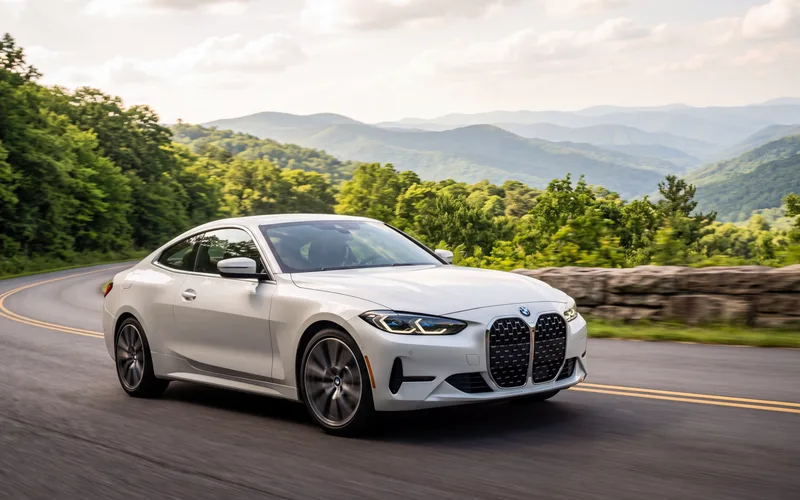 BMW 4 SeriesLuxury CoupeBetter at: Driving dynamics
The default cross-shop: significantly quicker, far better infotainment, a usable back seat and a bigger trunk, for about $4,000 more up front.
Compare 2.74B-
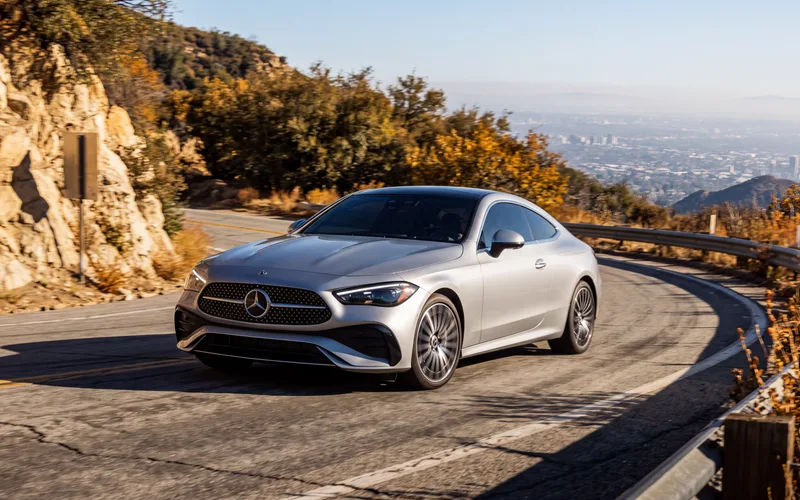 Mercedes-Benz CLE CoupeLuxury CoupeBetter at: Interior tech
A newer, larger, far more modern luxury coupe if you can stretch to roughly $56,500 and accept German running costs.
Compare 2.30C+
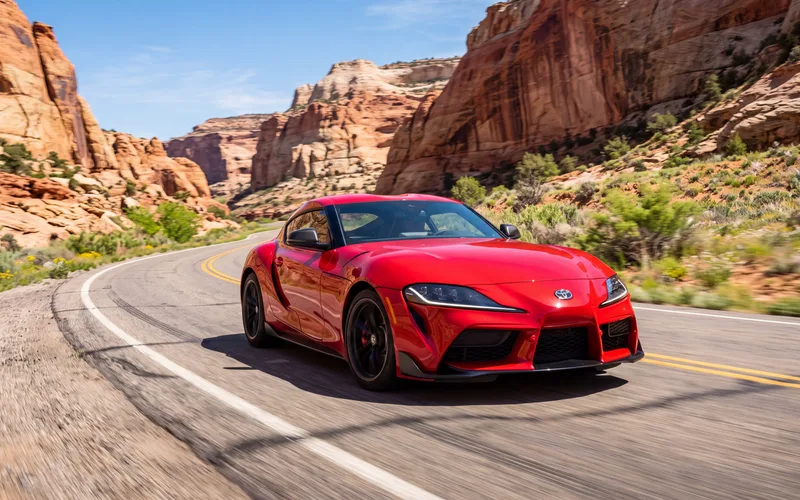 Toyota GR SupraSports CarBetter at: Performance
Delivers the performance the RC's styling promises and does not, with Toyota-family reliability behind it, if you can live without rear seats.
CompareHow it's evolved
9 scored model years · 2017–2025
Subject scores by year
Hover or tap a score to see what moved it versus the year before. A corner mark flags a big swing.
| Year | Performance | Efficiency | Safety | Space | Cost | Reliability | Tech | Use-case | Driving | Value |
|---|---|---|---|---|---|---|---|---|---|---|
| 2025 | 46 | 27 | 61 | 53 | 66 | 85 | 47 | 43 | 66 | 56 |
| 2024 | 46 | 27 | 61 | 52 | 66 | 86 | 41 | 38 | 69 | 57 |
| 2023 | 48 | 27 | 61 | 53 | 71 | 84 | 47 | 44 | 69 | 61 |
| 2022 | 46 | 26 | 58 | 53 | 71 | 82 | 44 | 38 | 67 | 52 |
| 2021 | 46 | 26 | 58 | 53 | 71 | 83 | 41 | 42 | 68 | 54 |
| 2020 | 46 | 23 | 55 | 53 | 72 | 83 | 41 | 41 | 68 | 59 |
| 2019 | 48 | 23 | 57 | 53 | 71 | 79 | 39 | 41 | 68 | 63 |
| 2018 | 48 | 31 | 60 | 52 | 70 | 81 | 33 | 41 | 66 | 59 |
| 2017 | 47 | 31 | 46 | 51 | 70 | 78 | 32 | 36 | 66 | 58 |
Compare two years
Best fit & conditions
Higher scores mean a better fit for that use case. Learn more about use-case fit →
Subject profile
Academic Probation · NHTSA safety recalls
Apr 8, 2026Fuel system, gasoline: delivery: fuel pumpThe low-pressure fuel pump inside the fuel tank may fail.
Defect
Toyota Motor Engineering & Manufacturing (Toyota) is recalling certain 2015-2022 Lexus RC, 2016-2020 GS, and 2022 IS vehicles. The low-pressure fuel pump inside the fuel tank may fail.
Risk
Fuel pump failure can cause an engine stall, increasing the risk of a crash.
Remedy
Dealers will replace the fuel pump assembly, free of charge. Owner letters were mailed October 15, 2026. Owners may contact Toyota's customer service at 1-800-331-4331. Toyota's numbers for this recall are 26LB05 and 26LA05.
NHTSA campaign 26V222000 ↗Manufacturer no. 26LB05/26LA059,139 vehicles potentially affected (all models in the campaign)Owners notified Oct 14, 2026Filed by Toyota Motor Engineering & ManufacturingFiled as RCNov 4, 2020Fuel system, gasoline: delivery: fuel pumpThe low-pressure fuel pump inside the fuel tank may fail.
Defect
Toyota Motor Engineering & Manufacturing (Toyota) is recalling certain 2018-2019 4Runner, 2019-2020 Avalon, 2019 Corolla Hatchback, 2017-2019 Highlander, 2018-2020 Camry, 2020 Corolla, 2018-2019 Land Cruiser, 2017-2020 Tacoma, 2019-2020 RAV4, 2019-2020 Sequoia, 2017-2020 Sienna, 2019-2020 Tundra, 2018-2020 Lexus ES350, 2017 Lexus GS200t, 2017-2019 Lexus GS350, 2019 Lexus GS300, 2018-2020 Lexus LC500h, 2019-2020 Lexus LS500, 2018-2019 Lexus GX460, 2017 Lexus IS200t, 2019 Lexus IS300, 2019 Lexus IS350, 2018-2020 Lexus LC500, 2018 Lexus LS500, 2019 Lexus LS500h, 2018-2019 Lexus LX570, 2017 Lexus RC200t, 2019 Lexus RC300, RC350, 2017 and 2019-2020 Lexus RX350, 2018-2020 RX350L, 2019 Lexus UX200, 2018-2019 Lexus NX300 vehicles. The low-pressure fuel pump inside the fuel tank may fail.
Risk
If the fuel pump fails, the engine can stall while driving, increasing the risk of a crash.
Remedy
Toyota will notify owners, and dealers will replace the fuel pump assembly with an improved one, free of charge. Owners of specific models were notified that remedy parts were available starting January 21, 2021. Owners of other models will be notified as remedy parts become available. Remedy parts should be available for all affected vehicles by late March 2021. Owners may contact Toyota customer service at 1-888-270-9371 or Lexus customer service at 1-800-255-3987. Note: This recall is an expansion of recall 20V-012. Toyota's number for this recall is 20TA02. Lexus' number for this recall is 20LA01.
NHTSA campaign 20V682000 ↗Manufacturer no. 20TA02, 20LA011,525,742 vehicles potentially affected (all models in the campaign)Owners notified Jan 21, 2021Filed by Toyota Motor Engineering & ManufacturingFiled as RC 200T, RC 300, RC 350Jan 13, 2020Fuel system, gasoline: delivery: fuel pumpToyota Motor Engineering & Manufacturing (Toyota) recalled certain 2018-2019 4Runner, Highlander, Camry, Land Cruiser, Sequoia, Sienna, Tacoma and Tundra, and Lexus RC 300, RC 350, GS 350, GX 460, IS 300, LC 500, LS 500, LX 570, RX 350L, and 2019 Toyota Avalon and Corolla, and certain Lexus NX 300, and ES 350 vehicles on January 13, 2020. On March 4, 2020, Toyota expanded the recall to include certain 2014-2015 Toyota 4Runner and Land Cruiser, 2018 Avalon, Corolla, 2014 FJ Cruiser, 2017 Sienna and Lexus 2018 ES 350, 2018-2019 GS 300, 2013-2014 GS350, 2014-2015 GX 460, IS 350 and LX 570, 2014 IS F, 2018-2019 IS 350, LC 500H and LS 500H, 2013-2015 LS 460, 2015 NX 200T and RC350, 2017 RC 200T and RX 350. Toyota also removed the 2018-2019 Toyota 4Runner and Land Cruiser and 2018-2019 Lexus GX 460 and LX 570 and 2019 NX300 from inclusion in this recall. On March 19, 2020, Toyota expanded the recall to include 2015 Lexus GS350 vehicles. The low-pressure fuel pump inside the fuel tank may fail.
Defect
Toyota Motor Engineering & Manufacturing (Toyota) recalled certain 2018-2019 4Runner, Highlander, Camry, Land Cruiser, Sequoia, Sienna, Tacoma and Tundra, and Lexus RC 300, RC 350, GS 350, GX 460, IS 300, LC 500, LS 500, LX 570, RX 350L, and 2019 Toyota Avalon and Corolla, and certain Lexus NX 300, and ES 350 vehicles on January 13, 2020. On March 4, 2020, Toyota expanded the recall to include certain 2014-2015 Toyota 4Runner and Land Cruiser, 2018 Avalon, Corolla, 2014 FJ Cruiser, 2017 Sienna and Lexus 2018 ES 350, 2018-2019 GS 300, 2013-2014 GS350, 2014-2015 GX 460, IS 350 and LX 570, 2014 IS F, 2018-2019 IS 350, LC 500H and LS 500H, 2013-2015 LS 460, 2015 NX 200T and RC350, 2017 RC 200T and RX 350. Toyota also removed the 2018-2019 Toyota 4Runner and Land Cruiser and 2018-2019 Lexus GX 460 and LX 570 and 2019 NX300 from inclusion in this recall. On March 19, 2020, Toyota expanded the recall to include 2015 Lexus GS350 vehicles. The low-pressure fuel pump inside the fuel tank may fail.
Risk
If the fuel pump fails, the engine can stall while driving, increasing the risk of a crash.
Remedy
Toyota will notify owners, and dealers will replace the fuel pump, free of charge. The recall began May 4, 2020. Owners may contact Toyota customer service at 1-888-270-9371 or Lexus customer service at 1-800-255-3987. Toyota's numbers for this recall are 20TB02 and 20TA02 for Toyota vehicles and 20LB01 and 20LA01 for Lexus vehicles.
NHTSA campaign 20V012000 ↗Manufacturer no. 20TB02/20TA02/20LB011,830,752 vehicles potentially affected (all models in the campaign)Owners notified May 1, 2020Filed by Toyota Motor Engineering & ManufacturingFiled as RC 200T, RC 300, RC 350Feb 14, 2018Fuel system, gasoline: delivery: fuel pumpSpecific operating conditions may result in damage to the pulsation damper in one of the high pressure fuel pumps, possibly causing a fatigue crack in the fuel pump cover.
Defect
Toyota Motor Engineering & Manufacturing (Toyota) is recalling certain 2016-2018 Lexus GS F, 2018 LC500, and 2015-2018 Lexus RC F vehicles, equipped with 5.0L V8 2UR-GSE engines with two high pressure fuel pumps. Specific operating conditions may result in damage to the pulsation damper in one of the high pressure fuel pumps, possibly causing a fatigue crack in the fuel pump cover.
Risk
A cracked cover may leak fuel, which, in the presence of an ignition source, can increase the risk of a fire.
Remedy
Toyota will notify owners, and dealers will replace the high pressure fuel pumps, free of charge. The recall is expected to begin April 2, 2018. Owners may contact Lexus customer service 1-800-255-3987. Toyota's numbers for this recall are J2B and JLB.
NHTSA campaign 18V107000 ↗Manufacturer no. J2B/JLB9,905 vehicles potentially affected (all models in the campaign)Owners notified Apr 5, 2018Filed by Toyota Motor Engineering & ManufacturingFiled as RC F
1 recall on other model years of the RC (2020–2022)
Aug 10, 2022Equipment: other: labels · TiresThe tire information label does not list the vehicle's weight capacity. As such, these vehicles fail to comply with the requirements of Federal Motor Vehicle Safety Standard number 110, "Tire Selection and Rims."
Defect
Toyota Motor Engineering & Manufacturing (Lexus) is recalling certain 2020-2022 Lexus RC F vehicles. The tire information label does not list the vehicle's weight capacity. As such, these vehicles fail to comply with the requirements of Federal Motor Vehicle Safety Standard number 110, "Tire Selection and Rims."
Risk
The vehicle can be overloaded without the weight capacity information, increasing the risk of a crash.
Remedy
Dealers will replace the tire information label, free of charge. Owner notification letters are expected to be mailed September 25, 2022. Owners may contact Lexus' customer service at 1-800-331-4331. Lexus' number for this recall is 22LA03.
NHTSA campaign 22V615000 ↗Manufacturer no. 22LB0313 vehicles potentially affected (all models in the campaign)Owners notified Sep 28, 2022Filed by Toyota Motor Engineering & ManufacturingFiled as RC F
Source: NHTSA Office of Defects Investigation recall database, model years 2017–2025. Recalls are listed by model year as the manufacturer filed them; whether a specific car is affected depends on its VIN — check a VIN at nhtsa.gov ↗. NHTSA model names matched to this page: RC, RC 200T, RC 300, RC 350, RC F.
Detailed scoring by subject
1Performance & PowertrainGrades below the middle of the scale.1.15D
The volume RC 200t carries the 2.0L turbocharged four making 241 hp, unchanged for 2017 — modest output for a luxury coupe, with the V6 and V8 trims well above it.
The turbo four's 258 lb-ft exceeds both V6 variants' torque and arrives from 1,650 rpm, which is why the base car feels adequate in traffic despite its modest horsepower.
7.3 seconds is slow for a luxury coupe and is the single biggest drag on this category — the RC 200t is a comfortable cruiser rather than a quick car, with published estimates spanning roughly 7.0–7.5 sec.
The 2.0T is quiet and largely lag-free thanks to a torque plateau starting at 1,650 rpm, and Lexus isolation keeps it smooth, but reviewers report a slight hesitation off the line and describe the delivery as merely adequate rather than eager.
The 8-speed automatic on the RWD volume car shifts smoothly and suits the RC's touring character; the score is held back because reviewers want quicker responses in Sport mode and because AWD trims are stuck with an older 6-speed.
All-wheel drive is offered on two of the four 2017 trims rather than being a top-trim-only option, but it is unavailable on the volume RC 200t and on the RC F, forces the naturally aspirated V6 and the older 6-speed, and is a basic rear-biased full-time system with no terrain modes.
Three genuinely distinct gasoline engines (2.0L turbo four, 3.5L V6, 5.0L V8) across four trims is real choice by coupe standards, but there is no electrified option at all in the US market.
2Efficiency & RangeThe RC's lowest-graded category.0.00F
The turbocharged RC 200t is comfortably the most efficient 2017 RC at 26 MPG combined — respectable for a gas luxury coupe — while every V6 and V8 trim drops to 22 MPG or worse.
22 MPG in town is unremarkable — there is no hybrid assist and no stop-start in the US RC, so stop-and-go economy is ordinary for a ~3,700 lb coupe.
32 MPG on the highway is the RC 200t's best efficiency showing and suits its grand-touring character, sitting at the upper end of the gas-coupe field without approaching the efficiency of a hybrid.
A 17.4-gallon tank at the EPA combined figure gives 452 miles between fills — solid touring range for the class, and longer still at the 32 MPG highway rating.
The mandatory premium grade pushes running cost near the top of the coupe band despite the best-in-lineup MPG — this is the weakest item in the category.
Every 2017 RC variant is listed as requiring premium fuel — not merely recommending it — so the owner pays the premium surcharge on every fill with no regular-gas fallback and no electrified option in the US lineup.
3SafetyGrades below the middle of the scale.1.05D
NHTSA carries entries for the 2017 RC 350 in both RWD and AWD but has never crash-tested the car — every frontal, side and rollover field returns "Not Rated", as is normal for a low-volume luxury coupe. The value is a segment-norm estimate, not a measured result; IIHS's all-Good crashworthiness sheet supports an estimate at or above the fleet midpoint.
The RC is one of the few coupes in this catalog with a full IIHS crashworthiness sheet, and it is clean: Good in driver-side small overlap, passenger-side small overlap, moderate overlap, side, roof strength and head restraints, earning 2017 Top Safety Pick+. Scored in the top band but not higher because the award is conditional — it requires the optional Pre-Collision System and the standard (not the optional triple-beam) headlights, so a buyer can easily order an RC that would not qualify.
The 2017 RC was one of the last Lexus models left out of the Lexus Safety System+ rollout: none of AEB, adaptive cruise, lane keeping, blind-spot monitoring or rear cross-traffic alert is standard on any trim. The volume RC 300/350 leaves the showroom with eight airbags, VDIM stability control, hill-start assist and a reversing camera — the pre-collision system with radar cruise is a $500 stand-alone option and BSM/RCTA rides in an equipment package.
With the optional Pre-Collision System fitted, IIHS rates front crash prevention Advanced: the RC nearly avoided the 12 mph vehicle-to-vehicle test and cut 8 mph off the 25 mph run. Solid daytime vehicle-to-vehicle work, but this is the pre-LSS+ radar/camera hardware — there is no IIHS pedestrian result day or night, no cyclist detection and no intersection support — and the whole capability is a paid option rather than equipment every car has.
Blind Spot Monitor with Rear Cross-Traffic Alert exists but is optional on every trim, arriving only inside an equipment package, and it is alert-only — no rear cross-traffic braking, no safe-exit assist and no surround-view camera to back it up. That matters more than usual here because the RC's rear blind spots are among the worst in the segment, so the car that needs the system most is the one that can be ordered without it.
No lane assistance of any kind was offered on the 2017 RC — no lane departure warning, no lane keep assist, no centering. Lane Departure Alert with Steering Assist reaches the RC only with the 2018 model year, when Lexus Safety System+ finally becomes standard on the coupe. Near-floor score for a criterion that grades centering quality on a car with nothing to grade.
All-Speed Dynamic Radar Cruise Control is available bundled with the Pre-Collision System for $500, and Lexus's radar cruise of this era is a smooth, well-regarded full-speed-range system. It is capped below the middle of the band because it is optional rather than standard and works entirely alone — with no lane keeping on the car there is no highway assist, no lane-change assist and no curve-speed function.
No hands-free highway system was offered on any 2017 RC configuration, and none existed anywhere in the Lexus range in 2017 — Lexus Teammate with Advanced Drive did not arrive until the 2022 LS 500h.
The standard LED projectors rate Acceptable and are the configuration that qualifies the RC for Top Safety Pick+, so the volume car gets the better lamps. The optional Premium Triple Beam LED package — new to the 2017 option sheet — rates Poor, lighting the road less well than the units it replaces, and no automatic high beam is available because the RC skips LSS+ this year.
Reviewers consistently call out large rear blind spots behind thick rear pillars and a shallow backlight, with a low seating position behind a long hood. Camera compensation is thin for the era: a reversing camera is the only standard aid, parking sensors and blind-spot monitoring are optional, and no surround-view system was offered.
The RC has complete LATCH hardware in both outboard rear positions, so the anchors are there — but this is a 2+2 with the least rear room of any German or Japanese luxury coupe in its class, reached through a single long door past front seats that power-slide forward slowly enough that reviewers complain about them. Fitting a rear-facing seat pushes the front occupant far forward, and three-across is impossible with only two positions.
4Space & ComfortGrades below the middle of the scale.1.38D
The RC is a strict 2+2 with four belted positions, the minimum for the coupe band; there is no five-seat configuration on any 2017 trim.
Front headroom is genuinely good for a low-roof coupe at 39.0 inches, though the optional moonroof costs more than an inch and drops it to 37.8.
At 45.4 inches the RC gives the front occupants more legroom than most sedans, clearing the top of the coupe normalization band outright — the front half of this cabin is not where the RC is compromised.
34.8 inches under the fastback roofline puts adult heads into the glass, landing below the middle of the coupe band.
27.3 inches is a token back seat: reviewers describe it as cramped and hard to reach, and it is well short of what the BMW 4 Series and Mercedes C-Class coupe offer.
A 10.4 cubic-foot trunk is small even by coupe standards and is explicitly called out by reviewers as a shortfall, though the standard folding rear seat backs relieve it somewhat.
Small-item storage is thin — a modest covered console bin, shallow door pockets and a single cupholder pair — with no underfloor tray, no onboard power outlet and no fold-flat surfaces; the one genuinely useful provision is the 60/40 split-folding rear seatback that extends the small trunk.
The front buckets earn consistent praise for long-haul comfort with high-grade upholstery and lumbar support, but this item covers front and rear together and the 27.3-inch rear bench is a short-trip-only perch, which caps the score in the middle band.
Ride compliance is one of the RC's real strengths — it smooths broken pavement better than its German rivals, in keeping with its grand-touring brief — with the deduction for F Sport-equipped cars on 19-inch wheels, which reviewers find firm.
Wind isolation is close to best-in-class and the 2.0T is inaudible at a cruise, making this the strongest comfort attribute in the category; some road roar on coarse surfaces is the only consistent criticism.
Dual-zone automatic climate control and Lexus Enform Remote pre-conditioning are standard, but every seat-comfort feature that matters — heated and ventilated front seats, heated steering wheel, power tilt-and-telescoping column, memory — is optional inside the Premium and Comfort packages, and a 2+2 coupe has no rear climate provision at all.
5Cost of OwnershipOne of the RC's strongest categories.2.74B-
The 2017 RC opens at $40,155 for the rear-drive RC 200t — the turbocharged four that Lexus would rename RC 300 for 2018 — or $41,130 once the $975 delivery, processing and handling fee is added. That undercuts every direct German rival's 2017 sticker (430i Coupe $42,845, A5 Coupe $42,000, C 300 Coupe about $43,050) and lands just below mid-band for a coupe normalization range that also has to cover mainstream sport coupes.
F SPORT is how the RC actually sells, and in 2017 it is a $4,105 package rather than a separate grade — F SPORT front bumper and mesh spindle grille, 19-inch 10-spoke wheels on summer tires, adaptive variable suspension with Sport S+, heated and ventilated bolstered sport seats with memory, power steering column, aluminum pedals and Blind Spot Monitor — so the RC 200t RWD with F SPORT at $45,235 delivered is the representative price rather than the $41,130 entry car. A press example with navigation and Mark Levinson ($2,550), moonroof ($1,100), Intuitive Park Assist ($500), premium paint ($595) and a limited-slip differential ($390) stickered at $50,885, which brackets the figure from above. MEDIUM because Lexus does not publish trim mix.
CarEdge projects about $412 a year in maintenance and repairs over the first five years for the 2.0-liter turbo RC — the cheapest end of the luxury-coupe field and low enough to fall below the floor of the coupe normalization band. The 8AR-FTS turbo four in the 2017 RC 200t is the same Toyota-derived unit the later RC 300 carries and is shared with the IS 200t, four of the five years sit inside the 4-year/50,000-mile bumper-to-bumper warranty, and the first two scheduled services are free. MEDIUM because CarEdge publishes at nameplate rather than model-year level and Edmunds' True Cost to Own pages refuse automated fetch (403).
Resale is the RC's strongest ownership argument, and 2017 is the model year with the award attached to it: Kelley Blue Book named the Lexus RC the Best Resale Value entry-level luxury car of 2017, one of four Lexus category wins that year. CarEdge models 29% five-year depreciation on the nameplate — about 71% retained — and notes the RC has the lowest depreciation rate in the whole Lexus portfolio, with the RC F first and the RC 300/350 second and third. The 67% used here sits a little under CarEdge's projection to allow for the F SPORT-equipped volume car depreciating harder than the base sticker implies, and still clears the top of the coupe band. MEDIUM because the projection is nameplate-level rather than model-year-specific, and a 2017 car's actual five-year mark fell in 2022, inside the pandemic used-price spike.
Lexus's standard 4-year/50,000-mile basic coverage applies to the 2017 RC. It matched what BMW, Mercedes-Benz and Audi offered on the 4 Series, C-Class Coupe and A5 that year, so it is exactly par for the luxury-coupe segment — mid-band, ahead of the mainstream 3/36 but short of the 5-year coverage the band tops out at.
Lexus covers the engine, transmission and drive system for 6 years/70,000 miles — two years and 20,000 miles past where the German rivals stopped in 2017, and a real advantage over them. It still lands low in absolute terms because the band runs to the 10-year coverage Hyundai, Genesis and Kia use, which no German or Japanese luxury brand matched.
Thin on both halves, and 2017 is the model year immediately before Lexus fixed the connected-services half. Included maintenance covers only the first two scheduled visits, at 6 months/5,000 miles and 12 months/10,000 miles — a 1-year/10,000-mile plan against the multi-year programs BMW bundled — and the Enform telematics that later became a ten-year complimentary subscription are still a one-year trial on a 2017 car, Safety Connect and Service Connect alike, with Enhanced Roadside Assistance complimentary for one year rather than ten. What keeps it from the bottom band is the genuinely standard 4-year/unlimited-mileage Lexus roadside assistance behind the trial and a dealer service experience that consistently rates among the best in the industry; what caps it is that there is no charging credit, no extended app entitlement and no smartphone projection of any kind — Lexus offered neither Apple CarPlay nor Android Auto in 2017.
$45,235 volume-trim price minus its estimated resale value after 5 years (67% retained, or about $30,307) leaves about $14,928 in depreciation. Add the projected $2,061 in 5-year maintenance and repairs, and owning this vehicle for 5 years costs about $16,989 in total.
6Reliability & QualityThe RC's best-graded category.3.30B+
2017 is the third model year of the single XC10 generation launched for 2015 and sits well before the August 2018 facelift, so it is a trim-and-equipment change year rather than a hardware one: a new black finish on the base grille, newly available triple-beam LED headlights, Yamaha performance shocks on the rear-drive RC 350, and a newly available Scout GPS Link for smartphone-based navigation. No platform, engine or gearbox change — the RC 200t keeps the 241 hp 2.0-liter turbo four, the AWD RC 300 the 255 hp 3.5 V6, and the RC 350 the 306 hp V6. The one model-specific prediction that exists for this year is J.D. Power's 3.5/5, rated slightly above average, and Consumer Reports publishes no predicted-reliability rating for the 2017 RC at all — the sample is too small for statistical confidence. Scored two points below the 2018 entry (80) and one below 2019 (79) on three year-specific grounds that all cut the same way: 2017 is named in four NHTSA campaigns, more than any other model year of this car; the brand data behind any prediction is a notch weaker than 2018's (Lexus tied rather than won the 2017 VDS, finished second rather than first in the October 2017 CR survey, and posted its weakest initial-quality year of the era at 98 PP100 against a 97 PP100 average); and a 2017-build 8AR-FTS sits on the wrong side of the line where that engine's timing-chain and turbo complaints thin out. Still comfortably above the coupe-segment median (75.8), because the underlying car is a three-year-settled Lexus.
Lexus's long-term dependability standing for this model year is still elite but is, uniquely in this car's run, not a clean sweep. It tied Porsche for highest overall in the J.D. Power 2017 VDS at 110 PP100 — a sixth consecutive year leading, against a 156 PP100 industry average — but it tied rather than won outright, and in Consumer Reports' October 2017 brand ranking it finished second behind Toyota, the fifth straight year a Toyota-group brand topped that survey. The harder counterweight is initial quality: at 98 PP100 the 2017 IQS was Lexus's weakest showing of this period and landed a point the wrong side of the 97 PP100 industry average, in a year Kia took the overall title at 83 — the first non-premium brand to do so in 27 years — and Genesis led the 13 premium brands. Scored five points below the 2018 entry (93), which is the brand's high-water year here (VDS first outright, CR first, IQS top-10 at 84 PP100 after a 14-point gain), and one below the 2019 entry (89). Still high in absolute terms: a tied-first VDS finish and a second-place CR ranking are what most luxury brands never reach, and the below-average IQS result is a 90-day survey of new-car annoyances rather than a durability signal.
2017 is the worst recall year of this generation: four NHTSA campaigns name it, and three of those reach the volume car. All four are fuel-system, which is the pattern for the whole XC10 run — nothing structural, brake- or steering-related has ever been filed against it. The volume RC 200t is caught by the full low-pressure Denso fuel-pump sequence: 20V012000, where the March 2020 expansion pulled the 2017 RC 200t in by name; 20V682000, the November 2020 expansion that names the 2017 RC 200t again alongside only the 2019 RC 300/350; and then 26V222000 six years later, which sweeps 2015–2022 RCs back in for the same defect family and is still unremedied — as of mid-2026 Lexus had mailed interim letters only, because the final remedy was not available, so a 2017 RC currently carries a live engine-stall defect with no fix to book. The fourth, 18V107000, is the most serious in kind but the narrowest in scope: a high-pressure fuel pump whose cover can fatigue-crack and leak fuel near an ignition source — a fire risk — confined to 9,905 2015–2018 RC F builds on the 2UR-GSE V8 and so not present on the volume car. Scored two points below the 2019 entry (65), which carries the same three volume-car campaigns but escapes the fire-risk filing, and seven below 2018 (70), which is outside 20V682000 entirely. Mitigating throughout: no campaign carries a do-not-drive or park-outside advisory, and every remedy is free dealer work.
The volume 2017 RC 200t runs the 8AR-FTS 2.0-liter twin-scroll turbo four, the one engine family in this car with a documented complaint pattern — water-pump leaks reported from as little as 20k miles, a three-thermostat cooling circuit where one failure tends to take the others with it, a pump job that pulls the timing-chain cover, and cited average longevity around 140k miles rather than the usual Toyota figure. A 2017 build sits on the wrong side of the line that protects the later cards in this series: the turbo failures and timing-chain jumps are reported to cluster in early builds and are "not likely to bother owners of the 8AR-FTS engines made after 2017," which places a 2017 car inside the affected window rather than past it. The AWD RC 300 and both RC 350s instead use the 2GR-FKS 3.5-liter naturally aspirated V6 with D-4S injection, one of the most proven engines Toyota builds — shared with the Camry, Tacoma, Highlander and ES — and the Aisin 8-speed (RWD) and 6-speed (AWD) torque-converter automatics are not a concern in any variant. Fuel delivery is the other drag and it is worse this year than any other: the volume car is named in all three low-pressure Denso pump campaigns, and on the RC F the 2UR-GSE's high-pressure pump can crack and leak. Scored three points below the 2018 entry (76) and two below 2019 (75) on exactly those two year-specific grounds, and well above the German turbo fours in this coupe set while far below the LC's naturally aspirated V8 (86).
The materials are genuinely good for the money and reviewers of this exact year say so — high-quality leathers, soft-touch plastics and metallic accents, precise stitching, damped switchgear, and an F SPORT cabin with heavily bolstered seats and LFA-derived instrumentation. Testers of the 2017 RC 200t describe the interior as well-built with all materials high quality and well fitted. The cabin is the original 2015 design in its third year, untouched for 2017 — the year's changes are a black base grille, available triple-beam LED headlights, Yamaha shocks on the RC 350 and Scout GPS Link — so there is no renewal to credit and no staleness to deduct yet. Scored level with the 2018 entry (82), for the same cabin and the same review consensus, and two below the 2019 entry (84), which earns its margin from the facelift's actual interior work (dark gray streamline heater and audio panels, enlarged knee pads, new clock and cup holder). Held out of the high 80s by hardware that will not move until 2019: the display sits far back on a terraced centre stack, the touch-sensitive temperature sliders are only semi-responsive, and the Remote Touch pad remains one of the most criticized interfaces in the class — the criticism of this car is consistently aimed at the interface rather than at the physical quality of what surrounds it. Far below the LC (93), the benchmark here, which costs roughly twice as much.
Assembly remains a strength — the body, structure and cabin are unchanged since 2015, so by 2017 the line has had two full model years to converge, and there are no facelift fascias, lamps or console panels being fitted for the first time the way 2019 has. Reviewers of the 2017 car report interior materials high quality and well fitted, and the RC is measured as one of the quietest cars in its class. What pulls this year below its neighbours is the supporting brand data, and it is year-exact: the J.D. Power 2017 Initial Quality Study — a 90-day survey, which is precisely the window assembly defects, rattles and misalignment show up in — put Lexus at 98 PP100, below the 97 PP100 industry average and the brand's weakest initial-quality result of this era, in a year Kia led at 83 and Porsche at 84. The following year Lexus recovered 14 points to 84 against a 93 average. Scored three points below the 2018 entry (88), whose IQS showing is the best of the run, and one below 2019 (86), which has a weaker body argument but a brand back above the average. Still comfortably above the German coupes in this set and just under the hand-finished LC (90), because the physical build of this car is not what anyone criticizes — the interface is.
This is the best-measured service year in the RC's entire run, and the item is scored on the year's measured service satisfaction. Lexus ranked highest among luxury brands in the J.D. Power 2017 Customer Service Index at 874 — the seventeenth time the brand has taken that spot — ahead of Audi (869), Lincoln (868), Porsche (867) and Cadillac (865). That is an outright win, where 2018 has Lexus tied third at 871 behind Infiniti and Porsche, and 2019 second at 881 behind Porsche. The underlying ownership experience matches: loaners and pickup-and-delivery are standard practice, and the RC is serviced on IS-shared mechanicals by a network carrying Toyota's decade-past-production parts obligations. Scored three points above the 2018 entry (86) and two above 2019 (87) on the CSI result alone, and level with the strongest later Lexus entries (88–90). The cap is coverage, not satisfaction: at roughly 240 US stores the network is materially thinner than BMW's or Mercedes-Benz's, though dense for a luxury marque and far better spread than the exotic-adjacent GT rivals. Held one under the ceiling by a live execution problem this year inherits — the still-unremedied 26V222000 fuel-pump campaign names 2017, and owners have no fix to book.
Mechanically the RC is cheap to keep by luxury-coupe standards because almost nothing under the skin is unique to it — the 8AR-FTS 2.0T is shared with the IS, NX and RX, the 2GR-FKS V6 with the Camry, Tacoma, Highlander and ES, and the Aisin automatics with half the Lexus range — so independent shops will take the work and parts price at Toyota-family rather than halo-car levels. The drag is body and trim: panels, glass, lighting and interior pieces are model-unique on a nameplate selling in the low thousands a year, and F SPORT staggered performance tires and larger brakes add running cost. Two things specific to a 2017 car roughly cancel. Against it, being pre-facelift narrows the extremity parts pool to the 2015–2018 build window rather than the full eleven-year run, and at nine years old it is far outside the 4-year/50,000-mile basic and 6-year/70,000-mile powertrain warranties, so the 8AR-FTS water-pump-and-timing-cover job — the likeliest big bill on this exact engine — lands entirely on the owner. For it, a car this age has real salvage depth behind it, and the three fuel-pump recalls that dog this year are free dealer work rather than an ownership cost. Scored identically to the 2018–2022 and 2024–2025 entries (76): the structural argument does not change materially by year. Well above the LC (58 in 2018, whose body parts have no scale at all) and below the parts-common IS (84).
7Technology & InfotainmentOne of the RC's weakest categories.0.11F
The volume RC leaves the showroom with a 7.0-inch display at the bottom of the coupe band; the 10.3-inch screen is locked behind the Navigation package. Neither is a touchscreen — both are driven by a console controller.
The Remote Touch console controller is the defining flaw of this cabin — it is a cursor-driven interface that demands eyes off the road, and the touchpad fitted with the Navigation package drew some of the harshest language Edmunds has used on an infotainment control. Menu graphics and Enform features are fine; reaching them while moving is not.
Neither Apple CarPlay nor Android Auto is offered on the 2017 RC in any form, wired or wireless — Lexus did not begin factory CarPlay rollout until the 2019 model year, which for the RC coincides with the facelift. Siri Eyes Free and Scout GPS Link are the only phone hooks, and they are not projection.
Basic voice recognition and Scout GPS Link phone-based navigation are standard, and the optional Navigation package brings genuine embedded maps with upgraded voice commands and Destination Search — but real navigation is a paid option on a luxury coupe, and this is command-word-era voice, not natural language.
This is the category's clear strength: a 10-speaker system is standard rather than a token base unit, and the optional 17-speaker Mark Levinson surround system is one of the better factory audio installations of its era, helped by the RC's unusually quiet cabin.
The volume RC has conventional analog dials with a 4.2-inch color multi-information display between them; the fully digital LFA-derived TFT cluster with its motor-driven sliding ring is excellent but arrives only with the F Sport package, which is exactly the 'full digital on upper trims only' middle band.
There is no meaningful over-the-air update path on the 2017 RC — no vehicle software updates and no OTA map delivery; navigation map refreshes of this generation are dealer or physical-media affairs. Enform delivers live data services, not firmware.
Lexus Enform Remote is standard and covers the core set — remote start and climate, lock/unlock, vehicle locate, alarm and guest driver monitor — but it runs on a trial and then becomes a paid subscription, the app is slow to respond by modern standards, and there is no digital key.
Two USB-A ports and a 12-volt socket up front is the whole provision — no USB-C anywhere, no rear-seat charging in a car that nominally seats four, no household outlet, and Qi wireless charging does not appear on the 2017 RC option sheet.
Smart Access proximity entry and push-button start are standard on every 2017 RC, and remote start is available through the Enform app rather than being withheld for upper trims — a solid showing held short of the top band only by the absence of phone-as-key, which did not exist at Lexus in 2017.
A reversing camera is standard but it is a low-resolution unit by current measure, front and rear Intuitive Park Assist sensors are optional, and there is no surround-view camera or parking automation at any price — a real gap in a car whose thick rear pillars already hurt visibility.
No head-up display was offered on any 2017 RC trim, including the RC F — the feature reaches the RC only with the 2019 facelift.
8Use-Case FitOne of the RC's weakest categories.0.34F
Complete LATCH hardware in both outboard rear positions is the only thing keeping this above the floor: everything else about the RC fights family logistics — two long heavy doors, front seats that must power-slide forward to reach the back, and 27.3 inches of rear legroom that a rear-facing seat will not clear without moving the front passenger far forward.
The crashworthiness case is genuinely strong — 2017 Top Safety Pick+ with Good ratings across the IIHS battery — but the 2017 RC was left out of the Lexus Safety System+ rollout, so a family buying the volume car gets no standard AEB, no lane departure warning and no blind-spot monitor; every one of those is a paid option.
Four-up for multiple hours is not something this car does: the rear seats are token, there are no rear vents, no rear USB ports and no rear amenities of any kind, and the 10.4 cubic-foot trunk cannot take four people's luggage once the folding rear seatback is occupied by passengers.
This is what the RC 200t is actually good at — a torque plateau from 1,650 rpm makes it effortless in traffic, the eight-speed shifts smoothly, the cabin is among the quietest in the class and the ride absorbs city pavement well. It falls short of the top band because of poor over-the-shoulder visibility and a console controller that is genuinely distracting to use while moving.
26 MPG combined is the best figure in the 2017 RC lineup and decent for a 3,737-pound luxury coupe, but premium fuel is required rather than recommended, which puts the EPA annual bill at $3,000 and erases most of the turbo four's advantage over the V6 cars on a cost-per-mile basis.
The footprint is genuinely city-friendly — 185 inches long on a 108-inch wheelbase with a tight 34.2-foot turning circle — but the payoff is undercut by thick rear pillars and a shallow backlight, a standard reversing camera that is the only visual aid, and parking sensors that cost extra with no surround view available at all.
The RC has no published tow rating in the US market, no bed, two doors and a 10.4 cubic-foot trunk — there is no work mission this car performs.
Lexus powertrain and build durability is a real asset and the 2GR-FKS/8AR-FTS hardware is proven, but this item asks about toughness under work abuse and the RC is the definition of the guidance band's 'luxury-oriented for work contexts' — leather and soft trim, low ground clearance, no wear-friendly interior option and no fleet presence.
Nothing here at all: no onboard AC power, no bed or tie-down system, no factory hitch, no roof rail or rack ecosystem, and carpeted trim throughout that is the opposite of washable.
For two people this is a capable tourer — a near-silent cabin, front seats praised for long stints, a compliant ride and 452 miles between fills on a 17.4-gallon tank. What holds it out of the top band is the driver-assist gap: no lane keeping of any kind was offered in 2017 and adaptive cruise is a paid option, so the fatigue-reduction half of this item is largely missing.
The volume RC 200t is rear-drive only with coupe ride height, no tow rating, no roof rails and no roof load provision — it is pavement-bound. All-wheel drive exists in the 2017 lineup but only on the V6 RC 300 and RC 350, not on the trim being scored.
The standard 60/40 split-folding rear seatback is a real advantage over rivals with a fixed bulkhead and lets long items through, but it is folding into a 10.4 cubic-foot trunk with a narrow coupe aperture, and there are no roof rails, no hitch and no underfloor storage to fall back on.
9Driving ExperienceOne of the RC's strongest categories.2.47C+
The RC is secure and composed and corners more willingly than its grand-touring brief suggests, but at 3,737 pounds it is heavy for a compact coupe and the volume RC 200t on the standard suspension shows more body roll than the F Sport or a BMW 4 Series — competent rather than engaging, which is the middle band.
Lexus's electric rack is accurate and gains useful weight in Sport mode, but it is the archetypal numb setup — precise without telling the driver much — and on the base car reviewers find it less direct than the F Sport. Edmunds goes further and advises skipping the Dynamic Handling rear-steer option because it degrades the feel rather than improving it.
Stopping power is adequate and consistent for a car of this weight and pace, but the pedal is tuned soft in the Lexus manner and at least one reviewer found the car reluctant to brake sharply; no instrumented 70–0 figure was published for the RC 200t, so this is a judgment from subjective road tests rather than measured data.
The 2.0-liter turbo's torque plateau opens at 1,650 rpm, so the car pulls cleanly from low revs, and the eight-speed automatic on the rear-drive volume car changes gear smoothly with Lexus's usual isolation. The deduction is for a slight hesitation off the line and shift responses reviewers wanted quicker in Sport mode.
At a cruise the 2.0T is effectively inaudible inside one of the quietest cabins in the class, but worked hard it sounds flat and a little coarse — there is none of the V6's character, and this is the engine note enthusiasts cite when pushing buyers toward the RC 350.
A 34.2-foot curb-to-curb circle is at the tight end of the coupe band and makes the RC notably easy to turn around in town — the strongest single number in this category.
The driving position itself is good — a low, properly sporting seat with 45.4 inches of legroom, eight-way power adjustment and a clear gauge binnacle — but the power tilt-and-telescoping column is optional, rear three-quarter visibility is poor behind thick pillars, and the console controller forces a reach and a long look away from the road.
This is the RC 200t's weakest showing and the honest summary of the car: it looks like a sports coupe and drives like a quiet luxury cruiser, taking 7.3 seconds to 60 mph while carrying nearly 3,750 pounds. Enthusiasts consistently redirect buyers to the RC 350 or RC F, and the styling promises an engagement the base powertrain does not deliver.
10Value & Market PositionMid-pack among this car's ten categories.1.93C-
Sparse where it counts most, and this is the item that separates the 2017 car from the 2018 one. The 2017 RC is one of the last Lexus models left out of the Lexus Safety System+ rollout: pre-collision braking with radar cruise is a $500 option, Blind Spot Monitor with Rear Cross-Traffic Alert rides inside an equipment package, and lane departure warning is not offered at all — where the 2018 car makes the whole suite standard. What is included is respectable but conventional for the money: eight airbags, VDIM stability control, hill-start assist, a reversing camera, standard LED headlamps and running lights, 18-inch alloys, SmartAccess with push-button start, Drive Mode Select, a 10-way power driver's seat, dual-zone climate and NuLuxe upholstery, with leather, the moonroof, navigation with Mark Levinson audio and the new triple-beam LED headlamps all priced separately. There is no Apple CarPlay or Android Auto on any 2017 Lexus, leaving a 7-inch screen driven by the Remote Touch trackpad.
Fair value, with the weakness on the performance and equipment side and the strength on the ownership side. At $41,130 delivered the RC 200t undercuts the 430i Coupe and A5 by $1,700–$2,700 and the cabin materials outclass the price, but 241 hp and 7.3 seconds to 60 mph make it the slowest car at its price point, the driver-assist content the Germans were starting to standardize costs extra here, the infotainment is a generation behind with no smartphone projection at all, and Motor Trend found the F SPORT chassis pays for its cornering with a ride that 'transmits seemingly every road imperfection.' The 306-hp RC 350 at $43,985 delivered is the value pick of the range, and the RC's class-best resale — a KBB award winner for 2017 — plus roughly $412/year upkeep recover thousands over five years that a sticker comparison misses.
Wide for a two-door selling in four figures. The 2017 lineup runs RC 200t (rear-drive, 2.0T, eight-speed), RC 300 (all-wheel drive only, 255-hp V6, six-speed), RC 350 in rear- or all-wheel drive with 306 hp, and the 467-hp RC F above them, with the $4,105 F SPORT Package available across the non-F cars — three engines and four drivetrain combinations spanning roughly $41,130 to $65,140 delivered. It falls short of the top band because there is no manual transmission where rivals offered one, no convertible body, F SPORT is an appearance-and-chassis package rather than a power upgrade, and the configurator is rigid in the Japanese manner: all-wheel drive forces the naturally aspirated V6 and the older six-speed, and is unavailable on the volume RC 200t entirely.
The third year of a three-year slide, and the year the decline became structural rather than post-launch normalization: 7,363 US deliveries in 2017, down 33.8% from 11,165 in 2016, itself down from 14,784 in the 2015 launch year — half the opening volume gone in two years. It lands just under the mid-band rather than deep in the declining-sharply band because 7,363 is still real volume for a luxury two-door (more than double what the RC would manage in 2018) and because the brand was sliding with it, Lexus USA falling 7.6% to 305,132 as the luxury market moved to crossovers. But the trajectory is unambiguous and a 2017 buyer could see it.
Lexus is genuinely strong on the attributes that follow an owner home — reliability reputation, dealer experience and resale — and the RC itself took Kelley Blue Book's 2017 Best Resale Value award for entry-level luxury cars. What keeps it out of the top band is that the strength is dependability rather than aspiration, and 2017 is the year even the resale crown moved: Porsche took KBB's Best Resale Value Luxury Brand for the first time, ending Lexus's five-year run, while Lexus volume fell 7.6% and the brand slipped behind Mercedes-Benz and BMW in US luxury sales. In a two-door segment where image is much of the purchase, the badge carries less pull than BMW's M halo, and the desirable Lexus coupe of the moment was the LC 500 arriving that same year, not the RC.
Scored on buyer benefit, 2017 was the peak discounting year of the cycle and a coupe losing a third of its volume sat on the favorable side of it. Industry incentive spending hit a July record of $3,876 per vehicle at 10.8% of MSRP, with passenger cars specifically carrying $4,174 as the market abandoned them for crossovers — and an RC moving 7,363 units nationally spent far longer on a lot than any Lexus SUV, leaving real room to negotiate on a car whose own segment was contracting. It stops short of the top band because Lexus concentrated its subvented financing and lease support on the volume crossovers rather than the RC, which has rarely carried a headline lease offer, so the discounting was market conditions a buyer had to go and find rather than an advertised program.
Squarely mid-cycle: 2017 is the third model year of the XC10 generation launched for 2015, on a platform stitched from the previous-generation IS, and the facelift was still a year and a half out — announced with the August 2018 Paris show car — so a 2017 buyer faced no imminent replacement, unlike the 2018 buyer whose car was superseded inside its own selling year. What holds it to the middle rather than higher is that the presentation was already dated when new: a 7-inch screen driven by the Remote Touch trackpad, no smartphone projection, and a driver-assist option sheet the Germans had moved past. The year's only change is an equipment one, the newly available triple-beam LED headlamps.
Well enough regarded to recommend, never the pick of the class — but 2017 is a comparatively strong year for the RC's credentials, rating better with U.S. News than the 2018 car would and carrying two awards a buyer can act on: Kelley Blue Book's 2017 Best Resale Value award for entry-level luxury cars, and an IIHS Top Safety Pick+ with Good ratings in all six crashworthiness tests, an Advanced front-crash-prevention rating with the optional system and Acceptable-rated standard LED projectors. The complaints are consistent across every outlet and are what keep it mid-band: the Remote Touch trackpad, a base engine the styling outruns, no CarPlay, an F SPORT ride stiffer than Lexus buyers expect, and a rear seat and trunk that reviewers call the tightest in the class.