

The verdict
A mixed-report mid-size luxury suv, strong on safety and held back by efficiency.
The 2021 Aviator is the most car-for-the-money luxury three-row of its year: a 400-hp twin-turbo V6 standard on every trim, a hushed leather-and-wood cabin, limousine-grade second-row space and a 6,700-lb tow rating, all starting at $52,665 — roughly $8,000–$10,000 under a comparably powered BMW X5 or Audi Q7. What the sticker doesn't show is the record behind it: NHTSA has issued 28 recall campaigns against this exact model year, including fractured steering knuckles, a fire-risk wiring harness and a transmission park pawl that can let the car roll away, and Consumer Reports rates it below average for reliability. Running costs compound it — 20 MPG combined and roughly $3,100 a year in fuel, with about half the purchase price gone to depreciation by now. Buy one used with a clean recall-completion record and a service contract, and it's a lot of luxury for the money; buy one blind and you're inheriting somebody else's problem.
Jump to scoresStrengths
- Crash-test credentials at the top of the class
- Second-row space that shames the price bracket
- A genuinely quiet, genuinely luxurious cabin
What holds it back
- 28 recalls on this one model year — and several are serious
- 20 MPG and $3,100 a year at the pump
- Half the money gone in five years, with warranty already expired
Top alternatives
Cars shoppers cross-shop with the Lincoln Aviator 2.88B-
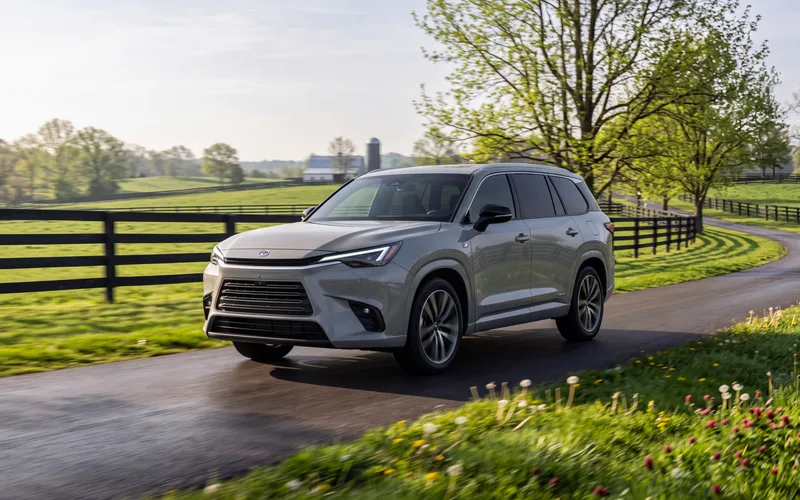 Lexus TXMid-Size Luxury SUVBetter at: Running costs
Hybrid and plug-in powertrains, a roomier third row, and Lexus reliability and resale directly address the Aviator's three biggest weaknesses.
Compare 2.81B-
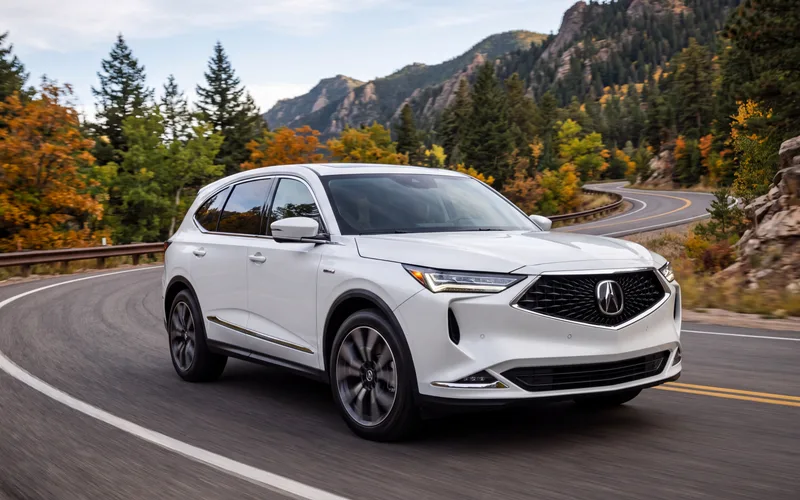 Acura MDXMid-Size Luxury SUVBetter at: Value
Costs less to buy and keep, drives more sharply, and posts a better dependability record while giving up little in three-row usability.
Compare 2.90B-
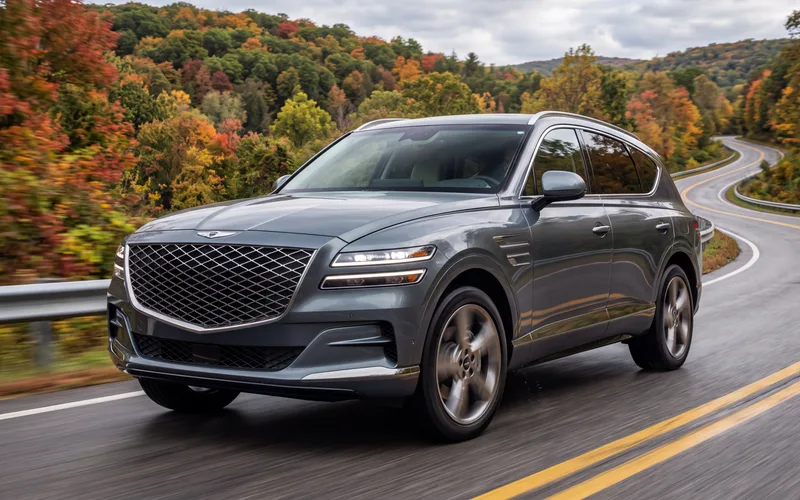 Genesis GV80Mid-Size Luxury SUVBetter at: Interior quality
Similar money buys richer interior materials, a longer warranty, and included scheduled maintenance the Lincoln simply does not offer.
CompareHow it's evolved
7 scored model years · 2020–2026
Subject scores by year
Hover or tap a score to see what moved it versus the year before. A corner mark flags a big swing.
| Year | Performance | Efficiency | Safety | Space | Cost | Reliability | Tech | Use-case | Driving | Value |
|---|---|---|---|---|---|---|---|---|---|---|
| 2026 | 62 | 33 | 86 | 72 | 25 | 65 | 86 | 74 | 69 | 72 |
| 2025 | 62 | 32 | 86 | 72 | 30 | 57 | 85 | 65 | 67 | 70 |
| 2024 | 66 | 31 | 71 | 72 | 38 | 55 | 68 | 61 | 63 | 65 |
| 2023 | 68 | 31 | 73 | 74 | 41 | 59 | 65 | 63 | 69 | 65 |
| 2022 | 68 | 31 | 77 | 74 | 45 | 55 | 65 | 63 | 69 | 67 |
| 2021 | 68 | 31 | 77 | 72 | 45 | 47 | 64 | 62 | 69 | 68 |
| 2020 | 67 | 31 | 75 | 73 | 40 | 42 | 69 | 59 | 68 | 72 |
Compare two years
Best fit & conditions
Higher scores mean a better fit for that use case. Learn more about use-case fit →
Subject profile
Detailed scoring by subject
1Performance & PowertrainMid-pack among this car's ten categories.2.59C+
2021 is a carry-over year in the U611 second generation (2020–2024 pre-refresh) — changes were cosmetic only (Monochromatic package, Black Label soft-close doors, two new paint colors), so the volume Reserve trim keeps the standard 3.0L twin-turbocharged V6 at 400 hp.
Peak torque of 415 lb-ft arrives at a low 2,750 rpm, giving the Aviator effortless mid-range pull; unchanged for 2021.
Instrumented tests of the 400-hp gas Aviator land in the mid-5s for the volume Reserve trim, with the heavier, fully-equipped Black Label about half a second slower.
The twin-turbo V6 delivers quiet, effortless thrust that reviewers rate as one of the Aviator's strongest traits; only mild off-the-line turbo lag and low-speed drivetrain hesitation keep it out of the top band.
The 10-speed automatic shifts unobtrusively in normal driving and holds gears sensibly in Excite mode, but this generation is reported to hesitate and hunt at low speed — a solid mid-band result rather than a class benchmark.
Properly equipped with the optional Class IV Trailer Tow Package, the 2021 gas Aviator is rated at 6,700 lbs — near the top of the mid-size luxury three-row field thanks to its rear-drive-based platform. This rating was cut to 5,600 lbs from the 2022 model year onward, so 2021 is one of the strongest years for towing.
Rear-drive is standard with AWD optional on every gas trim (and standard on the Grand Touring PHEV), backed by five drive modes including Slippery and Deep Conditions — broadly available and competent, but there is no low range or locking hardware.
A pavement-oriented luxury three-row: roughly 7–8 in of clearance, road-biased tires, no skid plates, no low range, no locking differential and no off-road trim; the Deep Conditions drive mode and the optional air suspension's low-speed lift are the only real provisions.
Two genuinely distinct powertrains for 2021 — the 400-hp twin-turbo V6 and the 494-hp/630-lb-ft Grand Touring plug-in hybrid — so an electrified option exists, but there is no third choice and no full EV.
2Efficiency & RangeThe Aviator's lowest-graded category.0.00F
EPA rates the volume gas Aviator AWD at 20 MPG combined — a 400-hp twin-turbo V6 hauling a 4,800-lb three-row is thirsty even by gas mid-size SUV standards.
EPA city rating of 17 MPG for the AWD gas model; auto stop-start is standard but there is no hybrid assist on this powertrain.
EPA highway rating of 24 MPG for the AWD gas model, helped by the 10-speed automatic's tall top gears.
Computed from the 20.2-gallon tank fitted to the gas trims and the EPA combined rating; the modest tank keeps total range mid-pack despite the big fuel appetite.
EPA's published annual fuel cost for the 2021 Aviator AWD is $3,100 — about $4,500 more than an average new vehicle over five years by EPA's own comparison.
EPA certifies the Aviator on regular unleaded, so it can be run on 87 octane without harm — but Lincoln quotes the 400 hp / 415 lb-ft rating on premium, so owners wanting the advertised output pay the premium surcharge.
3SafetyThe Aviator's best-graded category.3.20B+
NHTSA rates the 2021 Aviator 5 stars overall, with 5 stars in every frontal and side measure — driver and passenger frontal, driver and passenger side, and the side pole test — and 4 stars for rollover at a 15.1% rollover probability.
Every IIHS crashworthiness test comes back Good — driver- and passenger-side small overlap, moderate overlap, both the original and updated side tests, roof strength and head restraints — and the Aviator is a 2021 Top Safety Pick. It stops short of TSP+ only because the award is qualified to cars fitted with the optional projector headlamps.
Lincoln Co-Pilot360 is standard on every 2021 Aviator: Pre-Collision Assist with AEB, pedestrian detection and forward collision warning, blind spot detection with cross-traffic alert, the lane-keeping system and auto high-beam headlamps, alongside standard post-collision braking and front/reverse sensing. Adaptive cruise is the one gap in the suite — it is not standard on any trim, arriving only with the extra-cost Co-Pilot360 Plus package.
IIHS rates front crash prevention Superior vehicle-to-vehicle for both the standard and the optional system, and Superior for daytime pedestrian detection with the standard system. No nighttime pedestrian result exists for this model year, which is what keeps it out of the top band.
Blind Spot Detection with Cross-Traffic Alert is standard on every 2021 trim and trailer-aware coverage comes with the Class IV Trailer Tow Package, which is strong availability for the segment. It is alert-only at that level — Reverse Brake Assist, the piece that actually intervenes, sits inside the optional Co-Pilot360 Plus package.
The lane-keeping system is standard and true Lane Centering arrives with the Co-Pilot360 Plus package. Reviewers generally rate the keeping and centering as working well without drawing attention to itself, though at least one 2021 test car nagged repeatedly to keep hands on the wheel when the driver's hands were already there.
When fitted, Adaptive Cruise Control with Traffic Jam Assist is a full-speed-range system combining Stop-and-Go, Lane Centering and Speed Sign Recognition, and it handles dense traffic smoothly. Two things hold it back: it brakes aggressively at the closer following-distance settings, and it is a $2,500 option on Reserve and Grand Touring rather than standard equipment on any 2021 trim.
No hands-free highway system was offered on the 2021 Aviator at any trim or price. Lincoln's ActiveGlide did not launch until the 2022 model year, and then only on the Navigator.
The Good-rated LED projector headlamps with curve-adaptive function come only with the optional Illumination Package (Adaptive Pixel LED Headlamps with Adaptive Dynamic Bending) or Black Label. The LED reflector unit fitted to a standard-order Aviator rates Marginal, and that is what the typical volume-trim car leaves the lot with.
An upright greenhouse and high seating position give decent forward and side sightlines, and the 360-Degree Camera with Split-View Display is standard from Reserve up to cover close-quarters work. Thick rear pillars and third-row headrests still pinch the over-shoulder view, and this exact model year is covered by a recall for the 360-degree camera failing to display a reversing image — which undercuts the camera compensation the packaging relies on.
Four complete LATCH sets in six-seat configuration and five in seven-seat form is generous for a three-row SUV, and the wide rear doors make installation straightforward. IIHS rates ease of use Acceptable rather than Good because the tether anchors can be confused with other hardware.
4Space & ComfortOne of the Aviator's strongest categories.2.91B-
The 2021 Aviator is a three-row mid-size luxury SUV rated for seven with the 35-30-35 second-row bench; the volume Reserve trim ships with second-row captain's chairs, which drops it to six.
Lincoln publishes first-row headroom separately with and without the panoramic roof; 41.5 in is the no-sunroof figure this item asks for, and the Vista Roof — made standard on Reserve for 2021 — costs about 1.2 in.
Front legroom is generous for the mid-size luxury class and identical on every 2021 trim; the figure is unchanged across the 2020–2024 generation.
Second-row headroom sits near the top of the SUV band — a benefit of the tall, upright greenhouse on this rear-drive-based platform.
The longitudinal-engine platform and 119.1-in wheelbase give the second row limousine-grade legroom; the third row is a far tighter 29.2 in.
Third-row headroom of 36.9 in is fine and the power-fold bench is standard, but 29.2 in of legroom with a seat cushion barely off the floor leaves adults knees-up, and the console between the Reserve's captain's chairs makes the walk-in narrow.
With the third row power-folded the Aviator holds 41.8 cu ft — respectable for a mid-size luxury three-row, but the sloped roofline keeps it well short of the boxy full-size SUVs at the top of the band.
Maximum cargo volume with both rear rows down is mid-pack for a mid-size three-row SUV.
A deep console bin, a substantial second-row console between the captain's chairs, wide door pockets and a covered under-floor well behind the third row cover everyday storage well, but there is no signature storage innovation and wireless charging is an option-package item for 2021 rather than standard on Reserve.
Front seats are broad and heated as standard, with ventilation and a heated wheel in the Elements Package Plus, but the volume Reserve gets 12-way chairs rather than the 24/30-way Perfect Position seats reserved for higher trims — and a 2021 Reserve tester reported upper-leg discomfort after only a couple of hours.
The adaptive suspension — and especially the optional Air Glide air springs with camera-based Road Preview — deliver a genuinely plush ride, but reviewers consistently report it turning bouncy over crests and in quicker cornering.
Acoustic laminated windshield and front door glass, expandable baffles, a dual-wall sealed engine compartment and available Active Noise Control make the Aviator notably hushed at highway speed; the twin-turbo V6 is the one intrusion when extended.
Quad-zone automatic climate control, heated front seats, remote start via the Lincoln Way app and a panoramic roof are standard on the volume Reserve for 2021, but ventilated front seats and the heated steering wheel sit in the Elements Package Plus rather than being standard equipment.
5Cost of OwnershipOne of the Aviator's weakest categories.0.99F
The entry Standard RWD listed at $51,570, or $52,665 with the $1,095 destination charge. That is a mid-pack floor for a three-row luxury SUV but a genuinely low one for the content — the 400-hp twin-turbo V6 is standard, where a BMW X5 or Audi Q7 opened roughly $8,000–$10,000 higher and made you pay again for comparable output. Lincoln trimmed prices slightly for 2022, so 2021 is marginally the more expensive of the two years.
Reserve is the volume trim: it supplies the real leather, quad-zone climate, panoramic moonroof (newly standard on Reserve for 2021), 14-speaker Revel audio, 12-way power front seats and second-row captain's chairs that Aviator buyers actually order, and lists at $57,585, or $58,680 with the $1,095 destination charge. Most Reserves leave the lot with AWD (+$2,510) and one of the Reserve I/II/III equipment groups, which puts real transaction prices in the low-to-mid $60Ks.
CarEdge projects $3,966 in maintenance and repairs across the first five years, and RepairPal corroborates the running cost at $626/yr against a $879/yr Lincoln brand average — sharing the Explorer's platform, 3.0L twin-turbo V6 and 10-speed automatic keeps parts and dealer labor far below the German three-rows (BMW X5 $800–$900/yr, Mercedes GLE $850–$950/yr, Audi Q7 $750–$850/yr). The caveat on this particular model year is frequency rather than price: Consumer Reports rates the 2021 Aviator less reliable than the average 2021 vehicle, NHTSA has issued more than twenty recalls against it, and the 4-yr/50,000-mi bumper-to-bumper runs out partway through year four for a 15,000-mi/yr owner, so out-of-pocket exposure starts earlier than the dollar figure implies.
The 2021 car has now actually reached five years, so this is measured rather than projected: a 2021 Aviator averages $32,007 asking on Cars.com and $33,248 on CarGurus, with Edmunds appraising a good-condition example around $26,400–$28,200 in trade — call resale $29,000–$30,500 against the $58,680 Reserve, or roughly half. That is mediocre in absolute terms and typical for the class: iSeeCars measures 48.1% retained for the Aviator against 45.7% for luxury large SUVs, so it beats its own segment while trailing the 55.1% all-SUV average. The 2021 model year missed the KBB resale award the 2022 and 2023 cars went on to win.
Lincoln's New Vehicle Limited Warranty covers 4 years or 50,000 miles, unchanged for 2021. That matched BMW, Audi and Mercedes at the time but trailed Genesis (5 yr/60,000 mi), and the 50,000-mile cap is the half that expires first for most owners — a real consideration on a model year with this recall record.
Powertrain coverage is 6 years or 70,000 miles, the figure Lincoln has carried for years and did not change for 2021. It sits near the bottom of the luxury field against Genesis (10 yr/100,000 mi), and the low mileage cap matters more on this car than on a rival with a cleaner record — the 2021 Aviator's fuel-pump stall recall is exactly the kind of powertrain fault an owner wants covered past 70,000 miles.
No complimentary scheduled maintenance comes with the Standard or Reserve trims a typical buyer takes — the 4-yr/50,000-mi Premium Maintenance plan (plus anytime car washes and annual detailing) stays a Black Label privilege — which leaves the Aviator behind the Genesis/BMW/Volvo included-service tier. What every 2021 Aviator does get is genuinely useful rather than token: complimentary Lincoln Pickup & Delivery, in which a Service Valet collects the car within 20 miles of the retailer and leaves a Lincoln loaner, for the whole 4-yr/50,000-mi warranty period; 24/7 roadside assistance that runs for as long as the original owner keeps the car (most rivals cap it at the warranty term); and a Lincoln Connect / Lincoln Way connected-services trial. Mid-band: strong ancillary services, no free oil changes.
$58,680 volume-trim price minus its estimated resale value after 5 years (50% retained, or about $29,340) leaves about $29,340 in depreciation. Add the projected $3,966 in 5-year maintenance and repairs, and owning this vehicle for 5 years costs about $33,306 in total.
6Reliability & QualityOne of the Aviator's weakest categories.1.13D
2021 is a minor carry-over year of the second-generation (U611) Aviator launched for 2020, and it inherits that launch's reliability record rather than escaping it: Consumer Reports states flatly that the 2021 Aviator is less reliable than other cars of the same model year, and CR's later rankings put 2022–2025 at 'average' while singling out 2020 and 2021 as the years still below the mean. J.D. Power's dependability data for this exact cohort is worse than for any adjacent year.
The dependability study that actually surveys 2021 model-year owners is J.D. Power's 2024 VDS, and it is Lincoln's weakest recent showing — 251 PP100, 25th of the ranked brands, far off an industry average near 190. Lincoln has since climbed (19th at 221 PP100 in the 2025 VDS covering 2022 cars), but that recovery post-dates this model year and does not apply to it. Initial quality was the one bright spot: 163 PP100 in the 2021 IQS, essentially at the industry average.
NHTSA lists 28 separate recall campaigns against the 2021 Aviator — more than any adjacent model year and an extraordinary total for a luxury SUV — and the severity is the problem as much as the count. Several are structural or catastrophic-failure defects rather than software patches: steering knuckles that may fracture, side airbag weld studs that fail FMVSS 214, a wire harness that can chafe on the A/C pulley and start a fire on the 3.0L gas engine this scorecard describes, a transmission park pawl that can engage in motion and let the vehicle roll away, and loose motor mount fasteners. The rearview camera has been recalled six times and the seat belts three, which is the signature of defects the fixes did not settle.
The 3.0L twin-turbo Nano EcoBoost V6 and 10R80 10-speed are high-volume Ford units shared with the Explorer and F-150, so the design is not exotic — but 2021 sits in the middle of this family's documented failure window rather than outside it. The 2021–2022 Nano EcoBoost engines were recalled for intake valves that can break and destroy the engine, the low-pressure fuel pump can fail and stall the car, and the 10R80 carries both a park-pawl rollaway recall on 2020–2021 vehicles and repeated harsh-shift TSBs plus a class action. Proven hardware, proven to have these faults.
Material richness is the Aviator's best quality argument and reviewers grade the cabin against Audi and Mercedes rather than against Ford — extensive leather, real wood and brushed aluminum, soft-touch surfaces nearly everywhere, 30-way Perfect Position front seats and the Revel audio system, with Black Label gaining soft-closing doors for 2021. The deductions are for switchgear and control layout — the push-button gear selector and electronic door latches draw consistent criticism — rather than for the surfaces themselves.
2021 is only the second year of a launch Ford itself admitted it botched: Chicago Assembly shipped Explorers and Aviators with faulty seats, loose wiring harnesses, dead displays and suspension faults, backlogging 12,000 vehicles trucked to Flat Rock for round-the-clock rework, and Ford bought some 2020 Aviators back. Assembly had improved by 2021 — Lincoln's IQS score moved from 182 to 163 PP100 — but CR's owner survey for this generation still flags body hardware, paint and trim, and noises and leaks among the worst trouble spots, and a later recall covers C-pillar trim and rear door window bars bonded with insufficient adhesive.
Coverage is a real advantage over the smaller luxury importers: roughly 640 US Lincoln stores, nearly all co-located with high-volume Ford dealers, so parts and service reach is nationwide including small markets where Audi or Volvo have nothing. Lincoln Pickup & Delivery — complimentary valet collection with a Lincoln loaner, covered for 2017-and-newer vehicles under the 4-year/50,000-mile warranty — has no direct equivalent elsewhere. Service satisfaction itself is mid-pack in the premium field, well behind Lexus.
Sharing the CD6 platform, the Nano EcoBoost V6 and the 10R80 with the far higher-volume Ford Explorer keeps mechanical parts abundant and cheap by luxury standards, and RepairPal puts the Aviator's annual repair cost well below both the luxury midsize SUV average and the Lincoln brand average. Air suspension on upper trims, Lincoln-specific trim and dealer-only electronics work are what push out-of-warranty bills back up — and on this model year the electronics are what fail.
7Technology & InfotainmentMid-pack among this car's ten categories.2.33C+
All 2021 Aviator trims share the same 10.1-inch centre touchscreen and there is no larger option — modest for a luxury SUV whose German rivals were already fitting 12-inch-plus displays.
SYNC 3 is easy to learn — large tiles and text with real climate knobs beneath the screen — and in 2021 it was not yet as dated as it would become, but testers found it sluggish switching between screens and it lacks the polish of MBUX or iDrive.
Apple CarPlay and Android Auto are standard on every 2021 Aviator, but SYNC 3 is a wired-only system — wireless projection is not available on any trim, and did not arrive on the Aviator until SYNC 4 replaced it on a later model year.
SYNC 3's voice control handles a fixed command set competently but is not a natural-language assistant, and its embedded navigation — bundled rather than universally standard — is one most owners bypass for CarPlay or Android Auto maps.
Audio is the Aviator's standout technology: a 10-speaker base system, a 14-speaker Revel setup standard on the volume Reserve, and a 28-speaker Revel Ultima 3D system at the top of the range that is among the best in any SUV.
A 12.3-inch full-digital instrument cluster is standard across the 2021 range, with graphics that change with drive mode — crisp and legible, if less deeply configurable than the best German systems.
On SYNC 3 the 2021 Aviator receives only occasional Wi-Fi-delivered infotainment and map updates; Ford Power-Up whole-vehicle over-the-air updates, which reach powertrain and chassis modules, require SYNC 4 and skip this model year entirely.
The Lincoln Way app covers remote start and climate, lock/unlock, vehicle locate and scheduling, but for 2021 Phone As A Key is an option-package item on Reserve rather than standard, and connected services move to a subscription after the included trial.
Four USB ports across the first two rows plus a 110V household outlet cover devices adequately, but the mix is USB-A heavy, the third row is thinly served, and wireless charging is a Convenience Package option on the volume Reserve rather than standard.
Proximity entry with push-button and remote start is standard, the hands-free power liftgate is standard on the volume Reserve, and Phone As A Key is available — a near-complete keyless package, held just short of the top band because phone-as-key costs extra.
The volume Reserve trim includes a 360-degree surround-view camera as standard for 2021, with front and rear parking sensors and Active Park Assist available; image quality is good, though the base Standard trim makes do with the rear camera.
Lincoln's large colour head-up display is available on the 2021 Aviator only inside the Convenience Package — standard on Black Label, an extra-cost box on Reserve — so most volume-trim buyers will not have it, and one tester found it interfered with the sun-visor sightline.
8Use-Case FitMid-pack among this car's ten categories.2.20C
Wide door openings, 40.1 in of second-row legroom, a power-folding third row and 18.3 cu ft behind it make daily kid logistics easy, but Cars.com's tester graded every car-seat category only a B and third-row access a C, and IIHS calls the LATCH hardware merely Acceptable.
The 2021 Aviator is an IIHS Top Safety Pick with Good scores in every crashworthiness test and Superior front crash prevention, and Lincoln Co-Pilot360 is standard on all trims — but the award depends on the optional curve-adaptive LED projector headlights (the standard reflectors rate Marginal), and adaptive cruise with stop-and-go and lane centering are extra-cost Co-Pilot360 Plus items.
Quad-zone automatic climate, a panoramic roof standard on Reserve for 2021, heated second-row seats, an available rear-seat entertainment system and a genuinely hushed cabin make this one of the better family tourers in the class; only the tight third row and modest cargo with all three rows up hold it back.
400 hp through a 10-speed automatic makes traffic effortless and the quiet, cushy cabin keeps fatigue low, but the Aviator's bulk, thick rear pillars and fiddly button gear selector and door releases are daily annoyances.
EPA rates the gas AWD Aviator at 17/24/20 mpg — 5.0 gallons per 100 miles — and real-world testing came in worse still; luxury-SUV consumables and 21-inch tire options push per-mile costs higher again.
At 199.3 in long on a 119.1-in wheelbase with roughly a 39-ft turning circle, the Aviator needs care in tight urban parking; the surround-view camera standard on Reserve and available Active Park Assist make it manageable rather than easy.
With the Class IV trailer tow package the gas Aviator pulls up to 6,700 lbs and payload runs around 1,500 lbs — genuinely useful for a trailer or toy hauler — but there is no bed, no low range and no work-grade duty cycle.
The 2021 Aviator's record argues strongly against hard-use duty: Consumer Reports has repeatedly ranked it among the least reliable vehicles it surveys, and the model year carries a long recall list including a battery cable harness short-circuit fire risk and a reverse-camera display failure.
This is a leather-lined luxury SUV: cargo tie-downs, a 110V household outlet and available roof rails are the extent of the work provisions — no washable surfaces, no bed access features, effectively no upfit ecosystem.
A hushed cabin, air-sprung ride and roughly 480 highway miles from the 20.2-gallon tank make it an excellent mile-eater, and optional adaptive cruise with stop-and-go and lane centering cuts fatigue further — but the Reserve's 12-way seats drew a fatigue complaint in testing and hands-free ActiveGlide was not offered on the 2021 Aviator.
Available AWD, about 8 in of ground clearance, a 6,700-lb tow rating and roof rails cover gravel roads, bike racks and a boat, but road-biased tires, no low range and an air suspension that lowers at speed keep it well short of a genuine off-pavement tool.
Power-folding second and third rows open up 77.7 cu ft with a usefully square load bay, and the under-floor well, roof rails and hitch availability handle bulky gear; the sloped roofline and high load floor stop it short of the boxier haulers.
9Driving ExperienceOne of the Aviator's strongest categories.2.65C+
The longitudinal, rear-drive-based platform gives the Aviator better balance and body control than its transverse-engined rivals, and Excite mode firms things usefully — but at close to 4,800 lbs the soft-sprung setup turns bouncy through crests and quicker direction changes.
Steering is quick and accurate off-centre and better than the segment norm for response, but it is light and short on feedback, tuned for effortlessness rather than communication; Excite mode adds weight without adding information.
Brakes are sized for the Aviator's mass and reviewers report confident, fade-free stops with a firm pedal in normal driving; no widely published instrumented 60-0 or 70-0 figure was located for the 2021 gas car, so this sits at the middle of the competent band.
The 400-hp twin-turbo V6 and 10-speed automatic are strong and generally well calibrated — roughly 5.4–5.9 seconds to 60 mph — though there is a noticeable pause on tip-in before the turbos deliver, and the 10-speed occasionally hunts at part throttle.
Extensive sound deadening keeps the V6 well isolated at cruise, but the engine sounds coarse and unmusical when extended — a clear step behind the German straight-sixes and V8s that define this class.
A 39-ft turning circle on a 119.1-in wheelbase is unremarkable for a mid-size three-row SUV and makes tight U-turns and parking garages a two-bite affair.
A commanding seating position, a power tilt/telescope column and retained physical climate controls make the basics right, but the volume Reserve's 12-way seats gave a tester upper-leg fatigue, and the piano-key shifter, button door releases and a sun-visor/HUD sightline conflict all drew criticism.
Genuinely quick and more entertaining than most three-row luxury SUVs thanks to the rear-drive layout and Excite mode, but the soft suspension, numb steering and ordinary engine note make it a pleasant cruiser rather than a car you detour for.
10Value & Market PositionMid-pack among this car's ten categories.2.57C+
The $52,665 Standard trim includes the full 400-hp twin-turbo V6 — there is no downgraded four-cylinder base engine as on an X5 sDrive40i or GLE 350 — plus three rows of seating, a 10.1-inch touchscreen with Apple CarPlay and Android Auto, tri-zone climate control, 10-way power front seats, keyless entry with push-button start, power liftgate and the complete Lincoln Co-Pilot360 driver-assist suite. What is absent at base is the luxury-signal content: genuine leather, panoramic moonroof, head-up display and wireless charging all live further up the range, and 2021 is a year behind 2022 on the last two (wireless charging became standard on Reserve, and the head-up display joined the Reserve I package, only for 2022). The 2021 additions were narrower — a panoramic moonroof made standard on Reserve, soft-closing doors on Black Label, heated and ventilated front seats bundled into the Elements package.
On paper the Aviator is a lot of car for the money: 400 hp, rear-drive proportions, three rows and one of the quietest cabins in the class, starting some $8,000–$10,000 below a comparably powered X5 or Q7, with the 494-hp Grand Touring PHEV undercutting anything German at similar output. Two things thin the case in 2021 specifically. Value evaporates as you climb — the Reserve equipment groups that supply what buyers expect add several thousand quickly, and top trims run to $90,080 — and this is the model year Consumer Reports rates below average for reliability with more than twenty NHTSA recalls against it, which is money the sticker does not show. Lincoln itself acknowledged the pricing was a touch high by cutting 2022 MSRPs.
Five trims spanning $52,665 to $90,080 — Standard, Reserve, Grand Touring, Black Label and Black Label Grand Touring — with rear- or all-wheel drive on the V6 cars, a plug-in hybrid at two price points, second-row bench or captain's chairs, and layered Reserve I/II/III and Grand Touring I/II/III equipment groups that let a buyer add content without changing trims. New Monochromatic and Elements packages plus 21- and 22-inch wheel options widened the 2021 configurator further. That is a wider and better-spaced ladder than most three-row luxury rivals offered, and the PHEV rung disappears entirely at the 2025 refresh.
20,924 US sales in 2021 — down about 9% from the 23,080 of the 2020 launch year, and the generation's weakest full year until the 2023 trough. The shape of the year explains most of it: deliveries were up 22% through the first six months (11,856 units, with Q2 alone up 44%) before semiconductor-driven output cuts throttled the second half, so demand held up better than the annual total suggests. Still a steady mid-pack result rather than a segment-leading one — the Acura MDX and BMW X5 each moved roughly triple the volume, though the Aviator was by then outselling Cadillac's and Infiniti's three-row entries.
Lincoln in 2021 was a brand recovering rather than one buyers aspire to. The Aviator generation arrived with real credibility — a North American Utility of the Year finalist berth and a first-place finish in MotorTrend's Ultimate Car Rankings — and Black Label ownership (anytime car washes, annual detailing, Pickup & Delivery with a loaner) is a genuine differentiator no German rival matches. But the badge carries less pull than BMW, Mercedes, Lexus or the fast-rising Genesis, and 2021 is the model year that did the image most damage: Consumer Reports rated it below the average 2021 vehicle for reliability and NHTSA issued more than twenty recalls, including an engine-stall fuel pump and second-row seats that could unlatch while driving.
Thin, and getting thinner as the year went on. The best Lincoln put on the 2021 Aviator was up to $1,000 cash allowance stackable with 3.9% APR financing in August–September 2021, and even that was restricted to Grand Touring and Black Label Grand Touring models in select markets — nothing at all for the volume Reserve. Semiconductor-constrained supply against firm demand meant inventory was scarce and negotiating room minimal through the back half of the year. Scored on buyer benefit that lands in the lower band, though 2021 was still better than 2022, when Lincoln offered no cash incentives on the Aviator at all.
2021 is only the second year of the second-generation U611 launched for 2020, so a buyer got a current-platform car with no replacement anywhere on the horizon — the facelift did not arrive until the 2025 model year, revealed in February 2024. The rear-drive-based architecture, 10-speed automatic, 400-hp V6, adaptive air suspension with road-scanning preview and the available PHEV were all current hardware. It is a carry-over year rather than a change year, which is why this sits in the high 70s rather than the 90s: the substantive updates were cosmetic (Monochromatic package, new wheels and colors) and a hands-free driving system was still a year away from even the Navigator.
Well reviewed without ever being the class pick. U.S. News scored the 2021 Aviator 7.6/10 and ranked it #3 among 2021 luxury midsize SUVs, praising the opulent, well-built cabin, above-average cargo room and potent standard V6, and reviewers who cross-shopped it against the Mercedes GLE recommended the Aviator to anyone on a tighter budget. The ceiling is set by two things: it wins comparisons on price and quietness rather than outright, sitting well down KBB's own best-luxury-midsize-SUV list, and the generation's award record is near-misses — a North American Utility of the Year finalist berth that went to the Telluride, and a MotorTrend Ultimate Car Rankings class win rather than SUV of the Year. Consumer Reports' below-average reliability verdict on this exact model year is what keeps it out of the 80s.