

The verdict
A mixed-report mid-size luxury suv, strong on space and held back by efficiency.
The 2024 Aviator is the last of the pre-facelift second generation, and it makes its case with a hushed, genuinely luxurious cabin, 400 hp from a twin-turbo V6, and a $54,735 starting price that undercuts a BMW X5 or Audi Q7 by thousands. It is also the year Lincoln dropped the plug-in hybrid, so you get 20 MPG combined, a $3,100-a-year fuel bill, and no hands-free driving — BlueCruise and the big 13.2-inch screen both arrived with the 2025 refresh. Reliability is the real question mark: Consumer Reports refuses to recommend it, Lincoln finished dead last in J.D. Power's 2024 dependability study, and eight recalls now touch this model year. Buy it for the seats, the silence, and the discount that comes with an outgoing model year — not for peace of mind or fuel savings.
Jump to scoresStrengths
- A cabin that genuinely feels like $60,000 of luxury
- Effortless 400-hp V6 with real towing muscle
- Second-row space and long-haul road-trip manners
What holds it back
- Thirsty, and 2024 is the year the plug-in hybrid disappeared
- Reliability is the biggest reason to hesitate
- Old tech, and no hands-free driving at any price
Top alternatives
Cars shoppers cross-shop with the Lincoln Aviator 2.88B-
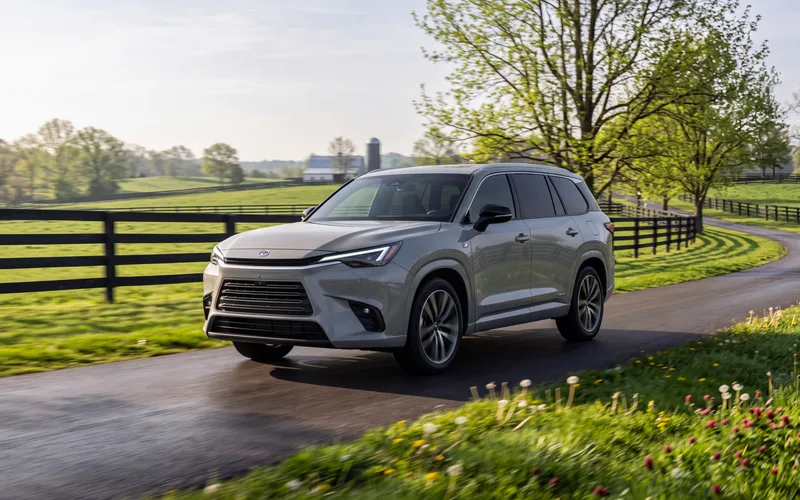 Lexus TXMid-Size Luxury SUVBetter at: Running costs
Hybrid and plug-in powertrains, a roomier third row, and Lexus reliability and resale directly address the Aviator's three biggest weaknesses.
Compare 2.81B-
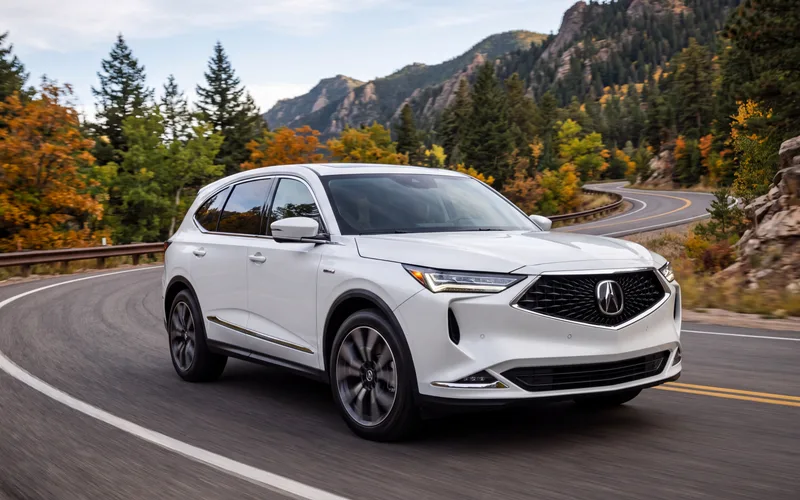 Acura MDXMid-Size Luxury SUVBetter at: Value
Costs less to buy and keep, drives more sharply, and posts a better dependability record while giving up little in three-row usability.
Compare 2.90B-
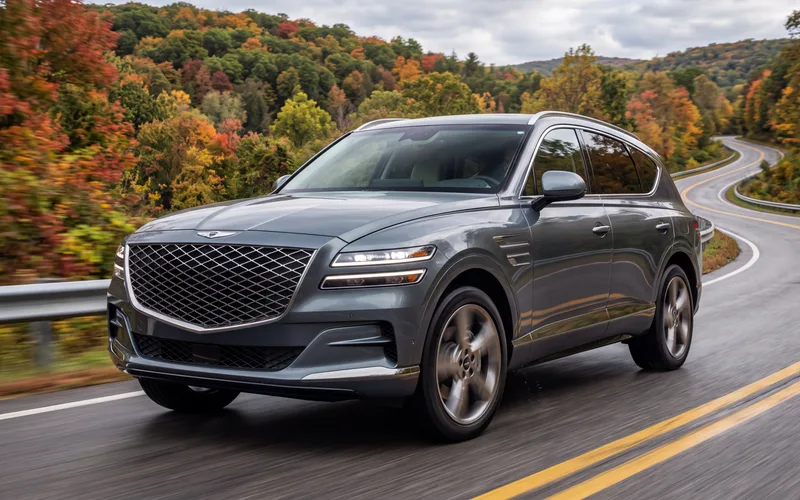 Genesis GV80Mid-Size Luxury SUVBetter at: Interior quality
Similar money buys richer interior materials, a longer warranty, and included scheduled maintenance the Lincoln simply does not offer.
CompareHow it's evolved
7 scored model years · 2020–2026
Subject scores by year
Hover or tap a score to see what moved it versus the year before. A corner mark flags a big swing.
| Year | Performance | Efficiency | Safety | Space | Cost | Reliability | Tech | Use-case | Driving | Value |
|---|---|---|---|---|---|---|---|---|---|---|
| 2026 | 62 | 33 | 86 | 72 | 25 | 65 | 86 | 74 | 69 | 72 |
| 2025 | 62 | 32 | 86 | 72 | 30 | 57 | 85 | 65 | 67 | 70 |
| 2024 | 66 | 31 | 71 | 72 | 38 | 55 | 68 | 61 | 63 | 65 |
| 2023 | 68 | 31 | 73 | 74 | 41 | 59 | 65 | 63 | 69 | 65 |
| 2022 | 68 | 31 | 77 | 74 | 45 | 55 | 65 | 63 | 69 | 67 |
| 2021 | 68 | 31 | 77 | 72 | 45 | 47 | 64 | 62 | 69 | 68 |
| 2020 | 67 | 31 | 75 | 73 | 40 | 42 | 69 | 59 | 68 | 72 |
Compare two years
Best fit & conditions
Higher scores mean a better fit for that use case. Learn more about use-case fit →
Subject profile
Detailed scoring by subject
1Performance & PowertrainMid-pack among this car's ten categories.2.46C+
2024 is a carry-over year in the second-generation (U611) Aviator, which uses the standard 3.0L twin-turbocharged V6 rated 400 hp on every gas trim (Premiere, Reserve, Black Label); output is strong for a mid-size luxury SUV but short of the 500+ hp available from AMG/M rivals.
The twin-turbo V6 delivers 415 lb-ft from 2,750 rpm, well up the SUV band and the reason the Aviator feels effortless in normal driving despite its 4,700+ lb curb weight.
Instrumented times for the mechanically unchanged 2024 car span 5.4 s (lighter RWD Reserve) to 6.0 s (heaviest AWD Black Label); ≈5.7 s represents the volume AWD Reserve configuration and is quick for a three-row luxury SUV.
The twin-turbo V6 pulls hard from low revs with minimal lag and reviewers consistently call the delivery smooth and effortless, but the engine is noted as vocal and coarse-sounding under hard throttle rather than the silky note expected in this class.
The 10-speed automatic is smooth and well-calibrated at speed, but reviewers report slightly bumpy shifts in low-speed stop-and-go driving and a clunky, slow forward/reverse engagement — flaws that stand out in a luxury vehicle.
Properly equipped with the available Class IV Trailer Tow Package the gas Aviator is rated at 6,700 lbs — near the top of the mid-size luxury SUV field and well above the 5,000 lb typical of unibody rivals such as the MDX.
Rear-wheel drive is standard and all-wheel drive is a factory option on every trim from Premiere to Black Label, paired with selectable drive modes including Slippery and Deep Conditions — broad availability but a conventional on-demand system with no low range or genuine torque vectoring.
The Aviator is a pavement-oriented unibody luxury SUV: roughly 8 inches of ground clearance, no low range, no lockers or skid plates, no off-road trim, and large low-profile wheels on the volume trims — its Slippery and Deep Conditions modes are traction aids, not off-road hardware.
2024 was the final year offering two distinct powertrains — the 400 hp gas twin-turbo V6 and the 494 hp Grand Touring plug-in hybrid — giving buyers a genuine electrified choice, though there is no base four-cylinder, conventional hybrid or EV variant.
2Efficiency & RangeThe Aviator's lowest-graded category.0.00F
The 400 hp 3.0L twin-turbo V6 in a 4,700+ lb three-row body returns just 20 MPG combined in the volume AWD configuration — poor against gas SUVs as a whole, though ordinary for a large-displacement luxury three-row.
17 MPG in the city is weak — the twin-turbo V6 has no electrification to lean on in stop-and-go driving, and it is the figure most Aviator owners will actually live with.
24 MPG on the highway is where the tall-geared 10-speed helps most, but it still sits in the bottom quarter of the gas SUV band.
The generous 20.2-gallon tank partly offsets the thirsty V6, giving roughly 400 miles between fills — adequate for road trips but nothing special in a segment where more efficient rivals clear 450–500 miles.
At EPA standard assumptions the Aviator AWD costs about $3,100 a year to fuel — near the top of the SUV cost band, and higher still in practice for owners who follow Lincoln's premium-fuel recommendation.
Premium (91+ octane) is recommended for full 400 hp output and peak tow performance, but the engine runs safely on 87-octane regular — EPA rates the car on regular gasoline, so this is a recommendation the owner can decline rather than a hard requirement.
3SafetyOne of the Aviator's strongest categories.2.79B-
NHTSA rates the 2024 Aviator 5 stars overall, with 5 stars in both frontal and all side tests; only rollover resistance falls to 4 stars, typical for a three-row SUV of this height.
Every IIHS crashworthiness test comes back Good — including the tougher updated moderate overlap front and updated side tests — but the Aviator carries no 2024 Top Safety Pick, having lost the award it held for 2022–23 once Marginal pedestrian AEB and Marginal base-trim headlights disqualified it.
Lincoln Co-Pilot360 1.5 is standard on every 2024 trim — AEB with pedestrian detection, BLIS with cross-traffic alert, lane-keeping, auto high-beams, rear camera, reverse sensing — but adaptive cruise is not: it lives in the $2,500 Co-Pilot360 1.5 Plus package, optional on the volume Reserve and standard only on Black Label. Charging extra for ACC on a $60k luxury three-row is behind segment norms.
Vehicle-to-vehicle front crash prevention rates Superior on both standard and optional systems, but under the tougher pedestrian test protocol the 2024 Aviator drops to Marginal — the specific result that ended its Top Safety Pick run and the weakest part of its safety case.
BLIS with Cross-Traffic Alert is standard on every trim and the tow-package version extends coverage down the length of a trailer, but it is alert-only — Reverse Brake Assist, the one piece that actually intervenes, is bundled into the optional Plus package.
The lane-keeping system is standard and reviewers describe it as working well without calling attention to itself, but true lane centering is packaged with the optional Plus collection rather than fitted across the range.
Intelligent ACC with Stop-and-Go plus lane centering and speed sign recognition is a capable combination that reviewers find smooth in heavy traffic, with the caveat that it brakes hard at the shortest gap setting — and it is a $2,500 option on the trim most buyers take rather than standard equipment.
No hands-free highway driving is offered on the 2024 US Aviator at any trim or price — Lincoln BlueCruise/ActiveGlide arrives only with the 2025 facelift, leaving this model year behind the Navigator, Corsair and Nautilus in its own showroom.
Headlights split by equipment: the LED projector units with curve-adaptive high beams rate Good, while the LED reflector headlamps on lower trims rate only Marginal — a spread wide enough on its own to keep the Aviator off the IIHS award list.
Forward sightlines are good from a high, upright seating position, but a tall beltline, thick rear pillars and a shallow third-row quarter window restrict the over-shoulder view; camera compensation is thorough where fitted, though the 360-degree system is an upper-trim/package item rather than standard.
IIHS rates the LATCH hardware Acceptable, and the practical picture matches: third-row lower anchors are exposed and easy, top tethers are clearly marked throughout, and the wide rear doors take infant and rear-facing convertible seats without space complaints — but the second-row anchors hide inside leather upholstery pockets that have to be fished open.
4Space & ComfortThe Aviator's best-graded category.2.87B-
The 2024 Aviator is a three-row seven-passenger SUV with a 60/40 second-row bench standard; optional second-row captain's chairs drop it to six.
Published front headroom with the steel roof; the panoramic Vista Roof standard on Reserve trims cuts into this slightly.
Front legroom is generous in absolute terms but only mid-pack against the SUV normalization band, which tops out at 44.5 in.
Second-row headroom is near the top of the SUV band, reflecting the Aviator's tall 69.6-in roofline over a rear-drive-based platform.
The sliding second row offers 40.1 in of legroom — genuinely adult-sized and well above the SUV band midpoint; the third row's 29.2 in is a different story.
With 36.9 in of headroom but only 29.2 in of legroom the third row is a kids-and-teens space rather than an adult one, though power fold and a tilt-slide second row make access easy and the seats get their own vents and USB ports.
Cargo room behind the folded third row is modest for a mid-size three-row SUV — the Aviator prioritizes second-row space and a rakish roofline over outright cube.
Maximum cargo volume with the second and third rows folded sits mid-band for the segment, roughly matching a Ford Explorer of the same platform.
The piano-key shifter frees up a deep center console with a wireless charging pad in the front armrest bin, and there is underfloor storage behind the third row plus a choice of second-row consoles, but there is no standout storage innovation of the Escalade or EV9 sort.
The available 30-way Perfect Position front seats with thigh extenders, heating, ventilation and Active Motion massage are a segment high point and are consistently singled out by reviewers; second-row comfort is strong, and only the third row disappoints.
Reviewers describe the standard suspension as plush and well isolated from broken pavement despite 4,774 lb of curb weight, though the same softness reads as float in quicker corners and the optional adaptive/air setup adds little.
Active noise control is standard alongside acoustic glass, and reviewers repeatedly note how hushed the Aviator's cabin stays at highway speed — one of the model's clearest strengths.
Tri-zone automatic climate control, heated front seats and remote start are standard, with ventilated front seats, a heated steering wheel, heated second-row seats and a panoramic Vista Roof arriving on the volume Reserve trim.
5Cost of OwnershipOne of the Aviator's weakest categories.0.51F
For 2024 the entry trim was renamed Premiere and opened at $53,340, or $54,735 with the $1,395 destination charge — the last year before the 2025 refresh added $5,155 to that floor. It is a high number against the SUV band, which spans the whole market rather than the luxury slice, but it undercut most of the Aviator's direct three-row luxury rivals.
Reserve is the volume trim — it is where the leather seating surfaces, 21-inch wheels and the Reserve I equipment group live, and it is the trim Lincoln's own regional lease programs advertised — landing at $59,005, or $60,400 delivered. Getting the Reserve to the equipment level buyers of this car expect costs more still: Co-Pilot360 1.5 Plus is a $2,500 option and the Luxury Package $3,300.
CarEdge projects $3,966 in maintenance and repairs across the first five years, about $793/yr, and RepairPal's $626/yr average for the nameplate sits in the same territory against a $879/yr Lincoln brand average. Sharing the 3.0L EcoBoost V6, 10-speed automatic and CD6 platform with the Ford Explorer keeps parts and labor well below the German three-rows; the estimates are nameplate-level rather than 2024-specific, and a 15,000-mi/yr owner runs out of bumper-to-bumper coverage partway through year four.
Two nameplate-level estimators bracket the mid-40s — iSeeCars 48.1% retained and CarEdge 42.4% — and the 2024 car's own early trajectory supports the upper half of that range, with KBB putting a two-year-old 2024 Aviator at $45,571 against its $60,400 delivered volume-trim price. Retention is good for the luxury three-row class (which averages 54.3% depreciation) but below the all-SUV average of 44.9% depreciation, so this is a class-relative strength rather than an absolute one.
Lincoln's New Vehicle Limited Warranty for 2024 runs 4 years or 50,000 miles, unchanged from prior years and carried forward into 2025. That matches the BMW/Audi luxury norm but trails Genesis at 5 yr/60,000 mi, and the 50,000-mile cap ends coverage before year four for an average-mileage driver.
Powertrain coverage is 6 years or 70,000 miles, the figure Lincoln has carried for years. It sits near the bottom of the luxury field against Genesis's 10 yr/100,000 mi, and the low mileage cap is what bites first — a 15,000-mi/yr owner exhausts it before year five on a twin-turbo V6 and 10-speed automatic.
There is no complimentary scheduled maintenance on the Premiere or the volume Reserve — the 4-yr/50,000-mi Premium Maintenance Plan, car washes and annual detailing are Black Label privileges — which keeps this well below the Genesis/BMW/Volvo tier. What every 2024 Aviator does get is complimentary Lincoln Pickup & Delivery with a Lincoln loaner for the duration of the 4-yr/50,000-mi warranty and 24/7 roadside assistance, a genuinely useful concierge benefit. Unlike the 2025 car it carries no BlueCruise entitlement, so the connected-services value is a SYNC 4 trial rather than four years of hands-free driving.
$60,400 volume-trim price minus its estimated resale value after 5 years (46% retained, or about $27,784) leaves about $32,616 in depreciation. Add the projected $3,966 in 5-year maintenance and repairs, and owning this vehicle for 5 years costs about $36,582 in total.
6Reliability & QualityOne of the Aviator's weakest categories.1.70C-
The two major predictors disagree in degree but not direction: J.D. Power puts the 2024 Aviator at 79/100 for Quality & Reliability, which sits in J.D. Power's own "Average" band (70-80) and below its "Great" threshold, while Consumer Reports predicts below-average reliability and withholds its recommendation outright. A luxury three-row that CR tells buyers to avoid cannot score in the average band here.
Lincoln finished last of all brands in the J.D. Power 2024 U.S. Vehicle Dependability Study at 251 PP100 against a Lexus-leading 135 PP100 — the study contemporaneous with this model year. Mitigating it slightly: CR's 2024 used-vehicle survey placed Lincoln mid-pack (13th of 26), and the brand climbed six places to 19th in the 2025 VDS, so the trend is upward from a bottom-of-table start.
Eight NHTSA recall campaigns now touch the 2024 model year. Several are trivial (a missing airbag warning label, rearview-image software), but the cluster of assembly-related safety defects is not: second-row seats that can unlatch, tip or slide unexpectedly — recalled twice, in 2025 and again in 2026 — improperly secured second-row seat belt anchor bolts, and loose trailer hitch bolts. Repeated safety-system recalls put this in the low band even though nothing is powertrain or fire related.
The volume gas Aviator's 3.0L twin-turbo V6 and 10R80 10-speed are both high-volume Ford families with millions of units in service across F-150, Mustang and Explorer, and the harsh-shift calibration problems that dogged 2020-2021 Aviators were largely resolved by later software. Against that, the turbocharged V6 carries the usual high-mileage exposure — wastegate rattle, oil consumption, turbo replacement well north of $3,000 out of warranty — so this is a mixed record rather than a proven one.
Materials are the Aviator's strongest suit — reviewers consistently single out that Lincoln padded the lower dash and door areas as well as the upper, which is unusual at this price, alongside matte wood, real chrome and generously stitched leather. It stops just short of the top band because critics still find it less opulent than the German benchmarks.
Reviewers describe assembly and finish as genuinely luxury-grade, with owners praising paint quality and panel work. The score is held below that impression by measured initial-quality data — premium brands averaged 230 PP100 in the 2024 IQS and Lincoln does not appear among the leaders — and by an adhesive-bonding recall on the C-pillar trim and rear door window bars, which is a build-execution defect rather than a design one.
Roughly 400 US Lincoln dealers is thinner than a mainstream brand but normal for premium, and mechanical work on shared CD6/Explorer components is within reach of the far denser Ford service network. Lincoln Pickup & Delivery — complimentary loaner and vehicle collection during the warranty period — is a real differentiator most rivals charge for, though Lincoln is not a CSI leader (Lexus has ranked highest among premium brands three years running).
The Aviator is cheap to keep by luxury three-row standards — RepairPal puts annual maintenance and repair at about $626 against a $807 average for luxury mid-size SUVs — and because it shares the CD6 platform and much hardware with the Ford Explorer, parts supply is broad rather than dealer-exclusive. Turbocharger and Lincoln-specific trim parts remain expensive, which keeps it out of the top band.
7Technology & InfotainmentOne of the Aviator's strongest categories.2.57C+
Every 2024 Aviator trim uses the same 10.1-inch center touchscreen the second generation launched with in 2020 — the 13.2-in display arrived only with the 2025 refresh.
SYNC 3.4 on the 10.1-inch screen is quick, logically laid out and backed by real knobs and buttons, which reviewers like — but by 2024 it was a five-year-old system with dated graphics against rivals running SYNC 4-class or newer software.
Apple CarPlay and Android Auto are standard on every trim but wired only — SYNC 3.4 cannot do wireless projection, and Lincoln held the change until the 2025 redesign.
Embedded navigation with connected traffic is included on Reserve and above, but SYNC 3's command-driven voice assistant is a generation behind the natural-language systems in German rivals and most owners default to phone projection for maps.
The volume Reserve trim gets a Revel branded system as standard, and the available 28-speaker Revel Ultima 3D with QuantumLogic surround is among the best factory systems at any price in the segment.
A crisp 12.3-inch full-digital instrument cluster whose graphics change theme with the drive mode is standard on every 2024 Aviator, including the base Premiere.
SYNC 3.4 can pull infotainment and map updates over a paired Wi-Fi network, but the 2024 Aviator has no Ford Power-Up style whole-vehicle over-the-air updating — that capability came with the 2025 redesign's new software stack.
The Lincoln Way app covers remote start and climate, lock/unlock, vehicle locate and vehicle health with complimentary connected service, and Phone As A Key is available — solid, though the app's reliability draws recurring owner complaints.
USB-A and USB-C ports are spread across the first two rows with third-row charging available, and the Reserve adds a wireless charging pad plus an available 110V household outlet — competitive but short of the port-everywhere standard set by newer rivals.
Intelligent Access with push-button start and remote start are standard on all trims, the hands-free power liftgate is standard on Reserve, and Phone As A Key with an Aviator-specific approach-detection lighting sequence is available.
A rear camera with washer, front and rear parking sensors and reverse braking assist are standard, with a 360-degree camera with split-view and Active Park Assist available on the volume Reserve trim.
Lincoln fits a large, bright, configurable full-colour windshield head-up display across the Aviator range rather than reserving it for the top trim — a real advantage over rivals that gate the HUD behind option packs.
8Use-Case FitMid-pack among this car's ten categories.2.14C
Wide rear door openings, a tall roof, four complete LATCH positions rated Acceptable by the IIHS and 18.3 cu ft behind the third row make daily kid duty easy; the tight third row and a high 29-in liftover keep it short of the segment benchmarks.
NHTSA five-star overall and IIHS Good ratings in the small overlap, updated moderate overlap and updated side tests are strong, but Marginal pedestrian AEB, Marginal ratings for the base LED reflector headlights and a Poor seat-belt reminder score keep the Aviator off the Top Safety Pick list.
A hushed cabin, plush seats, tri-zone climate, available heated second-row seats and rear-seat entertainment, and 41.8 cu ft of cargo with the third row folded make it a genuinely good multi-hour family vehicle — provided the third row carries kids rather than adults.
The 400-hp twin-turbo V6 and 10-speed automatic make effortless low-speed progress, the ride is isolating and the cabin quiet — but a consistently criticized soft brake pedal makes smooth stops harder than they should be in traffic.
20 mpg combined for the AWD configuration most buyers choose is expensive per mile even against three-row luxury peers; the one saving grace is that the twin-turbo V6 is rated on regular gasoline rather than premium.
At 199.3 in long with a roughly 39-ft turning circle and 21-in wheels on upper trims, the Aviator is a handful in tight urban parking; the available 360-degree camera and Active Park Assist do a lot of the work.
6,700 lb of towing with the Class IV package is respectable for hauling a boat or trailer, but there is no bed, no meaningful payload headroom and no work-oriented configuration — this is a luxury family SUV that can tow, not a work vehicle.
The CD6 rear-drive platform it shares with the Ford Explorer is sound, but leather, open-pore wood, 21-in wheels and an air-suspension option are the opposite of wear-friendly, and the second-generation Aviator's build-quality and electronics record does not support hard-use duty.
Cargo tie-downs, available roof rails, a hitch receiver and an available 110V outlet are the extent of the work provisions — there are no washable surfaces, no bed access features and no upfit ecosystem behind it.
This is the Aviator's best mission: quiet, plush, 30-way massaging front seats, and roughly 420 miles of highway range from a 20.2-gallon tank, with adaptive cruise and lane centering easing the miles — only the absence of hands-free driving for 2024 holds it back.
Available all-wheel drive, a 6,700-lb tow rating for toys, roof rails and a Deep Conditions drive mode cover gravel roads and trailheads, but 8.1 in of ground clearance, no locking differential, no underbody protection and 21-in road tires rule out anything rougher.
77.7 cu ft with power-folding second and third rows, underfloor storage behind the third row, roof rails and a Class IV hitch handle bulky gear well; the sloped roofline and modest 41.8 cu ft behind the second row cap it short of the boxier rivals.
9Driving ExperienceMid-pack among this car's ten categories.2.25C
The rear-drive-based chassis keeps body lean in check and the Aviator holds a line securely, but reviewers split on it — several describe a large, wallowy feel through corners, and the optional adaptive air suspension changes little.
Accurate and consistently weighted enough to place the 4,774-lb SUV precisely, but light and short on feedback — tuned for isolation rather than communication, and the variable-assist option does not change the character.
Outright stopping power is adequate for the weight, but a soft, long-travel pedal that makes smooth modulation difficult is the single most consistently repeated criticism of this generation across reviews.
The 400-hp twin-turbo V6 pulls hard and smoothly from low revs — 5.4 s to 60 mph in a tested RWD Reserve — and the 10-speed automatic is unobtrusive most of the time, though testers note occasional bumpy or hesitant shifts.
Active noise control and thorough isolation keep the V6 distant and vibration-free in normal driving; it sounds purposeful rather than musical under full throttle, without the coarseness of a turbo four.
A 39.0-ft turning diameter over a 119.1-in wheelbase is mid-pack for a mid-size three-row SUV and noticeably wide in tight parking structures.
The available 30-way Perfect Position seat with thigh extenders plus a tilt/telescoping wheel accommodates almost any driver, the piano-key shifter declutters the console, and a standard head-up display keeps eyes forward; thick rear pillars are the main compromise.
Genuinely quick in a straight line and pleasant to waft in, but the soft brake pedal, numb steering and comfort-first tuning mean nobody takes the long way home in one — Lincoln aimed at serenity, not engagement.
10Value & Market PositionMid-pack among this car's ten categories.2.37C+
Every 2024 Aviator gets the 400-hp twin-turbo V6, 10-speed automatic, a 12.3-inch digital cluster with SYNC 4 on a 10.1-inch center screen, and Co-Pilot360 1.5 (AEB with pedestrian detection, BLIS with cross-traffic alert, lane-keeping, rear camera). But the pre-refresh car leaves a lot on the options sheet that the 2025 made standard: adaptive cruise with stop-and-go, lane centering and parking sensors sit inside the $2,500 Co-Pilot360 1.5 Plus package on Reserve, the Premiere needs the $2,000 Premium Package for 20-inch wheels, the panoramic Vista Roof and second-row captain's chairs, and heated rear seats and steering wheel cost $1,000 more. Against a Genesis GV80 that includes nearly all of that at base, this is competitive rather than generous.
2024 is the strongest value year of this generation: $54,735 delivered buys 400 hp, three rows and one of the quietest cabins in the class, and the volume Reserve at $60,400 undercuts an equivalently equipped BMW X5, Audi Q7 or Genesis GV80 by a wide margin — before the $5,155 increase the 2025 refresh imposed and before the aggressive 0% financing that cleared 2024 stock. Edmunds' road-and-track verdict of 7.7/10 is a full point above what the refreshed car later scored. What holds it out of the 80s is the Explorer siblinghood, mediocre 17/26 MPG economy and a cramped third row for the money.
Three trims — Premiere, Reserve (with a Reserve I equipment group) and Black Label — span roughly $55K to $81K delivered with RWD standard and AWD optional below Black Label, and the options sheet is unusually deep for the class: Premium, Elements and Elements Plus, Luxury, Illumination, Dynamic Handling with Air Glide suspension, Jet Package and a Black Label Special Edition Luxe, plus second-row bench or captain's chairs. The subtraction is powertrain choice — 2024 is the year Lincoln dropped the Grand Touring plug-in hybrid, leaving one engine where the Lexus TX, Volvo XC90 and Mazda CX-90 all offered electrified options.
Calendar 2024 was the second generation's best year by a distance — 25,235 US deliveries, up 62.3% on 2023's 15,551, moving the Aviator into the top five of a 14-entry luxury three-row segment on a 6% share and outpacing the segment's own 16% growth. It is still a fraction of the BMW X5 (72,348) and Mercedes GLE (67,928), so this is a fast-rising mid-pack seller rather than a leader, and part of the Q4 surge belongs to the refreshed 2025 car arriving alongside the 2024's short January-to-May production run.
Lincoln's Quiet Flight identity — the Sanctuary cabin, Perfect Position seating, concierge Pickup & Delivery and Black Label member privileges — has done real work rehabilitating a brand that spent the 2000s badging Fords, and the Aviator's above-class resale shows buyers take it seriously. It still lacks the aspirational pull of the German trio, Lexus or Genesis, and the Explorer platform association follows the car in buyers' minds and in reviews.
Scored as buyer benefit, the 2024 model year got steadily better to buy as it went. It opened modestly — 6.9% APR for 72 months in January 2024, when rates were high — but once the refreshed 2025 car was public and 2024 production ended in May, Lincoln moved leftover stock with 0% APR for 60 months nationwide, $2,000 trade assistance in several markets and sharp regional leases (a Reserve AWD at $700/mo for 24 months in Miami, a Premiere AWD at $679/mo in Detroit against $949/mo for the 2025). That is real money off without the desperation pricing that would signal a broken model.
2024 is the final and shortest year of the pre-facelift second generation that launched for 2020, and its replacement was not merely coming but already public: Lincoln revealed the facelifted 2025 Aviator on February 5, 2024, weeks after 2024 production started, and switched Chicago Assembly over in May. A buyer signing for a 2024 in mid-year was knowingly taking the old front end, the old interior and the 10.1-inch SYNC 4 screen instead of the 13.2-inch Lincoln Digital Experience and standard BlueCruise. Ford Authority's own summary is that the 2024 'isn't all that different from the 2023 Aviator.'
Reviewers liked the 2024 better than they later liked the refreshed car — Edmunds scored it 7.7/10 after road and track testing, praising the upscale cabin, comfortable ride and sub-six-second 0–60 — but the criticisms are consistent across outlets: soft brake pedal, wallowy handling, fiddly controls, so-so economy and a cramped third row, with U.S. News noting European rivals simply drive better. The recognition it holds is commercial and safety rather than editorial: a KBB Best Resale Value Award and a top-five large-SUV depreciation ranking, five-star NHTSA overall and Good IIHS ratings in the main crash tests — but no 2024 Top Safety Pick (pedestrian front crash prevention Marginal, seat belt reminders Poor), and no 10Best, NACTOY or comparison-test wins for this generation.