

The verdict
A capable mid-size luxury suv, strong on safety and held back by ownership.
The refreshed 2025 Aviator is a serene, tech-loaded three-row luxury SUV that finally fixes its weakest link: a 13.2-inch Google-powered screen and BlueCruise hands-free highway driving are now standard on every trim, alongside a 5-star NHTSA rating and 400-hp twin-turbo V6. What it asks in return is money — $59,890 to start, $68,890 for the volume Reserve after a $5,155 price hike, then 20 MPG combined, roughly $3,100 a year in fuel and about 45% of your purchase price left after five years. The plug-in hybrid Grand Touring was dropped for 2025, so there is no economical version of this car anymore, and 14 NHTSA recalls in a single model year — including two transmission campaigns and a front subframe bolt — keep it from feeling bulletproof. Buy it for the hushed cabin, the 30-way massaging seats and the hands-free commute; do not buy it expecting a cheap or worry-free five years.
Jump to scoresStrengths
- Hands-free highway driving and a full safety suite standard on every trim
- The infotainment overhaul this car needed
- Seats and cabin materials that justify the badge
What holds it back
- The 2025 price hike broke the value argument
- Thirsty, with no efficient version to escape to
- Steep depreciation and short warranty coverage
Top alternatives
Cars shoppers cross-shop with the Lincoln Aviator 2.88B-
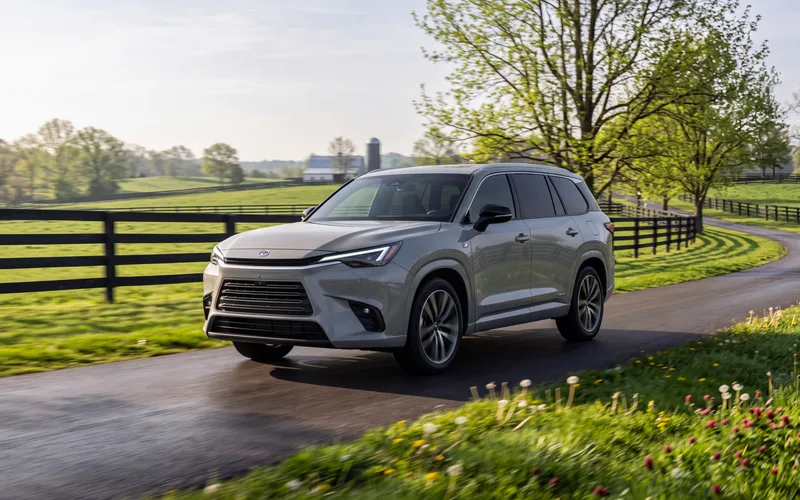 Lexus TXMid-Size Luxury SUVBetter at: Running costs
Hybrid and plug-in powertrains, a roomier third row, and Lexus reliability and resale directly address the Aviator's three biggest weaknesses.
Compare 2.81B-
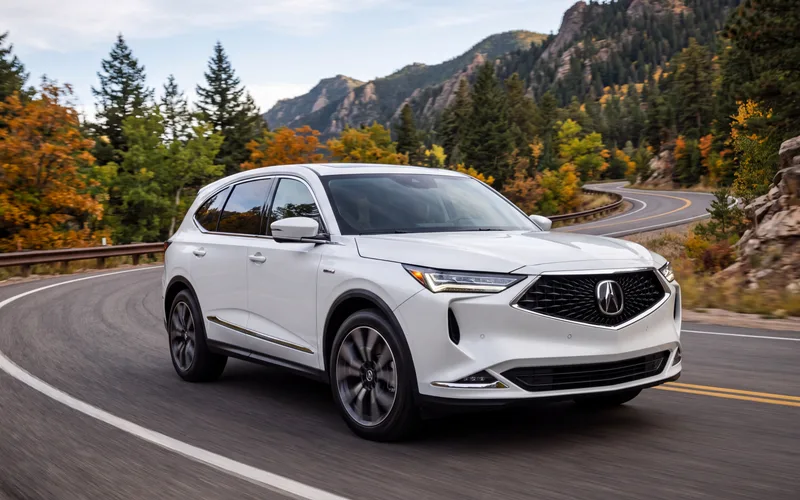 Acura MDXMid-Size Luxury SUVBetter at: Value
Costs less to buy and keep, drives more sharply, and posts a better dependability record while giving up little in three-row usability.
Compare 2.90B-
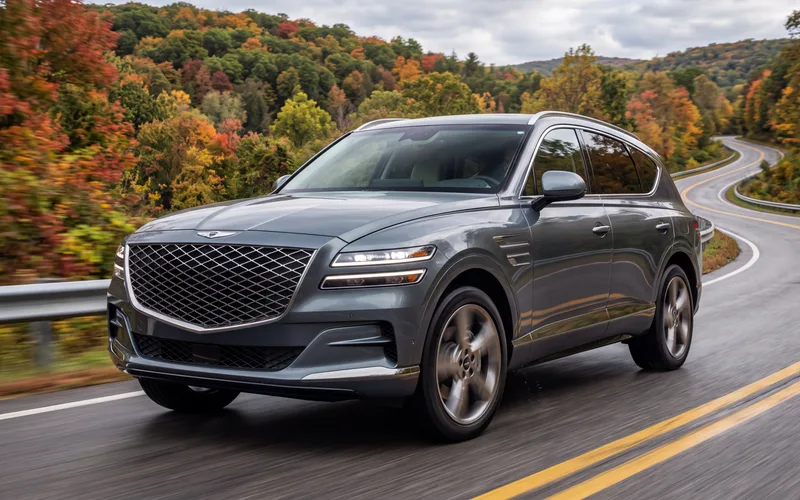 Genesis GV80Mid-Size Luxury SUVBetter at: Interior quality
Similar money buys richer interior materials, a longer warranty, and included scheduled maintenance the Lincoln simply does not offer.
CompareHow it's evolved
7 scored model years · 2020–2026
Subject scores by year
Hover or tap a score to see what moved it versus the year before. A corner mark flags a big swing.
| Year | Performance | Efficiency | Safety | Space | Cost | Reliability | Tech | Use-case | Driving | Value |
|---|---|---|---|---|---|---|---|---|---|---|
| 2026 | 62 | 33 | 86 | 72 | 25 | 65 | 86 | 74 | 69 | 72 |
| 2025 | 62 | 32 | 86 | 72 | 30 | 57 | 85 | 65 | 67 | 70 |
| 2024 | 66 | 31 | 71 | 72 | 38 | 55 | 68 | 61 | 63 | 65 |
| 2023 | 68 | 31 | 73 | 74 | 41 | 59 | 65 | 63 | 69 | 65 |
| 2022 | 68 | 31 | 77 | 74 | 45 | 55 | 65 | 63 | 69 | 67 |
| 2021 | 68 | 31 | 77 | 72 | 45 | 47 | 64 | 62 | 69 | 68 |
| 2020 | 67 | 31 | 75 | 73 | 40 | 42 | 69 | 59 | 68 | 72 |
Compare two years
Best fit & conditions
Higher scores mean a better fit for that use case. Learn more about use-case fit →
Subject profile
Detailed scoring by subject
1Performance & PowertrainMid-pack among this car's ten categories.2.18C
The refreshed 2025 Aviator carries a single powertrain across Premiere, Reserve and Black Label: the 3.0L twin-turbocharged EcoBoost V6 at 400 hp. The 494-hp Grand Touring PHEV that topped the 2024 range was dropped for 2025, so 400 hp is both the volume figure and the model-range maximum.
Peak torque of 415 lb-ft from the standard twin-turbo V6, identical on RWD and AWD and unchanged by the 2025 refresh — a strong figure for a mid-size luxury three-row.
Published reviews of the 2025 car put the twin-turbo V6 in the mid-5-second range to 60 mph; Edmunds' own instrumented AWD test returned a slower 5.9 s, so 5.5 s is taken as the representative figure for the volume AWD trim with a real spread noted.
The twin-turbo V6 is consistently described as smooth and effortlessly muscular with little turbo lag, and the 2025 refresh keeps the quiet-cabin tuning; the one recurring criticism is that the V6 gets audibly coarse at full throttle, which keeps it short of the silkiest sixes in the segment.
The 10R80 10-speed automatic is calibrated for smoothness over aggression here — reviewers report unobtrusive, well-timed shifts and a wide ratio spread that keeps the V6 on boost, without the gear-hunting some 10-speeds show. It is a comfort tune rather than a quick-witted sport tune.
For 2025 Lincoln made the Class III Trailer Tow Package standard on every trim and rates the Aviator at 5,000 lbs in both RWD and AWD; no higher-capacity configuration is offered, and the rating is a step down from the 5,600 lbs available in 2024.
Rear-wheel drive is standard on Premiere and Reserve with Intelligent AWD optional, and AWD is standard on Black Label — so it is widely available rather than restricted to the top of the range. The system is a competent all-weather setup with Slippery and Deep Conditions drive modes but no low range, locking differentials, or torque-vectoring rear axle.
A pavement-first luxury three-row with roughly 8.1 in of ground clearance, no dedicated off-road trim, no skid plates and no lockers. The optional Air Glide suspension raises and lowers the body for entry/exit and light unpaved roads, not trail work.
2025 is the year the Aviator lost its electrified option: the Grand Touring PHEV was discontinued with the refresh, leaving the 3.0L twin-turbo V6 as the only powertrain on every trim. Mid-size luxury three-row rivals from Volvo, Lexus, BMW and Cadillac all offer a hybrid, PHEV or EV alternative, so this is a single take-it-or-leave-it choice.
2Efficiency & RangeOne of the Aviator's weakest categories.0.06F
EPA rates the 2025 Aviator AWD at 20 MPG combined and the RWD at 21 MPG, both with the 3.0L twin-turbo V6 and 10-speed automatic. A ~5,000 lb three-row with 400 hp is never going to be thrifty, and 20 MPG sits well below the gas-SUV median.
17 MPG city for the AWD volume trim — the weakest part of the Aviator's efficiency picture, with no hybrid assist available for 2025 after the Grand Touring PHEV was dropped.
25 MPG highway, the same for RWD and AWD — the 10-speed's tall top gears make cruising the Aviator's best efficiency case, though it is still only mid-pack for a gas SUV.
The 20.2-gallon tank paired with the AWD's 20 MPG combined rating gives roughly 404 miles between fills, rising to about 424 miles on the RWD. Adequate for road trips but unremarkable — the big tank is doing the work, not the engine.
EPA estimates $3,100 a year to fuel the AWD Aviator at 15,000 miles, near the top of the gas-SUV cost band. It is at least computed on regular unleaded rather than premium, which keeps it from being worse.
EPA lists the 2025 Aviator as a regular-gasoline vehicle, so 87 octane is all that is required and the car can be run on the cheapest pump grade anywhere. Lincoln still recommends 91+ premium to realize the full 400 hp / 415 lb-ft, which is a real optional cost for owners who want the rated output — a mixed rather than clean requirement.
3SafetyThe Aviator's best-graded category.3.85A+
NHTSA rated the 2025 Aviator 5 stars overall, with 5 stars in both frontal and side crash and 4 stars for rollover — the top NCAP result, matching the segment's best.
Every published IIHS crashworthiness result for the Aviator is Good — small overlap front driver and passenger, the updated moderate overlap test (tested on a 2023 Aviator Reserve) and the updated side test — but the 2025 model carries no Top Safety Pick award, because IIHS has never published a headlight rating for this generation and the generation's seat belt reminders rated Poor.
The 2025 refresh made Lincoln Co-Pilot360 Drive 2.0 standard on every trim including the base Premiere, so AEB with pedestrian detection, BLIS with cross-traffic alert, lane keeping, lane centering, adaptive cruise with stop-and-go, a 360-degree camera, parking sensors, reverse brake assist and hands-free BlueCruise all arrive on the entry car — nothing meaningful is locked behind a trim walk.
IIHS rates the 2025 Aviator's standard front crash prevention system Good for pedestrian detection under the updated evaluation, which includes nighttime scenarios — the top mark on the current scale, and a clear improvement on the pre-refresh car's Basic night result. Held below 90 because IIHS has not published a result for this generation under the updated vehicle-to-vehicle test.
BLIS with cross-traffic alert is standard on every trim and IIHS lists blind spot detection as standard equipment; reverse brake assist adds real braking intervention when backing out rather than warning alone, though the blind-spot system itself is alert-only with no steering intervention.
Lane-keeping assist and lane centering are standard across the lineup, and the BlueCruise hardware behind them adds in-lane repositioning that shifts the car within its lane rather than tracking the exact centerline; reviewers describe the Aviator holding itself centered convincingly, without the ping-ponging that marks weaker systems.
Full-speed-range adaptive cruise with stop-and-go, lane centering and predictive speed assist is standard on every 2025 Aviator and integrates directly into BlueCruise for highway assist; Edmunds found it drives 'much like a person would', with occasional handbacks the only real rough edge.
Standard BlueCruise on every trim — including the $59,890 Premiere — is the headline change for 2025, and it is a mature system: over 130,000 miles of Blue Zones covering roughly 97% of controlled-access highways in the US and Canada, with automatic lane change on the turn signal and in-lane repositioning, plus a four-year Connected Services plan included rather than a short trial.
IIHS has published no headlight rating for the 2025 Aviator, and the pre-refresh generation's lamps rated Good on some trims and Marginal on others — the classic split that costs a vehicle its award. The 2025 refresh brought new LED headlamps, with adaptive pixel headlights and adaptive bending lighting standard on Reserve and Black Label via the Illumination Package but only available on the Premiere, so the split by trim persists in hardware terms and the improvement is unverified by IIHS.
Reviewers describe clear sightlines in nearly every direction, helped by relatively thin windshield pillars and large sideview mirrors, and the standard 360-degree camera with front and rear parking sensors covers the close-quarters blind zones a tall three-row body creates; the rearward view tightens with the third row raised.
The second row is exemplary — straight A grades from the Cars.com Car Seat Check with exposed lower anchors and easy-to-find top tethers — but the third row drags the score down: lower anchors buried in the seat bight, fixed head restraints that push a car seat off the seatback, and a center console between the captain's chairs that blocks walk-through access once seats are installed.
4Space & ComfortOne of the Aviator's strongest categories.2.88B-
The 2025 refresh made second-row captain's chairs the standard configuration, so the Aviator leaves the showroom as a six-seater unless the buyer takes the no-cost bench — maximum capacity is still seven.
Published first-row headroom is unchanged by the 2025 facelift; the panoramic Vista Roof standard on Reserve and above costs about 1.3 in.
Front legroom carries over unchanged through the facelift — generous in absolute terms but only mid-band against an SUV scale that runs to 44.5 in.
Second-row headroom sits near the top of the SUV band thanks to the 69.6-in roofline over the rear-drive CD6 platform; the panoramic roof trims it by 1.3 in.
2025-specific sources publish 39.0 in of second-row legroom rather than the 40.1 in quoted through 2024, consistent with captain's chairs becoming the standard, measured configuration; still adult-sized, while the third row's 29.2 in is not.
With 36.9 in of headroom but only 29.2 in of legroom the third row remains a kids-and-teens space that reviewers split over, though access via the tilt-and-slide captain's chairs is easy and the row gets its own vents, cupholders and two USB-C ports.
Space behind the folded third row is modest for a mid-size three-row SUV: the Aviator spends its length on second-row room and a rakish roofline rather than outright cube.
Maximum cargo volume lands mid-band for the segment — about what the Ford Explorer that shares its platform offers, and short of boxier three-rows.
The piano-key shifter frees a deep console with a wireless charging bin, the full second-row console adds storage and controls for captain's-chair passengers, and there is a 110V/150W household outlet — competitive, but no headline storage innovation of the Escalade or EV9 sort.
Heated and ventilated front seats are standard, the available 30-way Perfect Position chairs with independent thigh extenders and Active Motion massage are a segment high point reviewers single out, and second-row captain's chairs can be heated and cooled; only the thinly padded third row lets it down.
Adaptive suspension is standard and the optional Air Glide air setup (Dynamic Handling Package, standard on Black Label) adds genuine plushness; testers report composure over broken pavement, with the softness only showing up as float when hurried.
Active noise control and acoustic laminated glass make the Aviator one of the hushed cars in its class, but the big-wheel trims give some of it back — one tester found highway road noise more pronounced than expected on 22-in wheels.
Heated and ventilated front seats, heated steering wheel, tri-zone automatic climate and remote start are standard even on Premiere for 2025, with quad-zone climate and ambient lighting on the volume Reserve and heated/cooled second-row chairs available.
5Cost of OwnershipThe Aviator's lowest-graded category.0.00F
The 2025 refresh carried a steep price increase — the entry Premiere rose $5,155 over the 2024 car to $58,495, or $59,890 with destination, putting the Aviator's floor near the top of the mid-size luxury three-row range. Only the Grand Touring PHEV leaving the lineup keeps the top of the range from climbing further.
Reserve is the volume trim — it adds the 14-speaker Revel audio, upgraded leather and 24-way seating that most buyers of this car actually want — and lands at $67,495, or $68,890 with destination. That is above the top of the SUV normalization band, so the item bottoms out.
Two independent estimators land in the same place: CarEdge projects $3,966 in maintenance and repairs over the first five years, and RepairPal puts the Aviator at $626/yr against a $879/yr Lincoln brand average. Sharing its powertrain and much of its hardware with the Ford Explorer keeps parts and labor cheaper than the German three-rows, though a 15,000-mi/yr owner exits the 4-yr/50,000-mi warranty partway through year four and pays out of pocket after that.
Estimates bracket the mid-40s: CarEdge projects 42.4% retained (58% depreciation) and iSeeCars 48.1% (51.9% depreciation), so roughly 45% is the fair midpoint. That beats the 54.3% average depreciation of the luxury large SUV class but trails all SUVs (44.9%) and the market as a whole (41.5%) — and applied to the 2025's raised MSRP it means a large absolute dollar loss.
Lincoln's New Vehicle Limited Warranty runs 4 years or 50,000 miles, standard across the brand for 2025. That is the luxury-segment norm — matching BMW and Audi — but well short of Genesis's 5 yr/60,000 mi.
Powertrain coverage is 6 years or 70,000 miles — the same figure Lincoln has carried for years. It is at the bottom of the luxury field next to Genesis (10 yr/100,000 mi) and Jaguar, and the low mileage cap bites first for anyone driving average annual miles.
No complimentary scheduled maintenance on Premiere or Reserve — that stays a Black Label privilege — which caps this item below the Genesis/BMW/Volvo tier. What the 2025 car does bring is unusually substantive for the price: BlueCruise hands-free driving is standard on every trim with a four-year Connected Services plan included (rivals charge a subscription for far less capable systems), plus complimentary Lincoln Pickup & Delivery with a loaner Lincoln for the full 4-yr/50,000-mi warranty period and 24/7 roadside assistance.
$68,890 volume-trim price minus its estimated resale value after 5 years (45% retained, or about $31,001) leaves about $37,890 in depreciation. Add the projected $3,966 in 5-year maintenance and repairs, and owning this vehicle for 5 years costs about $41,856 in total.
6Reliability & QualityOne of the Aviator's weakest categories.1.81C-
Both major predictors now land on "average" for the 2025 Aviator, which is a real improvement on 2024 — J.D. Power scores it 78/100, inside its own Average band, and Consumer Reports, which opened the model year telling buyers to avoid the car, reversed to average predicted reliability and a recommendation in its December 2025 survey. It stays at the bottom of the average band rather than mid-band because that reversal came late, CR still logs no per-trouble-spot data for the year, and the refresh introduced an all-new 13.2-inch infotainment stack whose long-term behavior is unproven.
Lincoln is climbing steadily but is still measurably below average on multi-year dependability: after finishing dead last in the 2024 VDS it rose six places in 2025 and improved again to 217 PP100 in the 2026 study, yet remains behind the 204 PP100 industry average, and Consumer Reports' 2025 survey ranks it 20th of 26 brands. Initial quality is the brighter half of the record — sixth among premium brands two years running — which is enough to put the brand at the floor of mid-pack rather than in the bottom band.
Fourteen NHTSA campaigns touch the 2025 Aviator — nearly double the eight that reached 2024 — and unlike last year the list is no longer confined to trim and software. Two are powertrain (an incorrectly machined valve body that can fail reverse or move the vehicle forward unexpectedly, and loose transmission cross-member bolts), one is structural (an improperly tightened front subframe bolt that degrades crash performance), and the second-row seats have been recalled twice for switches that let them unlatch or slide while driving, alongside unsecured seat belt anchor bolts. Repeated safety-system and powertrain campaigns in a single model year are squarely in the low band.
The volume 2025 Aviator is gas-only — the Grand Touring PHEV was dropped for this year — leaving the 3.0L twin-turbo EcoBoost V6 and 10R80 10-speed, both high-volume Ford families with large fleets in F-150 and Explorer service. That proven-at-scale footprint is undercut by this model year drawing two transmission campaigns of its own, and by the 10R80's June 2026 park-system recall across 741,195 Ford and Lincoln vehicles, which shows the family still generating fundamental transmission defects even though the affected Aviators are 2020-2021 rather than 2025. Add the usual out-of-warranty turbo exposure and this is a mixed record, not a proven one.
Materials remain the Aviator's strongest suit and the 2025 refresh concentrated its effort inside: reviewers describe premium materials and considered design, with open-pore wood, real metal, quilted leather and the 30-way Perfect Position seats, and the new hood-less 12.4-inch cluster lowering the dash for a more open cabin. It stops short of the top band because critics still place it behind the German and Japanese benchmarks for perceived richness, and hard plastics persist below eye level.
Reviewers still judge the finish luxury-grade, and Lincoln's measured initial quality improved for a second straight year to sixth among premium brands — but the 2025 recall record is overwhelmingly an assembly-execution record, not a design one. Loose subframe and cross-member bolts, unsecured seat belt anchor bolts, insufficient adhesive bonding on C-pillar trim, loose hitch bolts, binding seat switches and air bubbles in windshield glass are all things fastened or bonded wrong on the line, and owner reports of A-pillar fabric defects and loose sound-deadening foam causing high-speed vibration fit the same pattern.
Lincoln has been deliberately shrinking its retail footprint — roughly 416 US stores now against 685 in 2021 — which is thin even by premium standards, though mechanical work on shared CD6/Explorer hardware is within reach of the far denser Ford network. Lincoln Pickup & Delivery is a genuine differentiator most rivals charge for: complimentary valet collection and a loaner throughout the warranty period. Service satisfaction holds it back, as Lincoln does not appear among the premium brands scoring above the segment average.
The Aviator is cheap to keep by luxury three-row standards — RepairPal puts annual maintenance and repair at about $626 against an $807 average for luxury mid-size SUVs, roughly $2,000 less over ten years — and sharing the CD6 platform and most hardware with the Ford Explorer keeps parts broadly available rather than dealer-exclusive. Dropping the Grand Touring PHEV for 2025 also removes the hybrid-battery cost outlier. Turbocharger replacement, the upper-trim air suspension and Lincoln-specific trim and electronics remain expensive and largely dealer-channel, which keeps it out of the top band.
7Technology & InfotainmentOne of the Aviator's strongest categories.3.80A
The 2025 facelift replaced the outgoing 10.1-inch display with a 13.2-inch capacitive touchscreen standard across Premiere, Reserve and Black Label — the single biggest change of the model year.
The new Lincoln Digital Experience (a Lincoln-skinned Ford Digital Experience with Google built-in) is a generational leap over SYNC 3.4 — tile-based, quick, with native apps and a Play Store — though it is a first-year system that pushes more functions onto the screen than the outgoing setup did.
Wireless Apple CarPlay and wireless Android Auto are standard on every 2025 trim — the change buyers of the wired-only 2024 car were waiting for.
Google Maps is the native navigation and Google Assistant the native voice assistant, with Amazon Alexa selectable instead — natural-language control and live-traffic maps that owners have no reason to bypass for their phone.
A 10-speaker system is standard, the volume Reserve trim gets a 14-speaker Revel setup, and the 28-speaker Revel Ultima 3D on Black Label is among the best factory systems sold at any price.
A 12.4-inch full-digital driver display is standard on every trim and can run Google built-in apps such as Maps directly in the cluster; crisp and configurable, if short of a pillar-to-pillar panoramic panel.
The move to Lincoln Digital Experience brings Power-Up style whole-vehicle over-the-air updates covering infotainment and vehicle modules — explicitly called out as improved for 2025 and a step change from the 2024 car's Wi-Fi map updates.
The Lincoln Way app handles remote start and climate, lock/unlock, vehicle locate, vehicle health and service scheduling, and Phone As A Key lets an owner unlock, start and drive without the fob.
USB-C smart-charging ports and power outlets are spread across all three rows — two USB-C in the third row alone — with a wireless charging pad in the front media bin and a 110V/150W household outlet.
Intelligent Access with push-button and remote start is standard, the volume Reserve adds a hands-free power liftgate with approach detection, and Phone As A Key covers the phone-as-key case.
A 360-degree camera with bird's-eye view, front and rear parking sensors and Active Park Assist 2.0 — which steers, brakes and accelerates into parallel or perpendicular spaces — cover the parking case well for a vehicle this size.
A large colour windshield head-up display is standard on the volume Reserve and on Black Label and available below it — broader availability than most mid-size luxury rivals, which reserve HUD for option packs.
8Use-Case FitMid-pack among this car's ten categories.2.42C+
Wide rear door openings, a tall roofline and standard tilt-and-slide second-row captain's chairs make third-row access workable with a seat installed, and 19.2 cu ft behind the third row swallows a stroller; the trade is that the standard captain's chairs seat only six unless the bench is specified.
NHTSA five-star overall plus Lincoln Co-Pilot360 standard across the line, and for 2025 BlueCruise hands-free driving is standard on every trim rather than an upper-trim option — a genuinely strong family safety proposition, though the entry price keeps it out of most family budgets.
A hushed cabin, plush heated and ventilated seating in the first two rows, quad-zone climate on Reserve, third-row vents and USB-C ports, and 42.7 cu ft of cargo with the third row folded make this one of the Aviator's strongest missions.
The 400-hp twin-turbo V6 and 10-speed make low-speed progress effortless, the ride isolates well and standard BlueCruise removes the worst of the commute — held back by a soft, long-travel brake pedal and a footprint that has to be managed in traffic.
20 mpg combined in the AWD configuration on 91-octane-recommended fuel is expensive per commuting mile even against three-row luxury rivals, and the 2025 deletion of the PHEV Grand Touring removes the only cheap-commute version of this car.
199.7 in of length, 82.3 in of mirror-folded width and a 39.0-ft turning circle on 21-in wheels make tight urban parking a full-effort exercise; the 360-degree camera and Active Park Assist 2.0 do a lot to compensate.
Every 2025 Aviator carries the Class III Trailer Tow Package, but the rating fell to 5,000 lbs for both drivetrains — down from the 5,600–6,700 lbs earlier Aviators managed — and with no bed and no payload headroom this is a boat-and-small-trailer tool, not a work vehicle.
The CD6 rear-drive platform and 3.0L twin-turbo V6 / 10R80 combination it shares with the Ford Explorer are proven enough, but leather, open-pore wood, 21-inch wheels and an air-suspension option are exactly the wrong equipment list for hard use, and there is no fleet history to lean on.
A standard hitch receiver, roof rails, cargo tie-downs and a 110V/150W outlet are the whole of the work provisions — no high-output onboard power, no washable surfaces, and no upfit ecosystem behind it.
This is what the Aviator is for: 30-way massaging front seats, an unusually quiet cabin, Revel audio, roughly 400–425 miles between fills from the 20.2-gallon tank, and BlueCruise hands-free driving standard on every trim for 2025.
Available intelligent AWD, roof rails, a 5,000-lb hitch and Air Glide suspension that lifts about 1.2 in at low speed cover gravel roads and trailheads, but modest clearance, 21-inch wheels on the volume trim and no off-road hardware keep it near the pavement.
78.6 cu ft with the power-folding second and third rows down, a hitch receiver on every trim, roof rails and underfloor storage behind the third row handle bulky gear well; the sloping roofline is what stops it competing with boxier three-rows.
9Driving ExperienceMid-pack among this car's ten categories.2.51C+
The rear-drive CD6 chassis keeps a 4,745–4,862 lb three-row SUV flatter and more precise than its size suggests, and the optional Air Glide setup tightens body control further — but reviewers agree it is tuned to cruise, not to be hurried.
Accurate and consistently weighted enough to place the Aviator precisely and make it easy to thread at low speed, but light and short on feedback — tuned for isolation in the Lincoln idiom rather than for communication.
Four-wheel discs with AdvanceTrac stop the car's mass adequately and no 2025 tester reported fade, but the soft, long-travel luxury-tuned pedal that drew consistent criticism on earlier second-generation Aviators carries over unchanged.
The 400-hp / 415 lb-ft twin-turbo V6 pulls hard and cleanly from low revs and the 10-speed automatic shifts almost imperceptibly; auto stop-start is the only rough edge in an otherwise well-calibrated driveline.
Active noise control and thorough isolation keep the V6 distant and vibration-free in normal driving, with a purposeful rather than musical note under full throttle; what intrudes at speed is tyre roar on the big wheels, not the engine.
A 39.0-ft turning diameter over a 119.1-in wheelbase is mid-pack for a mid-size three-row SUV and noticeably wide in parking structures.
A commanding sightline, easy step-in, tilt/telescoping wheel and the available 30-way Perfect Position seat with independent thigh extenders accommodate almost any driver; the 2025 move to a 13.2-inch screen pulls a few more functions onto the display but keeps the piano-key shifter and a physical volume control.
Genuinely quick in a straight line and a pleasure to waft in, but the soft brake pedal, muted steering and comfort-first tuning mean the Aviator is enjoyed for its serenity rather than driven for the sake of it.
10Value & Market PositionGrades above the middle of the scale.2.72B-
The 2025 refresh made the base Premiere genuinely well-equipped: 400-hp twin-turbo V6, 20-inch wheels, adaptive suspension, panoramic Vista Roof, tow hitch receiver, wireless charging, the 13.2-inch Lincoln Digital Experience with Google built-in, and BlueCruise hands-free driving standard on every trim — hands-free driving is an extra-cost option or subscription at most rivals. The whole Co-Pilot360 safety suite is standard with no crash-prevention item left on the options sheet. Revel audio, true leather and the 28-way Perfect Position seats still require Reserve or Black Label, which is what keeps this out of the 80s.
The content is there — 400 hp, three rows, a genuinely quiet cabin and a modern infotainment stack — but 2025 is the year Lincoln took a large bite out of the value case, raising the Premiere $5,155 to $58,495 and pushing the volume Reserve to $67,495. At that money an Acura MDX A-Spec or Genesis GV80 undercuts it with comparable or better material quality, and Edmunds' 6.5/10 verdict reflects a car that no longer reads as the value play in the segment.
Three well-spaced trims — Premiere, Reserve, Black Label — cover a $58.5K–$87K ladder with RWD standard and AWD optional throughout, plus second-row bench or captain's chairs and Black Label interior themes. The 2025 refresh subtracted rather than added, though: the Grand Touring plug-in hybrid was discontinued, so the lineup is now a single powertrain, where the Lexus TX and Volvo XC90 still offer buyers a hybrid or PHEV choice.
2024 was the nameplate's best year in a while — 21,438 US deliveries, up 48.7% — but the refreshed 2025 car did not hold that momentum: sales fell about 6% through the first three quarters of 2025 (16,410 units), with Q1 down 24% and the Aviator's segment share halved. That is steady mid-pack volume that clears the Audi Q7 / Volvo XC90 tier while trailing the Lexus TX, Acura MDX and Genesis GV80, and it is trending the wrong way rather than rising.
Lincoln's Quiet Flight identity — the Sanctuary cabin ethos, Perfect Position seating, concierge Pickup & Delivery and Black Label member perks — has done real work rehabilitating a brand that spent the 2000s badging Fords. It still lacks the aspirational pull and resale strength of the German trio, Lexus or Genesis, and the Explorer-sibling association follows the Aviator in buyers' minds.
Scored as buyer benefit, this is one of the Aviator's strongest cards. Through 2025 Lincoln ran 0% APR nationwide with payments deferred up to 90 days, stacked with $1,000–$3,000 bonus cash and regional lease specials — the softening sales that produced those offers translate directly into thousands off for anyone shopping the car.
2025 is the refresh year itself — revealed February 5, 2024, with a redesigned front fascia and connected headlights, a reworked interior, and the new Lincoln Digital Experience on a 13.2-inch center screen with a 12.4-inch cluster, Google built-in and standard BlueCruise. The underlying second generation dates to 2020, so the platform is not new, but a buyer in 2025 gets current-generation cabin tech with no replacement imminent.
Reviewers credit the refresh with fixing the old infotainment and praise the hushed cabin, plush ride and strong twin-turbo V6, but the aggregate verdicts are middling — Edmunds 6.5/10, The Car Connection 7.1/10 — with consistent criticism that it lacks composure on a winding road and that the 2025 price hike undercuts the argument. No 10Best, NACTOY or comparison-test wins for this generation; the recognition it does hold is safety (five-star NHTSA overall, Good IIHS scores in the primary crashworthiness tests) and above-class-average resale.