

The verdict
A mixed-report mid-size luxury suv, strong on space and held back by efficiency.
The 2023 Aviator is the comfort pick of the mid-size luxury three-row class: every trim gets a 400-hp twin-turbo V6, the front seats adjust up to 30 ways with a massage function, and the cabin is quiet enough that reviewers benchmark it against Audi and Mercedes rather than Ford. It also tows 6,700 lbs properly equipped and, because most of what is underneath comes from the Ford Explorer, it costs about $626 a year to maintain against a $807 luxury-SUV average. The bills that hurt are fuel and depreciation — 20 MPG combined, roughly $3,100 a year in gas, and under half its value left after five years — and this pre-facelift year still runs the older SYNC 3 software with no wireless CarPlay and no hands-free driving. Buy it used for the seats, the silence and the power; do not buy it expecting cheap running costs or current-generation tech.
Jump to scoresStrengths
- Front seats and cabin quiet that shame the price tag
- Limousine-grade room in the first two rows
- 400 hp standard, 6,700 lbs of towing available
What holds it back
- Thirsty in a way you feel every week
- Depreciation is the biggest line item
- A long recall list and only average reliability
Top alternatives
Cars shoppers cross-shop with the Lincoln Aviator 2.88B-
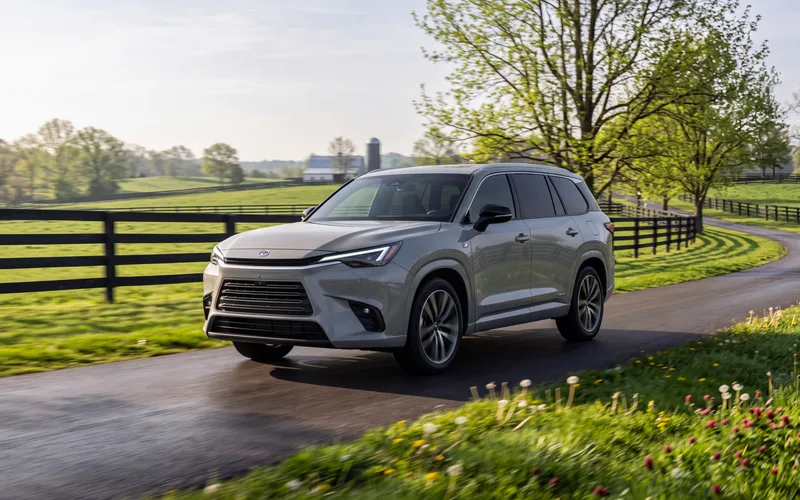 Lexus TXMid-Size Luxury SUVBetter at: Running costs
Hybrid and plug-in powertrains, a roomier third row, and Lexus reliability and resale directly address the Aviator's three biggest weaknesses.
Compare 2.81B-
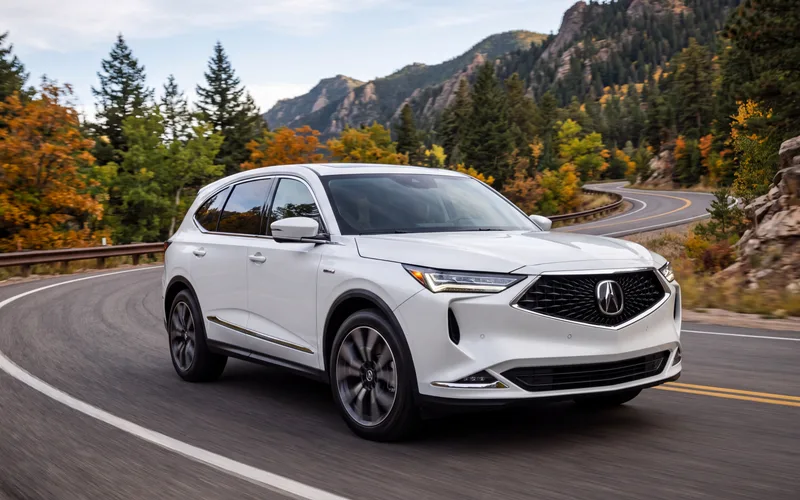 Acura MDXMid-Size Luxury SUVBetter at: Value
Costs less to buy and keep, drives more sharply, and posts a better dependability record while giving up little in three-row usability.
Compare 2.90B-
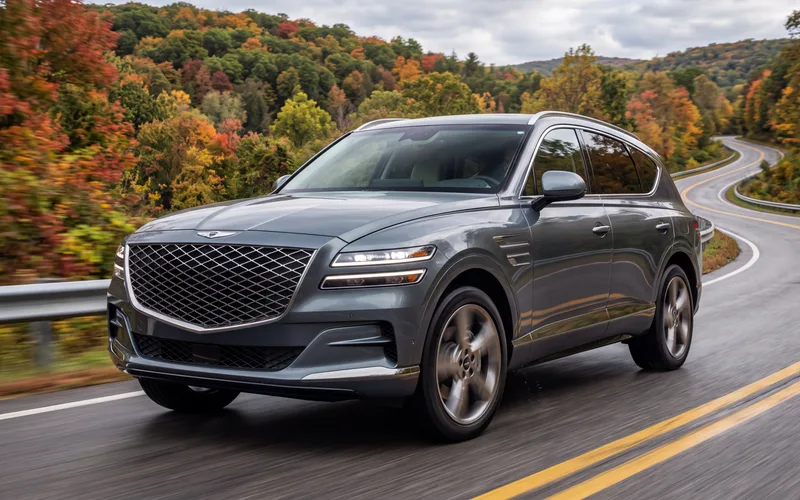 Genesis GV80Mid-Size Luxury SUVBetter at: Interior quality
Similar money buys richer interior materials, a longer warranty, and included scheduled maintenance the Lincoln simply does not offer.
CompareHow it's evolved
7 scored model years · 2020–2026
Subject scores by year
Hover or tap a score to see what moved it versus the year before. A corner mark flags a big swing.
| Year | Performance | Efficiency | Safety | Space | Cost | Reliability | Tech | Use-case | Driving | Value |
|---|---|---|---|---|---|---|---|---|---|---|
| 2026 | 62 | 33 | 86 | 72 | 25 | 65 | 86 | 74 | 69 | 72 |
| 2025 | 62 | 32 | 86 | 72 | 30 | 57 | 85 | 65 | 67 | 70 |
| 2024 | 66 | 31 | 71 | 72 | 38 | 55 | 68 | 61 | 63 | 65 |
| 2023 | 68 | 31 | 73 | 74 | 41 | 59 | 65 | 63 | 69 | 65 |
| 2022 | 68 | 31 | 77 | 74 | 45 | 55 | 65 | 63 | 69 | 67 |
| 2021 | 68 | 31 | 77 | 72 | 45 | 47 | 64 | 62 | 69 | 68 |
| 2020 | 67 | 31 | 75 | 73 | 40 | 42 | 69 | 59 | 68 | 72 |
Compare two years
Best fit & conditions
Higher scores mean a better fit for that use case. Learn more about use-case fit →
Subject profile
Detailed scoring by subject
1Performance & PowertrainMid-pack among this car's ten categories.2.62C+
2023 is a carry-over year in the second-generation (U611) Aviator: the standard powertrain remains the 3.0L twin-turbocharged EcoBoost V6 rated at 400 hp on Standard, Reserve and Black Label. The Grand Touring / Black Label Grand Touring plug-in hybrid remained available for 2023 at 494 hp combined.
Peak torque of the volume gas powertrain is 415 lb-ft through the 10-speed automatic, unchanged for 2023. The plug-in Grand Touring's 630 lb-ft is a separate, top-trim-only powertrain.
Lincoln published no 0–60 claim for the pre-refresh 2023 Aviator, so this uses instrumented and published figures for the 400-hp AWD car, which cluster between 5.6 and 5.9 seconds; 5.7 s represents the volume Reserve AWD. Quick for a ~4,900-lb three-row, though a step behind the 5.3 s Lincoln quotes for the refreshed 2025+ car.
The twin-turbo V6 is consistently described as smooth and muscular with little turbo lag, delivering effortless mid-range thrust while the cabin stays quiet under load. Polished by domestic V6 standards but not quite the silky-smooth benchmark set by BMW's and Mercedes' inline-sixes in the same segment.
The 10R80 10-speed is calibrated for smoothness in the Aviator, with a wide ratio spread that keeps the V6 in its band and generally prompt kickdowns. Pre-refresh second-gen cars drew more owner and reviewer complaints of occasional low-speed shift roughness and hesitation than the later recalibrated 2025+ tune, so it sits slightly below the current car.
Properly equipped with the available Class IV Trailer Tow Package, the 2023 gas Aviator is rated at 6,700 lbs in RWD or AWD; the plug-in Grand Touring tops out at 5,600 lbs. Strong for a mid-size luxury three-row and well ahead of the 5,000-lb rating Lincoln settled on after the 2025 refresh. Confidence is MEDIUM rather than HIGH because the official Ford Pro towing guide PDF would not download and several secondary sources quote only the 5,600-lb Class III figure.
Intelligent AWD is optional on Standard and Reserve and standard on Black Label and the Grand Touring trims, with drive modes including Slippery and Deep Conditions. It is a competent on-demand all-weather system, but there is no low-range gearing, no locking differential and no torque-vectoring rear axle.
A pavement-first three-row luxury SUV with roughly 7.8 in of ground clearance, modest approach and departure angles, no skid plates, no locking differentials and no off-road trim. The optional Adaptive Suspension with Air Glide adjusts ride height for entry and exit rather than for trail work.
For 2023 buyers get two genuinely distinct powertrains — the 400-hp twin-turbo V6 across the range and the 494-hp / 630-lb-ft plug-in hybrid — plus a choice of RWD or AWD. That electrified option is a real one, but it is confined to the Grand Touring and Black Label Grand Touring trims at the top of the price ladder, and there is no conventional hybrid or EV variant.
2Efficiency & RangeThe Aviator's lowest-graded category.0.00F
EPA rates the 2023 Aviator AWD — the volume configuration for this three-row luxury SUV — at 20 MPG combined with the 3.0L twin-turbo V6 and 10-speed automatic; RWD returns 21 MPG and the enhanced-performance AWD variant drops to 19 MPG. Weak even among gas SUVs, which is the cost of 400 hp in a ~4,900-lb body.
17 MPG city for the AWD volume trim — the turbocharged V6 and roughly 4,900 lb curb weight both work against stop-and-go economy, and there is no conventional hybrid option to soften it.
24 MPG highway for AWD; the lighter RWD car reaches 26 MPG. The tall three-row body and standard 20-inch wheels limit cruising economy despite the 10-speed's long top gears.
EPA lists 404 miles of total range for the AWD Aviator on its 20.2-gallon tank; the RWD car stretches to about 424 miles. Adequate but unremarkable — the large tank is doing the work that fuel economy is not.
EPA estimates $3,100 per year to fuel the AWD Aviator at 15,000 miles annually, versus $2,950 for RWD — near the expensive end of the SUV band and a real running-cost penalty against hybrid three-row rivals.
EPA classifies the 2023 Aviator as a regular-gasoline vehicle, so 87 octane is all that is required, but Lincoln recommends 91-octane premium to realize the full 400 hp / 415 lb-ft rating. That mixed requirement — regular is safe, premium is needed for the advertised output — puts it squarely in the middle band rather than the top.
3SafetyOne of the Aviator's strongest categories.2.92B-
NHTSA rates the 2023 Aviator 5 stars overall in both RWD and 4WD form, with 5 stars in every frontal and side test; only rollover resistance drops to 4 stars (15.1% rollover risk, no tip), which is normal for a tall three-row SUV.
Every IIHS crashworthiness result is Good, including the tougher updated moderate overlap front test that caught out much of the segment, and the rating page still carries a Top Safety Pick badge qualified as applying 'only to vehicles with specific headlights' — but the Aviator is absent from the IIHS 2023 award list, where the Nautilus was Lincoln's only winner, because the stricter 2023 criteria demand Acceptable-or-better headlights across all trims. Poor seat belt reminders are the other blemish.
Lincoln Co-Pilot360 is standard on every 2023 trim — AEB with pedestrian detection, BLIS with cross-traffic alert, lane-keeping, auto high-beams, rear camera and reverse sensing — but adaptive cruise is not: it sits in the optional Co-Pilot360 1.5 Plus package, an extra-cost item on the volume Reserve and standard only at the top of the range. Charging for ACC on a $55k-plus luxury three-row is behind segment practice.
Under the protocol in force for this model year the Aviator's vehicle-to-vehicle front crash prevention rates Superior on both the standard and optional systems and daytime pedestrian detection rates Superior/Advanced, but nighttime pedestrian performance falls to Basic — the weak result that later became a Marginal once IIHS consolidated the pedestrian tests for 2024.
BLIS with Cross-Traffic Alert is standard on every trim and the tow-package version extends the zone down the length of a trailer, but coverage is alert-only — Reverse Brake Assist, the piece that actually intervenes, is bundled into the optional Plus package rather than fitted as standard.
The lane-keeping system is standard and reviewers describe it as working without drawing attention to itself, but true lane centering is packaged with the optional Plus collection instead of being fitted across the range.
Intelligent Adaptive Cruise Control with Stop-and-Go, lane centering and speed sign recognition is a capable, smooth combination in traffic, with the caveat that it brakes hard at the closest gap setting — and it is an extra-cost package on the trim most buyers take rather than standard equipment.
No hands-free highway driving is offered on the 2023 US Aviator at any trim or price. Lincoln's system reached the Nautilus and Corsair for 2023 and the Navigator earlier still, but the Aviator only gets it with the 2025 facelift — so this model year is behind its own showroom.
Headlights split by equipment: the LED projector units with curve-adaptive high beams rate Good, while the LED reflector lamps fitted to the Standard, Reserve and Grand Touring trims rate only Marginal — a spread wide enough on its own to keep the Aviator off the IIHS 2023 award list.
Forward sightlines are good from the high, upright driving position, but a tall beltline, thick rear pillars and a shallow third-row quarter window restrict the over-shoulder view; camera compensation is thorough where fitted, though the 360-degree system is an upper-trim/package item rather than standard equipment.
IIHS rates the LATCH hardware Acceptable and the practical picture matches: third-row lower anchors are exposed and easy to reach, top tethers are clearly marked throughout, and the wide rear doors take infant and rear-facing convertible seats without space complaints — but the second-row anchors hide in upholstery pockets that must be fished open, and third-row access is blocked once a seat is installed in the captain's chair ahead of it.
4Space & ComfortThe Aviator's best-graded category.3.00B
The 2023 Aviator is a three-row mid-size luxury SUV; the volume Reserve trim seats seven on the split second-row bench, or six when optioned with captain's chairs.
Lincoln publishes first-row headroom with and without the panoramic roof; 41.5 in is the no-sunroof figure this item asks for, near the top of the SUV band.
Front legroom is generous for the mid-size luxury class and identical on every 2023 trim; the figure is unchanged across the 2020–2024 generation.
Second-row headroom sits near the top of the SUV band; the panoramic roof fitted from Reserve upward costs about 1.3 in.
The longitudinal rear-drive platform and 119.1-in wheelbase give the second row limousine-grade legroom; the third row is a far tighter 29.2 in.
The power-folding third row has respectable headroom (36.9 in) and a usable 17.8 cu ft of cargo behind it, but 29.2 in of legroom is short of the mainstream three-row benchmarks — a kids-and-teens bench with adults limited to short hops.
With the third row folded the Aviator offers 41.8 cu ft — competitive for a mid-size luxury three-row, but well short of the boxier full-size SUVs the segment band tops out against.
Maximum cargo volume with the second and third rows folded is squarely mid-pack for a mid-size three-row SUV — the sloping roofline costs it against upright rivals.
A deep console bin with a wireless charging pad from Reserve upward, wide door pockets and a covered under-floor well behind the third row cover everyday storage competently, but there is no signature storage innovation of the giga-console variety.
The Aviator's Perfect Position front seats — up to 30-way adjustment with independent power thigh extensions and Active Motion massage — are repeatedly singled out as among the best in the industry, and the second row can be heated and ventilated too.
The available Air Glide adaptive air suspension with road-scanning preview delivers a genuinely plush, bump-absorbing ride, but reviewers consistently note residual body motion over crests and at speed, which keeps it out of the top band.
Acoustic glass and active noise control make the cabin notably hushed at highway speed — reviewers call it a tranquil cruiser — though the twin-turbo V6 makes itself heard under hard throttle.
The volume Reserve trim carries quad-zone automatic climate control with second-row touchscreen control, heated and ventilated front seats, a heated wheel, heated second-row seats and remote start through the Lincoln Way app; massage and 30-way seats sit further up the range.
5Cost of OwnershipOne of the Aviator's weakest categories.0.71F
The entry Standard RWD opens at $53,340 with the $1,195 destination charge — a modest step up from the 2022 car, and roughly $6,500 below where the 2025 refresh would reset the floor. That places the 2023 Aviator's starting price in the middle of the mid-size luxury three-row field rather than at the top of it.
Reserve is the volume trim — it is where the 12-way-plus front seating, upgraded trim and the Co-Pilot360 1.5 Plus/Revel option packages become available — and lists at $59,005 with destination for RWD, $61,535 with AWD. That is roughly $9,900 less than the same trim would cost after the 2025 refresh, but still deep into the upper half of the SUV price band.
CarEdge projects $3,966 in maintenance and repairs across the first five years (~$793/yr), and RepairPal independently puts the Aviator at $626/yr against a $807/yr luxury-midsize-SUV average — cheap for the class because the twin-turbo 3.0L V6, 10-speed automatic and much of the hardware are shared with the Ford Explorer, so parts and labor stay Ford-priced. A 15,000-mi/yr owner runs out of the 4-yr/50,000-mi bumper-to-bumper coverage partway through year four and pays out of pocket from there.
Industry estimates bracket the mid-40s — iSeeCars projects 48.1% retained and CarEdge 42.4% — and the 2023 car's own observed curve is tracking at the healthier end: KBB values a 2023 Aviator at $39,863 in August 2026, about 68% of the $59,005 Reserve RWD MSRP after three years, which extrapolates to the high-40s at five. The 2023's lower sticker helps here, but the Aviator still sheds value faster than SUVs as a whole (44.9% average depreciation) even though it beats the 54.3% typical of luxury large SUVs.
Lincoln's New Vehicle Limited Warranty covers the 2023 Aviator for 4 years or 50,000 miles, unchanged across the brand. That matches the luxury-segment norm set by BMW and Audi but trails Genesis (5 yr/60,000 mi), and the 50,000-mile cap expires before four years for anyone driving average annual mileage.
Powertrain coverage is 6 years or 70,000 miles — the long-standing Lincoln figure — with 24/7 roadside assistance running for the same period. Against Genesis at 10 yr/100,000 mi it is near the bottom of the luxury field, and the 70,000-mile cap is what bites first on a vehicle bought to do family mileage.
No factory scheduled maintenance on Standard, Reserve or Grand Touring — included maintenance stays a Black Label privilege (4 yr/50,000 mi Premium Maintenance covering wear items, plus anytime car washes, annual detailing and roadside assistance for life), which is a $80K-plus buy-in. What the volume trims get is real but thin: complimentary Lincoln Pickup & Delivery with a loaner for the warranty period, 24/7 roadside assistance for 6 yr/70,000 mi, and only a 30-day Lincoln Premium Connectivity trial with three years of Alexa Built-in. This is the pre-refresh car, so there is none of the standard ActiveGlide hands-free driving and four-year connected-services plan that lifts the 2025 Aviator's package — that hardware did not reach the Aviator until the facelift.
$59,005 volume-trim price minus its estimated resale value after 5 years (47% retained, or about $27,732) leaves about $31,273 in depreciation. Add the projected $3,966 in 5-year maintenance and repairs, and owning this vehicle for 5 years costs about $35,239 in total.
6Reliability & QualityOne of the Aviator's weakest categories.2.00C
Both major predictors land squarely on "average" for this model year and neither dissents — J.D. Power scores the 2023 Aviator 79/100 for Quality & Reliability, inside its own 70–80 "Average" band, and Consumer Reports says the 2023 car has "about average reliability compared to other cars from the same model year." That is a cleaner reading than the years either side of it (CR withholds its recommendation from the 2024 outright), but average is still all it is, and the brand data underneath it runs below the industry norm.
The J.D. Power study that actually surveys this model year — the 2026 VDS, built on 2023 owners at three years — puts Lincoln at 217 PP100 against a 204 industry average. That is still below par, but it is the smallest deficit of the three Aviator years scored so far and the third consecutive improvement from a last-place 251 PP100 in 2024. Consumer Reports' brand table remains harsher, holding Lincoln below the industry average.
NHTSA lists 16 separate recall campaigns against the 2023 Aviator. The model year is at least clear of 2022's worst entries — no improperly heat-treated engine rails, no fuel-filler-tube fire risk, and it falls outside the Nano EcoBoost intake-valve campaign — but what remains is still severe: a loose transmission bolt that can prevent park engagement and allow a rollaway, and a low-pressure fuel pump that can stall the engine. The tell is the repeat work: the rearview camera has been recalled seven times, twice explicitly to redo a remedy that was performed incorrectly, and the seat-belt warning chime and second-row seats have each come back a second time.
The volume gas Aviator's 3.0L twin-turbo Nano EcoBoost V6 and 10R80 10-speed are high-volume Ford families shared with the Explorer, F-150 and Mustang, and 2023 sits outside the intake-valve breakage recall that hit the 2021-2022 engines — a meaningful improvement over the prior year. It is not clean, though: the low-pressure fuel pump stall recall reaches 2023, the 10R80 still draws harsh-shift TSBs through this model year and a class action over the same defect, and the turbocharged V6 carries the usual high-mileage wastegate and turbo-replacement exposure out of warranty.
Materials are the Aviator's strongest suit and reviewers benchmark the cabin against Audi and Mercedes rather than against Ford — extensive leather, real wood, brushed aluminum, soft-touch surfaces well below the beltline where the class usually reverts to hard plastic, and a Revel audio system rated among the best fitted to any vehicle. It stops short of the top band only because critics consistently note it does not reach the outright opulence of the German benchmarks.
Reviewers and owners describe the assembly as genuinely luxury-grade — "on par with the finest European brands" is the recurring phrase — and on presentation alone this would sit far higher. What holds it down is measured evidence rather than impressions: an adhesive-bonding recall that lets C-pillar trim and rear door window bars detach is a build-execution defect, Consumer Reports' owner survey for this generation flags body hardware, paint and trim, and noises and leaks among the worst trouble spots, and premium-brand initial quality was running behind mass market in this era.
Service satisfaction is a real Lincoln strength — owners rank it fifth among premium brands, ahead of Mercedes, BMW and Audi — and Lincoln Pickup & Delivery, a complimentary valet that collects the car within 20 miles and leaves a loaner through the warranty period, is something no other luxury brand matches. Working against it is a network actively contracting: Lincoln closed 100 US stores during 2023, its largest single-year cut, leaving just over 500 retail locations. Mechanical work on shared CD6/Explorer hardware still falls within reach of the far denser Ford network, which limits the practical damage.
The Aviator is cheap to keep by luxury three-row standards because almost nothing under it is Lincoln-exclusive — the CD6 platform, the Nano EcoBoost V6 and the 10R80 all come from the far higher-volume Ford Explorer, so mechanical parts are abundant rather than dealer-only. RepairPal puts annual maintenance and repair well below the luxury mid-size SUV average and roughly $2,000 better than that average across ten years. Air suspension on upper trims, Lincoln-specific trim and out-of-warranty turbo work are what keep it out of the top band.
7Technology & InfotainmentMid-pack among this car's ten categories.2.37C+
Every 2023 Aviator trim gets the same 10.1-inch centre touchscreen with no larger option — modest against luxury rivals already fitting 12-inch-plus displays.
The 2023 Aviator still runs SYNC 3 (version 3.4) — easy to learn, with large tiles and real climate knobs beneath — but by 2023 it was two generations behind the SYNC 4 fitted to Lincoln's own Nautilus, Navigator and Corsair, and owners report sluggishness.
Apple CarPlay and Android Auto are standard on every 2023 Aviator, but SYNC 3.4 supports wired connection only — wireless projection is not available on any trim, a real gap for a $55k-plus luxury SUV in 2023.
SYNC 3's voice control handles fixed command sets competently but is not a natural-language assistant, and built-in navigation is an optional upgrade rather than standard — most owners default to phone-projected maps.
Audio is the Aviator's standout tech feature: a 10-speaker base system, a 14-speaker Revel setup on the volume Reserve trim and a 28-speaker Revel Ultima 3D system at the top of the range that ranks among the best in any SUV.
A 12.3-inch full-digital instrument cluster is standard across the 2023 Aviator range, with graphics that change by drive mode — crisp and configurable, if less customisable than the best German systems.
Because the 2023 Aviator is on SYNC 3.4, it receives only occasional Wi-Fi-delivered infotainment and map updates — the Ford/Lincoln Power-Up whole-vehicle over-the-air updates that reach modules beyond infotainment require SYNC 4 and skip this model year entirely.
The Lincoln Way app covers remote start and climate, lock/unlock, vehicle locate and scheduling, and Phone As A Key lets an owner use a handset as the key on Reserve and above — solid coverage, though connected services move to a subscription after the included trial.
Four USB ports mixing USB-A and USB-C across the first two rows, a 110V household outlet and a wireless charging pad from Reserve upward cover devices well, but the third row is thinly served and the port mix is still A-heavy.
Proximity entry with push-button start is standard, remote engine start became standard equipment for 2023, a hands-free power liftgate arrives on Reserve, and Phone As A Key is available — a near-complete keyless package.
A 360-degree camera with front and rear parking sensors and Active Park Assist automated parking reach the trims most buyers choose, and image quality is good, but the surround view is not standard on the base car.
Lincoln's large colour head-up display is available on the volume Reserve trim as well as Black Label, but it remains an extra-cost option rather than standard and is absent from the base Standard trim.
8Use-Case FitMid-pack among this car's ten categories.2.23C
Wide rear door openings, 40.1 in of second-row legroom and a power-folding third row make daily kid logistics easy, and 17.8 cu ft behind row three swallows a stroller; the trade-offs are a third row too tight for older kids and only Acceptable-rated LATCH hardware.
Crash credentials are excellent — 5-star NHTSA overall and Good in every IIHS crashworthiness test — and Lincoln Co-Pilot360 is standard on every trim, but adaptive cruise with stop-and-go, lane centering and the 360-degree camera all sit in optional packages, and the seat belt reminder rates Poor.
Quad-zone automatic climate control with second-row touchscreen control, heated second-row seats, an available rear-seat entertainment system, a hushed cabin and real cargo room with all three rows up make this one of the better family tourers in the class.
400 hp through a 10-speed automatic makes traffic effortless, the seats and quiet cabin keep fatigue low, and the controls are light and easy; size and outward visibility past the thick rear pillars are the daily annoyances.
EPA rates the gas AWD Aviator at 17/24/20 mpg with a $3,100 annual fuel bill, and Lincoln recommends 91-octane premium for rated output — running costs per commuting mile are high even by luxury three-row standards.
At 199.3 in long on a 119.1-in wheelbase with roughly a 39-ft turning circle, the Aviator is a handful in tight urban parking; the available 360-degree camera, standard parking sensors and Active Park Assist make it manageable rather than easy.
With the Class IV trailer tow package the gas Aviator pulls up to 6,700 lbs and payload runs around 1,500 lbs — genuinely useful for a trailer or toy hauler — but there is no bed, no low range and no work-grade duty cycle.
The Aviator's record argues against hard-use duty: J.D. Power rates its quality and reliability only Average, Lincoln sits below the industry dependability average, and the 2023 car carries a long recall list including a transmission bolt that can prevent park engagement.
This is a leather-lined luxury SUV: cargo tie-downs, a 110V outlet and available roof rails are the extent of the work provisions, with no washable surfaces, no bed access features and effectively no upfit ecosystem.
Perfect Position seats, a hushed cabin, an air-sprung ride and just over 400 miles of EPA range make it an excellent mile-eater; available adaptive cruise with stop-and-go and lane centering cut fatigue further, though hands-free driving was not yet offered on the Aviator.
Available Intelligent AWD, roughly 8 in of ground clearance, a 6,700-lb tow rating and roof rails handle gravel roads, bike racks and a boat comfortably, but road-biased tires, no low range and an air suspension that lowers at speed keep it well short of a genuine off-pavement tool.
Power-folding second and third rows open up 77.7 cu ft, and the under-floor well, roof rails and hitch availability cover bulky gear; the sloped roofline and high load floor stop it short of the boxier haulers.
9Driving ExperienceOne of the Aviator's strongest categories.2.67C+
The rear-drive-based longitudinal platform gives the Aviator better balance and turn-in than its transverse rivals, and Excite mode tightens it usefully, but at 4,774 lbs and up on air springs it shows residual body motion through quick direction changes and over crests.
Steering is quick and accurate off-centre and better than the segment average for response, but it is light and largely feedback-free — tuned for effortlessness rather than communication.
Brakes are sized for the Aviator's weight and reviewers report confident, fade-free stops with a firm pedal in normal use; no widely published instrumented 70-0 figure was found for the gas 2023 car, so this sits at the middle of the competent band.
The 400-hp twin-turbo V6 and 10-speed automatic are strong and generally well calibrated — roughly 5.7–5.9 seconds to 60 mph with little turbo lag — though the 10R80 occasionally hunts between ratios and can shift harshly at low speed.
The V6 is well isolated at cruise but sounds coarse and unmusical when extended — a clear step behind the German straight-sixes and V8s that define this class, and owners mark it down.
A 39-ft turning circle on a 119.1-in wheelbase is unremarkable for a mid-size three-row SUV and makes tight U-turns and parking-garage ramps a two-bite affair.
A commanding seating position, an enormous adjustment range topping out at 30-way Perfect Position seats with power thigh extensions, a power tilt/telescope column with memory and retained physical climate controls make this one of the better-sorted cabins; the piano-key shifter and awkward interior door releases divide opinion.
Genuinely quick and more entertaining than most three-row luxury SUVs thanks to the rear-drive layout and Excite mode, but the soft air suspension, light steering and ordinary engine note make it a pleasant cruiser rather than a car you detour for.
10Value & Market PositionMid-pack among this car's ten categories.2.36C+
The headline inclusion is genuine: every 2023 Aviator, base Standard included, gets the 400-hp twin-turbocharged 3.0L V6 and 10-speed automatic, where an Acura MDX, Volvo XC90 or Audi Q7 starts on a four-cylinder or a much weaker six — plus a 10.1-inch SYNC 4 touchscreen, 12.3-inch digital cluster, heated front seats, acoustic laminated front glass and the base Co-Pilot360 suite (AEB, blind-spot, lane-keep, auto high beams, rear camera). What holds it back is how much sits on the options sheet at this price: adaptive cruise control, evasive steering, active park and adaptive pixel LED headlamps are all in the extra-cost Co-Pilot360 1.5 Plus package, 20-inch wheels and the panoramic Vista Roof come in the Premium package, and for 2023 Lincoln actively decontented the car — Standard and Reserve dropped from 12-way front seats to 10-way driver/8-way passenger, and from late-August 2022 production some units shipped without the audio subwoofer and amplifier under supply constraints.
At $59,005 for a Reserve RWD, the 2023 Aviator delivers 400 hp, three usable rows, a hushed cabin and 24-way Perfect Position seating for money that buys a mid-spec Acura MDX or an entry Audi Q7 — this is the model year before Lincoln's $5,155 price reset, and reviewers rated it accordingly, with Edmunds at 7.7/10 and U.S. News 7.9/10 versus the 6.5/10 the pricier 2025 car earns. The offset is that in 2023 the discount that normally softens a Lincoln sticker was not there: constrained supply meant transactions landed at or near MSRP, so the list-price advantage was not fully realized at the dealership.
2023 is the broadest the second-generation Aviator ever got: five trims — Standard, Reserve, Grand Touring, Black Label and Black Label Grand Touring — spanning $53,340 to $90,280, with RWD or AWD on the gas V6, a 494-hp plug-in-hybrid Grand Touring for buyers who want electric-only running, second-row bench or captain's chairs, and the Jet appearance package newly extended to base Reserve and to Black Label. That two-powertrain ladder is something the post-refresh 2025 car no longer offers.
2023 was the weakest year of the generation — roughly 14,400–15,600 US deliveries depending on the tracker, down about 29–34% from 2022's ~22,000 — but the cause was supply, not demand: Ford Authority's own incentive reporting blamed the absence of deals on 'high demand for the luxury crossover amid sustained levels of low supply,' and volume rebounded to a generation-record ~21,400–25,600 units in 2024 once production normalized. That leaves the 2023 car a solid mid-pack seller that clears the Audi Q7 tier while trailing the Acura MDX by a wide margin, with a headline sales line that reads worse than the market's actual appetite for it.
Lincoln's Quiet Flight positioning — the Sanctuary cabin, Perfect Position seating, concierge Pickup & Delivery and Black Label member privileges — has done real work rehabilitating a brand that spent the 2000s rebadging Fords, and the Aviator is the model that best carries it. It still lacks the aspirational pull and resale strength of the German trio, Lexus or Genesis, and the Explorer-sibling association follows the car; RepairPal ranks Lincoln 24th of 32 brands for reliability.
Scored as buyer benefit, 2023 was the Aviator's thinnest year for deals — the opposite of the 0% APR plus $2,000–$3,000 bonus cash Lincoln would be throwing at the car by 2025. Every month of calendar 2023 offered subsidized APR only, no bonus cash: 6.9% in January and February, 4.9% in March and April, 5.9% in May, 3.9% in June, 5.9% in July, with Ford Authority attributing the weakness to low supply. Those rates were still below the ~7% market average of the period, which is a genuine saving, and leftover 2023s did get 3.9%/72 months in January 2024 — but a shopper in 2023 was paying close to sticker.
2023 is the fourth model year of a second generation launched for 2020, and a carry-over one — the powertrains, sheetmetal and the 10.1-inch SYNC 4 infotainment were unchanged, and the only notable revisions were two swapped paint colors, wider Jet Package availability and less front-seat adjustability. It is squarely mid-cycle, and by January 2023 the facelift was already public knowledge, so a buyer signing that year knew a restyled, bigger-screened, ActiveGlide-equipped replacement was one or two model years out.
The 2023 car reviewed better than its refreshed successor: Edmunds gave it 7.7/10 after road and track testing, U.S. News scored it 7.9/10 and ranked it 6th among 2023 luxury midsize SUVs, The Car Connection 7.0/10 and KBB 4.0/5, with consistent praise for the quiet, well-finished first two rows, the standard 400-hp V6 and the ride, and consistent criticism of body control on a winding road, third-row space and the dated infotainment. It is a well-regarded car that is not the pick of the class — no comparison-test wins, no Car and Driver 10Best, no NACTOY, and no segment award for this model year.