

The verdict
A capable mid-size luxury suv, strong on safety and held back by ownership.
The 2026 Lincoln Aviator is a quiet, richly equipped three-row luxury SUV that leads its class on standard technology — a 13.2-inch Google-powered screen, a head-up display, and BlueCruise 1.5 hands-free driving are included on every trim, even the $61,315 base Premiere. Its 400-hp twin-turbo V6 is smooth and quick (0–60 in 5.3 seconds), and the cabin is genuinely hushed with seats reviewers rate among the best anywhere. The catch is what it costs to keep: 20 MPG combined on premium-recommended fuel, roughly $2,850 a year in gas, below-average predicted reliability, and about 47% resale after five years add up to an estimated $43,784 in five-year ownership cost. Buy it for the comfort, tech, and deal-making room at the dealer — not for efficiency or long-term value retention.
Jump to scoresStrengths
- Hands-free driving and driver aids standard on every trim
- Top crash ratings and a broad safety net
- Modern infotainment that finally matches the price tag
What holds it back
- Fuel costs are among the worst in the class
- Expensive to own over five years
- Reliability record is below average for a luxury brand
Top alternatives
Cars shoppers cross-shop with the Lincoln Aviator 2.88B-
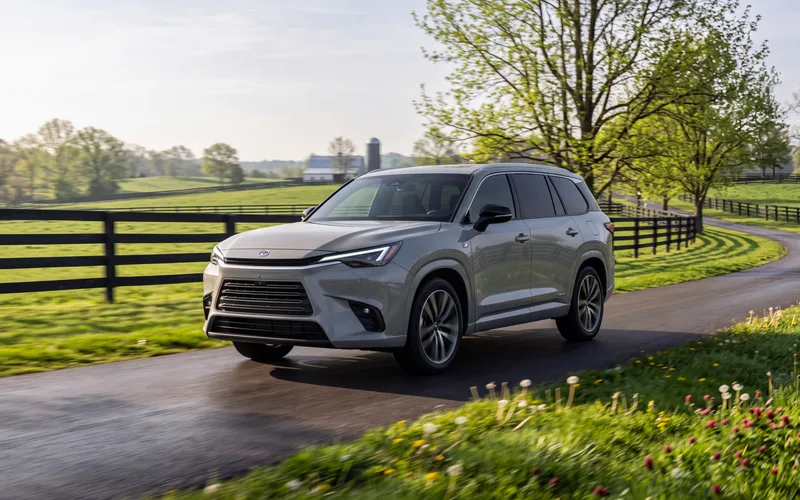 Lexus TXMid-Size Luxury SUVBetter at: Running costs
Hybrid and plug-in powertrains, a roomier third row, and Lexus reliability and resale directly address the Aviator's three biggest weaknesses.
Compare 2.81B-
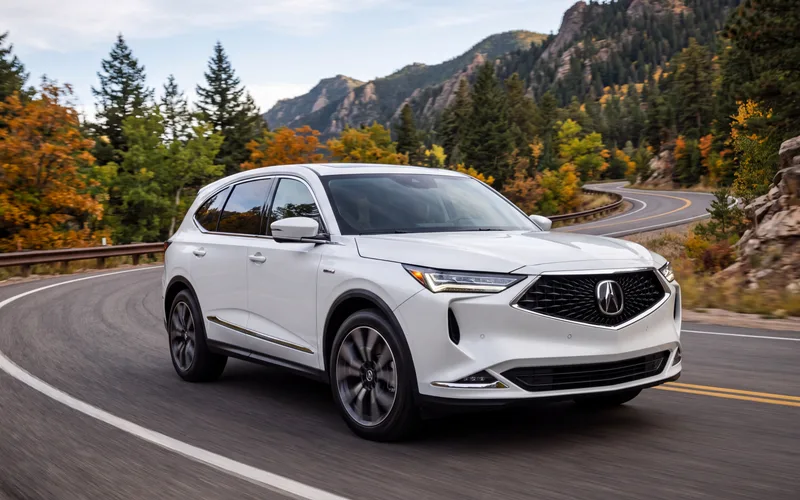 Acura MDXMid-Size Luxury SUVBetter at: Value
Costs less to buy and keep, drives more sharply, and posts a better dependability record while giving up little in three-row usability.
Compare 2.90B-
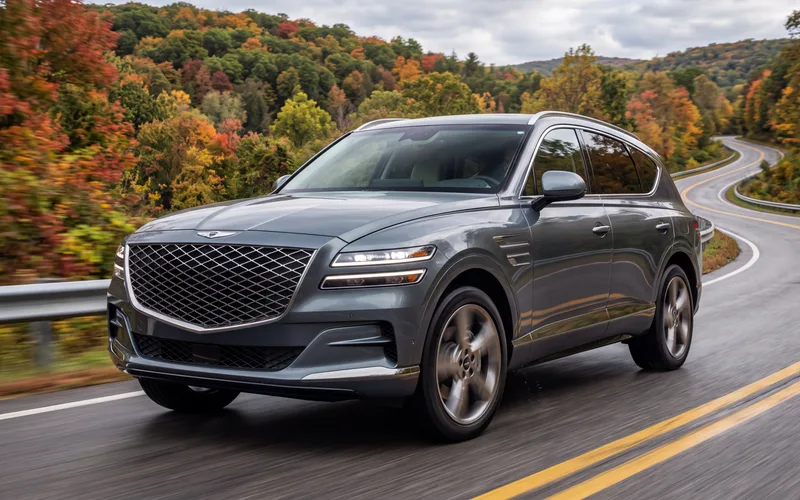 Genesis GV80Mid-Size Luxury SUVBetter at: Interior quality
Similar money buys richer interior materials, a longer warranty, and included scheduled maintenance the Lincoln simply does not offer.
CompareHow it's evolved
7 scored model years · 2020–2026
Subject scores by year
Hover or tap a score to see what moved it versus the year before. A corner mark flags a big swing.
| Year | Performance | Efficiency | Safety | Space | Cost | Reliability | Tech | Use-case | Driving | Value |
|---|---|---|---|---|---|---|---|---|---|---|
| 2026 | 62 | 33 | 86 | 72 | 25 | 65 | 86 | 74 | 69 | 72 |
| 2025 | 62 | 32 | 86 | 72 | 30 | 57 | 85 | 65 | 67 | 70 |
| 2024 | 66 | 31 | 71 | 72 | 38 | 55 | 68 | 61 | 63 | 65 |
| 2023 | 68 | 31 | 73 | 74 | 41 | 59 | 65 | 63 | 69 | 65 |
| 2022 | 68 | 31 | 77 | 74 | 45 | 55 | 65 | 63 | 69 | 67 |
| 2021 | 68 | 31 | 77 | 72 | 45 | 47 | 64 | 62 | 69 | 68 |
| 2020 | 67 | 31 | 75 | 73 | 40 | 42 | 69 | 59 | 68 | 72 |
Compare two years
Best fit & conditions
Higher scores mean a better fit for that use case. Learn more about use-case fit →
Subject profile
Academic Probation · NHTSA safety recalls
Jul 21, 2026Seats: front assembly: power adjustAn unoccupied driver's seat may recline unintentionally during certain scenarios, such as remote unlock or remote start.
Defect
Ford Motor Company (Ford) is recalling certain 2025-2027 Explorer and Lincoln Aviator vehicles. An unoccupied driver's seat may recline unintentionally during certain scenarios, such as remote unlock or remote start.
Risk
Unexpected movement of the driverâs seat back may trap a second-row occupant, increasing the risk of injury.
Remedy
Dealers will disable the driver seat module (DSM) feature until parts are available. Once available, the motor will be replaced. Repairs will be performed free of charge. Owner notification letters were mailed September 3, 2026. Owners may contact Ford customer service at 1-866-436-7332. Ford's number for this recall is 26S53.
NHTSA campaign 26V470000 ↗Manufacturer no. 26S5376,748 vehicles potentially affected (all models in the campaign)Owners notified Sep 3, 2026Filed by Ford Motor CompanyFiled as AVIATORJul 14, 2026Seats: mid/rear assemblyThe switch for the easy-entry second-row outer seats may bind or stick, resulting in the seats unlatching, tipping, or sliding unexpectedly.
Defect
Ford Motor Company (Ford) is recalling certain 2020-2027 Aviator and 2020-2026 Explorer vehicles. The switch for the easy-entry second-row outer seats may bind or stick, resulting in the seats unlatching, tipping, or sliding unexpectedly.
Risk
A seat that moves unexpectedly may not properly restrain an occupant during a crash, increasing the risk of injury.
Remedy
Dealers will inspect and replace the bezel around the switch as necessary, free of charge. This will be a phased campaign, with the remedy becoming available in different phases based on model and model years. Interim letters explaining the safety risk were mailed August 19, 2026. Additional letters will be sent once the remedy is available, anticipated in January 2027. Lincoln Aviator owner notification letters were mailed August 21, 2026. Owners may contact Ford customer service at 1-866-436-7332. Ford's number for this recall is 26S52. This recall expands Recall 25V393. Vehicle Identification Numbers (VINs) involved in this recall became searchable on NHTSA.gov on July 16, 2026.
NHTSA campaign 26V451000 ↗Manufacturer no. 26S52387,911 vehicles potentially affected (all models in the campaign)Owners notified Aug 21, 2026Filed by Ford Motor CompanyFiled as AVIATORMar 31, 2026Visibility: defroster/defogger/hvac system: fan/motorThe heating, ventilation and air-conditioning (HVAC) system may fail, which can cause the defrosting and defogging system to become inoperative.
Defect
Ford Motor Company (Ford) is recalling certain 2026 Lincoln Aviator and Explorer vehicles. The heating, ventilation and air-conditioning (HVAC) system may fail, which can cause the defrosting and defogging system to become inoperative.
Risk
An inoperative windshield defrosting and defogging system may decrease the driver's visibility, increasing the risk of a crash.
Remedy
Dealers will inspect and secure the instrument panel joints as necessary, free of charge. Owner notification letters were mailed April 10, 2026. Owners may contact Ford customer service at 1-866-436-7332. Ford's number for this recall is 26S22. Vehicle Identification Numbers (VINs) involved in this recall became searchable on NHTSA.gov beginning April 3, 2026.
NHTSA campaign 26V202000 ↗Manufacturer no. 26S2255 vehicles potentially affected (all models in the campaign)Owners notified Apr 10, 2026Filed by Ford Motor CompanyFiled as AVIATORMar 17, 2026Seat beltsThe seat belt anchor bolts at the second-row outer seating positions may be improperly secured.
Defect
Ford Motor Company (Ford) is recalling certain 2020-2026 Explorer and Lincoln Aviator vehicles. The seat belt anchor bolts at the second-row outer seating positions may be improperly secured.
Risk
A loose seat belt buckle may not properly restrain an occupant during a crash, increasing the risk of injury.
Remedy
Dealers will inspect the second-row outer seat belt lower anchor bolts and replace or repair them as necessary, free of charge. Owner notification letters were mailed March 30, 2026. Owners may contact Ford customer service at 1-866-436-7332. Ford's number for this recall is 26C18. Vehicle Identification Numbers (VINs) involved in this recall became searchable on NHTSA.gov on March 19, 2026.
NHTSA campaign 26V159000 ↗Manufacturer no. 26C18561 vehicles potentially affected (all models in the campaign)Owners notified Mar 30, 2026Filed by Ford Motor CompanyFiled as AVIATOROct 24, 2025Visibility: windshieldThe windshield glass may have visible air bubbles, which can obscure the driver's visibility. As such, these vehicles fail to comply with the requirements of Federal Motor Vehicle Safety Standard number 205, "Glazing Materials."
Defect
Ford Motor Company (Ford) is recalling certain 2025-2026 Lincoln Corsair, Lincoln Aviator, and Explorer vehicles. The windshield glass may have visible air bubbles, which can obscure the driver's visibility. As such, these vehicles fail to comply with the requirements of Federal Motor Vehicle Safety Standard number 205, "Glazing Materials."
Risk
Reduced visibility while driving can increase the risk of a crash.
Remedy
Dealers will inspect and replace the windshield as necessary, free of charge. Owner notification letters were mailed November 6, 2025. Owners may contact Ford customer service at 1-866-436-7332. Ford's number for this recall is 25C60. Vehicle Identification Numbers (VINs) involved in this recall become searchable on NHTSA.gov beginning October 27, 2025.
NHTSA campaign 25V730000 ↗Manufacturer no. 25C6056,841 vehicles potentially affected (all models in the campaign)Owners notified Nov 6, 2025Filed by Ford Motor CompanyFiled as AVIATOROct 10, 2025Trailer hitchesThe trailer hitch assembly bolts may be loose.
Defect
Ford Motor Company (Ford) is recalling certain 2024-2026 Explorer and 2024-2026 Lincoln Aviator vehicles. The trailer hitch assembly bolts may be loose.
Risk
While towing a trailer, loose trailer hitch bolts can cause a loss of vehicle handling and control, or cause the trailer to detach. Either of these conditions can increase the risk of a crash.
Remedy
Dealers will inspect and tighten the trailer hitch bolts, or replace them as necessary, free of charge. Owner notification letters were mailed October 29, 2025. Owners may contact Ford customer service at 1-866-436-7332. Ford's number for this recall is 25SA3. Vehicle Identification Numbers (VINs) involved in this recall became searchable on NHTSA.gov on October 15, 2025.
NHTSA campaign 25V687000 ↗Manufacturer no. 25SA31,412 vehicles potentially affected (all models in the campaign)Owners notified Oct 29, 2025Filed by Ford Motor CompanyFiled as AVIATOR
45 recalls on other model years of the Aviator (2020–2025)
Jun 24, 2026Power train: automatic transmissionThe transmission park pawl may engage while the vehicle is in motion, resulting in park system damage.
Defect
Ford Motor Company (Ford) is recalling certain 2018-2021 Navigator, Expedition, 2020-2021 Explorer, Lincoln Aviator, and 2021 F-150 vehicles. The transmission park pawl may engage while the vehicle is in motion, resulting in park system damage.
Risk
Park system damage may result in a vehicle rollaway, increasing the risk of a crash.
Remedy
Dealers will update the powertrain control module software, and inspect and replace any damaged transmission components as necessary, free of charge. Interim letters, notifying owners of the safety risk, were mailed July 10, 2026. Additional letters will be sent once the remedy is available, anticipated in April 2027. Owners may contact Ford customer service at 1-866-436-7332. Ford's number for this recall is 26S48. Vehicle Identification Numbers (VINs) involved in this recall became searchable on NHTSA.gov on June 26, 2026.
NHTSA campaign 26V402000 ↗Manufacturer no. 26S48741,195 vehicles potentially affected (all models in the campaign)Filed by Ford Motor CompanyFiled as AVIATORMar 18, 2026Back over prevention: software · Electrical system: adasThe Image Processing Module A (IPMA) may experience multiple unexpected resets, resulting in loss of the rearview camera image and advanced driver assistance (ADAS) features, including pre-collision assist, lane-keeping assist, and blind-spot monitoring.
Defect
Ford Motor Company (Ford) is recalling certain 2022-2025 Lincoln Navigator, 2024-2025 Lincoln Nautilus, 2025 Lincoln Aviator and Explorer vehicles. The Image Processing Module A (IPMA) may experience multiple unexpected resets, resulting in loss of the rearview camera image and advanced driver assistance (ADAS) features, including pre-collision assist, lane-keeping assist, and blind-spot monitoring.
Risk
Loss of the rearview camera image and certain driver assistance features, can reduce the driverâs ability to detect hazards, increasing the risk of a crash.
Remedy
The Image Processing Module A software will be updated by a dealer, or through an over-the-air (OTA) update, free of charge. This is a Phased campaign. Phase 1 will include 2025 Aviator, 2025 Explorer, 2025 Nautilus notified owners on 4/13/2026. Phase 2 will include 2025 Navigator will notify owners on or about 4/20/2026. Phase 3 will include 2022-2024 Navigator will notify owners on or about 6/8/2026. Phase 4 will include 2024 Nautilus will notify owners on or about 6/22/2026. Owner notification letters were mailed April 13, 2026. Owners may contact Ford customer service at 1-866-436-7332. Ford's number for this recall is 26S21. Vehicle Identification Numbers (VINs) involved in this recall will be searchable on NHTSA.gov beginning March 25, 2026.
NHTSA campaign 26V165000 ↗Manufacturer no. 26S21254,640 vehicles potentially affected (all models in the campaign)Owners notified Apr 13, 2026Filed by Ford Motor CompanyFiled as AVIATORMar 3, 2026Back over prevention: softwareThe image on the center display may flip or invert, resulting in an incorrectly displayed rearview image when the vehicle is placed in reverse. As such, these vehicles fail to comply with the requirements of Federal Motor Vehicle Safety Standard number 111, "Rear Visibility."
Defect
Ford Motor Company (Ford) is recalling certain 2020-2022 Escape, Lincoln Corsair, 2020-2024 Lincoln Aviator, and Explorer vehicles. The image on the center display may flip or invert, resulting in an incorrectly displayed rearview image when the vehicle is placed in reverse. As such, these vehicles fail to comply with the requirements of Federal Motor Vehicle Safety Standard number 111, "Rear Visibility."
Risk
An incorrectly displayed rearview image can reduce the driverâs view behind the vehicle, increasing the risk of a crash.
Remedy
Dealers will update the accessory protocol interface module (APIM) software, free of charge. Owner notification letters were mailed June 23, 2026. Owners may contact Ford customer service at 1-866-436-7332. Ford's number for this recall is 26C11. Vehicle Identification Numbers (VINs) involved in this recall became searchable on NHTSA.gov on March 5, 2026.
NHTSA campaign 26V123000 ↗Manufacturer no. 26C11889,950 vehicles potentially affected (all models in the campaign)Owners notified Jun 23, 2026Filed by Ford Motor CompanyFiled as AVIATORMar 3, 2026Visibility: windshield wiper/washer: motorThe windshield wiper motor may fail and prevent the windshield wipers from operating properly.
Defect
Ford Motor Company (Ford) is recalling certain 2020-2022 Explorer, Escape, Lincoln Aviator, and Lincoln Corsair vehicles. The windshield wiper motor may fail and prevent the windshield wipers from operating properly.
Risk
Windshield wipers that fail to operate properly can reduce visibility, increasing the risk of a crash.
Remedy
Dealers will inspect and replace the front wiper motors as necessary, free of charge. Interim letters, notifying owners of the safety risk, were mailed April 2, 2026. Additional letters will be sent once the final remedy is available, anticipated in October 2026. Owners may contact Ford customer service at 1-866-436-7332. Ford's number for this recall is 26S14. Vehicle Identification Numbers (VINs) involved in this recall became searchable on NHTSA.gov on March 4, 2026.
NHTSA campaign 26V117000 ↗Manufacturer no. 26S14604,533 vehicles potentially affected (all models in the campaign)Filed by Ford Motor CompanyFiled as AVIATORAug 22, 2025Exterior lighting: tail lightsWhen towing a trailer, the tail lights on the trailer may fail to illuminate due to an improperly manufactured body control module. As such, these vehicles fail to comply with the requirements of Federal Motor Vehicle Safety Standard number 108, " Lamps, Reflective Devices, and Associated Equipment."
Defect
Ford Motor Company (Ford) is recalling certain 2025 Explorer and Aviator vehicles. When towing a trailer, the tail lights on the trailer may fail to illuminate due to an improperly manufactured body control module. As such, these vehicles fail to comply with the requirements of Federal Motor Vehicle Safety Standard number 108, " Lamps, Reflective Devices, and Associated Equipment."
Risk
Trailer tail lights that do not illuminate as intended can reduce visibility to other drivers, increasing the risk of a crash.
Remedy
Dealers will replace the body control module C on vehicles with less than 9,000 miles. For vehicles over 9,000 miles, dealers will perform a functional check on the body control module C and replace it as necessary. Repairs will be performed free of charge. Aviator 2025 owner notification letters were mailed October 13, 2025. Explorer 2025 owner letters were mailed November 25, 2025. Owners may contact Ford customer service at 1-866-436-7332. Ford's number for this recall is 25C42.
NHTSA campaign 25V543000 ↗Manufacturer no. 25C42213,121 vehicles potentially affected (all models in the campaign)Owners notified Oct 13, 2025Filed by Ford Motor CompanyFiled as AVIATORJul 25, 2025Visibility: power window devices and controlsWhen closing the windows with the global closing feature, the side rear windows may exert excessive force when encountering an object, before they automatically reverse. As such, these vehicles fail to comply with the requirements of Federal Motor Vehicle Safety Standard (FMVSS) number 118, "Power-Operated Window Systems."
Defect
Ford Motor Company (Ford) is recalling certain 2025 Lincoln Aviator vehicles. When closing the windows with the global closing feature, the side rear windows may exert excessive force when encountering an object, before they automatically reverse. As such, these vehicles fail to comply with the requirements of Federal Motor Vehicle Safety Standard (FMVSS) number 118, "Power-Operated Window Systems."
Risk
A closing window that does not reverse direction as expected can pinch a passenger before retracting, increasing the risk of injury.
Remedy
Dealers will update the Body Control Module (BCM) software, free of charge. Owner notification letters were mailed October 7, 2025. Owners may contact Ford customer service at 1-866-436-7332. Ford's number for this recall is 25C33.
NHTSA campaign 25V484000 ↗Manufacturer no. 25C3323,111 vehicles potentially affected (all models in the campaign)Owners notified Oct 7, 2025Filed by Ford Motor CompanyFiled as AVIATORJul 7, 2025Fuel system, gasoline: delivery: fuel pumpThe low-pressure fuel pump may fail, which can result in an engine stall while driving.
Defect
Ford Motor Company (Ford) is recalling certain 2021-2023 Bronco, Explorer, Lincoln Aviator, F-250 SD, F-350 SD, F-450 SD, F-550 SD, 2021-2022 Lincoln Navigator, Mustang, F-150, and 2022 Expedition vehicles. The low-pressure fuel pump may fail, which can result in an engine stall while driving.
Risk
An engine stall increases the risk of a crash.
Remedy
Dealers will replace the low pressure fuel pump on super duty vehicles and update the powertrain control module (PCM) software on all other affected vehicles, free of charge. Owner notification letters were mailed July 27, 2026. Owners may contact Ford customer service at 1-866-436-7332. Ford's number for this recall is 25S75.
NHTSA campaign 25V455000 ↗Manufacturer no. 25S75850,318 vehicles potentially affected (all models in the campaign)Owners notified Jul 27, 2026Filed by Ford Motor CompanyFiled as AVIATORJun 27, 2025Back over prevention: softwareA software error may cause the rearview camera to display a blank image, or the image may remain on the display after the backing event has ended.
Defect
Ford Motor Company (Ford) is recalling certain 2018-2022 Transit Connect, 2019-2020 MKZ, MKX, Edge, Continental, F-150, Nautilus, Fusion, 2019-2023 Ranger, Mustang, 2020-2021 EcoSport, Expedition, Navigator, 2020-2022 Escape, F-250 SD, Corsair, 2020-2023 Aviator, Transit, 2020-2024 Explorer, 2021-2024 Bronco Sport, and 2022-2024 Maverick vehicles. A software error may cause the rearview camera to display a blank image, or the image may remain on the display after the backing event has ended.
Risk
A rearview camera that displays a blank image can reduce the driver's view behind the vehicle. A rearview image that continues to be displayed after the vehicle is shifted out of reverse may distract the driver. Both of these situations can increase the risk of a crash.
Remedy
Dealers will update the rearview camera software, free of charge. Owner notification letters were mailed September 4, 2025. Owners may contact Ford customer service at 1-866-436-7332. Ford's number for this recall is 25S72.
NHTSA campaign 25V442000 ↗Manufacturer no. 25S72200,237 vehicles potentially affected (all models in the campaign)Owners notified Sep 4, 2025Filed by Ford Motor CompanyFiled as AVIATORJun 13, 2025Structure: bodyThe rear door window bars and C-pillar trim may have insufficient adhesive bonding, which can allow the trim to detach from the vehicle.
Defect
Ford Motor Company (Ford) is recalling certain 2020-2025 Aviator vehicles. The rear door window bars and C-pillar trim may have insufficient adhesive bonding, which can allow the trim to detach from the vehicle.
Risk
Detached trim may cause a road hazard and increase the risk of a crash.
Remedy
Dealers will repair or replace C-pillar appliques and window division bars, free of charge. Owner notification letters were mailed September 29, 2025. Owners may contact Ford Customer Service at 1-866-436-7332. Ford's number for this recall is 25S66.
NHTSA campaign 25V407000 ↗Manufacturer no. 25S66132,914 vehicles potentially affected (all models in the campaign)Owners notified Sep 29, 2025Filed by Ford Motor CompanyFiled as AVIATORJun 13, 2025Seats: mid/rear assemblyThe switch for the easy-entry second-row outer seats may bind or stick, resulting in the seats unlatching, folding, or sliding unexpectedly while driving.
Defect
Ford Motor Company (Ford) is recalling certain 2020-2025 Aviator, and Explorer vehicles. The switch for the easy-entry second-row outer seats may bind or stick, resulting in the seats unlatching, folding, or sliding unexpectedly while driving.
Risk
A seat that moves unexpectedly may not properly restrain an occupant during a crash, increasing their risk of injury.
Remedy
Dealers will inspect the second-row seat switch, and replace the bezel around the switch as necessary, free of charge. Owner notification letters were mailed August 7, 2025. Owners may contact Ford customer service at 1-866-436-7332. Ford's number for this recall is 25S67.
NHTSA campaign 25V393000 ↗Manufacturer no. 25S67304,662 vehicles potentially affected (all models in the campaign)Owners notified Aug 7, 2025Filed by Ford Motor CompanyFiled as AVIATORMay 23, 2025Electrical system: propulsion system: traction batteryA manufacturing defect in one or more of the high voltage battery cells may result in an internal short circuit and battery failure.
Defect
Ford Motor Company (Ford) is recalling certain 2020-2021 Lincoln Aviator vehicles equipped with 3.0L PHEV engines that were repaired incorrectly under recall 23V626. A manufacturing defect in one or more of the high voltage battery cells may result in an internal short circuit and battery failure.
Risk
Battery failure can cause a loss of drive power, increasing the risk of a crash. Battery failure can also increase the risk of a fire.
Remedy
Dealers will update the Battery Energy Control Module software, free of charge. Owner notification letters were mailed June 26, 2025. Owners may contact Ford customer service at 1-866-436-7332. Ford's number for this recall is 25S58.
NHTSA campaign 25V349000 ↗Manufacturer no. 25S588 vehicles potentially affected (all models in the campaign)Owners notified Jun 26, 2025Filed by Ford Motor CompanyFiled as AVIATORMay 23, 2025Seat belts: front: warning light/devicesWhen the driver's seat belt is not buckled and the vehicle is started, the seat belt warning system may activate the audible warning chime for an insufficient amount of time of less than 4 seconds. As such, these vehicles fail to comply with the requirements of Federal Motor Vehicle Safety Standard number 208, "Occupant Crash Protection."
Defect
Ford Motor Company (Ford) is recalling certain 2020-2023 Lincoln Aviator and Lincoln Corsair vehicles equipped with a Revel Audio System that were repaired incorrectly under recall 22V-953. When the driver's seat belt is not buckled and the vehicle is started, the seat belt warning system may activate the audible warning chime for an insufficient amount of time of less than 4 seconds. As such, these vehicles fail to comply with the requirements of Federal Motor Vehicle Safety Standard number 208, "Occupant Crash Protection."
Risk
An audible warning chime that does not properly alert of an unbelted seat belt can increase the risk of injury during a crash.
Remedy
Dealers will update the audio control module software, free of charge. Owner notification letters were mailed July 3, 2025. Owners may contact Ford customer service at 1-866-436-7332. Ford's number for this recall is 25C18.
NHTSA campaign 25V338000 ↗Manufacturer no. 25C184,442 vehicles potentially affected (all models in the campaign)Owners notified Jul 3, 2025Filed by Ford Motor CompanyFiled as AVIATORMay 9, 2025Structure: frame and membersA mounting bolt for the front subframe may have been tightened improperly.
Defect
Ford Motor Company (Ford) is recalling certain 2025 Explorer and Aviator vehicles. A mounting bolt for the front subframe may have been tightened improperly.
Risk
A loose subframe bolt may reduce the vehicle's performance in a crash, increasing the risk of injury.
Remedy
Dealers will inspect and tighten the subframe bolts as necessary, free of charge. Owners may contact Ford Customer Service at 1-866-436-7332. Owner notification letters were mailed May 21, 2025. Ford's number for this recall is 25S43.
NHTSA campaign 25V316000 ↗Manufacturer no. 25S43206 vehicles potentially affected (all models in the campaign)Owners notified May 21, 2025Filed by Ford Motor CompanyFiled as AVIATORMar 14, 2025Power train: automatic transmission: fluid/lubricant: valves/valve bodyThe transmission valve body may have been machined incorrectly, which can cause reverse gear failure, or unexpected forward movement in reverse or neutral gear.
Defect
Ford Motor Company (Ford) is recalling certain 2024-2025 F-150, Bronco, 2024 Ranger, 2025 Mustang, Explorer, and Aviator vehicles. The transmission valve body may have been machined incorrectly, which can cause reverse gear failure, or unexpected forward movement in reverse or neutral gear.
Risk
Unexpected vehicle movement increases the risk of a crash.
Remedy
Dealers will replace the transmission main control valve body, free of charge. Owner notification letters were mailed April 11, 2025. Owners may contact Ford customer service at 1-866-436-7332. Ford's number for this recall is 25S19.
NHTSA campaign 25V164000 ↗Manufacturer no. 25S19269 vehicles potentially affected (all models in the campaign)Owners notified Apr 11, 2025Filed by Ford Motor CompanyFiled as AVIATORMar 14, 2025Back over prevention: softwareThe video output may fail, preventing the rearview camera image from displaying.
Defect
Ford Motor Company (Ford) is recalling certain 2020-2023 Explorer, Lincoln Aviator, and 2020-2022 Lincoln Corsair vehicles previously repaired incorrectly under recall number 23V-342. The video output may fail, preventing the rearview camera image from displaying.
Risk
Loss of the rearview camera image can reduce the driver's rear visibility, increasing the risk of a crash.
Remedy
Dealers will update the Image Processing Module software, free of charge. Owner notification letters were mailed April 25, 2025. Owners may contact Ford customer service at 1-866-436-7332. Ford's number for this recall is 25S27.
NHTSA campaign 25V159000 ↗Manufacturer no. 25S2749,399 vehicles potentially affected (all models in the campaign)Owners notified Apr 25, 2025Filed by Ford Motor CompanyFiled as AVIATORFeb 14, 2025Seat beltsThe seat belt buckle anchor bolts at one or more seating positions may be improperly secured. Additionally, vehicles may have an improperly secured seat belt retractor anchor bolt and/or seat belt anchor bolt at the second-row center seating position, if equipped.
Defect
Ford Motor Company (Ford) is recalling certain 2020-2021 Explorer and Aviator vehicles. The seat belt buckle anchor bolts at one or more seating positions may be improperly secured. Additionally, vehicles may have an improperly secured seat belt retractor anchor bolt and/or seat belt anchor bolt at the second-row center seating position, if equipped.
Risk
A loose seat belt or seat belt buckle may not properly restrain an occupant during a crash, increasing the risk of injury.
Remedy
Dealers will inspect seat belt buckle anchor bolts in all seating positions. Additionally, dealers will inspect the seat belt retractor anchor bolt and seat belt anchor bolt at the second-row center seating position, if equipped. If loose anchor bolts are found, the affected seat components will be replaced. Repairs will be performed free of charge. Owner notification letters were mailed on June 5, 2025. Owners may contact Ford customer service at 866-436-7332. Ford's number for this recall is 25S09.
NHTSA campaign 25V093000 ↗Manufacturer no. 25S09240,510 vehicles potentially affected (all models in the campaign)Owners notified Jun 5, 2025Filed by Ford Motor CompanyFiled as AVIATORJan 17, 2025Power train: automatic transmission · Structure: frame and membersThe transmission may be improperly secured due to loose cross member bolts.
Defect
Ford Motor Company (Ford) is recalling certain 2025 Ford Explorer and Lincoln Aviator vehicles. The transmission may be improperly secured due to loose cross member bolts.
Risk
An improperly secured transmission can result in a loss of drive power, increasing the risk of a crash.
Remedy
Dealers will inspect and replace the transmission cross member bolts as necessary, free of charge. If the cross member bolts are missing, dealers will replace the cross member and install new bolts, free of charge. Owner notification letters were mailed January 29, 2025. Owners may contact Ford customer service at 1-866-436-7332. Ford's number for this recall is 25S03.
NHTSA campaign 25V020000 ↗Manufacturer no. 25S03259 vehicles potentially affected (all models in the campaign)Owners notified Jan 29, 2025Filed by Ford Motor CompanyFiled as AVIATORNov 8, 2024Equipment: other: labelsThe air bag warning label may be missing from the dashboard. As such, these vehicles fail to comply with the requirement Federal Motor Vehicle Safety Standard number 208, "Occupant Crash Protection."
Defect
Ford Motor Company (Ford) is recalling certain 2020-2025 Explorer, Lincoln Aviator, 2020-2024 Escape, Lincoln Corsair, 2018-2024 F-150, Expedition and Lincoln Navigator vehicles. The air bag warning label may be missing from the dashboard. As such, these vehicles fail to comply with the requirement Federal Motor Vehicle Safety Standard number 208, "Occupant Crash Protection."
Risk
Without a label that shows the proper restraint usage guidelines, the occupants may have an increased risk of injury in the event of a crash.
Remedy
Ford will mail owners the warning labels, free of charge. Owner notification letters were mailed December 19, 2024. Owners may call Ford customer service at 1-866-436-7332. Ford's number for this recall is 24C39.
NHTSA campaign 24V852000 ↗Manufacturer no. 24C3927,678 vehicles potentially affected (all models in the campaign)Owners notified Dec 19, 2024Filed by Ford Motor CompanyFiled as AVIATOROct 25, 2024Back over prevention: softwareThe rearview camera image may fail when the vehicle speed reaches 10 MPH or greater. As such, these vehicles fail to comply with the requirements of Federal Motor Vehicle Safety Standard number 111, "Rear Visibility."
Defect
Ford Motor Company (Ford) is recalling certain 2025 Explorer and Lincoln Aviator vehicles. The rearview camera image may fail when the vehicle speed reaches 10 MPH or greater. As such, these vehicles fail to comply with the requirements of Federal Motor Vehicle Safety Standard number 111, "Rear Visibility."
Risk
The loss of the rearview camera image while in reverse can reduce the driver's rear visibility, increasing the risk of a crash.
Remedy
The accessory protocol interface module (APIM) software will be updated through an over-the-air (OTA) update or by a dealer, free of charge. Owner notification letters were mailed on March 28, 2025. Owners may contact Ford customer service at 1-866-436-7332. Ford's number for this recall is 24C34.
NHTSA campaign 24V801000 ↗Manufacturer no. 24C34391 vehicles potentially affected (all models in the campaign)Owners notified Mar 28, 2025Filed by Ford Motor CompanyFiled as AVIATORAug 23, 2024Engine and engine cooling: engine: hard parts internal/mechanicalThe engine intake valves may break while driving, which can result in engine failure and a loss of drive power.
Defect
Ford Motor Company (Ford) is recalling certain 2021-2022 Bronco, F-150, Edge, Explorer, Lincoln Nautilus, and Lincoln Aviator vehicles equipped with either a 2.7L or 3.0L Nano EcoBoost engine. The engine intake valves may break while driving, which can result in engine failure and a loss of drive power.
Risk
A loss of drive power increases the risk of a crash.
Remedy
Dealers will perform an engine cycle test and replace the engine as necessary, free of charge. Owner notification letters were mailed July 3, 2025. Owners may contact Ford customer service at 1-866-436-7332. Ford's number for this recall is 24S55.
NHTSA campaign 24V635000 ↗Manufacturer no. 24S5590,736 vehicles potentially affected (all models in the campaign)Owners notified Jul 3, 2025Filed by Ford Motor CompanyFiled as AVIATORMay 24, 2024Back over prevention: display functionThe accessory protocol image module (APIM) can be affected by electromagnetic interference with a cell phone in the vehicle, causing the rearview camera image to flicker or become distorted.
Defect
Ford Motor Company (Ford) is recalling certain 2020-2024 Lincoln Aviator vehicles. The accessory protocol image module (APIM) can be affected by electromagnetic interference with a cell phone in the vehicle, causing the rearview camera image to flicker or become distorted.
Risk
A flickering or distorted rearview camera image can reduce the driver's rear visibility, increasing the risk of a crash.
Remedy
Owners are advised not to use their cell phones while reversing until the remedy is completed. Dealers will install shielding on the accessory protocol image module (APIM), free of charge. Owner notification letters were mailed on October 23, 2024. Owners may contact Ford customer service at 1-866-436-7332. Ford's number for this recall is 24S35.
NHTSA campaign 24V368000 ↗Manufacturer no. 24S35109,283 vehicles potentially affected (all models in the campaign)Owners notified Oct 23, 2024Filed by Ford Motor CompanyFiled as AVIATORSep 8, 2023Electrical system: propulsion system: traction batteryA manufacturing defect in one or more of the high voltage battery cells may result in an internal short circuit and battery failure.
Defect
Ford Motor Company (Ford) is recalling certain 2020-2022 Lincoln Aviator and Ford Explorer vehicles equipped with 3.0L PHEV engines. A manufacturing defect in one or more of the high voltage battery cells may result in an internal short circuit and battery failure.
Risk
Battery failure can cause a loss of drive power, increasing the risk of a crash. Battery failure can also increase the risk of a fire.
Remedy
Dealers will perform a Battery Energy Control Module (BECM) diagnostic test and replace the high voltage battery pack, as necessary, free of charge. Owner notification letters were mailed on April 8, 2024. Owners may contact Ford customer service at 1-866-436-7332. Ford Motor Company's number for this recall is 23S53.
NHTSA campaign 23V626000 ↗Manufacturer no. 23S532,954 vehicles potentially affected (all models in the campaign)Owners notified Apr 8, 2024Filed by Ford Motor CompanyFiled as AVIATORAug 25, 2023Back over prevention: sensing system: cameraThe rearview camera, or 360-degree view camera if equipped, may not display a rearview image when the vehicle is placed in reverse.
Defect
Ford Motor Company (Ford) is recalling certain 2020-2023 Lincoln Aviator, 2018-2021 Lincoln Navigator, 2022-2023 Ford Transit, and 2021 Ford Bronco vehicles. The rearview camera, or 360-degree view camera if equipped, may not display a rearview image when the vehicle is placed in reverse.
Risk
Loss of the rearview camera image can reduce the driver's rear visibility, increasing the risk of a crash.
Remedy
Dealers will replace the rearview camera, and update the software and wiring as necessary, free of charge. Owner notification letters were mailed November 20, 2023 to Lincoln owners. Ford vehicle owners notification letters were mailed March 4, 2024. Ford remedy parts are anticipated 2nd Quarter 2024. Ford's number for this recall is 23S48.
NHTSA campaign 23V598000 ↗Manufacturer no. 23S48177,402 vehicles potentially affected (all models in the campaign)Owners notified Nov 20, 2023Filed by Ford Motor CompanyFiled as AVIATORMay 12, 2023Back over prevention: sensing system: cameraThe video output may fail, preventing the rearview camera image from displaying.
Defect
Ford Motor Company (Ford) is recalling certain 2020-2023 Explorer, Lincoln Aviator, and 2020-2022 Lincoln Corsair vehicles equipped with a 360-degree camera. The video output may fail, preventing the rearview camera image from displaying.
Risk
Loss of the rearview camera image can reduce the driver's rear visibility, increasing the risk of a crash.
Remedy
Dealers will replace the 360-degree camera, free of charge. Owner notification letters were mailed November 10, 2023. Owners may contact Ford customer service at 1-866-436-7332. Ford's number for this recall is 23S23. This recall expands and replaces NHTSA recall number 23V-022. Vehicles previously repaired under 23V-022 will need to have the new remedy performed.
NHTSA campaign 23V342000 ↗Manufacturer no. 23S23442,973 vehicles potentially affected (all models in the campaign)Owners notified Nov 10, 2023Filed by Ford Motor CompanyFiled as AVIATORFeb 10, 2023Power train: automatic transmissionThe transmission may contain a loose bolt which could prevent the transmission from engaging the park gear, although the gear shifter position may indicate that the vehicle has been shifted to "PARK."
Defect
Ford Motor Company (Ford) is recalling certain 2022-2023 F-150, Mustang, Explorer, Bronco, and 2023 Lincoln Aviator vehicles equipped with automatic transmissions. The transmission may contain a loose bolt which could prevent the transmission from engaging the park gear, although the gear shifter position may indicate that the vehicle has been shifted to "PARK."
Risk
The inability to secure the vehicle in the park position can result in a rollaway, increasing the risk of a crash or injury.
Remedy
Dealers will inspect and, if necessary, replace the transmissions, free of charge. Owner notification letters were mailed April 25, 2023. Owners may contact Ford customer service at 1-866-436-7332. Ford's number for this recall is 23S06.
NHTSA campaign 23V070000 ↗Manufacturer no. 23S061,138 vehicles potentially affected (all models in the campaign)Owners notified Apr 25, 2023Filed by Ford Motor CompanyFiled as AVIATORJan 23, 2023Back over prevention: sensing system: cameraThe video output may fail, preventing the rearview camera image from displaying.
Defect
Ford Motor Company (Ford) is recalling certain 2020-2023 Explorer, Lincoln Aviator, and 2020-2022 Lincoln Corsair vehicles equipped with a 360-degree camera. The video output may fail, preventing the rearview camera image from displaying.
Risk
Loss of the rearview camera image can reduce the driver's rear visibility, increasing the risk of a crash.
Remedy
Dealers will update the image processing module (IPMB) software, free of charge. Interim owner notification letters informing owners of the safety risk were mailed April 25, 2023. Owner notification letters were mailed February 13, 2023. Owners may contact Ford customer service at 1-866-436-7332. Ford's number for this recall is 23S02. This recall expands and replaces NHTSA recall number 21V-735. Vehicles previously repaired under 21V-735 will need to have the new remedy performed.
NHTSA campaign 23V022000 ↗Manufacturer no. 23S02382,759 vehicles potentially affected (all models in the campaign)Owners notified Feb 13, 2023Filed by Ford Motor CompanyFiled as AVIATORDec 23, 2022Seat belts: front: warning light/devicesWhen the driver's seat belt is not buckled and the vehicle is started, the seat belt warning system may activate the audible warning chime for an insufficient amount of time of less than 4 seconds. As such, these vehicles fail to comply with the requirements of Federal Motor Vehicle Safety Standard number 208, "Occupant Crash Protection."
Defect
Ford Motor Company (Ford) is recalling certain 2020-2023 Lincoln Aviator and 2020-2022 Lincoln Corsair vehicles equipped with a Revel Audio System. When the driver's seat belt is not buckled and the vehicle is started, the seat belt warning system may activate the audible warning chime for an insufficient amount of time of less than 4 seconds. As such, these vehicles fail to comply with the requirements of Federal Motor Vehicle Safety Standard number 208, "Occupant Crash Protection."
Risk
An audible warning chime that does not properly alert of an unbelted seat belt can increase the risk of injury during a crash.
Remedy
Dealers will update the audio control module software, free of charge. Owner notification letters were mailed February 7, 2023. Owners may contact Ford customer service at 1-866-436-7332. Ford's number for this recall is 22C35.
NHTSA campaign 22V953000 ↗Manufacturer no. 22C35101,001 vehicles potentially affected (all models in the campaign)Owners notified Feb 7, 2023Filed by Ford Motor CompanyFiled as AVIATORJun 24, 2022Engine · Structure: frame and membersThe engine rails may have been improperly heat-treated. As such, these vehicles fail to comply with the requirements of Federal Motor Vehicle Safety Standard numbers 208, "Occupant Crash Protection" and 301, "Fuel System Integrity."
Defect
Ford Motor Company (Ford) is recalling certain 2022 Lincoln Aviator and Ford Explorer vehicles. The engine rails may have been improperly heat-treated. As such, these vehicles fail to comply with the requirements of Federal Motor Vehicle Safety Standard numbers 208, "Occupant Crash Protection" and 301, "Fuel System Integrity."
Risk
Improperly heat-treated engine rails may reduce the vehicle's structural protection in a crash, increasing the risk of injury. In addition, an engine rail may detach and contact the road while driving, increasing the risk of a crash.
Remedy
Dealers will perform an engine rail strength test and replace the rails as necessary, free of charge. If the engine rails require replacement, owners will have the option for a vehicle replacement or buyback. Owner notification letters were mailed August 22, 2022. Owners may contact Ford customer service at 1-866-436-7332. Ford's number for this recall is 22C13.
NHTSA campaign 22V454000 ↗Manufacturer no. 22C13776 vehicles potentially affected (all models in the campaign)Owners notified Aug 22, 2022Filed by Ford Motor CompanyFiled as AVIATORApr 14, 2022Seats: front assembly: head restraintThe front-row driver and passenger seat power head restraint cushion may detach from the head restraint assembly when adjusted to the full forward position.
Defect
Ford Motor Company (Ford) is recalling certain 2022 Lincoln Aviator vehicles. The front-row driver and passenger seat power head restraint cushion may detach from the head restraint assembly when adjusted to the full forward position.
Risk
A detached head restraint cushion can increase the risk of injury during a crash.
Remedy
Dealers will replace the front-row passenger and driver head restraints, free of charge. Interim owner notification letters to notify owners of the safety risk were mailed May 11, 2022. Owner notification letters were mailed July 29, 2022. Owners may contact Ford customer service at 1-866-436-7332. Ford's number for this recall is 22S23.
NHTSA campaign 22V247000 ↗Manufacturer no. 22S23933 vehicles potentially affected (all models in the campaign)Owners notified Jul 29, 2022Filed by Ford Motor CompanyFiled as AVIATORMar 25, 2022Hybrid propulsion systemThe inlet charge port harness bus bar may become unseated, leading to a loss of drive power.
Defect
Ford Motor Company (Ford) is recalling certain 2022 Lincoln Aviator vehicles equipped with the 3.0L plug-in hybrid powertrain. The inlet charge port harness bus bar may become unseated, leading to a loss of drive power.
Risk
A loss of drive power can increase the risk of a crash.
Remedy
Dealers will inspect the inlet charge port harness date code label, and replace the harness, if necessary, free of charge. Owner notification letters were mailed on May 2, 2022. Owners may contact Ford customer service at 1-866-436-7332. Ford's number for this recall is 22S19.
NHTSA campaign 22V187000 ↗Manufacturer no. 22S19585 vehicles potentially affected (all models in the campaign)Owners notified May 2, 2022Filed by Ford Motor CompanyFiled as AVIATOR PHEVFeb 16, 2022Fuel system, gasoline: storage: tank assembly: filler pipe and capThe fuel filler tube may detach during a crash. As such, these vehicles fail to comply with the requirements of Federal Motor Vehicle Safety Standard number 301, "Fuel System Integrity."
Defect
Ford Motor Company (Ford) is recalling certain 2022 Explorer and Lincoln Aviator vehicles. The fuel filler tube may detach during a crash. As such, these vehicles fail to comply with the requirements of Federal Motor Vehicle Safety Standard number 301, "Fuel System Integrity."
Risk
A detached fuel filler tube can result in a fuel leak, increasing the risk of a fire.
Remedy
Dealers will install a fuel vapor line redundant locking clip, free of charge. Owner notification letters were mailed on April 4, 2022. Owners may contact Ford customer service at 1-866-436-7332. Ford's number for this recall is 22C02.
NHTSA campaign 22V088000 ↗Manufacturer no. 22C0218,366 vehicles potentially affected (all models in the campaign)Owners notified Apr 4, 2022Filed by Ford Motor CompanyFiled as AVIATORNov 10, 2021Suspension: rearIncorrect rear suspension module components may have been installed due to a labeling error.
Defect
Ford Motor Company (Ford) is recalling certain 2021 Explorer and Lincoln Aviator vehicles. Incorrect rear suspension module components may have been installed due to a labeling error.
Risk
A rear suspension module with incorrect components may affect vehicle handling, ride height, and braking characteristics, increasing the risk of a crash.
Remedy
Dealers will inspect the rear suspension module, and replace any incorrect parts, as necessary, free of charge. Owner notification letters were mailed December 3, 2021. Owners may contact Ford customer service at 1-866-436-7332. Ford's number for this recall is 21S47.
NHTSA campaign 21V870000 ↗Manufacturer no. 21S4720 vehicles potentially affected (all models in the campaign)Owners notified Dec 3, 2021Filed by Ford Motor CompanyFiled as AVIATORSep 22, 2021Back over prevention: sensing system: camera · Back over prevention: softwareThe video output may fail, preventing the rearview camera image from displaying.
Defect
Ford Motor Company (Ford) is recalling certain 2020-2021 Explorer, Lincoln Corsair, and Lincoln Aviator vehicles equipped with 360-degree cameras. The video output may fail, preventing the rearview camera image from displaying.
Risk
A rearview camera that does not display an image reduces the driver's rear view, increasing the risk of a crash.
Remedy
Dealers will update the Image Processing Module (IPMB) software, free of charge. Owner notification letters were mailed November 16, 2021. Owners may contact Ford customer service at 1-866-436-7332. Ford's number for this recall is 21S44.
NHTSA campaign 21V735000 ↗Manufacturer no. 21S44228,297 vehicles potentially affected (all models in the campaign)Owners notified Nov 16, 2021Filed by Ford Motor CompanyFiled as AVIATORAug 23, 2021Air bags: critical fasteners · Air bags: side/window: curtainThe side air bag attachment weld studs could detach during the deployment of the side air bag, resulting in an improper deployment. As such, these vehicles fail to comply with the requirements of Federal Motor Vehicle Safety Standard 214, "Side Impact Protection".
Defect
Ford Motor Company (Ford) is recalling certain 2021 Explorer and Lincoln Aviator vehicles. The side air bag attachment weld studs could detach during the deployment of the side air bag, resulting in an improper deployment. As such, these vehicles fail to comply with the requirements of Federal Motor Vehicle Safety Standard 214, "Side Impact Protection".
Risk
Improper deployment of a side air bag increases the risk of injury during a crash.
Remedy
Dealers will replace the side air bag assemblies, free of charge. Owner notification letters were mailed September 10, 2021. Owners may contact Ford customer service at 1-866-436-7332. Ford's number for this recall is 21C19.
NHTSA campaign 21V652000 ↗Manufacturer no. 21C19592 vehicles potentially affected (all models in the campaign)Owners notified Sep 10, 2021Filed by Ford Motor CompanyFiled as AVIATORJul 15, 2021Electrical system: wiring · Visibility: defroster/defogger/hvac system: compressorThe wire harness may not be secured properly, possibly contacting the air conditioning (A/C) compressor pulley, and resulting in damage to electrical wires, or the A/C compressor drive belt.
Defect
Ford Motor Company (Ford) is recalling certain 2020-2021 Lincoln Aviator vehicles equipped with 3.0L gasoline engines. The wire harness may not be secured properly, possibly contacting the air conditioning (A/C) compressor pulley, and resulting in damage to electrical wires, or the A/C compressor drive belt.
Risk
Damaged electrical wires may short-circuit, increasing the risk of a fire.
Remedy
Dealers will inspect the harness and A/C compressor belt for damage, replacing them as necessary, and install a tie strap to secure the wire harness, free of charge. Owner notification letters were mailed on July 30, 2021. Owners may contact Ford customer service at 1-866-436-7332. Ford's number for this recall is 21S34.
NHTSA campaign 21V534000 ↗Manufacturer no. 21S3433,298 vehicles potentially affected (all models in the campaign)Owners notified Jul 30, 2021Filed by Ford Motor CompanyFiled as AVIATORMar 30, 2021Back over prevention: display functionThe image processing module may be unable to provide video feed to the display, which could result in a loss of the backup camera image. As such, these vehicles fail to comply with the requirements of the Federal Motor Vehicle Safety Standard number 111, "Rear Visibility."
Defect
Ford Motor Company (Ford) is recalling certain 2020-2021 Lincoln Aviator vehicles. The image processing module may be unable to provide video feed to the display, which could result in a loss of the backup camera image. As such, these vehicles fail to comply with the requirements of the Federal Motor Vehicle Safety Standard number 111, "Rear Visibility."
Risk
A backup camera that displays a blank or distorted image reduces the driver's rear view, increasing the risk of a crash.
Remedy
Ford will notify owners, and dealers will update the image processing module software with the latest level, free of charge. Owner notification letters were mailed May 21, 2021. Owners may contact Ford customer service at 1-866-436-7332. Ford's number for this recall is 21C09.
NHTSA campaign 21V223000 ↗Manufacturer no. 21C0934,952 vehicles potentially affected (all models in the campaign)Owners notified May 21, 2021Filed by Ford Motor CompanyFiled as AVIATORMar 10, 2021Suspension: rearThe rear lower control arm (RLCA) bolts that attach the rear lower control arms to the wheel knuckles may not have been heat-treated, which could cause them to break.
Defect
Ford Motor Company (Ford) is recalling certain 2020 Lincoln Aviator and Ford Explorer vehicles. The rear lower control arm (RLCA) bolts that attach the rear lower control arms to the wheel knuckles may not have been heat-treated, which could cause them to break.
Risk
Broken RLCA bolts can cause a loss of steering control, and increase the risk of a crash.
Remedy
Ford will notify owners, and dealers will replace both RLCA bolts, free of charge. The recall began on April 2, 2021. Owners may contact Ford customer service at 1-866-436-7332. Ford's number for this recall is 21S11.
NHTSA campaign 21V154000 ↗Manufacturer no. 21S1149 vehicles potentially affected (all models in the campaign)Owners notified Apr 2, 2021Filed by Ford Motor CompanyFiled as AVIATORJan 15, 2021Visibility: windshield wiper/washerThe affected vehicles contain windshield washer fluid that was contaminated with brake fluid. As such, these vehicles fail to comply with the requirements of Federal Motor Vehicle Safety Standard number 104, "Windshield Wiping and Washing Systems."
Defect
Ford Motor Company (Ford) is recalling certain 2020 Ford Explorer Police Interceptor Utility and 2020 Lincoln Aviator vehicles. The affected vehicles contain windshield washer fluid that was contaminated with brake fluid. As such, these vehicles fail to comply with the requirements of Federal Motor Vehicle Safety Standard number 104, "Windshield Wiping and Washing Systems."
Risk
A washer system contaminated with brake fluid can reduce the driver's ability to clear windshield, increasing the risk of a crash.
Remedy
Ford will notify owners, and dealers will flush out the washer system, replacing the washer bottle neck, washer pump assembly, fluid level sensor and the front and rear wiper blades. Dealers will also inspect and repair the vehicle's paint and exterior components if affected, free of charge. The recall began March 2, 2021. Owners may contact Ford customer service at 1-866-436-7332. Ford's number for this recall is 21C01.
NHTSA campaign 21V014000 ↗Manufacturer no. 21C01283 vehicles potentially affected (all models in the campaign)Owners notified Mar 2, 2021Filed by Ford Motor CompanyFiled as AVIATORDec 17, 2020EngineThe right hand motor mount fasteners may have been incorrectly tightened, and may loosen over time.
Defect
Ford Motor Company (Ford) is recalling certain 2020-2021 Explorer and Lincoln Aviator vehicles. The right hand motor mount fasteners may have been incorrectly tightened, and may loosen over time.
Risk
With a loose motor mount, motor vibration may cause the axle to disconnect from the engine and could result in loss of power, increasing the risk of a crash.
Remedy
Ford will notify owners, and dealers will remove and replace the right hand motor mount fasteners, free of charge. The recall began February 3, 2021. Owners may contact Ford customer service at 1-866-436-7332. Ford's number for this recall is 20S72.
NHTSA campaign 20V788000 ↗Manufacturer no. 20S721,405 vehicles potentially affected (all models in the campaign)Owners notified Feb 3, 2021Filed by Ford Motor CompanyFiled as AVIATORNov 20, 2020SteeringThe steering knuckles may have been manufactured improperly.
Defect
Ford Motor Company (Ford) is recalling certain 2021 Lincoln Aviator vehicles. The steering knuckles may have been manufactured improperly.
Risk
The improperly manufactured knuckle may fracture, reducing steering control, increasing the risk of a crash.
Remedy
Ford will notify owners, and dealers will inspect the front knuckle, and replace it if necessary, free of charge. The recall began December 16, 2020. Owners may contact Ford customer service at 1-866-436-7332. Ford's number for this recall is 20S69.
NHTSA campaign 20V726000 ↗Manufacturer no. 20S69690 vehicles potentially affected (all models in the campaign)Owners notified Dec 16, 2020Filed by Ford Motor CompanyFiled as AVIATORNov 10, 2020Power train: driveline: driveshaftThe drive shaft may fracture along the weld seam.
Defect
Ford Motor Company (Ford) is recalling certain 2020 Explorer and Lincoln Aviator vehicles equipped with a 2.0L or 3.3L engine and a 10 Speed Automatic Transmission with the All Wheel Drive package. The drive shaft may fracture along the weld seam.
Risk
Defective drive shafts may fail and cause a loss of connection between the transfer case and rear axle, possibly resulting in a vehicle rollaway when in Park or a loss of drive. Either condition can increase the risk of a crash. The drive shafts can also deform and separate from the driveline and potentially contact the fuel tank, increasing the risk of fuel leaks and/or fire.
Remedy
Ford will notify owners, and dealers will inspect the drive shaft label inspected and replace it as necessary, free of charge. The recall began December 11, 2020. Owners may contact Ford customer service at 1-866-436-7332. Ford's number for this recall is 20S65.
NHTSA campaign 20V693000 ↗Manufacturer no. 20S6510,905 vehicles potentially affected (all models in the campaign)Owners notified Dec 11, 2020Filed by Ford Motor CompanyFiled as AVIATORAug 21, 2020Air bags: critical fasteners · Air bags: side/window · SeatsThe side air bag and/or seat back module attachments may not have been properly tightened in the front seat backs.
Defect
Ford Motor Company (Ford) is recalling certain 2020 Explorer and 2020 Lincoln Aviator vehicles. The side air bag and/or seat back module attachments may not have been properly tightened in the front seat backs.
Risk
If the side air bag or seat back fasteners were not properly tightened, the side air bag deployment could be affected, increasing the risk of injury during a crash.
Remedy
Ford will notify owners, and dealers will remove front seat back panels from one or both front seats (VIN-specific) and verify that the fasteners have been properly tightened, free of charge. The recall began September 10, 2020. Owners may contact Ford customer service at 1-866-436-7332. Ford's number for this recall is 20S48.
NHTSA campaign 20V497000 ↗Manufacturer no. 20S48488 vehicles potentially affected (all models in the campaign)Owners notified Sep 10, 2020Filed by Ford Motor CompanyFiled as AVIATORDec 4, 2019Fuel system, gasoline: delivery: hoses, lines/piping, and fittingsOver time, the protective sleeve on the vapor fuel line may chafe through the plastic liquid fuel line and cause a fuel leak.
Defect
Ford Motor Company (Ford) is recalling certain 2020 Explorer and Lincoln Aviator vehicles. Over time, the protective sleeve on the vapor fuel line may chafe through the plastic liquid fuel line and cause a fuel leak.
Risk
A fuel leak in the presence of an ignition source increases the risk of a fire.
Remedy
Ford will notify owners, and dealers will install a longer protective sleeve on the liquid fuel line, as necessary, free of charge. Ford issued owners and interim notification on January 29, 2020. Recall began March 23, 2020. A second notice will be sent once parts are available, expected to be late in the first quarter of 2020. A renotification letter was sent on July 10, 2020. Owners may contact Ford customer service at 1-866-436-7332. Ford's number for this recall is 19S49.
NHTSA campaign 19V859000 ↗Manufacturer no. 19S493,857 vehicles potentially affected (all models in the campaign)Owners notified Mar 23, 2020Filed by Ford Motor CompanyFiled as AVIATORAug 28, 2019Seats: front assembly: recliner · Seats: mid/rear assemblyAlso included are certain 2020 Ford Explorer and Lincoln Aviator vehicles equipped with rear outboard seats and manual seat back recliner mechanisms. The recliner mechanisms may be missing the third pawl required for seat back strength, resulting in a loose seat back. As such, these vehicles fail to comply with the requirements of Federal Motor Vehicle Safety Standard (FMVSS) numbers 202, "Head Restraints" and 207, "Seating Systems."
Defect
Ford Motor Company (Ford) is recalling certain 2018-2020 F-150 and 2019-2020 F-250, F-350, F-450, and F-550 Super Duty pickup trucks, and 2018-2019 Ford Explorer, 2019-2020 Expedition, and 2020 Escape vehicles equipped with driver and/or passenger's manual front seat back recliner mechanisms. Also included are certain 2020 Ford Explorer and Lincoln Aviator vehicles equipped with rear outboard seats and manual seat back recliner mechanisms. The recliner mechanisms may be missing the third pawl required for seat back strength, resulting in a loose seat back. As such, these vehicles fail to comply with the requirements of Federal Motor Vehicle Safety Standard (FMVSS) numbers 202, "Head Restraints" and 207, "Seating Systems."
Risk
A seat back with an improperly assembled recliner mechanism may have reduced strength and may not adequately restrain an occupant in a crash, increasing the risk of injury.
Remedy
Ford will notify owners, and Ford and Lincoln dealers will inspect the seat structure and replace them, as necessary, free of charge. The recall began October 21, 2019. Owners may contact Ford customer service at 1-866-436-7332. Ford's number for this recall is 19C07.
NHTSA campaign 19V633000 ↗Manufacturer no. 19C07639,137 vehicles potentially affected (all models in the campaign)Owners notified Oct 21, 2019Filed by Ford Motor CompanyFiled as AVIATORAug 5, 2019Electrical system: instrument cluster/panel · Parking brake · Power train: automatic transmission: gear position indication (prndl)The Manual Park Release (MPR) cover may not be installed. In addition, the vehicles may be in Factory Mode, which disables warning alerts and does not display the transmission gear selected. As such, these vehicles fail to comply with the requirements of Federal Motor Vehicle Safety Standard (FMVSS) numbers 114, "Theft Prevention" and 102, "Trans Shift Lever Seq/Starter Interlock/Trans Braking Effect."
Defect
Ford Motor Company (Ford) is recalling certain 2020 Explorer and Lincoln Aviator vehicles. The Manual Park Release (MPR) cover may not be installed. In addition, the vehicles may be in Factory Mode, which disables warning alerts and does not display the transmission gear selected. As such, these vehicles fail to comply with the requirements of Federal Motor Vehicle Safety Standard (FMVSS) numbers 114, "Theft Prevention" and 102, "Trans Shift Lever Seq/Starter Interlock/Trans Braking Effect."
Risk
Without the cover, the MPR lever may be unintentionally moved, allowing the vehicle to roll away. Being in Factory Mode, the vehicle will not display warnings and/or gear selection on the instrument cluster. Both conditions increase the risk of a crash.
Remedy
Ford will notify owners, and dealers will inspect and, if necessary, install a MPR cover. Dealers will verify the instrument cluster is not in Factory Mode and clear any fault codes, free of charge. The recall began August 23, 2019. Owners may contact Ford customer service at 1-866-436-7332. Ford's number for this recall is 19C06.
NHTSA campaign 19V575000 ↗Manufacturer no. 19C0613,896 vehicles potentially affected (all models in the campaign)Owners notified Aug 23, 2019Filed by Ford Motor CompanyFiled as AVIATOR
Source: NHTSA Office of Defects Investigation recall database, model years 2020–2026. Recalls are listed by model year as the manufacturer filed them; whether a specific car is affected depends on its VIN — check a VIN at nhtsa.gov ↗. NHTSA model names matched to this page: AVIATOR, AVIATOR PHEV.
Detailed scoring by subject
1Performance & PowertrainOne of the Aviator's weakest categories.2.21C
For 2026 the Aviator uses a single powertrain: the 3.0L twin-turbo V6 EcoBoost rated at 400 hp across all trims (Premiere, Reserve, Black Label). The Grand Touring PHEV that made 494 hp was discontinued for 2024 and has not been reintroduced for 2026.
Standard twin-turbo 3.0L V6 delivers 415 lb-ft, unchanged from 2025 and shared across every 2026 trim.
Lincoln quotes 0–60 mph in as little as 5.3 seconds for the 2026 Aviator with the twin-turbo V6; independent reviews cite the same figure with the 10-speed automatic and AWD.
Reviewers consistently praise the twin-turbo V6 as smooth and muscular with minimal turbo lag; power delivery is described as effortless and the cabin stays quiet even under heavy throttle. Not quite class-leading vs. the silky sixes from BMW/Porsche, but among the more polished domestic V6s.
The 10R80 10-speed automatic is tuned for smoothness rather than aggression in the Aviator; reviewers note prompt kickdowns and a wide ratio spread that keeps the V6 in its sweet spot, without the hunting some 8/10-speeds exhibit. Occasional low-speed roughness has been noted in earlier calibrations but is well controlled in the current tune.
For 2025+ Lincoln standardized the Class III Trailer Tow Package (factory hitch, 4-/7-pin connectors, Smart Trailer Tow, Trailer Sway Control) at a 5,000-lb rating; the optional Class IV package that previously bumped some configurations to 6,700 lbs was dropped. Rating applies to both RWD and AWD.
Intelligent AWD is optional on Premiere and Reserve and standard on Black Label. Torque transfers seamlessly front-to-rear and drive modes include Slippery and Deep Conditions, but there is no low-range gearing, locking differentials, or torque-vectoring rear axle — solid all-weather AWD rather than a sophisticated performance/off-road system.
Pavement-first three-row luxury SUV with roughly 8.1 in of ground clearance, modest approach/departure angles, and no dedicated off-road trim, skid plates, or lockers. Adaptive Air Glide Suspension can raise ride height slightly on higher trims but is designed for entry/exit and light unpaved roads, not genuine trail work.
Single powertrain for 2026: the 3.0L twin-turbo V6 across Premiere, Reserve, and Black Label. The Grand Touring PHEV (494 hp / 630 lb-ft) that once anchored the top of the range was discontinued for 2024 and Lincoln has not confirmed its return, so buyers get no hybrid, PHEV, or EV alternative — a notable gap versus mid-size luxury rivals from BMW, Volvo, Lexus, and Cadillac that offer hybrid/PHEV/EV choices.
2Efficiency & RangeOne of the Aviator's weakest categories.0.16F
EPA-rated 20 MPG combined for the volume AWD trim; RWD variant achieves 21 MPG combined. Powered by 3.0L twin-turbo V6.
EPA city rating of 17 MPG for AWD volume trim reflects the 5,000+ lb curb weight and turbocharged V6 with 10-speed automatic.
Highway MPG of 25 is identical between RWD and AWD; typical for a large three-row luxury SUV with a turbo V6.
20.2-gallon fuel tank paired with 20 MPG combined (AWD) yields ~404 miles per fill; RWD extends to ~424 miles.
EPA-estimated $2,850/yr fuel cost for AWD volume trim at 15,000 mi/yr; premium-recommended fuel keeps operating cost high for the segment.
3.0L twin-turbo V6 requires 87 octane minimum but Lincoln recommends 91 octane premium for full rated output — a mixed requirement that adds cost at the pump but doesn't strictly demand premium. No E85, diesel, or home-charging option for 2026.
3SafetyThe Aviator's best-graded category.3.83A
NHTSA awarded the 2026 Aviator its highest overall crash rating — 5 stars overall, with 5-star frontal and side test scores and 4-star rollover.
Aviator has consistently earned Good crashworthiness scores on the current generation (driver/passenger small overlap, moderate overlap, updated side, roof, head restraints), but IIHS did not name the 2026 Aviator a Top Safety Pick or TSP+, and headlight ratings continue to be trim-dependent (Good/Marginal).
Every 2026 trim starting with Premiere includes Co-Pilot360 2.0 — AEB with pedestrian and cyclist detection, adaptive cruise, lane-keeping/centering, blind-spot monitoring, rear cross-traffic alert, and auto high beams — plus BlueCruise 1.5 hands-free driving as standard, a class-leading standard suite.
Pre-Collision Assist with AEB is standard and includes pedestrian and cyclist detection. Prior-year Aviators earned Superior front crash prevention (vehicle-to-vehicle) and Superior/Advanced daytime pedestrian AEB from IIHS; nighttime pedestrian test results for the current 2026 model are not published yet.
Blind Spot Information System with cross-traffic alert is standard across the 2026 Aviator lineup, plus a standard 360-degree camera (higher resolution for 2026) and rear parking sensors. Alert-plus-camera coverage rather than active braking intervention.
Lane-centering assist is standard as part of Co-Pilot360 2.0 and integrated with BlueCruise 1.5. Reviewers describe centering as smooth and confident with the BlueCruise upgrade adding automatic lane changes for 2026.
Standard full-speed-range adaptive cruise with stop-and-go and Intelligent Speed Assist integrates with BlueCruise 1.5 for a mature, well-reviewed highway experience on all 2026 trims.
BlueCruise 1.5 is standard on every 2026 Aviator trim (previously optional or limited to higher trims), new for 2026 it adds automatic lane changes, and coverage spans 130,000+ miles of prequalified North American divided highways. Included for four years — one of the most accessible hands-free offerings in the segment.
IIHS has historically rated the Aviator's headlights Good on upper trims but Marginal on some optional combinations, which is what has kept it off recent TSP+ lists. Adaptive Pixel LED headlamps are available higher in the range but not the volume Premiere configuration.
Reviewers call outward visibility solid for a three-row SUV — clear forward sightlines, moderately thick rear pillars offset by a standard 360-degree camera (upgraded for 2026 with higher resolution and better low-light performance) plus front and rear parking sensors.
The three-row Aviator has a roomy second row with reasonably accessible LATCH anchors, but the third row is tight and second-row LATCH access has drawn Acceptable rather than Good ratings from IIHS on the current generation. Wide rear doors ease seat installation.
4Space & ComfortGrades above the middle of the scale.2.85B-
Volume Reserve trim seats 7 with the standard second-row bench; captain's chairs option drops to 6.
Standard published front headroom, reduced with the optional panoramic roof.
Published front legroom for the current-generation Aviator, unchanged for 2026.
Second-row headroom is generous for the mid-size luxury three-row segment.
Second-row legroom is competitive with the Q7, XT6, and X5 in this segment.
Third row measures 36.9 in headroom and only 29.2 in legroom — kid-friendly and OK for short adult trips; power-fold second row eases access. Trails class benchmarks like the Lexus TX and Volvo XC90.
Cargo volume behind the second row with the third row folded — modest for a mid-size three-row luxury SUV (Q7 ~35.7 behind row 2 / ~14.2 behind row 3; XC90 ~41 / ~15).
Maximum cargo volume with second and third rows folded flat.
Deep center console, door pockets, wireless charging pad, and available third-row power outlets — competitive but no standout innovations (no in-floor bins or frunk on gas trims). PHEV Grand Touring loses some underfloor storage to the battery.
Available Perfect Position 30-way front seats with massage are repeatedly praised as segment-leading. Second row is well-cushioned; third row is thinly padded per reviews.
Reserve volume trim rides comfortably on passive suspension; optional Air Glide adaptive air suspension (Grand Touring/Black Label) delivers plush, class-competitive ride but adds cost. Doesn't quite match XC90 or Lexus TX benchmarks segment-wide.
Active Noise Control, laminated acoustic glass, and heavy sound deadening produce a genuinely hushed cabin — repeatedly noted as a highlight in reviews.
Heated/ventilated front seats standard; heated second-row seats, heated steering wheel, tri-zone climate, and remote start standard on Reserve. Massage front seats and 22-way Perfect Position seats available. Rich equipment across the lineup.
5Cost of OwnershipThe Aviator's lowest-graded category.0.00F
2026 Aviator Premiere AWD is the entry trim; Lincoln lists Premiere at $59,520 MSRP plus ~$1,795 destination, landing at $61,315 delivered — carried over from 2025 with minor adjustments.
Reserve is the volume trim, adding genuine leather, panoramic roof, 28-way Perfect Position seats availability, adaptive suspension, and premium audio; $66,100 MSRP + $1,795 destination lands at the top of the segment normalization band.
Twin-turbo V6 with 10-speed automatic and standard AWD drives higher-than-Nautilus service costs; Edmunds True Cost to Own and CarEdge both place Aviator maintenance + repairs in the $7,500–$8,200 range for years 1–5 on the base model.
Aviator depreciates roughly with the luxury mid-size SUV segment; CarEdge projects ~53% depreciation (47% retained), iSeeCars lists 48% retention over 5 yr — both slightly below segment leaders like Volvo XC90 and Porsche Cayenne.
Lincoln's New Vehicle Limited Warranty is 4 years / 50,000 miles bumper-to-bumper, unchanged for 2026 Aviator.
Lincoln powertrain warranty covers engine, transmission, and drivetrain for 6 years / 70,000 miles on the volume gas Reserve trim; Grand Touring PHEV adds 8 yr / 100,000 mi coverage for hybrid-unique components and high-voltage battery per federal HEV rules.
No complimentary scheduled maintenance is included, matching most luxury brands but trailing Genesis/BMW/Volvo. Buyers get 4 yr / 50,000 mi 24/7 Roadside Assistance and complimentary Lincoln Pickup & Delivery (loaner Lincoln with concierge service pickup), plus a Lincoln Connect connected-services trial — meaningful concierge perks lift this above 'roadside only' but the missing free scheduled service caps the score.
$67,895 volume-trim price minus its estimated resale value after 5 years (47% retained, or about $31,911) leaves about $35,984 in depreciation. Add the projected $7,800 in 5-year maintenance and repairs, and owning this vehicle for 5 years costs about $43,784 in total.
6Reliability & QualityMid-pack among this car's ten categories.2.42C+
Consumer Reports has consistently rated the Aviator below-average for predicted reliability across the current generation; the mechanically-related Ford Explorer sibling shares the same profile. The 2025 mid-cycle refresh introduced a new 13.2" Google Built-In infotainment stack and reworked electronics — infotainment and electronics have been among owners' most-reported trouble areas — so 2026 is not yet a step forward on the data.
Lincoln has landed mid-pack to lower-half in J.D. Power VDS and Consumer Reports brand rankings over the past three years — better than Ford but well behind Lexus, Buick, and the German luxury leaders on multi-year dependability.
The current-generation Aviator has been a heavy recall model — the 2020 launch alone saw eight-plus NHTSA recalls covering seat frames, wheel hardware, backup camera, and 12V battery issues, and later years added infotainment and brake-related campaigns. Volume has tapered by the post-refresh years but the generational record still drags the score down.
The 3.0L twin-turbo EcoBoost V6 (400 hp base, 494 hp combined in the Grand Touring PHEV) and 10R80 10-speed automatic are well-worn Ford powertrains with a large fleet footprint — the 10-speed had early-life harsh-shift TSBs that have since been calibrated out, and the EcoBoost family has a reasonable but not stellar long-term reputation. The Grand Touring PHEV hybrid module is newer and less proven.
Post-2025 refresh the Aviator's cabin is competitive for a mid-size luxury SUV — genuine open-pore wood, real metal trim, and quilted leather in upper trims, with the Perfect Position 30-way front seats a standout. It still trails the RX/TX and X5 for perceived material richness in lower-touch zones (harder plastics on the lower dash and door bases).
Chicago Assembly builds are generally solid on the refreshed cars, but the Aviator has never posted top-tier initial-quality numbers — J.D. Power IQS has repeatedly cited infotainment glitches and minor trim complaints, and reviewers still flag occasional squeaks and inconsistent panel gaps versus German or Japanese luxury benchmarks.
Roughly 600 US Lincoln dealers, most co-located with high-volume Ford stores, so nationwide coverage is dense — a real advantage over Genesis or Alfa. Lincoln's Pickup & Delivery valet program is available at most dealers. Service satisfaction scores are middle-of-the-luxury-pack rather than best-in-class.
Powertrain and chassis parts overlap heavily with Ford Explorer, keeping wear items and common repairs cheaper than most luxury peers. Lincoln-badged trim, the air suspension on higher trims, and Grand Touring PHEV hybrid components pull costs back up, and out-of-warranty repairs still lean dealer-only for electronics.
7Technology & InfotainmentOne of the Aviator's strongest categories.3.83A
The 2025 refresh introduced a standard 13.2-inch center touchscreen paired with the new Lincoln Digital Experience; the 2026 Aviator carries it across every trim from Premiere to Black Label.
The new Lincoln Digital Experience (Google Built-in) is a clear generational leap over the outgoing SYNC 4 setup — modern tile-based UI, quick response, and Google Maps/Assistant deeply integrated. Not quite class-leading, but praised as intuitive and premium-feeling.
Wireless Apple CarPlay and wireless Android Auto are standard across every 2026 Aviator trim, alongside the native Google Built-in stack.
Google Built-in delivers Google Assistant natural-language voice control and Google Maps navigation with live traffic and search — one of the best native stacks available and a strong reason to skip phone projection.
Standard 10-speaker Lincoln premium audio is competent; Reserve steps up to a 14-speaker Revel system and Black Label offers the flagship 28-speaker Revel Ultima 3D — one of the best factory systems in the luxury three-row class.
Standard 12.4-inch full-digital driver display with configurable layouts across all trims; crisp and modern, though it lacks the pillar-to-pillar panoramic look now found in the Nautilus and Navigator.
Lincoln Power-Up over-the-air updates push whole-vehicle software refreshes (infotainment, driver-assist, powertrain modules), and 2026 explicitly leans on OTA for lineup-wide feature rollouts.
The Lincoln Way app supports remote start/lock/unlock, vehicle locate, scheduled charging (PHEV), and Phone As A Key with one-time activation. Solid, feature-complete, and included — though not as polished as Tesla or Rivian's apps.
Eight USB ports distributed across all three rows plus wireless charging pad standard on Reserve and Black Label; no household 120V outlet, which some rivals in this class offer.
Proximity entry with Intelligent Access push-button start, hands-free power liftgate, and Phone As A Key are all included; the digital key allows unlocking and driving without opening the phone once activated.
New-for-2026 surround-view camera system with higher resolution and improved low-light performance; standard Co-Pilot360 Drive 2.0 includes parking sensors and active park assist on upper trims.
Head-up display is standard on the 2026 Aviator lineup and projects customizable driver info onto the windshield — a step ahead of many mid-size luxury SUVs where HUD is restricted to top trims.
8Use-Case FitOne of the Aviator's strongest categories.3.04B
Three-row layout with wide-opening rear doors; second-row captain's chairs (available) tilt-and-slide for easy third-row access with a car seat installed. LATCH anchors on both second-row outboard positions, and the power-folding third row on higher trims frees stroller/gear space.
Lincoln Co-Pilot360 2.1 is standard across the lineup — AEB with pedestrian detection, blind-spot with cross-traffic, lane-keeping, adaptive cruise with stop-and-go, and rear-seat reminder. IIHS Top Safety Pick and NHTSA 5-star ratings carry over on the shared gen-2 platform; hands-free ActiveGlide is optional.
Perfect Position 30-way front seats with massage (Reserve/Black Label), quiet cabin (acoustic glass expanded in the 2025 refresh), 3-zone climate, and USB-C outlets in rows 2 and 3. Third row is tighter than Navigator or Lexus TX but usable for kids; 18.3 cu ft behind row 3 fits a family's soft luggage.
400-hp twin-turbo V6 paired to a smooth 10-speed makes low-speed and merge behavior effortless; available adaptive air suspension softens rough pavement. ActiveGlide hands-free on 130,000+ mi of mapped highways materially reduces daily fatigue; downsides are the ~5,000-lb curb weight and bulk in tight lots.
EPA 18/26/21 mpg city/hwy/combined (RWD) and 17/25/20 (AWD) on premium-recommended fuel puts running costs well above the mid-size luxury 3-row average. No hybrid or PHEV option in the 2026 lineup after the Grand Touring PHEV was dropped, so per-mile costs are a real weakness.
199.3-in length, 79.6-in width and roughly 40-ft turning circle make it a full-effort park in tight urban lots. The 360-degree camera and Active Park Assist 2.0 help but do not undo the footprint — better than Navigator, worse than most 2-row mid-size luxury SUVs.
6,700-lb max tow with the Class IV Trailer Tow Package — best-in-class among mid-size luxury 3-row SUVs — plus a torque-rich 415 lb-ft V6 handles a boat, small camper, or car trailer comfortably. Payload ~1,600 lbs and no bed keep it out of true work-truck territory.
Rides on the shared CD6 platform with the Ford Explorer, which has a reasonable reliability history; the twin-turbo V6/10R80 powertrain is well-proven at fleet scale. But the leather-heavy, wood-trimmed interior is not built for muddy boots or heavy hauling abuse — this is a luxury cruiser first.
Roof rails, integrated Class IV hitch, and a 110V/150W household outlet cover casual work loads. No high-output onboard power, no bed tie-downs, no upfitter switch package, and no aftermarket work-oriented accessory ecosystem — nothing like a truck.
Perfect Position 30-way front seats with heat/cool/massage, standard adaptive cruise, hands-free ActiveGlide on much of the Interstate network, 28-speaker Revel Ultima available, and an acoustically-tuned cabin make this a benchmark mile-eater. Roughly 475–500 mi per tank from the ~22.7-gal tank at 21 combined mpg.
Intelligent AWD, adaptive air suspension with a raised entry mode, ~7.5 in of ground clearance, 6,700-lb towing for boats/trailers, and roof rails for a rooftop tent or kayak carrier make it a capable soft-roader. No dedicated off-road drive modes and street-oriented tires cap true trail credibility.
77.7 cu ft max cargo (behind row 1), 41.8 cu ft behind row 2, 18.3 cu ft behind row 3 — competitive within mid-size lux 3-rows. Power-folding third row, standard roof rails, integrated Class IV hitch, and hands-free liftgate cover most family/gear scenarios; a bit less flexible than the boxier Lexus TX or Land Rover Discovery.
9Driving ExperienceMid-pack among this car's ten categories.2.66C+
RWD-based CD6 platform gives the Aviator more composure than its Nautilus stablemate, and reviewers note handling is more precise than the size suggests, but body roll is present and the tuning is deliberately comfort-first. Sits below dynamic-focused rivals like the X5 (76.4) and GLE (73.1); above softer Lincolns.
Firm and accurate on-center per reviewers, easy to place in tight spots, but weighting is light and feedback is muted in typical Lincoln fashion — competent rather than communicative.
Standard four-wheel discs on a ~4,900–5,300 lb luxury three-row deliver adequate stopping with a soft, luxury-tuned pedal. No standout instrumented stops among peers; no notable fade complaints in current-gen reviews.
The standard 3.0L twin-turbo V6 (400 hp / 415 lb-ft) with 10-speed automatic delivers strong, refined thrust with well-calibrated tip-in. Occasional 10-speed gear hunting on grades is the only recurring complaint; PHEV Grand Touring dropped for 2026 per Lincoln.
Aggressive active noise cancellation and acoustic laminated glass make the V6 nearly inaudible in cruise; some pleasant growl under WOT. Vibration through wheel/pedals is well isolated — a strength of the platform.
Manufacturer curb-to-curb turning diameter for the 2020-present Aviator generation, carried into the 2026 refresh; long 119.1-in wheelbase penalizes low-speed maneuverability among mid-size luxury SUVs.
Commanding SUV sightline, standard 10-way (up to 30-way Perfect Position seats on Reserve/Black Label with massage), tilt/telescope wheel, easy step-in. 2026 refresh adds 13.2-in touchscreen (Digital Experience) — controls and HVAC remain physical, which reviewers appreciate.
Character is soft-luxury cruiser, not driver's SUV — the Aviator is enjoyable for its refinement and effortless power, but no reviewer calls it fun or engaging. Comfort-first tuning is a deliberate brand choice.
10Value & Market PositionGrades above the middle of the scale.2.85B-
Base Premiere (~$59-60K MSRP) comes generously equipped for the class: standard 400-hp twin-turbo V6, tri-zone climate, Lincoln Co-Pilot360 2.0 (AEB, BSM, lane keeping, adaptive cruise), synthetic-leather seating, and post-refresh SYNC 4/Lincoln Digital Experience with the 13.2-inch center screen. However, hands-free ActiveGlide, 28-way Perfect Position seats, Revel audio, and true leather remain optional or reserved for Reserve/Black Label — MDX Advance and GV80 Advanced+ include more of that content at similar money.
For low-$60K you get a 400-hp/415-lb-ft twin-turbo V6, three rows, a quiet cabin, and a modern 13.2-inch infotainment stack — genuine three-row luxury content that undercuts a comparably-loaded GV80 or MDX Type S. But climbing the ladder gets expensive fast (Reserve II mid-$70Ks, Black Label crossing $90K) and rivals like the Genesis GV80 and Lexus TX deliver more polish per dollar at the top end, holding the Aviator to fair-but-not-standout value.
Four gas trims (Premiere, Reserve, Reserve II, Black Label) with a well-spaced ~$35K ladder, standard RWD with AWD optional across the range, and multiple second-row configurations (bench or captain's chairs). Choice of interior themes on Black Label adds personalization; the previous Grand Touring PHEV has been dropped, which trims one meaningful powertrain option relative to peers.
Aviator posts roughly 20-25K US sales annually — a steady mid-pack showing that trails the volume mid-size luxury three-rows (Lexus RX/TX, Acura MDX, Genesis GV80, Cadillac XT6) but comfortably outsells Audi Q7/Volvo XC90 tier. Not a rising nameplate; volume has been flat to slightly down since the launch surge.
Lincoln's post-2019 identity — 'Quiet Flight,' Sanctuary/Rejuvenate cabin ethos, Perfect Position seats — has meaningfully rehabilitated the brand versus its Town Car-era doldrums, and Black Label ownership perks (concierge, restaurant reservations) add halo. Still lacks the aspirational pull or resale strength of the German trio, Lexus, or Genesis, and image runs a step behind product.
Lincoln — like parent Ford — is a consistent, aggressive incentives player: A-Plan/X-Plan pricing, Red Carpet Lease specials, cash-on-hood, and finance-rate buydowns are typically on offer, and dealer stock supports real negotiation off MSRP. This is a strong buyer-benefit item even when it reflects softer demand relative to Lexus/Genesis.
Second-generation Aviator launched for 2020 and received a substantial mid-cycle refresh for 2025 — new grille/lighting signature, revised interior, and the 13.2-inch Lincoln Digital Experience infotainment with Google Built-in. 2026 carries that refresh forward, so the vehicle sits roughly one year post-update: current, not cutting-edge, with a next-gen replacement not yet imminent.
Reviewers consistently praise the Aviator's quiet cabin, plush ride, and gutsy twin-turbo V6, and the 2025 refresh addressed the biggest prior gripe (aging infotainment). But it rarely wins comparison tests against the GV80, MDX Type S, or Lexus TX, and lingering critiques of secondary-material quality below Reserve, and Ford-shared reliability concerns from early build years, keep it out of top-tier award consideration (no 10Best or NACTOY wins in the current generation).