

The verdict
A mixed-report subcompact suv, strong on safety and held back by performance.
The 2026 Mazda CX-30 is the subcompact SUV you buy because of how it drives and how its cabin feels, not because of what it holds. Every trim comes with all-wheel drive, a Top Safety Pick+ crash record, 5-star NHTSA rating and the full driver-aid suite starting at $27,470 delivered — and the steering and chassis are the best in the class by a wide margin. The catch is packaging and running costs: 20.2 cu ft of cargo behind the back seat is the smallest in the segment, there is no tow rating at all, EPA economy fell to 27 MPG combined for 2026, and there is still no hybrid option. Buy it if you drive alone or with one passenger and want a car that feels like it costs $10K more; skip it if you regularly haul people, gear or a trailer.
Jump to scoresStrengths
- Safety credentials that don't stop at the top trim
- Standard all-wheel drive at a front-drive price
- Drives like nothing else in the class
What holds it back
- The smallest cargo hold in the segment
- No tow rating, and no work pretensions
- Fuel economy went backwards, and there's still no hybrid
Top alternatives
Cars shoppers cross-shop with the Mazda CX-30 1.54D
1.54D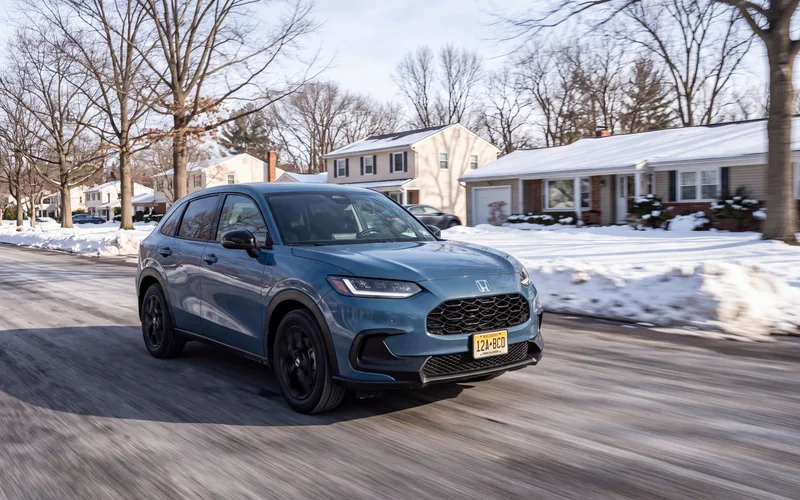 Honda HR-VSubcompact SUVBetter at: Cargo space
Nearly the same money buys markedly more back-seat and cargo room plus stronger resale, if you can live without the Mazda's chassis and cabin polish.
Compare 1.93C-
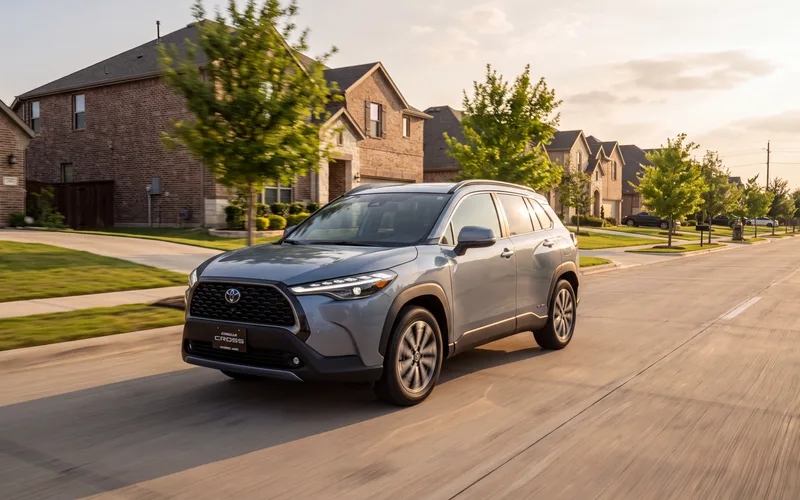 Toyota Corolla CrossSubcompact SUVBetter at: Ownership cost
A hybrid option, roughly $2,000 less in five-year service costs and included scheduled maintenance make it far cheaper to keep over the long haul.
Compare 2.05C
2.05C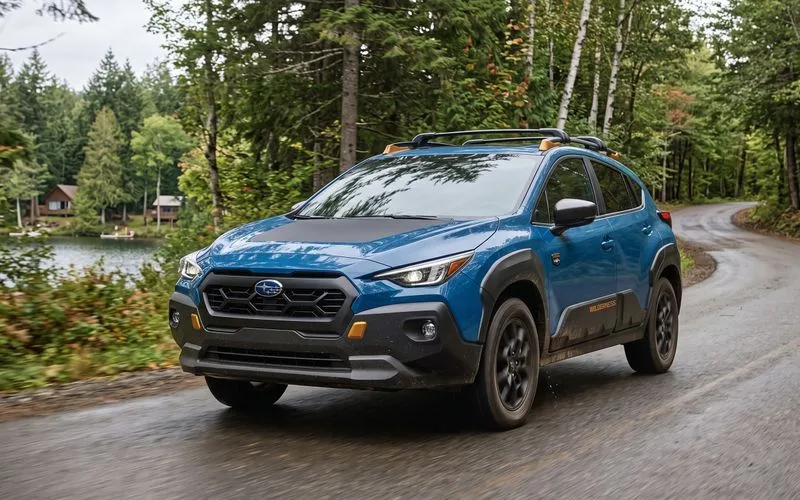 Subaru CrosstrekSubcompact SUVBetter at: Outdoor utility
Also standard AWD, but with the cargo volume, roof-load capacity and clearance to actually carry your gear to the trailhead.
CompareHow it's evolved
7 scored model years · 2020–2026
Subject scores by year
Hover or tap a score to see what moved it versus the year before. A corner mark flags a big swing.
| Year | Performance | Efficiency | Safety | Space | Cost | Reliability | Tech | Use-case | Driving | Value |
|---|---|---|---|---|---|---|---|---|---|---|
| 2026 | 34 | 57 | 77 | 42 | 57 | 76 | 62 | 53 | 75 | 75 |
| 2025 | 36 | 63 | 81 | 39 | 67 | 79 | 55 | 59 | 78 | 83 |
| 2024 | 37 | 62 | 82 | 38 | 67 | 80 | 53 | 54 | 81 | 81 |
| 2023 | 36 | 63 | 79 | 43 | 65 | 82 | 56 | 61 | 81 | 80 |
| 2022 | 36 | 51 | 79 | 40 | 63 | 83 | 53 | 59 | 75 | 80 |
| 2021 | 36 | 59 | 79 | 39 | 63 | 79 | 54 | 57 | 81 | 84 |
| 2020 | 30 | 64 | 82 | 39 | 66 | 80 | 48 | 61 | 78 | 83 |
Compare two years
Best fit & conditions
Higher scores mean a better fit for that use case. Learn more about use-case fit →
Subject profile
Academic Probation · NHTSA safety recalls
No NHTSA safety recall is on record for the 2026 Mazda CX-30. Other model years of the CX-30 have 7 — listed below.
7 recalls on other model years of the CX-30 (2020–2025)
May 29, 2025Air bags: air bag/restraint control module: softwareThe Sophisticated Air Bag Sensor (SAS) units may set an error code and deactivate the air bags, due to a low battery condition.
Defect
Mazda North American Operations is recalling certain 2024-2025 Mazda3 and CX30 vehicles. The Sophisticated Air Bag Sensor (SAS) units may set an error code and deactivate the air bags, due to a low battery condition.
Risk
Air bags that do not deploy in the event of a crash increase the risk of injury.
Remedy
Dealers will reprogram the SAS unit with improved software or replace the unit, free of charge. Owner notification letters were mailed July 24, 2025. Mazda's number for this recall is 7525E.
NHTSA campaign 25V357000 ↗Manufacturer no. 7525E171,412 vehicles potentially affected (all models in the campaign)Owners notified Jul 22, 2025Filed by Mazda North American OperationsFiled as CX-30Sep 3, 2024Exterior lighting: headlights · Forward collision avoidance: automatic emergency braking · Lane departure: sensing system: cameraA malfunction in the forward sensing camera (FSC) may prevent the automatic emergency braking system and the lane-keep assist system from functioning. In addition, the headlights will not automatically adjust from high beams to low beams as intended.
Defect
Mazda North American Operations (Mazda) is recalling certain 2024 Mazda 3, CX-30, and 2025 CX-50 vehicles. A malfunction in the forward sensing camera (FSC) may prevent the automatic emergency braking system and the lane-keep assist system from functioning. In addition, the headlights will not automatically adjust from high beams to low beams as intended.
Risk
Automatic braking, steering assist, and headlight control systems that do not function as intended can increase the risk of a crash.
Remedy
Dealers will inspect and replace the forward sensing camera as necessary, free of charge. Owner notification letters were mailed September 24, 2024. Owners may contact Mazda customer service at 1-800-222-5500, Option 6. Mazda's number for this recall is 6824H.
NHTSA campaign 24V649000 ↗Manufacturer no. 6824H672 vehicles potentially affected (all models in the campaign)Owners notified Sep 24, 2024Filed by Mazda North American OperationsFiled as CX-30Apr 18, 2023Service brakes, hydraulic: antilock/traction control/electronic limited slip: control unit/moduleThe anti-lock brake system (ABS) Hydraulic Control Unit (HCU) may be damaged, which can result in reduced braking ability.
Defect
Mazda North American Operations (Mazda) is recalling certain 2022-2023 CX-30 and 2023 CX-50 vehicles. The anti-lock brake system (ABS) Hydraulic Control Unit (HCU) may be damaged, which can result in reduced braking ability.
Risk
Reduced braking ability can increase the distance required to stop the vehicle, increasing the risk of a crash.
Remedy
Dealers will inspect and replace the ABS HCU, as necessary, free of charge. Owner notification letters were mailed June 12, 2023. Owners may contact Mazda customer service at 1-800-222-5500 Option 6. Mazda's number for this recall is 5823D.
NHTSA campaign 23V275000 ↗Manufacturer no. 5823D2,410 vehicles potentially affected (all models in the campaign)Owners notified Jun 12, 2023Filed by Mazda North American OperationsFiled as CX-30Feb 22, 2021Tires: valveAir may suddenly leak from the tire air valve.
Defect
Mazda North American Operations (Mazda) is recalling certain 2021 Mazda3 and CX-30 vehicles. Air may suddenly leak from the tire air valve.
Risk
A sudden air leak from the tire air valve may cause a loss of vehicle control while driving, increasing the risk of a crash.
Remedy
Mazda will notify owners, and dealers will replace all four tire air valves with new parts, free of charge. The recall began April 6, 2021. Owners may contact Mazda customer service at 1-800-222-5500 Option 4. Mazda's number for this recall is 4721B.
NHTSA campaign 21V101000 ↗Manufacturer no. 4721B599 vehicles potentially affected (all models in the campaign)Owners notified Apr 6, 2021Filed by Mazda North American OperationsFiled as CX-30Feb 18, 2021Structure: body: hatchback/liftgateWhen fully opened, the power liftgate may partially lower unexpectedly when the vehicle is parked facing uphill on a slope.
Defect
Mazda North American Operations (Mazda) is recalling certain 2020-2021 CX-30 vehicles. When fully opened, the power liftgate may partially lower unexpectedly when the vehicle is parked facing uphill on a slope.
Risk
If the power liftgate unexpectedly lowers while a person is accessing the rear storage area of the vehicle, it can increase their risk of injury.
Remedy
Mazda will notify owners, and dealers will update the power liftgate control module software and inspect the serial number of the power liftgate drive unit, replacing it if necessary, free of charge. The recall began April 8, 2021. Owners may contact Mazda customer service at 1-800-222-5500 option 4. Mazda's number for this recall is 4621B.
NHTSA campaign 21V086000 ↗Manufacturer no. 4621B13,857 vehicles potentially affected (all models in the campaign)Owners notified Apr 8, 2021Filed by Mazda North American OperationsFiled as CX-30Jun 12, 2020Fuel system, gasoline: delivery: hoses, lines/piping, and fittingsThe evaporative vent hose for the fuel tank may be disconnected, possibly allowing fuel to leak from the charcoal canister vent at the rear of the vehicle.
Defect
Mazda North American Operations (Mazda) is recalling certain 2020 CX-30 vehicles equipped with all-wheel drive. The evaporative vent hose for the fuel tank may be disconnected, possibly allowing fuel to leak from the charcoal canister vent at the rear of the vehicle.
Risk
A fuel leak in the presence of an ignition source may increase the risk of a fire. Additionally, the engine may stall while driving, increasing the risk of a crash.
Remedy
Mazda will notify owners, and dealers will inspect the evaporative vent hose in the fuel tank. If the hose is disconnected, it will be reconnected and the charcoal canister with some related parts will be replaced. Repairs will be performed free of charge. The recall began July 29, 2020. Owners may contact Mazda customer service at 1-800-222-5500, Option 4. Mazda's number for this recall is 4520F.
NHTSA campaign 20V347000 ↗Manufacturer no. 4520F12,097 vehicles potentially affected (all models in the campaign)Owners notified Jul 29, 2020Filed by Mazda North American OperationsFiled as CX-30Jun 12, 2020Service brakes, hydraulic: foundation components: disc: caliperThe front brake caliper mounting bolts may not have been tightened properly during assembly, possibly allowing the calipers to loosen.
Defect
Mazda North American Operations (Mazda) is recalling certain 2020 CX-30 and Mazda3 vehicles. The front brake caliper mounting bolts may not have been tightened properly during assembly, possibly allowing the calipers to loosen.
Risk
Loose brake calipers can reduce braking performance or interfere with wheel rotation, affecting vehicle handling. Either of these scenarios can increase the risk of a crash.
Remedy
Mazda will notify owners, and dealers will inspect the front brake caliper bolts, tightening them as necessary. If bolts are missing, the affected brake caliper will be replaced. Repairs will be performed free of charge. The recall began July 24, 2020. Owners may contact Mazda customer service at 1-800-222-5500, Option 4. Mazda's number for this recall is 4420F.
NHTSA campaign 20V346000 ↗Manufacturer no. 4420F24,037 vehicles potentially affected (all models in the campaign)Owners notified Jul 24, 2020Filed by Mazda North American OperationsFiled as CX-30
Source: NHTSA Office of Defects Investigation recall database, model years 2020–2026. Recalls are listed by model year as the manufacturer filed them; whether a specific car is affected depends on its VIN — check a VIN at nhtsa.gov ↗. NHTSA model names matched to this page: CX-30.
Detailed scoring by subject
1Performance & PowertrainThe CX-30's lowest-graded category.0.25F
The volume 2.5 S trims (S Select Sport / S Preferred) run the naturally aspirated Skyactiv-G 2.5 at 186 hp for 2026 — Mazda's own 2026 spec sheet lists 186 hp, five down on the 191 hp figure some third-party listings carry over from prior years. Modest output even by subcompact-SUV standards, though the optional 2.5 Turbo lifts the range top to 250 hp.
186 lb-ft from the naturally aspirated 2.5 in the volume trims — adequate but unremarkable, and it arrives high in the rev range in classic Mazda NA fashion. The 2.5 Turbo's 320 lb-ft is a different vehicle entirely but sits on trims well above the volume mix.
Instrumented and published figures for the naturally aspirated CX-30 cluster between 7.5 s (Car and Driver) and about 8.1 s (U.S. News), so ≈7.8 s represents the volume 2.5 S AWD car. Mid-pack for a subcompact SUV; the CX-30 is meaningfully quicker than its heavier CX-50 sibling on the same engine, and the 2.5 Turbo turns it into one of the quickest things in the class at roughly 6.2–6.5 s.
Mazda's naturally aspirated 2.5 is smooth and linear with zero turbo lag and crisp throttle calibration — reviewers consistently rate it among the more polished mainstream fours — but it needs revs to make its power and turns coarse and buzzy near the top of the tach when merging or climbing. No hybrid transitions to fumble. Rated identically to the same engine in the CX-5 and CX-50.
The Skyactiv-Drive six-speed automatic is a genuine strength: quick, decisive, well-timed shifts with a usable manual mode and sport mode, and none of the drone or rubber-band feel of the CVTs most rivals fit. Held back only by having six ratios where competitors use eight or more, which costs a little highway refinement and efficiency.
Mazda publishes no US tow rating for the CX-30 and the North American owner's manual instructs owners not to tow at all; there is no factory hitch. Dealer pages quoting 1,500–2,000 lbs are repeating overseas ratings (2,866 lbs braked in Europe, 2,646 lbs in Australia) that do not apply here. Scored as not-capable rather than as missing data.
i-Activ AWD is standard on every 2026 CX-30 trim — no front-drive base model to trap value shoppers, which is rare in the subcompact class. For 2026 Mazda adds a brake limited-slip differential, and G-Vectoring Control Plus plus Off-Road Traction Assist are standard across the line. Falls short of the top band only for lacking low range or a genuine terrain-mode suite.
Standard AWD with Off-Road Traction Assist and the new brake LSD make the CX-30 genuinely useful on snow and slick dirt roads, but the hardware stops there: 8.0 inches of clearance, road-biased tires, no skid plates, no locking differential, and no off-road-oriented trim. This is a raised hatchback for weather, not for trails — rated below the CX-50 (58), which has more clearance and a dedicated outdoorsy trim.
Two distinct gas powertrains — the 186 hp naturally aspirated 2.5 and the 250 hp 2.5 Turbo — cover the mainstream and the enthusiast end of the class, better than single-engine rivals. But there is no hybrid, PHEV, or EV variant, a real gap in a segment where the Kona, Niro, Corolla Cross and Crosstrek all offer electrification, so it sits in the middle of the band rather than the top.
2Efficiency & RangeMid-pack among this car's ten categories.1.82C-
Volume trim is the naturally aspirated 2.5 S with standard i-Activ AWD, EPA-rated 27 MPG combined for 2026 — a 2 MPG drop from the 2025 car's 29 MPG combined, so last year's figures do not carry over. Replaces a placeholder value of 32.6 MPG that overstated the car by more than 5 MPG.
24 MPG city for the 2026 2.5 S — weak for a subcompact SUV, where hybrid-equipped and CVT rivals sit in the high 20s to low 30s. The 6-speed automatic and standard AWD both cost city economy.
31 MPG highway is the CX-30's best cycle and mid-pack for the segment; the tall-geared 6AT holds up better at cruise than in town, narrowing the gap to CVT rivals.
Mazda publishes an EPA-estimated 343-mile maximum combined range for the standard engine, consistent with the carried-over 12.7-gallon tank at 27 MPG. The small tank plus the MPG cut leaves range short of most subcompact rivals.
Derived at EPA standard assumptions (15,000 mi/yr) from the 27 MPG combined rating on regular fuel. Edmunds publishes $163/month (~$1,956/yr) for the 25 MPG turbo against a $188/month average-SUV benchmark; scaling that same price basis to 27 MPG gives roughly $1,800/yr for the volume 2.5 S.
The volume 2.5 S runs on regular 87-octane with no penalty. The 2.5 Turbo also runs on regular but only makes its headline 250 hp / 320 lb-ft on 93 octane, dropping to 227 hp on 87 — a mixed requirement that costs the lineup a few points, though nothing in the range strictly requires premium.
3SafetyThe CX-30's best-graded category.3.22B+
NHTSA rates the 2026 CX-30 five stars overall, with five stars in both frontal and side crash tests and four in rollover — a top result that replaces the placeholder 4-star estimate.
The 2026 CX-30 is an IIHS Top Safety Pick+ with Good ratings in every crashworthiness test — small overlap both sides, updated moderate overlap with rear passenger, updated side, roof strength and head restraints — plus a Good+ (Superior) LATCH rating. Only the updated vehicle-to-vehicle front crash prevention test falls short of Good, at Acceptable, which keeps it just under the ceiling.
Every 2026 CX-30, including the $26,375 base 2.5 S, carries the full i-Activsense core: Smart Brake Support (AEB), Lane Departure Warning with Lane-keep Assist, Blind Spot Monitoring with Rear Cross Traffic Alert, High Beam Control, and Mazda Radar Cruise Control with Stop & Go. Getting radar cruise and blind-spot monitoring standard on the entry trim is rare in the subcompact class and puts it well above the Trax/Venue/Trailblazer end of the segment.
Smart Brake Support with pedestrian detection is standard and clears the IIHS pedestrian front crash prevention threshold, but the CX-30's single sub-Good IIHS mark is the updated vehicle-to-vehicle front crash prevention test at Acceptable — solid, not Superior, so it sits mid-band rather than in the 80s.
Blind Spot Monitoring and Rear Cross Traffic Alert are standard on every trim, and Rear Smart Brake Support adds reversing intervention on upper trims. Coverage is alert-only for lane changes with no safe-exit warning, which caps it below the top band — but standard-across-the-lineup availability is a real advantage over rivals that gate BSM behind a package.
Lane Departure Warning with Lane-keep Assist is standard, but on the volume lower trims it behaves mostly as a warning-and-nudge system rather than true centering — owners and reviewers describe beeps and wheel vibration instead of the sustained steer-to-center Hyundai/Kia deliver. Genuine lane centering arrives only with Cruising & Traffic Support on mid-to-upper trims.
Mazda Radar Cruise Control with full-range Stop & Go is standard on all trims and will bring the car to a complete halt and resume, and mid-to-upper trims add Cruising & Traffic Support for combined speed and steering assist in traffic. Real-world testing flags late reaction to cut-ins — the system waits until an intruding car is two-thirds into the lane before decelerating — which is the rough edge that keeps it out of the top band.
Mazda offers no hands-free highway driving system on any US vehicle; the CX-30's most advanced setting is hands-on Cruising & Traffic Support. There is no BlueCruise/Super Cruise equivalent at any trim or price.
Headlights meet the IIHS acceptable-or-good-across-all-trims bar required for TSP+, and High Beam Control (auto high beams) is standard on every CX-30. The volume lower trims get the Acceptable-grade setup, with the Adaptive Front-lighting System that swivels with steering reserved for 2.5 S Premium and above — the classic Good-on-top-trims, Acceptable-on-volume-trims pattern.
This is the CX-30's clear safety weakness: the coupe-like roofline gives it thick rear pillars, shallow side glass and a small back window, and Consumer Reports has ranked it at the bottom of the compact-SUV field for visibility. Standard blind-spot monitoring helps, but the 360° View Monitor that would compensate at parking speeds is new for 2026 only on 2.5 S Premium and the Turbo trims — the volume trims do without it.
IIHS rates CX-30 LATCH ease of use Good+ (Superior) — two rear positions with complete lower-anchor and tether hardware plus a third position with a tether anchor that can borrow lower anchors. The hardware is genuinely easy to reach; what holds it back from the very top is subcompact packaging, where rear legroom and door aperture make wrangling a rear-facing seat tighter than in a compact crossover.
4Space & ComfortOne of the CX-30's weakest categories.0.77F
The CX-30 is a two-row subcompact crossover seating five across every 2026 trim, from 2.5 S through 2.5 Turbo Premium Plus — no six- or seven-seat configuration exists.
Mazda publishes front headroom separately for moonroof-equipped cars; the no-moonroof figure of 38.1 in is used per scoring convention, with the 37.8 in moonroof figure noted since Preferred and above fit a power moonroof as standard.
Front legroom of 41.7 in is mid-pack for the subcompact SUV class; reviewers note the front seats slide back far enough for tall drivers, which is part of why the rear bench gets tight.
The published 38.3 in second-row headroom is strong on paper for the segment, but reviewers consistently report it feels tighter in practice because a headliner hump housing the moonroof cassette intrudes on moonroof-equipped cars.
At 36.3 in the CX-30's second row trails roomier subcompact rivals — the Chevrolet Trax offers 38.7 in — and reviewers describe it as usable for kids or short adult trips rather than genuinely spacious.
The CX-30 is a strictly two-row, five-seat subcompact crossover with no third row offered on any 2026 trim; scored in the low band per the item's rule for two-row SUVs rather than omitted.
20.2 cu ft behind the second row falls below the SUV normalization floor of 25 cu ft — the CX-30 rides on the Mazda3 hatchback platform and its cargo hold is small even by subcompact-crossover standards.
Maximum cargo volume of 45.2 cu ft sits below the 55 cu ft SUV band floor; compact crossovers routinely clear 60–75 cu ft, so the CX-30 is a hatchback-sized hauler wearing crossover proportions.
Storage is conventional and on the small side — a shallow center console bin, modest door pockets and a small glovebox, with no underfloor tricks, fold-flat front passenger seat or onboard power beyond USB-C ports and a 12V outlet; the 60/40 one-touch fold-down rear seats are the one genuinely useful flexibility feature.
Front seats are a genuine strength — well-shaped, supportive cushions praised for long-haul comfort, with power adjustment and memory from Preferred up — but the cramped rear bench keeps this out of the top band.
New-for-2026 revised dampers and a brake-based limited-slip differential improve compliance, and the CX-30 is notably more controlled and connected than most subcompact crossovers, but the tuning is deliberately firm and sharp bumps come through more than in softer rivals.
Reviewers repeatedly rank the CX-30 among the quieter cabins in the subcompact class, with low wind noise contributing to its upscale feel; tire roar on coarse surfaces is the one intrusion that keeps it short of segment-leading.
For 2026 heated front seats and a power driver's seat became standard across the range, and the Premium trim adds a heated steering wheel with ventilated seats on upper Turbo trims — but there are no rear-seat climate vents or rear controls, and the wheel heater stays a top-trim item.
5Cost of OwnershipMid-pack among this car's ten categories.1.87C-
The 2026 CX-30 opens at $25,975 for the 2.5 S plus $1,495 destination, or $27,470 delivered — near the bottom of the SUV normalization band and a genuine bargain in context, because i-Activ all-wheel drive is standard on every trim while the base Corolla Cross L ($26,085 delivered) and HR-V LX ($27,950 delivered) are front-drive at those prices.
The 2.5 S Select Sport at $27,660 + $1,495 destination is the volume configuration and the one Edmunds recommends — it adds synthetic leather, heated front seats, an 8-way power driver's seat with memory, dual-zone climate, wireless CarPlay/Android Auto, keyless entry and 18-inch wheels, all with standard AWD. That undercuts an HR-V Sport AWD (~$31,250) and a Corolla Cross LE AWD ($29,715) while carrying more standard content.
This is the category's quiet weak spot: both major cost-to-own models put the CX-30's five-year service bill well above its subcompact rivals — Edmunds projects $5,912 maintenance + $854 repairs ($6,766) and KBB $5,768 + $1,776 ($7,544), against Edmunds' $3,989 + $744 ($4,733) for a Corolla Cross. Standard AWD on every trim, 18-inch tires and Mazda's dealer labor rates carry more of the difference than reliability does; CarEdge's much lower maintenance-only figure (~$1,900–$2,500 over 5 yr) excludes wear items and repairs and is not comparable.
The heaviest-weighted item in the category and where the CX-30 loses most of its ground. KBB's forward-looking model for the 2026 car projects $13,838 of depreciation against a $13,632 residual — 49.6% retention, several points behind the Corolla Cross (56.2%), HR-V (~56%) and Crosstrek (~56%) forecasts already in this dataset, and consistent with Mazda leaning on incentives where Toyota, Honda and Subaru do not. Retrospective data is kinder — iSeeCars measures a real 2021 CX-30 losing only 35.6% over five years, better than the 38.4% subcompact-SUV class average — so this figure carries genuine upside if the used market stays tight.
Mazda's New-Vehicle Limited Warranty is 36 months / 36,000 miles — the industry baseline and the exact floor of the 3–5 year normalization band, so it scores zero. It matches Toyota, Honda and Subaru but sits two years short of the Hyundai/Kia 5-year/60,000-mile coverage that anchors the top of the subcompact-SUV class.
Mazda's Limited Powertrain Warranty runs 60 months / 60,000 miles — again the bottom of the 5–10 year band. The 2026 CX-30 is gas-only (2.5L naturally aspirated or 2.5 Turbo), so there is no supplementary 8-year/100,000-mile electrified-component coverage of the kind a Corolla Cross Hybrid or Crosstrek Hybrid brings; this is the entirety of the long-term mechanical protection.
Mazda includes no factory complimentary scheduled maintenance — the 2-year/20,000-mile 'complimentary maintenance' offers that surface online are individual dealer promotions, not a national program, so they cannot be counted on. What every 2026 CX-30 does get is 24/7 Emergency Roadside Assistance for the full 3-year/36,000-mile warranty term plus a Mazda Connected Services trial (remote start, vehicle status, service scheduling via the MyMazda app). That is 'basic roadside only' territory: marginally ahead of the HR-V (38) and Crosstrek (30) on the longer roadside term and connected-services trial, but far behind ToyotaCare on the Corolla Cross (80), which covers two years / 25,000 miles of actual scheduled service, and behind Hyundai's 3-year/36,000-mile program.
$29,155 volume-trim price minus its estimated resale value after 5 years (49.6% retained, or about $14,461) leaves about $14,694 in depreciation. Add the projected $6,800 in 5-year maintenance and repairs, and owning this vehicle for 5 years costs about $21,494 in total.
6Reliability & QualityOne of the CX-30's strongest categories.3.16B
J.D. Power gives the 2026 CX-30 a predicted reliability score of 80/100 — the top of J.D. Power's "Average" band (70-80) — and Consumer Reports predicts about-average reliability based on 2023-2025 data. Solid but not top-tier: the mature Skyactiv platform keeps mechanical risk low while infotainment and electrical complaints hold it back from the 80+ band earned by the Corolla Cross and HR-V.
Mazda's multi-year dependability standing is genuinely top-tier: 3rd overall and 2nd among mass-market brands in the 2025 J.D. Power Vehicle Dependability Study at 161 PP100, a 24 PP100 year-over-year improvement, plus 6th of 32 brands for new-car reliability at Consumer Reports (3rd for used).
This generation has taken two safety-significant recalls: NHTSA/Mazda recall 7525E covering roughly 119,555 MY2024-2025 CX-30s where the sophisticated airbag sensor can latch a fault after a deep battery discharge and leave the airbags inoperative, and recall 6824H on 2024 cars for a forward sensing camera failure that disables AEB and lane-keep. No 2026-specific campaigns are open yet. Both are software/sensor rather than structural or powertrain, but airbag deactivation on a six-figure population is more than routine — bottom of the "typical activity" band.
The 2026 CX-30 carries the Skyactiv-G 2.5 (186 hp naturally aspirated, or 250 hp turbo on premium) with Mazda's conventional 6-speed torque-converter automatic and standard i-Activ AWD — one of the most proven mainstream powertrain families on sale, timing-chain driven and with a long high-mileage record. Deductions only for direct-injection intake valve deposits and the cylinder-deactivation hardware on automatic 2.5s, plus scattered low-mileage transmission whine/chirp reports on 2023-2024 cars.
The CX-30's cabin is the class benchmark for perceived quality at mainstream subcompact-SUV money — broad soft-touch and upholstered coverage, restrained switchgear, and for 2026 the new Aire Edition adds white leatherette with gray synthetic-suede dash trim. Reviewers consistently place it closer to entry-luxury than to its price peers; hard plastics survive only in low-touch zones.
Assembly quality is a Mazda strength — reviewers single out tight, consistent craftsmanship — but Mazda scored poorly in the 2025 J.D. Power Initial Quality Study at roughly 225 problems per 100 vehicles, near the bottom alongside Volkswagen, and CX-30 owners report a recurring Mazda Connect freeze/CarPlay-dropout pattern (the model's single most-reported complaint) plus windshield stress cracking. Solid build, dented by first-90-days electronics gripes.
Mazda runs roughly 550-600 US dealers — adequate national coverage but well under half the footprint of Toyota, Honda or Chevrolet, so rural owners often face a longer drive for warranty work. Service satisfaction is mid-pack: Mazda does not appear near the top of the 2025 J.D. Power Customer Service Index mass-market table, which Subaru led at 896.
Parts supply is normal for a mainstream volume model — CX-30 components are stocked by NAPA, CarParts.com and the OEM parts channel, and the Skyactiv-G 2.5 shares hardware across Mazda3, CX-5 and CX-50, which keeps commodity items cheap. Repair cost is the drag: RepairPal puts Mazda's average annual repair bill at $462, which it flags as above average, and RepairPal has too little CX-30-specific data for a model-level figure. Routine maintenance itself is inexpensive.
7Technology & InfotainmentMid-pack among this car's ten categories.2.19C
The volume 2.5 S Select Sport keeps the 8.8-inch Mazda Connect center display; the 10.25-inch screen — previously turbo/Premium-only — newly extends down to the 2.5 S Preferred for 2026, but still is not the volume-trim fitment.
Mazda Connect here is still the Commander-knob system, and on the volume 8.8-inch screen there is no touch input at all — even the 10.25-inch screen is touch-enabled only for CarPlay/Android Auto and only at low speed or parked. Reviewers consistently call the knob workflow clunky for phone-projection menus, which offsets the crisp graphics, low lag and retained physical climate controls.
For 2026 wireless Apple CarPlay and wireless Android Auto are standard across the CX-30 lineup including the base 2.5 S — a genuine 2026 change and among the better answers in the subcompact class. Held short of the top band only because the projection surface on volume trims is knob-driven rather than touch.
Mazda's embedded voice assistant is command-word driven rather than natural language, and in-dash navigation is reserved for the Premium and Turbo grades — the volume trims lean on phone projection for maps, which is what most owners use anyway.
The 12-speaker Bose Centerpoint/AudioPilot system is a real step up and arrives from the Carbon Edition upward, but the volume trims run an eight-speaker setup that reviewers describe as merely adequate for the class.
The CX-30 uses a 7-inch TFT panel inside the instrument binnacle — a part-analog arrangement with physical dials flanking the screen on lower grades and a fully digital rendering on upper grades. Adequate and legible, but small and less configurable than class leaders.
The CX-30's clearest software weakness. Mazda Connect on this platform supports over-the-air updating for infotainment software and map data through Mazda Connected Services, but there is no whole-vehicle OTA that adds features or updates powertrain/ADAS modules — unlike the new Google-based stack Mazda has moved to on the redesigned CX-5.
MyMazda covers the core remote set — engine start/stop, lock/unlock, vehicle locate, status and maintenance scheduling — but there is no digital key, and for 2026 Mazda cut the included trial to one year, after which remote start sits behind roughly $10/month. Basic (non-remote) connected features stay free for up to 10 years.
USB-C charge points serve the front and rear rows and a wireless charging pad joins the standard equipment from the 2.5 S Preferred upward, but there is no household AC outlet and port count is modest for the class.
Advanced Keyless Entry with push-button start covers the volume trims and key-fob remote engine start is included, but the power liftgate is a Premium-grade item and there is no phone-as-key of any kind.
A rear camera is standard, but the 360-degree View Monitor with front and rear parking sensors is confined to the 2.5 S Premium and the Turbo grades — the top of an eight-trim ladder — so most CX-30 buyers get rear-view only. No automated parking is offered.
Mazda's Active Driving Display is one of the better mainstream head-up displays — full colour, projected onto the windshield, with traffic-sign recognition and automatic height adjustment tied to the driver-personalization profile — but it is a Premium/Turbo item, so it sits at the top of the range rather than on volume trims.
8Use-Case FitOne of the CX-30's weakest categories.1.56D
Car-seat hardware is genuinely good — IIHS rates LATCH ease of use Good+ — but the CX-30 gives families the least room in the segment: 36.3 in of rear legroom and 20.2 cu ft behind the rear seat, the smallest cargo hold among mainstream subcompact SUVs, so a stroller plus a grocery run is a real squeeze. Replaces a placeholder score.
Mazda puts the whole i-Activsense suite — AEB with pedestrian detection, blind-spot monitoring, rear cross-traffic alert, lane-keep assist, radar cruise with stop & go and Rear Seat Alert — on the $25,975 base 2.5 S, and the car holds both a 2026 IIHS Top Safety Pick+ and a 5-star NHTSA overall rating, so the trims families actually buy are the safe ones. Held short of the 80s by an Acceptable (not Good) IIHS front crash prevention result and poor outward visibility.
The front half is class-above — quiet cabin, supportive seats — but the back half is thin for a loaded family: 36.3 in of legroom, rear air vents but no rear USB ports or rear climate control, and only 20.2 cu ft of luggage space with all five seats occupied, which is not enough for four people's bags on a multi-day trip. Replaces a placeholder score.
Commuting is the CX-30's natural habitat: a conventional 6-speed torque-converter automatic rather than a CVT, light and precise steering, a quiet well-damped cabin, and Mazda Radar Cruise Control with Stop & Go standard on every trim make stop-and-go traffic genuinely low-fatigue. Docked for poor outward visibility and a rotary-dial infotainment controller that is awkward for phone mirroring on the move.
27 MPG combined on 87-octane regular is ordinary rather than cheap for a subcompact crossover — the Trax returns 30 and the Seltos 31 — and the 2026 rating actually fell from 2025's 28 combined; the 250-hp Turbo drops to 25 MPG combined and wants premium for full output. Insurance near $2,000/yr and above-average scheduled maintenance keep per-mile costs mid-pack.
A 173.0 x 70.7 in footprint slots into city spaces easily, but the CX-30 is not the segment's easiest to place: its 37.4 ft turning circle is meaningfully wider than the Seltos (34.8 ft) or Trax (35.2 ft), the thick-pillared, high-belted greenhouse gives poor sightlines, and the 360-degree camera that would compensate is reserved for Premium and Turbo trims. Replaces a placeholder score.
Mazda publishes no US tow rating for the CX-30 at all, so it cannot legitimately pull even a small utility trailer, and 20.2 cu ft of cargo behind the rear seat is the least in the class. The 250-hp Turbo has the muscle for a loaded run, but there is nothing to hitch it to.
The naturally aspirated Skyactiv-G 2.5 paired to a torque-converter 6-speed is one of the longest-serving, least-stressed mainstream powertrains on sale and Mazda posts strong reliability results, so the hardware should shrug off hard miles. But this is a small, soft-trimmed consumer crossover with no fleet or trade presence, leatherette and suede on most trims rather than wipe-clean surfaces, and only a 3 yr/36,000 mi basic warranty.
Work provisions are minimal: cargo hooks, a cargo net and a 12V socket, dealer-accessory roof rails and crossbars rated to just 165 lb, no onboard AC outlet, no factory hitch or tow rating, and no upfit ecosystem of any kind. Replaces a placeholder score.
It is a pleasant highway car — one of the quieter cabins in the class, well-shaped front seats, and standard stop-and-go radar cruise — but the 12.7-gallon tank caps combined range at about 343 miles (roughly 318 for the premium-fuel Turbo), short enough to add fuel stops on a long day, and lane centering via Cruising & Traffic Support only appears from mid-trims up.
i-Activ AWD is standard on every 2026 trim — a real advantage over rivals that charge for it or do not offer it — and 8.0 in of ground clearance beats most of the segment, which covers trailheads, gravel and snow comfortably. But there is no tow rating for toys, no off-road drive mode, no 110V outlet for camping, and a 165 lb roof limit.
This is the CX-30's weakest practical dimension: 20.2 cu ft behind the rear seat and 45.2 cu ft folded are the smallest figures in the mainstream subcompact-SUV class, roughly 10–17 cu ft short of the Seltos and Trax. The 60/40 one-touch folding seatbacks and accessory roof rails help, but there is no hitch, no meaningful underfloor storage and no seat-fold trickery to make up the deficit.
9Driving ExperienceGrades above the middle of the scale.3.06B
The CX-30 is the acknowledged handling benchmark of the subcompact SUV class — reviewers describe it as feeling nimble as a hot hatch through corners, with body control and composure well ahead of a Trailblazer, Seltos or Kicks. For 2026 Mazda added a brake-based limited-slip differential and retuned dampers, sharpening corner-exit traction while softening the previously jumpy ride; the ceiling is set by modest 0.82 g skidpad grip on the standard Bridgestone Turanza EL440 all-seasons rather than by chassis tuning.
Steering is the CX-30's standout dynamic trait: quick off-center, naturally weighted, and linear in a way almost nothing else in the subcompact-crossover class matches, including the premium-badged BMW X1 and Audi Q3. Feedback is filtered by the electric rack, which is what keeps it short of a genuine 90s score, but precision and weighting consistency are top-tier.
Pedal feel is firm, progressive and easy to modulate — consistent with Mazda's tuning across the range — but measured stopping distance is only average-to-long: Car and Driver recorded 179 ft from 70 mph on the Turbo, a figure the same test attributed to the low-rolling-resistance all-season tires. Confidence in normal driving is high; outright stopping power is not a strength.
The volume 2.5 S trims pair the 186-hp naturally aspirated Skyactiv-G 2.5 with a conventional six-speed automatic and standard i-Activ AWD — a combination with no CVT drone, no hybrid handoff and no turbo lag, and crisp, well-timed shifts. The trade-off is thrust: roughly 7.5 seconds to 60 mph and a need to rev for passing, plus only six ratios, so response lags the class's turbo and hybrid rivals. The optional 250-hp turbo (320 lb-ft on 93 octane, ~5.8 sec to 60) is materially quicker but is not the volume configuration.
Mazda's added sound deadening makes the CX-30 quieter than most subcompact crossovers for road and wind noise, but the naturally aspirated 2.5 has to be worked to make progress and turns coarse and buzzy near its power peak — the one place the otherwise premium-feeling cabin gives itself away. Vibration through the controls is well isolated at cruise.
34.8 ft curb-to-curb is at the tight end of the SUV band and a genuine everyday asset — U-turns and parking-garage maneuvering are effortless. The figure is unchanged for 2026 (no wheelbase or steering-geometry change).
Excellent front-seat comfort, a low, car-like driving position with a properly placed wheel and pedals, and physical climate controls with a clean, uncluttered layout; the 2.5 S Preferred now adds an eight-way power driver's seat with memory as standard for 2026. Points come off for the styling-driven small side glass and thick rear pillars that hurt over-the-shoulder visibility, and for the console-dial infotainment interface that takes several steps for simple tasks (touch input is locked out above walking pace on the native UI).
This is the subcompact crossover enthusiasts actually recommend — quick steering, a tight turning circle, a firm and communicative chassis and an interior that feels a class above make it satisfying on an ordinary commute. The volume naturally aspirated 2.5 lacks the punch and the extra character of the 250-hp turbo, which is what holds this below the 80s; buyers who option the Turbo get a meaningfully more entertaining car.
10Value & Market PositionOne of the CX-30's strongest categories.3.07B
The 2026 CX-30 makes i-Activ AWD standard on every trim including the $25,975 base 2.5 S — rivals such as the HR-V, Kona, Seltos and Corolla Cross charge roughly $1,400–$1,500 extra for it — and bundles blind-spot monitoring, rear cross-traffic alert, radar cruise and the full i-Activsense driver-aid suite at base. Base cloth upholstery, manual seat adjustment and wired-only CarPlay keep it out of the top band.
Content-for-price is strong at the low end — standard AWD plus a widely praised class-above interior for under $26K — and the 227-hp (250 hp on premium) turbo delivers a 6.4-second 0–60 that nothing else in the class matches for the money. Value thins at the top, where the Turbo Premium Plus reaches $37,900 before a $1,530 destination charge while cargo volume (45.0 cu ft seats folded) trails the Kona, Crosstrek and HR-V, and fuel economy is below class average.
Eight well-spaced trims from $25,975 to $37,900 with two powertrains (186-hp naturally aspirated 2.5 and 227/250-hp turbo 2.5) and two new-for-2026 Aire Editions give buyers real ladder rungs at roughly $2K intervals. Breadth is capped by Mazda's package-by-trim approach with little standalone option flexibility, no FWD entry point to undercut on price, and — unusually for the 2026 class — no hybrid or electrified variant at all.
US volume fell to 56,684 units in 2025 from 96,515 in 2024 — a drop of more than 40% — which Mazda attributes to a deliberate decision to limit imports of the Mexico-built CX-30 amid tariff uncertainty and to protect pricing while pushing the CX-50. Volume is still mid-pack for the class rather than marginal, and 2026 monthly figures show the nameplate recovering, but the trajectory is a sharp decline no matter the cause.
Mazda punches far above its volume on image — a driver's-brand reputation with premium-adjacent interiors, industry-leading IIHS TOP SAFETY PICK+ counts for a third straight year, Consumer Reports' first-ever Safest New-Car Brand title, and a top-five overall reliability standing. It stops short of aspirational-luxury pull, and CX-30 resale sits only around the class average.
Buyers in August 2026 can pick from 0% APR for 36 months, up to $1,500 customer cash, a $500 loyalty reward, and advertised leases from roughly $199–$242 per month — meaningful support without the fire-sale look of a model being dumped. Mazda's stated strategy of constraining CX-30 supply to hold pricing means less dealer-lot negotiability than the incentive menu alone suggests.
The CX-30 is still the first generation launched for model year 2020, making 2026 its seventh year and one of the oldest designs in a class that has largely turned over. A substantial 2026 refresh — two Aire Edition trims, a limited-slip differential, wireless Apple CarPlay/Android Auto on S Select Sport and up, and a larger 10.25-inch touch-capable screen from S Preferred — keeps it current on features, but the underlying platform and infotainment architecture are dated and a redesign is a live possibility within a typical ownership period.
The CX-30 is one of the most decorated vehicles in its class: a 2026 Car and Driver Editors' Choice pick, the joint-highest U.S. News score among subcompact SUVs at 9.1/10, and a 2026 IIHS TOP SAFETY PICK+. Reviewers consistently single out the chassis and near-luxury cabin; recurring criticism of the clunky infotainment interface, tight rear seat and cargo hold, and below-average fuel economy keeps it from being the automatic comparison-test winner.