

The verdict
A mixed-report subcompact suv, strong on safety and held back by performance.
Overall 2.42 (C+) across 10 graded subjects. Its strongest is safety at 3.60 (A-), its weakest performance & powertrain at 0.47 (F). 6 of 10 subjects grade at C− or better.
Jump to scoresStrengths
- Safety
- Driving Experience
- Value & Market Position
What holds it back
- Performance & Powertrain
- Space & Comfort
- Technology & Infotainment
Top alternatives
Cars shoppers cross-shop with the Mazda CX-30 1.54D
1.54D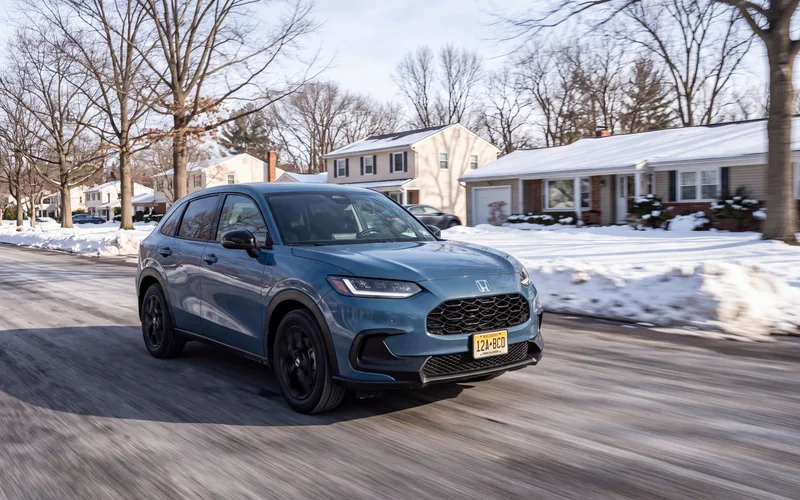 Honda HR-VSubcompact SUVBetter at: Cargo space
Nearly the same money buys markedly more back-seat and cargo room plus stronger resale, if you can live without the Mazda's chassis and cabin polish.
Compare 1.93C-
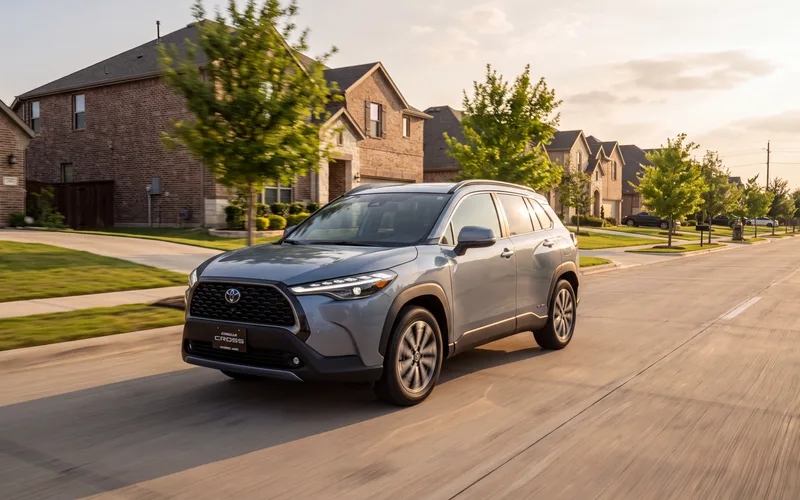 Toyota Corolla CrossSubcompact SUVBetter at: Ownership cost
A hybrid option, roughly $2,000 less in five-year service costs and included scheduled maintenance make it far cheaper to keep over the long haul.
Compare 2.05C
2.05C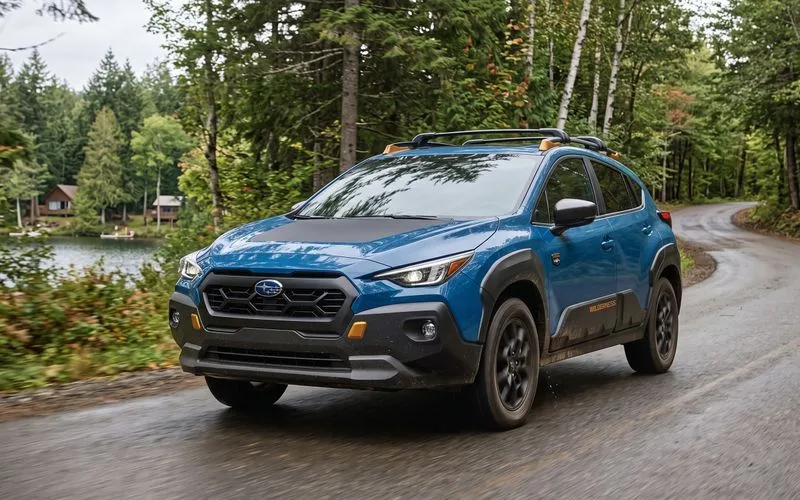 Subaru CrosstrekSubcompact SUVBetter at: Outdoor utility
Also standard AWD, but with the cargo volume, roof-load capacity and clearance to actually carry your gear to the trailhead.
CompareHow it's evolved
7 scored model years · 2020–2026
Subject scores by year
Hover or tap a score to see what moved it versus the year before. A corner mark flags a big swing.
| Year | Performance | Efficiency | Safety | Space | Cost | Reliability | Tech | Use-case | Driving | Value |
|---|---|---|---|---|---|---|---|---|---|---|
| 2026 | 34 | 57 | 77 | 42 | 57 | 76 | 62 | 53 | 75 | 75 |
| 2025 | 36 | 63 | 81 | 39 | 67 | 79 | 55 | 59 | 78 | 83 |
| 2024 | 37 | 62 | 82 | 38 | 67 | 80 | 53 | 54 | 81 | 81 |
| 2023 | 36 | 63 | 79 | 43 | 65 | 82 | 56 | 61 | 81 | 80 |
| 2022 | 36 | 51 | 79 | 40 | 63 | 83 | 53 | 59 | 75 | 80 |
| 2021 | 36 | 59 | 79 | 39 | 63 | 79 | 54 | 57 | 81 | 84 |
| 2020 | 30 | 64 | 82 | 39 | 66 | 80 | 48 | 61 | 78 | 83 |
Compare two years
Best fit & conditions
Higher scores mean a better fit for that use case. Learn more about use-case fit →
Subject profile
Academic Probation · NHTSA safety recalls
May 29, 2025Air bags: air bag/restraint control module: softwareThe Sophisticated Air Bag Sensor (SAS) units may set an error code and deactivate the air bags, due to a low battery condition.
Defect
Mazda North American Operations is recalling certain 2024-2025 Mazda3 and CX30 vehicles. The Sophisticated Air Bag Sensor (SAS) units may set an error code and deactivate the air bags, due to a low battery condition.
Risk
Air bags that do not deploy in the event of a crash increase the risk of injury.
Remedy
Dealers will reprogram the SAS unit with improved software or replace the unit, free of charge. Owner notification letters were mailed July 24, 2025. Mazda's number for this recall is 7525E.
NHTSA campaign 25V357000 ↗Manufacturer no. 7525E171,412 vehicles potentially affected (all models in the campaign)Owners notified Jul 22, 2025Filed by Mazda North American OperationsFiled as CX-30Sep 3, 2024Exterior lighting: headlights · Forward collision avoidance: automatic emergency braking · Lane departure: sensing system: cameraA malfunction in the forward sensing camera (FSC) may prevent the automatic emergency braking system and the lane-keep assist system from functioning. In addition, the headlights will not automatically adjust from high beams to low beams as intended.
Defect
Mazda North American Operations (Mazda) is recalling certain 2024 Mazda 3, CX-30, and 2025 CX-50 vehicles. A malfunction in the forward sensing camera (FSC) may prevent the automatic emergency braking system and the lane-keep assist system from functioning. In addition, the headlights will not automatically adjust from high beams to low beams as intended.
Risk
Automatic braking, steering assist, and headlight control systems that do not function as intended can increase the risk of a crash.
Remedy
Dealers will inspect and replace the forward sensing camera as necessary, free of charge. Owner notification letters were mailed September 24, 2024. Owners may contact Mazda customer service at 1-800-222-5500, Option 6. Mazda's number for this recall is 6824H.
NHTSA campaign 24V649000 ↗Manufacturer no. 6824H672 vehicles potentially affected (all models in the campaign)Owners notified Sep 24, 2024Filed by Mazda North American OperationsFiled as CX-30
5 recalls on other model years of the CX-30 (2020–2023)
Apr 18, 2023Service brakes, hydraulic: antilock/traction control/electronic limited slip: control unit/moduleThe anti-lock brake system (ABS) Hydraulic Control Unit (HCU) may be damaged, which can result in reduced braking ability.
Defect
Mazda North American Operations (Mazda) is recalling certain 2022-2023 CX-30 and 2023 CX-50 vehicles. The anti-lock brake system (ABS) Hydraulic Control Unit (HCU) may be damaged, which can result in reduced braking ability.
Risk
Reduced braking ability can increase the distance required to stop the vehicle, increasing the risk of a crash.
Remedy
Dealers will inspect and replace the ABS HCU, as necessary, free of charge. Owner notification letters were mailed June 12, 2023. Owners may contact Mazda customer service at 1-800-222-5500 Option 6. Mazda's number for this recall is 5823D.
NHTSA campaign 23V275000 ↗Manufacturer no. 5823D2,410 vehicles potentially affected (all models in the campaign)Owners notified Jun 12, 2023Filed by Mazda North American OperationsFiled as CX-30Feb 22, 2021Tires: valveAir may suddenly leak from the tire air valve.
Defect
Mazda North American Operations (Mazda) is recalling certain 2021 Mazda3 and CX-30 vehicles. Air may suddenly leak from the tire air valve.
Risk
A sudden air leak from the tire air valve may cause a loss of vehicle control while driving, increasing the risk of a crash.
Remedy
Mazda will notify owners, and dealers will replace all four tire air valves with new parts, free of charge. The recall began April 6, 2021. Owners may contact Mazda customer service at 1-800-222-5500 Option 4. Mazda's number for this recall is 4721B.
NHTSA campaign 21V101000 ↗Manufacturer no. 4721B599 vehicles potentially affected (all models in the campaign)Owners notified Apr 6, 2021Filed by Mazda North American OperationsFiled as CX-30Feb 18, 2021Structure: body: hatchback/liftgateWhen fully opened, the power liftgate may partially lower unexpectedly when the vehicle is parked facing uphill on a slope.
Defect
Mazda North American Operations (Mazda) is recalling certain 2020-2021 CX-30 vehicles. When fully opened, the power liftgate may partially lower unexpectedly when the vehicle is parked facing uphill on a slope.
Risk
If the power liftgate unexpectedly lowers while a person is accessing the rear storage area of the vehicle, it can increase their risk of injury.
Remedy
Mazda will notify owners, and dealers will update the power liftgate control module software and inspect the serial number of the power liftgate drive unit, replacing it if necessary, free of charge. The recall began April 8, 2021. Owners may contact Mazda customer service at 1-800-222-5500 option 4. Mazda's number for this recall is 4621B.
NHTSA campaign 21V086000 ↗Manufacturer no. 4621B13,857 vehicles potentially affected (all models in the campaign)Owners notified Apr 8, 2021Filed by Mazda North American OperationsFiled as CX-30Jun 12, 2020Fuel system, gasoline: delivery: hoses, lines/piping, and fittingsThe evaporative vent hose for the fuel tank may be disconnected, possibly allowing fuel to leak from the charcoal canister vent at the rear of the vehicle.
Defect
Mazda North American Operations (Mazda) is recalling certain 2020 CX-30 vehicles equipped with all-wheel drive. The evaporative vent hose for the fuel tank may be disconnected, possibly allowing fuel to leak from the charcoal canister vent at the rear of the vehicle.
Risk
A fuel leak in the presence of an ignition source may increase the risk of a fire. Additionally, the engine may stall while driving, increasing the risk of a crash.
Remedy
Mazda will notify owners, and dealers will inspect the evaporative vent hose in the fuel tank. If the hose is disconnected, it will be reconnected and the charcoal canister with some related parts will be replaced. Repairs will be performed free of charge. The recall began July 29, 2020. Owners may contact Mazda customer service at 1-800-222-5500, Option 4. Mazda's number for this recall is 4520F.
NHTSA campaign 20V347000 ↗Manufacturer no. 4520F12,097 vehicles potentially affected (all models in the campaign)Owners notified Jul 29, 2020Filed by Mazda North American OperationsFiled as CX-30Jun 12, 2020Service brakes, hydraulic: foundation components: disc: caliperThe front brake caliper mounting bolts may not have been tightened properly during assembly, possibly allowing the calipers to loosen.
Defect
Mazda North American Operations (Mazda) is recalling certain 2020 CX-30 and Mazda3 vehicles. The front brake caliper mounting bolts may not have been tightened properly during assembly, possibly allowing the calipers to loosen.
Risk
Loose brake calipers can reduce braking performance or interfere with wheel rotation, affecting vehicle handling. Either of these scenarios can increase the risk of a crash.
Remedy
Mazda will notify owners, and dealers will inspect the front brake caliper bolts, tightening them as necessary. If bolts are missing, the affected brake caliper will be replaced. Repairs will be performed free of charge. The recall began July 24, 2020. Owners may contact Mazda customer service at 1-800-222-5500, Option 4. Mazda's number for this recall is 4420F.
NHTSA campaign 20V346000 ↗Manufacturer no. 4420F24,037 vehicles potentially affected (all models in the campaign)Owners notified Jul 24, 2020Filed by Mazda North American OperationsFiled as CX-30
Source: NHTSA Office of Defects Investigation recall database, model years 2020–2026. Recalls are listed by model year as the manufacturer filed them; whether a specific car is affected depends on its VIN — check a VIN at nhtsa.gov ↗. NHTSA model names matched to this page: CX-30.
Detailed scoring by subject
1Performance & PowertrainThe CX-30's lowest-graded category.0.47F
The representative naturally aspirated 2.5-liter engine produces 191 hp; the optional turbo broadens the range to 250 hp on 93 octane.
The volume naturally aspirated powertrain's torque output is modest but competitive for a non-turbo subcompact SUV.
A reputable instrumented test of the base-engine sibling records 7.5 seconds, appropriate to the unchanged 191-hp naturally aspirated 2024 configuration.
The naturally aspirated engine delivers linear, generally smooth response without turbo lag, though reviewers find it somewhat sluggish when more acceleration is requested.
The conventional six-speed automatic is responsive and avoids CVT drone; reviews characterize its shifts as quick and smooth, while manual and Sport modes add control.
Mazda publishes no U.S. trailer-tow rating for the 2024 CX-30, so it receives the low-band value rather than a non-U.S.-market rating.
i-Activ AWD is standard on every trim and continuously adjusts torque distribution; G-Vectoring Control Plus and Off-Road Traction Assist are also standard.
Standard AWD, Off-Road Traction Assist, and roughly 8 inches of clearance support light-duty use, but there is no rugged trim, low range, locker, or underbody armor.
Buyers can choose naturally aspirated or substantially stronger turbocharged 2.5-liter engines, but there is no hybrid, plug-in, EV, diesel, or alternate transmission.
2Efficiency & RangeMid-pack among this car's ten categories.2.19C
The naturally aspirated AWD volume configuration earns a strong 29 MPG combined; turbo trims fall to 25 MPG combined.
EPA city economy for the non-turbo 2.5-liter AWD configuration is 26 MPG.
EPA highway economy for the non-turbo 2.5-liter AWD configuration is 33 MPG.
The EPA combined rating and official 12.7-gallon tank yield about 368 miles, conventionally rounded to 370 miles of total range.
The EPA dataset's current standard-cost estimate is $2,150 annually for the regular-gas non-turbo configuration.
The volume naturally aspirated engine achieves its full rated output on regular gasoline; even turbo trims can use regular, though premium unlocks their maximum output.
3SafetyThe CX-30's best-graded category.3.60A-
The 2024 CX-30 earned NHTSA's maximum five-star overall rating; its frontal and side ratings are five stars and its rollover rating is four stars.
The 2024 CX-30 is an IIHS Top Safety Pick+ and earned Good ratings in the small-overlap, original and updated moderate-overlap, and updated side tests. This is among the strongest crashworthiness records in the class.
Every 2024 trim includes AEB, stop-and-go adaptive cruise, lane-departure warning and lane-keep assist, blind-spot monitoring, and rear cross-traffic alert. Mazda made the latter two features standard for 2024, completing the rubric's five-feature suite across the range.
The standard pedestrian AEB system earned a Good IIHS rating for all 2024 models, including high-beam-assist credit and successful daytime child and nighttime adult scenarios. Rear automatic braking is available only on the top Turbo Premium Plus, preventing a near-perfect score.
Blind-spot monitoring and rear cross-traffic alert are standard across the 2024 range, a meaningful model-year improvement. On the representative non-turbo trim they are warning systems rather than active steering or braking interventions; rear cross-traffic braking is reserved for Turbo Premium Plus.
Standard lane-departure warning and lane-keep assist can nudge the vehicle back from a lane edge, but the volume non-turbo trims lack continuous lane centering. Cruising and Traffic Support adds steering assistance only on the range-topping Turbo Premium Plus, so mainstream-trim capability is basic rather than a polished highway-centering system.
Mazda Radar Cruise Control with Stop and Go is standard and supplies useful full-speed traffic capability. Integrated steering assistance is confined to the expensive Turbo Premium Plus, leaving the volume trim with capable ACC but no full highway-assist package.
No 2024 CX-30 trim offers a hands-free highway-driving system. Even the top trim's Cruising and Traffic Support is a hands-on Level 2 assistance feature rather than a BlueCruise- or Super Cruise-style system.
IIHS rates both available LED-projector headlight variants Good, including the non-adaptive lamps fitted to the volume trims. High-beam assist is standard, while upper trims add curve-adaptive lighting.
Forward visibility is serviceable, but the high beltline, small side glass, sloping roof, and large rear pillars create substantial rear-quarter blind zones. Standard blind-spot monitoring and a rear camera help, but the 360-degree monitor is confined to Turbo Premium Plus rather than the volume trim.
The anchors themselves are exceptionally accessible and earn IIHS's Good+ rating, but the tight rear seat limits bulky rear-facing seats and rules out an easy three-across arrangement. It is excellent hardware in a space-constrained cabin.
4Space & ComfortOne of the CX-30's weakest categories.0.53F
The two-row CX-30 seats five in every 2024 trim.
The official U.S. specification is used for the volume configuration.
Front legroom is adequate for the class but not exceptional.
Rear headroom is respectable despite the small cabin.
The measured figure is mid-band, though packaging and front-seat position make real use feel tighter.
The CX-30 is strictly a two-row, five-seat SUV and offers no third row.
Cargo room behind the second row is below the framework's SUV floor and below most subcompact rivals.
Maximum cargo capacity is modest even for a subcompact SUV.
There is basic console and door storage but no standout solution, and reviewers find several compartments poorly shaped.
Supportive front seats and a premium-feeling driving environment work well, but the tight rear bench limits four-adult comfort.
Body control is good, but the firmly tuned suspension can feel jumpy on broken pavement, especially with 18-inch wheels on Select Sport.
The cabin is generally quiet for the class, though coarse engine sound enters under load.
The volume Select Sport has dual-zone climate and rear vents, but heated power seats begin at Preferred and a heated wheel is limited to Turbo Premium grades.
5Cost of OwnershipMid-pack among this car's ten categories.2.56C+
The entry 2024 CX-30 2.5 S listed for $24,995 before destination. Mazda raised the contiguous-US destination charge from $1,375 to $1,420 effective April 3, 2024, so the launch and later all-in MSRPs were $26,370 and $26,415 respectively.
The naturally aspirated Select Sport is the representative volume configuration: it adds keyless entry, leatherette, dual-zone climate control, rear vents and 18-inch wheels without moving into the costly turbo range. Edmunds specifically recommends this trim as the price-and-content sweet spot.
Edmunds provides a trim-specific five-year projection for the 2024 Select Sport AWD at 15,000 miles per year. Combining its maintenance and repair lines gives $6,902.
The model-level iSeeCars projection indicates stronger retention than the subcompact-SUV average. It is not trim-specific, so confidence is medium despite the large underlying market sample.
Mazda's new-vehicle limited warranty is the mainstream minimum and trails the longer basic coverage from Hyundai, Kia and Mitsubishi.
The 5-year/60,000-mile powertrain term is standard for many mainstream rivals but is at the bottom of this item's normalization range.
There is no included scheduled-maintenance plan, but Mazda supplies limited 24/7 roadside towing tied to the warranty and a useful three-year Connected Services trial. That earns the bottom of the rubric's basic-roadside band rather than the stronger scores reserved for included maintenance.
$27,875 volume-trim price minus its estimated resale value after 5 years (64.4% retained, or about $17,952) leaves about $9,924 in depreciation. Add the projected $6,902 in 5-year maintenance and repairs, and owning this vehicle for 5 years costs about $16,826 in total.
6Reliability & QualityGrades above the middle of the scale.3.43B+
Owner-survey evidence puts the 2024 CX-30 above its model-year peers, and an independent used-vehicle assessment also predicts above-average reliability. The established platform and conventional non-turbo powertrain further reduce risk, although two later safety recalls prevent a top-of-class score.
Mazda had a strong recent multi-year record around this model year, sitting seventh in Consumer Reports' 2024 brand reliability results and above the industry average in J.D. Power's 2024 dependability study. It was strong but not consistently top-five, so it falls short of the highest band.
Two safety campaigns are a meaningful blemish: one can disable airbags after a low-battery event and the other can impair automatic braking, lane support, and automatic high beams. Both have straightforward software, inspection, or component remedies, and the camera campaign covered only 528 CX-30s, so the record is concerning but not evidence of recurring mechanical failure.
The volume 2.5 S uses Mazda's long-running naturally aspirated Skyactiv-G 2.5 and conventional six-speed automatic rather than the less-proven turbo. Both have extensive service history across several Mazda nameplates and no prominent systemic durability pattern in this application.
The CX-30 is a clear subcompact-SUV benchmark for cabin materials, with soft-touch surfaces, substantial controls, and convincing leatherette in the volume Select Sport trim. Multiple reviewers compare its perceived quality with entry-luxury vehicles despite mainstream pricing.
Reviewers consistently describe tight, solid assembly and polished switchgear, placing the CX-30 above the mainstream subcompact norm. Scattered owner reports of rattles and trim concerns keep it below an exceptional near-perfect score.
Mazda provides adequate nationwide support but its U.S. footprint is materially thinner than those of the largest mainstream brands, particularly outside metro areas. Its improving Retail Evolution network and moderate service-retention result support an above-average experience where coverage exists.
A high-volume model using widely shared Mazda mechanicals benefits from normal parts access and an established independent-repair ecosystem. Costs are better than average by brand, though the CX-30-specific dataset and aftermarket are not as deep as those for segment leaders from Toyota or Honda.
7Technology & InfotainmentOne of the CX-30's weakest categories.1.56D
Select Sport retains the non-touch 8.8-inch Mazda Connect display; the larger touch-capable screen is Turbo-only.
The high-mounted display and commander knob minimize distraction, but the interface is polarizing and the volume trim has no touch operation.
Wired CarPlay and Android Auto are standard; wireless projection starts at Carbon Edition and is not on the volume Select Sport.
Phone integration covers mapping for most buyers, while Mazda Navigation is restricted to Premium grades and its voice capability is conventional.
The six-speaker volume system is adequate, with useful eight-speaker and strong 12-speaker Bose upgrades available.
A seven-inch LCD information display is standard, but this is a partial-digital arrangement rather than a fully configurable digital cockpit.
The system supports connected services but there is no evidence of broad feature-adding whole-vehicle OTA capability.
MyMazda supplies the core remote monitoring and control functions, complimentary for three years, but no phone-as-key is offered.
Two USB-C inputs modernize the cabin for 2024, but wireless charging is limited to Carbon Edition and Turbo grades and rear-row power is sparse.
Select Sport adds proximity-style Advanced Keyless Entry and the app enables remote start, but hands-free liftgate and phone-as-key are absent.
The volume trim has only a rear camera; surround view and front/rear parking sensors require the top Turbo Premium Plus.
Mazda's Active Driving Display is useful but starts at 2.5 S Premium rather than the volume trim.
8Use-Case FitGrades below the middle of the scale.1.65D
Good LATCH hardware cannot offset the tight rear compartment, where rear-facing seats severely compromise front-passenger space.
Top-tier crash performance combines with an unusually complete standard driver-assistance suite and a newly standard rear-seat alert.
Four occupants can manage shorter trips, but tight rear space, firm ride, thin rear amenities and 20.2 cu ft of cargo constrain long family travel.
Compact dimensions, supportive controls, conventional six-speed behavior and standard adaptive cruise make it easy to commute, though ride firmness and limited rear visibility add fatigue.
The naturally aspirated volume trim uses regular fuel and returns a respectable 29 mpg combined, but several less powerful rivals are more efficient.
A 173-inch footprint and 34.8-foot turning diameter suit urban spaces, although thick rear pillars and a rear-camera-only volume trim reduce confidence.
Modest cargo space and an explicit prohibition on trailer towing make this a poor work vehicle despite strong engine output and AWD.
The conventional naturally aspirated engine and six-speed automatic are straightforward, but the upscale leatherette cabin and car-based chassis are not designed for repeated jobsite abuse.
Roof rails provide a basic attachment point, but there is no towing, onboard AC power, washable interior, cargo innovation or work-upfit ecosystem.
A quiet, upscale front cabin, adaptive cruise and roughly 370 miles of EPA combined range help, but firm ride, small rear quarters and a 12.7-gallon tank limit touring appeal.
Standard AWD, Off-Road Traction Assist, eight inches of clearance and volume-trim roof rails support gravel roads and roof-mounted gear, but towing is prohibited.
A folding rear bench and roof rails accept ordinary weekend gear, but the 20.2/45.2-cu-ft cargo hold and weak cabin storage restrict bulky loads.
9Driving ExperienceOne of the CX-30's strongest categories.3.53A-
The CX-30 is a subcompact-SUV benchmark for balance, body control and driver engagement, backed by strong test grip.
Steering is unusually communicative, accurately weighted and central to the CX-30's class-leading engagement.
Pedal calibration is tactile and confidence-inspiring, while the recorded stopping distance is good rather than exceptional.
The naturally aspirated 2.5 and conventional six-speed deliver predictable response and sensible shifts, although acceleration is less urgent than the chassis suggests.
The drivetrain is generally unobtrusive at cruise but the four-cylinder turns raspy when worked, particularly at low revs.
Mazda publishes a 17.4-foot radius, equivalent to a tight 34.8-foot diameter.
The well-placed commander, high display and driver-focused controls are excellent, but thick rear pillars compromise sightlines and Select Sport lacks power-seat adjustment.
Few affordable subcompact SUVs match its control feedback and willingness to corner, even with the less powerful volume engine.
10Value & Market PositionOne of the CX-30's strongest categories.3.49B+
Even the base 2.5 S includes AWD, a 191-hp engine, LED lighting, an 8.8-inch display, wired smartphone integration and a broad active-safety suite. The volume Select Sport remains under $28,000 delivered while adding leatherette, advanced keyless entry, dual-zone climate control, rear vents, roof rails and 18-inch wheels.
The CX-30 couples standard AWD, above-average naturally aspirated output, strong safety and a near-premium cabin at mainstream-subcompact pricing. Cargo and rear-seat space are below the class leaders and turbo trims become expensive, keeping it just short of exceptional value.
Eight trims span $24,995 to $36,800 before destination, with five naturally aspirated and three turbo choices. AWD is universal and there is no hybrid or front-drive economy configuration, but the unusually deep equipment ladder covers budget, premium-style and performance buyers.
US demand was already strong at 77,075 units in 2023, up 46%, and accelerated to a record 96,515 in 2024. That growth and scale establish the CX-30 as a highly accepted subcompact SUV even though it was not Mazda's overall bestseller.
Mazda has a favorable enthusiast and design-led image, and the CX-30's upscale cabin gives it a modest premium halo despite mainstream pricing. The brand lacks the status and breadth of a luxury marque, so desirability is strong rather than aspirational.
The model combined useful subsidized financing and cash offers with moderate dealer negotiation rather than distress-level fire-sale pricing. Late in 2024, average transaction prices ran 4.2% below MSRP, and buyers were advised that outgoing 2024 inventory could yield still better deals.
The 2024 model is the fifth model year of the generation that began in 2020, with no full redesign or facelift. New trims, USB-C ports, a newly available 10.25-inch touchscreen interface and expanded driver assistance kept it current, but the underlying Mazda3-based package was mid-to-late cycle.
Reviewers consistently praised the CX-30's handling, cabin quality, quietness and value while flagging tight rear and cargo space. It earned a 2024 Car and Driver Editors' Choice and a 7.9/10 tested Edmunds score, strong recognition short of a major overall vehicle-of-the-year win.