

The verdict
A mixed-report subcompact suv, strong on reliability and held back by performance.
Overall 2.35 (C+) across 10 graded subjects. Its strongest is reliability & quality at 3.62 (A-), its weakest performance & powertrain at 0.37 (F). 6 of 10 subjects grade at C− or better.
Jump to scoresStrengths
- Reliability & Quality
- Value & Market Position
- Safety
What holds it back
- Performance & Powertrain
- Space & Comfort
- Efficiency & Range
Top alternatives
Cars shoppers cross-shop with the Mazda CX-30 1.54D
1.54D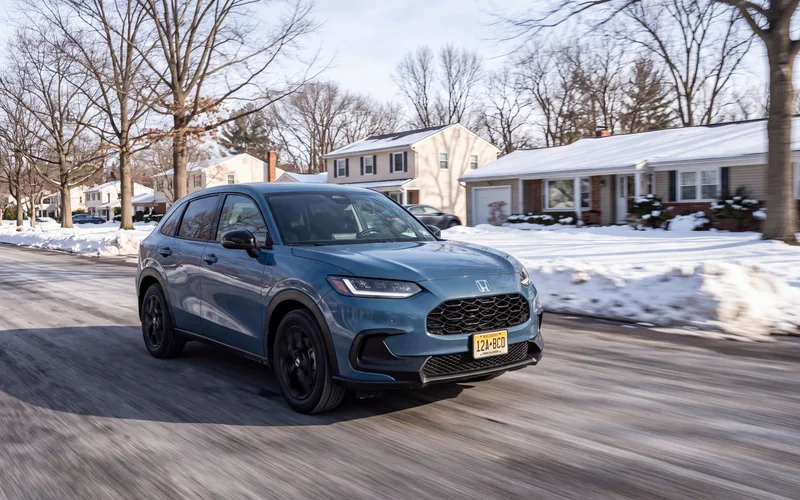 Honda HR-VSubcompact SUVBetter at: Cargo space
Nearly the same money buys markedly more back-seat and cargo room plus stronger resale, if you can live without the Mazda's chassis and cabin polish.
Compare 1.93C-
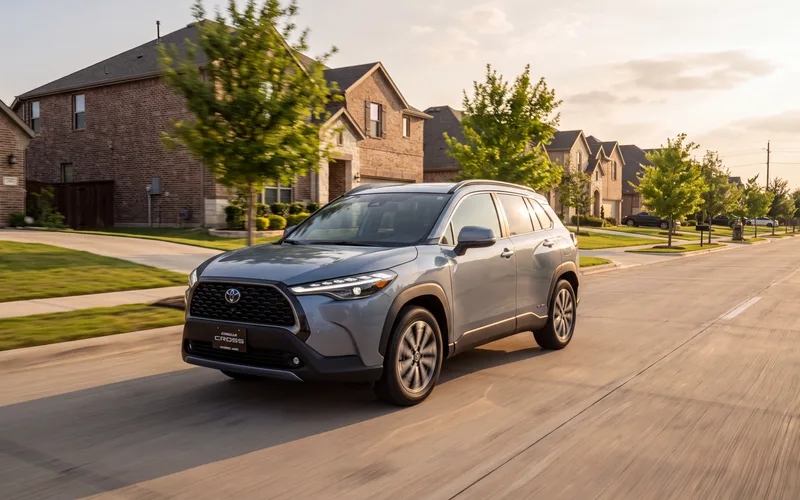 Toyota Corolla CrossSubcompact SUVBetter at: Ownership cost
A hybrid option, roughly $2,000 less in five-year service costs and included scheduled maintenance make it far cheaper to keep over the long haul.
Compare 2.05C
2.05C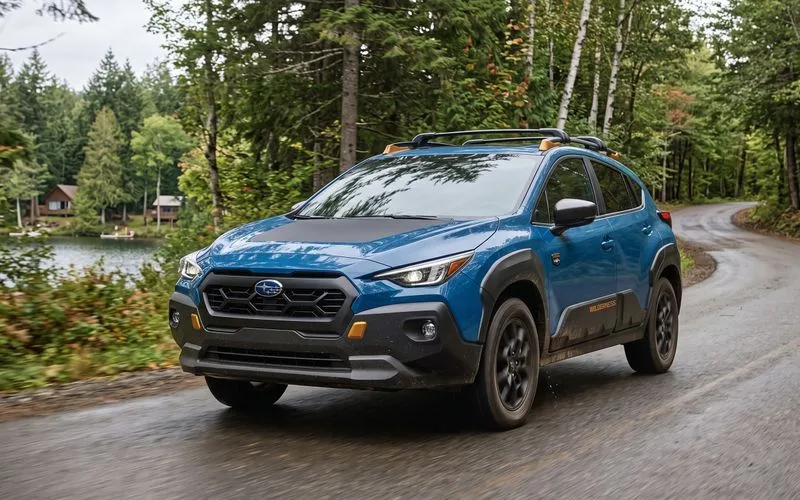 Subaru CrosstrekSubcompact SUVBetter at: Outdoor utility
Also standard AWD, but with the cargo volume, roof-load capacity and clearance to actually carry your gear to the trailhead.
CompareHow it's evolved
7 scored model years · 2020–2026
Subject scores by year
Hover or tap a score to see what moved it versus the year before. A corner mark flags a big swing.
| Year | Performance | Efficiency | Safety | Space | Cost | Reliability | Tech | Use-case | Driving | Value |
|---|---|---|---|---|---|---|---|---|---|---|
| 2026 | 34 | 57 | 77 | 42 | 57 | 76 | 62 | 53 | 75 | 75 |
| 2025 | 36 | 63 | 81 | 39 | 67 | 79 | 55 | 59 | 78 | 83 |
| 2024 | 37 | 62 | 82 | 38 | 67 | 80 | 53 | 54 | 81 | 81 |
| 2023 | 36 | 63 | 79 | 43 | 65 | 82 | 56 | 61 | 81 | 80 |
| 2022 | 36 | 51 | 79 | 40 | 63 | 83 | 53 | 59 | 75 | 80 |
| 2021 | 36 | 59 | 79 | 39 | 63 | 79 | 54 | 57 | 81 | 84 |
| 2020 | 30 | 64 | 82 | 39 | 66 | 80 | 48 | 61 | 78 | 83 |
Compare two years
Best fit & conditions
Higher scores mean a better fit for that use case. Learn more about use-case fit →
Subject profile
Academic Probation · NHTSA safety recalls
Apr 18, 2023Service brakes, hydraulic: antilock/traction control/electronic limited slip: control unit/moduleThe anti-lock brake system (ABS) Hydraulic Control Unit (HCU) may be damaged, which can result in reduced braking ability.
Defect
Mazda North American Operations (Mazda) is recalling certain 2022-2023 CX-30 and 2023 CX-50 vehicles. The anti-lock brake system (ABS) Hydraulic Control Unit (HCU) may be damaged, which can result in reduced braking ability.
Risk
Reduced braking ability can increase the distance required to stop the vehicle, increasing the risk of a crash.
Remedy
Dealers will inspect and replace the ABS HCU, as necessary, free of charge. Owner notification letters were mailed June 12, 2023. Owners may contact Mazda customer service at 1-800-222-5500 Option 6. Mazda's number for this recall is 5823D.
NHTSA campaign 23V275000 ↗Manufacturer no. 5823D2,410 vehicles potentially affected (all models in the campaign)Owners notified Jun 12, 2023Filed by Mazda North American OperationsFiled as CX-30
6 recalls on other model years of the CX-30 (2020–2021, 2024–2025)
May 29, 2025Air bags: air bag/restraint control module: softwareThe Sophisticated Air Bag Sensor (SAS) units may set an error code and deactivate the air bags, due to a low battery condition.
Defect
Mazda North American Operations is recalling certain 2024-2025 Mazda3 and CX30 vehicles. The Sophisticated Air Bag Sensor (SAS) units may set an error code and deactivate the air bags, due to a low battery condition.
Risk
Air bags that do not deploy in the event of a crash increase the risk of injury.
Remedy
Dealers will reprogram the SAS unit with improved software or replace the unit, free of charge. Owner notification letters were mailed July 24, 2025. Mazda's number for this recall is 7525E.
NHTSA campaign 25V357000 ↗Manufacturer no. 7525E171,412 vehicles potentially affected (all models in the campaign)Owners notified Jul 22, 2025Filed by Mazda North American OperationsFiled as CX-30Sep 3, 2024Exterior lighting: headlights · Forward collision avoidance: automatic emergency braking · Lane departure: sensing system: cameraA malfunction in the forward sensing camera (FSC) may prevent the automatic emergency braking system and the lane-keep assist system from functioning. In addition, the headlights will not automatically adjust from high beams to low beams as intended.
Defect
Mazda North American Operations (Mazda) is recalling certain 2024 Mazda 3, CX-30, and 2025 CX-50 vehicles. A malfunction in the forward sensing camera (FSC) may prevent the automatic emergency braking system and the lane-keep assist system from functioning. In addition, the headlights will not automatically adjust from high beams to low beams as intended.
Risk
Automatic braking, steering assist, and headlight control systems that do not function as intended can increase the risk of a crash.
Remedy
Dealers will inspect and replace the forward sensing camera as necessary, free of charge. Owner notification letters were mailed September 24, 2024. Owners may contact Mazda customer service at 1-800-222-5500, Option 6. Mazda's number for this recall is 6824H.
NHTSA campaign 24V649000 ↗Manufacturer no. 6824H672 vehicles potentially affected (all models in the campaign)Owners notified Sep 24, 2024Filed by Mazda North American OperationsFiled as CX-30Feb 22, 2021Tires: valveAir may suddenly leak from the tire air valve.
Defect
Mazda North American Operations (Mazda) is recalling certain 2021 Mazda3 and CX-30 vehicles. Air may suddenly leak from the tire air valve.
Risk
A sudden air leak from the tire air valve may cause a loss of vehicle control while driving, increasing the risk of a crash.
Remedy
Mazda will notify owners, and dealers will replace all four tire air valves with new parts, free of charge. The recall began April 6, 2021. Owners may contact Mazda customer service at 1-800-222-5500 Option 4. Mazda's number for this recall is 4721B.
NHTSA campaign 21V101000 ↗Manufacturer no. 4721B599 vehicles potentially affected (all models in the campaign)Owners notified Apr 6, 2021Filed by Mazda North American OperationsFiled as CX-30Feb 18, 2021Structure: body: hatchback/liftgateWhen fully opened, the power liftgate may partially lower unexpectedly when the vehicle is parked facing uphill on a slope.
Defect
Mazda North American Operations (Mazda) is recalling certain 2020-2021 CX-30 vehicles. When fully opened, the power liftgate may partially lower unexpectedly when the vehicle is parked facing uphill on a slope.
Risk
If the power liftgate unexpectedly lowers while a person is accessing the rear storage area of the vehicle, it can increase their risk of injury.
Remedy
Mazda will notify owners, and dealers will update the power liftgate control module software and inspect the serial number of the power liftgate drive unit, replacing it if necessary, free of charge. The recall began April 8, 2021. Owners may contact Mazda customer service at 1-800-222-5500 option 4. Mazda's number for this recall is 4621B.
NHTSA campaign 21V086000 ↗Manufacturer no. 4621B13,857 vehicles potentially affected (all models in the campaign)Owners notified Apr 8, 2021Filed by Mazda North American OperationsFiled as CX-30Jun 12, 2020Fuel system, gasoline: delivery: hoses, lines/piping, and fittingsThe evaporative vent hose for the fuel tank may be disconnected, possibly allowing fuel to leak from the charcoal canister vent at the rear of the vehicle.
Defect
Mazda North American Operations (Mazda) is recalling certain 2020 CX-30 vehicles equipped with all-wheel drive. The evaporative vent hose for the fuel tank may be disconnected, possibly allowing fuel to leak from the charcoal canister vent at the rear of the vehicle.
Risk
A fuel leak in the presence of an ignition source may increase the risk of a fire. Additionally, the engine may stall while driving, increasing the risk of a crash.
Remedy
Mazda will notify owners, and dealers will inspect the evaporative vent hose in the fuel tank. If the hose is disconnected, it will be reconnected and the charcoal canister with some related parts will be replaced. Repairs will be performed free of charge. The recall began July 29, 2020. Owners may contact Mazda customer service at 1-800-222-5500, Option 4. Mazda's number for this recall is 4520F.
NHTSA campaign 20V347000 ↗Manufacturer no. 4520F12,097 vehicles potentially affected (all models in the campaign)Owners notified Jul 29, 2020Filed by Mazda North American OperationsFiled as CX-30Jun 12, 2020Service brakes, hydraulic: foundation components: disc: caliperThe front brake caliper mounting bolts may not have been tightened properly during assembly, possibly allowing the calipers to loosen.
Defect
Mazda North American Operations (Mazda) is recalling certain 2020 CX-30 and Mazda3 vehicles. The front brake caliper mounting bolts may not have been tightened properly during assembly, possibly allowing the calipers to loosen.
Risk
Loose brake calipers can reduce braking performance or interfere with wheel rotation, affecting vehicle handling. Either of these scenarios can increase the risk of a crash.
Remedy
Mazda will notify owners, and dealers will inspect the front brake caliper bolts, tightening them as necessary. If bolts are missing, the affected brake caliper will be replaced. Repairs will be performed free of charge. The recall began July 24, 2020. Owners may contact Mazda customer service at 1-800-222-5500, Option 4. Mazda's number for this recall is 4420F.
NHTSA campaign 20V346000 ↗Manufacturer no. 4420F24,037 vehicles potentially affected (all models in the campaign)Owners notified Jul 24, 2020Filed by Mazda North American OperationsFiled as CX-30
Source: NHTSA Office of Defects Investigation recall database, model years 2020–2026. Recalls are listed by model year as the manufacturer filed them; whether a specific car is affected depends on its VIN — check a VIN at nhtsa.gov ↗. NHTSA model names matched to this page: CX-30.
Detailed scoring by subject
1Performance & PowertrainThe CX-30's lowest-graded category.0.37F
The volume 2.5 S powertrain makes 186 hp; the optional turbo materially broadens the range but is not the representative configuration. This is the first-generation CX-30, with standard AWD replacing FWD across the U.S. range for 2022.
The naturally aspirated volume powertrain's 186 lb-ft is competitive for a conventional subcompact SUV but modest in the all-SUV normalization band. Turbo models reach 320 lb-ft but are higher-priced performance variants.
The 186-hp non-turbo CX-30 reaches 60 mph in a brisk 7.6 seconds, a strong result for a naturally aspirated subcompact crossover. The figure comes from an instrumented test of the applicable powertrain.
The naturally aspirated four-cylinder delivers linear, predictable response without turbo lag and has useful passing power. It becomes vocal under hard acceleration, keeping it below the exceptionally quiet and seamless top band.
The conventional six-speed automatic is responsive and avoids the droning behavior common to rival CVTs, while Sport and manual modes add control. Six ratios limit flexibility compared with the best modern automatics, but shift behavior is generally decisive and polished.
Mazda assigns no U.S. trailer-tow rating to the 2022 CX-30, so overseas ratings must not be carried into this U.S.-market score. The owner's manual expressly prohibits trailer towing.
i-Activ AWD became standard on every U.S. trim for 2022, and predictive torque distribution, G-Vectoring Control Plus, and Off-Road Traction Assist make it more sophisticated than a basic on-demand system. It lacks low range and locking differentials.
Eight inches of clearance, standard AWD, and Off-Road Traction Assist suit snow and maintained dirt roads. Road-biased tires and the absence of skid plates, low range, lockers, or a dedicated off-road trim keep it firmly in light-duty territory.
Buyers could choose naturally aspirated or substantially stronger turbocharged 2.5-liter gas engines, both with a six-speed automatic and AWD. That covers economy and performance needs, but there was no hybrid, plug-in hybrid, EV, or alternative transmission in the 2022 U.S. range.
2Efficiency & RangeOne of the CX-30's weakest categories.1.39D
The volume naturally aspirated AWD configuration is EPA-rated at 26 MPG combined. Standard AWD for 2022 lowered efficiency versus the discontinued front-drive configuration, and the turbo returns 25 MPG combined.
The representative non-turbo AWD model earns 24 MPG city, a middling result for a gas subcompact SUV but reasonable with standard AWD. The optional turbo loses 2 MPG city.
The volume configuration's 31-MPG highway rating is solid for a conventional AWD crossover. Car and Driver also matched the EPA highway figure in real-world testing.
The 12.7-gallon AWD tank and 26-MPG combined rating yield an EPA-listed range of about 330 miles. The relatively small tank constrains range despite acceptable fuel economy.
EPA's standard 15,000-mile estimate places annual fuel spending near the middle of the gas-SUV field. The turbo variant is estimated at $2,400 per year.
The volume naturally aspirated engine delivers its full rated output on regular unleaded, avoiding a premium-fuel penalty. Even the turbo can use regular, though premium raises its output.
3SafetyOne of the CX-30's strongest categories.3.37B+
The 2022 CX-30 AWD earned NHTSA's maximum overall rating.
The 2022 CX-30 was a Top Safety Pick+ and earned Good ratings in every crashworthiness test reported under the contemporary test protocol.
The volume 2.5 S Select includes AEB, adaptive cruise with stop-and-go, lane-departure warning/lane-keep assist, blind-spot monitoring, and rear cross-traffic alert. The score stops short of the top because blind-spot and cross-traffic alerts were absent from the base 2.5 S rather than standard on every trim.
Standard Smart Brake Support earned Superior ratings for vehicle-to-vehicle and daytime pedestrian prevention, avoiding impacts in nearly every reported pedestrian scenario. IIHS did not publish a nighttime pedestrian rating for this model year, limiting the score.
Blind-spot monitoring and rear cross-traffic alert are standard on the volume Select and higher trims, but they are alert-only and omitted from the base trim. Rear cross-traffic braking is restricted to the Turbo Premium Plus.
Lane-departure warning and corrective lane-keep assist are standard, but the volume trim lacks sustained lane centering. Traffic Jam Assist, the closest combined steering aid, is confined to Turbo Premium Plus.
Full-speed Mazda Radar Cruise Control with stop-and-go is standard and reviewers rate the driver aids highly, but the volume trim does not pair it with a true lane-centering highway assistant.
No hands-free highway-driving system was offered on any 2022 CX-30 trim.
IIHS rated both available LED-projector headlight systems Good, including the non-adaptive units fitted to the volume Select, and high-beam assist is standard. Adaptive curve lighting is reserved for Premium variants.
Natural rearward visibility is below average because of the thick rear pillar and small rear window. A standard backup camera helps when reversing, but a 360-degree monitor is limited to Turbo Premium Plus.
The anchors themselves are exceptionally accessible and IIHS awarded Good+, but tight rear quarters severely compromise front-passenger space with rear-facing seats and prevent three-across installation.
4Space & ComfortOne of the CX-30's weakest categories.0.64F
Every 2022 U.S. CX-30 has two rows and seating for five.
The volume Select trim has no moonroof, so the without-moonroof measurement applies; Preferred and higher trims lose 0.3 inch.
Front legroom is adequate but not generous against the SUV normalization range.
The published second-row headroom is reasonably competitive despite the sloping roof.
The raw figure is mid-band, but reviewers find the narrow rear compartment tight for taller passengers.
No 2022 CX-30 trim offers a third row.
This is below the framework's 25-cu-ft SUV floor and trails roomier subcompact rivals.
Maximum cargo volume is below the framework's 55-cu-ft SUV floor.
The console cubby, armrest bin and glovebox are useful, but small door pockets and rear seatbacks that do not fold flush limit practicality; there is no standout storage innovation.
Supportive front seats and a good driving posture suit long stints, but the rear is tight and the volume Select lacks power adjustment and heat.
Body control is composed, but the torsion-beam rear suspension produces a firm, sometimes jumpy ride over broken pavement.
Highway isolation is a notable strength for a mainstream subcompact SUV, though the engine becomes audible under load.
Select adds dual-zone climate and rear vents, while Preferred adds heated power front seats; a heated wheel is confined to upper turbo trims and ventilated seats are unavailable.
5Cost of OwnershipMid-pack among this car's ten categories.2.24C
Mazda launched the 2022 CX-30 2.5 S at $22,200 before destination; adding the official $1,225 destination charge gives $23,425. Mazda raised every trim by $300 effective April 2, 2022, making the later-year total $23,725.
The naturally aspirated Select is the representative volume/value trim: it adds blind-spot monitoring, dual-zone climate control, keyless entry, leatherette and 18-inch wheels without the Preferred trim's larger price jump. Its launch MSRP was $24,600 plus $1,225 destination.
Edmunds' current Select AWD projection totals $9,410 over five years at 15,000 miles annually. This is a single reputable industry estimate and is notably high for the class, so confidence is medium rather than high.
CarEdge projects 36% depreciation after five years, or 64% retention, which is strong for a mainstream subcompact SUV. Mazda's own 2022 investor material also placed the CX-30 second of 22 models in its ALG residual-value comparison, corroborating the model's strong residual standing.
Mazda's basic warranty is the mainstream-industry minimum and trails brands offering five years of comprehensive coverage.
Five years is the floor of the SUV normalization band and is half the term offered by Hyundai and Kia.
Mazda included no scheduled maintenance, keeping this in the rubric's sub-50 band. It partially compensates with 3-year/36,000-mile roadside assistance, three years of Mazda Connected Services, and a three-month/2GB Wi-Fi trial.
$25,825 volume-trim price minus its estimated resale value after 5 years (64% retained, or about $16,528) leaves about $9,297 in depreciation. Add the projected $9,410 in 5-year maintenance and repairs, and owning this vehicle for 5 years costs about $18,707 in total.
6Reliability & QualityThe CX-30's best-graded category.3.62A-
The 2022 CX-30 had a favorable predicted-reliability outlook: it used established Mazda3-derived mechanicals and J.D. Power rates its quality and reliability as Great. The model was still relatively young in 2022, which keeps it just below the very top tier.
Mazda entered this model year with an excellent recent multi-year reliability record, including first place in Consumer Reports' 2020 brand reliability ranking and second in its 2021 ranking. That is top-tier recent form, though not enough sustained evidence to award a near-perfect score.
Recall history is light, with one campaign in NHTSA's year-specific database. It concerns potentially reduced braking and is therefore meaningful, but it is a limited inspection-and-replacement campaign rather than evidence of repeated systemic failures.
The volume 2.5 S uses Mazda's naturally aspirated Skyactiv-G 2.5-liter engine and conventional Skyactiv-Drive six-speed automatic, a mature and comparatively low-complexity combination shared across several Mazda lines. Its established service history and lack of a model-wide durability warning support a strong score; this assessment does not apply to the optional turbo.
The CX-30's cabin is a clear subcompact-SUV benchmark, with an upscale design, substantial soft-touch coverage and controls that feel more expensive than the vehicle's mainstream price. Lower-door and rear-cabin plastics prevent a perfect score.
Professional reviews consistently highlight tight assembly and polished switchgear, placing the CX-30 above mainstream subcompact-SUV norms. There is not enough model-wide initial-quality evidence to treat every vehicle as flawless.
Mazda provides nationwide franchised service coverage, but its U.S. network is materially smaller than Toyota, Ford, Chevrolet or Honda, making rural access less convenient. Coverage is adequate for a mainstream brand rather than exceptional.
Shared Mazda3 architecture and a widely used 2.5-liter engine support normal parts supply and independent-shop familiarity. Costs are reasonable for the class, though Mazda's smaller scale and AWD-specific components keep it from matching the cheapest, deepest aftermarket ecosystems.
7Technology & InfotainmentGrades below the middle of the scale.1.53D
The same 8.8-inch Mazda Connect display is standard throughout the lineup, but it is controlled by the console commander rather than touch.
The sharp, well-positioned display and physical controller work well in Mazda menus, but phone-projection tasks require extra knob inputs and opinions are divided.
Apple CarPlay and Android Auto are standard for 2022 but require a wired USB connection; wireless projection is not listed.
Basic infotainment voice command is standard and Mazda Navigation is functional, but factory navigation is limited to Premium and upper turbo packages.
The standard eight-speaker system is respectable and the available 12-speaker Bose system is unusually strong for the class, though it requires Carbon Edition/Premium or an upper turbo trim.
A 7-inch LCD meter display is standard, but this is a partial digital arrangement rather than a large configurable full-digital cluster.
Connected services are present, but Mazda documented no feature-adding whole-vehicle OTA program for this model year; updates are primarily service/infotainment maintenance.
MyMazda provides useful core functions—remote start, lock/unlock and vehicle-health status—with a three-year included trial, but no digital key or remote climate-setpoint control.
Two front USB-A ports and 12-volt power are modest even for 2022, with no rear USB-C or AC outlet; Qi charging was only a dealer accessory.
The volume Select has proximity-based Mazda Advanced Keyless Entry, push-button start and app remote start, but no hands-free liftgate or phone-as-key.
A rear camera is standard, but surround view and front/rear parking sensors are reserved for the costly Turbo Premium Plus; there is no automated parking.
The windshield-projected full-color HUD is a good unit but starts with the naturally aspirated Premium trim rather than the volume Select/Preferred.
8Use-Case FitMid-pack among this car's ten categories.1.97C-
LATCH access and the wide hatch opening are good, but tight rear-facing-seat space, modest cargo volume and a less-boxy door opening create real family compromises.
Top Safety Pick+ crash performance and standard automatic braking, adaptive cruise, lane departure warning and lane keeping make the affordable trims unusually complete.
The quiet cabin, rear vents and supportive front seats help, but tight rear seating, only 20.2 cu ft behind the seats and no rear device ports constrain four-person trips.
Compact dimensions, smooth conventional automatic, excellent controls and standard stop-and-go adaptive cruise reduce commuting effort, although thick rear pillars hurt visibility.
The naturally aspirated AWD model's 24/31 mpg is acceptable, not exceptional, and the standard AWD adds fuel and tire cost versus front-drive rivals.
A 173-inch footprint and tight 34.8-foot turning circle make it easy to place, though rear-quarter visibility is poor and the volume trim has only a backup camera.
The U.S. model is explicitly not designed for trailer towing, and its 20.2/45.2-cu-ft cargo hold is small; AWD helps only with light-duty access.
The proven naturally aspirated engine and conventional six-speed automatic are mechanically straightforward, but the upscale cabin and car-based chassis are not designed for repeated jobsite abuse.
Roof rails/crossbars are available, but there is no towing authorization, onboard AC power, washable work interior or meaningful upfit ecosystem.
Quiet cruising, good front seats and standard adaptive cruise make it a pleasant two-person tourer, while the firm ride, small fuel tank and rear/cargo constraints cap endurance for four.
Standard AWD, Off-Road Traction Assist and 8.0 inches of clearance suit snow and maintained dirt roads, but no tow rating and limited cargo keep it short of serious adventure duty.
The 60/40 rear seat, wide hatch and available roof rack handle ordinary luggage and bikes, but 45.2 cu ft maximum cargo and a stepped folded floor restrict bulky gear.
9Driving ExperienceGrades above the middle of the scale.3.07B
Responsive turn-in, fluid body control and standard AWD put the CX-30 near the top of the mainstream subcompact-SUV class for road manners.
The steering is direct, naturally weighted and unusually communicative for this class.
Stopping ability is adequate, but a soft pedal keeps brake confidence below the chassis benchmark.
The naturally aspirated 2.5-liter and conventional six-speed avoid CVT drone and are generally well calibrated, but acceleration is only moderate and the transmission can hesitate to provide passing power.
The powertrain is subdued at cruise but the four-cylinder can sound raspy and intrusive when worked.
The tight turning diameter is a meaningful advantage in urban use.
Controls, pedals and steering wheel are thoughtfully aligned and the volume trim offers a comfortable posture, though thick rear pillars and the console's snugness reduce visibility and space.
Even with the volume 186-hp engine, the cohesive steering and chassis make it one of the few subcompact crossovers enthusiasts can enjoy; the turbo is quicker but is not the scored configuration.
10Value & Market PositionOne of the CX-30's strongest categories.3.46B+
Even the $23,425 base vehicle included standard AWD, adaptive cruise with stop-and-go, automatic emergency braking, lane-departure warning/assist, LED lighting, rain-sensing wipers, an 8.8-inch interface, Apple CarPlay and Android Auto. Blind-spot monitoring was held for Select, but the base package was unusually complete for the money.
The Select delivered standard AWD, 186 hp and near-premium cabin quality at $25,825 including destination, while the range also offered a genuinely quick 250-hp turbo below luxury-brand pricing. Its tight rear seat and cargo area are the main value compromises.
Eight well-spaced trims covered basic, comfort, appearance, luxury and performance priorities, with both naturally aspirated and turbocharged engines. Standard AWD eliminated drivetrain choice, but the $22,200-to-$34,400 pre-destination ladder was exceptionally broad for a subcompact SUV.
US volume remained substantial at 52,808 units in 2022, though it declined 12.3% from 60,185 in 2021. That supports solid market acceptance rather than segment-leader status.
Mazda's enthusiast-friendly handling and near-premium design gave the CX-30 more image appeal than most mainstream rivals, while strong residual projections supported that perception. It remained a mainstream badge without the cachet of a true luxury marque.
The 2022 new-car shortage left little negotiating room: contemporary buyer reports and reviews commonly described MSRP transactions, with occasional modest subvented financing but no broad heavy discounting. Buyer benefit was therefore limited for this model year.
The 2022 vehicle was only the third US model year of the generation that began in 2020. It was not a facelift, but standard AWD across the range, the new Carbon Edition, new paint availability and Select roof rails made it a meaningful packaging/change year rather than a pure carry-over.
The CX-30 was a clear critical favorite: Car and Driver ranked it first among 2022 subcompact SUVs, scored it 9.5/10 and awarded Editors' Choice. KBB ranked it second with a 4.7/5 expert rating, and IIHS awarded the 2022 model Top Safety Pick+.