

The verdict
A struggling sports car, strong on performance and held back by efficiency.
The 2017 GT-R is the R35's biggest mid-cycle update: 565 hp (up from 545), a stiffer body, a smoother dual-clutch transmission and a genuinely redesigned interior, all for $111,585 to start. It still delivers 2.7-second 0-60 launches and AWD grip that outguns cars costing twice as much, but the tradeoffs — 18 MPG combined, an 8.8 cu ft trunk, near-unusable rear seats, and essentially no driver-assistance tech — are exactly what you'd expect from a decade-old halo car built for speed first. Buy it for the driving experience, not as a practical daily.
Jump to scoresStrengths
- Supercar-humbling acceleration
- AWD grip and cornering ability
- Holds its value better than almost anything at this price
What holds it back
- Thirsty and expensive to fuel
- Rear seats and trunk are token at best
- Six-figure entry price
Top alternatives
Cars shoppers cross-shop with the Nissan GT-R 2.49C+
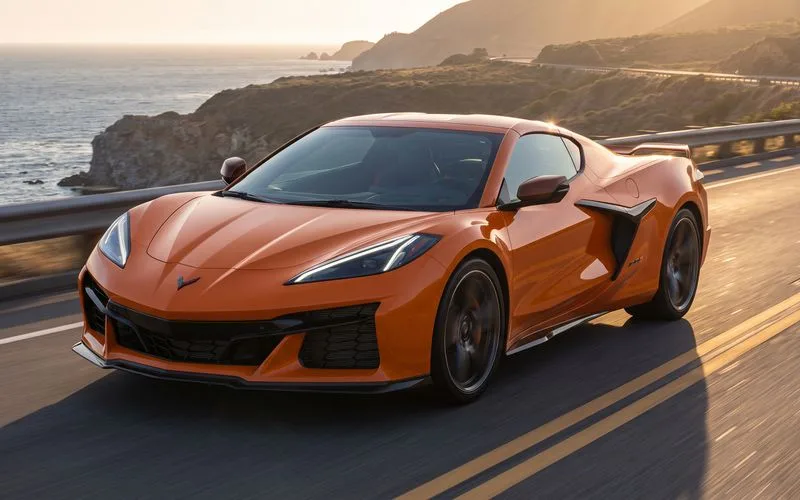 Chevrolet CorvetteSports CarBetter at: Value
Matches or beats the GT-R's acceleration for $50,000 less, with a modern interior and a full safety suite the Nissan simply doesn't offer.
Compare 2.72B-
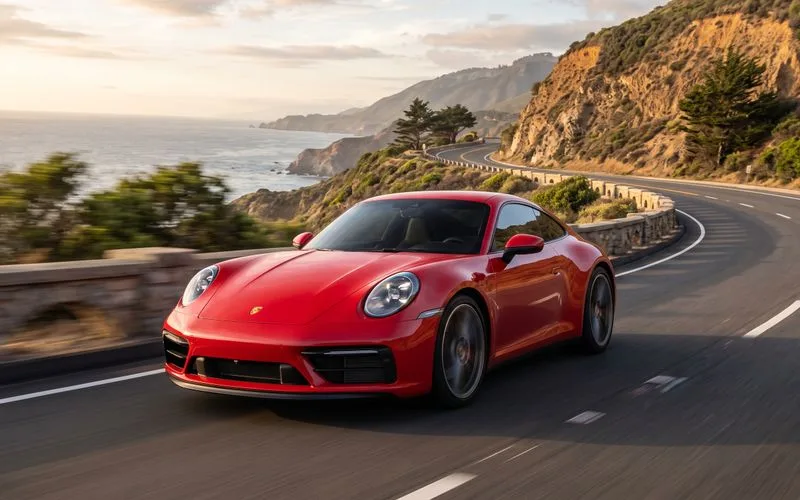 Porsche 911Sports CarBetter at: Everyday polish
The all-round choice at this money — better ride, better cabin, real driver aids and a lineup that spans budgets, if you can live with less straight-line pace per dollar.
Compare 2.77B-
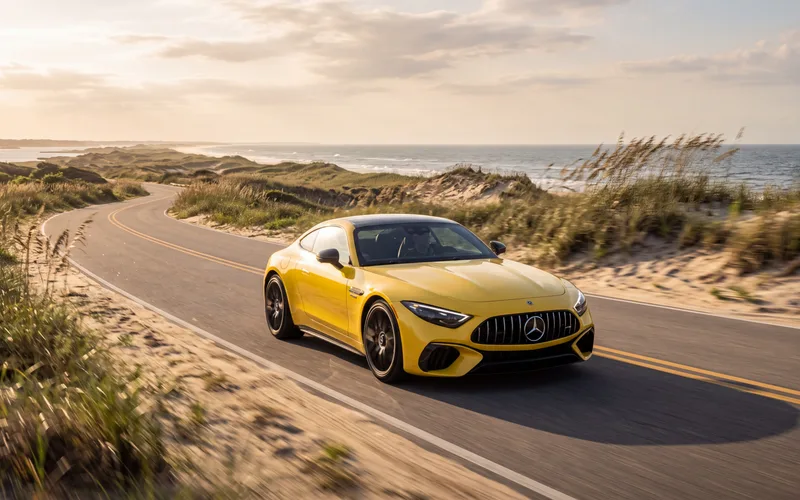 Mercedes-Benz AMG GTSports CarBetter at: Interior & tech
For a buyer who wants the six-figure experience inside as well as outside: current infotainment, adaptive cruise and materials that match the price.
CompareHow it's evolved
8 scored model years · 2017–2024
Subject scores by year
Hover or tap a score to see what moved it versus the year before. A corner mark flags a big swing.
| Year | Performance | Efficiency | Safety | Space | Cost | Reliability | Tech | Use-case | Driving | Value |
|---|---|---|---|---|---|---|---|---|---|---|
| 2024 | 85 | 6 | 25 | 39 | 7 | 67 | 38 | 28 | 79 | 52 |
| 2023 | 85 | 6 | 25 | 43 | 14 | 67 | 38 | 29 | 79 | 51 |
| 2022 | 85 | 6 | 25 | 43 | 6 | 66 | 38 | 29 | 78 | 45 |
| 2021 | 86 | 6 | 25 | 43 | 6 | 64 | 37 | 22 | 77 | 46 |
| 2020 | 85 | 6 | 25 | 36 | 76 | 64 | 37 | 26 | 75 | 48 |
| 2019 | 85 | 6 | 26 | 36 | 29 | 63 | 37 | 25 | 76 | 55 |
| 2018 | 83 | 6 | 26 | 37 | 24 | 64 | 37 | 23 | 76 | 58 |
| 2017 | 84 | 6 | 26 | 37 | 18 | 67 | 37 | 24 | 78 | 65 |
Compare two years
Best fit & conditions
Higher scores mean a better fit for that use case. Learn more about use-case fit →
Subject profile
Academic Probation · NHTSA safety recalls
No NHTSA safety recall is on record for the 2017 Nissan GT-R. Other model years of the GT-R have 2 — listed below.
2 recalls on other model years of the GT-R (2019, 2021)
May 27, 2021Steering: linkages: knuckle: spindle: arm · Suspension: rear: axle: spindleThe front steering knuckle or rear axle housing may have insufficient strength due to improper heat-treatment.
Defect
Nissan North America, Inc. (Nissan) is recalling certain 2020 Nissan Murano, INFINITI QX60, 2021 Nissan GT-R, INFINITI QX50, and Q50 vehicles. The front steering knuckle or rear axle housing may have insufficient strength due to improper heat-treatment.
Risk
The steering knuckle or rear axle could deform upon impact, such as from hitting a curb, resulting in a loss of steering control, or possible wheel separation. Both of these conditions can increase the risk of a crash.
Remedy
Dealers will inspect and replace the front steering knuckle and rear axle housing, as necessary, free of charge. Owner notification letters were mailed July 26, 2021. Nissan owners may contact customer service at 1-800-867-7669. INFINITI owners may contact customer service at 1-800-662-6200.
NHTSA campaign 21V402000 ↗14,276 vehicles potentially affected (all models in the campaign)Owners notified Jul 26, 2021Filed by Nissan North America, Inc.Filed as GT-RSep 12, 2019Back over prevention: sensing system: cameraAdditionally included are 2019 Nissan GT-R and Taxi and Infiniti QX50, QX60, Q70, Q70L vehicles. The back-up camera and display settings can be adjusted such that the rear view image is no longer visible and the system will retain that setting the next time the vehicle is placed in reverse. As such, these vehicles fail to comply with the requirements of Federal Motor Vehicle Safety Standard (FMVSS) number 111, "Rear Visibility."
Defect
Nissan North America, Inc. (Nissan) is recalling certain 2018-2019 Nissan Altima, Armada, Frontier, Kicks, Leaf, Maxima, Murano, NV, NV200, Pathfinder, Rogue, Rogue Sport, Sentra, Titan, Titan Diesel, Versa Note and Versa Sedan vehicles, as well as Infiniti Q50, Q60, QX30 and QX80 vehicles. Additionally included are 2019 Nissan GT-R and Taxi and Infiniti QX50, QX60, Q70, Q70L vehicles. The back-up camera and display settings can be adjusted such that the rear view image is no longer visible and the system will retain that setting the next time the vehicle is placed in reverse. As such, these vehicles fail to comply with the requirements of Federal Motor Vehicle Safety Standard (FMVSS) number 111, "Rear Visibility."
Risk
The lack of an image in the back-up camera display increases the risk of a crash.
Remedy
Nissan will notify owners in phases, having dealers update the back-up camera settings software, free of charge. The recall began November 11, 2019 and all affected VINs should be activated. Owners may contact Nissan customer service at 1-800-867-7669 or INFINITI customer service at 1-800-662-6200.
NHTSA campaign 19V654000 ↗1,228,830 vehicles potentially affected (all models in the campaign)Owners notified Nov 11, 2019Filed by Nissan North America, Inc.Filed as GT-R
Source: NHTSA Office of Defects Investigation recall database, model years 2017–2024. Recalls are listed by model year as the manufacturer filed them; whether a specific car is affected depends on its VIN — check a VIN at nhtsa.gov ↗. NHTSA model names matched to this page: GT-R.
Detailed scoring by subject
1Performance & PowertrainThe GT-R's best-graded category.3.71A
The 2017 model year is the mid-cycle refresh (unveiled at the 2016 New York Auto Show): the VR38DETT twin-turbo V6 was retuned to 565 hp for the volume Premium trim and the newly-introduced Track Edition, up from 545 hp pre-refresh; NISMO carries its own 600 hp tune.
Torque for the volume Premium trim's refreshed VR38DETT twin-turbo V6; the Track Edition shares this tune while NISMO's factory-blueprinted engine makes more.
Nissan's official launch-control 0-60 claim for the refreshed 2017 GT-R is 2.7 seconds; period instrumented tests (Cars.com dragway testing, others) recorded low-3-second results depending on track prep and method, still class-leading for the segment.
The retuned 3.8L twin-turbo VR38DETT delivers immediate, near-lag-free thrust across a broad torque plateau (3,300-5,800 rpm) and reviewers praised the 2017 refresh's added refinement (new acoustic glass, active noise cancellation, sound insulation), though the engine remains vocal and can feel coarse at low rpm around town.
Nissan specifically retuned the 6-speed dual-clutch transmission for 2017 to shift smoother and quieter than the prior year, and full-throttle shifts in R-mode remain crisp and near-instant, but contemporary reviews still note occasional low-speed clunks and lurches typical of this DCT in stop-and-go traffic.
ATTESA E-TS Pro electronically controlled all-wheel drive is standard across the entire 2017 GT-R lineup (Premium, Track Edition, NISMO), actively managing front/rear torque split for launch and cornering traction via the rear-mounted transaxle layout — among the most sophisticated AWD systems on any sports car.
Every 2017 GT-R trim (Premium, the new Track Edition, NISMO) uses the identical 3.8L twin-turbo VR38DETT V6 paired to the same 6-speed DCT, differing only in tune (565 hp vs. 600 hp NISMO) and chassis hardware — there is no alternate engine, manual gearbox, hybrid, or displacement option.
2Efficiency & RangeThe GT-R's lowest-graded category.0.00F
EPA-rated 18 MPG combined for the 2017 GT-R's facelifted 3.8L twin-turbo VR38DETT V6 (up to 565 hp, from 545 hp), AWD, 6-speed dual-clutch — the power increase did not change the EPA rating from the prior year, and it sits well below the coupe normalization floor of 22 MPG given the car's performance-first tuning.
EPA city rating for the 2017 GT-R, unchanged despite the mid-cycle facelift's power bump.
EPA highway rating for the 2017 GT-R.
EPA-derived total range from the 18 MPG combined rating and the GT-R's 19.5-gallon tank; short for the segment due to low economy despite a large tank.
EPA's standard-assumption annual fuel cost at 15,000 mi/yr on premium gasoline, well above the coupe band ceiling due to low combined MPG and the premium fuel requirement.
Premium gasoline is required (not just recommended) for the facelifted VR38DETT engine, with no flex-fuel, diesel, or home-charging alternative — a costly, inflexible energy requirement typical of the segment's high-output engines.
3SafetyGrades near the bottom of the scale.0.00F
NHTSA has never published an overall, frontal, side or rollover NCAP rating for the R35 GT-R in any model year including 2017 — a low-volume, high-price halo car sits outside routine NCAP sample selection, and the mid-cycle facelift did not add crash testing. Estimated at the segment-typical 4 stars, the same convention used for other untested sports cars in this dataset, but there is no tested figure behind it.
IIHS has never crash-tested the R35 GT-R in any model year, so there is no Top Safety Pick award and no individual crashworthiness result to weigh for 2017 — neither a demonstrated strength nor a documented structural concern, facelift or not. Scored at the same untested-but-no-known-concerns level used elsewhere in the sports-car set rather than the 0-49 band, which is reserved for cars with actual Marginal/Poor results.
Of the five features this item measures (AEB, ACC, LKA, BSM, RCTA), the 2017 GT-R offers effectively none across its Premium, Track Edition and Nismo trims. The 2017 facelift overhauled the front fascia, hood, interior and powertrain but did not introduce any driver-assistance hardware — Nissan's pedestrian injury mitigation braking system for the GT-R did not arrive until model year 2020. Sparser than even the similarly ADAS-light Corvette, which at least fits blind-spot/cross-traffic alert on its mid and top trims.
No automatic emergency braking, forward collision warning or pedestrian detection is offered on the 2017 GT-R at any trim or as an option. Nissan's pedestrian injury mitigation braking system arrived on the GT-R starting with model year 2020, making its absence in the 2017 facelift year a confirmed, year-specific gap. There is consequently no IIHS front-crash-prevention rating for the car.
Blind-spot monitoring and rear cross-traffic alert are not listed as standard or available equipment on the 2017 GT-R Premium (the volume trim), and no source surfaced them as optional on Track Edition or Nismo either. This is a meaningful gap for a car whose thick rear pillars, tall trunk and large wing create real over-the-shoulder blind zones, addressed only by mirrors and a standard rearview camera.
No lane departure warning, lane keep assist or lane centering is offered on the 2017 GT-R in any trim — the car carries none of the forward camera hardware those functions require, and the facelift's changes were confined to styling, chassis tuning, interior and powertrain. Squarely at the floor of the 0-49 "crude or absent" band.
The 2017 GT-R offers conventional fixed-speed cruise control only — Adaptive/Intelligent Cruise Control is explicitly unequipped on the Premium trim and not listed on any other 2017 trim. There is no stop-and-go capability and no highway-assist layer of any kind.
No hands-free highway driving system is offered on the 2017 GT-R at any trim. Nissan's ProPILOT Assist launched on mainstream models (Rogue, Leaf) around this era and has never been extended to the GT-R in any model year.
The 2017 model year is the facelift that introduced the GT-R's current-style headlamps: all trims, including the volume Premium, gained an all-new LED headlight design with an integrated LED daytime-running-light strip and projector lenses for both low and high beams, replacing the pre-2017 unit. This is a genuine strength given the car predates most of its rivals' safety-tech rollout, but no adaptive or curve-responsive beam function is offered and IIHS has never rated GT-R headlights, so the score sits mid-band rather than in the top tier.
Forward visibility over the GT-R's long, low hood is reasonable for a front-mid-engine sports coupe, but the thick C-pillars, tall trunk, small rear window and large rear wing — unchanged by the 2017 facelift's bodywork, which was confined to the front fascia and hood — create a substantial rearward blind zone that the car does nothing electronically to offset beyond a standard rearview camera; there is no blind-spot monitor and no surround-view system to compensate.
The 2+2 rear seats carry full LATCH lower-anchor and tether hardware, unchanged by the 2017 facelift's front-end and interior refresh, but owner reports describe the anchors as difficult to reach — the heavily bolstered rear cushions push a car seat off to the side and the seat sits close above the lower anchors on some cars — and the tight rear dimensions rule out rear-facing seats and cramp anything but a small child. Scored in the difficult-anchors/tight-quarters band.
4Space & ComfortGrades near the bottom of the scale.0.45F
Every 2017 GT-R trim is a 2+2 coupe with a nominal rear bench, at the coupe band floor. 2017 is the R35's major mid-cycle facelift (new front fascia, 565 hp VR38DETT, redesigned interior), but seating configuration is unchanged.
Front headroom of 38.1 in sits mid-band for a coupe. The 2017 facelift reworks the dash and console but the greenhouse and seating position are unchanged, so the figure carries the R35's established package.
44.6 inches of front legroom is at the top of the coupe band, reflecting the GT-R's long wheelbase and front-mid engine placement freeing up cabin length for the driver and passenger.
Rear headroom of 33.5 in is well below the coupe band floor — the fastback roofline and the rear seat's token role leave little space for a rear occupant's head.
26.4 inches of rear legroom is far below the coupe band floor. The rear seat backrests are fixed and the space functions mainly as extra storage rather than usable seating for adults.
8.8 cubic feet of trunk space falls below the coupe normalization band floor, though it comfortably fits a couple of golf bags for a car this performance-focused.
2017 is a from-the-ground-up interior redesign that cuts the centre console's switch count from 27 to 11 and adds a Display Command controller and simpler air-vent actuators — a real usability gain — but the console is still tall, the fixed-backrest rear bench offers no dedicated storage features, and glovebox/door-pocket space remains minimal for a car in this price class.
2017 introduces newly reshaped front sport seats, praised as comfortable even on long hauls despite tight bolstering that holds occupants through hard cornering; heated leather-appointed seats are standard on Premium and Track Edition, with heated Recaro buckets on NISMO. The 2+2 layout's rear seats remain unusable, capping the item below top marks.
The 2017 facelift stiffens the unibody roughly 5% while softening the Comfort and R suspension settings with less punishing Bilstein dampers, giving a smoother ride than prior GT-Rs without sacrificing sportiness — but the car is still widely described as firm-riding relative to rivals, and R mode remains track-stiff.
2017 is the model year that adds Active Noise Cancellation, an acoustic-glass windshield, a dashboard insulator, improved sound-absorption material behind the instrument panel, and noise insulators in the rear fenders — a genuine step toward a quieter cabin at all speeds — but the GT-R still trails dedicated luxury coupes on refinement, and road/tire noise remains noticeable at highway speed.
Dual-zone automatic climate control and heated front seats are standard across the 2017 lineup (Premium at $109,990, the volume trim, through Track Edition and NISMO) — a reasonable baseline for the class — but no trim offers ventilated seats, a heated steering wheel, or remote pre-conditioning, a sparser comfort-tech list than rival luxury coupes at this price.
5Cost of OwnershipOne of the GT-R's weakest categories.0.00F
Premium was the sole standard GT-R grade for 2017 — the entry-level Pure trim did not exist until the 2018 model year — so it is both the entry and volume trim. Base MSRP rose from $109,990/$111,585 with the 2017 refresh (up from $101,770/$103,365 for 2016), reflecting the new front/rear fascias, 20 extra horsepower (565 total) and retuned suspension. Base MSRP is roughly double the coupe band ceiling of $55,000, so the item floors regardless.
Premium is also the volume grade for 2017 — it is the only standard-production GT-R, while Track Edition (new for 2017, built to order) and NISMO are low-volume halo variants well above it in price.
The 2017 GT-R carries the same VR38DETT engine, dual-clutch transaxle and GT-R-certified-dealer-only service model as other R35 model years, so per-year costs track closely with the rest of the generation: ~$300 dealer oil changes, $900-$1,200 transmission/differential fluid services, $3,000-$5,000 30,000-mile interval work, plus ~$2,000 run-flat tire sets. Nissan's GT-R warranty program requires four Performance Optimization Service (POS) visits (1,000 mi, 12, 24, 36 months) complimentary at a GT-R-certified dealer, trimming years 1-3 but not offsetting major-interval and tire spend later.
The R35's residuals are consistently the strongest thing about owning one, and by 2026 there are real ~9-year data points for this exact model year. KBB's private-party estimate for the Premium trim sits well above a generic depreciation-model projection, reflecting limited annual US production (~2,700-3,000 GT-Rs/yr) and durable enthusiast demand — well above the coupe band ceiling either way.
Standard Nissan coverage with no GT-R uplift, unchanged across every R35 model year — the segment floor, and shorter than the 4-year terms German rivals offer at a fraction of this car's price.
Nissan's standard 5-year/60,000-mile powertrain term applies to the hand-built VR38DETT with no extension, sitting at the bottom of the 5-10 year band.
Nissan's GT-R warranty program requires and includes four Performance Optimization Service visits — 1,000 mile, 12-month, 24-month and 36-month — at no charge to the customer when performed at a GT-R-certified dealer, covering the first three years of the mandatory service schedule. GT-R buyers also get a GT-R-specific 60-month/60,000-mile Roadside Assistance benefit (mechanical breakdown, flat tire, dead battery, lockout, emergency fuel, trip-interruption benefits, and a complimentary rental-vehicle program during warranty repairs) — meaningfully longer than the 36-month/36,000-mile roadside coverage on mainstream Nissan models. This program structure was already in place well before 2017 and carries through the 2017 model year unchanged. That combination of multi-year included maintenance plus an extended roadside perk lands in the top scoring band.
$111,585 volume-trim price minus its estimated resale value after 5 years (68% retained, or about $75,878) leaves about $35,707 in depreciation. Add the projected $8,000 in 5-year maintenance and repairs, and owning this vehicle for 5 years costs about $43,707 in total.
6Reliability & QualityOne of the GT-R's strongest categories.2.52C+
The R35 GT-R is a low-volume hand-built halo car outside CR/JDP's typical mainstream sample, but available signals (owner forums, specialist shops, brand VDS trend) point to a durable engine paired with a transmission that needs disciplined maintenance. Mixed-but-not-alarming is the fair read for 2017, by which point the GR6's early-generation solenoid/clutch issues were largely engineered out on non-track-abused cars.
Nissan sat mid-to-lower pack in J.D. Power's Vehicle Dependability Study around this period, well off the top-5 dependability brands, though trending upward.
No NHTSA safety recalls are on record for the 2017 model year GT-R, and no systemic TSB pattern shows up for this generation — a clean record for a hand-built low-volume performance car.
The hand-assembled VR38DETT 3.8L twin-turbo V6 (built by a single named Takumi craftsman per engine) has an excellent long-term durability reputation with no major design flaws reported. The GR6 dual-clutch transmission is the persistent counterweight — the industry-wide consensus is that its solenoids/clutch pack are the GT-R's main durability risk, requiring GT-R-specialist service and periodic fluid/clutch attention, though the issue is concentrated on earlier (pre-2012) and track-abused cars rather than being endemic to well-maintained 2017 examples.
2017 brought the GT-R's most significant interior overhaul of its run — richer leather, more vibrant color options, a redesigned center stack cutting the button count from 27 to 11 — and reviewers credited the material step-up. It's still not class-leading against six-figure GT rivals, and the infotainment graphics/nav remained visibly dated despite the trim upgrade.
The GT-R is assembled on a dedicated, low-volume line at Nissan's Tochigi plant by specially trained technicians (the same Takumi philosophy applied to engine build), and reviewers consistently describe tight, consistent assembly with no rattle/squeak pattern reported in period road tests.
Nissan's broad US dealer network doesn't fully carry over to the GT-R: factory policy restricts service (clutch/transmission adjustment, major work) to specially GT-R-certified dealers and Master-tech-certified technicians, a meaningfully smaller subset of the national footprint than a mainstream Nissan model enjoys.
Routine service is manageable (~$300 oil changes) but component-level repair costs run far above class norms — suspension struts around $2,000 each, brake pad-and-rotor jobs up to $3,000 per axle, and a full transmission replacement quoted at $15,000–$20,000. A large tuner aftermarket exists but doesn't offset factory-part costs for stock repairs.
7Technology & InfotainmentGrades near the bottom of the scale.0.42F
2017 was the GT-R's facelift year: the previous-generation navigation head unit was replaced by a new 8.0-inch capacitive touchscreen (up from 7.0 in), part of a simplified center-stack redesign that cut switch count from 27 to 11.
The 2017 refresh's larger 8-inch screen and simplified switchgear (27 down to 11 controls) improved usability over the previous GT-R head unit, but period reviews still described NissanConnect's graphics and menu structure as dated next to rivals' newer systems — usable with some lag and clutter rather than best-in-class.
The 2017 GT-R's NissanConnect system does not offer Apple CarPlay or Android Auto in any form, wired or wireless, on any trim — it predates Nissan's CarPlay rollout across the lineup. Aftermarket integration kits exist precisely because the factory unit lacks it.
NissanConnect with Navigation and Nissan Voice Recognition (for nav and audio control) is standard on the 2017 GT-R, functional but generationally dated — most owners lean on it out of necessity since there's no phone-projection alternative.
An 11-speaker Bose premium audio system is standard equipment on the 2017 GT-R (not an upper-trim exclusive), a genuine premium branded system that reviewers consistently praised.
The instrument cluster is analog (needle speedometer and tachometer redlined at 7,000-7,100 rpm) with a small color multi-function display designed by Polyphony Digital (creators of Gran Turismo) for logging g-force, boost, and drivetrain data — genuinely useful but not a configurable full-digital gauge cluster.
2017-era NissanConnect had no over-the-air software update capability; navigation map updates of that generation were handled via SD card or dealer visit rather than OTA push, and no whole-vehicle OTA capability existed on the platform.
NissanConnect Mobile Apps and NissanConnect Services (powered by SiriusXM) were standard on the 2017 GT-R, giving core remote functions such as remote lock/unlock and vehicle locate through a companion app, but the feature set and polish were basic compared to modern digital-key apps and some remote functions were subscription-dependent after the trial period.
The cabin offers a single USB connection port plus an aux/iPod interface jack — no USB-C (not yet in the market in 2017), no wireless charging pad, and no household-style outlets, sparse for a six-figure coupe.
Nissan Intelligent Key proximity entry with push-button start is standard across the 2017 GT-R lineup, full keyless convenience though without a phone-as-key option (that technology didn't exist on this platform).
A rearview camera and front/rear sonar parking sensors are standard on the 2017 GT-R, but there is no 360-degree surround-view camera or automated parking offered on any trim.
No head-up display was offered on the 2017 GT-R on any trim, including Premium and Track Edition.
8Use-Case FitOne of the GT-R's weakest categories.0.00F
The 2017 GT-R's individual rear seats are usable only for small children or extra luggage; low, narrow coupe door openings and heavily bolstered front buckets make daily car-seat installation and kid-loading genuinely difficult.
The 2017 GT-R was never crash-tested by NHTSA or IIHS as a low-volume model, and it lacks the ADAS suite (forward collision warning, blind-spot monitoring, lane-departure warning) common on mainstream family vehicles by 2017 — standard protection is limited to front/side/curtain airbags, VDC/ABS/EBD, a rearview camera and rear sonar.
An occupied second row still leaves almost no usable legroom for adults, and the 8.8 cu ft trunk's high liftover and non-folding rear seats cap gear capacity, but the redesigned 2017 cabin's Nappa-leather dash, Active Noise Cancellation and new sound-absorption materials measurably raise the quality of the ride for the front two occupants versus prior years.
2017 brought a genuinely more livable daily cockpit — switch count cut from 27 to 11, an 8-inch touchscreen, retuned Bilstein DampTronic dampers with a more forgiving Comfort mode, and Active Noise Cancellation for a quieter ride — while the dual-clutch gearbox remains smooth in automatic mode; low-speed driveline judder and a persistently firm chassis outside Comfort mode remain daily-use annoyances.
EPA combined economy is well below the segment norm and the GT-R requires premium fuel plus specialty staggered performance tires and turbo-V6 servicing, making it an expensive daily commuter.
Standard rearview camera and rear parking sensors help in tight spaces, but the GT-R's wide track and very low front splitter make ramps, steep driveways, and curbside parking a scrape risk.
The GT-R has no published tow rating, no cargo bed, and only an 8.8 cu ft trunk — it is not meaningfully work-capable in any sense the item measures.
The 2017 refresh bumped the standard VR38DETT to 565 hp (600 hp on Nismo) with revised turbos and a reinforced transaxle mount, engineered for performance rather than fleet abuse, and cabin materials and pricing put it entirely outside any work-duty context.
No tie-downs, bed access, onboard power, or upfit ecosystem exist for this car — it offers essentially nothing a jobsite use case would need.
The 19.5-gallon tank gives a highway-biased range around 350–430 miles, and the 2017 refresh's Active Noise Cancellation, acoustic-glass windshield and retuned Comfort suspension mode directly target the grand-touring mission, making it the most refined GT-R for long hauls to date even though the chassis is still firmer than a true GT.
Standard ATTESA E-TS Pro all-wheel drive gives genuine traction advantage over rear-drive rivals in wet or light-snow conditions, but very low ground clearance and a scrape-prone front splitter rule out gravel roads or any real off-pavement use, and there are no roof rails or accessory mounts.
The trunk is usably sized on paper but its high liftover and fixed, non-folding rear seats mean bulky or oddly shaped gear simply doesn't fit — there's no way to expand the cargo area.
9Driving ExperienceOne of the GT-R's strongest categories.3.32B+
The 2017 facelift stiffened the body/chassis and revised the suspension tune; period testing found the car cornering roughly 4% faster through the slalom than the prior model while retaining the AWD ATTESA E-TS/active-suspension composure the R35 is known for. Reviewers described it as defying physics through corners, with grip and body control at the top of the sports-car class.
Electric power steering is accurate and heavily weighted at speed but reviewers consistently note it is short on genuine road feedback -- precise enough to place the car confidently, but numb compared to segment leaders.
Standard Brembo monoblock 6-piston front / 4-piston rear calipers clamp 15.35 in front and 15.0 in rear cross-drilled, full-floating two-piece rotors with low-steel, high-stiffness pads -- period reviews describe strong, fade-resistant stopping power even from repeated high-speed runs.
The VR38DETT twin-turbo V6 shows minimal turbo lag and the 6-speed dual-clutch shifts nearly seamlessly once underway, but the GT-R's DCT has a long-documented reputation for a driveline judder/clunk on 1st-2nd upshifts and at low parking-lot speeds that period testers still noted on the 2017 car.
The 3.8L twin-turbo V6 has a distinctive mechanical, turbo-whine-heavy character rather than a refined or near-silent one; it's audible and characterful under load without being classically pleasant, and highway cruising noise (tire roar plus driveline whir) is a common complaint even after added sound insulation in the 2017 refresh.
Curb-to-curb turning diameter for the 2017 GT-R (Premium/volume trim); consistent with the wide AWD chassis and low-speed tuning of the R35 platform.
The 2017 redesign decluttered the dash from 27 switches to 11, moved the touchscreen/nav lower for better sightlines, and kept 8-way power seats with rake/reach steering adjustment -- easy to find a good driving position. Downsides noted by testers: firm, flat, unbolstered-for-comfort seats with no lumbar adjustment, and thick C-pillars that hurt rear visibility.
The GT-R's blend of brutal, repeatable launch-control acceleration (0-60 in the high-2/low-3-second range), Nurburgring pedigree, and everyday usability has made it a perennial enthusiast favorite -- widely described by outlets like Top Gear and Car and Driver as one of the great performance bargains and 'incredible cars of any kind.'
10Value & Market PositionMid-pack among this car's ten categories.2.37C+
The 2017 Premium ($109,990) comes essentially fully equipped — leather/synthetic suede seating, dual-zone climate, nav with the Polyphony Digital-designed multifunction display, 11-speaker Bose audio, heated seats, and launch control all standard with no options list to speak of beyond paint and rare special editions. Interior material quality was long criticized as short of what the price implies against European rivals.
At just under $110,000 the 2017 refresh (565 hp, up 20 hp; stiffer body; refined DCT) undercuts true exotics — 911 Turbo, Ferrari, Lamborghini, Aston Martin — that it is routinely benchmarked against on raw performance, while adding AWD all-weather usability none of them offer at the price.
Three trims span a wide price band (Premium $109,990, Track Edition $127,990, Nismo $174,990), but every one is a fixed 2+2 coupe, AWD, DCT-only configuration — no manual, no drop-top, no lower-cost entry point below six figures.
US sales fell to 578 units in 2017 from 698 in 2016 — the lowest calendar-year total since 2008, continuing a steady decline as the decade-old platform ages against newer rivals.
"Godzilla" carries an outsized halo independent of Nissan's mainstream brand — a cult-favorite nameplate with deep enthusiast loyalty, motorsport pedigree (Super GT, GT3, FIA GT1) and a reputation as one of the great modern performance bargains, even as annual volume shrinks.
As a low-volume halo model Nissan dealers neither discount it heavily nor mark it up like a hyped limited model; slowing 2017 demand (down from 698 to 578 units) made modest negotiating room and dealer incentives more available than in the GT-R's peak-demand years, without approaching mainstream-model deal levels.
The R35 platform is a decade old by 2017, but this exact model year carries the GT-R's most significant mid-cycle refresh: new V-motion front fascia and air inlets, a 5% stiffer unibody and 30% stiffer hood, a new titanium exhaust, a revised DCT calibration, and +20 hp/+4 lb-ft (565 hp/467 lb-ft). Current and meaningfully updated, but not a clean-sheet redesign.
The 2017 refresh was well received by reviewers as a meaningful step up in refinement and power without losing the GT-R's core performance value proposition, and KBB placed it among its Best Coupes of 2017; it is a consistently well-regarded car in this era rather than a fresh comparison-test winner.