

The verdict
A mixed-report sports car, strong on performance and held back by efficiency.
The 2026 Corvette Stingray delivers 495 hp, a claimed 2.9-second 0-60 mph and mid-engine handling for about $71,890 to start — performance that costs $50,000 to $70,000 more from Porsche or Mercedes-AMG, and the single best performance-per-dollar case in the sports-car class. The 2026 model year finally fixes the cabin, swapping the old 8-inch screen and much-criticized button wall for a 14-inch touchscreen and a 12.7-inch digital cluster. The catch is everything outside the driving: two seats, 12.6 cu ft of split cargo, 19 MPG combined on required premium fuel, a bare 3-year/36,000-mile warranty, and no automatic emergency braking, lane keeping or adaptive cruise on any trim. Buy it as a second car for the joy of driving it; it is not equipped to be a household's only vehicle.
Jump to scoresStrengths
- Supercar pace at sports-car money
- A chassis that flatters every driver
- The 2026 cabin tech overhaul
What holds it back
- No modern driver assistance — at all
- Every mile is expensive
- Thin warranty on a $72,000-plus car
Top alternatives
Cars shoppers cross-shop with the Chevrolet Corvette 2.72B-
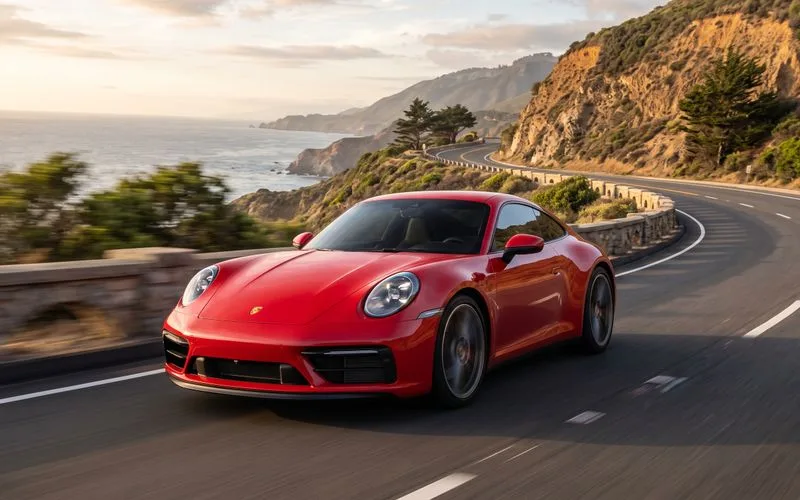 Porsche 911Sports CarBetter at: All-round polish
The default cross-shop for anyone with the budget — a more polished, better-equipped car with real back seats and modern safety tech, if you accept a $50,000-plus premium.
Compare2.01C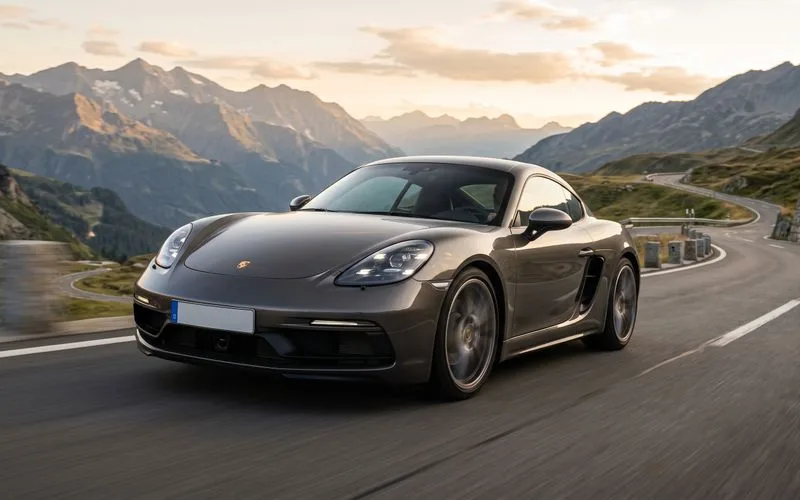 Porsche 718 CaymanSports CarBetter at: Handling finesse
The other mid-engine two-seater in reach, sharper and easier to place in tight spaces even though it gives away serious power.
Compare 2.47C+
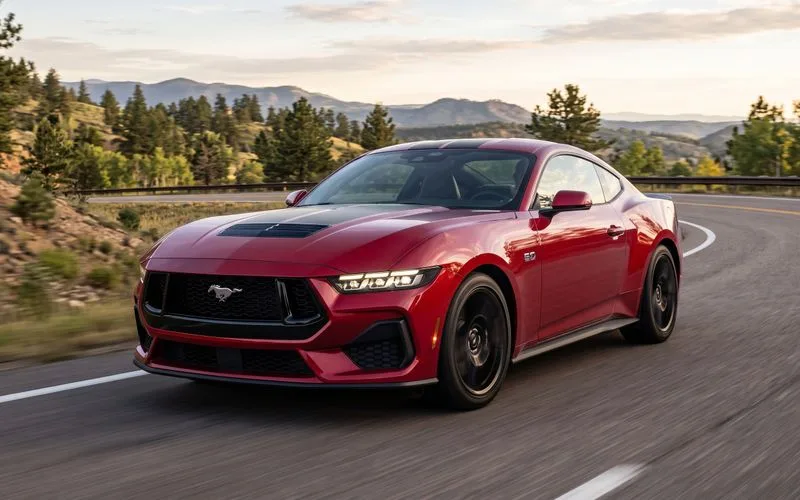 Ford MustangSports CarBetter at: Value and safety
Roughly half the money, with a usable rear seat, a bigger trunk and the standard AEB and lane keeping the Corvette does not offer at any price.
CompareHow it's evolved
10 scored model years · 2017–2026
Subject scores by year
Hover or tap a score to see what moved it versus the year before. A corner mark flags a big swing.
| Year | Performance | Efficiency | Safety | Space | Cost | Reliability | Tech | Use-case | Driving | Value |
|---|---|---|---|---|---|---|---|---|---|---|
| 2026 | 88 | 7 | 32 | 56 | 23 | 70 | 78 | 30 | 81 | 85 |
| 2025 | 88 | 8 | 50 | 55 | 21 | 73 | 72 | 31 | 80 | 79 |
| 2024 | 85 | 7 | 50 | 52 | 18 | 71 | 70 | 25 | 80 | 76 |
| 2023 | 80 | 7 | 33 | 52 | 30 | 74 | 68 | 24 | 80 | 74 |
| 2022 | 75 | 7 | 33 | 51 | 12 | 53 | 61 | 24 | 76 | 77 |
| 2021 | 75 | 8 | 33 | 48 | 20 | 63 | 63 | 28 | 74 | 79 |
| 2020 | 74 | 12 | 14 | 49 | 9 | 52 | 50 | 21 | 70 | 82 |
| 2019 | 72 | 8 | 15 | 51 | 52 | 64 | 44 | 25 | 81 | 77 |
| 2018 | 68 | 8 | 25 | 49 | 53 | 74 | 47 | 27 | 77 | 77 |
| 2017 | 73 | 9 | 25 | 44 | 55 | 67 | 46 | 24 | 78 | 78 |
Compare two years
Best fit & conditions
Higher scores mean a better fit for that use case. Learn more about use-case fit →
Subject profile
Trims & configurations
4 trimsScores above reflect the volume trim. Per-trim specs and scores are rolling out — the full lineup:
Academic Probation · NHTSA safety recalls
Apr 2, 2026Exterior lighting: lighting control module: software · Exterior lighting: turn signalA software error may prevent detection of a rear turn signal light failure. As such, these vehicles fail to comply with the requirements of Federal Motor Vehicle Safety Standard (FMVSS) number 108, "Lamps, Reflective Devices, and Associated Equipment."
Defect
General Motors, LLC (GM) is recalling certain 2026 Chevrolet Corvette ZR1X Coupe, Corvette ZR1X Convertible, Corvette Coupe E-Ray, Corvette Convertible E-Ray, Corvette Convertible, Corvette Coupe, 2025 Corvette E-Ray Coupe, Corvette E-Ray Convertible, Corvette Convertible, and Corvette Coupe vehicles. A software error may prevent detection of a rear turn signal light failure. As such, these vehicles fail to comply with the requirements of Federal Motor Vehicle Safety Standard (FMVSS) number 108, "Lamps, Reflective Devices, and Associated Equipment."
Risk
The driver may be unaware that the turn signal is not working, increasing the risk of a crash.
Remedy
The lighting control module software will be updated by a dealer, or through an over-the-air (OTA) update, free of charge. Owner notification letters are scheduled to be mailed May 18, 2026. Owners may contact Chevrolet customer service at 1-800-222-1020. GM's number for this recall is N252541250. Vehicle Identification Numbers (VINs) involved in this recall became searchable on NHTSA.gov April 2, 2025.
NHTSA campaign 26V213000 ↗Manufacturer no. N25254125032,988 vehicles potentially affected (all models in the campaign)Owners notified May 8, 2026Filed by General Motors, LLCFiled as CORVETTE, CORVETTE CONVERTIBLE, CORVETTE CONVERTIBLE E-RAY, CORVETTE COUPE, CORVETTE COUPE E-RAY, CORVETTE E-RAYFeb 26, 2026Equipment: other: owners/service/other manualGeneral Motors has decided that certain 2027 Chevrolet Bolt EV, 2025-2026 Cadillac OPTIQ, Chevrolet Colorado, Equinox EV, GMC Canyon, 2026 Buick Enclave, Envision, Cadillac CT5, Escalade, Escalade ESV, Escalade IQ, Escalade IQL, LYRIQ, VISTIQ, Chevrolet Blazer EV, Corvette Convertible, Corvette Coupe, Corvette Convertible E-Ray, Equinox, Silverado 1500, 2500, 3500, Silverado EV, Suburban 1500, Tahoe, Traverse, GMC Acadia, Hummer EV Pickup, Hummer EV SUV, Sierra 1500, 2500, 3500, Sierra EV, Terrain, Yukon, and Yukon XL vehicles. The radio may not have been set to the correct status to download the electronic owner's manual during production. As such, these vehicles fail to comply with the requirements of Federal Motor Vehicle Safety Standard number 208, âOccupant Protection.â
Defect
General Motors has decided that certain 2027 Chevrolet Bolt EV, 2025-2026 Cadillac OPTIQ, Chevrolet Colorado, Equinox EV, GMC Canyon, 2026 Buick Enclave, Envision, Cadillac CT5, Escalade, Escalade ESV, Escalade IQ, Escalade IQL, LYRIQ, VISTIQ, Chevrolet Blazer EV, Corvette Convertible, Corvette Coupe, Corvette Convertible E-Ray, Equinox, Silverado 1500, 2500, 3500, Silverado EV, Suburban 1500, Tahoe, Traverse, GMC Acadia, Hummer EV Pickup, Hummer EV SUV, Sierra 1500, 2500, 3500, Sierra EV, Terrain, Yukon, and Yukon XL vehicles. The radio may not have been set to the correct status to download the electronic owner's manual during production. As such, these vehicles fail to comply with the requirements of Federal Motor Vehicle Safety Standard number 208, âOccupant Protection.â
Risk
Without an owner's manual to consult, owners may not know how to safely use and operate the vehicle, increasing the risk of injury in a crash.
Remedy
Dealers will reset the vehicle radio, which will facilitate automatic download of the electronic ownerâs manual, free of charge. Owner notification letters were mailed April 16, 2026. Owners may contact GM customer service at 1-866-467-9700, Chevrolet customer service at 1-800-222-1020 or Cadillac customer service at 1-800-333-4223. The manufacturer's number for this recall is N252540430. Vehicle Identification Numbers (VINs) involved in this recall became searchable on NHTSA.gov on February 26, 2026.
NHTSA campaign 26V114000 ↗Manufacturer no. N2525404305,861 vehicles potentially affected (all models in the campaign)Owners notified Apr 16, 2026Filed by General Motors, LLCFiled as CORVETTE CONVERTIBLE, CORVETTE CONVERTIBLE E-RAY, CORVETTE COUPEAug 21, 2025Fuel system, gasolineExcess fuel may spill into the vehicle fuel-filler pocket during refueling and leak onto an ignition source.
Defect
General Motors, LLC (GM) is recalling certain 2023â2026 Chevrolet Corvette vehicles equipped with a left-side radiator/fan combination. Excess fuel may spill into the vehicle fuel-filler pocket during refueling and leak onto an ignition source.
Risk
A fuel leak in the presence of an ignition source, such as hot engine or exhaust components, can increase the risk of a fire.
Remedy
Dealers will install a shield to divert spilled fuel, free of charge. Owner notification letters were mailed November 14, 2025. Owners may contact Chevrolet customer service at 1-800-222-1020. GM's number for this recall is N252514930.
NHTSA campaign 25V536000 ↗Manufacturer no. N25251493023,656 vehicles potentially affected (all models in the campaign)Owners notified Nov 14, 2025Filed by General Motors, LLCFiled as CORVETTE, CORVETTE CONVERTIBLE, CORVETTE COUPE
12 recalls on other model years of the Corvette (2017–2022, 2024–2025)
Mar 20, 2025Steering: electric power assist systemThe electric power steering (EPS) assist may fail.
Defect
General Motors LLC (GM) is recalling certain 2016-2018 Cadillac CTS, 2017-2018 Cadillac ATS, Chevrolet Camaro, and Chevrolet Corvette vehicles. The electric power steering (EPS) assist may fail.
Risk
A loss of power steering assist can require greater steering effort, especially at low speeds, increasing the risk of a crash.
Remedy
Dealers will replace the power steering gear assembly, free of charge. Owner notification letters were mailed April 15, 2025. Owners may contact Cadilac customer service at 1-800-333-4223 or Chevrolet customer service at 1-800-222-1020. GM's number for this recall is N252497020.
NHTSA campaign 25V175000 ↗Manufacturer no. N252497020934 vehicles potentially affected (all models in the campaign)Owners notified Apr 15, 2025Filed by General Motors, LLCFiled as CORVETTEJun 6, 2024Seat belts: front: retractorThe driver and/or passenger seat belt retractors may lock in a stowed position and become inaccessible to occupants.
Defect
General Motors, LLC (GM) is recalling certain 2024-2025 Chevrolet Corvette vehicles. The driver and/or passenger seat belt retractors may lock in a stowed position and become inaccessible to occupants.
Risk
An inaccessible seat belt that cannot restrain an occupant, increases the risk of injury in a crash.
Remedy
Dealers will replace the driver and/or passenger seat belt retractors, free of charge. Owner notification letters were mailed September 19, 2024. Owners may contact Chevrolet customer service at 1-800-222-1020. GM's number for this recall is N242441390.
NHTSA campaign 24V418000 ↗Manufacturer no. N24244139013,464 vehicles potentially affected (all models in the campaign)Owners notified Sep 19, 2024Filed by General Motors, LLCFiled as CORVETTEFeb 17, 2022Power train: driveline: driveshaftThe rear half-shaft assemblies may be missing one or more ball bearings, which can result in a loss of drive power.
Defect
General Motors, LLC (GM) is recalling certain 2021-2022 Chevrolet Corvette vehicles. The rear half-shaft assemblies may be missing one or more ball bearings, which can result in a loss of drive power.
Risk
An unexpected loss of drive power increases the risk of a crash.
Remedy
Dealers will replace the left or right rear half-shaft assemblies, as necessary, free of charge. Owner notification letters are expected to be mailed April 4, 2022. Owners may contact Chevrolet customer service at 1-800-222-1020. GM's number for this recall is N212351320.
NHTSA campaign 22V091000 ↗Manufacturer no. N21235132022 vehicles potentially affected (all models in the campaign)Owners notified Mar 15, 2022Filed by General Motors, LLCFiled as CORVETTEJun 10, 2021Air bags: srs malfunction warning lamp/light · Electrical system: softwareThe communications gateway module incorrectly processes a loss of communication with the sensing diagnostic module (SDM), causing the air bag malfunction indicator light to inconsistently illuminate.
Defect
General Motors, LLC (GM) is recalling certain 2021 Buick Envision, Cadillac CT4, CT5, Escalade, Escalade ESV, Chevrolet Tahoe, Corvette, Suburban, GMC Yukon, Yukon XL vehicles. The communications gateway module incorrectly processes a loss of communication with the sensing diagnostic module (SDM), causing the air bag malfunction indicator light to inconsistently illuminate.
Risk
The air bag malfunction indicator light may fail to warn the driver of a problem with the air bag, increasing the risk of injury.
Remedy
The communications gateway module software will be updated by a dealer, or through an over-the-air (OTA) update, free of charge. Owner notification letters were mailed on July 1, 2021. Owners may contact Buick customer service at 1-800-521-7300, Cadillac customer service at 1-800-458-8006, Chevrolet customer service at 1-800-222-1020, or GMC customer service at 1-800-462-8782. GM's number for this recall is N212338110.
NHTSA campaign 21V421000 ↗Manufacturer no. N212338110285,622 vehicles potentially affected (all models in the campaign)Owners notified Jul 1, 2021Filed by General Motors, LLCFiled as CORVETTESep 24, 2020Service brakesSensor connection contamination in the electronic brake boost system may cause an interruption of communication between the sensor and the brake boost system.
Defect
General Motors LLC (GM) is recalling certain 2020 Chevrolet Corvette and Cadillac CT4, CT5 and XT4, 2021 Chevrolet Trailblazer, and 2020-2021 Buick Encore GX vehicles. Sensor connection contamination in the electronic brake boost system may cause an interruption of communication between the sensor and the brake boost system.
Risk
If communication with the sensor is interrupted, the electronic brake boost assist could be lost. Extra pedal force will be required to slow and stop the vehicle, increasing the risk of a crash.
Remedy
GM will notify owners, and dealers will replace the electronic brake boost module, free of charge. The recall began December 9, 2020. Owners may contact Chevrolet customer service at 1-800-630-2438, Cadillac customer service at 1-800-333-4223, or Buick customer service at 1-800-521-7300. GM's number for this recall is A202307260.
NHTSA campaign 20V588000 ↗Manufacturer no. A2023072603,677 vehicles potentially affected (all models in the campaign)Owners notified Dec 9, 2020Filed by General Motors LLCFiled as CORVETTESep 24, 2020Seat belts · Seat belts: front: retractorThe driver's seat belt retractor may not lock as intended during a crash.
Defect
General Motors LLC (GM) is recalling certain 2020 Chevrolet Corvette vehicles. The driver's seat belt retractor may not lock as intended during a crash.
Risk
In the event of a crash, if the driver's seat belt fails to lock, there is an increased risk of injury.
Remedy
GM will notify owners, and dealers will replace the driver's side seat-belt retractor, free of charge. The recall began October 15, 2020. Owners may contact GM customer service at 1-866-522-9559. GM's number for this recall is N202307690.
NHTSA campaign 20V581000 ↗Manufacturer no. N2023076905 vehicles potentially affected (all models in the campaign)Owners notified Oct 15, 2020Filed by General Motors LLCFiled as CORVETTEAug 18, 2020Electrical system: software · Structure: body: trunk lidDespite visual and audible warnings, the vehicle can be driven with the front trunk lid unlatched.
Defect
General Motors LLC (GM) is recalling certain 2020 Chevrolet Corvette vehicles. Despite visual and audible warnings, the vehicle can be driven with the front trunk lid unlatched.
Risk
An unlatched hood can open when driving above a certain speed, obstructing the driver's forward view and increasing the risk of a crash.
Remedy
GM will notify owners, and dealers will update the software in the vehicle's Body Control Module to limit the vehicle speed to 26 mph when the hood is not completely closed and latched, free of charge. In addition, the operation of the hood release on the key fob will be modified to reduce the likelihood of inadvertent hood release actuations. Owners also may allow the vehicle to be remedied via an Over-The-Air (OTA) software update. The recall began September 24, 2020. Owners may contact GM customer service at 1-866-522-9559. GM's number for this recall is N202311160.
NHTSA campaign 20V489000 ↗Manufacturer no. N2023111607,071 vehicles potentially affected (all models in the campaign)Owners notified Sep 24, 2020Filed by General Motors LLCFiled as CORVETTEAug 6, 2020Electrical system: software · Latches/locks/linkages: trunk lid: lockThe release button located inside the front trunk compartment may not function after the vehicle has been shut off for ten minutes. As such, these vehicles fail to comply with the requirements of Federal Motor Vehicle Safety Standard number 401, "Internal Trunk Release."
Defect
General Motors LLC (GM) is recalling certain 2020 Chevrolet Corvette vehicles. The release button located inside the front trunk compartment may not function after the vehicle has been shut off for ten minutes. As such, these vehicles fail to comply with the requirements of Federal Motor Vehicle Safety Standard number 401, "Internal Trunk Release."
Risk
If a person climbs inside the front trunk compartment and closes the lid, they may be trapped inside, increasing the risk of injury.
Remedy
GM will notify owners, and dealers will update the software in the vehicle's Body Control Module (BCM) to allow the release switch to always work, free of charge. Owners also may allow the vehicle to be remedied via an Over-The-Air (OTA) software update. The recall began September 3, 2020. Owners may contact GM customer service at 1-866-522-9559. GM's number for this recall is N202309350.
NHTSA campaign 20V461000 ↗Manufacturer no. N2023093505,141 vehicles potentially affected (all models in the campaign)Owners notified Sep 3, 2020Filed by General Motors LLCFiled as CORVETTEFeb 7, 2019Steering: electric power assist systemThe electric power steering (EPS) assist system may fail.
Defect
General Motors LLC (GM) is recalling certain 2016-2018 Cadillac CTS, and 2017 Cadillac ATS, Chevrolet Camaro, and Chevrolet Corvette vehicles. The electric power steering (EPS) assist system may fail.
Risk
Loss of power steering assist would require a higher steering effort, especially at lower speeds, which may increase the risk of a crash.
Remedy
GM will notify owners, and dealers will replace the power steering gear assembly, free of charge. The recall began June 13, 2019. GM' number for this recall is N182182760.
NHTSA campaign 19V086000 ↗Manufacturer no. N18218276026,772 vehicles potentially affected (all models in the campaign)Owners notified Jun 13, 2019Filed by General Motors LLCFiled as CORVETTEMay 31, 2018Air bags: air bag/restraint control moduleHard braking or acceleration may cause the sensing diagnostic module (SDM) to enter a fault state. As a result, the SDM will not provide crash sensing or deploy the necessary air bags in the event of a crash.
Defect
General Motors LLC (GM) is recalling certain 2019 Chevrolet Corvette ZR1 vehicles. Hard braking or acceleration may cause the sensing diagnostic module (SDM) to enter a fault state. As a result, the SDM will not provide crash sensing or deploy the necessary air bags in the event of a crash.
Risk
In the event of a crash, if the air bags do not deploy as designed, the occupants have an increased risk of injury.
Remedy
GM will notify owners, and dealers will reprogram the SDM with updated software, free of charge. The recall began on June 29, 2018. Owners may contact Chevrolet customer service at 1-800-222-1020. GM's number for this recall is 18195.
NHTSA campaign 18V360000 ↗Manufacturer no. 18195498 vehicles potentially affected (all models in the campaign)Owners notified Jun 29, 2018Filed by General Motors LLCFiled as CORVETTEJul 10, 2017Air bags: frontal · Air bags: frontal: sensor/control module-inactive · Seat belts: pretensionerWhile being previously remedied for recall 16V-651, the affected vehicles may not have received the complete software update necessary to remedy the recall condition. Without the update, certain driving conditions may cause the air bag sensing and diagnostic module (SDM) software to activate a diagnostic test. During this test, deployment of the frontal air bags and the seat belt pretensioners would not occur in the event of a crash.
Defect
General Motors LLC (GM) is recalling certain model year 2014-2016 Buick Lacrosse and Chevrolet Spark EV, Caprice PPV and SS vehicles, 2014-2017 Buick Encore and Chevrolet Corvette, Silverado 1500 and GMC Sierra 1500 vehicles, 2015-2016 Cadillac Escalade and Escalade ESV, Chevrolet Tahoe, Trax, Suburban and Silverado 2500 and 3500 and GMC Yukon and Yukon XL vehicles, and 2015-2017 GMC Sierra HD 2500 and 3500 vehicles. While being previously remedied for recall 16V-651, the affected vehicles may not have received the complete software update necessary to remedy the recall condition. Without the update, certain driving conditions may cause the air bag sensing and diagnostic module (SDM) software to activate a diagnostic test. During this test, deployment of the frontal air bags and the seat belt pretensioners would not occur in the event of a crash.
Risk
A failure of the front air bags or seat belt pretensioners to deploy in the event of a crash necessitating deployment increases the risk of injury to the driver and front passenger.
Remedy
GM will notify owners, and dealers will reflash the SDM software. Vehicles that have had a previous air bag deployment will have the SDM replaced. These repairs will be performed free of charge. The recall began on August 4, 2017. Owners may contact Buick customer service at 1-800-521-7300, Cadillac customer service at 1-800-458-8006, Chevrolet customer service at 1-800-222-1020, or GMC customer service at 1-800-462-8782. GM's number for this recall is 17287.
NHTSA campaign 17V437000 ↗Manufacturer no. 1728740,683 vehicles potentially affected (all models in the campaign)Owners notified Aug 4, 2017Filed by General Motors LLCFiled as CORVETTESep 8, 2016Air bags: frontal · Air bags: frontal: sensor/control module-inactive · Seat belts: pretensionerIn the affected vehicles, certain driving conditions may cause the air bag sensing and diagnostic module (SDM) software to activate a diagnostic test. During this test, deployment of the frontal air bags and the seat belt pretensioners would not occur in the event of a crash.
Defect
General Motors LLC (GM) is recalling certain model year 2015-2017 Chevrolet Silverado 2500 HD, 3500 HD, Tahoe, Suburban, GMC Sierra 2500 HD and 3500 HD, GMC Yukon, GMC Yukon XL, Cadillac Escalade and Cadillac Escalade ESV vehicles and 2014-2017 Chevrolet Corvette, Silverado 1500, Trax, Caprice Police Pursuit Vehicle, GMC Sierra 1500, Buick Encore, and 2014-2016 Buick Lacrosse, Chevrolet Spark EV and SS vehicles. In the affected vehicles, certain driving conditions may cause the air bag sensing and diagnostic module (SDM) software to activate a diagnostic test. During this test, deployment of the frontal air bags and the seat belt pretensioners would not occur in the event of a crash.
Risk
A failure of the front air bags or seat belt pretensioners to deploy in the event of a crash necessitating deployment increases the risk of injury to the driver and front passenger.
Remedy
GM will notify owners, and dealers will reflash the SDM software. Vehicles that have had a previous air bag deployment will have the SDM replaced. These repairs will be performed free of charge. The recall began on October 13, 2016. Owners may contact Buick customer service at 1-800-521-7300, Cadillac customer service at 1-800-458-8006, Chevrolet customer service at 1-800-222-1020, or GMC customer service at 1-800-462-8782. GM's number for this recall is 16007.
NHTSA campaign 16V651000 ↗Manufacturer no. 160073,640,162 vehicles potentially affected (all models in the campaign)Owners notified Oct 13, 2016Filed by General Motors LLCFiled as CORVETTE
Source: NHTSA Office of Defects Investigation recall database, model years 2017–2026. Recalls are listed by model year as the manufacturer filed them; whether a specific car is affected depends on its VIN — check a VIN at nhtsa.gov ↗. NHTSA model names matched to this page: CORVETTE, CORVETTE CONVERTIBLE, CORVETTE CONVERTIBLE E-RAY, CORVETTE COUPE, CORVETTE COUPE E-RAY, CORVETTE E-RAY.
Detailed scoring by subject
1Performance & PowertrainThe Corvette's best-graded category.4.00A+
The volume Stingray runs the naturally aspirated 6.2L LT2 pushrod V8 at 490 hp, rising to 495 hp with the available performance exhaust — figures carried unchanged into 2026, whose updates were interior-focused. The 2026 range tops out with the new ZR1X, which pairs the ZR1's twin-turbo LT7 with an electrified front axle for roughly 1,250 hp combined.
The LT2 makes 465 lb-ft, or 470 lb-ft with the performance exhaust, well past the top of the coupe normalization band so the item clamps at 100. Torque delivery is the pushrod V8's calling card — a broad, flat curve rather than the peaky flat-plane character of the Z06's LT6, which actually makes slightly less twist (460 lb-ft) at much higher rpm.
Chevrolet claims 2.9 seconds to 60 mph for the Z51-equipped Stingray, with instrumented tests routinely matching or beating it — quicker than the entire mainstream coupe field and past the fast end of the segment band, so the item clamps at 100. Mid-engine traction plus the dual-clutch transaxle makes the launch repeatable rather than a one-shot best.
A naturally aspirated V8 sitting directly behind the cabin gives instant, perfectly linear throttle response with no turbo lag anywhere in the range, and reviewers consistently rate the LT2 among the most immediate powertrains at any price. It falls short of a perfect score only on refinement in the narrow sense — the pushrod V8 is coarser and boomier at part-throttle cruise than a turbo six or the Z06's exotic flat-plane LT6, and active fuel management can be felt on light throttle.
Every 2026 Corvette uses the Tremec 8-speed dual-clutch transaxle, which fires off quick, crisp shifts and holds gears sensibly in Sport and Track modes; manual-mode control via the paddles is decisive and never overrides the driver mid-corner. Marked down for low-speed manners — the dual-clutch can be hesitant or slightly jerky in stop-and-go traffic and when reversing — and because no manual gearbox is offered anywhere in the range.
The Corvette is rear-wheel drive across the volume lineup — Stingray, Z06 and ZR1 are all RWD — and all-wheel drive exists only on the two electrified halo variants, the E-Ray and the new-for-2026 ZR1X, which drive the front axle with an electric motor. That is the framework's textbook "AWD restricted to top trims" case and lands in the low band, despite the eAWD system itself being genuinely sophisticated: instant electric torque to the front axle with no mechanical connection to the V8.
For 2026 the Corvette offers five genuinely distinct powertrains — the 6.2L LT2 pushrod V8, the 5.5L flat-plane LT6, the twin-turbo 5.5L LT7, and two hybrid eAWD combinations (E-Ray and the new ZR1X) — exceptional breadth for a single nameplate, clearing the framework's bar of multiple distinct powertrains including electrified options. Held below the top of the band because the electrification is aimed purely at performance: there is no plug-in, no EV variant, and no efficiency-oriented choice anywhere in the range.
2Efficiency & RangeThe Corvette's lowest-graded category.0.00F
The volume trim is the Stingray coupe with the naturally aspirated 6.2L LT2 V8 and 8-speed dual-clutch, carried into 2026 unchanged mechanically (the 2026 update is an interior redesign plus the new hybrid ZR1X halo). EPA combined sits at 19 MPG, below the 22 MPG floor of the coupe band, so the item scores 0.
16 MPG city for the Stingray is 4 MPG under the 20 MPG floor of the coupe city band — a 495-hp naturally aspirated V8 with little to gain from cylinder deactivation in stop-and-go use.
24 MPG highway is the Corvette's best EPA figure but still sits below the 26 MPG floor of the coupe highway band, so it scores 0. Tall top gearing and Active Fuel Management help on steady cruise; frontal area and wide rubber cap the gain.
The C8 carries an 18.5-gallon tank; at the 19 MPG EPA combined figure that works out to roughly 352 miles, low in the 280–650 mi coupe band. Real-world range drops sharply with spirited use, and the hybrid E-Ray gains nothing here since its battery is a performance device, not a range extender.
At EPA's 15,000 mi/yr assumption the Stingray burns roughly 790 gallons of premium a year, which lands well past the $2,800 top of the coupe cost band and scores 0. Higher trims cost more still.
Premium is required, not merely recommended — Chevrolet specifies 93 octane for the LT2 to make rated output, and the higher-output LT6/LT7 engines are stricter still. There is no E85, diesel, or home-charging escape hatch: the E-Ray's battery is charged by the engine and regen only, so every mile is paid for at the premium pump. That sits in the 0–49 band, below the Mustang's premium-recommended 45.
3SafetyGrades near the bottom of the scale.0.11F
NHTSA has never published an NCAP overall star rating for the C8 Corvette in any model year (2020-2026), and 2026 is no exception — two-seat sports cars at this volume fall outside routine NCAP selection. Estimated at 4 stars from the C8's aluminum spaceframe and the crash-structure advantage of a mid-engine layout with a long front crush zone, but there is no tested figure behind it. Re-score: replaces a placeholder 80 (4.6 stars) that implied crash data the Corvette does not have.
IIHS has not crash-tested the C8 Corvette in any model year, so there is no Top Safety Pick or TSP+ award and not one individual crashworthiness result on record for the generation. Scored mid-band as untested-without-known-concerns rather than in the 0-49 band, which the guidance reserves for Marginal/Poor results or untested with specific structural doubts. Note that IIHS awards now require a good front-crash-prevention result, which the Corvette could not earn regardless of structure because it has no AEB (see 3.2.2).
The Corvette is the conspicuous hole in Chevrolet's safety lineup: Chevy Safety Assist — the AEB / forward collision alert / front pedestrian braking / lane keep assist / IntelliBeam bundle standard on essentially every other 2026 Chevrolet, down to the cheapest Trax — is not offered on the Corvette in any trim or package. Of the five features this item measures (AEB, ACC, LKA, BSM, RCTA), only blind-spot and rear cross-traffic alert exist at all, and those are trim-dependent. That is not 'locked to upper trims', it is unavailable, which puts the car at the bottom of the 0-49 band. The 2026 model year brought a redesigned interior and new display architecture but no announced addition of collision-avoidance hardware.
There is no automatic emergency braking to evaluate — the Corvette offers neither city-speed nor highway-speed AEB, no forward collision alert and no pedestrian detection, day or night, on any 2026 trim. It is one of the very few new vehicles still sold in the US without the feature, and it consequently has no IIHS front-crash-prevention rating. Near-floor score; the residual points reflect strong braking hardware under the driver's own foot, not any automated intervention.
The one area where the Corvette's driver-assist content is competitive. Side Blind Zone Alert with Lane Change Alert and Rear Cross Traffic Alert is fitted on the volume 2LT and 3LT Stingray trims and is a genuinely useful pairing given how little the driver can see rearward. It is alert-only — no active steering or braking intervention, no safe-exit alert — and it is not standard on the entry 1LT, which keeps it in the middle of the 50-79 band rather than above it.
Absent, not crude — the 2026 Corvette has no lane departure warning, no lane keep assist and no lane centering in any trim or option package, because it carries none of the forward-looking camera hardware those functions require. Squarely at the floor of the 0-49 'crude or absent' band.
The Corvette has conventional fixed-speed cruise control only — no adaptive cruise at any speed range, no stop-and-go, and therefore no highway-assist behavior to judge. This is a long-standing and widely noted omission on the C8 that the 2026 interior redesign did not address. The guidance puts 'basic cruise only' in the 0-49 band; scored near its floor because there is not even an optional ACC path on the order sheet.
No hands-free highway driving is available on the 2026 Corvette. Super Cruise is GM's strongest asset in this item — a mature, heavily mapped North American system deployed across most of the Chevrolet, GMC and Cadillac ranges — but it has never been offered on the Corvette, which lacks both the required forward camera/radar suite and the driver-attention camera. A couple of points above a pure zero only because the capability exists in the corporate portfolio; it buys a Corvette owner nothing.
LED projector headlamps with LED daytime running lamps are standard across the 2026 Corvette range, so there is no cheap-trim halogen penalty and output is good on a car whose low beam origin suits its low stance. What holds it to the middle of the band is the lack of corroboration and the lack of assistance features: IIHS has never rated Corvette headlights, and the car offers no curve-adaptive or matrix beam and no IntelliBeam automatic high beam, since auto high beams reach other Chevrolets bundled inside Chevy Safety Assist.
Sharply split. Forward and quartering visibility is a real strength of the mid-engine layout — the short front deck, low cowl and forward-pushed windshield give a view over the nose no front-engine GT in this segment matches, and it is the most-praised ergonomic gain over the C7. Rearward it is among the worst in the class: the engine deck, thick flying buttresses and a shallow letterbox rear window leave a large blind zone that alert-only blind-spot monitoring only partly patches. Camera compensation is better than most rivals here — the Rear Camera Mirror replaces the mirror view outright and the available HD front/rear and curb-view cameras cover parking and apex-clipping — which lifts it above the Mustang and LC without reaching the naturally airy BRZ.
4Space & ComfortMid-pack among this car's ten categories.1.74C-
The mid-engine C8 Corvette has no rear seat in any 2026 trim or body style; the engine bay sits directly behind the bulkhead. Against the coupe band (4-5 seats) a strict two-seater clamps to the floor.
Published C8 coupe front headroom of 37.9 in is mid-pack for the coupe band (36-40) — better than a Mustang fastback (37.6) or BRZ (37.0), short of a 2 Series or Z. The 2026 interior revision reworks the dash and console, not the roofline, so the figure carries over.
42.8 in of front legroom is genuinely generous for a mid-engine two-seater and sits in the upper half of the coupe band (40-44), ahead of the Supra (42.2) and LC (42.0) though behind the Mustang's outlier 44.5.
The dual-trunk layout gives the Corvette far more usable luggage room than most mid-engine cars — two golf bags aft plus a carry-on up front — but 12.6 cu ft still lands in the lower third of the coupe band (10-20). Real-world capacity drops sharply with the roof panel stowed.
Clever packaging at the margins — a hidden bin behind the tilting center display, a parcel shelf behind the seats, and the frunk/rear-trunk pairing that makes the car weekend-usable — offsets genuinely sparse cabin cubbies: shallow door pockets, a small console bin, and no meaningful glovebox. The 2026 dash revision deletes the button spine that walled off the passenger and frees a little console real estate.
The GT2 buckets fitted to volume 2LT/3LT Stingrays are among the better sports-car seats sold — supportive enough for track use yet repeatedly described as comfortable over long highway stints, with heating, ventilation and power bolster adjustment. The optional Competition Sport bucket is markedly narrower and harsher, which is what keeps this off the top band.
With Magnetic Ride Control the C8 rides with a compliance that is unusual for the performance on offer — Tour mode is genuinely GT-like over broken pavement while body control stays tight, and the GPS-linked front lift removes the usual low-car annoyance. Base Stingrays without MR on the larger wheels are noticeably firmer, and Z06/ZR1 on Cup 2 rubber firmer still.
The mid-engine layout puts the LT2 V8 immediately behind the occupants' heads, so intake and exhaust noise is ever-present and there is audible drone at highway cruise; wide performance tires add coarse-surface road roar. Acoustic laminated glass and active noise cancellation keep wind noise well controlled, so it is quieter than a Mustang GT or Supra but no GT car.
Volume 2LT/3LT trims carry heated and ventilated front seats, heated steering wheel, dual-zone automatic climate, memory package, head-up display, wireless charging and remote start — a rich set for a two-seat sports car, with the 2026 redesign moving climate control into a cleaner interface. Entry 1LT is meaningfully thinner, and there is no rear-cabin provision to earn credit for.
5Cost of OwnershipOne of the Corvette's weakest categories.0.00F
The entry 2026 Corvette is still the Stingray 1LT coupe, carrying into the low-$70,000s with destination after a modest year-over-year increase off the 2025 car's $69,995 as-delivered price. That sits far above the coupe band ceiling of $55,000, so the item floors at 0.
Corvette volume skews hard to the 2LT/3LT equipment groups rather than the stripped 1LT, and the Z51 performance package is on a large share of builds — a representative Stingray leaves the lot near $80,000. Roughly $22,000 past the coupe band ceiling, so this floors at 0 as well.
Mid-pack for the segment: the LT2 is a pushrod GM V8 on a light factory service schedule with widely available parts, which keeps routine work cheap, but the dry-sump oil service, performance brake wear, and Michelin Pilot Sport 4S tires on the Z51 cars that dominate volume add materially over five years.
Depreciation resistance is the Corvette's single best ownership-cost trait and effectively the only item carrying this category. Constrained supply, a devoted enthusiast buyer base, and repeated KBB Best Resale Value recognition keep C8 residuals well above the sports-coupe norm.
Chevrolet's standard 3-year/36,000-mile bumper-to-bumper coverage applies to the Corvette with no performance-model extension, placing it exactly at the segment band floor.
Chevrolet's 5-year/60,000-mile powertrain coverage is the segment minimum — no better than the entry point of the band, and well short of the longer terms some rivals' corporate policies provide.
Chevrolet includes just one complimentary scheduled maintenance visit — a single oil-and-filter service — among the thinnest included-maintenance offers in the segment next to Toyota's 2-year ToyotaCare on the GR86/Supra or the longer programs from BMW and Porsche. Roadside assistance and courtesy transportation matching the 5-year/60,000-mile powertrain term, plus the connected-services trial, are what keep this out of the bottom band.
$79,900 volume-trim price minus its estimated resale value after 5 years (59% retained, or about $47,141) leaves about $32,759 in depreciation. Add the projected $6,100 in 5-year maintenance and repairs, and owning this vehicle for 5 years costs about $38,859 in total.
6Reliability & QualityGrades above the middle of the scale.2.74B-
The C8 Corvette has been one of the better-behaved products in Chevrolet's lineup — Consumer Reports and J.D. Power owner-quality signals for the Stingray have run average-to-above-average, which is a genuinely good result for a mid-engine sports car and well ahead of exotic-adjacent rivals like the AMG GT. What keeps it out of the top band is that 2026 is a change year rather than a settled one: the reworked instrument panel and screen/electrical architecture reset the infotainment-gremlin clock, and the lineup now spans four powertrains up to the new ZR1X. Scored on the volume Stingray; the Z06/ZR1/ZR1X carry a materially higher complexity risk.
Chevrolet's multi-year dependability record is split: J.D. Power's Vehicle Dependability Study generally places the brand at or slightly above the industry-average PP100, while Consumer Reports' brand rankings put it in the lower third of mainstream brands, dragged down by troubled EV and small-crossover launches elsewhere in the lineup. That mixed record is mid-pack. This item is deliberately brand-level and not model-level — the Corvette's own comparatively strong showing is credited in 6.1.1, not here — so it is held identical to the rest of the scored Chevrolet fleet.
Seven model years of C8 production have accumulated a real recall list — the widely-publicised early-build front-trunk lid latch campaign (hood able to open at speed), plus seat-belt, brake, battery-cable, wheel and rearview-camera/software actions — heavier than a benchmark sports car but not systemic. Crucially, the Corvette sits entirely outside GM's serious 6.2L L87 connecting-rod campaign that hammered the Silverado and Tahoe scores: the Corvette's LT2 is a different, dry-sump engine on a different line. TSB traffic clusters on the dual-clutch transmission's low-speed behaviour and on cabin squeak/rattle and infotainment fixes rather than on anything load-bearing.
The volume Stingray's 6.2L LT2 is the latest iteration of GM's Gen V small-block — a conventional pushrod V8 architecture with a two-decade high-mileage track record, given a dry-sump oiling system in the Corvette specifically to survive sustained cornering loads. That is one of the most proven performance powertrains sold in America and is the reason this scores far above the Chevrolet fleet average. The limiter is the other half of the driveline: the Tremec TR-9080 eight-speed dual-clutch is exclusive to the C8, has no pre-2020 history, and is the component C8 owners report trouble with. Above the Stingray, durability confidence drops further — the flat-plane LT6/LT7 and the hybrid front drive unit in the E-Ray and new ZR1X are low-volume and unproven.
Measured against price — the point of this item — the Corvette's cabin is one of the strongest in the dataset. The C8 moved to extensive leather, genuine aluminium and carbon-fibre trim and heavily bolstered GT2/Competition Sport seats, and reviewers have consistently said the Stingray's interior reads like a car costing considerably more; it was the single biggest step forward over the C7. The 2026 instrument-panel rework further modernises the screens and switchgear layout. It falls short of a clean 90 because the material advantage narrows sharply at Z06/ZR1 money, where the same cabin has to justify a six-figure price against Porsche.
Bowling Green assembly has improved markedly over the generation and current cars are broadly solid, but the C8 carries a persistent tail of owner complaints about interior squeaks and rattles, trim and panel alignment, targa-roof-panel sealing and water intrusion, and infotainment glitches — the kind of scattered issues that separate it from the hand-built AMG GT or a Supra built to Toyota's initial-quality standard. 2026 adds first-year-of-a-redesigned-dashboard risk on top of that, which is exactly where new rattles and electrical faults tend to appear.
The Corvette's structural advantage over every exotic rival is that it is sold and serviced by Chevrolet: roughly 2,900–3,000 US franchised stores, so an owner is rarely far from factory service and warranty work — coverage a Porsche or AMG buyer cannot match. The deduction is Corvette-specific rather than brand-specific: not every Chevrolet store is equipped or trained for a mid-engine sports car, GM funnels the work to Corvette-certified dealers, and Z06/ZR1-level service concentrates in an even smaller subset. Combined with service satisfaction that sits around the industry average, that puts it a couple of points under the mainstream Chevrolet models.
For a car of this performance the Corvette is cheap to keep: the LT2 small-block shares its service logic and much of its parts channel with the most common V8 family in American independent shops, the enthusiast aftermarket is enormous and decades deep, and routine maintenance is priced like a Chevrolet rather than like a supercar. It does not reach Mustang territory because genuine supercar consumables intervene — Michelin Pilot Sport Cup 2 tyres, Magnetic Ride dampers, optional carbon-ceramic brakes and composite body panels are all expensive, and the mid-engine packaging makes several jobs labour-intensive in a way a front-engine pony car is not.
7Technology & InfotainmentGrades above the middle of the scale.3.31B+
The 2026 model year brought the C8's first full interior redesign, replacing the 8 in center screen and the criticized vertical button 'wall' with a 14 in center touchscreen plus a 6.6 in secondary display angled at the driver.
The redesigned 2026 system is a large step up from the outgoing 8 in unit — crisp graphics, quick response, and the removal of the button spine that reviewers had panned since 2020. It falls short of the best in class because climate and vehicle settings migrated into the 6.6 in touchscreen, trading physical controls for glass.
Unlike GM's EV lineup, the gas-powered Corvette retains phone projection, with wireless Apple CarPlay and wireless Android Auto standard across trims — a meaningful differentiator given GM's removal of projection elsewhere.
Built-in connected navigation and a functional voice assistant are available, but the Corvette's native nav is not a standout and most owners default to CarPlay/Android Auto maps. Whether the 2026 system carries GM's full Google built-in stack (Google Maps/Assistant) as on mainstream Chevrolets is not confirmed here.
A 10-speaker Bose system is standard, with the 14-speaker Bose Performance Series available on upper trims — strong, well-tuned audio for a two-seat cabin, but Bose sits a tier below the Burmester/Bowers & Wilkins systems offered by German rivals.
A 12.7 in fully digital, reconfigurable cluster is standard, with layouts that change by drive mode (including a track-focused view). Crisp and highly configurable — among the better clusters in the sports-car class.
The Corvette runs GM's VIP electrical architecture, which supports over-the-air updates spanning infotainment and a range of vehicle modules — real whole-vehicle capability, but GM ships feature-adding OTA drops far less frequently than Tesla or Rivian.
The myChevrolet app with OnStar covers the core set — remote start, lock/unlock, locate, vehicle status and diagnostics — but remote commands become subscription-gated after the included trial, and the Corvette does not offer phone-as-key.
A two-seat cabin means one row to serve: USB-A and USB-C ports plus wireless phone charging on upper trims. Adequate for the occupants, but there is no household AC outlet and device stowage is tight — this item's top band assumes multi-row port coverage the car has no place for.
Passive/proximity entry, push-button start and remote start are standard equipment, and the memory-equipped front-axle lift is a genuine convenience for a low car. Held out of the top band by the absence of phone-as-key, and there is no liftgate to automate.
Rear camera is standard with front and rear park assist and a front curb-view camera that genuinely helps with the low nose, and the Performance Data Recorder adds camera capability rivals lack. But there is no true 360-degree surround-view system and no automated parking, which caps this at the top of the middle band.
A color head-up display with drive-mode-specific layouts, including a track view with shift lights, is standard on the 2LT/3LT trims that make up the bulk of Corvette volume — available on the trims most buyers actually order, though not on the base car.
8Use-Case FitOne of the Corvette's weakest categories.0.00F
The 2026 Corvette is a strict two-seater with no rear bench and therefore no rear LATCH positions; a child seat can only ride in the front passenger seat with the airbag suppressed, which is not a daily family solution. The wide door opening and very low sill also make loading a child into a deep bucket seat awkward rather than easy.
Beyond having no back seat, the Corvette carries one of the thinnest active-safety packages of any 2026 vehicle: no automatic emergency braking, no forward collision alert, no lane keeping and no adaptive cruise at any trim, plus no NHTSA or IIHS crash ratings for the C8. Side Blind Zone Alert with Rear Cross Traffic Alert and a standard rear camera are the extent of the ADAS proposition.
With two seats there is no 'all-row' comfort to assess, and total luggage volume is 12.6 cu ft split across a frunk and a rear compartment that is largely consumed once the removable targa roof panel is stowed. It is a competent two-person tourer, not a family road-trip vehicle.
The C8 is the most daily-livable car in the mid-engine class: the 8-speed dual-clutch is smooth in stop-and-go, Magnetic Ride Control 4.0 keeps the ride supple, forward visibility from the mid-engine packaging is genuinely good, and the available front-axle lift with GPS memory defuses driveways and speed bumps. It loses ground for the absence of adaptive cruise, restricted over-the-shoulder visibility and a cabin that stays noisier than a normal commuter.
19 MPG combined on required 93-octane premium works out to roughly $3,450 a year at 15,000 miles, and the consumables are worse than the fuel bill — staggered summer performance tires and high insurance premiums make every commuting mile expensive. The E-Ray, Z06 and ZR1 are all worse still.
The overall footprint is manageable at roughly 182 in long, but the car is wide, the 38.9 ft turning circle is poor for its size, and the low front splitter makes driveway aprons and parking blocks a constant calculation. Standard rear camera plus available front curb-view and HD Surround Vision are the mitigations.
Chevrolet publishes no towing capacity for the Corvette in the US market and offers no factory hitch, and there is no bed, no cargo floor and no folding seat — the entire load space is 12.6 cu ft across two sealed compartments. It is not meaningfully work-capable.
The composite body panels resist dings and rust and the pushrod LT-series V8 architecture is genuinely fleet-proven in GM trucks, which is worth something. Everything around it is not: leather and microsuede trim, magnetorheological dampers, a dual-clutch transaxle, ~5 in of ground clearance and low-profile summer tires all punish hard-use abuse, and the Corvette has no fleet-duty track record.
There is no 120V household outlet, no roof rails or rack ecosystem, no factory hitch, no bed access hardware and no tie-down provisions; both cargo compartments are carpeted and sealed rather than washable. The accessory catalog is cosmetic and track-oriented.
This is the Corvette's strongest ownership mission: the GT2 seats draw consistent long-haul praise, Magnetic Ride Control keeps the highway ride settled, the head-up display is standard from 2LT up, the roof panel comes out for open-air touring, and ~352 miles of range covers a real driving day. The ceiling is set by a 63-rated noise level and by having no adaptive cruise at all, which is exactly the fatigue reducer this item asks about.
The volume Stingray is rear-wheel drive on summer rubber with roughly 5 in of ground clearance, no roof rails, no tow rating and no camping provisions — a gravel forest road is the practical limit even with the front lift raised. The E-Ray's front electric drive unit makes a genuinely all-weather Corvette, but that is a much higher price of entry, not the volume configuration.
12.6 cu ft is respectable for a mid-engine two-seater and the rear compartment was deliberately shaped to swallow two golf bags, but it is split across two small sealed holds, there are no seats to fold, no roof rails and no hitch, and stowing the removable roof panel consumes most of the rear space — the exact trade-off that bites on a weekend trip.
9Driving ExperienceOne of the Corvette's strongest categories.3.49B+
The mid-engine C8 layout puts roughly 40/60 weight distribution and a very low polar moment under the driver, and the aluminum spaceframe with double-wishbone suspension at both ends gives body control that stays flat and predictable well past the point where front-engine rivals start leaning on their outside tires. Even the volume Stingray with the Z51 package pulls above 1.0 g on the skidpad, and the optional Magnetic Ride Control 4.0 lets it do that without the brittle low-speed ride that usually pays for it — top-of-class handling by any measure, not just for the money.
Without a driveshaft or engine mass loading the front axle, the C8's electric rack is unusually clean — quick off-center, accurately weighted, and consistent in its build-up mid-corner, and it is routinely singled out as one of the better electrically assisted setups on sale. It still filters more surface texture than the best hydraulic-era systems and than a 911's rack, so it reads precise and trustworthy rather than genuinely talkative.
Brembo hardware at all four corners plus the mid-engine rear weight bias give the C8 unusually short, repeatable stops — instrumented 70–0 mph results for a Z51 Stingray land in the mid-130-foot range, and fade resistance holds up over repeated hard use. The electronic brake-by-wire pedal is firm and easy to modulate at speed; some reviewers note it feels slightly synthetic in the first few millimeters during low-speed parking-lot use, which is the only thing keeping this out of the top few points.
A naturally aspirated 6.2L V8 paired to the Tremec eight-speed dual-clutch transaxle means throttle response is immediate and linear with no turbo lag to calibrate around, and the DCT's full-throttle shifts are quick and clean. The deductions are all low-speed: dual-clutch creep can be marginally abrupt in stop-and-go traffic and the auto stop/start restart is more felt than in a torque-converter car.
Under load the LT2 is one of the best-sounding engines at any price, and with the performance exhaust open it is the single biggest reason to drive this car — "pleasant under load" undersells it. The offset is that the engine sits directly behind the occupants' heads with only a bulkhead between, so highway cruising carries noticeable induction and exhaust drone that a front-engine GT does not.
Chevrolet quotes 38.9 ft curb-to-curb for the C8, near the wide end of the coupe band — wide front tires on a short wheelbase limit steering lock, and the car's width makes three-point turns and tight garages a genuine chore. This is the clearest everyday-usability penalty in the category and is unchanged for 2026.
The seating position itself is excellent — low, well centered on the pedals, with a squared-off wheel that telescopes generously, seats (GT1 through Competition Sport) that hold without punishing, and a low cowl and short hood that make the front end easy to place. What costs it points is everything around that: the tall center spine and wide sills make ingress and egress a deliberate act, over-the-shoulder and rear visibility are poor, and headroom is tight with the roof panel in place. The 2026 interior redesign is a real ergonomic gain, replacing the widely criticized vertical button wall with a 14-inch center display and a driver-angled 6.6-inch control screen.
This is as close to a consensus enthusiast pick as the segment produces: supercar-adjacent mid-engine responses, a naturally aspirated V8 soundtrack that never gets old, and enough breadth that the same car is credible on a back road, at a track day and on a commute. The 2026 range extends that character from the 490-hp Stingray all the way to the new ~1,250-hp ZR1X. The absence of any manual transmission is the only meaningful complaint enthusiasts still level at it.
10Value & Market PositionOne of the Corvette's strongest categories.3.76A
Even the entry Stingray 1LT arrives with leather-trimmed power GT1 seats, dual-zone climate, keyless entry and remote start, a 10-speaker Bose system, a 12.7 in digital cluster and — new for 2026 — the redesigned 14 in center touchscreen with wireless Apple CarPlay and Android Auto standard. That is a materially fuller base spec than the German sports-car rivals, where seat heating, upgraded audio and even a full digital cluster are line-item options. It stops short of the top of the band because the head-up display, front-axle lift and 14-speaker Bose Performance Series are reserved for the 2LT/3LT trims that carry most of the volume.
This is the Corvette's defining commercial argument and the strongest value case in the coupe dataset: a mid-engine, 495-hp, 2.9-second-to-60 sports car with a dual-clutch transaxle, Brembo brakes and a genuinely premium cabin for a low-$70,000 base and roughly $80,000 as most buyers equip it. The nearest rivals with comparable pace and layout — 911 Carrera variants, AMG GT — start $50,000 to $70,000 higher, and the gap only widens once they are optioned to Stingray-equivalent content. Held just below the ceiling because the thin 3 yr/36,000 mi warranty and single complimentary service visit claw back some of the sticker advantage over an ownership cycle.
Few nameplates at any price spread as wide: coupe and retractable-hardtop convertible bodies, three equipment tiers (1LT/2LT/3LT) on the Stingray, the Z51 performance package, and five distinct powertrains across Stingray, E-Ray, Z06, ZR1 and the new-for-2026 ZR1X, spanning roughly $72,000 to well past $200,000. Seat, interior-color and carbon-package personalization is unusually deep for a domestic product. Short of the top band only because there is no lower-cost entry point beneath the Stingray and no manual transmission for buyers who want one.
The Corvette is the clear volume leader among premium sports cars in the US, running in the low-to-mid 30,000-unit range annually through the C8 era — roughly double the 911's US volume and multiples of the AMG GT, Nissan Z or Lexus LC. Market acceptance of the mid-engine switch was emphatic, with multi-year order backlogs early in the generation. Scored below the top of the band because volume has eased off the C8's launch peak as the generation matures and the segment as a whole contracts.
Corvette functions as a sub-brand in its own right — one of the most recognized performance nameplates in the world, with a devoted multi-generation following, and the mid-engine C8 broadened its appeal to younger buyers and to cross-shoppers who would previously only have considered European marques. The strongest objective evidence is residual value, where the C8 sits near the top of the sports-car set. It does not reach the aspirational tier because the car still wears a Chevrolet badge and is sold through mainstream Chevrolet stores, which costs it social cachet against Porsche and denies it the pricing power those brands enjoy.
Supply has normalized well past the 2020–2022 allocation crunch, so a volume Stingray can generally be bought at MSRP with some negotiating room and periodic GM financing offers, rather than the dealer markups that defined the generation's early years. It stays mid-band because Chevrolet does not put meaningful cash on the hood of a halo car, and the upper variants run the other direction — Z06, ZR1 and especially the new ZR1X remain allocation-constrained and are still commonly transacted above sticker.
2026 is the seventh model year of the C8, but it is also the year the generation received its most substantial update — the first full interior redesign, replacing the 8 in screen and the widely criticized vertical button spine with a 14 in center touchscreen and a 6.6 in driver-angled control display — alongside the addition of the ZR1X at the top of the range. That combination puts the car firmly in refreshed-and-current territory rather than run-out. The mid-engine architecture itself remains the newest layout in the class, and there is no signal of an imminent replacement, so redesign risk for a 2026 buyer is low.
The C8 is one of the most decorated cars of its era — it swept the major North American honors at launch and has returned to Car and Driver's 10Best repeatedly across the generation, with the Z06 and E-Ray earning their own recognition. Reviewers treat it as the default answer in performance-per-dollar comparisons and it wins those tests routinely. It is scored just below the ceiling rather than at it because in outright head-to-head sports-car comparisons the 911 still takes the verdict on breadth, interior execution and long-term polish, and the pre-2026 cabin drew persistent criticism that the redesign has only just addressed.