

The verdict
A struggling sports car, strong on performance and held back by efficiency.
The 2019 GT-R is a 565-hp, AWD-launched supercar killer — 2.9 seconds to 60 mph, Nürburgring-honed handling, and the best resale value in this calibration set — wrapped in a decade-old interior with almost no modern safety tech. At $110,540 for the volume Premium trim it undercuts a comparable Porsche 911 on raw pace, but it also drinks premium fuel at 18 MPG combined, seats four only on paper, and skips AEB, lane keeping and adaptive cruise entirely for this model year. It's the right car for someone chasing acceleration and track-day credibility over comfort, tech or everyday practicality.
Jump to scoresStrengths
- Supercar-slaying acceleration
- AWD grip that makes the speed usable
- The best resale value in this class
What holds it back
- Abysmal fuel economy for the money
- Almost no modern driver-assist tech
- Rear seats and trunk are effectively decorative
Top alternatives
Cars shoppers cross-shop with the Nissan GT-R 2.49C+
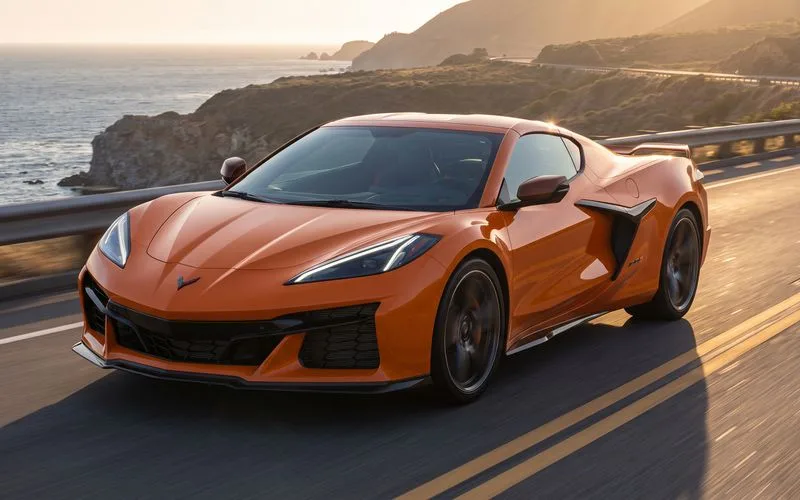 Chevrolet CorvetteSports CarBetter at: Value
Matches or beats the GT-R's acceleration for $50,000 less, with a modern interior and a full safety suite the Nissan simply doesn't offer.
Compare 2.72B-
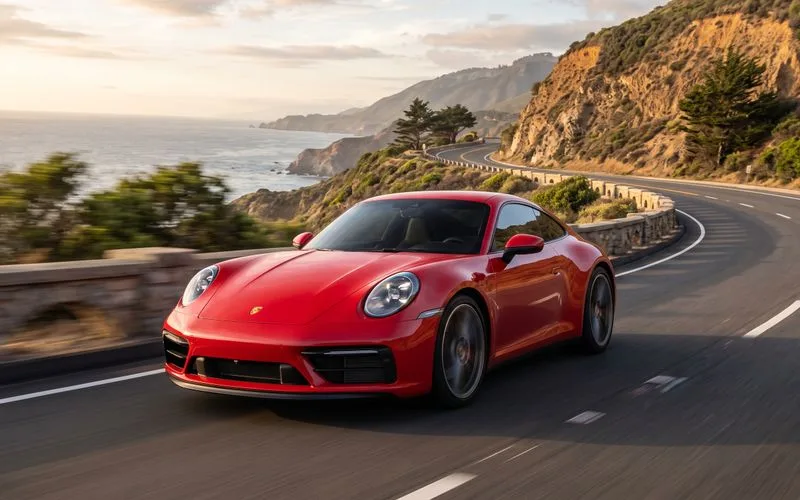 Porsche 911Sports CarBetter at: Everyday polish
The all-round choice at this money — better ride, better cabin, real driver aids and a lineup that spans budgets, if you can live with less straight-line pace per dollar.
Compare 2.77B-
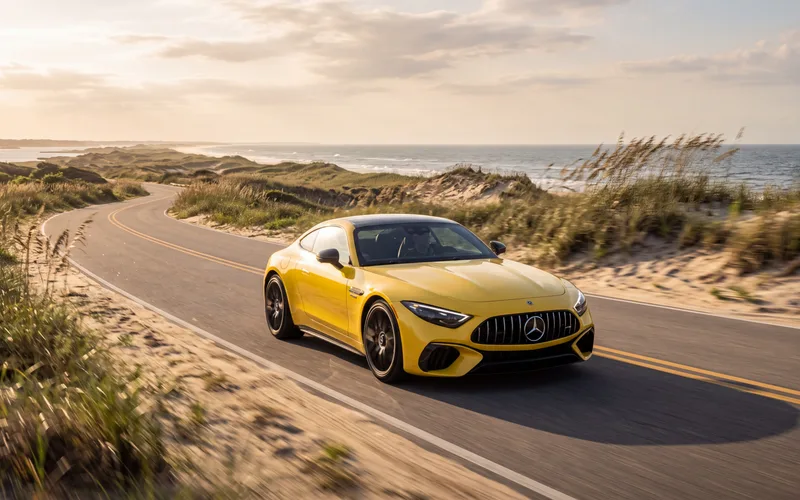 Mercedes-Benz AMG GTSports CarBetter at: Interior & tech
For a buyer who wants the six-figure experience inside as well as outside: current infotainment, adaptive cruise and materials that match the price.
CompareHow it's evolved
8 scored model years · 2017–2024
Subject scores by year
Hover or tap a score to see what moved it versus the year before. A corner mark flags a big swing.
| Year | Performance | Efficiency | Safety | Space | Cost | Reliability | Tech | Use-case | Driving | Value |
|---|---|---|---|---|---|---|---|---|---|---|
| 2024 | 85 | 6 | 25 | 39 | 7 | 67 | 38 | 28 | 79 | 52 |
| 2023 | 85 | 6 | 25 | 43 | 14 | 67 | 38 | 29 | 79 | 51 |
| 2022 | 85 | 6 | 25 | 43 | 6 | 66 | 38 | 29 | 78 | 45 |
| 2021 | 86 | 6 | 25 | 43 | 6 | 64 | 37 | 22 | 77 | 46 |
| 2020 | 85 | 6 | 25 | 36 | 76 | 64 | 37 | 26 | 75 | 48 |
| 2019 | 85 | 6 | 26 | 36 | 29 | 63 | 37 | 25 | 76 | 55 |
| 2018 | 83 | 6 | 26 | 37 | 24 | 64 | 37 | 23 | 76 | 58 |
| 2017 | 84 | 6 | 26 | 37 | 18 | 67 | 37 | 24 | 78 | 65 |
Compare two years
Best fit & conditions
Higher scores mean a better fit for that use case. Learn more about use-case fit →
Subject profile
Academic Probation · NHTSA safety recalls
Sep 12, 2019Back over prevention: sensing system: cameraAdditionally included are 2019 Nissan GT-R and Taxi and Infiniti QX50, QX60, Q70, Q70L vehicles. The back-up camera and display settings can be adjusted such that the rear view image is no longer visible and the system will retain that setting the next time the vehicle is placed in reverse. As such, these vehicles fail to comply with the requirements of Federal Motor Vehicle Safety Standard (FMVSS) number 111, "Rear Visibility."
Defect
Nissan North America, Inc. (Nissan) is recalling certain 2018-2019 Nissan Altima, Armada, Frontier, Kicks, Leaf, Maxima, Murano, NV, NV200, Pathfinder, Rogue, Rogue Sport, Sentra, Titan, Titan Diesel, Versa Note and Versa Sedan vehicles, as well as Infiniti Q50, Q60, QX30 and QX80 vehicles. Additionally included are 2019 Nissan GT-R and Taxi and Infiniti QX50, QX60, Q70, Q70L vehicles. The back-up camera and display settings can be adjusted such that the rear view image is no longer visible and the system will retain that setting the next time the vehicle is placed in reverse. As such, these vehicles fail to comply with the requirements of Federal Motor Vehicle Safety Standard (FMVSS) number 111, "Rear Visibility."
Risk
The lack of an image in the back-up camera display increases the risk of a crash.
Remedy
Nissan will notify owners in phases, having dealers update the back-up camera settings software, free of charge. The recall began November 11, 2019 and all affected VINs should be activated. Owners may contact Nissan customer service at 1-800-867-7669 or INFINITI customer service at 1-800-662-6200.
NHTSA campaign 19V654000 ↗1,228,830 vehicles potentially affected (all models in the campaign)Owners notified Nov 11, 2019Filed by Nissan North America, Inc.Filed as GT-R
1 recall on other model years of the GT-R (2021)
May 27, 2021Steering: linkages: knuckle: spindle: arm · Suspension: rear: axle: spindleThe front steering knuckle or rear axle housing may have insufficient strength due to improper heat-treatment.
Defect
Nissan North America, Inc. (Nissan) is recalling certain 2020 Nissan Murano, INFINITI QX60, 2021 Nissan GT-R, INFINITI QX50, and Q50 vehicles. The front steering knuckle or rear axle housing may have insufficient strength due to improper heat-treatment.
Risk
The steering knuckle or rear axle could deform upon impact, such as from hitting a curb, resulting in a loss of steering control, or possible wheel separation. Both of these conditions can increase the risk of a crash.
Remedy
Dealers will inspect and replace the front steering knuckle and rear axle housing, as necessary, free of charge. Owner notification letters were mailed July 26, 2021. Nissan owners may contact customer service at 1-800-867-7669. INFINITI owners may contact customer service at 1-800-662-6200.
NHTSA campaign 21V402000 ↗14,276 vehicles potentially affected (all models in the campaign)Owners notified Jul 26, 2021Filed by Nissan North America, Inc.Filed as GT-R
Source: NHTSA Office of Defects Investigation recall database, model years 2017–2024. Recalls are listed by model year as the manufacturer filed them; whether a specific car is affected depends on its VIN — check a VIN at nhtsa.gov ↗. NHTSA model names matched to this page: GT-R.
Detailed scoring by subject
1Performance & PowertrainThe GT-R's best-graded category.3.79A
The VR38DETT 3.8L twin-turbo V6 is unchanged from the 2017 facelift and carries 565 hp on the three volume trims (Pure, Premium, Track Edition), scored here as the representative figure; the range-topping NISMO tunes the same engine to 600 hp. Far above the coupe band ceiling and the strongest single figure in this calibration set alongside the Corvette and AMG GT.
467 lb-ft from the same VR38DETT V6, well clear of the coupe normalization band's 450 lb-ft ceiling and on par with the segment's strongest cars (Corvette, AMG GT).
Unchanged powertrain and launch-control system from the 2017 facelift generation the 2019 model belongs to. Car and Driver's instrumented testing of this generation consistently records 2.9 s to 60 mph; a handful of outlets have recorded low-2.7s runs in ideal conditions. Either figure clears the coupe band floor of 3.0 s, among the very quickest in this calibration set.
The VR38DETT twin-turbo V6 is widely praised for delivering its power with almost no perceptible turbo lag — reviewers routinely describe the throttle response as immediate and the mid-range shove as relentless all the way to redline. It trails only the most exotic naturally-aspirated engines (Corvette's LT2, AMG GT's hand-built V8) for outright character, but on smoothness and responsiveness it is near the top of this segment.
The 6-speed dual-clutch is decisive and brutally fast under hard driving with well-timed launch control, but it is a well-documented weak point at low speed — reviewers consistently describe clunky, jerky behavior in parking lots and stop-and-go traffic, a driveline shunt on light throttle, and a gearbox that never feels fully at home outside track/aggressive driving. That criticism has persisted essentially unchanged since the 2017 facelift.
ATTESA E-TS all-wheel drive is standard across every 2019 GT-R trim (Pure through NISMO) — an electronically controlled, torque-vectoring AWD system regarded as one of the most sophisticated in any production car, central to the GT-R's launch and cornering performance. Near the top of the band; nothing to fault beyond it not offering a low-range or off-pavement mode, which this coupe was never meant to need.
One engine, the 3.8L twin-turbo VR38DETT V6, across the entire 2019 lineup — Pure, Premium and Track Edition share the 565 hp tune, and NISMO gets a 600 hp retune of the same engine. That is a state-of-tune variation, not a distinct powertrain; there is no four-cylinder, V8, hybrid or electrified option and none has ever been offered on this generation. Bottom of the band alongside other single-powertrain sports coupes.
2Efficiency & RangeThe GT-R's lowest-graded category.0.00F
2019 is a carry-over year within the MY2017 facelifted generation (per Wikipedia, no powertrain change) — the unchanged VR38DETT 3.8L twin-turbo V6 and ATTESA E-TS AWD driveline apply across every 2019 trim. 18 MPG combined sits well under the coupe band floor of 22, so this scores zero — worse than the Corvette (~19) and in line with the AMG GT.
16 MPG city sits under the coupe band floor of 20, so it scores zero. AWD hardware and the GT-R's roughly 3,900 lb curb weight cost it in stop-and-go running relative to the lighter RWD sports coupes in this dataset.
22 MPG highway is under the coupe band floor of 26, so it scores zero. Tall gearing helps some at cruise, but the twin-turbo V6 and AWD hardware never let the GT-R approach the highway economy of a Supra or Mustang EcoBoost.
A 19.5-gallon tank at 18 MPG combined works out to roughly 351 miles between fills, which lands in the lower third of the coupe band (280-650) but is actually a genuine strength relative to smaller-tanked rivals like the GR86/BRZ pair (~290 mi) — the GT-R's large tank partly offsets its poor economy.
EPA's published annual cost of $4,200 is well above the coupe band ceiling of $2,800 (lower is better), so this scores zero — among the priciest cars to fuel in the coupe calibration set, consistent with its 18 MPG combined premium-only rating and unchanged from the surrounding model years.
Premium 91-octane is required, not merely recommended — the VR38DETT's turbo boost and compression ratio leave no margin for regular. No E85, no diesel, no electrified alternative on any 2019 trim. Bottom band, in line with other forced-induction, premium-only sports/GT cars in this dataset (Corvette, AMG GT, Nissan Z).
3SafetyOne of the GT-R's weakest categories.0.00F
NHTSA has never published an overall, frontal, side or rollover NCAP rating for the R35 GT-R in any model year including 2019 — a low-volume, high-price halo car sits outside routine NCAP sample selection. Estimated at the segment-typical 4 stars, the same convention used for other untested sports cars in this dataset, but there is no tested figure behind it.
IIHS has never crash-tested the R35 GT-R in any model year, so there is no Top Safety Pick award and no individual crashworthiness result to weigh for 2019 — neither a demonstrated strength nor a documented structural concern. Scored at the same untested-but-no-known-concerns level used elsewhere in the sports-car set rather than the 0-49 band, which is reserved for cars with actual Marginal/Poor results.
Of the five features this item measures (AEB, ACC, LKA, BSM, RCTA), the 2019 GT-R offers effectively none across its Pure, Premium, Track Edition and Nismo trims. The car predates the pedestrian-injury-mitigation braking system Nissan first added for model year 2020 — a genuine year-over-year change that puts 2019 specifically outside coverage. This is sparser than even the similarly ADAS-light Corvette, which at least fits blind-spot/cross-traffic alert on its mid and top trims.
No automatic emergency braking, forward collision warning or pedestrian detection is offered on the 2019 GT-R at any trim or as an option. Nissan introduced a pedestrian injury mitigation braking system on the GT-R for model year 2020, making its absence in 2019 a confirmed, year-specific gap rather than an estimate. There is consequently no IIHS front-crash-prevention rating for the car.
Blind-spot monitoring and rear cross-traffic alert are not listed as standard or available equipment on the 2019 GT-R Premium (the volume trim), and no source surfaced them as optional on Pure, Track Edition or Nismo either. This is a meaningful gap for a car whose thick rear pillars and shallow back glass create real over-the-shoulder blind zones, addressed only by mirrors.
No lane departure warning, lane keep assist or lane centering is offered on the 2019 GT-R in any trim — the car carries none of the forward camera hardware those functions require, consistent with it predating any Safety Shield 360-era feature rollout. Squarely at the floor of the 0-49 "crude or absent" band.
The 2019 GT-R offers conventional fixed-speed cruise control only — Adaptive/Intelligent Cruise Control is explicitly unequipped on the Premium trim and not listed on any other 2019 trim. There is no stop-and-go capability and no highway-assist layer of any kind.
No hands-free highway driving system is offered on the 2019 GT-R at any trim. Nissan's ProPILOT Assist launched on mainstream models (Rogue, Altima, Leaf) starting model year 2018-2019 and has never been extended to the GT-R in any year.
All 2019 GT-R trims, including the volume Premium, come standard with LED headlamps and integrated LED daytime running lights — a genuine strength given the car predates most of its rivals' safety-tech rollout. No adaptive or curve-responsive beam function is offered, and IIHS has never rated GT-R headlights, so the score sits mid-band rather than in the top tier.
Forward visibility over the GT-R's long, low hood is reasonable for a front-mid-engine sports coupe, but the thick C-pillars and shallow rear glass — a widely noted complaint among owners — create a substantial rearward blind zone that the car does nothing electronically to offset beyond a standard rearview camera and front/rear parking sensors; there is no blind-spot monitor and no surround-view system to compensate.
The 2+2 rear seats carry full LATCH lower-anchor and tether hardware, but owner reports describe the anchors as difficult to reach — on some cars the seat cushion sits an inch or two above the lower anchors, making them hard or impossible to clip into — and the tight rear dimensions rule out rear-facing seats and cramp anything but a small child. Scored in the difficult-anchors/tight-quarters band.
4Space & ComfortGrades near the bottom of the scale.0.36F
Every 2019 GT-R trim (Pure, Premium, Track Edition, NISMO) is a 2+2 with a nominal rear bench, at the coupe band floor.
Front headroom of 38.1 in sits mid-band for a coupe, unchanged from the 2017 facelift's interior package that carried through 2019.
44.6 inches of front legroom is at the top of the coupe band, reflecting the GT-R's long wheelbase and front-mid engine placement freeing up cabin length for the driver and passenger.
Rear headroom of 33.5 in is well below the coupe band floor — the fastback roofline and rear seat's near-token role leave little space for a rear occupant's head.
26.4 inches of rear legroom is far below the coupe band floor. The Car Connection's 2019 review notes the rear seat 'is not ready for adults.'
8.8 cubic feet of trunk space falls below the coupe normalization band floor — a small trunk even by sports-coupe standards, though about typical for a performance-focused 2+2.
Cabin storage is sparse: front cupholders and a single rear cupholder are essentially the extent of it, with the rear bench itself functioning as overflow cargo space rather than offering dedicated storage solutions.
Front leather-and-suede sport seats (standard hand-stitched leather-suede on Pure, upgraded heated leather on Premium) offer decent room and support, but reviews are mixed on long-haul comfort, and the rear seats are basically unusable, dragging the overall item down from a front-seat-only score.
The adaptive suspension is firm but tolerable in Comfort mode, described as no rougher than a sporty German sedan; R mode is ultra-stiff and best reserved for the track, and the 'biggest downside' most reviewers cite for everyday driving is ride firmness.
The cabin is notably loud at speed — powertrain whining/whirring is present even at idle and road noise is palpable, though wind noise is reasonably well controlled. No acoustic glass or active noise cancellation is offered.
Dual Zone Automatic Temperature Control and heated front seats are standard on every 2019 trim (Pure and up), a reasonable baseline, but the GT-R offers no ventilated seats, no heated steering wheel, and no remote pre-conditioning on any trim — a sparser comfort-tech list than rival luxury coupes at this price.
5Cost of OwnershipGrades near the bottom of the scale.0.00F
Pure is the entry grade for 2019 — Nissan held the Pure's $99,990 MSRP flat from 2018 while the rest of the lineup (Premium, Track Edition, NISMO) also carried over unchanged. Base MSRP is roughly double the coupe band ceiling of $55,000, so the item floors regardless.
Premium is the volume grade for 2019 — Pure is a stripped-down price-leader with a low take rate, while Track Edition and NISMO are low-volume halo variants well above it. Premium adds the 11-speaker Bose audio system, Active Noise Cancellation/Sound Enhancement and a titanium exhaust over Pure.
GT-R servicing is dealer-network-restricted (GT-R-certified dealers only) and priced like a European exotic: ~$300 dealer oil changes, $900-$1,200 transmission/differential fluid services, and $3,000-$5,000 30,000-mile interval work, plus ~$2,000 run-flat tire sets. Nissan's own 2019 GT-R warranty booklet requires four Performance Optimization Service (POS) visits (1,000 mi, 12, 24, 36 months) that are complimentary at a GT-R-certified dealer, which trims cost in years 1-3 but doesn't offset the major-interval and tire spend later in the ownership window.
The R35's residuals are the best thing about owning one, and by 2026 there are real 7-year data points for this exact model year. KBB's private-party estimate ($75,500-$87,600) and active listings ($75,990-$98,888) both sit well above a generic depreciation-model projection, reflecting limited annual production (~2,700-3,000 GT-Rs/yr in the US) and strong enthusiast demand — well above the coupe band ceiling either way.
Standard Nissan coverage with no GT-R uplift, unchanged across every R35 model year — the segment floor, and shorter than the 4-year terms German rivals offer at a fraction of this car's price.
Nissan's standard 5-year/60,000-mile powertrain term applies to the hand-built VR38DETT with no extension, sitting at the bottom of the 5-10 year band.
Nissan's own 2019 GT-R warranty booklet requires and includes four Performance Optimization Service visits — 1,000 mile, 12-month, 24-month and 36-month — at no charge to the customer when performed at a GT-R-certified dealer, covering the first three years of the mandatory service schedule. On top of that, GT-R buyers get a GT-R-specific 60-month/60,000-mile Roadside Assistance benefit (mechanical breakdown, flat tire, dead battery, lockout, emergency fuel, trip-interruption benefits) — meaningfully longer than the 36-month/36,000-mile roadside coverage on mainstream Nissan models. That combination of multi-year included maintenance plus an extended roadside perk lands in the top scoring band.
$112,235 volume-trim price minus its estimated resale value after 5 years (73% retained, or about $81,932) leaves about $30,303 in depreciation. Add the projected $8,000 in 5-year maintenance and repairs, and owning this vehicle for 5 years costs about $38,303 in total.
6Reliability & QualityOne of the GT-R's strongest categories.2.28C
Low annual sales volume (a few hundred to low-thousand units/year in the US) means neither Consumer Reports nor J.D. Power publish a dedicated predicted-reliability score for the GT-R specifically, so this is inferred from powertrain and owner-forum signal rather than a fleet study.
Nissan sits mid-pack across the major dependability studies — solid on RepairPal's shop-repair-data index but middling in Consumer Reports' owner-survey ranking — so brand-level support for the GT-R's reliability standing is average, not top-tier.
The 2019 GT-R was subject to one NHTSA recall — a November 2019 back-up camera display software fix (FMVSS 111 non-compliance) that swept in a wide range of Nissan/Infiniti models, not a GT-R-specific or mechanical defect — otherwise a clean recall record for the model year.
The hand-built VR38DETT twin-turbo V6 has a strong high-mileage reputation (100k+ miles common with maintenance) with no systemic engine failure mode, but the rear-mounted GR6 dual-clutch transaxle is a recognized weak point — solenoid clogging, bellhousing rattle, and clutch wear under aggressive/track use — which pulls the combined powertrain score down from what the engine alone would earn.
Reviewers consistently describe the cabin as a step behind rivals at the GT-R's price point — 'typical Nissan' switchgear and plastics amid the nappa leather and Bose system — a carryover critique, since the R35's interior is unchanged for 2019 following the 2017 facelift.
Each GT-R is hand-assembled by a single technician ('takumi') in a dedicated clean-room at Nissan's Tochigi plant, and reviewers describe the cockpit as tight and functional despite dated styling — assembly quality is not a common complaint even where material grade is criticized.
The GT-R rides on Nissan's dense, nationwide dealer network, and Nissan has historically ranked in the upper-middle tier of J.D. Power's dealer-service-satisfaction studies, but factory GT-R work has traditionally required specially trained technicians at a subset of dealers rather than being available at every store, so coverage is good but not as universal as for a mainstream Nissan model.
Routine service is specialist-priced rather than mainstream-Nissan-priced — transmission fluid service and brake jobs run well into four figures, and a tire set is close to $1,900 — offset somewhat by a healthy independent-specialist and aftermarket-parts network that undercuts dealer labor rates.
7Technology & InfotainmentGrades near the bottom of the scale.0.42F
The standard NissanConnect with Navigation and Services system uses an 8.0-inch color multi-touch display, unchanged fleet-wide across Pure, Premium, Track Edition and Nismo for 2019; small by 2019 sports-coupe standards.
The NissanConnect system carries dated graphics and a menu structure largely unchanged since the mid-2010s facelift; reviewers consistently flag it as the GT-R's weakest area relative to its six-figure price.
Wired Apple CarPlay is standard through the factory 8-inch screen on every 2019 trim, but Android Auto is not offered from the factory, and no wireless projection exists for either platform.
NissanConnect's built-in voice-activated navigation is functional but dated, with limited natural-language recognition; most owners default to CarPlay maps instead.
The volume Premium trim carries a standard 11-speaker Bose system with two subwoofers — a genuine strength — while the base Pure trim makes do with a 6-speaker system; no higher premium tier exists above Bose.
The main cluster is analog (speedometer/tachometer) with a small reconfigurable multi-info display for oil pressure, coolant temperature and steering angle; the richer digital telemetry (g-force, boost, drivetrain torque split) lives on the separate Polyphony Digital-designed center touchscreen, not the driver's binnacle.
No evidence of over-the-air software update capability for the 2019 GT-R's infotainment or vehicle systems; map/software updates on this generation of NissanConnect are handled via SD card or dealer visit.
The GT-R is compatible with NissanConnect Services / the Nissan app for remote engine start/stop, door lock/unlock, horn/lights and vehicle status, gated behind a trial-then-subscription model; no digital key.
Only two USB ports are fitted, no USB-C, and no wireless charging pad is offered on any 2019 GT-R trim.
Nissan Intelligent Key proximity entry with push-button start is standard, and remote engine start is available via the key fob/NissanConnect app; there is no phone-as-key.
A rearview camera and front/rear parking sensors are standard on Premium trim and above (the volume configuration), but there is no 360-degree Around View Monitor offered on the GT-R.
No head-up display is offered on any 2019 GT-R trim, standard or optional.
8Use-Case FitOne of the GT-R's weakest categories.0.00F
The 2019 GT-R is a 2+2 with rear LATCH lower anchors and top tethers, which puts it above the strict two-seaters in the segment, but the rear seat measures only 26.4 in of legroom and 33.5 in of headroom, and owner reports describe the lower anchors as difficult to reach — on some cars the seat cushion sits an inch or two above them. Two long doors, a low roofline and a fixed rear backrest make installing a car seat or loading a stroller (into an 8.8 cu ft trunk with a high liftover) a real chore.
The weakest family-safety proposition in the coupe set for this specific model year. The 2019 GT-R predates the pedestrian injury-mitigation braking system Nissan added starting with model year 2020 — a confirmed year-specific gap, not an estimate — so 2019 has no automatic emergency braking, no forward collision warning, no lane-keeping assist, and only marginal blind-spot/cross-traffic coverage across Pure, Premium, Track Edition and Nismo. It has also never been crash-tested by NHTSA or IIHS. What remains is airbags, VDC stability control, ABS, a RearView Monitor and front/rear sonar.
Four seatbelts exist, but no family of four takes a multi-hour trip in a 2019 GT-R. The rear pair is unusable for anyone past early childhood, the cabin runs loud at speed with no acoustic glass or active noise cancellation offered this model year, and the 8.8 cu ft trunk cannot hold four people's luggage once the rear seats are occupied. It clears the strict two-seaters only because a small child and a bag can physically ride behind the front seats.
Everyday usability is a genuine GT-R strength: standard ATTESA E-TS all-wheel drive removes the wet-road drama of rear-drive rivals, entry/exit and forward sightlines are good for a supercar, and the controls are physical and obvious. But 2019 specifically has no adaptive cruise control for jam traffic, the Car Connection's own review flags ride firmness as 'the biggest downside... for everyday driving' with only Comfort mode taking the edge off, and the cabin is notably loud even at idle. Net: capable but tiring over a full commute.
One of the most expensive cars per commuting mile in the coupe field. 16 MPG city on required premium fuel runs to an EPA-estimated $4,200/yr, and the running costs stack on top: roughly $3,870/yr for full-coverage insurance and about $1,600/yr in scheduled maintenance and wear items over a 5-year horizon. No stop-start, no cylinder deactivation and no electrification soften any of it.
Better than its supercar reputation suggests. A RearView Monitor plus front and rear parking sonar are standard on every 2019 trim, and the driving position lets a driver place the low, wide nose reasonably well. Working against it: the C-pillar and shallow rear glass create real over-the-shoulder blind zones with no blind-spot monitor to compensate, there is no surround-view camera, and the low front lip turns steep driveways and wheel stops into an approach-angle problem.
No work capability of any kind. Nissan publishes no tow rating and no payload figure for the 2019 GT-R, there is no factory or dealer hitch accessory, and the cargo hold is a sealed 8.8 cu ft trunk behind a fixed rear backrest. The 565 hp/467 lb-ft the engine makes (600 hp on Nismo) has nowhere to go in a work context.
Half the drivetrain is genuinely tough — the hand-assembled VR38DETT has a long record of surviving track abuse — but this vehicle's own reliability data shows only middling powertrain-durability and parts scores, and everything wrapped around the drivetrain is the opposite of work-duty hardware: leather/synthetic-suede trim with no wear-friendly alternative, low ground clearance, and no fleet-use history for this low-volume halo car.
Essentially nil. No onboard AC power outlet beyond USB and 12-volt sockets, no open load area, no tie-down points, no roof rails or rack provision, and no hitch. The GT-R's aftermarket is aimed entirely at power and aero, not at work or upfit use.
A roughly 351-mile combined range between fills and all-wheel-drive stability are real long-haul assets, and Wikipedia notes the R35 is also considered a grand tourer. But 2019 specifically has no adaptive cruise control, no lane centering and no highway-assist layer of any kind, so the fatigue-reduction this item asks about is largely absent, and cabin noise at a cruise ('powertrain whining and whirring even at idle... road noise is palpable') is a real long-trip drawback with no acoustic glass or noise cancellation fitted this model year.
The strongest item in this category, on the strength of one thing: ATTESA E-TS all-wheel drive is standard across every 2019 trim rather than optional, giving the GT-R a genuine, well-documented all-weather advantage over the rear-drive sports cars it's calibrated against. Everything else the item asks about is missing — low ground clearance rules out anything past a smooth gravel road, standard summer tires are unusable in cold weather, and there are no roof rails, rack provision, hitch or fold-flat surface for camping gear.
Capacity is respectable for a sports coupe and flexibility is nonexistent. The 8.8 cu ft trunk takes a couple of carry-ons or a set of golf clubs, and the vestigial rear seats absorb soft overflow, but the rear backrest is fixed with no fold-down or pass-through, the trunk opening is narrow with a high liftover, and with no roof rails and no hitch there is no way to carry gear outside the body at all.
9Driving ExperienceOne of the GT-R's strongest categories.3.13B
2019 is a carry-over year of the 2017-facelifted R35 (VR38DETT 3.8L twin-turbo V6, ATTESA E-TS AWD, dual-clutch 6-speed); despite curb weight near 3,900 lbs, the GT-R's AWD torque distribution, wide staggered tires and multi-mode adaptive suspension deliver class-leading outright grip and body control, historically among the fastest production cars around the Nürburgring Nordschleife.
Electric steering rack is extremely quick-responding but reviewers consistently describe feedback as limited/numb relative to the chassis' capability; wide tires can tram-line on grooved highway pavement.
Standard Brembo 6-piston front/4-piston rear brakes give a firm, confidence-inspiring pedal, though instrumented 60-0 stopping distance is merely good rather than segment-best.
The 2017 facelift specifically recalibrated the dual-clutch transmission to smooth 1st-to-2nd gear engagement and eliminate the low-speed driveline shudder/whine of earlier R35s; that revised calibration carries unchanged into 2019, and throttle response from the twin-turbo V6 is immediate.
The VR38DETT twin-turbo V6 is effective but not especially charismatic — turbo whoosh and a muted, somewhat industrial exhaust note under load are frequent enthusiast criticisms compared to naturally-aspirated or flat-six rivals.
Curb-to-curb turning diameter for the 2019 GT-R Premium, consistent across the lineup.
The cockpit is tightly driver-focused with supportive, well-bolstered seats and Nissan's signature Polyphony-designed multifunction display, but thick pillars hurt outward visibility and some switchgear (notably the shifter) feels dated next to rivals.
The GT-R remains a genuine enthusiast icon — searing acceleration, a distinct 'Godzilla' character, and a devoted aftermarket/tuning culture — even if its computer-assisted, AWD-launched delivery reads as more clinical and less purely emotional than a naturally engaging RWD sports car.
10Value & Market PositionMid-pack among this car's ten categories.1.73C-
2019 Premium ($110,540) includes leather/Alcantara trim, heated seats, navigation, and an 11-speaker Bose audio system as standard, but the small central touchscreen and much of the switchgear are visibly dated for a car priced above $100K, and items like a surround-view camera or modern driver-assist suite are absent — equipment feels adequate rather than generous at this price.
The GT-R's original value proposition — supercar performance for less than a base Porsche 911 — has eroded by 2019: Premium trim at $110,540 sits at rough price parity with a base 911 Carrera, and the powertrain/interior tech have seen only incremental updates since the 2017 facelift, so the outright bang-for-buck edge it held earlier in the R35's run is diminished though still credible on raw acceleration and AWD grip.
Four well-spaced trims — Pure ($99,990), Premium ($110,540), Track Edition ($128,540), and Nismo ($175,540) — cover a genuine range from comfort-leaning daily driver to track-honed halo model, though there is no lower-priced entry point and no open-top or manual-transmission variant to widen the lineup further.
US GT-R sales fell sharply in 2019 to roughly 314-331 units, down from 538 in 2018, continuing a multi-year decline for what has always been a low-volume halo model — it is not a meaningful sales presence even within the small sports-car segment.
The GT-R nameplate itself ("Godzilla") carries a strong, devoted enthusiast following and genuine halo-car cachet, but parent brand Nissan is a mainstream marque without the broader luxury/prestige image of Porsche or BMW, so overall desirability is driven almost entirely by the model rather than the badge.
As a low-volume specialty halo car, the GT-R historically carries little to no manufacturer incentive or rebate activity and typically transacts close to sticker; declining 2019 sales volume may have given buyers modest negotiating room at the dealer level, but there were no meaningful factory deals to be had.
2019 is a carry-over year of the R35 generation, which launched for MY2009 and received its last major facelift for MY2017 (revised fascia, retuned dual-clutch transmission, minor interior changes) — by 2019 the fundamental platform, chassis and VR38DETT engine architecture are roughly a decade old with no ground-up redesign in sight.
The Car Connection named the GT-R among its Best Performing Cars of 2019, and the model continued to draw strong praise for its acceleration and AWD-aided cornering grip from mainstream outlets, though it is criticized for a numb steering feel and interior that trails rivals like the Porsche 911, so it wins on outright performance credentials more often than in holistic comparison tests.