

The verdict
A struggling sports car, strong on performance and held back by efficiency.
The 2022 Nissan GT-R delivers genuine supercar acceleration — 565 hp, 467 lb-ft, 0-60 in about 2.9 seconds — through a standard all-wheel-drive system, for a base price ($115,235) that undercuts most exotics with similar pace. But 2022 was effectively a lost year for the nameplate in the US: Nissan sold down carried-over 2021-spec inventory rather than certifying a distinct model year, and only about 57 units reached American buyers, so this is a scarce, aging halo car with 18 MPG fuel economy, no modern driver-assist safety tech, and a cramped, near-useless rear seat. Buy it for the drivetrain and the AWD grip, not for daily practicality or up-to-date cabin tech.
Jump to scoresStrengths
- Supercar-slaying acceleration
- All-weather grip and razor-sharp handling
- Genuinely fun and engaging to drive
What holds it back
- Among the thirstiest cars in its class
- No modern safety net
- Rear seats and trunk are afterthoughts
Top alternatives
Cars shoppers cross-shop with the Nissan GT-R 2.49C+
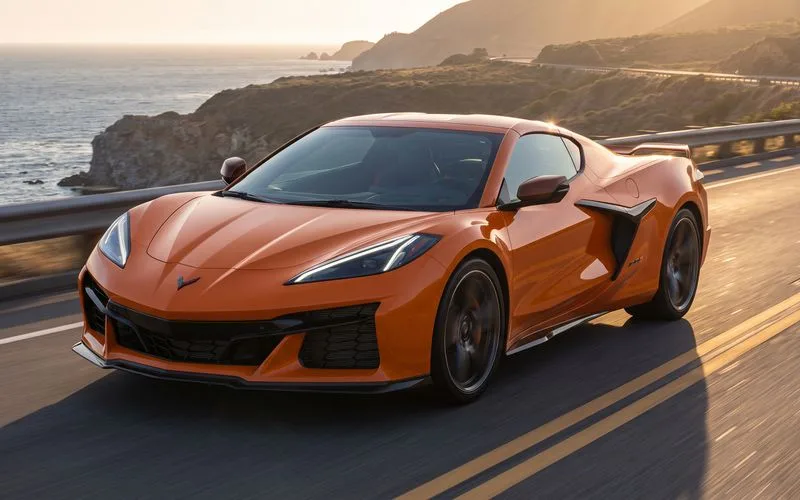 Chevrolet CorvetteSports CarBetter at: Value
Matches or beats the GT-R's acceleration for $50,000 less, with a modern interior and a full safety suite the Nissan simply doesn't offer.
Compare 2.72B-
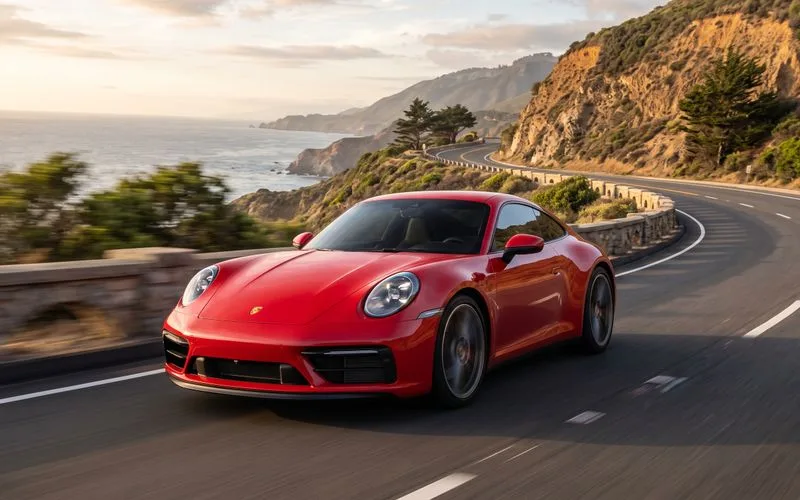 Porsche 911Sports CarBetter at: Everyday polish
The all-round choice at this money — better ride, better cabin, real driver aids and a lineup that spans budgets, if you can live with less straight-line pace per dollar.
Compare 2.77B-
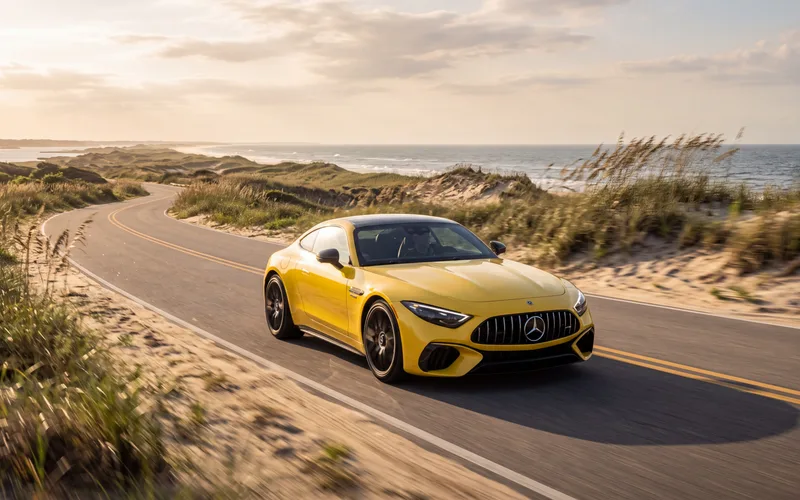 Mercedes-Benz AMG GTSports CarBetter at: Interior & tech
For a buyer who wants the six-figure experience inside as well as outside: current infotainment, adaptive cruise and materials that match the price.
CompareHow it's evolved
8 scored model years · 2017–2024
Subject scores by year
Hover or tap a score to see what moved it versus the year before. A corner mark flags a big swing.
| Year | Performance | Efficiency | Safety | Space | Cost | Reliability | Tech | Use-case | Driving | Value |
|---|---|---|---|---|---|---|---|---|---|---|
| 2024 | 85 | 6 | 25 | 39 | 7 | 67 | 38 | 28 | 79 | 52 |
| 2023 | 85 | 6 | 25 | 43 | 14 | 67 | 38 | 29 | 79 | 51 |
| 2022 | 85 | 6 | 25 | 43 | 6 | 66 | 38 | 29 | 78 | 45 |
| 2021 | 86 | 6 | 25 | 43 | 6 | 64 | 37 | 22 | 77 | 46 |
| 2020 | 85 | 6 | 25 | 36 | 76 | 64 | 37 | 26 | 75 | 48 |
| 2019 | 85 | 6 | 26 | 36 | 29 | 63 | 37 | 25 | 76 | 55 |
| 2018 | 83 | 6 | 26 | 37 | 24 | 64 | 37 | 23 | 76 | 58 |
| 2017 | 84 | 6 | 26 | 37 | 18 | 67 | 37 | 24 | 78 | 65 |
Compare two years
Best fit & conditions
Higher scores mean a better fit for that use case. Learn more about use-case fit →
Subject profile
Academic Probation · NHTSA safety recalls
No NHTSA safety recall is on record for the 2022 Nissan GT-R. Other model years of the GT-R have 2 — listed below.
2 recalls on other model years of the GT-R (2019, 2021)
May 27, 2021Steering: linkages: knuckle: spindle: arm · Suspension: rear: axle: spindleThe front steering knuckle or rear axle housing may have insufficient strength due to improper heat-treatment.
Defect
Nissan North America, Inc. (Nissan) is recalling certain 2020 Nissan Murano, INFINITI QX60, 2021 Nissan GT-R, INFINITI QX50, and Q50 vehicles. The front steering knuckle or rear axle housing may have insufficient strength due to improper heat-treatment.
Risk
The steering knuckle or rear axle could deform upon impact, such as from hitting a curb, resulting in a loss of steering control, or possible wheel separation. Both of these conditions can increase the risk of a crash.
Remedy
Dealers will inspect and replace the front steering knuckle and rear axle housing, as necessary, free of charge. Owner notification letters were mailed July 26, 2021. Nissan owners may contact customer service at 1-800-867-7669. INFINITI owners may contact customer service at 1-800-662-6200.
NHTSA campaign 21V402000 ↗14,276 vehicles potentially affected (all models in the campaign)Owners notified Jul 26, 2021Filed by Nissan North America, Inc.Filed as GT-RSep 12, 2019Back over prevention: sensing system: cameraAdditionally included are 2019 Nissan GT-R and Taxi and Infiniti QX50, QX60, Q70, Q70L vehicles. The back-up camera and display settings can be adjusted such that the rear view image is no longer visible and the system will retain that setting the next time the vehicle is placed in reverse. As such, these vehicles fail to comply with the requirements of Federal Motor Vehicle Safety Standard (FMVSS) number 111, "Rear Visibility."
Defect
Nissan North America, Inc. (Nissan) is recalling certain 2018-2019 Nissan Altima, Armada, Frontier, Kicks, Leaf, Maxima, Murano, NV, NV200, Pathfinder, Rogue, Rogue Sport, Sentra, Titan, Titan Diesel, Versa Note and Versa Sedan vehicles, as well as Infiniti Q50, Q60, QX30 and QX80 vehicles. Additionally included are 2019 Nissan GT-R and Taxi and Infiniti QX50, QX60, Q70, Q70L vehicles. The back-up camera and display settings can be adjusted such that the rear view image is no longer visible and the system will retain that setting the next time the vehicle is placed in reverse. As such, these vehicles fail to comply with the requirements of Federal Motor Vehicle Safety Standard (FMVSS) number 111, "Rear Visibility."
Risk
The lack of an image in the back-up camera display increases the risk of a crash.
Remedy
Nissan will notify owners in phases, having dealers update the back-up camera settings software, free of charge. The recall began November 11, 2019 and all affected VINs should be activated. Owners may contact Nissan customer service at 1-800-867-7669 or INFINITI customer service at 1-800-662-6200.
NHTSA campaign 19V654000 ↗1,228,830 vehicles potentially affected (all models in the campaign)Owners notified Nov 11, 2019Filed by Nissan North America, Inc.Filed as GT-R
Source: NHTSA Office of Defects Investigation recall database, model years 2017–2024. Recalls are listed by model year as the manufacturer filed them; whether a specific car is affected depends on its VIN — check a VIN at nhtsa.gov ↗. NHTSA model names matched to this page: GT-R.
Detailed scoring by subject
1Performance & PowertrainThe GT-R's best-graded category.3.78A
2022 is a carry-over year within the R35 generation — no engine changes from prior years; the only 2022-specific news was a NISMO Special Edition trim (clear-coated carbon-fiber hood, unique 20-in wheels) rather than any powertrain revision. The volume Premium trim's hand-assembled 3.8L VR38DETT twin-turbo V6 makes 565 hp, well above the top of the coupe normalization band (520 hp), so the item maxes out — supercar-level output from a car that started under $115k.
467 lb-ft clears the top of the coupe band (450 lb-ft) outright and arrives as a broad mid-range plateau rather than a single peak, which is why the GT-R pulls hard in any gear despite only six ratios. Unchanged for 2022, as with every R35 model year since its last powertrain revision.
Nissan publishes no official US 0–60 figure; this is scored on instrumented testing of the mechanically unchanged 565 hp powertrain, which has clustered around 2.9 s in the most widely cited magazine runs across the model's later years (Edmunds recorded as high as 3.1 s using launch control in one test), with the 600 hp NISMO around 2.5 s. Any figure in that range sits at or below the bottom of the coupe band (3.0 s), so the item tops out — the ATTESA E-TS all-wheel-drive launch remains one of the most repeatable hard launches in the segment.
The VR38DETT remains the standout part of this car in 2022: hand-built by a single takumi technician per engine, essentially free of drivetrain slop, with response that's immediate above roughly 3,000 rpm and a relentless pull to redline that reviewers have spent over a decade calling physics-defying. Marked down from the top band for a beat of low-rpm turbo lag off boost and a mechanical, muffled soundtrack next to the AMG GT's V8 or the 911's flat-six — placed just below the Corvette and AMG GT on delivery quality, clearly above the Mustang, Supra and Nissan's own Z.
The GR6 six-speed dual-clutch rear transaxle is a split verdict, unchanged for 2022. At speed and in R mode it fires off shifts in milliseconds and never hunts, with a trivial gear choice thanks to a locked-in launch program. Around town it's the opposite: the transaxle clicks, pops and clunks audibly and low-speed engagement is jerky — a longstanding complaint that persisted through the R35's later model years. Six gears is also two or three short of every current rival. Rated mid-band: brilliant at ten-tenths, genuinely unpleasant at two, well behind Porsche's PDK or the ZF 8HP units in the Supra and BMW coupes.
All-wheel drive is standard on every 2022 GT-R trim (Premium, Track Edition, NISMO), and the hardware is among the most sophisticated ever fitted to a road car: ATTESA E-TS with an independent rear-mounted transaxle and a front propshaft running back alongside the engine, continuously varying torque split from fully rear-drive to 50:50 based on wheel speed, yaw, steering angle and g-loading — the whole reason the car launches and puts power down the way it does. Held short of the ceiling only because there's no low range or terrain-mode provision, which is irrelevant to the car's mission but is what the top of this band describes. Far above the rear-drive-only Corvette, 911 Carrera, Mustang, Supra and Nissan Z.
One engine, one gearbox, take it or leave it. Every 2022 GT-R trim runs the same 3.8L VR38DETT through the same six-speed dual-clutch transaxle; the NISMO's 600 hp is a state of tune, not a distinct powertrain, and the 2022-only NISMO Special Edition is a cosmetics package, not a mechanical variant. No manual, no naturally aspirated option, no hybrid, PHEV or EV variant was ever offered in the R35's eighteen-year run. Bottom band, and slightly below the Nissan Z, which at least gives buyers a manual-versus-automatic choice.
2Efficiency & RangeThe GT-R's lowest-graded category.0.00F
No 2022 model year GT-R was federally certified in the US — Nissan sold the 2021MY GT-R Premium/NISMO/T-spec through calendar 2022 with titles reading 2021 — so the EPA rating for the carried-over VR38DETT/6-speed DCT AWD powertrain is the correct figure for a US GT-R acquired in 2022. Well below the coupe band floor of 22 MPG.
Same carry-over 2021MY powertrain sold through 2022 (no distinct 2022 US model year exists). Well below the coupe band floor of 20 MPG.
Same carry-over 2021MY powertrain sold through 2022. At the coupe band floor of 26 MPG.
Nissan's published 19.5-gallon fuel tank capacity for the R35 GT-R (unchanged across the 2021-2023MY carry-over run) combined with the 18 MPG EPA combined rating gives an estimated combined-cycle range in the low-to-mid 300s — modest for the coupe segment given the small tank and thirsty V6.
EPA's published annual fuel cost for the unchanged carry-over powertrain sold through 2022, well above the coupe band ceiling of $2,800 — premium-only fuel plus 18 MPG combined make this one of the most expensive cars in the class to fuel.
Premium (91+ octane) gasoline is required, not merely recommended, for the twin-turbo VR38DETT V6 — no regular-fuel option exists on any trim.
3SafetyOne of the GT-R's weakest categories.0.00F
NHTSA has never crash-tested the R35 GT-R in any model year, and 2022 is no exception — the GT-R does not even appear in NHTSA's list of 2022 Nissan models with a SafetyRatings record, unlike the Altima, Maxima, Rogue and other volume nameplates that were tested. Carried at the dataset's standard untested placeholder of 4 stars, the same value used for the Corvette, 911, GR Supra, Nissan Z, AMG GT and R8.
The GT-R has never been tested by IIHS in 18 years of production — the institute buys its own test cars and a $113,540 low-volume coupe is not worth the outlay — so there is no award, no crashworthiness result, and no basis for credit above the untested baseline. Structurally the car is better placed than most supercars (steel/aluminium Premium Midship platform with Zone Body Construction, front and rear crumple zones, high-strength side door guard beams, energy-absorbing steering column, knee bolsters, and roughly 3,933 lb of mass on its side), but the airbag set is a front-occupant package: dual-stage front bags, front seat-mounted side bags and roof-mounted curtain bags covering the FRONT seats only, with nothing protecting the heads of anyone in the 2+2 rear. Placed a few points under the untested coupe peers (Corvette 55, Supra 55, Z 55, R8 54) for that rear-occupant gap. 2022 also carried the limited-run Premium Edition T-spec and Track Edition (100 units combined, ballot-allocated), which add carbon-ceramic brakes and carbon-fiber body panels but no additional occupant protection.
The 2022 GT-R offers no driver-assistance suite at all — not standard, not optional, on any grade (Premium, Track Edition, NISMO, or the limited T-spec). No AEB, no forward collision warning, no lane departure warning, no lane keeping, no blind-spot monitoring, no rear cross-traffic alert, no adaptive cruise. The entire active-safety content is Vehicle Dynamic Control (ESC), ABS with brake assist, TPMS, a RearView Monitor and parking sensors — the federally-mandated floor plus parking aids. Even the Corvette (15) and the ADAS-free Audi R8 (5) are no worse; this is the bottom of the segment, and unlike the Z or Supra there is not a single optional box to tick.
There is no automatic emergency braking system to rate — the 2022 GT-R has neither vehicle-to-vehicle nor pedestrian AEB, and IIHS has run no front crash prevention evaluation on it. The 3 points reflect only that the car has ABS with brake assist and enormous Brembo hardware once a human presses the pedal; no automated intervention exists at any speed, day or night.
No blind-spot monitoring, no rear cross-traffic alert and no safe-exit alert on any 2022 grade — and this is the car that needs them most, given the C-pillar. Rear parking sensors and the RearView Monitor cover backing out of a space at walking pace and nothing else; the aftermarket sells convex blind-spot mirrors specifically for the R35 because the factory offers no answer.
No lane departure warning, no lane keep assist and no lane centering — there is no forward camera in the car to support them. Nissan's ProPILOT hardware, standard or optional on most of the 2022 US lineup, was never fitted to the R35, deliberately, on the grounds that it would intrude on the driving experience.
Plain speed-hold cruise control only — no radar, no following distance, no stop-and-go, no highway assist. It earns the handful of points over a car with no cruise at all and nothing more; scored beside the Audi R8 (6) and Corvette (8), which are in the same pre-radar position, and far below the AMG GT (78) and Supra (60).
No hands-free highway system, and no path to one — the GT-R never received ProPILOT Assist, let alone a hands-off tier. The car cannot even hold a lane, which is the prerequisite.
4-bulb LED headlamps with AFS (Nissan's steering-responsive Adaptive Front-lighting System) and integrated LED running lights have been standard on Premium-grade R35 GT-Rs since the 2017 facelift, carrying unchanged into 2022 — adaptive curve lighting standard on the volume trim is genuinely good hardware and better than the fixed projectors on several rivals. No IIHS headlight rating exists to confirm the beam pattern, and there is no auto high-beam function, so this sits at the untested-but-well-equipped level shared with the Corvette, Z and Supra (62) rather than the 911/AMG GT tier (78) whose lights are IIHS-verified.
Split verdict, unchanged for 2022. Forward and over-the-shoulder-left visibility is better than the mid-engine supercar norm — the GT-R is front-engined with an upright, tall-ish greenhouse and a driving position reviewers consistently call easy to place for a car this fast. The rear three-quarter is the problem: a very thick C-pillar and the high tail create a genuine blind zone that owners routinely patch with aftermarket convex mirrors, and with no blind-spot monitor there is zero electronic compensation. The RearView Monitor plus parking sensors cover low-speed maneuvering only — there is no surround-view camera. Lands just above the GR Supra (45, worse sightlines and no parking aids) and below the Corvette (58) and 911 (70, 360-degree camera).
Nominally a four-seater with LATCH hardware, functionally unusable — and the R35 rear seat is unchanged for 2022. Cars.com's Car Seat Check found the GT-R's lower anchors sit an inch or two above where the rear cushion ends, so a connector physically cannot reach them, and the top tether anchors on the rear shelf sit under removable covers with too little clearance to clip into easily; the heavily bolstered rear seat also pushes a car seat off at an angle. Add roughly 26.4 in of rear legroom and 33.5 in of rear headroom (the front seat must be moved forward to fit anything rear-facing), two-door access over a fixed front bucket, and curtain airbags that cover only the front row, and the rear seat is a parcel shelf that happens to have belts. Below the 911's 2+2 (26), which at least offers workable anchors.
4Space & ComfortGrades near the bottom of the scale.0.85F
The R35 GT-R is a 2+2, so it nominally seats four — one more than the strict two-seat Z, Corvette and GR Supra — but four seats sits exactly on the floor of the coupe band (4–5) and therefore scores 0. 2022 is a carry-over year with no interior change.
Mid-pack front headroom for the segment — level with the Porsche 911's 38.0 in and just under the Nissan Z's 38.2 in. No sunroof is available on the GT-R at any trim, so there is no headliner penalty on the upper car. 2022 is a carry-over year for the cabin — the R35's front-fascia refresh doesn't arrive until 2024.
Best front legroom of any coupe in the dataset and the GT-R's single strongest packaging figure — above the top of the coupe band (40–44 in), so it maxes the item. The front-mid engine and rear transaxle push the cabin back and leave genuine room for tall drivers, unchanged for the 2022 carry-over year.
Below the coupe band's 35 in floor, so it scores 0. The fastback roofline drops hard over the rear bench and reviewers consistently report adults feeling cramped and claustrophobic back there — unchanged for 2022.
26.4 in is far under the coupe band's 32 in floor and scores 0. These are token seats better used as a padded parcel shelf — anyone beyond small children needs the front occupants to give up their own legroom. Unchanged for 2022.
Below the coupe band's 10 cu ft floor, so it scores 0 — but it is the most usable hold among the sports cars here in practice, deep enough for golf clubs or a weekend's luggage, which is part of the GT-R's long-standing grand-tourer case. Unchanged for the 2022 carry-over year.
Adequate rather than clever, and unchanged for 2022. Two decent center-console cupholders that take bottles or travel mugs, a real glovebox, and the 2+2 rear bench doubles as a usable shelf — but the console cubby under the armrest is shallow, the glovebox and door pockets are small, and there is no fold-flat or underfloor trick anywhere in the car.
The Premium's heated, power-adjustable (8-way driver / 4-way passenger) leather-and-synthetic-suede sport seats are supportive over long stints and part of why the GT-R daily-drives better than its lap times suggest. Marked down for limited adjustment range and aggressive fixed lumbar support that some drivers find intolerable, plus a rear bench nobody sits in twice. Unchanged for the 2022 model year.
Standard Bilstein DampTronic adaptive dampers with Comfort / Normal / R settings give the GT-R real bandwidth for a roughly 3,900-lb track weapon — Comfort mode is repeatedly described as no rougher than a sporty Audi. It loses points for a chassis whose fundamentals date to 2007: sharp impacts still send noise and vibration through the structure, and the 20-in run-flats leave no sidewall to absorb them. No suspension change for 2022.
The GT-R's worst comfort trait and a genuine barrier to using it as a GT, unchanged for 2022. Bose Active Noise Cancellation, acoustic glass and added sound deadening are all fitted, and none of it contains the roar the mandatory Dunlop SP Sport Maxx GT600 run-flats generate on coarse concrete at highway speed.
The basics are all standard on the volume Premium trim — dual-zone automatic climate control, heated front seats, power front seats, an 11-speaker Bose system, heated mirrors and front/rear parking sensors — but the list simply stops there. No ventilated seats, no heated steering wheel, no memory seating and no remote pre-conditioning are offered at any price, which is thin for a base price around $113,540. 2022 added a limited-run NISMO Special Edition trim (clear-coated carbon-fiber hood, unique wheels) but no new comfort equipment.
5Cost of OwnershipOne of the GT-R's weakest categories.0.00F
Nissan never issued a distinct US 2022 GT-R Premium pricing announcement — dealers sold extended-run 2021-spec Premium inventory through roughly October 2022 at the unchanged $113,540 base. A separate, limited-allocation 2022 GT-R NISMO (300 units) launched at $210,740, but the Premium — the volume grade — carried its 2021 price. Either figure is roughly double the coupe band ceiling of $55,000, so the item floors regardless.
Premium remained the volume grade for 2022 — the NISMO's 300-unit US allocation (99% ordered as the Special Edition) sold out almost immediately and is a low-volume halo, not the representative configuration. The Premium option sheet is essentially paint and accessories, so a typically equipped car lands a few hundred dollars over the base figure.
GT-R servicing is dealer-network-restricted and priced like a European exotic: ~$300 dealer oil changes, $900–$1,200 transmission/differential fluid services, and $3,000–$5,000 30,000-mile interval work, plus ~$2,000 run-flat tire sets. Unchanged from surrounding model years since the drivetrain and service schedule carried over.
The R35's residuals are the best thing about owning one. CarEdge's generic model shows 42% five-year depreciation (58% retention), but that estimate is skewed by a NISMO-inflated average new price (~$177,985) far above the Premium's actual $113,540; real-world Premium and T-Spec examples have held value substantially better, with clean low-mile cars trading near or above original MSRP at auction. A 65% five-year figure splits the difference and sits well above the coupe band ceiling either way.
Standard Nissan coverage with no GT-R uplift, unchanged across every R35 model year — the segment floor, and shorter than the 4-year terms German rivals offer at a fraction of this car's price.
Nissan's standard 5-year/60,000-mile powertrain term applies to the hand-built VR38DETT with no extension, sitting at the bottom of the 5–10 year band and unchanged for 2022.
No included scheduled maintenance — Nissan's Maintenance Care oil-change program is a mainstream-model offer the GT-R does not qualify for, and there is no national free-service program. What comes with the car is the standard 3-year/36,000-mile roadside assistance plus access to the GT-R-certified dealer network, which is a service restriction as much as a perk. Unchanged from the surrounding model years.
$116,235 volume-trim price minus its estimated resale value after 5 years (65% retained, or about $75,553) leaves about $40,682 in depreciation. Add the projected $8,000 in 5-year maintenance and repairs, and owning this vehicle for 5 years costs about $48,682 in total.
6Reliability & QualityOne of the GT-R's strongest categories.2.47C+
Thin-data case typical of a low-volume halo car: Consumer Reports does not publish a full predicted-reliability rating for the GT-R because survey response volume is too small, and J.D. Power's model page ratings for it lean on brand/segment estimates rather than a deep owner sample. What informal signal exists (forums, specialist shops) is unremarkable rather than alarming — no pattern of major failures by 2022, 15 model years into the run. Scored just above the sibling Nissan Z (62, itself thin-data) since the R35 has a longer accumulated ownership record even at low volume, and well below the established Porsche 911 (82) and Toyota GR Supra (80) with fuller CR/JDP coverage.
Brand-level item, held identical to the figure already carried for other 2022-2026 Nissans in this dataset (Rogue, Altima, Z, etc.) — a halo sports car does not get a different Nissan than a sedan does. Nissan sits in the lower-middle of multi-year dependability studies: consistently mid-pack in J.D. Power's Vehicle Dependability Study and mid-to-low in Consumer Reports brand rankings, never top-5, never bottom-third.
One notable campaign shadows an otherwise clean record: NHTSA campaign 21V-402 (2021, remedied under Nissan's R21A4 voluntary recall) covered a heat-treatment defect in the front steering knuckle/rear axle housing that could deform on impact and risk wheel separation — safety-relevant, but it affected roughly 20 GT-R units and was inspected/replaced free of charge before the 2022 model year began. No new NHTSA campaign was found specific to model-year 2022. TSB activity is otherwise component-level rather than systemic, consistent with a mature, low-volume platform 15 years into production. Scored slightly above the Z (70), since 2022 carried no fresh campaign, but not higher — the knuckle/axle defect was more safety-critical in nature than the Z's shift-quality TSBs even though it affected far fewer cars.
The strongest item in the category. The hand-assembled VR38DETT 3.8L twin-turbo V6 has been in production since 2007 and, by 2022, has a 15-year track record with examples exceeding 150,000 km on stock hardware showing no major issues when maintained — engine reviews rate it around 78/100 with a 'buy' verdict, with wear items (GR6 solenoids, turbo bearing wear, occasional oil consumption) rather than catastrophic failure modes. The GR6 dual-clutch transaxle's clutch/solenoid problems were concentrated in pre-2012 cars; by the 2022 model year the design has had a decade of running updates. Scored well above the Z's newer, less-proven VR30DDTT (66) and the AMG GT's M177 (74), in the range of the Corvette's LT2 (76) and just below the Supra's B58 (87).
The category's clear weak point, and explicitly scored relative to price — a car in this price tier drawing consistent criticism for switchgear and dash plastics sourced from far cheaper Nissan models (reviewers note a resemblance to the Qashqai/Rogue parts bin) is a real mismatch. The 2022 T-spec trim's green leather/suede/Alcantara upholstery and stitched headliner raise the ceiling on upper trims, and screwed-together solidity gets some credit, but the ambience still trails German and even domestic rivals at this price. Scored below the Z (55, itself criticized on the same axis at a much lower price point) given the GT-R's far higher price makes the same parts-bin switchgear a bigger letdown, and far below the Lexus LC (which anchors the top of this dataset).
Assembly quality is well ahead of perceived material richness — the distinction that separates this item from 6.2.1. The GT-R is hand-built on a dedicated line at Nissan's Tochigi plant (the same low-volume facility that assembles the Z), with its VR38 engines individually hand-assembled by named 'takumi' technicians. Reviews across the 2022 model year note tight, well-screwed-together panels with no rattle or misalignment pattern despite the car's 15-year production run. Scored above the Z (76), reflecting the even more deliberate hand-build process for this halo model, and in line with the top domestic/import sports coupes in this dataset.
Nissan's roughly 1,000-strong US dealer network gives a GT-R owner nationwide warranty-service reach, a real advantage over boutique-brand networks. But two things hold it below the mainstream-Nissan norm: brand-wide service satisfaction has persistently trailed the industry average, and the GT-R is a low-volume specialty car most generalist Nissan service departments see only rarely, so model-specific expertise is thinner than the raw dealer count implies — GT-R forums consistently point owners toward a short list of specialist techs rather than any local dealer. Scored slightly below the Z (70), which shares the same network but is a somewhat higher-volume, less specialized car to service.
A genuine mixed bag. On one hand, the GT-R has one of the deepest aftermarket and specialist-tuner ecosystems of any sports car, and Nissan's official parts store stocks GT-R-specific components. On the other, routine dealer service is materially pricier than a mainstream Nissan — forum-reported full 36k-mile services run roughly $1,600, and specialist labor rates around $160/hour reflect the car's low volume and bespoke AWD/twin-turbo hardware, with owners often routed to independent specialty shops to control cost. Scored below the Z (76), whose drivetrain shares parts with the higher-volume Infiniti Q50/Q60, reflecting the GT-R's more bespoke and costlier-to-service hardware.
7Technology & InfotainmentGrades near the bottom of the scale.0.49F
Nissan did not issue a distinct 2022MY specification for the US GT-R — its own statement was that the 2021MY Premium, NISMO Special Edition and T-spec continued on sale in the US and Canada through 2022 unchanged, so the 2022-model-year car carries the same 8.0-inch NissanConnect multi-touch display that dates to the 2017 facelift. There is no larger screen at any price and no option to add one; eight inches in a six-figure 2022 coupe sits near the bottom of the coupe band, where mainstream compacts already shipped 12-inch-plus displays.
The 2017-facelift head unit is honest and simple rather than good: a rotary display commander on the console, physical shortcut keys, dual-zone climate on its own hard controls, and no menu-diving for anything done while moving. Against that sit graphics and processing speed that were already dated when the platform was new and conspicuous at six figures. What lifts it off the floor is the Polyphony Digital multi-function display in the instrument binnacle — a genuine engineering readout of turbo boost, oil/transmission temperature, front-to-rear torque split and g-force, with a downloadable lap stopwatch — an item nothing else in the segment ships. Scored below the Nissan Z, which runs a newer generation of the same NissanConnect hardware, and well below the BMW-sourced system in the GR Supra.
The weakest phone-projection story of any coupe in this dataset. Apple CarPlay is standard across the 2022 lineup (Premium, NISMO Special Edition, T-spec) but wired-only through a console USB port, and Android Auto is not offered at any price — it appears nowhere in Nissan's press documentation for this generation. Roughly half of US phone owners get no projection at all in a six-figure car, which is why a sizeable aftermarket sells retrofit modules for the R35's factory screen. Held just above the 0–49 "not offered" floor only because one platform genuinely is standard and works. Scored below the Nissan Z, which has wireless CarPlay standard and wired Android Auto, and well below every German rival in the segment.
Both boxes are checked and neither is done well. The Nissan Navigation System and voice recognition for navigation and audio are standard on every 2022 grade — better native coverage than a base GR Supra or any GR86 — but it is the old fixed-command-list implementation rather than a natural-language assistant, and later-generation reviews of the unchanged system call it clumsy with inaccurate map data. With Android Auto unavailable, Android owners cannot route around it with a phone, so the weak native nav is the only nav they have. Scored below the Nissan Z, which pairs a similar command-list system with a newer head unit and wireless CarPlay as an escape hatch.
The one genuinely strong element of the GT-R's tech package and the only item here that beats the segment average. An 11-speaker Bose system — nine speakers plus two subwoofers built into the rear centre armrest area — is standard on every 2022 grade rather than a top-trim upgrade, paired with Bose Active Noise Cancellation, which matters in a cabin reviewers consistently call loud. Short of the 80s because an 11-speaker Bose tune dating to the 2017 facelift is a tier below the Burmester, Bowers & Wilkins and 3D surround systems available in six-figure rivals, and there is no upgrade path. Scored slightly above the Nissan Z's 8-speaker Bose on speaker count and standard-across-the-range fitment.
There is no digital instrument cluster on any 2022 GT-R. The binnacle is the original 2007 architecture: a physical analog speedometer and tachometer with analog coolant-temperature and fuel gauges flanking them, and a small LCD trip/multi-function readout as the only screen. The carbon-fibre gauge surround and driver-angled layout are attractive, and the NISMO's red-accented tachometer is a nice touch, but none of it is configurable and none of it is a true digital cluster — the car's rich data readouts live on the centre display and multi-function panel, which are items 7.1.2's and 7.1.1's business, not the cluster's. Scored far below the Nissan Z, whose 12.3-inch full-digital TFT is standard on its cheapest trim.
Nothing on this car updates itself. The R35's head unit predates Nissan's over-the-air programme entirely — there is no whole-vehicle software update, no feature-adding release, and not even the infotainment/maps-only OTA that would put it in the middle band; navigation map data is a dealer or physical-media update. Nissan's OTA effort in 2022 was concentrated on the Ariya and its newest crossover architectures, and the 16-year-old halo platform, unchanged since 2017 and built in the hundreds annually, was never going to receive a back-port. Scored below the Nissan Z, which at least runs a connected head unit capable of taking map and infotainment updates.
The core telematics set is present and subscription-gated, which is the literal definition of the middle band's bottom edge. NissanConnect Services powered by SiriusXM is standard on every 2022 grade with a trial that converts to a paid subscription, giving the MyNISSAN app remote door lock/unlock, vehicle locator, alarm and boundary/speed alerts, automatic collision notification and emergency call. What is missing is everything that would lift it: factory remote engine start with climate preconditioning does not appear anywhere in the GT-R's 2022 equipment table (only push-button start with Intelligent Key proximity), there is no phone-as-key, and no charging or scheduling functions apply. Scored just below the Nissan Z, which carries a newer NissanConnect Services generation, and far below the app-first German and American rivals in this segment.
Device power is a 2010-era provision sold at 2022 prices. Two USB ports on the old iPod-interface (USB-A) standard, plus 12-volt outlets — and that is the entire inventory. There is no USB-C anywhere in the car, no wireless charging pad on any grade including the limited T-spec, no rear-seat port despite the 2+2 layout, and no AC outlet. A modern phone charges slowly and only with an adapter the owner supplies. Scored below the Nissan Z, which at least pairs a USB-A with a USB-C, and below the GR86 and BRZ.
Solidly middle-band: the Nissan Intelligent Key proximity system with remote keyless entry and a console-mounted push-button start is standard on all 2022 grades, so nothing here is trim-gated or optional, and a HomeLink universal transceiver is included. But that is the complete list — no factory remote engine start, no phone-as-key or digital key, and a two-door coupe has no powered decklid or hands-free tailgate to earn the convenience points that lift SUVs into the 80s. Scored a notch below the Nissan Z, whose fob supports remote start on automatic cars.
Adequate for parking, nothing more, in a wide low car with a thick C-pillar and genuinely poor over-shoulder visibility. A RearView Monitor plus front AND rear parking sensors are standard on all 2022 grades — the front sonar earns real credit given how much front splitter there is to protect, and is more than the Nissan Z offers. Against that, Nissan's Around View Monitor surround camera was never fitted to the GT-R at any price, there is no parking automation of any kind, and the reversing camera is a low-resolution unit shown on the same dated 8-inch screen. Scored a shade below the Nissan Z, which lacks front sonar but adds rear cross-traffic alert and rear automatic braking — coverage the GT-R has no ADAS hardware to provide.
No head-up display is offered on any 2022 GT-R — not on the Premium, not on the NISMO Special Edition, not on the limited T-spec, and not as a dealer-installed accessory. It is a pointed omission in a 565-hp car explicitly engineered around track use, where projected speed and shift-point data is the one HUD use case nobody disputes, and where the driver otherwise drops their eyes to an analog tachometer. Scored at the floor alongside the other coupes that offer none, and slightly below the Nissan Z because the omission is harder to excuse at nearly three times the price.
8Use-Case FitGrades near the bottom of the scale.0.00F
The R35 is a 2+2 with four belts and rear LATCH hardware, which puts it above the strict two-seaters in this segment, but the rear bench measures 26.4 in of legroom and 33.5 in of headroom and the lower anchors sit above the seat bight where a connector cannot reach them. Two long heavy doors, a low roofline and a fixed rear backrest make installing or loading a child seat a contortion, and a stroller has to go in an 8.8 cu ft trunk with a high liftover and a narrow opening. 2022 is a carry-over year for the cabin with no interior change.
The weakest family-safety proposition of any coupe in this dataset. The 2022 GT-R offers no driver-assistance content on any grade — Premium, Track Edition, T-spec or NISMO Special Edition alike — no automatic emergency braking, no forward collision warning, no blind-spot monitoring, no rear cross-traffic alert, no lane departure warning, no rear-occupant alert — while a Nissan Rogue in the same 2022 showroom ships Safety Shield 360 standard. It has never been crash-tested by NHTSA or IIHS in any model year, so a family has no independent crashworthiness data. What is left is six airbags covering the front row only, VDC stability control, ABS, a RearView Monitor and front/rear sonar.
Four seatbelts, but no family of four is doing a multi-hour trip in this car. The rear pair is unusable for anyone past early childhood, there are no rear climate outlets, no rear USB power and no rear amenities of any kind, and the 8.8 cu ft trunk cannot hold four people's luggage once the rear seats are occupied. It clears the two-seaters only because a small child plus a bag can physically ride behind the front seats, and a Comfort-mode ride that reviewers found genuinely liveable helps it edge out the field's stiffest rivals.
Everyday usability is the R35's signature claim and it holds up: front-engined with an upright greenhouse so the driver can place the nose, easy entry and exit for a supercar, class-leading 44.6 in of front legroom, physical and obvious controls, standard ATTESA E-TS all-wheel drive that removes the wet-road drama defining rear-drive rivals, and Bilstein DampTronic dampers whose Comfort setting makes the commute genuinely tolerable. What holds it out of the top band is real: sharp impacts still ring through a 2007-vintage structure on 20-in run-flats, the exhaust drones and the transaxle whines, there is no adaptive cruise control of any kind for a jam, and the standard summer rubber is unusable below about 45°F — a real limitation for a car sold and driven through 2022 in four-season US markets.
One of the most expensive cars per commuting mile in the coupe field. 16 MPG city on required premium fuel is about $4,200 a year at EPA's 15,000-mile assumption, and the consumables compound it: full-coverage insurance averages roughly $4,337 a year, scheduled maintenance and wear items run around $1,600 a year at a certified GT-R dealer, and the staggered 20-in Dunlop run-flats are a four-figure replacement on a wear-hungry all-wheel-drive chassis. No stop-start, no cylinder deactivation and no electrification soften any of it — unchanged for the 2022 carry-over powertrain.
Better on paper than in practice. At roughly 185 in long the GT-R is shorter than a Camry, its curb-to-curb turning circle is tight for the width, the driving position is high enough to see the corners of the hood, and a RearView Monitor plus front AND rear sonar are standard on every 2022 grade. But it is 75 in wide, the thick C-pillar makes over-the-shoulder checks guesswork, there is no surround-view camera and no parking assist at any price, and the low front lip turns concrete wheel stops and garage ramps into an approach-angle problem owners solve with ramps or by parking nose-out.
No work capability of any kind. Nissan publishes no tow rating and no payload figure for the 2022 US-market GT-R, there is no factory or dealer-accessory hitch offered on Premium, Track Edition, T-spec or NISMO, the cargo hold is a sealed 8.8 cu ft trunk behind a fixed rear backrest, and roughly 4-5 in of clearance under the composite undertray rules out an unpaved jobsite before anything else does. The 467 lb-ft the twin-turbo V6 makes is the only point in the item's favor and it has nowhere to go.
Half the drivetrain is genuinely tough — the hand-assembled VR38DETT has a fifteen-year record by 2022 of surviving track abuse and heavy tuning, with examples exceeding 150,000 km on stock hardware showing no major issues, and the R35 chassis is among the most proven in the segment. Everything wrapped around it is the opposite of work-duty hardware: the GR6 transaxle's early clutch/solenoid issues (concentrated in pre-2012 cars) are a reminder the unit is a known wear point, the leather and synthetic-suede interior has no wear-friendly or washable alternative, summer run-flats on staggered 20s punish rough surfaces, the low ground clearance rules out unpaved use, and there is no fleet history because nobody has ever run GT-Rs as a fleet.
Essentially nil. No onboard AC power outlet, no bed or open load area, no tie-down points, no roof rails or rack provision, no hitch, no washable surfaces and no upfit ecosystem — the GT-R's enormous aftermarket is aimed entirely at power and aero, not at work. Device power is two USB-A ports and 12-volt outlets, which is a phone-charging provision rather than a jobsite one.
The GT-R was engineered as much as a grand tourer as a sports car and the bones show it: heated power front buckets that stay comfortable over long stints, class-leading 44.6 in of front legroom, all-wheel drive plus an enormous mid-range that makes high-speed cruising stable in any weather, Bilstein Comfort mode for broken interstate, and a 19.5-gallon tank at 18 MPG combined giving roughly 350 miles between stops. Two things cap it. The cabin is loud at a cruise — run-flat roar on concrete, exhaust drone and transaxle whine that Active Noise Cancellation only trims — and there is no adaptive cruise control, no lane centering and no highway assist at any price, so the fatigue reduction this item asks about is simply absent and every mile is driven manually.
The best of a weak field, on the strength of one thing: ATTESA E-TS Pro all-wheel drive is standard on every 2022 grade rather than optional, and fitted with winter tires the R35 has a long, well-documented record as a genuinely all-weather supercar. Everything else this item asks about is missing. Roughly 4-5 in of clearance at the front lip ends any ambition past a smooth gravel road, the standard Dunlop summer run-flats are unusable below about 45°F as delivered, and there are no roof rails, no rack provision, no hitch, no tow rating, no 110V outlet and no fold-flat surface for camping. There is not even a spare wheel — the run-flats are the contingency.
Capacity is respectable for a supercar and flexibility is nonexistent. The 8.8 cu ft trunk takes two carry-ons or a set of golf clubs — Top Gear's famous line about the R35 ended with "And a boot" — and the vestigial rear seats absorb soft overflow. But the rear backrest is fixed, so there is no fold-down and no pass-through for anything long; the opening is narrow with a high liftover; there is no underfloor bin, because the transaxle and battery live there; and with no roof rails and no hitch there is no way to carry gear outside the body at all. Bulky items are simply refused.
9Driving ExperienceOne of the GT-R's strongest categories.3.27B+
AWD Bilstein DampTronic suspension with Nissan's ATTESA E-TS Pro system delivers otherworldly grip and body control for a 3,900-lb car; the R35 GT-R holds a sub-7:20 production-car Nürburgring lap record. Composure comes at the cost of some feel — it corners more like a guided missile than a delicate sports car.
Steering is accurate and well-weighted at speed but numb compared to rear-drive rivals; multiple reviewers note the assisted, slightly synthetic feel, especially at low speed where assist was increased for maneuverability.
Brembo six-piston front / four-piston rear brakes (carbon-ceramic on T-Spec/Nismo) give strong, consistent stopping power and a firm, confidence-inspiring pedal that holds up to repeated hard use.
The twin-turbo VR38DETT V6 paired with a 6-speed dual-clutch is explosively responsive at pace (2.9s 0-60), but the DCT can be clunky and low-speed throttle tip-in less refined than in more everyday sports cars.
The VR38DETT's turbocharged V6 growl is purposeful but industrial rather than glamorous, with noticeable induction and turbo noise under load that some reviewers describe as coarse compared to the class's naturally-aspirated or flat-six rivals.
Curb-to-curb turning radius of 18.3 ft (diameter 36.6 ft) is mid-pack for the coupe segment, reflecting the wide AWD-oriented chassis.
Eight-way power seats and a rake/reach-adjustable wheel give a solid, low-slung driving position with excellent forward visibility and simple control layout; the 2+2 rear seats are effectively unusable, but that's expected for the class.
Blistering acceleration, immense grip and a genuine sense of occasion make the GT-R deeply engaging despite its computer-managed, slightly clinical character; it lacks the analog purity of a 911 but rewards with sheer speed and drama.
10Value & Market PositionGrades near the bottom of the scale.0.97F
Premium-grade carries leather/Alcantara seating, heated front seats, dual-zone climate, an 11-speaker Bose system, the Polyphony Digital multifunction display and adaptive front lighting standard — solid content for the class — but there is no ADAS suite (no adaptive cruise, no lane-keep), no wireless charging and only an 8-in touchscreen, gaps rivals near this price close.
The GT-R's long-standing case — supercar-beating acceleration and Nürburgring-honed AWD grip for well under a Ferrari or Lamborghini — still holds on raw performance-per-dollar, but by this point in the R35's run the car carries a mid-2020s price against mid-2000s cabin tech, and rivals like the Corvette now match or beat its performance at a much lower price, eroding the value case.
Only three trims carried over into calendar 2022 — Premium (~$113,540), T-spec (~$138,490), and the NISMO Special Edition (~$210,000+) — with a single AWD drivetrain and no body-style, seating or engine choice; the lineup spans a huge price range but offers almost no configuration flexibility within it.
Calendar-year 2022 US sales collapsed to roughly 57 units — by far the GT-R's lowest year — because Nissan skipped a distinct MY2022 in the US and simply sold down the remaining 2021MY inventory before the 2023MY relaunch; this is a trough year for the nameplate, not just a slow one.
Nissan as a mainstream brand carries no luxury halo, but the GT-R nameplate itself is a globally recognized enthusiast icon ("Godzilla") with cult following, motorsport pedigree and strong media affection independent of the parent brand's image — closer to how the Corvette elevates Chevrolet than to a typical Nissan product.
With only ~57 units reaching US buyers all year and no new model-year inventory being built, there was essentially nothing to discount — low-volume halo cars like this routinely transact at or near MSRP, and scarcity in 2022 specifically left dealers with no incentive to negotiate.
The R35 platform debuted for MY2009 and last saw a substantial facelift in 2017 (the next real refresh doesn't land until 2024); by 2022 the generation is 13+ years old with no distinct new model year even offered in the US, and reviewers consistently flag the aging interior, dated infotainment and lack of modern driver-assist tech.
Still earns real praise for outright pace and AWD grip — Autocar and Auto Express both named it one of the best hardcore sports cars in 2022 — but it has long fallen out of mainstream 10Best-style rankings and comparison tests increasingly favor fresher, better-equipped rivals like the Corvette and current 911 on overall merit rather than straight-line speed.