

The verdict
A struggling compact hatchback, strong on driving and held back by performance.
The 2018 Leaf was the year Nissan's electric hatchback finally became a normal car — an all-new body, 147 hp, one-pedal e-Pedal driving and standard automatic emergency braking, all for $30,875 delivered on the base S. Eight years on, the numbers that made it a bargain are the numbers that make it a hard sell: 151 miles of EPA range, a 50-kW CHAdeMO port on a connector the country has abandoned, and a battery with no liquid cooling that throttles its own charging speed on back-to-back stops. What survives is an outstandingly cheap, quiet, roomy-in-the-back-hatch city car that costs about $700 a year to fuel and has lost roughly 73% of its value, which makes it a genuine used bargain for the right commuter. Buy it as a second car for a household with a driveway outlet and a short commute; do not buy it as the only car in the garage.
Jump to scoresStrengths
- Running costs are the whole point, and they are tiny
- The easiest car in traffic you can buy for the money
- A genuinely big hatch and a tall, airy front seat
What holds it back
- 151 miles of range, and only 133 of it on the highway
- Fast charging is slow, orphaned, and gets slower the more you use it
- It has lost about three quarters of its value
Top alternatives
Cars shoppers cross-shop with the Nissan Leaf 2.56C+
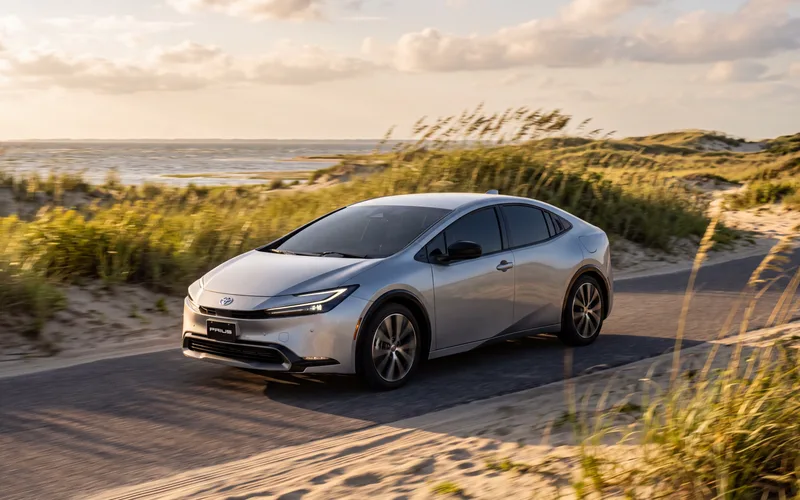 Toyota PriusCompact HatchbackBetter at: Resale value
It delivers most of the Leaf's fuel savings with none of the charging dependency, plus available AWD and the resale value the Leaf has never had.
Compare 2.46C+
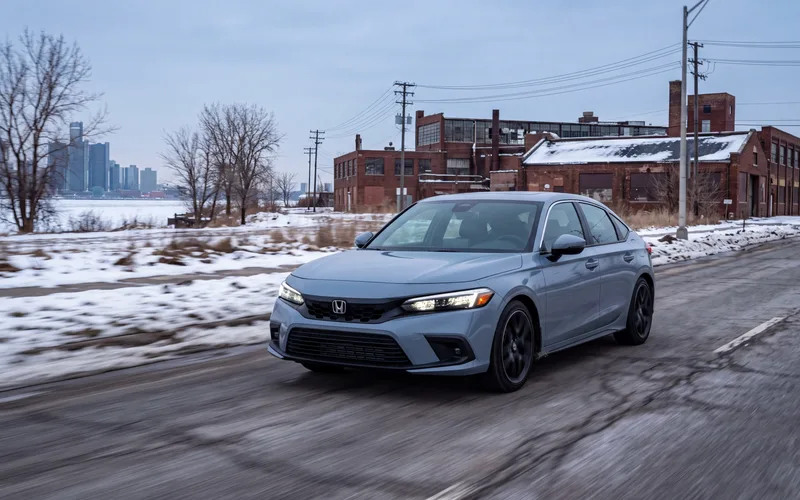 Honda Civic HatchbackCompact HatchbackBetter at: Rear-seat space
If you actually use the back seat or want proven crash ratings today, the Civic gives you 3.4 more inches of rear legroom, 24.5 cu ft of cargo and a Top Safety Pick+ award.
Compare 1.14D
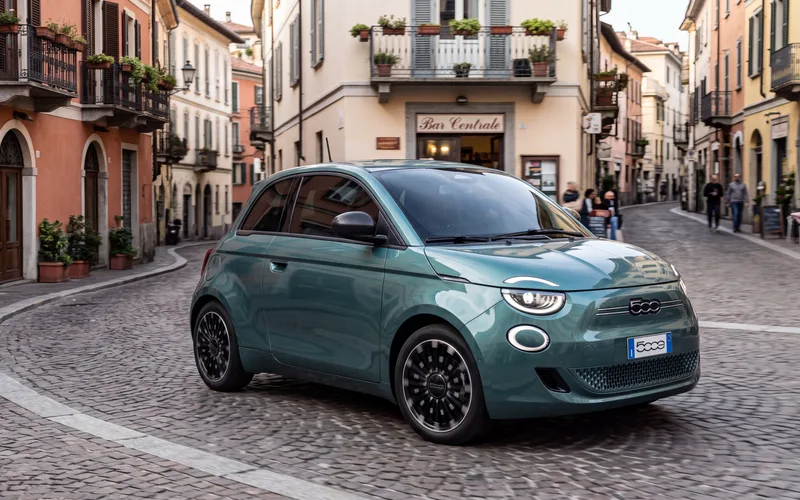 Fiat 500eSubcompact HatchbackBetter at: City parking
For a purely urban second car where 140 miles is plenty, the 500e is cheaper to buy and insure and easier to squeeze into a city parking space.
CompareHow it's evolved
10 scored model years · 2017–2026
Subject scores by year
Hover or tap a score to see what moved it versus the year before. A corner mark flags a big swing.
| Year | Performance | Efficiency | Safety | Space | Cost | Reliability | Tech | Use-case | Driving | Value |
|---|---|---|---|---|---|---|---|---|---|---|
| 2026 | 40 | 62 | 62 | 61 | 54 | 60 | 74 | 59 | 71 | 68 |
| 2025 | 41 | 51 | 66 | 63 | 53 | 63 | 45 | 46 | 62 | 47 |
| 2024 | 42 | 52 | 63 | 63 | 46 | 67 | 43 | 43 | 66 | 51 |
| 2023 | 34 | 53 | 60 | 61 | 54 | 61 | 38 | 46 | 67 | 52 |
| 2022 | 34 | 53 | 61 | 63 | 48 | 57 | 41 | 46 | 66 | 56 |
| 2021 | 34 | 53 | 65 | 63 | 47 | 60 | 44 | 45 | 66 | 58 |
| 2020 | 34 | 54 | 65 | 63 | 46 | 52 | 44 | 47 | 66 | 61 |
| 2019 | 34 | 53 | 48 | 62 | 55 | 53 | 39 | 44 | 64 | 59 |
| 2018 | 32 | 54 | 52 | 66 | 51 | 54 | 46 | 47 | 67 | 66 |
| 2017 | 21 | 58 | 25 | 62 | 52 | 62 | 33 | 38 | 63 | 49 |
Compare two years
Best fit & conditions
Higher scores mean a better fit for that use case. Learn more about use-case fit →
Subject profile
Academic Probation · NHTSA safety recalls
Feb 2, 2024Back over prevention: sensing system: cameraDamage to the camera harness can cause distortion or loss of the rearview camera display image. As such, these vehicles fail to comply with the requirements of Federal Motor Vehicle Safety Standard number 111, "Rear Visibility."
Defect
Nissan North America, Inc. (Nissan) is recalling certain 2018-2022 LEAF vehicles. Damage to the camera harness can cause distortion or loss of the rearview camera display image. As such, these vehicles fail to comply with the requirements of Federal Motor Vehicle Safety Standard number 111, "Rear Visibility."
Risk
A rearview camera that does not properly display an image can reduce the driver's rear view, increasing the risk of a crash.
Remedy
Dealers will inspect the rearview camera and harness for damage and replace them as necessary. If no damage is found, the dealer will apply protective tape and reroute the rearview camera harness. Repairs will be performed free of charge. Owner notification letters were mailed August 9, 2024. Owners may contact Nissan customer service at 1-800-867-7669. Nissan's number for this recall is R23D7.
NHTSA campaign 24V071000 ↗Manufacturer no. R23D757,914 vehicles potentially affected (all models in the campaign)Owners notified Aug 9, 2024Filed by Nissan North America, Inc.Filed as LEAFJul 17, 2023Vehicle speed controlThe vehicle may accelerate unintentionally if the driving mode is changed ("D" to "B"; e-Pedal "On"; or "ECO" mode) after disengaging the cruise control.
Defect
Nissan North America, Inc. (Nissan) is recalling certain 2018-2023 LEAF vehicles. The vehicle may accelerate unintentionally if the driving mode is changed ("D" to "B"; e-Pedal "On"; or "ECO" mode) after disengaging the cruise control.
Risk
Unintentional acceleration can increase the risk of a crash.
Remedy
Dealers will reprogram the vehicle control module (VCM), free of charge. Owner notification letters are expected to be mailed August 30, 2023. Owners may contact Nissan's customer service at 1-800-867-7669. Nissan's number for this recall is R23A6.
NHTSA campaign 23V494000 ↗Manufacturer no. R23A666,159 vehicles potentially affected (all models in the campaign)Owners notified Aug 30, 2023Filed by Nissan North America, Inc.Filed as LEAFFeb 2, 2023Equipment: other: owners/service/other manual · Visibility: defroster/defogger/hvac systemThe Owner's Manual instructions for defroster operation are incorrect, and may result in reduced defroster performance under specific conditions. As such, these vehicles fail to comply with the requirements of Federal Motor Vehicle Safety Standard number 103, "Windshield Defrosting and Defogging Systems."
Defect
Nissan North America, Inc. (Nissan) is recalling certain 2018-2023 LEAF vehicles. The Owner's Manual instructions for defroster operation are incorrect, and may result in reduced defroster performance under specific conditions. As such, these vehicles fail to comply with the requirements of Federal Motor Vehicle Safety Standard number 103, "Windshield Defrosting and Defogging Systems."
Risk
Reduced defroster performance can limit visibility out of the windshield, increasing the risk of a crash.
Remedy
Nissan will mail an addendum with updated instructions on how to operate the defroster, free of charge. Owner notification letters are expected to be mailed April 1, 2023. Owners may contact Nissan's customer service at 1-800-867-7669. Nissan's number for this recall is R22C5.
NHTSA campaign 23V048000 ↗Manufacturer no. R22C564,732 vehicles potentially affected (all models in the campaign)Owners notified Mar 30, 2023Filed by Nissan North America, Inc.Filed as LEAFSep 12, 2019Back over prevention: sensing system: cameraAdditionally included are 2019 Nissan GT-R and Taxi and Infiniti QX50, QX60, Q70, Q70L vehicles. The back-up camera and display settings can be adjusted such that the rear view image is no longer visible and the system will retain that setting the next time the vehicle is placed in reverse. As such, these vehicles fail to comply with the requirements of Federal Motor Vehicle Safety Standard (FMVSS) number 111, "Rear Visibility."
Defect
Nissan North America, Inc. (Nissan) is recalling certain 2018-2019 Nissan Altima, Armada, Frontier, Kicks, Leaf, Maxima, Murano, NV, NV200, Pathfinder, Rogue, Rogue Sport, Sentra, Titan, Titan Diesel, Versa Note and Versa Sedan vehicles, as well as Infiniti Q50, Q60, QX30 and QX80 vehicles. Additionally included are 2019 Nissan GT-R and Taxi and Infiniti QX50, QX60, Q70, Q70L vehicles. The back-up camera and display settings can be adjusted such that the rear view image is no longer visible and the system will retain that setting the next time the vehicle is placed in reverse. As such, these vehicles fail to comply with the requirements of Federal Motor Vehicle Safety Standard (FMVSS) number 111, "Rear Visibility."
Risk
The lack of an image in the back-up camera display increases the risk of a crash.
Remedy
Nissan will notify owners in phases, having dealers update the back-up camera settings software, free of charge. The recall began November 11, 2019 and all affected VINs should be activated. Owners may contact Nissan customer service at 1-800-867-7669 or INFINITI customer service at 1-800-662-6200.
NHTSA campaign 19V654000 ↗1,228,830 vehicles potentially affected (all models in the campaign)Owners notified Nov 11, 2019Filed by Nissan North America, Inc.Filed as LEAF
9 recalls on other model years of the Leaf (2017, 2019–2023, 2026)
Jul 1, 2026Seat belts: rear/other: retractorThe outer rear seat belt automatic locking retractors (ALR) may deactivate early, which can prevent a child restraint system (CRS) from securing properly. As such, these vehicles fail to comply with the requirements of Federal Motor Vehicle Safety Standard number 208, "Occupant Crash Protection."
Defect
Nissan North America, Inc. (Nissan) is recalling certain 2026 LEAF vehicles. The outer rear seat belt automatic locking retractors (ALR) may deactivate early, which can prevent a child restraint system (CRS) from securing properly. As such, these vehicles fail to comply with the requirements of Federal Motor Vehicle Safety Standard number 208, "Occupant Crash Protection."
Risk
An improperly secured child restraint system may not restrain an occupant as intended, increasing the risk of injury during a crash.
Remedy
Dealers will replace the rear outboard seat belt assemblies, free of charge. Interim letters, notifying owners of the safety risk, were mailed July 28, 2026. Additional letters will be sent once the remedy is available, anticipated October 28, 2026. Owners may contact Nissan's customer service at 800-647-7261. Nissan's number for this recall is R26A7. Vehicle Identification Numbers (VINs) involved in this recall became searchable on NHTSA.gov on July 7, 2026.
NHTSA campaign 26V425000 ↗Manufacturer no. R26A73,788 vehicles potentially affected (all models in the campaign)Filed by Nissan North America, Inc.Filed as LEAFMar 25, 2026Electrical system: propulsion system: traction batteryThe high voltage battery may have internal damage that can cause a short circuit within the battery module.
Defect
Nissan North America, Inc. (Nissan) is recalling certain 2026 LEAF vehicles. The high voltage battery may have internal damage that can cause a short circuit within the battery module.
Risk
A short circuit in a high voltage battery module increases the risk of a fire.
Remedy
Owners are advised to park outside and away from structures and should not charge their vehicles until the remedy is completed. Dealers will inspect and replace the battery modules, as necessary, free of charge. Owner letters were mailed September 2, 2026. Owners may contact Nissan's customer service at 800-647-7261. Nissan's number for this recall is R25F1. Vehicle Identification Numbers (VINs) involved in this recall became searchable on NHTSA.gov on March 27, 2026.
NHTSA campaign 26V188000 ↗Manufacturer no. R25F151 vehicles potentially affected (all models in the campaign)Owners notified Aug 28, 2026Filed by Nissan North America, Inc.Filed as LEAFSep 30, 2025Electrical system: propulsion system: charging: module: software · Electrical system: propulsion system: traction batteryThe lithium-ion battery may overheat during Level 3 charging.
Defect
Nissan North America, Inc. (Nissan) is recalling certain 2021-2022 LEAF vehicles equipped with a Level 3 quick charging port. The lithium-ion battery may overheat during Level 3 charging.
Risk
A quick charging battery that overheats increases the risk of a fire.
Remedy
Owners are advised not to use Level 3 quick charging until the remedy is completed. Dealers will update the battery software, free of charge. Owner letters were mailed June 16, 2026. Owners may contact Nissan's Customer Service at 1-800-867-7669. Nissan's number for this recall is R25C8. Vehicle Identification Numbers (VINs) involved in this recall will be searchable on NHTSA.gov beginning October 4, 2025.
NHTSA campaign 25V655000 ↗Manufacturer no. R25C819,077 vehicles potentially affected (all models in the campaign)Owners notified Jun 10, 2026Filed by Nissan North America, Inc.Filed as LEAFSep 19, 2024Electrical system: propulsion system: charging: module: software · Electrical system: propulsion system: traction batteryThe lithium-ion battery may overheat during Level 3 charging.
Defect
Nissan North America, Inc. (Nissan) is recalling certain 2019-2020 LEAF vehicles equipped with a Level 3 quick charging port. The lithium-ion battery may overheat during Level 3 charging.
Risk
A quick charging battery that overheats increases the risk of a fire.
Remedy
Dealers will update the battery software, free of charge. Owner letters were mailed June 3, 2026. This is a phased recall. Owners may contact Nissan Customer Service at 1-800-867-7669. Nissan's numbers for this recall are R24B2, P4A38, and P5A22.
NHTSA campaign 24V700000 ↗Manufacturer no. R24B2, P4A38, P5A2225,704 vehicles potentially affected (all models in the campaign)Owners notified May 27, 2026Filed by Nissan North America, Inc.Filed as LEAFMay 22, 2023Service brakes, hydraulic: foundation components: hoses, lines/piping, and fittingsThe right-hand brake tubes may have been damaged during production and could corrode, possibly causing a hole in the brake line and a brake fluid leak.
Defect
Nissan North America, Inc. (Nissan) is recalling certain 2023 LEAF vehicles. The right-hand brake tubes may have been damaged during production and could corrode, possibly causing a hole in the brake line and a brake fluid leak.
Risk
A brake fluid leak can reduce braking performance and extend the distance required to stop, increasing the risk of a crash.
Remedy
Dealers will inspect and replace the right-hand brake tube, as necessary, free of charge. Owner notification letters are expected to be mailed July 7, 2023. Owners may contact Nissan's customer service at 1-800-867-7669. Nissan's number for this recall is PC976.
NHTSA campaign 23V362000 ↗Manufacturer no. PC976758 vehicles potentially affected (all models in the campaign)Owners notified Jul 7, 2023Filed by Nissan North America, Inc.Filed as LEAFApr 26, 2023Equipment: other: owners/service/other manual · Visibility: defroster/defogger/hvac systemThe Owner's Manual instructions for defroster operation are incorrect and may result in reduced defroster performance under specific conditions. As such, these vehicles fail to comply with the requirements of Federal Motor Vehicle Safety Standard number 103, "Windshield Defrosting and Defogging Systems."
Defect
Nissan North America, Inc. (Nissan) is recalling certain 2013-2017 LEAF vehicles. The Owner's Manual instructions for defroster operation are incorrect and may result in reduced defroster performance under specific conditions. As such, these vehicles fail to comply with the requirements of Federal Motor Vehicle Safety Standard number 103, "Windshield Defrosting and Defogging Systems."
Risk
Reduced defroster performance can limit visibility out of the windshield, increasing the risk of a crash.
Remedy
Nissan will mail an addendum with updated instructions on how to operate the defroster, free of charge. Owner notification letters are expected to be mailed May 26, 2023. Owners may contact Nissan's customer service at 1-800-867-7669. Nissan's number for this recall is R23A1.
NHTSA campaign 23V296000 ↗Manufacturer no. R23A194,343 vehicles potentially affected (all models in the campaign)Owners notified May 30, 2023Filed by Nissan North America, Inc.Filed as LEAFSep 22, 2020Visibility: glass, side/rearThe rear window glass may not remain properly secured to the vehicle.
Defect
Nissan North America, Inc. (Nissan) is recalling certain 2020 Altima, Maxima and Leaf vehicles. The rear window glass may not remain properly secured to the vehicle.
Risk
Rear window glass that separates from the vehicle can increase the risk of a crash.
Remedy
Nissan will notify owners, and dealers will replace the back window glass, free of charge. The recall began November 4, 2020. Owners may contact Nissan customer service at 1-800-867-7669. Nissan's number for this recall is PC752.
NHTSA campaign 20V570000 ↗Manufacturer no. PC752150 vehicles potentially affected (all models in the campaign)Owners notified Nov 4, 2020Filed by Nissan North America, Inc.Filed as LEAFJul 17, 2020Back over prevention: sensing system: cameraUnder certain circumstances, the images for the back-up camera can disappear while in reverse. As such, these vehicles fail to comply with Federal Motor Vehicle Safety Standard (FMVSS) number 111, "Rear Visibility."
Defect
Nissan North America, Inc. (Nissan) is recalling certain 2020 LEAF electric vehicles. Under certain circumstances, the images for the back-up camera can disappear while in reverse. As such, these vehicles fail to comply with Federal Motor Vehicle Safety Standard (FMVSS) number 111, "Rear Visibility."
Risk
The lack of an image in the back-up camera display increases the risk of a crash.
Remedy
Nissan will notify owners, and dealers will update the back-up camera software, free of charge. This recall began August 31, 2020. Owners may contact Nissan customer service at 1-800-867-7669.
NHTSA campaign 20V412000 ↗6,157 vehicles potentially affected (all models in the campaign)Owners notified Aug 31, 2020Filed by Nissan North America, Inc.Filed as LEAFApr 13, 2017Air bagsDue to a manufacturing error within the air bag inflators, the passenger frontal air bag may not properly deploy in the event of a crash.
Defect
Nissan North America, Inc. (Nissan) is recalling certain 2015-2017 LEAF and 2014, 2016 and 2017 Sentra vehicles. Due to a manufacturing error within the air bag inflators, the passenger frontal air bag may not properly deploy in the event of a crash.
Risk
In the event of a crash, if the front passenger air bag doesn't deploy properly, it can increase the risk of injury to passengers.
Remedy
Nissan will notify owners, and dealers will replace the front passenger air bag inflator, free of charge. The recall began June 7, 2017. Owners may contact Nissan customer service at 1-800-647-7261.
NHTSA campaign 17V253000 ↗30,038 vehicles potentially affected (all models in the campaign)Owners notified Jun 7, 2017Filed by Nissan North America, Inc.Filed as LEAF
Source: NHTSA Office of Defects Investigation recall database, model years 2017–2026. Recalls are listed by model year as the manufacturer filed them; whether a specific car is affected depends on its VIN — check a VIN at nhtsa.gov ↗. NHTSA model names matched to this page: LEAF.
Detailed scoring by subject
1Performance & PowertrainThe Leaf's lowest-graded category.0.09F
The second-generation LEAF's 110-kW motor makes 147 hp, a 37% jump over the first-generation car but still near the floor of the hatchback band — this is a commuter EV, not a performance one.
236 lb-ft is mid-pack for the segment on paper, but an EV delivers all of it from a standstill, so the LEAF feels considerably brisker off the line than its horsepower or 0–60 time suggests.
Independent instrumented testing puts the 40-kWh LEAF at 7.4 seconds — quick enough in town thanks to instant torque, but the single-speed drivetrain and 3,433–3,508 lb curb weight blunt it above 50 mph.
A single-motor EV has no transitions to fumble and no lag to mask: throttle response is immediate and the delivery is linear and near-silent, and Nissan specifically re-engineered the inverter structure and added a noise-isolating PDM cover for this generation. Held below the top band because output tapers noticeably at highway speed, where the modest 147 hp leaves little in reserve for passing.
A single-speed reduction gear has nothing to hunt for or shift through, so delivery is seamless by construction — and the new-for-2018 e-Pedal adds genuinely well-judged one-pedal driving with Hill Hold Assist, bringing the car to a full stop without touching the brake. The only friction is the handoff between regenerative and friction braking, which reviewers found less than perfectly transparent.
The 2018 LEAF is front-wheel drive only, with no AWD version at any trim or price — Nissan would not offer a dual-motor LEAF at all, and the e-4ORCE AWD system arrived years later on the Ariya. An All Weather Package exists (heated seats, wheel, mirrors, rear heater ducts) but that is cabin comfort, not traction hardware.
For 2018 there is exactly one powertrain — the 110-kW motor and 40-kWh pack — shared by S, SV and SL, with no gas, hybrid or larger-battery alternative. Nissan announced at launch that a higher-output, longer-range version was coming, but the 62-kWh LEAF PLUS did not arrive until the 2019 model year, so a 2018 buyer had no choice to make.
2Efficiency & RangeGrades below the middle of the scale.1.59D
112 MPGe combined at 30 kWh/100 miles makes the 2018 LEAF genuinely efficient by the standards of its own class, and marginally better than the 40-kWh car managed in later model years. Graded against other EVs, not against the gas fleet.
City is where the LEAF was engineered to win — regenerative braking and the new e-Pedal recover most of the energy of stop-and-go driving, and EPA city range (166 mi) runs well above the combined figure.
Highway efficiency falls 20% below the city figure, the usual EV pattern — and on the LEAF it bites harder than the number suggests, because 133 miles of highway range is the practical limit of what this car does between charges at speed.
151 miles was a 40% improvement on the outgoing LEAF and Nissan's headline claim for the redesign, but it sits below the floor of the EV range band — a strictly commuter-radius figure, with no larger pack available until the 62-kWh PLUS arrived for 2019.
The volume SV carries the Quick Charge Port as standard, but it is a 50-kW CHAdeMO unit — below the floor of the band, and on a connector US networks were already abandoning for CCS. Real-world peak is lower still: the 40-kWh pack is passively air-cooled with no thermal management, so a second or third consecutive fast charge throttles to 20–30 kW, the well-documented 'Rapidgate' behaviour of this generation. Note that a 2018 LEAF S without the Charge Package has no DC inlet at all.
Nissan's own quoted figure is 40 minutes to 80%, and the small 40-kWh pack partly disguises how slow the port is. It is optimistic in practice — with no liquid cooling the battery heat-soaks, so a road trip's second and third stops take substantially longer than the first.
Energy cost is the LEAF's clearest win — roughly a third of what a comparable gas compact hatchback burns over the same 15,000 miles, and the single cheapest thing about owning one.
Electricity at $700/yr is cheap, and the 6.6-kW onboard charger refills the modest 40-kWh pack in about 7.5 hours on 240V — an easy overnight, with a charge timer to target off-peak rates. Two things keep it out of the top band: the cable supplied with S and SV is 110V only, a ~35-hour trickle, so most buyers must add the Charge/Technology Package or a home wallbox before the car is practical; and public DC charging is CHAdeMO, a connector US networks were already retiring in favour of CCS.
3SafetyGrades below the middle of the scale.1.47D
NHTSA never ran the 2018 LEAF, and the 2020 car's 5-star result cannot be carried back: IIHS documents that the 2020 model year added driver and front-passenger knee airbags, redesigned curtain and passenger frontal airbags, revised belts and front/side structural reinforcement, so the NHTSA-tested car is not the 2018 car. The 4.5-star estimate splits the difference between the ZE1's genuinely strong Euro NCAP result and the fact that the tested-and-improved 2020 still only managed 4 stars frontal.
Everything IIHS rated on the 2018-19 LEAF came back Good — moderate overlap front, original side, and head restraints — but the test set is incomplete in the places that matter most, and the car earned no award. There is no small overlap rating for either side and no roof strength rating, which is a real gap on a nameplate whose previous generation was rated Poor in the driver-side small overlap test; both crashworthiness ratings were also assigned from tests Nissan conducted itself rather than tests IIHS ran.
The volume SV gets two of the five benchmark systems as standard — Automatic Emergency Braking (fitted to every grade including the base S, which was genuinely ahead of the 2018 mainstream) and radar Intelligent Cruise Control. The other three are not: blind spot warning and rear cross traffic alert are exclusive to the $36,200 SL, and lane departure warning plus Intelligent Lane Intervention only arrive with the extra-cost Technology Package. This is the pre-Safety-Shield-360 LEAF, two model years before Nissan made the full suite standard on every grade.
AEB is standard across the line, but no independent body has ever measured how well it stops the car — IIHS lists front crash prevention as "Not tested" for the 2018-19 LEAF, confirming only that the system meets the forward collision warning requirement. Worse for the representative configuration, pedestrian detection is not part of the standard AEB on the volume SV; it is bundled into the optional Technology Package, so the car most buyers took had daylight vehicle-to-vehicle braking and nothing more.
Blind Spot Warning and Rear Cross Traffic Alert are standard only on the top SL and cannot be bought on the volume SV at any price — they are not in the Technology Package, which is the only option group the SV offers. Both are alert-only with no steering or braking intervention, and there is no safe-exit function. This is the weakest year of the generation for this item; from 2020 the same two systems became standard on every grade.
The volume SV has no lane assistance of any kind as delivered — Lane Departure Warning and Intelligent Lane Intervention are Technology Package items, and true lane centering only exists as part of ProPILOT Assist in that same package. The centering itself is well regarded when fitted, with reviewers noting it holds the middle of the lane rather than ping-ponging between the markings, but an optional system on an option group that most volume cars left the lot without cannot be scored as though it were standard.
The volume SV has radar Intelligent Cruise Control as standard equipment, so the representative 2018 LEAF does get genuine distance-keeping adaptive cruise rather than the fixed-speed cruise the base S makes do with. Stepping up to the Technology Package's ProPILOT Assist adds stop-and-go with automatic resume and lane centering, and reviewers rated that combination among the better mainstream systems of 2018 — but the highway-assist half of this item is an option, not standard, on the trim being scored.
No hands-free highway driving is offered on the 2018 LEAF at any trim or price. ProPILOT Assist is explicitly a hands-on-wheel system with a torque sensor that warns and disengages when the driver lets go, which is a different category of product from BlueCruise or Super Cruise.
The volume SV runs automatic halogen projectors — LED headlamps and LED signature daytime running lights are exclusive to the SL, and even High Beam Assist is locked behind the Technology Package, so the representative car has neither LED output nor automatic high beams. IIHS never published a headlight rating for the 2018-19 LEAF, so there is no measured result either way, and the absence of one is part of why the car took no Top Safety Pick award.
The ZE1 LEAF keeps a conventional upright hatchback greenhouse — a low cowl, a deep windshield, slim A-pillars and a usefully square rear window — so forward and three-quarter sightlines are better than the sloped-roof EV norm. The rear view is merely adequate: a high tail and a thick C-pillar create real over-shoulder blind zones, and the camera compensation that would offset them is limited on the volume trim, since the Intelligent Around View Monitor is SL-only and the SV makes do with the standard rearview camera.
IIHS rates the LEAF's child-seat anchor hardware Marginal — a measured verdict on a tested SV, not an inference. Only two of the three rear seating positions have complete LATCH hardware; the centre position offers a tether anchor but no lower anchors, so a third seat has to be belt-installed, and the compact hatchback's rear door aperture and rear seat width make three-across a genuine struggle.
4Space & ComfortOne of the Leaf's strongest categories.2.43C+
The second-generation (ZE1) Leaf is a five-seat five-door hatchback across S, SV and SL; there is no reduced-seat configuration.
The Leaf's tall 61.4-inch roofline and upright seating give it class-leading front headroom, and no 2018 trim offered a sunroof to eat into it.
Front legroom is mid-pack for a compact hatchback; reviewers found it generous, though the wide center console intrudes on the driver's right knee.
The tall body preserves decent rear headroom despite the raised battery floor, landing above the compact-hatch midpoint.
Rear legroom is the Leaf's clearest packaging compromise — the under-floor battery raises the rear cushion so adults sit knees-up, and 33.5 in trails most compact hatchbacks.
The redesigned 2018 hatch relocated the charger hardware and freed a genuinely large, deep load bay — a real strength of the car.
Conventional console bin, glovebox and door pockets with nothing inventive: no frunk, no underfloor bin (the battery occupies it), no household outlet, and the rear seat folds with a pronounced step rather than flat.
Front seats are repeatedly praised as well-shaped and supportive over multi-hour stints, but the driving position lacks a telescoping column and the rear bench sits low relative to the battery floor, leaving adults knees-up on longer trips.
The low-slung battery mass gives a settled, well-damped ride that absorbs most surfaces, though the suspension can bottom out on sharp impacts and some texture reaches the cabin.
With no engine the cabin is near-silent at town speeds and wind noise stays well suppressed at highway pace; tire roar on coarse pavement is the only intrusion, which is strong for a mainstream compact hatchback.
Heated front seats, heated steering wheel, heated mirrors and rear heat ducts are standard only on the SL, reaching S and SV through the optional All Weather Package; app-based remote cabin preconditioning is a genuine EV advantage but is tied to NissanConnect EV on SV and above.
5Cost of OwnershipGrades below the middle of the scale.1.41D
Nissan's own pricing announcement for the all-new second-generation car set the S at $29,990 plus $885 destination, deliberately undercutting the outgoing 2017 S while adding range, power and e-Pedal. At $30,875 delivered — before the then-intact $7,500 federal credit — it was the cheapest new EV on sale for 2018.
The SV is the representative 2018 configuration: it adds the 6.6-kW quick-charge port as standard equipment (a $1,590 Charge Package extra on the S), 17-inch alloys, a leather-wrapped wheel, Intelligent Cruise Control and NissanConnect with Navigation plus Apple CarPlay and Android Auto, while staying nearly $3,700 below the leather-and-Bose SL. Nissan itself pitched it as the value grade, claiming $5,000 of added content at an MSRP more than $1,700 under the 2017 SV.
An EV drivetrain deletes oil changes, plugs, belts and most friction-brake wear — e-Pedal regeneration does the bulk of the slowing — and published estimates for the nameplate are correspondingly low, with CarEdge modelling about $219/yr across the first five years and Edmunds True Cost to Own landing near $2,700 in maintenance alone. Nissan offered no included scheduled maintenance on a 2018 LEAF (EV Carefree+ did not launch until November 2022), so ~$3,400 covers tires, cabin filters, brake fluid and coolant service plus out-of-warranty odds and ends — still well under the $4,000–$5,200 typical of a gas compact hatchback here.
This is measured rather than projected — model year 2018 completed its five years in 2023, and Kelley Blue Book's own history for the car puts its 2023 resale value at $9,025, about 27% of the $33,375 SV delivered price and roughly 73% lost. Buyers who could use the full $7,500 federal credit effectively paid well under sticker, but measured against MSRP the 2018 LEAF sits far beneath the 35% floor of the hatchback band. The drivers are structural: a passively air-cooled pack with no thermal management, visible capacity-bar loss, a CHAdeMO port the market abandoned, and 150 miles of range in a segment that moved past 250.
Nissan's 2018 new-vehicle limited warranty is 36 months / 36,000 miles — the segment floor, and the same cover a $16,000 Versa received. Hyundai and Kia were writing 5 yr / 60,000 miles on directly comparable cars in the same model year.
On an EV the coverage that matters is the pack, and Nissan's is the federal-minimum 96 months / 100,000 miles for defects with an explicit capacity guarantee if the gauge drops below nine of twelve segments; the motor, inverter and reduction gear sit under a separate 60-month / 60,000-mile powertrain and EV-system warranty. The capacity clause is the one 2018 owners actually lean on, because the ZE1 pack is passively air-cooled with no thermal management.
No complimentary scheduled maintenance — Nissan's EV Carefree+ package did not exist until late 2022 — so on service the 2018 LEAF offers only the 36-month roadside assistance bundled with the basic warranty and two free EV Battery Usage Reports at 12 and 24 months. What lifts it clear of the bottom band is charging: 2018 buyers in participating markets were still inside the 'No Charge to Charge' window (which Nissan did not close until 7 July 2019), giving two years of unlimited complimentary 30-minute DC fast charges and 60-minute Level 2 sessions on the EZ-Charge networks. That is a perk worth real money to a commuter, and it is materially better than the one-off $250 EVgo credit a 2020 buyer got — but with zero included maintenance it still sits mid-band rather than high.
$33,375 volume-trim price minus its estimated resale value after 5 years (27% retained, or about $9,011) leaves about $24,364 in depreciation. Add the projected $3,400 in 5-year maintenance and repairs, and owning this vehicle for 5 years costs about $27,764 in total.
6Reliability & QualityGrades below the middle of the scale.1.61D
Sources split sharply: Consumer Reports rates the 2018 Leaf below average and lower than the 2017 it replaced, with owner-reported EV battery problems named as the driver, while J.D. Power gives it an above-average 4-of-5 predicted reliability. As the first model year of the ZE1 generation it also carries launch-year risk, so the mixed signal lands mid-band rather than average-good.
Nissan sits mid-pack rather than top-tier: Consumer Reports places the brand 12th of 22 for new-car reliability and 8th for used (2015-2020 model years, Leaf included), while J.D. Power's Vehicle Dependability Study had Nissan at 24th of 36 in the era this car was launched. No collapse, but no dependability cushion either.
Four NHTSA campaigns reach the 2018 Leaf, and one of them is a genuine control defect rather than paperwork: 23V494 covers unintended acceleration when the drive mode is changed after disengaging cruise control. Two rearview-camera campaigns (one of them a 1.2-million-vehicle fleet-wide action) and an FMVSS 103 defroster/owner's-manual correction fill out a record that is heavier than typical for the segment.
The EM57 motor and single-speed reduction gear are mechanically simple and have a long trouble-free record, but the 40 kWh pack is air-cooled with no active thermal management — the documented cause of 2018's '#rapidgate', where DC charge rate collapses from 50 kW to 22-30 kW above roughly 32 C after repeated sessions. Gen-2 degradation is far better than the 24 kWh cars (~88% retention at 80,000 mi, 8-18% loss by 100,000) and is backed by an 8-year/100,000-mile capacity warranty, but it still trails every liquid-cooled rival.
A clear step up from the first-generation Leaf's cabin — Edmunds calls the materials a grade better and appropriate to the price, and the SL's perforated leather is genuinely nice — but Car and Driver singles out hard plastics and cheap-feeling, mismatched switchgear as obvious cost sacrifices, and the wide hard-plastic center console drew repeated complaints. Mainstream-adequate, not class-leading, on a car priced above a conventional compact hatch.
Assembly quality is the stronger half of the build-quality picture: owners consistently report a rattle-free, tightly screwed-together cabin with low wind and road noise, including long-term cars still tight years on, and KBB respondents named quality and reliability the car's strongest features. Scattered reports of trim rattles keep it out of the top band.
Nissan runs roughly a thousand US franchised dealers, so physical coverage is dense nationwide and far better than any EV-only brand of the period. The qualifier is depth rather than reach: Leaf-certified EV technicians and battery diagnostic equipment were concentrated in a subset of stores in 2018, and Nissan's dealer service satisfaction sits mid-pack in national studies.
Routine running costs are genuinely low — RepairPal puts Leaf maintenance at about $748/year with below-average repair frequency and severity, and the Leaf's long production run means common wear parts are plentiful and cheap. Two things drag it back to mid-band: an out-of-warranty 40 kWh pack replacement runs into five figures with installation, and this car's CHAdeMO fast-charge hardware is an orphan standard with shrinking support.
7Technology & InfotainmentOne of the Leaf's weakest categories.1.06D
The volume SV carries NissanConnect on a 7-inch touchscreen — the maximum offered in 2018 — while the base S makes do with a 5-inch center display.
NissanConnect is logically laid out and backed by real knobs and hard buttons, so it is easy to use, but the 7-inch panel is low-resolution and visibly dated even against 2018 rivals, and menu graphics are coarse.
Wired Apple CarPlay and Android Auto are standard on the volume SV and on SL — good for 2018 — but projection is wired only and the base S trim has none at all.
Built-in navigation with voice recognition, SiriusXM Traffic and EV-specific charging-station search is standard from SV up — useful for an EV — but the assistant is command-word driven rather than natural language and most owners default to CarPlay maps.
The six-speaker SV system is adequate and the optional/SL-standard seven-speaker Bose Energy Efficient Series is a genuinely good branded upgrade tuned to exploit the silent EV cabin.
Every 2018 Leaf gets a part-digital cluster — a 7-inch TFT information display beside a digital speed readout and power/charge gauge — configurable for energy, range and driver-assist status, but it is not a full-width high-resolution cluster.
The 2018 Leaf has no over-the-air vehicle software updating; map and firmware updates are dealer- or USB/SD-delivered, which is a real gap for a car whose direct EV rivals were already shipping OTA.
NissanConnect EV covers the EV essentials — remote charge start, battery state of charge, remote climate on/off with timer, plug-in and charge-complete alerts — and is complimentary for three years, but it is absent on the base S, subscription-gated afterward, has no digital key, and owners widely report sluggish or dropped connections.
Device power is thin: USB-A and 12V up front only, no USB-C anywhere, no rear-seat charging point, no wireless phone charging on any trim, and no household AC outlet or vehicle-to-load capability in the US car.
Nissan Intelligent Key proximity entry with push-button start is standard on every trim, and remote climate preconditioning arrives through the app on SV and above, but there is no phone-as-key and no hands-free hatch release.
A rearview camera is standard on all trims and the Intelligent Around View Monitor 360-degree system with moving-object detection is genuinely good for the class — but it is confined to the SL and the SV Technology Package, so the volume car often goes without.
No head-up display was offered on any 2018 Leaf trim or option package.
8Use-Case FitOne of the Leaf's weakest categories.1.16D
Wide-opening rear doors and a deep 23.6 cu ft hatch make stroller-and-daycare duty easy, but IIHS rates the LATCH hardware only Marginal for ease of use and 33.5 in of rear legroom is tight once a rear-facing seat pushes the front chair forward.
Automatic emergency braking and a rearview camera are standard on every trim, and IIHS rated the tested structures Good, but there was no Top Safety Pick award, blind-spot warning and rear cross-traffic alert are SL/Technology-Package items, and there is no rear-occupant reminder.
A 151-mile EPA range with a fast-charge system that throttles on repeat stops makes a loaded family road trip genuinely difficult, and rear amenities are thin — no rear vents outside the All Weather Package's floor ducts, no rear USB, no sunshades.
This is what the Leaf is for: silent operation, 236 lb-ft available instantly off the line, light steering, good forward visibility, and the standard e-Pedal that lets the driver accelerate and stop on one pedal in stop-and-go traffic.
112 MPGe combined on home electricity is dramatically cheaper per mile than any combustion compact, and the consumables list is short — no oil, no plugs, no exhaust, and brake pads that barely wear because e-Pedal regen does most of the stopping.
A 176.4-inch compact hatchback footprint, a tight 34.8-foot turning circle, light low-effort steering and a standard rearview camera make it easy in the city; the 360-degree Around View Monitor is available but not on the volume trim by default.
Nissan publishes no US towing rating for the 2018 Leaf, there is no bed or load floor beyond the hatch, and the 40 kWh pack's range collapses under any real load — this is not a work vehicle.
The drivetrain itself is simple and durable, but the 2018 car's passive air-cooled battery is its known weak point — repeated hard use and back-to-back DC fast charges cause heat-related power and charge-rate limiting, and the interior is passenger-car trim with no wear-friendly work options.
Nothing here is aimed at work: no onboard 120V outlet or vehicle-to-load export in the US car, no factory roof rails or hitch, minimal tie-downs, carpeted cargo floor, and no meaningful upfit ecosystem.
The cabin is quiet and comfortable and ProPILOT Assist reduces highway fatigue, but 151 miles of range on a CHAdeMO network that was already thinning — compounded by the pack's charge-rate throttling on consecutive stops — makes it a poor mile-eater.
Front-wheel drive only, ordinary hatchback ground clearance, no tow or roof rating to speak of, no factory racks and no onboard power for camping — the Leaf is pavement-bound.
The hatch itself is genuinely useful — 23.6 cu ft grows to 30.0 with the 60/40 seat down — but the seatback folds onto a raised step rather than flat, there is no underfloor bin, and without roof rails or a hitch bulky gear has nowhere to go but inside.
9Driving ExperienceThe Leaf's best-graded category.2.52C+
The under-floor battery gives a very low center of gravity, so the Leaf corners flatter and more securely than its soft tuning and low-rolling-resistance tires suggest — but it is calibrated for comfort and economy, not engagement.
Steering is deliberately light and slow-geared for parking ease, and effort does not build naturally with cornering load — accurate enough to place the car, but essentially devoid of feedback.
Stopping power is adequate and e-Pedal does the everyday decelerating, but the regen-to-friction handover is the weak point: lifting off too quickly brings brake pressure in abruptly, and the blended pedal lacks consistent feel.
A single-speed EV drivetrain with 236 lb-ft available from rest delivers seamless, shift-free thrust with no stop/start shudder; the only roughness is the e-Pedal tip-out transition rather than the motor itself.
There is effectively no powertrain noise — a faint motor whine under hard acceleration and nothing else, with no vibration through the pedals or wheel.
A tight turning circle for a compact hatchback, helped by the compact front-motor package — it makes U-turns and parking-garage work easy.
Visibility is good from the tall, upright seat and the controls are simple, but the 2018 Leaf's steering column tilts only — it does not telescope — and the wide center console presses on the driver's right knee, a combination that leaves some drivers unable to find a good position.
Instant torque and the novelty of one-pedal driving make it pleasant and surprisingly brisk away from lights, but numb steering, eco tires and comfort-biased damping leave it a refined appliance rather than something to take the long way home in.
10Value & Market PositionOne of the Leaf's strongest categories.2.47C+
Nissan's whole pitch for the 2018 redesign was more content for less money, and the claim holds: the $29,990 S gained Automatic Emergency Braking and e-Pedal as standard on every grade while costing $690 less than the 2017 S, and the SV added Intelligent Cruise Control, NissanConnect with Navigation and Apple CarPlay/Android Auto. Standard AEB across the range was ahead of the 2018 Bolt EV, which still charged for its driver aids. It falls short of the top band because too much of the good stuff is optional: ProPILOT Assist, pedestrian detection and lane intervention all sit in a Technology Package restricted to SV and SL, the quick-charge port is a $1,590 Charge Package extra on the S, and heated seats, LED headlights, blind-spot warning, rear cross-traffic alert and Around View Monitor are SL-only or All Weather Package items.
For 2018 the LEAF was the cheapest way into a usable new EV, and the credit arithmetic made it cheaper still: $30,875 delivered with the full $7,500 federal credit intact — Nissan was nowhere near the 200,000-unit cap that had begun eating into Tesla's and GM's — against a Bolt EV around $37,500. KBB gave it the 5-Year Cost to Own award in the EV category on exactly that basis. The ceiling is the hardware you are buying at that price: 150 miles of range against the Bolt's 238, a passively air-cooled pack, and a CHAdeMO port the rest of the industry was walking away from. Fair-to-good value rather than a standout, and the case rests on a buyer having the tax liability to use the credit.
Three grades — S, SV and SL, $30,875 to $37,085 delivered — on a single 40-kWh battery, a single body and front-wheel drive only, with three option packages (Charge, Technology, All Weather) to fill the gaps. That is a reasonable spread for a first-year EV and the $6,200 span is well spaced, but it is narrower than the same car became a year later: there is no long-range option at all for 2018, so a buyer wanting more than 150 miles has nothing to configure. Nissan said as much at launch, promising the high-power, bigger-battery version for model year 2019.
The redesign worked: US LEAF sales rose 31% to 14,715 units in 2018, reversing three straight years of decline and making it the nameplate's best year since 2015. That is genuine market acceptance rather than a shrug. It stays mid-pack rather than high because the comparison that mattered was brutal — Tesla delivered roughly ten times as many Model 3s in the same year — so the LEAF was a rising niche seller in a segment whose centre of gravity had moved past it, and momentum faded again in the second half as the 2019 PLUS was announced.
A mainstream brand with no halo, leaning on incentive and fleet volume and carrying weak residuals, and 2018 is the year Carlos Ghosn's November arrest threw the Alliance into open crisis. Against that, the LEAF nameplate itself still had real equity in 2018 in a way it would not by 2020: it was the best-selling electric car in history, it had just been named World Green Car, and the second-generation styling was widely read as the first conventionally attractive LEAF. Neutral-to-slightly-negative overall — the brand neither helps nor badly hurts the car this year.
Scored on buyer benefit, and 2018 was an excellent year to transact a LEAF. The full $7,500 federal credit was intact — Nissan was far from the 200,000-unit phase-out cap that GM and Tesla had already triggered — and it stacked with state and utility money that in California ran to a $2,500 CVRP rebate plus a new $3,000 PG&E purchase incentive. On a lease Nissan captured the credit itself and passed it through as capitalized-cost reduction, cutting a roughly $450 payment to about $350, and two years of free public charging came on top. Held below the top band only because 2018 transaction prices were firmer than the desperation discounting of later years — demand was up 31%, so dealers had less reason to give the car away.
2018 is the launch year of the ZE1 second generation — an all-new body, interior and platform tech, with ProPILOT Assist and e-Pedal both arriving here. A buyer could not get a fresher LEAF. Two things keep it out of the top of the band, and both were knowable at the time: Nissan announced at launch that a higher-output, bigger-battery version was coming for model year 2019, which is explicit near-term obsolescence risk baked into the press release, and the new car carried over the old car's passively air-cooled pack and CHAdeMO port rather than moving to liquid cooling and CCS.
The most decorated year in the nameplate's second-generation life: the 2018 LEAF was named 2018 World Green Car at the New York show — the first all-electric vehicle to take the award since the category began in 2016, chosen by 82 jurors from 24 countries over the BMW 530e and Pacifica Hybrid — and collected KBB's Lowest 5-Year Cost to Own award in the EV category. Reviewers liked the decisive acceleration, the e-Pedal and the sharply lower price. What stops it reaching the top band is that it kept losing comparison tests on the merits buyers cared about — range and charging — and that 'rapidgate' broke in spring 2018, with owners documenting DC charge rates collapsing from 45–50 kW to 22–30 kW after consecutive sessions because the pack has no active cooling. Well reviewed and genuinely awarded, but rarely the pick of the class.