

The verdict
A struggling subcompact hatchback, strong on driving and held back by performance.
The 2026 Fiat 500e is a charming Italian city car that asks a premium price for a very narrow set of skills. It is delightful in town — a roughly 32-foot turning circle, silent 117-hp drivetrain and 142.6-inch length make it one of the easiest cars in America to park — but 141 miles of EPA range, 85 kW peak fast charging, 28.5 inches of rear legroom and 7.4 cu ft of trunk space mean it can't be your only car. At about $34,600 to start with no federal EV tax credit (it's built in Turin), you're paying near-$35k for less range than a decade-old Chevy Bolt. Buy it as a second car and a piece of design you park in a city garage; expect it to lose roughly two-thirds of its value in five years.
Jump to scoresStrengths
- Genuinely the best car in America for tight cities
- Smooth, silent, no-drama electric drivetrain
- Infotainment that punches above the price bracket
What holds it back
- 141 miles of range, and slow charging on top of it
- There is barely any space inside it
- 117 hp is not enough once you leave town
Top alternatives
Cars shoppers cross-shop with the Fiat 500e 1.78C-
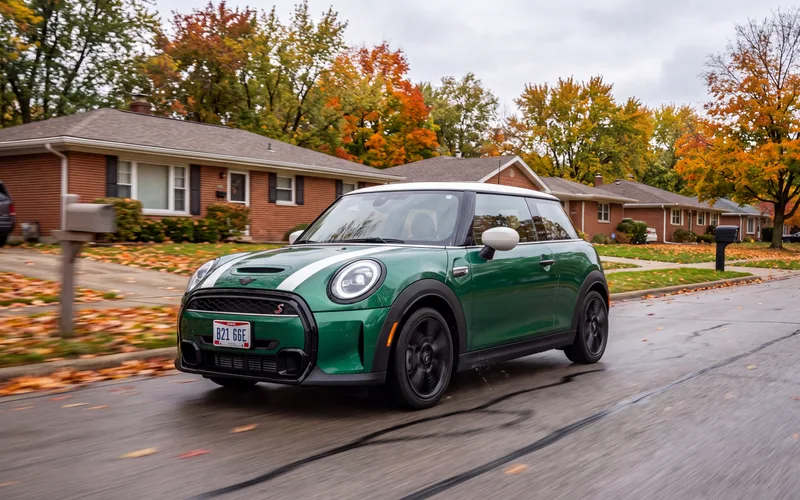 Mini Cooper HardtopSubcompact HatchbackBetter at: Driving fun
The same small-car charm with more power, better dynamics, a stronger dealer network and far better resale — the cross-shop nearly every 500e shopper actually makes.
Compare 2.09C
2.09C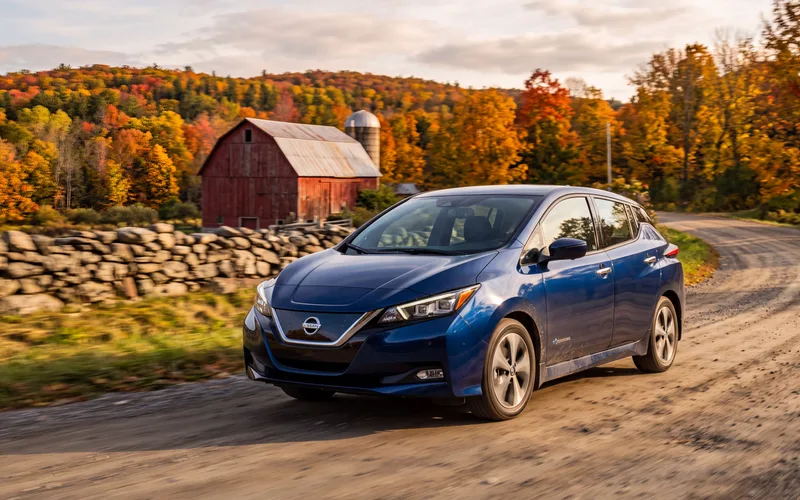 Nissan LeafCompact HatchbackBetter at: Range
If you want an affordable EV rather than this specific piece of design, the Leaf offers substantially more range and four usable doors for the money.
Compare 1.80C-
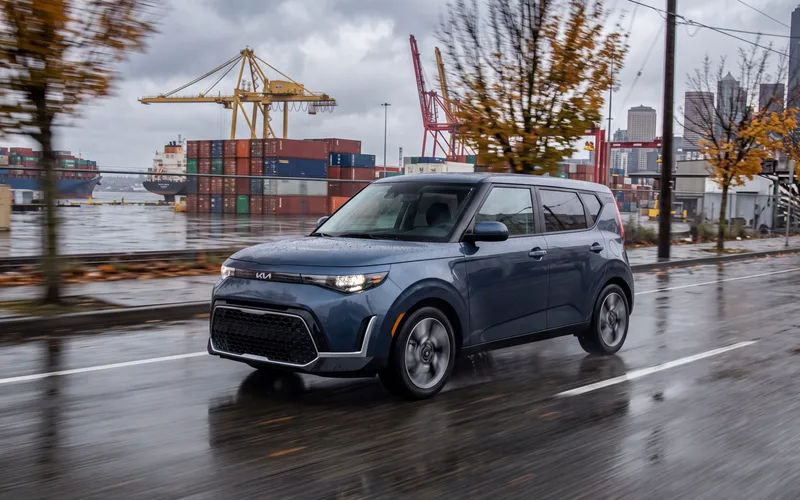 Kia SoulSubcompact HatchbackBetter at: Space for money
Cheaper, far roomier inside for the same tiny parking footprint, with a long warranty and dealers everywhere.
CompareHow it's evolved
6 scored model years · 2017–2026
Subject scores by year
Hover or tap a score to see what moved it versus the year before. A corner mark flags a big swing.
| Year | Performance | Efficiency | Safety | Space | Cost | Reliability | Tech | Use-case | Driving | Value |
|---|---|---|---|---|---|---|---|---|---|---|
| 2026 | 27 | 57 | 52 | 32 | 54 | 44 | 65 | 39 | 73 | 52 |
| 2025 | 26 | 57 | 43 | 28 | 57 | 52 | 62 | 37 | 77 | 63 |
| 2024 | 29 | 57 | 44 | 31 | 69 | 57 | 65 | 41 | 78 | 62 |
| 2019 | 27 | 59 | 21 | 28 | 55 | 53 | 29 | 35 | 78 | 43 |
| 2018 | 27 | 59 | 20 | 29 | 55 | 58 | 33 | 35 | 79 | 53 |
| 2017 | 27 | 59 | 24 | 28 | 59 | 55 | 33 | 36 | 81 | 57 |
Compare two years
Best fit & conditions
Higher scores mean a better fit for that use case. Learn more about use-case fit →
Subject profile
Academic Probation · NHTSA safety recalls
No NHTSA safety recall is on record for the 2026 Fiat 500e. Other model years of the 500e have 2 — listed below.
2 recalls on other model years of the 500e (2024–2025)
Oct 21, 2025Exterior lighting: headlightsThe headlight horizontal aim adjustment is not covered as intended, which can result in improperly adjusted headlights. As such, these vehicles fail to comply with the requirements of Federal Motor Vehicle Safety Standard number 108, "Lamps, Reflective Devices, and Associated Equipment."
Defect
Chrysler (FCA US, LLC) is recalling certain 2024-2025 Fiat 500e Battery Electric (BEV) vehicles. The headlight horizontal aim adjustment is not covered as intended, which can result in improperly adjusted headlights. As such, these vehicles fail to comply with the requirements of Federal Motor Vehicle Safety Standard number 108, "Lamps, Reflective Devices, and Associated Equipment."
Risk
Improperly adjusted headlights can reduce driver visibility or create a glare for oncoming traffic, increasing the risk of a crash.
Remedy
Dealers will install headlight adjustment plugs. Owner notification letters were mailed December 10, 2025. Owners may contact Chrysler customer service at 800-853-1403. Chrysler's number for this recall is A4C. Vehicle Identification Numbers (VINs) involved in this recall will be searchable on NHTSA.gov beginning October 28, 2025.
NHTSA campaign 25V715000 ↗Manufacturer no. A4C2,195 vehicles potentially affected (all models in the campaign)Owners notified Dec 10, 2025Filed by Chrysler (FCA US, LLC)Filed as 500EJul 3, 2024Air bags: frontal · Seat belts: frontA seat belt buckle switch sensor may be improperly connected, preventing the front seat air bag from deploying as intended.
Defect
Chrysler (FCA US, LLC) is recalling certain 2017-2024 Alfa Romeo Giulia, 2018-2025 Alfa Romeo Stelvio, 2019-2023 Fiat 500X, Jeep Renegade, and 2024 Fiat 500E vehicles. A seat belt buckle switch sensor may be improperly connected, preventing the front seat air bag from deploying as intended.
Risk
A front seat air bag that does not deploy as intended can increase the risk of injury in a crash.
Remedy
Dealers will repair the connection, free of charge. Owner notification letters were mailed beginning August 27, 2024. Owners may contact FCA US, LLC customer service at 1-800-853-1403. FCA US, LLC's number for this recall is 82B.
NHTSA campaign 24V510000 ↗Manufacturer no. 82B337,128 vehicles potentially affected (all models in the campaign)Owners notified Aug 27, 2024Filed by Chrysler (FCA US, LLC)Filed as 500E
Source: NHTSA Office of Defects Investigation recall database, model years 2017–2026. Recalls are listed by model year as the manufacturer filed them; whether a specific car is affected depends on its VIN — check a VIN at nhtsa.gov ↗. NHTSA model names matched to this page: 500E.
Detailed scoring by subject
1Performance & PowertrainThe 500e's lowest-graded category.0.00F
Single permanent-magnet motor is the only powertrain offered on the US 500e; unchanged from the 2024 US relaunch through the 2026 model year.
Peak torque of the single front motor; delivered instantly like any single-speed EV.
Fiat's own claim; instrumented tests (Car and Driver, MotorTrend) have landed in the 8.3–8.7 s range for the US 500e, so 8.5 s is representative.
Typical single-motor EV smoothness with immediate off-the-line thrust that reviewers uniformly praise around town, but power tapers noticeably at highway speeds and the modest output caps the sense of effortlessness. No lag, no coarse behavior, just a shortage of muscle.
Single-speed reduction gear like nearly every mainstream EV — no shifts to fumble, no CVT drone. Regen is mild by default and can be increased in Sherpa/Range mode; no true one-pedal driving, which keeps it out of the 90+ band.
US 500e is front-wheel drive only across every trim; Fiat has not offered an AWD version of this generation in any market. Scores at the bottom of the 0–49 band.
Single powertrain across the US range: one 87 kW motor and one 42 kWh battery, take it or leave it. Europe offers a Fiat 500 mild-hybrid alongside the 500e, but that hybrid is not sold in the US.
2Efficiency & RangeOne of the 500e's strongest categories.1.85C-
Corrected to the configuration the volume Pop trim actually ships in: EPA lists the 2026 500e twice, and the standard all-season fitment is the 110 MPGe / 31 kWh-per-100mi entry, not the 116 MPGe summer-tire entry used previously. Still efficient in absolute terms, but only mid-pack against the EV hatchback band.
Strong city MPGe from a 2,952 lb curb weight and one-pedal Range mode regen, but the 500e's upright city-car shape and 400V architecture keep it short of the class leaders the EV hatchback band is scaled to.
Highway MPGe drops off more than city because the tall, blunt 500e body has poor aerodynamics for an EV; the small frontal area offsets some of it, leaving a middling result within the EV class.
Value corrected from 149 to 141 mi to match the volume trim's standard tire fitment; either figure sits far below the 230 mi EV-hatchback band floor, so the score stays pinned at 0. The 500e is engineered as an urban runabout on a 42 kWh (37.3 kWh usable) pack, and range is its defining compromise.
85 kW is barely above the 70 kW band floor and roughly a quarter of what current 800V EVs accept — the 500e's 400V architecture and small pack were never designed for road-trip charging. Carried over unchanged for 2026.
Fiat publishes only a 0–80% time, so this 35-minute figure is a conservative stand-in — a true 10–80% window would be modestly quicker. Even so it is a below-average session time despite the tiny 42 kWh pack, because the 85 kW ceiling squanders the advantage a small battery should confer.
Corrected from $650 to the EPA figure for the standard all-season configuration. About 4.6 cents per mile in energy is genuinely cheap running, though it lands mid-band against other EVs rather than at the top.
Re-rated against the EV-specific guidance rather than the generic fuel-grade scale. Home charging is a genuine strength — an 11 kW onboard charger fills the small pack in six hours on Level 2, and even a 1.3 kW household outlet is workable overnight for a 141-mile commuter — and energy cost per mile is low. But the 500e is a 400V CCS1 car that needs the Free2move adapter to reach the Tesla network, which is exactly the 'adapter needed for the widest network' case the guidance caps in the 50–79 band; the previous 85 sat above that ceiling.
3SafetyGrades below the middle of the scale.1.48D
NHTSA has not published a full NCAP rating for the 2026 Fiat 500e; Euro NCAP awarded the new-generation 500e 4 stars overall, and the platform meets US FMVSS. Estimated 4 stars pending US testing.
500e is not on the 2026 IIHS Top Safety Pick list; published reporting for the current generation cites weakness in the updated side-impact test and structural performance in a key frontal crash, holding it well below award-caliber peers.
For 2026 the base Pop trim adds AEB w/ pedestrian and cyclist detection, adaptive cruise, lane-centering assist, lane-departure warning, driver-attention monitor, traffic-sign recognition, rear parking sensors and rearview camera as standard. However, BSM and rear cross-traffic alert remain bundled to the Icona trim, keeping it out of the top tier.
Standard AEB with pedestrian and cyclist detection functional up to ~80 mph is solid on paper, but the 500e has no IIHS Superior/Advanced front-crash-prevention recognition and no independent night-pedestrian test scores; treated as adequate mainstream performance rather than best-in-class.
Blind-spot monitoring and rear cross-traffic alert are NOT standard on the volume Pop trim — they are bundled into the pricier Icona package, and when equipped they are alert-only (no active steering intervention). A clear weak spot versus subcompact rivals that make BSM standard.
Standard LKA plus lane-centering is a step up for 2026, and the 500e's short wheelbase makes centering easy. Reviewers describe the system as functional and unobtrusive but not as polished or confident as Honda/Toyota's tuning; occasional wander in busy urban lane markings.
For 2026 ACC is standard across the lineup and pairs with lane-centering for a rudimentary highway assist. Reviewers describe stop-and-go behavior as competent but not as refined as Hyundai/Kia systems; brake application can be abrupt at low speeds.
No hands-free highway driving system (BlueCruise, Super Cruise, FSD-supervised, HDA-style) is offered on the 2026 500e at any trim. Driver must maintain hands on the wheel when using ACC + lane-centering.
LED headlamps are standard on the 2026 500e but automatic high-beam control is locked to the Icona trim, and the current-gen 500e has no IIHS headlight rating on file. Compact reflector LED units typical of subcompact class — adequate coverage without adaptive/matrix functionality.
Consumer Reports and multiple US reviewers flag thick A/C-pillars and an obstructive rearview mirror that create pronounced blind zones despite the car's small footprint. A higher-resolution surround-view camera helps in tight spaces for 2026 but is not on the Pop trim, and rear three-quarter visibility remains cramped.
Two-door body with only two rear seat positions (single LATCH pair) and a narrow rear bench make car-seat fitment awkward — many convertible seats block the front-seat return path or won't allow rear-door clearance. Rear access requires folding/tumbling the front seat forward; some owners resort to loading car seats via the hatchback.
4Space & ComfortOne of the 500e's weakest categories.0.07F
US-market 500e is configured as a 4-passenger 2+2, at the bottom of the hatchback band.
Front headroom is solid for a subcompact hatchback thanks to the 500e's tall, upright cabin.
Front legroom sits near the bottom of the hatchback band — adequate but noticeably tighter than competitors like the Mini Cooper or Civic Hatchback.
Rear headroom is modest; the sloped roofline eats into space and adults sit low with limited clearance.
Rear legroom is well below the hatchback band minimum — the rear bench is a city-only occasional seat, not a usable adult space.
Trunk volume falls below the hatchback band; the 500e's cargo hold is closer to a coupe's trunk than a hatch's.
Small door pockets, a shallow glovebox, and a modest center-console tray; the open shelf below the touchscreen and two USB-C ports help, but nothing that qualifies as innovative storage.
Front seats are stylish with acceptable long-drive support and heated cushions on higher trims, but the rear bench is essentially unusable for adults on trips beyond a few miles, pulling the item down.
Battery weight settles the ride versus the old gas 500, but a 94.5-in wheelbase and firm suspension still translate broken pavement clearly; composed on smooth roads, busy on rough ones.
Silent EV powertrain helps low-speed refinement, but the boxy shape and thin glass let noticeable wind and road noise into the cabin at highway speeds.
Heated front seats and heated steering wheel are standard on Inspired by Beauty and Inspired by Music trims, along with automatic climate control and smartphone-enabled pre-conditioning; ventilated seats and rear vents are unavailable.
5Cost of OwnershipGrades below the middle of the scale.1.64D
Fiat sells the 500e in the US as a single trim; 2024 launched at $32,500 + $1,595 destination and 2025-2026 pricing has held near that band. Italian assembly means no federal $7,500 EV credit, but heavy dealer/lease incentives are common.
Only one trim is offered; the as-equipped typical build adds interior/exterior option packs or accessories over the base sticker.
EV powertrains eliminate oil changes and reduce brake wear (regen), pulling projected maintenance well below the hatchback median. Offset by mixed Fiat serviceability reputation and limited dealer network.
The prior 500e was notorious for very poor residuals, and the reintroduced model has seen slow US sales and steep dealer/factory incentives that compress used-market values. No federal EV credit further limits demand elasticity vs credit-eligible EVs.
Stellantis/Fiat standard limited warranty runs 4 years / 50,000 miles, mid-pack for the segment.
As an EV the relevant long-term coverage is the 8 yr / 100k mi high-voltage battery and electric drive warranty (federally mandated minimum), average for the EV field.
No included scheduled maintenance, but Free2move Charge provides a Level 2 home wallbox + installation credit (or public charging credit), a wireless phone charger is standard, and roadside assistance is bundled — a meaningful perk stack for the segment even without free maintenance.
$35,595 volume-trim price minus its estimated resale value after 5 years (32% retained, or about $11,390) leaves about $24,205 in depreciation. Add the projected $4,200 in 5-year maintenance and repairs, and owning this vehicle for 5 years costs about $28,405 in total.
6Reliability & QualityGrades near the bottom of the scale.0.96F
Consumer Reports has historically ranked Fiat models near the bottom of predicted reliability, and the reintroduced US 500e is a low-volume model with limited long-term data. Prior-generation battery cooling and electrical issues keep expectations well below segment norms.
Fiat has consistently placed at or near the bottom of Consumer Reports brand reliability rankings and J.D. Power Vehicle Dependability Studies for over a decade, well behind the Mitsubishi and Kia comparables in this hatchback set.
Limited US recall history for the reintroduced 500e given its short time on sale and low volume; Stellantis has issued scattered small-scope recalls but nothing systemic yet on this generation.
The 42 kWh battery and single-motor drivetrain are new to the US market with no long-term high-mileage record; the 2013-2019 500e had documented battery-cooling and range-degradation issues, keeping this at mid-pack pending fleet data.
Reviewers praise the 500e's distinctive Italian cabin design and cloth/leatherette combinations for the class, though hard plastics appear in secondary surfaces typical of subcompacts positioned at a Premium price.
Italian-built 500e assembly is generally acceptable but Fiat models have drawn scattered complaints about squeaks, rattles, and trim alignment; initial-quality reporting for the reintroduced US model remains thin.
Fiat's US dealer footprint collapsed after the 2019 sales pause and remains one of the smallest of any active mass-market brand — roughly 120-150 Stellantis-affiliated Fiat Studios nationwide, leaving many buyers far from an authorized service point.
The 500e is imported from Italy with a small US installed base, minimal aftermarket, and EV-specific parts that funnel through the sparse Fiat network — historically translating to slow, dealer-dependent, and expensive repairs.
7Technology & InfotainmentOne of the 500e's strongest categories.2.40C+
Standard 10.25-inch center touchscreen running Uconnect 5 across both Pop and Icona trims.
Uconnect 5 is one of the industry's more polished systems — quick boot, logical menus, physical volume/climate controls retained — but the 500e's small dashboard makes the tile layout feel cramped versus larger Stellantis vehicles.
Wireless Apple CarPlay and wireless Android Auto are standard across every 500e trim, along with simultaneous dual-phone Bluetooth pairing.
Uconnect 5 NAV with Natural Language voice recognition and built-in Amazon Alexa is standard; native maps are competent but most owners default to CarPlay/Android Auto for navigation.
Standard six-speaker system is adequate; optional JBL Premium Audio (tuned with Andrea Bocelli, with Virtual Venues acoustic modes) is a genuine differentiator in the subcompact class and offered as a low-cost upgrade.
A 7-inch fully digital instrument cluster is standard on both trims and adds new display themes and customization for 2026, though it's small versus larger digital clusters in premium rivals.
Uconnect 5 supports OTA updates for infotainment/maps and Stellantis has been shifting more software work to over-the-air on the current 500e, but it isn't a full whole-vehicle OTA platform in the Tesla/GM Ultifi sense.
FIAT connected-services app supports remote lock/unlock, remote start/climate, vehicle finder, and EV-specific charge status and scheduling; core features are subscription-gated after the trial and no digital key is offered.
Three USB ports plus a standard wireless charging pad on Pop and Icona cover most passenger needs, but there is no household AC outlet and USB layout in a two-door subcompact is inherently limited versus larger hatchbacks.
Proximity keyless entry and push-button start are standard on both Pop and Icona, and the FIAT app adds remote lock/unlock and remote start — but there is no phone-as-key digital key feature.
Rear camera and rear parking sensors are standard, and Icona adds front and side parking sensors, but no surround-view/360 camera is offered and camera resolution is standard-def by 2026 standards.
Head-up display is not offered on any 2026 Fiat 500e trim — the vehicle relies entirely on the 7-inch digital cluster and 10.25-inch touchscreen for driver information.
8Use-Case FitOne of the 500e's weakest categories.0.56F
Two-door body forces awkward front-seat-tilt access to the rear bench, LATCH anchors are hard to reach, and the tight rear seating space accommodates only rear-facing seats behind small front occupants.
Standard Level 2 ADAS suite (AEB, adaptive cruise, lane keep, blind spot) is respectable, but the subcompact footprint carries a physics penalty in crashes and neither NHTSA nor IIHS has published full crash-test ratings for the reintroduced US model.
Cramped rear bench, ~6.4 cu ft cargo behind the rear seats, and ~149 mi EPA range together make multi-hour family trips punishing; the small cabin also gets loud at highway speed.
Instant EV torque, one-pedal driving via 'Sherpa'/regen modes, low-slung visibility, and a small footprint make it a relaxed low-speed daily; the ride can feel busy on broken pavement but urban manners are excellent.
EPA ~108 MPGe combined keeps per-mile energy cost well below any gas subcompact, but the Italy-assembled 500e is ineligible for the US $7,500 EV tax credit, and the ~$34k MSRP is steep for a car this size.
At ~142.6 in long with a very tight turning circle, the 500e is one of the smallest cars sold in the US — a genuine benchmark for urban parking and U-turns, aided by standard parking sensors and camera.
Not rated to tow, no bed, and only a few cubic feet of trunk space — the 500e is fundamentally not a work vehicle.
Small Italian-built city EV with a soft-trim interior and painted exterior surfaces low to the ground — no fleet-duty pedigree and previous 500 generation had mixed reliability histories in the US.
No 120V/240V outlets, no bed rails, no meaningful upfit ecosystem, and cargo tie-downs are limited to basic hooks in the trunk.
EPA ~149 mi range and 85 kW peak DC fast charge (~35 min to 80%) make interstate travel tedious, and the short wheelbase, tight cabin, and road noise sap highway comfort.
FWD-only, low ground clearance, no roof rails, no tow rating, and no meaningful all-weather kit — the 500e is unambiguously pavement-bound.
Rear seats fold to open ~24 cu ft, but the small hatch aperture, high load floor, and lack of underfloor storage or hitch make bulky-gear runs a squeeze.
9Driving ExperienceThe 500e's best-graded category.2.94B-
Short wheelbase (~92 in) and low-slung battery make the 500e nimble in urban settings, but reviewers consistently note noticeable body roll, modest grip on eco tires, and a chassis tuned for comfort over precision. Nowhere near hot-hatch composure.
Electric power steering is light and quick around center for parking, but reviewers describe it as numb and lacking feedback compared with Mini Cooper. Sport-mode adds artificial weight without meaningful information.
Adequate stopping power for a light (~3,000 lb) EV, but reviewers flag inconsistent regen-to-friction blending and a somewhat grabby pedal transition. No panic-stop instrumented figures widely published.
Single-speed EV drivetrain delivers instant, seamless torque with no shift shock. The 117 hp motor tapers noticeably above 55 mph, so highway response is only adequate, but low-speed tip-in is impeccably smooth.
EV powertrain is near-silent under load with minimal vibration through the controls. Any cabin noise complaints center on road/tire and wind noise, not the drivetrain itself.
Fiat's ~9.7 m curb-to-curb figure for the New 500 (500e) platform is a standout in the US market and one of the tightest turning circles sold today — a defining urban advantage.
Compact retro cabin means limited seat travel, a high beltline for a small car, and tight footwell/pedal spacing that penalize taller drivers. Controls are logical but some cabin functions are buried in the touchscreen.
Urban charm is real — instant torque, cute styling, and the tight turning circle make it enjoyable in the city. Highway performance and driving dynamics don't sustain enthusiast interest for a 'take the long way home' experience.
10Value & Market PositionGrades below the middle of the scale.1.47D
Base Pop trim ($35,700) includes a 10.25-inch infotainment with wireless Apple CarPlay/Android Auto, proximity keyless entry, and standard AEB/lane-keep — competitive content, but most driver-assist tech (blind-spot monitoring, adaptive cruise, lane centering, heated seats) is gated behind the $37,700 Icona.
$35,700+ for 149 miles of EPA range, 117 hp, and 8.1-sec 0-60 is poor value in the EV market — a Nissan Leaf, Chevy Equinox EV, or even used Model 3 offers far more range and space for the money. Reviewers consistently flag the 500e as style-over-substance.
Two trims (Pop, Icona), one 117-hp FWD powertrain, one 42-kWh battery — no AWD, no long-range option, no performance variant. Take-it-or-leave-it lineup with minimal configuration flexibility.
Sales are collapsing: 68 units Q1 2026 (down 85% YoY), 15 units in January 2026 (down 91%), and only 1,141 units for all of 2025. Canada sold ~19x more 500e in Q1 2026 than the US — the model has effectively failed in the US market.
The 500 nameplate carries iconic Italian city-car charm and a niche loyal following, but the Fiat brand is deeply weakened in the US — near-invisible dealer network, thin lineup, and reputation for below-average reliability. Model-level image is stronger than brand-level image.
$2,000 National Bonus Cash on Pop and up to $3,000 on the (RED) Edition, plus 4.9% APR financing — modest by segment standards but real. With inventory piling up and sales cratering, buyers have strong negotiating leverage at the dealer level.
Current generation launched globally in 2020 and in the US for 2024; 2026 gets a refresh (revised fascias, new colors, updated infotainment software, Tesla Supercharger compatibility via NACS adapter). Mid-cycle current — next generation isn't expected until around 2030.
Won Green Car Journal Urban Green Car of the Year (2024 and 2025) and Vincentric Best Value in America: Subcompact (2025); US News ranks it #3 in Electric Cars at 7.4/10. Reviewers praise city agility, style, and ride but universally flag range and price — rarely a comparison-test winner.