

The verdict
A struggling compact hatchback, strong on driving and held back by performance.
The 2020 Leaf is a quiet, cheap-to-run electric commuter that asks you to live within 149 miles. At $35,115 delivered, the volume SV gives you 111 MPGe, roughly $700 a year in electricity, five stars from NHTSA and — new for 2020 — Nissan's full Safety Shield 360 driver-aid suite standard on every grade. The problems are the battery and what the market did to it: the pack is passively air-cooled with no liquid thermal management, DC fast charging is a 50 kW CHAdeMO plug the US network abandoned for CCS, and a 2020 SV that stickered at $35,140 is worth about $8,884 today — a 75% loss. As a used buy under warranty-expiry awareness it is a bargain second car; as a household's only vehicle it is the wrong shape.
Jump to scoresStrengths
- Running costs are close to the cheapest on the road
- Effortless in traffic, which is the job it was built for
- 2020 is the safety high point of this generation
What holds it back
- 149 miles of range, and charging that fights you
- The battery has no cooling system, and it shows
- Resale value collapsed — the worst number on the car
Top alternatives
Cars shoppers cross-shop with the Nissan Leaf 2.56C+
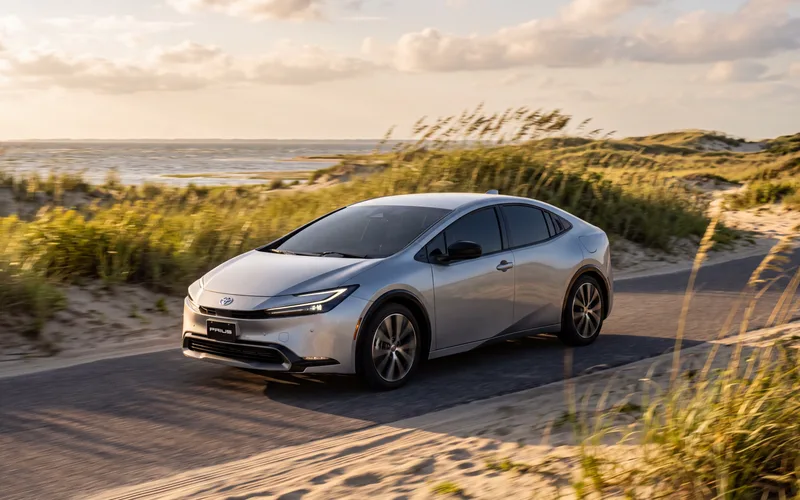 Toyota PriusCompact HatchbackBetter at: Resale value
It delivers most of the Leaf's fuel savings with none of the charging dependency, plus available AWD and the resale value the Leaf has never had.
Compare 2.46C+
 Honda Civic HatchbackCompact HatchbackBetter at: Rear-seat space
If you actually use the back seat or want proven crash ratings today, the Civic gives you 3.4 more inches of rear legroom, 24.5 cu ft of cargo and a Top Safety Pick+ award.
Compare 1.14D
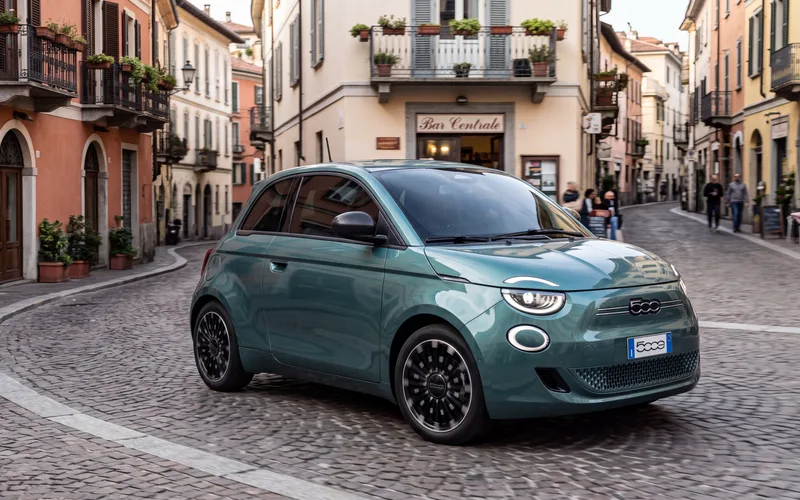 Fiat 500eSubcompact HatchbackBetter at: City parking
For a purely urban second car where 140 miles is plenty, the 500e is cheaper to buy and insure and easier to squeeze into a city parking space.
CompareHow it's evolved
10 scored model years · 2017–2026
Subject scores by year
Hover or tap a score to see what moved it versus the year before. A corner mark flags a big swing.
| Year | Performance | Efficiency | Safety | Space | Cost | Reliability | Tech | Use-case | Driving | Value |
|---|---|---|---|---|---|---|---|---|---|---|
| 2026 | 40 | 62 | 62 | 61 | 54 | 60 | 74 | 59 | 71 | 68 |
| 2025 | 41 | 51 | 66 | 63 | 53 | 63 | 45 | 46 | 62 | 47 |
| 2024 | 42 | 52 | 63 | 63 | 46 | 67 | 43 | 43 | 66 | 51 |
| 2023 | 34 | 53 | 60 | 61 | 54 | 61 | 38 | 46 | 67 | 52 |
| 2022 | 34 | 53 | 61 | 63 | 48 | 57 | 41 | 46 | 66 | 56 |
| 2021 | 34 | 53 | 65 | 63 | 47 | 60 | 44 | 45 | 66 | 58 |
| 2020 | 34 | 54 | 65 | 63 | 46 | 52 | 44 | 47 | 66 | 61 |
| 2019 | 34 | 53 | 48 | 62 | 55 | 53 | 39 | 44 | 64 | 59 |
| 2018 | 32 | 54 | 52 | 66 | 51 | 54 | 46 | 47 | 67 | 66 |
| 2017 | 21 | 58 | 25 | 62 | 52 | 62 | 33 | 38 | 63 | 49 |
Compare two years
Best fit & conditions
Higher scores mean a better fit for that use case. Learn more about use-case fit →
Subject profile
Academic Probation · NHTSA safety recalls
Sep 19, 2024Electrical system: propulsion system: charging: module: software · Electrical system: propulsion system: traction batteryThe lithium-ion battery may overheat during Level 3 charging.
Defect
Nissan North America, Inc. (Nissan) is recalling certain 2019-2020 LEAF vehicles equipped with a Level 3 quick charging port. The lithium-ion battery may overheat during Level 3 charging.
Risk
A quick charging battery that overheats increases the risk of a fire.
Remedy
Dealers will update the battery software, free of charge. Owner letters were mailed June 3, 2026. This is a phased recall. Owners may contact Nissan Customer Service at 1-800-867-7669. Nissan's numbers for this recall are R24B2, P4A38, and P5A22.
NHTSA campaign 24V700000 ↗Manufacturer no. R24B2, P4A38, P5A2225,704 vehicles potentially affected (all models in the campaign)Owners notified May 27, 2026Filed by Nissan North America, Inc.Filed as LEAFFeb 2, 2024Back over prevention: sensing system: cameraDamage to the camera harness can cause distortion or loss of the rearview camera display image. As such, these vehicles fail to comply with the requirements of Federal Motor Vehicle Safety Standard number 111, "Rear Visibility."
Defect
Nissan North America, Inc. (Nissan) is recalling certain 2018-2022 LEAF vehicles. Damage to the camera harness can cause distortion or loss of the rearview camera display image. As such, these vehicles fail to comply with the requirements of Federal Motor Vehicle Safety Standard number 111, "Rear Visibility."
Risk
A rearview camera that does not properly display an image can reduce the driver's rear view, increasing the risk of a crash.
Remedy
Dealers will inspect the rearview camera and harness for damage and replace them as necessary. If no damage is found, the dealer will apply protective tape and reroute the rearview camera harness. Repairs will be performed free of charge. Owner notification letters were mailed August 9, 2024. Owners may contact Nissan customer service at 1-800-867-7669. Nissan's number for this recall is R23D7.
NHTSA campaign 24V071000 ↗Manufacturer no. R23D757,914 vehicles potentially affected (all models in the campaign)Owners notified Aug 9, 2024Filed by Nissan North America, Inc.Filed as LEAFJul 17, 2023Vehicle speed controlThe vehicle may accelerate unintentionally if the driving mode is changed ("D" to "B"; e-Pedal "On"; or "ECO" mode) after disengaging the cruise control.
Defect
Nissan North America, Inc. (Nissan) is recalling certain 2018-2023 LEAF vehicles. The vehicle may accelerate unintentionally if the driving mode is changed ("D" to "B"; e-Pedal "On"; or "ECO" mode) after disengaging the cruise control.
Risk
Unintentional acceleration can increase the risk of a crash.
Remedy
Dealers will reprogram the vehicle control module (VCM), free of charge. Owner notification letters are expected to be mailed August 30, 2023. Owners may contact Nissan's customer service at 1-800-867-7669. Nissan's number for this recall is R23A6.
NHTSA campaign 23V494000 ↗Manufacturer no. R23A666,159 vehicles potentially affected (all models in the campaign)Owners notified Aug 30, 2023Filed by Nissan North America, Inc.Filed as LEAFFeb 2, 2023Equipment: other: owners/service/other manual · Visibility: defroster/defogger/hvac systemThe Owner's Manual instructions for defroster operation are incorrect, and may result in reduced defroster performance under specific conditions. As such, these vehicles fail to comply with the requirements of Federal Motor Vehicle Safety Standard number 103, "Windshield Defrosting and Defogging Systems."
Defect
Nissan North America, Inc. (Nissan) is recalling certain 2018-2023 LEAF vehicles. The Owner's Manual instructions for defroster operation are incorrect, and may result in reduced defroster performance under specific conditions. As such, these vehicles fail to comply with the requirements of Federal Motor Vehicle Safety Standard number 103, "Windshield Defrosting and Defogging Systems."
Risk
Reduced defroster performance can limit visibility out of the windshield, increasing the risk of a crash.
Remedy
Nissan will mail an addendum with updated instructions on how to operate the defroster, free of charge. Owner notification letters are expected to be mailed April 1, 2023. Owners may contact Nissan's customer service at 1-800-867-7669. Nissan's number for this recall is R22C5.
NHTSA campaign 23V048000 ↗Manufacturer no. R22C564,732 vehicles potentially affected (all models in the campaign)Owners notified Mar 30, 2023Filed by Nissan North America, Inc.Filed as LEAFSep 22, 2020Visibility: glass, side/rearThe rear window glass may not remain properly secured to the vehicle.
Defect
Nissan North America, Inc. (Nissan) is recalling certain 2020 Altima, Maxima and Leaf vehicles. The rear window glass may not remain properly secured to the vehicle.
Risk
Rear window glass that separates from the vehicle can increase the risk of a crash.
Remedy
Nissan will notify owners, and dealers will replace the back window glass, free of charge. The recall began November 4, 2020. Owners may contact Nissan customer service at 1-800-867-7669. Nissan's number for this recall is PC752.
NHTSA campaign 20V570000 ↗Manufacturer no. PC752150 vehicles potentially affected (all models in the campaign)Owners notified Nov 4, 2020Filed by Nissan North America, Inc.Filed as LEAFJul 17, 2020Back over prevention: sensing system: cameraUnder certain circumstances, the images for the back-up camera can disappear while in reverse. As such, these vehicles fail to comply with Federal Motor Vehicle Safety Standard (FMVSS) number 111, "Rear Visibility."
Defect
Nissan North America, Inc. (Nissan) is recalling certain 2020 LEAF electric vehicles. Under certain circumstances, the images for the back-up camera can disappear while in reverse. As such, these vehicles fail to comply with Federal Motor Vehicle Safety Standard (FMVSS) number 111, "Rear Visibility."
Risk
The lack of an image in the back-up camera display increases the risk of a crash.
Remedy
Nissan will notify owners, and dealers will update the back-up camera software, free of charge. This recall began August 31, 2020. Owners may contact Nissan customer service at 1-800-867-7669.
NHTSA campaign 20V412000 ↗6,157 vehicles potentially affected (all models in the campaign)Owners notified Aug 31, 2020Filed by Nissan North America, Inc.Filed as LEAF
7 recalls on other model years of the Leaf (2017–2019, 2021–2023, 2026)
Jul 1, 2026Seat belts: rear/other: retractorThe outer rear seat belt automatic locking retractors (ALR) may deactivate early, which can prevent a child restraint system (CRS) from securing properly. As such, these vehicles fail to comply with the requirements of Federal Motor Vehicle Safety Standard number 208, "Occupant Crash Protection."
Defect
Nissan North America, Inc. (Nissan) is recalling certain 2026 LEAF vehicles. The outer rear seat belt automatic locking retractors (ALR) may deactivate early, which can prevent a child restraint system (CRS) from securing properly. As such, these vehicles fail to comply with the requirements of Federal Motor Vehicle Safety Standard number 208, "Occupant Crash Protection."
Risk
An improperly secured child restraint system may not restrain an occupant as intended, increasing the risk of injury during a crash.
Remedy
Dealers will replace the rear outboard seat belt assemblies, free of charge. Interim letters, notifying owners of the safety risk, were mailed July 28, 2026. Additional letters will be sent once the remedy is available, anticipated October 28, 2026. Owners may contact Nissan's customer service at 800-647-7261. Nissan's number for this recall is R26A7. Vehicle Identification Numbers (VINs) involved in this recall became searchable on NHTSA.gov on July 7, 2026.
NHTSA campaign 26V425000 ↗Manufacturer no. R26A73,788 vehicles potentially affected (all models in the campaign)Filed by Nissan North America, Inc.Filed as LEAFMar 25, 2026Electrical system: propulsion system: traction batteryThe high voltage battery may have internal damage that can cause a short circuit within the battery module.
Defect
Nissan North America, Inc. (Nissan) is recalling certain 2026 LEAF vehicles. The high voltage battery may have internal damage that can cause a short circuit within the battery module.
Risk
A short circuit in a high voltage battery module increases the risk of a fire.
Remedy
Owners are advised to park outside and away from structures and should not charge their vehicles until the remedy is completed. Dealers will inspect and replace the battery modules, as necessary, free of charge. Owner letters were mailed September 2, 2026. Owners may contact Nissan's customer service at 800-647-7261. Nissan's number for this recall is R25F1. Vehicle Identification Numbers (VINs) involved in this recall became searchable on NHTSA.gov on March 27, 2026.
NHTSA campaign 26V188000 ↗Manufacturer no. R25F151 vehicles potentially affected (all models in the campaign)Owners notified Aug 28, 2026Filed by Nissan North America, Inc.Filed as LEAFSep 30, 2025Electrical system: propulsion system: charging: module: software · Electrical system: propulsion system: traction batteryThe lithium-ion battery may overheat during Level 3 charging.
Defect
Nissan North America, Inc. (Nissan) is recalling certain 2021-2022 LEAF vehicles equipped with a Level 3 quick charging port. The lithium-ion battery may overheat during Level 3 charging.
Risk
A quick charging battery that overheats increases the risk of a fire.
Remedy
Owners are advised not to use Level 3 quick charging until the remedy is completed. Dealers will update the battery software, free of charge. Owner letters were mailed June 16, 2026. Owners may contact Nissan's Customer Service at 1-800-867-7669. Nissan's number for this recall is R25C8. Vehicle Identification Numbers (VINs) involved in this recall will be searchable on NHTSA.gov beginning October 4, 2025.
NHTSA campaign 25V655000 ↗Manufacturer no. R25C819,077 vehicles potentially affected (all models in the campaign)Owners notified Jun 10, 2026Filed by Nissan North America, Inc.Filed as LEAFMay 22, 2023Service brakes, hydraulic: foundation components: hoses, lines/piping, and fittingsThe right-hand brake tubes may have been damaged during production and could corrode, possibly causing a hole in the brake line and a brake fluid leak.
Defect
Nissan North America, Inc. (Nissan) is recalling certain 2023 LEAF vehicles. The right-hand brake tubes may have been damaged during production and could corrode, possibly causing a hole in the brake line and a brake fluid leak.
Risk
A brake fluid leak can reduce braking performance and extend the distance required to stop, increasing the risk of a crash.
Remedy
Dealers will inspect and replace the right-hand brake tube, as necessary, free of charge. Owner notification letters are expected to be mailed July 7, 2023. Owners may contact Nissan's customer service at 1-800-867-7669. Nissan's number for this recall is PC976.
NHTSA campaign 23V362000 ↗Manufacturer no. PC976758 vehicles potentially affected (all models in the campaign)Owners notified Jul 7, 2023Filed by Nissan North America, Inc.Filed as LEAFApr 26, 2023Equipment: other: owners/service/other manual · Visibility: defroster/defogger/hvac systemThe Owner's Manual instructions for defroster operation are incorrect and may result in reduced defroster performance under specific conditions. As such, these vehicles fail to comply with the requirements of Federal Motor Vehicle Safety Standard number 103, "Windshield Defrosting and Defogging Systems."
Defect
Nissan North America, Inc. (Nissan) is recalling certain 2013-2017 LEAF vehicles. The Owner's Manual instructions for defroster operation are incorrect and may result in reduced defroster performance under specific conditions. As such, these vehicles fail to comply with the requirements of Federal Motor Vehicle Safety Standard number 103, "Windshield Defrosting and Defogging Systems."
Risk
Reduced defroster performance can limit visibility out of the windshield, increasing the risk of a crash.
Remedy
Nissan will mail an addendum with updated instructions on how to operate the defroster, free of charge. Owner notification letters are expected to be mailed May 26, 2023. Owners may contact Nissan's customer service at 1-800-867-7669. Nissan's number for this recall is R23A1.
NHTSA campaign 23V296000 ↗Manufacturer no. R23A194,343 vehicles potentially affected (all models in the campaign)Owners notified May 30, 2023Filed by Nissan North America, Inc.Filed as LEAFSep 12, 2019Back over prevention: sensing system: cameraAdditionally included are 2019 Nissan GT-R and Taxi and Infiniti QX50, QX60, Q70, Q70L vehicles. The back-up camera and display settings can be adjusted such that the rear view image is no longer visible and the system will retain that setting the next time the vehicle is placed in reverse. As such, these vehicles fail to comply with the requirements of Federal Motor Vehicle Safety Standard (FMVSS) number 111, "Rear Visibility."
Defect
Nissan North America, Inc. (Nissan) is recalling certain 2018-2019 Nissan Altima, Armada, Frontier, Kicks, Leaf, Maxima, Murano, NV, NV200, Pathfinder, Rogue, Rogue Sport, Sentra, Titan, Titan Diesel, Versa Note and Versa Sedan vehicles, as well as Infiniti Q50, Q60, QX30 and QX80 vehicles. Additionally included are 2019 Nissan GT-R and Taxi and Infiniti QX50, QX60, Q70, Q70L vehicles. The back-up camera and display settings can be adjusted such that the rear view image is no longer visible and the system will retain that setting the next time the vehicle is placed in reverse. As such, these vehicles fail to comply with the requirements of Federal Motor Vehicle Safety Standard (FMVSS) number 111, "Rear Visibility."
Risk
The lack of an image in the back-up camera display increases the risk of a crash.
Remedy
Nissan will notify owners in phases, having dealers update the back-up camera settings software, free of charge. The recall began November 11, 2019 and all affected VINs should be activated. Owners may contact Nissan customer service at 1-800-867-7669 or INFINITI customer service at 1-800-662-6200.
NHTSA campaign 19V654000 ↗1,228,830 vehicles potentially affected (all models in the campaign)Owners notified Nov 11, 2019Filed by Nissan North America, Inc.Filed as LEAFApr 13, 2017Air bagsDue to a manufacturing error within the air bag inflators, the passenger frontal air bag may not properly deploy in the event of a crash.
Defect
Nissan North America, Inc. (Nissan) is recalling certain 2015-2017 LEAF and 2014, 2016 and 2017 Sentra vehicles. Due to a manufacturing error within the air bag inflators, the passenger frontal air bag may not properly deploy in the event of a crash.
Risk
In the event of a crash, if the front passenger air bag doesn't deploy properly, it can increase the risk of injury to passengers.
Remedy
Nissan will notify owners, and dealers will replace the front passenger air bag inflator, free of charge. The recall began June 7, 2017. Owners may contact Nissan customer service at 1-800-647-7261.
NHTSA campaign 17V253000 ↗30,038 vehicles potentially affected (all models in the campaign)Owners notified Jun 7, 2017Filed by Nissan North America, Inc.Filed as LEAF
Source: NHTSA Office of Defects Investigation recall database, model years 2017–2026. Recalls are listed by model year as the manufacturer filed them; whether a specific car is affected depends on its VIN — check a VIN at nhtsa.gov ↗. NHTSA model names matched to this page: LEAF.
Detailed scoring by subject
1Performance & PowertrainThe Leaf's lowest-graded category.0.25F
The 40-kWh LEAF S and SV share the 110-kW EM57 motor at 147 hp; the $4,000-dearer 62-kWh PLUS grades step to a 160-kW unit at 214 hp. Either way this is near the floor of the 130–520 hp hatchback band.
Torque is the LEAF's better number than horsepower — 236 lb-ft available from zero rpm is ahead of the gas compacts it is priced against, which is why the car feels quicker off the line than 147 hp suggests.
Nissan publishes no 0–60 figure. 7.4 s is Car and Driver's instrumented time for the 110-kW/40-kWh powertrain, which is carried over unchanged into 2020 (the model-year update was safety tech, the 8-inch screen and the Canto pedestrian sound, not the drivetrain); Edmunds recorded 7.8 s on its own car. Mid-pack for a compact hatchback.
Single-motor EV delivery is immediate, silent and lag-free, and 2020's re-tuned e-Pedal software (smoother deceleration, better reverse feedback) makes one-pedal driving genuinely easy to modulate. Held back from the top band because the 147-hp car runs short of thrust above roughly 50 mph — Nissan itself markets the PLUS on the strength of a 13% quicker 50–75 mph pass — and the front-drive layout shows mild torque steer under hard acceleration.
A single-speed reducer with a shift-by-wire palm shifter — nothing to mistime, no hunting, no CVT drone. Three drive modes (Normal, Eco, B-mode) plus e-Pedal and standard Hill Start Assist give useful control over regen. Short of a perfect score only because regen is not paddle-adjustable as on newer EVs.
Front-wheel drive is the only configuration offered across all five 2020 grades — no AWD at any price. Bottom of the band alongside the other FWD-only compact hatchbacks.
2020 offers a real choice of two battery-and-motor combinations — 40 kWh/110 kW/147 hp in S and SV, 62 kWh/160 kW/214 hp in the S, SV and SL PLUS grades — spanning 149 to 226 miles of range and $31,600 to $43,900. That is broader than most single-model EV lineups of the era, but they remain two states of one electric powertrain: no gas, hybrid or AWD alternative exists.
2Efficiency & RangeGrades below the middle of the scale.1.59D
The volume 40-kWh LEAF is EPA-rated 111 MPGe combined at 30 kWh/100 mi — the most efficient car in its own lineup, and competitive among EVs of its era. Graded against other EVs, not the gas fleet.
City is the LEAF's best case — regenerative braking, B-mode and e-Pedal recover most of the energy of stop-and-go driving, which is the commute this car was engineered around.
Highway MPGe falls about 20% from the city figure — the usual EV pattern, and the LEAF's tall hatchback body gives back more at speed than a slipperier EV would despite a 0.28 drag coefficient, a flat underbody and a rear diffuser.
149 miles is the defining limitation of the volume LEAF and sits below the floor of the EV range band — a genuine commuter-only figure in 2020. Buyers who needed more had to step up roughly $4,000 to the 62-kWh PLUS for 226 miles, and even that does not clear the band floor.
The volume SV carries the quick-charge port as standard equipment, but it is the 50-kW CHAdeMO unit — below the 70-kW floor of the band, and on a connector standard US networks were already moving away from in favour of CCS. Worth flagging that on the cheaper LEAF S the port is not fitted at all unless the buyer ticks the Charge Package, so a used 2020 S may have no DC charging capability whatsoever.
Nissan's own quoted figure is 40 minutes to 80%. The small 40-kWh pack partly hides the slow port, but the LEAF's passively air-cooled battery throttles hard on repeated fast charges, so this number is optimistic on a road trip — the well-documented 'Rapidgate' behaviour of this generation.
Energy cost is where the LEAF wins outright — roughly a third of what a comparable gas compact hatchback burns over the same 15,000 miles, and the single cheapest thing about running one.
Electricity at $700/yr is cheap and the 6.6-kW onboard charger refills the small 40-kWh pack in about 7.5 hours on a 240V outlet — an easy overnight. Two things keep it out of the top band: the standard portable cable on S and SV is 120V only (a ~35-hour trickle; the 120V/240V EVSE arrives with the SV Technology Package), so most owners must buy a home wallbox, and public DC charging is CHAdeMO, a connector US networks were already retiring in favour of CCS.
3SafetyOne of the Leaf's strongest categories.2.37C+
NHTSA rated both 2020 battery variants as separate entries and gave each the maximum overall Vehicle Score, built on a clean sweep of 5-star side results against 4 stars frontal and 4 stars rollover. The heavy, low-mounted floor battery does exactly what it should in the side and rollover tests.
2020 is the structural high point of the ZE1 generation — IIHS documents added knee airbags, rear seat-mounted torso airbags, redesigned curtain and passenger frontal airbags and reinforced front and side structure beginning with this model year, and the Good moderate-overlap rating comes from a test of a 2020 LEAF SV specifically. But the LEAF carries no Top Safety Pick award, posts only Acceptable in the tougher updated side test, and has never been published with a small overlap front or roof strength result, so roughly a third of the crashworthiness picture is simply absent. Mid-band per the prompt: mostly Good with an Acceptable, no award.
2020 is the year Nissan made Safety Shield 360 standard on every LEAF grade — AEB with pedestrian detection, rear automatic braking, rear cross traffic alert, blind spot warning, lane departure warning with prevention and high beam assist — and the volume SV adds Intelligent Cruise Control on top, so the representative trim has the full AEB/ACC/LKA/BSM/RCTA set. It misses the 80-100 band only on the band's own wording: ACC is not on the cheaper S grade, and true lane centering needs the optional ProPILOT Assist.
AEB with pedestrian detection is standard on every 2020 grade, but no independent body has ever measured how well it works: IIHS logs the system as present and explicitly untested, and NHTSA's 2020 record credits only forward collision warning, with no crash-imminent-braking or pedestrian AEB verification. Standard hardware with zero published performance evidence belongs mid-band, not at the top.
This is the 2020 LEAF's clearest safety advantage over its gas rivals: blind spot warning and rear cross traffic alert are standard on the cheapest grade — new for 2020, where the 2019 S went without — and rear automatic braking adds a real intervention layer behind the car rather than another chime. It stops short of the top band because the blind spot function is alert-only; no LEAF offers steering-based blind spot intervention.
The volume SV gets Lane Departure Warning plus Intelligent Lane Intervention as standard — genuine brake-based correction at the line, which IIHS records as 'prevention' rather than warning alone, but a corrective twitch rather than continuous centering. Real lane centering requires ProPILOT Assist's steering assist, which at least is orderable on the volume trim as the SV Technology Package rather than demanding a trim walk.
Unlike the later two-trim LEAF lineups, the 2020 volume SV has radar Intelligent Cruise Control as standard equipment, so the representative buyer gets real adaptive following rather than fixed-speed cruise. It sits mid-band rather than high because the standard ICC is the plain version — Nissan reserves the 'Full Speed Range with Hold' calibration and the steering-assisted highway behaviour for ProPILOT Assist, a Technology Package option on SV and standard only on the $43,900 SL PLUS.
No hands-free highway driving is offered on the 2020 LEAF at any trim or price. ProPILOT Assist is a hands-on-wheel system throughout, and Nissan's hands-off ProPILOT Assist 2.0 was never fitted to the US LEAF.
The volume SV runs halogen projectors with automatic on/off; LED headlamps arrive only with the SV Technology Package or the SL PLUS. High Beam Assist is at least standard fleet-wide via Safety Shield 360, and unlike the later S-only lineups an SV buyer can option the LEDs. But IIHS has never published a headlight rating for any US ZE1 LEAF, so there is no verified performance to credit and the as-delivered volume car is on the lighting technology IIHS has essentially never rated Good.
The ZE1 LEAF keeps a conventional upright hatchback greenhouse — a low cowl, generous glass and a usefully square rear window — so the forward and side view is better than the raked-fastback EVs that followed. The thick C-pillars pinch the over-shoulder view and owners complain about the A-pillar, and the 360-degree Around View Monitor that would compensate is a Technology Package item, leaving the standard SV with a plain reversing camera.
IIHS rates the LEAF's child-seat anchor hardware Marginal — a measured verdict on a tested SV, not an inference — and the 2020 safety overhaul that added airbags and structure did nothing for it. Only the two outboard positions have complete LATCH hardware, the lower anchors sit too deep in the seat bight and take 27-33 lbs to attach, and confusing hardware is present at every tether.
4Space & ComfortOne of the Leaf's strongest categories.2.26C
The ZE1 LEAF is a conventional five-seat, five-door hatchback and every 2020 grade seats five — the top of the 4–5 hatchback band.
41.2 inches is exceptional for a compact hatchback — above the top of the 36–40 in band — a direct product of the LEAF's tall, upright greenhouse and the high hip point the floor-mounted battery forces.
42.1 inches sits mid-band for the segment — enough for tall drivers on paper, though the raised battery floor means those inches are taken with knees carried higher than in a gas compact.
37.3 inches is mid-band and respectable on paper, but the tapering roofline works against it on the way in — passengers much over six feet duck to clear the header.
33.5 inches is the LEAF's worst interior number and the clearest cost of packaging a 2011-era battery layout under a 106.3-inch wheelbase: it lands near the bottom of the 32–42 in hatchback band, well behind a Civic or Mazda3 hatchback, and a raised hump in the rear footwell makes the centre position worse still.
23.6 cubic feet behind the second row is a strong figure for the segment and the practical half of the LEAF's case — a deep hatch well that takes a stroller or a large grocery run without folding anything. The weak half is the other end: folding the bench adds only 6.4 cu ft, and it does not fold flat.
Storage is conventional and unambitious: two cupholders, four door bottle holders, a centre console bin, a glovebox and sun-visor extensions. There is no frunk, no underfloor bin, a single 12-volt outlet, no household AC socket and no vehicle-to-load power despite the car being an EV — and the non-flat rear seat fold plus the rear footwell hump undercut the flexibility a hatchback body should deliver.
Reviewers of the 2020 car call the front seats well shaped and reasonably supportive — better in hip and lower-back support than earlier LEAFs — but short on shoulder bolstering for taller drivers, and the volume SV fits a 6-way manual driver's seat with no lumbar adjustment at all (the 8-way power seat with 2-way lumbar is Technology Package or SL PLUS content). The rear bench sits low on a short cushion, leaving adults knees-up.
A ~3,570-lb curb weight with the mass low in the floor gives the LEAF a settled, planted gait that reviewers describe as neither rigid nor buoyant and good at absorbing both large and small bumps. Short of the top band because the torsion-beam rear axle still lets road texture and an intermittent jiggle through on coarse surfaces.
With no engine the LEAF is conspicuously quiet in town and under acceleration, and 2020-era measurements put average cabin noise around 59 dB — a few dB better than earlier LEAFs, credited mostly to reduced wind noise over the 0.28-Cd body. It is not sealed to a luxury standard: no acoustic glass or active noise cancellation is listed, so coarse-surface road roar arrives at highway speed with no powertrain sound to mask it.
Mid-band rather than sparse, because 2020's package structure puts cold-weather kit within reach of the volume SV: Automatic Temperature Control is standard fleet-wide, and the SV's All-Weather Package bundles heated front seats, a heated steering wheel, heated mirrors, rear under-seat heating ducts and the hybrid heater (heat pump) that matters most to an EV's winter range. NissanConnect EV & Services is standard on the SV, so remote cabin pre-conditioning from a phone works on the volume trim. Held back because none of that heating kit is standard — it is a package — and there are no ventilated seats or rear climate controls at any price.
5Cost of OwnershipOne of the Leaf's weakest categories.1.06D
Nissan's own 2020 pricing release sets the LEAF S at $31,600 plus $925 destination and handling, a $2,655 all-in increase over the 2019 S. At $32,525 delivered before the then-available $7,500 federal credit, it was among the cheapest new EVs on sale for 2020.
The SV is the representative 2020 configuration: it carries the 40-kWh pack that accounted for the bulk of LEAF volume, adds 17-inch alloys, fog lights, a leather-wrapped wheel and NissanConnect with Navigation and Services on top of the S, and sits below the $38,200 jump to the 62-kWh PLUS cars. KBB's own depreciation modelling for the 2020 model year likewise treats the SV as the reference trim.
An EV drivetrain removes oil changes, plugs, belts and most brake wear via regeneration, and published estimates for the nameplate are low — CarEdge models about $219/yr in maintenance over the first five years, Edmunds pegs maintenance alone near $2,700 for a recent LEAF, KBB's 5-year model runs closer to $4,400. Unlike the 2023-and-later cars, the 2020 LEAF carried no included scheduled maintenance, so all of it falls on the owner; ~$3,400 covers a set of tires, cabin filters, brake fluid and coolant service plus out-of-warranty odds and ends, still well under the $4,000–$5,200 typical of gas compact hatchbacks here.
This is measured rather than projected — the 2020 model year has now completed its five years, and KBB's values are catastrophic even by LEAF standards: the SV fell from $35,140 to $8,884 (75% lost), the S from $32,550 to $9,376 (71%), the SL PLUS from $44,850 to $11,867 (74%). Buyers who took the $7,500 federal credit effectively paid less than sticker, but against MSRP the 2020 LEAF sits far below the 35% floor of the hatchback band. Nameplate-wide averages are kinder (iSeeCars 62.9% depreciation, CarEdge 66%) because they blend in later years that never had a full credit to unwind.
Nissan's 2020 new-vehicle limited warranty is 36 months / 36,000 miles, the segment floor — Hyundai and Kia covered directly comparable cars for 5 yr / 60,000 miles in the same model year.
The coverage that matters on an EV is the pack, and Nissan's is the federal-minimum 8 years / 100,000 miles with an explicit capacity guarantee if the gauge falls below nine of twelve bars; the motor, inverter and reduction gear sit under a separate 5 yr / 60,000 mi powertrain and EV-system warranty. The capacity clause is the one 2020 owners actually lean on, because the ZE1 pack is passively air-cooled with no thermal management.
The 2020 LEAF gets no complimentary scheduled maintenance at all — Nissan's EV Carefree+ package (3 yr / 36,000 mi of included service) did not arrive until November 2022, and the generous two-year 'No Charge to Charge' free-public-charging program had already closed to anyone who bought after 7 July 2019. What a 2020 buyer actually receives is the 3 yr / 36,000 mi roadside assistance bundled with the basic warranty, the no-charge NissanConnect EV telematics subscription on SV and above, and a one-off $250 EVgo credit under Nissan Energy Perks (select markets, must be used within 12 months). That is basic roadside plus a modest charging credit and nothing more — the bottom of the middle band, well behind Toyota's 2 yr / 25,000 mi ToyotaCare or the later LEAF's own included-maintenance deal.
$35,115 volume-trim price minus its estimated resale value after 5 years (26% retained, or about $9,130) leaves about $25,985 in depreciation. Add the projected $3,400 in 5-year maintenance and repairs, and owning this vehicle for 5 years costs about $29,385 in total.
6Reliability & QualityGrades below the middle of the scale.1.49D
2020 is the low point of the ZE1 generation on reliability — Consumer Reports rates it less reliable than other cars of the same model year, with the powertrain (battery and electric motor) carrying the largest share of reported problems. Owner sentiment runs warmer than the survey data (83% would recommend it), which keeps this from the bottom of the band, but nothing here argues for average.
Brand-level item, held consistent with the other Nissan scorecards. Nissan is lower-middle rather than bottom-third: Consumer Reports ranks it 12th of 22 brands — the lowest-placed Japanese marque — while J.D. Power's initial-quality work has it at or near the top of mass-market brands. Those two measure different things (long-run dependability vs. things-gone-wrong in the first 90 days), and the weaker one is the one that matters here.
Six NHTSA campaigns reach the 2020 LEAF, and two of them are exactly the kind this band penalizes: a traction-battery overheat/fire risk during DC fast charging specific to 2019–2020 cars, and an unintended-acceleration defect. Owners of affected cars were told to stop using Level 3 charging until the remedy was applied — a recall that suspends the car's core fast-charging function is systemic, not incidental.
The two halves of this drivetrain have opposite records. The EM57 motor, inverter and single-speed reduction gear are among the most proven EV hardware on the road, with few systemic failures after a decade. The pack is the problem: every LEAF battery through this generation is passively air-cooled with no active thermal management, which drives faster capacity loss than liquid-cooled rivals, produces the documented fast-charge throttling, and on 2019–2020 cars specifically has surfaced as a wave of battery failures and stop-sale notices as the fleet ages. The 8-year/100,000-mile battery warranty on a 2020 is near its end.
A sea of black hard plastic in the S and SV trims most buyers take, and reviewers agree perceived quality sits below the price point — but the textures are uniform and nothing feels flimsy, so it reads plain rather than cheap. The 8-inch touchscreen that became standard on S and SV for 2020 lifts the dashboard slightly; it also washes out in direct sun.
Third model year of the generation on established Smyrna tooling, and reviewers consistently describe the cabin as sturdy and well put together with no pattern of rattles or misaligned panels. It earns a solid mark rather than a notable one — the complaints this car attracts are about what the interior is made of and how the battery behaves, not about how it was screwed together.
Coverage is the strong half — roughly a thousand US Nissan franchises means service is within reach almost anywhere, and the LEAF had been in those stores for nine model years by 2020. The discount is that high-voltage work needs an EV-certified technician and not every store has one, which matters more for this car than most given that the battery is where its problems live; owners of 2019–2020 cars report uneven dealer handling of pack diagnosis and replacement.
Routine running costs are genuinely low — no oil service, no plugs or belts, and regenerative braking stretches friction-brake life — and after a decade and the largest US EV production run of its era the LEAF has the deepest parts and salvage supply of any affordable EV. The one repair that matters undoes much of that: an out-of-warranty 40 kWh pack runs several thousand dollars plus labour, which on a 2020 car whose 8-year/100,000-mile battery coverage is expiring is a real, near-term exposure rather than a theoretical one.
7Technology & InfotainmentOne of the Leaf's weakest categories.0.94F
The 8-inch NissanConnect display was the headline infotainment change for 2020, replacing the smaller unit and arriving standard on the base car. It is still the entire ladder — no larger screen exists anywhere in the range — and eight inches sits near the bottom of a 7–15.5 in band.
NissanConnect here is plain but honest — a simple tile menu sitting above real audio knobs and separate physical Automatic Temperature Control, so nothing routine requires the screen. Response is adequate rather than quick and the graphics were already a generation behind in 2020, but no reviewer calls it confusing.
Both Apple CarPlay and Android Auto are standard on the cheapest 2020 LEAF — new for this model year and the right side of the line for a $31,600 car — but both are wired only, and no trim, package or option adds wireless projection.
The volume SV has Nissan Door to Door Navigation with Premium Traffic as standard equipment — and for 2020 that nav was updated to route a long trip around charging stops, which is the thing an EV head unit actually needs to do. Voice is the limitation: Nissan Voice Recognition plus a hands-free text assistant and Siri Eyes Free through CarPlay, all command-and-control rather than a natural-language assistant.
The volume SV steps up to a six-speaker AM/FM system with HD Radio, SiriusXM and Bluetooth streaming — adequate rather than good, and a clear improvement on the base S's four speakers. A branded premium option does exist this model year, but the Bose Energy Efficient Series seven-speaker system is locked to the $43,900 SL PLUS, four grades above the car most buyers take.
Every 2020 LEAF has a 7-inch configurable colour display in the gauge binnacle, standard from the base trim — genuinely useful in an EV for state of charge, power flow and range. It is a partial cluster rather than a reconfigurable full-width panel, paired with a fixed analogue-style speedometer dial.
The ZE1 LEAF has no meaningful over-the-air update path. There is no vehicle-software OTA at any trim, and map updates on the navigation-equipped grades are a dealer or USB errand rather than a push — the connected services subscription carries traffic and remote functions, not software.
This is the volume 2020 LEAF's strongest technology showing: NissanConnect EV & Services is standard from the SV up with a three-year EV-package trial, covering remote lock/unlock, charge scheduling and monitoring, remote cabin heat/cool while plugged in, and charging-station search — plus Amazon Alexa and Google Assistant skills for the same functions from home. Short of the top band only because it is subscription-based beyond the trial and there is no digital/phone key.
Four device ports standard — three USB-A plus one USB-C — is a fair count for a cheap car and at least acknowledges USB-C existed in 2020. Everything above that is missing: no wireless phone charging on any grade, a single 12-volt outlet, no household AC socket and no vehicle-to-load power despite the car being an EV.
Nissan Intelligent Key with push-button start is standard on the base trim, the charge port has a light and lock, and from the SV up the NissanConnect EV app adds remote lock/unlock and remote climate — so the volume buyer gets the full daily set. No phone-as-key and no hands-free liftgate at any price keep it out of the top band.
A RearView Monitor is standard on every grade, and unlike later LEAF lineups the Intelligent Around View Monitor — one of the better 360-degree systems in the mainstream market — is reachable on the volume SV through the Technology Package rather than being locked to the top trim. It is still an extra-cost option on the car most buyers take, with no parking automation anywhere in the range.
No head-up display is offered on the 2020 LEAF at any trim, in any package, at any price.
8Use-Case FitGrades below the middle of the scale.1.10D
The basics are right — five seats, four conventional doors that open wide on an upright body, a 60/40 folding bench, Rear Door Alert standard and 23.6 cu ft of hatch well that takes a stroller without folding anything. Two things hold it back: IIHS rates the LEAF's LATCH hardware Marginal, and at 33.5 inches of rear legroom a rear-facing seat pushes the front passenger well forward.
2020 is the strongest family-safety year of the generation on the trims families actually buy: Safety Shield 360 became standard on every grade, driver and front-passenger knee airbags and rear seat-mounted side airbags were added fleet-wide, and the volume SV carries radar Intelligent Cruise Control as standard rather than as a top-trim upgrade — all on a car NHTSA gave five stars overall. The gaps are real: no IIHS Top Safety Pick, Marginal LATCH, and halogen headlights on the SV unless the Technology Package is specified.
Loaded with four and luggage, the volume SV's 149-mile EPA range is roughly two hours of highway before a 40-minute stop on a CHAdeMO connector — the fact that decides this item. The cabin does little to offset it: 33.5 inches of rear legroom, flat rear cushions, no rear climate controls, and rear under-seat heating ducts only if the All-Weather Package was ticked. Standard radar cruise on the SV and four USB ports are the small mercies.
This is what the LEAF was built for and it is genuinely excellent at it: silent lag-free single-speed delivery with 236 lb-ft from a standstill, e-Pedal one-pedal driving (retuned for 2020 for smoother deceleration) that covers most of stop-and-go with the throttle alone, light steering, a high seating position and — on the volume SV, unlike later LEAF lineups — radar Intelligent Cruise Control as standard for the crawl.
Roughly $700 a year in electricity at EPA assumptions is about a third of what a comparable gas compact burns over the same 15,000 miles, and the EV drivetrain strips out oil changes, plugs and most brake wear on top of that. For a commute that fits inside 149 miles this is close to the cheapest per-mile proposition on sale in 2020.
176.4 inches long and 70.5 wide on a 106.3-inch wheelbase makes the LEAF easy to place in a city, and the upright glasshouse gives better over-shoulder sightlines than the raked-fastback EVs that followed. Two things cost it: the volume SV's 17-inch wheels widen the curb-to-curb circle to 36.1 ft (the base S on 16s turns in 34.8 ft), and its standard camera provision is a plain rear view monitor, with the surround-view system an extra-cost package.
Nissan publishes no towing rating for the US LEAF and offers no factory hitch, so towing is off the table entirely. What remains is a front-drive compact hatchback with 23.6 cu ft of carpeted cargo well — fine for samples and a laptop bag, not a work tool.
The drivetrain itself is simple and the ZE1 platform was three years proven by 2020, but the LEAF's defining durability weakness is squarely a work-duty one: the battery is passively air-cooled, so repeated fast charging and sustained hard use accelerate capacity loss in a way liquid-cooled rivals do not suffer. No fleet or commercial reputation, and cloth trim with no wear-friendly interior option.
Almost nothing here. One 12-volt outlet, no household AC socket and — despite the car being an EV — no vehicle-to-load power approved for the US market. No hitch, no roof rails at any trim, no upfit ecosystem; the cargo-related accessories are a cover, an organiser, a net and a carpeted protector.
The worst use case for this car, and not marginally. 149 EPA miles in the volume SV is well under the floor for road-tripping, its 50 kW CHAdeMO port needs about 40 minutes for 80% on a connector the US network was already moving away from, and the air-cooled pack throttles charge rate on consecutive stops. Radar cruise standard on the SV and available ProPILOT Assist lighten the driving, but they cannot lengthen the range.
Front-wheel drive only at any price, no AWD on any 2020 grade, ordinary hatchback ground clearance on all-season tyres, no published tow or roof-load rating, no roof rails, and no onboard power for camping. It is a pavement car and Nissan makes no claim otherwise.
The hatchback shape earns part of this back: a deep 23.6 cu ft well behind a wide tailgate takes bulky items easily and the 60/40 bench splits for long loads. But maximum volume is only 30.0 cu ft — an unusually small gain from folding — the seats do not fold flat, and with no frunk, underfloor bin, roof rails or hitch there is no way to extend the car past its own tailgate.
9Driving ExperienceThe Leaf's best-graded category.2.45C+
The floor-mounted battery drops the centre of gravity and the LEAF corners flatter and more securely than its soft hatchback looks suggest — reviewers find it stable and predictable through quick turns. It is not agile: roughly 3,570 lb on all-season eco-biased tyres with a torsion-beam rear axle sets the ceiling, and the consensus verdict is 'flat, predictable, but not much fun'.
The vehicle-speed-sensitive electric rack is well judged for what the car is — light and natural at parking speeds, decently weighted and accurate off-centre at road speed. What it does not deliver is feedback; reviewers who look for it call the steering remote, so this is a clean but numb system rather than a communicative one.
The regen-to-friction handoff is one of the better ones in the class and 2020's e-Pedal retune smoothed the deceleration ramp further, so routine braking is predictable and can mostly be done with the accelerator alone. Outright stopping power is only adequate: four vented discs hauling down 3,570 lb on low-rolling-resistance-biased tyres, with a pedal that softens toward the end of its travel.
A single 110 kW motor through a single-speed reducer with 236 lb-ft available from zero rpm — nothing to shift, nothing to stop and start, no torque converter to shunt — and 2020's re-tuned e-Pedal software gives a progressive rather than grabby regen ramp. The only caveat is that the 147-hp car thins out above about 50 mph.
There is no engine, no idle shake, no drone under load and no gearchange — just a faint motor whine under hard acceleration and the low-speed pedestrian alert tone outside the car, which 2020 revised. Measured cabin noise came down to around 59 dB for this model year, and reviewers consistently lead with how much quieter it is under acceleration than anything gas-powered in the segment.
36.1 feet is mid-band and easy enough in a parking structure, but it is the volume trim paying 1.3 feet for its 17-inch machine-finished alloys — the cheaper S on 16s turns in 34.8 ft, near the tight end of the hatchback band.
2020 is the year Nissan added a telescoping steering column as standard, so for the first time the ZE1 LEAF adjusts for reach as well as rake — the single biggest ergonomic complaint about the 2018–19 car, fixed. Good sightlines from a high hip point and an upright windscreen finish the job. Short of excellent because the volume SV still has a 6-way manual seat with no lumbar adjustment, the raised floor leaves taller drivers knees-up, and the round shift-by-wire puck takes acclimatisation.
The instant off-the-line shove is briefly entertaining and e-Pedal makes town driving more involving than a normal automatic, but there is nothing past that — 147 hp that fades above 50 mph, eco-biased tyres, no drive-mode character and no sound. Enthusiast outlets settle on 'not much fun'; Nissan never asked them to say otherwise.
10Value & Market PositionMid-pack among this car's ten categories.2.10C
2020 is the year Nissan loaded the LEAF up: Safety Shield 360 became standard on every grade — automatic emergency braking with pedestrian detection, rear automatic braking, rear cross-traffic alert, blind-spot warning, lane departure warning and high-beam assist — joined by standard forward collision warning, blind-spot intervention and lane intervention, new knee and rear side airbags, an 8-inch touchscreen on both 40-kWh grades and Apple CarPlay and Android Auto across the entire lineup, plus standard e-Pedal. That was a markedly fuller standard safety set than the 2020 Bolt EV, which still charged for driver aids. It falls short of the top band because the DC quick-charge port is an option on S and SV (bundled in the Charge Package), ProPILOT Assist is an SV Technology Package extra rather than standard, and heated seats, LED headlights and leather are reserved for the $43,900 SL PLUS.
On sticker the 2020 LEAF is a weak proposition: $35,115 buys an SV with 149 miles of range, a passively air-cooled pack and an optional CHAdeMO port, against a 2020 Chevrolet Bolt EV at $37,495 with 259 miles and CCS. What rescues it is the credit arithmetic — Nissan had not come close to the 200,000-unit cap, so the LEAF still carried the full $7,500 federal credit through 2020 while GM's had stepped down to $1,875 and expired on 31 March and Tesla's was gone entirely. Net of credits the LEAF was often several thousand dollars cheaper than a longer-range rival, which is exactly why KBB handed it the EV 5-Year Cost to Own award. Fair value rather than a bargain, and the calculus only works for a buyer with the tax liability to use the credit.
Five grades across two battery sizes — S and SV on the 40-kWh pack, S PLUS, SV PLUS and SL PLUS on the 62-kWh — spanning $32,525 to $44,825 delivered, with four option packages (Charge, SV All Weather, SV Technology, SV PLUS Technology) to fill the gaps. That is unusually wide for a 2020 EV, and notably the S PLUS exists specifically so a budget buyer can get the big battery and 226 miles without the equipment load. Held out of the top band only because there is one body, front-wheel drive only and no performance or all-wheel-drive variant.
US LEAF sales fell 22.7% in 2020 to 9,564 units — the nameplate's worst full year ever, below even 2011's launch-year total. Some of that is the COVID-19 shutdown, but the trajectory was already down before the pandemic and the competitive context is damning: the Model 3 passed the LEAF in early 2020 to become the all-time best-selling plug-in, and Bolt EV sales rose 18% in Q3 while the LEAF hit a new quarterly low. A declining niche seller inside an expanding EV market.
Nissan sat at a low ebb in 2020 — a mainstream brand working through the post-Ghosn restructuring, heavily dependent on incentive and fleet volume, and carrying some of the weakest residuals in the industry, with no halo to lend the LEAF. The nameplate's own equity was still real (best-selling EV of all time until the Model 3 overtook it that year, more than 440,000 sold globally) but by 2020 the specific thing EV shoppers associated with a LEAF was passive-air-cooled battery degradation, which is the opposite of desirability in a used-EV market.
Scored on buyer benefit, and 2020 was close to the best year in the LEAF's history to transact. Nissan stacked $10,375 of manufacturer lease cash onto the S and advertised $199 a month for 36 months with $199 due at signing — Green Car Reports called it the best EV lease of October 2020, ahead of a Hyundai Ioniq Electric at the same payment but $2,199 down — and California dealers were writing $99-a-month deals by November. Cash buyers kept the full $7,500 federal credit that GM and Tesla shoppers had already lost, with state and utility rebates stacking on top, and a $250 EVgo credit besides. Short of 100 only because the discounting was plainly distress-driven on a model losing share.
2020 is the third year of the ZE1 generation launched for 2018, and the mid-cycle position is honestly mixed. The 62-kWh LEAF PLUS powertrain was only a year old, and 2020 brought a substantive content update — standard Safety Shield 360, the 8-inch screen on the 40-kWh cars, added airbags, revised Canto pedestrian-warning sound to meet the September 2020 federal rule. But the hardware underneath was already behind the 2020 field: no active battery thermal management, a CHAdeMO fast-charge port the rest of the industry had abandoned for CCS, and 149 miles on the volume trim against 259 in a Bolt EV. Current, not cutting-edge, with no redesign imminent — the third generation did not arrive until 2026.
Well reviewed and genuinely decorated on cost, but never the pick of a comparison test. The LEAF took Kelley Blue Book's Best Electric Vehicle 5-Year Cost to Own award for the third consecutive year at the 2020 Chicago Auto Show, beating the Bolt EV and Kona Electric, and KBB ranked it #2 among Best Electric Cars of 2020. The Car Connection gave it 7.0/10, praising efficiency and features; US News credited nice ride and handling, quick acceleration, generous standard equipment and low projected ownership costs. The consistent reservation across outlets is range and charging hardware rather than the driving — which is why it collected a cost award rather than a comparison win.