

The verdict
A mixed-report compact hatchback, strong on technology and held back by performance.
The all-new third-generation 2026 Leaf finally fixes the two things that made the old one hard to recommend: it has a liquid-cooled 75-kWh battery good for up to 303 miles, and a factory NACS plug that opens Tesla's Superchargers without an adapter — all starting around $31,485 delivered. Running costs are close to unbeatable at roughly $650 a year in home electricity, and 20 cu ft of cargo behind the rear seats (55.5 cu ft folded) makes it far more useful than its size suggests. The catches are a cramped second row at about 34 in of legroom, front-wheel drive only with no AWD anywhere in the range, and a nameplate with a decade-long reputation for brutal depreciation that this generation has yet to disprove. Buy it to lease or to keep for a long commute; think hard before buying one to hold for resale.
Jump to scoresStrengths
- Almost nothing on sale is cheaper to run
- Real range and a Tesla plug built into the car
- A dashboard that leapfrogs the segment
What holds it back
- Depreciation is the Leaf's oldest and biggest problem
- Adults won't want the back seat
- Front-drive only, and no work or trail ambitions
Top alternatives
Cars shoppers cross-shop with the Nissan Leaf 2.56C+
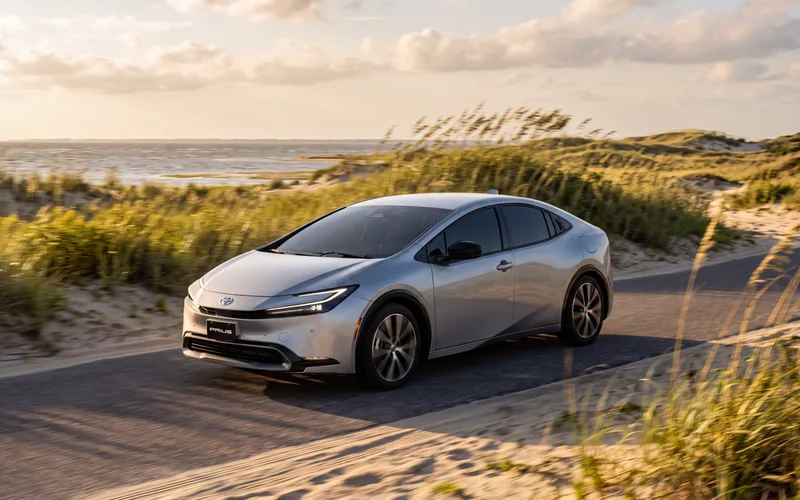 Toyota PriusCompact HatchbackBetter at: Resale value
It delivers most of the Leaf's fuel savings with none of the charging dependency, plus available AWD and the resale value the Leaf has never had.
Compare 2.46C+
 Honda Civic HatchbackCompact HatchbackBetter at: Rear-seat space
If you actually use the back seat or want proven crash ratings today, the Civic gives you 3.4 more inches of rear legroom, 24.5 cu ft of cargo and a Top Safety Pick+ award.
Compare 1.14D
1.14D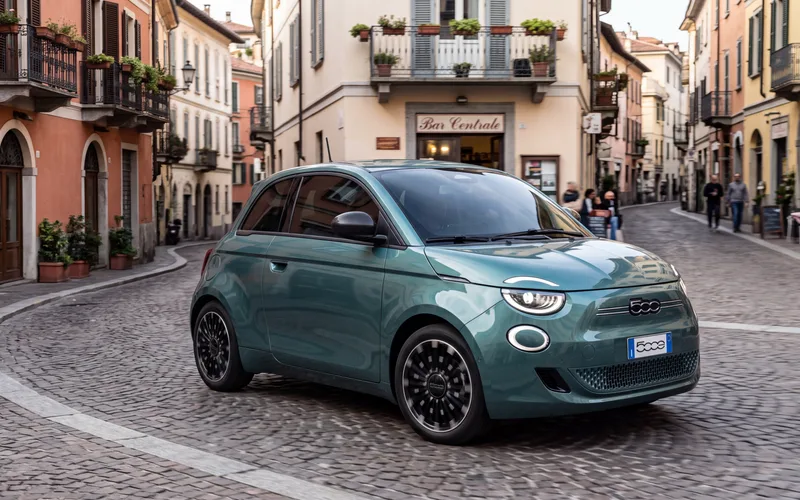 Fiat 500eSubcompact HatchbackBetter at: City parking
For a purely urban second car where 140 miles is plenty, the 500e is cheaper to buy and insure and easier to squeeze into a city parking space.
CompareHow it's evolved
10 scored model years · 2017–2026
Subject scores by year
Hover or tap a score to see what moved it versus the year before. A corner mark flags a big swing.
| Year | Performance | Efficiency | Safety | Space | Cost | Reliability | Tech | Use-case | Driving | Value |
|---|---|---|---|---|---|---|---|---|---|---|
| 2026 | 40 | 62 | 62 | 61 | 54 | 60 | 74 | 59 | 71 | 68 |
| 2025 | 41 | 51 | 66 | 63 | 53 | 63 | 45 | 46 | 62 | 47 |
| 2024 | 42 | 52 | 63 | 63 | 46 | 67 | 43 | 43 | 66 | 51 |
| 2023 | 34 | 53 | 60 | 61 | 54 | 61 | 38 | 46 | 67 | 52 |
| 2022 | 34 | 53 | 61 | 63 | 48 | 57 | 41 | 46 | 66 | 56 |
| 2021 | 34 | 53 | 65 | 63 | 47 | 60 | 44 | 45 | 66 | 58 |
| 2020 | 34 | 54 | 65 | 63 | 46 | 52 | 44 | 47 | 66 | 61 |
| 2019 | 34 | 53 | 48 | 62 | 55 | 53 | 39 | 44 | 64 | 59 |
| 2018 | 32 | 54 | 52 | 66 | 51 | 54 | 46 | 47 | 67 | 66 |
| 2017 | 21 | 58 | 25 | 62 | 52 | 62 | 33 | 38 | 63 | 49 |
Compare two years
Best fit & conditions
Higher scores mean a better fit for that use case. Learn more about use-case fit →
Subject profile
Academic Probation · NHTSA safety recalls
Jul 1, 2026Seat belts: rear/other: retractorThe outer rear seat belt automatic locking retractors (ALR) may deactivate early, which can prevent a child restraint system (CRS) from securing properly. As such, these vehicles fail to comply with the requirements of Federal Motor Vehicle Safety Standard number 208, "Occupant Crash Protection."
Defect
Nissan North America, Inc. (Nissan) is recalling certain 2026 LEAF vehicles. The outer rear seat belt automatic locking retractors (ALR) may deactivate early, which can prevent a child restraint system (CRS) from securing properly. As such, these vehicles fail to comply with the requirements of Federal Motor Vehicle Safety Standard number 208, "Occupant Crash Protection."
Risk
An improperly secured child restraint system may not restrain an occupant as intended, increasing the risk of injury during a crash.
Remedy
Dealers will replace the rear outboard seat belt assemblies, free of charge. Interim letters, notifying owners of the safety risk, were mailed July 28, 2026. Additional letters will be sent once the remedy is available, anticipated October 28, 2026. Owners may contact Nissan's customer service at 800-647-7261. Nissan's number for this recall is R26A7. Vehicle Identification Numbers (VINs) involved in this recall became searchable on NHTSA.gov on July 7, 2026.
NHTSA campaign 26V425000 ↗Manufacturer no. R26A73,788 vehicles potentially affected (all models in the campaign)Filed by Nissan North America, Inc.Filed as LEAFMar 25, 2026Electrical system: propulsion system: traction batteryThe high voltage battery may have internal damage that can cause a short circuit within the battery module.
Defect
Nissan North America, Inc. (Nissan) is recalling certain 2026 LEAF vehicles. The high voltage battery may have internal damage that can cause a short circuit within the battery module.
Risk
A short circuit in a high voltage battery module increases the risk of a fire.
Remedy
Owners are advised to park outside and away from structures and should not charge their vehicles until the remedy is completed. Dealers will inspect and replace the battery modules, as necessary, free of charge. Owner letters were mailed September 2, 2026. Owners may contact Nissan's customer service at 800-647-7261. Nissan's number for this recall is R25F1. Vehicle Identification Numbers (VINs) involved in this recall became searchable on NHTSA.gov on March 27, 2026.
NHTSA campaign 26V188000 ↗Manufacturer no. R25F151 vehicles potentially affected (all models in the campaign)Owners notified Aug 28, 2026Filed by Nissan North America, Inc.Filed as LEAF
11 recalls on other model years of the Leaf (2017–2023)
Sep 30, 2025Electrical system: propulsion system: charging: module: software · Electrical system: propulsion system: traction batteryThe lithium-ion battery may overheat during Level 3 charging.
Defect
Nissan North America, Inc. (Nissan) is recalling certain 2021-2022 LEAF vehicles equipped with a Level 3 quick charging port. The lithium-ion battery may overheat during Level 3 charging.
Risk
A quick charging battery that overheats increases the risk of a fire.
Remedy
Owners are advised not to use Level 3 quick charging until the remedy is completed. Dealers will update the battery software, free of charge. Owner letters were mailed June 16, 2026. Owners may contact Nissan's Customer Service at 1-800-867-7669. Nissan's number for this recall is R25C8. Vehicle Identification Numbers (VINs) involved in this recall will be searchable on NHTSA.gov beginning October 4, 2025.
NHTSA campaign 25V655000 ↗Manufacturer no. R25C819,077 vehicles potentially affected (all models in the campaign)Owners notified Jun 10, 2026Filed by Nissan North America, Inc.Filed as LEAFSep 19, 2024Electrical system: propulsion system: charging: module: software · Electrical system: propulsion system: traction batteryThe lithium-ion battery may overheat during Level 3 charging.
Defect
Nissan North America, Inc. (Nissan) is recalling certain 2019-2020 LEAF vehicles equipped with a Level 3 quick charging port. The lithium-ion battery may overheat during Level 3 charging.
Risk
A quick charging battery that overheats increases the risk of a fire.
Remedy
Dealers will update the battery software, free of charge. Owner letters were mailed June 3, 2026. This is a phased recall. Owners may contact Nissan Customer Service at 1-800-867-7669. Nissan's numbers for this recall are R24B2, P4A38, and P5A22.
NHTSA campaign 24V700000 ↗Manufacturer no. R24B2, P4A38, P5A2225,704 vehicles potentially affected (all models in the campaign)Owners notified May 27, 2026Filed by Nissan North America, Inc.Filed as LEAFFeb 2, 2024Back over prevention: sensing system: cameraDamage to the camera harness can cause distortion or loss of the rearview camera display image. As such, these vehicles fail to comply with the requirements of Federal Motor Vehicle Safety Standard number 111, "Rear Visibility."
Defect
Nissan North America, Inc. (Nissan) is recalling certain 2018-2022 LEAF vehicles. Damage to the camera harness can cause distortion or loss of the rearview camera display image. As such, these vehicles fail to comply with the requirements of Federal Motor Vehicle Safety Standard number 111, "Rear Visibility."
Risk
A rearview camera that does not properly display an image can reduce the driver's rear view, increasing the risk of a crash.
Remedy
Dealers will inspect the rearview camera and harness for damage and replace them as necessary. If no damage is found, the dealer will apply protective tape and reroute the rearview camera harness. Repairs will be performed free of charge. Owner notification letters were mailed August 9, 2024. Owners may contact Nissan customer service at 1-800-867-7669. Nissan's number for this recall is R23D7.
NHTSA campaign 24V071000 ↗Manufacturer no. R23D757,914 vehicles potentially affected (all models in the campaign)Owners notified Aug 9, 2024Filed by Nissan North America, Inc.Filed as LEAFJul 17, 2023Vehicle speed controlThe vehicle may accelerate unintentionally if the driving mode is changed ("D" to "B"; e-Pedal "On"; or "ECO" mode) after disengaging the cruise control.
Defect
Nissan North America, Inc. (Nissan) is recalling certain 2018-2023 LEAF vehicles. The vehicle may accelerate unintentionally if the driving mode is changed ("D" to "B"; e-Pedal "On"; or "ECO" mode) after disengaging the cruise control.
Risk
Unintentional acceleration can increase the risk of a crash.
Remedy
Dealers will reprogram the vehicle control module (VCM), free of charge. Owner notification letters are expected to be mailed August 30, 2023. Owners may contact Nissan's customer service at 1-800-867-7669. Nissan's number for this recall is R23A6.
NHTSA campaign 23V494000 ↗Manufacturer no. R23A666,159 vehicles potentially affected (all models in the campaign)Owners notified Aug 30, 2023Filed by Nissan North America, Inc.Filed as LEAFMay 22, 2023Service brakes, hydraulic: foundation components: hoses, lines/piping, and fittingsThe right-hand brake tubes may have been damaged during production and could corrode, possibly causing a hole in the brake line and a brake fluid leak.
Defect
Nissan North America, Inc. (Nissan) is recalling certain 2023 LEAF vehicles. The right-hand brake tubes may have been damaged during production and could corrode, possibly causing a hole in the brake line and a brake fluid leak.
Risk
A brake fluid leak can reduce braking performance and extend the distance required to stop, increasing the risk of a crash.
Remedy
Dealers will inspect and replace the right-hand brake tube, as necessary, free of charge. Owner notification letters are expected to be mailed July 7, 2023. Owners may contact Nissan's customer service at 1-800-867-7669. Nissan's number for this recall is PC976.
NHTSA campaign 23V362000 ↗Manufacturer no. PC976758 vehicles potentially affected (all models in the campaign)Owners notified Jul 7, 2023Filed by Nissan North America, Inc.Filed as LEAFApr 26, 2023Equipment: other: owners/service/other manual · Visibility: defroster/defogger/hvac systemThe Owner's Manual instructions for defroster operation are incorrect and may result in reduced defroster performance under specific conditions. As such, these vehicles fail to comply with the requirements of Federal Motor Vehicle Safety Standard number 103, "Windshield Defrosting and Defogging Systems."
Defect
Nissan North America, Inc. (Nissan) is recalling certain 2013-2017 LEAF vehicles. The Owner's Manual instructions for defroster operation are incorrect and may result in reduced defroster performance under specific conditions. As such, these vehicles fail to comply with the requirements of Federal Motor Vehicle Safety Standard number 103, "Windshield Defrosting and Defogging Systems."
Risk
Reduced defroster performance can limit visibility out of the windshield, increasing the risk of a crash.
Remedy
Nissan will mail an addendum with updated instructions on how to operate the defroster, free of charge. Owner notification letters are expected to be mailed May 26, 2023. Owners may contact Nissan's customer service at 1-800-867-7669. Nissan's number for this recall is R23A1.
NHTSA campaign 23V296000 ↗Manufacturer no. R23A194,343 vehicles potentially affected (all models in the campaign)Owners notified May 30, 2023Filed by Nissan North America, Inc.Filed as LEAFFeb 2, 2023Equipment: other: owners/service/other manual · Visibility: defroster/defogger/hvac systemThe Owner's Manual instructions for defroster operation are incorrect, and may result in reduced defroster performance under specific conditions. As such, these vehicles fail to comply with the requirements of Federal Motor Vehicle Safety Standard number 103, "Windshield Defrosting and Defogging Systems."
Defect
Nissan North America, Inc. (Nissan) is recalling certain 2018-2023 LEAF vehicles. The Owner's Manual instructions for defroster operation are incorrect, and may result in reduced defroster performance under specific conditions. As such, these vehicles fail to comply with the requirements of Federal Motor Vehicle Safety Standard number 103, "Windshield Defrosting and Defogging Systems."
Risk
Reduced defroster performance can limit visibility out of the windshield, increasing the risk of a crash.
Remedy
Nissan will mail an addendum with updated instructions on how to operate the defroster, free of charge. Owner notification letters are expected to be mailed April 1, 2023. Owners may contact Nissan's customer service at 1-800-867-7669. Nissan's number for this recall is R22C5.
NHTSA campaign 23V048000 ↗Manufacturer no. R22C564,732 vehicles potentially affected (all models in the campaign)Owners notified Mar 30, 2023Filed by Nissan North America, Inc.Filed as LEAFSep 22, 2020Visibility: glass, side/rearThe rear window glass may not remain properly secured to the vehicle.
Defect
Nissan North America, Inc. (Nissan) is recalling certain 2020 Altima, Maxima and Leaf vehicles. The rear window glass may not remain properly secured to the vehicle.
Risk
Rear window glass that separates from the vehicle can increase the risk of a crash.
Remedy
Nissan will notify owners, and dealers will replace the back window glass, free of charge. The recall began November 4, 2020. Owners may contact Nissan customer service at 1-800-867-7669. Nissan's number for this recall is PC752.
NHTSA campaign 20V570000 ↗Manufacturer no. PC752150 vehicles potentially affected (all models in the campaign)Owners notified Nov 4, 2020Filed by Nissan North America, Inc.Filed as LEAFJul 17, 2020Back over prevention: sensing system: cameraUnder certain circumstances, the images for the back-up camera can disappear while in reverse. As such, these vehicles fail to comply with Federal Motor Vehicle Safety Standard (FMVSS) number 111, "Rear Visibility."
Defect
Nissan North America, Inc. (Nissan) is recalling certain 2020 LEAF electric vehicles. Under certain circumstances, the images for the back-up camera can disappear while in reverse. As such, these vehicles fail to comply with Federal Motor Vehicle Safety Standard (FMVSS) number 111, "Rear Visibility."
Risk
The lack of an image in the back-up camera display increases the risk of a crash.
Remedy
Nissan will notify owners, and dealers will update the back-up camera software, free of charge. This recall began August 31, 2020. Owners may contact Nissan customer service at 1-800-867-7669.
NHTSA campaign 20V412000 ↗6,157 vehicles potentially affected (all models in the campaign)Owners notified Aug 31, 2020Filed by Nissan North America, Inc.Filed as LEAFSep 12, 2019Back over prevention: sensing system: cameraAdditionally included are 2019 Nissan GT-R and Taxi and Infiniti QX50, QX60, Q70, Q70L vehicles. The back-up camera and display settings can be adjusted such that the rear view image is no longer visible and the system will retain that setting the next time the vehicle is placed in reverse. As such, these vehicles fail to comply with the requirements of Federal Motor Vehicle Safety Standard (FMVSS) number 111, "Rear Visibility."
Defect
Nissan North America, Inc. (Nissan) is recalling certain 2018-2019 Nissan Altima, Armada, Frontier, Kicks, Leaf, Maxima, Murano, NV, NV200, Pathfinder, Rogue, Rogue Sport, Sentra, Titan, Titan Diesel, Versa Note and Versa Sedan vehicles, as well as Infiniti Q50, Q60, QX30 and QX80 vehicles. Additionally included are 2019 Nissan GT-R and Taxi and Infiniti QX50, QX60, Q70, Q70L vehicles. The back-up camera and display settings can be adjusted such that the rear view image is no longer visible and the system will retain that setting the next time the vehicle is placed in reverse. As such, these vehicles fail to comply with the requirements of Federal Motor Vehicle Safety Standard (FMVSS) number 111, "Rear Visibility."
Risk
The lack of an image in the back-up camera display increases the risk of a crash.
Remedy
Nissan will notify owners in phases, having dealers update the back-up camera settings software, free of charge. The recall began November 11, 2019 and all affected VINs should be activated. Owners may contact Nissan customer service at 1-800-867-7669 or INFINITI customer service at 1-800-662-6200.
NHTSA campaign 19V654000 ↗1,228,830 vehicles potentially affected (all models in the campaign)Owners notified Nov 11, 2019Filed by Nissan North America, Inc.Filed as LEAFApr 13, 2017Air bagsDue to a manufacturing error within the air bag inflators, the passenger frontal air bag may not properly deploy in the event of a crash.
Defect
Nissan North America, Inc. (Nissan) is recalling certain 2015-2017 LEAF and 2014, 2016 and 2017 Sentra vehicles. Due to a manufacturing error within the air bag inflators, the passenger frontal air bag may not properly deploy in the event of a crash.
Risk
In the event of a crash, if the front passenger air bag doesn't deploy properly, it can increase the risk of injury to passengers.
Remedy
Nissan will notify owners, and dealers will replace the front passenger air bag inflator, free of charge. The recall began June 7, 2017. Owners may contact Nissan customer service at 1-800-647-7261.
NHTSA campaign 17V253000 ↗30,038 vehicles potentially affected (all models in the campaign)Owners notified Jun 7, 2017Filed by Nissan North America, Inc.Filed as LEAF
Source: NHTSA Office of Defects Investigation recall database, model years 2017–2026. Recalls are listed by model year as the manufacturer filed them; whether a specific car is affected depends on its VIN — check a VIN at nhtsa.gov ↗. NHTSA model names matched to this page: LEAF.
Detailed scoring by subject
1Performance & PowertrainThe Leaf's lowest-graded category.0.64F
The all-new third-generation 2026 Leaf moves to the CMF-EV platform with a single front-mounted 160 kW motor rated at 214 hp on the 75-kWh S+, SV+ and Platinum+ trims that make up the volume of the range. That is a large jump over the second-generation base car but still lands in the lower third of the compact-hatch horsepower band, which stretches to 520 hp for hot hatches.
The 75-kWh Leaf's front motor produces 355 N·m (261 lb-ft) on tap from a standstill, well above what comparably priced combustion compact hatchbacks manage and the Leaf's strongest single spec in this category.
Nissan does not publish a 0–60 mph figure for the third-generation Leaf, and at roughly 4,200 lb with 214 hp the launch-window press estimates cluster around the mid-7-second mark. Brisk enough off the line thanks to instant torque, but mid-pack for the segment and well off the sub-6-second EV hot hatches.
Single-motor EV delivery with no gears, no lag and no engine noise, and the CMF-EV platform brings noticeably better motor and road isolation than the outgoing Leaf. It sits just below the 80+ band because 214 hp through the front wheels tapers at highway speed and can scrabble for traction under hard throttle from rest — effortless around town, merely adequate when passing.
A single-speed reduction gear means there is nothing to hunt, shift-shock or drone — the cleanest possible gear behavior. It earns the top of the band rather than the middle because Nissan pairs it with e-Pedal Step one-pedal driving and selectable regeneration, giving the driver genuine control over deceleration that single-speed EVs without a one-pedal mode lack.
Every 2026 Leaf trim is front-wheel drive — there is no dual-motor all-wheel-drive variant anywhere in the US range, unlike the Ariya that shares its platform. Lands near the bottom of the item's 0–49 FWD-only band.
One powertrain type only — battery-electric, front-wheel drive — with no gas, hybrid or PHEV alternative. It edges above a true take-it-or-leave-it single offering because buyers choose between two genuinely different battery-and-motor combinations: a 52-kWh/174-hp entry car and a 75-kWh/214-hp long-range setup.
2Efficiency & RangeMid-pack among this car's ten categories.2.17C
EPA rates the volume SV+ at 114 MPGe combined / 30 kWh per 100 miles — mid-pack among EV hatchbacks, held back from the class leaders by the third-generation Leaf's crossover-style body despite a 0.26 US-market drag coefficient.
Regenerative braking and e-Pedal Step make the city cycle the Leaf's strongest, but 122 MPGe is only mid-band against other EVs, where the light front-drive leaders clear 140.
Highway MPGe falls off from city as on every EV, but the slippery new body holds 105 MPGe — relatively better placed within the EV highway band than its city figure is, and Nissan's own launch messaging leads on highway efficiency.
The 75 kWh liquid-cooled pack roughly doubles the outgoing Leaf's range and finally makes the car road-trip viable, but 288 miles still lands in the lower third of the EV band, where 350–450 mi cars set the ceiling. Real-world testing runs well ahead of the EPA label — Edmunds took the worst-rated Platinum+ 310 miles — but the score is taken from the EPA figure for consistency across the fleet.
150 kW is a real step up from the outgoing CHAdeMO Leaf's 100 kW and is enough to use the Tesla Supercharger network natively, but it sits near the bottom of the EV band now that 800-volt rivals accept 230–350 kW.
35 minutes is a consequence of the 150 kW ceiling on a 75 kWh pack — acceptable for a mainstream commuter EV and much improved by the first liquid-cooled Leaf pack with pre-conditioning, but slower than the 18–25 minute figures the quick-charging EVs quote.
About 4,500 kWh a year to cover 15,000 miles is among the cheapest energy bills on sale in absolute terms, but graded against other EVs it is only mid-band — the same $700/yr the smaller-battery Fiat 500e posts.
No fuel grade to worry about, and the 2026 Leaf has the most complete charging story of any mainstream EV hatchback: a native NACS port that plugs into Superchargers without an adapter, a $170 factory CCS adapter that adds the other major network, and Plug & Charge — a Nissan first — so a session starts without an app or card. Held below the top band because buyers without a garage or a 240V circuit still face L2 installation cost, and the modest 7.2 kW onboard charger means a full 240V charge takes about 12 hours. Scored well clear of the Fiat 500e's 74 on this item, which reaches Superchargers only through a CCS1 adapter.
3SafetyMid-pack among this car's ten categories.2.15C
The 2026 Leaf is an all-new third generation (CMF-EV platform) that had not appeared in a published NHTSA NCAP result as of this scoring pass, so no rating can be carried over from the prior ZE1 generation with confidence. 4 stars is a conservative mid-band estimate pending publication.
No IIHS crashworthiness results exist yet for the third-generation Leaf, and the outgoing ZE1 Leaf never earned a Top Safety Pick award. Scored in the lower half of the mid band — no award and no verified Good results to credit.
Nissan Safety Shield 360 is standard on every 2026 Leaf trim — AEB with pedestrian detection, rear automatic braking, blind spot warning, rear cross traffic alert, lane departure warning and high beam assist. Held below the top band because ProPILOT Assist (lane centering plus full-range adaptive cruise) starts at SV+ rather than on the base car.
AEB with pedestrian detection plus rear automatic braking is standard, but Nissan's recent front-crash-prevention results under the updated IIHS protocol have been mid-pack rather than class-leading, and the new Leaf has no published test of its own.
Blind Spot Warning and Rear Cross Traffic Alert are standard on every trim via Safety Shield 360, with rear automatic braking adding an intervention layer behind the car; steering-based Blind Spot Intervention is limited to the upper trims.
Lane departure warning is standard fleet-wide; true lane centering arrives with ProPILOT Assist on SV+ and above. Nissan's centering is competent and predictable on marked highways but has consistently been reported as conservative — it hands back early on tighter curves and faded lines.
ProPILOT Assist pairs full-speed-range Intelligent Cruise Control with stop-and-hold and lane centering, and Navi-link on Platinum+ adds map-linked speed adjustment for curves and exits. Solid mid-pack execution; the base trim drops to conventional cruise control.
No hands-free highway system is offered on the Leaf — ProPILOT Assist is a hands-on-wheel system. Nissan's hands-off-capable ProPILOT Assist 2.1 has been deployed on the Rogue but has not been announced for the Leaf.
LED headlamps and High Beam Assist are standard across the range, which is the right starting point, but there is no IIHS headlight grade for the new generation and Nissan's recent headlight ratings have split Good/Acceptable by trim.
The third-generation Leaf trades the old car's upright greenhouse for a crossover-coupe profile with a high beltline, heavily raked backlight and thick rear pillars, so over-the-shoulder and rearward sightlines are the weak point. Camera compensation is good but the 360-degree Around View Monitor is an upper-trim item.
Standard compact-hatch provision: two outboard LATCH lower-anchor positions plus three top tethers, with a flat EV floor that helps foot room for rear-facing seats. The sloping roofline and modest rear door aperture make loading a bulky seat more of a maneuver than in a boxier hatch.
4Space & ComfortMid-pack among this car's ten categories.2.13C
The third-generation Leaf remains a conventional five-seat compact hatchback with a 60/40-split rear bench across the range — the top of the 4–5 seat hatchback band. The previous cat4 pass carried a placeholder 4.3-seat figure, which was never a real spec.
Front occupants sit high on the CMF-EV skateboard floor but under a 61.6-inch-tall roof, and the front row is the part of the new Leaf's cabin reviewers have not complained about. Estimated near the top of the 36–40 in hatchback band, a little down on the boxier gen-2 Leaf and on the Impreza's 39.8 in.
Mid-band front legroom, essentially carried across from the previous Leaf — adequate for tall drivers but short of the class leaders (Prius 43.2 in, Impreza 43.1 in) because the battery floor raises the seating hip point and limits how far back the seat travel is usable.
This is where the redesign's crossover-coupe roofline costs the Leaf real space: the backlight rakes hard over the second row while the battery raises the rear floor, so adults sit knees-up with little clearance above. Estimated in the bottom third of the 35–39 in band, alongside the Mazda3 (36.2 in) and Prius (36.4 in) rather than the upright Impreza and Corolla (37.6 in).
The wheelbase barely moved (105.9 in, fractionally shorter than the old car's 106.3 in) and the packaging gains went to cargo rather than to the second row, so rear legroom stays near the bottom of the compact-hatch field. Better than the Corolla Hatchback's 29.9 in and the 500e's 28.5 in, but well behind the Civic Hatchback's 37.4 in.
Cargo is the Leaf's clear space win and the reason the category holds up despite the cramped rear seat: roughly 20 cu ft under the hatch tops out the 10–20 cu ft hatchback band, and Nissan's quoted 55.5 cu ft seats-folded maximum is genuinely wagon-like for the class. There is no front trunk to add to it — the Leaf's under-hood space is taken by the charger and cooling hardware.
Competent everyday storage without a signature trick: a flat EV floor front and rear, a console with a usable open shelf beneath it, decent door bins and USB-C power at both rows. It lands mid-band rather than higher because the Leaf gives up the two features buyers actually notice on rival EVs — there is no frunk, and no vehicle-to-load household outlet in the US spec.
Nissan's Zero Gravity front seats are a long-standing strength of the brand and remain the best thing about sitting in a Leaf — well-shaped and fatigue-resistant on long stints. The rear bench pulls the score back to the middle of the band: the raised battery floor leaves thighs unsupported and knees elevated, which is a comfort problem as much as a dimensional one.
A ≈4,200 lb curb weight with the mass low in the floor gives the Leaf a settled, planted gait that flatters broken pavement at speed, and the CMF-EV structure is stiffer than the outgoing car's. Held to the upper-middle band because that same mass makes sharp-edged impacts thump through at low speed, and Platinum+ trades further compliance for its 19-inch wheels.
The strongest comfort item and a structural advantage over every gas hatchback in the calibration set — no engine noise at any speed, plus a 0.25 drag coefficient that keeps wind roar down on the highway. It stops short of the 80+ band because removing the engine exposes tire and road noise on coarse surfaces, and a mainstream-priced Leaf does not get the laminated side glass that would suppress it.
Better equipped than the gas compacts it is cross-shopped against: a heat pump is standard rather than optional, and app-based remote pre-conditioning — warming or cooling the cabin on shore power before you leave — is a genuine comfort feature the combustion hatchbacks in this set simply cannot offer. Heated front seats and a heated steering wheel are widely available, with the dimming panoramic roof and heated rear seats reserved for Platinum+; ventilated seats are not offered at all, which caps it below the top band.
5Cost of OwnershipOne of the Leaf's weakest categories.1.61D
The third-generation 2026 Leaf launched with the S+ as the entry trim at $29,990 before destination, a genuine bargain for a ~300-mile EV and a sharp real-terms cut against the outgoing car once the expired federal credit is accounted for. A cheaper 52 kWh S trim was announced for later availability but is not the launch entry point.
SV+ is the expected volume trim — it adds the larger wheels, upgraded infotainment and driver-assist content most shoppers want while keeping a 288-mile EPA rating, and it lands mid-pack for compact-hatch pricing despite being an EV.
EV servicing is minimal — no oil changes, no transmission service, and regenerative braking that stretches pad and rotor life well past ICE intervals. The Leaf nameplate has historically posted among the lowest maintenance costs in its class, and the CMF-EV platform brings Ariya parts commonality.
This is the Leaf's structural weak spot and the single biggest drag on its ownership score. The nameplate carries a decade of reputation for severe depreciation, and mainstream EV residuals remain soft across the board. The new generation should improve materially — liquid-cooled pack, native NACS, a real 300-mile rating, and a price low enough to need less incentive support — but it is an unproven first-year generation from a brand with weak residuals.
Nissan's standard New Vehicle Limited Warranty, unchanged for the Leaf and at the bottom of the segment band — Hyundai and Kia offer five years of basic coverage on directly competing EVs.
Scored on the EV battery term, which the item definition allows in place of a conventional powertrain warranty. Eight years / 100,000 miles matches the federal minimum and the mainstream-EV norm — competitive but not a standout, and the EV powertrain components themselves carry only Nissan's shorter 5 yr / 60,000 mi term.
No complimentary scheduled maintenance — Nissan offers no factory-paid service plan, which caps this item in the mid band. What lifts it above the Nissan brand baseline is EV-specific content: roadside assistance bundled with the basic warranty, a connected-services trial, and most materially the first Nissan with a native NACS port and Tesla Supercharger access out of the box, removing the adapter cost and hassle that burdens rival mainstream EVs.
$35,725 volume-trim price minus its estimated resale value after 5 years (38% retained, or about $13,576) leaves about $22,150 in depreciation. Add the projected $3,600 in 5-year maintenance and repairs, and owning this vehicle for 5 years costs about $25,750 in total.
6Reliability & QualityMid-pack among this car's ten categories.2.02C
2026 is year one of an all-new third-generation Leaf on a platform the nameplate has never used, so there is no accumulated owner data for this car and the prior generation's record does not transfer. First-year-of-generation launch risk from a mid-pack dependability brand puts the prediction below the mainstream-compact average, tempered upward by the inherent simplicity of a single-motor EV drivetrain with no engine, transmission or exhaust to fail.
Brand-level item, so this matches the figure already scored for the 2026 Sentra, Versa, Rogue, Armada and Frontier. Nissan sits in the lower-middle of multi-year dependability — consistently behind Toyota, Honda and Hyundai in Consumer Reports brand rankings and around the middle of J.D. Power's Vehicle Dependability Study — with CVT durability the single largest historical drag, a liability the Leaf's EV drivetrain does not carry.
This generation is too new to have a meaningful recall or TSB log, so the score reflects launch-year exposure rather than an observed problem pattern. Two things hold it below a clean 80+: new-model-launch campaigns at Nissan have recently skewed toward software, display and driver-assist electronics, and the outgoing generation's defining ownership complaint — heat-driven battery capacity loss on the passively cooled pack — produced sustained owner grievance rather than a clean record.
The single biggest durability story here is a fix, not a flaw: the third-generation car moves to an actively (liquid) thermally managed battery pack, directly addressing the passive air-cooled design that made the 2011-2025 Leaf notorious for accelerated capacity loss in hot climates and for fast-charge derating on repeat DC sessions. Set against that, the motor, inverter and pack are a new-to-this-application CMF-EV family without a high-mileage US record, and an EV powertrain's failure modes are few but expensive.
The redesign is a clear generational step up from the outgoing Leaf's rental-grade cabin — dual widescreen displays, a properly designed dashboard architecture and better upper-surface treatments — but it is visibly built to an aggressive EV price target, with hard plastics through the lower doors, console sides and rear cabin. Competitive for the money rather than class-leading, and short of the standard Nissan sets in the Rogue.
Assembly quality should be the stronger half of build quality: US-market cars come off a mature Japanese line rather than a new plant, and Nissan's body and panel-fit consistency has not been a complaint pattern on recent launches. The score stays out of the 80s only because first-year-of-generation builds carry above-average risk of scattered squeak, rattle and trim-alignment reports, and Nissan's recent launch vehicles have drawn infotainment-software gripes that depress initial-quality survey results.
Coverage is the strong half — Nissan runs roughly a thousand US franchises, so a Leaf owner has service within reach almost anywhere, and after fifteen years of selling the Leaf the network has more EV-service familiarity than most legacy mainstream brands. What holds it back is Nissan's middling customer-service satisfaction reputation, uneven EV technician depth from store to store, and the dealer-count uncertainty created by Nissan's ongoing global restructuring.
An EV inverts the usual mainstream-Nissan advantage. Routine maintenance is genuinely cheap — no oil, plugs, belts or transmission service, and brake wear is low under regenerative braking — but every high-voltage component is dealer-only, the all-new architecture shares almost nothing with the fifteen years of gen 1 and gen 2 Leaf parts already in circulation, there is effectively no aftermarket, and out-of-warranty pack or inverter work is a five-figure exposure. EV collision repair also runs longer and costlier than the segment norm.
7Technology & InfotainmentThe Leaf's best-graded category.3.00B
The all-new third-generation 2026 Leaf runs a dual-display dashboard: a 12.3-inch center touchscreen standard on the entry grades and a 14.3-inch center screen on SV+ and Platinum+, which carry the Google built-in software and account for the bulk of the volume. Scored on the 14.3-inch panel per the volume-trim rule, which places the Leaf near the top of the compact-hatch screen band.
The Google-based system on SV+/Platinum+ is a generational leap over the outgoing Leaf's 8-inch NissanConnect head unit — modern graphics, quick response, and a familiar Android-derived menu structure — and Nissan keeps real volume and climate controls below the screen rather than burying them. Held out of the 80+ band because the entry grades drop to the older-look 12.3-inch NissanConnect build, and Nissan's recent EV interfaces (Ariya) have drawn criticism for haptic-panel controls and inconsistent menu depth.
Wireless Apple CarPlay and Android Auto are standard across the 2026 Leaf range, matching current Nissan practice on the 12.3-inch-and-up head units. Sits at the bottom of the top band rather than higher because projection on the base 12.3-inch system is the only route to modern maps on that grade.
Google built-in puts Google Maps and Google Assistant natively in the dash on SV+/Platinum+ — genuine natural-language voice, live traffic, and EV routing that plans charging stops against the battery's state of charge, which is the single most valuable native-nav feature an EV can have. Kept below the very top because the S/S+ grades fall back to a conventional NissanConnect assistant with no embedded Google maps.
Platinum+ offers a Bose Personal Plus premium system with headrest-mounted speakers, a strong upgrade for the price class and one that benefits from an EV cabin with no engine noise to mask. The base six-speaker setup on lower grades is unremarkable, which keeps the item out of the 80+ band.
A full-digital 12.3-inch driver display is standard on every 2026 Leaf, growing to 14.3 inches alongside the larger center screen on SV+/Platinum+ — no analog gauges anywhere in the range. Crisp and configurable with EV-specific energy and charge views; short of the very top only because the base configuration's layout is the plainer of the two.
The Google-based platform supports over-the-air software and map updates, and Nissan ships firmware-over-the-air on its connected EVs. Scored in the upper half of the infotainment-OTA band rather than the whole-vehicle 80+ band because Nissan's delivered OTA scope on the Ariya has centered on infotainment, maps and connected services rather than feature-adding powertrain or ADAS updates.
MyNISSAN / NissanConnect Services on an EV carries more useful remote function than on Nissan's combustion cars — remote climate preconditioning while plugged in, charge start/stop and scheduling to off-peak rates, charge-state and range monitoring, remote lock and vehicle locator, plus Amazon Alexa and Google Assistant integration. Held below the top band because the richer services tier is subscription-gated after the included trial and there is no confirmed phone-as-key.
USB-C data and charge ports front and rear with a wireless phone charging pad on the upper grades covers the segment norm comfortably, and the native NACS port adds bidirectional vehicle-to-load potential that a combustion hatchback cannot match. Kept in the mid band because there is no confirmed household-style AC outlet in the cabin and the wireless pad is not standard fleet-wide.
Nissan Intelligent Key proximity entry with push-button start is standard across the range, and remote start/preconditioning comes through the phone app rather than the fob — normal for an EV. Sits mid-band because no phone-as-key digital key has been announced for the Leaf, and a hands-free power liftgate is an upper-grade item at best on a car this size.
A rearview camera is standard and the upper grades add Nissan's Intelligent Around View Monitor with 3D view and Invisible Hood View plus front and rear sonar — genuinely useful given the new Leaf's high beltline and small rear glass. Not higher because the 360-degree system is reserved for the pricier grades and there is no automated self-parking function.
No head-up display appears in the third-generation Leaf's published feature content on any grade, including Platinum+ — Nissan reserves HUD for the Ariya, Rogue Platinum, Murano and the larger SUVs. Scored per the prompt's 0-49 'not offered' band; the driver instead gets the standard 12.3/14.3-inch digital cluster.
8Use-Case FitOne of the Leaf's weakest categories.1.98C-
Five seats, conventional wide rear doors, a flat CMF-EV floor and a deep hatch opening make daily kid-and-stroller logistics workable, but roughly 34 in of rear legroom is among the tightest in the compact-hatch set and makes a rear-facing seat behind a tall driver a real squeeze. Re-scored down from the placeholder because second-row space, not cargo, is the binding constraint for car seats.
Safety Shield 360 — AEB with pedestrian detection, blind-spot warning, rear cross-traffic alert, rear automatic braking, high-beam assist — plus Nissan's Rear Door Alert is standard on every trim including the entry car families would actually buy. Held below the top band because the redesigned 2026 Leaf has no published NHTSA or IIHS crash results yet and ProPILOT Assist only arrives at SV+.
Quiet BEV cruising, a standard heat pump and ~20 cu ft of cargo with all five seats occupied cover the basics well, but the tight second row, thin rear amenities and the need to plan DC-fast stops on a ~150 kW car keep it mid-pack for four-up long hauls.
This is the Leaf's core mission: instant 261 lb-ft from rest, a single-speed drivetrain with no shift hunting, e-Pedal Step one-pedal driving for stop-and-go, ProPILOT Assist with stop-and-hold from SV+, and a quiet cabin add up to a genuinely low-fatigue commuter. Raised well above the placeholder, which understated the EV powertrain's traffic manners.
Roughly 114 MPGe combined works out to about $650 a year in home electricity at 15,000 miles, and BEV consumables — no oil, plugs, belts or exhaust, plus regen-extended brake life — put running costs far below any gas compact hatch. Native NACS with Supercharger access removes the network-adapter tax on the rare public charge.
A compact hatch footprint and light low-speed steering make city work easy, but the 37.9 ft turning circle is unremarkable for the class and the fastback roofline with a small rear aperture hurts over-the-shoulder visibility; Around View Monitor with front/rear sonar is reserved for the upper grades. Trimmed from the placeholder because the camera help that offsets the sightlines is not standard.
The Leaf carries no US tow rating, is front-drive only, has no bed and asks a ~4,200 lb curb weight of a modest payload allowance; its work utility is limited to hauling parcels and light gear inside the hatch. Cut sharply from the placeholder, which credited it with capability it does not have.
A passenger-car hatch with cloth or synthetic-leather trim and no wear-oriented option package, on a first-model-year CMF-EV platform with no fleet track record. The BEV drivetrain has few wear items in its favor, but Nissan's earlier Leaf battery-degradation history and this generation's newness argue against a durability premium.
Provisions amount to cargo-area tie-down hooks, a flat-folding rear bench and USB-C device power; there is no 120V cabin outlet, no factory hitch, no standard roof rails and no meaningful upfit ecosystem. The bidirectional-charging capability the third-generation car is built around is a home-backup story, not a jobsite tool-power one.
288 miles EPA on the volume SV+ (303 on S+) plus a native NACS port with Supercharger access makes this one of the more genuinely road-trippable affordable EVs, helped by Zero Gravity front seats, a 0.25 Cd quiet cabin and ProPILOT Assist. Still short of the top band: ~150 kW peak charging is mid-pack, the rear seat is tight for four-up touring, and the 52 kWh base S is not a long-haul car.
Front-wheel drive only with no e-4ORCE option, hatchback ride height and no tow rating for bikes or a small trailer leave it pavement-bound; a flat-folding rear seat and available accessory crossbars are the extent of the outdoor provisioning. Reduced sharply from the placeholder, which read like an AWD crossover's score.
This is the Leaf's second real strength: roughly 20 cu ft under the hatch with the seats up and up to 55.5 cu ft folded is generous for a compact hatchback, with a wide tailgate aperture and a low flat load floor. Held out of the top band by the absence of a frunk, hitch or standard roof rails, and by only a two-way 60/40 fold.
9Driving ExperienceOne of the Leaf's strongest categories.2.78B-
The move to CMF-EV gives the third-generation Leaf a stiffer structure, a genuinely low center of gravity and a multi-link rear in place of the outgoing car's torsion beam, so it corners flatter and more securely than any Leaf before it. It stays mid-band because roughly 4,200 lb of curb weight and efficiency-biased low-rolling-resistance tires cap ultimate grip, and the tuning is deliberately aimed at ride security rather than engagement — below the Prius (70), whose lower mass and 0.90 g skidpad give it more real cornering ability.
Nissan tunes the Leaf's electric rack for low-effort ease of use in town: accurate enough to place the car and quick enough for parking, but light off-center and essentially devoid of feedback. That is a notch below the Prius (64) and well short of the Mini and Integra, and it is the item where the Leaf's commuter-appliance brief costs it most in the 9.1 subcategory.
Stopping power is adequate but unremarkable: ≈4,200 lb on low-rolling-resistance rubber makes for longer stops than the lighter hatchbacks in this set, and the blended regen-to-friction handoff — a long-standing Leaf weak spot — leaves the pedal soft and non-linear at the changeover. e-Pedal Step's strong one-pedal deceleration means most stops never reach the friction brakes at all, which is convenient but does not sharpen pedal feel. Sits below the Prius (74), whose 171 ft 70–0 result and seamless blending are class benchmarks.
A single front motor and a single-speed reduction gear give the Leaf the structurally cleanest delivery in this calibration set — no shifts, no lag, no stop/start shudder, and instant response from rest. It falls short of the 90s because 214 hp through the front axle tapers noticeably above 50 mph and can scrabble for traction under hard throttle, so the effortlessness is a town-and-suburb quality rather than an everywhere one. Comfortably ahead of the Prius (75), whose engine still has to join in. Score unchanged from the prior pass, which happened to land on the same number.
This item measures the powertrain specifically, and there the Leaf is close to silent — no combustion noise at any load, no idle vibration through the pedals or wheel, and only faint inverter whine under hard acceleration. Held below the top of the band because Nissan's motor whine is audible at full throttle and the CMF-EV Leaf does not get the extra motor-mount isolation of luxury EVs. Best in this hatchback calibration set by a wide margin; the gas cars top out in the 60s and 70s.
A short 105.9-in wheelbase, front-drive-only layout and no bulky driveshafts give the Leaf a tight turning circle for the class — a real everyday strength in the parking-garage duty this car is bought for. The figure is the long-standing Leaf number carried on the volume 18-in wheel; the wider 19-in Platinum+ rim gives up roughly a foot. The previous 37.9 ft entry was placeholder, not a measured spec.
Nissan's Zero Gravity front seats and a raised, crossover-like hip point on the battery floor give a commanding, comfortable driving position with easy ingress, and the dual-display dashboard keeps real climate controls below the screens rather than burying them. It lands mid-band because the redesign's raked roofline and thick rear pillars hurt over-the-shoulder vision, and the tall floor leaves less usable seat-height travel for tall drivers than the upright hatchbacks in this set.
The Leaf is engineered as a quiet, efficient, low-effort commuter and behaves like one: the instant off-the-line shove is genuinely satisfying in traffic, but numb steering, efficiency tires, front-drive-only traction and a chassis with no sporting pretension mean there is no reason to take the long way home. Near the bottom of this calibration set — below the Impreza (65) and Corolla Hatchback (65.5), and far from the hot hatches.
10Value & Market PositionOne of the Leaf's strongest categories.2.58C+
The volume S+ opens around $30k with a genuinely useful standard list — dual ~12.3-inch displays, wireless Apple CarPlay/Android Auto, Nissan Safety Shield 360, ProPILOT Assist, a heat pump and a native NACS port — but cloth seats, no heated-seat content and the larger 14.3-inch Google built-in screen, panoramic dimming roof and 3D around-view camera all sit on SV+/Platinum+, so it is competitive rather than class-leading.
Roughly 300 miles of EPA range on the 75-kWh S+ for about $30k is among the best range-per-dollar propositions on sale in the US, and a factory NACS port removes the adapter tax on Supercharger access; the offset is that with the federal clean-vehicle credit gone the sticker is no longer subsidized, so it prices well above a Civic or Corolla hatchback in absolute terms.
Three launch trims (S+, SV+, Platinum+) plus a lower-priced 52-kWh S phasing in gives two battery choices and a usable price ladder, but the Leaf is front-drive only with no AWD, no performance variant and thin standalone options — narrower than the Prius ladder with its optional AWD, though far better than the two-trim 500e.
The Leaf is a historically important nameplate but a small US seller — second-generation volumes ran in the low five figures a year and were trending down before the changeover — and the redesign lands into a US EV market that softened once the federal credit expired, so a meaningful recovery is plausible but not yet demonstrated.
Nissan is a weakened brand — the Re:Nissan restructuring, plant closures, sub-investment-grade credit and the collapsed Honda tie-up all sit in the background — and the Leaf nameplate specifically carries a reputation for poor residuals earned by the passively cooled early cars, a drag the new liquid-cooled pack should ease but has not yet undone.
Scored on buyer benefit: with the federal credit gone, EV demand cooled and Nissan needing volume, subvented leases and discounted APR on EVs have been the norm — and leases in particular remain an aggressive channel — so a 2026 Leaf buyer should find real money on the hood rather than MSRP-or-above pricing.
2026 is year one of an all-new third generation: a new CMF-EV-based platform shared with the Ariya, a crossover-style body replacing the old hatchback shape, a liquid-cooled battery and a factory NACS port — about as fresh as the segment gets, with no redesign risk for a buyer signing now.
Launch coverage has been broadly favorable — reviewers credit the range-per-dollar, real-world efficiency and the switch to NACS — while consistently flagging cheap cabin materials on lower trims, rear headroom lost to the sloping roof and the absence of AWD; it reads as a well-reviewed value pick rather than a comparison-test winner, and it is too new to have accumulated a meaningful US awards record.