
The verdict
A struggling sports car, strong on driving and held back by efficiency.
The 2020 718 Cayman is one of the best-driving cars money can buy and one of the least practical. Its mid-engine chassis, steering and brakes are class benchmarks — Car and Driver put it on 10Best for the 21st straight year — and it holds value better than almost anything on the road, with six-year-old base cars still trading around $47,100 against a $58,850 delivered sticker. The costs of admission are real: a coarse-sounding 300-hp turbo four in the base car, 24 MPG on required premium ($3,150/yr in fuel), essentially no driver-assist tech, and two seats with nowhere to put a child. Buy it because you want to drive it; do not buy it expecting it to do anything else.
Jump to scoresStrengths
- Handling that sets the segment benchmark
- Resale value that softens the whole ownership math
- Porsche build quality and a strong dependability record
What holds it back
- Expensive to feed, at any speed
- Almost no driver-assistance technology
- Running costs are punishing after the warranty ends
Top alternatives
Cars shoppers cross-shop with the Porsche 718 Cayman 2.49C+
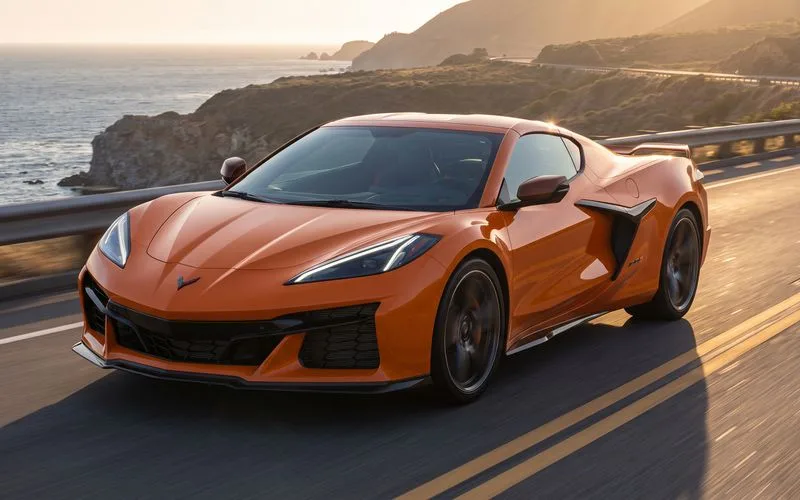 Chevrolet CorvetteSports CarBetter at: Speed per dollar
For $3,000 less it delivers 495 hp and a sub-3-second 0-60 with a much fuller standard equipment list, including the driver aids the Porsche never offers.
Compare 2.72B-
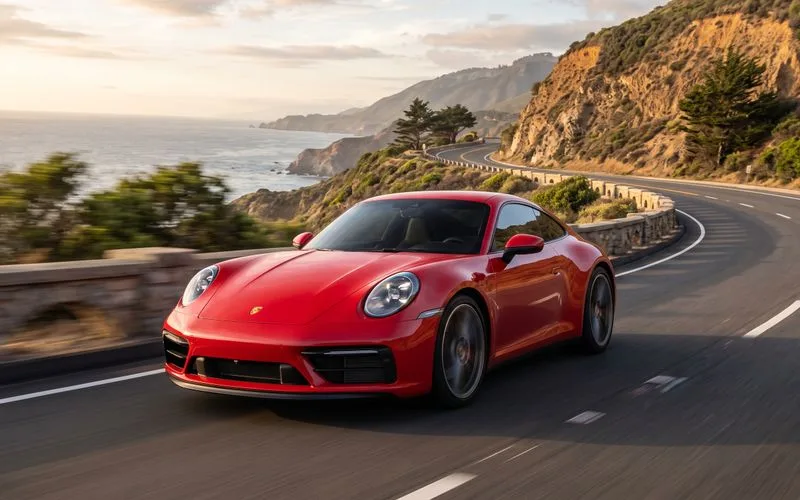 Porsche 911Sports CarBetter at: Everyday usability
The natural step up for a buyer who wants the same brand and feel with occasional rear seats, a modern digital cockpit and standard adaptive dampers.
Compare 2.30C+
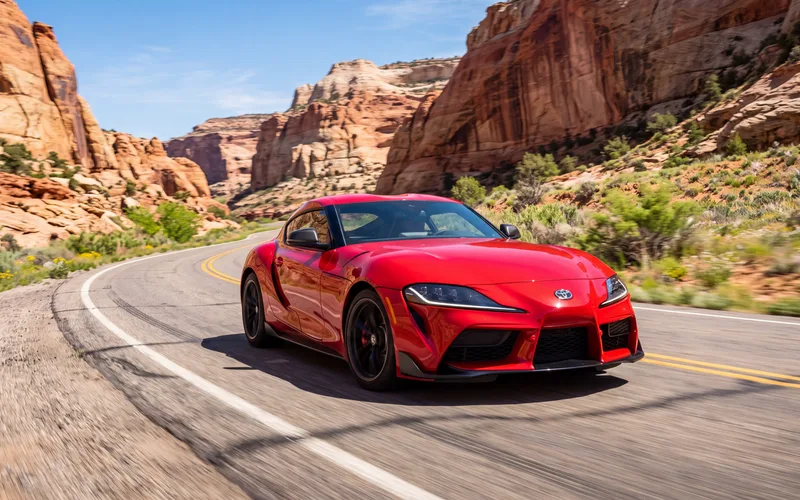 Toyota GR SupraSports CarBetter at: Running costs
Costs far less, returns 26 MPG on cheaper service rates, and comes with the standard safety equipment the 718 leaves off entirely.
CompareHow it's evolved
9 scored model years · 2017–2025
Subject scores by year
Hover or tap a score to see what moved it versus the year before. A corner mark flags a big swing.
| Year | Performance | Efficiency | Safety | Space | Cost | Reliability | Tech | Use-case | Driving | Value |
|---|---|---|---|---|---|---|---|---|---|---|
| 2025 | 59 | 16 | 37 | 53 | 33 | 81 | 40 | 33 | 85 | 67 |
| 2024 | 59 | 16 | 37 | 53 | 33 | 81 | 40 | 32 | 85 | 67 |
| 2023 | 59 | 16 | 37 | 53 | 34 | 81 | 40 | 32 | 85 | 67 |
| 2022 | 56 | 16 | 37 | 47 | 45 | 80 | 42 | 31 | 78 | 62 |
| 2021 | 56 | 21 | 37 | 47 | 40 | 76 | 42 | 31 | 78 | 62 |
| 2020 | 56 | 16 | 37 | 46 | 44 | 78 | 42 | 30 | 84 | 66 |
| 2019 | 56 | 21 | 36 | 47 | 57 | 75 | 37 | 29 | 84 | 63 |
| 2018 | 54 | 21 | 35 | 47 | 43 | 74 | 40 | 30 | 82 | 64 |
| 2017 | 54 | 21 | 26 | 46 | 54 | 70 | 37 | 30 | 82 | 65 |
Compare two years
Best fit & conditions
Higher scores mean a better fit for that use case. Learn more about use-case fit →
Subject profile
Detailed scoring by subject
1Performance & PowertrainMid-pack among this car's ten categories.1.76C-
The base 718 Cayman for MY2020 carries the 2.0L turbocharged flat-4 introduced with the 982 generation, unchanged output since the 2017 model, rated at 300 hp at 6,500 rpm; the new-for-2020 718 T shares this same engine and output. 2020 is a carry-over year for the base powertrain but a change year further up the range, where the GTS moves from a turbo-4 to a naturally aspirated 4.0L flat-6.
Peak torque for the base 2.0L turbo flat-4, available from roughly 1,950-4,500 rpm, unchanged for MY2020.
Porsche's own 0-60 figure for the base 718 Cayman with the standard 6-speed manual and optional Sport Chrono package, unchanged for MY2020; the optional PDK dual-clutch is quicker still, especially when paired with Sport Chrono launch control.
The VTG-turbocharged flat-4 in the base/volume trim delivers strong, near-lag-free throttle response for a turbo engine, but the automotive press has consistently criticized its coarse, raspy exhaust note relative to the flat-6 it replaced, which the Wikipedia reception section calls 'uncouth' and 'unpleasant' - a genuine refinement knock even though outright responsiveness is good. Unchanged for the base trim in 2020, though the new GTS 4.0's naturally aspirated flat-6 (not the volume trim being scored) was singled out by reviewers as solving exactly this complaint.
The optional 7-speed PDK dual-clutch is widely regarded as one of the best automatics in the segment - crisp, decisive shifts with no hunting, and manual mode that responds instantly to paddle inputs; the standard 6-speed manual is also well-regarded for shift feel. MY2020 is notable for extending PDK availability to the new GTS 4.0 by late in the model year, cutting its 0-60 from 4.3s to 3.9s - a genuine year-specific broadening of the lineup's dual-clutch availability, though the base/volume trim's transmission behavior itself is unchanged.
The 718 Cayman is rear-wheel drive only across its entire 2020 trim range (base, T, S, GTS 4.0, GT4, Spyder) - Porsche reserves AWD ('4' models) for the 911, Panamera, and Cayenne/Macan lines, never the 718.
For 2020 the lineup spans a 2.0L turbo flat-4 (base/T), a 2.5L turbo flat-4 (S), and naturally aspirated 4.0L flat-6 variants (the new GTS 4.0, GT4, and Spyder, which begin sales in spring 2020) - meaningful and slightly broadened engine variety versus prior years, but it remains entirely gasoline with no hybrid, PHEV, or EV option.
2Efficiency & RangeThe 718 Cayman's lowest-graded category.0.00F
2020 is a carry-over year for the base 718 Cayman within the 982 generation — the 300 hp 2.0L turbocharged flat-4 is unchanged from prior years (per Wikipedia, 2020's news is the new T trim and the GTS 4.0 flat-6, not the base engine). Paired with the 7-speed PDK, EPA rates it 24 combined, barely above the coupe segment's 22 MPG floor.
City rating of 21 MPG sits just above the coupe segment's 20 MPG floor, typical for a compact turbocharged sports car with a low curb weight but sport-tuned gearing.
Highway rating of 27 MPG is just above the 26 MPG coupe floor — steady-state cruising favors the small-displacement turbo-4 more than city driving does.
EPA combined 24 MPG × the 718 Cayman's 14.2-gal (54L) standard fuel tank yields roughly 341 miles of range — modest for the coupe segment given the small tank prioritizes weight distribution over range. fueleconomy.gov's own vehicle page for this configuration confirms the same ~341 mi figure.
EPA's annual fuel cost estimate at standard 15,000 mi/yr assumptions and required premium unleaded is $3,150 — above the coupe band ceiling of $2,800, reflecting both mediocre MPG for the segment and the premium-fuel requirement.
The turbocharged 2.0L flat-4 requires premium unleaded (91 octane) — no regular-fuel option, no E85/diesel flexibility, and no home-charging alternative since there's no electrified variant.
3SafetyOne of the 718 Cayman's weakest categories.0.43F
NHTSA holds a record for the 2020 718 Cayman 2 DR RWD but has never crash-tested it — overall, frontal driver and passenger, side barrier, side pole and rollover all read "Not Rated", with rollover possibility returned as 0.0 (no test run). The 982 generation went its entire 2016-2025 run untested; low-volume six-figure sports cars sit outside routine NCAP vehicle selection, and 2020 — the model year 718 T and GTS 4.0 joined the range per Porsche's Wikipedia production history — is no exception. Estimated at the segment-typical 4 stars from the car's full eight-airbag POSIP complement, standard multi-collision braking and stiff mid-engine bodyshell — but there is no tested figure behind the number.
IIHS has never crash-tested a 718 Cayman of any model year, so 2020 carries no Top Safety Pick, no TSP+, and not one individual crashworthiness result — the nameplate has never entered the Institute's program. Untested with no known structural deficiency, and with the full Porsche Side Impact Protection system (dual-stage driver and passenger front airbags, driver and passenger knee airbags, seat-mounted thorax airbags and door-mounted head airbags), standard PSM stability control and standard multi-collision braking behind it, earns the middle of the no-award band. Scored a shade under the 911 because the 982 bodyshell dates to 2016 against the 992's 2019 architecture, and level with the other untested sports cars in the set.
Of the five features this item measures — AEB, adaptive cruise, lane keeping, blind-spot monitoring, rear cross-traffic — the 2020 718 Cayman has none standard, and only two of the five exist anywhere on its order sheet. NHTSA's equipment record for this exact vehicle reads forward collision warning "No" and lane departure warning "No", while Porsche's own 718 assistance material and 2020-dated dealer pages still list Adaptive Cruise Control with Porsche Active Safe and Lane Change Assist as paid options for the model year — so the two records disagree on wording rather than substance. There is no lane keeping, no rear cross-traffic alert, no traffic-sign recognition and no surround view at any price. Standard safety content is airbags, belts, TPMS, PSM stability control, multi-collision braking, front and rear ParkAssist sensors and the federally mandated reversing camera. That is the thinnest ADAS provision in this segment — below the 911, whose Warn and Brake Assist is at least standard, and just above the Corvette only because the 718 offers ACC as an option.
The only collision-braking function on the 2020 718 is Porsche Active Safe, and it is not standard, not available on manual cars, and not a modern AEB system. PAS ships only bundled with the optional adaptive cruise control, which Porsche restricts to PDK — order the 6-speed manual that remains standard on Cayman and S for 2020 and there is no forward-collision intervention available at any price. NHTSA's 2020 record marks forward collision warning "No" outright, but manufacturer and dealer material for this exact model year still describe PAS/ACC as a purchasable option, so the practical capability is unchanged from the rest of the generation. Where fitted, PAS gives an audible and visual warning, a brake jolt and targeted braking with driver brake-force boosting, all vehicle-to-vehicle; Porsche's description names no pedestrian or cyclist detection and no low-speed city function. IIHS has never run front crash prevention on the 718 in either protocol. Well below the 911's standard pedestrian-capable Warn and Brake Assist, above the Corvette's nothing-at-all.
Blind-spot coverage on the 2020 718 is Lane Change Assist — radar-based, mirror-panel warning only, explicitly non-intervening, active from about 20 mph — and it is a paid option rather than standard safety content. Rear cross-traffic alert and safe-exit warning are not on the 2020 718's option list at all. Optional alert-only monitoring with no cross-traffic function is the top of the bottom band, level with the 911 and behind the Corvette, which offers cross-traffic coverage. The thick rear buttresses that make blind-spot monitoring genuinely useful here are what keeps this from scoring higher.
The 2020 718 Cayman has no lane assistance of any kind — no lane departure warning, no lane keeping assist, no centering, no traffic-sign recognition, on any trim, at any price. NHTSA records lane departure warning for this exact vehicle as "No", and Porsche's 718 assistance list runs to ACC/PAS, Lane Change Assist and ParkAssist with none of them touching lane position. Lane Keep Assist is sold on the 911, Macan, Cayenne, Panamera and Taycan but was never offered on the 982 718 in any model year. Floor of the band alongside the Corvette — this is an outright absence, not a weak implementation.
Adaptive cruise control is a competent full-speed-range radar system on the 2020 718 — coasting permitted while active on PDK cars, PAS distance warning layered on — but it is optional, and Porsche gates it behind the PDK, so a buyer choosing the 6-speed manual that remains standard on Cayman/S for 2020 gets plain fixed-speed cruise control and nothing more. NHTSA's 2020 record marks forward collision warning (the PAS component of the ACC bundle) "No", but 2020-dated dealer and Porsche technology-feature material still describe ACC as a purchasable option for the model year, so the functional capability is treated as unchanged from the rest of the generation. No highway assist exists because there is no lane-centering function to combine with it, and Porsche InnoDrive is not offered on the 718. A capable option that a large share of the volume configuration cannot even order lands in the basic-cruise band rather than above it — behind the 911, and well ahead of the Corvette.
No hands-free highway driving system is offered on the 2020 718 Cayman, and Porsche sells no BlueCruise or Super Cruise equivalent anywhere in its 2020 range — the 718's assistance list tops out at hands-on adaptive cruise, itself optional and PDK-only. Floor of the band, matching the other sports cars in the segment.
In 2020 the 718 Cayman left the factory on standard 35W Bi-Xenon headlights with Porsche Dynamic Light System and integrated LED daytime running lights — a generation behind essentially every rival in this price class, where LED is standard and matrix systems are common, and that is why this sits at the bottom of the middle band rather than in it. The mitigation is real but has to be paid for: LED headlights with Porsche Dynamic Light System Plus add four-point LED daytime running lights, camera-based automatic high-beam dipping and intersection illumination. Dynamic Cornering Lighting is standard on both Bi-Xenon and LED setups. IIHS has never rated 718 headlights, so there is no Good/Acceptable result behind either configuration.
Forward and three-quarter visibility is a genuine strength — the mid-engine layout gives a short nose, a low cowl and slim A-pillars, and the car is easy to place on a road in a way the long-hood AMG GT and the C8 Corvette are not. The penalty is behind: thick rear buttresses and a shallow rear window create real over-shoulder blind zones, which is why reviewers single out the optional blind-spot monitor as worth having, and Porsche offers no surround-view camera on the 718 to compensate. Standard front and rear ParkAssist sensors plus the standard reversing camera cover the parking case well. Better than the Corvette and AMG GT, a little short of the 911 and GR86.
4Space & ComfortGrades below the middle of the scale.1.06D
The 718 Cayman is a strict two-seat mid-engine coupe on every 2020 trim (base, T, S, GTS 4.0, GT4) — there is no rear seat, token or otherwise, because the engine bay occupies the space behind the cabin. This is a structural characteristic of the 982-generation mid-engine layout carried unchanged since the car's 2016 launch, not a 2020-specific equipment choice, and it falls well below the coupe normalization band which assumes 4-5 seat 2+2 coupes.
The 982-generation cabin and greenhouse have carried over unchanged since the 718's January 2016 launch — the Wikipedia article describes the 2020-model-year changes (718 T, GTS 4.0 flat-six) as powertrain/trim additions with no bodyshell or glass revision, so the front headroom figure documented across 982-era model years applies directly to 2020. At 38.7 in it sits near the top of the coupe band, a byproduct of the tall greenhouse Porsche uses on the mid-engine platform rather than a fastback roofline.
Front legroom for the 2020 718 Cayman lands mid-pack for the coupe band — long-legged drivers routinely report fitting comfortably (the seat travels well back and the pedal box is generous for a compact sports car), but it is not class-leading the way headroom is.
Unlike a sedan's single trunk, the mid-engine 718 splits cargo space front and rear: a 5.2 cu ft frunk under the front hood and a 9.7 cu ft trunk over the engine at the back, for 14.9 cu ft combined — genuinely useful dual-cavity packaging that most direct 2-seat rivals (Corvette, AMG GT, 911) don't match as evenly, even though the total sits mid-band for the coupe segment.
The dual frunk-plus-trunk layout is the standout storage idea here — it's why the Cayman out-packs most 2-seat rivals despite a small greenhouse — but everyday in-cabin storage is genuinely tight for 2020: a handful of small, shallow bins and door pockets, and cupholders described by reviewers as 'effective but fussy' and awkwardly placed for the driver. That combination of a strong dual-trunk cargo split with sparse day-to-day cabin storage lands this in the competitive-but-unremarkable middle band rather than a standout score.
The optional sport seats draw consistent praise for being well shaped and adequately cushioned for long-distance comfort, and the ventilated-seat option is called out as a welcome addition on hot days; owners report fitting comfortably even at 6'4" with proper support. It falls short of the 80+ band because this praise concentrates on the optional sport/adaptive seat rather than the base six-way power seat, so comfort varies meaningfully by which seat option a 2020 buyer checks.
With the optional PASM adaptive suspension, the 2020 718 rides with surprising compliance for a mid-engine sports car — smaller bumps are smoothed well — but larger impacts can still upset the car, and PASM is optional rather than standard on the base/T/S trims. That mixed, trim-dependent picture keeps this in the middle band rather than the top.
This is a genuine weak point for the segment in 2020: reviewers flag intrusive road noise on coarse pavement, and engine/exhaust noise loud enough that some reviewers call it a deal-breaker, with the optional sport exhaust making the turbo four-cylinder sound coarse rather than premium. Wind noise itself is reasonably controlled, but the overall highway cabin is far from library-quiet — squarely in the notably loud band for a car at this price point.
Dual-zone automatic climate control, heated front seats, partial-leather upholstery and six-way power-adjustable seats are all standard on every 2020 718 Cayman, which is a solid baseline; ventilated seats, a heated steering wheel, premium leather, and 14-/18-way power adaptive sport seats are available but cost extra. There's no rear climate zone (moot for a 2-seater) or remote pre-conditioning app comparable to rivals with connected apps, so this lands mid-band — good standard coverage, richer features gated behind options.
5Cost of OwnershipGrades near the bottom of the scale.0.90F
The entry 982-generation 718 Cayman opens at $57,500 before Porsche's $1,350 delivery, processing and handling fee for 2020 — well past the top of the coupe pricing band, so this item bottoms out. 2020 is a change year within the 982 run: the 718 T joins the lineup as a sport-oriented base variant and the GTS 4.0 replaces the outgoing turbo-four GTS with the naturally aspirated 4.0-litre flat-six from the GT4/Spyder, but the entry Cayman itself carries over the 2.0-litre turbo flat-four and six-speed manual unchanged.
The base Cayman is the volume car, but a normally equipped example adds roughly $10,000 in options — metallic paint, PASM, Sport Chrono, heated seats, Bose audio and the PDK dual-clutch (a paid option in 2020, not yet standard) — landing between the base 718 T ($67,750 delivered) and a stripped Cayman S ($71,250 delivered).
The 4-year/50,000-mile warranty absorbs repairs for most of the window, so the bill is dominated by Porsche dealer service — roughly $1,000–$2,500 in a routine year and $2,000–$4,500 in a major-service year — plus two sets of performance tires and a brake job at 15,000 miles a year. It lands past the top of the coupe band, in line with the essentially unchanged mechanical package carried by the 2023–2025 model years of this same generation.
The 718 Cayman has the strongest measured 5-year retention of any vehicle sold in America, and this specific 2020 model year — now six years old — has real used-market data bearing that out rather than a forward projection: KBB-tracked listings put current resale around $47,100 (trade-in $45,200) against a $58,850 delivered base, roughly 80% retained at six years despite this being the last full year before the 982's end-of-production scarcity premium took hold. Projected well above the top of the coupe band, so the item maxes out regardless of the exact figure chosen.
Porsche's New Vehicle Limited Warranty is 4 years / 50,000 miles, matching the German luxury norm and Lexus and beating the 3/36 that Ford and Chevrolet give the Mustang and Corvette. Mid-band, and unchanged across the entire 982 run including 2020.
Porsche does not offer a standalone extended powertrain warranty in the US — drivetrain components are covered by the same 4-year/50,000-mile New Vehicle Limited Warranty and nothing beyond it. That falls below the 5-year floor of the band, so the item scores zero: the 2.0-litre turbo flat-four is out of warranty at four years while a Corvette's LT2 is covered for five and a Lexus LC's V8 for six.
Porsche includes no complimentary scheduled maintenance program in the US — only the very first oil change is covered, and every subsequent service visit is billed, which at $1,000–$2,500 a pop is among the most expensive versions of that policy in this segment. What is included is 24/7/365 roadside assistance for the full 4-year/50,000-mile warranty period. That is the bottom edge of the prompt's 'basic roadside only' band rather than the 'no complimentary coverage' floor, unchanged from later model years of this generation.
$69,000 volume-trim price minus its estimated resale value after 5 years (70% retained, or about $48,300) leaves about $20,700 in depreciation. Add the projected $9,200 in 5-year maintenance and repairs, and owning this vehicle for 5 years costs about $29,900 in total.
6Reliability & QualityOne of the 718 Cayman's strongest categories.3.28B+
No dedicated CR predicted-reliability score is public for the 982-generation 718 Cayman, but the brand-level trend for this era (see 6.1.2) and owner-forum consensus point to solidly above-average predicted reliability for the 2.0T base car, with no systemic red flags reported for 2020.
Porsche placed 4th overall in J.D. Power's 2020 Vehicle Dependability Study and 2nd overall in the 2021 study (PP100 of 86, behind only Lexus), a strong and improving multi-year standing among all brands, not just luxury.
The known 982-generation recalls (side-airbag inflator screws, fuel-collection-pipe screws, luggage-compartment crossmember/fuel-leak bracket) were all issued against 2017-2019 model-year 718 Boxster/Cayman units; no NHTSA recall specific to the 2020 model year was found, indicating a clean record for this year despite prior-year issues in the same generation.
The 2.0L turbocharged flat-4 (982 generation, introduced 2016) avoids the IMS bearing and bore-scoring failures that plagued earlier water-cooled Porsche flat-sixes, but owner forums report a known wastegate-actuator sticking issue from underbody moisture exposure and carbon buildup on the direct-injection intake valves at higher mileage — real but manageable issues, not systemic failures.
Reviewers describe the cabin as premium-feeling with good materials on the dash, doors and console for the price point, though Car and Driver flagged a number of hard-plastic surfaces and buttons that keep it from being class-leading unless the (costly) full-leather option is added.
The 982 generation carries Porsche's well-regarded manufacturing consistency — reviewers and owners consistently describe tight panel gaps and rattle-free assembly, an evolution of the well-proven 981 architecture rather than an all-new build.
Porsche runs a nationwide network of 200+ dedicated Porsche Centers in the US and has ranked at or near the top of J.D. Power's Customer Service Index for premium brands in every recent study, indicating both reasonable density and consistently excellent service experience despite a smaller footprint than mass-market brands.
Parts are readily available through the dealer network and a large sports-car aftermarket, but RepairPal pegs average annual Porsche ownership cost around $1,600 (roughly double the industry average) and Cayman-specific repair/maintenance cost above the luxury-compact-car norm, so cost — not availability — is the drag on this item.
7Technology & InfotainmentGrades near the bottom of the scale.0.80F
The 2020 718 Cayman (982 generation) carries the PCM 4.0 system with a single 7-inch center touchscreen, unchanged from its 2017 introduction through this window; no larger display option existed for this model year, sitting at the bottom of the coupe segment's screen-size band.
PCM 4.0 pairs a logical menu structure and generous physical shortcut buttons (a Porsche strength) with graphics and touch responsiveness reviewers considered dated by 2020 next to newer rivals' larger, faster displays.
Wired Apple CarPlay is standard on every 2020 718 Cayman trim (via the Connect module), but Porsche never offered Android Auto on the 718/982 platform, and no factory wireless CarPlay option existed for MY2020 (wireless requires aftermarket retrofit kits from vendors like ISUDAR, Naviks or GTA).
PCM 4.0 offers Porsche's voice control and an optional navigation module (with 2D/3D map display and complimentary map updates), both functional but unremarkable — most owners still default to CarPlay-based mapping and phone-based voice assistants.
Beyond the adequate Sound Package Plus base system, 2020 buyers could option a 10-speaker Bose Surround Sound system (5.1 DSP, AudioPilot/Centerpoint/SurroundStage) or a flagship Burmester system — both well-regarded premium choices, unchanged from surrounding model years.
The 2020 718 Cayman retains an analog-dominant cluster — a central analog tachometer flanked by conventional gauges — supplemented only by a small color TFT trip/info display, not a configurable full-digital cluster like many contemporaries offer; this did not change anywhere in the 982 generation's run.
Porsche Connect Plus enables over-the-air map updates on PCM 4.0, but there is no whole-vehicle software OTA capability for the 718 in this era — meaningful firmware/feature updates still require a dealer visit.
2020 was the model year Porsche consolidated its separate Porsche Connect App and Car Connect App into the unified "My Porsche" app, but the underlying remote-services set — vehicle locate, status, lock/unlock — stayed the same and remains gated behind a paid Porsche Connect subscription after the initial trial, with no digital-key feature.
The 2020 718 Cayman's cabin offers only a single USB port (legacy USB-A, in the center console/glovebox area) for device connectivity and charging, with no wireless phone charging pad offered at any trim level.
Porsche Entry & Drive (proximity keyless access) is an extra-cost standalone option rather than standard equipment in 2020, and even when equipped it retains a dummy key inserted in the ignition slot that must be turned to start — there is no true push-button start (Entry & Drive did not become a bundled/mandatory option until later in the 982's run).
A rearview camera and front/rear ParkAssist sensors are standard across the 2020 718 Cayman lineup, but a surround/360-degree view ("Real TopView") is only available as a further option and not offered on every configuration.
No head-up display is offered on the 718 Cayman at any trim or option level for MY2020 — the 982 cockpit architecture was never engineered to package one, in any model year of its run.
8Use-Case FitOne of the 718 Cayman's weakest categories.0.00F
The 2020 718 Cayman is a strict two-seat mid-engine coupe with no rear seats, no rear doors, and no LATCH anchors of any kind — there is physically nowhere to install a car seat.
Standard safety is limited to Porsche Stability Management, ABS, and front/side airbags; driver-assist features like adaptive cruise control and lane-change assist were cost options for 2020, and the low-volume Cayman has never been crash-tested by NHTSA or IIHS, so there is no independent family-safety credential to point to.
With no rear seats at all, the car cannot carry "four-plus occupants" under any circumstance — it is built around two people and a small amount of luggage, the opposite of the family road-trip mission.
Reviewers consistently praise the 718 Cayman as an unusually livable daily sports car when fitted with the optional 7-speed PDK — smooth low-speed clutch behavior, good outward visibility for a mid-engine coupe, and comfortable seats — offset by a firm, low-ride-height chassis (front lift is a common option owners add to clear driveways) and a manual-only base that's more involving than relaxing in traffic.
EPA-rated at roughly 21/28 mpg city/highway (24 combined) for the base 2.0-liter, the Cayman is efficient for a sports car but requires premium fuel and carries Porsche-level maintenance and parts costs well above mainstream commuter norms.
A compact two-door footprint (under 173 in long) and tight turning circle make the Cayman easy to place in city parking, but a low nose with no standard front parking sensors on the base trim (a cost option) means curb cuts and steep ramps demand caution.
No factory tow rating, no bed or usable cargo floor beyond a small frunk and trunk, and a mid-engine layout that precludes any load-bearing role — this is a car with zero real work capability.
Porsche's turbocharged flat-4 and flat-6 engines have a reasonably strong long-term reliability reputation among owners, but the car is engineered as a precision sports coupe, not for abuse, hauling, or fleet-style duty cycles, and repairs run far above work-vehicle norms.
There are no tie-down points, no bed, no rack or upfit ecosystem, and no washable/work-friendly interior trims offered — nothing about the car is aimed at jobsite use.
Reviewers describe the 718 Cayman as a genuinely comfortable long-distance car for two — supportive seats, a relatively quiet highway cruise, and available adaptive cruise control — but a 16.9-gallon tank combined with mid-20s highway mpg limits range to roughly 350-400 miles between fuel stops on premium gas.
Rear-wheel drive only, no all-wheel-drive option, low ground clearance (under 5 in even in stock form), and no roof rails or accessory mounts leave the Cayman entirely pavement-bound with no genuine off-road or gear-hauling adventure use.
The split front (5.3 cu ft) and rear (9.7 cu ft) trunks give roughly 15 cu ft of total luggage space — notably good for a mid-engine sports car and enough for two people's weekend-trip gear — but the fixed 2-seat cabin has no folding capacity and can't swallow bulky items either trunk can't independently fit.
9Driving ExperienceThe 718 Cayman's best-graded category.3.70A
The mid-engine 982-generation Cayman is repeatedly cited by the automotive press as class-leading for balance and cornering composure, with near-perfect weight distribution, huge front-end grip, and body control that stays composed at the limit. This is a carry-over chassis for 2020 (unchanged from the 2017 982 introduction), so the acclaim applies directly to the volume trim scored here.
The electro-mechanical steering, shared with the 991 911 Turbo, is consistently praised as among the best-executed EPAS systems in the industry: naturally weighted, precise, and communicative, with only a minor caveat that ultimate at-limit feel is slightly less analog than older hydraulic Porsches. Unchanged for the carry-over 2020 base powertrain/chassis.
Instrumented testing of the base 718 Cayman shows strong, fade-resistant stops (144 ft from 70 mph in repeated full-ABS runs with no degradation) and reviewers consistently praise firm, confidence-inspiring pedal feel — a hallmark of the platform that carries over unchanged into the 2020 model year.
The 2.0L turbo flat-4 in the volume trim delivers strong, essentially lag-free throttle response thanks to its VTG turbocharger, and the optional PDK dual-clutch shifts smoothly with no drivability complaints. It is docked slightly relative to a naturally aspirated engine for turbo-typical low-rpm tip-in softness, though this is a minor mark against an otherwise well-calibrated powertrain, unchanged for 2020.
The base turbo-4's exhaust note is the volume trim's single most consistently criticized attribute: automotive press near-unanimously calls it coarse and unrefined compared to the flat-6 it replaced. This is unchanged for the 2020 base/T Cayman being scored (the acclaimed naturally-aspirated flat-6 fix landed only on the pricier GTS 4.0, a different configuration).
Manufacturer-published turning circle for the base 718 Cayman volume trim; the wider GT4 variant is not the configuration scored here.
The Cayman's low, hip-forward mid-engine driving position, 115mm of combined tilt/telescope steering-wheel travel, and tightly clustered controls are widely praised as best-in-class for driver-focused ergonomics, with the only real knock being firm sport-seat bolstering that trades some long-trip comfort for support — a minor tradeoff for a purpose-built sports car.
Despite the well-documented exhaust-note criticism, the 982 Cayman is widely regarded by enthusiast press as one of the most engaging, best-balanced sports cars available at its price point, with reviewers concluding the driving-dynamics gains over the outgoing flat-6 981 are worth the sonic tradeoff.
10Value & Market PositionOne of the 718 Cayman's strongest categories.2.43C+
Base 2020 Cayman ($59,900) ships with 18-in wheels, Bi-Xenon headlights, a 7-in PCM touchscreen without navigation, cloth/leatherette sport seats, and basic cruise/park-assist — but navigation, Apple CarPlay, Sport Chrono, PASM adaptive suspension, and PDK are all cost options standard on rivals or on pricier 718 trims (T/GTS/GT4). Sparse for a $60K car versus segment norms.
Reviewers praised the driving experience as segment-best but flagged the Cayman as pricier than the Supra/Z4/370Z once optioned, with an S or GT4 quickly climbing toward $80K–$100K; the value case reads much stronger against the 911 (same engineering depth for $25K–$85K less) than against direct segment rivals.
MY2020 offered four distinct, well-spaced trims — base (2.0L turbo-4, 300 hp, ~$59,900), T (2.0L turbo-4 sport package, ~$66,400), S (2.5L turbo-4, 350 hp, ~$69,900), and GT4 (4.0L NA flat-6, 414 hp, ~$99,200) — a roughly $40K/65-70% spread from cheapest to costliest, one of the wider ladders in the segment, with the flat-six GTS 4.0 arriving just after as a 2021 model.
Combined 718 Boxster/Cayman US sales declined from ~5,276 units (2018) to ~3,880 (2019) to ~3,447 (2020) — a genuinely low-volume, niche enthusiast product even within Porsche's own lineup, well behind the Macan/Cayenne/911.
Porsche is a strongly aspirational premium brand with an unusually loyal following; KBB named Porsche its Best Luxury Brand for Resale Value for the 4th time in 2020, reflecting broadly slower depreciation than rival luxury marques. The 718 shares that halo even though it isn't individually award-cited.
Unlike 911/GT-series cars that routinely transact at or above MSRP due to allocation scarcity, the softer-selling 718 saw real negotiation room in 2020 — aggregated transaction data shows deals well below factory invoice, a meaningful buyer benefit atypical for the Porsche brand.
The 982-generation 718 Cayman launched for MY2017, putting 2020 in its 4th model year — mid-cycle rather than new, though 2020 brought meaningful powertrain news (T model's US debut, GT4's naturally-aspirated flat-six reversing the 2017 turbo-4-only downsizing). No successor was imminent; the eventual EV/next-gen replacement was still years out as of 2020.
The 718 Boxster/Cayman won Car and Driver's 2020 10Best award, its 21st consecutive year on the list at that point — one of the longest active streaks in 10Best history — and the GT4 in particular drew outsized acclaim as a benchmark driver's car, frequently used as the measuring stick in comparison tests against the Supra, M2 Competition, and BRZ/GR86.