
The verdict
A struggling sports car, strong on driving and held back by efficiency.
The 2021 Porsche 718 Cayman is one of the most rewarding cars you can drive on a back road, and it holds its money better than anything else sold in America — a five-year-old example loses under 10% of its sticker while the average vehicle drops 42%. What you give up is everything a car normally does for you: two seats, a $61,250 starting price that climbs past $80,000 once you add PDK, 24 MPG on required premium, a 7-inch screen with no Android Auto, and an ADAS list where nothing is standard and lane keeping isn't offered at any price. The flat-four's raspy exhaust note is the one thing enthusiasts genuinely complain about — if it bothers you, the 394-hp GTS 4.0 flat-six is the fix, at a $25,000 premium. Buy it as a second car for the joy of driving it; almost any other reason points somewhere else.
Jump to scoresStrengths
- Resale value is the best in the entire US market
- Chassis balance and steering that define the class
- Interior quality and build far above sports-car norms
What holds it back
- Driver assistance is essentially absent
- Running costs are brutal, and the warranty doesn't help
- Fuel economy and the premium requirement bite hard
Top alternatives
Cars shoppers cross-shop with the Porsche 718 Cayman 2.49C+
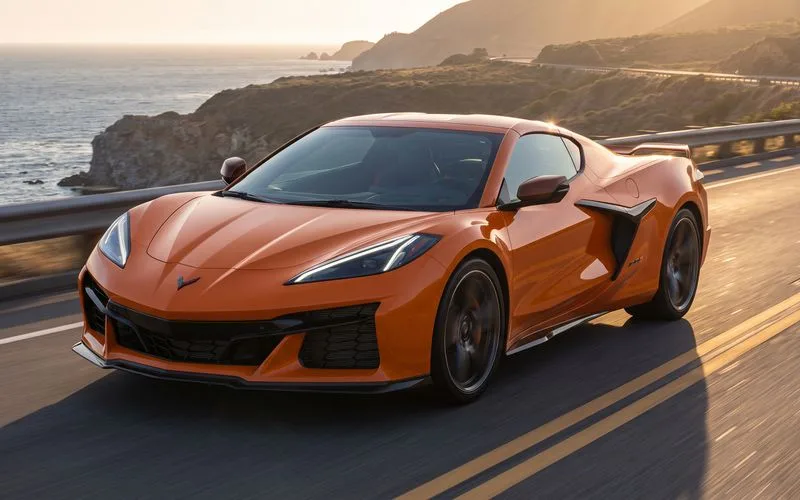 Chevrolet CorvetteSports CarBetter at: Speed per dollar
For $3,000 less it delivers 495 hp and a sub-3-second 0-60 with a much fuller standard equipment list, including the driver aids the Porsche never offers.
Compare 2.72B-
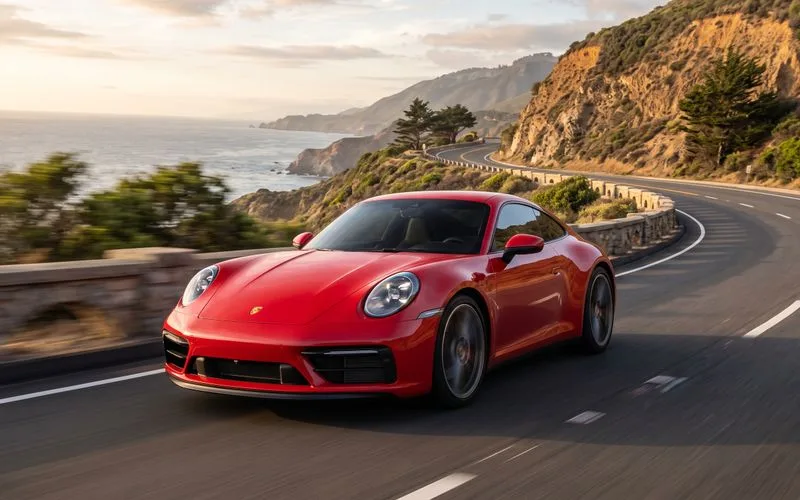 Porsche 911Sports CarBetter at: Everyday usability
The natural step up for a buyer who wants the same brand and feel with occasional rear seats, a modern digital cockpit and standard adaptive dampers.
Compare 2.30C+
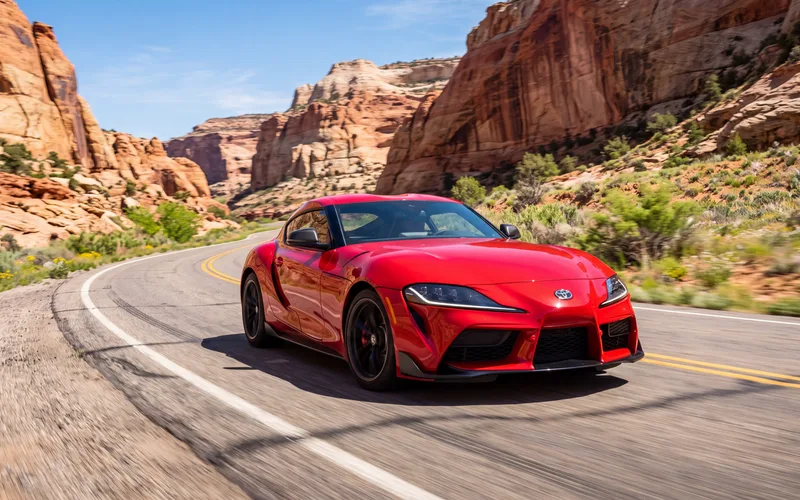 Toyota GR SupraSports CarBetter at: Running costs
Costs far less, returns 26 MPG on cheaper service rates, and comes with the standard safety equipment the 718 leaves off entirely.
CompareHow it's evolved
9 scored model years · 2017–2025
Subject scores by year
Hover or tap a score to see what moved it versus the year before. A corner mark flags a big swing.
| Year | Performance | Efficiency | Safety | Space | Cost | Reliability | Tech | Use-case | Driving | Value |
|---|---|---|---|---|---|---|---|---|---|---|
| 2025 | 59 | 16 | 37 | 53 | 33 | 81 | 40 | 33 | 85 | 67 |
| 2024 | 59 | 16 | 37 | 53 | 33 | 81 | 40 | 32 | 85 | 67 |
| 2023 | 59 | 16 | 37 | 53 | 34 | 81 | 40 | 32 | 85 | 67 |
| 2022 | 56 | 16 | 37 | 47 | 45 | 80 | 42 | 31 | 78 | 62 |
| 2021 | 56 | 21 | 37 | 47 | 40 | 76 | 42 | 31 | 78 | 62 |
| 2020 | 56 | 16 | 37 | 46 | 44 | 78 | 42 | 30 | 84 | 66 |
| 2019 | 56 | 21 | 36 | 47 | 57 | 75 | 37 | 29 | 84 | 63 |
| 2018 | 54 | 21 | 35 | 47 | 43 | 74 | 40 | 30 | 82 | 64 |
| 2017 | 54 | 21 | 26 | 46 | 54 | 70 | 37 | 30 | 82 | 65 |
Compare two years
Best fit & conditions
Higher scores mean a better fit for that use case. Learn more about use-case fit →
Subject profile
Academic Probation · NHTSA safety recalls
Mar 24, 2021EngineThe engine connecting rods may crack and loosen.
Defect
Porsche Cars North America, Inc. (Porsche) is recalling certain 2021 Porsche Cayman GT4, Cayman GTS 4.0, 718 Spyder, and Boxster GTS 4.0 vehicles. The engine connecting rods may crack and loosen.
Risk
A loose connection while driving may cause engine damage, a stall, or an oil leak, increasing the risk of a crash or fire.
Remedy
Porsche will notify owners, and dealers will replace the connecting rods or, as necessary, the engine, free of charge. Owner notification letters were mailed May 21, 2021. Owners may contact Porsche customer service at 1-800-767-7243. Porsche's number for this recall is AMA4.
NHTSA campaign 21V200000 ↗Manufacturer no. AMA4193 vehicles potentially affected (all models in the campaign)Owners notified May 21, 2021Filed by Porsche Cars North America, Inc.Filed as REDUNDANT CAYMANMar 10, 2021Suspension · Suspension: critical fastenersCertain suspension components may not have been tightened correctly and can loosen.
Defect
Porsche Cars North America, Inc. (Porsche) is recalling certain 2021 Porsche Taycan Turbo, Taycan Turbo S, Taycan, Taycan 4S, 911 Turbo S Coupe, Cayman, Cayman T, Cayman S, Cayman GT4, 911 Carrera Coupe, 911 Carrera S Coupe, 911 Carrera 4S Coupe, 911 Carrera 4S Targa, 911 Carrera Cabriolet, 911 Carrera S Cabriolet, 911 Carrera 4S Targa Heritage Design Edition, 911 Carrera 4S Cabriolet, 911 Turbo Coupe, 911 Turbo Cabriolet, 911 Turbo S Cabriolet, 718 Spyder, and Boxster vehicles. Certain suspension components may not have been tightened correctly and can loosen.
Risk
Loose suspension components may detach, causing a sudden loss of vehicle stability and control, and increasing the risk of a crash.
Remedy
Dealers will replace the affected suspension nuts and bolts. Dealers will also inspect surrounding components for damage, and replace any damaged parts as necessary. Repairs will be performed free of charge. Owner notification letters were mailed May 7, 2021. Owners may contact Porsche customer service at 1-800-767-7243. Porsche's number for this recall is AMA3.
NHTSA campaign 21V157000 ↗Manufacturer no. AMA3396 vehicles potentially affected (all models in the campaign)Owners notified May 7, 2021Filed by Porsche Cars North America, Inc.Filed as REDUNDANT CAYMAN
8 recalls on other model years of the 718 Cayman (2017–2019, 2023–2024)
Oct 28, 2024Wheels: lugs/nuts/bolts/studsThe center lock wheel bolt may fracture and cause the wheel to detach.
Defect
Porsche Cars North America, Inc. (Porsche) is recalling certain 2025 Panamera, 2024 718 Cayman GT4 RS, 718 Spyder RS, and 2021-2024 911 vehicles. The center lock wheel bolt may fracture and cause the wheel to detach.
Risk
Wheel detachment can result in a loss of vehicle control, increasing the risk of a crash.
Remedy
Owners should not drive their vehicles until they have been repaired. Dealers will check the center lock wheel fastening system and replace any incorrectly manufactured parts, as necessary, free of charge. Owner notification letters were mailed on January 24, 2024. Owners may contact Porsche customer service at 1-800-767-7243. Porsche's number for this recall is ARC4.
NHTSA campaign 24V809000 ↗Manufacturer no. ARC42,251 vehicles potentially affected (all models in the campaign)Owners notified Jan 24, 2025Filed by Porsche Cars North America, Inc.Filed as 718 CAYMAN GT4 RSMay 15, 2024Power train: automatic transmission: gear position indication (prndl)The safety clip that attaches the shift cable to the transmission may not be installed properly, which can prevent the transmission from locking in the park position when the shift lever is placed into park.
Defect
Porsche Cars North America, Inc. (Porsche) is recalling certain 2024 Boxster and Cayman vehicles. The safety clip that attaches the shift cable to the transmission may not be installed properly, which can prevent the transmission from locking in the park position when the shift lever is placed into park.
Risk
A transmission that does not lock into park as intended may result in a vehicle roll away, increasing the risk of a crash.
Remedy
Dealers will replace the shift cable, free of charge. Owner notification letters were mailed July 3, 2024. Owners may contact Porsche customer service at 1-800-767-7243. Porsche's number for this recall is ARA7.
NHTSA campaign 24V343000 ↗Manufacturer no. ARA714 vehicles potentially affected (all models in the campaign)Owners notified Jul 3, 2024Filed by Porsche Cars North America, Inc.Filed as 718 CAYMANDec 4, 2023Electrical systemThe rear electronic control unit (ECU) may allow the spoiler to raise up too high.
Defect
Porsche Cars North America, Inc. (Porsche) is recalling certain 2023-2024 Porsche 718 Cayman GTS 4.0, 2024 Porsche 718 Boxster S, and 718 Boxster GTS 4.0 vehicles. The rear electronic control unit (ECU) may allow the spoiler to raise up too high.
Risk
The raised spoiler can reduce the visibility of the center brake light and impact the vehicle driving and aerodynamics, increasing the risk of a crash.
Remedy
Dealers will update the ECU software, free of charge. Owner notification letters were mailed January 23, 2024. Owners may contact Porsche customer service at 1-800-767-7243. Porsche's number for this recall is APB4.
NHTSA campaign 23V813000 ↗Manufacturer no. APB453 vehicles potentially affected (all models in the campaign)Owners notified Jan 23, 2024Filed by Porsche Cars North America, Inc.Filed as 718 CAYMAN GTSMar 6, 2019Air bagsThe side air bag impact sensors may not have been properly tightened to the vehicle.
Defect
Porsche Cars North America, Inc. (Porsche) is recalling certain 2018 718 Boxster, Boxster S and Boxster GTS, 718 Cayman, Cayman S and Cayman GTS, 911 Carrera, Carrera T, Targa 4 GTS, Carrera 4, Carrera S, Carrera 4S, Carrera GTS, Carrera 4 GTS, Carrera Cabriolet, Carrera S Cabriolet, Carrera 4S Cabriolet, Carrera GTS Cabriolet, Carrera 4 GTS Cabriolet, Targa 4, Targa 4S, Turbo, Turbo S, Turbo S Exclusive Series, Turbo Cabriolet, Turbo S Cabriolet and GT3 vehicles. The side air bag impact sensors may not have been properly tightened to the vehicle.
Risk
In the event of a crash, the air bags may not deploy, increasing the risk of injury.
Remedy
Porsche will notify owners, and dealers will tighten the air bag sensors, as necessary, free of charge. The recall began May 17, 2019. Owners may contact Porsche customer service at 1-800-767-7243. Porsche's number for this recall is AKA4.
NHTSA campaign 19V179000 ↗Manufacturer no. AKA4417 vehicles potentially affected (all models in the campaign)Owners notified May 17, 2019Filed by Porsche Cars North America, Inc.Filed as 718 CAYMANFeb 20, 2019Fuel system, gasoline · StructureIn the event of a crash, a crossmember may detach from the luggage compartment bracket, possibly causing a fuel leak.
Defect
Porsche Cars North America, Inc. (Porsche) is recalling certain 2017-2019 718 Boxster, 718 Boxster S, 718 Cayman and 718 Cayman S vehicles and 2018-2019 718 Boxster GTS and 2018-2019 718 Cayman GTS vehicles. In the event of a crash, a crossmember may detach from the luggage compartment bracket, possibly causing a fuel leak.
Risk
A fuel leak in the presence of an ignition source can increase the risk of fire.
Remedy
Porsche will notify owners, and dealers will secure the crossmember with additional rivets, free of charge. The recall began April 19, 2019. Owners may contact Porsche customer service at 1-800-767-7243. Porsche's number for this recall is AKA3.
NHTSA campaign 19V113000 ↗Manufacturer no. AKA314,388 vehicles potentially affected (all models in the campaign)Owners notified Apr 19, 2019Filed by Porsche Cars North America, Inc.Filed as 718 CAYMANMar 2, 2017Air bags: frontal: passenger side: inflator moduleThe passenger frontal air bag inflator initiator may fail to ignite during a crash.
Defect
Porsche Cars North America, Inc. (Porsche) is recalling certain 2016 911 GT3 RS and 911 R vehicles and 2017 911 Carrera, 911 Carrera Cabriolet, 911 Carrera 4, 911 Carrera 4S, 911 Carrera 4S Cabriolet, 911 Carrera S, 911 Carrera S Cabriolet, 911 Targa 4, 911 Targa 4S, 911 Turbo S, 911 Turbo S Cabriolet, 718 Boxster, 718 Boxster S, 718 Cayman and 718 Cayman S vehicles. The passenger frontal air bag inflator initiator may fail to ignite during a crash.
Risk
If the air bag inflator initiator fails to ignite, the passenger frontal air bag will not deploy, increasing the risk of injury in the event of a crash.
Remedy
Porsche will notify owners, and dealers will replace the affected air bags, free of charge. The recall began May 15, 2017. Owners may contact Porsche customer service at 1-800-767-7243. Porsche's number for this recall is AH03.
NHTSA campaign 17V134000 ↗Manufacturer no. AH03120 vehicles potentially affected (all models in the campaign)Owners notified May 15, 2017Filed by Porsche Cars North America, Inc.Filed as 718 CAYMANJan 25, 2017Fuel system, gasoline: delivery: hoses, lines/piping, and fittingsThe screws that fasten the fuel collection pipes in the engine compartment may shear off, resulting in a fuel leak.
Defect
Porsche Cars North America, Inc. (Porsche) is recalling certain 2017 911 Carrera, 911 Carrera S, 911 Carrera 4, 911 Carrera 4S, 911 Targa 4, 911 Targa 4S + GTS, 911 Carrera Cabriolet, 911 Carrera S Cabriolet, 911 Carrera 4 Cabriolet, 911 Carrera 4S Cabriolet, 718 Boxster, 718 Boxster S, 718 Cayman, and 718 Cayman S vehicles. The screws that fasten the fuel collection pipes in the engine compartment may shear off, resulting in a fuel leak.
Risk
A fuel leak in the presence of an ignition source increases the risk of a fire.
Remedy
Porsche will notify owners, and dealers will install improved fastening screws, free of charge. The recall began March 27, 2017. Owners may contact Porsche customer service at 1-800-767-7243. Porsche's number for this recall is AH01.
NHTSA campaign 17V054000 ↗Manufacturer no. AH014,090 vehicles potentially affected (all models in the campaign)Owners notified Mar 27, 2017Filed by Porsche Cars North America, Inc.Filed as 718 CAYMANDec 30, 2016Air bags: side/windowThe seat mounted side air bag inflator initiator may fail to ignite during a crash.
Defect
Porsche Cars North America, Inc. (Porsche) is recalling certain model year 2017 718 Boxster, 718 Boxster S, 718 Cayman, 718 Cayman S, 911 Carrera, 911 Carrera S, 911 Carrera S Cabriolet, 911 Carrera 4S, 911 Turbo, 911 Turbo S, 911 Carrera 4S Cabriolet, and 911 Turbo Cabriolet vehicles. The seat mounted side air bag inflator initiator may fail to ignite during a crash.
Risk
If the air bag inflator initiator fails to ignite, the side air bag will not deploy, increasing the risk of injury in the event of a crash.
Remedy
Porsche will notify owners, and dealers will replace the affected air bag modules, free of charge. The recall began April 2017. Owners may contact Porsche customer service at 1-800-767-7243. Porsche's number for this recall is AG10.
NHTSA campaign 16V946000 ↗Manufacturer no. AG1085 vehicles potentially affected (all models in the campaign)Owners notified Mar 27, 2017Filed by Porsche Cars North America, Inc.Filed as 718 CAYMAN
Source: NHTSA Office of Defects Investigation recall database, model years 2017–2025. Recalls are listed by model year as the manufacturer filed them; whether a specific car is affected depends on its VIN — check a VIN at nhtsa.gov ↗. NHTSA model names matched to this page: 718 CAYMAN, 718 CAYMAN GT4 RS, 718 CAYMAN GTS, REDUNDANT CAYMAN.
Detailed scoring by subject
1Performance & PowertrainMid-pack among this car's ten categories.1.75C-
The base 718 Cayman for MY2021 carries the 2.0L turbocharged flat-4 introduced with the 982 generation, unchanged output since the 2017 model, rated at 300 hp at 6,500 rpm; 2021 is a carry-over year for the base powertrain.
Peak torque for the base 2.0L turbo flat-4, available from roughly 1,950-4,500 rpm, unchanged for MY2021.
Porsche's own conservative 0-60 figure for the base 718 Cayman with the 7-speed PDK and optional Sport Chrono launch control, unchanged for MY2021; the 6-speed manual is slightly slower.
The VTG-turbocharged flat-4 delivers strong, near-lag-free throttle response for a turbo engine, but the automotive press has consistently criticized its coarse, raspy exhaust note relative to the flat-6 it replaced, which the Wikipedia reception section calls 'uncouth' and 'unpleasant' - a genuine refinement knock even though outright responsiveness is good. Unchanged for 2021.
The optional 7-speed PDK dual-clutch is widely regarded as one of the best automatics in the segment - crisp, decisive shifts with no hunting, and manual mode that responds instantly to paddle inputs; the standard 6-speed manual is also well-regarded for shift feel. MY2021 extends PDK availability to the GT4 and Spyder for the first time, cutting their 0-60 from 4.3s to 3.7s - a genuine year-specific broadening of the lineup's best-in-class dual-clutch.
The 718 Cayman is rear-wheel drive only across its entire 2021 trim range (base, T, S, GTS 4.0, GT4, Spyder) - Porsche reserves AWD ('4' models) for the 911, Panamera, and Cayenne/Macan lines, never the 718.
For 2021 the lineup spans a 2.0L turbo flat-4 (base/T), a 2.5L turbo flat-4 (S), and naturally aspirated 4.0L flat-6 variants (GTS 4.0, GT4, Spyder) - meaningful engine variety across trims, but it is entirely gasoline with no hybrid, PHEV, or EV option. The range-topping GT4 RS was only unveiled in 2021, not yet part of the purchasable MY2021 lineup, so breadth is slightly narrower than the following model year.
2Efficiency & RangeThe 718 Cayman's lowest-graded category.0.00F
The 2021 718 Cayman carries the base 300 hp 2.0L turbocharged flat-4 with the 7-speed PDK, a carry-over powertrain within the 982 generation per Wikipedia (2021's news is the GT4/Spyder gaining an optional PDK and the debut of the GT4 RS, neither of which touch the base model) — EPA rates it 24 combined, barely above the coupe segment's 22 MPG floor.
City rating of 21 MPG sits just above the coupe segment's 20 MPG floor, typical for a compact turbocharged sports car with low curb weight but sport-tuned gearing and a stop-start-averse driving character.
Highway rating of 27 MPG is just above the 26 MPG coupe floor — steady-state cruising favors the small-displacement turbo-4 more than city driving does.
EPA's own comparison page reports a 406-mile total range on the 16.9-gallon tank at 24 MPG combined — comfortably mid-pack for the coupe segment despite the modest fuel economy, since Porsche fits a larger tank than most rivals in this class.
EPA's annual fuel cost estimate at standard 15,000 mi/yr assumptions and required premium unleaded is $3,150 — above the coupe band ceiling of $2,800, reflecting both mediocre MPG for the segment and the premium-fuel requirement.
The turbocharged 2.0L flat-4 requires premium unleaded — no regular-fuel option, no E85/diesel flexibility, and no home-charging alternative since there's no electrified variant.
3SafetyOne of the 718 Cayman's weakest categories.0.43F
NHTSA holds a record for the 2021 718 Cayman GTS 4.0 (the only 2021 Cayman trim it lists at all) but has never crash-tested it — overall, frontal, side barrier, side pole and rollover all read "Not Rated", with rollover possibility returned as 0.0 (no test run). The 982 generation went its entire 2016-2025 run untested; low-volume six-figure sports cars sit outside routine NCAP vehicle selection, and 2021 is no exception. Estimated at the segment-typical 4 stars from the car's full eight-airbag POSIP complement, standard multi-collision braking and stiff mid-engine bodyshell — but there is no tested figure behind the number.
IIHS has never crash-tested a 718 Cayman of any model year, so 2021 carries no Top Safety Pick, no TSP+, and not one individual crashworthiness result — the nameplate has never entered the Institute's program. Untested with no known structural deficiency, and with the full Porsche Side Impact Protection system (dual-stage driver and passenger front airbags, driver and passenger knee airbags, seat-mounted thorax airbags and door-mounted head airbags), standard PSM stability control and standard multi-collision braking behind it, earns the middle of the no-award band. Scored a shade under the 911 because the 982 bodyshell dates to 2016 against the 992's 2019 architecture, and level with the other untested sports cars in the set.
Of the five features this item measures — AEB, adaptive cruise, lane keeping, blind-spot monitoring, rear cross-traffic — the 2021 718 Cayman has none standard, and only two of the five exist anywhere on its order sheet. NHTSA's equipment record for the 2021 GTS 4.0 (the only 2021 trim it lists) reads forward collision warning "No" and lane departure warning "No", while Porsche's own 718 assistance material and 2021-dated dealer pages still list Adaptive Cruise Control with Porsche Active Safe and Lane Change Assist as paid options for the model year — so the two records disagree on wording rather than substance. There is no lane keeping, no rear cross-traffic alert, no traffic-sign recognition and no surround view at any price. Standard safety content is airbags, belts, TPMS, PSM stability control, multi-collision braking, front and rear ParkAssist sensors and the federally mandated reversing camera. That is the thinnest ADAS provision in this segment — below the 911, whose Warn and Brake Assist is at least standard, and just above the Corvette only because the 718 offers ACC as an option.
The only collision-braking function on the 2021 718 is Porsche Active Safe, and it is not standard, not available on manual cars, and not a modern AEB system. PAS ships only bundled with the optional adaptive cruise control, which Porsche restricts to PDK — order the 6-speed manual that defines this car and there is no forward-collision intervention available at any price. NHTSA's 2021 record marks forward collision warning "No" outright, but manufacturer and dealer material for this exact model year still describe PAS/ACC as a purchasable option, so the practical capability is unchanged from surrounding model years even if NHTSA's field wording is blunt. Where fitted, PAS gives an audible and visual warning, a brake jolt and targeted braking with driver brake-force boosting, all vehicle-to-vehicle; Porsche's description names no pedestrian or cyclist detection and no low-speed city function. IIHS has never run front crash prevention on the 718 in either protocol. Well below the 911's standard pedestrian-capable Warn and Brake Assist, above the Corvette's nothing-at-all.
Blind-spot coverage on the 2021 718 is Lane Change Assist — radar-based, mirror-panel warning only, explicitly non-intervening, active from about 20 mph — and it is a paid option rather than standard safety content. Rear cross-traffic alert and safe-exit warning are not on the 2021 718's option list at all. Optional alert-only monitoring with no cross-traffic function is the top of the bottom band, level with the 911 and behind the Corvette, which offers cross-traffic coverage. The thick rear buttresses that make blind-spot monitoring genuinely useful here are what keeps this from scoring higher.
The 2021 718 Cayman has no lane assistance of any kind — no lane departure warning, no lane keeping assist, no centering, no traffic-sign recognition, on any trim, at any price. NHTSA records lane departure warning for the 2021 GTS 4.0 as "No", and Porsche's 718 assistance list runs to ACC/PAS, Lane Change Assist and ParkAssist with none of them touching lane position. Lane Keep Assist is sold on the 911, Macan, Cayenne, Panamera and Taycan but was never offered on the 982 718 in any model year. Floor of the band alongside the Corvette — this is an outright absence, not a weak implementation.
Adaptive cruise control is a competent full-speed-range radar system on the 2021 718 — coasting permitted while active on PDK cars, PAS distance warning layered on — but it is optional, and Porsche gates it behind the PDK, so a buyer choosing the 6-speed manual (still standard on Cayman/S for 2021) gets plain fixed-speed cruise control and nothing more. NHTSA's 2021 record marks forward collision warning (the PAS component of the ACC bundle) "No", but 2021-dated dealer and Porsche technology-feature material still describe ACC as a purchasable option for the model year, so the functional capability is treated as unchanged from the rest of the generation. No highway assist exists because there is no lane-centering function to combine with it, and Porsche InnoDrive is not offered on the 718. A capable option that a large share of the volume configuration cannot even order lands in the basic-cruise band rather than above it — behind the 911, and well ahead of the Corvette.
No hands-free highway driving system is offered on the 2021 718 Cayman, and Porsche sells no BlueCruise or Super Cruise equivalent anywhere in its 2021 range — the 718's assistance list tops out at hands-on adaptive cruise, itself optional and PDK-only. Floor of the band, matching the other sports cars in the segment.
In 2021 the 718 Cayman left the factory on standard 35W Bi-Xenon headlights with Porsche Dynamic Light System and integrated LED daytime running lights — a generation behind essentially every rival in this price class, where LED is standard and matrix systems are common, and that is why this sits at the bottom of the middle band rather than in it. The mitigation is real but has to be paid for: LED headlights with Porsche Dynamic Light System Plus (option 602) add four-point LED daytime running lights, camera-based automatic high-beam dipping and intersection illumination. Dynamic Cornering Lighting is standard on both Bi-Xenon and LED setups. IIHS has never rated 718 headlights, so there is no Good/Acceptable result behind either configuration.
Forward and three-quarter visibility is a genuine strength — the mid-engine layout gives a short nose, a low cowl and slim A-pillars, and the car is easy to place on a road in a way the long-hood AMG GT and the C8 Corvette are not. The penalty is behind: thick rear buttresses and a shallow rear window create real over-shoulder blind zones, which is why reviewers single out the optional blind-spot monitor as worth having, and Porsche offers no surround-view camera on the 718 to compensate. Standard front and rear ParkAssist sensors plus the standard reversing camera cover the parking case well. Better than the Corvette and AMG GT, a little short of the 911 and GR86.
4Space & ComfortGrades below the middle of the scale.1.11D
The 718 Cayman is a strict two-seat mid-engine coupe on every 2021 trim (base, T, S, GTS 4.0, GT4, and the newly-introduced GT4 RS) — there is no rear seat, token or otherwise, because the engine bay occupies the space behind the cabin. This is a structural characteristic of the mid-engine 982 platform, not an equipment choice, and it falls well below the coupe normalization band which assumes 4-5 seat 2+2 coupes.
The 982-generation cabin and greenhouse carried over unchanged from the 2020 facelift through the 2021 model year (Wikipedia confirms the only 2021 changes were the GT4/Spyder PDK option and the debut of the GT4 RS, both track-focused variants that don't touch the base/S cabin) — so the front headroom figure documented for other 982-era model years applies directly. At 38.7 in it sits near the top of the coupe band, a byproduct of the tall greenhouse Porsche uses on the mid-engine platform rather than a fastback roofline.
Front legroom for the 2021 718 Cayman lands mid-pack for the coupe band — long-legged drivers routinely report fitting comfortably (the seat travels well back and the pedal box is generous for a compact sports car), but it is not class-leading the way headroom is.
Unlike a sedan's single trunk, the mid-engine 718 splits cargo space front and rear: a 5.2 cu ft frunk under the front hood and a 9.7 cu ft trunk over the engine at the back, for 14.9 cu ft combined — genuinely useful dual-cavity packaging that most direct 2-seat rivals (Corvette, AMG GT, 911) don't match as evenly, even though the total sits mid-band for the coupe segment.
The dual frunk-plus-trunk layout is the standout storage idea here — it's the reason the Cayman out-packs most 2-seat rivals despite a small greenhouse — but everyday in-cabin storage is genuinely tight: shallow door pockets that struggle with anything bulkier than a phone, a small under-armrest cubby, and a decent glovebox are the extent of it. Porsche does add two clever touches unusual for the segment — a second storage bay in the rear half of each door, and a sliding-panel hidden compartment above each rear fender behind the B-pillar — which lift it modestly above a bare-bones sports car cabin.
The standard partial-leather sport seats and the optional 14-/18-way adaptive sport seats draw consistent praise for long-haul comfort and support, with enough adjustability and room that even tall drivers fit without complaint — a notable achievement in a compact 2-seat cabin. It falls short of the 80+ band because the base seat is firmer and less accommodating than the pricier adaptive sport seat, and comfort varies meaningfully by which seat option a buyer checks.
With the optional PASM adaptive suspension, the 718 rides with surprising compliance for a mid-engine sports car — small bumps are smoothed well and owners report comfortable highway cruising even on rough pavement — but larger impacts and expansion joints can still upset the car, and the standard passive suspension (no PASM) is noticeably firmer with less bump absorption. That mixed picture, tied closely to which suspension option is fitted, keeps this in the middle band rather than the top.
This is a genuine weak point for the segment: reviewers consistently flag intrusive road noise on coarse pavement, a sport-exhaust-equipped four-cylinder that sounds coarse rather than premium to many ears, and minimal wheel-well sound deadening that lets stone impacts and tire roar into the cabin. Wind noise itself is well controlled, but the overall highway cabin is far from library-quiet — squarely in the notably loud band for a car at this price point.
Two-zone automatic climate control with an active carbon filter and heated front seats are standard on every 2021 718 Cayman, which is a solid baseline; ventilated seats and a heated steering wheel are available but cost extra and are mutually exclusive with the Full Bucket/Race-Tex seat options. There's no rear climate zone (moot for a 2-seater) or remote pre-conditioning app feature comparable to rivals with connected apps, so this lands mid-band — good standard coverage, richer features gated behind options.
5Cost of OwnershipGrades near the bottom of the scale.0.63F
The entry 2021 718 Cayman starts well above the coupe segment's normalization ceiling — a mid-engine Porsche's base price sits closer to loaded rivals than to the volume compact/mid-size coupes the band is calibrated against, so this clamps to the bottom of the band regardless of how it compares to other sports cars specifically.
TrueCar/JD Power identify the S as the best-selling 718 Cayman trim over the base car, T, GTS 4.0, GT4 and GT4 RS. Like the base MSRP, the S's sticker sits far above the coupe band's ceiling, which is calibrated to mainstream coupes rather than six-figure-adjacent sports cars.
This is Edmunds' True Cost to Own estimate for the exact model year being scored, not a carried-over figure from an adjacent year, so it is weighted at full confidence despite sitting well above more recent 718 Cayman model years' lower TCO estimates — a methodology/data-set shift more than an actual generational improvement in reliability cost.
The 718 Cayman's resale strength is not a minor edge over rivals — it is the single best-retaining vehicle sold in the US, gas or electric, of any body type — so it clamps to the top of the coupe band (35-65%) and then some. This particular study's 5-year-old cohort (sold new circa 2020-2021) lines up directly with the 2021 model year being scored.
Porsche's New Vehicle Limited Warranty term sits at the midpoint of the mainstream 3-5 year band and was unchanged for the 2021 model year.
Unlike brands that pair a shorter bumper-to-bumper term with a longer dedicated powertrain warranty (5-10 years is typical), Porsche covers the powertrain under the same single 4-year/50,000-mile New Vehicle Limited Warranty as everything else — below the segment's powertrain-specific floor, a real ownership-cost weak point relative to warranty-forward competitors.
Only the first scheduled service (due at roughly 1 year/10,000 miles) is complimentary on a 2021 718 Cayman; every visit after that requires purchasing one of Porsche's paid Scheduled Maintenance Plan tiers (2/3/4/5-year options). Roadside assistance is included, but only for the duration of the 4-year/50,000-mile warranty rather than an extended standalone term, and there are no charging credits (gas engine) or bundled connected-service trial. That's thinner than luxury rivals offering several years of complimentary maintenance, but more than nothing — sits in the lower half of the short-included-maintenance/basic-roadside band.
$73,250 volume-trim price minus its estimated resale value after 5 years (90% retained, or about $65,925) leaves about $7,325 in depreciation. Add the projected $24,538 in 5-year maintenance and repairs, and owning this vehicle for 5 years costs about $31,863 in total.
6Reliability & QualityOne of the 718 Cayman's strongest categories.3.15B
Consumer Reports lists no statistically significant reliability data for the low-volume 2021 718 Cayman, but J.D. Power and owner-survey sentiment for the model are consistently strong; KBB's 2021 Cayman consumer reviews show 93% of owners would recommend the car, consistent with the model's historically high dependability standing.
Porsche has ranked at or near the top of premium-brand dependability studies through the early 2020s, with the 911 named J.D. Power's most dependable vehicle overall in back-to-back years and Porsche posting top-two finishes in J.D. Power's Initial Quality Study around this period.
The 2021 model year carries two notable NHTSA recalls: a connecting-rod cracking recall (21V-200, ~190 units) on the flat-six GT4/GTS 4.0/Spyder engines that could cause engine damage, stalling, or fire, and a broader suspension-fastener recall (campaign AMA3) across 2021 718 Cayman/Boxster variants for components that could loosen and detach, raising crash risk; the volume turbo-4 Cayman/S is not implicated in the connecting-rod issue but is covered by the suspension campaign.
The 982-generation turbocharged flat-4 (base/S) avoids the IMS bearing and bore-scoring failures that plagued older M96/M97 Porsche flat-six engines, but technician and owner write-ups consistently flag a turbo wastegate-actuator rattle (from road-spray corrosion) and premature auxiliary water pump wear, both generally repairable but recurring weak points on this specific engine family.
The 718 Cayman's cabin is consistently praised by reviewers for its leather/Alcantara options, tightly damped switchgear, and soft-touch surfaces well beyond typical sports-coupe expectations, backed by Porsche's extensive options catalog for upgraded trim, unchanged for the 2021 carry-over interior.
Porsche assembly quality is a long-standing brand strength and reviewer consensus on the 982-generation 718 remains tight panel gaps and rattle-free cabin construction, but the 2021 model year's suspension-fastener recall (components not tightened to spec at the factory) is a documented assembly-process lapse that tempers an otherwise excellent fit-and-finish record.
Porsche's roughly 190 US dealers in 2021 is smaller than mainstream brands but dense enough for a low-volume sports car, and Porsche has ranked highest among premium brands for dealer service satisfaction in J.D. Power's Customer Service Index across this period.
Genuine Porsche parts and dealer labor rates run well above mainstream and even many luxury competitors, and while a broad specialist/independent-shop and aftermarket ecosystem exists for the 718 platform, routine maintenance and repair costs remain notably high for the segment.
7Technology & InfotainmentGrades near the bottom of the scale.0.80F
The 2021 718 Cayman (982 generation) carries the PCM 4.0 system with a single 7-inch center touchscreen; no larger display option exists for this model year, sitting at the bottom of the coupe segment's screen-size band.
PCM 4.0 pairs a logical menu structure and generous physical shortcut buttons (a Porsche strength) with graphics and touch responsiveness reviewers considered dated by 2021 next to newer rivals' larger, faster displays.
Wired Apple CarPlay is standard on every 2021 718 Cayman trim (via the Connect module), but Porsche never offered Android Auto on the 718/982 platform, and no factory wireless CarPlay option existed for MY2021 (wireless requires aftermarket retrofit kits).
PCM 4.0 offers Porsche's voice control and an optional navigation module (with 2D/3D map display and three years of free updates), both functional but unremarkable — most owners still default to CarPlay-based mapping and phone-based voice assistants.
Beyond the adequate Sound Package Plus base system, 2021 buyers could option a 10-speaker Bose Surround Sound system (5.1 DSP, AudioPilot/Centerpoint/SurroundStage) or a flagship Burmester system — both well-regarded premium choices.
The 2021 718 Cayman retains an analog-dominant cluster — a central analog tachometer flanked by conventional gauges — supplemented only by a small color TFT trip/info display, not a configurable full-digital cluster like many contemporaries offer.
Porsche Connect Plus enables over-the-air map updates on PCM 4.0, but there is no whole-vehicle software OTA capability for the 718 in this era — meaningful firmware/feature updates still require a dealer visit.
The Porsche Connect app (bundled with the Connect Plus module) covers core remote functions — vehicle locate, status, and Car Connect features — but lacks a digital key and gates most functionality behind a paid Connect subscription after the trial period.
The 2021 718 Cayman's cabin offers only a single USB port (legacy USB-A, in the center console/glovebox area) for device connectivity and charging, with no wireless phone charging pad offered at any trim level.
Porsche Entry & Drive (proximity keyless access) is an extra-cost option rather than standard equipment, and even when equipped it retains a dummy key inserted in the ignition slot that must be turned to start — there is no true push-button start.
A rearview camera and front/rear ParkAssist sensors are standard across the 2021 718 Cayman lineup, but a surround/360-degree view ("Real TopView") is only available as a further option and not offered on every configuration.
No head-up display is offered on the 718 Cayman at any trim or option level for MY2021 — the 982 cockpit architecture was never engineered to package one.
8Use-Case FitOne of the 718 Cayman's weakest categories.0.00F
The 982-generation 718 Cayman is a strict 2-seat mid-engine coupe with no rear seating of any kind for MY2021, so there is no LATCH anchor and no way to carry a child seat.
As a low-volume 2-seat sports car the 718 Cayman was not crash-tested by NHTSA or IIHS for MY2021, and family-relevant ADAS (adaptive cruise, lane keep, ParkAssist) remained optional rather than standard on the base trim — moot in any case since the car cannot carry family passengers.
With zero rear seats there is no multi-occupant road-trip proposition at all; this is strictly a 2-person car for 2021 as in every 982-generation model year.
The optional 7-speed PDK makes stop-and-go traffic genuinely relaxed and low-effort, and the compact footprint and good outward visibility (helped by the low beltline) ease everyday driving, though the firm sport-tuned suspension and low seating position add some daily fatigue versus a mainstream commuter.
EPA-rated 22 mpg combined with the standard 6-speed manual (24 mpg combined with PDK) on required-premium fuel, plus Porsche-tier tire, brake and service costs, keep the 2021 Cayman a well-above-average per-mile commuter expense despite mpg being a bit better than sports-car norms.
A roughly 36.1 ft turning circle and a compact two-door footprint (172.4 in long, 70.9 in wide) make the Cayman easy to place and park in the city, though wide sport tires and a low nose require some care over curbs and in tight garages.
No tow rating, no bed, and a mid-engine 2-seat layout with two small trunks leave the Cayman with essentially no work-hauling capability for MY2021.
The 982 platform's turbocharged flat-four (or flat-six on GTS 4.0/GT4) and PDK are mechanically sound long-term performers for a sports car, but the car's low ride height, sport suspension and luxury-focused cabin materials are not built or intended for any kind of work or fleet abuse.
No onboard 120V/DC power outlets for tools, no tie-downs, no roof rack or upfit ecosystem — the Cayman offers essentially nothing for jobsite use.
Supportive sport seats, a quiet cabin for the segment, and roughly 330-370 miles of highway range on a 16.9-gallon tank make the Cayman a capable mile-eater, aided by optional adaptive cruise; road-trip fatigue is still higher than a touring-focused GT car.
Roughly 5-inch ground clearance, RWD-only drivetrain (no AWD offered on the 718 lineup) and no roof rails or tow provision make this a strictly pavement-bound car with no off-road or gear-hauling adventure capability.
The mid-engine layout gives the Cayman two separate trunks — a roughly 9.5 cu ft rear trunk plus a 5.2 cu ft front frunk — for a combined cargo capacity that beats most rival sports coupes with a single trunk, even though neither space is large or flexible in shape.
9Driving ExperienceThe 718 Cayman's best-graded category.3.32B+
The 982-generation 718 Cayman is unchanged for 2021 (per Wikipedia, no chassis revisions between the 2020 and 2021 model years) and carries its mid-engine layout, near-even weight distribution and low center of gravity that reviewers consistently call a class benchmark for chassis balance. Edmunds' 2021-specific review calls driving it 'absolute bliss' with 'world-class handling' on winding roads, and the platform's cornering composure is widely rated tidier than the rear-engine 911's even if the 911 wins on outright grip ceiling.
The 982's electric power steering is widely cited as one of the best-tuned EPAS systems on sale, and the 2021-specific Edmunds review explicitly praises 'perfectly weighted steering.' It trails a genuine hydraulic rack (the older 981-generation cars) for outright road-texture feedback, but weighting, on-center precision and response consistency are unchanged for 2021.
The base 2021 718 Cayman rides on Porsche's standard steel brake package (larger vented/cross-drilled discs than the outgoing 981), with the Porsche Ceramic Composite Brake (PCCB) system optional for higher fade resistance on track. No outlet published a specific 60-0/70-0 instrumented stopping distance for the 2021 base Cayman that could be confirmed, but Edmunds' 2021-specific review notes the brakes have 'incredible stopping power and good durability,' consistent with reviewer consensus across the 982 generation of a firm, progressive pedal with no fade complaints in road use.
The base 2021 718 Cayman's turbocharged 2.0-liter flat-4 (300 hp @ 6,500 rpm, 280 lb-ft from 1,950 rpm, unchanged for 2021 per Wikipedia and confirmed by Edmunds' 2021 spec sheet) uses a Variable Turbine Geometry turbocharger specifically to minimize lag, and reviewers describe throttle response as strong and immediate for a turbo-4, especially with the Sport Chrono package's Sport/Sport Plus modes sharpening tip-in. It is not perfectly seamless, however — the standard 6-speed manual has a firmer, more deliberate clutch take-up than the optional 7-speed PDK, and the turbo-4 doesn't disguise its boost-dependent delivery as completely as Porsche's flat-6 engines do (notably in the GTS 4.0 and GT4/Spyder, which gained the PDK option for the first time in MY2021 per Wikipedia). No stop/start system complicates the picture.
This is the most consistently criticized attribute of the entire 718 generation and 2021 is unchanged. Automotive press near-unanimously panned the turbo-4's sound character at launch and the criticism persisted through the 982's run: Car and Driver called it a 'raspy, uncouth sound that strikes some drivers as unpleasant and grating,' Top Gear said it 'fundamentally cheapens the Porsche experience' and makes the car 'less upmarket, less cultured,' and Evo called it 'a nasty sounding motor' with 'dreadful' and 'tuneless' in-cabin noise. Porsche's own in-cabin Soundaktor sound-enhancement module is widely reported by owners as producing an artificial drone/buzz. This is a segment-wide known weak point that pulls the base 718 well below its flat-six-powered peers (and below its own GTS 4.0/GT4 siblings) on this specific item, even though it does not affect outright drivability.
Curb-to-curb turning diameter for the base 2021 718 Cayman is 36.1 ft per manufacturer-derived spec aggregators, unchanged from prior 982-generation model years; the GT4 variant is slightly wider at 37.5 ft due to its wider track, but the volume base/S trim is scored here.
Reviewers consistently rate the 718 Cayman's driving position among the best in its class: seat height, wheel reach/rake and pedal placement are described as 'nearly perfect,' and the low, snug cockpit adjusts to accommodate a wide range of driver sizes. Forward and side visibility are called excellent with few blind spots (the rearview camera compensates for a tight rear view over the engine cover). The one real compromise is ingress/egress — the low seating position requires taller occupants to duck getting in — which keeps this just shy of a top-tier score. Unchanged for 2021.
Despite the well-documented engine-note complaints (see 9.2.2), the 718 Cayman's overall enjoyment factor is very highly regarded by the enthusiast press. The mid-engine chassis balance, sharp steering and strong dynamics deliver the 'take the long way home' quality that defines the segment, and Edmunds' 2021-specific review describes driving it as 'absolute bliss' that is 'worth its weight in gold' on a winding road. The flat-4 soundtrack is the one recurring blemish reviewers cite, not the driving experience as a whole.
10Value & Market PositionOne of the 718 Cayman's strongest categories.2.20C
For 2021 Porsche added automatic two-zone climate control, heated front seats, auto-dimming rain-sensing mirrors, Apple CarPlay, and bi-xenon PDLS headlights as standard across the 718 Cayman range, a modest generosity bump, but PASM adaptive suspension, Sport Chrono, and premium interior trim remain costly options at the $59,900 base price.
The mid-engine chassis, steering feel, and the naturally-aspirated GTS 4.0/GT4 flat-six engines deliver handling and driver engagement reviewers rank above cars costing considerably more, making the driving experience itself the core value proposition despite the pricey options sheet.
Five variants — base, T, S, GTS 4.0, and GT4 — span roughly $59,900 to just over $100,000, and for 2021 the GT4 and GTS 4.0 gained an optional 7-speed PDK dual-clutch (previously manual-only), widening configuration choice within an already well-spaced lineup.
The 718 line (Boxster and Cayman combined) remained a low-volume niche seller in the US in 2021, in the same low-thousands-of-units range as 2019-2020, well behind higher-volume sports-car rivals like the Mustang or Corvette.
Porsche is among the most aspirational performance brands sold in the US, with strong resale values and a loyal enthusiast following that directly benefits how the 718 Cayman is perceived versus rivals from more mainstream brands.
Porsche rarely discounted the 718 line in 2021; base/S models commonly transacted at or near MSRP with minimal factory incentives, and high-demand variants routinely carried dealer markups rather than deals.
The 982-generation 718 launched for MY2016, putting 2021 five years into its cycle with no ground-up redesign, though a meaningful standard-equipment update (CarPlay, heated seats, auto climate, PDLS headlights) and newly-optional PDK on GT4/GTS 4.0 kept the lineup current for the model year.
The 718 Boxster/Cayman duo continued its long-running Car and Driver 10Best streak through the 2021 model year (part of a run that reached its 20th consecutive year by 2022), reflecting sustained critical acclaim and comparison-test success.