
The verdict
A mixed-report sports car, strong on driving and held back by efficiency.
The 2023 718 Cayman is one of the best-driving cars money can buy and one of the worst-equipped for the money. Its mid-engine chassis, 36-foot turning circle and near-perfect steering earn a 96 for handling and an 18th straight Car and Driver 10Best nod, while the $64,850 sticker buys a 7-inch screen from 2016, Bi-Xenon headlights, no Android Auto and not one standard driver-assistance feature. It is a strict two-seater that drinks required premium to the tune of $3,150 a year, yet it holds its value better than almost anything on the US market. Buy it because of how it drives on a back road, not because of what it does the rest of the week.
Jump to scoresStrengths
- A chassis that beats cars costing twice as much
- Depreciation barely touches it
- Porsche build quality, and the good factory
What holds it back
- Essentially no driver-assistance tech, at any price
- Infotainment a full generation behind
- Expensive to run in every line except the pump
Top alternatives
Cars shoppers cross-shop with the Porsche 718 Cayman 2.49C+
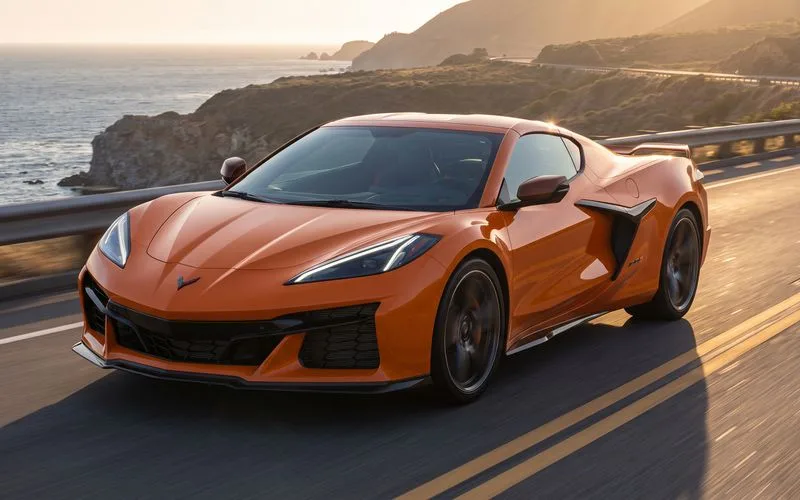 Chevrolet CorvetteSports CarBetter at: Speed per dollar
For $3,000 less it delivers 495 hp and a sub-3-second 0-60 with a much fuller standard equipment list, including the driver aids the Porsche never offers.
Compare 2.72B-
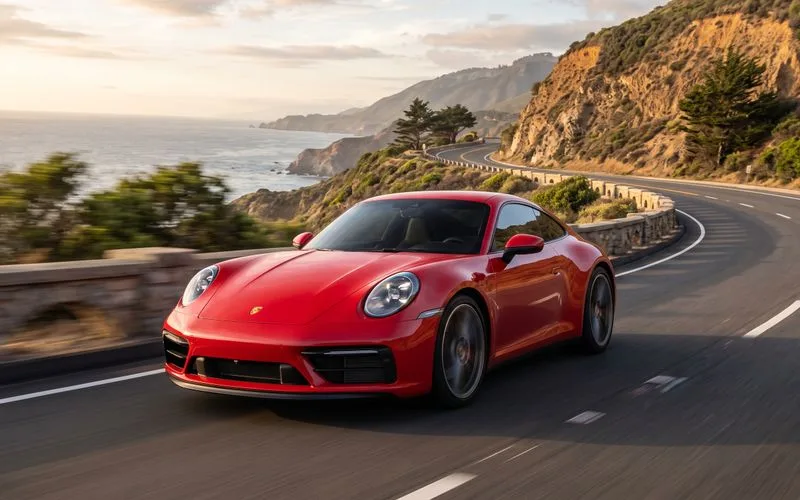 Porsche 911Sports CarBetter at: Everyday usability
The natural step up for a buyer who wants the same brand and feel with occasional rear seats, a modern digital cockpit and standard adaptive dampers.
Compare 2.30C+
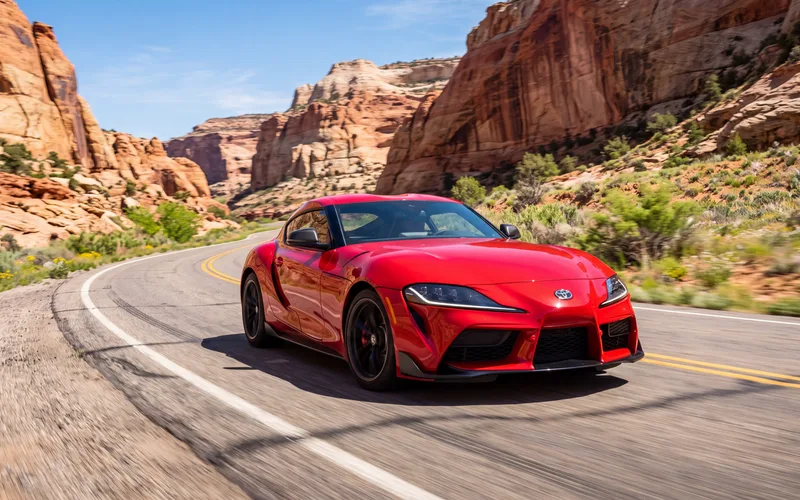 Toyota GR SupraSports CarBetter at: Running costs
Costs far less, returns 26 MPG on cheaper service rates, and comes with the standard safety equipment the 718 leaves off entirely.
CompareHow it's evolved
9 scored model years · 2017–2025
Subject scores by year
Hover or tap a score to see what moved it versus the year before. A corner mark flags a big swing.
| Year | Performance | Efficiency | Safety | Space | Cost | Reliability | Tech | Use-case | Driving | Value |
|---|---|---|---|---|---|---|---|---|---|---|
| 2025 | 59 | 16 | 37 | 53 | 33 | 81 | 40 | 33 | 85 | 67 |
| 2024 | 59 | 16 | 37 | 53 | 33 | 81 | 40 | 32 | 85 | 67 |
| 2023 | 59 | 16 | 37 | 53 | 34 | 81 | 40 | 32 | 85 | 67 |
| 2022 | 56 | 16 | 37 | 47 | 45 | 80 | 42 | 31 | 78 | 62 |
| 2021 | 56 | 21 | 37 | 47 | 40 | 76 | 42 | 31 | 78 | 62 |
| 2020 | 56 | 16 | 37 | 46 | 44 | 78 | 42 | 30 | 84 | 66 |
| 2019 | 56 | 21 | 36 | 47 | 57 | 75 | 37 | 29 | 84 | 63 |
| 2018 | 54 | 21 | 35 | 47 | 43 | 74 | 40 | 30 | 82 | 64 |
| 2017 | 54 | 21 | 26 | 46 | 54 | 70 | 37 | 30 | 82 | 65 |
Compare two years
Best fit & conditions
Higher scores mean a better fit for that use case. Learn more about use-case fit →
Subject profile
Academic Probation · NHTSA safety recalls
Dec 4, 2023Electrical systemThe rear electronic control unit (ECU) may allow the spoiler to raise up too high.
Defect
Porsche Cars North America, Inc. (Porsche) is recalling certain 2023-2024 Porsche 718 Cayman GTS 4.0, 2024 Porsche 718 Boxster S, and 718 Boxster GTS 4.0 vehicles. The rear electronic control unit (ECU) may allow the spoiler to raise up too high.
Risk
The raised spoiler can reduce the visibility of the center brake light and impact the vehicle driving and aerodynamics, increasing the risk of a crash.
Remedy
Dealers will update the ECU software, free of charge. Owner notification letters were mailed January 23, 2024. Owners may contact Porsche customer service at 1-800-767-7243. Porsche's number for this recall is APB4.
NHTSA campaign 23V813000 ↗Manufacturer no. APB453 vehicles potentially affected (all models in the campaign)Owners notified Jan 23, 2024Filed by Porsche Cars North America, Inc.Filed as 718 CAYMAN GTS
9 recalls on other model years of the 718 Cayman (2017–2019, 2021, 2024)
Oct 28, 2024Wheels: lugs/nuts/bolts/studsThe center lock wheel bolt may fracture and cause the wheel to detach.
Defect
Porsche Cars North America, Inc. (Porsche) is recalling certain 2025 Panamera, 2024 718 Cayman GT4 RS, 718 Spyder RS, and 2021-2024 911 vehicles. The center lock wheel bolt may fracture and cause the wheel to detach.
Risk
Wheel detachment can result in a loss of vehicle control, increasing the risk of a crash.
Remedy
Owners should not drive their vehicles until they have been repaired. Dealers will check the center lock wheel fastening system and replace any incorrectly manufactured parts, as necessary, free of charge. Owner notification letters were mailed on January 24, 2024. Owners may contact Porsche customer service at 1-800-767-7243. Porsche's number for this recall is ARC4.
NHTSA campaign 24V809000 ↗Manufacturer no. ARC42,251 vehicles potentially affected (all models in the campaign)Owners notified Jan 24, 2025Filed by Porsche Cars North America, Inc.Filed as 718 CAYMAN GT4 RSMay 15, 2024Power train: automatic transmission: gear position indication (prndl)The safety clip that attaches the shift cable to the transmission may not be installed properly, which can prevent the transmission from locking in the park position when the shift lever is placed into park.
Defect
Porsche Cars North America, Inc. (Porsche) is recalling certain 2024 Boxster and Cayman vehicles. The safety clip that attaches the shift cable to the transmission may not be installed properly, which can prevent the transmission from locking in the park position when the shift lever is placed into park.
Risk
A transmission that does not lock into park as intended may result in a vehicle roll away, increasing the risk of a crash.
Remedy
Dealers will replace the shift cable, free of charge. Owner notification letters were mailed July 3, 2024. Owners may contact Porsche customer service at 1-800-767-7243. Porsche's number for this recall is ARA7.
NHTSA campaign 24V343000 ↗Manufacturer no. ARA714 vehicles potentially affected (all models in the campaign)Owners notified Jul 3, 2024Filed by Porsche Cars North America, Inc.Filed as 718 CAYMANMar 24, 2021EngineThe engine connecting rods may crack and loosen.
Defect
Porsche Cars North America, Inc. (Porsche) is recalling certain 2021 Porsche Cayman GT4, Cayman GTS 4.0, 718 Spyder, and Boxster GTS 4.0 vehicles. The engine connecting rods may crack and loosen.
Risk
A loose connection while driving may cause engine damage, a stall, or an oil leak, increasing the risk of a crash or fire.
Remedy
Porsche will notify owners, and dealers will replace the connecting rods or, as necessary, the engine, free of charge. Owner notification letters were mailed May 21, 2021. Owners may contact Porsche customer service at 1-800-767-7243. Porsche's number for this recall is AMA4.
NHTSA campaign 21V200000 ↗Manufacturer no. AMA4193 vehicles potentially affected (all models in the campaign)Owners notified May 21, 2021Filed by Porsche Cars North America, Inc.Filed as REDUNDANT CAYMANMar 10, 2021Suspension · Suspension: critical fastenersCertain suspension components may not have been tightened correctly and can loosen.
Defect
Porsche Cars North America, Inc. (Porsche) is recalling certain 2021 Porsche Taycan Turbo, Taycan Turbo S, Taycan, Taycan 4S, 911 Turbo S Coupe, Cayman, Cayman T, Cayman S, Cayman GT4, 911 Carrera Coupe, 911 Carrera S Coupe, 911 Carrera 4S Coupe, 911 Carrera 4S Targa, 911 Carrera Cabriolet, 911 Carrera S Cabriolet, 911 Carrera 4S Targa Heritage Design Edition, 911 Carrera 4S Cabriolet, 911 Turbo Coupe, 911 Turbo Cabriolet, 911 Turbo S Cabriolet, 718 Spyder, and Boxster vehicles. Certain suspension components may not have been tightened correctly and can loosen.
Risk
Loose suspension components may detach, causing a sudden loss of vehicle stability and control, and increasing the risk of a crash.
Remedy
Dealers will replace the affected suspension nuts and bolts. Dealers will also inspect surrounding components for damage, and replace any damaged parts as necessary. Repairs will be performed free of charge. Owner notification letters were mailed May 7, 2021. Owners may contact Porsche customer service at 1-800-767-7243. Porsche's number for this recall is AMA3.
NHTSA campaign 21V157000 ↗Manufacturer no. AMA3396 vehicles potentially affected (all models in the campaign)Owners notified May 7, 2021Filed by Porsche Cars North America, Inc.Filed as REDUNDANT CAYMANMar 6, 2019Air bagsThe side air bag impact sensors may not have been properly tightened to the vehicle.
Defect
Porsche Cars North America, Inc. (Porsche) is recalling certain 2018 718 Boxster, Boxster S and Boxster GTS, 718 Cayman, Cayman S and Cayman GTS, 911 Carrera, Carrera T, Targa 4 GTS, Carrera 4, Carrera S, Carrera 4S, Carrera GTS, Carrera 4 GTS, Carrera Cabriolet, Carrera S Cabriolet, Carrera 4S Cabriolet, Carrera GTS Cabriolet, Carrera 4 GTS Cabriolet, Targa 4, Targa 4S, Turbo, Turbo S, Turbo S Exclusive Series, Turbo Cabriolet, Turbo S Cabriolet and GT3 vehicles. The side air bag impact sensors may not have been properly tightened to the vehicle.
Risk
In the event of a crash, the air bags may not deploy, increasing the risk of injury.
Remedy
Porsche will notify owners, and dealers will tighten the air bag sensors, as necessary, free of charge. The recall began May 17, 2019. Owners may contact Porsche customer service at 1-800-767-7243. Porsche's number for this recall is AKA4.
NHTSA campaign 19V179000 ↗Manufacturer no. AKA4417 vehicles potentially affected (all models in the campaign)Owners notified May 17, 2019Filed by Porsche Cars North America, Inc.Filed as 718 CAYMANFeb 20, 2019Fuel system, gasoline · StructureIn the event of a crash, a crossmember may detach from the luggage compartment bracket, possibly causing a fuel leak.
Defect
Porsche Cars North America, Inc. (Porsche) is recalling certain 2017-2019 718 Boxster, 718 Boxster S, 718 Cayman and 718 Cayman S vehicles and 2018-2019 718 Boxster GTS and 2018-2019 718 Cayman GTS vehicles. In the event of a crash, a crossmember may detach from the luggage compartment bracket, possibly causing a fuel leak.
Risk
A fuel leak in the presence of an ignition source can increase the risk of fire.
Remedy
Porsche will notify owners, and dealers will secure the crossmember with additional rivets, free of charge. The recall began April 19, 2019. Owners may contact Porsche customer service at 1-800-767-7243. Porsche's number for this recall is AKA3.
NHTSA campaign 19V113000 ↗Manufacturer no. AKA314,388 vehicles potentially affected (all models in the campaign)Owners notified Apr 19, 2019Filed by Porsche Cars North America, Inc.Filed as 718 CAYMANMar 2, 2017Air bags: frontal: passenger side: inflator moduleThe passenger frontal air bag inflator initiator may fail to ignite during a crash.
Defect
Porsche Cars North America, Inc. (Porsche) is recalling certain 2016 911 GT3 RS and 911 R vehicles and 2017 911 Carrera, 911 Carrera Cabriolet, 911 Carrera 4, 911 Carrera 4S, 911 Carrera 4S Cabriolet, 911 Carrera S, 911 Carrera S Cabriolet, 911 Targa 4, 911 Targa 4S, 911 Turbo S, 911 Turbo S Cabriolet, 718 Boxster, 718 Boxster S, 718 Cayman and 718 Cayman S vehicles. The passenger frontal air bag inflator initiator may fail to ignite during a crash.
Risk
If the air bag inflator initiator fails to ignite, the passenger frontal air bag will not deploy, increasing the risk of injury in the event of a crash.
Remedy
Porsche will notify owners, and dealers will replace the affected air bags, free of charge. The recall began May 15, 2017. Owners may contact Porsche customer service at 1-800-767-7243. Porsche's number for this recall is AH03.
NHTSA campaign 17V134000 ↗Manufacturer no. AH03120 vehicles potentially affected (all models in the campaign)Owners notified May 15, 2017Filed by Porsche Cars North America, Inc.Filed as 718 CAYMANJan 25, 2017Fuel system, gasoline: delivery: hoses, lines/piping, and fittingsThe screws that fasten the fuel collection pipes in the engine compartment may shear off, resulting in a fuel leak.
Defect
Porsche Cars North America, Inc. (Porsche) is recalling certain 2017 911 Carrera, 911 Carrera S, 911 Carrera 4, 911 Carrera 4S, 911 Targa 4, 911 Targa 4S + GTS, 911 Carrera Cabriolet, 911 Carrera S Cabriolet, 911 Carrera 4 Cabriolet, 911 Carrera 4S Cabriolet, 718 Boxster, 718 Boxster S, 718 Cayman, and 718 Cayman S vehicles. The screws that fasten the fuel collection pipes in the engine compartment may shear off, resulting in a fuel leak.
Risk
A fuel leak in the presence of an ignition source increases the risk of a fire.
Remedy
Porsche will notify owners, and dealers will install improved fastening screws, free of charge. The recall began March 27, 2017. Owners may contact Porsche customer service at 1-800-767-7243. Porsche's number for this recall is AH01.
NHTSA campaign 17V054000 ↗Manufacturer no. AH014,090 vehicles potentially affected (all models in the campaign)Owners notified Mar 27, 2017Filed by Porsche Cars North America, Inc.Filed as 718 CAYMANDec 30, 2016Air bags: side/windowThe seat mounted side air bag inflator initiator may fail to ignite during a crash.
Defect
Porsche Cars North America, Inc. (Porsche) is recalling certain model year 2017 718 Boxster, 718 Boxster S, 718 Cayman, 718 Cayman S, 911 Carrera, 911 Carrera S, 911 Carrera S Cabriolet, 911 Carrera 4S, 911 Turbo, 911 Turbo S, 911 Carrera 4S Cabriolet, and 911 Turbo Cabriolet vehicles. The seat mounted side air bag inflator initiator may fail to ignite during a crash.
Risk
If the air bag inflator initiator fails to ignite, the side air bag will not deploy, increasing the risk of injury in the event of a crash.
Remedy
Porsche will notify owners, and dealers will replace the affected air bag modules, free of charge. The recall began April 2017. Owners may contact Porsche customer service at 1-800-767-7243. Porsche's number for this recall is AG10.
NHTSA campaign 16V946000 ↗Manufacturer no. AG1085 vehicles potentially affected (all models in the campaign)Owners notified Mar 27, 2017Filed by Porsche Cars North America, Inc.Filed as 718 CAYMAN
Source: NHTSA Office of Defects Investigation recall database, model years 2017–2025. Recalls are listed by model year as the manufacturer filed them; whether a specific car is affected depends on its VIN — check a VIN at nhtsa.gov ↗. NHTSA model names matched to this page: 718 CAYMAN, 718 CAYMAN GT4 RS, 718 CAYMAN GTS, REDUNDANT CAYMAN.
Detailed scoring by subject
1Performance & PowertrainMid-pack among this car's ten categories.1.98C-
The volume 2023 718 Cayman runs the same 2.0L turbocharged flat-four at 300 hp that the 982 launched with in 2016 — 2023 is a pure carry-over year for the powertrain. That headline figure is modest against a 495 hp Corvette, a 450 hp Mustang GT or the 400 hp Nissan Z, all of which undercut a $63,400 base Cayman on price. The 718's case has never rested on peak output; the flat-six cars where the power lives start $27k higher.
280 lb-ft is mid-band for a coupe in raw terms, but the delivery flatters it — peak arrives at 1,950 rpm and holds to 4,500, so the base car pulls hard in the mid-range where the naturally aspirated flat-fours it replaced were thin. The absolute figure still trails the big-displacement Americans by a wide margin; against a 2,944 lb curb weight it is specific output rather than the number itself doing the work.
For 2023 the six-speed manual is the standard transmission — PDK did not become the default fitment until 2025 — so the representative figure is Porsche's own 4.9 seconds, dropping to 4.7 with the optional PDK and 4.5 with Sport+. Quick without being remarkable in a class where a base Corvette is under three seconds, but the mid-engine layout makes the number repeatable rather than a once-per-session launch-control trick, and instrumented tests routinely beat the claim.
The 2.0T is a responsive turbo engine — Dynamic Boost holds the throttle plate open through brief lifts so boost is still there when you get back on it, and the mid-range pull is strong and linear — but it is not a smooth one. There is real hesitation below about 2,000 rpm, and the flat-four's coarse, thrashy voice under load is the single most-criticized aspect of the 982, exactly the "coarse notes under load" the middle band describes. The naturally aspirated flat-six in the GTS 4.0, GT4 and GT4 RS is a 95-point engine by this measure; the volume car simply doesn't get it.
Both gearboxes are benchmarks. The standard six-speed manual is among the best on sale — short throws, clean gates, and a clutch light enough for traffic while still communicating through its whole arc — and the optional seven-speed PDK shifts imperceptibly fast, picks the right gear without hunting, and is unusually smooth at parking speeds for a dual-clutch. Held just below the 911's newer eight-speed PDK. In 2023 the manual is the standard fitment on every trim including the GT4, with PDK a paid option (GT4 RS is PDK-only); that is an equipment fact, not a behavior one, so it is not scored here.
There is no all-wheel-drive 718 and never has been — every 2023 Cayman from the $63,400 base car to the GT4 RS is rear-drive only, so unlike the 911 there is no "4" model to step up to at any price. The mid-engine layout puts roughly 55% of the mass over the driven axle, which buys real traction off the line and makes the car far less compromised in the wet than a front-engine RWD coupe, but this item measures availability and it is a hard zero. Scored alongside the other RWD-only sports cars in the set rather than below them.
2023 is the widest the 982 range ever gets: six distinct variants over four engines — two turbo flat-fours of different displacement and three states of tune of the naturally aspirated 4.0L flat-six — with a real transmission choice on every trim but the GT4 RS. That is far more mechanical variety than a one-engine rival like the Nissan Z, and notably broader than 2024, when both the Cayman T and the GT4 were dropped. What caps it in the middle band is that nothing here is electrified: no hybrid, no PHEV, no EV, and the promised battery-electric 718 slipped past this generation entirely.
2Efficiency & RangeThe 718 Cayman's lowest-graded category.0.00F
2023 is a carry-over year for the 982 powertrains — the 300-hp 2.0-litre turbo flat-four is unchanged and the EPA figures are identical to 2022, 2024 and 2025. 24 MPG combined is the best number in Porsche's two-door range and clearly ahead of a 911 Carrera's 21 or a Corvette's 19, but the coupe normalization band runs to 60 MPG because it also holds economy coupes and hybrids, so a figure barely above the 22 MPG floor scores near the bottom regardless.
21 MPG in town sits a single mile per gallon above the coupe band's 20 MPG floor. Auto stop-start is fitted, but there is no hybrid assist to lean on in traffic, so the flat-four's city figure is close to its worst case — even though it still beats every other two-door Porsche sold in 2023 and most of the sports-car field.
27 MPG on the highway is the one figure where the downsized turbo four genuinely pays off — a cruising Cayman is more frugal than most family sedans of a decade ago. It still lands only a mile per gallon above the coupe band's 26 MPG floor, because that band is calibrated against economy coupes rather than sports cars.
EPA publishes 341 miles of total range for the volume PDK car on the 14.2-gallon standard tank — modest in absolute terms and well down the 280–650 mi coupe band, because the 718's small mid-engine packaging leaves little room for fuel. The optional 64-litre tank, a common order-guide box on US cars, stretches that past 400 miles and is what most owners touring in one will actually see.
EPA's $3,150 a year is above the $2,800 ceiling of the coupe band, so the item bottoms out — the combination of a mandatory premium grade and a combined figure in the low 20s makes this an expensive car to feed even though the engine itself is small. Notably the manual actually costs more to run than the PDK, an inversion of the usual pattern that comes straight off the 22-vs-24 MPG combined split.
Premium unleaded is required, not merely recommended, across the whole 2023 718 range, and there is no flex-fuel, diesel or plug-in alternative to soften the running cost. Scored in line with the other premium-required sports and GT coupes in the dataset (Corvette 22, AMG GT 25, 911 25).
3SafetyGrades near the bottom of the scale.0.43F
NHTSA holds a record for the 2023 718 Cayman but has never crash-tested it — every rating field reads "Not Rated": overall, frontal driver and passenger, side barrier, side pole and rollover, with rollover possibility returned as 0.0 (no test run). The 982 generation went its entire 2016–2025 run untested; low-volume six-figure sports cars sit outside routine NCAP vehicle selection, and 2023 is no exception. Estimated at the segment-typical 4 stars from the car's full eight-airbag POSIP complement, standard multi-collision braking and stiff mid-engine bodyshell — but there is no tested figure behind the number.
IIHS has never crash-tested a 718 Cayman of any model year, so 2023 carries no Top Safety Pick, no TSP+, and not one individual crashworthiness result — the nameplate has never entered the Institute's program. Untested with no known structural deficiency, and with the full Porsche Side Impact Protection system (dual-stage driver and passenger front airbags, driver and passenger knee airbags, seat-mounted thorax airbags and door-mounted head airbags), standard PSM stability control and standard multi-collision braking behind it, earns the middle of the no-award band. Scored a shade under the 911 because the 982 bodyshell dates to 2016 against the 992's 2019 architecture, and level with the other untested sports cars in the set.
Of the five features this item measures — AEB, adaptive cruise, lane keeping, blind-spot monitoring, rear cross-traffic — the 2023 718 Cayman has none standard, and only two of the five exist anywhere on its order sheet. NHTSA's equipment record for this exact vehicle is unusually blunt: forward collision warning "Optional", lane departure warning "Not Available". Porsche sells adaptive cruise with Porsche Active Safe (optional) and Lane Change Assist (optional, alert-only); there is no lane keeping, no rear cross-traffic alert, no traffic-sign recognition and no surround view at any price. Standard safety content is airbags, belts, TPMS, PSM stability control, multi-collision braking, front and rear ParkAssist sensors and the federally mandated reversing camera. That is the thinnest ADAS provision in this segment — below the 911, whose Warn and Brake Assist is at least standard, and just above the Corvette only because the 718 offers ACC as an option.
The only collision-braking function on the 2023 718 is Porsche Active Safe, and it is not standard, not available on manual cars, and not a modern AEB system. PAS ships only bundled with the optional adaptive cruise control, which Porsche restricts to PDK — order the 6-speed manual that defines this car and there is no forward-collision intervention available at any price, which is exactly what NHTSA records as forward collision warning "Optional". Where fitted, PAS gives an audible and visual warning, a brake jolt and targeted braking with driver brake-force boosting, all vehicle-to-vehicle; Porsche's description names no pedestrian or cyclist detection and no low-speed city function. IIHS has never run front crash prevention on the 718 in either protocol. Well below the 911's standard pedestrian-capable Warn and Brake Assist, above the Corvette's nothing-at-all.
Blind-spot coverage on the 2023 718 is Lane Change Assist — radar-based, mirror-panel warning only, explicitly non-intervening, active from about 20 mph — and it is a paid option rather than standard safety content. Rear cross-traffic alert and safe-exit warning are not on the 2023 718's option list at all. Optional alert-only monitoring with no cross-traffic function is the top of the bottom band, level with the 911 and behind the Corvette, which offers cross-traffic coverage. The thick rear buttresses that make blind-spot monitoring genuinely useful here are what keeps this from scoring higher.
The 2023 718 Cayman has no lane assistance of any kind — no lane departure warning, no lane keeping assist, no centering, no traffic-sign recognition, on any trim, at any price. NHTSA records lane departure warning for this exact vehicle as "Not Available", the strongest possible confirmation, and Porsche's 718 assistance list runs to ACC/PAS, Lane Change Assist and ParkAssist with none of them touching lane position. Lane Keep Assist is sold on the 911, Macan, Cayenne, Panamera and Taycan but was never offered on the 982 718. Floor of the band alongside the Corvette — this is an outright absence, not a weak implementation.
Adaptive cruise control is a competent full-speed-range radar system on the 2023 718 — roughly 650 ft of forward scan, coasting permitted while active on PDK cars, PAS distance warning layered on — but it is optional, and Porsche gates it behind the PDK, so a buyer choosing the 6-speed manual gets plain fixed-speed cruise control and nothing more. No highway assist exists because there is no lane-centering function to combine with it, and Porsche InnoDrive is not offered on the 718. A capable option that a large share of the volume configuration cannot even order lands in the basic-cruise band rather than above it — behind the 911, where ACC is available on every car with InnoDrive above it, and well ahead of the Corvette.
No hands-free highway driving system is offered on the 2023 718 Cayman, and Porsche sells no BlueCruise or Super Cruise equivalent anywhere in its 2023 range — the 718's assistance list tops out at hands-on adaptive cruise, itself optional and PDK-only. Floor of the band, matching the other sports cars in the segment.
In 2023 the 718 Cayman still left the factory on Bi-Xenon HID headlights with integrated LED daytime running lights — a generation behind essentially every rival in this price class, where LED is standard and matrix systems are common, and that is why this sits at the bottom of the middle band rather than in it. The mitigation is real but has to be paid for: LED headlights with Porsche Dynamic Light System Plus add four-point LED daytime running lights, camera-based automatic high-beam dipping and intersection illumination, and are cheap enough relative to the car's price that most examples are so equipped. Dynamic cornering lighting is standard. IIHS has never rated 718 headlights, so there is no Good/Acceptable result behind either configuration.
Forward and three-quarter visibility is a genuine strength — the mid-engine layout gives a short nose, a low cowl and slim A-pillars, and the car is easy to place on a road in a way the long-hood AMG GT and the C8 Corvette are not. The penalty is behind: thick rear buttresses and a shallow rear window create real over-shoulder blind zones, which is why reviewers single out the optional blind-spot monitor as worth having, and Porsche offers no surround-view camera on the 718 to compensate. Standard front and rear ParkAssist sensors plus the standard reversing camera cover the parking case well. Better than the Corvette and AMG GT, a little short of the 911 and GR86.
4Space & ComfortGrades below the middle of the scale.1.57D
The 982's mid-engine layout puts the engine directly behind the cabin bulkhead, so unlike the 911 there is no rear bench to option — every 2023 718 Cayman is a two-seater, which clamps this item to the floor of the 4–5 seat coupe band.
Porsche does not publish US interior dimensions for the 718 and the aggregators carry the field blank, so this is estimated from the car's 51.0 in overall height and its very low seat mounting — the engine sits entirely behind the cockpit, so there is nothing intruding on head space and reviewers consistently report the cabin clears tall drivers despite the low roof. Lands mid-band for coupes.
Also unpublished, so estimated from the 718's long footwell and generous seat travel — the driving position is a recurring praise point and accommodates a wide range of body sizes. Mid-band, and marginally behind the front-engine two-seaters whose footwells sit further forward.
Two separate luggage compartments front and rear are the mid-engine layout's one genuine practicality dividend, and 15.0 cu ft combined is the most usable luggage space of any two-seat sports car in this dataset — ahead of the Corvette's 12.6 and the Supra's 10.2, and more than three times the 911's frunk alone. The rear compartment sits over a warm engine, which is the practical caveat.
The dual-trunk packaging is the clever part and it is genuinely useful — a carry-on fits up front and a weekend's worth of soft bags goes behind. Inside the cabin itself the provision is thin: narrow door bins, a shallow lidded console cubby, a modest glovebox and the fiddly pop-out dash cupholders Porsche has used for a decade. There is no rear parcel shelf and no fold-down seatback to extend the cabin, which is exactly what the 911 uses to beat it on flexibility.
The driving position is one of the best in the segment and the seats are firm but well shaped, holding up over long stints; the option book runs to 14-way and 18-way adaptive sport seats with memory and ventilation. What keeps it just under the 911 and the Corvette is that the $63,400 base car ships with two-way manually adjusted partial-leather sport seats — the adjustment range and lumbar support most owners want are paid-for upgrades.
For a car this focused the 718 rides remarkably well — the standard passive steel setup is firm but supple over broken pavement and body control is exemplary, which is a large part of why a Cayman works as an everyday car. It falls short of the 911 because PASM adaptive damping is a paid option rather than standard equipment, and on the PASM Sport setup fitted to most press cars larger impacts come through hard.
This is the 718's clearest comfort weakness. The turbocharged flat-four sits immediately behind the bulkhead with only a thin firewall between it and the occupants' ears, and its coarse, boomy voice was criticized more or less universally by the motoring press. Wind isolation is genuinely good and there is no rear-seat cavity to drum, but road roar on coarse asphalt is intrusive and the engine is never out of earshot. Compounding it for 2023, a sport exhaust is standard fitment on the base car.
Better equipped than the price-leader reputation suggests: two-zone automatic climate control and heated front seats are both standard on the 2023 base car, and the option book covers ventilated seats and a heated steering wheel, so a well-specified 718 wants for nothing. The score is capped because the remaining comfort kit is bundled into a paid Premium Package rather than fitted, and the two-seat packaging rules out a rear climate zone or any remote pre-conditioning on a gasoline-only model.
5Cost of OwnershipOne of the 718 Cayman's weakest categories.0.22F
The entry 982-generation 718 Cayman opens at $63,400 before Porsche's $1,450 delivery, processing and handling fee for 2023 — roughly $10,000 past the top of the coupe pricing band, so this item bottoms out. 2023 is a carry-over year in the 982 run: the 2.0-litre turbo flat-four, the standard six-speed manual and the trim ladder are unchanged, and this is the last model year before the 2024 restructuring that dropped the 718 T, added the Style Edition and pushed the base car to $68,300.
The base Cayman is the volume car, but essentially none leaves a Porsche dealer at sticker — metallic paint, the Premium Package, Sport Chrono, PASM, Bose and heated seats are all separately billed, and the ~$3,730 PDK is a line item in 2023 rather than standard as it became in 2025. A normally specified 2023 base car lands between the 718 T ($73,950 delivered) and a stripped Cayman S ($76,850 delivered).
The 4-year/50,000-mile warranty absorbs repairs for most of the window, so the bill is dominated by Porsche dealer service — roughly $1,000–$2,500 in a routine year and $2,000–$4,500 in a major-service year — plus two sets of performance tires and a brake job at 15,000 miles a year. It lands past the top of the coupe band but under the 911, whose larger rotors and staggered tires cost more per replacement, and marginally under the 2024/2025 cars on lower parts pricing and the manual being standard equipment (no PDK clutch-pack or mechatronics service).
This single line is what keeps the category from collapsing. The 718 Cayman has the strongest measured 5-year retention of any vehicle sold in America, and even a mid-run 2023 car benefits from the 982's end-of-life profile — combustion 718 production ran out in October 2025 and the replacement is electric, so a naturally aspirated or manual-equipped 982 is exactly the specification that resists depreciation. Projected above the top of the coupe band, so the item maxes out — pegged just under the 2024 and 2025 cars, which sit closer to the end of the line and carry more of that scarcity premium.
Porsche's New Vehicle Limited Warranty is 4 years / 50,000 miles, matching the German luxury norm and Lexus and beating the 3/36 that Ford and Chevrolet give the Mustang and Corvette. Mid-band, and unchanged across the entire 982 run including 2023.
Porsche does not offer a standalone extended powertrain warranty in the US — drivetrain components are covered by the same 4-year/50,000-mile New Vehicle Limited Warranty and nothing beyond it. That falls below the 5-year floor of the band, so the item scores zero: the 2.0-litre turbo flat-four is out of warranty at four years while a Corvette's LT2 is covered for five and a Lexus LC's V8 for six.
Porsche includes no complimentary scheduled maintenance in the US at all — every service visit from the first one is billed, which at $1,000–$2,500 a pop is the most expensive version of that policy in this segment. What is included is 24/7/365 roadside assistance for the full 4-year/50,000-mile warranty period plus a Porsche Connect services trial, which is real but thin. That is the bottom edge of the prompt's 'basic roadside only' band rather than the 'no complimentary coverage' floor, and slightly under the 911 because the 718's PCM 6.0 connected-services bundle is narrower than the contemporary 992's.
$75,000 volume-trim price minus its estimated resale value after 5 years (66% retained, or about $49,500) leaves about $25,500 in depreciation. Add the projected $9,500 in 5-year maintenance and repairs, and owning this vehicle for 5 years costs about $35,000 in total.
6Reliability & QualityOne of the 718 Cayman's strongest categories.3.53A-
The 2023 car is the only 718 model year in this dataset with a direct, published field read on its own vehicles: the J.D. Power 2026 U.S. Vehicle Dependability Study surveyed 33,268 original owners of 2023 model-year vehicles after three years, and Porsche placed third among premium brands at 182 PP100 against a 217 premium-brand average and a 204 industry average. That is measured dependability on exactly the cars being scored here, not an inference from a neighbouring year. Behind it sits a fully mature design — 2023 is the 982's eighth US model year and a carry-over one, with no powertrain, platform or cabin change (Apple CarPlay standardized, new colors, Style Edition added), so nothing new was introduced that field data could not yet have caught. J.D. Power's model page reports a Quality & Reliability score of roughly 90/100 for the 2023 718 Cayman. Scored a point under the 2024 car (87), which holds an outright J.D. Power VDS segment win, and two above the 2025 car (84); well above the Corvette (70), Nissan Z (65) and AMG GT (65). Held out of the high 80s because Consumer Reports never gathered enough 718 responses to publish a model-specific rating, and because the 2.0T carries the wastegate and carbon-buildup wear items noted in 6.1.4.
Porsche is the German luxury brand that earns its dependability reputation rather than borrowing it from desirability, and for a 2023 car the two studies that actually measure 2023 vehicles both support that. The J.D. Power 2023 U.S. Initial Quality Study — the 90-day read on cars built in this model year — placed Porsche second among premium brands at 167 PP100, behind only Alfa Romeo (143) and ahead of Cadillac (170); the 2026 VDS then found those same 2023-model-year Porsches third among premium brands at 182 PP100, comfortably better than the 217 premium average. The one weak signal in this window points elsewhere: the 2023 VDS, published February 2023, dropped Porsche below the premium average at 208-plus PP100 — but that study measures 2020 model-year cars, three generations of software and two model refreshes away from this one, so it is not evidence about a 2023 build. Held identical to every other Porsche in this dataset (2024 and 2025 718 Cayman, 2026 Panamera, Taycan and 911, all 86) — this is a brand-level judgment and must not diverge between Porsches. Materially better than BMW (76), Mercedes-Benz (65) or Audi (65) as scored elsewhere in this dataset.
Near-spotless, with one trivially small exception that is real and should be stated rather than rounded away. NHTSA returns zero recall campaigns for the 2023 718 Cayman, Cayman S, Cayman T, Cayman GT4 and Cayman GT4 RS — every trim a buyer is likely to choose. The single campaign that reaches this model year is 23V813000, which explicitly names the 2023 718 Cayman GTS 4.0: a rear ECU may let the rear spoiler rise too far, obscuring the center brake light and disturbing aerodynamics. It covers 53 vehicles in total across all named models, the remedy is a free ECU software update, and NHTSA does not flag it park-it or park-outside — this is about as light as a campaign gets. Nothing else on the 982's record touches 2023: the generation's real activity is front-loaded into 2016–2019 airbag, inflator and fuel-system actions, and the severe October 2024 center-lock wheel-bolt campaign (24V809000, wheel may detach, owners told not to drive) names only the 2024 Cayman GT4 RS and Spyder RS plus 2021–2024 911s — no 2023 718 appears on it. Scored two points above the 2024 car (83), which carries both this spoiler campaign and the park-it wheel-bolt recall, and one below the 2025 car (86), which has no campaign against any variant at all.
Proven but not spotless. The volume car's 2.0L turbocharged flat-four has been in service since MY2016 with no systemic failure mode, and it carries none of the IMS-bearing or bore-scoring history that dogged the older M96/M97 Porsche sixes — buyers' guides single the 718 out as the mid-engine Porsche that escaped both. What keeps it out of the high 80s is a pair of well-documented, engine-specific wear items: the turbocharger's low mounting position exposes the wastegate actuator to water and road debris, so it corrodes and develops play, producing the metallic idle rattle that is the single most common 718 complaint and which Porsche remedies by replacing the whole turbo with a revised housing; and direct injection means intake-valve carbon buildup, typically noticeable around 50,000–75,000 miles and cleared by walnut blasting. Scored level with the 2024 car (81) and a point above the 2025 car (80) for the same reason the 2024 earns it: the 2023 volume trim's standard six-speed manual keeps the PDK's mechatronics unit and clutch packs out of the durability picture entirely, where 2025 made PDK the standard fit. The 2023 range also still offers the naturally aspirated 4.0L flat-six in three forms — GTS 4.0, GT4 and GT4 RS — which is the more robust engine for a buyer who steps up. Below the 911's 3.0L twin-turbo six (88), above the Corvette and Mustang entries in this set.
Excellent materials wrapped around visibly old architecture. Reviewers are consistent that the surfaces, switchgear weighting and craftsmanship are exemplary — leather throughout with Alcantara, carbon-fiber and brushed-aluminum upgrades, an ergonomic driver-focused layout, and a bank of physical buttons under the screen that current Porsches have given up. What holds it to the low 80s is that the cabin architecture and PCM 4.0 hardware date to the 982's 2016 launch and read as distinctly last-generation next to the 911's newer cockpit: the center screen is the smallest and lowest-resolution in the Porsche range and slow to respond. 2023 improves the tech story marginally rather than materially — Apple CarPlay became standard equipment across the 718 line this year, but Android Auto is still absent entirely. The base car ships with partial leather and more hard plastic in low-touch zones than a $64,850 Porsche implies, and the richest finishes sit behind expensive options. Held level with the 2024 and 2025 718 Cayman (both 80), which have the identical cabin, eight points under the 2026 911 (88), and below the Lexus LC, the class benchmark for a coupe interior; comfortably above the Corvette, Mustang and Nissan Z.
The strongest item in the category, and the 2023 car has one small structural advantage over its successors. Eight model years of build refinement on an unchanged body give tight, consistent panel gaps, strong paint and very low rattle and squeak reporting. Porsche announced in June 2022 that overflow 718 production would move from its own Zuffenhausen line to the Volkswagen plant at Osnabrück starting mid-2023, so the great majority of 2023 cars — and all early-build ones — came off Porsche's home line, where 2024 and 2025 cars are far more likely to be Osnabrück builds. Against that, the contemporaneous initial-quality signal is a shade softer than the ones behind the later cars: in the J.D. Power 2023 Initial Quality Study Porsche was second among premium brands at 167 PP100 rather than first, where the 2024 study made it the top luxury brand and the 2026 study made it the best of all brands. The two effects roughly cancel, so this lands level with the 2024 718 Cayman (89), a point under the 2025 car (90) and four under the 2026 911 (93), which has never left Zuffenhausen.
Quality over coverage. Porsche runs roughly 200 US dealers — the thinnest network of the German luxury brands, well behind Mercedes-Benz (~380), BMW (~350) and Audi (~300) — so owners outside major metros travel real distances for service. Offsetting that, Porsche consistently ranks at or near the top of luxury brands in J.D. Power's Customer Service Index, and the 718 shares its service infrastructure, technicians and parts channel with the 911. Scored level with the 2024 718 Cayman and the 2026 911 (both 74) and a point above the 2025 car (73): 2023 sits squarely in the middle of the nameplate's production run with the widest trim ladder it ever had in the showroom — base, T, S, GTS 4.0, GT4 and GT4 RS all on sale — so it carries none of the end-of-life drift that justified docking the final-year car, whose nameplate ended in October 2025 with an electric successor pulling dealer familiarity and technician focus elsewhere.
Expensive to keep, and the independent data says so bluntly. RepairPal rates the Porsche Cayman 2.0 out of 5.0 for reliability, ranks it 16th of 17 luxury compact cars, and puts average annual repair cost around $1,135 while explicitly noting that repairs are both more frequent and more likely to be severe than the average car. Consumer Reports ranked Porsche second-to-last of all brands for maintenance and repair costs. Porsche includes no complimentary scheduled maintenance in the US at all, so the owner pays from the first visit (see 5.3.3). Parts are Porsche-priced and largely dealer-gated, and mid-engine packaging makes clutch and several driveline jobs engine-out labor — a live concern on a 2023 car, where the six-speed manual is the standard transmission. The mitigations are real but partial: the base 2.0T runs smaller brakes and tires than a 911 Turbo-class car, and Porsche has a genuine independent-specialist network charging 20–30% under dealer rates. Held level with the 2024 car (51) — this vehicle's cat5 five-year maintenance-and-repair estimate of roughly $9,500 (~$1,900/yr) is marginally under the 2024's, but not by enough to move a point — a point above the final-year 2025 car (50) and a point under the 911 (52), which has by far the deepest enthusiast aftermarket in the brand.
7Technology & InfotainmentGrades near the bottom of the scale.0.63F
The 982-generation 718 launched in 2016 with a 7-inch PCM 4.0 touchscreen and never grew it; 2023 is a carry-over year on that hardware, with the only new content being the Style Edition trim announced in December 2022. Every 2023 trim from the base Cayman to the GT4 RS ships the same 7.0-inch display, the smallest center screen of any coupe in this dataset and at the absolute floor of the segment normalization band.
PCM 4.0 is quick and logically laid out, and the 718 backs the screen with a full row of physical climate controls and hard shortcut keys, so the fundamentals of daily use are sound. What sinks it is age and size — a 7-inch display with 2016-era graphics in a 2023 car, a software generation Porsche had already superseded with PCM 6.0 in the 911, Taycan, Panamera and Cayenne.
Apple CarPlay is standard equipment on all 2023 718 trims but wired only, and Android Auto is not offered at any price on any trim — the hardware supports it but Porsche never activated it on PCM 4.0. Half the phone market gets nothing and iPhone owners must plug in, which lands this below the wired-standard band rather than inside it.
Native navigation is an extra-cost module rather than standard equipment, so a volume-spec 2023 718 Cayman leaves the showroom with no built-in maps — and voice control is bundled inside that same module, so the base car has no voice assistant either. Porsche Connect rides on the navigation option as well, meaning most US cars also lack connected search and live traffic; owners default to Siri through CarPlay.
The one category-7 area where the 2023 718 is genuinely competitive: the optional 12-speaker Burmester High-End system is a legitimately excellent 821-watt fully active setup, and the 10-speaker Bose Surround Sound option is strong. The standard 8-speaker Sound Package Plus is only adequate and both good systems cost extra, which keeps this below the Mercedes and BMW coupes that ship branded audio as standard.
The 2023 718 keeps the classic Porsche three-dial cluster: an analog center tachometer flanked by an analog speedometer and a single 4.6-inch TFT screen on the right. Enthusiasts prefer it, but as a technology item it is mostly analog with one small auxiliary display, and no full-digital cluster is available anywhere in the 2023 718 range — while the 911 of the same year offers a far more configurable digital display.
There is no meaningful over-the-air update path on the 2023 718's PCM 4.0-generation electronics. Software and map updates are dealer-installed or side-loaded from mailed/downloaded media rather than pushed to the car, and no vehicle-function updates arrive remotely — the 982's architecture predates the OTA capability Porsche built into its PCM 6.0 models. It is worse still on a car ordered without the navigation/Connect module, which has no SIM at all.
Connectivity is optional rather than built in — Porsche Connect rides on the extra-cost navigation module, so the typical US-spec 2023 718 has no app pairing at all. Where it is fitted, the My Porsche app covers vehicle status, remote lock/unlock and vehicle finder, but there is no remote engine start, no remote climate and no phone-as-key on this platform.
Outdated even allowing for a strict two-seater with no rear row to serve: the 2023 718 uses USB-A ports rather than USB-C, factory wireless phone charging is not offered in any form, and there is no household outlet or onboard power. Worse, the center-console USB most owners want for CarPlay is not standard — it arrives only with the optional smartphone tray or the navigation option, and without them that recess holds a cigarette-lighter socket.
Remote keyless entry via the fob is standard, but the volume-spec 2023 718 still uses a traditional key inserted into a slot left of the steering column and twisted to start — keyless push-button start (Porsche Entry & Drive) is a cost option. There is no phone-as-key on the 982 and no factory remote start on the gas engine; being a two-door with no liftgate, hands-free tailgate functions are moot.
The strongest of the convenience items: ParkAssist with both front and rear sensors plus a reversing camera is standard equipment across the 2023 718 range, which matters in a low, wide mid-engine car with poor over-the-shoulder visibility. It stops there — Porsche never offered Surround View or any automated parking system on the 982, both of which the 911 and the German coupe rivals have.
No head-up display is offered on the 2023 718 Cayman at any trim or price — the 982's low cowl and cockpit packaging leave no room for the projector unit and Porsche never engineered one for the platform. A total absence, not a trim restriction.
8Use-Case FitOne of the 718 Cayman's weakest categories.0.12F
The 982's mid-engine layout puts the engine directly behind the cabin bulkhead, so every 2023 718 Cayman is a strict two-seater with no rear bench and therefore no rear LATCH/ISOFIX positions at all — a child seat can only ride in the front passenger seat with the airbag suppressed, which is not a daily family arrangement. It edges the other strict two-seaters in this set by a couple of points only because the separate front trunk swallows a folded stroller without disturbing the rear luggage bay, and because the long doors open wide onto a low sill. Everything else about daily kid logistics — one door per side, deep fixed bucket seats, no flexibility of any kind — is against it.
Beyond having no back seat, the 2023 718 carries one of the thinnest active-safety packages in the segment: nothing of what families look for is standard, and most of it cannot be bought at any price. NHTSA's own equipment record for this vehicle lists forward collision warning as Optional and lane departure warning as Not Available; blind-spot monitoring is an alert-only paid option with no rear cross-traffic function, and adaptive cruise is not only optional but gated behind the PDK, so a buyer taking the standard six-speed manual cannot order forward-collision intervention at all. Neither NHTSA nor IIHS has ever crash-tested a 718 of any model year, so there is no rating to fall back on. The eight-airbag POSIP complement and standard multi-collision braking are what keep it off the floor. Scored a shade under the 911, whose Warn and Brake Assist is at least standard equipment, and level with the Corvette.
With two seats there is no all-row comfort to assess and no rear amenities to rate — no rear climate zone, no rear vents, no entertainment, no second row at all. What lifts it a little above the other two-seat coupes is that the 15.0 cu ft split between a front and a rear compartment is genuinely the most luggage any strict two-seater in this dataset carries, so a two-person multi-day trip actually packs. As a four-plus-occupant road-trip vehicle, which is what this item measures, it scores near the floor.
Everyday livability has always been the 718's quiet argument, and most of it holds up: a compact 172.4-inch footprint, a short nose and low cowl that make the car easy to place, light controls, an excellent driving position, and a passive chassis that is firm but genuinely supple over broken pavement. Two things keep it out of the higher band. The cabin is loud — the turbo flat-four sits immediately behind the bulkhead and is never out of earshot, with a sport exhaust fitted as standard on the base car — and the 2023 volume configuration ships the six-speed manual as standard with PASM adaptive damping as a cost option, so the effortless-in-traffic version of this car is one the buyer has to pay to build. Comfortably ahead of the Corvette on size and outward vision, just behind the 911, which gets PASM and a dual-clutch as standard equipment.
The fuel side is the best in this segment and the rest of the bill is the worst. 24 MPG combined makes the base 2.0T the most frugal two-door Porsche sells and clearly beats a 19-MPG Corvette, but it burns required premium, so EPA still puts the annual fuel bill at $3,150 — above the top of the coupe band. Around that sit summer performance tires, an insurance premium near $2,800, no complimentary scheduled maintenance whatsoever from the very first visit, and Porsche parts pricing on a car RepairPal rates 2.0 out of 5.0 and ranks 16th of 17 luxury compacts. Racking up commuting miles in one is expensive in every line except the pump.
The strongest item in the category and a real, measurable advantage over its rivals. Porsche quotes a 36-foot turning circle — tighter than the Corvette's 38.9 ft and the 911's 38.6 ft — on a car only 172.4 inches long and 70.9 inches wide, and the mid-engine packaging gives a short nose and slim A-pillars that make it easy to judge in a tight garage. Uniquely in this group, ParkAssist with both front and rear sensors plus a reversing camera is standard equipment rather than optional. What holds it under the top band is behind and beneath: thick rear buttresses create genuine over-shoulder blind zones with no surround-view camera offered at any price to compensate, and roughly 4.3 inches of ground clearance on the base car punishes ramps and parking blocks, with the front-axle lift a 2023 option on the GT4 RS alone.
Porsche publishes no towing capacity and no payload rating for the 718 Cayman and offers no factory hitch — towing is simply not an approved use of the car. There is no bed, no load floor and no folding seat; the entire carrying ability is two sealed luggage compartments. It scores a couple of points above the other sports cars here only because 15.0 cu ft is meaningfully more than any of them offer and the rear compartment opens on a proper hatch, so a load can at least be got in and out. It is not work-capable in any sense this item measures.
The mechanical foundation is more robust than the price bracket suggests — the 2.0T has run since 2016 with no systemic failure mode and none of the IMS-bearing or bore-scoring history of the older Porsche sixes, and J.D. Power's three-year dependability read on 2023-model-year Porsches is genuinely strong. None of that translates into work-duty toughness. There is no fleet or commercial variant, no vinyl or rubber-floor interior option, roughly 4.3 inches of ground clearance, summer performance tires, and a repair economy that punishes abuse: RepairPal ranks the Cayman 16th of 17 luxury compacts and mid-engine packaging makes a clutch replacement an engine-out job. Emphatically a luxury sports car in a work context.
There are no work-oriented provisions of any kind, and on one measure the 718 is actually worse off than the 911: the 982 lost the roof-rail attachment points its 981 predecessor had, so Porsche's own Tequipment roof transport system does not fit this car and owners resort to suction-mounted aftermarket carriers. Add no bed, no tie-downs, no factory hitch, no 120V outlet, USB-A ports that are not even standard in the console, and carpeted rather than washable compartments, and there is nothing here to score.
A capable two-person tourer held back by two specific things. In its favour: well-shaped seats that hold up over long stints, a settled and supple highway ride, and 15.0 cu ft of luggage — enough for two people's multi-day bags, which no other two-seater here manages. Against it: this is the noisiest cabin of the group, with a coarse turbo flat-four sitting directly behind the bulkhead and a standard sport exhaust, and 341 miles of EPA range on the standard 14.3-gallon tank is short for a grand tour unless the 16.9-gallon option was ordered. The fatigue-reduction technology this item asks about is largely absent — adaptive cruise is optional and PDK-only, and there is no lane centering at any price, so a manual-equipped car has plain fixed-speed cruise and nothing else.
Among the least adventure-capable cars in the dataset, and for a reason that is structural rather than a matter of specification: there is no all-wheel-drive 718 at any price and never was, so unlike a 911 there is no Carrera 4 equivalent to make it a credible all-season car. On top of that sit roughly 4.3 inches of ground clearance, summer performance tires, no tow rating, no roof attachment points for a bike or ski carrier, and no camping provisions — no 120V outlet, no flat-folding anything. Winter tires make it usable in snow; nothing makes it usable off pavement.
The one place the mid-engine layout genuinely pays a practicality dividend. Two separate compartments totalling 15.0 cu ft is the most luggage of any two-seat sports car in this dataset — more than the Corvette, half again the GR Supra, and more than three times the 911's frunk — and the rear compartment opens on a proper lifting hatch rather than a sealed lid, so bulky soft bags actually go in. A carry-on lives up front while the rear takes a weekend's worth of luggage or a set of golf clubs. What keeps it at the bottom of the middle band is that the flexibility stops there: there are no seats to fold, no underfloor storage, no hitch, and no roof attachment points at all, so anything longer than the rear bay simply cannot be carried. The rear compartment also sits over a warm engine, which rules out some cargo.
9Driving ExperienceThe 718 Cayman's best-graded category.3.76A
The 982's mid-engine layout puts the mass between the axles, and the resulting rotational balance is something no front-engine rival in this set can match — a fair number of reviewers rate it above the 911's own. Body control is exceptional even on the base 2023 car's passive setup (PASM adaptive damping with a 10 mm drop is a stand-alone option, 20 mm on the T and GTS 4.0), turn-in is immediate, and grip sits at the top of the segment despite modest 235/35 front and 265/45 rear 18-inch rubber on the base car. Held level with the 911 rather than above it because the 992 counters with optional rear-axle steering and PDCC anti-roll control the 718 was never offered.
The 718's variable-ratio electromechanical rack is the reference point for how good EPAS can be: quick and linear off-center, weighting that builds honestly with cornering load, and enough texture returning to the rim that you can feel the front tires approach their limit. Having no engine over the nose helps — the 718 arguably reads the road better than the 911 does. It sits just below the handling score only because no electric system fully recovers the granularity of the older hydraulic Porsche racks, a gap evo explicitly acknowledges.
Four-piston aluminum monoblock fixed calipers at all four corners clamping 13.0-inch vented and perforated front discs and 11.8-inch rears, stopping a car that weighs under 3,000 lb in manual form — the pedal is firm, short-travel and easy to modulate down to the last few feet, and fade resistance on the road is a non-issue. What holds it just under the top of the band is that the base car's cast irons are the component that eventually complains over sustained track laps (which is why PCCB carbon-ceramics stay on the options sheet at roughly $7,500), and evo notes base models lack the bite and pedal solidity of the GT variants.
Judged purely on calibration the base 718 is good but not top-band. Tip-in is crisp, Dynamic Boost holds the throttle plate open through brief lifts so boost is still there when you get back on it, and the optional 7-speed PDK is the benchmark dual-clutch for both shift speed and low-speed creep manners. Two things keep it out of the top band: there is genuine hesitation below roughly 2,000 rpm from the single-turbo 2.0-liter flat-four, and for 2023 the standard transmission on every trim except the PDK-only GT4 RS is the six-speed manual (PDK only became standard fitment for 2025), so the representative car exposes the engine's tall gearing and soft bottom end rather than papering over them with an automatic's ratio choices. The naturally aspirated 4.0-liter flat-six in the GTS 4.0, GT4 and new-for-2023 GT4 RS shares neither trait. Sound character is scored separately in 9.2.2 and is not double-counted here.
This is the base 718's one real failing and the single most criticized attribute of the entire 982 generation. There is no vibration through the wheel or pedals and the engine is mechanically smooth, but the turbo flat-four's voice under load is coarse and boomy, and in a mid-engine car it plays directly behind the driver's head with nothing to filter it. Scored at the bottom of the middle band rather than in the failing band because the objection is tonal character rather than mechanical roughness, and the optional sport exhaust helps — the naturally aspirated flat-six cars in the same 2023 range (GTS 4.0, GT4, GT4 RS) would score in the mid-90s here.
A 36.1-foot circle is mid-pack for a compact coupe — respectable in absolute terms but no better than a mainstream sedan despite the 718's 97.4-inch wheelbase and small footprint, because a wide front track and fat front rubber consume the steering lock a short wheelbase would otherwise buy. The 718 never offered the rear-axle steering that shrinks the 911's low-speed circle.
One of the best driving positions offered on any car at any price: you sit very low with the wheel falling straight into your lap, the pedals are squarely aligned for heel-and-toe (which matters in 2023, when the manual is the standard gearbox on all but the GT4 RS), and the seat and column adjust through a wide range. The 982 kept an analog center tachometer and a bank of physical buttons and rotary controls for climate and chassis functions, so nothing needs a submenu — an ergonomic advantage over the newer 992.2. Points come off for the deep sill and low bucket that make ingress and egress awkward, over-shoulder blind spots from the rear buttresses, and near-zero cabin storage.
The 718 Cayman is the car enthusiasts reach for when the 911 is out of budget, and plenty of them argue it is the more rewarding chassis regardless of price. It is fast enough to be exciting on a public road at legal-ish speeds rather than needing a track to come alive, it stays playful without ever feeling nervous, and in 2023 the standard six-speed manual — one of the best on sale — is the default rather than a delete option on every trim but the GT4 RS. 2023 is also the widest and most enthusiast-facing the range ever gets, with the T, GT4 and the newly launched GT4 RS all on the US price list. It sits below the 911 for two reasons: the base car's flat-four soundtrack undercuts the occasion in a way the flat-six cars do not, and there is no back seat or usable practicality to make the long way home an everyday proposition.
10Value & Market PositionOne of the 718 Cayman's strongest categories.2.54C+
A 2016 equipment list at a 2023 price — but the lowest price the 982 ever carried in this three-year window, which is the only reason this edges its own later model years. The $64,850 base 718 Cayman ships with Bi-Xenon headlights rather than LEDs, a 7.0-inch touchscreen with wired-only Apple CarPlay and no Android Auto at any price, an analog three-dial cluster, a twist key, no built-in navigation unless the module is bought, and — the real outlier at this money — not one standard driver-assistance feature, with only blind-spot warning and PDK-gated adaptive cruise even on the order sheet. What is included is genuine but thin: 18-inch wheels, partial-leather heated sport seats, two-zone automatic climate, an eight-speaker system, power heated auto-dimming mirrors, cruise control, a universal garage-door opener and ParkAssist front and rear with a reversing camera. The 6-speed manual is standard with the 7-speed PDK a paid option, as in 2024. Content is identical to the 2024 car at $5,100 less, so per-dollar this is the strongest of the late 982 years — and still the sparsest base spec in this coupe field, a sports car cross-shopped against a Corvette Stingray that includes far more for similar money.
The best-value model year of the entire 982 run, and the high-water mark for this nameplate in the dataset. The product is the same car that would sell for $69,950 in 2024 and $74,795 in 2025 — same 300 hp 2.0T, same chassis, same 10Best-winning dynamics — but the entry price is $64,850 delivered, and it still took Car and Driver's 10Best for 2023, an award explicitly restricted to vehicles under $110,000 and judged on value as well as driving. On raw paper it remains poor value: $64,850 buys 300 hp and 4.9 s to 60 with the manual when similar money buys a 490 hp Corvette Stingray that does 2.9 s with a fuller spec, and Porsche's option book pushes a normally specified car to roughly $75,000. What redeems it is that the money buys chassis rather than content, and that the 718 holds the best five-year retention in this coupe field, so cost-to-own over an ownership cycle undercuts the sticker gap badly. The honest counterweight, priced separately at 10.2.3, is that many 2023 buyers did not transact at MSRP — a car bought at a 10% dealer markup is not getting this score's value.
The widest the Cayman ladder ever got, and the clearest way 2023 beats the model years after it. Six US trims — base, T, S, GTS 4.0, GT4 and GT4 RS — span $63,400 to $149,100 across five power levels and two fundamentally different engines, with the 6-speed manual standard and the 7-speed PDK optional on everything but the PDK-only GT4 RS, plus Porsche Exclusive Manufaktur and Paint to Sample personalization no rival matches. Crucially this is the last year with both the T (the sub-S sport variant, sport suspension and short shifter without the price of an S) and the standard GT4, whose deletion for 2024 left a $65,000 hole between the GTS 4.0 and the GT4 RS; here the rungs are evenly spaced from $63k to $150k with no gap wider than about $30k. What still holds it off the 911's score is structural rather than year-specific: no drivetrain or body-style axes at all — rear-drive only, one body (the Boxster is a separate nameplate), and no entry point under $63,000.
Small absolute numbers on the steepest growth rate of any Porsche line that year. US 718 deliveries rose nearly 30% to 4,526 in calendar 2023, making it Porsche's fastest-growing US model line — real market acceptance for a seven-year-old design, and corroborated by the waiting lists and markups the cars commanded. But the absolute volume is modest: under half the 911's, and below the 5,698 the nameplate would post in 2024 and the 6,399 in 2025 as the farewell rush built. Scored as a healthy niche seller with strong and rising demand — above the Z, BRZ and Supra, well below the Corvette, Mustang and 911, and a notch under its own later years on volume alone.
Among the strongest badge positions in the dataset, and in 2023 it is backed by unusually hard commercial evidence: best-in-class five-year retention, the fastest-growing US Porsche line, and cars changing hands above sticker with year-plus waiting lists — the mark of a nameplate buyers chase rather than tolerate. Porsche is a perennial J.D. Power APEAL leader with a deep repeat-buyer base. Held just under the 911 for two reasons that are structural rather than year-specific: the Cayman has always been positioned as the junior Porsche, deliberately kept from overshadowing the 911, and the turbo flat-four's widely panned engine note is a genuine image liability on exactly the volume trims scored here, which the flat-six GTS 4.0, GT4 and GT4 RS do not share.
Scored on buyer benefit, and 2023 is the worst of the three late 982 years to have been shopping — the tail of the pandemic-era seller's market landing on a car whose demand was growing 30% a year. Porsche put no factory cash or subsidized financing on the 718, and dealers were not discounting: buyers reported multi-month to year-plus allocation waits on even base cars, mandatory high-margin add-on packs functioning as markup, outright ADM of around 10% on some cars, and GTS allocations quoted anywhere from $10,000 to $50,000 over sticker. A patient buyer placing a build-to-order car could still transact at MSRP, which is what keeps this out of the bottom band, but transacting at sticker is the good outcome here rather than the baseline. Materially worse for buyers than the 2024 and 2025 markets, where dealer margin on base cars finally opened up.
One of the oldest propositions in this coupe field. The 982 generation went on sale in 2016 and never received a facelift — across eight model years to 2023 the only significant change was the 2020 arrival of the naturally aspirated 4.0 flat-six in the GTS, and the base car's platform electronics are unchanged since launch, which is exactly why a 2023 buyer still gets a 7-inch screen, Bi-Xenon headlights and no driver assistance. Scored a few points above the 2024 and 2025 cars for two reasons: the newly launched GT4 RS was the freshest thing in the lineup and genuinely new for this window, and 2023 opened before Porsche had publicly confirmed the wind-down — the March 2023 announcement that the T, GT4 and Spyder would end with the 2024 model year landed mid-year, so a 2023 buyer was not knowingly buying into a run-out from the start. Even so the usual redesign-risk penalty is partly inverted here: the successor is all-electric, so nothing directly comparable is coming to devalue the car, and last-of-the-combustion-Cayman status supports values rather than eroding them.
The most decorated nameplate in this dataset and the reason the 718 survives every other criticism in this category. The 718 Boxster and Cayman took Car and Driver 10Best for 2023 — the 18th consecutive year for the mid-engine pair, an unbroken run no other nameplate in this field approaches — and KBB ranked the 2023 car the #3 best sports car of the year at 4.7/5 expert, with Edmunds calling it 'easily one of the best sport coupes you can buy today.' The Cayman remains the fixed reference point reviewers measure every new sports car against, and 2023's wider lineup meant the flat-six GT4 and GT4 RS were drawing their own separate wave of superlatives. The recurring press criticisms are exactly the ones the rest of this category already prices in: the flat-four's engine note, the ancient cabin technology and option-sheet inflation. Nobody argues with how it drives.