

The verdict
A mixed-report full-size truck, strong on technology and held back by ownership.
The 2026 Ram 1500 is the full-size pickup to buy if you care more about how it treats you than what it can drag. It's the only half-ton with a coil-spring rear suspension as standard, and that plus the quietest cabin and the best seats in the class make it the most comfortable truck in America — with a 45.2-inch reclining back seat that beats every rival by more than an inch. The trade-offs are real: 11,580 lbs of max towing is 1,700+ lbs behind an F-150 or Silverado, 19 MPG combined with the returning 5.7L HEMI V8 costs about $2,800 a year in fuel, there's no regular cab or 8-foot bed, and the truck holds only about 55% of its value after five years — the worst of the domestic three. Buy it as a comfortable family and road-trip truck that can also work, not as a maximum-capability work rig.
Jump to scoresStrengths
- The most comfortable ride in any full-size pickup
- Class-leading back seat and the smartest storage in the segment
- The best infotainment system in any truck
What holds it back
- Expensive to feed, even by full-size truck standards
- Bare-minimum warranty with nothing thrown in
- The worst resale value of the domestic three
Top alternatives
Cars shoppers cross-shop with the Ram 1500 2.66C+
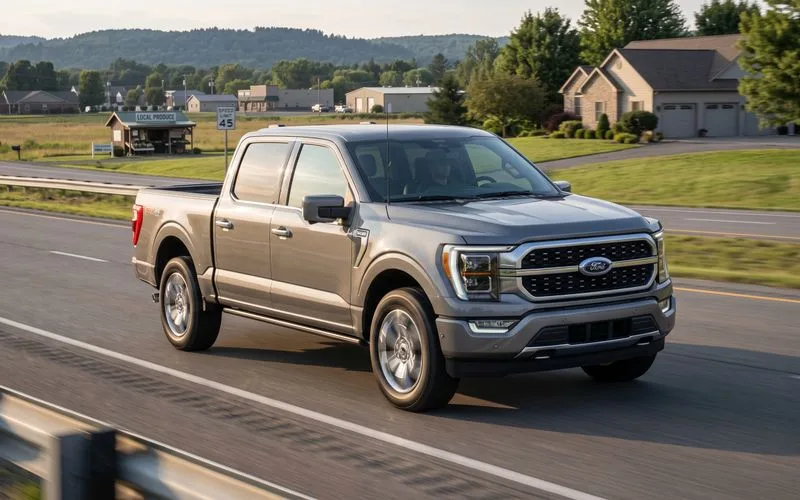 Ford F-150Full-Size TruckBetter at: Capability and resale
More towing (13,500 lbs), far more cab and bed combinations, an available hybrid that returns 25 MPG combined, and roughly 5 points better five-year resale.
Compare 2.41C+
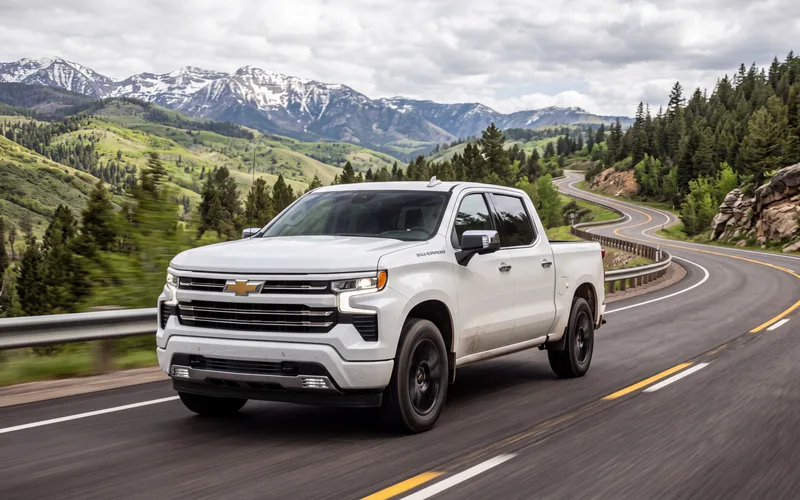 Chevrolet Silverado 1500Full-Size TruckBetter at: Cargo and configuration
A bigger 62.9 cu ft short bed, regular-cab and 8-foot-box availability, and 3.6 more inches of front legroom for buyers who found the Ram tight up front.
Compare 2.20C
2.20C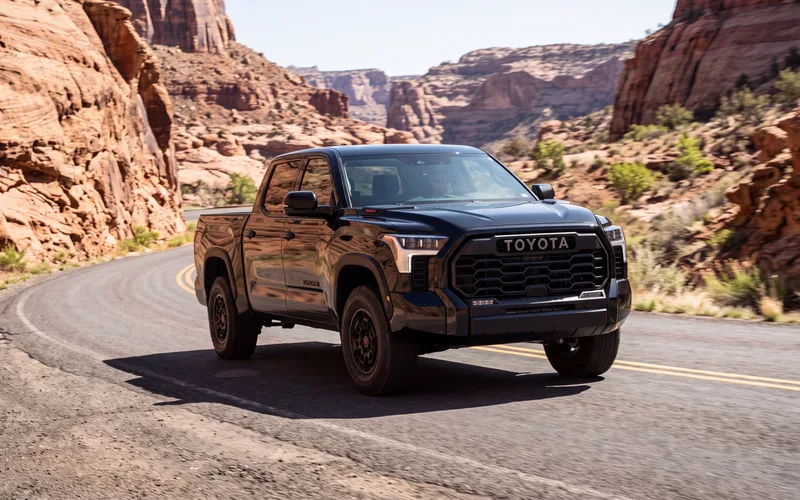 Toyota TundraFull-Size TruckBetter at: Reliability
Toyota's dependability record and a real i-FORCE MAX hybrid address the Ram's two biggest liabilities — recall history and fuel costs.
CompareHow it's evolved
10 scored model years · 2017–2026
Subject scores by year
Hover or tap a score to see what moved it versus the year before. A corner mark flags a big swing.
| Year | Performance | Efficiency | Safety | Space | Cost | Reliability | Tech | Use-case | Driving | Value |
|---|---|---|---|---|---|---|---|---|---|---|
| 2026 | 62 | 48 | 60 | 70 | 41 | 61 | 73 | 67 | 70 | 73 |
| 2025 | 65 | 45 | 59 | 72 | 40 | 51 | 70 | 67 | 70 | 75 |
| 2024 | 63 | 40 | 52 | 68 | 40 | 66 | 62 | 62 | 67 | 70 |
| 2023 | 64 | 39 | 56 | 68 | 40 | 64 | 62 | 62 | 67 | 70 |
| 2022 | 63 | 40 | 61 | 67 | 46 | 58 | 60 | 61 | 66 | 68 |
| 2021 | 63 | 39 | 67 | 71 | 43 | 57 | 56 | 65 | 69 | 74 |
| 2020 | 57 | 28 | 70 | 67 | 42 | 51 | 52 | 63 | 62 | 77 |
| 2019 | 60 | 41 | 50 | 65 | 47 | 57 | 49 | 60 | 65 | 82 |
| 2018 | 50 | 30 | 36 | 61 | 50 | 60 | 45 | 61 | 66 | 60 |
| 2017 | 54 | 34 | 30 | 58 | 52 | 53 | 35 | 57 | 59 | 60 |
Compare two years
Best fit & conditions
Higher scores mean a better fit for that use case. Learn more about use-case fit →
Subject profile
Trims & configurations
7 trimsScores above reflect the volume trim. Per-trim specs and scores are rolling out — the full lineup:
Academic Probation · NHTSA safety recalls
Sep 29, 2026Tires: pressure monitoring and regulating systemsThe tire pressure monitoring system sensors may fail to detect low tire pressure and/or fail to illuminate the tire pressure monitoring system (TPMS) warning light as intended. As such, these vehicles fail to comply with the requirements of Federal Motor Vehicle Safety Standard (FMVSS) number 138, "Tire Pressure Monitoring System."
Defect
Chrysler (FCA US LLC) is recalling certain 2026 Ram 1500 vehicles. The tire pressure monitoring system sensors may fail to detect low tire pressure and/or fail to illuminate the tire pressure monitoring system (TPMS) warning light as intended. As such, these vehicles fail to comply with the requirements of Federal Motor Vehicle Safety Standard (FMVSS) number 138, "Tire Pressure Monitoring System."
Risk
A TPMS warning light that fails to notify the driver of low tire pressure increases the risk of a crash.
Remedy
Dealers will inspect and replace the tire pressure sensors, as necessary, free of charge. Owner notification letters are expected to be mailed October 27, 2026. Owners may contact FCA US, LLC customer service at 1-800-853-1403. FCA US, LLC's number for this recall is 51D. Vehicle Identification Numbers (VINs) involved in this recall became searchable on NHTSA.gov on October 6, 2026.
NHTSA campaign 26V623000 ↗Manufacturer no. 51D16,385 vehicles potentially affected (all models in the campaign)Owners notified Oct 13, 2026Filed by Chrysler (FCA US, LLC)Filed as 1500Sep 29, 2026Air bags: side/windowA connector for the driver and front passenger side air bags may not be secured properly, which can cause the air bags not to deploy as intended. As such, these vehicles fail to comply with the requirements of Federal Motor Vehicle Safety Standard number 208, "Occupant Crash Protection" and 214, "Side Impact Protection."
Defect
Chrysler (FCA US, LLC) is recalling certain 2026 Ram 1500 vehicles. A connector for the driver and front passenger side air bags may not be secured properly, which can cause the air bags not to deploy as intended. As such, these vehicles fail to comply with the requirements of Federal Motor Vehicle Safety Standard number 208, "Occupant Crash Protection" and 214, "Side Impact Protection."
Risk
A side air bag that does not deploy as intended increases the risk of injury in a crash.
Remedy
Dealers will inspect and repair the sensor connections, as necessary, free of charge. Owner notification letters are expected to be mailed October 27, 2026. Owners may contact Chrysler customer service at 800-853-1403. Chrysler's number for this recall is 94D. Vehicle Identification Numbers (VINs) involved in this recall became searchable on NHTSA.gov on October 6, 2026.
NHTSA campaign 26V622000 ↗Manufacturer no. 94D5 vehicles potentially affected (all models in the campaign)Filed by Chrysler (FCA US, LLC)Filed as 1500Sep 1, 2026Back over prevention: softwareA radio software error may cause the rearview camera image not to display. As such, these vehicles fail to comply with the requirements of Federal Motor Vehicle Safety Standard (FMVSS) number 111, "Rear Visibility."
Defect
Chrysler (FCA US, LLC) is recalling certain 2025-2026 Ram 1500 vehicles. A radio software error may cause the rearview camera image not to display. As such, these vehicles fail to comply with the requirements of Federal Motor Vehicle Safety Standard (FMVSS) number 111, "Rear Visibility."
Risk
A rearview image that does not display reduces the driver's view behind the vehicle, increasing the risk of a crash.
Remedy
The radio software will be updated over-the-air (OTA) or by a dealer, free of charge. Owner notification letters were mailed September 24, 2026. Owners may contact Chrysler customer service at 800-853-1403. Chrysler's number for this recall is 83D. Vehicle Identification Numbers (VINs) involved in this recall will be searchable on NHTSA.gov on September 9, 2026.
NHTSA campaign 26V560000 ↗Manufacturer no. 83D239,130 vehicles potentially affected (all models in the campaign)Owners notified Sep 24, 2026Filed by Chrysler (FCA US, LLC)Filed as 1500Aug 13, 2026Back over prevention: sensing system: cameraThe rearview camera image may fail to display when the vehicle is placed in reverse. As such, these vehicles fail to comply with the requirements of Federal Motor Vehicle Safety Standard (FMVSS) number 111, "Rear Visibility."
Defect
Chrysler (FCA US, LLC) is recalling certain 2026 Jeep Wrangler, Jeep Gladiator, Jeep Compass, Jeep Cherokee, Jeep Grand Cherokee, Jeep Grand Cherokee L, Jeep Grand Wagoneer, Jeep Grand Wagoneer L, Ram Promaster, Ram Promaster EV, Ram 1500, Ram 2500, Chrysler Pacifica Plug-In Hybrid, Chrysler Voyager, and 2026-2027 Chrysler Pacifica and Dodge Charger vehicles. The rearview camera image may fail to display when the vehicle is placed in reverse. As such, these vehicles fail to comply with the requirements of Federal Motor Vehicle Safety Standard (FMVSS) number 111, "Rear Visibility."
Risk
A rearview camera image that fails to display reduces the driver's view behind the vehicle, increasing the risk of a crash.
Remedy
Radio software will be updated by a dealer or through an over-the-air (OTA) update, free of charge. Owner notification letters were mailed beginning September 2, 2026. Owners may contact Chrysler customer service at 800-853-1403. Chrysler's number for this recall is 78D. Vehicle Identification Numbers (VINs) involved in this recall will be searchable on NHTSA.gov on August 20, 2026.
NHTSA campaign 26V531000 ↗Manufacturer no. 78D844,027 vehicles potentially affected (all models in the campaign)Owners notified Sep 2, 2026Filed by Chrysler (FCA US, LLC)Filed as 1500Jul 30, 2026Seat belts: rear/other: anchorageThe second-row center and left-side seat belt buckle anchors may have been improperly installed. As such, these vehicles fail to comply with the requirements of Federal Motor Vehicle Safety Standard number 210, "Seat Belt Assembly Anchorages."
Defect
Chrysler (FCA US, LLC) is recalling certain 2019-2026 Ram 1500 vehicles. The second-row center and left-side seat belt buckle anchors may have been improperly installed. As such, these vehicles fail to comply with the requirements of Federal Motor Vehicle Safety Standard number 210, "Seat Belt Assembly Anchorages."
Risk
An improperly installed seat belt buckle anchor may fail to properly restrain occupants, increasing the risk of injury during a crash.
Remedy
Dealers will inspect and attach the seat belt buckle anchor to the body structure as necessary, free of charge. Owner notification letters are expected to be mailed August 18, 2026. Owners may contact Chrysler customer service at 1-800-853-1403. Chrysler's number for this recall is 67D. Vehicle Identification Numbers (VINs) involved in this recall will be searchable on NHTSA.gov on August 6, 2026.
NHTSA campaign 26V495000 ↗Manufacturer no. 67D1,271,294 vehicles potentially affected (all models in the campaign)Owners notified Aug 18, 2026Filed by Chrysler (FCA US, LLC)Filed as 1500Jul 1, 2026Exterior lighting: headlightsThe headlight wiring may cause the parking lights and daytime running lights to flicker on and off, or fail. As such, these vehicles fail to comply with the requirements of Federal Motor Vehicle Safety Standard number 108, "Lamps, Reflective Devices, and Associated Equipment."
Defect
Chrysler (FCA US, LLC) is recalling certain 2026 Ram 1500 vehicles. The headlight wiring may cause the parking lights and daytime running lights to flicker on and off, or fail. As such, these vehicles fail to comply with the requirements of Federal Motor Vehicle Safety Standard number 108, "Lamps, Reflective Devices, and Associated Equipment."
Risk
Parking lights and daytime running lights that fail to illuminate properly reduce the vehicle's visibility to other drivers, increasing the risk of a crash.
Remedy
Dealers will inspect and replace the headlight assemblies, as necessary, free of charge. Owner notification letters were mailed September 17, 2026. Owners may contact Chrysler customer service at 800-853-1403. Chrysler's number for this recall is 62D. Vehicle Identification Numbers (VINs) involved in this recall will become searchable on NHTSA.gov beginning July 9, 2026.
NHTSA campaign 26V421000 ↗Manufacturer no. 62D12,592 vehicles potentially affected (all models in the campaign)Owners notified Sep 17, 2026Filed by Chrysler (FCA US, LLC)Filed as 1500Apr 9, 2026Electrical system: instrument cluster/panelA software error may cause the instrument panel display to fail. As such, these vehicles fail to comply with the requirements of Federal Motor Vehicle Safety Standards numbers 102, "Transmission Shift Position Sequence," 105, "Hydraulic and Electric Brake Systems," 108, "Lamps, Reflective Devices, and Associated Equipment," 126, "Electronic Stability Control Systems for Light Vehicles," 135, "Light Vehicle Brake Systems," 138, "Tire Pressure Monitoring System," and/or 208, "Occupant Crash Protection."
Defect
Chrysler (FCA US, LLC) is recalling certain 2025-2026 Ram 1500 Pickup, Ram 2500 Pickup, Ram 3500 Pickup, Ram 3500 Cab Chassis, Ram 4500 Cab Chassis, and Ram 5500 Cab Chassis vehicles. A software error may cause the instrument panel display to fail. As such, these vehicles fail to comply with the requirements of Federal Motor Vehicle Safety Standards numbers 102, "Transmission Shift Position Sequence," 105, "Hydraulic and Electric Brake Systems," 108, "Lamps, Reflective Devices, and Associated Equipment," 126, "Electronic Stability Control Systems for Light Vehicles," 135, "Light Vehicle Brake Systems," 138, "Tire Pressure Monitoring System," and/or 208, "Occupant Crash Protection."
Risk
An instrument panel display that fails to show critical safety information, such as gear selection and warning lights, increases the risk of a crash.
Remedy
Dealers will update the instrument panel software, free of charge. Owner notification letters were mailed May 5, 2026. Owners may contact FCA customer service at 1-800-853-1403. FCA's number for this recall is 35D. Vehicle Identification Numbers (VINs) involved in this recall will become searchable on NHTSA.gov beginning April 16, 2026.
NHTSA campaign 26V225000 ↗Manufacturer no. 35D65,348 vehicles potentially affected (all models in the campaign)Owners notified May 5, 2026Filed by Chrysler (FCA US, LLC)Filed as 1500Feb 2, 2026Electrical system: integrated trailer brake control · Exterior lighting: brake lights · Exterior lighting: turn signalDue to an improperly designed trailer tow module, the trailer lights may fail to illuminate and the trailer brakes may fail.
Defect
Chrysler (FCA US, LLC) is recalling certain 2024-2026 Jeep Wagoneer S, 2025-2026 Ram 1500 Pickup, Ram 2500 Pickup, Ram 3500 Pickup, Ram 3500 Cab Chassis, Ram 4500 Cab Chassis, Ram 5500 Cab Chassis, and 2026 Jeep Cherokee vehicles. Due to an improperly designed trailer tow module, the trailer lights may fail to illuminate and the trailer brakes may fail.
Risk
Trailer brake lights and turn signals that do not illuminate reduce visibility to other drivers, increasing the risk of a crash. Additionally, trailer brakes that fail increase the risk of a crash.
Remedy
Dealers will replace the trailer tow module, free of charge. Owner notification letters were mailed beginning March 17, 2026. Owners may contact FCA US, LLC customer service at 1-800-853-1403. FCA US, LLC's number for this recall is 03D. Vehicle Identification Numbers (VINs) involved in this recall became searchable on NHTSA.gov on February 10, 2026.
NHTSA campaign 26V059000 ↗Manufacturer no. 03D456,287 vehicles potentially affected (all models in the campaign)Owners notified Mar 17, 2026Filed by Chrysler (FCA US, LLC)Filed as 1500Dec 1, 2025Electrical system: instrument cluster/panelA software error may cause the instrument panel cluster display to be blank. As such, these vehicles fail to comply with the requirements of Federal Motor Vehicle Safety Standard numbers 135, "Light Vehicle Brake Systems," 105, "Hydraulic and Electric Brake Systems," and 102, "Transmission shift lever sequence, starter interlock, and transmission braking effect."
Defect
Chrysler (FCA US, LLC) is recalling certain 2025-2026 Ram 1500 Pickup, Ram 2500 Pickup, Ram 3500 Pickup, Ram 3500 Cab Chassis, 4500 Ram Cab Chassis, and Ram 5500 Cab Chassis vehicles. A software error may cause the instrument panel cluster display to be blank. As such, these vehicles fail to comply with the requirements of Federal Motor Vehicle Safety Standard numbers 135, "Light Vehicle Brake Systems," 105, "Hydraulic and Electric Brake Systems," and 102, "Transmission shift lever sequence, starter interlock, and transmission braking effect."
Risk
An instrument panel display that does not show critical information, such as warning lights or gear selection, increases the risk of a crash.
Remedy
Dealers will inspect and update the instrument panel software or replace the instrument panel cluster, as necessary, free of charge. Owner notification letters were mailed December 18, 2025. Owners may contact Chrysler customer service at 800-853-1403. Chrysler's numbers for this recall are B4C and B8C. Vehicle Identification Numbers (VINs) involved in this recall became searchable on NHTSA.gov beginning December 4, 2025.
NHTSA campaign 25V826000 ↗Manufacturer no. B4C, B8C72,509 vehicles potentially affected (all models in the campaign)Owners notified Dec 18, 2025Filed by Chrysler (FCA US, LLC)Filed as 1500
69 recalls on other model years of the 1500 (2017–2025)
May 21, 2026Back over prevention: sensing system: cameraContamination in the central vision processing module or improper programming may cause the rearview camera image not to display. As such, these vehicles fail to comply with the requirements of Federal Motor Vehicle Safety Standard (FMVSS) number 111, "Rear Visibility."
Defect
Chrysler (FCA US, LLC) is recalling certain 2019 and 2023 Chrysler Pacifica, 2024 Ram 1500, Ram 2500, and 2024-2025 Jeep Wrangler vehicles. Contamination in the central vision processing module or improper programming may cause the rearview camera image not to display. As such, these vehicles fail to comply with the requirements of Federal Motor Vehicle Safety Standard (FMVSS) number 111, "Rear Visibility."
Risk
A rearview image that does not display reduces the driver's view behind the vehicle, increasing the risk of a crash.
Remedy
Dealers will update the central vision processing module software or replace the module, as necessary, free of charge. Owner notification letters are expected to be mailed beginning July 16, 2026. Owners may contact Chrysler customer service at 800-853-1403. Chrysler's number for this recall is 46D. Vehicle Identification Numbers (VINs) involved in this recall will be searchable on NHTSA.gov on May 28, 2026.
NHTSA campaign 26V327000 ↗Manufacturer no. 46D16 vehicles potentially affected (all models in the campaign)Owners notified Jul 16, 2026Filed by Chrysler (FCA US, LLC)Filed as 1500Dec 1, 2025Air bags: side/window: curtain: inflatorThe right and left side curtain air bag inflators may rupture due to a manufacturing defect.
Defect
Chrysler (FCA US, LLC) is recalling certain 2019 Ram 1500 Classic, Ram 2500, and Ram 3500 vehicles. The right and left side curtain air bag inflators may rupture due to a manufacturing defect.
Risk
An inflator rupture may result in sharp metal fragments striking occupants, resulting in injury.
Remedy
Dealers will replace one or both side curtain air bags, as necessary, free of charge. Owner notification letters were mailed December 18, 2025. Owners may contact FCA customer service at 1-800-853-1403. FCA's numbers for this recall are C2C, C7C, and C8C. Vehicle Identification Numbers (VINs) involved in this recall will be searchable on NHTSA.gov beginning December 4, 2025.
NHTSA campaign 25V824000 ↗Manufacturer no. C2C, C7C, C8C1,589 vehicles potentially affected (all models in the campaign)Owners notified Dec 18, 2025Filed by Chrysler (FCA US, LLC)Filed as 1500Nov 6, 2025Air bags: frontal · Steering: steering control moduleThe steering column control module may cause the driver's side air bag not to deploy as intended. As such, these vehicles fail to comply with the requirements of Federal Motor Vehicle Safety Standard number 208, "Occupant Crash Protection."
Defect
Chrysler (FCA US, LLC) is recalling certain 2021-2022 Ram 1500, Ram 2500, Ram 3500, Ram 4500, and Ram 5500 vehicles. The steering column control module may cause the driver's side air bag not to deploy as intended. As such, these vehicles fail to comply with the requirements of Federal Motor Vehicle Safety Standard number 208, "Occupant Crash Protection."
Risk
A driver's side air bag that does not deploy as intended increases the risk of injury in a crash.
Remedy
Dealers will replace the steering column control module, free of charge. Owner notification letters were mailed beginning December 11, 2025. Owners may contact Chrysler customer service at 800-853-1403. Chrysler's number for this recall is 14C. Vehicle Identification Numbers (VINs) involved in this recall became searchable on NHTSA.gov beginning November 13, 2025.
NHTSA campaign 25V765000 ↗Manufacturer no. 14C532 vehicles potentially affected (all models in the campaign)Owners notified Dec 11, 2025Filed by Chrysler (FCA US, LLC)Filed as 1500Sep 11, 2025Air bags: side/window: curtain: inflatorThe right and left side curtain air bag inflators may rupture due to a manufacturing defect.
Defect
Chrysler (FCA US, LLC) is recalling certain 2018 Ram 1500, Ram 2500, and Ram 3500 vehicles. The right and left side curtain air bag inflators may rupture due to a manufacturing defect.
Risk
An inflator rupture may result in sharp metal fragments striking occupants, resulting in injury.
Remedy
Dealers will replace one or both side curtain air bags, as necessary, free of charge. Owner notification letters were mailed September 25, 2025. Owners may contact FCA customer service at 1-800-853-1403. FCA's numbers for this recall are 83C, 91C, and 92C. Vehicle Identification Numbers (VINs) involved in this recall will be searchable on NHTSA.gov beginning September 18, 2025.
NHTSA campaign 25V592000 ↗Manufacturer no. 83C, 91C, 92C1,761 vehicles potentially affected (all models in the campaign)Owners notified Sep 25, 2025Filed by Chrysler (FCA US, LLC)Filed as 1500May 8, 2025Air bags · Electrical system: wiringThe driver's side air bag may not be connected properly, which can cause the air bag not to deploy as intended. As such, these vehicles fail to comply with the requirements of Federal Motor Vehicle Safety Standard number 208, "Occupant Crash Protection."
Defect
Chrysler (FCA US, LLC) is recalling certain 2019-2024 Ram 1500 vehicles. The driver's side air bag may not be connected properly, which can cause the air bag not to deploy as intended. As such, these vehicles fail to comply with the requirements of Federal Motor Vehicle Safety Standard number 208, "Occupant Crash Protection."
Risk
A driver's side air bag that does not deploy as intended increases the risk of injury in a crash.
Remedy
Dealers secured the connectors for the air bag, free of charge. All vehicles have been remedied. Owner notification letters were mailed May 27, 2025. Owners may contact Chrysler customer service at 800-853-1403. Chrysler's number for this recall is 08C.
NHTSA campaign 25V298000 ↗Manufacturer no. 08C71 vehicles potentially affected (all models in the campaign)Owners notified May 27, 2025Filed by Chrysler (FCA US, LLC)Filed as 1500Apr 10, 2025Electrical system: instrument cluster/panel · Tires: pressure monitoring and regulating systemsA software error may cause an incorrect tire inflation pressure message to display on the instrument panel.
Defect
Chrysler (FCA US, LLC) is recalling certain 2025 Ram 1500 vehicles. A software error may cause an incorrect tire inflation pressure message to display on the instrument panel.
Risk
An incorrect tire pressure message may result in improperly inflated tires, increasing the risk of a crash.
Remedy
Dealers will update the instrument panel software, free of charge. Owner notification letters were mailed beginning April 24, 2025. Owners may contact FCA customer service at 1-800-853-1403. FCA's number for this recall is 30C.
NHTSA campaign 25V231000 ↗Manufacturer no. 30C10,423 vehicles potentially affected (all models in the campaign)Owners notified Apr 24, 2025Filed by Chrysler (FCA US, LLC)Filed as 1500Jan 16, 2025Air bags: side/window: curtain: inflatorThe right and left side curtain air bag inflators may rupture due to a manufacturing defect.
Defect
Chrysler (FCA US, LLC) is recalling certain 2016-2019 Ram 3500, Ram 1500, 2016-2020 Ram 2500, and 2016 Ram 3500 Cab Chassis vehicles. The right and left side curtain air bag inflators may rupture due to a manufacturing defect.
Risk
An inflator rupture may result in sharp metal fragments striking occupants, resulting in injury.
Remedy
Dealers will replace one or both side curtain air bags, as necessary, free of charge. Owner notification letters were mailed February 13, 2025. Owners may contact FCA customer service at 1-800-853-1403. FCA's numbers for this recall are 05C, 09C, and 10C.
NHTSA campaign 25V010000 ↗Manufacturer no. 05C, 09C, 10C6,066 vehicles potentially affected (all models in the campaign)Owners notified Feb 13, 2025Filed by Chrysler (FCA US, LLC)Filed as 1500Dec 19, 2024Electrical system: software · Exterior lighting: headlightsIncorrect headlight module software may cause the headlights to become inoperative. As such, these vehicles fail to comply with the requirements of Federal Motor Vehicle Safety Standard (FMVSS) number 108, "Lamps, Reflective Devices, and Associated Equipment."
Defect
Chrysler (FCA US, LLC) is recalling certain 2025 Ram 1500 pickup trucks. Incorrect headlight module software may cause the headlights to become inoperative. As such, these vehicles fail to comply with the requirements of Federal Motor Vehicle Safety Standard (FMVSS) number 108, "Lamps, Reflective Devices, and Associated Equipment."
Risk
Inoperative headlights can reduce visibility, increasing the risk of a crash.
Remedy
Dealers will update the headlight module software, free of charge. Owner notification letters were mailed March 6, 2025. Owners may contact FCA customer service at 1-800-853-1403. FCA's number for this recall is D4B.
NHTSA campaign 24V942000 ↗Manufacturer no. D4B53 vehicles potentially affected (all models in the campaign)Owners notified Mar 6, 2025Filed by Chrysler (FCA US, LLC)Filed as 1500Oct 24, 2024Electronic stability control (esc) · Wheels: hubThe front wheel hub encoder rings may be damaged, which can disable the electronic stability control system. As such, these vehicles fail to comply with the requirements of Federal Motor Vehicle Safety Standard number 126, "Electronic Stability Control Systems."
Defect
Chrysler (FCA US, LLC) is recalling certain 2025 Ram 1500 vehicles. The front wheel hub encoder rings may be damaged, which can disable the electronic stability control system. As such, these vehicles fail to comply with the requirements of Federal Motor Vehicle Safety Standard number 126, "Electronic Stability Control Systems."
Risk
Driving with a disabled electronic stability control system can increase the risk of a crash.
Remedy
Dealers will inspect and replace the front wheel bearing hub assembly, as necessary free of charge. Owner notification letters were mailed December 19, 2024. Owners may contact FCA customer service at 1-800-853-1403. FCA's number for this recall is 97B.
NHTSA campaign 24V794000 ↗Manufacturer no. 97B33,777 vehicles potentially affected (all models in the campaign)Owners notified Dec 19, 2024Filed by Chrysler (FCA US, LLC)Filed as 1500Oct 10, 2024Visibility: rearview mirrors/devicesThe mirror glass may detach from the driver's side heated trailer tow rearview mirror. As such these vehicles fail to comply with the requirements of Federal Motor Vehicle Safety Standard number 111, "Rear Visibility."
Defect
Chrysler (FCA US, LLC) is recalling certain 2020-2023 Ram 1500 Classic vehicles equipped with heated trailer tow rearview mirrors. The mirror glass may detach from the driver's side heated trailer tow rearview mirror. As such these vehicles fail to comply with the requirements of Federal Motor Vehicle Safety Standard number 111, "Rear Visibility."
Risk
Detached mirror glass can reduce driver visibility, increasing the risk of a crash.
Remedy
Dealers will replace the mirror glass, free of charge. Owner notification letters were mailed December 5, 2024. Owners may contact FCA Customer Service at 1-800-853-1403. FCA's number for this recall is 86B.
NHTSA campaign 24V754000 ↗Manufacturer no. 86B31,676 vehicles potentially affected (all models in the campaign)Owners notified Dec 5, 2024Filed by Chrysler (FCA US, LLC)Filed as 1500Oct 1, 2024Exterior lighting: turn signal · Steering: steering control moduleThe turn signal self-canceling feature may not function properly. As such, these vehicles fail to comply with the requirements of Federal Motor Vehicle Safety Standard number 108, "Lamps, Reflective devices, and Associated Equipment."
Defect
Chrysler (FCA US, LLC) is recalling certain 2023-2024 Ram 1500 vehicles. The turn signal self-canceling feature may not function properly. As such, these vehicles fail to comply with the requirements of Federal Motor Vehicle Safety Standard number 108, "Lamps, Reflective devices, and Associated Equipment."
Risk
Turn signals that do not function properly may fail to indicate the driver's intention to change vehicle direction, increasing the risk of a crash.
Remedy
Dealers will inspect and replace the steering column control module as necessary, free of charge. Owner notification letters were mailed October 23, 2024. Owners may contact Chrysler customer service at 1-800-853-1403. Chrysler's number for this recall is A1B.
NHTSA campaign 24V729000 ↗Manufacturer no. A1B129,313 vehicles potentially affected (all models in the campaign)Owners notified Oct 23, 2024Filed by Chrysler (FCA US, LLC)Filed as 1500Sep 5, 2024Electronic stability control (esc): control module · Service brakes, hydraulic: antilock/traction control/electronic limited slip: control unit/moduleDue to a software malfunction, the anti-lock brake system (ABS) control module may disable the electronic stability control system. As such, these vehicles fail to comply with the requirements of Federal Motor Vehicle Safety Standard number 126, "Electronic Stability Control Systems."
Defect
Chrysler (FCA US, LLC) is recalling certain 2019, 2021-2024 Ram 1500 vehicles. Due to a software malfunction, the anti-lock brake system (ABS) control module may disable the electronic stability control system. As such, these vehicles fail to comply with the requirements of Federal Motor Vehicle Safety Standard number 126, "Electronic Stability Control Systems."
Risk
Driving with a disabled electronic stability control system can increase the risk of a crash.
Remedy
Dealers will update the ABS control module software, free of charge. Interim notification letters, notifying owners of the safety risk, were mailed October 10, 2024. Owner notification letters were mailed beginning September 26, 2024. Owners may contact FCA US, LLC customer service at 1-800-853-1403. FCA US, LLC's number for this recall is 85B.
NHTSA campaign 24V653000 ↗Manufacturer no. 75B1,025,432 vehicles potentially affected (all models in the campaign)Owners notified Sep 26, 2024Filed by Chrysler (FCA US, LLC)Filed as 1500Jun 13, 2024Back over prevention: sensing system: cameraChrysler (FCA US, LLC) is recalling one 2022 Ram 1500 Classic vehicle. The wiring harness may short circuit and prevent the rearview image from displaying. As such, this vehicle fails to comply with the requirements of Federal Motor Vehicle Safety Standard number 111, "Rear Visibility."
Defect
Chrysler (FCA US, LLC) is recalling one 2022 Ram 1500 Classic vehicle. The wiring harness may short circuit and prevent the rearview image from displaying. As such, this vehicle fails to comply with the requirements of Federal Motor Vehicle Safety Standard number 111, "Rear Visibility."
Risk
A rearview camera image that does not display decreases the driver's visibility, increasing the risk of a crash.
Remedy
Dealers will replace the wiring harness, free of charge. The vehicle has been remedied. Owners may contact FCA US, LLC customer service at 1-800-853-1403. FCA US, LLC's number for this recall is 65B.
NHTSA campaign 24V437000 ↗Manufacturer no. 65B1 vehicles potentially affected (all models in the campaign)Owners notified Oct 3, 2022Filed by Chrysler (FCA US, LLC)Filed as 1500Jun 13, 2024Back over prevention: sensing system: cameraThe radio software may prevent the rearview image from displaying. As such, these vehicles fail to comply with the requirements of Federal Motor Vehicle Safety Standard number 111, "Rear Visibility."
Defect
Chrysler (FCA US, LLC) is recalling certain 2021-2022 Dodge Durango, 2021-2023 Chrysler Pacifica, Jeep Grand Cherokee L, 2022 Ram 1500, 2500, 3500, Chrysler Voyager, 2022-2023 Jeep Compass, Grand Cherokee, Wagoneer, Grand Wagoneer, and Ram Promaster vehicles. The radio software may prevent the rearview image from displaying. As such, these vehicles fail to comply with the requirements of Federal Motor Vehicle Safety Standard number 111, "Rear Visibility."
Risk
A rearview camera image that does not display decreases the driver's visibility, increasing the risk of a crash.
Remedy
Dealers will update the radio software or the software will be OTA, "Over-The-Air," free of charge. Owner notification letters were mailed beginning July 9, 2024. Owners may contact FCA US, LLC customer service at 1-800-853-1403. FCA US, LLC's numbers for this recall are 66B and 79B.
NHTSA campaign 24V436000 ↗Manufacturer no. 66B, 79B1,033,433 vehicles potentially affected (all models in the campaign)Owners notified Jul 9, 2024Filed by Chrysler (FCA US, LLC)Filed as 1500Jun 6, 2024Power train: automatic transmission · Power train: manual transmissionAn insufficient weld in the transmission control unit can allow transmission fluid to leak on to electrical components, resulting in a loss of drive power or loss of park function.
Defect
Chrysler (FCA US, LLC) is recalling certain 2023 Ram 1500, 2500, and 3500 vehicles. An insufficient weld in the transmission control unit can allow transmission fluid to leak on to electrical components, resulting in a loss of drive power or loss of park function.
Risk
A loss of drive power or a loss of park function increase the risk of a crash.
Remedy
Dealers will replace the valve body and control unit, free of charge. Owner notification letters are expecting to be mailed July 26, 2024. Owners may contact FCA US, LLC customer service at 1-800-853-1403. FCA US, LLC's number for this recall is 63B.
NHTSA campaign 24V413000 ↗Manufacturer no. 63B214 vehicles potentially affected (all models in the campaign)Owners notified Jun 20, 2024Filed by Chrysler (FCA US, LLC)Filed as 1500Mar 14, 2024Air bags: frontal: driver clockspring/spiral cassette · Steering: columnThe steering column control module may not be welded properly, which can prevent the driver's air bag from deploying in a crash. As such, these vehicles fail to comply with the requirements of Federal Motor Vehicle Safety Standard number 208, "Occupant Crash Protection."
Defect
Chrysler (FCA US, LLC) (Stellantis) is recalling certain 2023-2024 Ram 1500, Jeep Wrangler, Jeep Wagoneer, Jeep Grand Wagoneer, Chrysler Pacifica, Ram 3500, Ram 3500 cab chassis, Ram 2500, Ram 4500 cab chassis, Ram 5500 cab chassis, 2023 Jeep Gladiator, Jeep Grand Cherokee, Jeep Grand Cherokee L, Ram 3500 Cab Chassis with a GVWR less than 10,000 lbs., and Chrysler Voyager vehicles. The steering column control module may not be welded properly, which can prevent the driver's air bag from deploying in a crash. As such, these vehicles fail to comply with the requirements of Federal Motor Vehicle Safety Standard number 208, "Occupant Crash Protection."
Risk
An air bag that does not deploy in a crash can increase the risk of injury.
Remedy
Dealers will inspect and replace the steering column control module, as necessary free of charge. Some owner notification letters were mailed April 11, 2024 through June 20, 2024. Owners may contact FCA US, LLC customer service at 1-800-853-1403. FCA US, LLC's numbers for this recall are 14B, 33B, 34B, 35B, 36B.
NHTSA campaign 24V199000 ↗Manufacturer no. 14B,33B,34B,35B,36B38,164 vehicles potentially affected (all models in the campaign)Owners notified Apr 11, 2024Filed by Chrysler (FCA US, LLC) (Stellantis)Filed as 1500Nov 28, 2023Exterior lighting · Steering: steering control moduleThe steering column control module may cause the high beams to activate when the turn signal is used or activate the turn signal when the high beams are used. In addition, the turn signal self-canceling feature may not function properly. As such, these vehicles fail to comply with the requirements of Federal Motor Vehicle Safety Standard number 108, "Lamps, Reflective Devices, and Associated Equipment."
Defect
Chrysler (FCA US, LLC) is recalling certain 2023 Ram 1500 Classic, Ram 3500 Classic, 3500 Cab Chassis, 2023-2024 Ram 2500, 4500/5500 Cab Chassis, and Ram 3500 vehicles. The steering column control module may cause the high beams to activate when the turn signal is used or activate the turn signal when the high beams are used. In addition, the turn signal self-canceling feature may not function properly. As such, these vehicles fail to comply with the requirements of Federal Motor Vehicle Safety Standard number 108, "Lamps, Reflective Devices, and Associated Equipment."
Risk
Turn signals and/or high beams that do not function as intended may cause confusion or reduced visibility to other road users, increasing the risk of a crash.
Remedy
Dealers will update the steering column control module (SCCM) software, and inspect and replace the module, as necessary, free of charge. Owner notification letters were mailed December 19, 2023. Owners may contact FCA US, LLC customer service at 1-800-853-1403. FCA US, LLC's numbers for this recall are B2A and D5A.
NHTSA campaign 23V799000 ↗Manufacturer no. B2A & D5A185,251 vehicles potentially affected (all models in the campaign)Owners notified Dec 19, 2023Filed by Chrysler (FCA US, LLC)Filed as 1500Sep 28, 2023Back over prevention: display functionThe radio software may prevent the rearview image from displaying. As such, these vehicles fail to comply with the requirements of Federal Motor Vehicle Safety Standard number 111, "Rear Visibility."
Defect
Chrysler (FCA US, LLC) is recalling certain 2022-2023 Ram 1500, Ram 3500 Cab Chassis with GVWR less than 10,000 lbs., and 2022-2024 Ram 2500 vehicles. The radio software may prevent the rearview image from displaying. As such, these vehicles fail to comply with the requirements of Federal Motor Vehicle Safety Standard number 111, "Rear Visibility."
Risk
A rearview camera that does not display an image reduces the driver's rear view, increasing the risk of a crash.
Remedy
Dealers will update the radio software, free of charge. Owner notification letters were mailed October 24, 2023. Owners may contact FCA US, LLC customer service at 1-800-853-1403. FCA US, LLC's number for this recall is 97A.
NHTSA campaign 23V654000 ↗Manufacturer no. 97A272,911 vehicles potentially affected (all models in the campaign)Owners notified Oct 24, 2023Filed by Chrysler (FCA US, LLC)Filed as 1500Jun 8, 2023Engine and engine coolingThe crankshaft position sensor tone wheel may delaminate, causing the engine to lose its ability to synchronize the fuel injector pulses and cam shaft timing, possibly resulting in an engine stall.
Defect
Chrysler (FCA US, LLC) is recalling certain 2014-2019 Ram 1500 and 2014-2020 Jeep Grand Cherokee vehicles equipped with 3.0L Diesel engines. The crankshaft position sensor tone wheel may delaminate, causing the engine to lose its ability to synchronize the fuel injector pulses and cam shaft timing, possibly resulting in an engine stall.
Risk
An engine stall can increase the risk of a crash.
Remedy
Dealers will update the powertrain control module software to maintain vehicle propulsion, free of charge. Interim notification letters, notifying owners of the safety risk, were mailed August 3, 2023. Some owner notification letters were mailed October 31, 2023. The remaining owner notification letters will be mailed at a future date, anticipated July 2024. Owners may contact FCA US, LLC customer service at 1-800-853-1403. FCA US, LLC's number for this recall is 66A. This recall is an expansion of recall 20V-475.
NHTSA campaign 23V411000 ↗Manufacturer no. 66A80,629 vehicles potentially affected (all models in the campaign)Owners notified Oct 31, 2023Filed by Chrysler (FCA US, LLC)Filed as 1500Apr 13, 2023Power train: automatic transmission: control module (tcm/pcm/tecm)The powertrain control module software may cause an incorrect fuel mixture condition in the engine, and result in an engine stall.
Defect
Chrysler (FCA US, LLC) is recalling certain 2021 Ram 1500 vehicles equipped with 5.7L eTorque engines. The powertrain control module software may cause an incorrect fuel mixture condition in the engine, and result in an engine stall.
Risk
An engine stall can increase the risk of a crash.
Remedy
Dealers will update the Powertrain Control Module calibration software, free of charge. Owner notification letters were mailed April 27, 2023. Owners may contact FCA US, LLC customer service at 1-800-853-1403. FCA US, LLC's number for this recall is 37A.
NHTSA campaign 23V265000 ↗Manufacturer no. 37A131,700 vehicles potentially affected (all models in the campaign)Owners notified Apr 27, 2023Filed by Chrysler (FCA US, LLC)Filed as 1500Apr 13, 2023Air bags: sensor: side impactThe B-pillar impact sensors may be missing, which can result in delayed air bag deployment or non-deployment.
Defect
Chrysler (FCA US, LLC) is recalling certain 2022 Ram 1500 vehicles. The B-pillar impact sensors may be missing, which can result in delayed air bag deployment or non-deployment.
Risk
Air bags that do not deploy as intended increase the risk of injury in a crash.
Remedy
Dealers will inspect and, if necessary, install the B-pillar impact sensors, free of charge. Owner notification letters were mailed May 4, 2023. Owners may contact FCA US, LLC customer service at 1-800-853-1403. FCA US, LLC's number for this recall is 33A.
NHTSA campaign 23V264000 ↗Manufacturer no. 33A37 vehicles potentially affected (all models in the campaign)Owners notified May 4, 2023Filed by Chrysler (FCA US, LLC)Filed as 1500Apr 13, 2023Fuel system, diesel: delivery: fuel pumpThe high pressure fuel pump (HPFP) may fail.
Defect
Chrysler (FCA US, LLC) is recalling certain 2021-2023 Jeep Wrangler, Gladiator, and 2022-2023 Ram 1500 vehicles equipped with a 3.0L diesel engine. The high pressure fuel pump (HPFP) may fail.
Risk
Fuel pump failure can result in an engine stall, increasing the risk of a crash.
Remedy
Dealers will replace the HPFP and replace additional fuel system components, as necessary, free of charge. Owner notification letters were mailed October 17, 2023. Owners may contact FCA US, LLC customer service at 1-800-853-1403. FCA US, LLC's number for this recall is 01A.
NHTSA campaign 23V263000 ↗Manufacturer no. 01A45,832 vehicles potentially affected (all models in the campaign)Owners notified Oct 17, 2023Filed by Chrysler (FCA US, LLC)Filed as 1500Feb 9, 2023Back over prevention: display functionThe trailer reverse steering control module (TRSCM) may prevent the rearview image from displaying when the vehicle is placed in reverse. As such, these vehicles fail to comply with the requirements of Federal Motor Vehicle Safety Standard number 111, "Rear Visibility."
Defect
Chrysler (FCA US, LLC) is recalling certain 2021-2023 Ram 1500 and 2023 Ram 2500 vehicles. The trailer reverse steering control module (TRSCM) may prevent the rearview image from displaying when the vehicle is placed in reverse. As such, these vehicles fail to comply with the requirements of Federal Motor Vehicle Safety Standard number 111, "Rear Visibility."
Risk
A rearview image that does not display while in reverse decreases the driver's visibility of the rear view, increasing the risk of injury or crash.
Remedy
Dealers will update the TRSCM software, free of charge. Owner notification letters were mailed March 1, 2023. Owners may contact FCA US, LLC customer service at 1-800-853-1403. FCA US, LLC's number for this recall is 14A. This recall supersedes and expands previous recall numbers 21V-438 and 21V-918. FCA US Recall ID 63A is a vehicle population expansion of FCA US Recall ID 14A (NHTSA Recall ID 23V-059).
NHTSA campaign 23V059000 ↗Manufacturer no. 14A77,079 vehicles potentially affected (all models in the campaign)Owners notified Mar 1, 2023Filed by Chrysler (FCA US, LLC)Filed as 1500Dec 8, 2022Structure: body: tailgate: hinge and attachmentsThe tailgate may not latch properly due to misaligned tailgate strikers, which could result in the tailgate opening while driving.
Defect
Chrysler (FCA US, LLC) is recalling certain 2019-2022 Ram 1500, 2500, and 3500 pickup trucks. The tailgate may not latch properly due to misaligned tailgate strikers, which could result in the tailgate opening while driving.
Risk
An unintended tailgate opening while driving may result in a loss of unsecured cargo, possibly creating a road hazard and increasing the risk of a crash.
Remedy
Dealers will inspect the tailgate striker alignment to the box latch and adjust, if necessary, free of charge. Owner notification letters were mailed December 22, 2022. Owners may contact FCA US, LLC customer service at 1-800-853-1403. FCA US, LLC's number for this recall is ZB8.
NHTSA campaign 22V904000 ↗Manufacturer no. ZB81,224,078 vehicles potentially affected (all models in the campaign)Owners notified Dec 22, 2022Filed by Chrysler (FCA US, LLC)Filed as 1500Oct 13, 2022Engine · Fuel system, gasoline: delivery: fuel pumpThe high pressure fuel pump (HPFP) may fail, causing an engine stall.
Defect
Chrysler (FCA US, LLC) is recalling certain 2020-2022 Jeep Wrangler, Ram 1500, and 2021-2022 Jeep Gladiator vehicles equipped with 3.0L diesel engines. The high pressure fuel pump (HPFP) may fail, causing an engine stall.
Risk
An engine stall can increase the risk of a crash.
Remedy
Dealers will replace the HPFP and inspect and replace additional fuel system components, as necessary, free of charge. Owner notification letters were mailed October 17, 2023. Owners may contact Chrysler customer service at 1-800-853-1403. Chrysler's number for this recall is Z96.
NHTSA campaign 22V767000 ↗Manufacturer no. Z9660,413 vehicles potentially affected (all models in the campaign)Owners notified Oct 17, 2023Filed by Chrysler (FCA US, LLC)Filed as 1500Oct 13, 2022Seat belts: pretensionerThe front seat belt retractors may have an improperly welded micro gas generator, which can result in seat belt pretensioner failure.
Defect
Chrysler (FCA US, LLC) is recalling certain 2022 Ram 1500, Jeep Gladiator, and 2021 Jeep Wrangler vehicles. The front seat belt retractors may have an improperly welded micro gas generator, which can result in seat belt pretensioner failure.
Risk
A seat belt with pretensioner failure may not properly restrain an occupant during a crash, increasing the risk of injury.
Remedy
Dealers will replace the front seat belt retractors. free of charge. Owner notification letters were mailed December 8, 2022. Owners may contact Chrysler customer service at 1-800-853-1403. Chrysler's number for this recall is Z95.
NHTSA campaign 22V766000 ↗Manufacturer no. Z952,802 vehicles potentially affected (all models in the campaign)Owners notified Dec 8, 2022Filed by Chrysler (FCA US, LLC)Filed as 1500Aug 25, 2022Back over prevention: display functionA radio software error may prevent the rearview image from displaying. As such, these vehicles fail to comply with the requirements of Federal Motor Vehicle Safety Standard number 111, "Rear Visibility."
Defect
Chrysler (FCA US, LLC) is recalling certain 2020-2021 Jeep Wrangler, RAM 1500 and 2021 Jeep Gladiator vehicles. A radio software error may prevent the rearview image from displaying. As such, these vehicles fail to comply with the requirements of Federal Motor Vehicle Safety Standard number 111, "Rear Visibility."
Risk
A rearview camera that does not display an image reduces the driver's rear view, increasing the risk of a crash.
Remedy
Dealers will update the radio software, free of charge. Owner notification letters were mailed October 6, 2022. Owners may contact FCA US, LLC customer service at 1-800-853-1403. FCA, LLC's number for this recall is Z86.
NHTSA campaign 22V638000 ↗Manufacturer no. Z867,895 vehicles potentially affected (all models in the campaign)Owners notified Oct 6, 2022Filed by Chrysler (FCA US, LLC)Filed as 1500Jun 9, 2022Back over prevention: display functionThe radio software may prevent the rearview image from displaying. As such, these vehicles fail to comply with the requirements of Federal Motor Vehicle Safety Standard number 111, "Rear Visibility."
Defect
Chrysler (FCA US, LLC) is recalling certain 2022 Ram 1500, 2500 pickup trucks, and 3500 Cab Chassis vehicles with GVWR less than 10,000 lbs. The radio software may prevent the rearview image from displaying. As such, these vehicles fail to comply with the requirements of Federal Motor Vehicle Safety Standard number 111, "Rear Visibility."
Risk
A rearview camera that does not display an image reduces the driver's rear view, increasing the risk of a crash.
Remedy
Dealers will reprogram the radio software, free of charge. Owner notification letters were mailed July 5, 2022. Owners may contact FCA US, LLC customer service at 1-800-853-1403. FCA US, LLS's number for this recall is Z47.
NHTSA campaign 22V407000 ↗Manufacturer no. Z47117,413 vehicles potentially affected (all models in the campaign)Owners notified Jul 5, 2022Filed by Chrysler (FCA US, LLC)Filed as 1500Jun 9, 2022Fuel system, diesel: delivery: fuel pumpA high pressure fuel pump (HPFP) failure may introduce internal debris into the fuel system, potentially resulting in fuel starvation.
Defect
Chrysler (FCA US, LLC) is recalling certain 2014-2020 Jeep Grand Cherokee, and 2014-2019 Ram 1500 vehicles equipped with 3.0L diesel engines. A high pressure fuel pump (HPFP) failure may introduce internal debris into the fuel system, potentially resulting in fuel starvation.
Risk
Fuel starvation may result in an unexpected loss of drive power, increasing the risk of a crash.
Remedy
Dealers will replace the HPFP, and inspect and replace, if necessary, additional fuel system components, free of charge. Interim notification letters informing owners of the safety risk were mailed July 21, 2022. Owner notification letters for were mailed for Jeep Grand Cherokee owners starting January 11, 2024. Owner notification letters for Ram 1500 owners were mailed March 7, 2024. Owners may contact FCA US, LLC customer service at 1-800-853-1403. FCA US, LLS's number for this recall is Z46.
NHTSA campaign 22V406000 ↗Manufacturer no. Z46138,645 vehicles potentially affected (all models in the campaign)Owners notified Jan 11, 2024Filed by Chrysler (FCA US, LLC)Filed as 1500Nov 24, 2021Air bags: side/window: curtainThe side air bag inflatable curtain (SABIC) assemblies may have been manufactured with the incorrect amount of compressed gas, which can result in an improper air bag deployment.
Defect
Chrysler (FCA US, LLC) is recalling certain 2021-2022 Ram 2500, Ram 3500, and 2021 Ram 1500 Classic pickup trucks. The side air bag inflatable curtain (SABIC) assemblies may have been manufactured with the incorrect amount of compressed gas, which can result in an improper air bag deployment.
Risk
An air bag that deploys improperly can increase the risk of injury in a crash.
Remedy
Dealers will replace the SABIC assemblies, free of charge. Owner notification letters were mailed January 17, 2022. Owners may contact FCA US, LLC customer service at 1-800-853-1403. FCA US, LLC's number for this recall is Y99.
NHTSA campaign 21V925000 ↗Manufacturer no. Y99376 vehicles potentially affected (all models in the campaign)Owners notified Jan 17, 2022Filed by Chrysler (FCA US, LLC)Filed as 1500Nov 23, 2021Back over prevention: display function · Steering: steering control moduleThe Trailer Reverse Steering Control Module (TRSCM) may prevent the rearview image from displaying. As such, these vehicles fail to comply with the requirements of Federal Motor Vehicle Safety Standard number 111, "Rear Visibility."
Defect
Chrysler (FCA US, LLC) is recalling certain 2021 Ram 1500 pickup trucks. The Trailer Reverse Steering Control Module (TRSCM) may prevent the rearview image from displaying. As such, these vehicles fail to comply with the requirements of Federal Motor Vehicle Safety Standard number 111, "Rear Visibility."
Risk
A rearview camera that does not display an image reduces the driver's rear view, increasing the risk of a crash.
Remedy
Dealers will update the TRSCM software. Interim owner notification letters were mailed on January 19, 2022. Owner notification letters were mailed on February 22, 2022. Owners may contact FCA US, LLC customer service at 1-800-853-1403. FCA US, LLC's number for this recall is Y80. This recall was superseded by 23V-059.
NHTSA campaign 21V918000 ↗Manufacturer no. Y8038,157 vehicles potentially affected (all models in the campaign)Owners notified Feb 22, 2022Filed by Chrysler (FCA US, LLC)Filed as 1500Nov 10, 2021Visibility: defroster/defogger/hvac system: windshield: electrical heating elementThese vehicles may have been built with incompatible heating, ventilation, and air conditioning systems (HVAC), resulting in the windshield defrosting and defogging system being inoperable to drivers. As such, these vehicles fail to comply with the requirements of Federal Motor Vehicle Safety Standard number 103, "Windshield Defrosting and Defogging Systems."
Defect
Chrysler (FCA US, LLC) is recalling certain 2022 Ram 1500 vehicles. These vehicles may have been built with incompatible heating, ventilation, and air conditioning systems (HVAC), resulting in the windshield defrosting and defogging system being inoperable to drivers. As such, these vehicles fail to comply with the requirements of Federal Motor Vehicle Safety Standard number 103, "Windshield Defrosting and Defogging Systems."
Risk
An inoperable defrosting and defogging system can reduce visibility for drivers in certain conditions, increasing the risk of a crash.
Remedy
FCA US, LLC will repurchase the affected vehicles, free of charge. Owner notification letters were mailed November 22, 2021. Owners may contact FCA US, LLC customer service at 1-800-853-1403. FCA US, LLC's number for this recall is Y88.
NHTSA campaign 21V871000 ↗Manufacturer no. Y8822 vehicles potentially affected (all models in the campaign)Owners notified Nov 22, 2021Filed by Chrysler (FCA US, LLC)Filed as 1500Sep 9, 2021Tires: temporary/emergency spare tireThe incorrect-size spare tire may have been installed, which does not match the tire size and inflation pressure information on the tire placard. As such, these vehicles fail to comply with the requirements of Federal Motor Vehicle Safety Standard number 110, "Tire Selection And Rims."
Defect
Chrysler (FCA US, LLC) is recalling certain 2021 Ram 1500 vehicles. The incorrect-size spare tire may have been installed, which does not match the tire size and inflation pressure information on the tire placard. As such, these vehicles fail to comply with the requirements of Federal Motor Vehicle Safety Standard number 110, "Tire Selection And Rims."
Risk
A driver that relies on the incorrect spare tire inflation pressure on the tire placard label may inflate the spare tire incorrectly, increasing the risk of a crash.
Remedy
Dealers will replace the spare tire assembly, free of charge. The owner notification letter was mailed on September 9, 2021. Owners may contact FCA US LLC customer service at 1-800-853-1403. FCA US LLC's number for this recall is Y62.
NHTSA campaign 21V698000 ↗Manufacturer no. Y622 vehicles potentially affected (all models in the campaign)Owners notified Sep 9, 2021Filed by Chrysler (FCA US, LLC)Filed as 1500Aug 12, 2021Air bags: side/window: curtain · Air bags: side/window: curtain: inflatorThe side air bag inflatable curtain (SABIC) inflator end cap may detach from the inflator, or the inflator sidewall may rupture.
Defect
Chrysler (FCA US, LLC) is recalling certain 2015-2020 Ram 1500 Classic, 2015-2016 Ram 3500, and Ram 2500 vehicles, and 2016 Ram 3500 Cab Chassis with a gross vehicle weight rating less than 10,000 lbs. The side air bag inflatable curtain (SABIC) inflator end cap may detach from the inflator, or the inflator sidewall may rupture.
Risk
A separated inflator end cap or inflator rupture can allow compressed gas to escape, resulting in the end cap or other components being propelled into the vehicle, increasing the risk of injury or crash.
Remedy
Dealers will inspect and replace as necessary, the SABIC assemblies, free of charge. Interim owner notification letters were mailed on October 4, 2021. Owner notification letters were mailed on May 26, 2022. Owners may contact FCA US, LLC customer service at 1-800-853-1403. FCA US, LLC's number for this recall is Y55.
NHTSA campaign 21V632000 ↗Manufacturer no. Y55212,373 vehicles potentially affected (all models in the campaign)Owners notified May 26, 2022Filed by Chrysler (FCA US, LLC)Filed as 1500Jun 10, 2021Back over prevention: display functionThe rearview camera image may not display. As such, these vehicles fail to comply with the requirements of Federal Motor Vehicle Safety Standard number 111, "Rear Visibility."
Defect
Chrysler (FCA US, LLC) is recalling certain 2021 Ram 1500 vehicles equipped with a trailer reverse steering module (TRSCM). The rearview camera image may not display. As such, these vehicles fail to comply with the requirements of Federal Motor Vehicle Safety Standard number 111, "Rear Visibility."
Risk
A rearview camera that does not display an image reduces the driver's rear view, increasing the risk of a crash or injury.
Remedy
Dealers will update the TRSCM software, free of charge. Owner notification letters were mailed June 24, 2021. Owners may contact FCA US, LLC customer service at 1-800-853-1403. FCA, US, LLC's number for this recall is Y30. This recall was superseded by recall number 21V-918.
NHTSA campaign 21V438000 ↗Manufacturer no. Y3014,096 vehicles potentially affected (all models in the campaign)Owners notified Jun 24, 2021Filed by Chrysler (FCA US, LLC)Filed as 1500Feb 1, 2021Service brakes, hydraulic: foundation components: master cylinderCertain vehicles were built without the retaining clip that secures the master cylinder push rod to the brake pedal, which can cause the brake pedal to separate from the brake system.
Defect
Chrysler (FCA US, LLC) is recalling certain 2020-2021 Ram 1500 Classic SLT trucks. Certain vehicles were built without the retaining clip that secures the master cylinder push rod to the brake pedal, which can cause the brake pedal to separate from the brake system.
Risk
A separated brake pedal can result in the driver being unable to apply the service brakes, increasing the risk of a crash.
Remedy
Owners are advised to not drive their vehicles until they receive instructions on the inspection and repair, as necessary. FCA US will notify owners, and dealers will inspect and install the push rod clip, free of charge. The recall began February 9, 2021. Owners may contact FCA US customer service at 1-800-853-1403. FCA US number for this recall is Y04.
NHTSA campaign 21V037000 ↗Manufacturer no. Y04683 vehicles potentially affected (all models in the campaign)Owners notified Feb 9, 2021Filed by Chrysler (FCA US, LLC)Filed as 1500Oct 8, 2020Visibility: rearview mirrors/devices: exteriorThe driver side mirror glass can detach from the backing plate and no longer provide a reflective surface. As such, these vehicles fail to comply with the requirements of Federal Motor Vehicle Safety Standard (FMVSS) number 111, "Rear Visibility."
Defect
Chrysler (FCA US LLC) is recalling certain 2020 Ram 2500 and 1500 vehicles. The driver side mirror glass can detach from the backing plate and no longer provide a reflective surface. As such, these vehicles fail to comply with the requirements of Federal Motor Vehicle Safety Standard (FMVSS) number 111, "Rear Visibility."
Risk
Missing driver side mirror glass reduces visibility and increases the risk of a crash.
Remedy
Chrysler will notify owners, and dealers will replace the driver side mirror glass, free of charge. The recall began November 5, 2020. Owners may contact FCA US customer service at 1-800-853-1403. Chrysler's number for this recall is W70.
NHTSA campaign 20V622000 ↗Manufacturer no. W7019,075 vehicles potentially affected (all models in the campaign)Owners notified Nov 5, 2020Filed by Chrysler (FCA US LLC)Filed as 1500Sep 24, 2020Seat belts · Seat belts: front: retractorIn the event of a crash, a front seat belt retractor may not properly slow the occupant's forward movement after locking.
Defect
Chrysler (FCA US LLC) is recalling certain 2019 Jeep Wrangler and Ram 2500, 2019-2020 Ram 1500 and 2020 Jeep Gladiator vehicles. In the event of a crash, a front seat belt retractor may not properly slow the occupant's forward movement after locking.
Risk
In the event of a crash, if the front seat belts fail to lock, there is an increased risk of injury.
Remedy
Chrysler will notify owners, and dealers will replace the front seat belt retractors, free of charge. The recall began November 12, 2020. Owners may contact Chrysler customer service at 1-800-853-1403. Chrysler's number for this recall is W67.
NHTSA campaign 20V580000 ↗Manufacturer no. W672,114 vehicles potentially affected (all models in the campaign)Owners notified Nov 12, 2020Filed by Chrysler (FCA US LLC)Filed as 1500Sep 10, 2020Back over prevention: sensing system: cameraA software error can cause the rearview camera image to remain displayed after the vehicle has been shifted out of reverse. As such, these vehicles fail to comply with the requirements of Federal Motor Vehicle Safety Standard (FMVSS) number 111, "Rearview Mirrors."
Defect
Chrysler (FCA US LLC) is recalling certain 2020 Jeep Gladiator and Jeep Cherokee, 2019-2020 Ram 1500 Pickup, Ram 2500 Pickup, Ram 3500 Pickup, Chrysler Pacifica, Dodge Durango, Jeep Grand Cherokee, Jeep Wrangler, and Jeep Renegade and 2019 Dodge Challenger vehicles equipped with 8.4" or 12" radio displays. A software error can cause the rearview camera image to remain displayed after the vehicle has been shifted out of reverse. As such, these vehicles fail to comply with the requirements of Federal Motor Vehicle Safety Standard (FMVSS) number 111, "Rearview Mirrors."
Risk
The lingering rearview image can distract the driver, increasing the risk of a crash.
Remedy
Chrysler has notified owners, and dealers will update the radio display software, free of charge. Optionally, owners can choose to remotely update their software via an Over-The-Air (OTA) update available as of May 1, 2020. The recall began April 27, 2020. Owners may contact Chrysler customer service at 1-800-853-1403. Chrysler's number for this recall is W30-W37.
NHTSA campaign 20V191000 ↗Manufacturer no. W30-W37319,610 vehicles potentially affected (all models in the campaign)Owners notified Apr 27, 2020Filed by Chrysler (FCA US LLC)Filed as 1500Aug 27, 2020Vehicle speed control: accelerator pedalIn certain accelerator pedal positions, the floormats may prevent the pedal from returning to the normal resting (idle) position.
Defect
Chrysler (FCA US LLC) is recalling certain 2019-2020 Ram 1500 vehicles equipped with adjustable pedals. In certain accelerator pedal positions, the floormats may prevent the pedal from returning to the normal resting (idle) position.
Risk
A pedal that does not return as expected may affect the vehicle's deceleration, thereby increasing the risk of a crash.
Remedy
Chrysler will notify owners, and dealers will modify the driver's floormat to remove the potential for pedal interference, free of charge. The recall began September 10, 2020. Owners may contact FCA US LLC customer service at 1-800-853-1403. Chrysler's number for this recall is W63.
NHTSA campaign 20V513000 ↗Manufacturer no. W63160,229 vehicles potentially affected (all models in the campaign)Owners notified Sep 10, 2020Filed by Chrysler (FCA US LLC)Filed as 1500Aug 13, 2020Engine and engine cooling: engine: dieselThe crankshaft position sensor tone wheel may delaminate causing the engine to lose its ability to synchronize the fuel injector pulses and cam shaft timing, possibly resulting in an engine stall.
Defect
Chrysler (FCA US LLC) is recalling certain 2014-2018 Ram 1500 and 2014-2016 Jeep Grand Cherokee vehicles equipped with 3.0L diesel engines. The crankshaft position sensor tone wheel may delaminate causing the engine to lose its ability to synchronize the fuel injector pulses and cam shaft timing, possibly resulting in an engine stall.
Risk
An engine stall can increase the risk of a crash.
Remedy
FCA US will notify owners, and dealers will update the powertrain control module software to maintain vehicle propulsion by reading the camshaft position signal in the event that the crankshaft position signal is lost, free of charge. Owner notification letters were mailed on May 13, 2021. Owners may contact FCA US customer service at 1-800-853-2002. FCA US's number for this recall is W58.
NHTSA campaign 20V475000 ↗Manufacturer no. W5858,016 vehicles potentially affected (all models in the campaign)Owners notified Feb 18, 2021Filed by Chrysler (FCA US LLC)Filed as 1500Jun 25, 2020Air bagsThe affected vehicles may have an improperly crimped diffuser in the side curtain airbag which may result in the diffuser detaching from the inflator in the event of an air bag deployment.
Defect
Chrysler (FCA US LLC) is recalling certain 2020 Ram Promaster vans and 1500 pickups. The affected vehicles may have an improperly crimped diffuser in the side curtain airbag which may result in the diffuser detaching from the inflator in the event of an air bag deployment.
Risk
In the event of a crash, if the diffuser detaches from the inflator during air bag deployment, the air bag may not inflate properly, increasing the risk of injury.
Remedy
FCA US will notify owners, and dealers will replace the side curtain air bag assemblies, free of charge. The recall began July 16, 2020. Owners may contact FCA US customer service at 1-800-853-1403. FCA US's number for this recall is W52.
NHTSA campaign 20V374000 ↗Manufacturer no. W52114 vehicles potentially affected (all models in the campaign)Owners notified Jul 16, 2020Filed by Chrysler (FCA US LLC)Filed as 1500Apr 9, 2020Visibility: windshield wiper/washer: linkagesThe windshield wiper arm or arms may loosen, possibly causing the wipers to not operate properly and reduce the driver's visibility in certain weather conditions.
Defect
Chrysler (FCA US LLC) is recalling certain 2019-2020 Ram 1500, 1500 Classic and Jeep Compass vehicles. The windshield wiper arm or arms may loosen, possibly causing the wipers to not operate properly and reduce the driver's visibility in certain weather conditions.
Risk
Reduced visibility increases the risk of a crash.
Remedy
Chrysler will notify owners, and dealers will tighten the wiper nuts, free of charge. The recall began April 27, 2020. Owners may contact Chrysler customer service at 1-800-853-1403. Chrysler's number for this recall is W25.
NHTSA campaign 20V208000 ↗Manufacturer no. W25425,599 vehicles potentially affected (all models in the campaign)Owners notified Apr 27, 2020Filed by Chrysler (FCA US LLC)Filed as 1500Feb 13, 2020Power train: transfer case (4-wheel drive)A gear within the transfer case may not have been installed correctly, possibly causing the vehicle to become stuck in neutral. If this occurs while driving, there could be a sudden loss of power. Additionally, a loss of 'PARK' function may occur.
Defect
Chrysler (FCA US LLC) is recalling certain 2019 Ram 1500 pickup trucks equipped with four-wheel drive. A gear within the transfer case may not have been installed correctly, possibly causing the vehicle to become stuck in neutral. If this occurs while driving, there could be a sudden loss of power. Additionally, a loss of 'PARK' function may occur.
Risk
A sudden loss of power or a loss of 'PARK' function may increase the risk of a crash.
Remedy
Chrysler will notify owners, and dealers will replace the transfer case, free of charge. The recall began March 10, 2020. Owners may contact Chrysler customer service at 1-800-853-1403. Chrysler's number for this recall is W06.
NHTSA campaign 20V080000 ↗Manufacturer no. W0611 vehicles potentially affected (all models in the campaign)Owners notified Mar 10, 2020Filed by Chrysler (FCA US LLC)Filed as 1500Dec 12, 2019Tires: pressure monitoring and regulating systemsAn incorrect Tire Pressure Monitoring System (TPMS) sensor could have been installed during production causing the sensor to not display the low tire pressure warning indicator. As such, these vehicles fail to comply with the requirements of Federal Motor Vehicle Safety Standard (FMVSS) number 138, "Tire Pressure Monitoring Systems."
Defect
Chrysler (FCA US LLC) is recalling certain 2019 Ram 1500 trucks. An incorrect Tire Pressure Monitoring System (TPMS) sensor could have been installed during production causing the sensor to not display the low tire pressure warning indicator. As such, these vehicles fail to comply with the requirements of Federal Motor Vehicle Safety Standard (FMVSS) number 138, "Tire Pressure Monitoring Systems."
Risk
Without a warning indicator, the driver will be unaware if low tire pressure occurs, increasing the risk of a crash.
Remedy
Chrysler will notify owners, and dealers will replace the TPMS sensor, free of charge. The recall began January 9, 2020. Owners may contact Chrysler customer service at 1-800-853-1403. Chrysler's number for this recall is VE1.
NHTSA campaign 19V887000 ↗Manufacturer no. VE134 vehicles potentially affected (all models in the campaign)Owners notified Jan 9, 2020Filed by Chrysler (FCA US LLC)Filed as 1500Nov 14, 2019Steering: electric power assist systemThese vehicles may have been built with a contaminated electric power steering (EPS) gear that may short circuit, potentially resulting in an intermittent loss of power steering assist.
Defect
Chrysler (FCA US LLC) is recalling certain 2019 Ram 1500 trucks. These vehicles may have been built with a contaminated electric power steering (EPS) gear that may short circuit, potentially resulting in an intermittent loss of power steering assist.
Risk
An intermittent loss of power steering assist may cause an inconsistent steering effort, especially during lower speed maneuvers, increasing the risk of a crash.
Remedy
Chrysler will notify owners, and dealers will replace the EPS gear assembly, free of charge. The recall began December 12, 2019. Owners may contact FCA US customer service at 1-800-853-1403. FCA's number for this recall is VB8.
NHTSA campaign 19V812000 ↗Manufacturer no. VB8193 vehicles potentially affected (all models in the campaign)Owners notified Dec 12, 2019Filed by Chrysler (FCA US LLC)Filed as 1500Oct 24, 2019Engine and engine cooling: exhaust system: emission control: gas recirculation valve (egr valve)The Exhaust Gas Recirculation (EGR) cooler may crack and allow pre-heated vaporized coolant to enter the EGR system. This mixture may combust inside the intake manifold.
Defect
Chrysler (FCA US LLC) is recalling certain 2014-2019 Ram 1500 and 1500 Classic Pickup trucks equipped with 3.0L Eco Diesel engines. The Exhaust Gas Recirculation (EGR) cooler may crack and allow pre-heated vaporized coolant to enter the EGR system. This mixture may combust inside the intake manifold.
Risk
Combustion in the intake manifold can increase the risk of a fire.
Remedy
Chrysler will notify owners, and dealers will replace the EGR cooler, free of charge. Dealers will also inspect and, as necessary, replace the intake manifold. The recall began April 16, 2020. Owners may contact Chrysler customer service at 1-800-853-1403. Chrysler's number for this recall is VB1.
NHTSA campaign 19V757000 ↗Manufacturer no. VB1107,980 vehicles potentially affected (all models in the campaign)Owners notified Apr 16, 2020Filed by Chrysler (FCA US LLC)Filed as 1500Aug 27, 2019Fuel system, gasoline: storage: tank assembly · StructureIn the event of a rear impact crash, the rear step kit may cause the rear control arms to contact the fuel tank.
Defect
Chrysler (FCA US LLC) is recalling certain Mopar Rear Step Kits, part number 82215289AB, designed for model year 2019 Ram 1500 trucks. In the event of a rear impact crash, the rear step kit may cause the rear control arms to contact the fuel tank.
Risk
Contact with the fuel tank may cause a fuel leak, increasing the risk of a fire.
Remedy
Chrysler will notify owners, and dealers will replace the bed step, free of charge. The recall began September 26, 2019. Owners may contact Chrysler customer service at 1-800-853-1403. Chrysler's number for this recall is V93.
NHTSA campaign 19E059000 ↗Manufacturer no. V93648 vehicles potentially affected (all models in the campaign)Owners notified Sep 26, 2019Filed by Chrysler (FCA US LLC)Filed as 1500Jul 26, 2019Electrical system: instrument cluster/panelThe instrument cluster may not properly illuminate driver warnings. As such, these vehicles fails to conform with the requirements of Federal Motor Vehicle Safety Standard (FMVSS) number 101, "Control and Displays."
Defect
Chrysler (FCA US LLC) is recalling certain 2019 Ram 1500 vehicles. The instrument cluster may not properly illuminate driver warnings. As such, these vehicles fails to conform with the requirements of Federal Motor Vehicle Safety Standard (FMVSS) number 101, "Control and Displays."
Risk
Failure of the instrument cluster to properly illuminate may prevent the driver from receiving warnings about the vehicle's systems and increase the risk of crash.
Remedy
Chrysler will notify owners, and dealers will replace the instrument cluster, free of charge. The recall began August 8, 2019. Owners may contact Chrysler customer service at 1-800-853-1403. Chrysler's number for this recall is V83.
NHTSA campaign 19V556000 ↗Manufacturer no. V83237 vehicles potentially affected (all models in the campaign)Owners notified Aug 8, 2019Filed by Chrysler (FCA US LLC)Filed as 1500Jun 13, 2019Tires: temporary/emergency spare tireThe spare tire provided may differ in size and required inflation pressure from the information on the tire placard label. As such, these vehicles fail to comply with the requirements of Federal Motor Vehicle Safety Standard (FMVSS) number 110, "Tire Selection and Rims."
Defect
Chrysler (FCA US LLC) is recalling certain 2019 Ram 1500 trucks. The spare tire provided may differ in size and required inflation pressure from the information on the tire placard label. As such, these vehicles fail to comply with the requirements of Federal Motor Vehicle Safety Standard (FMVSS) number 110, "Tire Selection and Rims."
Risk
The driver, referencing the tire placard label, may incorrectly inflate the spare tire, increasing the risk of a crash.
Remedy
Chrysler has notified owners, and dealers will replace the incorrect size spare tire with the correct size spare tire, free of charge. The recall began June 27, 2019. Owners may contact Chrysler customer service at 1-800-853-1403. Chrysler's number for this recall is V67.
NHTSA campaign 19V448000 ↗Manufacturer no. V6727 vehicles potentially affected (all models in the campaign)Owners notified Jun 27, 2019Filed by Chrysler (FCA US LLC)Filed as 1500May 31, 2019Air bags · Air bags: air bag/restraint control module · Seat belts: pretensionerThe flash memory of the Occupant Restraint Controller (ORC) may become corrupted, disabling the vehicle's air bags and seat belt pretensioners.
Defect
Chrysler (FCA US LLC) is recalling certain 2019-2020 Ram 1500 vehicles. The flash memory of the Occupant Restraint Controller (ORC) may become corrupted, disabling the vehicle's air bags and seat belt pretensioners.
Risk
Disabled air bags and seat belt pretensioners increase the risk of injury in the event of a crash.
Remedy
Chrysler will notify owners, and dealers will reprogram the ORC or replace it as necessary, free of charge. The recall began June 20, 2019. Owners may contact Chrysler customer service at 1-800-853-1403. Chrysler's numbers for this recall are V61 and V71.
NHTSA campaign 19V407000 ↗Manufacturer no. V61, V71295,981 vehicles potentially affected (all models in the campaign)Owners notified Jun 20, 2019Filed by Chrysler (FCA US LLC)Filed as 1500May 9, 2019Latches/locks/linkages: tailgate: latchChrysler is also recalling all 2013-2014 and 2018 Ram 1500, 2500 and 3500 pickup trucks built before April 1, 2018 with a 6 or 8 foot bed and a power locking tailgate. On August 29, 2019 Chrysler expanded the recall to include an additional 693,128 model year 2013-2014 Ram 1500, 2500 and 3500 pickup trucks. The tailgate actuator limiter tab may fracture and cause the tailgate to unlatch and open while driving.
Defect
Chrysler (FCA US LLC) is recalling certain 2015-2017 Ram 1500, 2500 and 3500 pickup trucks equipped with an 8 foot bed and a power locking tailgate. Chrysler is also recalling all 2013-2014 and 2018 Ram 1500, 2500 and 3500 pickup trucks built before April 1, 2018 with a 6 or 8 foot bed and a power locking tailgate. On August 29, 2019 Chrysler expanded the recall to include an additional 693,128 model year 2013-2014 Ram 1500, 2500 and 3500 pickup trucks. The tailgate actuator limiter tab may fracture and cause the tailgate to unlatch and open while driving.
Risk
If the tailgate opens while the vehicle is being driven, cargo may fall out the vehicle and create a road hazard, increasing the risk of crash.
Remedy
Chrysler will notify owners, and dealers will repair the tailgate latch, free of charge. The recall began May 23, 2019. Chrysler is expected to notify owners of the expanded population on October 18, 2019. Owners may contact FCA US customer service at 1-800-853-1403. FCA US's number for this recall is V44. Note: 2015-2017 MY Ram 1500 pickup trucks with truck beds other than 8 foot, are currently covered under NHTSA recall 18V-486 for this issue.
NHTSA campaign 19V347000 ↗Manufacturer no. V441,103,209 vehicles potentially affected (all models in the campaign)Owners notified May 23, 2019Filed by Chrysler (FCA US LLC)Filed as 1500Apr 25, 2019Power train: driveline: driveshaftThe rear driveshaft may have an incomplete weld fusion between the tube and tube yoke, which may lead to weld cracking or the driveshaft fracturing.
Defect
Chrysler (FCA US LLC) is recalling certain 2018-2019 Ram 1500 pickup trucks. The rear driveshaft may have an incomplete weld fusion between the tube and tube yoke, which may lead to weld cracking or the driveshaft fracturing.
Risk
A fractured rear driveshaft could detach from the vehicle and become a road hazard, or it may result in a loss of drive power, both of which can increase the risk of a crash.
Remedy
FCA US will notify owners, and dealers will replace the rear driveshaft, free of charge. The recall began June 13, 2019. Owners may contact FCA US customer service at 1-800-853-1403. The FCA US recall number is V48.
NHTSA campaign 19V324000 ↗Manufacturer no. V4810,160 vehicles potentially affected (all models in the campaign)Owners notified Jun 13, 2019Filed by Chrysler (FCA US LLC)Filed as 1500Mar 14, 2019SteeringThese vehicles have improperly machined steering column stub shafts that may break, possibly causing the steering wheel to detach from the steering column.
Defect
Chrysler (FCA US LLC) is recalling certain 2019 Jeep Wrangler and 2019 Ram 1500 vehicles. These vehicles have improperly machined steering column stub shafts that may break, possibly causing the steering wheel to detach from the steering column.
Risk
If the steering wheel detaches from the steering column, the driver may lose control of the vehicle, increasing the risk of crash.
Remedy
Chrysler will notify owners, and dealers will inspect the steering column, replacing it, as necessary, free of charge. The recall began April 5, 2019. Owners may contact FCA US customer service at 1-800-853-1403. Chrysler's number for this recall is V29.
NHTSA campaign 19V201000 ↗Manufacturer no. V2952 vehicles potentially affected (all models in the campaign)Owners notified Apr 5, 2019Filed by Chrysler (FCA US LLC)Filed as 1500Feb 28, 2019Electrical system: 12v/24v/48v batteryDue to an incorrect assembly repair process, the auxiliary battery wire terminal connection may overheat.
Defect
Chrysler (FCA US LLC) is recalling certain 2019 Ram 1500 vehicles equipped with a 48v auxiliary battery system located behind the rear seat (sales code: XBZ). Due to an incorrect assembly repair process, the auxiliary battery wire terminal connection may overheat.
Risk
If the auxiliary battery system overheats, there is an increased risk of a fire within the cabin even if the ignition is off.
Remedy
FCA US has notified owners, and dealers will properly secure the auxiliary battery fasteners, free of charge. The recall began March 15, 2019. Owners may contact Chrysler's customer service at 1-800-853-1403. The Chrysler number for this recall is V17.
NHTSA campaign 19V142000 ↗Manufacturer no. V1733 vehicles potentially affected (all models in the campaign)Owners notified Mar 15, 2019Filed by Chrysler (FCA US LLC)Filed as 1500Feb 5, 2019Service brakes, hydraulic: pedals and linkagesThe affected vehicles have a brake pedal that may move too far and separate from pedal assembly.
Defect
Chrysler (FCA US LLC) is recalling certain 2019 Ram 1500 vehicles equipped with adjustable pedals. The affected vehicles have a brake pedal that may move too far and separate from pedal assembly.
Risk
If the brake pedal separates from the pedal assembly, the driver may be unable to brake the vehicle, increasing the risk of crash.
Remedy
Chrysler will notify owners, and dealers will repair the adjustable pedal assembly, free of charge. The recall began on February 25, 2019. Owners may contact Chrysler customer service at 1-800-853-1403. Chrysler's number for this recall is V07.
NHTSA campaign 19V067000 ↗Manufacturer no. V07193,813 vehicles potentially affected (all models in the campaign)Owners notified Feb 25, 2019Filed by Chrysler (FCA US LLC)Filed as 1500Jan 24, 2019Visibility: defroster/defogger/hvac systemVehicles with this combination do not have a functioning windshield defrosting and defogging system. As a result, these vehicles fail to comply with Federal Motor Vehicle Safety Standard (FMVSS) number 103, "Windshield defrosting and defogging systems."
Defect
Chrysler (FCA US LLC) is recalling certain 2019 RAM 1500 vehicles equipped with a 12" touchscreen display and a base-level heating, ventilation and air conditioning ("HVAC") system. Vehicles with this combination do not have a functioning windshield defrosting and defogging system. As a result, these vehicles fail to comply with Federal Motor Vehicle Safety Standard (FMVSS) number 103, "Windshield defrosting and defogging systems."
Risk
The lack of a functioning windshield defrosting and defogging system may decrease the driver's visibility, increasing the risk of crash.
Remedy
Chrysler will notify owners, and dealers will repurchase the affected vehicles. The recall began March 7, 2019. Owners may contact FCA US customer service at 1-800-853-1403. Chrysler's number for this recall is V12.
NHTSA campaign 19V051000 ↗Manufacturer no. V1215 vehicles potentially affected (all models in the campaign)Owners notified Mar 7, 2019Filed by Chrysler (FCA US LLC)Filed as 1500Jan 24, 2019Steering: electric power assist systemThe battery ground fastener on the driver-side front fender may have been improperly secured, possibly resulting in a loss of power steering assist.
Defect
Chrysler (FCA US LLC) is recalling certain 2019 Ram 1500 vehicles. The battery ground fastener on the driver-side front fender may have been improperly secured, possibly resulting in a loss of power steering assist.
Risk
A loss of power steering could vary the steering effort required, possibly causing vehicle oversteer or understeer, increasing the risk of crash.
Remedy
Chrysler has notified owners, and dealers will properly secure the ground fastener, free of charge. The recall began on February 11, 2019. Owners may contact Chrysler customer service at 1-800-853-1403. Chrysler's number for this recall is V04.
NHTSA campaign 19V020000 ↗Manufacturer no. V04159,740 vehicles potentially affected (all models in the campaign)Owners notified Feb 11, 2019Filed by Chrysler (FCA US LLC)Filed as 1500Nov 20, 2018SeatsThe seat track position sensor on the manually-adjusted passenger seats may come loose and out of position, preventing the sensor from detecting if the seat is in the full-forward position.
Defect
Chrysler (FCA US LLC) is recalling certain 2019 RAM 1500 trucks. The seat track position sensor on the manually-adjusted passenger seats may come loose and out of position, preventing the sensor from detecting if the seat is in the full-forward position.
Risk
If the sensor cannot identify that the seat is in the full-forward position and adjust the frontal air bag deployment accordingly, there would be an increased the risk of a injury in the event of a crash.
Remedy
Chrysler will notify owners and dealers will inspect the passenger seat track position sensor bracket, replacing it as necessary, free of charge. The recall began December 20, 2018. Owners may contact Chrysler customer service at 1-800-853-1403. Chrysler's number for this recall is UB7.
NHTSA campaign 18V822000 ↗Manufacturer no. UB723 vehicles potentially affected (all models in the campaign)Owners notified Dec 20, 2018Filed by Chrysler (FCA US LLC)Filed as 1500Aug 23, 2018Power train: axle assemblyThe rear differential may have been insufficiently filled, possibly resulting in its failure.
Defect
Chrysler (FCA US LLC) is recalling certain 2018-2019 RAM 1500 trucks. The rear differential may have been insufficiently filled, possibly resulting in its failure.
Risk
If the rear axle assembly fails, it can cause a loss of drive or the rear wheels may lock up. Either scenario increases the risk of a crash.
Remedy
Chrysler will notify owners, and dealers will inspect the rear axle oil level. Rear axles with an insufficient amount of oil will be replaced, free of charge. The recall began September 26, 2018. Owners may contact Chrysler customer service at 1-800-853-1403. Chrysler's number for this recall is U88.
NHTSA campaign 18V556000 ↗Manufacturer no. U884,171 vehicles potentially affected (all models in the campaign)Owners notified Sep 26, 2018Filed by Chrysler (FCA US LLC)Filed as 1500Aug 9, 2018Electrical system: wiring: front underhoodThe powertrain control module may be equipped with a voltage regulator chip in the circuit board that may fail, causing a stall or a no start condition.
Defect
Chrysler (FCA US LLC) is recalling certain 2018 Jeep Renegade, Compass and Grand Cherokee, RAM 1500 and Promaster, Fiat 500x, Dodge Journey, Challenger, Charger and Durango and Chrysler 300x vehicles, 2017-2018 Jeep Wrangler, Dodge Grand Caravan and Chrysler Town and Country vehicles and 2018-2019 Jeep Cherokee and 2018 Chrysler Pacifica and Pacifica Hybrid vehicles. The powertrain control module may be equipped with a voltage regulator chip in the circuit board that may fail, causing a stall or a no start condition.
Risk
A vehicle stall can increase the risk of a crash.
Remedy
Chrysler will notify owners, and dealers will replace the powertrain control module, free of charge. The recall began October 2, 2018. Owners may contact Chrysler customer service at 1-800-853-1403. Chrysler's number for this recall is U87.
NHTSA campaign 18V524000 ↗Manufacturer no. U8712,779 vehicles potentially affected (all models in the campaign)Owners notified Oct 2, 2018Filed by Chrysler (FCA US LLC)Filed as 1500Jul 27, 2018Latches/locks/linkages: tailgate: latch · Structure: body: tailgateThe tailgate actuator limiter tab may fracture and cause the tailgate to unlatch and open while driving.
Defect
Chrysler (FCA US LLC) is recalling certain 2015-2017 RAM 1500, 2500, and 3500 pickup trucks equipped with a power locking tailgate and either a 5 foot, 7 inch or 6 foot, 4 inch bed. The tailgate actuator limiter tab may fracture and cause the tailgate to unlatch and open while driving.
Risk
If the tailgate latch releases and the tailgate opens while driving, cargo may fall out, creating a road hazard and increasing the risk of a crash.
Remedy
Chrysler will notify owners, and dealers will repair the vehicle, free of charge. The recall began September 17, 2018. Owners may contact Chrysler customer service at 1-800-853-1403. Chrysler's number for this recall is U74.
NHTSA campaign 18V486000 ↗Manufacturer no. U741,149,223 vehicles potentially affected (all models in the campaign)Owners notified Sep 17, 2018Filed by Chrysler (FCA US LLC)Filed as 1500Jun 14, 2018Back over prevention: sensing system: cameraThe backup camera may experience a loss of image display while backing up. As such, these vehicles fail to comply with the requirements of Federal Motor Vehicle Safety Standard (FMVSS) number 111, "Rearview Mirrors."
Defect
Chrysler (FCA US LLC) is recalling certain 2018 Dodge Journey and RAM 1500, 2500, and 3500 vehicles. The backup camera may experience a loss of image display while backing up. As such, these vehicles fail to comply with the requirements of Federal Motor Vehicle Safety Standard (FMVSS) number 111, "Rearview Mirrors."
Risk
A loss of image in the rearview camera while backing up can increase the risk of a crash.
Remedy
Chrysler will notify owners, and dealers will replace the rearview mirror, free of charge. The recall began August 2, 2018. Owners may contact Chrysler customer service at 1-800-853-1403. Chrysler's number for this recall is U56.
NHTSA campaign 18V398000 ↗Manufacturer no. U561,837 vehicles potentially affected (all models in the campaign)Owners notified Aug 2, 2018Filed by Chrysler (FCA US LLC)Filed as 1500May 17, 2018Electrical system: software · Electrical system: wiring · Vehicle speed control: cruise controlThese vehicles are being recalled to address a defect that could prevent the cruise control system from disengaging. If, when using cruise control, there is a short circuit within the vehicle's wiring, the driver may not be able to shut off the cruise control either by depressing the brake pedal or manually turning the system off once it has been engaged, resulting in either the vehicle maintaining its current speed or possibly accelerating.
Defect
Chrysler (FCA US LLC) is recalling certain 2014-2018 Dodge Journey, Charger and Durango, RAM 2500, 3500, 3500 Cab Chassis (more than 10,000lb), 4500 Cab Chassis and 5500 Cab Chassis, Jeep Cherokee and Grand Cherokee and Chrysler 300, 2014-2019 RAM 1500, 2015-2018 Dodge Challenger, 2015-2017 Chrysler 200, 2016-2018 RAM 3500 Cab Chassis (less than 10,000 lb), 2017-2018 Chrysler Pacifica and 2018 Jeep Wrangler vehicles. These vehicles are being recalled to address a defect that could prevent the cruise control system from disengaging. If, when using cruise control, there is a short circuit within the vehicle's wiring, the driver may not be able to shut off the cruise control either by depressing the brake pedal or manually turning the system off once it has been engaged, resulting in either the vehicle maintaining its current speed or possibly accelerating.
Risk
If the vehicle maintains its speed or accelerates despite attempts to deactivate the cruise control, there would be an increased risk of a crash.
Remedy
Chrysler will notify owners, and dealers will inspect the software, and perform a software flash on the engine or powertrain control module, free of charge. The recall began June 4, 2018. Owners may contact Chrysler customer service at 1-800-853-1403. Note: Owners are advised to stop using cruise control until the software update has been performed. In the event that cruise control cannot be disengaged while driving, owners should firmly and steadily apply the brakes and shift the transmission to neutral, placing the vehicle in park once it has stopped.
NHTSA campaign 18V332000 ↗Manufacturer no. U49,U59-U65,U68,U734,815,661 vehicles potentially affected (all models in the campaign)Owners notified Jun 4, 2018Filed by Chrysler (FCA US LLC)Filed as 1500May 1, 2018Power train: automatic transmissionAn incorrect transmission park lock rod may have been installed in the transmission.
Defect
Chrysler (FCA US LLC) is recalling certain 2018 Dodge Charger, Durango and Challenger, Jeep Grand Cherokee and Wrangler, Chrysler 300, and RAM 1500 vehicles. An incorrect transmission park lock rod may have been installed in the transmission.
Risk
If the incorrect park lock rod is installed, the transmission may not shift into 'PARK' and keep the vehicle from moving, increasing the risk of unintended vehicle movement and the risk of a crash.
Remedy
Chrysler will notify owners, and dealers will install the correct park lock rod, free of charge. The recall began June 28, 2018. Owners may contact Chrysler customer service at 1-800-853-1403. Chrysler's number for this recall is U43.
NHTSA campaign 18V280000 ↗Manufacturer no. U4371 vehicles potentially affected (all models in the campaign)Owners notified Jun 28, 2018Filed by Chrysler (FCA US LLC)Filed as 1500Feb 8, 2018Power train: automatic transmissionPushing the brake pedal for prolonged periods when the vehicle is running and in PARK may cause the Brake Transmission Shift Interlock (BTSI) pin to stick in the open position. With the pin in the open position, the transmission can be shifted out of PARK into any gear without pushing the brake pedal or having the key in the ignition.
Defect
Chrysler (FCA US LLC) is recalling certain 2017-2018 RAM 1500, 2500, 3500, 3500 Cab Chassis, 4500 Cab Chassis, and 5500 Cab Chassis vehicles, all equipped with a column shifter. Pushing the brake pedal for prolonged periods when the vehicle is running and in PARK may cause the Brake Transmission Shift Interlock (BTSI) pin to stick in the open position. With the pin in the open position, the transmission can be shifted out of PARK into any gear without pushing the brake pedal or having the key in the ignition.
Risk
Being able to shift the transmission without pushing the brake pedal and/or without a key in the ignition can increase the risk of an unintended vehicle rollaway that may result in personal injury or a crash.
Remedy
Chrysler will notify owners and dealers will update the Body Control Module software. Dealers will also test the BTSI operation, replacing the solenoid as necessary. The recall began February 26, 2018. Owners may contact Chrysler customer service at 1-800-853-1403. Chrysler's number for this recall is U11.
NHTSA campaign 18V100000 ↗Manufacturer no. U11180,462 vehicles potentially affected (all models in the campaign)Owners notified Feb 26, 2018Filed by Chrysler (FCA US LLC)Filed as 1500Dec 20, 2017Power train: automatic transmission: lever and linkage: column shiftPushing the brake pedal for prolonged periods when the vehicle is running and in PARK may cause the Brake Transmission Shift Interlock (BTSI) pin to stick in the open position. With the pin in the open position, the transmission can be shifted out of PARK into any gear without pushing the brake pedal or having the key in the ignition.
Defect
Chrysler (FCA US LLC) is recalling certain 2016-2017 Ram 3500 Cab Chassis with a Gross Vehicle Weight Rating (GVWR) of less than 10,000 lbs, 2011-2017 Ram 3500, 4500 and 5500 Cab Chassis vehicles, 2009-2017 Ram 1500 and 2010-2017 Ram 2500 and 3500 pickup trucks, all equipped with a column shifter. Pushing the brake pedal for prolonged periods when the vehicle is running and in PARK may cause the Brake Transmission Shift Interlock (BTSI) pin to stick in the open position. With the pin in the open position, the transmission can be shifted out of PARK into any gear without pushing the brake pedal or having the key in the ignition.
Risk
Being able to shift the transmission without pushing the brake pedal and/or without a key in the ignition can increase the risk of an unintended vehicle rollaway that may result in personal injury or a crash.
Remedy
Chrysler will notify owners, and dealers will update the vehicle software, inspect the BTSI, and, as necessary, replace it, free of charge. The recall began February 26, 2018. Owners may contact Chrysler customer service at 1-800-853-1403. Chrysler's number for this recall is T79.
NHTSA campaign 17V821000 ↗Manufacturer no. T791,482,874 vehicles potentially affected (all models in the campaign)Owners notified Feb 26, 2018Filed by Chrysler (FCA US LLC)Filed as 1500Jul 7, 2017Fuel system, gasoline: storage: tank assemblyThe fuel tanks in the affected vehicles may have a broken fuel tank control valve which might leak fuel if the vehicle were to become inverted. As such, these vehicles fail to comply with the requirements of Federal Motor Vehicle Safety Standard (FMVSS) number 301, "Fuel System Integrity."
Defect
Chrysler (FCA US LLC) is recalling certain 2017 Ram 1500 trucks. The fuel tanks in the affected vehicles may have a broken fuel tank control valve which might leak fuel if the vehicle were to become inverted. As such, these vehicles fail to comply with the requirements of Federal Motor Vehicle Safety Standard (FMVSS) number 301, "Fuel System Integrity."
Risk
In the event of a rollover crash, leaking fuel in the presence of an ignition source can increase the risk of a fire.
Remedy
Chrysler will notify owners, and dealers will replace the fuel tanks, free of charge. The recall began on August 10, 2017. Owners may contact Chrysler customer service at 1-800-853-1403. Chrysler's number for this recall is T45.
NHTSA campaign 17V434000 ↗Manufacturer no. T454 vehicles potentially affected (all models in the campaign)Owners notified Aug 10, 2017Filed by Chrysler (FCA US LLC)Filed as 1500Mar 23, 2017Power train: driveline: differential unitThe differential pin retaining screw may come loose while driving, potentially causing the differential to break or lock up.
Defect
Chrysler (FCA US LLC) is recalling certain 2016-2017 Ram 1500 trucks. The differential pin retaining screw may come loose while driving, potentially causing the differential to break or lock up.
Risk
A broken or locked up differential may result in a loss of motive power and possibly a loss of vehicle control. Either scenario increases the risk of a crash.
Remedy
Chrysler will notify owners, and dealers will inspect and replace the differential retaining pin, free of charge. The recall began April 24, 2017. Owners may contact Chrysler customer service at 1-800-853-1403. Chrysler's number for this recall is T20.
NHTSA campaign 17V198000 ↗Manufacturer no. T2030 vehicles potentially affected (all models in the campaign)Owners notified Apr 24, 2017Filed by Chrysler (FCA US LLC)Filed as 1500
Source: NHTSA Office of Defects Investigation recall database, model years 2017–2026. Recalls are listed by model year as the manufacturer filed them; whether a specific car is affected depends on its VIN — check a VIN at nhtsa.gov ↗. NHTSA model names matched to this page: 1500.
Detailed scoring by subject
1Performance & PowertrainMid-pack among this car's ten categories.2.15C
The headline 2026 change is the return of the 5.7L HEMI V8 with eTorque mild hybrid (395 hp) after its absence from the 2025 refresh; it is the representative volume configuration on Big Horn/Laramie. The 3.6L Pentastar V6 eTorque remains the nominal base engine at 305 hp, with the twin-turbo Hurricane inline-six spanning 420–540 hp above it.
The returning HEMI's 410 lb-ft is mid-pack for a full-size half-ton — level with the F-150's 5.0L V8 and above the Silverado 5.3L's 383 lb-ft, but well short of the Hurricane SO's 469 lb-ft, which is the real torque story in this lineup short of the 521 lb-ft HO.
Instrumented testing of the 5.7L HEMI eTorque in the DT-generation 1500 has consistently landed in the low-6-second range — competitive with a 2.7L EcoBoost F-150 and quicker than a 5.3L Silverado. The Hurricane SO drops that to the mid-5s and the 540-hp RHO to the mid-4s.
Both headline engines deliver smoothly: the HEMI is a long-refined, linear V8 and the Hurricane twin-turbo six pulls hard from low rpm with little lag, while the 48-volt eTorque belt-starter system makes stop/start restarts nearly imperceptible. Marks come off for the base Pentastar V6, which sounds strained when worked hard, and for noted turbo-six coarseness at high load.
The ZF-derived TorqueFlite 8-speed automatic is used across the entire 2026 lineup and is among the better-regarded gearboxes in the segment — decisive, smooth, and unhurried in gear selection, without the part-throttle hunting that draws criticism on GM's 8-speed.
Strong towing in absolute terms but the weakest maximum among the domestic full-size half-tons — roughly 1,700–1,900 lbs behind the F-150's 13,500 lbs and the Silverado/Sierra's 13,300 lbs. The published maximum comes from the Hurricane Standard Output rather than the returning HEMI.
Payload is mid-pack for the class — comparable to the Silverado's ~2,260 lbs and Sierra's ~2,240 lbs, and modestly behind the F-150's 2,440 lbs with the HD Payload Package. As with rivals, the headline figure belongs to a light 2WD configuration rather than the volume 4x4 crew cab.
Ram offers a complete core towing suite — integrated trailer brake controller, tow/haul mode, Trailer Reverse Steering Control, trailer-detection blind-spot monitoring, trailer TPMS and multi-camera coverage with auxiliary trailer-camera provisions. It sits just behind Ford and GM, which add onboard scales / Smart Hitch and a larger catalogue of camera views.
Four-wheel drive is available across the entire trim range and standard on Rebel, Tungsten and RHO, with a two-speed transfer case, available electronic locking rear differential and available four-corner air suspension that raises ride height on demand — sophisticated hardware by half-ton standards.
The lineup carries two genuinely credible off-road trims: the Rebel with 33-inch tires, skid plates, an electronic locking rear differential and available air suspension, and the 540-hp RHO desert-runner with Bilstein remote-reservoir dampers, 35-inch tires and roughly 11.8 inches of ground clearance. That is Raptor-class credibility, comfortably ahead of a Tundra and on par with a Raptor or ZR2.
Four distinct gas powertrains for 2026 — Pentastar V6, the returning 5.7L HEMI V8, and the Hurricane twin-turbo six in standard and high output — two of them with 48-volt eTorque mild-hybrid assist. There is no full hybrid, PHEV or diesel within the 1500 nameplate itself; the electric 1500 REV and range-extended Ramcharger are scored as separate entries in this dataset.
2Efficiency & RangeOne of the 1500's weakest categories.1.17D
EPA combined figure for the 5.7L HEMI V8 with eTorque in 4x4 Crew Cab form — the headline 2026 powertrain, reinstated after Ram dropped the V8 for 2025, and the direct analogue of the 5.3L V8 4WD configuration used to represent the Silverado/Sierra. It lands 2 MPG ahead of GM's volume V8 (17 combined) but well behind the F-150 PowerBoost hybrid (25 combined 2WD).
EPA city figure for the volume 5.7L HEMI eTorque 4x4. The 48V eTorque mild-hybrid system buys smoother, more aggressive stop-start and a small launch assist — worth roughly a MPG in town versus a non-eTorque V8 — but it cannot drive the truck on electricity, so stop-and-go is where the Ram concedes most to the F-150 PowerBoost (22 MPG city 4x4, 25 MPG city 2WD).
EPA highway figure for the volume 5.7L HEMI eTorque 4x4. Cylinder deactivation and the tall eighth gear make highway cruising the HEMI's best case, and 22 MPG beats the 5.3L Silverado/Sierra (20 MPG hwy) while trailing the F-150's 2.7L EcoBoost 4x4 (24 MPG hwy).
Range is a genuine Ram advantage in the half-ton class: the 26-gallon standard tank already tops GM's 24 gallons, and the optional 33-gallon tank is the largest in the segment, pushing a HEMI 4x4 past 600 miles and a V6 4x2 toward 700. The Silverado/Sierra manage only ~408 mi on their standard tank at 17 MPG combined.
At the EPA's 15,000 mi/yr standard and 19 MPG combined, the volume HEMI 4x4 burns roughly 790 gallons of regular a year. That is about $300/yr cheaper to feed than the 5.3L Silverado/Sierra (~$3,100) but roughly $300/yr worse than the F-150 PowerBoost hybrid, and the Hurricane HO's premium-fuel requirement adds a further penalty on top of its worse economy.
Three of the four 2026 engines — the 3.6L Pentastar V6, the returning 5.7L HEMI V8, and the 3.0L Hurricane standard output — run on 87-octane regular, so the overwhelming majority of buyers pay pump-cheapest prices. Only the 540-hp Hurricane high output in the RHO and Tungsten requires premium, and that is a low-volume halo engine rather than the common upsell that GM's premium-preferring 6.2L V8 represents. No diesel is offered any longer, which costs Ram the long-range, low-cost-per-mile option GM still sells.
3SafetyOne of the 1500's weakest categories.2.07C
The fifth-generation (DT) Ram 1500 Crew Cab carries a 4-star NHTSA overall rating — 5 stars in the side barrier and pole tests, 4 stars frontal, and 3 stars rollover, the usual result for a tall full-size pickup. The 2025 refresh and the 2026 powertrain changes (Hurricane inline-six lineup plus the returning 5.7L Hemi V8) did not alter the cab structure, so the generation result carries into 2026.
The DT Ram 1500 has not earned a Top Safety Pick in this generation and is the weakest crash performer of the domestic full-size three. It posts Good results in the driver-side small overlap, original moderate overlap, and roof strength tests, but the passenger-side small overlap comes back below Good and the updated moderate overlap front test — the rear-occupant restraint protocol that punished every full-size pickup — lands in the Marginal/Poor band. Trim-dependent headlights and unremarkable seat-belt reminders would block the award independently.
The 2025 refresh pushed a real safety bundle down to base Tradesman, and 2026 carries it: forward collision warning with active braking and pedestrian detection, lane departure warning with lane keep assist, blind-spot monitoring with rear cross-path detection, drowsy driver detection, and rear park assist are standard lineup-wide. That standard blind-spot coverage is a genuine edge over a Silverado/Sierra Work Truck. Adaptive cruise with stop-and-go is the gap — it is bundled higher up rather than standard on the work-truck trims.
Vehicle-to-vehicle forward collision mitigation on this platform performs adequately in the daytime and pedestrian detection is fitted, but Stellantis systems have not demonstrated the nighttime pedestrian capability that earns top marks under the tougher updated IIHS front crash prevention protocol, and the Ram 1500 lacks a published updated-protocol pedestrian result to lean on. Scored to segment-typical rather than credited with performance it has not shown.
Blind-spot monitoring with rear cross-path detection is standard on every 2026 trim, and Ram's trailer-aware implementation extends the detection zone along the length of an attached trailer once the trailer length is entered — exactly the coverage a tow rig needs, and standard rather than bundled into a trailering package. It stays alert-only, with no active steering or braking intervention, which caps it below the best in class.
Lane departure warning with lane keep assist is standard, but it is a reactive nudge system rather than true centering; continuous lane centering arrives only with Active Driving Assist on the trims and packages that offer it. Reviewers describe the base system as acceptable on straight highway and prone to late, coarse corrections through curves — mid-pack for the segment.
Adaptive Cruise Control with Stop & Go handles full-speed-range following and traffic restarts smoothly and forms the base layer under Active Driving Assist, and it is well regarded for a truck of this size. It is bundled rather than standard on the work-truck trims, and gap-holding is less polished than Ford's BlueCruise-integrated ACC.
Ram offers Hands-Free Active Driving Assist on the 1500 — genuine eyes-on, hands-off highway driving with a driver-attention camera — which puts it ahead of trucks with no hands-free option at all. But it is Stellantis's first-generation system: mapped-road coverage is a fraction of Super Cruise's, it does not perform automated lane changes, and it is restricted to upper trims and option packages. Third of three among the domestic full-size pickups.
Lighting is strongly trim-dependent: entry trims run basic reflector units while the adaptive LED projectors that produce the good beam pattern sit on Laramie and above. IIHS evaluations of this platform have come back in the Marginal-to-Acceptable range depending on configuration, with only the premium lighting reaching Good — so the volume Big Horn/Lone Star buyer gets a mid-tier result.
Natural sightlines are typical modern full-size pickup — high belt line, long flat hood with a large forward blind zone, and thick A-pillars — but Ram compensates better than most: a 360-degree surround-view camera and the full-display digital rearview mirror, which replaces the blocked view past rear headrests and a loaded bed with a clean camera feed, are both offered. Both are optional or upper-trim content, so a Tradesman leaves the lot with a single rear camera.
The Crew Cab is one of the best car-seat environments in any pickup: roughly 45 in of rear legroom — the most in the full-size class — with tall, near-square rear door openings, a flat floor, and reclining rear seatbacks that make rear-facing installs and three-across attempts genuinely workable. Lower anchors sit in the seat bight and take some digging, and the center position is belt-only, which keeps it out of the top band; Quad Cab buyers give up meaningful rear space.
4Space & ComfortOne of the 1500's strongest categories.2.73B-
The volume 2026 Ram 1500 configuration is the Crew Cab in Big Horn/Laramie trim with front bucket seats, seating five; the optional 40/20/40 split front bench raises capacity to six on work-oriented trims. Unchanged from the DT generation's established configuration.
Mid-pack front headroom for a full-size half-ton — comfortably above the Ford F-150's 40.8 in but well short of the Silverado/Sierra's 43.0 in. Figure is the sunroof-delete measurement; the available dual-pane panoramic roof trims it.
Ram's published front legroom of 40.9 in is the outlier of the full-size class on paper — roughly 3 in behind the F-150 (43.9 in) and 3.6 in behind the Silverado/Sierra (44.5 in), which drops it below the segment normalization floor of 41 in. In practice the deficit is less dramatic than the number implies (seat-track travel and the low, reclined driving position mean reviewers rarely flag front-seat room), but the framework scores the published SAE figure.
Crew Cab rear headroom of 39.8 in trails the F-150 and Silverado/Sierra (40.1–40.4 in) by a fraction of an inch — a difference no rear passenger will notice given the seat's generous recline.
Best-in-class second-row legroom among full-size half-tons — 45.2 in tops the F-150 SuperCrew (43.6 in) and Silverado/Sierra Crew Cab (43.4–43.6 in), and the rear bench also reclines, which no direct rival offers. Saturates the truck normalization band, which tops out at 45 in.
The volume Crew Cab pairs with the short 5'7" box (67.4 in floor length), essentially matching the F-150 SuperCrew's 5.5-ft bed (67.1 in) and a touch shorter than the Silverado/Sierra short box (69.9 in). The 6'4" box is available on Crew Cab; Ram offers no 8-ft box on the 1500, which caps this item well below trucks with long-bed options.
Short-box cargo volume of 53.9 cu ft is competitive with the F-150's 5.5-ft bed (52.8 cu ft) but meaningfully behind the Silverado/Sierra Durabed short box (62.9 cu ft), which is both longer and deeper. The optional RamBox side bins add lockable volume outside this measurement.
The storage benchmark of the full-size class and the clearest area where the Ram out-thinks its rivals. The center console is enormous with a fold-flat work surface and a deep bin, the rear seats fold up to reveal in-floor storage compartments plus under-seat bins, and the RamBox Cargo Management System puts lockable, drainable, lit bins in the bedsides — a feature no competitor matches. The available split-swing Multifunction Tailgate adds bed access flexibility.
Consistently among the best-seated pickups sold in the US. Upper trims offer 24-way power front seats with multicontact massage, and the Crew Cab's reclining rear seatback — unique among full-size half-tons — transforms long-haul comfort for back-seat passengers. Even mid-grade Big Horn cloth seats draw praise for cushioning and support over long stints.
The segment's ride benchmark, and structurally so: the Ram 1500 is the only full-size half-ton with a coil-spring rear suspension as standard (its rivals all use semi-elliptic leaf springs), with four-corner air suspension optional. The result is a settled, absorbent unladen ride over broken pavement that leaf-sprung competitors cannot match without a load in the bed, with no meaningful penalty in body control.
Long regarded as the quietest cabin in the full-size half-ton class. Active noise cancellation and acoustic-laminated glass (front, and side glass on upper trims) combine with the coil-sprung rear axle's reduced impact harshness to keep wind and road noise unusually low at highway speed. The reinstated 5.7L Hemi V8 adds intentional exhaust character under throttle but does not intrude at cruise.
Comfort equipment is deep and starts early in the range: heated front seats and heated steering wheel arrive on Big Horn equipment groups, with ventilated front seats, heated rear seats, dual-zone automatic climate control and remote start available or standard from mid-trims up. Limited and Tungsten add massage and a genuinely luxury-grade climate suite. Slightly behind the very best only because the richest features remain option-group-gated rather than standard.
5Cost of OwnershipThe 1500's lowest-graded category.0.74F
The fifth-generation (DT) Ram 1500 offers no regular cab, so the lineup opens with the Tradesman Quad Cab 4x2 at roughly $41,000 with destination — undercutting the F-150 and Sierra entry trims but above the Silverado WT, which has a cheaper regular-cab body style to open with.
Big Horn (Lone Star in Texas) is the Ram 1500 volume trim, and the Crew Cab 4x4 configuration most buyers order lands near $55,000 as typically equipped — between the F-150 XLT SuperCrew (~$54,500) and Silverado LT Crew (~$56,500).
Ram 1500 running costs sit modestly above the F-150 and GM twins: parts and dealer coverage are commodity-grade, but Consumer Reports predicted reliability for the 1500 trails the class and both the Hurricane twin-turbo six and the reinstated 5.7L Hemi carry heavier service items than a base V6.
The Ram 1500 is the weakest residual performer of the domestic full-size trio — persistent factory incentives and below-average reliability scores depress used values relative to the F-150 (~60%) and Silverado (~58%). The 5.7L Hemi's return for 2026 should firm up V8 builds somewhat but does not close the gap.
Ram's basic limited warranty is 3 years/36,000 miles — the industry floor, identical to Ford, Chevrolet and GMC full-size trucks and far behind Hyundai/Kia-style coverage.
Powertrain coverage is 5 years/60,000 miles on gas 1500s, matching Ford and GM but well short of the 10-year outliers that anchor the top of the normalization band.
Ram includes no complimentary scheduled maintenance — no free first oil change of the sort Chevrolet and GMC provide — leaving 5 yr/60,000 mi roadside assistance and short Uconnect 5 connected-services and SiriusXM trials as the only included perks.
$55,000 volume-trim price minus its estimated resale value after 5 years (55% retained, or about $30,250) leaves about $24,750 in depreciation. Add the projected $7,600 in 5-year maintenance and repairs, and owning this vehicle for 5 years costs about $32,350 in total.
6Reliability & QualityMid-pack among this car's ten categories.2.10C
The signals split sharply. Consumer Reports has rated the DT-generation Ram 1500 at or below average predicted reliability for several consecutive years, with owner complaints concentrated on Uconnect/electrical faults, eTorque mild-hybrid components, and the optional air suspension. Against that, the Ram 1500 is one of the strongest full-size pickups in J.D. Power's dependability work, repeatedly finishing at or near the top of the Large Light Duty Pickup segment. 2026 is the second year of the 2025 refresh so launch-year risk has passed, but the newly reintroduced 5.7L Hemi and the still-young Hurricane inline-six keep this mid-band — ahead of the Silverado, behind the F-150.
Ram is a bottom-third brand in Consumer Reports' annual reliability rankings, dragged down by the electrical and build-quality problems that run across the Stellantis lineup. J.D. Power is kinder — Ram has posted at- or above-average brand dependability in several recent VDS cycles, and the truck-only lineup avoids the problematic crossover and EV launches that hurt other mainstream badges. Net: better than Jeep, clearly behind Ford and Chevrolet, and nowhere near the top-5 band.
This is the weakest part of the Ram 1500 case. The fifth-generation DT truck has accumulated a heavy recall load since 2019 — fuel-pump failure causing stalling, backup-camera and Uconnect software campaigns, tailgate and seat-belt hardware, and steering/ADAS electronics — and Stellantis as a corporation has run near the top of the industry in annual recall volume. Nothing here is a single catastrophic fire-risk campaign on the scale of the worst domestic examples, but the cadence is elevated versus the segment and long-running TSBs for Hemi lifter tick and Uconnect faults compound it.
2026 is an unusually mixed year because Ram reversed course and put the 5.7L Hemi V8 back in the 1500 alongside the Hurricane inline-six it had been dropped for. The Hemi is a two-decade-old, deeply understood engine with a large high-mileage population — but also a well-documented MDS lifter and camshaft wear failure mode that independent shops see routinely. The 3.6L Pentastar V6 is genuinely proven, and the ZF-derived TorqueFlite eight-speed is one of the more durable automatics in the industry. The 3.0L Hurricane twin-turbo I-6 is the question mark: only a few years into service across Ram and Wagoneer, with early owner reports flagging turbo and timing-component concerns and no high-mileage record yet. Averaged across what buyers actually order, this lands mid-band.
The class benchmark, and has been since the 2019 redesign. The 2025 refresh carried into 2026 pushed it further with a 14.5-inch Uconnect 5 display, a reworked dash architecture, and the new Tungsten flagship trim using quilted leather, real metal, and open-pore wood. Even volume Big Horn/Lone Star trucks get better soft-touch coverage on door tops and dash than equivalent Silverado or F-150 trims. Reviewers routinely use the Ram cabin as the reference point that rival full-size pickups are measured against.
Better than the Ram brand's overall reputation would suggest. Sterling Heights Assembly builds the DT to a standard that reviewers generally describe as solid, and Ram has performed respectably in initial-quality benchmarking — noticeably stronger than sibling Stellantis brands like Jeep. The gap to the top of the class is scattered rather than structural: recurring owner reports of interior rattles, trim alignment around the larger screen surround, and Uconnect software glitches that register as quality defects in initial-quality surveys even when nothing is physically loose.
Coverage is genuinely strong — roughly 2,300–2,400 Ram rooftops within the combined Chrysler-Dodge-Jeep-Ram footprint, which is dense in exactly the rural and small-market areas where full-size trucks sell hardest. The reason this sits well below Chevrolet and Ford rather than alongside them is the service experience: Stellantis brands have persistently finished below the mass-market average in J.D. Power's Customer Service Index, and the group's parts-backorder problems have produced well-publicized cases of trucks waiting weeks for components.
As one of the three best-selling vehicles in America, the Ram 1500 supports a deep OEM Mopar channel and a large aftermarket, and the Hemi V8 is a powertrain essentially every independent shop in the country can service. Routine maintenance runs at or near the full-size-truck average. Two things keep it out of the top band: Stellantis parts-supply and backorder issues have been a real and repeated owner complaint, and the DT's option content — air suspension, eTorque mild-hybrid hardware, the 14.5-inch display — carries out-of-warranty repair costs meaningfully above what a basic work-truck configuration implies.
7Technology & InfotainmentThe 1500's best-graded category.2.93B-
The 2025 refresh made a 12.0-inch Uconnect 5 touchscreen standard across the lineup, replacing the old 8.4-inch base unit, and 2026 carries that over. The volume Big Horn/Laramie configuration scores on the 12.0-inch panel, but the class-leading 14.5-inch screen is the headline number buyers see on upper trims.
Uconnect 5 is consistently rated the best infotainment system in the full-size truck class — quick to boot, quick to respond, with a logical tile/card layout and split-screen multitasking. Crucially the refresh kept real hardware: volume and tuning knobs plus a physical HVAC control bank below the screen, so the big display never becomes a chore.
Wireless Apple CarPlay and wireless Android Auto are standard on every 2026 Ram 1500 trim because they ship with Uconnect 5, which is itself standard fleet-wide — no work-truck exception and no upper-trim paywall.
Uconnect 5 pairs TomTom-sourced native navigation with an improved natural-language voice assistant and built-in Amazon Alexa, and the nav integrates trailer-aware routing. It works well enough, but like most non-Google-built-in systems most owners still default to CarPlay/Waze for daily routing.
The 2025 refresh replaced Harman Kardon with a Klipsch Reference Premiere system — a 23-speaker, roughly 1,229-watt setup that is one of the strongest premium audio options in any pickup — with a mid-tier Alpine system in between and a merely adequate 6-speaker base.
A 10.25-inch reconfigurable full-digital cluster is offered and is crisp and well laid out, but on the volume Big Horn the standard binnacle is a 7-inch TFT flanked by analog gauges, with the full-digital display arriving as an option or on Laramie and above.
Uconnect 5 supports over-the-air updates for infotainment software and maps, and Stellantis has pushed some module-level updates, but this is not the regular feature-adding whole-vehicle OTA cadence that Ford's Power-Up, GM's Ultifi or Rivian/Tesla deliver.
The Ram connected-services app covers the core set — remote start, remote lock/unlock, vehicle locate, vehicle health reports and send-to-navigation — reliably enough, but the useful tiers are subscription-gated after the trial and there is no mainstream phone-as-key offering on the 1500.
Device power is a genuine Ram strength: USB-C and USB-A outlets in both rows, an available wireless charging pad (with a second pad offered on top trims), a 115-volt/400-watt household outlet in the cab, and available in-bed power through the RamBox system.
Proximity keyless entry, push-button start and remote start are standard from Big Horn upward and a power-release tailgate is available, which covers the everyday convenience case well. It falls short of the top band because the base Tradesman still ships with a conventional key and Ram does not offer a mainstream phone-as-key on the 1500.
A rear camera and ParkSense front/rear sensors cover the volume trims, with a 360-degree surround-view camera, a digital rearview mirror and active park assist available above that, plus trailer-camera provisions useful for towing. Image quality and the surround stitching are good but trail GM's multi-view trailering camera suite, which offers more views and a transparent-trailer function.
Ram offers a large full-color 10.25-inch head-up display on the 1500 — one of the bigger ones in the segment — but it is confined to upper trims as an option or standard content, so a volume Big Horn buyer generally goes without.
8Use-Case FitMid-pack among this car's ten categories.2.56C+
The best car-seat environment sold in any pickup: 45.2 in of Crew Cab rear legroom is the most in the full-size class, the rear seatback reclines (no direct rival offers this), and tall near-square rear door openings over a flat floor make rear-facing installs and three-across attempts genuinely workable. Held out of the top band by truck realities rather than packaging — a high step-in height that small kids cannot manage unaided without the optional running boards, lower anchors buried in the seat bight, and an open bed that is no substitute for an SUV's dry, secure cargo hold when a stroller has to ride along. Replaces a placeholder score.
A split verdict that nets out below the class. Standard ADAS content is genuinely strong and family-relevant — the 2025 refresh pushed forward collision warning with active braking and pedestrian detection, lane departure warning with lane keep assist, blind-spot monitoring with rear cross-path detection, drowsy-driver detection, rear park assist and a rear-seat reminder down to base Tradesman, so families buying a mid-trim Big Horn are not paying extra for the essentials. Crashworthiness is the drag: the DT Ram 1500 has never earned a Top Safety Pick, the passenger-side small overlap and updated moderate overlap tests come back below Good, and the adaptive LED projectors that produce an acceptable beam pattern sit on Laramie and above, leaving the volume trims with IIHS Marginal-to-Acceptable headlights. Replaces a placeholder score.
The strongest multi-hour family cabin in the half-ton class. The reclining second-row seatback is unique among full-size trucks and transforms the back seat on a long day, the coil-sprung rear axle delivers the settled ride leaf-sprung rivals cannot match, and the cabin is the quietest in the segment. Rear amenities are deep for a pickup — USB-C and USB-A in both rows, a 115-volt/400-watt household outlet, available heated rear seats, dual-zone automatic climate — and in-floor rear storage bins plus the lockable RamBox bins give family gear somewhere dry and secure to ride. Short of the top only because there is no rear-seat entertainment option and the bed itself is neither weatherproof nor secure without a tonneau. Replaces a placeholder score.
The most relaxing full-size half-ton to commute in, which still only earns a mid-band score because the baseline is a 20-foot truck. The coil-sprung ride and class-best cabin isolation cut fatigue markedly, the TorqueFlite 8-speed shifts without the part-throttle hunting that plagues GM's box, Uconnect 5 is the segment's best infotainment and kept real volume and HVAC knobs, and adaptive cruise with Stop & Go handles traffic crawl smoothly. Against that: a long flat hood with a large forward blind zone, thick A-pillars, no one-pedal-style low-speed refinement, and a published 40.9 in of front legroom that is the outlier of the class and pinches tall drivers on a long commute. Replaces a placeholder score.
Expensive per commuting mile even by full-size truck standards. The volume 5.7L HEMI eTorque 4x4 Crew Cab returns 19 MPG combined — level with GM's 5.3L V8 but far off an F-150 PowerBoost's ~25 MPG — for roughly $2,800 a year in fuel at the EPA's 15,000-mile standard. The 48-volt eTorque belt-starter cannot propel the truck and buys a MPG or two rather than a hybrid's 5-6. Non-fuel running costs compound it: insurance and five-year maintenance both run above the class, Ram includes no complimentary scheduled maintenance where Chevrolet and GMC do, and the weakest residuals of the domestic trio mean depreciation dominates the per-mile bill. The one genuine relief is that three of the four 2026 engines take 87-octane regular. Replaces a placeholder score.
A Crew Cab 4x4 is roughly 233 in long and 82 in wide with a turning circle in the mid-40-foot range — awkward in structured garages, tight lots and older city streets no matter how good the driver is, and the tall belt line and long flat hood leave a substantial forward blind zone. Camera and sensor help is what lifts it off the floor of the band: ParkSense front and rear sensors cover the volume trims, and a 360-degree surround-view camera, a full-display digital rearview mirror and active park assist are available above that. The catch is that the genuinely useful aids are options a volume Big Horn buyer may not have ticked. Replaces a placeholder score.
A real work truck that is nonetheless the least work-focused of the domestic full-size three. Maximum towing of 11,580 lbs is strong in absolute terms but 1,700-1,900 lbs behind the F-150 and Silverado/Sierra, and it belongs to the Hurricane standard output rather than the volume HEMI. Payload is mid-pack at best, with typical 4x4 crew-cab trims landing near 1,600-2,000 lbs. The bigger structural limitation is configuration: the volume Crew Cab pairs with a 5-foot-7 box (53.9 cu ft, well behind the Silverado Durabed's 62.9), there is no 8-foot box anywhere in the 1500 range, and the DT generation offers no regular cab at all — the two body styles fleet and trade buyers most often want. Powertrain under load is competent, with the HEMI's 410 lb-ft adequate and the Hurricane SO's 469 lb-ft genuinely strong. Replaces a placeholder score.
The weakest link in the Ram's use-case case and the reason fleet buyers still default to an F-150. The DT generation has carried a heavy recall load since 2019 — fuel-pump failure causing stalling, backup-camera and Uconnect campaigns, tailgate and seat-belt hardware, steering and ADAS electronics — and Consumer Reports has rated it at or below average predicted reliability for several consecutive years, with complaints concentrated on exactly the components hard use punishes: electrical, eTorque mild-hybrid hardware and the optional air suspension. The returning 5.7L HEMI is a known quantity with a huge high-mileage population but carries a documented MDS lifter and camshaft wear failure mode, and the Hurricane six is still unproven under sustained load. Credit where due: a vinyl-floor, cloth-seat Tradesman is a properly wipe-down work spec, the steel body resists jobsite dents, and Mopar parts depth means any independent shop can service it. Replaces a placeholder score.
Ram out-thinks the class on jobsite storage and falls behind it on jobsite power. The RamBox Cargo Management System — lockable, drainable, lit bins built into the bed rails — is unique among full-size half-tons and is the single best place in any pickup to keep tools secure and out of the weather, backed by adjustable cargo tie-down rails, a spray-in bedliner, an available multifunction split tailgate and deployable bed step, a hose-out vinyl floor on Tradesman, and a fold-flat console work surface. What keeps it out of the top band is onboard power: a 115-volt/400-watt cab outlet plus available in-bed RamBox power is an order of magnitude short of Ford's 2.0-7.2 kW Pro Power Onboard, which has become the class's defining work feature and can run corded tools directly. The absence of an 8-foot box or a regular cab also narrows the upfit envelope, though sales volume guarantees a deep aftermarket. Replaces a placeholder score.
The best mile-eater in the half-ton class and the Ram's single strongest use case. It is the quietest cabin in the segment thanks to active noise cancellation and acoustic-laminated glass, rides on the only standard coil-sprung rear axle in the class (four-corner air optional), and offers the best seats — up to 24-way power with multicontact massage — plus a reclining rear bench that no direct rival matches. Range is a genuine structural advantage: the 26-gallon standard tank already tops GM's 24, and the optional 33-gallon tank is the largest in the segment, pushing a HEMI 4x4 past 600 miles between stops. Fatigue-reducing tech is deep too, with adaptive cruise with Stop & Go, available Hands-Free Active Driving Assist, a 10.25-inch head-up display and a 23-speaker Klipsch system. It stops short of the ceiling because the hands-free system is a first-generation effort with limited mapped-road coverage and no automated lane changes. Replaces a placeholder score.
A genuine adventure enabler at both ends of the range. Four-wheel drive is available on every trim with a two-speed transfer case, an available electronic locking rear differential and four-corner air suspension that raises ride height on demand, so even a volume Big Horn 4x4 handles forest roads and boat ramps without hesitation. Above that sit two credible off-road trims — the Rebel on 33-inch tires with skid plates and an e-locker, and the 540-hp RHO with 35-inch tires, Bilstein remote-reservoir dampers and roughly 11.8 in of ground clearance, which is Raptor-class. For toys, 11,580 lbs of towing covers most boats and travel trailers, the 115-volt outlet and RamBox bins serve a campsite well, and the class-largest fuel tank matters where stations are sparse. Marked down slightly because the volume trim is not the Rebel, and the air suspension's service record makes it a liability far from a dealer. Replaces a placeholder score.
Exceptional, and the clearest area where the Ram out-packages its rivals. An open bed of 53.9 cu ft (61.5 with the 6-foot-4 box) swallows what no SUV can, and the RamBox side bins add lockable, drainable, lit volume outside that measurement — the answer to the pickup's usual weakness of having nowhere secure and dry to put things. Inside, the rear seats fold up to a flat floor over in-floor storage compartments plus under-seat bins, and the center console is enormous with a fold-flat work surface. A hitch is available across the range, cargo tie-down rails are adjustable, and the multifunction split tailgate makes awkward loads easier to reach. Held just below the ceiling because the bed still needs an optional tonneau to be weathertight, short-box volume trails the Silverado's Durabed, and there are no factory cab roof rails for a rack. Replaces a placeholder score.
9Driving ExperienceGrades above the middle of the scale.2.71B-
The DT-generation 1500 is the only full-size half-ton with a five-link coil-spring rear axle (four-corner air suspension optional), and it buys real body control as well as ride comfort — reviewers consistently rank it the most composed-riding truck in the class over broken pavement and mid-corner bumps. It is still a 5,000-plus-lb, high-CG pickup, so grip and directional agility remain segment-typical rather than genuinely engaging; scored above the leaf-sprung F-150 and Silverado but well short of the 80+ band.
Electric power steering is accurate, well-weighted at highway speed and easy to place for a truck this size, but heavily isolated with little genuine feedback — squarely the 'precise enough but numb' band and roughly level with the F-150's rack.
Stopping distances for the crew-cab DT 1500 land in the low-180-ft range from 70 mph — mid-pack for a full-size half-ton and unremarkable but adequate. Pedal feel is firm enough in normal use, though the 48-volt eTorque regenerative blending gives a slightly soft, non-linear initial bite that reviewers have noted.
The ZF-derived TorqueFlite 8-speed automatic is the calibration benchmark in this segment — smooth, decisive, and free of the part-throttle hunting that dogs GM's 8-speed and Ford's 10-speed — and the 48-volt eTorque belt-starter-generator makes stop/start restarts close to imperceptible. The reinstated 5.7L HEMI V8 is a long-refined, linear engine and the Hurricane twin-turbo six pulls from low rpm with little lag; a point comes off for the base Pentastar V6, which feels busy under load.
Cabin quietness is a signature Ram 1500 strength — active noise cancellation and acoustic laminated glass keep wind and drivetrain noise unusually well suppressed for a body-on-frame pickup — and the returning HEMI V8's burble is a deliberately pleasant noise rather than an intrusion. The Hurricane inline-six is quieter still but sounds comparatively characterless under hard load, which keeps this out of the very top of the band.
The volume crew-cab short-bed configuration turns a little tighter than an F-150 SuperCrew 5.5-ft box (47.8 ft) and marginally tighter than a Silverado Crew Short Box (46.4 ft), consistent with its shorter 144.6-in wheelbase — but it is still a long-wheelbase full-size pickup that needs real room in a parking structure. The long-bed crew cab gives up roughly four more feet of maneuverability.
The 2025 refresh's cabin is widely treated as the segment benchmark: broad seat and tilt-telescoping wheel adjustment, a commanding and unobstructed forward sightline, and — importantly — physical climate and volume controls retained beneath the 12.3-in (14.5-in optional) Uconnect screen rather than buried in menus. The only real demerits are segment-wide: a high step-in that effectively requires running boards, and thick rear pillars.
The 2026 reinstatement of the 5.7L HEMI V8 exists precisely because buyers wanted the character back, and the V8 soundtrack plus a genuinely comfortable, quiet chassis makes this an easy truck to enjoy on a long drive; the 540-hp RHO is properly entertaining. It is still a comfort-first full-size pickup in volume Big Horn/Laramie form rather than something an enthusiast seeks out for a back road, so it stays mid-band — above the F-150 and Silverado, below the instant-torque electrified 1500 variants.
10Value & Market PositionOne of the 1500's strongest categories.2.93B-
Ram's standard-content story is led by infotainment: the 2025 refresh made a 12.0-inch Uconnect 5 touchscreen with wireless Apple CarPlay and wireless Android Auto standard on every trim including the Tradesman work truck, which is more generous base tech than the F-150 XL and on par with the refreshed Silverado WT. The volume Big Horn/Lone Star Crew Cab adds remote start, proximity entry, LED lighting and the core active-safety suite. It stops short of the top band because the base engine is the modest 305-hp 3.6L Pentastar V6 eTorque rather than a torque-rich turbo like Chevrolet's 2.7L TurboMax, and because the full-digital cluster, head-up display and surround-view camera all remain paid options on the volume trim.
At the mid-range price point where most full-size trucks actually sell, the Ram delivers the most perceived content per dollar in the segment: a Big Horn/Laramie Crew Cab near $55,000 buys the class-benchmark interior, the class-best infotainment system, and a coil-sprung (optionally air-sprung) rear end no rival matches for ride quality. The Tradesman Quad Cab also opens the range around $41,000, undercutting F-150 and Sierra entry pricing. It lands mid-band rather than high because Limited, Longhorn and Tungsten climb past $80,000 where the value argument thins against Sierra Denali Ultimate, and because the content advantage is partly repaid later through the segment's weakest resale and above-average running costs.
The trim ladder is the widest in the segment by price spread — Tradesman, Big Horn/Lone Star, Laramie, Rebel, Limited, Longhorn and Tungsten, plus the 540-hp RHO performance halo, running from a low-$40,000 work truck to a near-$90,000 flagship — and 2026 offers four gas powertrains (3.6L Pentastar V6 eTorque, the reinstated 5.7L HEMI V8 eTorque, and the 3.0L Hurricane inline-six in Standard and High Output tune). Body configuration is where it trails badly: the DT generation dropped the regular cab entirely, leaving only Quad Cab and Crew Cab with 6'4" and 5'7" beds and no 8-foot bed at all. Ford and Chevrolet each offer three cabs and three beds, so a fleet or contractor buyer who needs a two-seat long-bed work truck simply cannot order one.
The Ram 1500 remains a top-five US vehicle by volume and the third-best-selling full-size pickup, but it is the only one of the domestic three whose trajectory has gone the wrong way: Ram pickup volume slid from a peak above 500,000 units to roughly 350,000-375,000 as Stellantis worked through inventory and pricing problems, widening the gap to Silverado and F-150. The 2026 reinstatement of the HEMI V8 was an explicit response to customer defection over its removal and drew a strong initial order response, so acceptance is stabilizing — but a declining current-generation trend keeps this out of the leader band that F-150 (95) and Silverado (88) occupy.
Ram has built real aspirational equity since splitting from Dodge — Limited, Longhorn and Tungsten are widely seen as the most desirable luxury pickups short of a Denali Ultimate, and the HEMI and RHO give the brand genuine enthusiast credibility. Working against it: Ram sits in the bottom third of Consumer Reports' brand reliability rankings alongside the rest of Stellantis, and the 1500 posts the weakest five-year residuals of the domestic full-size trio — exactly the satisfaction-and-resale signals this item measures. Strong image at the top of the range over weaker trust underneath puts it below Ford and GMC (82 each) and just under Chevrolet (74).
This is the strongest single item in the Ram 1500's value case and the best buyer-side discounting in the full-size segment. Stellantis has run unusually aggressive Ram programs for several consecutive years — large cash allowances, subvented and periodic 0% APR financing, employee-pricing-style public events, and conquest and lease-loyalty stacking — to move heavy dealer inventory, so mainstream Tradesman through Laramie trucks routinely transact well below sticker with real negotiating room. That places it above Silverado (80) and F-150 (77). The caveat a buyer should understand is that these are the same incentives depressing the truck's resale value, and RHO and Tungsten transact much closer to MSRP.
The DT-generation Ram 1500 launched for MY2019, making 2026 its eighth model year — but it carries the most substantial recent refresh in the segment. MY2025 brought revised front-end styling, a re-architected dash with a 14.5-inch Uconnect 5 display, the Hurricane inline-six range, the RHO replacing the TRX, and the new Tungsten flagship; MY2026 then added back the 5.7L HEMI V8 with eTorque, an unusual mid-cycle powertrain event. That keeps the truck feeling current despite platform age and edges the similarly-aged Silverado (63). It stays mid-band because the underlying architecture is late in its life with a next-generation replacement expected toward the end of the decade.
The DT Ram 1500 is one of the best-reviewed pickups of its era: it took NACTOY Truck of the Year and MotorTrend Truck of the Year honors at launch, added a second MotorTrend win for the TRX, and has been a repeat Car and Driver 10Best Trucks and SUVs pick. Reviewers still hand it the class win on ride quality, cabin design and infotainment in nearly every comparison test. It falls short of the top band on two counts: the outright all-around verdict in full-size shootouts usually goes to the F-150 on breadth of configuration and capability, and Consumer Reports withholds a recommendation over below-average predicted reliability. The 2025 deletion of the HEMI also drew sustained criticism that the 2026 reinstatement has only just answered.