

The verdict
A struggling sports car, strong on ownership and held back by efficiency.
The 2017 Subaru BRZ is a $26,315 rear-drive coupe that spends its entire budget on the way it drives, and almost nothing else. The payoff is real: a low-slung 205-hp boxer four, a standard limited-slip differential, one of the best manual shifters at any price, and handling that reviewers of the era ranked among the purest on sale. The bill comes due everywhere else — 24 MPG combined on required premium fuel, a 6.9 cu ft trunk, token rear seats, no driver-assistance features of any kind, and no Apple CarPlay until the 2018 update. Buy it as a second car or an only car for someone who drives alone; it is a genuinely poor fit for anything else.
Jump to scoresStrengths
- Handling that still defines the affordable sports car
- Depreciation barely touches it
- Real sports-car hardware at a mainstream price
What holds it back
- No driver-assistance features at all
- Infotainment that was dated when new
- It cannot serve as a family car
Top alternatives
Cars shoppers cross-shop with the Subaru BRZ 1.93C-
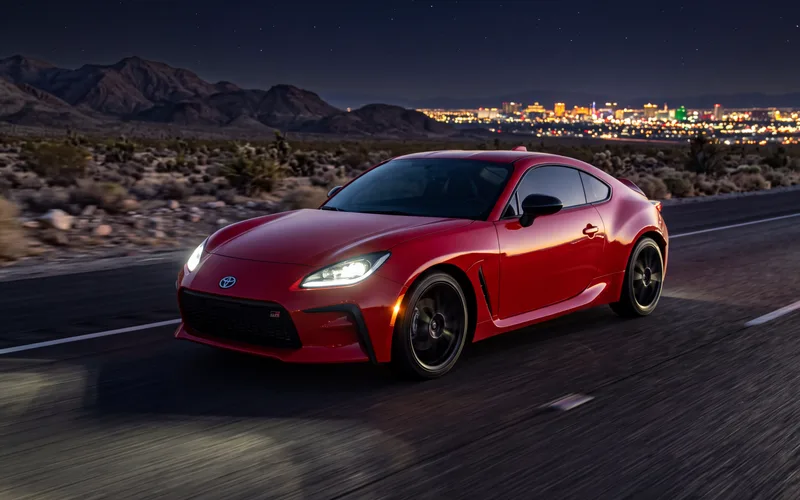 Toyota GR86Sports CarBetter at: Included maintenance
Mechanically the same car with two years of complimentary scheduled maintenance included, which the BRZ does not offer.
Compare 1.92C-
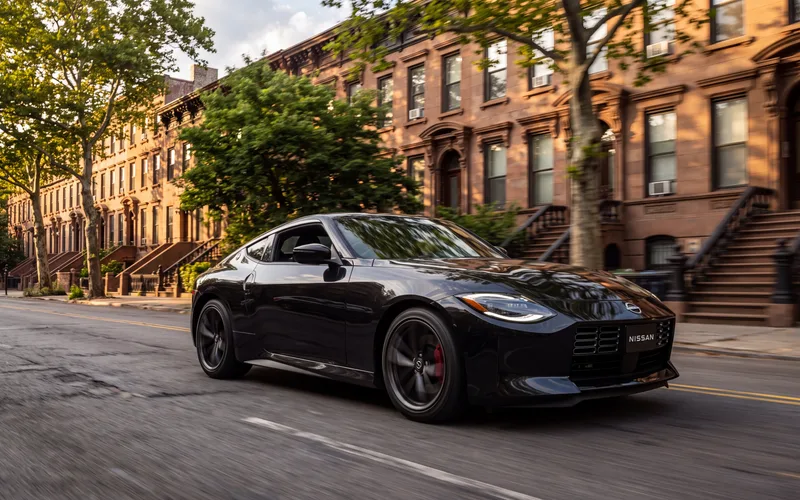 Nissan ZSports CarBetter at: Straight-line power
Twin-turbo V6 with 400 hp for buyers who find 228 hp and a 6.1-second 0–60 too modest.
Compare 2.47C+
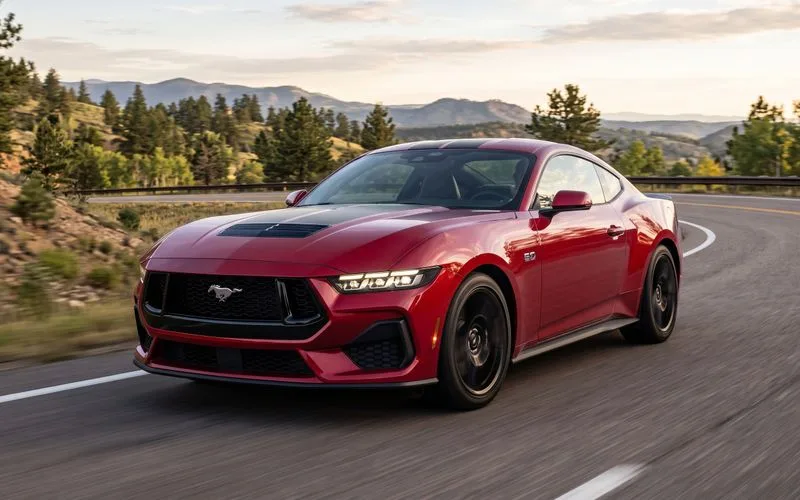 Ford MustangSports CarBetter at: Power and deals
V8 availability, a usable trunk, and real factory incentives, versus a BRZ that sells at sticker.
CompareHow it's evolved
9 scored model years · 2017–2026
Subject scores by year
Hover or tap a score to see what moved it versus the year before. A corner mark flags a big swing.
| Year | Performance | Efficiency | Safety | Space | Cost | Reliability | Tech | Use-case | Driving | Value |
|---|---|---|---|---|---|---|---|---|---|---|
| 2026 | 39 | 17 | 53 | 36 | 58 | 70 | 46 | 35 | 73 | 70 |
| 2025 | 39 | 11 | 59 | 35 | 71 | 72 | 42 | 33 | 76 | 72 |
| 2024 | 39 | 11 | 59 | 35 | 74 | 72 | 42 | 33 | 75 | 72 |
| 2023 | 43 | 9 | 53 | 33 | 78 | 63 | 40 | 27 | 75 | 68 |
| 2022 | 39 | 11 | 53 | 33 | 78 | 70 | 40 | 27 | 76 | 69 |
| 2020 | 33 | 15 | 27 | 35 | 68 | 73 | 32 | 28 | 75 | 51 |
| 2019 | 33 | 15 | 28 | 34 | 71 | 73 | 30 | 28 | 75 | 54 |
| 2018 | 33 | 15 | 40 | 33 | 78 | 57 | 24 | 28 | 75 | 60 |
| 2017 | 34 | 15 | 25 | 35 | 78 | 65 | 17 | 24 | 70 | 62 |
Compare two years
Best fit & conditions
Higher scores mean a better fit for that use case. Learn more about use-case fit →
Subject profile
Academic Probation · NHTSA safety recalls
No NHTSA safety recall is on record for the 2017 Subaru BRZ. Other model years of the BRZ have 3 — listed below.
3 recalls on other model years of the BRZ (2018–2019, 2022)
Aug 31, 2023Exterior lighting: turn signalThe rear turn signals may intermittently become inoperative.
Defect
Subaru of America, Inc. (Subaru) is recalling certain 2022 BRZ and Toyota GR86 vehicles. The rear turn signals may intermittently become inoperative.
Risk
Inoperative rear turn signals may not notify other drivers of a turning vehicle, increasing the risk of a crash.
Remedy
Dealers will replace both rear combination lamp assemblies, free of charge. Owner notification letters were mailed January 8, 2024. Subaru owners may contact Subaru's customer service at 1-844-373-6614. Toyota owners may contact Toyota customer service at 1-800-331-4331. Subaru's number for this recall is WRM-23.
NHTSA campaign 23V609000 ↗Manufacturer no. WRM-238,915 vehicles potentially affected (all models in the campaign)Owners notified Jan 8, 2024Filed by Subaru of America, Inc.Filed as BRZJul 29, 2021Fuel system, gasoline: delivery: fuel pumpThe low-pressure fuel pump inside the fuel tank may fail.
Defect
Subaru of America, Inc. (Subaru) is recalling certain 2019-2020 Ascent, 2018 Forester, 2018-2020 Impreza, Legacy, Outback, 2018-2019 BRZ, WRX, and Toyota 86 vehicles. The low-pressure fuel pump inside the fuel tank may fail.
Risk
Fuel pump failure can cause an engine stall while driving, increasing the risk of a crash.
Remedy
Dealers will replace the low-pressure fuel pump, free of charge. Owner notification letters were mailed September 24, 2021. Subaru and Toyota owners may call customer service at 1-844-373-6614. Subaru's number for this recall is WRG-21.
NHTSA campaign 21V587000 ↗Manufacturer no. WRG-21175,968 vehicles potentially affected (all models in the campaign)Owners notified Sep 24, 2021Filed by Subaru of America, Inc.Filed as BRZDec 31, 2018Visibility: rearview mirrors/devicesIn the affected vehicles, a software issue may cause the audio display system to not initialize, resulting in the camera display remaining blank. If this occurs, the rearview image will not display while backing up the vehicle. As a result, the vehicles fail to comply with requirements of Federal Motor Vehicle Safety (FMVSS) number 111, "Rearview Mirrors."
Defect
Subaru of America, Inc. (Subaru) is recalling certain 2018 Legacy, Outback, and BRZ vehicles. In the affected vehicles, a software issue may cause the audio display system to not initialize, resulting in the camera display remaining blank. If this occurs, the rearview image will not display while backing up the vehicle. As a result, the vehicles fail to comply with requirements of Federal Motor Vehicle Safety (FMVSS) number 111, "Rearview Mirrors."
Risk
Failure to display the rearview image while backing up increases the risk of crash.
Remedy
Subaru has notified owners, and dealers will reprogram the audio system display software, free of charge. The recall began on February 5, 2019. Owners may contact Subaru customer service at 1-844-373-6614. Subaru's number for this recall is WTZ-85.
NHTSA campaign 18V935000 ↗Manufacturer no. WTZ-8571,190 vehicles potentially affected (all models in the campaign)Owners notified Feb 5, 2019Filed by Subaru of America, Inc.Filed as BRZ
Source: NHTSA Office of Defects Investigation recall database, model years 2017–2026. Recalls are listed by model year as the manufacturer filed them; whether a specific car is affected depends on its VIN — check a VIN at nhtsa.gov ↗. NHTSA model names matched to this page: BRZ.
Detailed scoring by subject
1Performance & PowertrainGrades near the bottom of the scale.0.23F
2017 was a mid-cycle refresh year for the FA20 boxer four; manual-equipped cars gained a real power bump over 2016, automatic cars did not.
Torque rose alongside horsepower for manual-transmission 2017 BRZs as part of the same running change; peak torque still arrives high in the rev range for a naturally aspirated flat-four.
Instrumented tests of the 2017 manual BRZ cluster around the low-6-second range; no single flagship outlet's number could be independently re-verified this session, so this is corroborated across secondary aggregators rather than a single primary test.
The FA20 boxer is smooth and revs cleanly to its 7,400-rpm redline but is well documented for a flat spot in the midrange (roughly 3,000-4,500 rpm) that reviewers describe as needing to be worked past with the gearbox rather than a car that pulls hard everywhere.
The 6-speed manual (the volume/enthusiast choice) is consistently praised for a short, precise throw and well-chosen ratios that keep the engine in its narrow power band; the optional automatic is competent with paddle shifters but is the less-regarded choice on this car.
The BRZ is rear-wheel drive only across its entire 2017 lineup; Subaru never offered its Symmetrical AWD system on this model.
One engine only (2.0L naturally aspirated flat-four) across the whole range, with a choice of manual or automatic transmission but no turbo, hybrid, or electrified variant at any point in the 2017 lineup.
2Efficiency & RangeThe BRZ's lowest-graded category.0.00F
EPA figures for the 2017 BRZ split by transmission; the manual, as the volume/enthusiast choice, is the representative configuration.
EPA city figure for the manual transmission, the volume configuration.
EPA highway figure for the manual transmission, the volume configuration.
Computed from the corroborated 13.2-gallon fuel tank capacity and the manual's EPA combined MPG; the automatic's EPA-published 356-mile range (13.2 gal x 27 MPG) independently confirms the tank size used here.
fueleconomy.gov published $2,800/yr directly for the automatic trim at 27 MPG combined; the manual's figure is not separately published in the sources retrieved, so it is derived by scaling that EPA cost by the inverse MPG ratio (27/24) under the same premium-fuel, 15,000-mi/yr assumptions.
Subaru specifies premium unleaded for the FA20 boxer across the whole 2017 BRZ lineup; running on regular is possible but sacrifices the rated output, so premium is effectively required to get what's advertised.
3SafetyGrades near the bottom of the scale.0.00F
NHTSA tested the 2013-2020-generation BRZ's frontal and rollover performance but never completed a side-impact test, so no combined overall star rating exists for the 2017 model; frontal (4★) is used as the representative figure.
The 2017 BRZ (shared platform/ratings with the 2013-2020 generation) earned Good ratings in moderate overlap front, side, roof strength and head restraints, but only Acceptable in the small overlap front driver-side test (passenger-side untested), and IIHS did not name it a Top Safety Pick for 2017.
The first-generation BRZ never offered Subaru's EyeSight suite (it requires the CVT/electronic throttle integration EyeSight-era BRZ trims lacked) and had no AEB, lane keeping, adaptive cruise, blind-spot, or rear cross-traffic system on any 2017 trim.
No forward-collision warning or automatic emergency braking hardware was offered on the 2017 BRZ, so there is no AEB performance to rate.
Blind-spot monitoring and rear cross-traffic alert were not available on the 2017 BRZ at any trim level.
No lane departure warning or lane keep assist system was offered on the 2017 BRZ.
Adaptive cruise control was not offered on the 2017 BRZ; only conventional cruise control was available, and even that was limited by trim.
No hands-free highway driving system exists for this vehicle or generation.
IIHS had not evaluated the BRZ's headlights under its (then-new) headlight test program by the 2017 model year; the BRZ's volume trim used projector halogen low beams typical of the era, which generally scored Marginal-to-Acceptable when small/sporty cars were later tested, so a middling estimate is used absent a direct rating.
Reviewers and owners consistently cite the BRZ's thick rear pillars, short windows, and very low seating position as creating poor sightlines, especially over the shoulder and to the front corners.
IIHS rated the 2016-17 BRZ's LATCH ease-of-use as Poor, reflecting the 2+2 coupe's tight, hard-to-access rear anchors and minimal rear space for a child seat.
4Space & ComfortGrades near the bottom of the scale.0.31F
The BRZ is a 2+2 coupe with token rear seats behind the two front buckets, unchanged for the 2013-2020 generation the 2017 model belongs to.
Front headroom is unchanged from the 2013 launch spec for this generation; 2017 carried no interior packaging changes.
Front legroom is generous for a compact sports coupe, aided by the low-mounted seating position and long footwell.
Rear headroom figure is consistent across secondary spec aggregators for this generation; not independently cross-checked against a primary Subaru PDF this session.
29.9 in of rear legroom is consistently cited across every spec source for this generation and matches the car's reputation for essentially unusable adult rear seating.
Trunk volume is small even for a sports coupe, though the pass-through trunk plus folding rear seatbacks (a known enthusiast trick for carrying spare wheels/tires) extends usable space beyond the rated figure.
Storage is limited to modest door pockets, a small console box, and cupholders typical of a compact sports coupe; nothing distinguishes it as clever or generous, but the folding rear seatback for gear/wheels is a genuine practicality bonus.
Front seats are firm, well-bolstered and supportive on both trims, with reviewers noting they work for road trips as well as spirited driving, though some wanted more cushioning; the rear seats are not a factor in this rating given their token size.
Subaru retuned the suspension for 2017 (stiffer front springs, softer rear springs, thicker rear anti-roll bar, revised dampers) aiming to improve ride without hurting handling, but reviewers still describe the ride as busy and noisy over broken pavement despite the change.
Road and wind noise are noticeable at highway speed, consistent with the car's lightweight, low-sound-deadening construction prioritizing driving feel over isolation.
Heated front seats, heated mirrors and dual-zone automatic climate control are gated to the Limited trim's All-Weather package; the volume Premium trim has manual single-zone climate and no seat heating.
5Cost of OwnershipThe BRZ's best-graded category.3.27B+
Entry Premium trim with 6-speed manual is the cheapest 2017 BRZ configuration.
TrueCar sales-mix analysis identifies Premium as the most popular BRZ trim, ahead of the better-equipped Limited ($28,465–$29,565); enthusiast buyers skew toward the lighter, cheaper trim.
Simple naturally-aspirated boxer engine and manual-biased lineup keep both scheduled service and repair incidence low relative to the coupe band; RepairPal's separate per-year repair figure corroborates a below-average cost profile.
The BRZ/86 twins are consistently cited as unusually strong resale performers among sports coupes, holding value well above the segment's ~27% five-year depreciation norm; figure reflects the nameplate's depreciation curve rather than a 2017-specific study.
Standard Subaru basic new-vehicle limited warranty, sitting at the bottom of the segment band.
Standard Subaru powertrain coverage, at the bottom of the segment band versus the 10-year coverage offered by Hyundai/Kia rivals in other segments.
Subaru's 'Maintain the Love' program covers the first scheduled service visit (roughly the first year/12,000 miles) rather than multiple years, plus standard roadside assistance that runs concurrent with the 3-year basic warranty — a short included-maintenance window with no charging credits or extended connected-service trial.
$26,315 volume-trim price minus its estimated resale value after 5 years (76% retained, or about $19,999) leaves about $6,316 in depreciation. Add the projected $2,179 in 5-year maintenance and repairs, and owning this vehicle for 5 years costs about $8,495 in total.
6Reliability & QualityOne of the BRZ's strongest categories.2.40C+
Sources disagree sharply: Consumer Reports rated the BRZ/86 among its most reliable models for the era while J.D. Power's predicted-reliability rating for the 2017 BRZ came in below average at 2.5/5. Simple mechanicals (NA boxer, manual/auto gearbox, no turbo, minimal tech) support the CR view, but the split itself is the defining fact.
Subaru's two major dependability studies disagreed in 2017: J.D. Power's Vehicle Dependability Study put Subaru at 164 problems per 100 vehicles, worse than the 156 industry average, while Consumer Reports ranked the brand mid-pack (#6, improved 5 spots from 2016). Net is an average-to-mixed brand track record, not top-tier.
No NHTSA recall campaigns are on record for the 2017 model year specifically; only a modest 10 owner complaints were filed with no systemic pattern (the earlier fuel-pump and airbag-wiring campaigns on this platform predate the 2017 model year). Clean, minor recall record for this year.
The naturally aspirated FA20 2.0L boxer carried into 2017 has a well-documented reputation for above-normal oil consumption and piston-ring/cylinder-wall scoring under hard use, an issue Subaru addressed with revised piston rings partway through this platform's run but that owners and forums still report on. No transmission red flags for either the 6-speed manual or automatic. Net is a mixed-history powertrain, not a proven high-mileage design.
2017 brought a mid-cycle interior refresh adding soft-touch, stitched trim to the dash, door panels and console versus the harder plastics of 2013-2016, and the front seats are widely praised. Reviewers still note hard, low-rent plastics remain at secondary touch points, keeping this competitive for the price rather than class-leading.
Owner reports describe persistent interior rattles and buzzing speakers, weak-metal hardware (stripped wheel studs), and isolated tail-light/headlight-ballast failures on this generation. Subaru and Toyota reportedly concentrated the shared platform's budget in the drivetrain rather than overall assembly quality, consistent with scattered-to-frequent complaints rather than tight initial quality.
Subaru runs a dense, well-established US dealer network with adequate coverage nationwide, so parts and service access is not a practical barrier. Service satisfaction is only average per J.D. Power's 2017 dependability findings, and enthusiast sources note dealer techs (on both the Subaru and Toyota/Scion side of this joint platform) are not always well-versed in this specific engine, trimming this below top-tier.
The BRZ shares its entire drivetrain and most body parts with the Toyota 86/Scion FR-S, giving it an unusually large and mature aftermarket (Cusco, HKS, Perrin, AWE and others) plus OEM parts sourced from two manufacturers' supply chains. Routine maintenance costs are normal-for-class; this is a well-supported enthusiast platform.
7Technology & InfotainmentOne of the BRZ's weakest categories.0.00F
The 6.2-inch STARLINK touchscreen was standardized across the BRZ lineup starting with the 2016 running change and carried into 2017 unchanged.
The STARLINK 6.2" system pairs single-touch gesture control with physical buttons flanking the screen; it is functional but dated even for its era, with a sluggish, low-resolution interface reviewers considered a weak point relative to the car's driving experience.
Apple CarPlay and Android Auto were not available on the BRZ until the 2018 model-year update; the 2017 model has neither wired nor wireless smartphone projection.
2017 added a Magellan smartphone-app-based navigation option to STARLINK rather than a true embedded nav system, and voice control is limited to basic Bluetooth phone/audio commands rather than a natural-language assistant.
Six speakers are standard on the volume Premium trim with an adequate but unremarkable sound; a Harman Kardon amplifier/speaker upgrade is available only on the Limited trim.
The Premium (volume) trim uses a fully analog gauge cluster with only a small digital inset odometer/speedometer; the 4.2-inch performance LCD display (lap timer, G-meter, boost-style readouts) is Limited-trim only and still sits alongside analog primary gauges rather than replacing them.
The 2017 STARLINK system has no over-the-air update capability of any kind; software and map updates, where they existed, required a physical connection or dealer visit.
No dedicated smartphone companion app with remote start, lock, or locate functions was offered for the 2017 BRZ; STARLINK at this point was limited to in-car multimedia/cloud apps (iHeartRadio, Pandora, Aha), not vehicle remote control.
The BRZ offers a single USB port plus an auxiliary input jack for the whole cabin, with no USB-C, no wireless charging pad, and no household-style outlet at any trim.
Proximity keyless entry and push-button start are exclusive to the Limited trim; the volume Premium trim uses a traditional key and lock cylinder.
A rearview camera is standard across both 2017 trims, but there are no front or rear parking sensors and no surround-view option at any trim level.
No head-up display was offered on any 2017 BRZ trim; this generation never added the feature at any point in its production run.
8Use-Case FitOne of the BRZ's weakest categories.0.00F
IIHS rated the rear LATCH anchors Poor to use, and the token 29.9-inch rear legroom behind a low, narrow door opening makes installing or accessing a child seat genuinely difficult day to day.
No ADAS features (AEB, blind-spot, lane keeping, adaptive cruise) were offered at any price point on the 2017 BRZ, and NHTSA never completed a full crash-test suite, leaving a thin safety proposition for family use.
With only token rear seating, no rear climate vents or entertainment, and a 6.9 cu ft trunk, the BRZ cannot meaningfully carry a family plus luggage on a multi-hour trip.
The manual gearbox and firm clutch take some effort in stop-and-go traffic, and low seating with thick pillars hurts sightlines, but the compact footprint and light weight keep it from being genuinely tiring to drive daily.
EPA-rated 24/33/27 mpg city/highway/combined is reasonable for a sports coupe, but Subaru specifies premium fuel, which raises real per-mile cost above what the mpg figures alone suggest.
At 166.7 inches long with a 35.4-ft turning diameter, the BRZ is easy to place and park in tight urban spaces, though thick rear pillars and a low seating position make judging corners by eye harder than the footprint alone would suggest.
The BRZ has no tow rating, no payload capacity to speak of, and a 6.9 cu ft trunk — it offers essentially nothing for work or hauling duty.
The FA20 drivetrain is mechanically simple and Subaru builds it to reasonable durability standards, but nothing about the car's low-slung body, performance tires, or interior materials is suited to work abuse, and it has no fleet-use track record.
There are no tie-downs, onboard power outlets, rack provisions, or upfit ecosystem of any kind for this two-door sports coupe.
Front seats hold up reasonably well over distance, but elevated road/wind noise, a firm ride, and no adaptive cruise or driver-assist to ease fatigue limit the BRZ as a mile-eater.
Rear-wheel drive only, low ground clearance, and summer-biased performance tires make the BRZ pavement-bound with no meaningful off-road or foul-weather capability.
The 6.9 cu ft trunk is small, but a folding rear seatback and a pass-through opening — well known among enthusiasts for swallowing a spare set of wheels and tires — give it more flexibility than the raw trunk figure implies.
9Driving ExperienceOne of the BRZ's strongest categories.2.72B-
Low center of gravity from the flat-four boxer, near-50/50 weight balance, and a 2017 suspension retune (stiffer front springs, softer rear springs, thicker rear anti-roll bar) are consistently praised as class-leading agility for an affordable RWD sports coupe.
The electric power steering is well-weighted and precise, widely regarded as one of the better EPAS tunes of its era for communicating road feel, though not quite hydraulic-rack sharp.
Brakes offer good pedal feel for spirited street driving but modest-sized rotors are known to fade under sustained track use; adequate rather than outstanding for everyday confidence.
The manual gearbox shifts with a short, precise, well-praised throw, but the naturally aspirated FA20 has a well-documented flat spot in the midrange that requires active gear selection to keep it in its narrow power band.
The boxer engine has a distinctive, enthusiast-approved burble at idle and under load, but it turns coarse and raspy near redline and transmits noticeable vibration through the pedals and shifter — inoffensive rather than refined.
A tight turning diameter for a coupe, consistent across all 2017 BRZ trims and aiding low-speed maneuverability.
The low, snug driving position is prized by enthusiasts for its connection to the car and good pedal/shifter placement for a manual, but ingress/egress is a stretch given the low ride height, and outward visibility over the shoulder is compromised by thick pillars.
The BRZ is near-universally recommended by enthusiast and mainstream press alike as one of the purest, most engaging affordable sports cars on sale, its 2017 suspension and power updates only reinforcing that reputation.
10Value & Market PositionMid-pack among this car's ten categories.2.17C
For $26,315 the base Premium already includes a limited-slip differential, 6.2-in STARLINK touchscreen with smartphone integration, rear-vision camera, and 17-in alloys — real sports-car hardware rivals like the Mustang/Camaro V8 or GR Supra don't offer until well above this price.
The BRZ's reputation is built almost entirely on handling-per-dollar: a 205-hp NA boxer, RWD, near-50/50 balance and standard LSD deliver a driving experience contemporary reviewers repeatedly framed as punching above its price, even after the modest 2017 power bump.
Just two regular trims (Premium, Limited), one body style, one engine, and the 6-speed automatic gated to Limited only; the Series.Yellow special edition (500 units) doesn't broaden the ongoing lineup. Take-it-or-leave-it by segment standards.
US sales were on a steady multi-year decline through the 2017 model year as the sports-coupe segment shrank — a slow seller relative to the broader market, though not unusual for a low-volume enthusiast coupe.
Subaru carries a strong, loyal following built on reliability and value rather than prestige; the BRZ itself has an enthusiast cult status (Car and Driver 10Best in its 2013 debut year) that lifts the nameplate's image above the parent brand's mainstream perception.
As a low-volume niche coupe the BRZ isn't heavily discounted, but softening demand by 2017 (sales down from the 2015 peak) gave buyers modest negotiating room rather than at-or-over-MSRP pricing.
2017 is a mid-cycle refresh of the first-generation (2013–2020) platform — revised styling, retuned suspension, and a power bump to 205 hp on manual cars — current and improved, but the underlying platform is four model years old with no full redesign.
Reviewers praised the 2017 refresh's chassis and steering but were lukewarm on the power increase feeling incremental rather than transformative ('Better, Not Best'); well-regarded within its niche but not a comparison-test winner in 2017 the way the debut 2013 car was.