

The verdict
A struggling sports car, strong on ownership and held back by efficiency.
The 2018 Subaru BRZ is a purist's sports car that spends its entire budget on the way it drives. For $26,455 you get rear-wheel drive, a Torsen limited-slip differential, one of the best manual shifters at any price, and a chassis that reviewers still use as the affordable-handling benchmark — and it holds roughly 76% of its value after five years while costing about $2,179 in maintenance over that span. What you give up is nearly everything else: 205 hp that only shows up above 5,000 rpm, 24 MPG combined on required premium fuel, a 6.9 cu ft trunk, a 6.2-inch screen with no Apple CarPlay on the volume trim, and zero driver-assist features because EyeSight was never offered on the BRZ this generation. Buy it as a second car or a single-person daily driver you'll enjoy every commute in — not as your only vehicle.
Jump to scoresStrengths
- One of the best-handling cars at any price, let alone $26K
- It barely depreciates and it barely costs anything to keep
- Genuine sports-car hardware at a compact-sedan price
What holds it back
- No driver-assist features at all — not even on the top trim
- Almost no cargo or passenger room
- Mediocre fuel economy on required premium gas
Top alternatives
Cars shoppers cross-shop with the Subaru BRZ 1.93C-
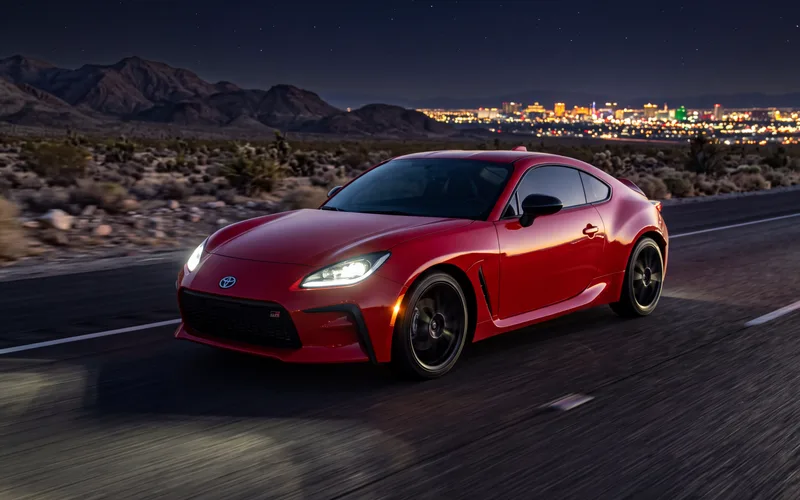 Toyota GR86Sports CarBetter at: Included maintenance
Mechanically the same car with two years of complimentary scheduled maintenance included, which the BRZ does not offer.
Compare 1.92C-
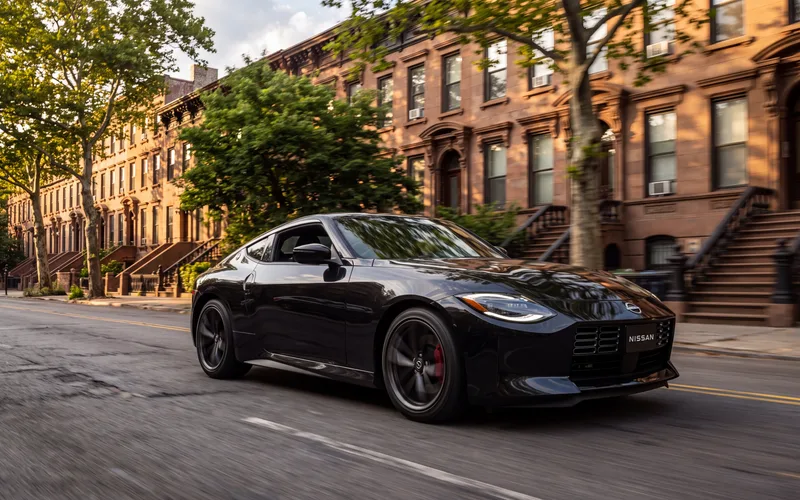 Nissan ZSports CarBetter at: Straight-line power
Twin-turbo V6 with 400 hp for buyers who find 228 hp and a 6.1-second 0–60 too modest.
Compare 2.47C+
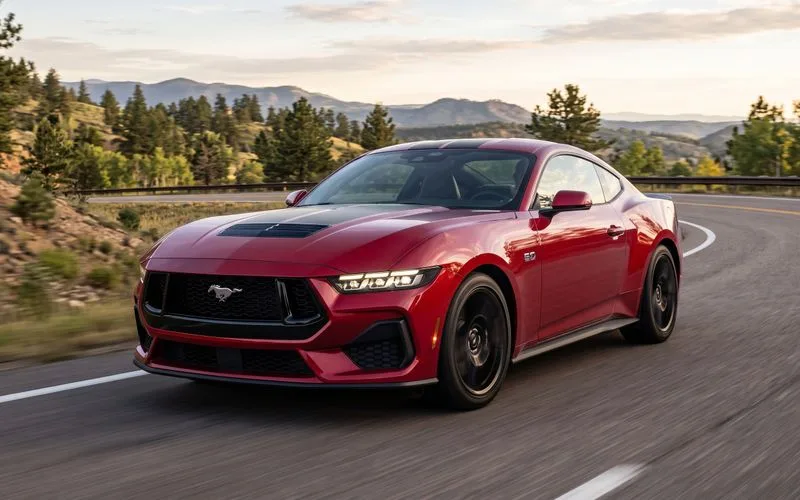 Ford MustangSports CarBetter at: Power and deals
V8 availability, a usable trunk, and real factory incentives, versus a BRZ that sells at sticker.
CompareHow it's evolved
9 scored model years · 2017–2026
Subject scores by year
Hover or tap a score to see what moved it versus the year before. A corner mark flags a big swing.
| Year | Performance | Efficiency | Safety | Space | Cost | Reliability | Tech | Use-case | Driving | Value |
|---|---|---|---|---|---|---|---|---|---|---|
| 2026 | 39 | 17 | 53 | 36 | 58 | 70 | 46 | 35 | 73 | 70 |
| 2025 | 39 | 11 | 59 | 35 | 71 | 72 | 42 | 33 | 76 | 72 |
| 2024 | 39 | 11 | 59 | 35 | 74 | 72 | 42 | 33 | 75 | 72 |
| 2023 | 43 | 9 | 53 | 33 | 78 | 63 | 40 | 27 | 75 | 68 |
| 2022 | 39 | 11 | 53 | 33 | 78 | 70 | 40 | 27 | 76 | 69 |
| 2020 | 33 | 15 | 27 | 35 | 68 | 73 | 32 | 28 | 75 | 51 |
| 2019 | 33 | 15 | 28 | 34 | 71 | 73 | 30 | 28 | 75 | 54 |
| 2018 | 33 | 15 | 40 | 33 | 78 | 57 | 24 | 28 | 75 | 60 |
| 2017 | 34 | 15 | 25 | 35 | 78 | 65 | 17 | 24 | 70 | 62 |
Compare two years
Best fit & conditions
Higher scores mean a better fit for that use case. Learn more about use-case fit →
Subject profile
Academic Probation · NHTSA safety recalls
Jul 29, 2021Fuel system, gasoline: delivery: fuel pumpThe low-pressure fuel pump inside the fuel tank may fail.
Defect
Subaru of America, Inc. (Subaru) is recalling certain 2019-2020 Ascent, 2018 Forester, 2018-2020 Impreza, Legacy, Outback, 2018-2019 BRZ, WRX, and Toyota 86 vehicles. The low-pressure fuel pump inside the fuel tank may fail.
Risk
Fuel pump failure can cause an engine stall while driving, increasing the risk of a crash.
Remedy
Dealers will replace the low-pressure fuel pump, free of charge. Owner notification letters were mailed September 24, 2021. Subaru and Toyota owners may call customer service at 1-844-373-6614. Subaru's number for this recall is WRG-21.
NHTSA campaign 21V587000 ↗Manufacturer no. WRG-21175,968 vehicles potentially affected (all models in the campaign)Owners notified Sep 24, 2021Filed by Subaru of America, Inc.Filed as BRZDec 31, 2018Visibility: rearview mirrors/devicesIn the affected vehicles, a software issue may cause the audio display system to not initialize, resulting in the camera display remaining blank. If this occurs, the rearview image will not display while backing up the vehicle. As a result, the vehicles fail to comply with requirements of Federal Motor Vehicle Safety (FMVSS) number 111, "Rearview Mirrors."
Defect
Subaru of America, Inc. (Subaru) is recalling certain 2018 Legacy, Outback, and BRZ vehicles. In the affected vehicles, a software issue may cause the audio display system to not initialize, resulting in the camera display remaining blank. If this occurs, the rearview image will not display while backing up the vehicle. As a result, the vehicles fail to comply with requirements of Federal Motor Vehicle Safety (FMVSS) number 111, "Rearview Mirrors."
Risk
Failure to display the rearview image while backing up increases the risk of crash.
Remedy
Subaru has notified owners, and dealers will reprogram the audio system display software, free of charge. The recall began on February 5, 2019. Owners may contact Subaru customer service at 1-844-373-6614. Subaru's number for this recall is WTZ-85.
NHTSA campaign 18V935000 ↗Manufacturer no. WTZ-8571,190 vehicles potentially affected (all models in the campaign)Owners notified Feb 5, 2019Filed by Subaru of America, Inc.Filed as BRZ
1 recall on other model years of the BRZ (2022)
Aug 31, 2023Exterior lighting: turn signalThe rear turn signals may intermittently become inoperative.
Defect
Subaru of America, Inc. (Subaru) is recalling certain 2022 BRZ and Toyota GR86 vehicles. The rear turn signals may intermittently become inoperative.
Risk
Inoperative rear turn signals may not notify other drivers of a turning vehicle, increasing the risk of a crash.
Remedy
Dealers will replace both rear combination lamp assemblies, free of charge. Owner notification letters were mailed January 8, 2024. Subaru owners may contact Subaru's customer service at 1-844-373-6614. Toyota owners may contact Toyota customer service at 1-800-331-4331. Subaru's number for this recall is WRM-23.
NHTSA campaign 23V609000 ↗Manufacturer no. WRM-238,915 vehicles potentially affected (all models in the campaign)Owners notified Jan 8, 2024Filed by Subaru of America, Inc.Filed as BRZ
Source: NHTSA Office of Defects Investigation recall database, model years 2017–2026. Recalls are listed by model year as the manufacturer filed them; whether a specific car is affected depends on its VIN — check a VIN at nhtsa.gov ↗. NHTSA model names matched to this page: BRZ.
Detailed scoring by subject
1Performance & PowertrainGrades near the bottom of the scale.0.18F
The 2018 BRZ carries over the FA20 2.0L boxer-4 output from the 2017 mid-cycle refresh unchanged: 205 hp at 7,000 rpm with the manual, 200 hp with the automatic (both require premium fuel).
Manufacturer figure for the FA20 boxer-4 with the manual transmission, unchanged for 2018; automatic trims are slightly lower due to fuel-map differences.
Published tests for this unchanged first-generation chassis/engine (2017-2020 spec) span roughly 5.4-6.7 sec for the manual depending on source and driver technique, so this is a consensus middle estimate rather than a single definitive test.
The FA20 boxer revs sweetly and sounds distinctive near redline, but reviewers consistently flag a flat, torque-poor midrange that demands high revs to access what power there is — a well-documented criticism of this generation shared with the mechanically identical Toyota 86, unchanged for 2018.
The 6-speed manual (the volume/enthusiast choice) is widely praised for short, precise, mechanical-feeling throws — one of the better manual shifters in its class; the optional automatic is competent but uninvolving and slower to respond.
The BRZ is deliberately rear-wheel-drive only across its entire trim range — unlike nearly every other Subaru, no AWD variant has ever been offered, in favor of balance and drift-friendly handling.
A single naturally-aspirated 2.0L flat-4 is the only engine offered across the range, paired with just two transmission choices (6-speed manual or automatic) — no turbo, hybrid, PHEV or EV variant exists for this nameplate.
2Efficiency & RangeThe BRZ's lowest-graded category.0.00F
EPA-rated combined figure for the manual transmission, the volume/enthusiast-preferred configuration for this nameplate, unchanged from the prior model year.
EPA city rating for the manual transmission.
EPA highway rating for the manual transmission.
Directly listed by fueleconomy.gov for the manual transmission, consistent with the EPA combined MPG times the manufacturer-specified 13.2-gallon fuel tank.
EPA's standard-assumption annual fuel cost estimate for the manual transmission, which factors in the premium-fuel requirement.
Premium unleaded is required (not just recommended) across every 2018 BRZ trim, adding a real ongoing cost premium over a regular-fuel rival.
3SafetyGrades near the bottom of the scale.0.62F
NHTSA's own API shows the 2018 BRZ as 'Not Rated' overall because side-impact was not retested that year, but frontal (4 stars) and rollover (5 stars) were tested and the identical first-generation platform earned a full 5-star overall rating in 2014-2016 testing.
Good ratings in moderate overlap front, side, roof strength, and head restraints, but only Acceptable in the small-overlap front test, which disqualified it from any Top Safety Pick award for 2018 (Subaru's other 2018 models earned TSP+, but the BRZ was explicitly excluded).
Subaru's EyeSight suite (AEB, ACC, lane-keep) was offered across the 2018 lineup except the BRZ — EyeSight requires an electronically controlled throttle/brake pairing Subaru didn't certify for the BRZ's manual-heavy lineup, so no trim, including top Limited, offered any camera-based driver-assist suite. Only standard-in-class electronic stability control is present.
No AEB system was offered at any trim in 2018, so IIHS could not run a front crash prevention test at all.
Blind-spot monitoring and rear cross-traffic alert were not offered on any 2018 BRZ trim, including the range-topping Limited — Subaru didn't add BSM/RCTA to the BRZ lineup until later model years.
No lane departure warning or lane-keep assist hardware existed on the 2018 BRZ since it lacked EyeSight entirely, the system that carries Subaru's lane-keeping function.
The BRZ Limited included conventional (non-adaptive) cruise control with steering-wheel controls as standard, but no radar-based adaptive cruise or highway-assist feature was available at any price point.
No hands-free highway driving system of any kind existed on the 2018 BRZ or its era of Subaru products.
LED headlights were standard across the 2018 BRZ range, but IIHS did not publish a headlight rating for the 2018 model year, and at least one owner/reviewer account describes the low-beam aim as unusually low, so this is scored conservatively pending a tested figure.
Reviewers consistently credit the BRZ's low beltline, slim roof pillars and glassy greenhouse with better-than-typical outward vision for a low-slung sports coupe, though the low seating position and thick rear roof pillars still create some rear-quarter blind spots.
The 2+2 rear seats carry proper lower anchors and top-tether points and two forward-facing child seats fit relatively easily according to a family-car review, but the lower anchors are buried in the seat cushions and require noticeable force to latch, and the tiny rear seats limit which seats and passengers can realistically ride there.
4Space & ComfortGrades near the bottom of the scale.0.17F
The BRZ is a 2+2 coupe — nominally 4 seats, but the rear pair is emergency-use only, unchanged for the 2017-2020 facelift generation that 2018 belongs to.
Low, sports-coupe-typical front headroom given the low roofline — at the bottom of the coupe band.
Mid-pack front legroom for the coupe segment.
Rear headroom is adequate for the token 2+2 layout, mid-pack against other coupes.
29.9 in of rear legroom is tight in absolute terms but roughly mid-pack against other 2+2 coupes with similarly token rear seats.
Small trunk typical of a low-slung rear-drive sports coupe, near the bottom of the coupe band.
Small door pockets, a modest console bin, and a small glovebox; no standout storage features. The rear seatbacks fold to extend the trunk, which is the one practical trick.
The volume Premium trim's cloth front seats with red stitching are supportive and well-bolstered for spirited driving but firmly padded, with less adjustability and no heating (heated Alcantara/leather seats are Limited-only); rear seats are unusable for adults beyond very short stints.
Ride is stiff and busy over broken pavement — a deliberate trade-off for sharp handling, criticized by reviewers as choppy on rough roads. Unchanged suspension tune for this generation.
Minimal sound deadening lets in road, wind, and boxer-engine noise at highway speed — typical for an affordable rear-drive sports coupe, unchanged for 2018.
The volume Premium trim gets only manual single-zone A/C and no heated seats for 2018 — dual-zone automatic climate control and dual-mode heated front seats are reserved for the pricier Limited trim, so the car most buyers actually get is comfort-feature-light.
5Cost of OwnershipThe BRZ's best-graded category.3.32B+
Entry Premium trim with 6-speed manual is the base configuration for the 2018 model year.
Premium is the higher-volume BRZ trim as a value-focused sports coupe; Limited adds ~$2,850 for leather/Alcantara, nav, and CarPlay/Android Auto (new for 2018).
Naturally aspirated flat-four with no turbo/hybrid complexity keeps routine costs low; figure is Edmunds' TCO estimate for the 2018 BRZ.
The BRZ has the best resale value of any Subaru model and holds value notably better than the sports-car segment average (which loses ~27% over 5 years).
Industry-standard basic coverage, at the low end of the segment band; rivals like Hyundai/Kia offer materially longer basic coverage.
Standard Subaru powertrain term, at the low end of the segment band.
Subaru does not bundle complimentary scheduled maintenance (unlike Toyota/Hyundai peers), but new BRZs include 3-year/36,000-mile roadside assistance as part of the basic warranty term — basic roadside coverage only, no included service visits.
$26,455 volume-trim price minus its estimated resale value after 5 years (76% retained, or about $20,106) leaves about $6,349 in depreciation. Add the projected $2,179 in 5-year maintenance and repairs, and owning this vehicle for 5 years costs about $8,528 in total.
6Reliability & QualityMid-pack among this car's ten categories.1.85C-
J.D. Power gave the 2018 BRZ 3.0/5 for predicted reliability (average, vs. Toyota 86's 3.5/5 on the same platform), but the naturally aspirated FA20, no-turbo layout and simple RWD drivetrain have also earned the BRZ/86 twins outside praise for durability, including a #2 spot on a 'most reliable cars' ranking — signals are mixed rather than uniformly strong.
Subaru placed in the bottom quartile of all automakers in J.D. Power's 2018 Vehicle Dependability Study at 167 PP100 (industry average 142), sliding behind Mazda, Acura and Nissan that year and finishing just ahead of Mitsubishi, Cadillac, Jeep, Fiat, Land Rover and Chrysler.
The 2018 BRZ carries two NHTSA campaigns: a rearview-camera software fix (18V935000, screen could go blank) and a low-pressure fuel pump replacement (21V587000, can cause engine stall) — the latter is safety-relevant but limited to one component, not a systemic or powertrain-wide issue; the earlier valve-spring recall was confined to 2012-2013 cars and does not touch this model year.
The FA20 2.0L boxer paired with a 6-speed manual is mechanically simple (no turbo) and the 2017 refresh generation the 2018 BRZ belongs to addressed most of the oil-consumption and ring-land issues that dogged 2013-2016 cars; excessive oil use under hard/track driving is still a documented owner complaint, keeping it short of a fully clean record.
The 2017 refresh (carried into 2018) added soft-touch, stitched trim to the dash, door panels and center console in place of the earlier hard plastic, and a larger 6.2-7.0-inch touchscreen was added — an improvement, but lower-touch surfaces remain plasticky and materials trail luxury-badged coupe rivals in this comparison set.
As a low-volume, Toyota-co-engineered coupe built on a dedicated line at Subaru's Gunma plant, the BRZ has no notable pattern of rattles, panel-gap or assembly complaints in owner/press coverage — solid, unremarkable assembly typical of the platform.
Subaru's US network of roughly 640 dealers gives adequate nationwide coverage, though the brand's J.D. Power Customer Service Index standing in the 2018 era was mid-pack rather than the top ranking Subaru would later earn in the 2020s.
RepairPal pegs BRZ average annual repair cost at $672 (about average) but rates overall reliability 3.0/5, ranking it 20th of 21 in its comparison set, noting repairs are average in frequency but more likely to be severe when they occur; the shared FA20/86 platform does carry a large aftermarket for parts.
7Technology & InfotainmentOne of the BRZ's weakest categories.0.00F
The 2018 BRZ Premium carries a 6.2-inch STARLINK Multimedia touchscreen — below the floor of the coupe band; only the pricier Limited steps up to a 7.0-inch navigation-equipped unit.
The volume trim's smaller, nav-less 6.2-inch STARLINK unit is dated even by 2018 standards — small screen, basic graphics, and no smartphone-projection integration to fall back on.
Apple CarPlay and Android Auto (wired only, no wireless projection on any trim) are confined to the Limited trim's 7-inch navigation unit; the volume Premium trim has no CarPlay/Android Auto at all, relying instead on Pandora/Aha/iHeartRadio/Stitcher app integration through its 6.2-inch screen.
Native TomTom-based navigation and voice-activated controls are exclusive to the Limited's 7-inch unit for 2018; the volume Premium trim has neither native nav nor voice control, only basic Bluetooth audio/phone functions.
The Premium trim's 8-speaker system with SiriusXM All-Access Radio and HD Radio is a reasonable step up from a bare 4-speaker setup, but it is an unbranded in-house system, not a named premium audio partner (no branded premium audio option was found for the 2018 BRZ).
The volume Premium trim retains a conventional analog gauge cluster; the 4.2-inch digital LCD multi-function display with lap-timer and performance data (lateral-g, brake force) is a Limited-trim exclusive for 2018.
No over-the-air update capability is documented for the 2018 STARLINK system — Subaru's press materials introduce Wi-Fi-based OTA updates (Tune Mix, Sports Flash) as new for the following 2019 model year, implying the 2018 unit lacked it.
No evidence of a STARLINK Connected Services subscription (remote lock/start/locate) being offered on the 2018 BRZ; Subaru's connected-services push at this time was concentrated on its SUV/sedan lineup.
Only dual legacy USB-A ports are provided across trims, with no USB-C, no wireless charging pad, and no rear-seat charging (rear seats being nominal anyway).
The volume Premium trim gets only conventional remote keyless entry — proximity 'Keyless Access with Push-Button Start' is a Limited-trim exclusive for 2018, so most buyers still turn a key.
A standard rear-vision camera on both trims is the extent of parking assistance — no front/rear parking sensors and no surround-view option for 2018.
No head-up display is offered on any 2018 trim, including the newly added tS.
8Use-Case FitOne of the BRZ's weakest categories.0.00F
Two-door access, a tiny rear-seat opening, and 29.9 in of rear legroom make car-seat installation and daily loading of kids genuinely difficult — usable only for an infant seat in a pinch.
IIHS crashworthiness is solid (Good in moderate overlap, side, roof, head restraints; Acceptable in small-overlap front), but the 2018 BRZ offers no EyeSight or any driver-assist system on either trim — front crash prevention is rated 'not available.'
A 2-door layout, near-unusable rear seats, and a 6.9 cu ft trunk leave no realistic multi-occupant road-trip capability.
Compact footprint and light controls make it easy to place in traffic, but the firm, busy ride and available manual gearbox add some fatigue on a stop-and-go commute versus a typical commuter car.
EPA-rated 24 mpg combined (manual) / 27 mpg combined (automatic) for a naturally aspirated 2.0L sports coupe is about average for its class, though it requires premium fuel; modest insurance and maintenance costs for a mainstream-badged car.
Small overall footprint, a tight 35.4 ft turning circle, and a standard rearview camera make it easy to park and thread through the city.
No towing rating, negligible cargo capacity, and low ground clearance (4.9 in) leave it with essentially no work capability.
Not a work-context vehicle at all — a low-slung sports coupe with no fleet/work-duty track record; scored low simply because this use case is inapplicable rather than because of any specific fragility.
No tie-downs, no bed, no upfit ecosystem, and negligible cargo space — there are no work-oriented provisions of any kind.
Supportive front seats and a 13.2-gal tank give roughly 300+ mile range, but the firm ride, road noise, and complete absence of adaptive cruise or driver-assist features hurt highway fatigue over long hauls.
Rear-wheel drive only, low 4.9 in ground clearance, and no roof-rack or towing provisions make it pavement-bound with essentially no outdoor utility.
60/40 split-folding rear seatbacks extend the small trunk for longer items, but the 6.9 cu ft trunk and lack of roof rails cap what it can realistically carry.
9Driving ExperienceOne of the BRZ's strongest categories.3.10B
A near-50/50 weight distribution, low center of gravity, and light curb weight (2,789-2,842 lbs) give it agile, composed turn-in with minimal body lean — a benchmark for affordable rear-drive sports coupes.
A quick 13.12:1 steering ratio delivers direct, well-weighted, communicative feedback that reviewers repeatedly single out as a highlight.
Reviewers describe strong, linear stopping power with good pedal feel on the standard 11.6 in front / 11.4 in rear disc brakes; the tS and optional Performance Package add Brembo calipers for further stopping power, but that's not the volume trim.
The naturally aspirated 2.0L boxer is smooth-revving but has a well-documented torque dip in the midrange that reviewers note disrupts otherwise linear response.
The flat-four has a distinctive, characterful growl that enthusiasts enjoy, though it becomes coarse and thrashy near redline — audible but not offensive in daily use.
A tight 35.4 ft turning circle is near the good end of the coupe band (lower is better).
Low, well-bolstered seating and a tight control layout suit the sports-car mission well, though the low roofline and small windows create some visibility compromises for taller or shorter drivers.
Widely regarded by enthusiast press as one of the most engaging, purely fun affordable sports cars on sale — the car's entire reason for being, reinforced by the mid-2018 addition of the track-focused tS special edition.
10Value & Market PositionOne of the BRZ's strongest categories.2.05C
Base Premium trim includes LED headlights, a Torsen limited-slip diff, 17-in wheels, and a 6.2-in touchscreen, but lacks Apple CarPlay/Android Auto (added only to the Limited for 2018) and heated seats — competitive but not loaded for the price.
A sub-$27K starting price for a front-engine, RWD, limited-slip-diff sports coupe with genuinely sharp chassis tuning is the segment's standout bang-for-buck proposition, shared with its Toyota 86 twin.
Two mainstream trims (Premium, Limited) each with manual or automatic (Limited only), plus a limited-production tS special edition — a workable but narrow spread with no true base-stripper or dramatically higher-performance factory variant.
US sales continued a steady multi-year decline, down to roughly 3,800 units for 2018 versus a 2013 launch-year peak near 8,600 — a slow seller even by niche-sports-coupe standards.
Subaru carries a strong, loyal following built on AWD/safety-focused models, but the rear-drive BRZ sits outside that core identity, so the halo is real but only partially transfers to this model.
As a low-volume specialty coupe, BRZ typically saw modest rather than aggressive discounting in period — some negotiating room existed given soft sales, but not fire-sale pricing.
2018 is year six of the first-generation ZC6 (launched for MY2013), past its mid-cycle refresh (2017 styling/LED update) and gaining CarPlay/Android Auto on Limited — current but clearly not cutting-edge, with the redesigned platform still four years out.
Consistently praised by enthusiast press for steering feel and chassis balance and a frequent pick for driver-focused-handling honors, but it rarely wins outright comparison tests against higher-powered rivals like the Mustang GT or Camaro due to its modest 205-hp output.