

The verdict
A struggling sports car, strong on ownership and held back by efficiency.
The 2022 BRZ is the first year of an all-new car, and Subaru spent the redesign budget in exactly one place: how it drives. A 228 hp 2.4-liter boxer, a body 50% stiffer than before, a near-perfect 53/47 balance and one of the best six-speed manuals sold at any price make it a benchmark driver's car for $28,990 out the door. What it is not is a car that does anything else — 22 MPG on required premium fuel, a 6.3 cu ft trunk, rear seats no adult will sit in, and no driver-assist safety features at all unless you give up the manual for the automatic. Buy it as a second car or as a single-person car you love driving; it is a poor fit for anything with a passenger list.
Jump to scoresStrengths
- One of the best-driving cars you can buy for under $30,000
- Holds its value and barely costs anything to maintain
- Base trim is the good one — you are not upsold into the fun
What holds it back
- Thirsty, and it demands premium fuel
- Almost no room for people or things
- Choosing the manual means choosing zero driver-assist safety
Top alternatives
Cars shoppers cross-shop with the Subaru BRZ 1.93C-
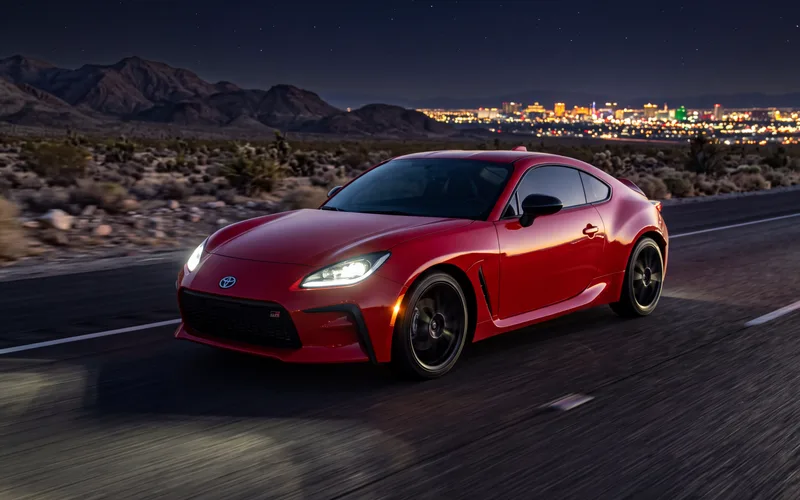 Toyota GR86Sports CarBetter at: Included maintenance
Mechanically the same car with two years of complimentary scheduled maintenance included, which the BRZ does not offer.
Compare 1.92C-
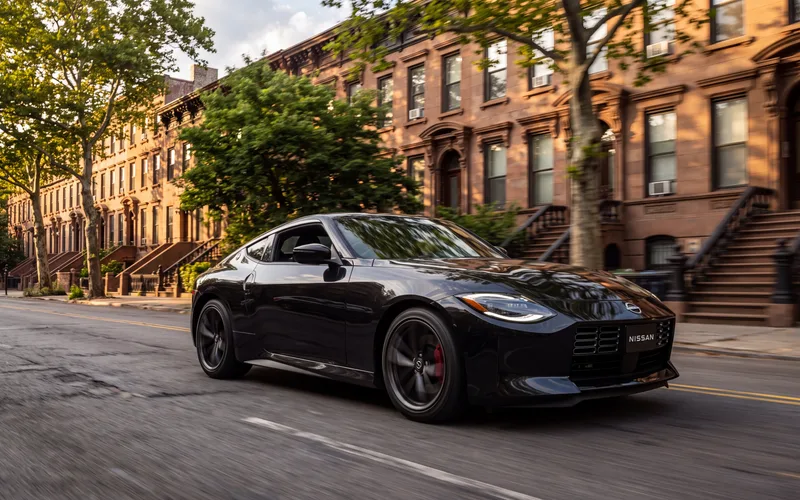 Nissan ZSports CarBetter at: Straight-line power
Twin-turbo V6 with 400 hp for buyers who find 228 hp and a 6.1-second 0–60 too modest.
Compare 2.47C+
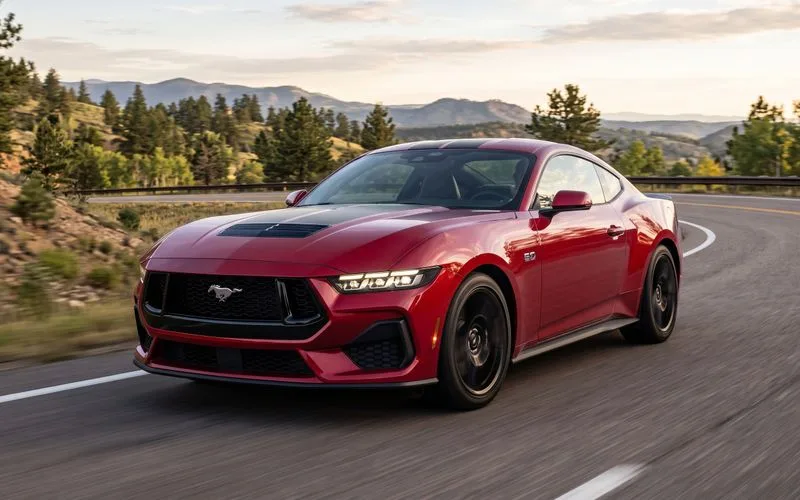 Ford MustangSports CarBetter at: Power and deals
V8 availability, a usable trunk, and real factory incentives, versus a BRZ that sells at sticker.
CompareHow it's evolved
9 scored model years · 2017–2026
Subject scores by year
Hover or tap a score to see what moved it versus the year before. A corner mark flags a big swing.
| Year | Performance | Efficiency | Safety | Space | Cost | Reliability | Tech | Use-case | Driving | Value |
|---|---|---|---|---|---|---|---|---|---|---|
| 2026 | 39 | 17 | 53 | 36 | 58 | 70 | 46 | 35 | 73 | 70 |
| 2025 | 39 | 11 | 59 | 35 | 71 | 72 | 42 | 33 | 76 | 72 |
| 2024 | 39 | 11 | 59 | 35 | 74 | 72 | 42 | 33 | 75 | 72 |
| 2023 | 43 | 9 | 53 | 33 | 78 | 63 | 40 | 27 | 75 | 68 |
| 2022 | 39 | 11 | 53 | 33 | 78 | 70 | 40 | 27 | 76 | 69 |
| 2020 | 33 | 15 | 27 | 35 | 68 | 73 | 32 | 28 | 75 | 51 |
| 2019 | 33 | 15 | 28 | 34 | 71 | 73 | 30 | 28 | 75 | 54 |
| 2018 | 33 | 15 | 40 | 33 | 78 | 57 | 24 | 28 | 75 | 60 |
| 2017 | 34 | 15 | 25 | 35 | 78 | 65 | 17 | 24 | 70 | 62 |
Compare two years
Best fit & conditions
Higher scores mean a better fit for that use case. Learn more about use-case fit →
Subject profile
Academic Probation · NHTSA safety recalls
Aug 31, 2023Exterior lighting: turn signalThe rear turn signals may intermittently become inoperative.
Defect
Subaru of America, Inc. (Subaru) is recalling certain 2022 BRZ and Toyota GR86 vehicles. The rear turn signals may intermittently become inoperative.
Risk
Inoperative rear turn signals may not notify other drivers of a turning vehicle, increasing the risk of a crash.
Remedy
Dealers will replace both rear combination lamp assemblies, free of charge. Owner notification letters were mailed January 8, 2024. Subaru owners may contact Subaru's customer service at 1-844-373-6614. Toyota owners may contact Toyota customer service at 1-800-331-4331. Subaru's number for this recall is WRM-23.
NHTSA campaign 23V609000 ↗Manufacturer no. WRM-238,915 vehicles potentially affected (all models in the campaign)Owners notified Jan 8, 2024Filed by Subaru of America, Inc.Filed as BRZ
2 recalls on other model years of the BRZ (2018–2019)
Jul 29, 2021Fuel system, gasoline: delivery: fuel pumpThe low-pressure fuel pump inside the fuel tank may fail.
Defect
Subaru of America, Inc. (Subaru) is recalling certain 2019-2020 Ascent, 2018 Forester, 2018-2020 Impreza, Legacy, Outback, 2018-2019 BRZ, WRX, and Toyota 86 vehicles. The low-pressure fuel pump inside the fuel tank may fail.
Risk
Fuel pump failure can cause an engine stall while driving, increasing the risk of a crash.
Remedy
Dealers will replace the low-pressure fuel pump, free of charge. Owner notification letters were mailed September 24, 2021. Subaru and Toyota owners may call customer service at 1-844-373-6614. Subaru's number for this recall is WRG-21.
NHTSA campaign 21V587000 ↗Manufacturer no. WRG-21175,968 vehicles potentially affected (all models in the campaign)Owners notified Sep 24, 2021Filed by Subaru of America, Inc.Filed as BRZDec 31, 2018Visibility: rearview mirrors/devicesIn the affected vehicles, a software issue may cause the audio display system to not initialize, resulting in the camera display remaining blank. If this occurs, the rearview image will not display while backing up the vehicle. As a result, the vehicles fail to comply with requirements of Federal Motor Vehicle Safety (FMVSS) number 111, "Rearview Mirrors."
Defect
Subaru of America, Inc. (Subaru) is recalling certain 2018 Legacy, Outback, and BRZ vehicles. In the affected vehicles, a software issue may cause the audio display system to not initialize, resulting in the camera display remaining blank. If this occurs, the rearview image will not display while backing up the vehicle. As a result, the vehicles fail to comply with requirements of Federal Motor Vehicle Safety (FMVSS) number 111, "Rearview Mirrors."
Risk
Failure to display the rearview image while backing up increases the risk of crash.
Remedy
Subaru has notified owners, and dealers will reprogram the audio system display software, free of charge. The recall began on February 5, 2019. Owners may contact Subaru customer service at 1-844-373-6614. Subaru's number for this recall is WTZ-85.
NHTSA campaign 18V935000 ↗Manufacturer no. WTZ-8571,190 vehicles potentially affected (all models in the campaign)Owners notified Feb 5, 2019Filed by Subaru of America, Inc.Filed as BRZ
Source: NHTSA Office of Defects Investigation recall database, model years 2017–2026. Recalls are listed by model year as the manufacturer filed them; whether a specific car is affected depends on its VIN — check a VIN at nhtsa.gov ↗. NHTSA model names matched to this page: BRZ.
Detailed scoring by subject
1Performance & PowertrainGrades near the bottom of the scale.0.58F
2022 is the all-new second-generation (ZC8) BRZ's launch year: Subaru replaced the first generation's 2.0L FA20 with a larger, direct-and-port-injected 2.4L FA24 boxer-four, a gain of 23 hp over the outgoing car. Output is identical across both trims (Premium, Limited) and both transmissions.
184 lb-ft, identical across both trims and transmissions. The headline change for 2022 is where it arrives rather than how much: peak torque dropped from 6,400 rpm on the previous-generation 2.0L to 3,700 rpm on the new 2.4L, giving the car meaningfully more usable low- and mid-range grunt despite a modest absolute figure for the segment.
Subaru's own claim for the volume 6-speed manual is 6.0 s to 60 mph, with the optional 6-speed automatic a half-second behind at 6.5 s. Independent instrumented tests corroborate the manual figure closely: MotorWeek recorded 6.0 s flat and a 14.3 s quarter-mile, and Edmunds measured 6.1 s (5.7 s with 1-foot rollout subtracted).
The larger 2.4L is markedly more tractable than the old 2.0L it replaced — reviewers of the all-new 2022 car consistently praise the newfound low- and mid-range torque that removes the previous generation's need to rev-hunt for power — but the naturally aspirated boxer is still coarse and unmusical as it climbs toward its 7,500 rpm redline, with no forced induction or electrification to smooth delivery.
The standard short-throw 6-speed manual is the volume configuration and a segment benchmark — precise, short throws with well-weighted pedals for heel-and-toe work, which is exactly why 78% of BRZ buyers choose it over the automatic historically. The optional 6-speed automatic adds paddle shifters, Sport mode with automatic throttle blipping, and downshift rev-matching, but is a clear step behind the manual and 0.5 s slower to 60.
Rear-wheel drive only across both 2022 trims (Premium, Limited) and both transmissions — no all-wheel-drive configuration exists anywhere in the BRZ lineup. That is intrinsic to the car's rear-drive sports-coupe brief, but by the rubric it scores at the bottom; the standard limited-slip rear differential is the only mitigation offered.
One engine, take it or leave it: the 228 hp 2.4L naturally aspirated boxer is the sole powertrain across both 2022 trims, with the only choice being 6-speed manual versus 6-speed automatic. No turbo, hybrid, PHEV or EV variant exists in the lineup.
2Efficiency & RangeThe BRZ's lowest-graded category.0.00F
The all-new 2022 BRZ's larger, naturally aspirated 2.4L FA24 boxer trades a little efficiency for its low-end torque gain over the outgoing 2.0L. The volume 6-speed manual's 22 MPG combined sits near the floor of the 18–42 MPG coupe band, with no hybridization or cylinder deactivation anywhere in the lineup to lift it.
EPA city rating for the volume manual BRZ, near the bottom of the 16–38 MPG coupe city band. A high-revving naturally aspirated boxer making peak power at 7,000 rpm has little to give back in stop-and-go driving, and neither cylinder deactivation nor stop-start is fitted.
27 MPG highway for the volume manual sits just above the 24 MPG floor of the coupe highway band. The automatic's taller overall gearing is worth 3 MPG on the highway cycle (30 vs 27), the clearest efficiency trade-off of choosing the enthusiast transmission.
EPA does not publish a range figure for gasoline vehicles, so this is derived from Subaru's 13.2-gallon tank and the EPA combined rating for the volume 6MT. A small tank paired with mid-pack economy makes the BRZ one of the shorter-legged cars in the segment on a single fill, landing below the floor of the coupe range band.
22 MPG combined plus EPA's premium-fuel price assumption pushes the volume manual's annual cost past the top ($3,200) of the coupe cost band, so the item bottoms out. The automatic's better economy and lower cost ($3,050) does not change the volume-trim scoring.
Premium fuel is required, not merely recommended, across both trims and transmissions — placing the item in the 0–49 band. It sits toward the top of that band because the requirement is otherwise unremarkable: no E85, diesel or plug-in charging complexity is involved.
3SafetyGrades below the middle of the scale.1.52D
NHTSA has never published an overall, frontal, or side star rating for the second-generation BRZ, including its 2022 launch year — the nameplate's US sales volume is too low to be selected for NCAP testing. Estimated at 4 stars from the new-for-2022 ZD8 Subaru Global Platform structure shared with the identical-body Toyota GR86 (50% more torsional rigidity than the outgoing ZC6/first-generation BRZ) and the car's own Good IIHS frontal, roof and head-restraint results.
The redesigned BRZ earned Top Safety Pick+ in its 2022 launch year — IIHS's award list names it explicitly as '2022-23 Subaru BRZ 2-door hatchback with optional front crash prevention', and Subaru's own media center touted this as the nameplate's first-ever TSP+. Every crashworthiness test IIHS published for it came back Good: small overlap front on both driver and passenger sides, moderate overlap front, roof strength, and head restraints/seats. Two things hold it at the floor of the top band rather than higher. The award is conditional on the optional front crash prevention system, which on this car means paying for the automatic transmission — the manual BRZ, roughly three-quarters to four-fifths of the volume this generation sells, cannot qualify for the award's crash-avoidance leg at any price. And the result predates IIHS's tightened 2023 criteria: no rating exists for the updated side test or the updated (rear-passenger) moderate overlap test added the following cycle, which is why this generation's award did not carry onto IIHS's 2023 Top Safety Pick list.
For the first time on any BRZ, EyeSight Driver Assist Technology is offered — but only bundled with the optional automatic transmission, and the six-speed manual (the large majority of BRZ volume) gets none of it: no automatic emergency braking, no adaptive cruise, no lane departure warning, no automatic high beams. On the base/volume Premium trim, manual or automatic, Blind-Spot Detection and Rear Cross-Traffic Alert are also absent; those don't arrive until the Limited trim. What is standard across the whole 2022 range is the passive and stability set: dual front, front side, side curtain and driver-knee airbags, Vehicle Stability Control with Track Mode, ABS/EBD/Brake Assist, Hill Start Assist, a backup camera, and TPMS. Scored in the bottom band because on the car's own volume configuration — Premium manual — there is no active safety feature beyond base stability and braking systems at all.
Where it is fitted, the new EyeSight-based Pre-Collision Braking System measures very well: IIHS rates front crash prevention Superior in both evaluations it ran on the 2022 BRZ, vehicle-to-vehicle and daytime pedestrian, avoiding the collision outright in both the 12 mph and 25 mph vehicle-to-vehicle tests. IIHS publishes no nighttime pedestrian result, so the hardest condition the 80-100 guidance asks for is simply unmeasured. Held below the top band because IIHS labels the system 'optional' precisely because it requires the automatic transmission — this measured Superior performance describes only the minority of 2022 BRZs actually sold.
Blind-Spot Detection with Rear Cross-Traffic Alert is standard on the 2022 Limited trim regardless of transmission — a Limited manual does get it — but the base/volume Premium trim cannot be ordered with it at any price or transmission, a real gap behind the fastback's shallow rear glass and thick C-pillars. Coverage where fitted is alert-only (Subaru bundles a 'Lane Keep Assist' label onto it, but there is no steering intervention); no surround-view camera is offered at any price, and Reverse Automatic Braking is further gated to the Limited automatic only. Scored in the middle of the band: real coverage exists, but it lives on the trim/transmission combination fewer BRZ buyers actually choose.
The 2022 BRZ has no lane-centering or lane-keep steering function at any trim or transmission, and Lane Departure Warning exists only inside the automatic-only EyeSight suite — so the volume manual car has nothing at all watching lane position, not even a warning. Even on the automatic, coverage is warning-only: this generation deliberately omits EyeSight's assisted-steering element to suit the car's sporting character, and there is no Lane Tracing Assist as fitted to other Subaru EyeSight vehicles. The Limited's 'Lane Keep Assist' badge (see 3.2.3) is a cross-traffic/blind-spot feature, not a steering-centering one.
Adaptive cruise arrives on the BRZ for the first time in 2022, but strictly bundled with the optional automatic transmission — the volume manual car has no cruise control feature with a following function at all. On the automatic, EyeSight's ACC is a genuine full-speed-range system with stop-and-go, since the torque-converter automatic can creep and resume in traffic. There is no highway-assist package pairing ACC with lane centering at any price, and the camera-only sensing is subject to the usual fog/heavy-rain/low-sun dropouts. The launch-year availability gap — most buyers get none of it — keeps this in the lower half of the band despite the automatic's system itself being capable.
No hands-free highway driving system is offered on the 2022 BRZ at any trim, transmission, or option level. EyeSight's assisted-steering component is omitted entirely on this generation, so there is no foundation for even a supervised hands-on highway-assist feature, let alone hands-free.
IIHS evaluates four separate headlight configurations on the 2022 BRZ — Premium and Limited, each with manual and automatic — and rates all four Good overall, so a Good-rated headlight really is standard across the entire launch-year range with no glare limit exceeded in any variation, one of the criteria the car's Top Safety Pick+ rests on. Held short of the very top because the best low-beam behavior is trim-gated: the Limited's curve-adaptive headlights are Good in all four curve tests on both transmissions, while the Premium's fixed LED projectors drop to Fair on the sharp-right and both left curves, and high-beam assist follows the automatic transmission rather than being fitted line-wide.
The low cowl, low beltline and short hood give forward and over-the-nose sightlines that are genuinely excellent for a sports car — placing the front corners is easy on a track or a tight road, and this was a repeated point of praise in launch reviews of the redesigned BRZ. Rearward and over-the-shoulder views are the weak point: the fastback glass is shallow, the C-pillars are thick, and compensation is thin on the volume configuration — a backup camera is standard, but Blind-Spot Detection and Rear Cross-Traffic Alert are Limited-trim-only, and no surround-view camera is offered at any price or trim.
The 2022 BRZ has two complete sets of LATCH connectors and IIHS rates ease of use Acceptable — the second-highest grade — with modest attachment forces and no confusable hardware, marked down only for lower anchors sitting too deep in the seat cushion at both positions. Hardware aside, the practical reality drags this into the low band: everything must be threaded through a two-door aperture after folding and sliding a front seat forward, and the 2+2 body's tight rear legroom means a rear-facing seat cannot be fitted without pushing the front passenger seat to an unusable position. Nominally a four-seater, but not a car two car seats realistically live in.
4Space & ComfortOne of the BRZ's weakest categories.0.17F
The all-new-for-2022 BRZ is nominally a 2+2, sitting at the floor of the coupe seating-capacity band; the rear seats are consistently described as unusable for adults.
Front headroom sits toward the low end of the coupe band, consistent with the redesigned car's low, cab-rearward sports-car roofline.
Front legroom is roughly mid-band for coupes, adequate for average-to-tall drivers.
Rear headroom is cramped, typical of a fastback 2+2 with a steeply raked rear roofline.
Against the coupe band (which runs as low as 22 in for strict two-plus-two sports cars), 29.9 in is mid-pack — better than a true 2-seater's occasional jump seat but still child/short-trip only, and the front seat must be slid forward to fit a rear child seat.
6.3 cu ft is near the bottom of the coupe cargo band, though the rear seatbacks fold to extend usable space.
A small center console bin, modest door pockets, and two cupholders are the extent of it, though a trunk pass-through behind the folded rear seatbacks lets long items (skis, a spare tire and wheel) pass into the cabin.
The redesigned front sport seats are well-bolstered and praised even on multi-hour drives, but the item covers both rows and the rear seats are functionally unusable for adults, pulling the score down.
Firm but well-controlled — launch reviews of the redesigned chassis repeatedly note the BRZ absorbs broken pavement better than its handling focus would suggest, enough to be a viable daily driver.
Cabin noise is a consistently cited weakness at highway speed — persistent tire roar, wind noise and engine buzz with minimal sound insulation.
Dual-zone automatic climate control is standard, but heated front seats and dual-mode heater controls are exclusive to the Limited's leather/Ultrasuede interior; the volume Premium trim has no seat heating, heated wheel, or rear climate provisions.
5Cost of OwnershipThe BRZ's best-graded category.3.32B+
Entry Premium trim manual, the cheapest way into a 2022 BRZ, including destination.
Premium is the volume trim for BRZ — it undercuts Limited by $2,500 while still carrying the 8-inch touchscreen, dual-zone climate and Torsen limited-slip diff, and enthusiast buyers skew toward the base manual car; automatic adds $1,600.
Simple naturally-aspirated flat-four and manual-transmission-heavy lineup keep scheduled service and repair costs well below the coupe segment norm.
BRZ depreciates far more slowly than the sports-car segment average, helped by the 2022 redesign and 2022's inventory shortage keeping used values firm.
Standard Subaru bumper-to-bumper coverage, at the floor of the industry band.
Standard Subaru powertrain coverage, at the floor of the industry band.
No factory-included scheduled maintenance is standard across the lineup; buyers get 3 years/36,000 miles of 24-hour roadside assistance (towing, jump-starts, lockout, fuel delivery) bundled with the basic warranty, and dealer-run 'Maintain the Love' plans exist but vary by retailer rather than being a national perk.
$28,990 volume-trim price minus its estimated resale value after 5 years (76% retained, or about $22,032) leaves about $6,958 in depreciation. Add the projected $2,179 in 5-year maintenance and repairs, and owning this vehicle for 5 years costs about $9,137 in total.
6Reliability & QualityOne of the BRZ's strongest categories.2.71B-
Sources disagree: Consumer Reports has repeatedly rated the BRZ/GR86 twins among its most reliable models and named Subaru its #1 overall brand for 2022, while J.D. Power's 2022 Vehicle Dependability Study ranked Subaru 22nd of 32 brands, below the industry average. Mixed signals between the two major sources land this mid-band rather than top-tier.
Subaru's multi-year standing is genuinely split by measure: Consumer Reports has ranked it a top-tier brand for reliability and owner satisfaction for several consecutive years, while J.D. Power's longer-cycle Vehicle Dependability Study (which measures 3-year-old vehicles, closer to true long-term durability) has placed Subaru below the industry average for six straight years as of 2022. Net mid-pack-to-above.
The 2022 BRZ's generation carries one identified NHTSA recall, and it is minor and non-powertrain: rear turn-signal lamp assemblies that could intermittently lose voltage in strong sunlight, affecting roughly 3,214 of the 2022 model year. No engine, fire, or structural safety recalls are recorded for this model year, consistent with a clean recall record even accounting for the separate class-action civil suit over engine durability (captured under 6.1.4, not a recall).
The 2022 BRZ introduced an all-new FA24D 2.4L naturally-aspirated flat-four, replacing the smaller, oil-consumption-prone FA20. The larger displacement and semi-closed-deck block design are a genuine engineering improvement, but the engine has no long-mileage track record and is the subject of a filed class-action lawsuit (BRZ model years 2013-2023, GR86/86 2017-2023) alleging oil-starvation failures during high-load/track driving, attributed to excess RTV sealant migrating into oil passages. This is a documented pattern, not just anecdote, so it sits at the boundary between 'newer powertrain, no red flags' and 'known problem' rather than clearly above it.
Reviewers consistently describe the cabin as hard-plastic-heavy with dated graphics, though generally well assembled and judged acceptable given the car's low price point; a few outlets noted the redesigned cabin adds more padded/upholstered surfaces than the outgoing generation, while others felt it still reads as plasticky as before.
Assembly quality draws mixed but not alarming reviewer commentary: several note solid, well-put-together panels and synthetic-suede trim consistent with the price point, while at least one long-term reviewer flagged specific build-quality irritations. No pattern of systemic assembly defects or independent initial-quality data specific to this generation surfaced.
The BRZ is serviced through Subaru's mainstream US dealer network, which is dense nationwide and has ranked #1 among mass-market brands in J.D. Power's Customer Service Index in recent years, reflecting a consistent multi-year strength in service satisfaction (not year-2022-specific data, but indicative of the brand's standing across the period).
Ownership costs run well below the coupe-segment average, and the platform's shared engineering with the Toyota GR86/86 twin plus a large enthusiast tuning scene (Subimods, JDMuscle, MAPerformance and others) give it an unusually deep aftermarket for a low-volume sports car, keeping both genuine and aftermarket parts widely available.
7Technology & InfotainmentGrades near the bottom of the scale.0.64F
The all-new 2022 BRZ replaced the prior generation's 6.5-in/7.0-in units with an 8.0-inch touchscreen standard across both trims — near the small end of the coupe band.
The redesigned Subaru multimedia system pairs the touchscreen with physical buttons for Home/Phone/Apps/Radio/Seek plus volume and tuning knobs — a sensible touch/button balance, but launch reviews still note occasional lag and a fairly basic underlying interface.
Apple CarPlay and Android Auto are standard on both trims for 2022 but wired-only — no wireless projection is offered on any BRZ trim in the car's launch year.
No embedded turn-by-turn navigation is offered on the 2022 BRZ — owners rely on phone-projected maps via CarPlay/Android Auto — and Subaru's built-in voice command system is functional but basic command-based rather than natural language.
The volume Premium trim carries a 6-speaker system that owners describe as distortion-prone above moderate volume; the Limited steps up to 8 speakers, and a dealer-installed Rockford Fosgate upgrade is available, but nothing branded/premium is factory-standard.
New for 2022, a configurable full-digital instrument cluster with a central tachometer, integrated g-force meter, and Sport/Track display modes is standard on both trims — a genuine step up and solid for the segment, if not fully customizable in layout.
Subaru's STARLINK platform in this era offers no meaningful over-the-air update capability for vehicle software or infotainment features.
The MySubaru/STARLINK app covers remote lock/unlock, vehicle locate, remote start, and diagnostic alerts on properly equipped models, gated behind a subscription after Subaru's included trial (3-year Safety trial, 6-month Security trial) — and remote start historically is unavailable on manual-transmission Subarus, the BRZ's volume configuration.
Two quick-charging USB ports live in the center armrest plus a 12V outlet; wireless charging is only available as a dealer-installed accessory, not built in on either trim.
Proximity keyless entry with push-button start is standard on both 2022 trims, and remote start is available via the MySubaru app on automatic-transmission models — but there is no phone-as-key feature.
A rear-view camera is standard on every 2022 BRZ, but there are no front/rear parking sensors and no surround-view camera on any trim; Rear Cross-Traffic Alert is Limited-trim-only.
No windshield-projected head-up display is offered on any 2022 BRZ trim; the dash-top secondary multi-info display shows boost/g-force performance data but is not a true HUD.
8Use-Case FitOne of the BRZ's weakest categories.0.00F
The 2+2 rear seats sit behind a two-door aperture with only 29.9 in of legroom and 33.5 in of headroom — installing a car seat means sliding the front passenger seat forward, and daily access is cumbersome.
The 2022 BRZ earned its first-ever IIHS Top Safety Pick+ and posts Good crashworthiness across the board, but the award and EyeSight (forward collision warning, automatic emergency braking, adaptive cruise) apply only to cars ordered with the optional automatic transmission — the manual, the BRZ's traditional volume seller, has no active safety features at all, and Blind-Spot/Rear Cross-Traffic Alert are further gated to the Limited trim.
With rear seats effectively unusable for adults and a loud, firm-riding cabin, multi-hour trips with more than two occupants are impractical.
The manual clutch and firm ride add some fatigue in stop-and-go traffic, but launch reviews repeatedly call the redesigned BRZ comfortable enough to daily-drive, with good forward visibility over the low cowl.
The naturally aspirated 2.4L flat-4 runs on regular unleaded and returns roughly average commuter fuel economy — reasonable for a sports car but not a standout value versus mainstream commuter vehicles.
A compact coupe footprint (167.9 in long) and a tight ~35.4 ft turning circle make the BRZ easy to park and thread through city streets; the standard rear camera helps offset its low-slung sightlines.
A rear-drive 2+2 sports coupe with no published towing rating and a 6.3 cu ft trunk has essentially no work capability.
The Subaru/Toyota-developed FA24 boxer and chassis have a generally solid mechanical reputation, but the car's low ride height, performance tires, and lack of protective trim make it unsuited to any work-context abuse.
No tie-downs, no accessible bed or cargo floor, and no upfit ecosystem exist for a low, two-door sports coupe.
A loud cabin and firm ride reduce highway endurance, mid-20s combined MPG limits range between stops, and the volume manual configuration lacks adaptive cruise/forward-collision warning to ease driver fatigue on long hauls (EyeSight is automatic-only for 2022).
Rear-wheel drive only, low ground clearance, and performance-summer tires make the BRZ entirely pavement-bound with no light off-road or foul-weather capability.
The 6.3 cu ft trunk is small, but standard 50/50 split-folding rear seatbacks with a cabin pass-through allow long, narrow items (skis, golf bags, a spare tire/wheel) to extend into the cabin, giving modest flexibility beyond the trunk alone.
9Driving ExperienceOne of the BRZ's strongest categories.3.13B
The all-new 2022 BRZ rides on a body 50% stiffer in torsional rigidity than its predecessor, with a near-neutral 53/47 weight balance, minimal body lean, and confident, predictable limit behavior praised across the automotive press as a benchmark for affordable sports cars.
A quick 13.5:1 steering ratio paired with the stiffer new chassis gives ultra-direct, accurately weighted steering that reviewers consistently single out as class-leading for an electrically-assisted system.
Brake pedal feel and stopping power are solid and confidence-inspiring for street and spirited driving in Edmunds' 2022 track test, though the standard brake package is known to show fade under sustained track abuse.
The new 2.4L flat-4 fills in the previous 2.0L's low- and mid-range torque hole considerably (peak torque now arrives at 3,700 rpm vs. 6,400 rpm before), but reviewers still note a residual flat spot in the midrange and unremarkable outright smoothness for a naturally aspirated engine revving to 7,500 rpm.
The boxer-four has a distinctive, enthusiast-friendly exhaust note under load, but it drones at sustained highway rpm (~2,000 rpm in top gear at 75 mph) and is more heard than felt in terms of harshness.
A 35.4 ft turning circle is toward the tighter end of the coupe band, aiding low-speed maneuverability; some secondary sources report a slightly wider figure, hence MEDIUM rather than HIGH confidence.
A low, well-bolstered driving position with well-placed pedals for heel-and-toe shifting is a strength of the redesigned interior, though the low seat height and narrow door openings make ingress/egress awkward for some drivers.
The redesigned BRZ is an enthusiast icon precisely because it prioritizes chassis balance and driver engagement over raw power — launch reviewers consistently rate it among the most enjoyable affordable sports cars on sale.
10Value & Market PositionMid-pack among this car's ten categories.2.67C+
Even the base Premium trim at $27,995 includes an 8-inch touchscreen with Android Auto/Apple CarPlay, a digital instrument cluster, dual-zone automatic climate control, keyless entry with push-button start, a Torsen limited-slip rear diff and selectable drive modes — content that rivals like the Mustang/Camaro reserve for higher trims.
Car and Driver's 2022 10Best citation specifically called out the redesigned BRZ's 'overall value' alongside its road manners, and reviewers consistently frame the BRZ/GR86 twins as the class benchmark for driving fun per dollar.
Just two trims (Premium, Limited) each offered with 6MT or 6AT — a narrow, take-it-or-leave-it lineup with no work/loaded spread beyond leather/wheels/safety-tech on Limited.
Despite sharing its platform and factory with the Toyota GR86, the BRZ sold roughly a quarter as many units in 2022 (about 3,020 vs. 11,136 through November) — a slow seller relative to both its twin and the broader market even accounting for the segment's inherent low volume.
Subaru carries a loyal enthusiast following built on WRX/STI rally heritage that lends the BRZ credibility, but the brand's mainstream image is utilitarian (AWD wagons/crossovers) rather than aspirational, and it trails Toyota's broader brand pull that helps the badge-twin GR86 outsell it.
2022 was a supply-constrained launch year — Subaru stopped taking new BRZ orders amid demand outstripping production, and dealer markups over MSRP were common nationwide; the main 'deal' was a low-APR finance offer rather than price relief.
2022 is the launch year of the all-new second-generation BRZ (larger 2.4L flat-four, stiffer chassis, redesigned cabin) — as fresh as the nameplate gets.
Named to Car and Driver's 2022 10Best Cars list (cited among the 'Most Improved') and earned an IIHS Top Safety Pick+ award in its debut year — strong, consistent acclaim.