

The verdict
A struggling sports car, strong on driving and held back by efficiency.
The 2025 Subaru BRZ is one of the last genuinely affordable rear-drive sports cars, and it spends every dollar of its $32,265 delivered price on the way it drives: 2,820 lb, a standard six-speed manual, a Torsen limited-slip differential and one of the lowest centers of gravity of any production car. It is a fifth-straight Car and Driver 10Best winner that holds about 76% of its value after five years — the best resale of any Subaru. The trade-offs are just as real: 22 mpg combined on required premium fuel (about $3,450 a year), a 6.3 cu ft trunk, back seats with 29.9 in of legroom, a small 8.0-inch screen and a cabin reviewers call an unrelenting mix of tire rumble and engine drone. Buy it as a second car or as a driver's first priority; anything else it does, it does badly.
Jump to scoresStrengths
- It drives better than almost anything at the price
- Holds its value like almost nothing else Subaru sells
- Performance per dollar with awards to back it up
What holds it back
- It drinks premium fuel and can't go far on a tank
- The back seats and trunk are close to decorative
- Not fast in a straight line, and there's only one engine
Top alternatives
Cars shoppers cross-shop with the Subaru BRZ 1.93C-
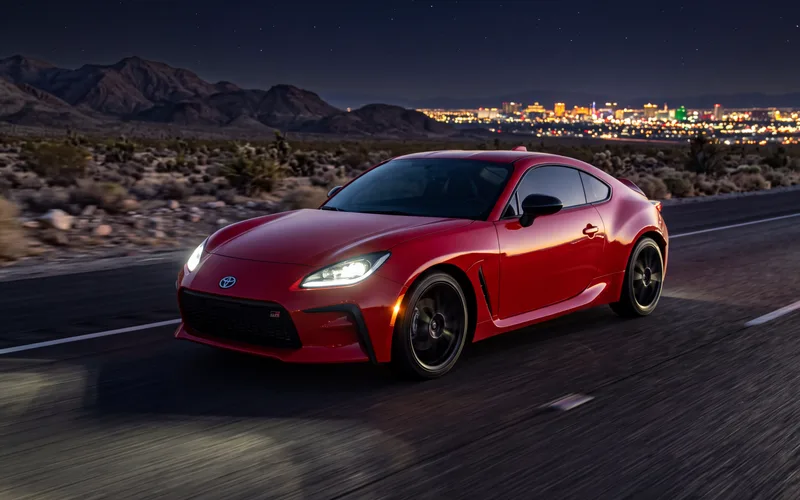 Toyota GR86Sports CarBetter at: Included maintenance
Mechanically the same car with two years of complimentary scheduled maintenance included, which the BRZ does not offer.
Compare 1.92C-
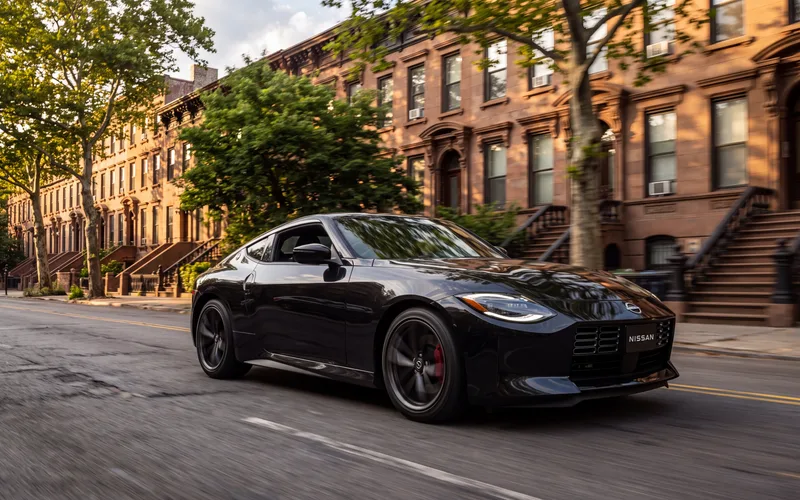 Nissan ZSports CarBetter at: Straight-line power
Twin-turbo V6 with 400 hp for buyers who find 228 hp and a 6.1-second 0–60 too modest.
Compare 2.47C+
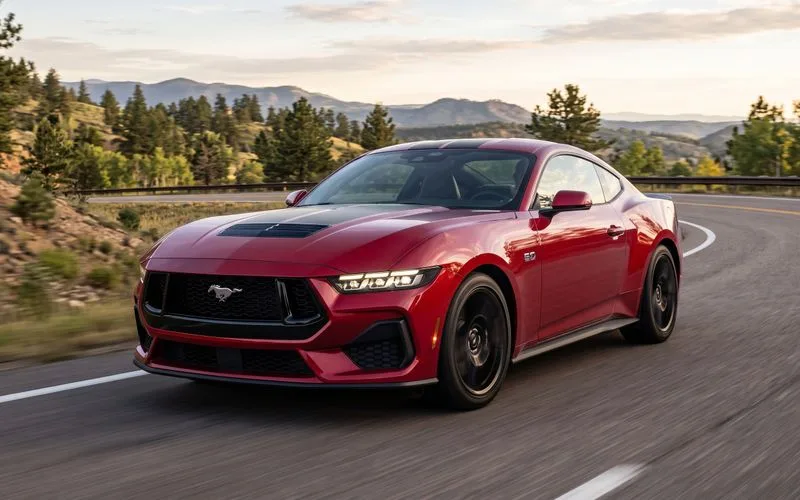 Ford MustangSports CarBetter at: Power and deals
V8 availability, a usable trunk, and real factory incentives, versus a BRZ that sells at sticker.
CompareHow it's evolved
9 scored model years · 2017–2026
Subject scores by year
Hover or tap a score to see what moved it versus the year before. A corner mark flags a big swing.
| Year | Performance | Efficiency | Safety | Space | Cost | Reliability | Tech | Use-case | Driving | Value |
|---|---|---|---|---|---|---|---|---|---|---|
| 2026 | 39 | 17 | 53 | 36 | 58 | 70 | 46 | 35 | 73 | 70 |
| 2025 | 39 | 11 | 59 | 35 | 71 | 72 | 42 | 33 | 76 | 72 |
| 2024 | 39 | 11 | 59 | 35 | 74 | 72 | 42 | 33 | 75 | 72 |
| 2023 | 43 | 9 | 53 | 33 | 78 | 63 | 40 | 27 | 75 | 68 |
| 2022 | 39 | 11 | 53 | 33 | 78 | 70 | 40 | 27 | 76 | 69 |
| 2020 | 33 | 15 | 27 | 35 | 68 | 73 | 32 | 28 | 75 | 51 |
| 2019 | 33 | 15 | 28 | 34 | 71 | 73 | 30 | 28 | 75 | 54 |
| 2018 | 33 | 15 | 40 | 33 | 78 | 57 | 24 | 28 | 75 | 60 |
| 2017 | 34 | 15 | 25 | 35 | 78 | 65 | 17 | 24 | 70 | 62 |
Compare two years
Best fit & conditions
Higher scores mean a better fit for that use case. Learn more about use-case fit →
Subject profile
Academic Probation · NHTSA safety recalls
No NHTSA safety recall is on record for the 2025 Subaru BRZ. Other model years of the BRZ have 3 — listed below.
3 recalls on other model years of the BRZ (2018–2019, 2022)
Aug 31, 2023Exterior lighting: turn signalThe rear turn signals may intermittently become inoperative.
Defect
Subaru of America, Inc. (Subaru) is recalling certain 2022 BRZ and Toyota GR86 vehicles. The rear turn signals may intermittently become inoperative.
Risk
Inoperative rear turn signals may not notify other drivers of a turning vehicle, increasing the risk of a crash.
Remedy
Dealers will replace both rear combination lamp assemblies, free of charge. Owner notification letters were mailed January 8, 2024. Subaru owners may contact Subaru's customer service at 1-844-373-6614. Toyota owners may contact Toyota customer service at 1-800-331-4331. Subaru's number for this recall is WRM-23.
NHTSA campaign 23V609000 ↗Manufacturer no. WRM-238,915 vehicles potentially affected (all models in the campaign)Owners notified Jan 8, 2024Filed by Subaru of America, Inc.Filed as BRZJul 29, 2021Fuel system, gasoline: delivery: fuel pumpThe low-pressure fuel pump inside the fuel tank may fail.
Defect
Subaru of America, Inc. (Subaru) is recalling certain 2019-2020 Ascent, 2018 Forester, 2018-2020 Impreza, Legacy, Outback, 2018-2019 BRZ, WRX, and Toyota 86 vehicles. The low-pressure fuel pump inside the fuel tank may fail.
Risk
Fuel pump failure can cause an engine stall while driving, increasing the risk of a crash.
Remedy
Dealers will replace the low-pressure fuel pump, free of charge. Owner notification letters were mailed September 24, 2021. Subaru and Toyota owners may call customer service at 1-844-373-6614. Subaru's number for this recall is WRG-21.
NHTSA campaign 21V587000 ↗Manufacturer no. WRG-21175,968 vehicles potentially affected (all models in the campaign)Owners notified Sep 24, 2021Filed by Subaru of America, Inc.Filed as BRZDec 31, 2018Visibility: rearview mirrors/devicesIn the affected vehicles, a software issue may cause the audio display system to not initialize, resulting in the camera display remaining blank. If this occurs, the rearview image will not display while backing up the vehicle. As a result, the vehicles fail to comply with requirements of Federal Motor Vehicle Safety (FMVSS) number 111, "Rearview Mirrors."
Defect
Subaru of America, Inc. (Subaru) is recalling certain 2018 Legacy, Outback, and BRZ vehicles. In the affected vehicles, a software issue may cause the audio display system to not initialize, resulting in the camera display remaining blank. If this occurs, the rearview image will not display while backing up the vehicle. As a result, the vehicles fail to comply with requirements of Federal Motor Vehicle Safety (FMVSS) number 111, "Rearview Mirrors."
Risk
Failure to display the rearview image while backing up increases the risk of crash.
Remedy
Subaru has notified owners, and dealers will reprogram the audio system display software, free of charge. The recall began on February 5, 2019. Owners may contact Subaru customer service at 1-844-373-6614. Subaru's number for this recall is WTZ-85.
NHTSA campaign 18V935000 ↗Manufacturer no. WTZ-8571,190 vehicles potentially affected (all models in the campaign)Owners notified Feb 5, 2019Filed by Subaru of America, Inc.Filed as BRZ
Source: NHTSA Office of Defects Investigation recall database, model years 2017–2026. Recalls are listed by model year as the manufacturer filed them; whether a specific car is affected depends on its VIN — check a VIN at nhtsa.gov ↗. NHTSA model names matched to this page: BRZ.
Detailed scoring by subject
1Performance & PowertrainGrades near the bottom of the scale.0.60F
A single 2.4L naturally-aspirated FA24 flat-four powers every 2025 grade — Premium, Limited and the tS — with identical output on the 6-speed manual and the Limited's 6-speed automatic. Modest peak power is inherent to a lightweight, price-conscious sports coupe, and it sits near the bottom of the 130–520 hp coupe band.
Peak torque of 184 lb-ft arrives at 3,700 rpm — far earlier than the previous-generation FA20's 6,600 rpm peak, but a small absolute figure against turbocharged and larger-displacement coupe rivals. Identical across all three 2025 grades and both transmissions.
Subaru publishes no official 0–60 figure for the BRZ, so an instrumented result for the volume manual is used. Published times for the ZD8 generation span roughly 5.4–6.3 s depending on outlet, rollout and surface; Edmunds' 6.1 s for a manual 2025 BRZ is the conservative, directly year-matched figure.
2025 is the year the manual BRZ gained a standard Sport mode that sharpens throttle response, and the naturally-aspirated FA24 is lag-free and eager to its 7,500 rpm redline with far more low-end than the old FA20. It stays mid-pack because the boxer is still coarse and thrashy under load with a well-documented mid-range torque dip, and the added Active Sound Control piping engine noise into the cabin is synthesized rather than genuine refinement.
The standard six-speed close-ratio manual is a class benchmark — short, precise throws with a well-weighted clutch and a shift lever Subaru shaped specifically for shift feel — and it is the only gearbox on the volume Premium and on the tS. The optional performance-tuned six-speed automatic, offered on the Limited alone, is competent with paddles but distinctly duller; the manual is the reference for this rating.
Rear-wheel drive only across Premium, Limited and tS — no all-wheel-drive configuration exists anywhere in the lineup, which is unusual for Subaru and deliberate to the BRZ's rear-drive character. That is the correct engineering choice for the car but scores at the bottom of this rubric; a standard Torsen limited-slip rear differential is partial mitigation.
One engine, take it or leave it — the 228 hp 2.4L naturally-aspirated boxer in every 2025 grade, with the only drivetrain decision being the six-speed manual versus the Limited-only six-speed automatic. No turbo, hybrid, PHEV or EV variant is offered or planned for this generation.
2Efficiency & RangeThe BRZ's lowest-graded category.0.00F
The volume trim is the Premium, which for 2025 is manual-only, so the 6MT's 22 MPG combined is the representative figure. A naturally-aspirated boxer with no electrification and close-ratio gearing lands near the floor of the gas-coupe band; the Limited's automatic is 3 MPG better.
EPA city rating for the volume 6-speed-manual Premium. There is no hybrid assist and no stop-start system to recover anything in traffic — fueleconomy.gov records startStop = N — so the boxer simply idles and revs its way through the city cycle.
EPA highway rating for the volume 6MT, near the bottom of the 24–45 MPG coupe band. The manual's close-ratio sixth gear leaves the engine spinning faster at cruise than the automatic's taller top gear, which is worth a full 3 MPG on the highway cycle — buyers who choose the enthusiast transmission pay for it on long trips.
Derived from the BRZ's 13.2-gallon tank and the EPA combined rating for the volume 6MT, since the EPA record carries no published range figure for a conventional gas car. A small tank paired with modest economy makes this one of the shorter-legged cars in the segment on a single fill, below the 300-mile floor of the coupe band.
EPA's own annual-cost estimate at 15,000 mi/yr for the volume 6MT, at the agency's current $5.07/gal premium-fuel assumption. Low combined economy and a mandatory premium grade compound each other, pushing the figure past the $3,200 top of the coupe cost band; EPA also projects $6,250 more spent on fuel over five years than the average new vehicle.
The FA24 is designed to run on 91 octane or higher and Subaru specifies premium for rated output, so at $5.07/gal versus $4.10 for regular the pump penalty is unavoidable rather than optional. It stays above the bottom of the band because nothing exotic is involved — no E85, diesel or charging infrastructure — and premium is available at essentially every station.
3SafetyMid-pack among this car's ten categories.1.95C-
NHTSA publishes no NCAP overall star rating for the 2025 BRZ — the second-generation ZD8 has never been selected for testing at its low US volume, and the NHTSA vehicle detail pages for 2022–2025 carry recalls and equipment listings only. Estimated at 4 stars from the Subaru Global Platform structure and the car's uniformly Good IIHS crashworthiness results; the last BRZ NHTSA actually tested (2015, first generation) earned 5 stars overall, but that structure does not carry to this generation.
Crashworthiness is Good everywhere it has been measured: IIHS rates driver- and passenger-side small overlap front Good on every individual measure and states the rating applies to 2022–26 cars, and the 2022 BRZ took Top Safety Pick+ with Good moderate overlap, side (original), roof strength and head restraints. But the 2025 car holds no award — IIHS has not run the updated moderate overlap (rear-passenger) or updated side test on this generation, and the current award requires both. Good where tested, no current award, so mid-band.
EyeSight Driver Assist Technology is standard across the whole 2025 lineup including the manual-only Premium and tS — Adaptive Cruise Control, Pre-Collision Braking, Lane Departure and Sway Warning and Lead Vehicle Start Alert — a genuine gain over 2022, when EyeSight was automatic-only and IIHS had to caveat the TSP+ as applying to optionally equipped cars. It is held out of the top band because the volume Premium cannot be had with blind-spot detection or rear cross-traffic alert at any price (Limited/tS only), reverse automatic braking is restricted to the automatic Limited, and no lane centering is offered.
IIHS rates the standard EyeSight system Superior for daytime pedestrian front crash prevention on 2022–26 cars, and the underlying figures are strong: collisions avoided outright in the 12 mph crossing child, 12 mph crossing adult, 25 mph crossing adult and 25 mph parallel adult runs, with impact speed cut 23 mph in the 25 mph crossing child test and 35 mph in the 37 mph parallel adult test. The 2022 car also rated Superior vehicle-to-vehicle. Held below 80 because nighttime pedestrian performance has not been published for this vehicle.
The volume Premium trim scored here cannot be equipped with blind-spot detection or rear cross-traffic alert at all — both are Limited and tS content — which is a real gap behind a steeply raked fastback with thick C-pillars. Even on the trims that offer it the coverage is alert-only with no braking or steering intervention, no surround-view camera exists at any price, and the only active rear system, reverse automatic braking, requires the Limited's optional automatic.
EyeSight provides Lane Departure and Sway Warning plus lane departure prevention — a corrective nudge at the lane edge — standard on every trim, and IIHS records both as standard equipment. There is no lane centering: the ZD8/ZN8 runs the older stereo-camera EyeSight with the assisted-steering function deliberately deleted to suit the car's sporting brief, so nothing holds it mid-lane on a highway the way the wide-angle system in a Forester or Outback does. Functional warning-plus-nudge rather than centering.
Adaptive Cruise Control is standard on every 2025 BRZ including the manual-transmission Premium and tS, which is the meaningful change from the early ZD8 years. It stays mid-band because the manual implementation is inherently caveated — it is settable from 20 mph in second through sixth gear and cannot creep in stop-and-go traffic the way the automatic Limited can — and because no highway-assist package pairs it with lane centering, so it remains a distance-keeping cruise control rather than an integrated highway system.
No hands-free highway driving is offered on the 2025 BRZ at any trim or option level. Subaru sells no hands-off system in the US at all, and a driver-focused sports coupe whose ADAS deliberately omits steering assist is the last place one would appear.
IIHS rates the headlights Good on both 2025 variants, so every trim in the range is covered. The volume Premium runs LED projectors with high-beam assist — good low-beam reach on the straightaway, fair on some curves, with the high-beam assist compensating — while Limited, tS and the Series.Purple add curve-adaptive steering-responsive projectors that IIHS records as good on both sides on straightaways and curves with no glare. Good across the range with an adaptive step available puts this in the top band.
The low cowl, low beltline and short hood give forward and over-the-nose sightlines that are a genuine strength of this generation and a repeated point of praise in reviews. Rearward and over-the-shoulder views are the weakness: the raked fastback glass is shallow and the C-pillars are thick, and on the volume Premium the only compensation is the standard backup camera — blind-spot detection is unavailable on that trim, no surround-view camera is offered on any BRZ, and rear parking sensors with reverse automatic braking require the automatic Limited.
IIHS rates LATCH ease of use Acceptable for 2022–26: both rear seating positions have complete hardware, but the lower anchors sit too deep in the seat cushion. Physical access is the bigger problem — every installation has to be threaded through a two-door aperture after folding and sliding a front seat, and the 2+2 rear bench has roughly 29.9 in of legroom, so a rear-facing seat cannot go in without pushing the front passenger seat to an unusable position. Workable in principle, genuinely difficult in practice.
4Space & ComfortOne of the BRZ's weakest categories.0.29F
Subaru's own 2025 spec sheet opens by defining the vehicle type as a '2+2 sports car', and the four-seat layout is fixed across Premium, Limited and tS with no two-seat or larger configuration offered. Four seats sits at the floor of the 4–5 coupe band.
Carry-over ZD8 body for 2025 — no sheetmetal or packaging change — and no sunroof is offered anywhere in the lineup, so the single published figure applies to Premium, Limited and tS alike. It lands in the lower quarter of the 36–40 in coupe band.
41.5 in of front legroom is genuinely adequate for tall drivers despite a 167.9 in overall length — the very low hip point (17.95 in center of gravity, one of the lowest in production) buys back the room the fastback roofline takes away.
The ducktail fastback roofline drops rear headroom to 33.5 in, near the bottom of the 32–38 in coupe band. Anyone taller than a young child has their head against the glass, which is why reviewers treat the rear bench as a parcel shelf.
29.9 in of rear legroom is unusable for adults on any journey and cannot clear a rear-facing child seat without pushing the front passenger seat to a position no adult can occupy — IIHS's own LATCH assessment of this car reflects the same squeeze. It scores mid-band only because the coupe band runs down to 22 in for strict 2+2 sports cars.
6.3 cu ft is well under the 4–26 cu ft coupe band's useful range — about two carry-on bags. The saving grace is architectural rather than volumetric: the folding rear seatback opens a pass-through that this platform is famous for swallowing a full set of four track wheels and tires.
The cabin's storage inventory is short and Subaru publishes all of it: a center console with dual cupholders and a closeable lid, a single bottle holder in each door panel, a 12-volt outlet in the glovebox, and nothing else — no underfloor bins, no wireless-charging tray, no household outlet. The folding rear seatback is the one genuinely clever provision, and it is aimed at track tires rather than daily life.
The front buckets are a real strength — reviewers describe them as striking a good balance between bolstering and comfort, with owners reporting three-hour stints without complaint, and Limited and tS add revised Ultrasuede/leather upholstery with dual-mode heating. The score is held mid-band by the hardware: six-way manual driver and four-way manual passenger adjustment, no power, no lumbar and no memory on any trim, plus a rear bench nobody can sit in.
Body control is excellent and reviewers repeatedly note the firm ride still absorbs most road imperfections, particularly at higher speeds — the BRZ is generally judged a touch more settled than the mechanically identical GR86. It stays mid-band because a 101.4 in wheelbase, 2,820 lb curb weight and summer performance tires on every trim make sharp-edged impacts genuinely sharp, and the tS's STI-tuned Hitachi dampers sharpen control rather than soften anything.
Noise is the most consistently criticized aspect of living with this car — reviewers describe an 'unrelenting barrage of tire rumble and engine drone' at highway speed, and note the road noise is excessive in every trim level, not just the 18-inch Michelin-shod ones. There is no acoustic glass and no active noise cancellation; the only sound engineering on the car is Active Sound Control, which pipes more engine noise in rather than keeping any out.
Dual-zone automatic climate control with air filtration and physical controls is standard on every trim including the $31,095 Premium, which is generous at the price, and Limited and tS add dual-mode heated front seats. Beyond that the cupboard is bare: no ventilated seats, no heated steering wheel, no rear climate, and Remote Engine Start with Climate Control requires both the automatic transmission and a MySubaru subscription — so it is unavailable on the volume manual Premium and on the tS.
5Cost of OwnershipGrades above the middle of the scale.2.83B-
Subaru's own 2025 pricing release puts the entry Premium 6MT at $31,095 plus $1,170 destination, a roughly $900 increase over 2024. It remains one of the two cheapest ways into a new rear-drive sports car, though it carries about a $1,200 premium over the mechanically identical Toyota GR86 base.
Limited is the mainstream volume grade and the only trim offered with the automatic, adding 18-inch wheels, Michelin Pilot Sport 4 summer tires, blind-spot detection, steering-responsive headlights and (new for 2025) revised Ultrasuede seats with red leather accents. The 500-unit Series.Purple special edition sits between Limited and tS at $36,615 delivered.
The two mainstream estimates differ by 3x: Edmunds' 2025 True Cost to Own totals $6,491 (maintenance $5,902 + repairs $589) while CarEdge projects $2,179 over five years (~$436/yr). The figure used sits closer to Edmunds because the BRZ has no national included-maintenance program to absorb the early services, and because summer performance tires, brake wear and Subaru's 6-month/6,000-mile severe-service schedule are real costs for the way this car is driven.
iSeeCars puts BRZ five-year depreciation at 23.9%, the strongest retention of any Subaru and better than the 27.3% sports-car average and the 41.5% all-vehicle average — though it trails its own GR86 twin (14.0%). Confidence is held at MEDIUM because the current ZD8 generation only dates to MY2022, so this reflects a supply-constrained enthusiast market rather than a completed five-year cycle on this body.
Standard Subaru bumper-to-bumper coverage, level with Toyota, Ford and Nissan but two years short of Hyundai/Kia's 5-year basic term and at the floor of the segment band.
Subaru's standard 5-year/60,000-mile powertrain term sits at the bottom of the segment band — half of Hyundai/Kia's 10-year/100,000-mile coverage, though identical to the GR86's Toyota coverage and to most mainstream rivals.
Included coverage is essentially roadside assistance and nothing more: 24/7 roadside is bundled with the 3-year/36,000-mile basic warranty, but Subaru has no national factory included-maintenance program on the BRZ — the "Maintain the Love" plan is a regional retailer promotion (not less than 1 year/12,000 miles, participating retailers and promotional areas only), not a nationwide entitlement like ToyotaCare. That is the single clearest ownership disadvantage against the mechanically identical GR86, which includes 2 years/25,000 miles of scheduled maintenance plus a NASA membership and complimentary HPDE day. Connected-services coverage on the BRZ is limited and subscription-based rather than a headline multi-year trial.
$34,915 volume-trim price minus its estimated resale value after 5 years (76% retained, or about $26,535) leaves about $8,380 in depreciation. Add the projected $5,500 in 5-year maintenance and repairs, and owning this vehicle for 5 years costs about $13,880 in total.
6Reliability & QualityOne of the BRZ's strongest categories.2.90B-
Sources point the same general direction but not emphatically: J.D. Power gives the 2025 BRZ a 76/100 quality-and-reliability rating (reasonable for a sports car, but the lowest in Subaru's 2025 lineup), Consumer Reports lists it among its Recommended vehicles, while RepairPal's owner data is notably less flattering. Above segment average, short of top-tier.
Subaru was the top-rated brand in Consumer Reports' 2025 Auto Brand Report Card for a second consecutive year and placed second behind Toyota in CR's reliability-specific ranking. J.D. Power's 2025 VDS is the dissenting source — Subaru is not among the mass-market leaders (Buick 143, Mazda 161, Toyota 162 PP100) — which keeps this out of the top band.
The 2025 BRZ carries zero NHTSA recalls — the generation's one serious campaign, the improperly manufactured FA24 valve springs, was confined to early 2022-2023 BRZ/GR86 cars and was resolved well before this model year. The remaining service-bulletin pattern (excess factory RTV sealant migrating into the oil pickup) is real but is an early-build issue, not a 2025 one.
The naturally aspirated 2.4L FA24 (228 hp, 184 lb-ft) is a comparatively unstressed design with no turbo to age, paired with a proven six-speed manual or Aisin automatic. But it carries two documented weaknesses that keep it out of the proven-durable band: oil pressure measured falling from ~60 to ~20 psi under sustained right-hand cornering above 1G (a bearing risk for tracked cars), and oil-starvation failures traced to factory RTV sealant clogging the oil pickup, which drew a class-action filing.
Hard plastics dominate the cabin and reviewers grade the interior harshly in absolute terms — Edmunds scores comfort and quality 4/10 — though it is broadly forgiven at a ~$32K sticker. 2025 brings a genuine if narrow improvement: upgraded Ultrasuede upholstery material on the Limited (and tS) trims.
Assembly at Subaru's Ōta, Gunma plant is consistent, with tight panel gaps and no initial-quality red flags for this model year. Owner forums report scattered interior rattles and squeaks accumulating over time, which is typical for a light, stiffly sprung coupe but keeps it below the top band.
Coverage is thinner than Toyota's or Ford's at roughly 640 US retailers, but service satisfaction is the brand's genuine strength: Subaru ranked highest of all mass-market brands in J.D. Power's 2025 Customer Service Index and led every individual measure in the study.
Aftermarket support is exceptional — the BRZ shares nearly everything with the Toyota GR86, so wear and tuning parts are abundant and cheap. Actual repair economics are only average, though: RepairPal puts average annual repair cost at $672 and flags an 18% chance that a given repair is severe versus 11% for subcompacts, which is what pulls this back to mid-band.
7Technology & InfotainmentGrades near the bottom of the scale.0.77F
A single 8.0-inch STARLINK Multimedia Plus head unit is standard on every 2025 trim and there is no larger display anywhere in the range, not even on the $36,245 tS. That is near the floor of the 7–15.5 in coupe band at a time when rivals fit 10–12 in screens.
Reviewers describe the 8-inch unit as small and dated-looking, and it is the older Subaru head unit rather than the larger portrait system in the rest of the lineup. It scores solidly mid-band anyway because the ergonomics are right for the car: physical knobs handle volume and tuning, hard buttons cover the common shortcuts, and the climate system is entirely separate — nothing important is buried in a touch menu.
Apple CarPlay and Android Auto are standard on all three trims, but wired only — the head unit connects through the console's dual USB-A ports and no wireless projection is offered at any price, including on the tS. Subaru has rolled wireless projection out to the Outback, Legacy, Crosstrek and Forester but not to the BRZ, so this sits at the wired-standard rung of the rubric rather than above it.
No factory navigation is offered on any 2025 BRZ trim — the Multimedia Plus system has no embedded maps, so every route runs through a phone on CarPlay or Android Auto. Voice control is limited to the basic embedded commands (audio, phone) plus whatever the projected phone assistant provides; there is no natural-language assistant.
The volume Premium gets six speakers with no amplifier; Limited and tS step to eight speakers with a two-channel amplifier. There is no branded premium system — no Harman Kardon, Bose or equivalent — at any price, and the loud cabin works against what is there: reviewers note the stereo has to fight constant tire roar at highway speed.
A 7.0-inch fully digital, customizable gauge cluster is standard on every trim including the base Premium, with Normal, Sport, Snow and Track layouts plus a digital speedometer, tachometer, G-force meter and lap timer — genuinely purposeful content for a driver's car. It falls short of the top band only on size and resolution against the 12-inch clusters now common in the segment.
There is no meaningful over-the-air update path on this car: the legacy 8-inch head unit has no embedded navigation to push map updates to, no vehicle-system OTA capability is advertised for the BRZ, and even the connected-services hardware that would carry it is confined to the automatic-only Limited configuration. Software updates are a dealer visit.
For the volume Premium there is effectively no companion app at all — MySubaru Connected Services is Limited and tS content, and the remote functions that matter (Remote Engine Start with Climate Control, Remote Lock/Unlock) additionally require the automatic transmission, which excludes the Premium, the Series.Purple and the tS by name. Where it does work, on the automatic Limited, it is a competent subscription service with a six-month trial covering ACN, SOS, remote start/lock and vehicle health reports. No digital key is offered.
Two front USB-A ports in the center console, a 3.5 mm auxiliary jack and a 12-volt outlet in the glovebox is the entire complement. There is no USB-C anywhere in the car, no wireless charging pad on any trim, no household outlet, and no rear-seat power — though in a 2+2 whose rear seats are a parcel shelf the last of those matters least.
Keyless Access with Push-Button Start is standard on every 2025 trim including the base Premium, along with a power fuel-door lock, welcome lighting and auto-up/down windows — full proximity convenience at the entry price. It is kept out of the top band because remote start exists only as a subscription feature on the automatic Limited, and no phone-as-key or digital key is offered on any BRZ.
A standard rear-vision camera is the whole of the parking hardware on the volume Premium — no front or rear parking sensors, and no surround-view camera is offered on any BRZ at any price, which is a real gap behind a raked fastback with thick C-pillars. The only active reverse aid, Reverse Automatic Braking, comes bundled with the Limited's optional automatic transmission.
No head-up display is offered on any 2025 BRZ trim, including the tS and the Series.Purple special edition. The 7.0-inch digital cluster with its Track layout, G-meter and lap timer covers some of the same ground, which is the only reason this is not at the absolute floor.
8Use-Case FitOne of the BRZ's weakest categories.0.19F
Both rear positions carry complete LATCH hardware, but everything else about the exercise is hostile: two doors, so every installation is threaded past a tipped-and-slid front seat, lower anchors IIHS rates as buried too deep in the cushion, and 29.9 in of rear legroom that cannot clear a rear-facing seat without making the front passenger seat unusable. There is no stroller-friendly cargo space behind it either — 6.3 cu ft.
The safety content itself is decent and — new for the manual cars — standard: EyeSight with pre-collision braking, adaptive cruise and lane departure warning is on every 2025 trim including the $31,095 Premium, crashworthiness is Good everywhere IIHS has measured it, and pedestrian front crash prevention rates Superior. What holds it mid-band for family duty is that the car holds no current IIHS award (the updated moderate-overlap and side tests have not been run on this generation), blind-spot detection and rear cross-traffic alert cannot be had on the volume Premium at any price, and there is no rear-occupant alert.
For anyone past toddler size this is a two-seater on a long trip: 33.5 in of rear headroom, 29.9 in of rear legroom, no rear vents, no rear USB ports, no rear climate and no rear amenities of any kind. Luggage capacity with four aboard is 6.3 cu ft, since the fold-down seatback that rescues cargo space is only available when the rear seats are empty.
A 2,820 lb, 167.9 in coupe with light controls, good forward sightlines over a low cowl and standard adaptive cruise is more livable in traffic than most sports cars, and the 2.4L boxer's 184 lb-ft at 3,700 rpm is tractable at low revs. But the volume Premium is manual-only — the six-speed automatic is a Limited-exclusive option — so the daily commute includes a clutch, the adaptive cruise will not creep in stop-and-go on manual cars, and summer performance tires are standard equipment on every trim regardless of climate.
The volume manual returns EPA 20/27/22 mpg and the FA24 requires premium 93 AKI fuel, so EPA's own annual estimate is about $3,450 a year at 15,000 miles — poor per-mile economics even before the summer tires, which wear faster and cost more than all-seasons, and a second winter set is effectively mandatory in a snow state. Consumables are otherwise ordinary and the car is light on brakes in normal use.
This is where the BRZ's size pays off daily: 167.9 in long, 69.9 in wide, 2,820 lb, a 35.4 ft curb-to-curb turning circle and 2.5 turns lock-to-lock, with a low cowl and short hood that make the front corners easy to place. It falls short of the top band only because rearward visibility through the raked fastback glass is poor and the volume Premium has nothing but a rear camera to help — no parking sensors, no surround view, no blind-spot detection.
No factory tow rating exists for the BRZ in the US, there is no payload utility beyond two adults and a 6.3 cu ft trunk, and a high-revving naturally aspirated boxer with 184 lb-ft is the wrong powertrain for load. This is not a shortfall so much as a category the car was never designed to enter.
The FA24 boxer and the ring-shaped reinforced unibody have a hard-use track record — this chassis is a staple of one-make racing, HPDE and driving schools, and the BRZ is the strongest resale performer in Subaru's lineup, which implies owners are not breaking them. But nothing in the car is built for work abuse: cloth or Ultrasuede trim, no washable surfaces, low ground clearance and a 2,820 lb structure with no fleet duty history.
There is no bed, no factory roof rails or roof rack (the roof panel is aluminum and Subaru publishes no roof-load rating), no trailer wiring, no 110V outlet, no bed or cargo tie-downs and no work-oriented upfit ecosystem. The folding rear seatback is the only load-carrying provision on the vehicle.
The front seats are genuinely good for multi-hour stints and standard EyeSight adaptive cruise takes some load off, but everything else fights the mile-eater case: reviewers report an unrelenting mix of tire rumble and engine drone at highway speed, steering that feels too sensitive at interstate pace, and a 13.2-gallon tank that at 22 mpg combined gives roughly 290 miles between fills — one of the shortest cruising ranges of any gas car in the segment.
Rear-wheel drive only — no AWD version exists in a Subaru, deliberately — with 5.1 in of minimum road clearance, summer performance tires standard on every trim, no factory tow rating, no roof rails or published roof load, and a tire repair kit instead of a spare. A gravel forest road in dry weather is about the limit, and the tires are the binding constraint before the clearance is.
6.3 cu ft is tiny in absolute terms and the liftover is a low 27.1 in, but the flexibility is better than the number suggests: the rear seatback folds to open a pass-through this platform is specifically known for swallowing four track wheels and tires, which is a real capability for its intended owner. Everything above that — roof boxes, bike racks, hitch carriers — is unsupported by the factory.
9Driving ExperienceThe BRZ's best-graded category.3.16B
The ZD8's whole engineering brief is cornering: a 17.95 in center of gravity — among the lowest of any production car — a ring-shaped reinforced unibody with a strut tower brace, anti-dive front and anti-lift rear geometry, and a standard Torsen limited-slip differential, all at 2,820 lb. Testers record about 1.0 g of steady-state grip and describe the chassis as rotating beautifully and staying composed from playful drifts to canyon pace; the tS adds STI-tuned Hitachi dampers on both axles.
A quick 13.5:1 rack at 2.5 turns lock-to-lock gives sharp turn-in and naturally building weight, and reviewers have gone as far as calling the tS the best steering of any affordable sporty car on sale. It is held just below the top band by the one criticism that recurs — the electric assist does not transmit quite as much surface texture as the rest of the chassis communicates — and by reviewers finding it nervously sensitive at interstate speeds.
Braking hardware scales with trim and both ends of the range work well: Premium and Limited run 11.6 in ventilated front discs with dual-piston calipers and 11.4 in rears, while the tS steps to 12.8 in Brembo four-piston fronts and 12.4 in Brembo rears with gold calipers. Testers report 1.1 g stops with minimal nose dive, immediate pedal bite and no fade from high speed, and the pedal is placed and weighted for heel-and-toe. The score reflects that the strongest results come from the tS package rather than the volume Premium.
2025 is a real change year here: a dedicated Sport mode became standard on manual coupes, sharpening throttle response, and the FA24's dual injection gives it 184 lb-ft at 3,700 rpm rather than the old FA20's 6,600 rpm peak, so it is lag-free and pulls cleanly to 7,500 rpm. It stays mid-band for the well-documented mid-range flat spot and for a naturally aspirated boxer that gets thrashy rather than smoother as revs climb.
Refinement is the clearest cost of the light, cheap, naturally aspirated formula: the flat-four is coarse under load and drones at highway cruise, and reviewers pair 'engine drone' with tire rumble as the thing that wears on long drives. Subaru's answer is Active Sound Control, updated for 2025, which pipes engine noise into the cabin and turns up further in Sport mode — character rather than isolation, and synthesized character at that.
Subaru's published curb-to-curb figure is 35.4 ft, unchanged across Premium, Limited and tS despite the wheel size stepping from 17 to 18 in. That lands in the better part of the 34–40 ft coupe band and, combined with 2.5 turns lock-to-lock, makes U-turns and tight garages genuinely easy.
A textbook sports-car cockpit: very low hip point, wheel, shifter and pedals in natural alignment, aluminum pedal covers spaced for heel-and-toe, a leather-wrapped three-spoke wheel with audio, meter and adaptive cruise controls, and physical knobs for audio and separate controls for climate so nothing important is in a menu. It is kept out of the top band by six-way manual driver adjustment with no lumbar or power on any trim, and by the ingress and egress a 51.6 in roofline demands.
This is the item the whole car exists to win. A 2,820 lb rear-drive coupe with a standard close-ratio six-speed manual, a Torsen limited-slip differential, a 17.95 in center of gravity and Vehicle Stability Control with a Track mode is as pure an enthusiast proposition as $31,095 buys, and 2025's standard Sport mode sharpens it further. Car and Driver has put the BRZ/GR86 on its 10Best list five years running, covering this model year.
10Value & Market PositionOne of the BRZ's strongest categories.2.87B-
The $31,095 Premium includes a Torsen limited-slip differential, 8.0-inch touchscreen with wireless Apple CarPlay/Android Auto, dual-zone automatic climate, LED headlights, Keyless Access with push-button start and — the key differentiator — the full EyeSight suite with adaptive cruise and pre-collision braking on manual cars as well as automatics, which the mechanically identical 2025 GR86 restricts to the automatic. Sport mode also became standard across the line for 2025.
A $32,265-delivered rear-drive coupe with a 228 hp naturally aspirated 2.4L boxer, standard six-speed manual and a Torsen LSD is among the strongest performance-per-dollar propositions on sale, costing tens of thousands less than a Nissan Z, GR Supra or Cayman. Held just below the GR86's mark only because the BRZ asks roughly $1,200 more delivered for the same hardware.
Three regular trims spread from the Premium to the STI-tuned tS (Hitachi dampers, Brembo brakes), plus the 500-unit Series.Purple special edition — reasonable spacing for a niche coupe, but a single powertrain, RWD only, and the automatic offered on the Limited alone, so a buyer wanting two pedals cannot have the base or tS car.
The BRZ is a deliberately low-volume halo car and is shrinking: 3,345 US units in 2024 and 2,882 in 2025, down 13.8% year over year, and roughly a third of the GR86's volume despite identical hardware. Enthusiast staple rather than a market force.
Subaru carries genuine enthusiast credibility from WRX/STI heritage and consistently top-tier owner loyalty, and the BRZ is the strongest resale performer in the lineup — but the mainstream brand halo is outdoors-and-utility rather than sports car, so the badge does less for this model than Toyota's Gazoo Racing sub-brand does for the GR86.
Unlike the GR86, which Toyota leaves essentially incentive-free, Subaru has run subvented financing on the 2025 BRZ across all three trims — 0.9% APR for 75 months and 1.9% for 72 months, plus advertised leases around $355/month — which is real money to a buyer even though cash on the hood stays scarce and low volume keeps dealer competition thin.
The second-generation ZD8 BRZ arrived for MY2022, making 2025 the fourth year of the cycle. It is kept current with running changes — standard Sport mode, revised Limited upholstery, recalibrated Active Sound Control and the Series.Purple edition — rather than a refresh, and no replacement has been announced.
Among the most decorated affordable performance cars on sale: the BRZ has taken Car and Driver 10Best five years running (2022 through 2026), covering the 2025 model year, and it is a regular comparison-test podium finisher against the Miata, Z and Supra where balance, steering feel and price make it the value pick.