

The verdict
A struggling sports car, strong on driving and held back by efficiency.
The 2026 Subaru BRZ is one of the last genuinely affordable rear-drive sports cars, and it spends every dollar on the way it drives rather than on the things that make a car easy to live with. For roughly $32,000 you get a 228-hp flat-four, a superb six-speed manual, and chassis balance that reviewers rank against cars costing three times as much. What you give up is real: 22 MPG combined on premium fuel, a 6.3 cu-ft trunk, back seats that are a parcel shelf with seatbelts, and no AWD anywhere in the lineup. Buy it as a second car or as a single-driver daily, and it is a bargain; ask it to be the only car in a household and it will frustrate you weekly.
Jump to scoresStrengths
- Handling that justifies the whole car
- A manual gearbox worth buying the car for
- Class-leading driving thrills per dollar
What holds it back
- You will notice the fuel bills
- The back seat and trunk are close to decorative
- Modest power and a coarse engine
Top alternatives
Cars shoppers cross-shop with the Subaru BRZ 1.93C-
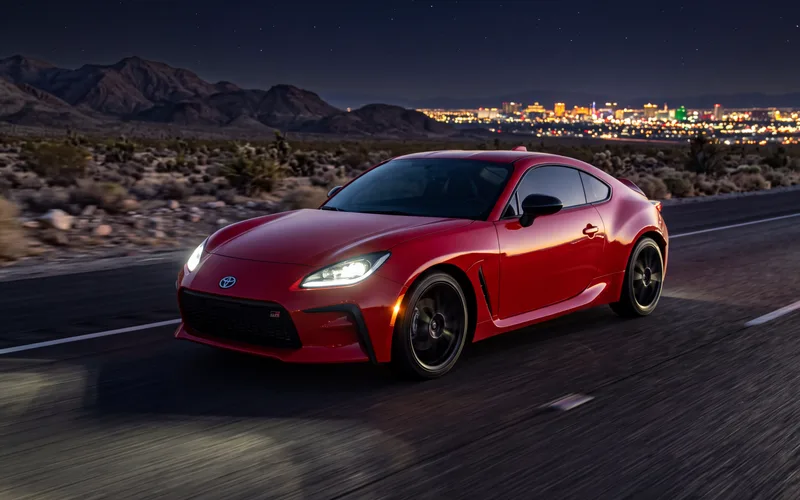 Toyota GR86Sports CarBetter at: Included maintenance
Mechanically the same car with two years of complimentary scheduled maintenance included, which the BRZ does not offer.
Compare 1.92C-
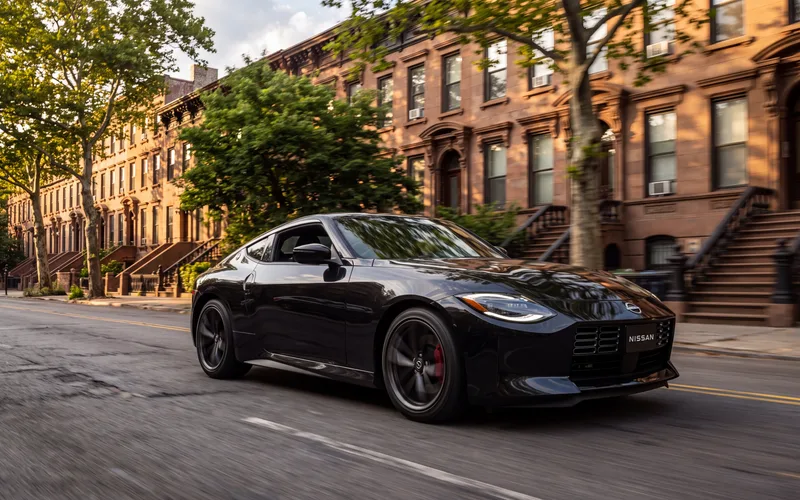 Nissan ZSports CarBetter at: Straight-line power
Twin-turbo V6 with 400 hp for buyers who find 228 hp and a 6.1-second 0–60 too modest.
Compare 2.47C+
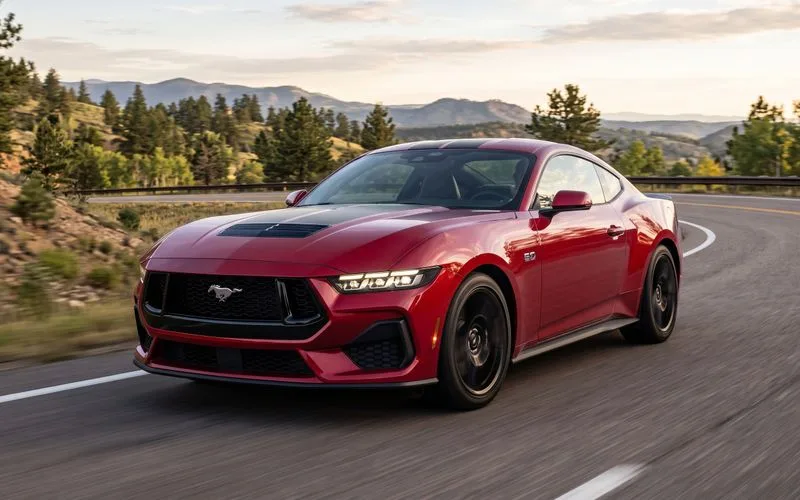 Ford MustangSports CarBetter at: Power and deals
V8 availability, a usable trunk, and real factory incentives, versus a BRZ that sells at sticker.
CompareHow it's evolved
9 scored model years · 2017–2026
Subject scores by year
Hover or tap a score to see what moved it versus the year before. A corner mark flags a big swing.
| Year | Performance | Efficiency | Safety | Space | Cost | Reliability | Tech | Use-case | Driving | Value |
|---|---|---|---|---|---|---|---|---|---|---|
| 2026 | 39 | 17 | 53 | 36 | 58 | 70 | 46 | 35 | 73 | 70 |
| 2025 | 39 | 11 | 59 | 35 | 71 | 72 | 42 | 33 | 76 | 72 |
| 2024 | 39 | 11 | 59 | 35 | 74 | 72 | 42 | 33 | 75 | 72 |
| 2023 | 43 | 9 | 53 | 33 | 78 | 63 | 40 | 27 | 75 | 68 |
| 2022 | 39 | 11 | 53 | 33 | 78 | 70 | 40 | 27 | 76 | 69 |
| 2020 | 33 | 15 | 27 | 35 | 68 | 73 | 32 | 28 | 75 | 51 |
| 2019 | 33 | 15 | 28 | 34 | 71 | 73 | 30 | 28 | 75 | 54 |
| 2018 | 33 | 15 | 40 | 33 | 78 | 57 | 24 | 28 | 75 | 60 |
| 2017 | 34 | 15 | 25 | 35 | 78 | 65 | 17 | 24 | 70 | 62 |
Compare two years
Best fit & conditions
Higher scores mean a better fit for that use case. Learn more about use-case fit →
Subject profile
Academic Probation · NHTSA safety recalls
No NHTSA safety recall is on record for the 2026 Subaru BRZ. Other model years of the BRZ have 3 — listed below.
3 recalls on other model years of the BRZ (2018–2019, 2022)
Aug 31, 2023Exterior lighting: turn signalThe rear turn signals may intermittently become inoperative.
Defect
Subaru of America, Inc. (Subaru) is recalling certain 2022 BRZ and Toyota GR86 vehicles. The rear turn signals may intermittently become inoperative.
Risk
Inoperative rear turn signals may not notify other drivers of a turning vehicle, increasing the risk of a crash.
Remedy
Dealers will replace both rear combination lamp assemblies, free of charge. Owner notification letters were mailed January 8, 2024. Subaru owners may contact Subaru's customer service at 1-844-373-6614. Toyota owners may contact Toyota customer service at 1-800-331-4331. Subaru's number for this recall is WRM-23.
NHTSA campaign 23V609000 ↗Manufacturer no. WRM-238,915 vehicles potentially affected (all models in the campaign)Owners notified Jan 8, 2024Filed by Subaru of America, Inc.Filed as BRZJul 29, 2021Fuel system, gasoline: delivery: fuel pumpThe low-pressure fuel pump inside the fuel tank may fail.
Defect
Subaru of America, Inc. (Subaru) is recalling certain 2019-2020 Ascent, 2018 Forester, 2018-2020 Impreza, Legacy, Outback, 2018-2019 BRZ, WRX, and Toyota 86 vehicles. The low-pressure fuel pump inside the fuel tank may fail.
Risk
Fuel pump failure can cause an engine stall while driving, increasing the risk of a crash.
Remedy
Dealers will replace the low-pressure fuel pump, free of charge. Owner notification letters were mailed September 24, 2021. Subaru and Toyota owners may call customer service at 1-844-373-6614. Subaru's number for this recall is WRG-21.
NHTSA campaign 21V587000 ↗Manufacturer no. WRG-21175,968 vehicles potentially affected (all models in the campaign)Owners notified Sep 24, 2021Filed by Subaru of America, Inc.Filed as BRZDec 31, 2018Visibility: rearview mirrors/devicesIn the affected vehicles, a software issue may cause the audio display system to not initialize, resulting in the camera display remaining blank. If this occurs, the rearview image will not display while backing up the vehicle. As a result, the vehicles fail to comply with requirements of Federal Motor Vehicle Safety (FMVSS) number 111, "Rearview Mirrors."
Defect
Subaru of America, Inc. (Subaru) is recalling certain 2018 Legacy, Outback, and BRZ vehicles. In the affected vehicles, a software issue may cause the audio display system to not initialize, resulting in the camera display remaining blank. If this occurs, the rearview image will not display while backing up the vehicle. As a result, the vehicles fail to comply with requirements of Federal Motor Vehicle Safety (FMVSS) number 111, "Rearview Mirrors."
Risk
Failure to display the rearview image while backing up increases the risk of crash.
Remedy
Subaru has notified owners, and dealers will reprogram the audio system display software, free of charge. The recall began on February 5, 2019. Owners may contact Subaru customer service at 1-844-373-6614. Subaru's number for this recall is WTZ-85.
NHTSA campaign 18V935000 ↗Manufacturer no. WTZ-8571,190 vehicles potentially affected (all models in the campaign)Owners notified Feb 5, 2019Filed by Subaru of America, Inc.Filed as BRZ
Source: NHTSA Office of Defects Investigation recall database, model years 2017–2026. Recalls are listed by model year as the manufacturer filed them; whether a specific car is affected depends on its VIN — check a VIN at nhtsa.gov ↗. NHTSA model names matched to this page: BRZ.
Detailed scoring by subject
1Performance & PowertrainGrades near the bottom of the scale.0.60F
Standard 2.4L naturally-aspirated FA24 flat-four; single engine across Premium, Limited, and tS trims. Modest output typical of a lightweight, price-conscious sports coupe.
Same 2.4L flat-four across the lineup; peak torque at a relatively high 3,700 rpm and reviewers routinely note a mid-range torque dip near 3,000 rpm.
Subaru does not publish an official 0–60 figure; instrumented tests of the current 2.4L manual cluster around 6.0–6.1 s (automatic slightly slower). Volume-trim reference is the 6MT.
FA24 boxer is rev-happy and eager to the 7,500 rpm redline, but reviewers consistently flag a coarse, gritty note under load and a noticeable torque dip in the mid-range that hurts perceived smoothness. Throttle response is direct with no lag.
The standard Aisin-sourced 6-speed manual is a class benchmark — short, precise throws, well-weighted clutch, and rev-matching downshifts on tS. The optional 6-speed conventional automatic is competent but far less rewarding; the manual is the definitive volume-trim gearbox for a sports coupe.
RWD only — no AWD is offered anywhere in the lineup, unusual for a Subaru and by design for the BRZ's driving character. Scores at the bottom of the rubric for RWD-only.
Single powertrain — 2.4L naturally-aspirated flat-four across every trim, with only a manual-vs.-automatic transmission choice. No turbo, hybrid, PHEV, or EV variant.
2Efficiency & RangeThe BRZ's lowest-graded category.0.00F
Volume trim is the Premium 6-speed manual; 2026 BRZ is a carryover of the current gen (2.4L NA flat-four, 228 hp) with unchanged EPA figures.
EPA city rating for the volume 6MT trim; automatic is marginally better.
EPA highway rating for the volume 6MT trim; automatic reaches 30 MPG due to a taller top gear.
Range derived from the 13.2-gal fuel tank and EPA combined MPG for the volume 6MT trim; automatic extends to ~330 mi at 25 MPG combined.
EPA annual fuel-cost estimate at 15,000 mi/yr on premium (91-octane) fuel for the volume 6MT trim; automatic saves ~$300/yr thanks to better combined MPG.
Subaru recommends premium 91-octane fuel for the FA24 flat-four to achieve rated output; regular can be used but power and knock margin suffer. Nothing exotic (no E85, no diesel, no charging setup), and pump availability is universal — a mid-band 'premium recommended' score.
3SafetyGrades below the middle of the scale.1.57D
The current-generation BRZ (2022+, shared platform with Toyota GR86) has not received a comprehensive NHTSA overall star rating. Estimated at 4 stars based on modern Subaru Global Platform variant and typical sports-coupe results.
The 2022+ BRZ has not earned IIHS Top Safety Pick or TSP+ status. IIHS has published only partial crashworthiness results for the current generation, and the small-overlap and updated side tests have not yielded a full sweep of Good ratings sufficient for an award.
EyeSight (pre-collision braking, adaptive cruise, lane departure warning, lane keep assist) is standard on automatic-transmission BRZ across trims; manual-transmission cars added EyeSight in 2024 but with a reduced feature set and no full-speed ACC. Blind Spot Detection and Rear Cross Traffic Alert are standard only on the Limited trim, absent from the volume Premium trim. Below segment average for coupes.
EyeSight's dual-camera Pre-Collision Braking has generally rated well on IIHS front-crash-prevention tests across the Subaru lineup (mostly Superior/Advanced daytime with improving night pedestrian results). The BRZ-specific implementation has not been separately rated by IIHS for pedestrian testing, so credit is at segment norm rather than best-in-class.
Blind Spot Detection and Rear Cross Traffic Alert are standard only on the top Limited trim; the volume Premium trim does not offer them per Subaru's 2026 packaging. Alert-only when present, no active steering intervention.
EyeSight provides lane departure warning and lane keep assist with steering nudges but no true lane-centering feature. Reviewers describe the system as functional and unobtrusive but a step behind class-leading centering systems from Toyota Safety Sense 3.0 or Ford Co-Pilot360 Active.
Full-speed Adaptive Cruise Control with stop-and-go is offered only on automatic-transmission BRZs equipped with EyeSight; manual-transmission cars get no ACC. No highway-assist package integrating ACC with lane centering. Capable for auto buyers, but a meaningful gap for the enthusiast manual audience.
No hands-free highway driving is offered on the 2026 BRZ. Subaru has not deployed a hands-free system on any US-market vehicle for the 2026 model year, and the BRZ would not be the first to receive one.
Full-LED headlights with automatic high-beam are standard across BRZ trims, with steering-responsive function added on Limited. IIHS has not published headlight ratings specific to the 2022+ BRZ; the prior generation earned only Marginal to Acceptable ratings, and there is no evidence of a fundamental upgrade in beam pattern for the current car.
Low beltline, low hood, relatively thin A-pillars, and modest overall height give the BRZ better forward and quartering sightlines than most sports coupes. Rearward view is compromised by thick C-pillars and small rear glass, partially mitigated by the standard rearview camera. No 360-degree view offered.
The BRZ's 2+2 rear is essentially a jump seat for cargo or brief-adult use. LATCH anchors exist but access requires folding the front seats and reaching through a narrow door aperture; rear-facing seats will not fit without severely compromising front-seat legroom. Not a practical family vehicle.
4Space & ComfortOne of the BRZ's weakest categories.0.37F
BRZ is a 2+2 coupe with two front sport buckets and a token rear bench; four belted positions total across all trims.
Low-roof sports coupe with no sunroof option, so the published figure holds across every trim.
Adequate front legroom for the segment; tall drivers fit with the seat racked back but the low seating position does the heavy lifting.
Well below the coupe band; the fastback roofline makes the rear seat unusable for anyone approaching adult height.
Below the coupe band; rear seat is best used as a padded parcel shelf or child seat platform for short hops.
Trunk is well below the coupe band, though Subaru engineered the cargo well to swallow a set of track tires with the rear seats folded — a signature BRZ trait not reflected in the raw number.
Small glovebox, shallow center console cubby, and thin door pockets — no innovative storage solutions or onboard power features. The fold-down rear seats functioning as a track-tire hauler is the one clever touch.
Front sport buckets are widely praised for lateral support and all-day comfort on long drives; rear seat comfort is not credited given the token 2+2 packaging.
Firm sports-coupe ride with tight body control; not harsh but transmits impacts on broken pavement. tS trim adds Hitachi adaptive dampers that improve compliance without softening body control.
Boxer-four intake/exhaust drone at highway speeds plus significant road noise from the standard summer tires; minimal sound deadening in service of weight savings.
Heated front seats standard on Limited and tS; dual-zone automatic climate control on Limited and tS. No ventilated seats, no heated steering wheel, no rear climate vents, no remote pre-conditioning.
5Cost of OwnershipMid-pack among this car's ten categories.1.87C-
2026 pricing carries forward from 2025 with modest inflation; 2025 Premium 6MT was $31,315 with destination. Web search was unavailable for a direct 2026 confirmation.
Limited is the mainstream volume trim; 2025 Limited 6MT was $33,760 with destination and 2026 expected to nudge slightly higher. Auto adds ~$1,600; tS trim tops the lineup near $37k.
Naturally aspirated flat-four with no turbo and a proven platform keeps maintenance moderate for a sports coupe, though performance tires and enthusiast use lift wear costs above a compact sedan.
Constrained supply, enthusiast demand, and manual availability give the BRZ notably strong residuals for a low-volume sport coupe — historically among the top coupes on iSeeCars/KBB retention lists.
Standard Subaru bumper-to-bumper coverage; unchanged for the BRZ across the current generation.
Standard Subaru powertrain coverage on gas models; trails Hyundai/Kia (10/100k) and Mitsubishi (10/100k) but matches most mainstream competitors.
Subaru does not include scheduled maintenance on the BRZ (no equivalent to ToyotaCare offered on the mechanically similar GR86). Coverage is limited to 3-year/36,000-mile 24/7 roadside assistance bundled with the basic warranty; no STARLINK connected-services trial on BRZ. Meaningful gap versus the sibling GR86 on this line item.
$34,500 volume-trim price minus its estimated resale value after 5 years (56% retained, or about $19,320) leaves about $15,180 in depreciation. Add the projected $4,800 in 5-year maintenance and repairs, and owning this vehicle for 5 years costs about $19,980 in total.
6Reliability & QualityOne of the BRZ's strongest categories.2.74B-
Second-gen BRZ (2022+) has drawn above-average predicted reliability from Consumer Reports, with the naturally aspirated FA24 boxer avoiding the turbo/DI complexity that hurts many sport-compact peers. J.D. Power quality scores have been average to slightly above.
Subaru sits mid-pack in recent CR brand rankings and near industry average in J.D. Power VDS — not a top-5 dependability brand but no longer bottom-third, with historic head-gasket and CVT concerns largely behind the current generation.
The second-gen BRZ had an early valve-spring stop-sale/recall in 2022 (shared with GR86) plus a few smaller campaigns (fuel pump, seat belt), but 2024-2026 model years have been comparatively clean with no systemic issues.
The naturally aspirated 2.4L FA24 boxer with port + direct injection is a relatively unstressed 228-hp design with no turbo to age; six-speed manual and Aisin six-speed automatic are both proven. Some minor oil-consumption reports but no widespread failure mode.
Cabin is a clear step up from the first-gen BRZ but reviewers still call out hard plastics and budget-feeling trim in low-touch areas. Acceptable for the price, not class-leading against premium sport coupes.
Assembly quality is solid at the Subaru Gunma plant with tight panel gaps, though enthusiast forums report occasional interior rattles and squeaks over time — typical for a light, stiff sports coupe.
Subaru has ~630 US dealers — thinner coverage than Toyota/Honda/Ford but well-distributed in most metros — and consistently scores above the industry average in J.D. Power's Customer Service Index for mainstream brands.
BRZ benefits from a huge tuner aftermarket shared with the Toyota GR86 — parts are abundant and generally affordable, and typical repair costs sit in the mid-$400s per RepairPal, below the average for sports coupes.
7Technology & InfotainmentGrades below the middle of the scale.1.10D
Second-generation BRZ carries an 8.0-inch center touchscreen across Premium, Limited, and tS trims — small by 2026 standards but preserves the cabin's driver-focused layout.
The BRZ retains the older 8-inch Subaru unit (not the newer STARLINK 11.6-inch vertical system) — menus are legible with physical volume/tuning knobs and short-cut buttons, but graphics are dated and reviewers rate it as functional rather than snappy.
Apple CarPlay and Android Auto are standard, with wireless CarPlay available on the 2nd-gen head unit; Android Auto typically remains wired via USB-A.
No factory native navigation and no natural-language voice assistant — owners route through CarPlay/Android Auto (Siri/Google/Waze) for both nav and voice tasks.
Base Premium runs a modest 6-speaker system; Limited and tS step up to an 8-speaker setup. No branded premium option (no Harman Kardon or equivalent) is offered — a weak spot in a segment where rivals routinely offer premium tiers.
A 7.0-inch reconfigurable TFT gauge cluster is standard on the 2nd-gen BRZ, with a Track display mode that shifts to a central tach — better than partial-digital rivals, but graphics and depth of customization trail newer digital cockpits.
No meaningful over-the-air software updates — Subaru's OTA infrastructure has begun rolling out on newer STARLINK-equipped models (Solterra, refreshed Forester/Outback), but the BRZ's older head unit is not part of that program; updates require dealer visits.
MySubaru app with STARLINK Safety Plus/Security Plus offers remote start, lock/unlock, and vehicle finder on Limited and tS trims — functional core feature set, but subscription-gated after a trial and no digital key.
USB-A and USB-C data/charging ports up front plus a 12V outlet — adequate for a 2+2 coupe but no wireless charging pad and no rear-seat USB, keeping it behind peers like the Nissan Z that add wireless charging.
Proximity keyless entry with push-button start is standard on Limited and tS (the volume trims); Premium retains a traditional key. No digital/phone key is offered.
Standard rear-view camera only — no 360-degree surround view, no front camera, and no factory parking sensors on any trim. Adequate for a compact coupe but bare for the 2026 model year.
No head-up display offered on any 2026 BRZ trim — a genuine miss versus sports-car peers that offer HUDs (Corvette, Z, GT-R).
8Use-Case FitOne of the BRZ's weakest categories.0.31F
Two-door coupe with rear LATCH anchors but tipping-and-sliding the front seats to reach the rear is a chore, and the vestigial 2+2 rear bench has too little legroom to safely accommodate a rear-facing car seat behind an average-height driver. Daily kid duty is regularly frustrating.
Standard EyeSight ADAS (auto emergency braking, adaptive cruise, lane departure) is only available on automatic-transmission BRZs; manual cars — which many enthusiast buyers choose — get none of it. NHTSA overall star rating is unpublished and IIHS has not awarded TSP/TSP+ to the current generation.
The 2+2 layout is effectively a two-seater for any adult passengers; rear headroom and legroom are minimal and the 6.3 cu-ft trunk swallows only a couple of soft duffels. No rear vents, no rear USBs, no rear climate — a poor multi-hour family hauler.
Small footprint, light controls, good outward visibility for a coupe, and a docile 2.4L flat-four make the BRZ more livable than most sports cars, but the firm suspension, low seating position that stresses ingress/egress, loud cabin and manual-only ADAS on stick-shift trims add daily-driving friction.
EPA-rated roughly 22 mpg combined with the 6-speed manual and 25 mpg combined with the automatic — respectable for a naturally aspirated sports car — but the 2.4L requires 91-octane premium fuel and the 13.2-gal tank plus sports-tire wear temper the running-cost picture. Insurance is comparatively modest for the class.
At roughly 167 in long and 70 in wide with a tight ~34.8 ft turning circle, low cowl and thin A-pillars for a modern coupe, the BRZ is genuinely easy to thread through cities and slot into tight parking. Standard rear camera compensates for the coupe's small rear window.
Zero factory tow rating, no payload utility beyond passengers, and a 6.3 cu-ft trunk with a low-mounted 2.4L NA engine that is not intended for load-hauling. Not meaningfully work-capable in any conventional sense.
Aluminum-hood, low-clearance sports coupe with fabric or leather-trim sport seats and a naturally aspirated FA24 engine reasonably reliable but never engineered for jobsite abuse. Some fleet reputation via driving schools, but not work-fleet-proven.
No bed, no factory roof rails, no towing electrics, no 110V outlets, no work-oriented upfit ecosystem. The only cargo-flex trick is the fold-down rear seats. Effectively no jobsite provisions.
Firm suspension, noticeable road roar on coarse pavement, and lightly bolstered but small sport seats limit multi-hour endurance. Highway range of roughly 330 mi with the automatic (25 mpg × 13.2 gal) is adequate; adaptive cruise is only available on automatic trims, so manual-transmission BRZs miss the key fatigue-reducing ADAS.
Rear-wheel drive only (no AWD despite Subaru's brand identity), 5.1 in ground clearance, no factory tow rating, and no factory roof rails or roof-load rating for bike/ski/kayak carriers. Pavement-bound with almost no outdoor utility.
Trunk is small at 6.3 cu ft but the 50/50 fold-down rear seats create a pass-through that famously swallows four track wheels with tires — unusually flexible for a coupe. No roof rails, no factory hitch, no underfloor storage beyond the spare well.
9Driving ExperienceThe BRZ's best-graded category.2.93B-
One of the best-handling cars at any price — low-slung boxer layout, low polar moment, and Michelin Pilot Sport 4 tires on Limited deliver exceptional balance, tight body control, and communicative rear-drive chassis behavior praised across enthusiast press.
Electric rack is well-calibrated with quick 13.5:1 ratio, natural weighting, and better on-center feedback than most EPS setups; reviewers consistently rank it among the more communicative electric racks in the class, though short of the older hydraulic systems.
Base/Premium/Limited use single-piston front calipers with respectable street stops (~110 ft from 70 mph in tests) and firm pedal; brakes can fade on track — the tS model adds Brembo four-piston fronts to address this. Solid street brakes, not exceptional.
FA24 2.4L flat-four is willing to rev and throttle response is direct, but the well-documented mid-range torque dip around 4,000–4,500 rpm makes calibration feel uneven; 6-speed manual shifter is precise but notchy, and the optional 6-speed automatic is dated versus modern dual-clutch rivals.
Boxer engine has a distinctive but coarse, thrashy note that turns to drone at highway cruise; sound-symposer amplifies engine noise into the cabin, which enthusiasts appreciate but neutral reviewers call unrefined. Vibration through the shifter is present but expected in this class.
Subaru official spec — competitive for a rear-drive sports coupe, mid-pack in the segment's 34–40 ft normalization band.
Low hip point, snug supportive seats, and a well-placed shifter create a classic sports-car cockpit; tilt/telescoping wheel and clear analog+digital cluster help, but tall drivers find headroom and legroom tight and the low seating makes ingress/egress a stretch.
Perennial enthusiast favorite — the affordable-sports-car benchmark that's earned near-universal 'take the long way home' praise for its playful, communicative rear-drive character; the 2.4L addressed the biggest complaint of the original (power) while preserving the balance that made it a cult car.
10Value & Market PositionOne of the BRZ's strongest categories.2.71B-
Base Premium comes with 8-inch touchscreen, wireless Apple CarPlay/Android Auto, LED headlights, cloth Sport buckets, dual-zone auto climate, and Subaru's EyeSight suite on automatic-equipped cars; Limited adds heated leather/Ultrasuede seats, blind-spot monitoring, keyless entry, and Alcantara. Reasonable content for a ~$31k rear-drive sports coupe but not standout — rivals in this niche offer similar equipment.
One of the few remaining sub-$35k rear-drive sports cars with a real limited-slip diff, 6-speed manual, and 228 hp naturally aspirated flat-4 — dollar-for-dollar driving thrills are class-leading, undercutting Cayman/Supra/Z by tens of thousands and matching the mechanically identical GR86.
Three trims (Premium, Limited, STI-tuned tS) with a choice of 6-speed manual or 6-speed automatic across the range — well-spread from enthusiast base to track-focused tS, but powertrain and drivetrain choices are singular (no AWD, no engine options).
Niche sports-coupe volume by design — US BRZ sales are in the low-single-digit thousands per year, well behind Mustang and modestly behind Toyota GR86 and Nissan Z, though production has generally cleared. Enthusiast staple rather than a volume seller.
Subaru enjoys a devoted enthusiast following built on WRX/STI/BRZ heritage and strong loyalty scores, though the mainstream brand halo is more outdoors/utility than sports car — decent image lift but not the aspirational pull of Porsche or the mass appeal of Mustang.
BRZ typically transacts at or very near MSRP, with manual cars occasionally commanding market adjustments; Subaru rarely puts factory cash on the hood, and low volumes mean thin dealer competition. Poor for a bargain hunter, though not the desperation-pricing scenario a low score would imply.
Second-generation ZD8 launched for MY2022 with the tS added for 2024 — now four model years into the cycle, still current with modern infotainment and safety kit but no longer new, with no announced imminent redesign.
Consistently among the best-reviewed affordable sports cars — Car and Driver 10Best (2022 as BRZ/GR86), MotorTrend Best Driver's Car finalist, near-universal praise in comparison tests against Miata, Z, and Supra for balance and value. Rarely loses when price is factored in.