

The verdict
A struggling compact hatchback, strong on ownership and held back by performance.
The 2020 Impreza's pitch is simple: standard all-wheel drive, a 5-star NHTSA crash rating, and standard EyeSight driver-assist tech on a hatchback starting around $20,095, undercutting rivals that charge extra for AWD or safety kit. The tradeoff shows up the moment you press the gas — the 152-hp flat-4 needs about 8.9 seconds to hit 60 mph and strains on highway passes — and in the cabin, where a 6.5-in touchscreen, wired-only CarPlay, and no HUD feel behind the segment. It's the right call for a snow-belt commuter who wants grip and safety margin more than speed or gadgetry, and less so for anyone cross-shopping on tech or acceleration.
Jump to scoresStrengths
- Standard AWD Nobody Else in the Class Offers Free
- Poised Ride and Handling
- Strong, Standard Safety Credentials
What holds it back
- Underpowered for the Class
- Dated, Bare-Bones Infotainment
- A Real Side-Impact and Headlight Gap
Top alternatives
Cars shoppers cross-shop with the Subaru Impreza 2.46C+
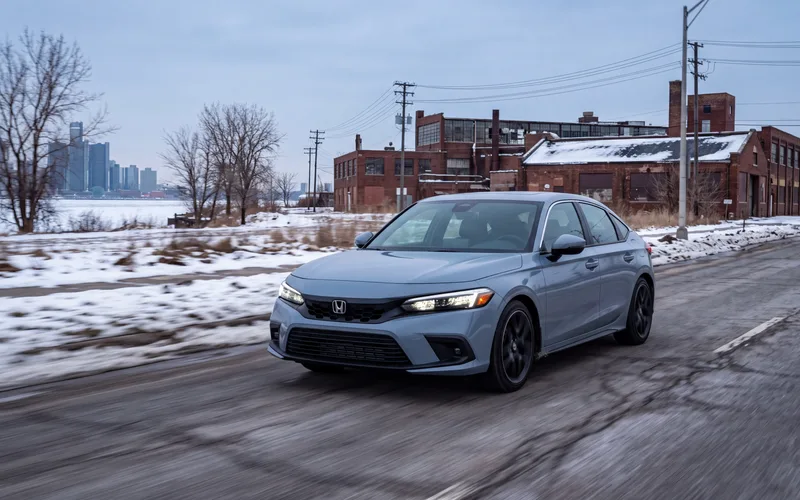 Honda Civic HatchbackCompact HatchbackBetter at: Overall polish
Quicker, quieter, more efficient (~36 MPG combined) and roomier in every dimension for similar money — the obvious choice unless you specifically need all-wheel drive.
Compare 2.25C
2.25C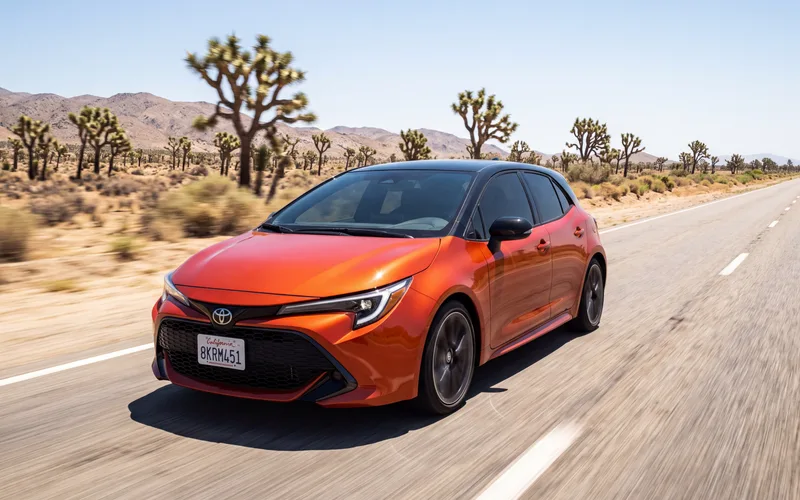 Toyota Corolla HatchbackCompact HatchbackBetter at: Efficiency
Similar price and practicality with 41 MPG highway, a stronger reliability record, and two years of included maintenance the Impreza doesn't match.
Compare 2.57C+
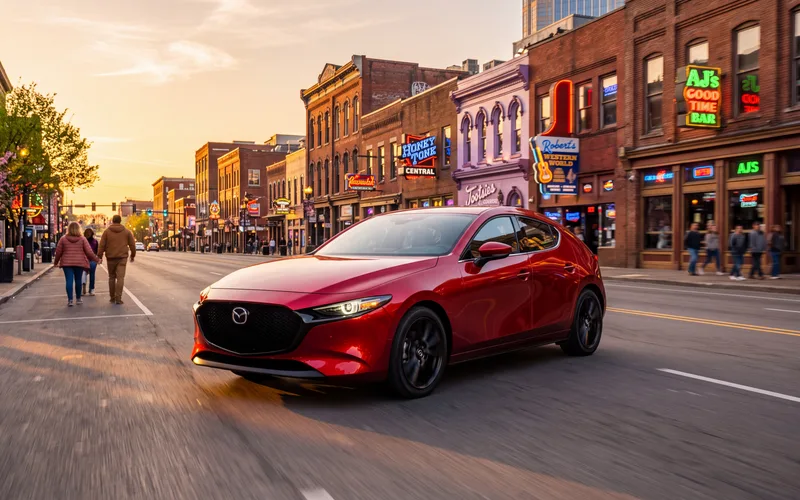 Mazda Mazda3 HatchbackCompact HatchbackBetter at: Interior quality
Offers all-wheel drive too, plus a far nicer interior, an available turbo engine, and steering the Impreza can't match — worth the price step if the cabin and the drive matter.
CompareHow it's evolved
10 scored model years · 2017–2026
Subject scores by year
Hover or tap a score to see what moved it versus the year before. A corner mark flags a big swing.
| Year | Performance | Efficiency | Safety | Space | Cost | Reliability | Tech | Use-case | Driving | Value |
|---|---|---|---|---|---|---|---|---|---|---|
| 2026 | 27 | 57 | 72 | 67 | 59 | 75 | 50 | 58 | 65 | 61 |
| 2025 | 27 | 56 | 71 | 68 | 70 | 75 | 52 | 55 | 63 | 66 |
| 2024 | 27 | 56 | 76 | 68 | 70 | 70 | 52 | 55 | 66 | 67 |
| 2023 | 25 | 51 | 64 | 69 | 70 | 70 | 41 | 55 | 61 | 60 |
| 2022 | 25 | 53 | 69 | 66 | 71 | 72 | 30 | 48 | 57 | 58 |
| 2021 | 25 | 53 | 67 | 66 | 75 | 63 | 35 | 51 | 65 | 58 |
| 2020 | 27 | 52 | 68 | 68 | 77 | 65 | 37 | 51 | 68 | 63 |
| 2019 | 27 | 53 | 62 | 68 | 75 | 58 | 35 | 48 | 67 | 57 |
| 2018 | 25 | 53 | 57 | 67 | 72 | 47 | 35 | 52 | 60 | 65 |
| 2017 | 33 | 53 | 62 | 66 | 72 | 50 | 31 | 50 | 64 | 75 |
Compare two years
Best fit & conditions
Higher scores mean a better fit for that use case. Learn more about use-case fit →
Subject profile
Academic Probation · NHTSA safety recalls
Jul 29, 2021Fuel system, gasoline: delivery: fuel pumpThe low-pressure fuel pump inside the fuel tank may fail.
Defect
Subaru of America, Inc. (Subaru) is recalling certain 2019-2020 Ascent, 2018 Forester, 2018-2020 Impreza, Legacy, Outback, 2018-2019 BRZ, WRX, and Toyota 86 vehicles. The low-pressure fuel pump inside the fuel tank may fail.
Risk
Fuel pump failure can cause an engine stall while driving, increasing the risk of a crash.
Remedy
Dealers will replace the low-pressure fuel pump, free of charge. Owner notification letters were mailed September 24, 2021. Subaru and Toyota owners may call customer service at 1-844-373-6614. Subaru's number for this recall is WRG-21.
NHTSA campaign 21V587000 ↗Manufacturer no. WRG-21175,968 vehicles potentially affected (all models in the campaign)Owners notified Sep 24, 2021Filed by Subaru of America, Inc.Filed as IMPREZA
15 recalls on other model years of the Impreza (2017–2019, 2021–2024)
Nov 9, 2023Power train: driveline: driveshaftThe front driveshaft assemblies' outer race may develop cracks and break.
Defect
Subaru of America, Inc. (Subaru) is recalling certain 2024 Crosstrek, Impreza, 2023-2024 Forester, and 2023 WRX vehicles. The front driveshaft assemblies' outer race may develop cracks and break.
Risk
A broken driveshaft can cause a loss of drive power while driving or vehicle rollaway when the vehicle is in park without the parking brake engaged. Either of these scenarios can increase the risk of a crash.
Remedy
Dealers will inspect and replace the left and right front driveshafts as necessary, free of charge. Owner notification letters were mailed January 8, 2024. Owners may contact Subaru's customer service at 1-844-373-6614. Subaru's number for this recall is WRP-23.
NHTSA campaign 23V754000 ↗Manufacturer no. WRP-234,701 vehicles potentially affected (all models in the campaign)Owners notified Jan 8, 2024Filed by Subaru of America, Inc.Filed as IMPREZASep 21, 2023Power train: driveline: driveshaftThe center support bolts for the driveshaft may loosen, resulting in the disconnection of the front end of the driveshaft.
Defect
Subaru of America, Inc. (Subaru) is recalling certain 2023 Outback, Legacy, Ascent, and Impreza vehicles. The center support bolts for the driveshaft may loosen, resulting in the disconnection of the front end of the driveshaft.
Risk
Separation of the front end of the driveshaft increases the risk of a crash.
Remedy
Dealers will clean the bolt mounting surfaces of the center support brace and install new bolts, free of charge. Owner notification letters were mailed November 20, 2023. Owners may contact Subaru's customer service at 1-844-373-6614. Subaru's number for this recall is WRN-23.
NHTSA campaign 23V647000 ↗Manufacturer no. WRN-234,311 vehicles potentially affected (all models in the campaign)Owners notified Nov 20, 2023Filed by Subaru of America, Inc.Filed as IMPREZAAug 4, 2023Electrical system: instrument cluster/panelDue to insufficient clearance, the instrument panel harness may contact the steering beam bracket, damaging the wire insulation and causing a short circuit.
Defect
Subaru of America, Inc. (Subaru) is recalling certain 2024 Crosstrek and Impreza vehicles. Due to insufficient clearance, the instrument panel harness may contact the steering beam bracket, damaging the wire insulation and causing a short circuit.
Risk
A short circuit may cause a loss of drive power, increasing the risk of a crash.
Remedy
Dealers will inspect the harness and install an additional clamp on the steering beam bracket. If damage is found, dealers will add protective tape or replace the instrument panel harness, as necessary. Repairs will be performed free of charge. Owner notification letters are expected to be mailed October 3, 2023. Owners may contact Subaru customer service at 1-844-373-6614. Subaru's number for this recall is WRL-23.
NHTSA campaign 23V551000 ↗Manufacturer no. WRL-2335,357 vehicles potentially affected (all models in the campaign)Owners notified Oct 3, 2023Filed by Subaru of America, Inc.Filed as IMPREZAApr 25, 2023Exterior lighting: brake lights: switchThe brake light switch may be improperly adjusted and illuminate the brake lights without application of the brake pedal. The vehicle may also allow drivers to start and shift the transmission out of the PARK position without pressing the brake pedal. As such, these vehicles fail to comply with the requirements of Federal Motor Vehicle Safety Standard numbers 108, "Lamps, Reflective Devices, and Associated Equipment" and 102, "Trans Shift Lever Seq/Starter Interlock/Trans Braking Effect."
Defect
Subaru of America, Inc. (Subaru) is recalling certain 2023 Impreza vehicles. The brake light switch may be improperly adjusted and illuminate the brake lights without application of the brake pedal. The vehicle may also allow drivers to start and shift the transmission out of the PARK position without pressing the brake pedal. As such, these vehicles fail to comply with the requirements of Federal Motor Vehicle Safety Standard numbers 108, "Lamps, Reflective Devices, and Associated Equipment" and 102, "Trans Shift Lever Seq/Starter Interlock/Trans Braking Effect."
Risk
An unintentional brake light illumination can fail to alert other motorists of actual brake application. A vehicle that shifts out of the park position unexpectedly can allow the vehicle to rollaway. Either of these scenarios can increase the risk of a crash.
Remedy
Dealers will inspect the gap between the brake light switch and stopper, adjusting the switch as necessary, free of charge. Owner notification letters are expected to be mailed June 23, 2023. Owners may contact Subaru's customer service at 1-844-373-6614. Subaru's number for this recall is WRI-23.
NHTSA campaign 23V292000 ↗Manufacturer no. WRI-234,030 vehicles potentially affected (all models in the campaign)Owners notified May 19, 2023Filed by Subaru of America, Inc.Filed as IMPREZASep 22, 2022Visibility: windshieldThe incorrect paint clearcoat may have been applied, which can cause the windshield to be insufficiently bonded to the vehicle. As such, these vehicles fail to comply with the requirements of Federal Motor Vehicle Safety Standard number 212, "Windshield Mounting."
Defect
Subaru of America, Inc. (Subaru) is recalling certain 2022 Impreza and Outback vehicles. The incorrect paint clearcoat may have been applied, which can cause the windshield to be insufficiently bonded to the vehicle. As such, these vehicles fail to comply with the requirements of Federal Motor Vehicle Safety Standard number 212, "Windshield Mounting."
Risk
An insufficiently bonded windshield can detach during a crash, increasing the risk of injury.
Remedy
Subaru will offer owners a vehicle exchange or repurchase, free of charge. Owner notification letters are expected to be mailed November 21, 2022. Owners may contact Subaru's customer service at 1-844-373-6614. Subaru's number for this recall is WRH-22.
NHTSA campaign 22V712000 ↗Manufacturer no. WRH-2242 vehicles potentially affected (all models in the campaign)Owners notified Nov 11, 2022Filed by Subaru of America, Inc.Filed as IMPREZAAug 12, 2022Exterior lighting: headlightsThe left and right side reflex reflector and left side low beam reflector may inadequately reflect light. As such, these vehicles fail to comply with the requirements of Federal Motor Vehicle Safety Standard number 108, "Lamps, Reflective Devices, and Associated Equipment."
Defect
Subaru of America, Inc. (Subaru) is recalling certain 2017-2019 Impreza vehicles. The left and right side reflex reflector and left side low beam reflector may inadequately reflect light. As such, these vehicles fail to comply with the requirements of Federal Motor Vehicle Safety Standard number 108, "Lamps, Reflective Devices, and Associated Equipment."
Risk
Reflectors that do not provide adequate illumination reduce the driver's ability to see and increase the risk of a crash.
Remedy
Dealers will replace the front headlamp assemblies, free of charge. Owner notification letters were mailed November 15, 2023. Owners may contact Subaru's customer service at 1-844-373-6614. Subaru's number for this recall is WRG-22.
NHTSA campaign 22V624000 ↗Manufacturer no. WRG-22188,397 vehicles potentially affected (all models in the campaign)Owners notified Nov 15, 2023Filed by Subaru of America, Inc.Filed as IMPREZAAug 30, 2021Suspension: front: control arm: lower armThe left-front lower control arm weld may fail, allowing the control arm to separate from the crossmember.
Defect
Subaru of America, Inc. (Subaru) is recalling certain 2021 Impreza vehicles. The left-front lower control arm weld may fail, allowing the control arm to separate from the crossmember.
Risk
A separated control arm may cause the tire to contact the wheel well, resulting in a loss of control and increasing the risk of a crash.
Remedy
Owners are advised not to drive their vehicle until the repair is complete. Dealers will inspect and replace the control arm as necessary, free of charge. Owner notification letters were mailed September 3, 2021. Owners may contact Subaru customer service at 1-844-373-6614. Subaru's number for this recall is WRI-21.
NHTSA campaign 21V675000 ↗Manufacturer no. WRI-21802 vehicles potentially affected (all models in the campaign)Owners notified Sep 3, 2021Filed by Subaru of America, Inc.Filed as IMPREZAApr 15, 2021Electrical system: ignition · Electrical system: software · Engine and engine cooling: engine: engine control module (ecu/ecm): software · Engine and engine cooling: exhaust system: manifold/header/muffler/tail pipeThe Engine Control Module (ECM) may continue to power the ignition coil after the engine is shut off, causing a short circuit.
Defect
Subaru of America, Inc. (Subaru) is recalling certain 2017-2019 Subaru Impreza and 2018-2019 Crosstrek vehicles. The Engine Control Module (ECM) may continue to power the ignition coil after the engine is shut off, causing a short circuit.
Risk
A short circuit in the ignition coils may cause a stall, increasing the risk of a crash.
Remedy
Subaru will notify owners, and dealers will update the ECM software, replace the ignition coils and, if necessary, the front exhaust pipe, free of charge. Owner notification letters were mailed beginning June 1, 2021. Owners can contact Subaru customer service at 1-844-373-6614. Subaru's number for this recall is WRE-21. Note: This recall includes all vehicles previously repaired under Recall 19V743.
NHTSA campaign 21V264000 ↗Manufacturer no. WRE-21466,205 vehicles potentially affected (all models in the campaign)Owners notified Jun 1, 2021Filed by Subaru of America, Inc.Filed as IMPREZAJan 26, 2021Power train: shift linkage/cable/rodThe continuously variable transmission (CVT) select lever cable nut may not have been tightened properly, allowing the nut to loosen.
Defect
Subaru of America, Inc. (Subaru) is recalling certain 2021 Outback and Impreza vehicles. The continuously variable transmission (CVT) select lever cable nut may not have been tightened properly, allowing the nut to loosen.
Risk
A loose nut can lead to a lost of retention in the CVT select lever cable and the gear selector not functioning properly, increasing risk of crash.
Remedy
Subaru will notify owners, and dealers will inspect, and, if necessary, tighten the nut, free of charge. The recall began February 12, 2021. Owners may contact Subaru customer service at 1-844-373-6614. Subaru's number for this recall is WRA-21.
NHTSA campaign 21V024000 ↗Manufacturer no. WRA-21383 vehicles potentially affected (all models in the campaign)Owners notified Feb 12, 2021Filed by Subaru of America, Inc.Filed as IMPREZAApr 16, 2020Fuel system, gasoline: delivery: fuel pumpThe low pressure fuel pump may become inoperative.
Defect
Subaru of America, Inc. (Subaru) is recalling certain 2019 Impreza, Outback, Legacy, and Ascent vehicles. The low pressure fuel pump may become inoperative.
Risk
If the low pressure fuel pump fails, the engine may stall without the ability to restart the vehicle, increasing the risk of a crash.
Remedy
Subaru will notify owners, and dealers will replace the low pressure fuel pump, free of charge. The recall began June 4, 2020. Owners may contact Subaru customer service at 1-844-373-6614. Subaru's number for this recall is WRD-20.
NHTSA campaign 20V218000 ↗Manufacturer no. WRD-20188,207 vehicles potentially affected (all models in the campaign)Owners notified Jun 4, 2020Filed by Subaru of America, Inc.Filed as IMPREZAOct 18, 2019Electrical system: ignition · Electrical system: softwareThe Engine Control Module (ECM) may continue to power the ignition coil after the engine is shut off, which could result in a short circuit and blown fuse.
Defect
Subaru of America, Inc. (Subaru) is recalling certain 2017-2019 Impreza and 2018-2019 Crosstrek vehicles. The Engine Control Module (ECM) may continue to power the ignition coil after the engine is shut off, which could result in a short circuit and blown fuse.
Risk
If a short circuit occurs while driving, the vehicle may stall, increasing the risk of a crash.
Remedy
Subaru will notify owners, and dealers will update the ECM software and inspect and replace the ignition coil, as necessary, free of charge. In addition, on vehicles with confirmed ignition coil damage and a certain stored diagnostic trouble code (DTC), Subaru will replace the front exhaust pipe, free of charge. The recall began December 4, 2019. Owners may contact Subaru customer service at 1-844-373-6614. Subaru's number for this recall is WUQ-02.
NHTSA campaign 19V743000 ↗Manufacturer no. WUQ-02466,205 vehicles potentially affected (all models in the campaign)Owners notified Dec 4, 2019Filed by Subaru of America, Inc.Filed as IMPREZAOct 17, 2019Engine and engine cooling: exhaust system: emission control: crankcase (pcv)The PCV valve may come apart, allowing the separated components to enter the engine, possibly resulting in a loss of power while driving.
Defect
Subaru of America, Inc. (Subaru) is recalling certain 2017 Impreza vehicles equipped with an aluminum Positive Crankcase Ventilation (PCV) valve. The PCV valve may come apart, allowing the separated components to enter the engine, possibly resulting in a loss of power while driving.
Risk
An unexpected loss of power while driving can increase the risk of a crash.
Remedy
Subaru will notify owners, and dealers will replace the engine, free of charge. The recall began December 3, 2019. Owners may contact Subaru customer service at 1-844-373-6614. Subaru's number for this recall is WUS-04.
NHTSA campaign 19V745000 ↗Manufacturer no. WUS-04251 vehicles potentially affected (all models in the campaign)Owners notified Dec 3, 2019Filed by Subaru of America, Inc.Filed as IMPREZAOct 17, 2019Engine and engine cooling: exhaust system: emission control: crankcase (pcv)The PCV valve may come apart, allowing the separated components to enter the engine, possibly resulting in a loss of power while driving.
Defect
Subaru of America, Inc. (Subaru) is recalling certain 2017-2018 Impreza and 2018 Crosstrek vehicles equipped with an aluminum Positive Crankcase Ventilation (PCV) valve. The PCV valve may come apart, allowing the separated components to enter the engine, possibly resulting in a loss of power while driving.
Risk
An unexpected loss of power while driving can increase the risk of a crash.
Remedy
Subaru will notify owners, and dealers will inspect and, if necessary, replace the PCV valve, free of charge. If the PCV valve has separated and the components cannot be found, the engine will be replaced, free of charge. The recall began December 2, 2019. Owners may contact Subaru customer service at 1-844-373-6614. Subaru's number for this recall is WUP-01.
NHTSA campaign 19V744000 ↗Manufacturer no. WUP-01205,000 vehicles potentially affected (all models in the campaign)Owners notified Dec 2, 2019Filed by Subaru of America, Inc.Filed as IMPREZAMar 29, 2017Fuel system, gasoline: delivery: hoses, lines/piping, and fittingsWinter fuels may vaporize prematurely in the fuel line, resulting in a reduction in fuel pressure, possibly causing the engine to stall.
Defect
Subaru of America, Inc. (Subaru) is recalling certain 2017 Impreza vehicles. Winter fuels may vaporize prematurely in the fuel line, resulting in a reduction in fuel pressure, possibly causing the engine to stall.
Risk
An engine stall can increase the risk of a crash.
Remedy
Subaru will notify owners, and dealers will reprogram the engine control unit to turn the radiator cooling fan on at a lower temperature, free of charge. The recall began on April 20, 2017. Owners may contact Subaru customer service at 1-800-782-2738. Subaru's number for this recall is WTP-75.
NHTSA campaign 17V216000 ↗Manufacturer no. WTP-7533,131 vehicles potentially affected (all models in the campaign)Owners notified Apr 20, 2017Filed by Subaru of America, Inc.Filed as IMPREZAMar 2, 2017Back over prevention: camera systemDue to a software problem, the rearview camera display may not work properly.
Defect
Subaru of America, Inc. (Subaru) is recalling certain 2017 Impreza vehicles. Due to a software problem, the rearview camera display may not work properly.
Risk
A rearview camera display that does not function as designed can reduce the driver's view of what is behind the car, increasing the risk of a crash.
Remedy
Subaru will notify owners, and dealers will update the infotainment software, free of charge. The recall began on March 27, 2017. Owners may contact Subaru customer service at 1-800-782-2783. Subaru's number for the recall is WTN-74.
NHTSA campaign 17V132000 ↗Manufacturer no. WTN-7425,567 vehicles potentially affected (all models in the campaign)Owners notified Mar 27, 2017Filed by Subaru of America, Inc.Filed as IMPREZA
Source: NHTSA Office of Defects Investigation recall database, model years 2017–2026. Recalls are listed by model year as the manufacturer filed them; whether a specific car is affected depends on its VIN — check a VIN at nhtsa.gov ↗. NHTSA model names matched to this page: IMPREZA.
Detailed scoring by subject
1Performance & PowertrainThe Impreza's lowest-graded category.0.00F
The 2020 Impreza carries over the naturally aspirated 2.0L FB20 flat-4 as its sole engine across all trims; no turbo or upgraded-output option exists this model year.
Peak torque for the standard FB20 engine, unchanged for 2020.
The CVT is the volume gearbox across the Impreza hatchback range; instrumented tests of CVT-equipped Imprezas of this generation consistently land in the high-8-second range to 60 mph, with manual-transmission cars (Base/Sport only) a few tenths quicker.
The FB20 is adequate around town but strains and gets coarse under hard acceleration or highway passing, a widely repeated criticism of this generation's Impreza; reviewers describe it as underpowered for the car's weight.
Subaru's Lineartronic CVT uses programmed 'steps' to mimic gear shifts and avoid constant drone, and is generally well-regarded for a CVT, though it doesn't fully disguise the engine's lack of low-end punch; the 5-speed manual (Base/Sport only) shifts cleanly but is a basic unit.
Subaru Symmetrical All-Wheel Drive is standard equipment on every 2020 Impreza trim and body style — unusual for the compact class, where AWD is typically optional or unavailable — though it is a basic full-time system without low-range gearing or selectable terrain modes.
The 2020 Impreza offers a single engine (2.0L flat-4, naturally aspirated) with a choice of only two transmissions (5-speed manual or CVT); no turbo, hybrid, or electrified variant exists for this nameplate.
2Efficiency & RangeGrades below the middle of the scale.1.49D
EPA combined rating for the volume CVT AWD Base/Premium 5-Door, which is the dominant configuration; Sport trim CVT rates slightly lower and 5-speed manual trims lower still.
EPA city rating for the CVT AWD 5-Door, the volume configuration.
EPA highway rating for the CVT AWD 5-Door, the volume configuration.
Calculated from the Impreza's 13.2-gallon fuel tank capacity and the EPA combined rating for the CVT AWD 5-Door.
EPA annual fuel cost estimate for the CVT AWD 5-Door at standard 15,000 mi/yr assumptions.
The Impreza's flat-4 runs on regular unleaded across every trim and transmission, with no premium recommendation.
3SafetyOne of the Impreza's strongest categories.2.59C+
NHTSA's 2020 test of the Impreza returned a 5-star overall rating, with 5 stars in frontal, side, and rollover.
Good across the original crashworthiness suite (small overlap both sides, moderate overlap, roof strength, head restraints), but the 2020 Impreza posted a Poor on IIHS's newer, stricter updated side-impact test — a real structural/head-protection weak point that keeps it out of TSP+ despite an otherwise strong sheet.
EyeSight (AEB, adaptive cruise, lane keep assist, lane departure warning) is standard across the range on CVT-equipped trims, but blind-spot monitoring and rear cross-traffic alert are an extra-cost package on the volume Premium and Sport trims, standard only on top-tier Limited.
IIHS rated EyeSight's front crash prevention Superior for both vehicle-to-vehicle and daytime pedestrian detection — the top tier of that test.
Blind-spot detection with lane-change assist and rear cross-traffic alert is alert-only (no active steering/braking intervention) and is a paid option on Premium and Sport; it's standard only on the top Limited trim, so most buyers pay extra or go without.
EyeSight provides lane departure warning and a corrective lane-keep nudge standard, but the 2020 Impreza does not offer true hands-on lane centering (that feature was reserved for Outback/Legacy/Ascent at the time), so it functions rather than impresses.
Advanced Adaptive Cruise Control is standard and covers full-speed-range operation down to a complete stop, but there's no combined highway-assist mode pairing ACC with lane centering, so the highway experience is less integrated than rivals offering both together.
No hands-free highway driving system was offered on the 2020 Impreza or anywhere in Subaru's lineup at the time.
IIHS rated the LED projector headlights on the Limited trim Good, but the halogen reflector units fitted to the volume Premium/Sport/base trims rated only Marginal — most buyers get the weaker set.
Reviewers consistently cite the Impreza's thin pillars and low beltline as giving unusually good outward sightlines for the class, and IIHS's straightaway visibility check found no blind zones on either side.
IIHS gave the Impreza's LATCH hardware its top Good+ ease-of-use rating, with two complete, easily reached lower-anchor sets and enough rear-seat space to fit both a front driver and a rear-facing seat comfortably.
4Space & ComfortOne of the Impreza's strongest categories.2.60C+
Standard 5-passenger seating across all 2020 Impreza 5-Door trims.
Front headroom is near the top of the compact hatchback band.
Generous front legroom for the segment.
Mid-pack rear headroom for a compact hatchback with a sloping roofline; sources vary slightly (37.2-38 in) but agree it's unremarkable.
Rear legroom is on the tighter side of the compact hatchback band, typical for the class.
20.8 cu ft is above the midpoint of the compact hatchback band, a strength of the 5-Door body style.
Conventional console bin, door pockets, and a 60/40 fold-flat rear seat cover the basics with no standout storage innovation.
Reviewers praise the front seats as supportive and comfortable over long stints, but note the driver's seat lacks adjustable lumbar support.
Widely praised as one of the more comfortable-riding compact cars, effectively absorbing broken pavement.
Quieter than prior Impreza generations with more sound deadening, but road and wind noise remain noticeable on longer highway trips.
Heated front seats are standard only on Sport and Limited (optional package on Premium, unavailable on Base); no heated steering wheel or rear vents are offered.
5Cost of OwnershipThe Impreza's best-graded category.3.22B+
Entry hatchback trim with manual transmission; CVT adds $1,300.
Premium is the recommended mid-spec sweet spot (moonroof, keyless entry, power driver's seat, All-Weather package availability) and the trim reviewers point buyers toward as the volume choice.
Estimate splits the difference between diverging industry sources for this generation Impreza; RepairPal rates Impreza reliability 'above average' with infrequent major repairs.
Impreza retains value better than the compact-car segment average, consistent with Subaru's strong resale reputation.
Standard mainstream-brand basic warranty length, at the floor of the segment band.
Matches the mainstream-brand floor; well short of Hyundai/Kia's 10-year powertrain coverage.
No complimentary scheduled maintenance is included, but Subaru bundles free 24-hour roadside assistance (towing, jump-starts, flat-tire change, lockout, fuel delivery) for the length of the 3-year/36,000-mile basic warranty — basic roadside coverage without a maintenance plan.
$23,495 volume-trim price minus its estimated resale value after 5 years (70.9% retained, or about $16,658) leaves about $6,837 in depreciation. Add the projected $3,900 in 5-year maintenance and repairs, and owning this vehicle for 5 years costs about $10,737 in total.
6Reliability & QualityMid-pack among this car's ten categories.2.40C+
Consumer Reports rates the 2020 Impreza's overall/predicted reliability as about average for the model year, with reported trouble spots in brakes, electrical accessories, body hardware, climate system and in-car electronics rather than a clean sheet.
Subaru has trailed the industry in J.D. Power's Vehicle Dependability Study for several consecutive years through 2020 (Outback/Forester/Crosstrek earned no individual awards that year, brand PP100 was worse than the industry average in the years surrounding), placing the brand mid-to-lower pack on long-term dependability rather than top tier.
NHTSA shows one recall for the 2020 Impreza — a shared-supplier (Denso) low-pressure fuel pump that could fail and stall the engine, an industry-wide issue that also hit Toyota and other automakers rather than a Subaru-specific design flaw. TSB/owner-complaint patterns (door latch, CarPlay connectivity, heat shield rattle) are minor and non-systemic.
The naturally aspirated FB20 2.0L four-cylinder has been in Subaru's lineup since 2012 with no systemic failure pattern by 2020, a marked improvement over the older EJ-series' head-gasket reputation. The Lineartronic CVT (this generation's second-gen unit) is generally sound but owners and forums report occasional shudder/hesitation and stress the importance of fluid changes, keeping it short of a fully proven, red-flag-free record.
Reviewers describe the cabin as a mix of soft-touch surfaces in primary touch points and harder, lower-grade plastics elsewhere — acceptable for the mainstream compact segment but a step below class leaders like the Honda Civic.
Assembly is generally solid — one press test found flawless panel alignment with no rattles — but Consumer Reports' owner-survey data and forum complaints document scattered squeak/rattle issues (tailgate, heat shield) rather than a uniformly tight build.
Subaru's roughly 640-dealer US network gives adequate nationwide coverage, and the brand's J.D. Power Customer Service Index standing around 2020 was mid-pack (9th of 19 mass-market brands) and trending upward, short of the top-tier service reputation the brand would later earn.
Impreza parts are widely available through Subaru's national dealer network and a healthy aftermarket (helped by shared parts across Impreza/Crosstrek/WRX), with repair costs typical for a mainstream compact — standard AWD hardware adds modest routine-service cost versus FWD-only rivals but is not a specialty or dealer-only expense.
7Technology & InfotainmentOne of the Impreza's weakest categories.0.45F
The volume Premium trim carries the 6.5-in STARLINK Multimedia Plus screen; the 8-in unit is reserved for Sport and Limited.
The STARLINK system retains helpful physical volume/tune knobs and is usable, but period reviews note laggy touch response and dated graphics next to segment leaders.
Apple CarPlay and Android Auto are standard across every 2020 Impreza trim, but only via wired USB connection — Subaru did not offer wireless projection on this generation.
Built-in voice command is basic Bluetooth-based control, and native navigation is an optional add-on only on the 8-in Sport/Limited screen — most owners rely on phone projection instead.
Base audio is adequate but unremarkable; a Harman Kardon premium system is available only on the top Limited trim.
The 2020 Impreza uses traditional analog gauges with a small 4.2-in monochrome/color multi-function display, not a configurable full-digital cluster.
Subaru's STARLINK system in this era had no meaningful over-the-air update capability for infotainment or vehicle software.
The MySubaru/STARLINK app supports remote start with climate control, lock/unlock, and vehicle locate, but requires a paid STARLINK Safety and Security Plus subscription.
USB charging (2.1A) and a 12V outlet are provided, but wireless phone charging was not offered on the 2020 Impreza on any trim.
Proximity keyless entry with push-button start is reserved for Sport and Limited trims; the volume Premium trim uses a conventional key with remote lock/unlock, with remote engine start available only through the paid app subscription.
A rear-vision camera with dynamic guidelines is standard, but there are no front/side parking sensors and no 360-degree camera on any trim.
No head-up display is offered on any 2020 Impreza trim.
8Use-Case FitOne of the Impreza's weakest categories.1.40D
The 5-door hatchback has usable door openings and a 60/40 split rear seat with standard LATCH anchors, but 36.5 in of rear legroom makes car-seat installation and daily loading tighter than compact-SUV rivals.
EyeSight driver-assist (adaptive cruise, pre-collision braking, lane keep/departure) became standard on CVT models for 2020, paired with a 5-star NHTSA rating and an IIHS Top Safety Pick award — strong safety credentials on affordable, family-friendly trims.
Ride quality is a genuine strength for multi-hour trips, but the compact rear seat, lack of rear climate vents, and modest 20.8 cu ft cargo hold limit gear capacity for a full family.
The CVT delivers smooth, low-fatigue behavior in traffic, and reviewers consistently describe the Impreza as an easy, relaxing daily driver with direct steering and good visibility.
Up to 36 mpg highway is respectable, but standard AWD (unlike most FWD-only rivals) costs some efficiency versus the segment's most frugal commuters.
A compact footprint, tight 35.4-ft turning circle, and standard rear camera make the Impreza easy to park and thread through city streets.
Subaru does not publish a tow rating for the Impreza and cargo capacity (20.8 cu ft) is modest — it is not positioned or equipped as a work vehicle.
Subaru's AWD drivetrain has a reputation for holding up well, but the Impreza is not fleet-proven for heavy work use, and this generation's CVT/oil-consumption concerns temper confidence under sustained hard use.
No onboard power beyond 12V/USB, no tie-down points, and no rack or upfit ecosystem — the hatchback body offers essentially no work-focused provisions.
A comfortable ride, standard adaptive cruise (EyeSight), and roughly 450 miles of highway range support long trips, though sustained road noise and modest power take the edge off.
Standard AWD gives genuine gravel/light-snow confidence, but 5.1 in of ground clearance and modest power keep it well short of a true adventure vehicle.
60/40 split-folding rear seats expand cargo to 55.3 cu ft for bulkier gear, and roof rails are available, giving reasonable flexibility for a compact hatchback.
9Driving ExperienceMid-pack among this car's ten categories.2.58C+
Reviewers consistently praise the chassis for composed, flat cornering and surprising grip even on base trims, a class strength.
Steering is described as lively, direct, and quick — a standout for a mainstream compact hatchback.
Instrumented testing found a firm pedal and short stopping distances that are exemplary for the class.
The 152-hp flat-four is smooth at cruise but strains and the CVT drones under harder acceleration, a common criticism of this generation.
The boxer engine's exhaust note is softer than prior generations thanks to added insulation, but CVT drone is audible under hard acceleration.
A tight turning circle for the segment, aiding low-speed maneuverability.
Good outward visibility, a logically arranged dash, and comfortable seating position are consistently praised, with only minor gripes about missing driver lumbar adjustment.
An engaging chassis and steering are undercut by the modest 152-hp output and CVT, making the base Impreza pleasant rather than genuinely exciting (unlike the related WRX).
10Value & Market PositionMid-pack among this car's ten categories.2.22C
All-wheel drive is standard on every trim including base — a genuine segment rarity, since Civic/Corolla/Mazda3/Elantra hatchbacks are FWD-only or charge a large premium for AWD; EyeSight driver-assist is standard on all CVT trims for 2020, adding safety tech rivals often reserve for higher trims.
Standard AWD plus standard EyeSight for the CVT range gives real content-per-dollar even though the 152-hp 2.0L engine is unremarkable and the base price undercuts rivals by less than it once did after the 2020 price bump.
Four trims (Base, Premium, Sport, Limited) span roughly $19k-$26k with a reasonable equipment ladder, but there is only one engine/AWD configuration — no hybrid, turbo, or FWD-for-less option to widen the range the way some rivals do.
Impreza sales fell sharply in 2020 as buyers continued shifting to crossovers, part of a multi-year decline for the nameplate.
Subaru topped J.D. Power's 2020 U.S. Automotive Brand Loyalty Study among ALL brands (not just mainstream), for the second year running, reflecting an unusually loyal, trust-driven following relative to the sticker price.
Subaru is well known for thin margins and limited dealer discounting versus mainstream rivals; 2020 demand for AWD compacts kept negotiability low, so buyers rarely find meaningful incentives.
2020 sits in year four of the 2017–2024 generation and carries a mid-cycle exterior refresh (new front bumper/grille, revised taillights) plus newly-standard EyeSight — current and recently updated, but not a new platform.
Consistently well-reviewed for ride, handling and standard AWD, and the 2020 Impreza (with EyeSight and specified headlights) earned an IIHS Top Safety Pick, but it is not typically the outright winner of compact-hatchback comparison tests against the Civic/Mazda3/Corolla.