

The verdict
A mixed-report compact hatchback, strong on reliability and held back by performance.
The 2025 Impreza is the cheapest all-wheel-drive car sold in America — $24,665 with destination — and it spends that money where it counts: standard AWD, the full EyeSight safety suite, five NHTSA stars, and a roomy 20.4 cu ft hatchback body on every trim. What you give up is pace and polish. The 152-hp boxer needs about nine seconds to reach 60 mph, the CVT drones on the highway, and the cabin is quiet on features and loud on road noise, with no hybrid option and no blind-spot monitoring at all on the base car. If snow, safety, and a low purchase price are what you're solving for, few cars answer better; if you want a fun or refined compact, the class leaders are quicker, quieter and nicer inside for similar money.
Jump to scoresStrengths
- All-wheel drive standard, for less than anything else on sale
- Safety gear that doesn't wait for a higher trim
- Cheap to buy, cheap to keep
What holds it back
- It is genuinely slow
- Noisy at highway speed
- Thin on technology
Top alternatives
Cars shoppers cross-shop with the Subaru Impreza 2.46C+
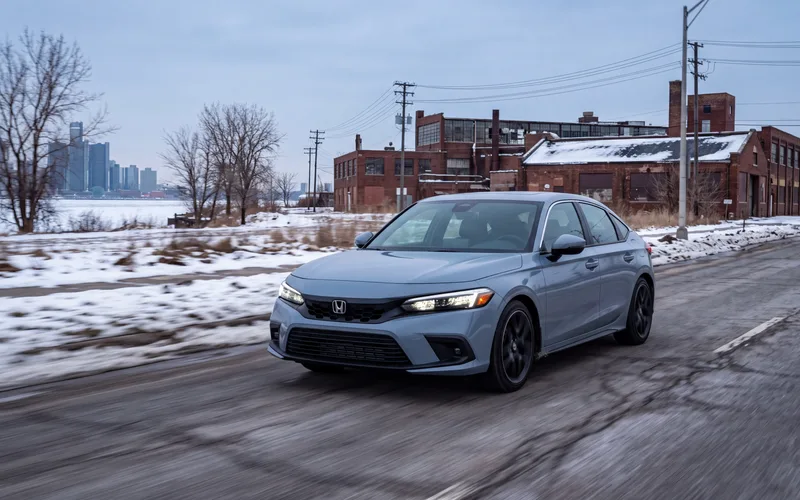 Honda Civic HatchbackCompact HatchbackBetter at: Overall polish
Quicker, quieter, more efficient (~36 MPG combined) and roomier in every dimension for similar money — the obvious choice unless you specifically need all-wheel drive.
Compare 2.25C
2.25C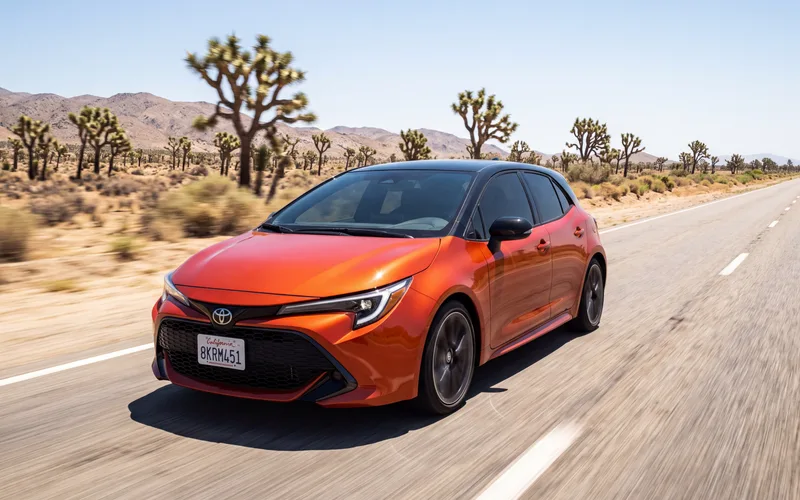 Toyota Corolla HatchbackCompact HatchbackBetter at: Efficiency
Similar price and practicality with 41 MPG highway, a stronger reliability record, and two years of included maintenance the Impreza doesn't match.
Compare 2.57C+
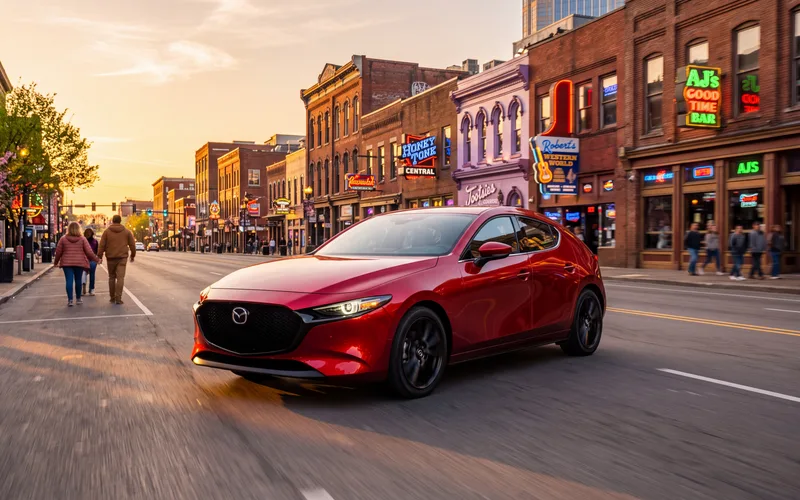 Mazda Mazda3 HatchbackCompact HatchbackBetter at: Interior quality
Offers all-wheel drive too, plus a far nicer interior, an available turbo engine, and steering the Impreza can't match — worth the price step if the cabin and the drive matter.
CompareHow it's evolved
10 scored model years · 2017–2026
Subject scores by year
Hover or tap a score to see what moved it versus the year before. A corner mark flags a big swing.
| Year | Performance | Efficiency | Safety | Space | Cost | Reliability | Tech | Use-case | Driving | Value |
|---|---|---|---|---|---|---|---|---|---|---|
| 2026 | 27 | 57 | 72 | 67 | 59 | 75 | 50 | 58 | 65 | 61 |
| 2025 | 27 | 56 | 71 | 68 | 70 | 75 | 52 | 55 | 63 | 66 |
| 2024 | 27 | 56 | 76 | 68 | 70 | 70 | 52 | 55 | 66 | 67 |
| 2023 | 25 | 51 | 64 | 69 | 70 | 70 | 41 | 55 | 61 | 60 |
| 2022 | 25 | 53 | 69 | 66 | 71 | 72 | 30 | 48 | 57 | 58 |
| 2021 | 25 | 53 | 67 | 66 | 75 | 63 | 35 | 51 | 65 | 58 |
| 2020 | 27 | 52 | 68 | 68 | 77 | 65 | 37 | 51 | 68 | 63 |
| 2019 | 27 | 53 | 62 | 68 | 75 | 58 | 35 | 48 | 67 | 57 |
| 2018 | 25 | 53 | 57 | 67 | 72 | 47 | 35 | 52 | 60 | 65 |
| 2017 | 33 | 53 | 62 | 66 | 72 | 50 | 31 | 50 | 64 | 75 |
Compare two years
Best fit & conditions
Higher scores mean a better fit for that use case. Learn more about use-case fit →
Subject profile
Academic Probation · NHTSA safety recalls
No NHTSA safety recall is on record for the 2025 Subaru Impreza. Other model years of the Impreza have 16 — listed below.
16 recalls on other model years of the Impreza (2017–2024)
Nov 9, 2023Power train: driveline: driveshaftThe front driveshaft assemblies' outer race may develop cracks and break.
Defect
Subaru of America, Inc. (Subaru) is recalling certain 2024 Crosstrek, Impreza, 2023-2024 Forester, and 2023 WRX vehicles. The front driveshaft assemblies' outer race may develop cracks and break.
Risk
A broken driveshaft can cause a loss of drive power while driving or vehicle rollaway when the vehicle is in park without the parking brake engaged. Either of these scenarios can increase the risk of a crash.
Remedy
Dealers will inspect and replace the left and right front driveshafts as necessary, free of charge. Owner notification letters were mailed January 8, 2024. Owners may contact Subaru's customer service at 1-844-373-6614. Subaru's number for this recall is WRP-23.
NHTSA campaign 23V754000 ↗Manufacturer no. WRP-234,701 vehicles potentially affected (all models in the campaign)Owners notified Jan 8, 2024Filed by Subaru of America, Inc.Filed as IMPREZASep 21, 2023Power train: driveline: driveshaftThe center support bolts for the driveshaft may loosen, resulting in the disconnection of the front end of the driveshaft.
Defect
Subaru of America, Inc. (Subaru) is recalling certain 2023 Outback, Legacy, Ascent, and Impreza vehicles. The center support bolts for the driveshaft may loosen, resulting in the disconnection of the front end of the driveshaft.
Risk
Separation of the front end of the driveshaft increases the risk of a crash.
Remedy
Dealers will clean the bolt mounting surfaces of the center support brace and install new bolts, free of charge. Owner notification letters were mailed November 20, 2023. Owners may contact Subaru's customer service at 1-844-373-6614. Subaru's number for this recall is WRN-23.
NHTSA campaign 23V647000 ↗Manufacturer no. WRN-234,311 vehicles potentially affected (all models in the campaign)Owners notified Nov 20, 2023Filed by Subaru of America, Inc.Filed as IMPREZAAug 4, 2023Electrical system: instrument cluster/panelDue to insufficient clearance, the instrument panel harness may contact the steering beam bracket, damaging the wire insulation and causing a short circuit.
Defect
Subaru of America, Inc. (Subaru) is recalling certain 2024 Crosstrek and Impreza vehicles. Due to insufficient clearance, the instrument panel harness may contact the steering beam bracket, damaging the wire insulation and causing a short circuit.
Risk
A short circuit may cause a loss of drive power, increasing the risk of a crash.
Remedy
Dealers will inspect the harness and install an additional clamp on the steering beam bracket. If damage is found, dealers will add protective tape or replace the instrument panel harness, as necessary. Repairs will be performed free of charge. Owner notification letters are expected to be mailed October 3, 2023. Owners may contact Subaru customer service at 1-844-373-6614. Subaru's number for this recall is WRL-23.
NHTSA campaign 23V551000 ↗Manufacturer no. WRL-2335,357 vehicles potentially affected (all models in the campaign)Owners notified Oct 3, 2023Filed by Subaru of America, Inc.Filed as IMPREZAApr 25, 2023Exterior lighting: brake lights: switchThe brake light switch may be improperly adjusted and illuminate the brake lights without application of the brake pedal. The vehicle may also allow drivers to start and shift the transmission out of the PARK position without pressing the brake pedal. As such, these vehicles fail to comply with the requirements of Federal Motor Vehicle Safety Standard numbers 108, "Lamps, Reflective Devices, and Associated Equipment" and 102, "Trans Shift Lever Seq/Starter Interlock/Trans Braking Effect."
Defect
Subaru of America, Inc. (Subaru) is recalling certain 2023 Impreza vehicles. The brake light switch may be improperly adjusted and illuminate the brake lights without application of the brake pedal. The vehicle may also allow drivers to start and shift the transmission out of the PARK position without pressing the brake pedal. As such, these vehicles fail to comply with the requirements of Federal Motor Vehicle Safety Standard numbers 108, "Lamps, Reflective Devices, and Associated Equipment" and 102, "Trans Shift Lever Seq/Starter Interlock/Trans Braking Effect."
Risk
An unintentional brake light illumination can fail to alert other motorists of actual brake application. A vehicle that shifts out of the park position unexpectedly can allow the vehicle to rollaway. Either of these scenarios can increase the risk of a crash.
Remedy
Dealers will inspect the gap between the brake light switch and stopper, adjusting the switch as necessary, free of charge. Owner notification letters are expected to be mailed June 23, 2023. Owners may contact Subaru's customer service at 1-844-373-6614. Subaru's number for this recall is WRI-23.
NHTSA campaign 23V292000 ↗Manufacturer no. WRI-234,030 vehicles potentially affected (all models in the campaign)Owners notified May 19, 2023Filed by Subaru of America, Inc.Filed as IMPREZASep 22, 2022Visibility: windshieldThe incorrect paint clearcoat may have been applied, which can cause the windshield to be insufficiently bonded to the vehicle. As such, these vehicles fail to comply with the requirements of Federal Motor Vehicle Safety Standard number 212, "Windshield Mounting."
Defect
Subaru of America, Inc. (Subaru) is recalling certain 2022 Impreza and Outback vehicles. The incorrect paint clearcoat may have been applied, which can cause the windshield to be insufficiently bonded to the vehicle. As such, these vehicles fail to comply with the requirements of Federal Motor Vehicle Safety Standard number 212, "Windshield Mounting."
Risk
An insufficiently bonded windshield can detach during a crash, increasing the risk of injury.
Remedy
Subaru will offer owners a vehicle exchange or repurchase, free of charge. Owner notification letters are expected to be mailed November 21, 2022. Owners may contact Subaru's customer service at 1-844-373-6614. Subaru's number for this recall is WRH-22.
NHTSA campaign 22V712000 ↗Manufacturer no. WRH-2242 vehicles potentially affected (all models in the campaign)Owners notified Nov 11, 2022Filed by Subaru of America, Inc.Filed as IMPREZAAug 12, 2022Exterior lighting: headlightsThe left and right side reflex reflector and left side low beam reflector may inadequately reflect light. As such, these vehicles fail to comply with the requirements of Federal Motor Vehicle Safety Standard number 108, "Lamps, Reflective Devices, and Associated Equipment."
Defect
Subaru of America, Inc. (Subaru) is recalling certain 2017-2019 Impreza vehicles. The left and right side reflex reflector and left side low beam reflector may inadequately reflect light. As such, these vehicles fail to comply with the requirements of Federal Motor Vehicle Safety Standard number 108, "Lamps, Reflective Devices, and Associated Equipment."
Risk
Reflectors that do not provide adequate illumination reduce the driver's ability to see and increase the risk of a crash.
Remedy
Dealers will replace the front headlamp assemblies, free of charge. Owner notification letters were mailed November 15, 2023. Owners may contact Subaru's customer service at 1-844-373-6614. Subaru's number for this recall is WRG-22.
NHTSA campaign 22V624000 ↗Manufacturer no. WRG-22188,397 vehicles potentially affected (all models in the campaign)Owners notified Nov 15, 2023Filed by Subaru of America, Inc.Filed as IMPREZAAug 30, 2021Suspension: front: control arm: lower armThe left-front lower control arm weld may fail, allowing the control arm to separate from the crossmember.
Defect
Subaru of America, Inc. (Subaru) is recalling certain 2021 Impreza vehicles. The left-front lower control arm weld may fail, allowing the control arm to separate from the crossmember.
Risk
A separated control arm may cause the tire to contact the wheel well, resulting in a loss of control and increasing the risk of a crash.
Remedy
Owners are advised not to drive their vehicle until the repair is complete. Dealers will inspect and replace the control arm as necessary, free of charge. Owner notification letters were mailed September 3, 2021. Owners may contact Subaru customer service at 1-844-373-6614. Subaru's number for this recall is WRI-21.
NHTSA campaign 21V675000 ↗Manufacturer no. WRI-21802 vehicles potentially affected (all models in the campaign)Owners notified Sep 3, 2021Filed by Subaru of America, Inc.Filed as IMPREZAJul 29, 2021Fuel system, gasoline: delivery: fuel pumpThe low-pressure fuel pump inside the fuel tank may fail.
Defect
Subaru of America, Inc. (Subaru) is recalling certain 2019-2020 Ascent, 2018 Forester, 2018-2020 Impreza, Legacy, Outback, 2018-2019 BRZ, WRX, and Toyota 86 vehicles. The low-pressure fuel pump inside the fuel tank may fail.
Risk
Fuel pump failure can cause an engine stall while driving, increasing the risk of a crash.
Remedy
Dealers will replace the low-pressure fuel pump, free of charge. Owner notification letters were mailed September 24, 2021. Subaru and Toyota owners may call customer service at 1-844-373-6614. Subaru's number for this recall is WRG-21.
NHTSA campaign 21V587000 ↗Manufacturer no. WRG-21175,968 vehicles potentially affected (all models in the campaign)Owners notified Sep 24, 2021Filed by Subaru of America, Inc.Filed as IMPREZAApr 15, 2021Electrical system: ignition · Electrical system: software · Engine and engine cooling: engine: engine control module (ecu/ecm): software · Engine and engine cooling: exhaust system: manifold/header/muffler/tail pipeThe Engine Control Module (ECM) may continue to power the ignition coil after the engine is shut off, causing a short circuit.
Defect
Subaru of America, Inc. (Subaru) is recalling certain 2017-2019 Subaru Impreza and 2018-2019 Crosstrek vehicles. The Engine Control Module (ECM) may continue to power the ignition coil after the engine is shut off, causing a short circuit.
Risk
A short circuit in the ignition coils may cause a stall, increasing the risk of a crash.
Remedy
Subaru will notify owners, and dealers will update the ECM software, replace the ignition coils and, if necessary, the front exhaust pipe, free of charge. Owner notification letters were mailed beginning June 1, 2021. Owners can contact Subaru customer service at 1-844-373-6614. Subaru's number for this recall is WRE-21. Note: This recall includes all vehicles previously repaired under Recall 19V743.
NHTSA campaign 21V264000 ↗Manufacturer no. WRE-21466,205 vehicles potentially affected (all models in the campaign)Owners notified Jun 1, 2021Filed by Subaru of America, Inc.Filed as IMPREZAJan 26, 2021Power train: shift linkage/cable/rodThe continuously variable transmission (CVT) select lever cable nut may not have been tightened properly, allowing the nut to loosen.
Defect
Subaru of America, Inc. (Subaru) is recalling certain 2021 Outback and Impreza vehicles. The continuously variable transmission (CVT) select lever cable nut may not have been tightened properly, allowing the nut to loosen.
Risk
A loose nut can lead to a lost of retention in the CVT select lever cable and the gear selector not functioning properly, increasing risk of crash.
Remedy
Subaru will notify owners, and dealers will inspect, and, if necessary, tighten the nut, free of charge. The recall began February 12, 2021. Owners may contact Subaru customer service at 1-844-373-6614. Subaru's number for this recall is WRA-21.
NHTSA campaign 21V024000 ↗Manufacturer no. WRA-21383 vehicles potentially affected (all models in the campaign)Owners notified Feb 12, 2021Filed by Subaru of America, Inc.Filed as IMPREZAApr 16, 2020Fuel system, gasoline: delivery: fuel pumpThe low pressure fuel pump may become inoperative.
Defect
Subaru of America, Inc. (Subaru) is recalling certain 2019 Impreza, Outback, Legacy, and Ascent vehicles. The low pressure fuel pump may become inoperative.
Risk
If the low pressure fuel pump fails, the engine may stall without the ability to restart the vehicle, increasing the risk of a crash.
Remedy
Subaru will notify owners, and dealers will replace the low pressure fuel pump, free of charge. The recall began June 4, 2020. Owners may contact Subaru customer service at 1-844-373-6614. Subaru's number for this recall is WRD-20.
NHTSA campaign 20V218000 ↗Manufacturer no. WRD-20188,207 vehicles potentially affected (all models in the campaign)Owners notified Jun 4, 2020Filed by Subaru of America, Inc.Filed as IMPREZAOct 18, 2019Electrical system: ignition · Electrical system: softwareThe Engine Control Module (ECM) may continue to power the ignition coil after the engine is shut off, which could result in a short circuit and blown fuse.
Defect
Subaru of America, Inc. (Subaru) is recalling certain 2017-2019 Impreza and 2018-2019 Crosstrek vehicles. The Engine Control Module (ECM) may continue to power the ignition coil after the engine is shut off, which could result in a short circuit and blown fuse.
Risk
If a short circuit occurs while driving, the vehicle may stall, increasing the risk of a crash.
Remedy
Subaru will notify owners, and dealers will update the ECM software and inspect and replace the ignition coil, as necessary, free of charge. In addition, on vehicles with confirmed ignition coil damage and a certain stored diagnostic trouble code (DTC), Subaru will replace the front exhaust pipe, free of charge. The recall began December 4, 2019. Owners may contact Subaru customer service at 1-844-373-6614. Subaru's number for this recall is WUQ-02.
NHTSA campaign 19V743000 ↗Manufacturer no. WUQ-02466,205 vehicles potentially affected (all models in the campaign)Owners notified Dec 4, 2019Filed by Subaru of America, Inc.Filed as IMPREZAOct 17, 2019Engine and engine cooling: exhaust system: emission control: crankcase (pcv)The PCV valve may come apart, allowing the separated components to enter the engine, possibly resulting in a loss of power while driving.
Defect
Subaru of America, Inc. (Subaru) is recalling certain 2017 Impreza vehicles equipped with an aluminum Positive Crankcase Ventilation (PCV) valve. The PCV valve may come apart, allowing the separated components to enter the engine, possibly resulting in a loss of power while driving.
Risk
An unexpected loss of power while driving can increase the risk of a crash.
Remedy
Subaru will notify owners, and dealers will replace the engine, free of charge. The recall began December 3, 2019. Owners may contact Subaru customer service at 1-844-373-6614. Subaru's number for this recall is WUS-04.
NHTSA campaign 19V745000 ↗Manufacturer no. WUS-04251 vehicles potentially affected (all models in the campaign)Owners notified Dec 3, 2019Filed by Subaru of America, Inc.Filed as IMPREZAOct 17, 2019Engine and engine cooling: exhaust system: emission control: crankcase (pcv)The PCV valve may come apart, allowing the separated components to enter the engine, possibly resulting in a loss of power while driving.
Defect
Subaru of America, Inc. (Subaru) is recalling certain 2017-2018 Impreza and 2018 Crosstrek vehicles equipped with an aluminum Positive Crankcase Ventilation (PCV) valve. The PCV valve may come apart, allowing the separated components to enter the engine, possibly resulting in a loss of power while driving.
Risk
An unexpected loss of power while driving can increase the risk of a crash.
Remedy
Subaru will notify owners, and dealers will inspect and, if necessary, replace the PCV valve, free of charge. If the PCV valve has separated and the components cannot be found, the engine will be replaced, free of charge. The recall began December 2, 2019. Owners may contact Subaru customer service at 1-844-373-6614. Subaru's number for this recall is WUP-01.
NHTSA campaign 19V744000 ↗Manufacturer no. WUP-01205,000 vehicles potentially affected (all models in the campaign)Owners notified Dec 2, 2019Filed by Subaru of America, Inc.Filed as IMPREZAMar 29, 2017Fuel system, gasoline: delivery: hoses, lines/piping, and fittingsWinter fuels may vaporize prematurely in the fuel line, resulting in a reduction in fuel pressure, possibly causing the engine to stall.
Defect
Subaru of America, Inc. (Subaru) is recalling certain 2017 Impreza vehicles. Winter fuels may vaporize prematurely in the fuel line, resulting in a reduction in fuel pressure, possibly causing the engine to stall.
Risk
An engine stall can increase the risk of a crash.
Remedy
Subaru will notify owners, and dealers will reprogram the engine control unit to turn the radiator cooling fan on at a lower temperature, free of charge. The recall began on April 20, 2017. Owners may contact Subaru customer service at 1-800-782-2738. Subaru's number for this recall is WTP-75.
NHTSA campaign 17V216000 ↗Manufacturer no. WTP-7533,131 vehicles potentially affected (all models in the campaign)Owners notified Apr 20, 2017Filed by Subaru of America, Inc.Filed as IMPREZAMar 2, 2017Back over prevention: camera systemDue to a software problem, the rearview camera display may not work properly.
Defect
Subaru of America, Inc. (Subaru) is recalling certain 2017 Impreza vehicles. Due to a software problem, the rearview camera display may not work properly.
Risk
A rearview camera display that does not function as designed can reduce the driver's view of what is behind the car, increasing the risk of a crash.
Remedy
Subaru will notify owners, and dealers will update the infotainment software, free of charge. The recall began on March 27, 2017. Owners may contact Subaru customer service at 1-800-782-2783. Subaru's number for the recall is WTN-74.
NHTSA campaign 17V132000 ↗Manufacturer no. WTN-7425,567 vehicles potentially affected (all models in the campaign)Owners notified Mar 27, 2017Filed by Subaru of America, Inc.Filed as IMPREZA
Source: NHTSA Office of Defects Investigation recall database, model years 2017–2026. Recalls are listed by model year as the manufacturer filed them; whether a specific car is affected depends on its VIN — check a VIN at nhtsa.gov ↗. NHTSA model names matched to this page: IMPREZA.
Detailed scoring by subject
1Performance & PowertrainThe Impreza's lowest-graded category.0.00F
The volume Base and Sport trims use the 2.0L naturally aspirated SUBARU BOXER rated at 152 hp; only the range-topping RS steps up to the 2.5L at 182 hp. Even the RS figure sits near the bottom of the compact-hatch band.
The 2.0L boxer makes 145 lb-ft on the volume Base/Sport trims, with the RS's 2.5L at 178 lb-ft. Both peaks arrive high in the rev range, so little is available at everyday engine speeds.
Instrumented runs of the 2.0L car sit right at 9.0 seconds; the 2.5L RS only trims that to about 8.4 seconds. Slow against the compact-hatch field, where the segment norm is comfortably into the sevens.
The naturally aspirated boxer has to be worked hard to make its modest output and turns coarse doing it, with no turbo torque to fill the low-rpm gap; reviewers describe the base car as straining whenever real power is asked for. Throttle response is linear and predictable, which keeps this out of the bottom band.
The Lineartronic CVT is smooth and unobtrusive in normal driving and the Sport/RS eight-ratio manual mode approximates a conventional automatic, but it drones at highway speed, is slow to respond to a request for passing power, and the paddle-shifted ratio changes are sluggish and occasionally rough. No manual gearbox is offered on any trim.
Symmetrical All-Wheel Drive is standard on every 2025 Impreza trim — best-in-class availability in a segment where the Civic and Corolla hatchbacks are front-drive only. The hardware is competent rather than sophisticated: active torque split plus X-MODE with Hill Descent Control on Sport and RS, but no low range, locking differentials, or true torque vectoring.
The 2025 lineup offers two naturally aspirated gas boxers (2.0L and 2.5L) behind a single CVT and nothing else — no turbo, hybrid, plug-in or EV variant, and no manual. That covers the trim walk adequately but gives a buyer no electrified path at all, in a segment where the Prius, Leaf and hybrid-adjacent rivals do.
2Efficiency & RangeMid-pack among this car's ten categories.1.73C-
The volume 2.0L Base/Sport returns 30 MPG combined; the 2.5L RS gives up one MPG across every cycle. Respectable for a compact hatch carrying standard all-wheel drive, though short of the front-drive class leaders.
27 MPG in the EPA city cycle for the 2.0L volume trim. No hybrid assist and a permanently engaged AWD system cap what the naturally aspirated boxer can do in stop-and-go running.
34 MPG highway for the 2.0L. Mid-pack for the segment — the AWD driveline and the boxer's modest thermal efficiency cost roughly 4–6 MPG against the best front-drive compact hatchbacks.
A 16.6-gallon tank at 30 MPG combined gives an EPA total range of 498 miles on the volume 2.0L trim, dropping to 481 miles in the RS. Comfortably above a typical day's driving but unremarkable for the class.
EPA estimates $2,050 a year at its standard 15,000-mile assumption for the 2.0L, and $2,100 for the RS. Regular-grade fuel keeps the number in check despite the AWD-driven economy penalty.
Both boxer engines are specified for regular 87-octane unleaded — no premium recommendation on any trim, including the RS, and no plug, charging hardware or special fuel handling to budget for.
3SafetyOne of the Impreza's strongest categories.2.81B-
The 2025 Impreza carries a clean sweep of the NHTSA program — five stars overall and five stars in every subtest, including the side pole and rollover evaluations, with a 9.3% rollover probability and no tip in the dynamic test.
The 2025 Impreza earns no IIHS award and is absent from the 2025 Top Safety Pick list, because it rates only Marginal in the updated moderate overlap front test — rear-passenger chest injury measures and restraint performance both Marginal. Everything else is Good (both small overlap tests, updated side, headlights, seat belt reminders), so the car is strong apart from that one award-blocking result in a key test.
EyeSight is standard on all three trims and is unusually complete for a $23,495 car: pre-collision braking with pedestrian detection, pre-collision throttle management, lane departure and sway warning, lane keep assist, full-speed adaptive cruise WITH lane centering, and automatic high beams — features rivals often reserve for mid trims. The gap is blind-spot monitoring and rear cross-traffic alert, which are unavailable on the Base trim entirely, a $1,900 bundled option on Sport, and standard only on the RS.
Standard EyeSight earns a Good overall in the IIHS pedestrian front crash prevention evaluation, avoiding the crossing child at both 12 and 25 mph in daylight and avoiding the crossing adult at both speeds at night on high AND low beams — nighttime pedestrian capability is where most systems fall down. Held just under the top of the band because the car has not been run through the updated vehicle-to-vehicle front crash prevention test, so its performance against stopped and slower traffic is unrated.
Coverage is alert-only and reaches barely half the lineup: the volume Base trim cannot be optioned with blind-spot detection at any price, Sport buyers must take a $1,900 bundle that also carries a moonroof and all-weather kit, and only the RS has it as standard. Cars so equipped do gain Automatic Emergency Steering below 50 mph, which is genuine intervention rather than a chime, and that is what keeps this out of the bottom band.
Lane departure and sway warning, lane keep assist and true lane centering all come standard on every trim, which is more than the Corolla or Civic hatchbacks give their base buyers. EyeSight's stereo-camera centering holds a lane steadily on marked highways but is a generation behind Subaru's newer wide-angle system, and it hands back early on faded markings and tight curves rather than being something reviewers fully trust.
Every 2025 Impreza gets full-speed-range adaptive cruise with stop-and-go — it will brake to a halt in traffic and resume — combined with lane centering, so the highway-assist function is standard rather than a trim upgrade. Behavior is smooth and long-tested but conservative, with early braking and a large default following gap, and there is no lane-change assist or navigation-linked speed adjustment.
No hands-free highway system is offered on any 2025 Impreza trim, and Subaru sells nothing comparable to BlueCruise or Super Cruise anywhere in its US lineup. EyeSight's lane centering is a hands-on assist that nags for steering torque.
IIHS rates the headlights Good across the range — there is no lesser lamp on a cheaper trim, which is the usual trap in this segment — with steering-responsive LED projectors and high-beam assist standard from the $23,495 Base. Low beams are Good on both sides on straightaways and curves; only the left-side high beam falls to fair, which is what keeps this short of a perfect score.
The Impreza keeps the conservative greenhouse most compact hatches have given up: a low hood line, tall upright glass, slim pillars and a large rear window make it one of the easier cars in the class to place. Compensation technology is thin, though — a rear camera is standard but no surround-view system is offered on any trim, and blind-spot monitoring is missing from most of the lineup.
IIHS rates the LATCH hardware Good and credits the Impreza with extra usable positions — two full sets of lower anchors in the outboard seats plus a center tether — and the wide-opening rear doors make a seat easy to swing in. It is still a compact hatchback: rear legroom is tight enough that a rear-facing seat pushes the front passenger forward, and three across is not realistic.
4Space & ComfortMid-pack among this car's ten categories.2.60C+
Every 2025 Impreza is a five-passenger five-door hatchback with a 60/40 split-folding rear bench; there is no reduced-seat or sedan variant in the US lineup for 2025.
39.8 inches is near the top of the compact-hatch range and reflects the Impreza's tall, upright greenhouse; the optional power moonroof on Sport and RS trims trims roughly an inch from this figure.
42.9 inches sits comfortably in the upper half of the compact-hatch band; reviewers describe the front cabin as roomy in all directions despite the car's modest 176.2-inch overall length.
38.0 inches of second-row headroom is generous for the class — a consequence of the hatchback roofline being held high rather than tapered — and adults sit upright in back without ducking.
36.5 inches is mid-pack at best and the weakest of the Impreza's interior dimensions — the 105.1-inch wheelbase is short and the class leaders give rear passengers two to four inches more. Enough for adults on shorter trips, tight behind a tall driver or with a rear-facing child seat installed.
20.4 cubic feet behind the rear seats is solidly above average for a compact hatchback and expands to 56.0 cubic feet with the 60/40 bench down — a wide, square load bay with a low lift-over, though short of the Civic hatchback's benchmark figure.
Competent, conventional storage with no signature idea: a covered center console bin, deep door pockets sized for bottles, a usable open tray ahead of the shifter, and a rear seat armrest with dual cupholders from the Sport up. There is no underfloor cargo compartment beyond the spare tire well, no fold-flat front passenger seat, and no onboard AC power outlet on any trim.
Consistently one of the Impreza's strongest traits — thick cushioning and genuine built-in lumbar support that reviewers and owners both praise over long stints, with a high, commanding seating position. Held below the top band because the volume Sport trim's front seats are manually adjusted (a 10-way power driver's seat exists only inside the RS's $2,070 package) and the rear bench is flat with a short cushion.
Composed and better-damped than most compacts, with a suspension that gives over small stuff while keeping body motions in check, but the sixth generation is tuned firmer than the car it replaced and the volume Sport's 18-inch wheels and low-profile tires let sharper impacts through. Solidly mid-band rather than segment-leading.
The weakest part of the Impreza's comfort case. Wind noise builds noticeably at highway speed and the naturally aspirated boxer paired to the CVT sends a constant drone into the cabin whenever the car is asked to climb or pass, a complaint that appears in professional tests and owner reports alike. There is no acoustic glass or active noise cancellation on any trim.
Dual-zone automatic climate control standard from the $23,495 Base is generous for the price, but the warm-weather-state comfort kit is thin above that: heated front seats, heated mirrors and a wiper de-icer arrive only via the All-Weather Package — a $1,900 bundle on the volume Sport, standard on the RS — and there is no heated steering wheel, no ventilated seats, no rear climate controls and no remote pre-conditioning without a STARLINK subscription.
5Cost of OwnershipOne of the Impreza's strongest categories.2.75B-
The entry Base trim opens at $23,495 plus Subaru's $1,170 destination charge, which makes the 2025 Impreza the least expensive all-wheel-drive vehicle sold in the United States. 2025 is a carry-over year of the sixth-generation car with higher MSRPs than 2024.
The mid-grade Sport is the volume seller — it adds the 11.6-inch Multimedia Plus screen, 18-inch alloys, SI-DRIVE and paddle shifters over the steel-wheeled Base while keeping the 2.0L engine. Even loaded, the RS tops out at $29,555 with destination, so the whole lineup sits near the bottom of the compact-hatch price band.
Estimates diverge widely by source, so this takes a figure in the upper-middle of the published range: the boxer engine, standard AWD driveline and CVT carry a slightly higher service burden than the front-drive Corolla and Civic hatchbacks, and Subaru includes no complimentary scheduled maintenance to offset the first visits.
Subaru is one of the strongest resale brands in the US market and the Impreza's standard AWD gives it broad snow-belt demand, so retention runs above the compact-hatch norm. The figure is set between the optimistic retail-listing estimates and the more conservative residual forecasts.
Subaru's Basic (bumper-to-bumper) Limited Warranty runs 3 years or 36,000 miles, the floor of the industry and matched by Toyota, Honda and Mazda but well short of Kia and Hyundai's 5-year cover.
The Powertrain Limited Warranty is 5 years / 60,000 miles — again the segment floor, and half the mileage Kia and Hyundai extend to original owners. The Impreza's gas-only lineup means no battery coverage applies.
Subaru includes no complimentary scheduled maintenance at all in the US — every oil change and CVT service is out of pocket from day one, where ToyotaCare covers 2 years/25,000 miles on the rival Corolla Hatchback. What the Impreza does bring is a genuinely useful 3-year MySubaru/STARLINK Safety Plus trial with SOS emergency assistance, automatic collision notification, enhanced roadside assistance and vehicle diagnostic alerts, which is longer than most connected-service trials in the class.
$26,665 volume-trim price minus its estimated resale value after 5 years (63% retained, or about $16,799) leaves about $9,866 in depreciation. Add the projected $4,700 in 5-year maintenance and repairs, and owning this vehicle for 5 years costs about $14,566 in total.
6Reliability & QualityThe Impreza's best-graded category.3.07B
Both major forecasters put the 2025 Impreza above average: J.D. Power rates it 83/100 for quality and reliability (its "Great" band), and Consumer Reports finds the 2025 car more reliable than the typical vehicle of its model year. 2025 is a pure carry-over of the sixth-generation (2024) car on the mature Subaru Global Platform with the long-serving FB20 boxer, so there is little new content to introduce risk — but it sits a step below the Corolla Hatchback's Toyota-grade forecast, and RepairPal's owner-reported data (3.5/5, 33rd of 36 compact cars) is a dissenting signal that keeps this out of the top band.
Subaru is currently one of the strongest mainstream brands on dependability by both yardsticks: Consumer Reports named it the top overall brand for a second consecutive year and placed it second only to Toyota on reliability specifically, while J.D. Power's 2026 Vehicle Dependability Study ranked Subaru sixth of all brands at 181 PP100 against a 204 PP100 industry average. Consistent top-tier standing across multiple years and both studies, without quite matching Toyota/Lexus.
NHTSA's campaign database returns zero recalls for the 2025 Impreza as of September 2026 — a clean sheet more than a year and a half into the model year, and the 25V744000 rearview-camera software campaign that swept up over a million Toyota/Lexus/Subaru vehicles does not reach it. The generation's launch year did draw two drive-power campaigns (2024 instrument-panel harness chafing and front driveshaft outer-race cracking, both shared with the Crosstrek), so the platform is not blemish-free; both were remedied before the 2025 build and nothing systemic in engine, CVT or structure has followed.
The FB20 2.0L boxer in the volume Base/Sport trims has been in production since 2011 and is a known quantity — roughly 200,000-mile service life with no head-gasket epidemic of the sort that dogged the older EJ-series — and the RS's FB25 shares that record. The Lineartronic CVT is what caps this: the TR580-family unit is materially better than the 2010–2015 boxes that earned Subaru's warranty extension, but independent shops still cite 120,000–150,000 miles as the common failure window and it is the usual reason a Subaru does not reach 250,000. Proven engine, transmission of merely acceptable reputation, and no manual offered as an alternative.
The consistent reviewer verdict on the 2025 car is a cabin that is solidly assembled and roomy but visibly cheap for the money, with hard plastics reaching onto surfaces occupants actually touch and little soft-touch relief outside the RS. Clearly behind the Civic Hatchback and Mazda3 Hatchback on perceived richness, and no better than the Corolla Hatchback.
Sixth-generation US Impreza production moved back to Subaru's Gunma, Japan operations from the Lafayette, Indiana plant that built the fifth-generation car, and the assembly quality reflects it — reviewers who criticize the materials still describe the car as well-built, with quality-feeling plastics and no pattern of rattles or misalignment. The sixth-gen body also added high-strength steel for a claimed ten percent torsional-rigidity gain, which helps structural solidity. Held short of the top band by ordinary owner reports of Starlink infotainment glitches rather than by any assembly complaint.
Subaru's roughly 640 US retailers make for a thinner network than Honda's or Toyota's — dense in the Northeast, Pacific Northwest and mountain states, noticeably sparser across the South and Plains — but the experience inside it is the best in the mainstream market: Subaru ranked #1 among mass-market brands in J.D. Power's 2025 Customer Service Index, topping every voice-of-the-customer measure, and repeated the #1 satisfaction ranking in 2026. Excellent service quality on a merely adequate footprint.
OEM supply is unproblematic — the Impreza shares engine, CVT and platform with the far higher-volume Crosstrek, so mechanical parts move in quantity — but running costs are the weak spot. RepairPal puts Impreza repair and maintenance at $653 a year against a $526 compact-car average, with repair severity above average even though visits are no more frequent than the class norm, and boxer-plus-AWD service (opposed cylinder banks, four-wheel driveline, matched-tire requirements) is inherently costlier than a transverse FWD Civic or Corolla. The enthusiast aftermarket is active via the WRX but small next to those two.
7Technology & InfotainmentOne of the Impreza's weakest categories.1.51D
The volume Sport trim carries the portrait-oriented 11.6-inch STARLINK Multimedia Plus screen, which is also the largest offered — there is no bigger option on the RS. The $23,495 Base is a different architecture entirely: two stacked 7.0-inch displays, the upper for media and the lower for climate.
Dated-looking but genuinely workable: large tile icons, a persistent climate strip, and — unusually for an 11.6-inch portrait screen — real physical knobs for volume and tuning flanking the display, which reviewers credit as more usable than rivals' all-touch layouts. Marked down for sluggish start-up and menu transitions and for burying secondary climate and vehicle settings behind screen taps.
Wireless Apple CarPlay and Android Auto are standard on the volume Sport and on the RS as part of the 11.6-inch Multimedia Plus system — a real advantage over compact rivals that reserve wireless projection for top trims. It stops short of the top band only because the Base trim is wired-only through its dual 7.0-inch setup, so a third of the lineup can't get it at any price.
No factory embedded navigation is offered on any 2025 Impreza trim — Subaru lists only the Multimedia Plus system, not the Multimedia Navigation variant sold on the Outback and Forester — so mapping depends entirely on a connected phone. The built-in voice control handles basic media, phone and climate commands rather than natural language, and most owners default to Siri or Google Assistant through projection.
The volume Sport's six-speaker system is unremarkable but adequate, and the Base makes do with four speakers. The one genuine upgrade — a Harman Kardon 10-speaker setup — exists only inside a $2,070 package on the top RS trim, so the vast majority of Imprezas sold cannot be optioned with premium audio at all.
Analog dials with a small 4.2-inch color LCD between them on every trim — no full-digital or configurable gauge display is available anywhere in the 2025 lineup, including the $28,385 RS. The 4.2-inch screen is crisp and shows trip, EyeSight and AWD torque-distribution data, which keeps it above the floor, but the layout is fixed.
The 11.6-inch STARLINK system supports firmware-over-the-air updates for multimedia software and map data, delivered over Wi-Fi or through the embedded data module, with the MySubaru app flagging when one is available. This is infotainment-scope only — Subaru does not push whole-vehicle software that adds features or retunes systems the way OTA-native brands do — and on 2023-and-later cars the DCM path requires an active STARLINK subscription.
The MySubaru app plus STARLINK Safety and Security Plus covers the expected set — remote lock/unlock, vehicle locator, remote engine start with climate on Keyless Access cars, stolen-vehicle recovery and automatic collision notification — but the useful half sits behind a paid subscription once the included trial lapses, and there is no phone-as-key or digital key sharing.
The volume Sport gets a front USB-C alongside the USB-A and 3.5 mm inputs, which is adequate but no more — rear-seat charging ports and a wireless charging pad are exclusive to the RS, and no 2025 Impreza trim offers a household AC outlet. Back-seat passengers in the two cheaper trims have nowhere to plug in.
Keyless Access with Push-Button Start is standard on the volume Sport and on the RS, and subscription-based remote start rides on that hardware. The Base is left with conventional remote keyless entry and a twist ignition and cannot be optioned up, there is no phone-as-key, and a hatchback of this class gets no hands-free or power liftgate.
A rear vision camera is standard on every trim and the Impreza's genuinely good outward visibility reduces how much help a driver needs, but the hardware roster is thin: no surround-view camera is offered on any 2025 trim at any price, and the parking-adjacent aids — rear cross-traffic alert and reverse automatic braking — ride along with the Blind-Spot Detection package that the Base cannot have and Sport buyers pay $1,900 for.
No head-up display is offered on any 2025 Impreza trim or in any option package, and Subaru fits none to this model line.
8Use-Case FitOne of the Impreza's weakest categories.1.71C-
The car-seat hardware itself is a segment strength — IIHS rates the LATCH system Good and credits extra usable positions, and the rear doors are short but open wide, so swinging a seat in is easy. The limit is the footprint: 36.5 inches of rear legroom means a rear-facing seat pushes the front passenger forward, three across is not realistic, and there is no rear-seat reminder-plus-flexibility kit beyond the 60/40 fold.
Strong where it costs nothing extra: five NHTSA stars overall, EyeSight with full-speed adaptive cruise, lane centering and Good-rated pedestrian AEB standard from the $23,495 Base, which is more than most rivals give entry buyers. Two family-specific gaps hold it mid-band — the IIHS updated moderate overlap test rates the Impreza Marginal specifically on rear-passenger chest injury and restraints, and blind-spot detection is unavailable on the Base at any price.
Front-seat comfort is genuinely good and 20.4 cubic feet behind an occupied rear bench swallows a family's luggage, but the back of the cabin is bare: no rear climate controls or vents worth the name, no rear-seat charging at all on the Base or the volume Sport, no window shades or entertainment, and a noisy cabin that wears on passengers over several hours.
This is the Impreza's natural habitat. Light, quick steering, a high seating position with excellent sightlines, a CVT that is smooth and unobtrusive at commuting speeds, and full-speed-range adaptive cruise with lane centering standard on the cheapest trim make it a low-effort car in traffic. What keeps it out of the top band is the 152-hp boxer's reluctance when a gap needs closing — the CVT is slow to answer a request for a burst of speed.
30 MPG combined on regular 87-octane works out to roughly $2,050 a year at EPA assumptions — reasonable in absolute terms and impressive for a car with permanently engaged all-wheel drive, but four to eight MPG behind the front-drive compact hatchbacks a commuter would cross-shop, and well behind any hybrid in the class. Consumables are ordinary and cheap; there is no plug-in or electric path to lower the per-mile figure.
A 176.2-inch hatchback with a 34.8-foot turning circle, a low hood, thin pillars and tall upright glass is about as easy to place in a city as anything on sale — reviewers rate outward vision near the top of the class. It falls short of the top band only on the assistance side: a rear camera is the whole toolkit, with no parking sensors on the volume trim and no surround-view camera anywhere in the lineup.
Not a work vehicle in any meaningful sense: no US tow rating is published for the 2025 Impreza, there is no bed or open load area, and the 152-hp naturally aspirated boxer already strains with five aboard. The 56 cubic feet available with the seats folded is genuinely useful for hauling supplies, which is the only reason this is not at the floor.
The Impreza platform and boxer/CVT combination have a long, generally sound service record and standard Symmetrical AWD helps on rough site access, but nothing about the car is built for abuse — cloth seats with no wipe-clean option, no rubber floor package as standard, unibody compact construction, and no presence in commercial fleets to draw a track record from.
Essentially nothing beyond the basics: cargo-area tie-down hooks, factory roof crossbar mounting points, and a dealer accessory catalog that runs to bike and ski carriers rather than racks or ladder gear. No onboard AC power on any trim, no washable interior surfaces, and no factory hitch or upfit ecosystem.
A capable if unexciting tourer: a 16.6-gallon tank at 30 MPG gives roughly 500 miles between fills, the front seats are praised for long-stint comfort, and standard full-speed adaptive cruise with lane centering genuinely cuts highway fatigue on every trim. The cabin is what caps it — wind noise and constant CVT drone at speed, plus no reserve of power for a fast pass on a two-lane.
Standard Symmetrical All-Wheel Drive on every trim, plus X-MODE with Hill Descent Control on Sport and RS, is a real differentiator in a segment where the Civic and Corolla hatchbacks are front-drive only — a snowy trailhead or a washboard forest road is well within reach. The ceiling is set by the hardware it does not have: 5.1 inches of ground clearance (the Crosstrek exists precisely for this), no tow rating for toys, no skid plates and no low range.
The hatchback body does the heavy lifting: a wide, square 20.4-cubic-foot load bay with a low lift-over that opens to 56.0 cubic feet on a 60/40 fold, plus factory crossbar mount points for a roof box or bike carrier. Short of the top band because the fold is only 60/40 with no pass-through or fold-flat front seat, there is no underfloor storage beyond the spare well, and no factory hitch is offered for a rack.
9Driving ExperienceMid-pack among this car's ten categories.2.25C
The sixth-generation chassis is the best part of the car to drive: the sport-tuned suspension on Sport and RS limits body roll without harshness, standard Symmetrical AWD gives dependable traction out of corners, and the RS borrows the WRX's steering rack for quicker response. It is secure and tidy rather than engaging, though — reviewers put driver involvement and ultimate grip behind the class benchmarks, and the all-season tires give up early.
Quick and accurately geared — the 13.0:1 electric rack makes the car easy to place and effortless to park — but numb through the rim, with no meaningful build-up of weight or feedback as grip loads up. Precise enough to be trusted, uncommunicative enough to be forgettable.
Predictable pedal travel and adequate stopping power for a 3,200-pound compact, with no reported fade or grabbiness in normal use. Reviewers place outright braking performance behind the class leaders and attribute much of that to the all-season tire choice rather than the hardware; no published instrumented 60–0 figure was found for the 2025 car, which caps confidence.
The Lineartronic CVT is genuinely smooth and unobtrusive at everyday speeds, tip-in is linear and there is no jerky stop/start to contend with, so the low-speed calibration is good. Response is the failing: the transmission is slow to answer a request for passing power, and the Sport/RS eight-ratio manual mode delivers sluggish and occasionally rough shifts when paddles are used.
The weakest element of the driving experience. The naturally aspirated boxer has to be revved to make its modest output and turns coarse and thrashy doing it, and the CVT holds high revs under load, producing a persistent drone at highway speed that reviewers and owners both single out. Vibration through the controls is well isolated, which keeps this off the floor.
A 34.8-foot curb-to-curb circle is at the tight end of the compact-hatch band and one of the Impreza's quiet everyday strengths, making U-turns and parking-garage ramps easy despite standard all-wheel drive. The figure is the same across Base, Sport and RS.
An unusually good seating position for a small car — high-set with a low hood, thin pillars and tall glass, so sightlines are near the top of the class, and the 11.6-inch system keeps physical knobs for volume and tuning rather than burying everything. Held short of the top band because the volume Sport's front seats are manually adjusted, with power and lumbar reserved for an RS option package.
Competent and secure but short on character: 152 horsepower through a CVT with no manual option, numb steering and a coarse engine note give an enthusiast little to work with, and even the RS is described as unexciting. The AWD grip and compact hatchback body make it satisfying to hustle on a wet back road, which is the whole of its appeal here.
10Value & Market PositionMid-pack among this car's ten categories.2.46C+
At $24,665 the Base trim includes Symmetrical AWD, the full EyeSight driver-assist suite, dual 7.0-inch STARLINK screens, steering-responsive LED headlights and dual-zone automatic climate control — a Civic or Corolla hatchback at similar money is front-drive only, and AWD simply isn't offered on either at any price. What keeps this out of the top band is that the Base rides on 16-inch steel wheels and blind-spot detection with rear cross-traffic alert is reserved for the top RS rather than being standard or even available lower down.
The Impreza's value case is one specific and strong claim — the cheapest all-wheel-drive car on sale in America, with a roomy hatchback body, standard active safety and top-tier crash ratings for under $25,000. Against that, the performance-per-dollar is poor: the 152-hp 2.0L needs about nine seconds to 60 mph, and the only genuinely adequate engine costs $29,555 in the RS, so a buyer who doesn't specifically want AWD gets more car for the money elsewhere.
Three well-spaced trims across a narrow $24,665–$29,555 window cover the budget range adequately, but there is only one body style, one drivetrain and one transmission — no sedan, no manual, no front-drive price leader and no electrified option. The engine choice is effectively an RS-only upgrade rather than a configurable one.
Volume is respectable for a compact hatchback but is trending down, and the Impreza is a small part of a Subaru lineup dominated by the Crosstrek, Forester and Outback. It sells a fraction of what the Civic and Corolla families do, though it holds its own against the hatchback-only rivals it actually competes with.
Subaru carries one of the strongest owner-loyalty and brand-image positions in the mainstream US market — safety, standard AWD and outdoor identity — and that halo is what underpins the Impreza's above-average resale. The Impreza itself is the least aspirational car in the range, trading on the WRX/STI name's reflected glow without the performance to back it.
Subaru is a historically low-incentive brand and the Impreza is already priced at the bottom of the market, so there is little room to discount. Buyers see modest subvented-APR and lease programs plus military and educator allowances rather than large cash-on-the-hood rebates, and transaction prices sit close to sticker.
The sixth generation arrived for the 2024 model year on a stiffened Subaru Global Platform, so 2025 is only the second year of the current car — no redesign risk for a buyer and current-generation infotainment and EyeSight hardware throughout. It is a pure carry-over year, which is why it is not scored higher.
Reviewers consistently credit the Impreza for comfort, interior space, standard AWD, safety credentials and price, and it holds an IIHS Top Safety Pick, a NHTSA 5-star overall rating and a Consumer Reports recommendation. It is nonetheless not a comparison-test winner: it finishes near the back of compact-hatch group rankings on pace, handling and braking, and carries no major editorial award such as 10Best or NACTOY.