

The verdict
A struggling compact hatchback, strong on ownership and held back by performance.
The 2023 Impreza is the cheapest new all-wheel-drive car in America — $21,315 to start, $24,715 for the volume Premium hatchback — and it spends nearly all of its budget on the driveline, the ride and the safety hardware. What you get for that is a genuinely comfortable, easy-to-see-out-of, 20.8-cubic-foot hatchback with 31 MPG combined and EyeSight adaptive cruise standard on every automatic. What you give up is everything else: 152 horsepower and a droning CVT that need 9.3 seconds to reach 60 mph, a 6.5-inch screen and USB-A ports on the trim most people buy, a 13.2-gallon tank that caps range near 409 miles, and a Poor result in the IIHS updated side test that cost the car its Top Safety Pick. This is the final, unchanged year of a 2017 design with its replacement already in showrooms — buy it for the all-weather traction and the run-out price, not because it is the best hatchback in the class.
Jump to scoresStrengths
- The cheapest way into a new all-wheel-drive car
- A ride quality that embarrasses much pricier cars
- Cheap to own, and it holds its value
What holds it back
- One of the slowest cars in its class
- The cabin technology is a full generation behind
- A Poor side-crash result and Marginal headlights on most trims
Top alternatives
Cars shoppers cross-shop with the Subaru Impreza 2.46C+
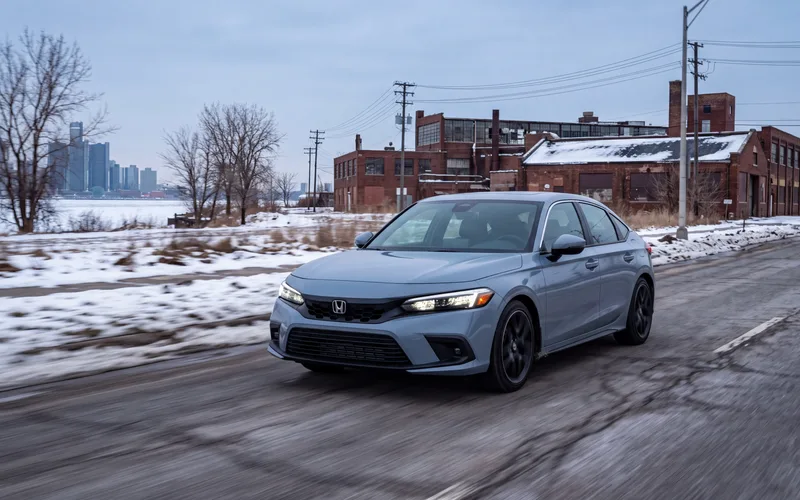 Honda Civic HatchbackCompact HatchbackBetter at: Overall polish
Quicker, quieter, more efficient (~36 MPG combined) and roomier in every dimension for similar money — the obvious choice unless you specifically need all-wheel drive.
Compare 2.25C
2.25C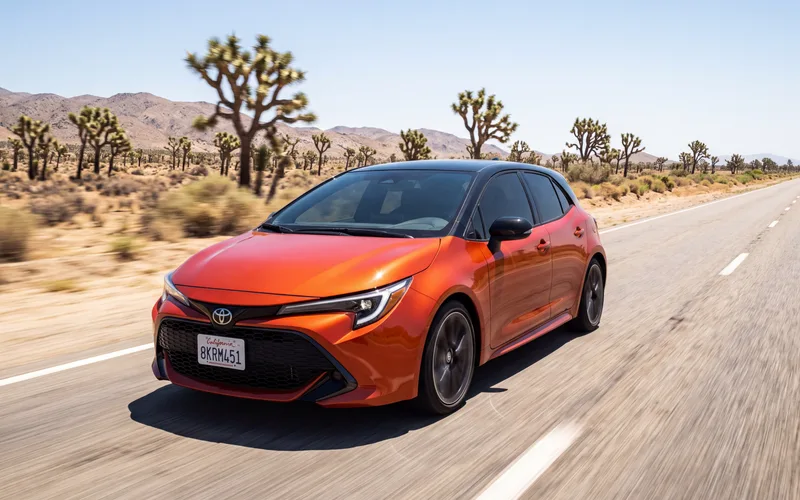 Toyota Corolla HatchbackCompact HatchbackBetter at: Efficiency
Similar price and practicality with 41 MPG highway, a stronger reliability record, and two years of included maintenance the Impreza doesn't match.
Compare 2.57C+
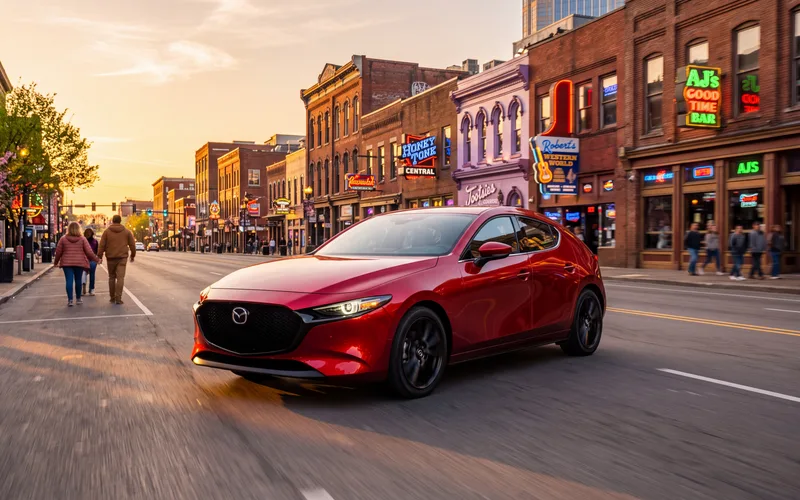 Mazda Mazda3 HatchbackCompact HatchbackBetter at: Interior quality
Offers all-wheel drive too, plus a far nicer interior, an available turbo engine, and steering the Impreza can't match — worth the price step if the cabin and the drive matter.
CompareHow it's evolved
10 scored model years · 2017–2026
Subject scores by year
Hover or tap a score to see what moved it versus the year before. A corner mark flags a big swing.
| Year | Performance | Efficiency | Safety | Space | Cost | Reliability | Tech | Use-case | Driving | Value |
|---|---|---|---|---|---|---|---|---|---|---|
| 2026 | 27 | 57 | 72 | 67 | 59 | 75 | 50 | 58 | 65 | 61 |
| 2025 | 27 | 56 | 71 | 68 | 70 | 75 | 52 | 55 | 63 | 66 |
| 2024 | 27 | 56 | 76 | 68 | 70 | 70 | 52 | 55 | 66 | 67 |
| 2023 | 25 | 51 | 64 | 69 | 70 | 70 | 41 | 55 | 61 | 60 |
| 2022 | 25 | 53 | 69 | 66 | 71 | 72 | 30 | 48 | 57 | 58 |
| 2021 | 25 | 53 | 67 | 66 | 75 | 63 | 35 | 51 | 65 | 58 |
| 2020 | 27 | 52 | 68 | 68 | 77 | 65 | 37 | 51 | 68 | 63 |
| 2019 | 27 | 53 | 62 | 68 | 75 | 58 | 35 | 48 | 67 | 57 |
| 2018 | 25 | 53 | 57 | 67 | 72 | 47 | 35 | 52 | 60 | 65 |
| 2017 | 33 | 53 | 62 | 66 | 72 | 50 | 31 | 50 | 64 | 75 |
Compare two years
Best fit & conditions
Higher scores mean a better fit for that use case. Learn more about use-case fit →
Subject profile
Academic Probation · NHTSA safety recalls
Sep 21, 2023Power train: driveline: driveshaftThe center support bolts for the driveshaft may loosen, resulting in the disconnection of the front end of the driveshaft.
Defect
Subaru of America, Inc. (Subaru) is recalling certain 2023 Outback, Legacy, Ascent, and Impreza vehicles. The center support bolts for the driveshaft may loosen, resulting in the disconnection of the front end of the driveshaft.
Risk
Separation of the front end of the driveshaft increases the risk of a crash.
Remedy
Dealers will clean the bolt mounting surfaces of the center support brace and install new bolts, free of charge. Owner notification letters were mailed November 20, 2023. Owners may contact Subaru's customer service at 1-844-373-6614. Subaru's number for this recall is WRN-23.
NHTSA campaign 23V647000 ↗Manufacturer no. WRN-234,311 vehicles potentially affected (all models in the campaign)Owners notified Nov 20, 2023Filed by Subaru of America, Inc.Filed as IMPREZAApr 25, 2023Exterior lighting: brake lights: switchThe brake light switch may be improperly adjusted and illuminate the brake lights without application of the brake pedal. The vehicle may also allow drivers to start and shift the transmission out of the PARK position without pressing the brake pedal. As such, these vehicles fail to comply with the requirements of Federal Motor Vehicle Safety Standard numbers 108, "Lamps, Reflective Devices, and Associated Equipment" and 102, "Trans Shift Lever Seq/Starter Interlock/Trans Braking Effect."
Defect
Subaru of America, Inc. (Subaru) is recalling certain 2023 Impreza vehicles. The brake light switch may be improperly adjusted and illuminate the brake lights without application of the brake pedal. The vehicle may also allow drivers to start and shift the transmission out of the PARK position without pressing the brake pedal. As such, these vehicles fail to comply with the requirements of Federal Motor Vehicle Safety Standard numbers 108, "Lamps, Reflective Devices, and Associated Equipment" and 102, "Trans Shift Lever Seq/Starter Interlock/Trans Braking Effect."
Risk
An unintentional brake light illumination can fail to alert other motorists of actual brake application. A vehicle that shifts out of the park position unexpectedly can allow the vehicle to rollaway. Either of these scenarios can increase the risk of a crash.
Remedy
Dealers will inspect the gap between the brake light switch and stopper, adjusting the switch as necessary, free of charge. Owner notification letters are expected to be mailed June 23, 2023. Owners may contact Subaru's customer service at 1-844-373-6614. Subaru's number for this recall is WRI-23.
NHTSA campaign 23V292000 ↗Manufacturer no. WRI-234,030 vehicles potentially affected (all models in the campaign)Owners notified May 19, 2023Filed by Subaru of America, Inc.Filed as IMPREZA
14 recalls on other model years of the Impreza (2017–2022, 2024)
Nov 9, 2023Power train: driveline: driveshaftThe front driveshaft assemblies' outer race may develop cracks and break.
Defect
Subaru of America, Inc. (Subaru) is recalling certain 2024 Crosstrek, Impreza, 2023-2024 Forester, and 2023 WRX vehicles. The front driveshaft assemblies' outer race may develop cracks and break.
Risk
A broken driveshaft can cause a loss of drive power while driving or vehicle rollaway when the vehicle is in park without the parking brake engaged. Either of these scenarios can increase the risk of a crash.
Remedy
Dealers will inspect and replace the left and right front driveshafts as necessary, free of charge. Owner notification letters were mailed January 8, 2024. Owners may contact Subaru's customer service at 1-844-373-6614. Subaru's number for this recall is WRP-23.
NHTSA campaign 23V754000 ↗Manufacturer no. WRP-234,701 vehicles potentially affected (all models in the campaign)Owners notified Jan 8, 2024Filed by Subaru of America, Inc.Filed as IMPREZAAug 4, 2023Electrical system: instrument cluster/panelDue to insufficient clearance, the instrument panel harness may contact the steering beam bracket, damaging the wire insulation and causing a short circuit.
Defect
Subaru of America, Inc. (Subaru) is recalling certain 2024 Crosstrek and Impreza vehicles. Due to insufficient clearance, the instrument panel harness may contact the steering beam bracket, damaging the wire insulation and causing a short circuit.
Risk
A short circuit may cause a loss of drive power, increasing the risk of a crash.
Remedy
Dealers will inspect the harness and install an additional clamp on the steering beam bracket. If damage is found, dealers will add protective tape or replace the instrument panel harness, as necessary. Repairs will be performed free of charge. Owner notification letters are expected to be mailed October 3, 2023. Owners may contact Subaru customer service at 1-844-373-6614. Subaru's number for this recall is WRL-23.
NHTSA campaign 23V551000 ↗Manufacturer no. WRL-2335,357 vehicles potentially affected (all models in the campaign)Owners notified Oct 3, 2023Filed by Subaru of America, Inc.Filed as IMPREZASep 22, 2022Visibility: windshieldThe incorrect paint clearcoat may have been applied, which can cause the windshield to be insufficiently bonded to the vehicle. As such, these vehicles fail to comply with the requirements of Federal Motor Vehicle Safety Standard number 212, "Windshield Mounting."
Defect
Subaru of America, Inc. (Subaru) is recalling certain 2022 Impreza and Outback vehicles. The incorrect paint clearcoat may have been applied, which can cause the windshield to be insufficiently bonded to the vehicle. As such, these vehicles fail to comply with the requirements of Federal Motor Vehicle Safety Standard number 212, "Windshield Mounting."
Risk
An insufficiently bonded windshield can detach during a crash, increasing the risk of injury.
Remedy
Subaru will offer owners a vehicle exchange or repurchase, free of charge. Owner notification letters are expected to be mailed November 21, 2022. Owners may contact Subaru's customer service at 1-844-373-6614. Subaru's number for this recall is WRH-22.
NHTSA campaign 22V712000 ↗Manufacturer no. WRH-2242 vehicles potentially affected (all models in the campaign)Owners notified Nov 11, 2022Filed by Subaru of America, Inc.Filed as IMPREZAAug 12, 2022Exterior lighting: headlightsThe left and right side reflex reflector and left side low beam reflector may inadequately reflect light. As such, these vehicles fail to comply with the requirements of Federal Motor Vehicle Safety Standard number 108, "Lamps, Reflective Devices, and Associated Equipment."
Defect
Subaru of America, Inc. (Subaru) is recalling certain 2017-2019 Impreza vehicles. The left and right side reflex reflector and left side low beam reflector may inadequately reflect light. As such, these vehicles fail to comply with the requirements of Federal Motor Vehicle Safety Standard number 108, "Lamps, Reflective Devices, and Associated Equipment."
Risk
Reflectors that do not provide adequate illumination reduce the driver's ability to see and increase the risk of a crash.
Remedy
Dealers will replace the front headlamp assemblies, free of charge. Owner notification letters were mailed November 15, 2023. Owners may contact Subaru's customer service at 1-844-373-6614. Subaru's number for this recall is WRG-22.
NHTSA campaign 22V624000 ↗Manufacturer no. WRG-22188,397 vehicles potentially affected (all models in the campaign)Owners notified Nov 15, 2023Filed by Subaru of America, Inc.Filed as IMPREZAAug 30, 2021Suspension: front: control arm: lower armThe left-front lower control arm weld may fail, allowing the control arm to separate from the crossmember.
Defect
Subaru of America, Inc. (Subaru) is recalling certain 2021 Impreza vehicles. The left-front lower control arm weld may fail, allowing the control arm to separate from the crossmember.
Risk
A separated control arm may cause the tire to contact the wheel well, resulting in a loss of control and increasing the risk of a crash.
Remedy
Owners are advised not to drive their vehicle until the repair is complete. Dealers will inspect and replace the control arm as necessary, free of charge. Owner notification letters were mailed September 3, 2021. Owners may contact Subaru customer service at 1-844-373-6614. Subaru's number for this recall is WRI-21.
NHTSA campaign 21V675000 ↗Manufacturer no. WRI-21802 vehicles potentially affected (all models in the campaign)Owners notified Sep 3, 2021Filed by Subaru of America, Inc.Filed as IMPREZAJul 29, 2021Fuel system, gasoline: delivery: fuel pumpThe low-pressure fuel pump inside the fuel tank may fail.
Defect
Subaru of America, Inc. (Subaru) is recalling certain 2019-2020 Ascent, 2018 Forester, 2018-2020 Impreza, Legacy, Outback, 2018-2019 BRZ, WRX, and Toyota 86 vehicles. The low-pressure fuel pump inside the fuel tank may fail.
Risk
Fuel pump failure can cause an engine stall while driving, increasing the risk of a crash.
Remedy
Dealers will replace the low-pressure fuel pump, free of charge. Owner notification letters were mailed September 24, 2021. Subaru and Toyota owners may call customer service at 1-844-373-6614. Subaru's number for this recall is WRG-21.
NHTSA campaign 21V587000 ↗Manufacturer no. WRG-21175,968 vehicles potentially affected (all models in the campaign)Owners notified Sep 24, 2021Filed by Subaru of America, Inc.Filed as IMPREZAApr 15, 2021Electrical system: ignition · Electrical system: software · Engine and engine cooling: engine: engine control module (ecu/ecm): software · Engine and engine cooling: exhaust system: manifold/header/muffler/tail pipeThe Engine Control Module (ECM) may continue to power the ignition coil after the engine is shut off, causing a short circuit.
Defect
Subaru of America, Inc. (Subaru) is recalling certain 2017-2019 Subaru Impreza and 2018-2019 Crosstrek vehicles. The Engine Control Module (ECM) may continue to power the ignition coil after the engine is shut off, causing a short circuit.
Risk
A short circuit in the ignition coils may cause a stall, increasing the risk of a crash.
Remedy
Subaru will notify owners, and dealers will update the ECM software, replace the ignition coils and, if necessary, the front exhaust pipe, free of charge. Owner notification letters were mailed beginning June 1, 2021. Owners can contact Subaru customer service at 1-844-373-6614. Subaru's number for this recall is WRE-21. Note: This recall includes all vehicles previously repaired under Recall 19V743.
NHTSA campaign 21V264000 ↗Manufacturer no. WRE-21466,205 vehicles potentially affected (all models in the campaign)Owners notified Jun 1, 2021Filed by Subaru of America, Inc.Filed as IMPREZAJan 26, 2021Power train: shift linkage/cable/rodThe continuously variable transmission (CVT) select lever cable nut may not have been tightened properly, allowing the nut to loosen.
Defect
Subaru of America, Inc. (Subaru) is recalling certain 2021 Outback and Impreza vehicles. The continuously variable transmission (CVT) select lever cable nut may not have been tightened properly, allowing the nut to loosen.
Risk
A loose nut can lead to a lost of retention in the CVT select lever cable and the gear selector not functioning properly, increasing risk of crash.
Remedy
Subaru will notify owners, and dealers will inspect, and, if necessary, tighten the nut, free of charge. The recall began February 12, 2021. Owners may contact Subaru customer service at 1-844-373-6614. Subaru's number for this recall is WRA-21.
NHTSA campaign 21V024000 ↗Manufacturer no. WRA-21383 vehicles potentially affected (all models in the campaign)Owners notified Feb 12, 2021Filed by Subaru of America, Inc.Filed as IMPREZAApr 16, 2020Fuel system, gasoline: delivery: fuel pumpThe low pressure fuel pump may become inoperative.
Defect
Subaru of America, Inc. (Subaru) is recalling certain 2019 Impreza, Outback, Legacy, and Ascent vehicles. The low pressure fuel pump may become inoperative.
Risk
If the low pressure fuel pump fails, the engine may stall without the ability to restart the vehicle, increasing the risk of a crash.
Remedy
Subaru will notify owners, and dealers will replace the low pressure fuel pump, free of charge. The recall began June 4, 2020. Owners may contact Subaru customer service at 1-844-373-6614. Subaru's number for this recall is WRD-20.
NHTSA campaign 20V218000 ↗Manufacturer no. WRD-20188,207 vehicles potentially affected (all models in the campaign)Owners notified Jun 4, 2020Filed by Subaru of America, Inc.Filed as IMPREZAOct 18, 2019Electrical system: ignition · Electrical system: softwareThe Engine Control Module (ECM) may continue to power the ignition coil after the engine is shut off, which could result in a short circuit and blown fuse.
Defect
Subaru of America, Inc. (Subaru) is recalling certain 2017-2019 Impreza and 2018-2019 Crosstrek vehicles. The Engine Control Module (ECM) may continue to power the ignition coil after the engine is shut off, which could result in a short circuit and blown fuse.
Risk
If a short circuit occurs while driving, the vehicle may stall, increasing the risk of a crash.
Remedy
Subaru will notify owners, and dealers will update the ECM software and inspect and replace the ignition coil, as necessary, free of charge. In addition, on vehicles with confirmed ignition coil damage and a certain stored diagnostic trouble code (DTC), Subaru will replace the front exhaust pipe, free of charge. The recall began December 4, 2019. Owners may contact Subaru customer service at 1-844-373-6614. Subaru's number for this recall is WUQ-02.
NHTSA campaign 19V743000 ↗Manufacturer no. WUQ-02466,205 vehicles potentially affected (all models in the campaign)Owners notified Dec 4, 2019Filed by Subaru of America, Inc.Filed as IMPREZAOct 17, 2019Engine and engine cooling: exhaust system: emission control: crankcase (pcv)The PCV valve may come apart, allowing the separated components to enter the engine, possibly resulting in a loss of power while driving.
Defect
Subaru of America, Inc. (Subaru) is recalling certain 2017 Impreza vehicles equipped with an aluminum Positive Crankcase Ventilation (PCV) valve. The PCV valve may come apart, allowing the separated components to enter the engine, possibly resulting in a loss of power while driving.
Risk
An unexpected loss of power while driving can increase the risk of a crash.
Remedy
Subaru will notify owners, and dealers will replace the engine, free of charge. The recall began December 3, 2019. Owners may contact Subaru customer service at 1-844-373-6614. Subaru's number for this recall is WUS-04.
NHTSA campaign 19V745000 ↗Manufacturer no. WUS-04251 vehicles potentially affected (all models in the campaign)Owners notified Dec 3, 2019Filed by Subaru of America, Inc.Filed as IMPREZAOct 17, 2019Engine and engine cooling: exhaust system: emission control: crankcase (pcv)The PCV valve may come apart, allowing the separated components to enter the engine, possibly resulting in a loss of power while driving.
Defect
Subaru of America, Inc. (Subaru) is recalling certain 2017-2018 Impreza and 2018 Crosstrek vehicles equipped with an aluminum Positive Crankcase Ventilation (PCV) valve. The PCV valve may come apart, allowing the separated components to enter the engine, possibly resulting in a loss of power while driving.
Risk
An unexpected loss of power while driving can increase the risk of a crash.
Remedy
Subaru will notify owners, and dealers will inspect and, if necessary, replace the PCV valve, free of charge. If the PCV valve has separated and the components cannot be found, the engine will be replaced, free of charge. The recall began December 2, 2019. Owners may contact Subaru customer service at 1-844-373-6614. Subaru's number for this recall is WUP-01.
NHTSA campaign 19V744000 ↗Manufacturer no. WUP-01205,000 vehicles potentially affected (all models in the campaign)Owners notified Dec 2, 2019Filed by Subaru of America, Inc.Filed as IMPREZAMar 29, 2017Fuel system, gasoline: delivery: hoses, lines/piping, and fittingsWinter fuels may vaporize prematurely in the fuel line, resulting in a reduction in fuel pressure, possibly causing the engine to stall.
Defect
Subaru of America, Inc. (Subaru) is recalling certain 2017 Impreza vehicles. Winter fuels may vaporize prematurely in the fuel line, resulting in a reduction in fuel pressure, possibly causing the engine to stall.
Risk
An engine stall can increase the risk of a crash.
Remedy
Subaru will notify owners, and dealers will reprogram the engine control unit to turn the radiator cooling fan on at a lower temperature, free of charge. The recall began on April 20, 2017. Owners may contact Subaru customer service at 1-800-782-2738. Subaru's number for this recall is WTP-75.
NHTSA campaign 17V216000 ↗Manufacturer no. WTP-7533,131 vehicles potentially affected (all models in the campaign)Owners notified Apr 20, 2017Filed by Subaru of America, Inc.Filed as IMPREZAMar 2, 2017Back over prevention: camera systemDue to a software problem, the rearview camera display may not work properly.
Defect
Subaru of America, Inc. (Subaru) is recalling certain 2017 Impreza vehicles. Due to a software problem, the rearview camera display may not work properly.
Risk
A rearview camera display that does not function as designed can reduce the driver's view of what is behind the car, increasing the risk of a crash.
Remedy
Subaru will notify owners, and dealers will update the infotainment software, free of charge. The recall began on March 27, 2017. Owners may contact Subaru customer service at 1-800-782-2783. Subaru's number for the recall is WTN-74.
NHTSA campaign 17V132000 ↗Manufacturer no. WTN-7425,567 vehicles potentially affected (all models in the campaign)Owners notified Mar 27, 2017Filed by Subaru of America, Inc.Filed as IMPREZA
Source: NHTSA Office of Defects Investigation recall database, model years 2017–2026. Recalls are listed by model year as the manufacturer filed them; whether a specific car is affected depends on its VIN — check a VIN at nhtsa.gov ↗. NHTSA model names matched to this page: IMPREZA.
Detailed scoring by subject
1Performance & PowertrainThe Impreza's lowest-graded category.0.00F
2023 is the final, carry-over year of the fifth-generation Impreza, and every 5-door trim — Base, Premium, Sport and Limited — uses the same naturally aspirated 2.0L FB20 BOXER at 152 hp. There is no larger or turbocharged engine anywhere in the range, so this figure sits near the floor of the compact-hatch band.
The FB20 boxer's 145 lb-ft peak arrives at 4,000 rpm, and with no turbocharging there is nothing filling the gap below that — the engine has to be revved to deliver what it has. Bottom of the compact-hatchback torque band.
The volume CVT hatchback needs roughly 9.3 seconds to 60 mph — 152 hp hauling a 3,084-lb curb weight through full-time all-wheel drive. The 5-speed manual is a few tenths quicker but is the low-volume choice. Slow enough that merging and passing require planning, and near the bottom of the segment band.
The naturally aspirated boxer has to be worked hard for its modest output and turns coarse and loud in the process, with no low-rpm torque to lean on and no auto stop-start on any 2023 trim. Throttle response is at least linear and predictable rather than laggy, which keeps it off the floor, but this is the least refined year of the nameplate's recent run — the 2024 redesign added sound insulation the gen-5 car does not have.
The volume Premium hatchback uses the Lineartronic CVT, which is unobtrusive at part throttle and adds a 7-speed manual shift mode with paddles, but drones under load and is slow to answer a request for passing power. A 5-speed manual is still standard on Base and Sport 5-door for 2023 — a real choice the 2024 car dropped — though five ratios is dated and it costs 5 MPG combined.
Symmetrical All-Wheel Drive is standard on every 2023 Impreza — the class differentiator, since the Civic and Corolla hatchbacks are front-drive only — and Subaru fits two genuinely different systems: a viscous-coupling locking center differential with a nominal 50:50 split on manual cars, and an electronically controlled variable transfer clutch on CVT cars. It stops short of sophisticated, though: Active Torque Vectoring is Sport-only rather than standard, there is no X-MODE or low range, and 5.1 in. of ground clearance limits what the traction can be used for.
One engine across the whole range — the 152-hp 2.0L boxer — with the only real choice being 5-speed manual versus CVT, and AWD standard either way. No turbo, no hybrid, no plug-in and no EV variant in a segment that offers the Prius and Leaf; a buyer wanting more power has to leave the Impreza for the WRX. The surviving manual is the one point of breadth the 2024 redesign would remove.
2Efficiency & RangeOne of the Impreza's weakest categories.1.45D
The volume Premium hatchback with the CVT is EPA-rated at 31 MPG combined — a genuinely good number for a car carrying full-time all-wheel drive, and one MPG better than the 2024 redesign that replaced it. The 5-speed manual gives up five MPG combined, so the CVT is the economical choice as well as the popular one.
28 MPG on the EPA city cycle for the volume CVT trim, achieved without any hybrid assist and without auto stop-start, which no 2023 Impreza fits. Respectable stop-and-go economy given the permanently engaged AWD driveline.
36 MPG highway for the volume CVT hatchback — mid-pack in absolute terms for a compact hatchback, but strong for an all-wheel-drive one, and a couple of MPG ahead of the front-drive-equivalent penalty the class usually charges.
The efficiency is good but the tank is small: 13.2 gallons at 31 MPG combined gives roughly 409 miles, well short of the class norm and about 90 miles less than the 2024 redesign managed on its 16.6-gallon tank. The weakest figure in this category and a real annoyance on a long trip.
EPA estimates $2,000 a year for the volume CVT hatchback at the standard 15,000-mile assumption, and credits it with saving $1,000 over five years against the average new vehicle. Regular-grade fuel and 31 MPG combined keep running costs modest despite standard AWD.
Subaru specifies regular 87-octane unleaded for every 2023 Impreza trim and transmission — no premium recommendation anywhere in the range, and no plug, charging hardware or special fuel handling to budget for.
3SafetyMid-pack among this car's ten categories.2.34C+
NHTSA rates the 2023 Impreza wagon 5 stars overall with 5 stars in every sub-rating — driver and passenger frontal, side barrier and side pole, and rollover — and the car did not tip in the dynamic rollover test.
Five of six IIHS crashworthiness tests come back Good — driver- and passenger-side small overlap front, the original moderate overlap front, roof strength and head restraints — but the final year of this generation rates Poor in the updated side test, with a Poor structure and safety cage and an explicit head-protection failure: the dummy's head moved down past the curtain airbag and struck the window sill. That is a Poor result in a core crash test, and it cost the car an award: the Impreza is absent from Subaru's 2023 IIHS list (Legacy and Forester took TSP, Ascent/Outback/Solterra TSP+), holding only the older-criteria Top Safety Pick that requires the optional EyeSight and the Limited's specific headlights.
Every CVT Impreza — which is the volume car, from the $21,595 Base CVT up — carries EyeSight as standard: pre-collision braking and throttle management, adaptive cruise control, lane keep assist and lane departure/sway warning. Two things hold it to the middle band: the 5-speed manual Base and Sport 5-doors ship with no EyeSight at all, which is why NHTSA lists forward collision warning as Optional on the model line, and blind-spot detection with rear cross-traffic alert is a $1,970 option on the Premium rather than standard equipment.
EyeSight's stereo-camera braking earns Superior in both IIHS front crash prevention evaluations that were run — vehicle-to-vehicle and daytime vehicle-to-pedestrian — and the pedestrian test detail is genuinely strong: collisions avoided outright with a crossing child at 12 mph and a crossing adult at 25 mph, and a 31 mph speed reduction against a parallel adult from 37 mph. It stops short of the top band because IIHS published no nighttime pedestrian result for this car, which is exactly the capability the 2023 criteria added and part of why the Impreza fell off the award list.
Blind-Spot Detection with Lane Change Assist and Rear Cross-Traffic Alert reaches three of the four trims but is standard only on the top Limited — on the Premium and Sport it comes bundled into a ~$2,000 package, and the Base cannot be ordered with it. Everything on offer is alert-only: there is no blind-spot steering or braking intervention, no 360-degree camera and no safe-exit alert anywhere in the range, and the one active rear system, Reverse Automatic Braking, is Limited-exclusive.
Lane departure and sway warning with lane keep assist are standard on every CVT Impreza and IIHS records lane departure warning and prevention as standard equipment, so the coverage is there. The capability is not: this generation's EyeSight is a nudge-style keeping system that intervenes when the car approaches a marking above roughly 37 mph, not the continuous lane centering the 2024 redesign introduced, so it holds a lane by correction rather than by tracking it.
EyeSight's adaptive cruise is standard on every CVT trim including the cheapest, works through the full speed range down to a stop with the CVT, and has a long-standing reputation for smooth, unfussy gap-keeping — a lot of content for a $23,695 hatchback. What it is not is a highway assist: without lane centering on this generation the cruise handles only the pedals, so the driver steers throughout, and the manual-transmission cars have no adaptive cruise at all.
No hands-free highway mode is offered on any 2023 Impreza trim. EyeSight is a hands-on system, and the Impreza does not even carry Subaru's DriverFocus driver-monitoring camera — the hardware any hands-off mode would require — which in 2023 was reserved for the Forester, Outback, Legacy and Ascent.
Good headlights exist on this car but only on the $27,395 Limited, whose steering-responsive LED projectors with high beam assist rate Good. The Base, Premium and Sport — the volume of the range — use halogen reflectors that IIHS rates Marginal, with inadequate visibility on the right side of the straightaway and inadequate on all four curves. Marginal units on most trims is squarely the bottom band, and it is one of the two reasons the car carries no current-criteria award.
Sightlines are a real strength of this generation: the boxer engine's low cowl, a tall upright greenhouse, slim pillars and large door glass give an unusually clear forward and three-quarter view for a compact hatchback, and the hatch's own rear window is deep. Electronic compensation is thin, though — a rear-vision camera is standard and that is all, with no surround-view camera offered on any trim and blind-spot detection a paid extra below the Limited.
IIHS rates the Impreza's child-seat hardware Good with extra positions — two rear outboard seats with complete LATCH sets plus a centre position that has its own tether anchor and can borrow lower anchors from either side — which is better provision than most compact hatchbacks offer. The ceiling is the car's size: three seats across is a squeeze, and borrowing the inboard anchors for the centre takes the outboard positions out of play.
4Space & ComfortOne of the Impreza's strongest categories.2.65C+
Every 2023 Impreza, sedan or 5-door, is a five-passenger car with a 60/40 split-folding rear bench; there is no four-seat or six-seat configuration anywhere in the range.
39.8 inches sits near the top of the compact-hatchback band, a direct product of the tall, upright greenhouse this generation carries — the same figure the 2024 redesign kept. The power moonroof is expensive in headroom terms, costing 2.2 inches.
43.1 inches is in the upper half of the class band and is actually two-tenths better than the 2024 redesign, and it pairs with 56.7 inches of front shoulder room on a 105.1-inch wheelbase — the front cabin is genuinely roomy for a 176.2-inch car.
37.2 inches is mid-pack — adequate for adults but eight-tenths short of what the 2024 redesign's higher-held roofline delivers. The one saving grace is that the moonroof takes nothing away in back, so the option costs rear passengers nothing.
36.5 inches is the weakest of the Impreza's interior dimensions and only mid-pack in absolute terms, though the flat floor, 55.6-inch rear shoulder room and upright seating make the space feel better than the number reads — Consumer Reports calls it one of the roomiest back seats in the class.
20.8 cubic feet behind an occupied rear bench is well above average for a compact hatchback and, notably, four-tenths more than the 2024 car that replaced it — the load bay opens to 55.3 cubic feet over a floor that stretches to 64.2 inches with the 60/40 bench down.
Conventional and adequate with no signature idea: a covered console with armrest, dual front cupholders, bottle holders in each door, a wide flat load floor with a low lift-over, and roof rails standard on the Premium 5-door and up. What is missing is everything modern — no underfloor cargo bin, no wireless charging pad, no household AC outlet and no fold-flat front passenger seat appear on any 2023 trim, and the 5-door does at least run a longer load floor than most rivals.
The back seat is a real strength — Consumer Reports rates it among the roomiest in the class and the upright cushion gives good underthigh support — but the driver's seat is the weak link, criticized for insufficient lower-back support, and the volume Premium's driver's seat is manually adjusted: the 6-way power seat lives inside the $1,970 option package.
The single best thing about this car and genuinely segment-leading: Consumer Reports rates the ride among the most comfortable of any small car it has tested, crediting the suspension with swallowing broken pavement better than cars costing twice as much. The volume Premium's 205/55R16 all-seasons and Stablex dampers are the reason, and it is a lead the 2024 redesign explicitly gave up in the name of firmer tuning.
Better isolated from road and wind noise than earlier Imprezas and quieter than reviewers expected at the price, but the naturally aspirated boxer with the Lineartronic CVT is the persistent intrusion — every review of this car ends up describing the same drone whenever it is asked to climb or pass. No acoustic glass or active noise cancellation is offered on any trim.
The cold-weather kit is unusually generous for the money — the volume Premium includes the All-Weather Package (heated front seats, heated exterior mirrors and a windshield wiper de-icer) as standard equipment at $23,695, where most rivals charge for it. Everything above that is thin: automatic climate control is a Limited-only feature so the Premium runs manual single-zone air, and no 2023 Impreza offers a heated steering wheel, ventilated seats or rear-seat climate controls.
5Cost of OwnershipThe Impreza's best-graded category.2.73B-
The entry point to the 2023 Impreza hatchback is the Base 5-door with the 5-speed manual at $20,295, landing at $21,315 with the $1,020 destination charge — still the cheapest way into a new all-wheel-drive car in the US, and below the bottom of the compact-hatch pricing band. Every 2023 trim rose $550 over 2022 with no equipment added, since the car was a pure carry-over.
The Premium 5-door with the Lineartronic CVT is the volume configuration: it is the cheapest trim that carries EyeSight as standard equipment plus the All-Weather Package (heated front seats, heated mirrors, heated windshield wiper de-icer), SI-DRIVE, fog lights and STARLINK connected services, for $1,400 over the Base CVT. Option code 14 — moonroof, blind-spot detection with rear cross-traffic alert, keyless access with push-button start and a power driver's seat — is the one package offered on that trim and takes it to $26,685.
Subaru's 6-month/6,000-mile service interval means roughly twice as many dealer visits over five years as a Corolla or Civic on their 10,000-mile schedules, and the CVT fluid and 30,000-mile coolant/brake-fluid services all fall inside the window — that cadence, not repair frequency, is what puts the Impreza above the compact-hatch norm. The FB20 boxer and TR580 CVT in this fifth-generation car have a settled record by 2023, and the 3-year/36,000-mile basic plus 5-year/60,000-mile powertrain terms absorb most component failures, so the figure is overwhelmingly scheduled maintenance and wear items.
Standard all-wheel drive and Subaru's limited fleet exposure keep the Impreza well ahead of the compact-car depreciation average, but 2023 is the run-out year of a superseded generation — an all-new 2024 was revealed in late 2022 and priced in February 2023, which is exactly the circumstance that pulls a model year's residuals below its nameplate's trend. The figure is set a few points under the 2024 car and well under the aggregators' own headline percentages, which are computed against average transaction prices rather than sticker and read optimistically.
Subaru's bumper-to-bumper coverage on the 2023 Impreza is the industry-baseline 3 years or 36,000 miles, whichever comes first — level with the Corolla Hatchback and Civic, and half the 5-year/60,000-mile basic term Hyundai and Kia put on their compacts.
The 2.0-liter boxer, Lineartronic CVT and symmetrical all-wheel-drive hardware are covered for 5 years or 60,000 miles — the segment floor, against the 10-year/100,000-mile powertrain terms on the Elantra and Forte. Rust perforation is the one term where Subaru beats the norm, at 5 years with no mileage cap.
Subaru includes no complimentary scheduled maintenance in the US, so every one of those 6,000-mile services is out of pocket from the first one — where ToyotaCare covers 2 years/25,000 miles on the rival Corolla Hatchback and Honda includes two years of service on the Civic. What the 2023 Impreza offers instead is 3-year/36,000-mile roadside assistance across the range plus a 3-year STARLINK Safety Plus subscription and a 6-month Security Plus trial, and those connected services are standard only from Premium up — the Base trim goes without — which lands it a touch below the equivalent 2024 car at the bottom of the middle band.
$24,715 volume-trim price minus its estimated resale value after 5 years (58% retained, or about $14,335) leaves about $10,380 in depreciation. Add the projected $4,300 in 5-year maintenance and repairs, and owning this vehicle for 5 years costs about $14,680 in total.
6Reliability & QualityOne of the Impreza's strongest categories.2.72B-
2023 is the seventh and final model year of the fifth-generation (GK/GT) Impreza — a fully shaken-down carry-over build rather than a redesign — and the forecasts read as solidly average-to-good rather than exceptional. J.D. Power rates it 78/100 for quality and reliability, the upper half of its 70–80 "Average" band; Consumer Reports is more positive, calling the 2023 car more reliable than the typical vehicle of its model year. What keeps it out of the top band is the trouble-spot list rather than anything structural: CR owners report Apple CarPlay/Android Auto connectivity failures and infotainment display faults, interior rattles and squeaks in hot weather, AC compressor gasket water leaks, and hood alignment. Nothing in the engine, CVT or brakes appears, which is why this sits above the launch-year 2024 redesign.
The two major surveys bracketing the 2023 model year disagree about Subaru, and the disagreement is the score. Consumer Reports had the brand seventh of 24 in its 2022 Annual Auto Reliability Survey — top third, above average, but outside the top five and marked down for transmission complaints across the range and screen-freeze/battery problems that dropped the Outback and Legacy to average. J.D. Power's 2023 Vehicle Dependability Study, measuring three-year-old 2020 cars, put Subaru 22nd of 32 at 214 PP100 against a 186 industry average — below average, and the continuation of a multi-year pattern in that study. Solidly mid-pack overall, and notably not yet the CR #1 standing the brand would reach with the 2024 survey.
NHTSA lists two campaigns against the 2023 Impreza, and both are small, discrete assembly faults rather than anything systemic. WRI-23 covers 4,030 cars (3,089 hatchbacks, 941 sedans) built in a seven-week window between February 1 and March 20, 2023, whose brake light switch was set with the wrong gap — the lights can illuminate unbidden and the shifter interlock can be defeated, with a rollaway consequence, but the remedy is an inspection and a switch adjustment. The driveshaft campaign covers 4,311 cars across four nameplates, with new bolts and cleaned mounting surfaces as the fix. Two campaigns totalling well under ten thousand units on a mature final-year build is ordinary activity; the consequences (rollaway, driveshaft separation) are what keep it out of the upper band, and CR's TSB-adjacent trouble spots are infotainment and body hardware, not powertrain.
The 2.0-litre FB20D boxer had been in this exact application since the fifth generation launched for 2017, so by 2023 it is a seven-year-proven installation of an engine family that has run since 2011 with no head-gasket epidemic of the sort that dogged the older EJ series — roughly 200,000 miles is the commonly cited service life. The direct injection brings the usual carry-ons (intake-valve carbon accumulation, a timing chain and tensioner that punish stretched oil intervals), and the real ceiling is the Lineartronic CVT, still the component that caps a Subaru's life with independent shops citing a 120,000–150,000-mile common failure window, even though the current TR580-family unit is materially better than the 2010–2015 boxes that drew Subaru's warranty extension. The 2023 car does at least still offer a five-speed manual on the Base and Sport hatchbacks as an escape, though the CVT is what the volume buyer takes.
This is the fifth-generation cabin in its last year, and it is the weakest part of the car by reviewer consensus — plainly behind the compact-hatch benchmarks it is shopped against. U.S. News describes hard plastics and low-rent materials that undercut an otherwise accommodating interior, and calls the look and feel basic and plain next to its peers; the comparison against the Mazda3 in particular is unflattering, and the Civic and Corolla Hatchback both use fewer hard surfaces where occupants touch. There are soft-touch plastics and a padded armrest at the front, which is why this is not bottom-band, but nothing about the material grade is competitive for the money. The 2024 redesign is a clear step up from this.
Seven years into the generation the Lafayette, Indiana line building this car had the process settled, and reviewers who criticise the plastics still describe the body and cabin as solidly screwed together on the Subaru Global Platform. Two things hold it mid-band. Consumer Reports' owner data for 2023 flags body hardware directly — interior rattles and squeaks that show up in hot weather, plus hood alignment — alongside AC compressor gasket water leaks, which are assembly and sealing complaints rather than component failures. And the year's larger recall is itself an assembly-adjustment defect: a brake light switch set to the wrong gap across a seven-week production window. Structurally sound, with scattered finish complaints of exactly the kind the 50–79 band describes.
Subaru's roughly 630 US retailers make a thinner network than Honda's or Toyota's — dense in the Northeast, Pacific Northwest and mountain states, noticeably sparser across the South and Plains — but the experience inside it is well above the mainstream norm. J.D. Power's 2023 Customer Service Index put Subaru fourth among mass-market brands at 862 and highest of any mass-market car brand at 866, ahead of Honda (850) and Toyota (842). It is a notch below where the brand would be a year later (877 and a tie for second in 2024, then outright first in 2025), so good rather than best-in-class service satisfaction on a merely adequate footprint.
OEM supply is not the problem — the Impreza shares its FB20 engine, Lineartronic CVT and Global Platform with the far higher-volume Crosstrek and Forester, so mechanical parts move in quantity and both 2023 recalls were remedied with ordinary hardware. Running cost is the weak spot: RepairPal puts Impreza repair and maintenance at $653 a year against a $526 compact-car average, with a 17% probability of a major repair versus 11% for the class even though unscheduled visits match the class norm, and boxer-plus-AWD service — opposed cylinder banks, a four-wheel driveline, matched-tire requirements — is inherently costlier than a transverse front-drive Civic or Corolla. The enthusiast aftermarket is active through the WRX but small next to those two.
7Technology & InfotainmentOne of the Impreza's weakest categories.0.73F
The volume Premium 5-door carries the STARLINK 6.5-inch Multimedia Plus display — below the floor of the compact-hatchback band and visibly small next to the 7- to 9-inch screens the Civic and Corolla hatchbacks were fitting in 2023. The 8.0-inch unit exists but only from the $25,095 Sport upward, and even that is the largest offered anywhere in the range.
Small and dated to look at, but genuinely easy to live with: STARLINK's third-generation software keeps real volume and tuning knobs, separate hard buttons for the main menus and an entirely physical climate panel below the screen, and reviewers rate it simple to operate. What it cannot escape is the 6.5-inch canvas on the volume trim, which leaves CarPlay and the native menus cramped, and graphics that were already a generation behind by 2023.
Wired Apple CarPlay and Android Auto are standard on every trim including the $20,295 Base manual — full coverage, no upsell — but wireless projection is offered nowhere in the 2023 Impreza range. Subaru began rolling wireless projection out on the 2023 Outback and Legacy and it reached the Impreza only with the 2024 redesign's 11.6-inch system, so the fifth-generation car ends its run cable-only.
Embedded navigation exists — unlike on the 2024 car, which drops it entirely — but only as TomTom-based STARLINK 8-inch Navigation inside the Limited's $2,350 package, meaning three of four trims and every buyer under $27,395 have no native maps at all. Voice control is command-list based rather than natural language and most owners simply use CarPlay or Android Auto instead.
The volume Premium's six-speaker system is unremarkable but adequate for the price, and the Base makes do with four. The one real upgrade is Harman Kardon's eight-speaker, 432-watt class-D system with Clari-Fi, but it is available only bundled inside the Sport's $2,470 or the Limited's $2,350 package — there is no way to buy better sound on the trim most people buy.
Analog speedometer and tachometer on every trim with a 4.2-inch color LCD multi-function display between them — and even that is CVT-only, so a Base or Sport 5-door ordered with the 5-speed manual gets a plainer monochrome display. No full-digital or reconfigurable gauge display is offered anywhere in the range, and the 2024 redesign did not change that.
There is over-the-air capability but it is narrow: Subaru's Gen 3 STARLINK head units accept firmware-over-the-air updates for the multimedia software itself over Wi-Fi, and that is the whole scope — TomTom map data still requires a USB stick, and no other vehicle module can be updated remotely, so recalls and drivetrain or EyeSight software changes remain dealer visits.
STARLINK Safety and Security is standard from the Premium up and the MySubaru app covers the core set — remote lock/unlock, vehicle locate, automatic collision notification, SOS and diagnostics — but it is subscription-gated after the trial, there is no digital key, and remote engine start with climate control is unavailable on the volume Premium as delivered because it requires the Keyless Access with Push-Button Start hardware that lives inside the $1,970 option package.
Dated and sparse. The volume Premium's ports are USB-A in the front console only — no USB-C anywhere in the car, no rear-seat charging ports on any trim, no wireless charging pad offered at any price, and no household outlet. Subaru's own answer to rear charging is a dealer-installed accessory, which is a fair summary of how far behind this cabin had fallen by 2023.
The volume Premium ships with a conventional keyed ignition and remote keyless entry — Keyless Access with Push-Button Start is a $1,970 package item on that trim, standard only from the Sport up. That also gates subscription remote start, since it rides on the same hardware. No phone-as-key or hands-free access of any kind is offered.
A rear-vision camera is standard across the range and the Impreza genuinely needs less electronic help than most — low cowl, thin pillars and a deep rear window make it easy to place. But the assistance stops there: no surround-view camera is offered on any trim, factory front or rear parking sensors are not part of the equipment list (Subaru sells reverse sensors as a dealer accessory), there is no automated parking, and Reverse Automatic Braking is exclusive to the Limited.
No head-up display is offered on any 2023 Impreza trim, in any option package, or as a dealer accessory — Subaru fits none to this model line in either the fifth or the sixth generation.
8Use-Case FitGrades below the middle of the scale.1.69D
Strong for the size of car. IIHS rates the child-seat hardware Good with extra positions — two full LATCH sets outboard plus a centre position with its own tether anchor that can borrow lower anchors — Consumer Reports calls the back seat one of the roomiest in the class, and the hatchback's 20.8 cubic feet swallows a stroller without folding anything. The ceiling is physical: 36.5 inches of rear legroom makes a rear-facing seat tight behind a tall driver, and three across is a squeeze.
Held down by two things a family would notice. The credentials look good on paper — five NHTSA stars overall, Good in every IIHS frontal test, EyeSight with adaptive cruise and pre-collision braking standard on every CVT trim — but the 2023 car rates Poor in the IIHS updated side test with inadequate head protection, and it won no Top Safety Pick that year. On top of that, the volume Premium's halogen headlights rate Marginal (Good LEDs are Limited-only) and blind-spot detection with rear cross-traffic alert costs $1,970.
The parts that matter most on a long day are good: Consumer Reports rates the ride among the most comfortable of any small car, the back seat is roomy for the class, and 20.8 cubic feet takes a family's luggage with all five seats occupied. The back of the cabin is bare, though — no rear vents, no rear USB ports, no rear armrest amenities beyond the basics — and a 13.2-gallon tank means stopping every 400 miles at best.
This is what the car is for. Light, quick steering (13.0:1, 2.5 turns lock-to-lock), a low cowl and tall glass that make it easy to place, a CVT that is smooth and unobtrusive at commuting speeds, and EyeSight adaptive cruise standard on every CVT trim so stop-and-go traffic is handled for you. The subtraction is the same one every review makes: 152 hp through a CVT means merging and passing take planning.
31 MPG combined on regular 87-octane works out to roughly $2,000 a year at EPA assumptions, and the EPA credits the car with saving $1,000 over five years against the average new vehicle — a good absolute number and a genuinely impressive one for a car with permanently engaged all-wheel drive. Front-drive rivals still beat it, and the 5-speed manual gives up five MPG for anyone who picks it.
A 176.2-inch hatchback that is 70.0 inches wide, turns in 35.4 feet and has the best sightlines in its class — the boxer engine's low cowl, slim pillars and deep rear glass mean you can see the corners, which is worth more in a parking garage than any camera. It falls short of the top band only for lack of electronic help: rear camera and nothing else, with no parking sensors, no surround view and no park assist offered.
Not a work vehicle in any meaningful sense. Subaru publishes no US tow rating for the 2023 Impreza — it is simply not rated for towing — there is no bed or open load area, and 152 hp with 145 lb-ft through a CVT has nothing in reserve for a load. The only work-adjacent asset is the hatchback's 55.3 cubic feet with the bench folded and standard all-wheel drive for a muddy site entrance.
The mechanical basis is sound — the FB20 boxer and Lineartronic have a long service record by 2023, the Subaru Global Platform is a stiff modern structure, and standard Symmetrical AWD helps on rough access roads. Nothing else about the car is built for abuse: cloth upholstery with carpeted floors, no rubber-floor or vinyl-seat work variant, unprotected painted lower bodywork and 5.1 inches of clearance over a low front bumper.
Basically the minimum. The 5-door Premium and above do get factory roof rails, which a 2024 Impreza does not, and the cargo bay has tie-down provision under a low lift-over — but there is no onboard AC power on any trim, no hitch offered from the factory, no washable interior surfaces, and no upfit ecosystem beyond Subaru's own accessory catalogue of crossbars and cargo trays.
Two genuine strengths — a ride Consumer Reports rates among the best of any small car, and EyeSight adaptive cruise standard on every CVT trim to take the edge off a long stint — pulled back by two real limits: a 13.2-gallon tank that caps range around 409 miles despite good economy, and a powertrain that drones whenever the road tilts uphill. The driver's seat's weak lower-back support tells on hour four.
Symmetrical All-Wheel Drive standard on every trim is the real differentiator in a class where the Civic and Corolla hatchbacks are front-drive only, and the volume Premium adds factory roof rails plus the All-Weather Package for genuinely capable winter and gravel-road use. What it is not is a light off-roader: 5.1 inches of ground clearance is car-height, there is no X-MODE, no hill descent control and no tow rating for bike or kayak trailers — that is what the Crosstrek exists for.
The hatchback body does the work: a wide, square 20.8-cubic-foot bay that opens to 55.3 with the 60/40 bench down over a load floor stretching from 32.3 to 64.2 inches, loaded over a low lift-over, plus factory roof rails on the Premium and up for a box or bike carrier. It beats the 2024 car on both cargo figures. Held out of the top band by the absence of underfloor storage, any hitch option and a factory cargo cover below the upper trims.
9Driving ExperienceMid-pack among this car's ten categories.2.12C
Secure and tidier than the price suggests — the Subaru Global Platform gives a stiff base, the double-wishbone rear end keeps body roll in check on a twisty road, and standard Symmetrical AWD means the grip is there in the wet with no torque steer. It is not a class leader: reviewers put handling behind the sharpest compacts, the volume Premium's 205/55R16 all-seasons are the limiting factor, and Active Torque Vectoring is a Sport-only feature rather than standard as it became for 2024.
Quick and accurate by the numbers — a 13.0:1 rack needing just 2.5 turns lock-to-lock, which is sports-car-fast for an economy hatchback and makes the car feel alert on turn-in. Reviewers rate it responsive and easy to place, but the electric assist is light and short on genuine feedback, so it is precise rather than communicative.
Adequate hardware and predictable pedal feel for normal driving, but this is one of the areas reviewers explicitly place behind the class leaders, and the volume Premium's modest 10.9-inch front discs and all-season tires are the reason — the Sport's 11.6-inch fronts are the only upgrade offered, and the 2024 redesign moved to larger rotors again.
Smooth and unobtrusive at part throttle — the Lineartronic keeps revs low in traffic and throttle tip-in is linear and predictable, with no stop/start shudder to complain about because no 2023 Impreza has stop/start. Ask for anything, though, and the calibration's limits show: the CVT is slow to answer a passing request and then holds high revs, and 152 hp moving 3,104 lbs through full-time AWD takes about 9.3 seconds to 60 mph.
The weakest part of the driving experience and the one complaint every review of this car makes. The naturally aspirated boxer has to be worked hard for its modest output, and it turns coarse and droning doing it, with the CVT holding revs where the noise is worst — Consumer Reports notes the engine thrum even while praising how quiet the car is otherwise.
A 35.4-foot circle sits at the tight end of the compact-hatchback band and pairs with just 2.5 turns lock-to-lock, so U-turns and parking-garage ramps take one movement rather than three — one of the car's quiet everyday strengths.
An unusually good small-car driving position: the flat boxer engine allows a low cowl and hood line, the greenhouse is tall and upright with slim pillars, and the controls are conventional — real climate knobs, real audio knobs, nothing buried in a screen. Two things keep it out of the top band: Consumer Reports faults the driver's seat for insufficient lower-back support, and the volume Premium's driver's seat is manually adjusted, with the 6-way power seat locked inside a $1,970 package.
There is a willing chassis underneath — quick steering, contained roll, and AWD grip that lets you carry speed on a wet back road with genuine confidence — and a 5-speed manual is still offered on the Base and Sport 5-doors, which is more than the 2024 car can say. But the volume Premium CVT undoes it: 152 hp, roughly 9.3 seconds to 60 mph, and a droning soundtrack mean nothing about the powertrain rewards pushing, and reviewers describe the car as competent rather than characterful.
10Value & Market PositionMid-pack among this car's ten categories.2.04C
The pitch is unanswerable at the price — symmetrical all-wheel drive standard on a $21,315 hatchback, and no rival supplies AWD at any price in the class — and the volume Premium bundles the All-Weather Package (heated front seats, heated mirrors, wiper de-icer), SI-DRIVE, fog lights and EyeSight for $24,715. But the equipment around the driveline is a generation behind: a 6.5-inch screen where the Civic and Corolla were on 7–9-inch units, halogen headlights outside the Limited, single-zone manual climate below Premium, and EyeSight not even available on the two manual-transmission hatchbacks. This is the last carry-over year of a 2017 car and the base spec shows it.
All-wheel drive, Good ratings in every IIHS frontal test and a Superior front crash prevention system for a hair over $21,000 is a genuinely hard package to price-match, and reviewers consistently credit the Impreza with costing less than most rivals. What the money does not buy holds it to the middle of the band: 152 hp through a CVT that reviewers call droning and gutless, a 2017-vintage cabin and infotainment, and fuel economy that trails front-drive competitors — the value case rests almost entirely on the driveline and the safety hardware.
2023 is the broadest the Impreza ever was in the US and considerably wider than the 2024 redesign that replaced it: two body styles, four trims from $19,795 to $27,395, and a 5-speed manual still offered on the Base sedan, Base 5-door and Sport 5-door alongside the CVT — a hatchback buyer picks from four trims, two transmissions and three option packages. It falls short of the top band only because there is one engine and one drivetrain across the entire range, so the ladder is about equipment rather than capability.
2023 was the Impreza's one up-year in an otherwise unbroken slide — 34,719 US units, up 7.4% on 2022 — helped by run-out pricing on the outgoing generation. Against the nameplate's own history that is still less than half the 76,400 it sold in 2018 and well down on the 43,628 of 2020, and it is a small fraction of Civic or Corolla volume, so this is a steady mid-pack seller in a shrinking segment rather than a car with market momentum.
Subaru carries one of the strongest owner-loyalty and brand-affinity records in the mainstream US market — standard all-wheel drive, a long safety-award streak and an outdoors identity that props up resale, all of which is a real halo for a $21,000 hatchback. The Impreza itself is the least aspirational car in the lineup, the entry point beneath the Crosstrek and Forester that carry most of the brand's image and nearly all of its growth, which keeps it out of the top band.
Subaru runs one of the thinnest factory incentive programs in the mainstream market — subvented APR rather than cash on the hood — but 2023 is the one year where the Impreza buyer got real leverage anyway: the all-new 2024 was revealed in late 2022 and priced in February 2023, so remaining fifth-generation stock was run-out inventory dealers wanted moved, on a slow-selling nameplate that transacts at or below sticker. Meaningful buyer benefit, though it comes from clearance rather than a published program, so it sits below the top band.
This is the last year of a generation that launched for 2017, and the second consecutive model year with no changes at all beyond a $550 across-the-board price rise — Subaru held it static through the chip shortage. Worse for a 2023 buyer, the replacement was not merely expected but already public: the sixth-generation car was shown in November 2022 and priced in February 2023, arriving in showrooms that same summer. An aging generation with a redesign already on the lot is the definition of the bottom band.
Reviews are respectful rather than enthusiastic and cluster in the upper-middle of the class: praise for standard AWD, ride, space and safety, followed in every write-up by the same complaint about a slow, droning 152-hp CVT powertrain, so it is a recommendation for AWD-seeking buyers rather than a comparison-test winner. It also carries no award hardware for 2023 — a Poor result in the IIHS updated side test kept it off Subaru's list of five 2023 Top Safety Pick winners, and it took no NACTOY or 10Best recognition.