

The verdict
A mixed-report compact hatchback, strong on reliability and held back by performance.
The 2026 Impreza is the cheapest way to get real all-wheel drive in a compact hatchback — every trim, from the $24,795 Base on up, comes with Subaru's Symmetrical AWD and the full EyeSight safety suite, and it earned a 5-star NHTSA overall rating. What you trade for that is pace and polish: 152 horsepower and a roughly 8.9-second 0–60 make it one of the slowest cars in its class, the CVT drones under throttle, and 30 MPG combined trails front-drive rivals that post 36–40. Buy it if bad-weather traction and standard safety kit top your list and you never intend to hurry; skip it if you want a quick, quiet, or efficient commuter, because a Civic Hatchback or Prius beats it on every one of those.
Jump to scoresStrengths
- Standard all-wheel drive on every trim, at a front-drive price
- Full safety suite standard, including on the cheapest trim
- Easy to see out of and easy to park
What holds it back
- Seriously underpowered — this is the slow car in the class
- Only one transmission, one body, no hybrid
- Noisy cabin — CVT drone plus road roar
Top alternatives
Cars shoppers cross-shop with the Subaru Impreza 2.46C+
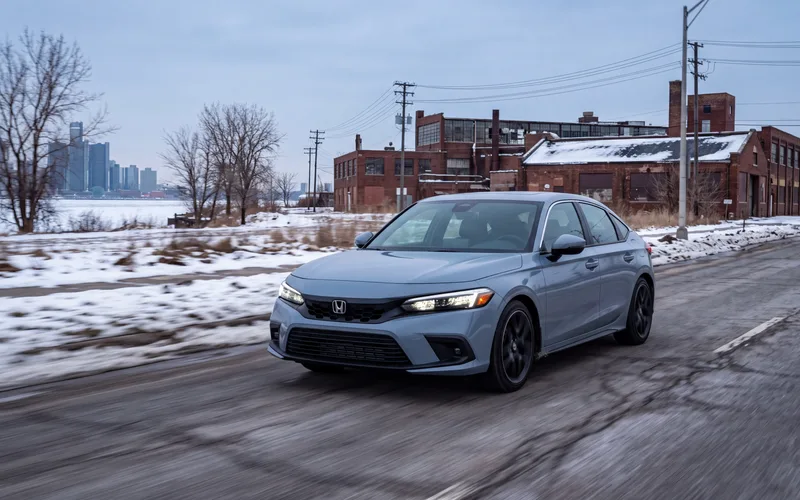 Honda Civic HatchbackCompact HatchbackBetter at: Overall polish
Quicker, quieter, more efficient (~36 MPG combined) and roomier in every dimension for similar money — the obvious choice unless you specifically need all-wheel drive.
Compare 2.25C
2.25C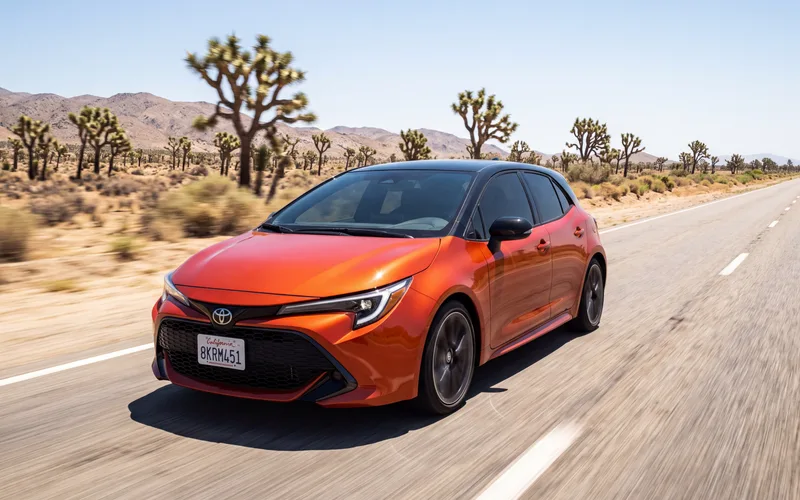 Toyota Corolla HatchbackCompact HatchbackBetter at: Efficiency
Similar price and practicality with 41 MPG highway, a stronger reliability record, and two years of included maintenance the Impreza doesn't match.
Compare 2.57C+
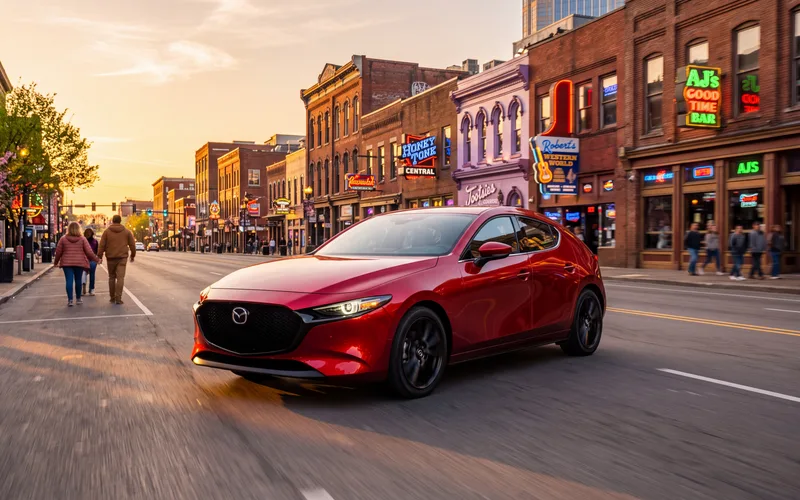 Mazda Mazda3 HatchbackCompact HatchbackBetter at: Interior quality
Offers all-wheel drive too, plus a far nicer interior, an available turbo engine, and steering the Impreza can't match — worth the price step if the cabin and the drive matter.
CompareHow it's evolved
10 scored model years · 2017–2026
Subject scores by year
Hover or tap a score to see what moved it versus the year before. A corner mark flags a big swing.
| Year | Performance | Efficiency | Safety | Space | Cost | Reliability | Tech | Use-case | Driving | Value |
|---|---|---|---|---|---|---|---|---|---|---|
| 2026 | 27 | 57 | 72 | 67 | 59 | 75 | 50 | 58 | 65 | 61 |
| 2025 | 27 | 56 | 71 | 68 | 70 | 75 | 52 | 55 | 63 | 66 |
| 2024 | 27 | 56 | 76 | 68 | 70 | 70 | 52 | 55 | 66 | 67 |
| 2023 | 25 | 51 | 64 | 69 | 70 | 70 | 41 | 55 | 61 | 60 |
| 2022 | 25 | 53 | 69 | 66 | 71 | 72 | 30 | 48 | 57 | 58 |
| 2021 | 25 | 53 | 67 | 66 | 75 | 63 | 35 | 51 | 65 | 58 |
| 2020 | 27 | 52 | 68 | 68 | 77 | 65 | 37 | 51 | 68 | 63 |
| 2019 | 27 | 53 | 62 | 68 | 75 | 58 | 35 | 48 | 67 | 57 |
| 2018 | 25 | 53 | 57 | 67 | 72 | 47 | 35 | 52 | 60 | 65 |
| 2017 | 33 | 53 | 62 | 66 | 72 | 50 | 31 | 50 | 64 | 75 |
Compare two years
Best fit & conditions
Higher scores mean a better fit for that use case. Learn more about use-case fit →
Subject profile
Academic Probation · NHTSA safety recalls
No NHTSA safety recall is on record for the 2026 Subaru Impreza. Other model years of the Impreza have 16 — listed below.
16 recalls on other model years of the Impreza (2017–2024)
Nov 9, 2023Power train: driveline: driveshaftThe front driveshaft assemblies' outer race may develop cracks and break.
Defect
Subaru of America, Inc. (Subaru) is recalling certain 2024 Crosstrek, Impreza, 2023-2024 Forester, and 2023 WRX vehicles. The front driveshaft assemblies' outer race may develop cracks and break.
Risk
A broken driveshaft can cause a loss of drive power while driving or vehicle rollaway when the vehicle is in park without the parking brake engaged. Either of these scenarios can increase the risk of a crash.
Remedy
Dealers will inspect and replace the left and right front driveshafts as necessary, free of charge. Owner notification letters were mailed January 8, 2024. Owners may contact Subaru's customer service at 1-844-373-6614. Subaru's number for this recall is WRP-23.
NHTSA campaign 23V754000 ↗Manufacturer no. WRP-234,701 vehicles potentially affected (all models in the campaign)Owners notified Jan 8, 2024Filed by Subaru of America, Inc.Filed as IMPREZASep 21, 2023Power train: driveline: driveshaftThe center support bolts for the driveshaft may loosen, resulting in the disconnection of the front end of the driveshaft.
Defect
Subaru of America, Inc. (Subaru) is recalling certain 2023 Outback, Legacy, Ascent, and Impreza vehicles. The center support bolts for the driveshaft may loosen, resulting in the disconnection of the front end of the driveshaft.
Risk
Separation of the front end of the driveshaft increases the risk of a crash.
Remedy
Dealers will clean the bolt mounting surfaces of the center support brace and install new bolts, free of charge. Owner notification letters were mailed November 20, 2023. Owners may contact Subaru's customer service at 1-844-373-6614. Subaru's number for this recall is WRN-23.
NHTSA campaign 23V647000 ↗Manufacturer no. WRN-234,311 vehicles potentially affected (all models in the campaign)Owners notified Nov 20, 2023Filed by Subaru of America, Inc.Filed as IMPREZAAug 4, 2023Electrical system: instrument cluster/panelDue to insufficient clearance, the instrument panel harness may contact the steering beam bracket, damaging the wire insulation and causing a short circuit.
Defect
Subaru of America, Inc. (Subaru) is recalling certain 2024 Crosstrek and Impreza vehicles. Due to insufficient clearance, the instrument panel harness may contact the steering beam bracket, damaging the wire insulation and causing a short circuit.
Risk
A short circuit may cause a loss of drive power, increasing the risk of a crash.
Remedy
Dealers will inspect the harness and install an additional clamp on the steering beam bracket. If damage is found, dealers will add protective tape or replace the instrument panel harness, as necessary. Repairs will be performed free of charge. Owner notification letters are expected to be mailed October 3, 2023. Owners may contact Subaru customer service at 1-844-373-6614. Subaru's number for this recall is WRL-23.
NHTSA campaign 23V551000 ↗Manufacturer no. WRL-2335,357 vehicles potentially affected (all models in the campaign)Owners notified Oct 3, 2023Filed by Subaru of America, Inc.Filed as IMPREZAApr 25, 2023Exterior lighting: brake lights: switchThe brake light switch may be improperly adjusted and illuminate the brake lights without application of the brake pedal. The vehicle may also allow drivers to start and shift the transmission out of the PARK position without pressing the brake pedal. As such, these vehicles fail to comply with the requirements of Federal Motor Vehicle Safety Standard numbers 108, "Lamps, Reflective Devices, and Associated Equipment" and 102, "Trans Shift Lever Seq/Starter Interlock/Trans Braking Effect."
Defect
Subaru of America, Inc. (Subaru) is recalling certain 2023 Impreza vehicles. The brake light switch may be improperly adjusted and illuminate the brake lights without application of the brake pedal. The vehicle may also allow drivers to start and shift the transmission out of the PARK position without pressing the brake pedal. As such, these vehicles fail to comply with the requirements of Federal Motor Vehicle Safety Standard numbers 108, "Lamps, Reflective Devices, and Associated Equipment" and 102, "Trans Shift Lever Seq/Starter Interlock/Trans Braking Effect."
Risk
An unintentional brake light illumination can fail to alert other motorists of actual brake application. A vehicle that shifts out of the park position unexpectedly can allow the vehicle to rollaway. Either of these scenarios can increase the risk of a crash.
Remedy
Dealers will inspect the gap between the brake light switch and stopper, adjusting the switch as necessary, free of charge. Owner notification letters are expected to be mailed June 23, 2023. Owners may contact Subaru's customer service at 1-844-373-6614. Subaru's number for this recall is WRI-23.
NHTSA campaign 23V292000 ↗Manufacturer no. WRI-234,030 vehicles potentially affected (all models in the campaign)Owners notified May 19, 2023Filed by Subaru of America, Inc.Filed as IMPREZASep 22, 2022Visibility: windshieldThe incorrect paint clearcoat may have been applied, which can cause the windshield to be insufficiently bonded to the vehicle. As such, these vehicles fail to comply with the requirements of Federal Motor Vehicle Safety Standard number 212, "Windshield Mounting."
Defect
Subaru of America, Inc. (Subaru) is recalling certain 2022 Impreza and Outback vehicles. The incorrect paint clearcoat may have been applied, which can cause the windshield to be insufficiently bonded to the vehicle. As such, these vehicles fail to comply with the requirements of Federal Motor Vehicle Safety Standard number 212, "Windshield Mounting."
Risk
An insufficiently bonded windshield can detach during a crash, increasing the risk of injury.
Remedy
Subaru will offer owners a vehicle exchange or repurchase, free of charge. Owner notification letters are expected to be mailed November 21, 2022. Owners may contact Subaru's customer service at 1-844-373-6614. Subaru's number for this recall is WRH-22.
NHTSA campaign 22V712000 ↗Manufacturer no. WRH-2242 vehicles potentially affected (all models in the campaign)Owners notified Nov 11, 2022Filed by Subaru of America, Inc.Filed as IMPREZAAug 12, 2022Exterior lighting: headlightsThe left and right side reflex reflector and left side low beam reflector may inadequately reflect light. As such, these vehicles fail to comply with the requirements of Federal Motor Vehicle Safety Standard number 108, "Lamps, Reflective Devices, and Associated Equipment."
Defect
Subaru of America, Inc. (Subaru) is recalling certain 2017-2019 Impreza vehicles. The left and right side reflex reflector and left side low beam reflector may inadequately reflect light. As such, these vehicles fail to comply with the requirements of Federal Motor Vehicle Safety Standard number 108, "Lamps, Reflective Devices, and Associated Equipment."
Risk
Reflectors that do not provide adequate illumination reduce the driver's ability to see and increase the risk of a crash.
Remedy
Dealers will replace the front headlamp assemblies, free of charge. Owner notification letters were mailed November 15, 2023. Owners may contact Subaru's customer service at 1-844-373-6614. Subaru's number for this recall is WRG-22.
NHTSA campaign 22V624000 ↗Manufacturer no. WRG-22188,397 vehicles potentially affected (all models in the campaign)Owners notified Nov 15, 2023Filed by Subaru of America, Inc.Filed as IMPREZAAug 30, 2021Suspension: front: control arm: lower armThe left-front lower control arm weld may fail, allowing the control arm to separate from the crossmember.
Defect
Subaru of America, Inc. (Subaru) is recalling certain 2021 Impreza vehicles. The left-front lower control arm weld may fail, allowing the control arm to separate from the crossmember.
Risk
A separated control arm may cause the tire to contact the wheel well, resulting in a loss of control and increasing the risk of a crash.
Remedy
Owners are advised not to drive their vehicle until the repair is complete. Dealers will inspect and replace the control arm as necessary, free of charge. Owner notification letters were mailed September 3, 2021. Owners may contact Subaru customer service at 1-844-373-6614. Subaru's number for this recall is WRI-21.
NHTSA campaign 21V675000 ↗Manufacturer no. WRI-21802 vehicles potentially affected (all models in the campaign)Owners notified Sep 3, 2021Filed by Subaru of America, Inc.Filed as IMPREZAJul 29, 2021Fuel system, gasoline: delivery: fuel pumpThe low-pressure fuel pump inside the fuel tank may fail.
Defect
Subaru of America, Inc. (Subaru) is recalling certain 2019-2020 Ascent, 2018 Forester, 2018-2020 Impreza, Legacy, Outback, 2018-2019 BRZ, WRX, and Toyota 86 vehicles. The low-pressure fuel pump inside the fuel tank may fail.
Risk
Fuel pump failure can cause an engine stall while driving, increasing the risk of a crash.
Remedy
Dealers will replace the low-pressure fuel pump, free of charge. Owner notification letters were mailed September 24, 2021. Subaru and Toyota owners may call customer service at 1-844-373-6614. Subaru's number for this recall is WRG-21.
NHTSA campaign 21V587000 ↗Manufacturer no. WRG-21175,968 vehicles potentially affected (all models in the campaign)Owners notified Sep 24, 2021Filed by Subaru of America, Inc.Filed as IMPREZAApr 15, 2021Electrical system: ignition · Electrical system: software · Engine and engine cooling: engine: engine control module (ecu/ecm): software · Engine and engine cooling: exhaust system: manifold/header/muffler/tail pipeThe Engine Control Module (ECM) may continue to power the ignition coil after the engine is shut off, causing a short circuit.
Defect
Subaru of America, Inc. (Subaru) is recalling certain 2017-2019 Subaru Impreza and 2018-2019 Crosstrek vehicles. The Engine Control Module (ECM) may continue to power the ignition coil after the engine is shut off, causing a short circuit.
Risk
A short circuit in the ignition coils may cause a stall, increasing the risk of a crash.
Remedy
Subaru will notify owners, and dealers will update the ECM software, replace the ignition coils and, if necessary, the front exhaust pipe, free of charge. Owner notification letters were mailed beginning June 1, 2021. Owners can contact Subaru customer service at 1-844-373-6614. Subaru's number for this recall is WRE-21. Note: This recall includes all vehicles previously repaired under Recall 19V743.
NHTSA campaign 21V264000 ↗Manufacturer no. WRE-21466,205 vehicles potentially affected (all models in the campaign)Owners notified Jun 1, 2021Filed by Subaru of America, Inc.Filed as IMPREZAJan 26, 2021Power train: shift linkage/cable/rodThe continuously variable transmission (CVT) select lever cable nut may not have been tightened properly, allowing the nut to loosen.
Defect
Subaru of America, Inc. (Subaru) is recalling certain 2021 Outback and Impreza vehicles. The continuously variable transmission (CVT) select lever cable nut may not have been tightened properly, allowing the nut to loosen.
Risk
A loose nut can lead to a lost of retention in the CVT select lever cable and the gear selector not functioning properly, increasing risk of crash.
Remedy
Subaru will notify owners, and dealers will inspect, and, if necessary, tighten the nut, free of charge. The recall began February 12, 2021. Owners may contact Subaru customer service at 1-844-373-6614. Subaru's number for this recall is WRA-21.
NHTSA campaign 21V024000 ↗Manufacturer no. WRA-21383 vehicles potentially affected (all models in the campaign)Owners notified Feb 12, 2021Filed by Subaru of America, Inc.Filed as IMPREZAApr 16, 2020Fuel system, gasoline: delivery: fuel pumpThe low pressure fuel pump may become inoperative.
Defect
Subaru of America, Inc. (Subaru) is recalling certain 2019 Impreza, Outback, Legacy, and Ascent vehicles. The low pressure fuel pump may become inoperative.
Risk
If the low pressure fuel pump fails, the engine may stall without the ability to restart the vehicle, increasing the risk of a crash.
Remedy
Subaru will notify owners, and dealers will replace the low pressure fuel pump, free of charge. The recall began June 4, 2020. Owners may contact Subaru customer service at 1-844-373-6614. Subaru's number for this recall is WRD-20.
NHTSA campaign 20V218000 ↗Manufacturer no. WRD-20188,207 vehicles potentially affected (all models in the campaign)Owners notified Jun 4, 2020Filed by Subaru of America, Inc.Filed as IMPREZAOct 18, 2019Electrical system: ignition · Electrical system: softwareThe Engine Control Module (ECM) may continue to power the ignition coil after the engine is shut off, which could result in a short circuit and blown fuse.
Defect
Subaru of America, Inc. (Subaru) is recalling certain 2017-2019 Impreza and 2018-2019 Crosstrek vehicles. The Engine Control Module (ECM) may continue to power the ignition coil after the engine is shut off, which could result in a short circuit and blown fuse.
Risk
If a short circuit occurs while driving, the vehicle may stall, increasing the risk of a crash.
Remedy
Subaru will notify owners, and dealers will update the ECM software and inspect and replace the ignition coil, as necessary, free of charge. In addition, on vehicles with confirmed ignition coil damage and a certain stored diagnostic trouble code (DTC), Subaru will replace the front exhaust pipe, free of charge. The recall began December 4, 2019. Owners may contact Subaru customer service at 1-844-373-6614. Subaru's number for this recall is WUQ-02.
NHTSA campaign 19V743000 ↗Manufacturer no. WUQ-02466,205 vehicles potentially affected (all models in the campaign)Owners notified Dec 4, 2019Filed by Subaru of America, Inc.Filed as IMPREZAOct 17, 2019Engine and engine cooling: exhaust system: emission control: crankcase (pcv)The PCV valve may come apart, allowing the separated components to enter the engine, possibly resulting in a loss of power while driving.
Defect
Subaru of America, Inc. (Subaru) is recalling certain 2017 Impreza vehicles equipped with an aluminum Positive Crankcase Ventilation (PCV) valve. The PCV valve may come apart, allowing the separated components to enter the engine, possibly resulting in a loss of power while driving.
Risk
An unexpected loss of power while driving can increase the risk of a crash.
Remedy
Subaru will notify owners, and dealers will replace the engine, free of charge. The recall began December 3, 2019. Owners may contact Subaru customer service at 1-844-373-6614. Subaru's number for this recall is WUS-04.
NHTSA campaign 19V745000 ↗Manufacturer no. WUS-04251 vehicles potentially affected (all models in the campaign)Owners notified Dec 3, 2019Filed by Subaru of America, Inc.Filed as IMPREZAOct 17, 2019Engine and engine cooling: exhaust system: emission control: crankcase (pcv)The PCV valve may come apart, allowing the separated components to enter the engine, possibly resulting in a loss of power while driving.
Defect
Subaru of America, Inc. (Subaru) is recalling certain 2017-2018 Impreza and 2018 Crosstrek vehicles equipped with an aluminum Positive Crankcase Ventilation (PCV) valve. The PCV valve may come apart, allowing the separated components to enter the engine, possibly resulting in a loss of power while driving.
Risk
An unexpected loss of power while driving can increase the risk of a crash.
Remedy
Subaru will notify owners, and dealers will inspect and, if necessary, replace the PCV valve, free of charge. If the PCV valve has separated and the components cannot be found, the engine will be replaced, free of charge. The recall began December 2, 2019. Owners may contact Subaru customer service at 1-844-373-6614. Subaru's number for this recall is WUP-01.
NHTSA campaign 19V744000 ↗Manufacturer no. WUP-01205,000 vehicles potentially affected (all models in the campaign)Owners notified Dec 2, 2019Filed by Subaru of America, Inc.Filed as IMPREZAMar 29, 2017Fuel system, gasoline: delivery: hoses, lines/piping, and fittingsWinter fuels may vaporize prematurely in the fuel line, resulting in a reduction in fuel pressure, possibly causing the engine to stall.
Defect
Subaru of America, Inc. (Subaru) is recalling certain 2017 Impreza vehicles. Winter fuels may vaporize prematurely in the fuel line, resulting in a reduction in fuel pressure, possibly causing the engine to stall.
Risk
An engine stall can increase the risk of a crash.
Remedy
Subaru will notify owners, and dealers will reprogram the engine control unit to turn the radiator cooling fan on at a lower temperature, free of charge. The recall began on April 20, 2017. Owners may contact Subaru customer service at 1-800-782-2738. Subaru's number for this recall is WTP-75.
NHTSA campaign 17V216000 ↗Manufacturer no. WTP-7533,131 vehicles potentially affected (all models in the campaign)Owners notified Apr 20, 2017Filed by Subaru of America, Inc.Filed as IMPREZAMar 2, 2017Back over prevention: camera systemDue to a software problem, the rearview camera display may not work properly.
Defect
Subaru of America, Inc. (Subaru) is recalling certain 2017 Impreza vehicles. Due to a software problem, the rearview camera display may not work properly.
Risk
A rearview camera display that does not function as designed can reduce the driver's view of what is behind the car, increasing the risk of a crash.
Remedy
Subaru will notify owners, and dealers will update the infotainment software, free of charge. The recall began on March 27, 2017. Owners may contact Subaru customer service at 1-800-782-2783. Subaru's number for the recall is WTN-74.
NHTSA campaign 17V132000 ↗Manufacturer no. WTN-7425,567 vehicles potentially affected (all models in the campaign)Owners notified Mar 27, 2017Filed by Subaru of America, Inc.Filed as IMPREZA
Source: NHTSA Office of Defects Investigation recall database, model years 2017–2026. Recalls are listed by model year as the manufacturer filed them; whether a specific car is affected depends on its VIN — check a VIN at nhtsa.gov ↗. NHTSA model names matched to this page: IMPREZA.
Detailed scoring by subject
1Performance & PowertrainThe Impreza's lowest-graded category.0.00F
Volume Base/Sport trims run the 2.0L flat-4 rated at 152 hp; the RS steps up to a 2.5L flat-4 with 182 hp. Low for the compact-hatch band even at the top of the lineup.
2.0L makes 145 lb-ft at 4000 rpm on Base/Sport; RS's 2.5L makes 178 lb-ft at 3700 rpm. Peaks sit high in the rev range, characteristic of the naturally aspirated boxer.
Independent tests of the 2.0L Impreza land around 8.7–9.0 s; the RS with the 2.5L cuts that to roughly 7.3–7.5 s. Slow for the compact-hatch segment even in RS form.
The naturally aspirated boxer needs revs to make its modest power and gets audibly coarse near the top of the tach; throttle response is linear but never eager, and there is no turbo to fill the low-rpm hole. RS's 2.5L is slightly stronger but shares the same buzz.
Lineartronic CVT is among the better CVTs — RS adds eight simulated ratios and paddle shifters — but under acceleration it drones and the elastic feel remains. No manual is offered anywhere in the lineup after the 2024 refresh.
Symmetrical AWD is standard on every Impreza trim — a class-leading availability posture in a segment where Civic Hatchback and Corolla Hatchback offer FWD only and the Mazda3 Hatchback treats AWD as optional. Hardware itself is competent but basic: continuously variable transfer with active torque split, plus X-Mode with Hill Descent Control on Sport and RS. No low range or true torque vectoring.
Two naturally aspirated gas boxer engines (2.0L and 2.5L) and a single transmission (CVT). No hybrid, PHEV, EV, or turbo variant — a real gap versus the Corolla Hatchback (still gas-only but with a hybrid sibling on offer at Toyota) and versus segment neighbors like the Prius and Leaf. Adequate coverage of trims within one gas-only concept.
2Efficiency & RangeOne of the Impreza's weakest categories.1.84C-
EPA-rated 30 MPG combined on the volume 2.0L Base/Sport trim; standard AWD keeps the Impreza a step behind FWD compact hatch rivals like the Civic and Corolla.
27 MPG city is mid-pack for an AWD compact but well below FWD hybrids and non-AWD hatches in the segment.
34 MPG highway trails FWD hatch competitors (Civic 42, Corolla 41) largely because of the mandatory AWD system.
A 16.6-gallon tank paired with 30 MPG combined yields ~498 miles of real-world range — solid for a compact hatch, though below hybrid compacts.
EPA estimates roughly $1,900/year in fuel — higher than FWD compact hatches but reasonable for an AWD car running on regular.
Runs on regular 87-octane unleaded across all trims including the 2.5L RS — no premium requirement or specialty fuel considerations.
3SafetyOne of the Impreza's strongest categories.2.91B-
NHTSA awarded the sixth-generation Impreza (unchanged for 2026) a 5-star overall crash rating with 5-star side and 4-star frontal and rollover subratings.
Current generation earns Good ratings in small overlap front and side (updated) tests, but the 2024/2025 Impreza was NOT named a Top Safety Pick or TSP+ — largely due to headlight variance across trims and gaps in updated testing.
EyeSight is standard across every trim including Base — bundling Pre-Collision Braking, full-speed Adaptive Cruise Control with lane centering, Lane Departure Warning, Lane Keep Assist and Emergency Steering. BSM/RCTA are standard on Sport and RS but remain optional on Base, which prevents a top-tier score.
EyeSight's stereo-camera AEB has historically earned Superior daytime front crash prevention ratings from IIHS, with adequate but not class-leading nighttime pedestrian performance.
Blind Spot Detection with Lane Change Assist and Rear Cross-Traffic Alert are alert-only (no active braking or steering intervention) and are optional on the Base trim, standard from Sport up.
EyeSight's lane centering is smooth on well-marked highways and is included with adaptive cruise, but reviewers still note occasional wander on faded lane markings and a firm-hand pull compared to the segment's best.
EyeSight adaptive cruise operates through the full speed range with stop-and-go, integrates lane centering, and is widely praised for smooth, natural braking and acceleration.
Subaru does not offer any hands-free highway driving system on the Impreza — EyeSight remains a hands-on lane-centering system.
LED headlights with steering-responsive high beam assist are standard, with IIHS rating the Sport and RS trims Good but the Base trim only Acceptable — a common reason the model missed TSP.
The Impreza's low beltline, relatively thin A- and C-pillars, and tall greenhouse give strong natural sightlines for a compact hatch, complemented by a standard rear camera; no 360-degree option, however.
IIHS rates the Impreza's LATCH hardware as acceptable — anchors are workable but partially hidden by seat trim, and the compact rear bench limits fitting more than two seats side-by-side.
4Space & ComfortOne of the Impreza's strongest categories.2.54C+
Standard 5-passenger seating (2 front, 3 rear) across all trims (Base, Sport, RS).
Manufacturer-published front headroom for the current-generation Impreza hatchback without moonroof; Sport/RS with moonroof measure 37.7 in.
Class-leading front legroom carried over unchanged since the 2024 redesign; consistent across trims.
Rear headroom without moonroof; sunroof-equipped trims lose ~0.9 in to the housing.
Middle-of-pack rear legroom for a compact hatchback; behind Civic Hatchback (37.4 in) but usable for adults on shorter trips.
Hatchback body gives strong cargo volume behind the rear seats — one of the larger figures in the compact hatch segment, though trailing Civic Hatchback (24.5).
Standard center console bin, door pockets, and shallow tray with wireless-charge pad on Sport/RS; nothing standout like a dual-lid console or configurable underfloor storage. Split-folding 60/40 rear seats add utility; no onboard AC outlet.
Front buckets are supportive with decent bolstering (grippier fabric on Sport/RS); rear cushion is flat and thigh support drops off on longer trips. Manual driver adjustment on Base; 10-way power on RS.
Retuned suspension in the current generation improved compliance over the prior car — absorbs freeway expansion joints well and body control is composed. Sport/RS on 18-inch wheels ride noticeably firmer than the 17-inch Base.
Persistent complaint across reviews: CVT drone under acceleration and pronounced road/tire noise on coarse pavement. Subaru added sound-deadening in the 2024 refresh but the cabin remains noisier than Civic or Prius.
Single-zone automatic climate control standard; heated front seats and heated steering wheel standard on Sport (volume trim) and RS but unavailable on Base. No ventilated seats, no rear vents; remote start via STARLINK subscription.
5Cost of OwnershipMid-pack among this car's ten categories.1.94C-
Entry Impreza Base trim carries a modest bump over 2025's ~$24,615 all-in; standard Symmetrical AWD keeps the entry price competitive versus FWD-only Civic/Corolla/Mazda3.
Sport is the best-selling Impreza trim (adds SI-Drive, sport suspension, 18" wheels, larger 11.6" infotainment); still under $27k with AWD standard, well below the hatchback band midpoint.
Standard AWD (rear diff service, extra CV joints) and boxer engine (harder-to-reach spark plugs) push maintenance modestly above FWD compact peers like Civic and Corolla.
Subarus generally retain value well thanks to loyal AWD-seeking buyers, but Impreza is the softest resale performer in the Subaru lineup — outshined by Crosstrek and Forester, which absorb the AWD-hatch demand.
Standard Subaru 3-year/36,000-mile basic coverage — segment minimum, well behind Hyundai/Kia/Mitsubishi 5-year benchmarks.
Subaru's 5/60 powertrain warranty is the industry floor; Hyundai/Kia and Mitsubishi offer 10/100 in the same segment.
Subaru remains one of the few mainstream brands offering NO complimentary scheduled maintenance (Toyota gives 2yr/25k, Hyundai 3yr/36k). Only inclusions are 3-year/36k roadside assistance and a Starlink Safety Plus trial (typically 3 years) on new vehicles.
$26,395 volume-trim price minus its estimated resale value after 5 years (47% retained, or about $12,406) leaves about $13,989 in depreciation. Add the projected $5,200 in 5-year maintenance and repairs, and owning this vehicle for 5 years costs about $19,189 in total.
6Reliability & QualityThe Impreza's best-graded category.3.11B
Both major predictors now agree on the 2026 car: Consumer Reports rates predicted reliability 80/100 and expects it to be more reliable than the average new car (built on two years of 6th-gen 2024/2025 owner data plus Subaru's brand score), and J.D. Power gives it 83/100 for quality and dependability. That is a genuine upgrade over the previous run's mixed-signal read — the generation now has real survey data behind it rather than a platform inference, and it lands alongside the Civic and Mazda3 Hatchback, a step behind the Corolla Hatchback.
Subaru's brand standing improved materially across all three major studies for 2026: CR's Brand Report Card puts it #1 overall for the second consecutive year and #2 in reliability behind Toyota, J.D. Power's VDS ranks it 6th of all brands at 181 PP100 against a 204 industry average, and IQS has it 5th among mass-market brands after a four-position gain. Consistently top-5-to-6 across studies puts it in the top band.
The 6th generation's recalls are confined to its 2024 launch year — a front driveshaft outer race that can crack (23V754000) and an instrument panel harness that can chafe on the steering beam bracket (23V551000), both loss-of-drive-power risks and neither trivial. But nothing has followed: no campaigns are listed against the 2025 or 2026 model years, which is the pattern of a generation whose launch defects were caught and closed rather than a systemic problem. Corrects the previous run, which cited a seatbelt-anchor recall that does not exist on this model.
The volume Sport runs the FB20 2.0L flat-four (152 hp) and the RS a revised FB25 2.5L (180 hp for 2026, two down from 2025 but retuned for low-end torque) — both mature FB-series units in production since 2010 with none of the head-gasket history of the older EJ boxers, paired with the TR580-series Lineartronic CVT. The CVT still caps this below Toyota hybrid territory, but Subaru's current VDS and CR reliability standing is evidence the current transmission is not repeating the 2012–2018 warranty-extension era.
This remains the model's weakest quality dimension — Edmunds says it feels cheap inside relative to other compact cars and U.S. News calls the materials low-rent, with hard plastics across the doors and lower dash; only the RS adds stitching and a leather-wrapped wheel. The small lift for 2026 is compositional rather than material: deleting the base trim makes the better-equipped Sport the volume car and the 11.6-inch touchscreen is now standard, so the representative cabin presents better even though the plastics are unchanged.
US-market Imprezas are built at Subaru's Yajima plant in Gunma, Japan, and the assembly quality reads through in the studies: Subaru rose four positions to 5th among mass-market brands in the 2026 J.D. Power IQS, with the Ascent taking its segment outright. Consumer Reports describes the cabin as well constructed and durable, and there are no widespread squeak/rattle or panel-fit complaints against the 6th-gen car.
Coverage and service quality pull in opposite directions. Subaru's ~640 US retailers is roughly half Honda's or Toyota's footprint, and the network is still concentrated in the Northeast, Pacific Northwest and mountain states rather than the South and Plains. But the service experience is class-leading rather than merely above average: Subaru posted 887 in the 2026 J.D. Power CSI, the highest of any mass-market SUV/minivan brand and level with the top mass-market score overall.
Model-specific data is weaker than the brand-level figure the previous run used. RepairPal puts the Impreza's average annual repair cost at $653 — dead level with the industry average, not below it — and ranks it 33rd of 36 compact cars on reliability, noting repairs are more severe than average though less frequent. Parts supply itself is fine: the Impreza shares engine, CVT and platform with the much higher-volume Crosstrek, but boxer and AWD driveline components price above a comparable FWD Civic or Corolla and the aftermarket is smaller.
7Technology & InfotainmentOne of the Impreza's weakest categories.1.36D
Sport is the volume trim and uses the 11.6-inch portrait Starlink Multimedia unit shared with Outback/Forester; the Base trim drops to a dual 7-inch layout.
The 11.6-inch Starlink system has a clean layout and retains physical volume/tuning knobs plus real climate hard-keys on Sport/RS, but reviewers consistently flag slow boot times and laggy touch response versus class leaders like Mazda Connect.
Wireless Apple CarPlay and Android Auto are standard on the 11.6-inch Sport and RS trims; the Base trim's dual 7-inch setup is wired-only, so the feature is not standard across the entire lineup.
Built-in TomTom navigation is standard with the 11.6-inch screen and Starlink voice recognition handles basic commands, but the assistant is not conversational and most owners default to CarPlay/Android Auto for nav and voice.
Standard 6-speaker audio is unremarkable but adequate; the RS trim offers a 10-speaker Harman Kardon premium system that reviewers rate as a genuine step up and one of the better branded systems in the compact hatch class.
The Impreza retains twin analog dials with a small 4.2-inch color multi-information display between them across all trims — no full-digital or reconfigurable cluster is offered.
Subaru's Starlink platform supports OTA updates for infotainment software and TomTom maps but does not push whole-vehicle feature updates like Tesla, Ford, or Hyundai's newer platforms.
The MySubaru app plus Starlink Safety Plus/Security Plus subscriptions provide remote start, lock/unlock, and vehicle status, but the richer remote features require a paid subscription after the trial and there is no digital key.
Two front USB ports (one USB-A, one USB-C) are standard with two rear USB ports on higher trims; wireless phone charging is available on RS but there are no 120V outlets or high-wattage USB-C PD ports.
Keyless access with push-button start is standard on Sport and RS but the Base trim still uses a traditional key with twist-ignition, so full keyless convenience is not standard across the lineup and no phone-as-key is offered.
A rear-view camera is standard and RS adds a front-view camera, but no 360-degree surround view is offered on any Impreza trim and parking sensors are not standard.
No head-up display is offered on any Impreza trim for 2026 — Subaru reserves HUD for higher models like the Legacy/Outback Touring and does not offer it here.
8Use-Case FitMid-pack among this car's ten categories.1.93C-
Five-seat compact hatch with reasonably wide rear door openings and a 20.8 cu ft hatch that swallows a stroller easily, but 36.5 in rear legroom is only mid-pack and IIHS rates LATCH access Acceptable — anchors are workable but partially hidden by trim, and the rear bench is tight for three seats side-by-side.
Strong family safety proposition at the trims families buy: 5-star NHTSA overall, EyeSight (AEB, full-speed ACC, lane centering) standard on every trim including Base, and BSD/RCTA standard from Sport up. Held back from top-tier by missing 2024/2025 IIHS TSP due to Acceptable Base headlights.
Front seats comfortable for long stints and the hatchback holds real luggage, but reviewers consistently flag flat rear cushions with weak thigh support, no rear HVAC vents, and pronounced CVT drone plus road roar — a noisier, less relaxed 4-up tourer than a Civic Hatchback or Prius.
Lineartronic CVT is smooth at low speeds, EyeSight ACC with stop-and-go and lane centering is standard on every trim, and the compact footprint plus excellent outward visibility make traffic work stress-free. Held back by CVT drone under any real throttle and a noisy cabin on coarse pavement.
EPA-rated 30 MPG combined on the volume 2.0L trim and regular unleaded across the lineup, with ~$1,900/yr EPA fuel cost. Standard AWD taxes economy — the Civic (~36 combined) and Corolla Hatchback commute cheaper, and hybrid rivals like Prius roughly halve running costs.
Compact hatchback footprint, ~35 ft turning circle, low beltline with thin pillars and a tall greenhouse, and a standard rearview camera make it one of the easier cars in the segment to slot into tight urban spots. No 360-degree camera even on RS is the only real omission.
No meaningful US tow rating (not published), no bed, and 20.8 cu ft cargo caps hauling to what will fit in a hatch. Standard AWD nudges it barely ahead of FWD compact hatches for muddy jobsite access, but this is not a work-capable vehicle by any real measure.
Subaru boxer/CVT/AWD hardware has a reasonable long-term reputation and the AWD system tolerates rough surfaces, but the Impreza is not a fleet vehicle — cloth/synthetic interior, painted bumpers, no washable cargo liner from the factory, and no work-truck durability heritage.
Cargo area has tie-down hooks and a 12V outlet, and Subaru's accessory catalog offers roof rails, crossbars, and a small hitch, but there is no onboard AC inverter, no work-oriented upfit ecosystem, and the space is passenger-carpeted rather than washable.
~498 mi range from a 16.6-gal tank and EyeSight's full-speed adaptive cruise plus lane centering make the miles pass easily; front seats are supportive on long stints. Cabin noise (CVT drone under load, road roar on coarse pavement) and flat rear seats keep it out of true tourer territory.
Standard Symmetrical AWD with X-Mode and Hill Descent Control on Sport/RS is a genuine class-leading advantage over FWD-only Civic/Corolla/Mazda3 hatchback rivals — it handles gravel, snow, and light off-pavement duty confidently. Held back only by standard ~5.1 in ground clearance (not raised like a Crosstrek) and no true off-road hardware.
Hatchback body gives 20.8 cu ft behind the rear seats and ~55.3 cu ft with them folded — well ahead of segment sedans — with 60/40 split-fold rear seats, available roof rails and crossbars, and an available small hitch for a bike/cargo rack. Not benchmark-flexible (no underfloor tricks, no fold-flat front passenger) but well above average for compact hatches.
9Driving ExperienceMid-pack among this car's ten categories.2.40C+
Standard symmetrical AWD, low-mounted boxer engine and revised chassis for the 6th-gen car give the Impreza notably composed cornering and strong wet/dry grip for a mainstream compact hatch, but body control and turn-in sharpness trail class benchmarks (Civic Hatchback, Mazda3). RS trim's stiffer tuning and 18-inch wheels tighten it up modestly.
Electric-assist rack is accurate and reasonably weighted with a quicker ratio than the previous gen, but feedback is muted — precise enough for daily use, not communicative in the Mazda3 sense.
Four-wheel discs with linear pedal feel; instrumented 60–0 stops in the mid-120-ft range on the 2.5L RS are competitive for the segment, and AWD helps in wet conditions. No fade concerns reported in reviews.
The Lineartronic CVT is the weak link: acceptable tip-in but persistent rubber-band feel under acceleration, and the base 152-hp 2.0L feels strained (0–60 ~9.5 s). The 2.5L RS (182 hp, 0–60 ~7.5 s) is more responsive but the CVT still dulls the connection.
Boxer engine takes on a coarse, thrashy tone above 4,000 rpm and the CVT holds revs high during passing, producing well-documented drone. Subaru added sound insulation for this gen but powertrain noise remains a chief refinement complaint.
Subaru publishes a 34.8 ft curb-to-curb turning diameter for the 2026 Impreza — among the tightest in the compact hatchback class and a genuine urban-maneuverability strength.
Excellent outward visibility (thin A-pillars, low beltline), a naturally upright seating position, and physical HVAC controls make daily use easy. Seat travel and telescoping range accommodate a wide range of drivers; only the low-set portrait touchscreen and reachy volume knob draw minor criticism.
Competent and confidence-inspiring in bad weather, but the base 2.0L/CVT combo is joyless and even the sportier RS is more capable than exciting — no manual, muted soundtrack, and modest steering feedback keep it well shy of a Civic Si or GR Corolla in enthusiast appeal.
10Value & Market PositionMid-pack among this car's ten categories.2.14C
Impreza's headline value pitch is standard symmetrical AWD across every trim plus EyeSight driver-assist (adaptive cruise, lane-centering, auto emergency braking) as standard — content Civic/Corolla hatchbacks either omit AWD entirely or charge extra for equivalent safety kit. Base trim is otherwise modest (dual 7-inch screens, cloth, halogen headlights, no heated seats); Sport and RS add the 11.6-inch portrait touchscreen, heated seats/mirrors, and blind-spot monitoring, matching or beating rivals at comparable prices.
Priced roughly in Civic/Corolla Hatchback territory (~$25K base to ~$29K RS) while including standard AWD — a package a Civic buyer literally cannot buy at any price and a Corolla buyer must move up to a Corolla Cross or GR to approach. If AWD matters, Impreza is a segment-best bang-for-buck play; if it doesn't, Civic/Corolla out-content it on infotainment, engine refinement, and cabin materials for similar money.
Just three trims (Base, Sport, RS), one body (hatchback — sedan was dropped for 2024), one transmission (CVT; manual gone), and effectively two engines (2.0L on Base/Sport, 2.5L on RS only). No hybrid, no manual, no AWD-vs-FWD choice. Narrow versus Civic (multiple engines, sedan+hatch, Si, Type R) or Corolla (hatch/sedan, hybrid, GR).
Impreza US sales have fallen sharply through the current generation as buyers move to Crosstrek (essentially a lifted Impreza) and Forester; annual volume runs well under Civic/Corolla Hatchback and continues to trend down. Subaru itself de-emphasizes the nameplate in marketing.
Subaru enjoys strong brand loyalty and a well-defined image (safety, AWD, outdoorsy) that consistently ranks near the top of owner-loyalty studies. The Impreza itself doesn't carry a strong halo — the emotional pull sits with WRX, Outback, and Crosstrek — but the parent brand's positive perception lifts the model above neutral.
Subaru historically runs thin incentives, but Impreza's slow sales and softening compact-car demand mean modest cash/APR programs and negotiable transaction prices are commonly available — nothing sells over sticker. Not a screaming deal, but buyer-friendly relative to tighter Civic/Corolla inventory.
Sixth-generation Impreza launched for MY2024 on the Subaru Global Platform, so 2026 is year three of the generation — mid-cycle, still current but no longer new. Interior and infotainment feel contemporary; the CVT-only, non-hybrid powertrain lineup is starting to trail rivals adding electrification.
Reviews of the current generation are lukewarm rather than glowing: praise for standard AWD, EyeSight, and predictable handling; consistent criticism of the underpowered 2.0L base engine, droney CVT, plain styling, and interior materials that trail Civic and Mazda3. Not a regular comparison-test winner and no marquee awards (no 10Best, no NACTOY), though IIHS safety picks are typical for the platform.