

The verdict
A struggling wagon, strong on space and held back by technology.
The 2017 Outback is the practical, do-everything wagon that made Subaru a household name: standard all-wheel drive on every trim, 8.7 inches of ground clearance, and 35.5 cu ft of cargo space behind the rear seats (73.3 with them folded) for a volume 2.5i Premium that stickered at $28,570. What you give up is pace and technology — the 175-hp flat-four needs about 9.3 seconds to reach 60 mph, and the 2017 model year is the last one before Apple CarPlay and Android Auto arrived, so phone mirroring simply isn't available. The bigger caution for a used buyer is the Lineartronic CVT: Subaru extended its warranty to 10 years/100,000 miles on 2016-2018 cars after a wave of complaints, and that coverage is now expiring. Buy one with service records and it remains one of the most useful, best-holding-value family vehicles of its era.
Jump to scoresStrengths
- Cargo and interior space that shames most SUVs
- Real all-weather and light-trail capability, standard
- Excellent crash protection and outward visibility
What holds it back
- No CarPlay, no Android Auto — the 2017 is the wrong side of the line
- The 2.5i is genuinely slow
- The driver-assist gear costs extra — and the base car can't have it
Top alternatives
Cars shoppers cross-shop with the Subaru Outback 2.82B-
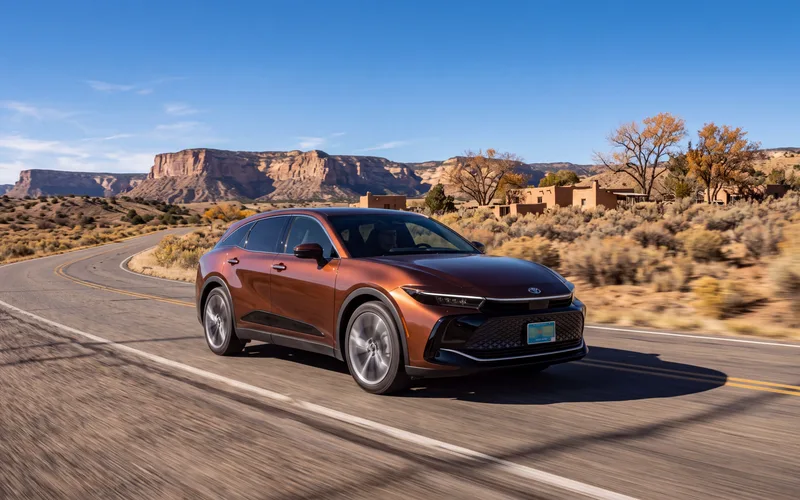 Toyota Crown SigniaMid-Size WagonBetter at: Efficiency
It answers the Outback's two weakest points at once — hybrid efficiency far beyond 28 MPG and Toyota's reliability record — in the same two-row AWD wagon shape.
Compare 2.70B-
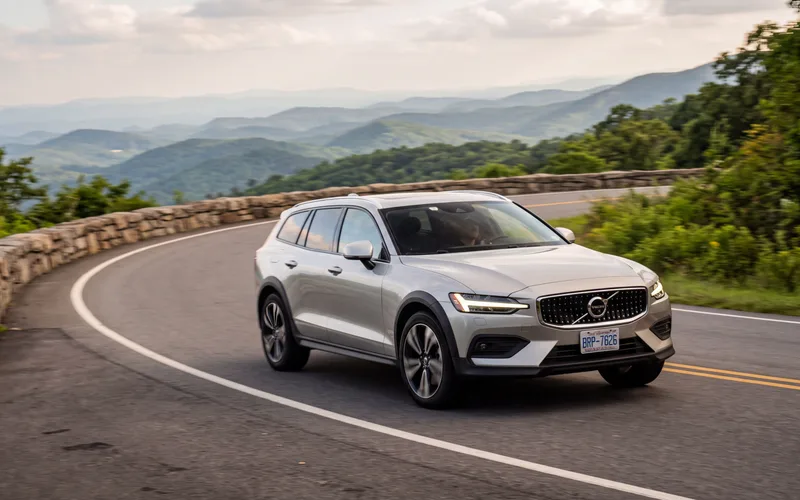 Volvo V60 Cross CountryLuxury WagonBetter at: Interior quality
The same lifted-wagon idea executed with a nicer interior, a stronger engine and much better road manners, if you can live with less cargo room for the money.
Compare2.48C+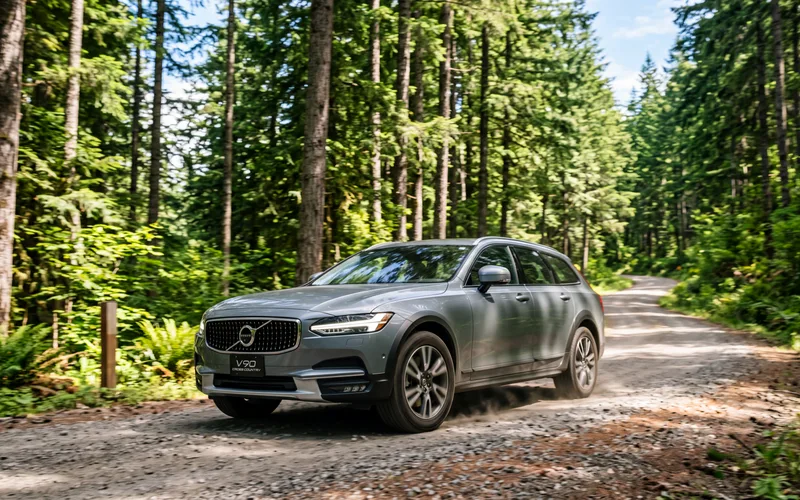 Volvo V90 Cross CountryLuxury WagonBetter at: Refinement
A larger, genuinely premium raised wagon for buyers who want the Outback's utility without its cheap plastics and coarse boxer engine.
CompareHow it's evolved
10 scored model years · 2017–2026
Subject scores by year
Hover or tap a score to see what moved it versus the year before. A corner mark flags a big swing.
| Year | Performance | Efficiency | Safety | Space | Cost | Reliability | Tech | Use-case | Driving | Value |
|---|---|---|---|---|---|---|---|---|---|---|
| 2026 | 36 | 54 | 79 | 83 | 54 | 61 | 59 | 72 | 60 | 76 |
| 2025 | 36 | 52 | 73 | 85 | 59 | 77 | 57 | 72 | 64 | 70 |
| 2024 | 35 | 52 | 76 | 85 | 61 | 77 | 56 | 72 | 64 | 72 |
| 2023 | 35 | 52 | 77 | 85 | 62 | 76 | 55 | 72 | 64 | 75 |
| 2022 | 35 | 56 | 77 | 85 | 64 | 70 | 48 | 71 | 63 | 73 |
| 2021 | 38 | 57 | 78 | 83 | 65 | 70 | 49 | 67 | 62 | 73 |
| 2020 | 37 | 57 | 73 | 85 | 69 | 71 | 48 | 68 | 62 | 76 |
| 2019 | 35 | 53 | 71 | 80 | 70 | 70 | 37 | 64 | 59 | 68 |
| 2018 | 33 | 52 | 70 | 80 | 65 | 69 | 51 | 66 | 58 | 66 |
| 2017 | 33 | 52 | 61 | 80 | 66 | 62 | 28 | 63 | 61 | 70 |
Compare two years
Best fit & conditions
Higher scores mean a better fit for that use case. Learn more about use-case fit →
Subject profile
Trims & configurations
6 trimsScores above reflect the volume trim. Per-trim specs and scores are rolling out — the full lineup:
Academic Probation · NHTSA safety recalls
Dec 19, 2019Air bags: air bag/restraint control moduleA replacement air bag control module may have been installed that is not compatible with the passenger air bag module, possibly affecting air bag deployment.
Defect
Subaru of America, Inc. (Subaru) is recalling certain 2016-2017 Outback vehicles. A replacement air bag control module may have been installed that is not compatible with the passenger air bag module, possibly affecting air bag deployment.
Risk
In the event of a crash necessitating passenger frontal air bag deployment, the air bag may not deploy properly, increasing the risk of injury.
Remedy
Subaru will notify owners, and dealers will replace the passenger air bag module, free of charge. The recall began February 3, 2020. Owners may contact Subaru customer service at 1-844-373-6614. Subaru's number for this recall is WUX-09.
NHTSA campaign 19V910000 ↗Manufacturer no. WUX-0946 vehicles potentially affected (all models in the campaign)Owners notified Feb 3, 2020Filed by Subaru of America, Inc.Filed as OUTBACKOct 6, 2016Air bags: knee bolster · Steering: columnIn the affected vehicles, the knee guard bracket may not be properly attached to the steering beam assembly.
Defect
Subaru of America, Inc. (Subaru) is recalling certain model year 2017 Legacy and Outback vehicles manufactured September 21, 2016, to September 23, 2016. In the affected vehicles, the knee guard bracket may not be properly attached to the steering beam assembly.
Risk
If the knee guard is not properly attached and the driver is not wearing a seatbelt, the knee guard may not be able to properly restrain the driver's lower body in the event of a crash, increasing the risk of injury.
Remedy
Subaru will notify owners, and dealers will inspect the knee guard welding on each vehicle's steering beam, replacing the beam as necessary, free of charge. The recall began November 14, 2016. Owners may contact Subaru customer service at 1-800-782-2783. Subaru's number for this recall is WTL-72.
NHTSA campaign 16V716000 ↗Manufacturer no. WTL-7254 vehicles potentially affected (all models in the campaign)Owners notified Nov 14, 2016Filed by Subaru of America, Inc.Filed as OUTBACKAug 3, 2016Service brakes, hydraulic: foundation components: disc: caliper · SuspensionThe affected vehicles may have improperly tightened attaching bolts for the front left and right brake calipers, wheel hubs, and the right stabilizer clamp.
Defect
Subaru of America, Inc. (Subaru) is recalling certain model year 2017 Outback vehicles manufactured June 20, 2016, to June 23, 2016. The affected vehicles may have improperly tightened attaching bolts for the front left and right brake calipers, wheel hubs, and the right stabilizer clamp.
Risk
If any of the front brake caliper, wheel hub or stabilizer clamp attaching bolts loosen or detach, the related components would also become loose and may detach possibly making the vehicle unstable and reducing the braking capability. These conditions would increase the risk of a crash.
Remedy
Subaru has notified owners, and dealers will inspect the bolts for proper torque, and replace any loose bolts, free of charge. The recall began on August 8, 2016. Owners may contact Subaru customer service at 1-800-782-2783. Subaru's number for this recall is WTE-66.
NHTSA campaign 16V576000 ↗Manufacturer no. WTE-6699 vehicles potentially affected (all models in the campaign)Owners notified Aug 8, 2016Filed by Subaru of America, Inc.Filed as OUTBACKMay 11, 2016Steering: columnThe steering column on the affected vehicles may have been improperly machined, and as a result, turning the steering wheel may have no effect on the direction of the wheels.
Defect
Subaru of America, Inc. (Subaru) is recalling certain model year 2016-2017 Legacy and Outback vehicles manufactured February 29, 2016, to May 6, 2016. The steering column on the affected vehicles may have been improperly machined, and as a result, turning the steering wheel may have no effect on the direction of the wheels.
Risk
The loss of steering ability would increase the risk of a crash.
Remedy
Subaru will notify owners, and dealers will inspect the lot number on the steering column, replacing the steering column, as necessary, free of charge. The recall began May 13, 2016. Owners may contact Subaru customer service at 1-800-782-2783 or by visiting http://www.wtd65.service-campaign.com. Subaru's number for this recall is WTD-65. Note: Until the vehicles have been inspected, owners are advised not to drive their vehicles.
NHTSA campaign 16V292000 ↗Manufacturer no. WTD-6548,819 vehicles potentially affected (all models in the campaign)Owners notified May 13, 2016Filed by Subaru of America, Inc.Filed as OUTBACK
15 recalls on other model years of the Outback (2018–2023)
Mar 22, 2024Air bags: sensor: occupant classification: front passengerA capacitor in the sensors for the Occupant Detection System (ODS) may crack and short circuit, which can prevent the front passenger air bag from deploying in a crash.
Defect
Subaru of America, Inc. (Subaru) is recalling certain 2020-2022 Outback and Legacy vehicles. A capacitor in the sensors for the Occupant Detection System (ODS) may crack and short circuit, which can prevent the front passenger air bag from deploying in a crash.
Risk
An air bag that does not deploy during a crash can increase the risk of injury.
Remedy
Dealers will replace the ODS sensors on the front passenger seat, free of charge. Owner notifications were mailed February 3, 2025. Owners may contact Subaru customer service at 1-844-373-6614. Subaru's number for this recall is WRA-24.
NHTSA campaign 24V227000 ↗Manufacturer no. WRA-24118,723 vehicles potentially affected (all models in the campaign)Owners notified Feb 3, 2025Filed by Subaru of America, Inc.Filed as OUTBACKNov 9, 2023Power train: automatic transmission: park/neutral start interlock switchAn insufficient weld may allow water to enter the inhibitor switch, causing it to fail.
Defect
Subaru of America, Inc. is recalling certain model year 2021 Crosstrek, 2022 Forester, 2021-2023 Legacy, and Outback vehicles. An insufficient weld may allow water to enter the inhibitor switch, causing it to fail.
Risk
An inoperative inhibitor switch may prevent the reverse lights from illuminating and the rearview camera image from displaying, increasing the risk of a crash.
Remedy
Dealers will replace the inhibitor switch, free of charge. Owner notification letters were mailed January 8, 2024. Owners may contact Subaru customer service at 1-800-782-2783. Subaru's number for this recall is WRQ-23.
NHTSA campaign 23V755000 ↗Manufacturer no. WRQ-2395,830 vehicles potentially affected (all models in the campaign)Owners notified Jan 8, 2024Filed by Subaru of America, Inc.Filed as OUTBACKSep 21, 2023Power train: driveline: driveshaftThe center support bolts for the driveshaft may loosen, resulting in the disconnection of the front end of the driveshaft.
Defect
Subaru of America, Inc. (Subaru) is recalling certain 2023 Outback, Legacy, Ascent, and Impreza vehicles. The center support bolts for the driveshaft may loosen, resulting in the disconnection of the front end of the driveshaft.
Risk
Separation of the front end of the driveshaft increases the risk of a crash.
Remedy
Dealers will clean the bolt mounting surfaces of the center support brace and install new bolts, free of charge. Owner notification letters were mailed November 20, 2023. Owners may contact Subaru's customer service at 1-844-373-6614. Subaru's number for this recall is WRN-23.
NHTSA campaign 23V647000 ↗Manufacturer no. WRN-234,311 vehicles potentially affected (all models in the campaign)Owners notified Nov 20, 2023Filed by Subaru of America, Inc.Filed as OUTBACKSep 22, 2022Visibility: windshieldThe incorrect paint clearcoat may have been applied, which can cause the windshield to be insufficiently bonded to the vehicle. As such, these vehicles fail to comply with the requirements of Federal Motor Vehicle Safety Standard number 212, "Windshield Mounting."
Defect
Subaru of America, Inc. (Subaru) is recalling certain 2022 Impreza and Outback vehicles. The incorrect paint clearcoat may have been applied, which can cause the windshield to be insufficiently bonded to the vehicle. As such, these vehicles fail to comply with the requirements of Federal Motor Vehicle Safety Standard number 212, "Windshield Mounting."
Risk
An insufficiently bonded windshield can detach during a crash, increasing the risk of injury.
Remedy
Subaru will offer owners a vehicle exchange or repurchase, free of charge. Owner notification letters are expected to be mailed November 21, 2022. Owners may contact Subaru's customer service at 1-844-373-6614. Subaru's number for this recall is WRH-22.
NHTSA campaign 22V712000 ↗Manufacturer no. WRH-2242 vehicles potentially affected (all models in the campaign)Owners notified Nov 11, 2022Filed by Subaru of America, Inc.Filed as OUTBACKJul 8, 2022Power train: automatic transmission: control module (tcm/pcm/tecm) · Power train: driveline: chain/beltA programming error in the Transmission Control Unit (TCU) may allow the clutch to engage before the drive chain is completely clamped.
Defect
Subaru of America, Inc. (Subaru) is recalling certain 2020-2021 Outback and Legacy vehicles. A programming error in the Transmission Control Unit (TCU) may allow the clutch to engage before the drive chain is completely clamped.
Risk
An improperly secured drive chain may slip and break, causing a loss of drive power and increasing the risk of a crash.
Remedy
Dealers will reprogram the TCU, inspect TCU data for chain slip, and visually inspect the chain guide. If evidence of chain slippage or damage is found, the transmission will be replaced. Repairs will be performed free of charge. Owner notification letters are expected to be mailed August 24, 2022. Owners may contact Subaru's customer service at 1-844-373-6614. Subaru's number for this recall is WRK-22. This recall is an expansion of previous recall number 21V-955.
NHTSA campaign 22V485000 ↗Manufacturer no. WRK-22182 vehicles potentially affected (all models in the campaign)Owners notified Aug 24, 2022Filed by Subaru of America, Inc.Filed as OUTBACKJul 1, 2022Electrical system: wiring · Engine and engine cooling: engine: engine control module (ecu/ecm)The engine wiring harness may have been damaged, resulting in a loose electrical connection to the engine control unit (ECU).
Defect
Subaru of America, Inc. (Subaru) is recalling certain 2022 Outback vehicles. The engine wiring harness may have been damaged, resulting in a loose electrical connection to the engine control unit (ECU).
Risk
A loose electrical connection to the ECU may cause an engine stall, increasing the risk of a crash.
Remedy
Dealers will replace the engine wiring harness and ECU, free of charge. Owner notification letters are expected to be mailed August 30, 2022. Owners may contact Subaru's customer service at 1-844-373-6614. Subaru's number for this recall is WRC-22.
NHTSA campaign 22V473000 ↗Manufacturer no. WRC-2215 vehicles potentially affected (all models in the campaign)Owners notified Aug 1, 2022Filed by Subaru of America, Inc.Filed as OUTBACKDec 9, 2021Power train: automatic transmission: control module (tcm/pcm/tecm) · Power train: driveline: chain/beltA programming error in the Transmission Control Unit (TCU) may allow the clutch to engage before the drive chain is completely clamped.
Defect
Subaru of America, Inc. (Subaru) is recalling certain 2019-2020 Ascent, 2020 Legacy and Outback vehicles. A programming error in the Transmission Control Unit (TCU) may allow the clutch to engage before the drive chain is completely clamped.
Risk
An improperly secured drive chain may slip and break, causing a loss of drive power and increasing the risk of a crash.
Remedy
Dealers will reprogram the TCU, inspect TCU data for chain slip, and visually inspect the chain guide. If evidence of chain slippage or damage is found, the transmission will be replaced. Repairs will be performed free of charge. Owner notification letters were mailed August 19, 2022. This recall includes all vehicles previously recalled under 19V-855. Vehicles previously recalled under 19V-855 will need to have the new remedy performed for this recall once available. Owners may contact Subaru customer service at 1-844-373-6614. Subaru's number for this recall is WRK-21.
NHTSA campaign 21V955000 ↗Manufacturer no. WRK-21198,255 vehicles potentially affected (all models in the campaign)Owners notified Aug 19, 2022Filed by Subaru of America, Inc.Filed as OUTBACKJul 29, 2021Fuel system, gasoline: delivery: fuel pumpThe low-pressure fuel pump inside the fuel tank may fail.
Defect
Subaru of America, Inc. (Subaru) is recalling certain 2019-2020 Ascent, 2018 Forester, 2018-2020 Impreza, Legacy, Outback, 2018-2019 BRZ, WRX, and Toyota 86 vehicles. The low-pressure fuel pump inside the fuel tank may fail.
Risk
Fuel pump failure can cause an engine stall while driving, increasing the risk of a crash.
Remedy
Dealers will replace the low-pressure fuel pump, free of charge. Owner notification letters were mailed September 24, 2021. Subaru and Toyota owners may call customer service at 1-844-373-6614. Subaru's number for this recall is WRG-21.
NHTSA campaign 21V587000 ↗Manufacturer no. WRG-21175,968 vehicles potentially affected (all models in the campaign)Owners notified Sep 24, 2021Filed by Subaru of America, Inc.Filed as OUTBACKJan 26, 2021Power train: shift linkage/cable/rodThe continuously variable transmission (CVT) select lever cable nut may not have been tightened properly, allowing the nut to loosen.
Defect
Subaru of America, Inc. (Subaru) is recalling certain 2021 Outback and Impreza vehicles. The continuously variable transmission (CVT) select lever cable nut may not have been tightened properly, allowing the nut to loosen.
Risk
A loose nut can lead to a lost of retention in the CVT select lever cable and the gear selector not functioning properly, increasing risk of crash.
Remedy
Subaru will notify owners, and dealers will inspect, and, if necessary, tighten the nut, free of charge. The recall began February 12, 2021. Owners may contact Subaru customer service at 1-844-373-6614. Subaru's number for this recall is WRA-21.
NHTSA campaign 21V024000 ↗Manufacturer no. WRA-21383 vehicles potentially affected (all models in the campaign)Owners notified Feb 12, 2021Filed by Subaru of America, Inc.Filed as OUTBACKDec 10, 2020Back over prevention: display functionThe August 2020 over-the-air software update may have timed out without completing the installation, corrupting the data, and causing the rearview display to shutoff intermittently. As such, these vehicles fail to comply with the requirements of Federal Motor Vehicle Safety Standard number 111, "Rear Visibility."
Defect
Subaru of America, Inc. (Subaru) is recalling certain 2020 Legacy and Outback vehicles equipped with "high" grade and "mid" grade multimedia navigation. The August 2020 over-the-air software update may have timed out without completing the installation, corrupting the data, and causing the rearview display to shutoff intermittently. As such, these vehicles fail to comply with the requirements of Federal Motor Vehicle Safety Standard number 111, "Rear Visibility."
Risk
The intermittent loss of the rearview image reduces the driver's visibility and increases the risk of crash.
Remedy
Subaru will notify owners, and dealers will reprogram the software and, if necessary, replace the Cockpit Control Module, free of charge. The recall began January 22, 2021. Owners may contact Subaru customer service at 1-844-373-6614. Subaru's number for this recall is WRH-20.
NHTSA campaign 20V766000 ↗Manufacturer no. WRH-207,741 vehicles potentially affected (all models in the campaign)Owners notified Jan 22, 2021Filed by Subaru of America, Inc.Filed as OUTBACKApr 16, 2020Fuel system, gasoline: delivery: fuel pumpThe low pressure fuel pump may become inoperative.
Defect
Subaru of America, Inc. (Subaru) is recalling certain 2019 Impreza, Outback, Legacy, and Ascent vehicles. The low pressure fuel pump may become inoperative.
Risk
If the low pressure fuel pump fails, the engine may stall without the ability to restart the vehicle, increasing the risk of a crash.
Remedy
Subaru will notify owners, and dealers will replace the low pressure fuel pump, free of charge. The recall began June 4, 2020. Owners may contact Subaru customer service at 1-844-373-6614. Subaru's number for this recall is WRD-20.
NHTSA campaign 20V218000 ↗Manufacturer no. WRD-20188,207 vehicles potentially affected (all models in the campaign)Owners notified Jun 4, 2020Filed by Subaru of America, Inc.Filed as OUTBACKSep 18, 2019Service brakes, hydraulic: pedals and linkagesThe brake pedal mounting bracket may have a missing or insufficiently tightened bolt.
Defect
Subaru of America, Inc. (Subaru) is recalling certain 2020 Outback and Legacy vehicles. The brake pedal mounting bracket may have a missing or insufficiently tightened bolt.
Risk
A missing or loose bolt may cause the brake pedal mounting area to deform over time, which can reduce braking performance and increase the risk of a crash.
Remedy
Subaru will notify owners, and dealers will inspect the brake pedal mounting bracket hardware and replace the hardware or brake pedal assembly, as necessary, free of charge. The recall began October 1, 2019. Owners may contact Subaru customer service at 1-844-373-6614. Subaru's number for this recall is WUL-97.
NHTSA campaign 19V664000 ↗Manufacturer no. WUL-973,467 vehicles potentially affected (all models in the campaign)Owners notified Oct 1, 2019Filed by Subaru of America, Inc.Filed as OUTBACKJun 26, 2019StructureSpot welds located on the duct below the cowl panel may have been improperly applied, impacting the vehicle's body strength.
Defect
Subaru of America, Inc. (Subaru) is recalling certain 2019 Legacy and Outback vehicles. Spot welds located on the duct below the cowl panel may have been improperly applied, impacting the vehicle's body strength.
Risk
In the event of a crash, the reduced strength of the vehicle body may increase the risk of injury.
Remedy
Subaru will notify owners, and dealers will inspect the vehicles and repair or repurchase the vehicle, as necessary, free of charge. The recall began July 26, 2019. Owners may contact Subaru customer service at 1-844-373-6614. Subaru's number for this recall is WUH-93.
NHTSA campaign 19V493000 ↗Manufacturer no. WUH-932,107 vehicles potentially affected (all models in the campaign)Owners notified Jul 26, 2019Filed by Subaru of America, Inc.Filed as OUTBACKDec 31, 2018Visibility: rearview mirrors/devicesIn the affected vehicles, a software issue may cause the audio display system to not initialize, resulting in the camera display remaining blank. If this occurs, the rearview image will not display while backing up the vehicle. As a result, the vehicles fail to comply with requirements of Federal Motor Vehicle Safety (FMVSS) number 111, "Rearview Mirrors."
Defect
Subaru of America, Inc. (Subaru) is recalling certain 2018 Legacy, Outback, and BRZ vehicles. In the affected vehicles, a software issue may cause the audio display system to not initialize, resulting in the camera display remaining blank. If this occurs, the rearview image will not display while backing up the vehicle. As a result, the vehicles fail to comply with requirements of Federal Motor Vehicle Safety (FMVSS) number 111, "Rearview Mirrors."
Risk
Failure to display the rearview image while backing up increases the risk of crash.
Remedy
Subaru has notified owners, and dealers will reprogram the audio system display software, free of charge. The recall began on February 5, 2019. Owners may contact Subaru customer service at 1-844-373-6614. Subaru's number for this recall is WTZ-85.
NHTSA campaign 18V935000 ↗Manufacturer no. WTZ-8571,190 vehicles potentially affected (all models in the campaign)Owners notified Feb 5, 2019Filed by Subaru of America, Inc.Filed as OUTBACKNov 1, 2018Electrical system: software · Fuel system, gasolineDue to a software error, the low fuel warning light may not illuminate at the intended remaining fuel level and the miles-to-empty display may incorrectly indicate a positive number despite the tank being empty.
Defect
Subaru of America, Inc. (Subaru) is recalling certain 2018 Subaru Legacy and Outback vehicles. Due to a software error, the low fuel warning light may not illuminate at the intended remaining fuel level and the miles-to-empty display may incorrectly indicate a positive number despite the tank being empty.
Risk
The inaccurate fuel display may cause a driver to unexpectedly run out of fuel and the vehicle to stall, increasing the risk of a crash.
Remedy
Subaru will notify owners, and dealers will reprogram the combination meter software, free of charge. The recall began February 20, 2019. Owners may contact Subaru customer service at 1-844-373-6614. Subaru's number for this recall is WTW-82.
NHTSA campaign 18V773000 ↗Manufacturer no. WTW-82228,648 vehicles potentially affected (all models in the campaign)Owners notified Feb 20, 2019Filed by Subaru of America, Inc.Filed as OUTBACK
Source: NHTSA Office of Defects Investigation recall database, model years 2017–2026. Recalls are listed by model year as the manufacturer filed them; whether a specific car is affected depends on its VIN — check a VIN at nhtsa.gov ↗. NHTSA model names matched to this page: OUTBACK.
Detailed scoring by subject
1Performance & PowertrainOne of the Outback's weakest categories.0.18F
2017 is the pre-facelift model year of the 5th-generation Outback (2015-2019, facelifted for 2018); the 2.5L flat-4 and 3.6L flat-6 powertrains are unchanged from the generation's 2015 launch.
Carryover engines for MY2017, the year before the 2018 mid-cycle facelift.
Instrumented tests of the naturally-aspirated 2.5i CVT AWD cluster in the 8.6-9.6s range depending on outlet; 9.3s is representative of the majority of period tests, matching the unchanged-powertrain 2018 figure.
The 2.5i flat-4 is smooth at low-to-moderate throttle but strains and drones under hard acceleration or highway passing, a recurring note in period reviews; the 3.6R is markedly more relaxed and effortless.
Subaru's Lineartronic CVT is tuned with programmed 'steps' and steering-wheel paddle shifters to mimic a conventional automatic; reviewers generally find it smooth and free of the drone typical of early CVTs, though still less engaging than a true stepped gearbox.
Subaru Symmetrical AWD is standard across every 2017 Outback trim (no FWD option), and X-Mode with hill descent control (Dual-Function X-Mode with VTD torque vectoring on the 3.6R) is available - sophisticated for a car-based wagon even without true low-range gearing.
Only two gasoline engine choices (2.5L flat-4, 3.6L flat-6) for 2017 - no turbo, hybrid, PHEV or EV variant; Outback electrification didn't arrive until the following generation's plug-in hybrid.
2Efficiency & RangeOne of the Outback's weakest categories.1.52D
EPA-rated figure for the 2.5L flat-4 CVT AWD volume trim.
EPA-rated figure for the volume trim.
EPA-rated figure for the volume trim.
Computed EPA range on the Outback's 18.5-gallon tank at combined MPG for the volume trim; tank size unchanged across the 2015-2019 generation.
EPA annual fuel cost estimate at standard 15,000 mi/yr assumptions for the volume trim, consistent with the unchanged 28 combined MPG rating.
Both the 2.5i and 3.6R run on regular unleaded gasoline with no premium requirement or recommendation across the trim line.
3SafetyMid-pack among this car's ten categories.2.13C
NHTSA's overall 5-star rating for the 2017 Outback reflects strong frontal and side results with a slightly lower rollover score, typical for a wagon with moderate ground clearance.
IIHS named the 2017 Outback a Top Safety Pick+ with Good ratings across every crashworthiness test (small overlap front, moderate overlap front, side, roof strength, head restraints), but the TSP+ designation is conditional on the optional EyeSight front crash prevention package and specific (non-base) headlights, not achieved on every trim.
On the volume 2.5i Premium trim, EyeSight (AEB, adaptive cruise, lane departure/sway warning) is an optional package rather than standard, and blind-spot monitoring plus rear cross-traffic alert are reserved for the Limited and Touring trims. Only the range-topping Touring gets EyeSight standard, so the volume buyer gets none of the ADAS suite unless they pay extra.
With the optional EyeSight package, IIHS rated the Outback's front crash prevention 'Superior' for vehicle-to-vehicle avoidance, avoiding collisions in both the 12 mph and 25 mph tests. IIHS had not yet introduced pedestrian or nighttime AEB testing for this model year, so performance there is unverified, and the system is not standard equipment.
Blind-spot detection and reverse automatic braking (rear cross-traffic adjacent feature) are standard only on the two highest trims (Limited and Touring), and offer alerts only with no active steering or braking intervention for blind-spot events — a coverage gap on the volume Premium trim.
EyeSight's Lane Sway and Departure Warning plus a basic Lane Keep Assist provide steering nudges toward the lane center, but this generation's system is warning-and-nudge rather than continuous centering, and reviewers of the era described it as functional but not confidence-inspiring on curves. It's also gated behind the optional EyeSight package on the volume trim.
EyeSight's adaptive cruise control operates across the full speed range including stop-and-go, and was generally well-regarded for the era, but there is no combined highway-assist mode layering centering on top of ACC, and it's optional equipment on the volume trim rather than standard.
No hands-free highway driving system existed on the Outback in 2017; EyeSight required hands on the wheel at all times.
IIHS rated the headlights 'Poor' on the volume 2.5i Premium trim both with and without the optional EyeSight/curve-adaptive halogen setup; only the top HID-equipped Touring and 3.6R Limited trims scored 'Good'.
The Outback's wagon-height beltline, tall glasshouse and thin pillars give it notably better outward sightlines than crossover-shaped rivals — a trait period reviews consistently called out as a strength, aided by a standard rearview camera.
IIHS rated LATCH ease of use 'Marginal' — only two complete lower-anchor/tether positions are straightforward, with a third position requiring a tether plus borrowed lower anchors from an adjacent seating position, making a full 3-across car-seat setup more difficult than top-rated rivals.
4Space & ComfortThe Outback's best-graded category.3.41B+
The 2017 Outback is a 5-passenger wagon across all trims (2.5i and 3.6R); no 3-row option exists.
Manufacturer-published front headroom for the volume 2.5i/2.5i Premium configuration without the optional moonroof.
Manufacturer-published front legroom, common across 2.5i and 3.6R trims.
Manufacturer-published rear headroom; unchanged by the optional moonroof package, which only reduces front headroom.
Manufacturer-published rear legroom for the volume trim, competitive for a mid-size wagon but shy of 3-row/SUV rivals.
Manufacturer-published EPA cargo volume with seatbacks raised; the Outback's crossover-wagon packaging clears the wagon segment band comfortably.
Reviewers note a usable covered console bin with dual USB ports, door pockets, and a low, wide cargo floor with tie-downs and a cargo cover, but nothing that stands out as segment-leading innovation.
Multiple period reviews single out the Outback's front and rear seat comfort as a strength, with supportive cushioning and available heating from the Premium trim up.
Reviewers consistently describe a soft yet controlled ride with generous suspension travel that soaks up broken pavement while staying composed, a strength for the segment.
Cruising refinement is good and engine noise fades quickly off-throttle, but the CVT-mated 2.5L four is known to drone under hard acceleration, keeping this below the segment's best.
Heated front seats and dual-zone automatic climate arrive on 2.5i Premium and up, with a heated steering wheel and heated rear seats reserved for the new-for-2017 Touring trim — solid but not standard on the base car.
5Cost of OwnershipOne of the Outback's strongest categories.2.49C+
Entry 2.5i trim base MSRP for the 2017 model year, manufacturer press release figure including destination.
2.5i Premium is the volume trim for the Outback lineup, balancing equipment and price against the base 2.5i and pricier Limited/Touring trims.
Estimated from Edmunds True Cost to Own data for adjacent Outback model years (2019: $4,534; 2018: similar) and RepairPal's $607/year average repair cost across the nameplate; the 2017 shares its 6th-generation platform and CVT with those years.
Subaru Outback resale value is consistently among the strongest in its class across generations; iSeeCars aggregate data puts Outback 5-year depreciation at 38.6% (61.4% retention), and 2017-specific used-market data corroborates strong 3-year retention (~80%).
Standard Subaru Limited Warranty for the 2017 model year, at the floor of the mainstream segment band.
Standard powertrain coverage at the floor of the mainstream segment band; Subaru separately extended CVT-specific coverage to 10 years/100,000 miles for 2016-2018 model years after early CVT reliability concerns, which is a meaningful mitigating factor noted here but not the general powertrain term.
No complimentary scheduled maintenance is included, but Subaru bundles free roadside assistance for the life of the 3-year/36,000-mile warranty plus a 1-year trial of STARLINK Safety Plus (SOS emergency assistance, automatic collision notification, maintenance alerts) — basic roadside coverage plus a short connected-services trial, no included service visits.
$28,570 volume-trim price minus its estimated resale value after 5 years (58% retained, or about $16,571) leaves about $11,999 in depreciation. Add the projected $4,300 in 5-year maintenance and repairs, and owning this vehicle for 5 years costs about $16,299 in total.
6Reliability & QualityMid-pack among this car's ten categories.2.17C
Sources disagree: J.D. Power gave the 2017 Outback an above-average 3.5/5 predicted reliability score, but Consumer Reports and owner data flag the Lineartronic CVT as a recurring trouble spot for this generation, pulling the overall picture to mixed rather than top-tier.
Subaru has landed mid-pack in J.D. Power's Vehicle Dependability Study across the years covering this generation (164 problems per 100 vehicles in the 2020 VDS measuring 2017 models, better than industry average but with no individual model awards), consistent with a solid-but-not-top-5 brand standing.
NHTSA lists multiple recalls touching MY2017 Outback/Legacy (an improperly machined steering column on units built Feb–May 2016, airbag deployment concerns, and front brake caliper/wheel hub/stabilizer bolts that could loosen), and Subaru separately extended the CVT warranty to 10yr/100k for 2016-2017 Legacy/Outback in response to a wave of transmission complaints covering roughly 1.5 million vehicles — not a recall by classification, but a systemic quality signal beyond a typical TSB pattern.
The FB25 2.5L flat-four itself has a reasonably clean long-term record, but the Lineartronic CVT paired with it in this generation is the specific weak point — owner forums and repair sites document rough shifting, slipping, and full CVT replacements, and Subaru's 10yr/100k warranty extension for 2016-2017 units is a manufacturer acknowledgment of a real, not merely anecdotal, problem.
Contemporary reviews describe generous soft-touch surfaces on the dash, door inserts, and window sills for this generation Outback, with convincing faux wood on upper trims, offset by harder, cost-driven plastics lower on the dash and doors — competitive for a mainstream-priced wagon rather than class-leading.
No pattern of widespread rattles or misalignment complaints surfaced for this model year beyond the CVT-related drivetrain shudder already captured under powertrain durability; general assembly consistency is solid, in line with Subaru's steady initial-quality standing in this era.
Subaru's roughly 640-store US dealer network is dense for its sales volume, and 2017 J.D. Power Customer Service Index data shows Subaru scoring 818, ahead of Toyota (815) that year and above the mass-market brand average — a strong service-satisfaction signal for this model year specifically.
Routine parts and service are reasonably priced and widely available through the large dealer network, but the AWD driveline adds cost versus a FWD-only mainstream wagon, and a CVT replacement outside the extended warranty window is a meaningfully expensive repair — landing this in normal-but-not-cheap territory.
7Technology & InfotainmentThe Outback's lowest-graded category.0.00F
The volume 2.5i Premium trim carries Subaru's larger Starlink touchscreen; the base 2.5i uses a smaller 6.2-inch unit.
Reviewers liked the physical volume/tuning knobs and fingerprint-resistant glass surface, but the system was repeatedly flagged as sluggish to respond to input.
Apple CarPlay and Android Auto were not offered on the Outback in any form until the 2018 model year refresh; the 2017 Starlink system requires a USB cable for basic phone functions with no projection.
Voice recognition was widely panned as far behind smartphone assistants, and owners cited navigation accuracy complaints on the optional nav system.
The volume trim carries a standard 6-speaker system that's adequate but unremarkable; a 12-speaker Harman Kardon system is only available on Limited and Touring.
The 2017 Outback uses conventional analog gauges with a small monochrome multi-information display, not a configurable digital cluster on any trim.
No over-the-air software update capability existed on 2017-model-year Starlink hardware; updates required a dealer visit or USB map disc.
Starlink Safety & Security services (automatic collision notification, SOS, stolen-vehicle recovery) were available by subscription, but app-based remote start/climate control wasn't added to Outback until later model years.
Dual USB ports are provided in a covered console cubby but deliver limited charging current for modern phones, and no wireless charging pad was offered on any 2017 trim.
Proximity keyless entry with push-button start is reserved for the Limited and new Touring trims; the volume 2.5i Premium trim still uses a conventional key with remote-lock fob.
A rearview camera is standard across the line, with front/rear parking sonar available as an option on upper trims; no 360-degree camera system was offered.
No head-up display was offered on any 2017 Outback trim.
8Use-Case FitMid-pack among this car's ten categories.2.28C
Wide-opening rear doors, a low load floor and roomy 38.1-in rear legroom make loading kids and gear easy; LATCH anchors are clearly positioned in the outer rear seats.
EyeSight driver-assist (forward collision/lane-departure/adaptive cruise) is a $1,995 option on Premium and Limited and only standard on the pricier Touring — families buying the affordable 2.5i base can't get it at all, and it's an added cost on the volume Premium trim.
Comfortable, well-cushioned seats and a compliant ride suit multi-hour trips, though rear amenities (no rear vents controls beyond basic vents, no rear entertainment) are modest and cabin noise rises under hard acceleration.
The CVT delivers smooth, low-effort progress in traffic, visibility is strong thanks to the wagon's tall greenhouse, and the ride stays composed over rough urban pavement.
The volume 2.5i posts 25/32/28 mpg city/highway/combined on regular fuel — solidly average for a standard-AWD wagon, better than the 3.6R's 20/27/22 but not a segment standout.
A 36.1-ft curb-to-curb turning circle and wagon-length footprint (189.6 in) make the Outback manageable in tight parking, aided by a standard rearview camera, though it's not class-tightest.
Towing tops out at 2,700 lbs with a 200-lb tongue-weight limit and there's no bed or heavy-duty cargo box — enough for light trailers or small boats but not a real work vehicle.
Subaru's AWD system and unibody wagon construction have a generally solid durability reputation, but the Outback is not fleet-proven for hard work duty the way a body-on-frame truck is, and this generation carried some owner-reported CVT/driveline concerns.
Standard roof rails/crossbars give basic rack-mounting flexibility and the cargo area has tie-down points, but there's no onboard power outlet in the cargo bay and no meaningful upfit ecosystem.
An 18.5-gal tank and 28 mpg combined (2.5i) give roughly 500 miles of highway range, paired with comfortable seats and a composed ride; EyeSight adaptive cruise (where equipped) eases highway fatigue, but it's an added-cost option on the volume trim.
8.7 in of ground clearance, standard symmetrical AWD, and driver-selectable X-Mode with hill descent control make the Outback a genuine light-off-pavement performer, a defining strength of the nameplate.
60/40 split-folding rear seats expand cargo from 35.5 to 73.3 cu ft, standard roof rails add exterior gear capacity, and a factory hitch/towing package is available for bike or cargo carriers.
9Driving ExperienceMid-pack among this car's ten categories.2.12C
A car-like center of gravity relative to typical crossovers, plus MacPherson-strut front/double-wishbone rear suspension, give the Outback secure, well-controlled cornering without much body lean — composed rather than exciting.
The electric power-assisted rack is accurate enough for daily use but reviewers consistently describe it as light and short on genuine road feedback.
4-wheel disc brakes with EBD, ABS, Brake Assist and Brake Override deliver confident, linear stopping performance without notable complaints in period reviews.
The Lineartronic CVT pairs smoothly with the 2.5L flat-four around town, but reviewers note the familiar CVT "rubber-band" surge and elevated revs under harder acceleration; the 3.6R is smoother but not the volume engine.
Engine noise recedes quickly at a cruise, but the naturally-aspirated flat-four combined with the CVT produces an audible drone under acceleration that reviewers repeatedly call out as a mild annoyance.
Manufacturer-published curb-to-curb turning circle, common across all 2017 Outback trims and both engines.
The raised wagon seating position gives commanding outward visibility and easy ingress/egress versus a sedan, with straightforward, well-placed controls praised across reviews.
The 2.5i is pleasant and easygoing but not engaging — modest power (175 hp) and a CVT tuned for smoothness over sportiness make it more appliance than enthusiast pick; the 3.6R adds some verve but isn't the volume choice.
10Value & Market PositionOne of the Outback's strongest categories.2.71B-
The base 2.5i already includes standard symmetrical AWD, 17-in alloys, roof rails, a rearview camera, and a 6.5-in touchscreen (7-in on Premium+) — AWD alone is a segment differentiator many rivals charge extra for — but EyeSight driver-assist is a paid option on 2.5i/Premium rather than standard, keeping it out of the top band.
Standard AWD, 8.7 in of ground clearance, and SUV-rivaling cargo room at a price below comparably equipped compact/mid-size crossovers make the Outback a strong content-per-dollar proposition, reflected in contemporary reviews calling it a value alternative to a mid-size SUV.
Six trims (2.5i, Premium, Limited, Touring on the 2.5L four; Limited and Touring on the 3.6L six) span $25,645-$38,195, giving reasonable choice between economy and luxury-lite configurations, though all share one body style and drivetrain layout (AWD-only, no FWD or off-road-oriented variant).
The Outback was one of Subaru's best-selling nameplates in 2017 at roughly 180,000 US units, and effectively has no direct wagon-segment rivals at volume in the US market, making it the de facto segment leader by a wide margin.
Subaru carried strong brand loyalty and an outdoorsy, safety-focused image through the mid-2010s, with the Outback as a flagship halo model; not a luxury-tier aspirational brand but well above neutral.
Subaru historically ran modest incentives relative to domestic rivals given strong Outback demand — some lease cash and dealer discounts existed but not steep or desperation-level pricing.
2017 is the third model year of the sixth generation (2015-2019), a mid-cycle year with new trim levels (Touring) added but no major redesign or facelift.
The 2017 Outback (with EyeSight) earned IIHS Top Safety Pick, and Top Safety Pick+ with EyeSight plus HID headlights; it was named to U.S. News & World Report's Best Cars for Families and Best New Cars for Teens lists and was a Consumer Reports recommended model, though it was not typically the outright winner of head-to-head comparison tests against mid-size SUVs.