

The verdict
A mixed-report wagon, strong on space and held back by performance.
The 2025 Outback is the most useful wagon on sale: 32.6 cubic feet behind the back seat — more than many mid-size SUVs — standard all-wheel drive, 8.7 inches of ground clearance and a $34,480 volume Premium trim that undercuts nearly everything comparable. What you accept for that money is a slow, noisy 182-hp engine (8.6 seconds to 60 mph), a laggy touchscreen that swallowed the climate controls, and a car whose replacement was already in showrooms. It is the final year of a six-year-old design, so buy it for the practicality and the deals — 0% for 36 months was on the table — not because it feels modern. If you regularly haul gear, drive in snow, or want a wagon that costs $15,000 less than a Crown Signia, very little else does this job.
Jump to scoresStrengths
- Cargo space that embarrasses mid-size SUVs
- Genuinely capable in weather and on dirt
- Crash protection and standard safety kit at every price
What holds it back
- The engine most buyers get is genuinely slow
- The touchscreen is the car's worst feature
- Bottom-of-the-class warranty with nothing thrown in
Top alternatives
Cars shoppers cross-shop with the Subaru Outback 2.82B-
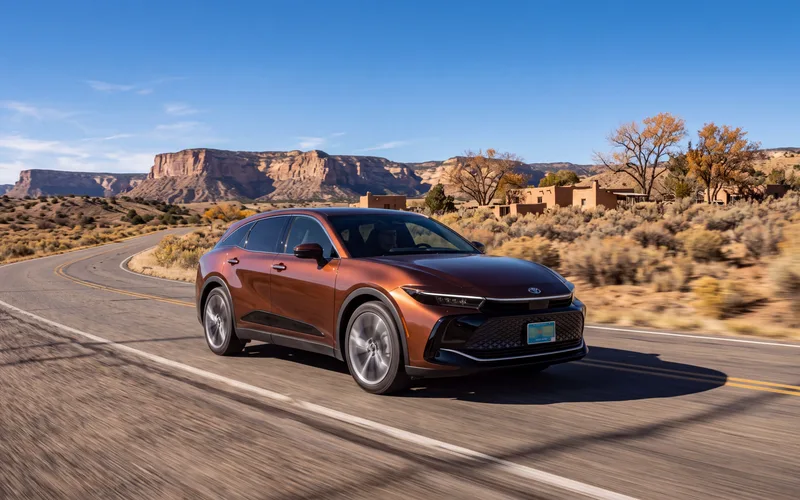 Toyota Crown SigniaMid-Size WagonBetter at: Efficiency
It answers the Outback's two weakest points at once — hybrid efficiency far beyond 28 MPG and Toyota's reliability record — in the same two-row AWD wagon shape.
Compare 2.70B-
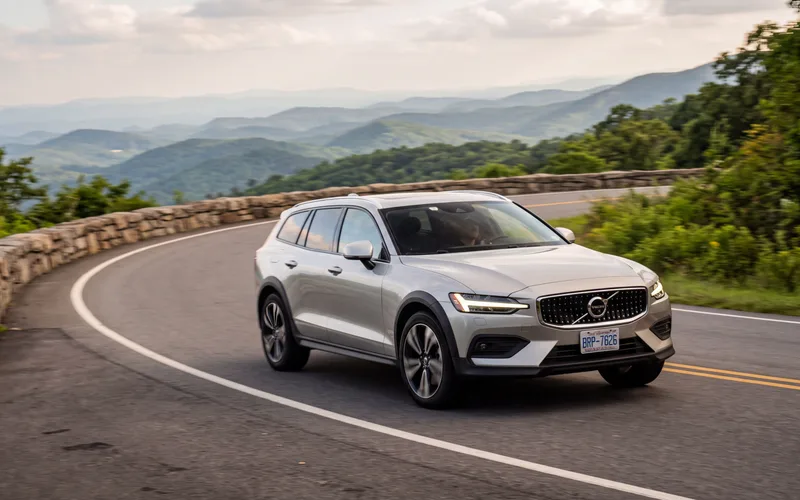 Volvo V60 Cross CountryLuxury WagonBetter at: Interior quality
The same lifted-wagon idea executed with a nicer interior, a stronger engine and much better road manners, if you can live with less cargo room for the money.
Compare2.48C+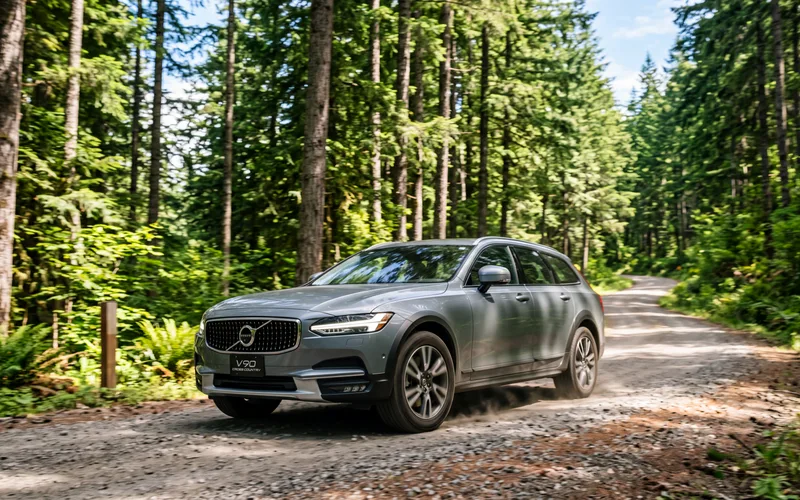 Volvo V90 Cross CountryLuxury WagonBetter at: Refinement
A larger, genuinely premium raised wagon for buyers who want the Outback's utility without its cheap plastics and coarse boxer engine.
CompareHow it's evolved
10 scored model years · 2017–2026
Subject scores by year
Hover or tap a score to see what moved it versus the year before. A corner mark flags a big swing.
| Year | Performance | Efficiency | Safety | Space | Cost | Reliability | Tech | Use-case | Driving | Value |
|---|---|---|---|---|---|---|---|---|---|---|
| 2026 | 36 | 54 | 79 | 83 | 54 | 61 | 59 | 72 | 60 | 76 |
| 2025 | 36 | 52 | 73 | 85 | 59 | 77 | 57 | 72 | 64 | 70 |
| 2024 | 35 | 52 | 76 | 85 | 61 | 77 | 56 | 72 | 64 | 72 |
| 2023 | 35 | 52 | 77 | 85 | 62 | 76 | 55 | 72 | 64 | 75 |
| 2022 | 35 | 56 | 77 | 85 | 64 | 70 | 48 | 71 | 63 | 73 |
| 2021 | 38 | 57 | 78 | 83 | 65 | 70 | 49 | 67 | 62 | 73 |
| 2020 | 37 | 57 | 73 | 85 | 69 | 71 | 48 | 68 | 62 | 76 |
| 2019 | 35 | 53 | 71 | 80 | 70 | 70 | 37 | 64 | 59 | 68 |
| 2018 | 33 | 52 | 70 | 80 | 65 | 69 | 51 | 66 | 58 | 66 |
| 2017 | 33 | 52 | 61 | 80 | 66 | 62 | 28 | 63 | 61 | 70 |
Compare two years
Best fit & conditions
Higher scores mean a better fit for that use case. Learn more about use-case fit →
Subject profile
Trims & configurations
6 trimsScores above reflect the volume trim. Per-trim specs and scores are rolling out — the full lineup:
Academic Probation · NHTSA safety recalls
No NHTSA safety recall is on record for the 2025 Subaru Outback. Other model years of the Outback have 19 — listed below.
19 recalls on other model years of the Outback (2017–2023)
Mar 22, 2024Air bags: sensor: occupant classification: front passengerA capacitor in the sensors for the Occupant Detection System (ODS) may crack and short circuit, which can prevent the front passenger air bag from deploying in a crash.
Defect
Subaru of America, Inc. (Subaru) is recalling certain 2020-2022 Outback and Legacy vehicles. A capacitor in the sensors for the Occupant Detection System (ODS) may crack and short circuit, which can prevent the front passenger air bag from deploying in a crash.
Risk
An air bag that does not deploy during a crash can increase the risk of injury.
Remedy
Dealers will replace the ODS sensors on the front passenger seat, free of charge. Owner notifications were mailed February 3, 2025. Owners may contact Subaru customer service at 1-844-373-6614. Subaru's number for this recall is WRA-24.
NHTSA campaign 24V227000 ↗Manufacturer no. WRA-24118,723 vehicles potentially affected (all models in the campaign)Owners notified Feb 3, 2025Filed by Subaru of America, Inc.Filed as OUTBACKNov 9, 2023Power train: automatic transmission: park/neutral start interlock switchAn insufficient weld may allow water to enter the inhibitor switch, causing it to fail.
Defect
Subaru of America, Inc. is recalling certain model year 2021 Crosstrek, 2022 Forester, 2021-2023 Legacy, and Outback vehicles. An insufficient weld may allow water to enter the inhibitor switch, causing it to fail.
Risk
An inoperative inhibitor switch may prevent the reverse lights from illuminating and the rearview camera image from displaying, increasing the risk of a crash.
Remedy
Dealers will replace the inhibitor switch, free of charge. Owner notification letters were mailed January 8, 2024. Owners may contact Subaru customer service at 1-800-782-2783. Subaru's number for this recall is WRQ-23.
NHTSA campaign 23V755000 ↗Manufacturer no. WRQ-2395,830 vehicles potentially affected (all models in the campaign)Owners notified Jan 8, 2024Filed by Subaru of America, Inc.Filed as OUTBACKSep 21, 2023Power train: driveline: driveshaftThe center support bolts for the driveshaft may loosen, resulting in the disconnection of the front end of the driveshaft.
Defect
Subaru of America, Inc. (Subaru) is recalling certain 2023 Outback, Legacy, Ascent, and Impreza vehicles. The center support bolts for the driveshaft may loosen, resulting in the disconnection of the front end of the driveshaft.
Risk
Separation of the front end of the driveshaft increases the risk of a crash.
Remedy
Dealers will clean the bolt mounting surfaces of the center support brace and install new bolts, free of charge. Owner notification letters were mailed November 20, 2023. Owners may contact Subaru's customer service at 1-844-373-6614. Subaru's number for this recall is WRN-23.
NHTSA campaign 23V647000 ↗Manufacturer no. WRN-234,311 vehicles potentially affected (all models in the campaign)Owners notified Nov 20, 2023Filed by Subaru of America, Inc.Filed as OUTBACKSep 22, 2022Visibility: windshieldThe incorrect paint clearcoat may have been applied, which can cause the windshield to be insufficiently bonded to the vehicle. As such, these vehicles fail to comply with the requirements of Federal Motor Vehicle Safety Standard number 212, "Windshield Mounting."
Defect
Subaru of America, Inc. (Subaru) is recalling certain 2022 Impreza and Outback vehicles. The incorrect paint clearcoat may have been applied, which can cause the windshield to be insufficiently bonded to the vehicle. As such, these vehicles fail to comply with the requirements of Federal Motor Vehicle Safety Standard number 212, "Windshield Mounting."
Risk
An insufficiently bonded windshield can detach during a crash, increasing the risk of injury.
Remedy
Subaru will offer owners a vehicle exchange or repurchase, free of charge. Owner notification letters are expected to be mailed November 21, 2022. Owners may contact Subaru's customer service at 1-844-373-6614. Subaru's number for this recall is WRH-22.
NHTSA campaign 22V712000 ↗Manufacturer no. WRH-2242 vehicles potentially affected (all models in the campaign)Owners notified Nov 11, 2022Filed by Subaru of America, Inc.Filed as OUTBACKJul 8, 2022Power train: automatic transmission: control module (tcm/pcm/tecm) · Power train: driveline: chain/beltA programming error in the Transmission Control Unit (TCU) may allow the clutch to engage before the drive chain is completely clamped.
Defect
Subaru of America, Inc. (Subaru) is recalling certain 2020-2021 Outback and Legacy vehicles. A programming error in the Transmission Control Unit (TCU) may allow the clutch to engage before the drive chain is completely clamped.
Risk
An improperly secured drive chain may slip and break, causing a loss of drive power and increasing the risk of a crash.
Remedy
Dealers will reprogram the TCU, inspect TCU data for chain slip, and visually inspect the chain guide. If evidence of chain slippage or damage is found, the transmission will be replaced. Repairs will be performed free of charge. Owner notification letters are expected to be mailed August 24, 2022. Owners may contact Subaru's customer service at 1-844-373-6614. Subaru's number for this recall is WRK-22. This recall is an expansion of previous recall number 21V-955.
NHTSA campaign 22V485000 ↗Manufacturer no. WRK-22182 vehicles potentially affected (all models in the campaign)Owners notified Aug 24, 2022Filed by Subaru of America, Inc.Filed as OUTBACKJul 1, 2022Electrical system: wiring · Engine and engine cooling: engine: engine control module (ecu/ecm)The engine wiring harness may have been damaged, resulting in a loose electrical connection to the engine control unit (ECU).
Defect
Subaru of America, Inc. (Subaru) is recalling certain 2022 Outback vehicles. The engine wiring harness may have been damaged, resulting in a loose electrical connection to the engine control unit (ECU).
Risk
A loose electrical connection to the ECU may cause an engine stall, increasing the risk of a crash.
Remedy
Dealers will replace the engine wiring harness and ECU, free of charge. Owner notification letters are expected to be mailed August 30, 2022. Owners may contact Subaru's customer service at 1-844-373-6614. Subaru's number for this recall is WRC-22.
NHTSA campaign 22V473000 ↗Manufacturer no. WRC-2215 vehicles potentially affected (all models in the campaign)Owners notified Aug 1, 2022Filed by Subaru of America, Inc.Filed as OUTBACKDec 9, 2021Power train: automatic transmission: control module (tcm/pcm/tecm) · Power train: driveline: chain/beltA programming error in the Transmission Control Unit (TCU) may allow the clutch to engage before the drive chain is completely clamped.
Defect
Subaru of America, Inc. (Subaru) is recalling certain 2019-2020 Ascent, 2020 Legacy and Outback vehicles. A programming error in the Transmission Control Unit (TCU) may allow the clutch to engage before the drive chain is completely clamped.
Risk
An improperly secured drive chain may slip and break, causing a loss of drive power and increasing the risk of a crash.
Remedy
Dealers will reprogram the TCU, inspect TCU data for chain slip, and visually inspect the chain guide. If evidence of chain slippage or damage is found, the transmission will be replaced. Repairs will be performed free of charge. Owner notification letters were mailed August 19, 2022. This recall includes all vehicles previously recalled under 19V-855. Vehicles previously recalled under 19V-855 will need to have the new remedy performed for this recall once available. Owners may contact Subaru customer service at 1-844-373-6614. Subaru's number for this recall is WRK-21.
NHTSA campaign 21V955000 ↗Manufacturer no. WRK-21198,255 vehicles potentially affected (all models in the campaign)Owners notified Aug 19, 2022Filed by Subaru of America, Inc.Filed as OUTBACKJul 29, 2021Fuel system, gasoline: delivery: fuel pumpThe low-pressure fuel pump inside the fuel tank may fail.
Defect
Subaru of America, Inc. (Subaru) is recalling certain 2019-2020 Ascent, 2018 Forester, 2018-2020 Impreza, Legacy, Outback, 2018-2019 BRZ, WRX, and Toyota 86 vehicles. The low-pressure fuel pump inside the fuel tank may fail.
Risk
Fuel pump failure can cause an engine stall while driving, increasing the risk of a crash.
Remedy
Dealers will replace the low-pressure fuel pump, free of charge. Owner notification letters were mailed September 24, 2021. Subaru and Toyota owners may call customer service at 1-844-373-6614. Subaru's number for this recall is WRG-21.
NHTSA campaign 21V587000 ↗Manufacturer no. WRG-21175,968 vehicles potentially affected (all models in the campaign)Owners notified Sep 24, 2021Filed by Subaru of America, Inc.Filed as OUTBACKJan 26, 2021Power train: shift linkage/cable/rodThe continuously variable transmission (CVT) select lever cable nut may not have been tightened properly, allowing the nut to loosen.
Defect
Subaru of America, Inc. (Subaru) is recalling certain 2021 Outback and Impreza vehicles. The continuously variable transmission (CVT) select lever cable nut may not have been tightened properly, allowing the nut to loosen.
Risk
A loose nut can lead to a lost of retention in the CVT select lever cable and the gear selector not functioning properly, increasing risk of crash.
Remedy
Subaru will notify owners, and dealers will inspect, and, if necessary, tighten the nut, free of charge. The recall began February 12, 2021. Owners may contact Subaru customer service at 1-844-373-6614. Subaru's number for this recall is WRA-21.
NHTSA campaign 21V024000 ↗Manufacturer no. WRA-21383 vehicles potentially affected (all models in the campaign)Owners notified Feb 12, 2021Filed by Subaru of America, Inc.Filed as OUTBACKDec 10, 2020Back over prevention: display functionThe August 2020 over-the-air software update may have timed out without completing the installation, corrupting the data, and causing the rearview display to shutoff intermittently. As such, these vehicles fail to comply with the requirements of Federal Motor Vehicle Safety Standard number 111, "Rear Visibility."
Defect
Subaru of America, Inc. (Subaru) is recalling certain 2020 Legacy and Outback vehicles equipped with "high" grade and "mid" grade multimedia navigation. The August 2020 over-the-air software update may have timed out without completing the installation, corrupting the data, and causing the rearview display to shutoff intermittently. As such, these vehicles fail to comply with the requirements of Federal Motor Vehicle Safety Standard number 111, "Rear Visibility."
Risk
The intermittent loss of the rearview image reduces the driver's visibility and increases the risk of crash.
Remedy
Subaru will notify owners, and dealers will reprogram the software and, if necessary, replace the Cockpit Control Module, free of charge. The recall began January 22, 2021. Owners may contact Subaru customer service at 1-844-373-6614. Subaru's number for this recall is WRH-20.
NHTSA campaign 20V766000 ↗Manufacturer no. WRH-207,741 vehicles potentially affected (all models in the campaign)Owners notified Jan 22, 2021Filed by Subaru of America, Inc.Filed as OUTBACKApr 16, 2020Fuel system, gasoline: delivery: fuel pumpThe low pressure fuel pump may become inoperative.
Defect
Subaru of America, Inc. (Subaru) is recalling certain 2019 Impreza, Outback, Legacy, and Ascent vehicles. The low pressure fuel pump may become inoperative.
Risk
If the low pressure fuel pump fails, the engine may stall without the ability to restart the vehicle, increasing the risk of a crash.
Remedy
Subaru will notify owners, and dealers will replace the low pressure fuel pump, free of charge. The recall began June 4, 2020. Owners may contact Subaru customer service at 1-844-373-6614. Subaru's number for this recall is WRD-20.
NHTSA campaign 20V218000 ↗Manufacturer no. WRD-20188,207 vehicles potentially affected (all models in the campaign)Owners notified Jun 4, 2020Filed by Subaru of America, Inc.Filed as OUTBACKDec 19, 2019Air bags: air bag/restraint control moduleA replacement air bag control module may have been installed that is not compatible with the passenger air bag module, possibly affecting air bag deployment.
Defect
Subaru of America, Inc. (Subaru) is recalling certain 2016-2017 Outback vehicles. A replacement air bag control module may have been installed that is not compatible with the passenger air bag module, possibly affecting air bag deployment.
Risk
In the event of a crash necessitating passenger frontal air bag deployment, the air bag may not deploy properly, increasing the risk of injury.
Remedy
Subaru will notify owners, and dealers will replace the passenger air bag module, free of charge. The recall began February 3, 2020. Owners may contact Subaru customer service at 1-844-373-6614. Subaru's number for this recall is WUX-09.
NHTSA campaign 19V910000 ↗Manufacturer no. WUX-0946 vehicles potentially affected (all models in the campaign)Owners notified Feb 3, 2020Filed by Subaru of America, Inc.Filed as OUTBACKSep 18, 2019Service brakes, hydraulic: pedals and linkagesThe brake pedal mounting bracket may have a missing or insufficiently tightened bolt.
Defect
Subaru of America, Inc. (Subaru) is recalling certain 2020 Outback and Legacy vehicles. The brake pedal mounting bracket may have a missing or insufficiently tightened bolt.
Risk
A missing or loose bolt may cause the brake pedal mounting area to deform over time, which can reduce braking performance and increase the risk of a crash.
Remedy
Subaru will notify owners, and dealers will inspect the brake pedal mounting bracket hardware and replace the hardware or brake pedal assembly, as necessary, free of charge. The recall began October 1, 2019. Owners may contact Subaru customer service at 1-844-373-6614. Subaru's number for this recall is WUL-97.
NHTSA campaign 19V664000 ↗Manufacturer no. WUL-973,467 vehicles potentially affected (all models in the campaign)Owners notified Oct 1, 2019Filed by Subaru of America, Inc.Filed as OUTBACKJun 26, 2019StructureSpot welds located on the duct below the cowl panel may have been improperly applied, impacting the vehicle's body strength.
Defect
Subaru of America, Inc. (Subaru) is recalling certain 2019 Legacy and Outback vehicles. Spot welds located on the duct below the cowl panel may have been improperly applied, impacting the vehicle's body strength.
Risk
In the event of a crash, the reduced strength of the vehicle body may increase the risk of injury.
Remedy
Subaru will notify owners, and dealers will inspect the vehicles and repair or repurchase the vehicle, as necessary, free of charge. The recall began July 26, 2019. Owners may contact Subaru customer service at 1-844-373-6614. Subaru's number for this recall is WUH-93.
NHTSA campaign 19V493000 ↗Manufacturer no. WUH-932,107 vehicles potentially affected (all models in the campaign)Owners notified Jul 26, 2019Filed by Subaru of America, Inc.Filed as OUTBACKDec 31, 2018Visibility: rearview mirrors/devicesIn the affected vehicles, a software issue may cause the audio display system to not initialize, resulting in the camera display remaining blank. If this occurs, the rearview image will not display while backing up the vehicle. As a result, the vehicles fail to comply with requirements of Federal Motor Vehicle Safety (FMVSS) number 111, "Rearview Mirrors."
Defect
Subaru of America, Inc. (Subaru) is recalling certain 2018 Legacy, Outback, and BRZ vehicles. In the affected vehicles, a software issue may cause the audio display system to not initialize, resulting in the camera display remaining blank. If this occurs, the rearview image will not display while backing up the vehicle. As a result, the vehicles fail to comply with requirements of Federal Motor Vehicle Safety (FMVSS) number 111, "Rearview Mirrors."
Risk
Failure to display the rearview image while backing up increases the risk of crash.
Remedy
Subaru has notified owners, and dealers will reprogram the audio system display software, free of charge. The recall began on February 5, 2019. Owners may contact Subaru customer service at 1-844-373-6614. Subaru's number for this recall is WTZ-85.
NHTSA campaign 18V935000 ↗Manufacturer no. WTZ-8571,190 vehicles potentially affected (all models in the campaign)Owners notified Feb 5, 2019Filed by Subaru of America, Inc.Filed as OUTBACKNov 1, 2018Electrical system: software · Fuel system, gasolineDue to a software error, the low fuel warning light may not illuminate at the intended remaining fuel level and the miles-to-empty display may incorrectly indicate a positive number despite the tank being empty.
Defect
Subaru of America, Inc. (Subaru) is recalling certain 2018 Subaru Legacy and Outback vehicles. Due to a software error, the low fuel warning light may not illuminate at the intended remaining fuel level and the miles-to-empty display may incorrectly indicate a positive number despite the tank being empty.
Risk
The inaccurate fuel display may cause a driver to unexpectedly run out of fuel and the vehicle to stall, increasing the risk of a crash.
Remedy
Subaru will notify owners, and dealers will reprogram the combination meter software, free of charge. The recall began February 20, 2019. Owners may contact Subaru customer service at 1-844-373-6614. Subaru's number for this recall is WTW-82.
NHTSA campaign 18V773000 ↗Manufacturer no. WTW-82228,648 vehicles potentially affected (all models in the campaign)Owners notified Feb 20, 2019Filed by Subaru of America, Inc.Filed as OUTBACKOct 6, 2016Air bags: knee bolster · Steering: columnIn the affected vehicles, the knee guard bracket may not be properly attached to the steering beam assembly.
Defect
Subaru of America, Inc. (Subaru) is recalling certain model year 2017 Legacy and Outback vehicles manufactured September 21, 2016, to September 23, 2016. In the affected vehicles, the knee guard bracket may not be properly attached to the steering beam assembly.
Risk
If the knee guard is not properly attached and the driver is not wearing a seatbelt, the knee guard may not be able to properly restrain the driver's lower body in the event of a crash, increasing the risk of injury.
Remedy
Subaru will notify owners, and dealers will inspect the knee guard welding on each vehicle's steering beam, replacing the beam as necessary, free of charge. The recall began November 14, 2016. Owners may contact Subaru customer service at 1-800-782-2783. Subaru's number for this recall is WTL-72.
NHTSA campaign 16V716000 ↗Manufacturer no. WTL-7254 vehicles potentially affected (all models in the campaign)Owners notified Nov 14, 2016Filed by Subaru of America, Inc.Filed as OUTBACKAug 3, 2016Service brakes, hydraulic: foundation components: disc: caliper · SuspensionThe affected vehicles may have improperly tightened attaching bolts for the front left and right brake calipers, wheel hubs, and the right stabilizer clamp.
Defect
Subaru of America, Inc. (Subaru) is recalling certain model year 2017 Outback vehicles manufactured June 20, 2016, to June 23, 2016. The affected vehicles may have improperly tightened attaching bolts for the front left and right brake calipers, wheel hubs, and the right stabilizer clamp.
Risk
If any of the front brake caliper, wheel hub or stabilizer clamp attaching bolts loosen or detach, the related components would also become loose and may detach possibly making the vehicle unstable and reducing the braking capability. These conditions would increase the risk of a crash.
Remedy
Subaru has notified owners, and dealers will inspect the bolts for proper torque, and replace any loose bolts, free of charge. The recall began on August 8, 2016. Owners may contact Subaru customer service at 1-800-782-2783. Subaru's number for this recall is WTE-66.
NHTSA campaign 16V576000 ↗Manufacturer no. WTE-6699 vehicles potentially affected (all models in the campaign)Owners notified Aug 8, 2016Filed by Subaru of America, Inc.Filed as OUTBACKMay 11, 2016Steering: columnThe steering column on the affected vehicles may have been improperly machined, and as a result, turning the steering wheel may have no effect on the direction of the wheels.
Defect
Subaru of America, Inc. (Subaru) is recalling certain model year 2016-2017 Legacy and Outback vehicles manufactured February 29, 2016, to May 6, 2016. The steering column on the affected vehicles may have been improperly machined, and as a result, turning the steering wheel may have no effect on the direction of the wheels.
Risk
The loss of steering ability would increase the risk of a crash.
Remedy
Subaru will notify owners, and dealers will inspect the lot number on the steering column, replacing the steering column, as necessary, free of charge. The recall began May 13, 2016. Owners may contact Subaru customer service at 1-800-782-2783 or by visiting http://www.wtd65.service-campaign.com. Subaru's number for this recall is WTD-65. Note: Until the vehicles have been inspected, owners are advised not to drive their vehicles.
NHTSA campaign 16V292000 ↗Manufacturer no. WTD-6548,819 vehicles potentially affected (all models in the campaign)Owners notified May 13, 2016Filed by Subaru of America, Inc.Filed as OUTBACK
Source: NHTSA Office of Defects Investigation recall database, model years 2017–2026. Recalls are listed by model year as the manufacturer filed them; whether a specific car is affected depends on its VIN — check a VIN at nhtsa.gov ↗. NHTSA model names matched to this page: OUTBACK.
Detailed scoring by subject
1Performance & PowertrainThe Outback's lowest-graded category.0.37F
The volume Base/Premium 2025 Outback runs the 2.5L naturally aspirated FB25 flat-four rated at 182 hp @ 5,800 rpm; the optional 2.4L turbo fitted to Onyx XT, Limited XT, Touring XT and Wilderness makes 260 hp. 2025 is the final year of the sixth generation and a carry-over year mechanically.
Peak torque on the volume 2.5L boxer is 176 lb-ft, and it arrives high at 4,400 rpm, which is why the car feels lethargic under load; the turbo's 277 lb-ft from 2,000 rpm is a different vehicle in character.
The 182-hp 2.5L with the Lineartronic CVT and standard AWD in a ~3,660 lb wagon runs 8.5–8.7 s to 60 mph across instrumented tests of this mechanically unchanged generation; the turbo XT more than cuts two seconds off that.
The 2.5L boxer is unobtrusive at light throttle and around town, but with peak torque at 4,400 rpm the CVT holds high revs on any real demand and reviewers consistently describe it as loud and strained under duress. Passing and grade-climbing require planning rather than a squeeze of the pedal.
Subaru's Lineartronic CVT with 8-speed manual mode and paddles is among the better-calibrated CVTs — decisive and unfussy in normal driving — but the simulated ratios are unconvincing under hard acceleration and the familiar revs-ahead-of-speed drone remains.
Symmetrical full-time AWD is standard on every 2025 Outback trim with no FWD version sold, backed by 8.7 in of ground clearance (9.5 in on Wilderness), standard X-MODE, and dual-function X-MODE with Hill Descent Control on Onyx Edition, Onyx Edition XT and Wilderness. Only the absence of a low range keeps it off the very top of the band.
Two genuinely distinct gasoline powertrains — the 2.5L NA and the 2.4L turbo — cover the mainstream span from economy to 260 hp, but there is no hybrid, PHEV or EV Outback for 2025, which puts it behind wagon and crossover rivals that all offer at least one electrified option.
2Efficiency & RangeOne of the Outback's weakest categories.1.51D
The volume 2.5L AWD Outback is EPA-rated 28 MPG combined, a strong figure for a permanently all-wheel-drive vehicle of this size; the 2.4L turbo trims give up 3 MPG and the Wilderness 5 MPG to its taller gearing, tires and ride height.
26 MPG city from a non-hybrid AWD wagon is competitive, though a hybrid rival in the segment roughly doubles it on this cycle — there is no electrified assist here to recover braking energy.
32 MPG highway is the Outback's best cycle and the basis of its long-haul range, helped by the wagon body's lower frontal area relative to a comparable SUV; the tall-riding Wilderness drops to 26 MPG.
An 18.5-gallon tank against a 28 MPG combined rating gives an EPA total range of 518 miles, comfortably above the segment midpoint and a genuine road-trip strength — highway-only running is closer to 590 miles.
EPA's standard 15,000-mile estimate puts the volume 2.5L Outback at $2,200 a year on regular fuel — mid-pack in absolute terms, and the penalty for standard AWD and no electrification shows against hybrid wagons that run several hundred dollars less.
Every 2025 Outback engine — including the 260-hp 2.4L turbo and the Wilderness — is specified for regular 87 AKI, so there is no premium-fuel surcharge anywhere in the range and no plug, adapter or charging arrangement to manage.
3SafetyOne of the Outback's strongest categories.2.92B-
The 2025 Outback carries NHTSA's top 5-star overall rating with 5 stars in both frontal and side crash and a low 19% rollover risk, consistent across the entire sixth generation (2020-2025) of which 2025 is the final, carry-over model year.
The 2025 Outback earns Good in small overlap front (driver and passenger) and the updated side test, but only Marginal in the updated moderate overlap front test — the rear-passenger restraints-and-kinematics measure is rated Poor. That single result dropped it off the 2025 IIHS Top Safety Pick list entirely (only the Forester, Ascent and Solterra made it for Subaru), after the 2024 car had held TSP+; the redesigned 2026 recovers TSP+.
EyeSight is standard on every 2025 trim and is genuinely complete on the forward-facing side — pre-collision braking and throttle management, full-speed adaptive cruise with stop-and-go, lane keep assist with lane centering, and lane departure/sway warning. The gap is behind the driver: Blind-Spot Detection with Lane Change Assist and Rear Cross-Traffic Alert is unavailable on Base, only an option on the volume Premium trim, and standard from Onyx Edition up, with Reverse Automatic Braking following the same pattern. A Premium as typically ordered can leave the lot without BSM.
EyeSight's stereo-camera AEB earns Good — the top grade — in IIHS's updated pedestrian front crash prevention evaluation, avoiding the crossing-child collision at both 12 and 25 mph in daylight and the crossing-adult collision at 12 and 25 mph at night on both high and low beams. Nighttime pedestrian capability is where most camera-only systems give ground, and this one does not. Held short of the top band only because IIHS has not published an updated vehicle-to-vehicle result for this vehicle (the original low-speed V2V test, which EyeSight passed as Superior, was retired at the end of 2022).
Blind-Spot Detection with Lane Change Assist and Rear Cross-Traffic Alert works well as a warning system with mirror-mounted indicators and audible alerts, and Reverse Automatic Braking adds an intervention behind the car on most upper trims. But it is alert-only for lane changes with no steering intervention, unavailable at all on Base, and merely optional on the volume Premium — coverage that is standard equipment on most rivals at this price.
Lane departure and sway warning plus lane keep assist are standard, and EyeSight adds lane centering whenever adaptive cruise is engaged. Owner and reviewer reports on this generation are genuinely split — some praise how well it holds center through highway curves, others find it wanders on faded markings and disengages readily — which puts it in the functional-but-not-trusted middle band rather than alongside the best centering systems.
Full-speed-range adaptive cruise with stop-and-go is standard on every trim — no trim walk to reach it — and EyeSight's distance keeping and resume behavior are consistently rated among the more polished non-luxury implementations. It falls short of the top band because the highway assist it combines with is a hands-on lane centering function rather than an integrated highway-driving mode.
Subaru offers no hands-free highway driving system on any 2025 Outback trim. EyeSight is hands-on throughout, and the DriverFocus camera on Limited and Touring monitors for distraction and drowsiness rather than granting hands-off permission.
IIHS rates the 2025 Outback's headlights Good, and the LED projector units are curve-adaptive (steering-responsive) with high beam assist as standard equipment across the whole lineup — no trim-dependent downgrade, which is the usual way a car loses points here. Short of the very top only for lacking a matrix/adaptive-driving-beam system.
The wagon body is a real advantage here — a low beltline, tall side glass, a large upright rear window and slim pillars give sightlines most crossovers cannot match, and the driving position is high without the tapered greenhouse that hurts rear-quarter views. A rear-vision camera with washer is standard; a front-view camera is available on upper trims, but no true 360-degree surround view is offered, which is what keeps this out of the top band.
IIHS rates the Outback's LATCH ease of use Good+ — its top grade, awarded for extra usable positions beyond the two required outboard sets. Wide rear door openings, a flat floor and a low load height make rear-facing installs straightforward, and the wagon's rear seat has the width to take multiple seats without a fight.
4Space & ComfortThe Outback's best-graded category.3.82A
Every 2025 Outback trim seats five in a two-row layout with a 60/40-split bench; there is no captain's-chair or third-row option anywhere in the range. 2025 is the final, carry-over year of the sixth generation launched for 2020.
40.1 inches of front headroom is generous even by SUV standards and comfortably the best figure among wagons scored so far — the Outback's tall, upright greenhouse is the whole point of the body style. The moonroof fitted from Limited up costs a full inch.
42.8 inches of front legroom on a 108.1-inch wheelbase is a solid mid-pack figure for the class — enough that tall drivers do not run out of seat travel, without the limousine-like front stretch of the largest crossovers.
39.1 inches in the second row is at the top of the wagon band and better than most two-row crossovers manage — the roofline stays flat to the tailgate instead of tapering, so back-seat passengers sit upright with real space above their heads.
39.5 inches of rear legroom seats two adults behind two adults without negotiation and leaves room for rear-facing child seats — well clear of the segment midpoint and several inches better than the compact luxury wagons it is cross-shopped against.
32.6 cubic feet behind the rear seat is an enormous figure for a wagon — more than most mid-size two-row SUVs offer — and it opens to 75.6 cubic feet with the seat folded. This is the single strongest number on the Outback's whole scorecard.
Storage is a deliberate strength rather than an afterthought: a deep covered console bin, large bottle-capable door pockets, an underfloor cargo well beneath the load floor, a dual-position cargo cover, and integrated roof rails whose crossbars swing out of the rails themselves rather than needing to be carried separately. What holds it below the top band is the absence of an onboard AC power outlet and any real innovation beyond well-executed conventional storage.
Front seats are wide, high-mounted and comfortable over distance, with a 10-way power driver's seat from Premium up, and the flat rear bench is genuinely usable for three. But support is trim-dependent in a way reviewers call out — Consumer Reports specifically recommends stepping up to Limited for better seat support, and owner reviews of lower trims complain the cushions are firm and under-bolstered.
Long suspension travel and the 8.7-inch ride height give the Outback a genuinely absorbent ride that rounds off broken pavement better than the crossovers it competes with, and Consumer Reports rates it above some luxury SUVs on this measure. Body control stays composed enough that it never feels floaty, though the tall body does lean more in corners than a conventional wagon.
Wind and road noise are well contained for the class at a steady highway cruise, helped by an acoustic windshield and thicker glass added in this generation. The deduction is the powertrain: the 182-hp 2.5L in the volume trim is repeatedly described as loud under load, and the CVT's habit of holding revs on a grade turns a brief acceleration into a sustained drone.
The cold-weather equipment is strong and starts early: dual-zone automatic climate control and heated front seats are standard from the volume Premium trim, with heated rear seats and a heated steering wheel newly standard on Limited for 2025, plus remote engine start through the MySubaru app. It falls short of the top band because ventilated front seats are reserved for the Touring trims and the heated wheel cannot be had below Limited.
5Cost of OwnershipMid-pack among this car's ten categories.1.95C-
Subaru's published 2025 pricing opens the Outback at $29,995 plus a $1,420 destination charge — and that entry price already includes Symmetrical AWD and the full EyeSight suite, which most rivals either charge for or reserve for higher trims. It sits in the lower third of the wagon pricing band and roughly $13,500 below the Crown Signia's entry point.
Premium is the Outback's long-standing volume trim and the configuration Subaru's own lease advertising is built around — it adds the 11.6-inch portrait touchscreen, wireless Apple CarPlay/Android Auto, heated front seats and a power driver's seat over the base car for about $3,000. At $34,480 delivered it undercuts virtually every AWD wagon or comparably equipped compact crossover in the market.
Mechanically this is conventional, well-understood hardware — a naturally aspirated boxer four and a Lineartronic CVT on ordinary service intervals — but standard all-wheel drive means four matched tires and a driveline the front-drive wagons don't carry, and Subaru includes no free scheduled maintenance to offset the early years. Published estimates disagree by roughly a factor of two, so this is a blended figure toward the middle of the spread.
Retention is one of the Outback's genuine strengths — Subaru sits at or near the top of mainstream brand loyalty studies and used Outbacks trade on a demand base that does not depend on incentives. The 2025 car carries one drag its predecessors did not: it is the run-out year of the sixth generation, with a fully redesigned 2026 arriving in showrooms before 2025 inventory cleared, which the more pessimistic residual forecasts reflect.
Subaru's standard 3-year/36,000-mile basic coverage, unchanged for 2025 and sitting at the floor of the segment band. Hyundai, Kia and Genesis all beat it on the basic term and nothing about the Outback's positioning earns it anything back here.
The standard 5-year/60,000-mile powertrain term is the bottom of the band and half the mileage Hyundai and Kia offer. The one genuinely above-average line is corrosion coverage — 5 years with no mileage cap — which matters for a car sold heavily into salt-belt states, but it is not what this item measures.
There is no included scheduled maintenance — every oil change and service interval is out of pocket from day one, unlike Toyota's 2-year ToyotaCare or the multi-year programs at BMW and Volvo. What the buyer does get is 3 years of roadside assistance running with the basic warranty and a 3-year STARLINK/MySubaru Safety Plus trial (automatic collision notification, SOS emergency assistance, enhanced roadside, diagnostic alerts), plus a 6-month Security Plus trial and a short SiriusXM trial. That is basic roadside plus a connected-services trial and nothing more, which puts it just under the mid band.
$34,480 volume-trim price minus its estimated resale value after 5 years (55% retained, or about $18,964) leaves about $15,516 in depreciation. Add the projected $4,400 in 5-year maintenance and repairs, and owning this vehicle for 5 years costs about $19,916 in total.
6Reliability & QualityOne of the Outback's strongest categories.3.20B+
2025 is the sixth and final year of the 2020-generation Outback, a fully mature carry-over year, and both major forecasters rate it above average — Consumer Reports calls it more reliable than the typical 2025 model and keeps it on the Recommended list, while J.D. Power scores it 80/100 ("Great") for Quality & Reliability. Owner-reported trouble spots are concentrated in the Starlink infotainment (lag, freezing) and the exhaust system rather than anything structural, which is what holds it out of the top band.
Subaru's standing depends on which study you read: Consumer Reports places it second in brand reliability (avg 68/100) and first overall on the Auto Brand Report Card two years running, and J.D. Power's 2025 IQS finally put it above the industry average at 185 PP100 vs 192. Against that, the 2025 Vehicle Dependability Study — three-year-old 2022 cars — had Subaru at 212 PP100 against a 202 industry average, so long-term dependability still trails the short-term quality picture.
NHTSA lists zero recalls against the 2025 Outback, and zero against the 2024 car as well — recall activity fell steadily through the generation (six campaigns touch 2020 cars, four each for 2021 and 2022, two for 2023, then none), which is the normal signature of a design that has been debugged. The persistent blemish is service-bulletin territory rather than recall: Starlink head units that freeze or delaminate are the subject of an ongoing class action covering this generation.
The volume trim's FB25 2.5L boxer is a long-running, high-mileage-proven engine and the FA24 turbo in the XT trims has been trouble-free across Outback, Ascent and WRX duty since 2019, so the engines are not the question. The Lineartronic CVT is — it has matured a long way since the 2015 warranty extensions, but a chain-drive CVT paired to full-time AWD in a 3,600 lb wagon remains the component owners and reliability trackers flag for long-term risk, and the FB series still carries a legacy oil-consumption reputation from earlier variants.
For a wagon whose volume Premium trim lands in the low-$30Ks the cabin is honestly finished — reviewers describe abundant soft-touch surfaces, panels that fit well and a substantial feel, with StarTex water-repellent upholstery on Onyx/Wilderness and open-pore wood and quilted leather available further up. It reads durable rather than rich, though: the design is plain by 2025 standards and reviewers single out switchgear that feels flimsy, which is what keeps it out of the class-leading band.
A sixth-year car built on a settled line at Subaru Indiana Automotive shows the benefit: reviewers rate fit and finish as excellent, the body feels solid, and Subaru's 2025 initial-quality result was above the industry average for the first time in years. Complaints that do surface are wind and road noise intrusion and scattered one-off owner reports rather than a pattern of misalignment or rattles.
Subaru ranked first among all mass-market brands in J.D. Power's 2025 Customer Service Index and swept every measure in the study — service initiation, advisor, facility, pick-up and quality — which is as strong a service-satisfaction signal as the industry produces. The roughly 640-retailer network is dense in the Northeast, Pacific Northwest, Mountain West and Colorado where the Outback sells, and thinner across the Deep South and rural Texas, which is the only thing keeping this off a perfect score.
Outback volume means OEM and aftermarket parts are stocked everywhere — NAPA, Advance and the online OEM channel all carry deep catalogs — and repair frequency and severity both sit at segment norms. Running costs are a shade above average rather than cheap: standard AWD, a boxer layout that makes some routine jobs more labor-intensive than an inline-four, and CVT service push the annual figure past the midsize-crossover average, though nowhere near European-wagon territory.
7Technology & InfotainmentOne of the Outback's weakest categories.1.81C-
The volume Premium trim carries the 11.6-inch portrait STARLINK Multimedia Plus screen, which is standard on every trim except the entry Base car — that one keeps the older 7.0-inch dual-display setup. 11.6 inches remains the maximum offered for 2025; the redesign gets a larger unit.
This is the 2025 Outback's clearest weakness and the criticism is close to unanimous: the STARLINK software is slow to wake and slow to respond, taps go unregistered or register twice, the screen glares badly, and almost all climate control — including the heated-seat switches — lives in a strip at the very bottom of an 11.6-inch portrait display that a driver has to look down and reach for. Physical volume and tuning knobs and two temperature buttons flanking the screen are the only things keeping it out of the bottom of the band.
Wireless Apple CarPlay and Android Auto are standard on eight of the nine trims — everything from the volume Premium upward — so essentially every Outback a buyer walks out with has it. Only the entry Base car is limited to the wired connection through its 7.0-inch system, which is what holds this just short of the top of the band.
Built-in TomTom navigation became standard on Limited and above for 2025 and is available on lower trims by package, but the maps look and route like a generation-old system and owners overwhelmingly default to CarPlay or Android Auto instead. The native voice assistant handles fixed commands for audio, phone and climate rather than natural language, and the connected-services Concierge functions sit behind a subscription.
The available Harman Kardon system is a real upgrade — twelve speakers driven by a 576-watt amplifier — and it reaches down to the Onyx Edition rather than being locked to the most expensive trim. The base six-speaker system in the Premium is unremarkable but clean, which is why this lands solidly in the middle band rather than at the top.
No 2025 Outback trim offers a digital gauge cluster. Every car in the range, up to the $44,730 Touring XT, uses analog speedometer and tachometer dials with a small colour LCD trip display between them, supplemented by a separate multi-function display on the dash top. The full-digital cluster arrives only with the 2026 redesign.
The Outback does receive over-the-air updates, but only for the STARLINK multimedia head unit and navigation maps — infotainment software and nothing else. The update is pulled over the owner's Wi-Fi rather than the car's own cellular modem, so it is a deliberate manual errand, and none of it reaches vehicle systems the way a whole-vehicle OTA architecture would.
The MySubaru app covers the expected ground — remote engine start, remote lock/unlock, vehicle locate, diagnostic alerts, automatic collision notification and SOS — and the three-year trial means most owners never pay during their first ownership cycle. It sits mid-band rather than higher because remote start is on the paid Safety & Security Plus tier that costs about $100 a year once the trial expires, and there is no digital-key or phone-as-key capability at all.
Both rows get power — USB-C alongside the traditional USB-A ports front and rear — and a wireless charging pad is fitted on the upper trims, which is competitive provision for a mainstream wagon. It stops short of the top band because there is no household AC outlet anywhere in the vehicle and the wireless pad is not available on the volume Premium.
Keyless Access with Push-Button Start is not standard on the trim most people buy — on the Premium it is bundled into a $1,400 option package alongside the hands-free power rear gate, and the Base car uses a conventional key with a twist ignition. From Onyx Edition upward it is standard and the package is complete, and app-based remote start covers the rest, but a volume Outback can and often does leave the lot without proximity entry.
A rear-vision camera with a washer nozzle is standard on every trim — the washer is a genuinely useful touch on a car meant for dirt roads — and a front-view camera plus front and rear parking sensors are available higher up. But no 2025 Outback trim can be had with a 360-degree surround-view system, which Subaru already fitted to the 2025 Forester and Ascent, and there is no automated parking of any kind.
No head-up display is offered on any 2025 Outback trim, at any price, in any option package. Subaru introduced one on the Outback only with the 2026 redesign.
8Use-Case FitGrades above the middle of the scale.2.85B-
The Outback is close to a benchmark for the daily mechanics of family life: IIHS rates its LATCH hardware Good+ — the top grade, awarded for usable positions beyond the two required — and the wide, nearly square rear door openings, flat floor and low seat height make buckling a toddler a step rather than a climb. Behind the seat, 32.6 cubic feet swallows a full-size stroller without folding anything down. The low, flat load lip is what a crossover of the same footprint cannot match.
The headline credentials are strong — NHTSA 5 stars overall and EyeSight's full pre-collision braking, adaptive cruise and lane centering standard on every trim including the $29,995 Base — but two real gaps sit exactly where a family shops. IIHS rates the updated moderate overlap front test only Marginal, with rear-passenger restraints and kinematics rated Poor, which cost the 2025 car the Top Safety Pick award it held for 2024; and blind-spot detection with rear cross-traffic alert is merely optional on the volume Premium trim.
The combination that matters on a long family drive is here: an absorbent ride, 39.1 inches of rear headroom and 39.5 of legroom, rear seat air vents, rear USB-C ports, heated rear seats from Limited up, and — critically — 32.6 cubic feet of luggage space that does not require folding a seat a child is sitting in. What it lacks is any rear-seat entertainment provision and rear-seat amenities beyond the basics, and the 2.5L's noise under load intrudes on a loaded car climbing a grade.
Around town the Outback is easy company — the CVT is smooth and creep-free in stop-and-go, controls are light, the driving position is high and the outward visibility is genuinely excellent for a modern car. Two things nag at it daily rather than occasionally: burying the climate and heated-seat controls in a laggy touchscreen makes a routine adjustment a two-step reach, and owners and reviewers report EyeSight braking hard for roadside objects that are not obstacles.
28 MPG combined from a permanently all-wheel-drive wagon on regular 87-octane is a good result in absolute terms — about $2,200 a year at EPA's 15,000-mile assumption — and there is no premium-fuel surcharge on any trim. It cannot reach the top band because there is no hybrid Outback for 2025 while several rivals in and around the segment are electrified, and Subaru includes no complimentary scheduled maintenance, so every service interval is out of pocket from day one.
At 191.1 inches long and 74.2 wide the Outback is a mid-size footprint, but a 36.1-foot curb-to-curb turning circle is tidy for that length and the wagon greenhouse — low beltline, tall side glass, big upright rear window — gives better all-round sightlines than nearly any crossover of the same size. The offsets are a slow steering rack that needs more wheel-twirling than expected in a parking structure, and the absence of any 360-degree camera to help place the corners.
This is a wagon, and the ceiling shows: the volume 2.5L tows 2,700 pounds — enough for a small utility trailer, a pair of jet skis or a teardrop camper, and no more — while the turbo XT trims reach 3,500. There is no bed, no meaningful payload headroom, and the 182-hp engine works audibly hard with any load behind it. It scores a little above the luxury wagons in the segment purely because 2,700–3,500 lbs and 75.6 cubic feet of flat cargo floor do constitute light work capability.
The hardware underneath is proven and unglamorous — the FB25 boxer and Lineartronic CVT have six years of service in this generation and far longer in the platform, and Outbacks are common in park-service, utility and rural-agency fleets precisely because they survive gravel roads and winters. Body cladding and available all-weather rubber flooring take abuse. It is held to the middle band because the interior is trimmed for private buyers rather than for hosing out, and a CVT is not the transmission of choice for sustained hard duty.
The roof is the useful part: integrated rails whose crossbars swing out of the rails themselves, rated to 176 pounds dynamic on standard trims and 700 pounds static on the Wilderness, plus one of the deepest accessory and third-party rack ecosystems of any vehicle sold. Cargo tie-down hooks, a 12V outlet in the load area and a factory hitch are all available. It stays mid-band because there is no onboard AC power, no bed or bulkhead, and nothing designed to be upfitted in a commercial sense.
As a mile-eater the Outback is genuinely strong: an 18.5-gallon tank against 32 MPG highway gives well over 500 miles between stops, the ride is soft-edged over interstate expansion joints, the seats hold up for multi-hour stints, and EyeSight's full-speed adaptive cruise with stop-and-go and lane centering is standard on every trim rather than a trim-walk away. What keeps it out of the top band is powertrain noise — the 2.5L drones on long grades — and the fact that the lane centering is a hands-on system that reviewers describe as inconsistent on faded markings.
This is what the Outback is for, and it is the best score on the card. Symmetrical full-time all-wheel drive is standard on every trim with no front-drive version sold, ground clearance is 8.7 inches — more than most compact SUVs — rising to 9.5 on the Wilderness, X-MODE is standard with a dual-function version including Hill Descent Control on Onyx and Wilderness, and the roof rails and available hitch carry the toys. Only the absence of a low range and locking differentials keeps it from the very top.
32.6 cubic feet behind the second row opening to 75.6 with the 60/40 seat down, over a flat floor with a low load lip and an underfloor storage well, is exceptional gear capacity — more behind the seats than many two-row SUVs offer, and reachable without lifting anything to shoulder height. Add standard integrated roof rails with swing-out crossbars, a dual-position cargo cover and an available hitch and there is very little a family's outdoor kit cannot be made to fit.
9Driving ExperienceMid-pack among this car's ten categories.2.29C
The Outback is secure and predictable rather than agile: the low-mounted boxer engine keeps the center of gravity down for a vehicle with 8.7 inches of clearance, and Consumer Reports came away impressed with its accident-avoidance-maneuver performance. But the soft, long-travel suspension that makes it ride well also lets it lean noticeably in corners, and it does not feel as planted through quick direction changes as the lower wagons it competes with.
The electric rack is accurately weighted off-center and tracks straight on the highway without correction, but it is geared slowly and tells the driver almost nothing about the front tires. Consumer Reports notes it needs more wheel movement than expected both on the road and in a parking lot, and rates it a step below the mechanically related Legacy for crispness.
Stopping performance and pedal feel are unremarkable in the good sense — progressive, consistent and adequate to the car's modest performance, with no fade complaints in normal use and strong showings in emergency-maneuver testing. The reservation is not the brake hardware but EyeSight's calibration: owners and reviewers report the automatic emergency braking intervening hard for roadside objects that are not obstacles, which undermines confidence in the pedal the driver did not press.
At light throttle the 2.5L and Lineartronic CVT are genuinely smooth — no shift shock, no creep drama in traffic, and one of the better-calibrated CVTs on sale. Ask for anything more and the calibration shows its limits: peak torque does not arrive until 4,400 rpm, so the transmission flares the revs ahead of road speed and the simulated ratios feel invented rather than mechanical.
The boxer four is quiet enough at a cruise, but the combination of a high torque peak and a CVT means any real demand — merging, passing, a long grade — parks the engine at high revs and holds it there, producing a sustained drone rather than a brief flare. Consumer Reports explicitly contrasts this with the 2.4L turbo, which does the same work more quietly.
36.1 feet curb-to-curb is a tidy figure for a 191.1-inch vehicle and better than both wagon rivals scored so far, making U-turns and parking-garage ramps less of an event than the Outback's footprint suggests. The slow steering ratio means more wheel-winding to use it.
The driving position is one of the Outback's quiet strengths: a high, commanding hip point without the climb of a truck-based SUV, a 10-way power driver's seat with lumbar from the Premium up, a telescoping wheel with good range, and outward visibility — low beltline, tall side glass, big upright rear window — that most modern vehicles cannot approach. The deduction is entirely the control layout, with climate and heated-seat functions pushed into the bottom strip of a portrait touchscreen that requires looking away from the road.
Nobody buys an Outback for the drive, and the volume 2.5L does nothing to change that: 8.6 seconds to 60 mph, a CVT that mutes what character the boxer has, slow steering and a suspension tuned for comfort and gravel. It is competent, unflappable and completely uninvolving — the turbo XT trims add real pace but not real engagement.
10Value & Market PositionGrades above the middle of the scale.2.74B-
Every 2025 Outback, including the $31,415 base car, comes with Symmetrical all-wheel drive, the full EyeSight suite (pre-collision braking, full-speed adaptive cruise with stop-and-go, lane keep with centering) and steering-responsive LED headlights with high-beam assist — content most rivals charge for or gate behind a trim walk. The base trim is genuinely spare in other respects, though: dual 7.0-inch screens rather than the 11.6-inch unit, cloth seats, no heated seats and no blind-spot monitoring at any price. Kept out of the top band because the generosity is concentrated in AWD and safety, and the 2025 Limited's newly standardized moonroof, DriverFocus and navigation sit two trims up the ladder.
A $34,480 Premium delivers standard AWD, a large touchscreen, heated seats, a top-tier standard driver-assist suite, 32.6 cu ft behind the rear seat and real 8.7-inch ground clearance — a combination that costs several thousand more from almost any rival, and roughly $15,000 less than the Crown Signia's volume configuration. What holds it short of the standout band is that the value case thins as you climb: the XT and Wilderness trims run to $43,000–$46,150, where better-resolved infotainment and more modern interiors are available elsewhere, and reviewers in 2025 were pointed about the aging touchscreen and driver-aid tuning being what you accept for the price.
Nine published trims spanning $31,415 to $46,150 with two engines — the 182-hp 2.5-liter and the 260-hp 2.4-liter turbo XT — plus a genuinely differentiated off-road variant in the Wilderness and a blacked-out Onyx in both naturally aspirated and turbo form. The ladder is well spaced with no large gaps, and a buyer can enter cheap, step up to turbo power, or step sideways into extra ground clearance. Short of the very top only because there is one body and one drivetrain layout: no FWD, no hybrid, no long/short variant.
The Outback is the best-selling wagon-bodied vehicle in the United States by an order of magnitude, and 157,716 deliveries in calendar 2025 kept it among Subaru's top two nameplates. The 6.5% decline from 2024 is a changeover artifact rather than rejection — the redesigned 2026 was reaching showrooms from November 2025 while 2025 stock ran out. Held just under the top of the band because the trajectory was down, not up, in this specific year.
Subaru's image — all-wheel drive, safety, outdoors, dogs — is unusually coherent and converts into some of the highest brand loyalty and owner-satisfaction scores of any mainstream marque, and the Outback is the nameplate that image is built on. It stops short of the top band because the pull is affection and trust rather than aspiration: there is no premium halo, and the badge does not command a price premium the way Volvo's or Toyota's hybrid credibility does.
Better than the Subaru norm, and the reason is the changeover: with the redesigned 2026 arriving, Subaru put real subvented finance money on 2025 Outbacks — 0% APR for 36 months and 0.9% for 72 months — alongside a $305/month Premium lease, which is meaningful buyer benefit without being desperation pricing. Cash on the hood stayed thin (the $500 affinity rebates for medical professionals and teachers are lineup-wide, not model-specific), and early in the model year the car transacted close to sticker, so this lands in the upper part of the middle band rather than the top.
2025 is the run-out year of the sixth generation, which launched for 2020 — a six-year-old platform whose 2022 facelift is itself three years back, and whose 11.6-inch portrait touchscreen was the most criticized part of the car by this point. The redesign risk was not hypothetical: the all-new seventh-generation 2026 Outback was revealed at the New York show in April 2025, midway through the 2025 selling year, and reached dealers that November. A buyer signing for a 2025 knew the replacement was already public.
Well regarded and repeatedly recommended, but by 2025 the praise came with a standing list of caveats. It took a Car and Driver Editors' Choice in the wagon class and an 85/100 from Consumer Reports with above-average predicted reliability, and it is a perennial pick for practicality and foul-weather ability. Against that, the 2025 car lost the IIHS Top Safety Pick the 2024 model had held — Marginal in the updated moderate overlap front test, with rear-passenger restraints and kinematics rated Poor — and reviewers were consistent about the dated infotainment and poorly tuned driver aids. It is not the pick of a modern comparison test.