

The verdict
A mixed-report hot hatch, strong on driving and held back by efficiency.
Overall 2.51 (C+) across 10 graded subjects. Its strongest is driving experience at 3.40 (B+), its weakest efficiency & range at 0.00 (F). 7 of 10 subjects grade at C− or better.
Jump to scoresStrengths
- Driving Experience
- Reliability & Quality
- Safety
What holds it back
- Efficiency & Range
- Use-Case Fit
- Space & Comfort
Top alternatives
Cars shoppers cross-shop with the Toyota GR Corolla 2.70B-
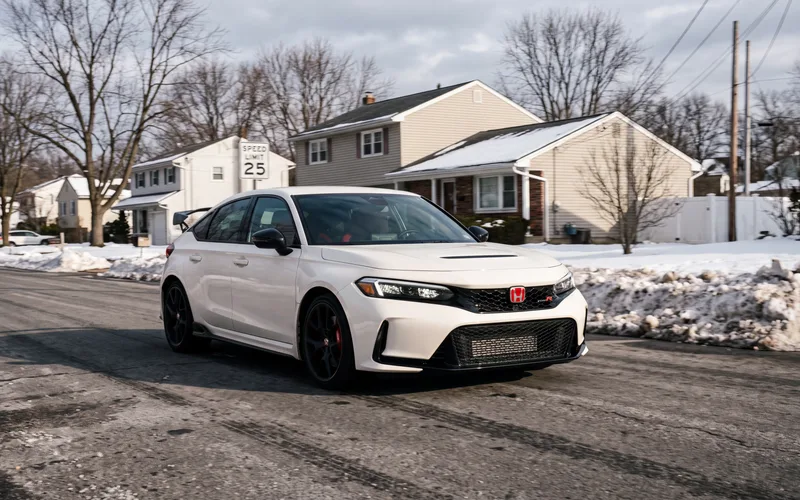 Honda Civic Type RHot HatchBetter at: Cabin space
Quicker and grippier with a benchmark manual, and its usable back seat and 24.5 cubic feet of cargo make it the hot hatch you can actually live with.
Compare 2.63C+
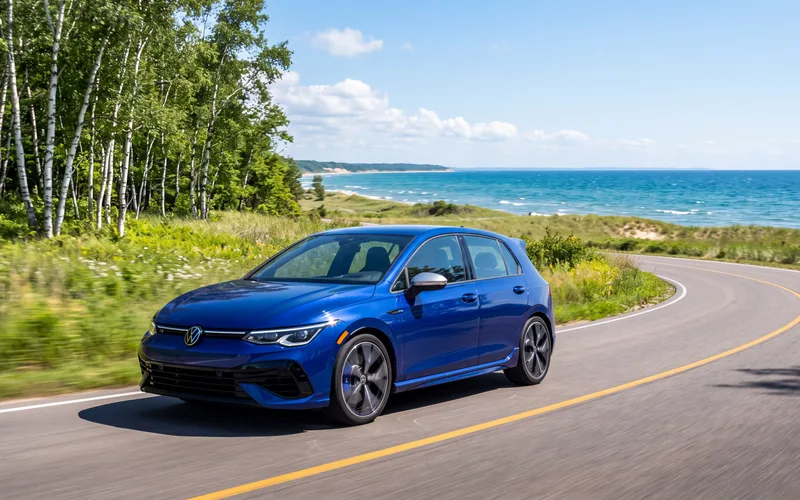 Volkswagen Golf RHot HatchBetter at: Refinement
Similar all-wheel-drive pace with adaptive damping, a much better interior, and a 12.9-inch screen — the refined take on the same formula.
Compare 2.72B-
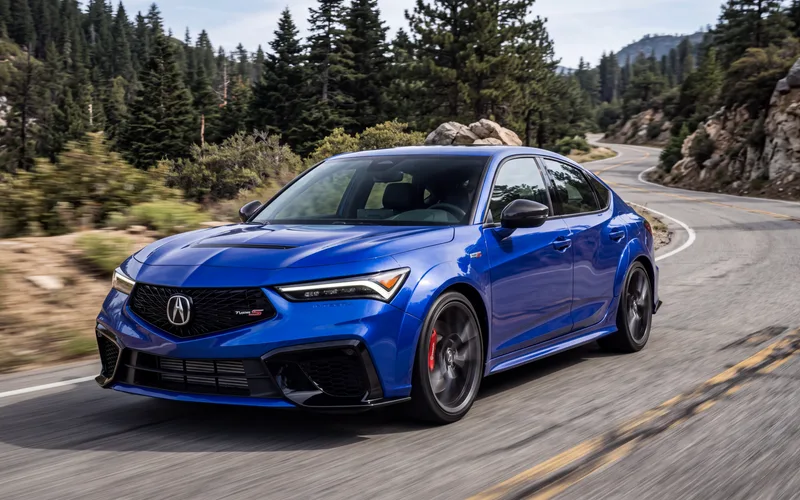 Acura Integra Type SSport CompactBetter at: Interior quality
Nearly the same performance in a far nicer package, with a genuinely usable rear seat and cargo hold for buyers who need one car to do everything.
CompareSubject scores by year
Hover or tap a score to see what moved it versus the year before. A corner mark flags a big swing.
| Year | Performance | Efficiency | Safety | Space | Cost | Reliability | Tech | Use-case | Driving | Value |
|---|---|---|---|---|---|---|---|---|---|---|
| 2026 | 65 | 18 | 72 | 54 | 56 | 77 | 65 | 49 | 80 | 72 |
| 2025 | 62 | 19 | 72 | 53 | 61 | 73 | 64 | 50 | 79 | 72 |
| 2024 | 61 | 19 | 71 | 52 | 65 | 74 | 59 | 46 | 79 | 71 |
| 2023 | 60 | 19 | 70 | 52 | 65 | 70 | 58 | 45 | 78 | 70 |
Compare two years
Best fit & conditions
Higher scores mean a better fit for that use case. Learn more about use-case fit →
Subject profile
Detailed scoring by subject
1Performance & PowertrainMid-pack among this car's ten categories.2.10C
Every 2024 GR Corolla grade — Core, the new-for-2024 Premium, and Circuit Edition — shares the same G16E-GTS turbocharged 1.6-liter three-cylinder rated at 300 hp. The 304 hp Morizo Edition was a 2023-only limited run and is not offered for 2024.
2024 carries the original 273 lb-ft tune across the whole range; the 295 lb-ft rating widely quoted for this car did not arrive until the 2025 model year, so it must not be applied here.
Toyota's own claim is 4.99 s and instrumented results bracket it widely — Car and Driver recorded an anomalously quick 4.4 s (12.9 s quarter at 107 mph) in a 2024 Premium, close enough to the lighter Morizo that the magazine ran a follow-up trying to explain it, while Edmunds' 2024 Circuit Edition test car needed 5.4 s. 4.9 s is the fair representative figure for the volume manual car.
The heavily boosted three-cylinder hits hard once lit but makes little below roughly 3,000 rpm, and at 25.2 PSI of boost some lag is unavoidable — reviewers split on how much, with track testers reporting almost none and road testers noticing a beat. Past that threshold the pull is strong and linear to redline, but the triple is coarser and less tractable at low rpm than the four-cylinder Civic Type R or Golf R: potent rather than polished.
2024 is manual-only: a six-speed intelligent Manual Transmission with short, precise throws and well-executed automatic rev-matching. Reviewers consistently rate the action highly but place both the shift feel and the lever itself a clear step behind the Honda Civic Type R benchmark, several calling the shifter cheap-feeling — nudged down two points on that corroborated criticism.
GR-FOUR all-wheel drive is standard on every 2024 grade, not a top-trim upgrade, and is unusually sophisticated for a hot hatch: driver-selectable 60:40 front/rear for road use, 50:50 for track stability, and 30:70 for rear-biased rotation. For 2024 the front and rear Torsen limited-slip differentials that were a Core-grade Performance Package option became standard on the new Premium grade and remain standard on Circuit Edition. Only the absence of a low range keeps it short of a perfect score.
One engine, one state of tune, one transmission across all three 2024 grades — 300 hp / 273 lb-ft from the 1.6-liter turbo triple with the six-speed manual. No hybrid, PHEV, or EV variant exists, and unlike 2025 there is not even an alternative gearbox; the Core/Premium/Circuit split is equipment and chassis hardware, not powertrain choice.
2Efficiency & RangeThe GR Corolla's lowest-graded category.0.00F
Every 2024 GR Corolla is EPA-rated 24 mpg combined; the 6-speed manual is the only transmission offered this year (the 8-speed automatic did not arrive until 2025), so a single rating covers the whole lineup. A 1.6-liter turbo three feeding full-time GR-FOUR AWD is thirsty by hatchback standards despite its small displacement.
21 mpg city sits near the bottom of the hatchback set — closer to a mid-size SUV than to the 32-mpg Corolla Hatchback it shares a nameplate with.
28 mpg highway is the powertrain's best number and matches its hot-hatch rivals almost exactly, but it trails a standard Corolla Hatchback by roughly 13 mpg — the price of permanent all-wheel drive and wide performance rubber.
The 13.2-gallon tank is the same one the ordinary Corolla Hatchback carries, putting combined-cycle range near 317 miles — short by hatchback standards, though still ahead of the Civic Type R's ~298 miles on its 12.4-gallon tank.
24 mpg combined on premium is an expensive combination: roughly 625 gallons a year, about $950/yr more than a regular-gas Corolla Hatchback covering the same 15,000 miles.
Toyota specifies premium unleaded (91 octane minimum) for the G16E-GTS — running lower octane costs rated output — so the owner pays the premium spread on every fill for the life of the car. There is no E85, diesel or charging alternative, though premium is at least universally available and the car carries no infrastructure dependency the way an EV does.
3SafetyOne of the GR Corolla's strongest categories.2.78B-
NHTSA has never crash-tested the GR Corolla in either year of its life so far — the 2024 and 2023 entries both return 'Not Rated' across every test — which is normal for a low-volume performance variant. The value is carried from the mechanically related 2024 Corolla Hatchback, which takes five stars overall, and the GR's shell is stiffer rather than weaker: Toyota adds 349 spot welds and roughly six extra metres of structural adhesive over the standard hatch, plus extra floor and rear strut bracing. The wider track and AWD would if anything help the calculated rollover measure, so five stars is the defensible inference — but it is an inference, not a measurement.
IIHS publishes no GR Corolla entry — the closest data is the Corolla 4-door hatchback file, which is Good in small overlap front on both sides and Good in the original moderate overlap test but only Acceptable in the updated side test, with a Marginal driver pelvis reading. The GR shares that shell (with extra welds and adhesive), so the frontal picture is likely at least as good, but the GR is named in no Top Safety Pick list, its unique wide body and track have never been tested, and no updated moderate overlap front result exists for this body style at all — the newer rear-passenger protocol is simply unmeasured. Mostly-Good ratings with an Acceptable side result and no award applicable to this variant is squarely the middle band; it sits a few points under the base hatchback's score because the base car at least holds a real award and the GR's numbers are all borrowed.
This is the rare case where the hot version is better equipped than the car it is based on: Toyota Safety Sense 3.0 is standard on all three 2024 grades (Core, the new Premium, Circuit Edition), and unlike the ordinary Corolla Hatchback — where Blind Spot Monitor with Rear Cross-Traffic Alert is an option on lower trims — the GR gets BSM, RCTA and parking sensors standard from the base Core up. All five of the band's benchmark systems (AEB, ACC, LKA, BSM, RCTA) are therefore fitted to every car sold, which puts it in the top band. It sits at the floor of that band rather than higher because the GR's TSS 3.0 is a trimmed version: the manual-only 2024 car omits Proactive Driving Assist, which the ordinary Corolla has, and its adaptive cruise is not the full-speed-range unit. Scored down two points from the prior pass on the confirmed PDA omission.
The GR runs the same TSS 3.0 Pre-Collision System hardware and software that earns Good — the top grade — in IIHS's updated pedestrian evaluation on the Corolla hatchback, including collision avoidance in both night runs on low beams and the hard 37 mph parallel-adult-at-night case. That is strong evidence for the system, and the GR's much stronger brakes (four-piston front calipers, ventilated and slotted rotors) can only help the stopping half of the equation. It is scored below the base hatchback's result rather than level with it because the rating is not published against this vehicle, and no vehicle-to-vehicle front crash prevention rating exists for the body style at all, leaving the car-to-car half unverified.
Coverage is standard rather than optional here — every 2024 GR Corolla leaves the lot with Blind Spot Monitor and Rear Cross-Traffic Alert plus front and rear parking sensors, which is a clear step up on the ordinary Corolla Hatchback where the volume trim has to pay for it. What holds it to the upper middle band is that it is alert-only: mirror indicators and a chime, with no blind-spot steering intervention, no rear cross-traffic braking, no safe-exit assist and no surround-view camera at any price, which matters more than usual on a car whose sloped rear glass and thick C-pillars leave a real over-shoulder blind zone.
Lane Departure Alert with Steering Assist and Lane Tracing Assist are standard on every 2024 grade through TSS 3.0, and Toyota's 3.0 calibration is one of the steadier ones in the compact class — small, consistent corrections rather than ping-ponging between the lines. It sits below the base Corolla Hatchback's mark because centering is tied to the adaptive cruise being engaged, and on the manual-only 2024 GR that cruise system is itself the more limited non-full-speed-range unit, so the usable window for hands-on centering is narrower than in the automatic Corolla.
The 2024 GR Corolla is manual-only, and that costs it both of the things that make Toyota's highway package good: it gets plain Dynamic Radar Cruise Control rather than the Full-Speed Range system, so there is no stop-and-go — the car cannot brake to a halt and resume, and after a slowdown the driver has to downshift for it to pull back to the set speed — and Proactive Driving Assist, the gentle pre-braking for curves and slower traffic that the ordinary Corolla gets as part of TSS 3.0, is not fitted either. Paired with Lane Tracing Assist it is a workable aid above cruising speed, but a system that cannot handle traffic, needs driver gearshifts to accelerate, and lacks the predictive layer is a rough-edged mid-band result. Scored down three points from the prior pass, which wrongly credited it with Proactive Driving Assist; confidence raised to HIGH now that the omission is sourced.
No hands-free highway driving is offered on the 2024 GR Corolla at any grade or price. Toyota's hands-capable Teammate Advanced Drive has only ever been fielded on the Mirai and Lexus LS, and the only centering system fitted here is hands-on Lane Tracing Assist, so there is nothing comparable to Ford BlueCruise or GM Super Cruise.
LED headlights with automatic high beams are standard on every 2024 grade, so there is no weaker variant to avoid, and the closely related Corolla hatchback's LED projector setup earns a Good IIHS headlight rating with high-beam assist credit. IIHS has not measured the GR's own lamps, however, and the GR wears a unique front end, so the Good result is indicative rather than assigned. Curve-adaptive lighting is unavailable at any price and the rated hardware showed only fair sharp-curve visibility with some low-beam glare, which caps it in the upper middle band rather than the top one.
Forward sightlines are genuinely good — the snub nose and low cowl give an unusually clear view of the road ahead, which reviewers single out — but the picture behind is compromised: the sloped rear roofline, thick C-pillars and small rear glass leave a real over-the-shoulder blind zone, and no surround-view camera is available on any grade. Standard Blind Spot Monitor and rear cross-traffic alert, plus standard front and rear parking sensors, cover the worst of it electronically, which is what lifts this above the base Corolla Hatchback's optional-BSM situation without reaching the top band.
The GR keeps the Corolla hatchback's rear bench and its LATCH hardware, which earns IIHS's top Good+ anchor rating: two full sets that are visible, shallow and need no force to attach, plus a third position that can borrow lower anchors. Everything around them is worse than in the ordinary car, though — the top tethers are buried in the seatback with confusable hardware nearby so you have to fish for them, and the GR's rear quarters are tighter still, with reviewers calling the second row small enough that adults may not fit and heavily bolstered front sport seats eating into the space a rear-facing seat needs.
4Space & ComfortOne of the GR Corolla's weakest categories.1.50D
For 2024 the two-seat, rear-bench-delete Morizo Edition was dropped and a new Premium grade slotted in, so every 2024 GR Corolla — including the volume Core — is a five-seat hatchback.
Mid-band front headroom for a compact hatch; the GR keeps the Corolla Hatchback greenhouse and no 2024 trim offers a moonroof to eat into it.
Exactly mid-pack for the compact hatchback band — enough for tall drivers but nothing like the space in a Golf R or Civic Type R.
Above-average second-row headroom for the class courtesy of the hatch roofline — headroom is not what limits this back seat.
At 29.9 in the GR Corolla sits below the floor of the hatchback normalization band (32 in); the rear bench is a child- or short-hop-only proposition, far behind the Civic Type R (37.4 in) and Golf R.
The hatchback shape scores well against the 10–20 cu ft band even with GR-FOUR AWD hardware and the rear Torsen differential under the floor, but it trails both hot-hatch rivals — Civic Type R 24.5 cu ft, Golf R 19.9 cu ft.
Plain compact-hatch storage carried over from the Corolla Hatchback — console tray, rear console box, modest door bins, two USB ports and a 12V outlet — and the cargo hold itself is compromised by a high load floor with fixed side bins and a low ceiling, with no underfloor or fold-flat tricks.
The GR sport buckets are consistently called the interior's bright spot — supportive, heavily bolstered and easy to get in and out of — but the volume Core has manually adjusted cloth seats with no lumbar adjustment, and 29.9 in of rear legroom makes the back bench uncomfortable for anyone but children.
Passive dampers on a very stiff tune — no adaptive option at any 2024 trim — so body control is excellent and the car stays composed over broken pavement, but reviewers and owners report the ride turns jarring on sustained rough surfaces, behind the adaptive-damper Golf R/GTI for daily compliance.
A clear weak point: the shell carries minimal sound deadening, tire roar is constant, and the three-cylinder sits above 3,000 rpm at interstate speed with the triple-exit exhaust droning — notably loud for a car in the high-$30Ks.
The volume Core ($36,500) ships with cloth seats and no heated seats or heated steering wheel — those come only via the optional Cold Weather Package, or standard on the new-for-2024 Premium ($40,320) and the Circuit Edition ($45,140) — and no 2024 trim offers ventilated seats, rear climate vents or remote pre-conditioning.
5Cost of OwnershipMid-pack among this car's ten categories.2.37C+
The entry Core grade carried a $200 price bump for 2024 over the 2023 car, landing just under $37.2K delivered — several thousand below every direct hot-hatch rival.
Core remains the volume grade for enthusiast buyers, with premium paint and accessories adding a few hundred dollars; the new-for-2024 Premium grade (Torsen front/rear LSDs, heated suede seats, JBL) pulls part of the mix up to $41,015.
Toyota parts and labor plus two years of included service hold routine costs down, but a 300-hp turbo triple on performance tires and brakes runs well above a standard Corolla Hatchback (~$4,000) even if it stays clearly under the Civic Type R / Golf R / Integra Type S band (~$6,200–$6,600).
Limited-allocation production, a manual-only 2024 lineup and cult enthusiast demand — the car traded at or above sticker when new — give it retention at the top of the hot-hatch class, ahead of the Golf R and marginally ahead of the Civic Type R.
Standard Toyota basic coverage — class-typical, and shorter than the 4 yr / 50,000 mi terms from VW and Acura.
Toyota's standard 60-month/60,000-mile powertrain term covers the G16E-GTS turbo triple and GR-FOUR AWD system; it is the floor of the segment band.
ToyotaCare covers 2 years / 25,000 miles of scheduled maintenance plus 2 years of unlimited-mileage roadside assistance — a real, if short, included-service period that beats the nothing-included Civic Type R, alongside a Toyota connected-services trial.
$38,000 volume-trim price minus its estimated resale value after 5 years (64% retained, or about $24,320) leaves about $13,680 in depreciation. Add the projected $5,200 in 5-year maintenance and repairs, and owning this vehicle for 5 years costs about $18,880 in total.
6Reliability & QualityOne of the GR Corolla's strongest categories.3.00B
The Toyota badge and the Corolla nameplate set a high floor, but almost none of that record belongs to this car — the GR is a low-volume, hand-built variant that shares no engine, transmission or driveline with the Corolla that wins the dependability awards. In its second model year the owner record is thin and not clean: premature clutch wear (Toyota revised the clutch parts for MY2024, which is itself an admission), an isolated low-mileage transmission failure, and a 75–80 mph driveshaft vibration. No independent predicted-reliability verdict exists for the 2024 GR — Consumer Reports lists owner satisfaction as NA for lack of sample. Scored well above the VW hot hatches on brand and build, below the Civic Type R whose K20C1 has a far longer proven run.
Toyota's multi-year dependability standing is as strong as any mass-market brand's — first in Consumer Reports' brand rankings and the most model-level J.D. Power dependability awards of any automaker. Held at 90 rather than higher because the Toyota brand itself does not top the J.D. Power VDS mass-market ranking.
Recall activity touching the 2024 GR Corolla is light and non-mechanical: a fleet-wide instrument-cluster software campaign that sweeps up GR Corollas built through September 2024, and a regional accessory-label compliance recall. Nothing has touched the engine, GR-Four driveline or brakes — the 2023–2024 steering intermediate shaft recall applies to the ordinary Corolla and Corolla Hybrid, not the GR. What keeps this out of the high 80s is the bulletin-and-complaint layer beneath the recalls: the 75–80 mph driveshaft vibration fixed only by shaft replacement, factory alignment arriving off-spec and chewing tires, and gauge-cluster software losing TPMS display settings — the fingerprints of a low-volume line still being sorted.
The most speculative part of the car. The G16E-GTS makes 300 hp and 273 lb-ft from 1.6 liters and three cylinders — roughly 187 hp per liter, among the highest specific outputs of any production engine — so every component works near its design limit by construction, and two model years is nowhere near a high-mileage record. The failures that have surfaced are the severe kind rather than the nuisance kind: clutch wear-out well inside 40,000 miles, an isolated low-mileage transmission failure, and a small number of unexplained engine fires. 2024 does at least avoid the unproven automatic that arrives for 2025 — it is manual-only — and Toyota revised the clutch hardware for this model year. Offsetting the risk, teardown and forum evidence points to a genuinely strong bottom end and no engine or transmission recall has been issued.
Judged relative to price, which is where this falls down: the 2024 GR asks $36,100 to $45,140 for a cabin lifted essentially intact from a $25,000 Corolla Hatchback, and reviewers consistently flag hard plastics and drab design against a flamboyant exterior. The GR-specific sport seats in synthetic leather and suede are genuinely good and the dash top is soft to the touch, so it is not a cheap-feeling car so much as an ordinary one wearing a premium price. A point above the 2025 car only because 2024's entry price is roughly $4,000 lower for the same interior. The Golf R, its closest rival, is the benchmark here and clears it comfortably on material richness.
The strongest build-quality argument in the car, and it is a structural one. GR models are assembled on a dedicated low-volume line at Motomachi that replaces the conveyor with AGV-linked cells and heavy manual assembly, with 349 extra spot welds and structural adhesive — a process aimed squarely at dimensional consistency. Reviewers back it up: the 2024 car reads as clean and well built with no rattles. Held to 80 rather than higher by delivery-quality misses that reach owners anyway — off-spec factory alignment and driveshafts replaced for manufacturing-defect vibration.
The physical network is a real asset — a Toyota service point is within reach almost anywhere in the US, far denser than what a Golf R or Type R owner works with. The problem is depth rather than breadth: GR-Four AWD and the turbo three are unfamiliar hardware at a store built around Camrys and RAV4s, and the GR's headline service story is a run of contested warranty claims where Toyota leaned on vehicle telemetry to decline engine and drivetrain repairs on a car it markets as track-capable. That is a materially worse ownership-support picture than the plain Corolla's, which is why this sits well under it.
Consumables and routine service ride on Toyota's enormous parts pipeline, and the enthusiast aftermarket for this car was already active by 2024. But the expensive components are all GR-exclusive and low-volume — the G16E-GTS, the GR-Four transfer case and differentials, the driveshafts, the clutch — so they lean on dealer supply at dealer prices, and the running-cost estimates land nowhere near a normal Corolla's. RepairPal has too little data to publish a figure at all, which is itself the point two model years in. Premium fuel and performance tires compound it.
7Technology & InfotainmentMid-pack among this car's ten categories.1.98C-
Every 2024 GR Corolla trim uses the same 8-inch Toyota Audio Multimedia touchscreen; unlike the standard Corolla there is no optional 10.5-inch upgrade, so 8 in is both the volume-trim and maximum figure.
Toyota's newer Audio Multimedia software is consistently praised as quick, logically laid out and easy to use on the move, and the GR Corolla keeps physical climate knobs and hard shortcut keys — but the 8-inch panel is small for the segment and looks undersized inside its oversized bezel.
Wireless Apple CarPlay and wireless Android Auto are standard on every 2024 GR Corolla trim, with no wired-only base configuration — the best-case outcome for this item.
The 'Hey Toyota' natural-language assistant is standard and handles conversational climate/media/nav requests well, but embedded cloud navigation comes only through a Drive Connect trial and paid subscription, so most owners fall back on CarPlay maps.
The volume Core trim ships with a basic six-speaker system; the eight-speaker JBL premium upgrade is standard only on Circuit Edition and the new-for-2024 Premium grade (or optional via package on Core). Eight speakers is a modest premium tier next to the Type R's 12-speaker Bose.
A 12.3-inch fully digital, reconfigurable cluster is standard on every 2024 trim including base Core, and carries GR-specific readouts (AWD torque split mode, turbo boost pressure, dedicated track tachometer) that make it genuinely useful rather than decorative.
Toyota Audio Multimedia supports VIN-targeted over-the-air updates to the head unit and map data without a paid subscription, but these are largely bug-fix and multimedia updates — there is no Tesla/Rivian-style whole-vehicle OTA that adds powertrain or driver-assist features.
The Toyota app covers the core set — remote start/climate, lock/unlock, vehicle status, last-parked location — but Remote Connect is subscription-gated after a limited trial (roughly $8/month or $80/year), and even key-fob remote start stops working without it. No phone-as-key on this model for 2024.
Two front USB-C charging ports are standard and the Qi wireless charging pad is restricted to Circuit Edition and Premium; there are no rear-seat USB ports of consequence and no household AC outlet, which is thin provisioning even for a compact hot hatch.
Proximity keyless entry and push-button start are standard across the range, but the hatch has no hands-free power liftgate, remote start is paywalled behind Remote Connect, and phone-as-key is not offered on this model for 2024.
A standard rear-view camera is the extent of the base provision — front and rear parking sensors arrive only with the new Premium grade, there is no Panoramic View Monitor 360-degree camera on any 2024 GR Corolla trim, and no automated parking is offered.
No head-up display is offered on any 2024 GR Corolla trim in the US market; Toyota only introduced a HUD to the nameplate with the 2025 Premium Plus grade.
8Use-Case FitOne of the GR Corolla's weakest categories.1.04D
Four real doors and IIHS Good+ LATCH hardware inherited from the Corolla hatchback are the good news; 29.9 in of rear legroom is the bad news, and it dominates. Owners report a rear-facing seat only fits with the front passenger seat pushed well forward, which makes daily two-adult-plus-infant use conditional on how tall the front passenger is — a compromise the Civic Type R (37.4 in rear legroom) does not impose.
Unusually strong for a low-volume performance car: Toyota Safety Sense 3.0, Blind Spot Monitor, Rear Cross-Traffic Alert, front and rear parking sensors and LED headlights are all standard on the $37K Core, so a family buying the entry grade gives nothing up. Held below the 80s because neither NHTSA nor IIHS has ever tested the GR Corolla itself, the donor Corolla hatchback is only Acceptable in the updated moderate-overlap test, and the manual-only drivetrain means plain Dynamic Radar Cruise rather than the Full-Speed Range system.
Four-up for several hours is genuinely unpleasant: 29.9 in of rear legroom, no rear climate vents, a stiff passive-damper ride and a cabin reviewers call notably loud, with only 17.8 cu ft of cargo left once the seats are occupied. The rear bench itself is well padded and kids in boosters settle in fine, which keeps it off the floor of the band.
2024 is manual-only — the GR-DAT automatic is a 2025 addition — so every stop-and-go mile is clutch work, and the turbo triple makes little below about 3,000 rpm, so low-speed response is soft before it is sudden. Passive dampers with no comfort mode leave the ride permanently stiff (the adaptive-damper Golf R has an out), and constant tire and exhaust noise adds fatigue. Light controls, a small footprint, good forward sightlines and ordinary Toyota ergonomics keep it usable rather than punishing.
24 MPG combined on required premium works out to roughly $2,700 a year at 15,000 miles — roughly double what a Corolla Hatchback costs to feed — and the consumables follow suit, with summer performance tires and performance brakes on a 3,274-lb AWD car. Toyota parts pricing and two years of included ToyotaCare service claw back a little against the Civic Type R and Golf R.
A 173.6-in compact hatch on a 103.9-in wheelbase is easy to place, the snub nose and low cowl give an unusually clear forward view, and front and rear parking sensors are standard on every grade rather than a top-trim add — better than most rivals at the price. Marked down for the sloped rear roofline and thick C-pillars that hurt the over-shoulder view, and for the absence of a 360-degree camera at any 2024 trim.
Toyota publishes no US tow rating for the GR Corolla, so it is effectively a zero-tow vehicle, and there is no payload story beyond a compact hatch's. Cargo is 17.8 cu ft behind the rear seats in a shape reviewers describe as hard to load — deep but with a high floor, fixed side bins and a low ceiling. Standard GR-FOUR AWD and a genuine roof-crossbar option are the only things that lift it above the FWD hot hatches.
The Toyota badge and a rally-homologation brief count for something, and the underlying Corolla platform is about as fleet-proven as compact cars get — but the G16E-GTS is a heavily boosted 300-hp three-cylinder running 25 psi, one of the most stressed engines Toyota sells, with no fleet or commercial track record. Cloth seats on the Core are at least washable; nothing else about the car is aimed at abuse.
Onboard power is one 12V outlet and two USB chargers — no 120V inverter, no bed, no work-oriented provisions. The genuine Toyota roof cross-bar kit (fixed-point clamps, locking, removable aluminum bars) and all-weather floor and cargo liners are the entire upfit ecosystem, plus a healthy aftermarket rack catalog. Enough for a ladder-free trade, nothing more.
A 13.2-gallon tank at 24 MPG combined means roughly 317 miles between premium-fuel stops — short for a tourer — and the drivetrain sits above 3,000 rpm at interstate speed in a cabin with minimal sound deadening, over a stiff passive-damped ride. The supportive GR buckets and standard Lane Tracing Assist help, but adaptive cruise is the non-full-speed Dynamic Radar system, so it doesn't manage traffic for you.
The GR's best use-case argument. GR-FOUR AWD is standard on every grade with a driver-selectable 30:70 rear-biased mode, the whole car is WRC-derived, and it is genuinely quick and confident on gravel and in snow in a way the FWD Civic Type R simply is not. Capped in the 50s by hardware reality: ~5.3 in of ground clearance, summer performance tires that need swapping for anything loose or cold, no tow rating for toys, and only 17.8 cu ft for camping gear.
A hatchback with a 60/40 split-folding rear bench and an available genuine roof-crossbar kit covers normal luggage and bikes-on-the-roof duty, but it is the smallest hold in the hot-hatch class — 17.8 cu ft versus 24.5 for the Civic Type R and 19.9 for the Golf R — and the shape fights you, with a high load floor, fixed side bins, a low ceiling and an aggressively raked hatch. No underfloor storage and no hitch rating.
9Driving ExperienceThe GR Corolla's best-graded category.3.40B+
Instrumented grip is at the top of the hot-hatch class — 0.97 g on the skidpad from a 3,274-lb car on 235/40R18 Michelin Pilot Sport 4S — and the WRC-derived GR-FOUR system with driver-selectable 60:40, 50:50 and 30:70 torque splits lets the car rotate rather than push. Reviewers consistently describe it as planted and secure even with the stability nannies loosened; held under 90 only because the passive dampers give up some body-control finesse to the adaptive-damper Golf R on broken surfaces.
One of the few modern electrically assisted racks reviewers single out for genuine feedback rather than just accuracy — firm and natural at any speed, direct and high-fidelity off-center. It is heavier than the Civic Type R's and some testers find the weighting slightly artificial at parking speeds, which keeps it just short of the Golf R / Type R benchmark tier.
111 ft from 60 mph is competitive for the class (the Civic Type R stopped in 108 ft on stickier rubber), and — more relevant to how the car is actually used — testers reported no fade after extended hard road and track work from the 14.0-in front / 11.7-in rear vented discs. Pedal feel is firm and progressive with no regen blending to muddy it; docked only for trailing the very best stoppers on absolute distance.
The G16E-GTS is thrilling once lit but is not a smoothly calibrated daily powertrain: meaningful lag below roughly 3,000 rpm, then an aggressive tip-in even in Normal mode, and owners report hesitation from a standstill depending on drive mode. 2024 is manual-only — the GR-DAT automatic is a 2025 addition — so there is no torque-converter or dual-clutch smoothing of any of it. Clean shift action and a well-weighted clutch keep it mid-band rather than lower.
The 1.6-liter triple has real character — an off-beat thrum and a free-flowing triple-exit exhaust that enthusiasts rate as a feature — but it is audible everywhere, sits above 3,000 rpm at interstate speed, and the car carries the bare minimum of sound deadening, so tire roar on coarse surfaces compounds it. Inherent three-cylinder imbalance also means more idle and low-load vibration through the controls than any four-cylinder rival.
CarsGuide lists an 11.0 m (36.1 ft) kerb-to-kerb turning circle for the 2024 GR Corolla — wider than the ~34.8 ft of the standard Corolla hatchback, the price of the widened track and 235-section tires. Mid-pack for the segment: fine for a 173.6-in car in a parking garage, not the point-and-shoot circle of a Mini.
Reviewers call the driving position "bang on" and the control layout typical-Toyota logical — real knobs for climate and volume, a low cowl, and heated GR sport buckets that are notably more supportive than the base Corolla's while still being easy to climb in and out of. Marked down for manual seat adjustment on the volume Core grade and for the sloped roofline and thick C-pillars that compromise the over-shoulder view.
This is the whole reason the car exists and it delivers: a homologation-flavored, manual-only, rally-derived AWD hatch with an adjustable torque split, a charismatic three-cylinder and a triple exhaust, at a price ordinary enthusiasts can reach. Reviewers reach for language they rarely use — "literally giggling with delight" — and it is as rewarding on gravel and snow as on a circuit, a breadth the FWD Civic Type R can't match. Reserved a few points below a perfect score only because the powertrain's lag and coarseness intrude on the experience in a way the very best drivers' cars avoid.
10Value & Market PositionGrades above the middle of the scale.2.78B-
Every 2024 grade includes the 300-hp/273-lb-ft G16E-GTS turbo triple, GR-FOUR AWD, a six-speed manual, an 8-inch Toyota Audio Multimedia touchscreen with wireless CarPlay/Android Auto, a 12.3-inch fully digital cluster and the full Toyota Safety Sense 3.0 suite, with parking sensors newly standard for 2024. The mechanical headline is generous for the money, but the base Core runs open differentials — the front/rear Torsen LSDs are a $1,180 Performance Package option and only standard from Premium up — and heated seats, heated wheel, JBL audio and wireless charging all sit behind the $41,015 Premium grade.
Hardware-per-dollar is exceptional at this model year: $37,195 delivered buys 300 hp, rally-derived GR-FOUR AWD with a selectable 60/40–50/50–30/70 torque split and a six-speed manual, roughly $8,000 under a Civic Type R or Golf R of the same year and about $4,000 under the facelifted 2025 GR Corolla that followed. It gives back some ground on cabin materials, which reviewers uniformly call drab for the money, and on the Core's open diffs.
Three reasonably spaced grades — Core, the new-for-2024 Premium and the Circuit Edition — cover roughly $37K to $46K, and the Performance Package lets a Core buyer add the Torsen diffs without stepping up. Choice stops there, though: one body style, one powertrain and, unlike the 2025 car, no transmission option at all — 2024 is manual-only, and the two-seat Morizo Edition halo was dropped.
Healthy for a deliberately low-volume, manual-only performance car — 5,739 US sales for the model year, enough to outsell every other manual Toyota, and demand still outran allocation for much of the year. It is nonetheless a rounding error inside a 232,908-unit Corolla family and is not broken out in Toyota's official reporting, so it is a niche success rather than a segment sales leader.
Toyota brings the industry's strongest reliability and loyalty reputation, and GAZOO Racing adds genuine motorsport credibility alongside the GR86 and GR Supra. The market backs it up: the 2024 car sold at or above sticker well into its model year and depreciates markedly slower than the hot-hatch norm.
2024 is the year the sellers' market cracked but had not yet broken: dealer market adjustments of up to $5,000 were still being reported early on, and the first sub-MSRP and at-invoice listings only surfaced around July–August 2024, treated by the trade press as news. Buyers who shopped hard late in the year could find $800–$2,000 off; most still paid sticker, and factory incentives were limited to a small college rebate and standard financing.
Second model year of a generation launched for MY2023, so the car is still current but no longer new, and the 2024 changes are incremental: the added Premium grade, standard parking sensors, aluminum reinforcement sheets in the front and rear bumpers, a revised front bumper airflow duct, and revised mounting bolts for the steering gear, rear suspension and battery ground. The substantive update — the GR-DAT automatic, 295 lb-ft, standard Torsen diffs and revised springs — landed a year later for MY2025, which is a real timing risk for a 2024 buyer, and the underlying E210 Corolla platform dates to 2018.
Strongly reviewed and genuinely decorated for this model year — the 1.6-liter turbo triple took a 2024 Wards 10 Best Engines & Propulsion Systems award, and Edmunds' head-to-head against the Civic Type R ended in a dead heat rather than a loss. Reviewers consistently praise the steering, AWD adjustability and rally character while docking the drab, cramped cabin and the fuel economy; the Car and Driver 10Best nod came in MY2023 and was not repeated for 2024, and the Type R still takes most objective comparison honors.