

The verdict
A mixed-report hot hatch, strong on driving and held back by efficiency.
Overall 2.58 (C+) across 10 graded subjects. Its strongest is driving experience at 3.37 (B+), its weakest efficiency & range at 0.00 (F). 7 of 10 subjects grade at C− or better.
Jump to scoresStrengths
- Driving Experience
- Reliability & Quality
- Value & Market Position
What holds it back
- Efficiency & Range
- Use-Case Fit
- Space & Comfort
Top alternatives
Cars shoppers cross-shop with the Toyota GR Corolla 2.70B-
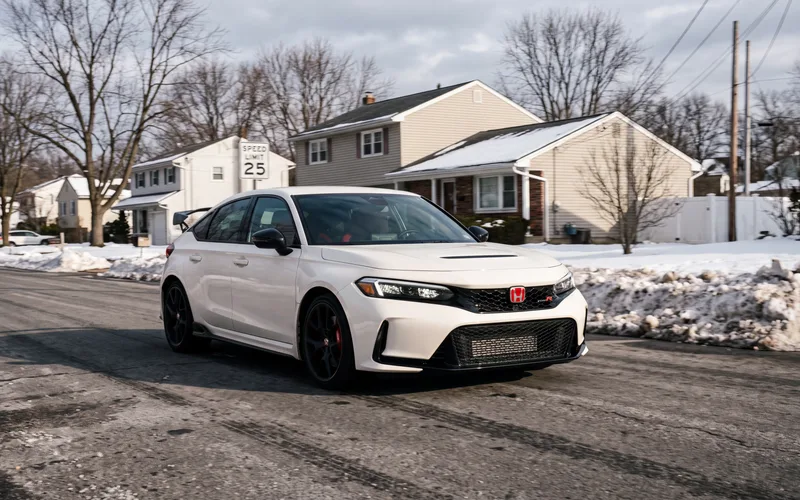 Honda Civic Type RHot HatchBetter at: Cabin space
Quicker and grippier with a benchmark manual, and its usable back seat and 24.5 cubic feet of cargo make it the hot hatch you can actually live with.
Compare 2.63C+
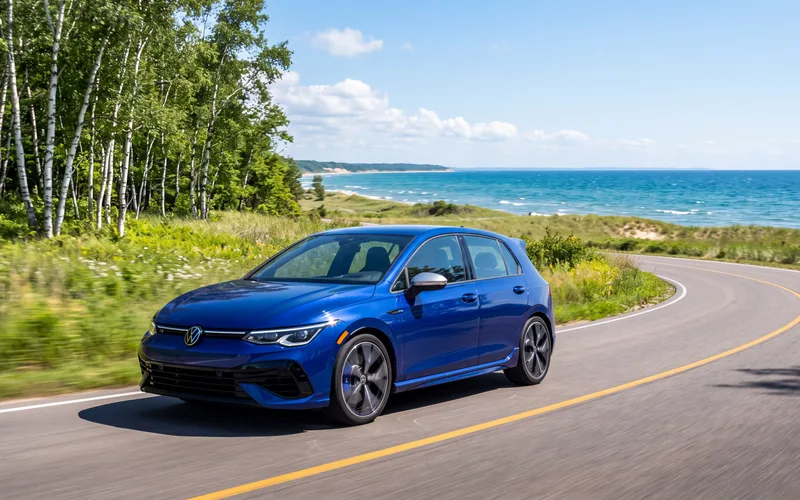 Volkswagen Golf RHot HatchBetter at: Refinement
Similar all-wheel-drive pace with adaptive damping, a much better interior, and a 12.9-inch screen — the refined take on the same formula.
Compare 2.72B-
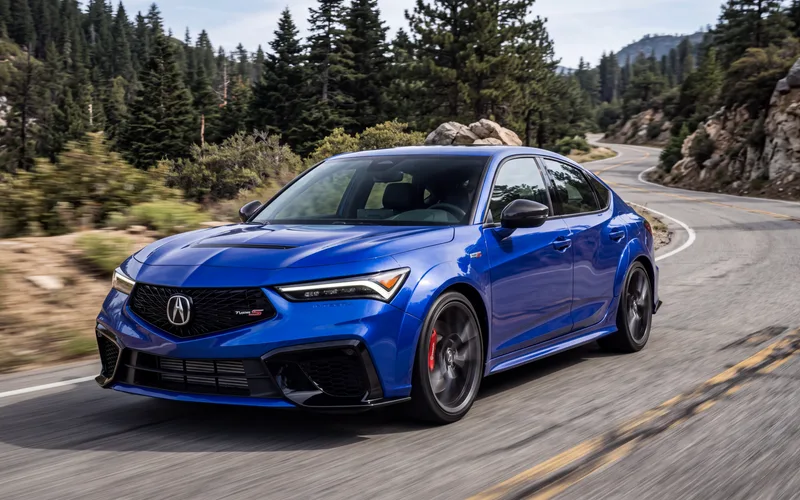 Acura Integra Type SSport CompactBetter at: Interior quality
Nearly the same performance in a far nicer package, with a genuinely usable rear seat and cargo hold for buyers who need one car to do everything.
CompareSubject scores by year
Hover or tap a score to see what moved it versus the year before. A corner mark flags a big swing.
| Year | Performance | Efficiency | Safety | Space | Cost | Reliability | Tech | Use-case | Driving | Value |
|---|---|---|---|---|---|---|---|---|---|---|
| 2026 | 65 | 18 | 72 | 54 | 56 | 77 | 65 | 49 | 80 | 72 |
| 2025 | 62 | 19 | 72 | 53 | 61 | 73 | 64 | 50 | 79 | 72 |
| 2024 | 61 | 19 | 71 | 52 | 65 | 74 | 59 | 46 | 79 | 71 |
| 2023 | 60 | 19 | 70 | 52 | 65 | 70 | 58 | 45 | 78 | 70 |
Compare two years
Best fit & conditions
Higher scores mean a better fit for that use case. Learn more about use-case fit →
Subject profile
Detailed scoring by subject
1Performance & PowertrainMid-pack among this car's ten categories.2.18C
Every 2025 GR Corolla trim — Core, Premium, Premium Plus — uses the same G16E-GTS turbocharged 1.6-liter three-cylinder rated at 300 hp; horsepower is unchanged from 2024 even though torque rose.
The headline 2025 powertrain change: peak torque rises from 273 lb-ft to 295 lb-ft across the range, applied to both the six-speed manual and the new eight-speed automatic. This is a year-specific figure and must not be carried over from 2023–24.
Toyota claims 4.9 s for 2025 with either transmission on the strength of the torque bump, but independent instrumented runs span a wide band — Edmunds recorded 5.4 s for the manual and 5.9 s for the automatic, while other verified launch-control runs on the automatic hit 5.0–5.1 s with a 13.6 s quarter mile. 5.2 s is a fair representative figure for the volume Core manual.
Once on boost the G16E-GTS is urgent and hard-hitting, but reviewers consistently note the heavily boosted three-cylinder makes little below roughly 3,000 rpm and delivers boost in two distinct stages, so throttle response off-idle is lumpy and the triple's thrum is coarse next to the four-cylinder Type R and Golf R. Strong power delivery, imperfect linearity.
2025 gives buyers two genuinely good choices: the carryover six-speed manual with intelligent rev-matching and short, precise throws, plus the new eight-speed GR-DAT that reviewers compare favorably to dual-clutch units in far pricier sports cars — it holds the engine in its narrow power band and picks the right gear braking into and accelerating out of corners without hunting.
GR-FOUR all-wheel drive is standard on every 2025 trim — not a top-trim option — and is unusually sophisticated for the class: a driver-selectable center coupling offering 60:40 front/rear for normal driving, 50:50 for track stability, and 30:70 for rear-biased rotation, with front and rear Torsen limited-slip differentials on Premium and Premium Plus. Only the absence of a low range keeps it off a perfect score.
One engine, one state of tune, no electrified option anywhere in the range — the 1.6-liter turbo triple at 300 hp is the only choice. 2025 widens the lineup only on the transmission side by adding the eight-speed automatic alongside the six-speed manual, which is real buyer choice but not powertrain breadth.
2Efficiency & RangeThe GR Corolla's lowest-graded category.0.00F
The volume 6-speed manual GR Corolla is EPA-rated 24 mpg combined, and the new-for-2025 8-speed GAZOO Racing Direct Automatic drops it to 22 — a turbo three driving all four wheels through a full AWD system is thirsty by hatchback standards even though it displaces only 1.6 liters.
21 mpg city is near the bottom of the hatchback set — closer to a mid-size SUV than to the 32-mpg Corolla Hatchback it shares a nameplate with, and the automatic's 19 mpg is worse still.
28 mpg highway is the powertrain's best number and matches the Civic Type R and Golf R almost exactly, but it is roughly 13 mpg behind a standard Corolla Hatchback — the price of permanent all-wheel drive and wide performance rubber.
The 13.2-gallon tank is the same one the ordinary Corolla Hatchback carries, so the GR's combined-cycle range lands near 317 miles — short by hatchback standards but still ahead of the Civic Type R's ~298 miles because that car makes do with 12.4 gallons.
24 mpg combined on required premium is an expensive combination: roughly 625 gallons a year at the EPA reference price for 91-octane, about $950/yr more than a regular-gas Corolla Hatchback covering the same 15,000 miles.
Toyota requires 91-octane premium unleaded for the G16E-GTS — not merely recommended — so the owner pays the premium spread on every fill for the life of the car. There is no E85, diesel or charging alternative, though premium is at least universally available and the car has no infrastructure dependency the way an EV does.
3SafetyGrades above the middle of the scale.2.86B-
NHTSA has never selected the low-volume GR Corolla for NCAP testing, so no overall star rating exists for it; the value is carried from the 2025 Corolla Hatchback, which shares the GA-C platform, body-in-white and restraint architecture. The GR's widened track, unique front structure and AWD driveline mean the proxy is indicative rather than measured.
The GR Corolla holds no IIHS award and has never been crash-tested by IIHS in any mode. Its nearest tested relative, the 2025 Corolla hatchback, posts Good small overlap and Good headlights but only Acceptable in the updated side test and is not a Top Safety Pick — and even those results do not transfer to the GR's wider, structurally distinct body.
Toyota Safety Sense 3.0 is standard on all three 2025 grades (Core, Premium, Premium Plus) — Pre-Collision with Pedestrian Detection, Lane Departure Alert with Steering Assist, Lane Tracing Assist, Road Sign Assist, Automatic High Beams and Proactive Driving Assist — and Blind Spot Monitor with Rear Cross-Traffic Alert is standard as well, so nothing safety-relevant is gated to upper trims. The one real gap is adaptive cruise, which is only full-speed-range on the new automatic.
The GR runs the same TSS 3.0 radar-plus-camera fusion that earns Good — the top grade under IIHS's current front crash prevention protocol — on the Corolla hatchback for both vehicle-to-vehicle and pedestrian scenarios including night runs. The GR itself has never been put through the test, so this is a hardware-parity inference rather than a measured result.
Blind Spot Monitor with Rear Cross-Traffic Alert is standard on every 2025 grade rather than optional, which is the main thing that matters in this segment. It is alert-only with no active steering or braking intervention and no safe-exit assist, so it lands above the segment norm but short of the top band.
Lane Departure Alert with Steering Assist plus Lane Tracing Assist are standard, and Toyota's current calibration centers smoothly on marked highway without the ping-ponging that plagues cheaper systems. LTA's centering is tied to cruise operation, so on the volume six-speed manual the assist is less continuously useful than in rivals with always-on centering.
2025 is the first year a GR Corolla can be had with genuine stop-and-go adaptive cruise, but only with the new 8-speed GAZOO Racing Direct Automatic — the standard and still dominant six-speed manual gets a reduced-function radar cruise that cannot creep to a stop and drops out at low speed. Judged on the volume configuration, that is a real capability gap against DSG-only rivals like the Golf R.
No hands-free highway driving is offered on the GR Corolla at any price or trim. Toyota's only hands-off-capable system, Teammate Advanced Drive, is confined to Lexus LS and Toyota Mirai in the US and has never been offered on a Gazoo Racing product.
Full-LED headlamps with Automatic High Beams are standard on every grade, and the closely related Corolla hatchback's LED units rate Good at IIHS. The GR wears its own lamp assemblies behind a GR-specific bumper reworked for 2025 cooling ducts, and IIHS has never measured them, so the Good result cannot be claimed outright; no adaptive curve-following beam is standard.
Reviewers report that the GR retains the Corolla hatchback's workable sightlines despite the wider bodywork and low, heavily bolstered driving position. It is still a hatchback with thick rear pillars and a small rear glass, and there is no 360-degree camera on any grade to compensate — only a standard backup camera.
The hardware is right — two complete lower-anchor sets on the rear outboard seats plus a center top-tether, on a five-seat four-door body. Everyday use is the problem: testers found the door openings narrow, the rear bench cramped even before seats go in, and buckling difficult once they are installed.
4Space & ComfortOne of the GR Corolla's weakest categories.1.52D
The 2025 GR Corolla lineup is Core, Premium and Premium Plus, all five-seat hatchbacks; the volume Core trim retains the full rear bench.
Core trim front headroom without a moonroof; the GR shares the Corolla Hatchback greenhouse but sits on lower sport buckets.
Mid-pack front legroom for a compact hatch — adequate for tall drivers, but not class-leading.
Rear headroom is genuinely decent for the class thanks to the hatchback roofline — it is legroom, not headroom, that limits the back seat here.
At 29.9 in the GR Corolla falls below the bottom of the hatchback normalization band (32 in); the back seat is effectively child- or short-trip-only, well behind the Civic Type R (37.4 in) and Golf R.
The hatchback shape pays off: 17.8 cu ft behind the second row is strong for the segment despite the GR-FOUR AWD hardware and rear Torsen diff.
Ordinary compact-hatch storage — front console tray, rear console box, two USB-C ports and a 12V outlet — with no clever packaging tricks, and the small door bins and shallow console are shared with the base Corolla Hatchback.
Well-bolstered GR sport seats hold the driver securely and are praised up front, but there is no lumbar adjustment on any trim and owners report lower-back fatigue on hour-plus commutes; the rear bench is tolerable only for children or small adults given 29.9 in of legroom.
Stiffly sprung on passive dampers (no adaptive option), the ride is described as choppy over broken pavement though it stops short of harsh and settles on the highway — behind the adaptive-damper Golf R/GTI and the Type R's comfort mode for daily compliance.
Notably loud for the price: the three-cylinder's grumble and the triple-exit exhaust drone on long highway stints, and significant tire roar reaches the cabin through the lightly insulated Corolla Hatchback shell.
The volume Core trim goes without heated seats or a heated steering wheel — both are reserved for Premium ($41,740) and Premium Plus ($45,815) — and no trim offers ventilated seats, rear climate vents or remote pre-conditioning, which is thin for a $39K-plus car.
5Cost of OwnershipMid-pack among this car's ten categories.2.14C
The 2025 Core opens at $38,860 plus a $1,135 destination charge, a roughly $1,100 increase over 2024 that accompanied the new 8-speed GR-DAT automatic option and the torque bump to 295 lb-ft.
The mid-grade Premium — which adds the content most buyers want (heated seats and steering wheel, JBL audio, wireless charging) — is the representative transaction at $41,440 + $1,135 destination; the 8-speed automatic adds $2,000 on any grade. Note that GR Corollas frequently transact at or above MSRP because supply is allocation-limited.
Toyota mechanicals and 2 years of free scheduled service hold routine costs down, but a 300-hp turbo three, full-time AWD with front and rear differentials, premium fuel and 235/40R18 performance tires push this well above an ordinary Corolla. Industry aggregators run higher still; this figure tempers them toward real-world Toyota parts and labor.
Best-in-class residuals and the strongest single element of the GR Corolla's cost case: constrained allocation, a manual-transmission enthusiast following and the Toyota badge keep used prices near sticker. It beats the Civic Type R and comfortably outruns the Golf R and GTI.
Standard Toyota basic limited warranty — the segment floor, a year and 14,000 miles shorter than Volkswagen's 4/50 coverage on the GTI and Golf R.
Toyota's standard 5/60 powertrain term sits at the bottom of the framework band and is half of what Hyundai/Kia offer, though it does at least exist as a separate longer term unlike VW's single 4/50 wrapper.
ToyotaCare covers 2 years/25,000 miles of factory-scheduled service plus 2 years of unlimited-mileage roadside assistance, and every new GR Corolla buyer also gets a full one-year National Auto Sport Association membership with a complimentary NASA High Performance Driving Event track day — a genuinely useful perk for this car's buyer that no direct rival matches. Better than VW's 2yr/20k Carefree plan and far ahead of the Civic Type R, which includes no scheduled maintenance at all.
$42,575 volume-trim price minus its estimated resale value after 5 years (66% retained, or about $28,100) leaves about $14,476 in depreciation. Add the projected $6,500 in 5-year maintenance and repairs, and owning this vehicle for 5 years costs about $20,976 in total.
6Reliability & QualityOne of the GR Corolla's strongest categories.2.98B-
Toyota's badge and the Corolla nameplate's dependability record set a high floor, but almost none of that record belongs to this car: the GR is a low-volume, hand-built performance variant sharing essentially no powertrain hardware with the Corolla that wins the dependability awards, and 2025 adds a brand-new 8-speed automatic to the mix. Three model years in, the owner record is thin but not clean — premature clutch wear, driveshaft vibration, and isolated but severe transmission and engine failures all appear. Scored well above the VW hot hatches on brand and build, and below the Civic Type R, whose K20C1 powertrain has a far longer proven run behind it.
Toyota's multi-year dependability standing is as strong as any mass-market brand's — it sits first in Consumer Reports' brand rankings and takes more model-level J.D. Power dependability awards than any other automaker. Held at 90 rather than higher because the Toyota brand itself did not top the J.D. Power VDS mass-market ranking, where Buick did.
Recall activity through 2025 is light and non-mechanical: one fleet-wide instrument-panel software campaign that sweeps up the GR alongside most of Toyota's US lineup, plus a regional accessory-label compliance recall. Nothing has touched the engine, GR-Four driveline, or brakes. What keeps this out of the high 80s is not the recalls but the bulletin-and-complaint layer beneath them — a recognized 75–80 mph driveshaft vibration whose only fix has been shaft replacement, factory alignment that arrives off-spec and chews tires, and a gauge-cluster software glitch that loses TPMS display settings — all the fingerprints of a low-volume line still being sorted.
The most speculative part of the car. The G16E-GTS makes 300 hp from 1.6 liters and three cylinders — roughly 187 hp per liter, among the highest specific outputs of any production engine — and for 2025 torque climbs again to 295 lb-ft, so every component is working near its design limit by construction. Three model years is not enough for a high-mileage record, and the failures that have surfaced are the severe kind rather than the nuisance kind: sub-20k-mile clutch wear, an isolated low-mileage transmission failure, and a small number of unexplained engine fires. The all-new 8-speed DAT introduced for 2025 has no track record at all. Offsetting that, teardown and forum evidence points to a genuinely strong bottom end, and no engine or transmission recall has been issued.
Judged relative to price, which is where this falls down: the GR asks about $40,000 for a cabin lifted essentially intact from a $25,000 Corolla hatchback, and reviewers consistently flag omnipresent hard plastics and a drab design against a flamboyant exterior. The GR-specific front seats in synthetic leather and suede are genuinely good and the dash top is soft to the touch, so it is not a cheap-feeling car so much as an ordinary one wearing a premium price. The Golf R, its closest rival, is the acknowledged benchmark here and clears it comfortably on material richness.
The strongest build-quality argument in the car, and it is a structural one. GR models are assembled on a dedicated low-volume line at Motomachi that replaces the conveyor with AGV-linked cells and heavy manual assembly, with extra spot welds and structural adhesive and roughly 21 minutes per station against 142 seconds for a standard Corolla — a process aimed squarely at dimensional consistency. Reviewers back it up: nothing rattles and the plastics, ordinary as they are, feel solid. Held to 80 rather than higher by delivery-quality misses that reach owners anyway — off-spec factory alignment and driveshafts replaced for manufacturing-defect vibration.
The physical network is a real asset — a Toyota service point is within reach almost anywhere in the US, far denser than what a Golf R or Type R owner works with. The problem is depth rather than breadth: GR-Four AWD, the turbo three and the new DAT are unfamiliar hardware at a store built around Camrys and RAV4s, and the GR's headline service story is a run of contested warranty claims where Toyota leaned on vehicle telemetry to decline engine and drivetrain repairs on a car it markets as track-capable. That is a materially worse ownership-support picture than the plain Corolla's, which is why this sits ten points under it.
Consumables and routine service ride on Toyota's enormous parts pipeline, and the enthusiast aftermarket for this car is already active. But the expensive components are all GR-exclusive and low-volume — the G16E-GTS, the GR-Four transfer case and differentials, the driveshafts, the clutch — so they lean on dealer supply at dealer prices, and the running-cost estimates land nowhere near a normal Corolla's. RepairPal has too little data to publish a figure at all, which is itself the point three model years in. Premium fuel and performance tires compound it.
7Technology & InfotainmentMid-pack among this car's ten categories.2.29C
The 2025 GR Corolla runs the same 8-inch Toyota Audio Multimedia head unit on all three grades, unchanged from 2024 and with no larger display available even on the $47K Premium Plus, which puts it at the bottom of the hatchback normalization band.
Toyota Audio Multimedia is logically laid out and keeps real knobs for volume and climate, which suits a car meant to be driven hard, but the 8-inch panel is small for the price and reviewers describe the software as purely functional rather than quick or engaging — competent, not class-leading like the Golf R's system.
Wireless Apple CarPlay and wireless Android Auto are standard on all grades including the base Core — no package, no trim walk. That is the best-case setup for the segment and matters more here than usual, since the native system is the weak link and most owners will live in phone projection.
The 'Hey Toyota' Intelligent Assistant handles natural-language audio, climate and destination requests competently, but there is no embedded navigation — maps come from cloud-based Drive Connect on a trial that converts to a paid subscription, so most owners default to CarPlay or Android Auto for both maps and voice.
The volume Core grade gets a plain unbranded system with no upgrade path at that price, while JBL Premium Audio with eight speakers is standard from the Premium grade up — a workable ladder, though a hot hatch bought for engine noise makes audio a secondary concern.
Every 2025 GR Corolla, base Core included, gets a fully digital 12.3-inch configurable cluster with genuinely useful performance layouts — central tachometer, turbo boost, G-meter and fuel range — which is a full class above the 8-inch center screen it sits next to and above what the standard Corolla Hatchback offers at any grade.
Toyota Audio Multimedia supports over-the-air updates to the head unit and cloud maps, so the infotainment does improve without a dealer visit, but there is no evidence of whole-vehicle OTA that adds powertrain or feature content the way Tesla or Rivian deliver.
The Toyota app covers the core set — remote start, lock/unlock, vehicle status and locate — and Digital Key phone-as-key is offered, but everything runs through Remote Connect, which reverts to a paid subscription once the included trial lapses; that ongoing cost is the reason this lands mid-band rather than high.
Provision is thin: a pair of front USB charge ports, a Qi wireless charging pad only from the Premium grade up, and no household AC outlet — acceptable for a two-plus-two performance hatch but well short of the abundant USB-C-everywhere setups scoring in the top band.
Proximity entry with a push-button GR start/stop is standard from the base Core, and Digital Key adds phone-as-key, but remote start is app- and subscription-dependent rather than built into the fob, and the hatch is a plain manual lift with no hands-free or power operation.
The GR Corolla gets only the federally mandated backup camera plus standard Blind Spot Monitor with Rear Cross-Traffic Alert; Toyota's Panoramic View Monitor does not appear in the 2025 GR Corolla grade content at any price, and parking-assist sensors are not part of the advertised grade walk, so a $47K Premium Plus parks with less help than a mainstream Corolla XSE.
A head-up display arrives for 2025 but only as standard equipment on the range-topping Premium Plus at roughly $47K — it cannot be had on the volume Core or the mid Premium at any price, which is textbook top-trim-only availability.
8Use-Case FitOne of the GR Corolla's weakest categories.1.33D
The GR Corolla keeps a real five-seat 60/40 bench with three belts and outboard LATCH — a genuine advantage over the four-seat Civic Type R — but 29.9 in of rear legroom is among the tightest in any compact hatchback, so a rear-facing seat forces the front passenger seat uncomfortably far forward. Four proper doors and a square hatch opening help, but 17.8 cu ft behind the bench is the smallest cargo hold in the hot-hatch set for strollers and gear.
Toyota Safety Sense 3.0 is standard on the $39,995 Core trim, not just the loaded ones — pre-collision with pedestrian detection, lane departure alert with steering assist, lane tracing, road sign assist, auto high beams, plus standard blind-spot monitor and rear cross-traffic alert; the 8-speed automatic adds Full-Speed Range Dynamic Radar Cruise Control and Proactive Driving Assist. The score is held back because the GR body (wider fenders, unique structure) carries no GR-specific IIHS or NHTSA crash rating — the published Corolla hatchback results are the closest proxy, not a direct one.
With 29.9 in of rear legroom, shallow rear cushions, a firm rally-tuned ride and prominent road noise, the back seat is a short-haul proposition — reviewers specifically flag the shallow seats causing knee and leg complaints on longer drives. Rear amenities are thin (no rear climate zone, modest rear charging) and 17.8 cu ft will not swallow four people's luggage without using the roof.
2025 is the year the GR Corolla became a plausible daily driver: the new 8-speed GR-DAT automatic ($2,000 option) removes clutch work in traffic and brings Full-Speed Range Dynamic Radar Cruise Control with Proactive Driving Assist, where the still-volume 6-speed manual leaves stop-and-go commuting a chore. Light, quick steering and a small footprint make it easy to place, but a firm ride and constant road noise keep fatigue higher than a Golf R's.
EPA 21/28/24 MPG with the manual and 19/27/22 with the automatic, all on required premium fuel, is near the bottom of the compact-hatch class. Consumables compound it: staggered-cost 245/40R18 Michelin Pilot Sport 4S summer rubber and a full-time GR-FOUR AWD driveline both cost more to keep up than a front-drive commuter.
At 173.6 in long with a roughly 36-foot curb-to-curb turning circle, this is an easy car to thread through a city and slot into street parking. A backup camera is standard, but rear three-quarter vision past the thick C-pillars is only fair and the Panoramic View Monitor is reserved for the top Premium Plus trim.
There is no work capability here to speak of: Toyota publishes no US tow rating for the GR Corolla, there is no bed, and at 17.8 cu ft behind the rear seats it has the smallest hold of any hot hatch on the board. The 300-hp turbo triple is tuned for a rally stage, not for hauling load.
It scores above its hot-hatch rivals on reputation rather than provisions: the Corolla shell has Toyota's fleet-durability pedigree, the GR body adds extra spot welds and structural adhesive, and GR-FOUR is homologation hardware built for gravel abuse. Against that, the G16E-GTS makes roughly 100 hp per liter from three cylinders — a highly stressed unit with no long-term hard-duty record — and the volume car is a manual with a clutch to burn.
Work provisions stop at cargo tie-down hooks and an optional genuine-Toyota roof crossbar set rated for 100 lb. There is no 120V outlet, no factory hitch, no washable load floor, and the synthetic-leather-and-suede sport seats on Premium trims are actively hostile to dirty clothes and tools.
A 13.2-gallon tank at 24 MPG combined yields roughly 315 miles with the manual and closer to 290 with the automatic — short legs for interstate work, though marginally better than the Civic Type R. Supportive front sport seats, heated seats and a heated wheel from Premium up, and radar cruise (full-speed range on the DAT) help, but the firm suspension and sustained road noise are what owners cite as the fatigue limiter.
This is the GR Corolla's clearest use-case win over the front-drive hot hatches: standard GR-FOUR AWD with driver-selectable 60:40, 50:50 and 30:70 front/rear splits is genuine rally-derived hardware that makes gravel and snow roads a feature rather than a risk, and a 100-lb OEM roof crossbar set carries bikes or a box. It is still capped by 5.3 in of ground clearance and standard summer performance tires, and there is no tow rating for toys.
The hatchback body and 60/40 folding bench give a wide, square opening and a long load floor with the seats down, and the roof crossbar accessory adds a real overflow option. But 17.8 cu ft behind the bench trails the Golf R (19.9) and the Civic Type R (24.5) by a wide margin, and the AWD hardware and rear silencer leave no meaningful underfloor storage or hitch option.
9Driving ExperienceThe GR Corolla's best-graded category.3.37B+
GR-FOUR AWD with a driver-selectable front/rear torque split, front and rear Torsen limited-slip differentials and a widened, seam-welded body make the GR Corolla one of the most tenacious hot hatches on sale; 2025 adds retuned suspension for improved stability and cornering.
Quick, heavily weighted rack with strong on-center precision; reviewers consistently rate it among the most communicative electric setups in the class, a step ahead of the Golf R's more remote tune though slightly short of the Civic Type R's benchmark clarity.
Four-piston front / two-piston rear calipers on 356 mm front rotors deliver short, repeatable stops with a firm pedal; distances are strong in absolute terms and hold up to repeated track laps, marginally behind the very best hot hatches.
The 1.6L G16E-GTS triple keeps 300 hp for 2025 but gains torque (273 → 295 lb-ft), broadening the midrange and reducing the need to chase revs; the new 8-speed GAZOO Racing Direct Automatic shifts crisply with launch control, though there is still noticeable lag below ~3,000 rpm and the 6MT's clutch/throttle calibration takes acclimation.
The three-cylinder's off-beat bark and the triple-exit exhaust are entertaining in short bursts, but the car is genuinely loud at a steady cruise and the engine note turns into drone on long highway runs — character-rich rather than refined, and a clear step behind the Golf R and Integra Type S.
Wide 235/40R18 tires and the widened GR track give up some maneuverability versus a standard Corolla hatchback, landing mid-pack for the segment.
Heavily bolstered sport seats, a good wheel-to-pedal relationship and a clear 12.3-inch reconfigurable cluster with boost and AWD-mode readouts; held back by the Corolla-derived cabin's modest seat adjustment range on lower grades, a fairly high cowl and thick rear pillars.
A rally-bred, homologation-flavored hot hatch with an adjustable AWD split, a charismatic triple and — for 2025 — a genuinely good automatic alongside the manual; enthusiast outlets recommend it almost without reservation and it sits at the very top of the segment for sheer entertainment.
10Value & Market PositionOne of the GR Corolla's strongest categories.2.87B-
Mechanical content at the base Core grade is genuinely generous — 300 hp/295 lb-ft turbo three, GR-FOUR AWD, and for 2025 front AND rear Torsen limited-slip differentials standard on every trim, plus a 12.3-inch digital cluster and the full Toyota Safety Sense 3.0 suite. Cabin and convenience content is thin for a $40k car, though: an 8-inch touchscreen (Civic Type R 9 in, Golf R 12.9 in), and heated seats, heated wheel, dual-zone climate, wireless charging and JBL audio all sit behind the $42,575 Premium grade.
Hardware-per-dollar is the GR Corolla's strongest argument: roughly $41k out the door buys 300 hp, rally-derived GR-FOUR AWD with selectable 60/40–50/50–30/70 torque split, two Torsen diffs and a six-speed manual, where a comparably grippy Golf R costs several thousand more and is DSG-only. It gives ground because the Civic Type R is measurably quicker and grippier for a similar price, and because interior materials lag the money.
2025 is the broadest the lineup has been in normal production: three well-spaced grades from $39,995 Core to $46,650 Premium Plus, and for the first time a real transmission choice — six-speed manual or the new 8-speed GR-DAT automatic — on every grade. Against that, the limited-run halo cars (Morizo, Circuit Edition) are gone and there is only one drivetrain and one body style, so options amount to grade, gearbox and paint.
Trajectory is clearly upward — the 2025 facelift and the automatic option pushed GR Corolla volume up about 17% year over year in mid-2025, and it has become the default hot hatch as rivals go dual-clutch-only or run tight allocations. Absolute volume remains small in Toyota terms and is not broken out of the Corolla family total, which caps the score below segment-leader territory.
Toyota carries the industry's strongest reliability and loyalty reputation, and the GAZOO Racing sub-brand adds real enthusiast credibility from WRC and the GR86/GR Supra halo. That combination shows up directly in the used market, where the GR Corolla holds value far better than the hot-hatch norm.
Supply normalized well past the launch-era markups during 2025 — dealers advertising at or modestly below sticker became common and Toyota offers a $500 college rebate plus subvented APR — but real discounts stay small and manual cars in particular still tend to transact at MSRP. Better than the sellers'-market years, short of a segment where deals are easy.
2025 is the facelift year, so a buyer gets the freshest version of a generation that dates to MY2023: revealed 1 August 2024, it brought the 8-speed GR-DAT automatic with launch control, torque up from 273 to 295 lb-ft, standard front/rear Torsen LSDs, front and rear rebound springs plus revised rear springs and stabilizers, and a redesigned front bumper for cooling and aero. The underlying E210 Corolla platform is nonetheless aging.
Broadly well-reviewed and beloved by enthusiasts — the 2025 updates drew consistent praise, with even the new automatic winning over skeptics — but it is rarely the outright winner of a hot-hatch comparison test, ceding objective grip and acceleration honors to the Civic Type R, and reviewers repeatedly dock it for a bare-bones cabin and tight rear seat. The generation's 10Best nod came in 2023, not for this model year.