

The verdict
A mixed-report hot hatch, strong on driving and held back by efficiency.
The 2026 GR Corolla is a rally car with a license plate: 300 hp from a 1.6-liter turbo three, a proper six-speed manual, and dial-selectable all-wheel drive with limited-slip differentials at both ends — all standard, starting at $41,115 delivered. Nothing else near the price gives you that hardware, and it drives better than any spec sheet suggests. The bill comes due everywhere else: 24 MPG on required premium fuel, 29.9 inches of rear legroom (a Civic Type R has 37.4), a $25,000-Corolla interior, and an 8-inch screen you cannot upgrade at any price. Buy it because of how it drives and in spite of almost everything else.
Jump to scoresStrengths
- One of the most entertaining cars sold at any price
- Rally-derived AWD is standard, not an upsell
- A genuinely great manual — and a real automatic if you want one
What holds it back
- Thirsty, and every gallon has to be premium
- The back seat is a formality
- A $25,000 Corolla interior in a $41,000 car
Top alternatives
Cars shoppers cross-shop with the Toyota GR Corolla 2.62C+
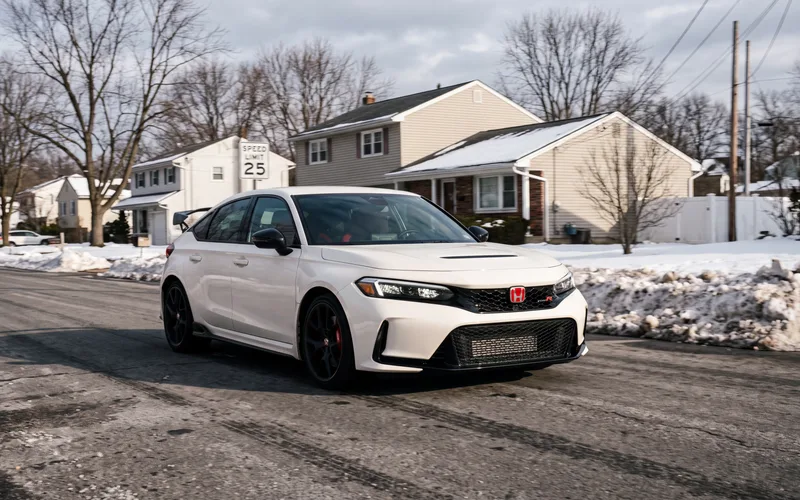 Honda Civic Type RHot HatchBetter at: Cabin space
Quicker and grippier with a benchmark manual, and its usable back seat and 24.5 cubic feet of cargo make it the hot hatch you can actually live with.
Compare 2.63C+
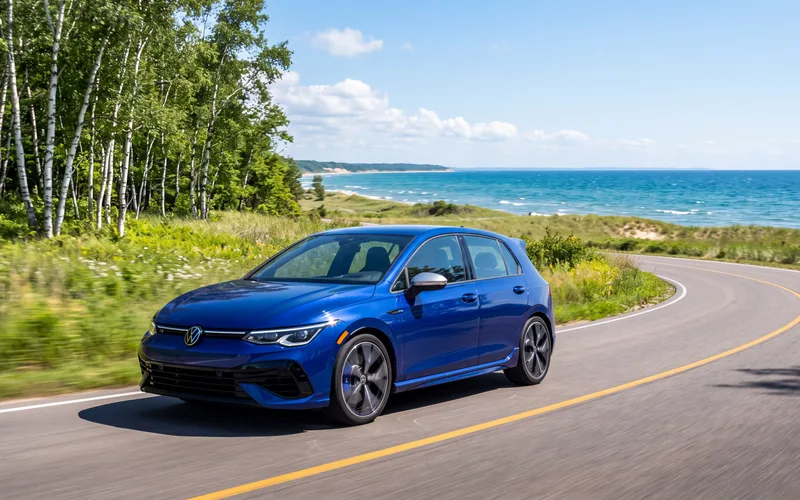 Volkswagen Golf RHot HatchBetter at: Refinement
Similar all-wheel-drive pace with adaptive damping, a much better interior, and a 12.9-inch screen — the refined take on the same formula.
Compare 2.72B-
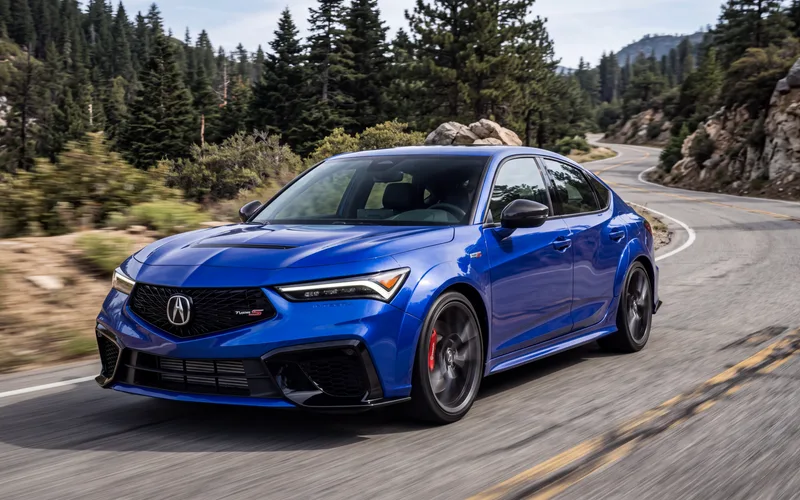 Acura Integra Type SSport CompactBetter at: Interior quality
Nearly the same performance in a far nicer package, with a genuinely usable rear seat and cargo hold for buyers who need one car to do everything.
CompareSubject scores by year
Hover or tap a score to see what moved it versus the year before. A corner mark flags a big swing.
| Year | Performance | Efficiency | Safety | Space | Cost | Reliability | Tech | Use-case | Driving | Value |
|---|---|---|---|---|---|---|---|---|---|---|
| 2026 | 65 | 18 | 72 | 54 | 56 | 77 | 65 | 49 | 80 | 72 |
| 2025 | 62 | 19 | 72 | 53 | 61 | 73 | 64 | 50 | 79 | 72 |
| 2024 | 61 | 19 | 71 | 52 | 65 | 74 | 59 | 46 | 79 | 71 |
| 2023 | 60 | 19 | 70 | 52 | 65 | 70 | 58 | 45 | 78 | 70 |
Compare two years
Best fit & conditions
Higher scores mean a better fit for that use case. Learn more about use-case fit →
Subject profile
Academic Probation · NHTSA safety recalls
No NHTSA safety recall is on record for the 2026 Toyota GR Corolla. Other model years of the GR Corolla have 2 — listed below.
2 recalls on other model years of the GR Corolla (2023–2025)
Sep 11, 2025Electrical system: instrument cluster/panelDue to an error in the instrument panel software at vehicle startup, the instrument panel may fail to display vehicle speed, brake system, and tire pressure warning lights.
Defect
Toyota Motor Engineering & Manufacturing (Toyota) is recalling certain 2023-2024 Toyota Venza, 2023-2025 RAV4 Prime, RAV4, Highlander, GR Corolla, Crown, 2024-2025 Lexus TX, LS, Toyota Tacoma, Grand Highlander, and 2025 Lexus RX, Toyota Crown Signia, Camry, RAV 4 Plug-in Hybrid (PHEV), and 4 Runner vehicles. Due to an error in the instrument panel software at vehicle startup, the instrument panel may fail to display vehicle speed, brake system, and tire pressure warning lights.
Risk
An instrument panel display that does not show critical information can increase the risk of a crash or injury.
Remedy
Dealers will update the instrument panel software over-the-air (OTA) for non-PHEV vehicles, free of charge. For PHEV vehicles, dealers will inspect the instrument panel assembly, and either replace it, or update the software, free of charge. Owner letters were mailed December 5, 2025. Additional letters will be sent, anticipated in May 2026. This is a phased recall. Owners may contact Toyota's customer service at 1-800-331-4331. Toyota's numbers for this recall are 25TB08 and 25TA08. Lexus' numbers for this recall are 25LB05 and 25LA05.
NHTSA campaign 25V595000 ↗Manufacturer no. See Part 573 Report591,377 vehicles potentially affected (all models in the campaign)Owners notified Dec 5, 2025Filed by Toyota Motor Engineering & ManufacturingFiled as GR COROLLAJul 23, 2024Equipment: other: labelsThe load carrying capacity modification label may display inaccurate added weight values. As such, these vehicles fail to comply with the requirements of Federal Motor Vehicle Safety Standard number 110, "Tire Selection and Rims."
Defect
Gulf States Toyota, Inc. (GST) is recalling certain Toyota 2023 GR Supra, 2024 4 Runner, Corolla, Grand Highlander, Grand Highlander Hybrid, Land Cruiser Hybrid, Tacoma, Tacoma Hybrid, 2023-2024 BZ4X, Corolla Cross Hybrid, GR Corolla, GR86, Highlander, Highlander Hybrid, Prius, Prius Prime, Sequoia Hybrid, Tundra, Tundra Hybrid, Venza Hybrid, 2023-2025 Crown, and 2025 Camry Hybrid vehicles equipped with GST accessories. The load carrying capacity modification label may display inaccurate added weight values. As such, these vehicles fail to comply with the requirements of Federal Motor Vehicle Safety Standard number 110, "Tire Selection and Rims."
Risk
A vehicle with an incorrect maximum capacity weight value may be overloaded, which can increase the risk of a crash.
Remedy
GST will mail new labels to owners, free of charge. Owner notification letters were mailed September 16, 2024. Owners may contact GST customer service at 1-800-444-1074. GST's number for this recall is 24R2.
NHTSA campaign 24V548000 ↗Manufacturer no. 24R233,848 vehicles potentially affected (all models in the campaign)Owners notified Sep 16, 2024Filed by Gulf States Toyota, Inc.Filed as GR COROLLA
Source: NHTSA Office of Defects Investigation recall database, model years 2023–2026. Recalls are listed by model year as the manufacturer filed them; whether a specific car is affected depends on its VIN — check a VIN at nhtsa.gov ↗. NHTSA model names matched to this page: GR COROLLA.
Detailed scoring by subject
1Performance & PowertrainMid-pack among this car's ten categories.2.38C+
The 2026 GR Corolla carries the G16E-GTS 1.6L turbo three-cylinder at 300 hp @ 6,500 rpm, identical on both the base GR Corolla and Premium Plus — the 2026 update brought chassis and cooling changes, not a power bump. 187.5 hp/liter is an extraordinary specific output, but the absolute figure sits below the 315–320 hp Honda/Acura Type R twins.
295 lb-ft, up 22 lb-ft from the original 2023 car's 273 lb-ft after the 2025 revision, and now shared by both the six-speed manual and the eight-speed automatic. Peak arrives at 3,250 rpm, giving a genuinely usable mid-range for a 1.6-liter triple.
Car and Driver's instrumented 2026 test recorded 4.2 s to 60 mph and 12.8 s at 108 mph in the quarter — the quickest GR Corolla they have run, helped by the 2026 clutch revisions and standard AWD launch traction. Toyota's own conservative estimate is 4.9 s with either transmission, so real-world times land between the two.
The turbo triple is responsive and eager — small turbo, minimal lag off boost, a flat pull from 3,250 rpm to the 7,000 rpm ceiling — and 2026's secondary air intake duct plus the Premium Plus auxiliary radiator make power delivery more consistent when heat-soaked. It loses ground to the Type R twins (85–87) purely on smoothness: reviewers describe a coarse three-cylinder thrum, a tractor-like cold idle, and synthetic sound enhancement layered over the exhaust note.
The standard six-speed iMT is short-throw and mechanically direct with rev-matching on downshifts, and 2026 specifically re-engineered the clutch for a crisper, better-defined bite point that tolerates abuse — a top-tier manual, a step behind Honda's benchmark 6MT (96). The optional eight-speed automatic shifts quickly and reads intent well but reviewers rate it less crisp than the dual-clutch units in the Elantra N or Golf R.
GR-FOUR all-wheel drive is standard on every 2026 trim, not a top-trim upsell, and it is genuinely sophisticated: a console dial selects 60:40 Normal, 50:50 Gravel, or 30:70 Track torque splits, backed by Torsen limited-slip differentials front and rear. That standard rally hardware is the single biggest performance advantage over the FWD-only Civic Type R and Integra Type S (both 18); short of a low-range transfer case there is little more a hot hatch could offer.
One powertrain, take it or leave it: the 300 hp 1.6L turbo triple is the only engine, with no hybrid, PHEV, EV, or detuned variant, and 2026 actually narrowed the range by deleting the mid-level Premium trim. The choice of six-speed manual or eight-speed automatic earns a few points over single-gearbox rivals like the Civic Type R and Integra Type S (both 20), but transmissions are not powertrains.
2Efficiency & RangeThe GR Corolla's lowest-graded category.0.00F
The 300-hp turbo 1.6L three-cylinder with standard GR-FOUR all-wheel drive returns 24 mpg combined with the standard six-speed manual, dropping to 22 mpg with the optional $2,000 eight-speed automatic. That is bottom-of-band for a hatchback, on par with the Civic Type R and Integra Type S.
City economy of 21 mpg reflects the permanent AWD hardware and the turbo three-cylinder's appetite under load — near the floor of the hatchback band.
28 mpg highway is the GR Corolla's best figure but still far below mainstream compact hatchbacks, which clear 40 mpg; short gearing and AWD drag cap cruising efficiency.
A 13.2-gallon tank at 24 mpg combined yields roughly 317 miles of range — about 290 miles with the automatic. Usable but short by hatchback standards, and driven hard it falls well under 300.
At 24 mpg combined the GR Corolla burns roughly 625 gallons per year over 15,000 miles, and every one must be premium — putting annual fuel spend near the top of the hatchback cost band, effectively tied with the Civic Type R.
Premium unleaded 91+ octane is required, not merely recommended — the 10.5:1-compression turbo triple runs high boost and Toyota specifies premium for the US market. No E85, diesel, or electrified alternative exists, so there is no way to reduce the fuel-grade penalty.
3SafetyOne of the GR Corolla's strongest categories.2.90B-
NHTSA has never crash-tested the low-volume GR Corolla, which it does not list as a rated vehicle class. The rating is carried across from the E210 Corolla Hatchback, which shares the GA-C platform, cabin structure, and airbag strategy; the GR's widened track, added body adhesive, and lower center of gravity should not hurt frontal or side performance, and help rollover resistance.
The GR Corolla holds no IIHS award and has not been tested in any IIHS crash mode. Its closest tested relative, the 2026 Corolla Hatchback, earns Good in small overlap front on both sides but has never run the updated moderate overlap test, so it wins no award either — and the Corolla sedan, which shares the GR's rear seat and restraint architecture, posted Marginal in that updated test on rear-passenger chest injury and restraint performance. That is a real, specific rear-occupant concern rather than a simple absence of data, so the GR sits a notch below the hatchback's own crashworthiness standing.
Deleting the Core trim for 2026 leaves two well-equipped grades with nothing safety-relevant gated: Toyota Safety Sense 3.0 (pre-collision with pedestrian/cyclist/motorcyclist detection and intersection turn assist, radar cruise, Lane Departure Alert with Steering Assist, Lane Tracing Assist, Road Sign Assist, Automatic High Beams) plus Blind Spot Monitor with Rear Cross-Traffic Alert is standard on both. Every item on the AEB/ACC/LKA/BSM/RCTA checklist is standard fleet-wide; the only breadth gaps are the manual's speed-limited radar cruise and the absence of any surround-view camera.
The GR runs the same TSS 3.0 front radar and camera fusion that earned Good — the top grade in IIHS's current front crash prevention protocol — on both the 2026 Corolla Hatchback and sedan, in vehicle-to-vehicle and pedestrian day/night evaluations. The system also covers motorcyclists and intersection cross traffic with active braking. Scored just below the base cars because IIHS's published ratings are scoped to those tested variants and the GR is not in scope.
Blind Spot Monitor with Rear Cross-Traffic Alert is standard on both 2026 grades, and GR Corolla feature listings add Safe Exit Assist, which the mainstream Corolla Hatchback does not advertise — worth a small edge over that car's coverage. Still alert-only: no autonomous rear cross-traffic braking and no active steering intervention, which keeps it out of the top band.
Lane Departure Alert with Steering Assist and Lane Tracing Assist are standard, and reviewers found the combined highway behavior smooth and confident with no false alarms or nervous corrections. Held to roughly the same mark as the base Corolla because Lane Tracing Assist only centers with radar cruise engaged, so on the volume manual car the centering function is unavailable at the lower speeds where that cruise system cannot operate.
The volume configuration is the standard six-speed manual, and Toyota only fits Full-Speed Range Dynamic Radar Cruise Control and Proactive Driving Assist when buyers pay roughly $2,000 for the eight-speed automatic — the manual's radar cruise is speed-limited with no stop-and-go. Even the automatic has a documented rough edge: it will brake to a standstill but then neither holds the car nor resumes, warning the driver to take over the brakes seconds later. That is a real capability gap versus the mainstream Corolla Hatchback, which has full-speed-range cruise standard on every trim.
No hands-free highway driving is offered at any price. Toyota Teammate Advanced Drive, the brand's only hands-off-capable system with driver monitoring, is confined to the Mirai and Lexus models and appears nowhere in the Corolla family, so the GR Corolla tops out at hands-on Lane Tracing Assist.
The GR wears its own LED headlamp units behind a GR-specific front end with functional cooling ducts, and IIHS has not rated them. The mainstream Corolla Hatchback's LED projectors rate Good overall — good straightaway visibility on both sides, good on the gradual left and both right curves, fair on the sharp left — and Automatic High Beams are standard here. Marked down from that car for the unrated GR-specific hardware and the lack of any curve-adaptive or matrix beam function.
Reviewers call the sight lines good enough for urban commuting from a deliberately low, sporty driving position, but the GR gives up ground to the ordinary Corolla Hatchback: a gloss-black rear spoiler crosses the hatch glass, the flared fenders widen the car beyond where the mirrors suggest, and camera compensation stops at a plain backup camera — no surround-view monitor on either trim, and no front parking sensors.
The hardware is sound — two complete sets of lower anchors on the rear outboard seats plus a center tether anchor, on a Corolla rear bench whose LATCH ease of use IIHS rates Good+ — and a door-activated rear seat reminder is standard. But the GR's rear quarters are the constraint: reviewers describe the back seat as very cramped, the compact hatchback's rear door openings are narrow, and 17.8 cubic feet of cargo (against 24.5 in a Civic Type R) leaves little room behind a rear-facing seat.
4Space & ComfortOne of the GR Corolla's weakest categories.1.61D
The GR Corolla keeps the Corolla Hatchback's five-passenger layout across both 2026 grades (GR Corolla and GR Corolla Premium Plus) — unlike the 4-seat Civic Type R and Integra Type S, and unlike the 2-seat MORIZO Edition that is no longer offered. Rear-seat usefulness is another matter (see 4.1.5).
Mid-pack for the segment: the GR shares the Corolla Hatchback shell and gets no sunroof, so front headroom is average rather than tight. Slightly behind the Civic Type R (39.3 in).
42.0 in is squarely mid-band for a compact hatch and trails the Civic Type R and Integra Type S (42.3 in each). The heavily bolstered GR sport seats also sit tall, so tall drivers report less usable room than the raw number suggests.
Rear headroom is actually a relative strength on paper — 37.6 in beats the Civic Type R (37.1 in) and Integra Type S (36.4 in) — though the sloping hatch roofline still makes the back seat feel closed-in.
The single worst number in this category and the reason the GR Corolla is a two-seater in practice: 29.9 in is below the bottom of the hatchback band (32 in) and 7.5 in short of the Civic Type R and Integra Type S (37.4 in each). Adults cannot sit behind an adult.
The hatchback body pays off here — 17.8 cu ft behind the rear seats is strong for the class and the 60/40 seats fold for a wide, square load bay. It still trails the deeper Civic Type R / Integra Type S holds (24.5 and 24.3 cu ft), which measure to the roof.
Genuinely compromised by the performance packaging: the mechanical handbrake forces out the center armrest and the covered bin beneath it, leaving a shallow rubberized tray too shallow to hold anything on the move, with the cupholders relocated to the door sides. A recessed Qi charging tray, a decent glovebox, a fold-down rear armrest with two cupholders, and the hatch's 60/40 fold-flat seats keep it from scoring lower.
The front sport seats are a consistent bright spot — deeply bolstered, supportive over long stints, and easy enough to climb into, with Brin Naub suede trim on Premium Plus. The rear bench drags the score down: it is short on cushion and space and reviewers call it uncomfortable for adults.
Firm and fixed-rate — there is still no adaptive damping in 2026, and the added structural adhesive sharpens the body rather than softening it. Reviewers split between 'stiff but with decent compliance' and 'always harsh,' and agree it rides behind the adaptively damped Golf R and Elantra N; it does avoid the Type R's brittleness.
Loud even by hot-hatch standards: omnipresent tire roar from the Michelin Pilot Sport 5s plus road and wind noise, roughly on par with the Civic Type R. For 2026 Toyota went the other way and added Active Sound Control piping artificial engine noise through the JBL system.
Sparse on the volume base grade: for 2026 heated front seats and a heated steering wheel are reserved for the $45,965 Premium Plus, so the $39,920 GR Corolla most buyers choose goes without. No ventilated seats, no rear climate vents, no sunroof, and no remote pre-conditioning anywhere in the lineup.
5Cost of OwnershipMid-pack among this car's ten categories.1.75C-
Toyota dropped the Core trim for 2026, so the entry car is the plain GR Corolla at $39,920 plus $1,195 destination — more than the outgoing Core but less than the 2025 Premium it effectively replaces in content.
Edmunds flags the Premium Plus 6MT as the most-popular configuration; at $45,965 + $1,195 destination it lands just under $47.2K, and the eight-speed automatic adds $2,000 on top.
Industry estimates disagree sharply — KBB projects a high $9,325 combined while CarEdge rates the car better than the hatchback average — so the figure is set above segment midpoint to reflect premium fuel, 5,000-mile service intervals, AWD driveline service and performance-tire wear, but below the European hot hatches given Toyota parts pricing and ToyotaCare's five free early services.
The GR Corolla's limited production, manual-first heritage and cult status hold values near the top of the hot-hatch class; observed market data runs well ahead of the more conservative projected residual.
Toyota's standard 36-month/36,000-mile basic coverage applies with no performance-model extension — the class minimum, matched by Honda but beaten by VW, Hyundai and Kia.
Standard Toyota 60-month/60,000-mile powertrain coverage, unchanged for the turbocharged G16E-GTS three-cylinder despite its high-output tune.
ToyotaCare covers two years of scheduled service plus two years of unlimited-mileage roadside, and GR buyers get the genuinely useful GR Track Experience on top — a free NASA HPDE day and a year of membership, which no direct rival matches.
$47,160 volume-trim price minus its estimated resale value after 5 years (64% retained, or about $30,182) leaves about $16,978 in depreciation. Add the projected $7,400 in 5-year maintenance and repairs, and owning this vehicle for 5 years costs about $24,378 in total.
6Reliability & QualityOne of the GR Corolla's strongest categories.3.20B+
Neither major predictor will commit to a number: Consumer Reports lists predicted reliability as NA for the 2026 GR Corolla because the low-volume performance variant has never generated enough survey responses, and J.D. Power has no model-level dependability score for it either. The Toyota nameplate and Corolla underpinnings argue for above-average, but the 300-hp turbo triple, GR-Four AWD hardware and a real pattern of early clutch complaints are risk the ordinary Corolla does not carry — so this sits well below the Corolla Hatchback's 90 and roughly level with the Civic Type R.
Toyota tops Consumer Reports' 2026 predicted-reliability brand rankings but slipped to 8th in J.D. Power's 2026 VDS, so the two major studies disagree at brand level. Best-in-class on the CR side with a JDP wobble keeps this high but short of the 90s.
Three model years in, the recall record is short and the campaigns are minor — a software fix delivered over the air and an accessory labeling error, nothing touching the powertrain, structure or restraints — and NHTSA lists no 2026 GR Corolla campaign as of July 2026. Held out of the high 80s by an unresolved service theme rather than a recall: clutch wear and driveline rattle complaints that dealers have handled inconsistently under warranty.
The G16E-GTS is among the most power-dense production engines ever sold — 300 hp and 295 lb-ft from 1.6 liters and three cylinders — and so far it has no catastrophic-failure pattern, no meaningful CarComplaints entries and a 5/5 KBB engine-reliability mark. But it has only been in US hands since 2023, there is no high-mileage record to lean on, and the known weak points sit on the driveline rather than the block: clutch wear on the six-speed manual, front differential heat soak under sustained track use, and expected VVT/seal-related oil leaks as the engine ages. That is textbook "newer powertrain, no red flags, mixed signals" territory, well below a proven K20C1 or EA888.
The single most consistent criticism of this car in the 2026 press: a $40,000-plus hot hatch whose cabin is barely distinguishable from a $25,000 Corolla. Soft-touch vinyl covers the dash top and upper door cards but the grain reads cheap, gloss black dominates the console and door handles, and scratchy hard plastics take over everywhere below the beltline. Only the GR sport seats and a few badges justify the price step, and reviewers explicitly rank the materials behind the Civic Type R's.
Assembly is the part of build quality this car genuinely earns its price on. GR Corollas are hand-finished at the GR Factory inside Toyota's Motomachi plant on a cell-based line linked by automated guided vehicles instead of a conveyor, with body-alignment and weld checks, individually measured brake rotors and suspension springs, and a precision inspection plus driving test on every completed car. For 2026 Toyota adds 45.6 feet of extra structural adhesive front and rear, further tightening the body. Kept out of the high 80s by the widely reported idle rattle from the clutch/transmission area that many owners hear in a quiet garage.
Toyota runs one of the densest service networks in the US — roughly 1,200 dealers — so routine work is never far away and the warranty is honored anywhere. The deduction is GR-specific: not every store has technicians fluent in the GR-Four driveline, and owners report inconsistent warranty handling of clutch complaints from dealer to dealer.
Routine ownership is cheap by hot-hatch standards because the car shares its body, brakes, glass and most of its interior with the mass-market Corolla, and the aftermarket has filled in quickly with fluids, filters and bolt-on hardware. It falls short of the top band because the parts that make it a GR — the G16E turbo triple, GR-Four rear differential and transfer case, three-outlet exhaust, forged wheels — are dealer-only and expensive, and the manual's clutch is a known consumable at owner expense.
7Technology & InfotainmentMid-pack among this car's ten categories.2.37C+
Both 2026 grades run the same 8-inch Toyota Audio Multimedia head unit, and unlike the Corolla sedan and Corolla Hatchback lineups there is no 10.5-inch step-up available on any GR Corolla — the smallest center display among hot hatches and bottom of the hatchback normalization band.
Toyota Audio Multimedia is one of the more responsive mainstream systems — crisp graphics, shallow menus, and retained physical volume and climate controls, which reviewers call out as a strength against VW's touch-slider approach in the GTI/Golf R. It is capped by the 8-inch panel: usable but visibly dated in a $40k+ car, and CarPlay loses a column of screen width.
Wireless Apple CarPlay and wireless Android Auto are standard on both 2026 grades with no trim walk — the best-case arrangement, and the main reason the small screen is livable since most owners will run projection full-time.
The volume base grade ships with Service Connect, Safety Connect and Remote Connect but not Drive Connect — so it has no built-in navigation and no "Hey Toyota" Intelligent Assistant unless the owner buys the subscription; Drive Connect (cloud nav with Google POI) is bundled as a trial with Premium Plus and reverts to paid after. Practically, GR Corolla owners navigate via CarPlay/Android Auto.
The volume base grade gets a plain six-speaker system, well short of the 12-speaker Bose that is standard on the Civic Type R. The JBL upgrade — grown from eight to nine speakers for 2026 with a cargo-area subwoofer and new Active Sound Control — is standard only on Premium Plus, roughly $6,000 up the ladder.
A 12.3-inch full-digital configurable cluster is standard on both grades and is genuinely purpose-built rather than a generic skin: a center tach with gear-shift indicator flanked by turbo boost pressure, a two-mode G-meter, AWD mode and fuel range, with three user-configurable preset layouts. Easily the strongest tech item on the car.
Toyota pushes over-the-air updates to the Audio Multimedia head unit and real-time OTA map data through Drive Connect, but there is no whole-vehicle OTA that changes powertrain, chassis or driver-assist behavior — the GR Corolla's torque and calibration changes have arrived as new model years or dealer-applied software, and North American owners were excluded from the retroactive torque bump offered elsewhere.
The Toyota app covers remote lock/unlock, vehicle status and locator, but it is Remote Connect subscription-gated after the trial, there is no phone-as-digital-key on the GR Corolla, and remote engine start is restricted to automatic-transmission cars — so the six-speed manual most GR buyers choose cannot use the app's headline feature at all.
Qi wireless charging is standard on both grades rather than an upper-trim item, joined by four USB-C ports split between the front console and rear seat plus a Wi-Fi hotspot — good provisioning for a compact hatch. Held back only by the absence of any household AC outlet.
The Toyota Smart Key System with push-button start is standard on both grades, so proximity entry is never a trim gamble. But there is no phone-as-key, no hands-free liftgate on this hatch, and app remote start needs both a paid Remote Connect subscription and the automatic transmission — leaving manual buyers with basic keyless entry only.
A rear camera is standard and Toyota Safety Sense 3.0 carries over, but no surround-view or Panoramic View Monitor is offered on any 2026 GR Corolla grade, and front and rear parking sensors are standard only on Premium Plus — the volume base grade parks on a single rear camera. Blind-Spot Alert is likewise a Premium Plus item.
A head-up display is standard on Premium Plus — better than the Civic Type R and Corolla Hatchback, neither of which offers one at all — but it is unavailable on the volume base grade at any price, making it a roughly $6,000 step-up rather than a checkable option.
8Use-Case FitOne of the GR Corolla's weakest categories.1.27D
The GR keeps the Corolla Hatchback's five-seat layout with a rear center belt — a real advantage over the four-seat Civic Type R and Integra Type S — plus two complete outboard LATCH sets, a center tether anchor and a standard door-activated rear seat reminder. But 29.9 in of rear legroom is below the bottom of the hatchback band and 7.5 in short of the Type R, so a rear-facing convertible seat cannot coexist with a normally positioned front occupant; narrow rear door apertures and a 17.8 cu ft hold that is the smallest in the hot-hatch set compound it. The extra seating position does not compensate for the space that is missing behind it.
Deleting the Core trim for 2026 leaves nothing safety-relevant gated: Toyota Safety Sense 3.0 (pre-collision with pedestrian/cyclist/motorcyclist detection and intersection turn assist, Lane Departure Alert with Steering Assist, Lane Tracing Assist, Road Sign Assist, auto high beams) plus Blind Spot Monitor with Rear Cross-Traffic Alert and Safe Exit Assist are standard on both grades — a broad default package at a $41.1K entry price, well under the Type R's ~$47K. Held out of the top band because the GR itself has never been crash-tested by NHTSA or IIHS in any mode (ratings only carry across from the Corolla Hatchback, whose sedan sibling posted Marginal for rear passengers in the updated moderate overlap test), and full-speed stop-and-go radar cruise requires the $2,000 automatic.
Five belts exist but four adults cannot use them for hours — 29.9 in of rear legroom is the defining constraint, and there are no rear climate vents and no sunroof at any price. The cabin is loud even by hot-hatch standards (omnipresent Michelin summer-tire roar, plus Active Sound Control piping engine noise in for 2026), the fixed-rate damping is firm with no adaptive option, and 17.8 cu ft is thin for four people's luggage. Rear USB-C ports and a fold-down rear armrest with cupholders are the only rear amenities; heated front seats and a heated wheel are Premium Plus only. Materially worse than the Civic Type R here despite having one more seat.
More livable than its hot-hatch rivals: reviewers describe a ride sporty enough for back roads without sacrificing daily comfort, the 173.6 in body is 5.4 in shorter than a Civic Type R, GR-FOUR AWD gives real confidence in heavy rain, and an eight-speed automatic is available for $2,000 — an escape from stop-and-go clutch work the manual-only Type R never offers. Against that: the volume configuration is still the six-speed manual, whose radar cruise is speed-limited with no stop-and-go, the mechanical handbrake deletes the center armrest and its bin in favor of a shallow tray with cupholders banished to the doors, damping is fixed-rate and firm, the cabin is noisy, and the factory summer tires are unusable below roughly 40°F.
Among the most expensive ways to commute in the compact-hatch class: EPA 21/28/24 MPG with the manual (19/27/22 automatic) on required 91-octane premium works out to roughly $2,700 a year at 15,000 miles, insurance runs about $2,750 a year, and consumables are performance-grade — Michelin summer tires that need a second winter set in most of the country, 5,000-mile service intervals, and AWD driveline fluid service. ToyotaCare's two years of free scheduled maintenance and class-leading resale (~64% at five years) claw back real money, which is why it edges just above the Civic Type R rather than matching it.
The footprint is genuinely urban-friendly — 173.6 in long on a 103.9 in wheelbase, shorter than every direct rival — and reviewers call the sight lines good enough for city commuting from a low driving position. What keeps it out of the top band is camera and sensor poverty: a plain backup camera is all there is, with no Panoramic View Monitor and no front or rear parking sensors on either 2026 grade, while the gloss-black rear spoiler crosses the hatch glass and the flared fenders put the corners wider than the mirrors suggest.
No US tow rating, no factory hitch, no bed, and no payload provisions — the GR Corolla is not a work tool in any conventional sense. A 17.8 cu ft hold (~23 cu ft with the 60/40 seats folded) will carry a tradesperson's small tools or samples, and standard GR-FOUR AWD with a 50:50 Gravel mode actually helps on an unpaved lot in a way the front-drive Type R cannot match. But 5.3 in of ground clearance, summer tires and the smallest cargo hold in the hot-hatch set cancel that out; it lands level with the Type R, whose bigger hold offsets the GR's traction edge.
Toyota's brand durability reputation is the best in the business and the recall record three model years in is short and minor, but almost none of that is evidence about hard use: the G16E-GTS is one of the most power-dense production engines ever sold, Consumer Reports lists predicted reliability as NA because the low-volume GR never generates enough survey responses, and the 2026 re-engineered clutch is a wear item under abuse. Summer tires, a 5.3 in front end and cloth-or-suede sport seats are all hostile to muddy sites and tool loads. Enthusiast-owned, not fleet-proven — a shade above the Type R on brand and parts-commonality grounds only.
There is no 120V outlet, no factory hitch, no bed access hardware and no washable interior surface — provisions for work are close to nonexistent. What lifts it a little above the Type R is a real factory rack path: genuine Toyota removable roof cross bars (PW301-02009) are catalogued for the GR Corolla and clamp to fixed points in the door openings, the 60/40 seats fold to a wide flat load bay under a low-lift hatch, and the base grade's cloth seats tolerate work clothes better than Premium Plus suede or the Type R's Recaros.
A 13.2-gal tank at 24 MPG combined gives only about 317 miles between fills (~290 with the automatic), and driven the way the car invites it drops under 300. The front sport seats are a genuine strength — deeply bolstered and supportive over long stints — and AWD adds bad-weather composure a Type R lacks, but the cabin is loud, the fixed-rate damping is firm over broken interstate, and the fatigue-reduction case collapses on the volume manual, whose radar cruise is speed-limited with no stop-and-go and whose Lane Tracing Assist only centers when that cruise is engaged. Heated seats and a heated wheel, useful on a winter haul, cost the step up to Premium Plus.
The strongest use-case case the GR Corolla makes, and its widest gap over the rivals: GR-FOUR AWD is standard on every 2026 trim with Torsen limited-slip differentials front and rear and a console dial offering a purpose-built 50:50 Gravel mode developed with Toyota Gazoo Racing's WRC team. Reviewers testing on Sonoma's pebbly service roads found it easy to control and easy to recover sideways on dirt, and it performs on snow and ice. It stays in the mid band rather than the top because the enabling hardware around the drivetrain is missing: 5.3 in of ground clearance, factory summer tires that must be swapped for anything cold or loose, no tow rating for toys, no 120V camp power and no skid plates or off-road package.
Hatchback fundamentals work in its favor — 17.8 cu ft behind the rear seats opening to roughly 23 cu ft with the 60/40 seats folded into a wide, square load bay under a low-lift hatch, plus genuine Toyota removable roof cross bars for bikes and boxes that the Type R has no factory equivalent for. The hold is nonetheless the smallest of the hot hatches, 6.7 cu ft down on the Civic Type R and Integra Type S, with no underfloor storage and no hitch for a rack, so bulky gear is a real squeeze rather than a non-issue.
9Driving ExperienceThe GR Corolla's best-graded category.3.45B+
GR-FOUR AWD with a driver-selectable front/rear torque split, a Torsen limited-slip differential at each axle and 235/40R18 Michelin Pilot Sport 4 tires produce near-1.0 g grip plus genuine cornering adjustability; the 2026 body gains 45.6 ft of extra structural adhesive front and rear, which reviewers say cuts body roll and sharpens turn-in versus the outgoing car. Placed just under the Civic Type R (93), which is more surgically precise on a circuit, and above the Integra Type S (88) and Golf R (67) for its rally-bred playfulness.
The 2026 update adds upgraded steering-column mounting bolts and the stiffer body, and first-drive reviewers describe steering that is 'far less vague' with excellent response and weight than before — but multiple reviews still call the effort 'a tad light' and short on the road-surface texture the Civic Type R (86) and Golf R (89) deliver. Raised from the placeholder to reflect the real 2026 hardware change.
Standard 14.0 x 1.1-inch slotted, ventilated front rotors with four-piston fixed calipers and 11.7-inch two-piston rear discs give a firm, easily modulated pedal and short stops, but instrumented distances trail the Civic Type R (88) and the setup shows more fade on sustained track sessions. Carried over unchanged for 2026.
The 1.6L G16E-GTS turbo triple carries over at 300 hp / 295 lb-ft with a turbo sized for response rather than peak boost, and reviewers report strong low-speed drivability, a punchy midrange and a willingness to keep pulling to redline through either the six-speed manual or the eight-speed automatic; it still lacks the linearity and idle smoothness of a good four, and the new high-rev secondary intake duct only addresses heat soak. Sits just below the Civic Type R (78) and Integra Type S (82). Raised sharply from the placeholder now that real 2026 drive impressions are in hand.
The triple-exhaust three-cylinder is loud and distinctly off-beat — characterful to enthusiasts but coarse and intrusive by any refinement standard, and 2026 layers in synthesized Active Sound Control through the JBL system rather than quieting anything. The placeholder's 89 badly misread this car; the corrected score lands between the Civic Type R (62) and Integra Type S (72).
Toyota quotes an 11.0 m curb-to-curb turning circle for the GR Corolla, unchanged for 2026 — tight for a wide-track AWD hot hatch and a real everyday advantage over the Civic Type R (40.4 ft) and Golf R (39.2 ft). Corrected down from the placeholder's 37.8 ft.
Well-bolstered sport seats, a light and progressive clutch, sensible physical controls and the plain Corolla hatchback greenhouse give unusually good outward visibility for a performance car; the seating position sits a touch higher than the Civic Type R's (89) and the cabin materials stay ordinary. Nudged up slightly from the placeholder.
A homologation-flavored, rally-derived AWD hatch with a three-cylinder soundtrack, adjustable torque split and a manual option is about as enthusiast-directed as a new car near $40K gets, and the 2026 chassis stiffening made a well-liked car sharper still. Scored just under the Civic Type R (97) and above the Integra Type S (88); the placeholder's 82 understated it badly.
10Value & Market PositionGrades above the middle of the scale.2.87B-
Mechanically the base 2026 car is very generous — 300 hp turbo three, GR-FOUR AWD, and front AND rear Torsen limited-slip diffs are all standard, plus newly standard heated suede-trimmed sport seats, a 12.3-inch digital cluster and Toyota Safety Sense 3.0 — but convenience and cabin content is thin for a $40k car: an 8-inch touchscreen (Civic Type R 9 in, Golf R 12.9 in), no head-up display or JBL audio outside Premium Plus, and reviewers consistently flag hard, low-rent interior materials.
Hardware-for-money is the GR Corolla's strongest argument: roughly $41k out the door buys 300 hp, 295 lb-ft, rally-derived AWD, two Torsen diffs and — uniquely in the class for 2026 — a six-speed manual, where a Golf R with comparable AWD grip runs several thousand more and is DSG-only. It loses points because the Civic Type R is measurably quicker and grippier for its premium and because interior quality lags the price point.
The lineup narrowed for 2026: the midrange Premium grade was dropped, leaving just the base/Core car and Premium Plus with a ~$6,000 gap and no mid-tier bridge, and the limited-run special editions (Morizo, Circuit) are gone. The genuine six-speed-manual-or-eight-speed-automatic choice and a handful of colors are the only real configuration levers.
Trajectory is clearly up — 2025 was the GR Corolla's best-ever US sales year with volume rising about 17% year over year in the middle of 2025 — and it has effectively become the reference hot hatch as rivals go automatic-only or run tight allocations. Absolute volume is still small in Toyota terms (it is not broken out of the ~248,000 Corolla family total), which caps the score.
Toyota brings the industry's strongest reliability and loyalty reputation, and the GR sub-brand carries real enthusiast credibility from WRC and the GR86/GR Supra halo — a combination that shows up directly in resale, where the GR Corolla ranks in the top 10% for value retention among hatchbacks.
Supply has normalized well past the launch-era dealer markups: Toyota publishes subvented financing on the GR Corolla and listings now appear below sticker, but discounts are modest rather than aggressive and manual-transmission cars in particular still tend to transact at or near MSRP.
The generation dates to MY2023, so it is no longer new, but Toyota has given it two consecutive years of substantive engineering updates — MY2025 brought the 8-speed GR-DAT automatic, more torque, standard dual Torsen diffs, suspension and clutch revisions and a new front bumper, and MY2026 adds body-structure adhesive, a second intake duct, a standard automatic-transmission fluid cooler and new standard equipment. The underlying E210 Corolla platform is aging and a next-generation Corolla looms.
Well-reviewed and genuinely loved by enthusiasts — its engine won a Wards 10 Best Engines award and US News rates it 8.9/10 — but it is rarely the outright winner of a hot-hatch comparison test, losing objective handling and acceleration honors to the Civic Type R, and Edmunds' lower 6.9/10 reflects a class where the interior and rear-seat packaging are held against it.